Itinerant Teaching Explained: Roles, Schedules, Resources

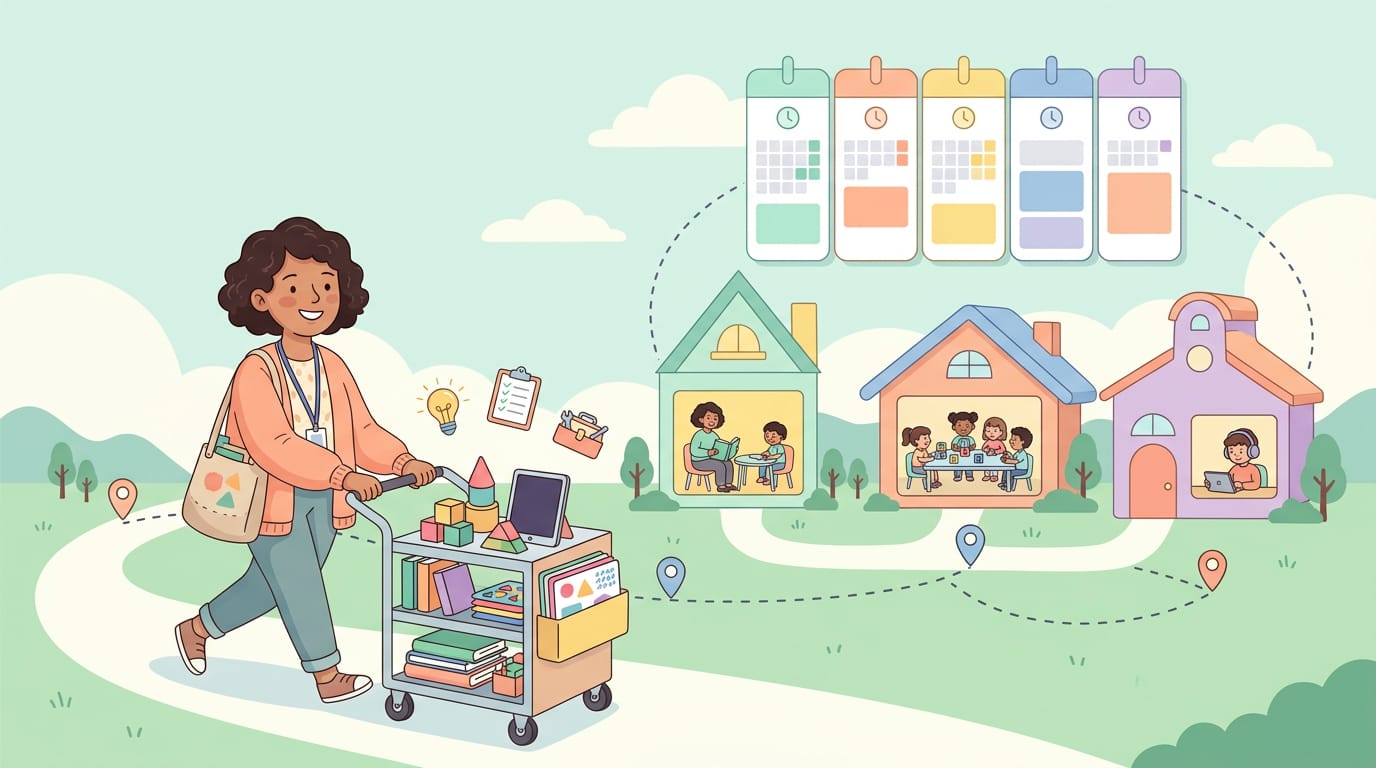
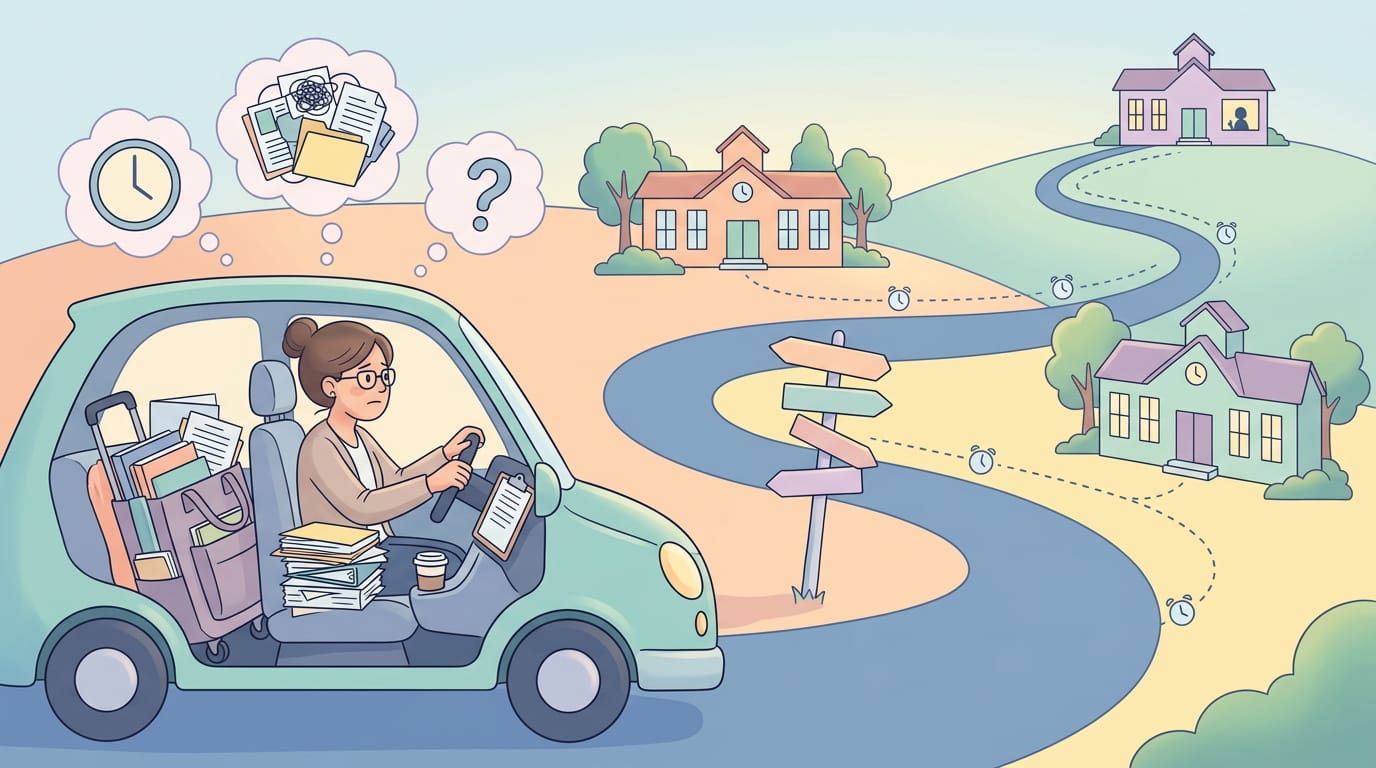
Picture a teacher whose classroom has wheels. Instead of staying put all day, an itinerant teacher packs up materials and travels between schools, supporting students wherever they're enrolled. It's rewarding work, but it has its own set of challenges.
Here we'll cover what itinerant teaching is and who does it, how to collaborate with your team, and how to plan your schedule, keep organized records, and find resources.
We'll also tackle what many guides skip: protecting your energy through the travel, isolation, and workload.
Still grading everything by hand?
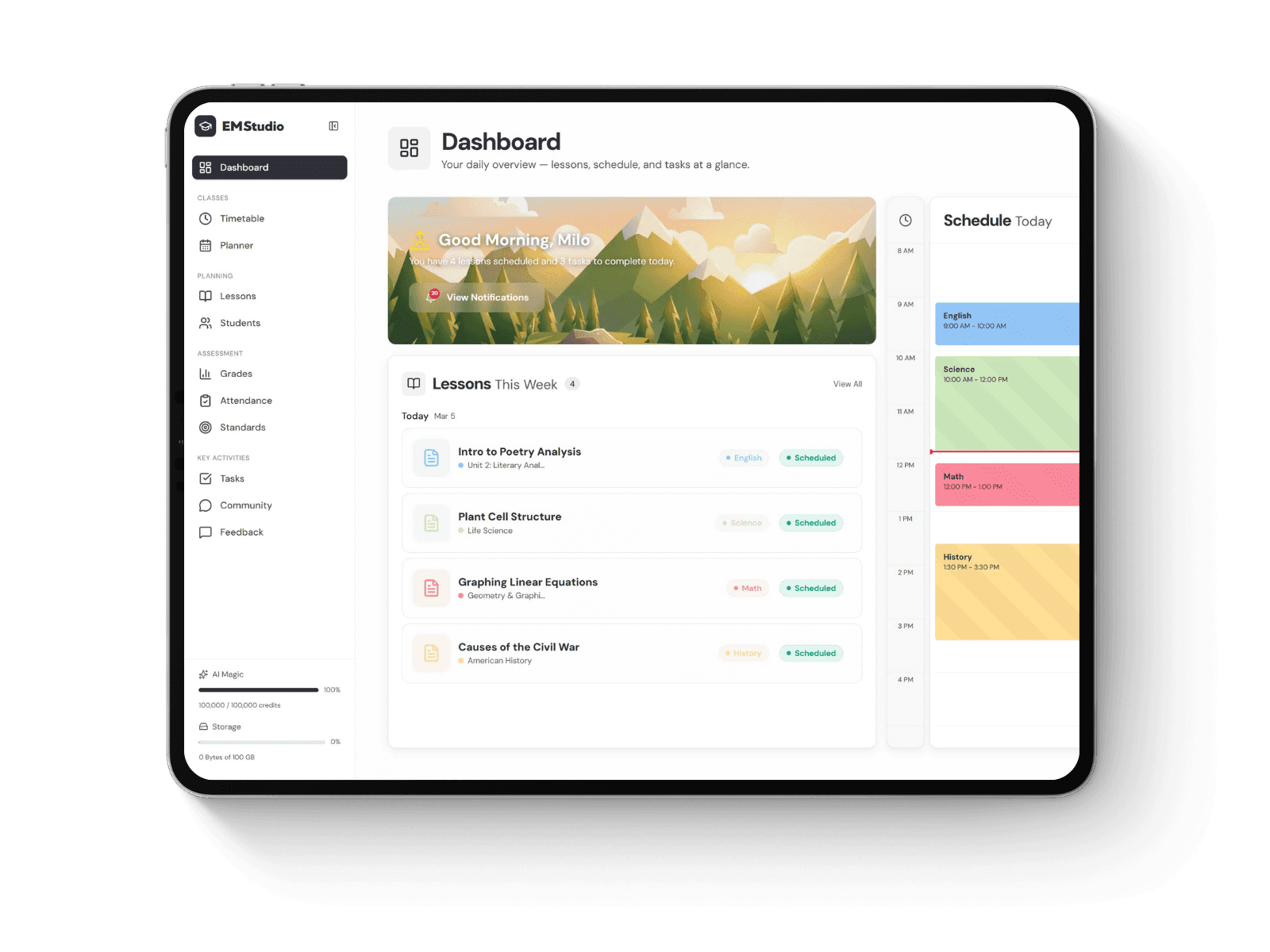
EMStudio is a free teaching management app — manage your classes, students, lessons, and more!
Defining Itinerant Teaching and Who Does It
Itinerant teaching flips the usual setup: specialists travel to serve students.
How specialists take services to students
An itinerant teacher serves students in community preschools and school buildings, a role often called special education itinerant teacher (SEIT). Unlike a resource room or self-contained classroom, this model brings the service to students.
Support blends direct teaching with coaching for classroom staff. Main duties include:
lessons
consultation
family collaboration
progress records
For many professionals, the role is new, and earning trust in someone else's room is a different skill.
Picture a teacher of students with visual impairments (TVI) who spends one Tuesday at a preschool, training the aide on a tactile schedule. The aide uses it all week, so the student practices daily, not just on visit days. That's the payoff.
Which specialty areas this work covers
Itinerant work spans several specialties:
Early childhood special education for young children with disabilities.
TVI and COMS: TVIs teach students with visual impairments, and certified orientation and mobility specialists (COMS) teach safe, independent travel.
Deaf and hard of hearing (DHH) teaching: supporting students who are deaf or hard of hearing.
Community preschool and school settings: these specialists work wherever their students are enrolled.
What is the hardest part of this job?
Itinerant work has hard parts too:
Unclear role definitions. Without clear responsibilities, you can end up doing a little of everything and none of it well.
Professional isolation. You may be the only specialist in your building.
Overwhelming travel and schedules. Driving between sites eats planning time.
Anxiety for new itinerants. The first year brings many unknowns at once.
The pros are variety and reach; the cons are the travel and isolation above. In special education generally, the hardest part often comes from balancing many students' needs with paperwork.
Collaborating and Consulting with Your Team
Itinerant work runs on relationships. When people know what you do and when they'll see you, scheduling gets easier. Let's start there.
Make roles and expectations clear early
Start by defining roles: who writes goals, collects data, and talks with families. A responsibility matrix, a simple chart listing each task and its owner, keeps those answers visible.
Then explain your direct services (you work with the student) and consultative services (you work through the teacher). Set regular check-in meetings to keep the team aligned.
Working alongside classroom teachers
Share what a consultant does and doesn't do. Then learn classroom routines, such as transitions, so your strategies fit. Model and coach, don't just hand over a sheet. Picture a second-grade teacher whose student drifts during writing.
You demonstrate a checklist taped to the student's desk, the teacher tries it, and you adjust together. Now the support continues when you're not in the room.
Ask which part of the day is calmest, and schedule visits then. To minimize classroom disruption, arrive quietly, keep materials compact, and save big questions for planning time. You're there to support the class with the teacher, not around them.
Building trust with families
Introduce yourself early with a short call or note. Then learn goals and expectations: what the family hopes for and what worries them. Choose a preferred communication method, such as text or a home notebook.
Finally, support involvement in the Individualized Education Program (IEP) and the Individualized Family Service Plan (IFSP).
The IEP is the school's written plan for special education services, and the IFSP serves infants and toddlers in early intervention. Make sure families can join those meetings.
How the team solves problems together
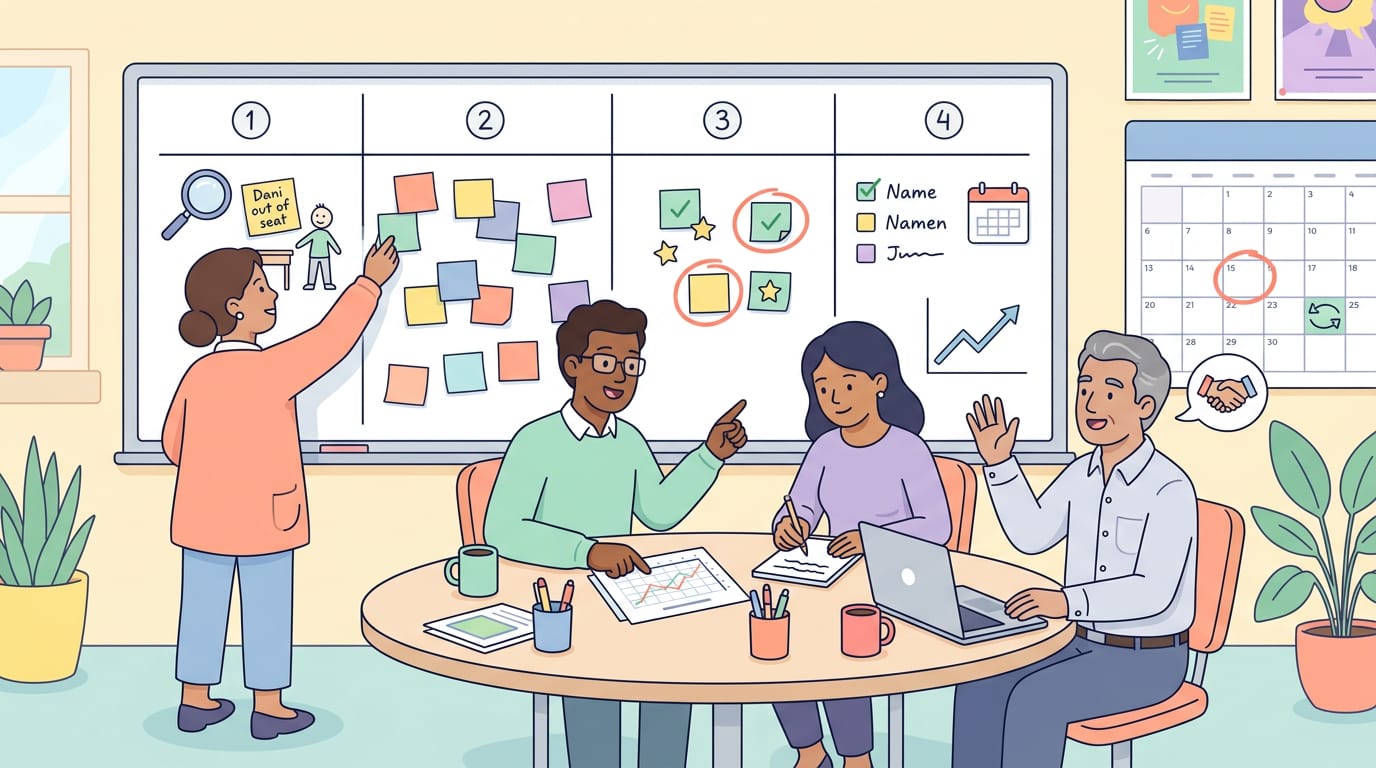
Resist jumping to a fix. Define the problem first in observable terms: “Dani gets out of her seat during reading” beats “Dani isn't motivated.” Next, brainstorm without judging: write every idea down first.
Rate and select solutions by practicality and fit, then pick one or two to try. Finally, plan implementation and monitoring: who does what, when it starts, and how you'll know it's working. A plan without a check is just a hope.
End with a follow-up meeting to review data and decide whether to keep, adjust, or drop the strategy.
Building relationships across your school
Your route may cross several buildings, so meet administrators and office staff early. Coordinate with related service providers, such as speech-language pathologists and occupational therapists, so the student hears one consistent message.
Identify your personal support network: a colleague in your building and a peer who understands the travel. It's easy to go whole days without a real conversation with another adult, so fight professional isolation on purpose.
Schedule that connection like a visit, whether a lunch or a call. Your job may move from room to room, but your support can stay put.
Individualizing Lessons for Inclusive Classrooms
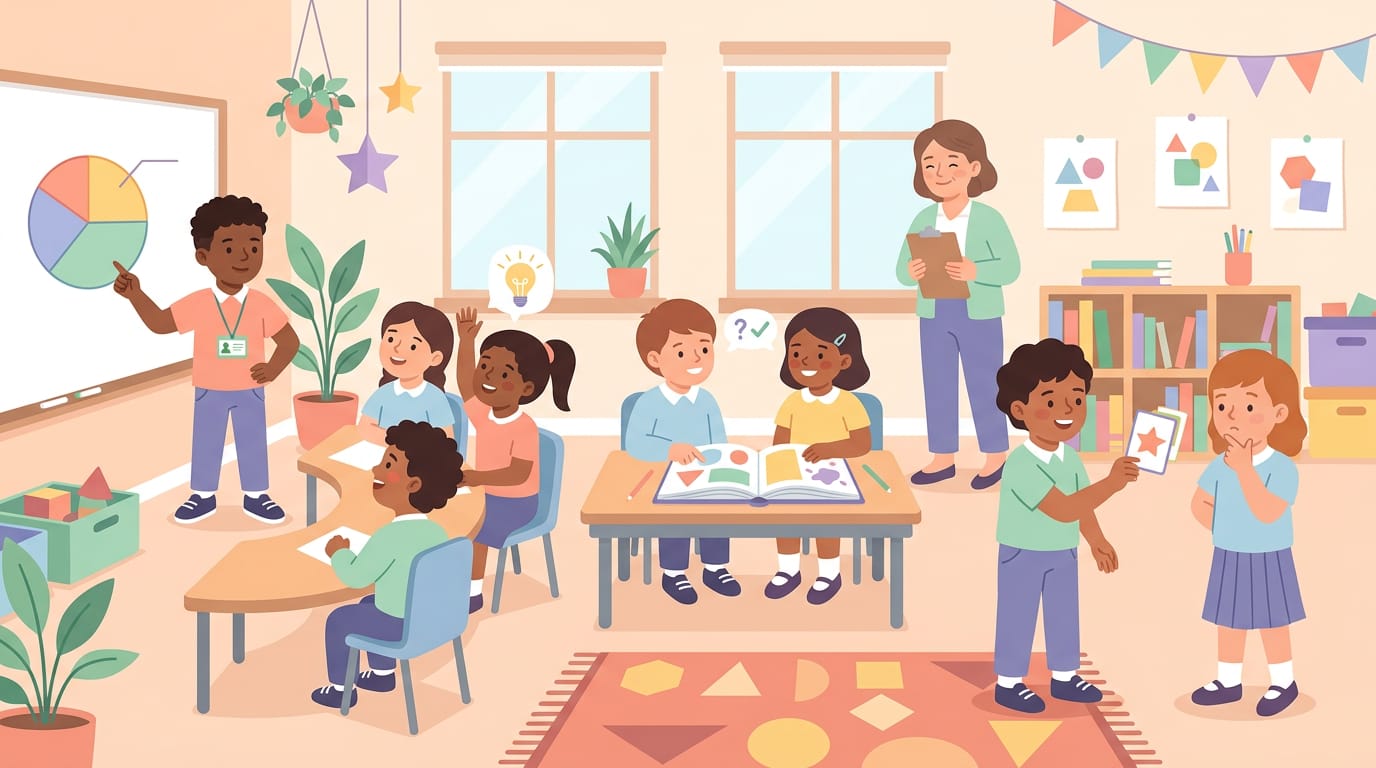
Every student needs something different, so the lesson and room have to bend toward each one.
Assessing needs and setting useful goals
Here's where to start: watch the student where learning happens. Routines-based assessment looks at skills during arrival, snack, and transitions. Curriculum-based assessment compares those skills with what the class is studying now.
Strong goals are functional (they show up in daily life) and generative (one skill unlocks many others). A first grader who learns to ask for help during math stations can use that skill in reading, science, and the lunch line.
For students with vision loss, a functional vision assessment checks how they use remaining sight on real tasks. A learning media assessment then finds the best format, such as:
print
large print
braille
audio
Teaching skills within daily routines
Practice beyond therapy sessions works because skills stick when they're used all day. Services in the classroom put support beside the student instead of pulling them out.
An instructional schedule matrix grids subjects and times against students, so everyone sees who covers what. Each student also gets an individual support schedule listing helpers, places, and times.
Picture a second-grade reading block. The classroom teacher checks the matrix, sees you're in the room that day, and asks you to model a tactile graphic. The student gets help during the lesson itself. That timing matters.
Adjusting groups, lessons, and equipment
Often the fix is small:
Change groupings: Pair the student with a classmate or rotate them through small groups.
Alter lesson format: Shorten direct instruction, add hands-on work, or post key steps on a visual board.
Adjust teaching strategies: Add wait time, model before prompting, or break tasks into smaller steps.
Adapted equipment: Try pencil grips, raised-line paper, or magnifiers.
Ongoing review and revision keeps these changes honest. Check each one against the student's data on a set schedule, then keep what works. Think of it as ongoing review, not an annual checkup.
Measuring quality in inclusive classrooms
Quality program components are the core features of inclusion:
curriculum access
peer participation
the supports that make both work
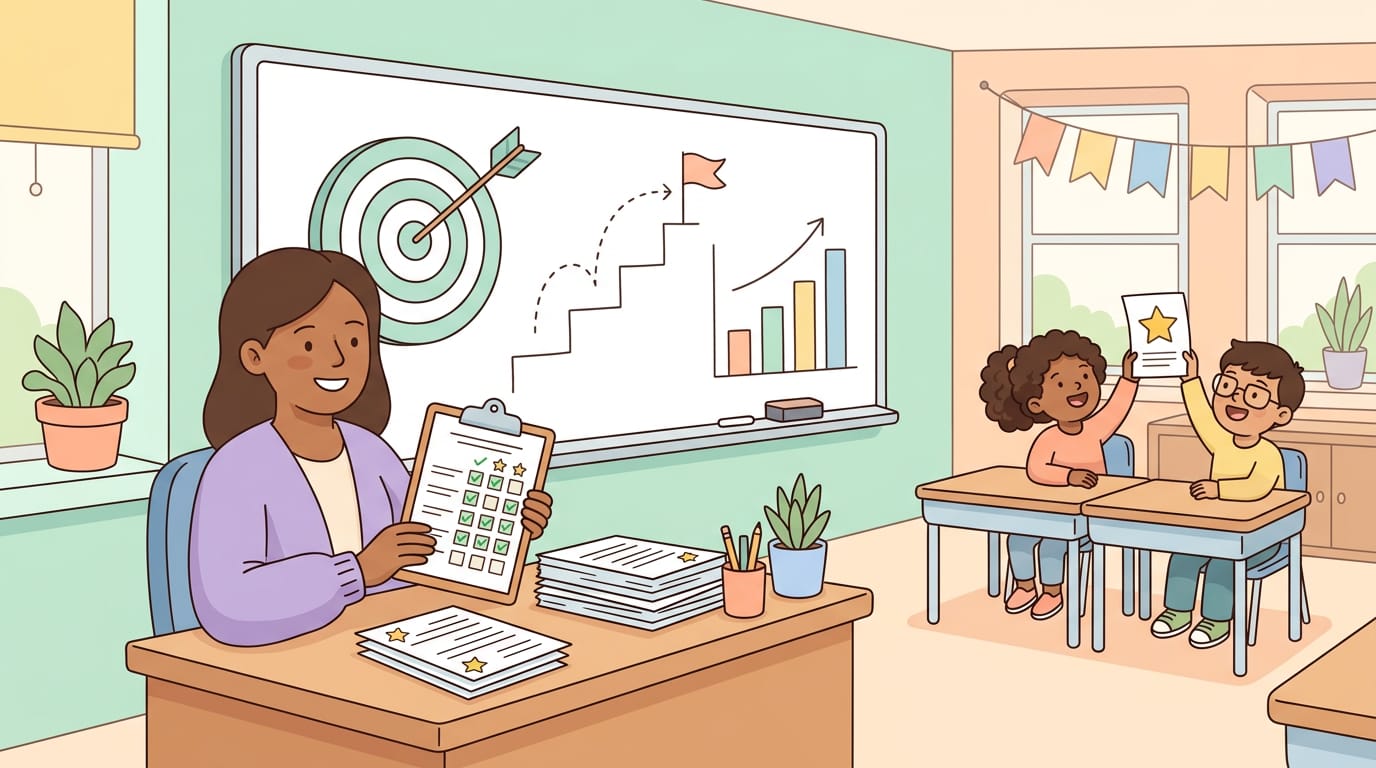
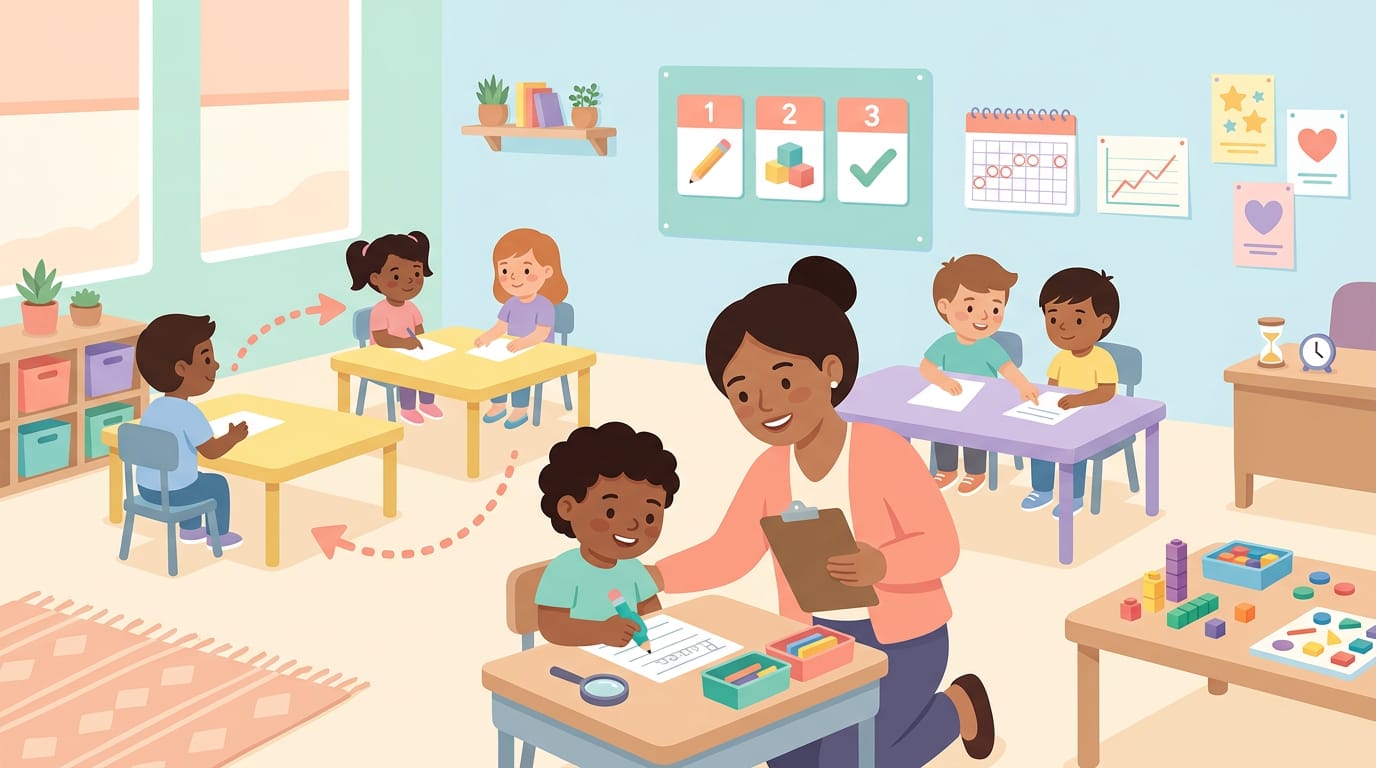
Environment rating scales score the room's layout, materials, and routines on a checklist, so gaps show up on paper.
In a joint quality assessment, the classroom teacher and the itinerant teacher review those scores together, agree on one or two priorities, and decide who acts on each. Shared ownership keeps the plan moving.
Planning Your Schedule and Managing Time
Your calendar decides whether itinerant teaching works or falls apart.
Building your schedule step by step
Start by grouping students by location, so each school becomes one stop instead of several trips. Then schedule high schoolers first. Their periods are fixed and fill up fast, so lock those in and fit younger students around them.
Next, track bell schedules and calendars for every building. Early release days, testing windows, and holidays all change when you can reach a student. Sketch a first pass with sticky notes, then move it into a spreadsheet.
Finally, account for recess and lunch, since a session that runs into either one wastes your drive and the student's time.
Leaving room for delays and drive time
Leave a buffer between visits, because one late bus shouldn't throw off your whole afternoon. Also limit accommodating others' schedules. Every request to move a session quietly erodes your plan, so say yes on purpose, not by default.
Cluster nearby schools so you spend more time teaching and less time driving. That's how you reduce windshield time, the hours in the car between stops.
Plan for weather and delays, from snow days to late buses, by keeping a backup for any stop you might lose.
Grouping students and using virtual sessions
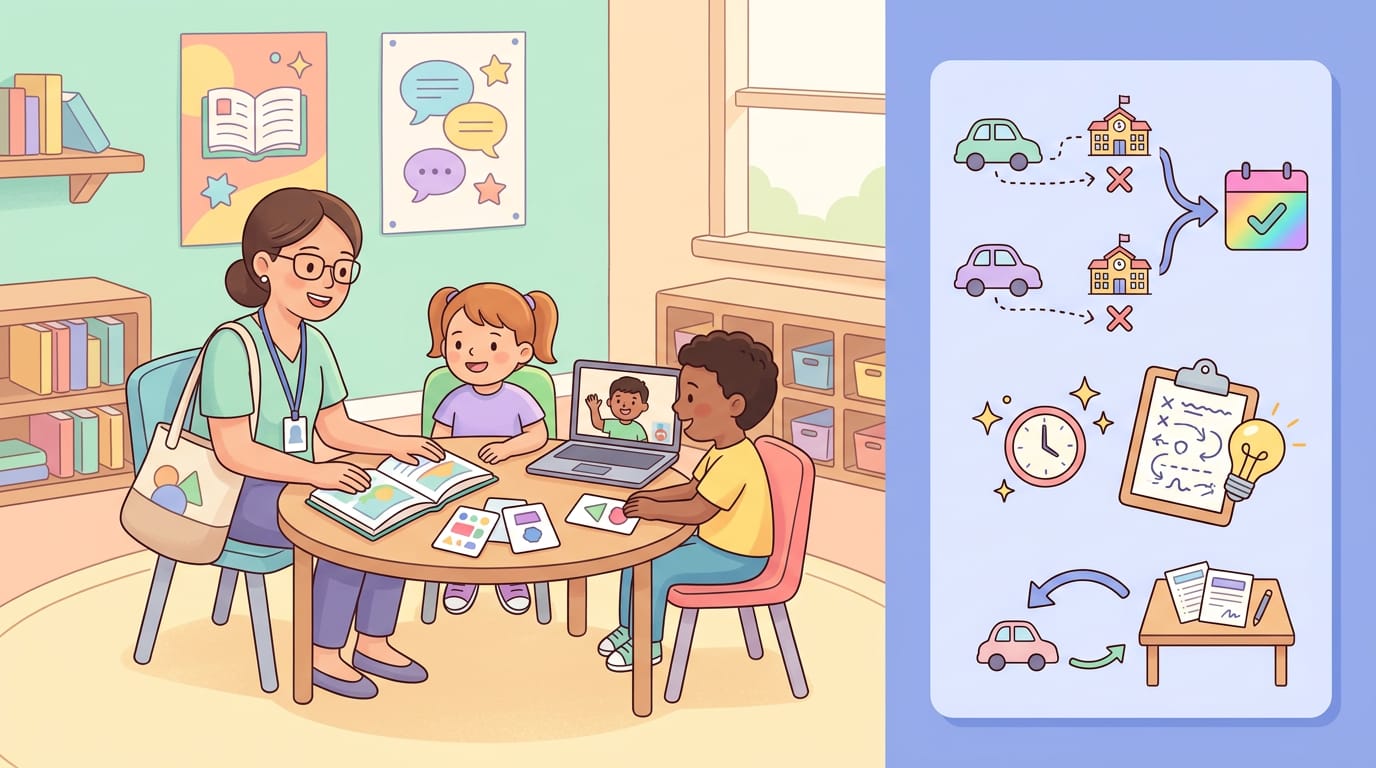
Group students together when possible, so one session serves several learners. Connect peers with similar needs, and use virtual sessions for brief check-ins. That frees time for consultation with the teachers who see your students every day.
Picture an itinerant teacher with two students at one elementary school who are working on the same reading skill. One group session replaces two separate visits, and the saved drive time goes back into planning.
Making room to observe and consult
Block time for observation and consultation the way you'd block a student session, or it won't survive the first busy week. Replace some direct service with a classroom visit, and you'll see whether a skill has carried over beyond your session.
That's the real test of generalized skills.
Build staff capacity by sharing strategies with classroom teachers and aides, so students get support between your visits. More support, without more driving.
Staying Organized with Records and Logistics
A simple system for paperwork, gear, and the drive keeps you compliant and sane.
Keeping compliant records and tracking deadlines
Write notes right after each session. Then keep these running:
Session notes: what you covered and what comes next.
Evaluation due dates: every deadline in one place.
Individualized Education Program (IEP) goal progress: update it on a set schedule.
Data sheets: a simple tally for each goal.
Mileage documentation: a dated log of each trip's miles and purpose.
Track your caseload (the number of students you serve) and workload too.
One school board policy, 427.0 Workload Limits for Certain Special Education Teachers, sets workload parameters for teachers whose students receive direct special education services 60 percent or less of the instructional day.
Keeping track of equipment and materials
Picture an itinerant teacher who lends assistive devices to three schools. An equipment inventory shows each item, who has it, and where it's stored, so you can find a missing device in minutes.
Track repairs the same way, noting when items go out and come back.
A collapsible cart moves materials from car to classroom in one trip. Treat your car as a mobile office: keep forms and spare pens inside so you can finish notes in the parking lot, not after dinner at home.
Staying prepared and avoiding road burnout
Learn each school's entrance and parking before your first visit, so you're not circling the lot. Keep up with vehicle maintenance, so a breakdown doesn't cancel your day. Pack lunch and snacks, since a drive between buildings may leave no time to eat.
Driving fatigue adds up across a long week. Plan the drive as part of the job, not the gap between jobs, and schedule short breaks between schools. Protect those breaks, because they're how you keep burnout at bay. Rest is part of the work.

Finding Resources and Registering for Services
Getting materials in place is the least glamorous part of itinerant work, and it's often the most time-sensitive. Start early.
Vision resources and how to access them
Begin with the American Printing House for the Blind (APH), which handles registration for the Federal Quota, the federal funding for accessible educational materials. Confirm your eligibility and timelines early.
Next, look into the National Instructional Materials Access Center (NIMAC), which provides accessible files for textbooks and other instructional materials.
Bookshare offers a digital library of accessible books, and free braille books may be available for students who read braille.
The goal is access rather than ownership: materials ready when your student needs them, not weeks later. Consider an itinerant teacher with a braille reader starting at a new school in September.
If she requests materials in spring, the books are in hand before the first lesson instead of arriving weeks into the term. Eligibility rules and forms change, so you'll want to verify each step on the program's official site.
Handy guides and tools for the job
Year-at-a-glance checklists map out the tasks and deadlines for the school year, so nothing slips between stops.
Itinerant teaching book covers the practice itself, a useful first read for newcomers.
Mentor live binder is a shared digital binder of resources that mentors and new teachers can build together.
Early childhood quality measures are tools for judging early childhood programs, useful when your caseload includes preschool-age students.
Choose the few that fit your caseload, and bookmark the rest.
Itinerant teaching asks a lot: a flexible schedule, strong teamwork, careful records, and a bag that's always packed.
When you plan well and collaborate openly, the moving pieces start to feel manageable, and your students feel the difference in every session.
Ready to recharge between stops? Check out Teacher Life & Wellbeing for practical ways to stay grounded on the road and through a heavy workload.
References
427.0 Workload Limits for Certain Special Education Teachers — ahschools.us
Still grading everything by hand?
EMStudio is a free teaching management app — manage your classes, students, lessons, and more!