Outcomes and Evaluation: A Complete Guide

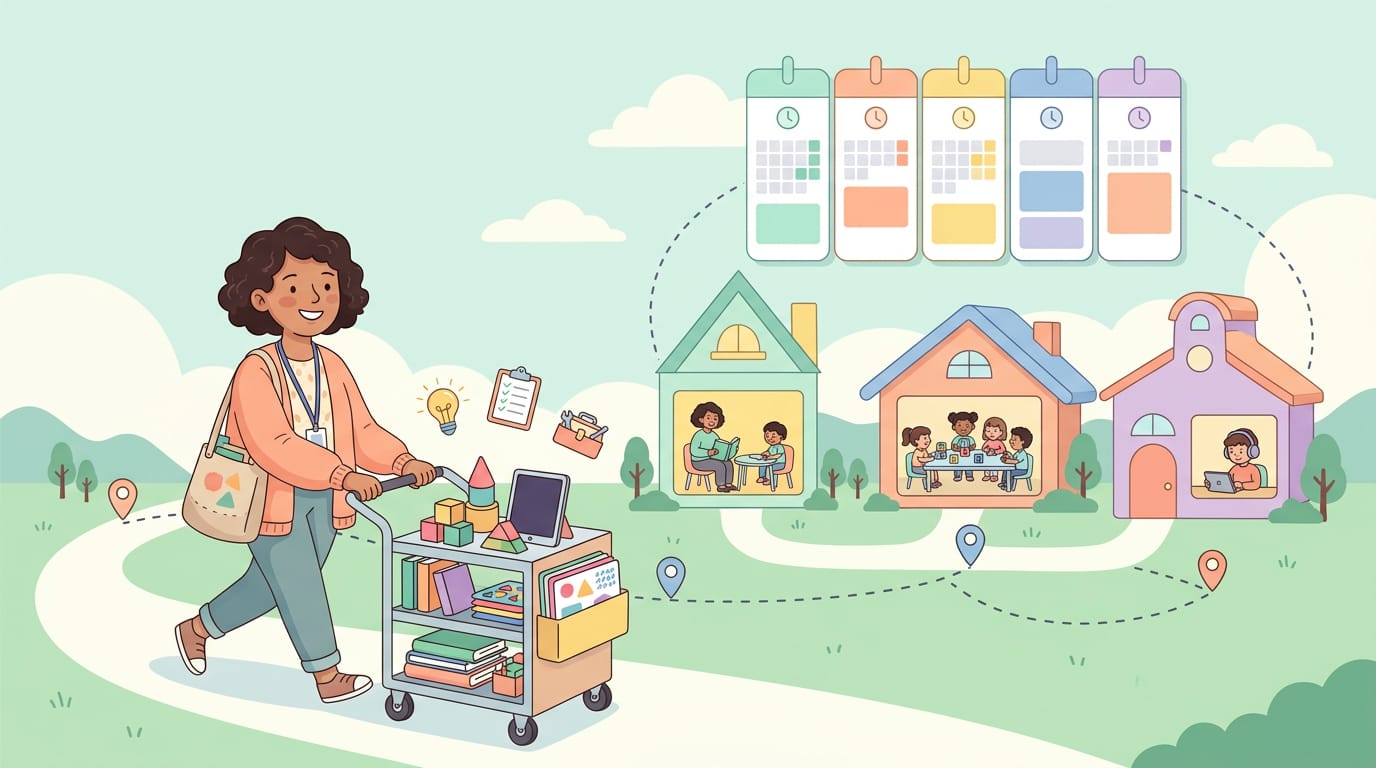
Picture a road trip. You can pack the car, fill the tank, and check every stop on the map, but the trip only counts if you arrive. School programs work the same way.
A new reading initiative can arrive with training sessions, binders, and a full calendar, yet leave students no stronger as readers. Outcomes are the real changes in learners and staff, and evaluation is how you check whether they're happening. Student learning strategies can help when a program leaves students no stronger as readers.
We'll cover the key definitions, the main types of evaluation, and how school leaders can apply them to programs and teacher evaluation.
Still grading everything by hand?
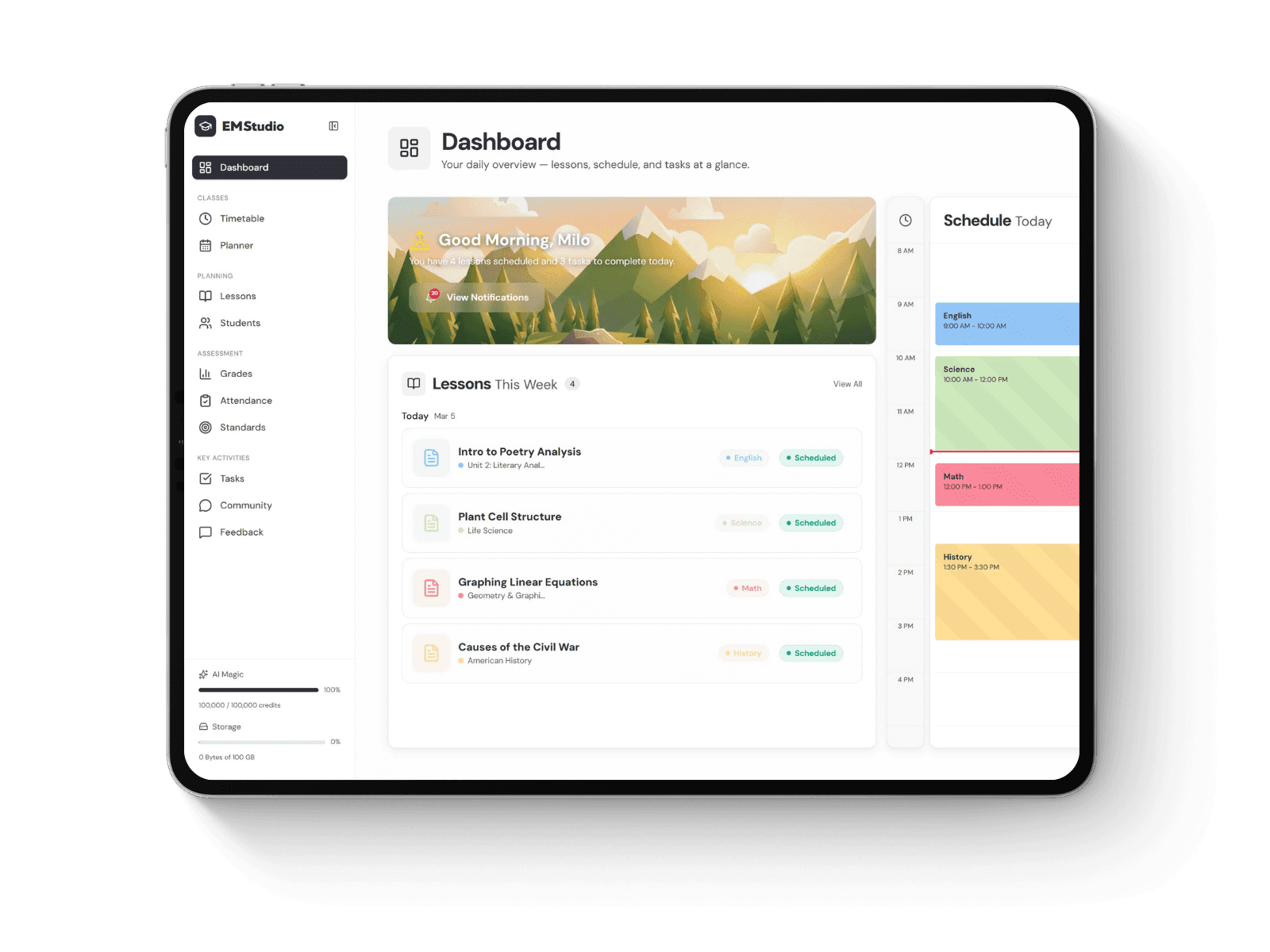
EMStudio is a free teaching management app — manage your classes, students, lessons, and more!
Understanding Outcomes and Evaluation
In simple terms, evaluation is finding out whether something worked for the people it was meant to help.
What outcomes look like in people's lives
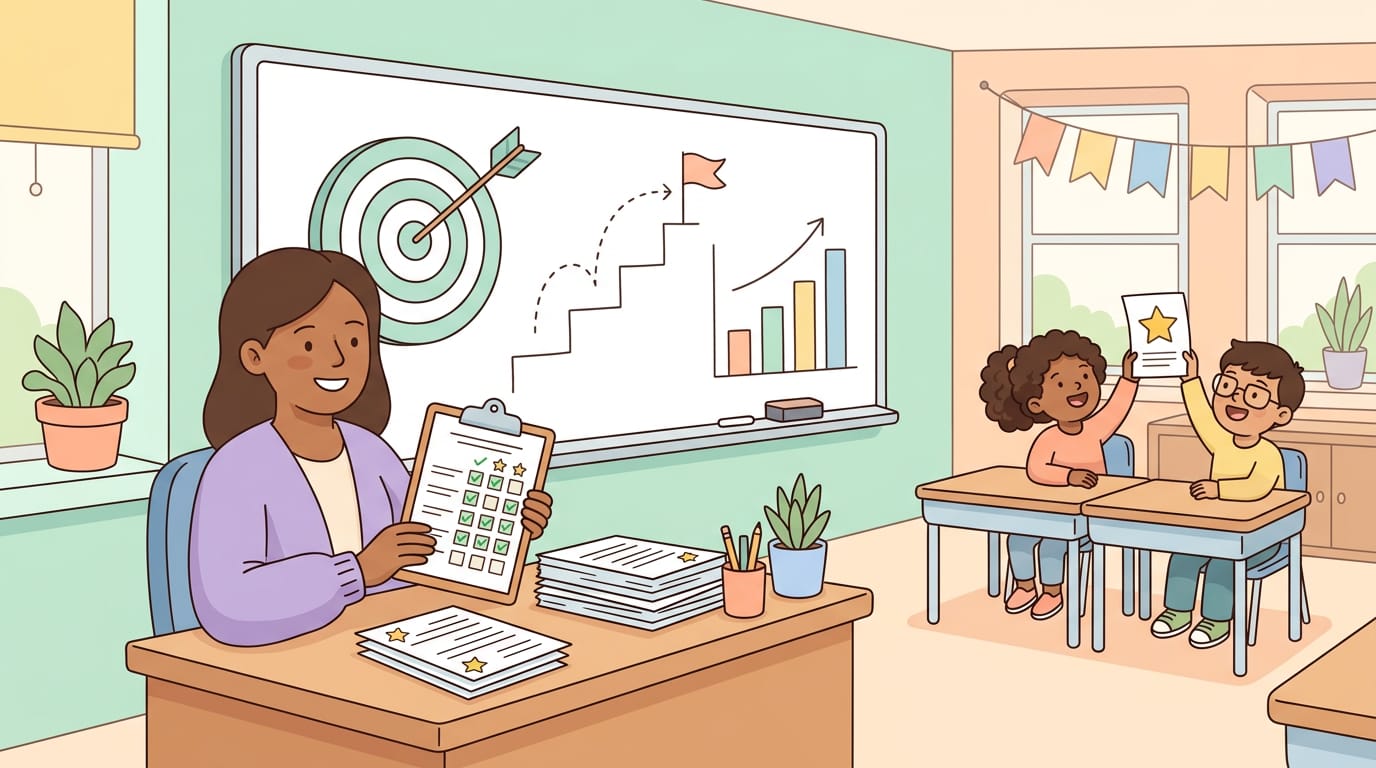
An outcome is the change a program produces in the people it serves. Activities are easy to count. Outcomes ask what changed.
Benefits for participants are the real payoff, like a ninth grader who now starts homework without being reminded.
Not every change is a number. A teacher's weekly notes on a quiet student speaking up more are qualitative measurements. Change can appear during an activity or long after it ends. The goal is lasting change in people's lives.

How outcome-based evaluation works
Outcome-based evaluation starts with the change you want. Each target is a person-referenced valued outcome, a change a specific person values, like “a new teacher feels ready to plan her own unit,” not “finish 12 modules.”
Effectiveness: did the outcomes happen?
Impact: did the program cause them?
Benefit-cost: were the outcomes worth what they cost?
Consumers (the people served) and producers (the people who deliver it) see different things, so hear from both.
Interpreting results is less about numbers and more about what you'll do next. Data without a decision is just a report.
Why funders now expect measurable results
We're in an era of accountability, where schools and grant-makers must show what their money achieved. Grantors and funders now expect a plan for measuring outcomes, not just activities. The emphasis is on results rather than effort.
Consider a middle school science teacher seeking lab kits. “We'll buy lab kits” describes effort. “By spring, students will run experiments on their own” describes change, and it's what a reviewer can check.
Why Measuring Outcomes Matters
Good intentions don't prove a program worked. Outcomes are the real changes a program produces in the people it serves, and measuring them is a practical habit every school leader can build.
What measuring outcomes can help you do
Measuring outcomes can help you:
Measure intervention effectiveness: see whether a tutoring group is working.
Identify effective practices: find approaches worth repeating.
Spot practices needing improvement: catch what isn't working early.
Prove value to funders: show what their support produced.
Clarify program purpose: confirm what the program is actually for.
How do you assess effectiveness?
Assessing effectiveness means comparing what you hoped for with what actually happened. It's less about how busy the program kept everyone and more about what changed because of it.
Start by setting indicators, the signs of change to watch, and targets, the level you aim to reach.
We'd suggest asking three questions:
Has the program made a difference? Compare results with where participants started.
What changed for participants? Look beyond attendance to skills and behavior.
Which activities should you continue or change? Let the answers guide what to keep or rework.
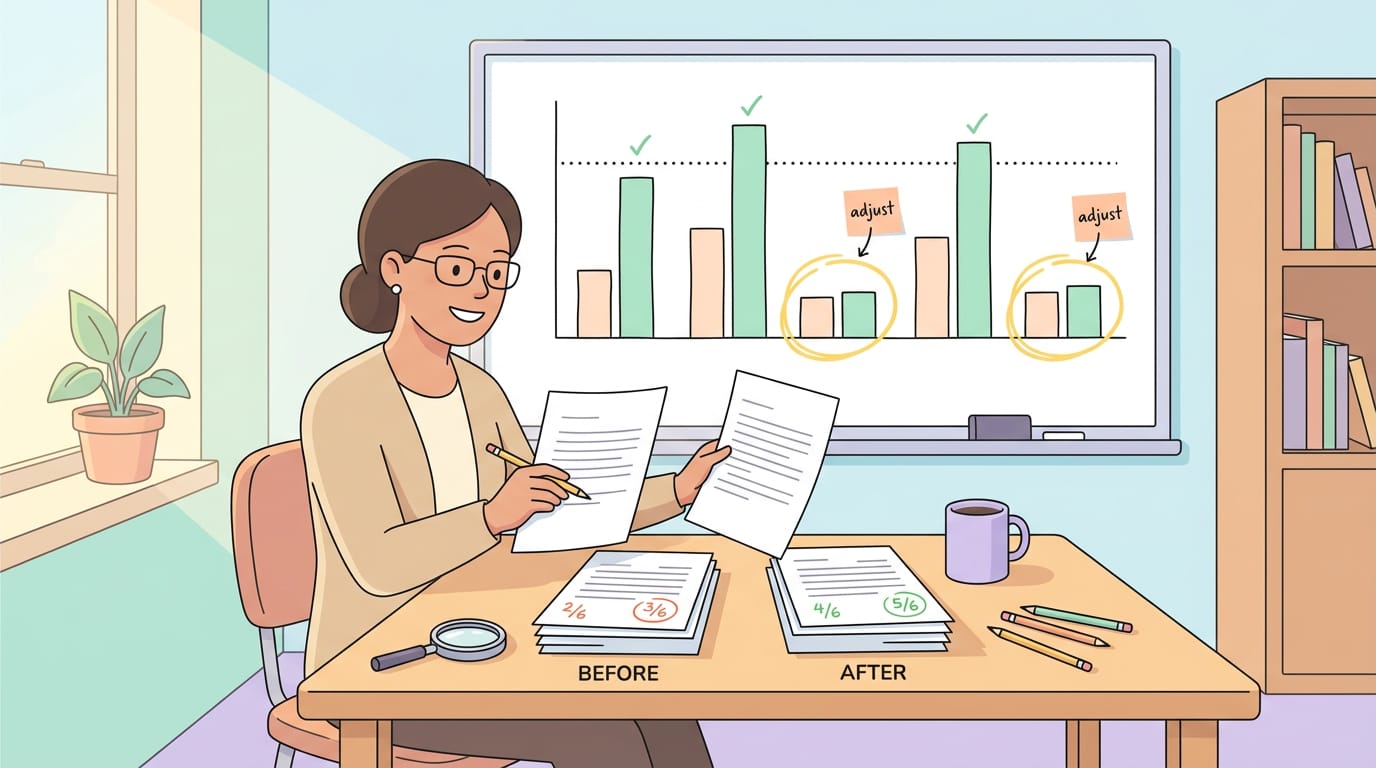
Consider a middle school teacher who starts a writing group for students struggling with paragraphs. She scores each student's work before the first meeting and again a few weeks later.
The gains tell her the group is working, and the students who barely moved tell her what to adjust. Evidence beats hunches. Students who barely moved may need more individual attention, and one to one tutoring is one way to give it.
Who expects programs to show outcomes
Several groups will ask for results:
Foundations and United Way: grant-makers want evidence their donations made a difference.
Local, state, and federal agencies: public funders and overseers often require documented results.
Stakeholders demanding effectiveness: parents, board members, and community members want proof it's worth their time.
Telling Outcomes Apart from Outputs
Schools generate a lot of countable activity. Here's how to separate it from the change it's meant to create.
What your activities directly produce
Outputs are the direct products of your activities: the workshops you ran, the lessons you taught, the coaching visits you completed. They're quantitative, so you can count them.
A tally of coaching visits or parent nights is evidence that your activities happened as planned. Outputs show what got done. They don't show what changed.
Tracking outputs with real examples
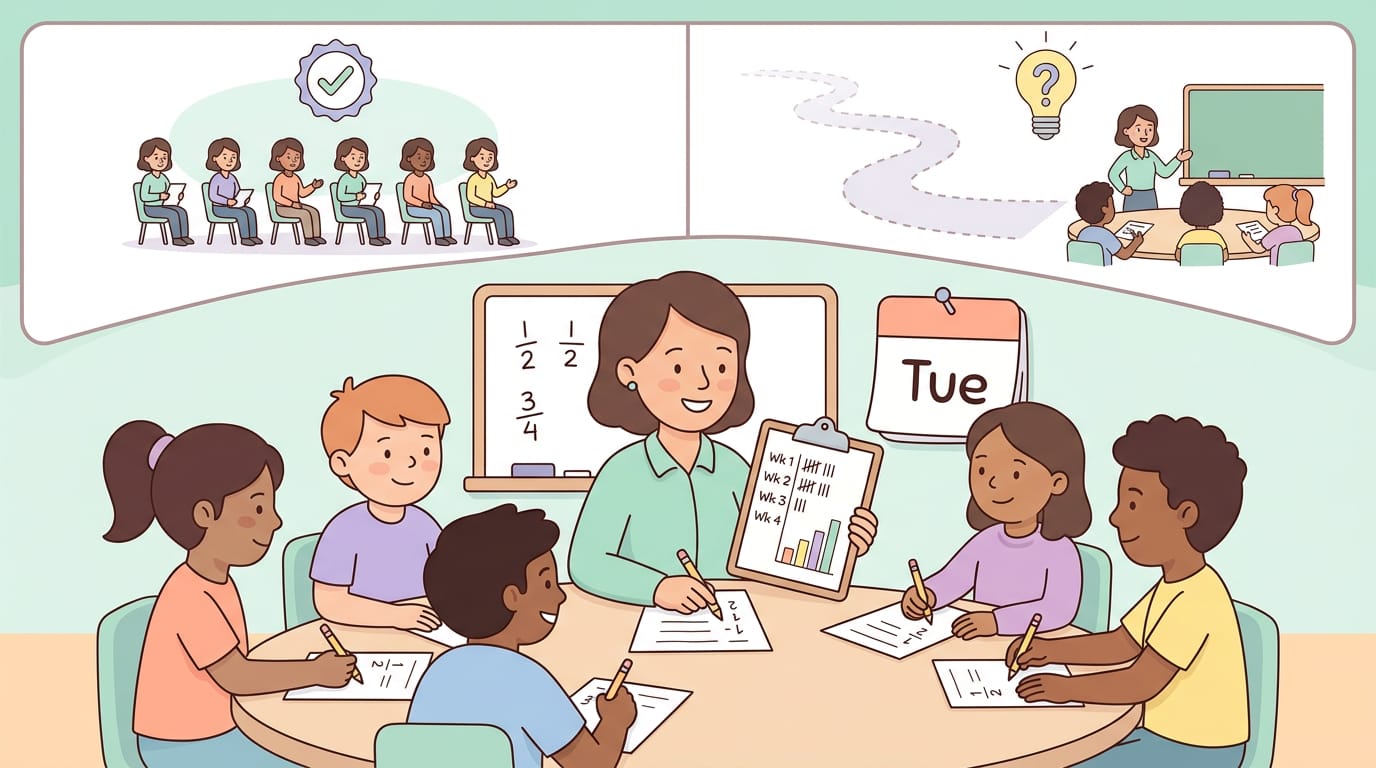
Consider a middle school math teacher who starts a tutoring group on Tuesdays. She logs how many students attend and how many sessions she runs each week. Those counts are outputs, and they tell her whether the group is really meeting, not just scheduled.
You don't need a fixed target to start counting. A few weeks of numbers gives you a baseline to compare against later.
Here's how school outputs and outcomes compare:
Output: the number of teachers who attend a coaching session.
Outcome: whether those teachers use the strategy in their classrooms later in the year.
Attendance is the easy part.
A logic model splits outputs from outcomes
A logic model lays out how your program's work is meant to lead to change. According to the W.K. Kellogg Foundation's Logic Model Development Guide, a logic model distinguishes a program's activities and outputs from its intended outcomes.
Here's how that plays out for a reading group a teacher runs twice a week:
Activities: small-group reading lessons.
Outputs: lessons delivered and the students who attend.
Outcomes: stronger reading skills and more confidence by the end of the term.
Showing up is necessary. It isn't enough.
What Are the Different Types of Evaluations?
Each type answers a different question, so start with yours. Set your criteria before collecting data. Here's how we'll break them down:
Choosing numbers, stories, or both
Quantitative approaches count things like test scores and attendance. Qualitative approaches capture experience through interviews and observations.
Think of a science teacher adding a new lab unit. Quiz scores climb, so the numbers show what changed. Interviews show why: students can now explain the experiment.
Mixed methods combine both. They offer breadth and depth but take more time and skill, and they're common in health and social fields.

Checking how a program is carried out
Before judging results, check whether a program was delivered as designed: that's implementation evaluation. Picture a principal launching a reading program in three classrooms.
If only one teacher follows the full routine, the other classrooms' results can't tell you much.
A process evaluation plan lists what you'll track along the way.
Complex interventions, with many moving parts, are hard to test with a randomized controlled trial (RCT), which assigns people to groups by chance. An RCT shows whether the package works; a process check shows which parts actually happened.
Comparing costs with results and benefits
As the Program Evaluation Tip Sheet: Economic Evaluation explains, program evaluation costs are a consideration in economic evaluation, which compares costs and consequences across alternative programs. Four main types:
Cost-effectiveness analysis compares cost against one outcome, such as cost per student reaching a reading goal.
Cost-benefit analysis values outcomes in dollars so costs and benefits share one scale.
Cost-utility analysis measures outcomes in a unit that captures quality.
Cost-minimization analysis applies when outcomes are equal, so you pick the cheaper option.
There's no single price tag. Costs vary with scope: how many sites, how much data, and how deep the analysis goes. Costs without outcomes tell you little.
Designing studies that test impact and rollout
Impact asks whether a program changed outcomes beyond what would otherwise happen. Designing that comparison is the hard part.
Dissemination and implementation research studies how practices spread and take hold in new settings.
Implementation strength case studies look closely at a few sites. Consider two schools with the same program: one has steady coaching, the other stalls. That contrast reveals what a single average score can hide.
Further Reading on Outcomes and Evaluation
Ready to go deeper? These resources cover the methods, books, and health-sector research that sharpen how you judge a program's results.
Guides and books to read next
Start with three kinds of resources:
Electronic books on methods: These explain the research designs and data tools behind evaluation, so you can match an approach to your question.
Outcome-based evaluation books: These focus on defining the results you want before you measure anything.
Measuring outcomes guidebooks: Look for guides that explain how to measure results, not just what to measure.
Consider a fourth-grade teacher planning a new reading intervention. Before she starts, she checks a methods guide to decide how she'll know whether students actually improved.
That one step keeps the program from ending the year as activity nobody can judge.

Evaluation in health and everyday practice
Evaluation isn't only a school concern. Health and clinical fields have built strong traditions around it, and their work offers useful parallels for schools:
Health promotion evaluation looks at whether a program produced real change, not just whether it ran.
Clinical practice-based research studies outcomes in the everyday settings where care actually happens.
Barriers to research in practice examines what gets in the way of gathering evidence while the work is underway.
Pick one resource and apply it to a single program you run this year.
Outcomes show whether a program is changing things for students and staff, and evaluation gives you the evidence to prove it. Measure what matters, define success up front, and choose the evaluation type that fits your question.
Use what you learn to improve programs and support teachers, not just to file a report. Ready to put this into practice? Check out our School Leadership & Management category for more practical guidance.
References
Still grading everything by hand?
EMStudio is a free teaching management app — manage your classes, students, lessons, and more!