Instructional Leadership: A Complete Guide for Schools

Think of a head coach who spends less time shouting from the sideline and more time watching game film with the team, spotting what's working and what needs adjusting. Instructional leadership works the same way in a school.
Put simply, instructional leadership means focusing on how teachers teach and how students learn, then helping both get better over time.
In this post, we'll cover what it means, the habits of effective leaders, how it differs from management, and what it looks like in an actual school week.
Still grading everything by hand?
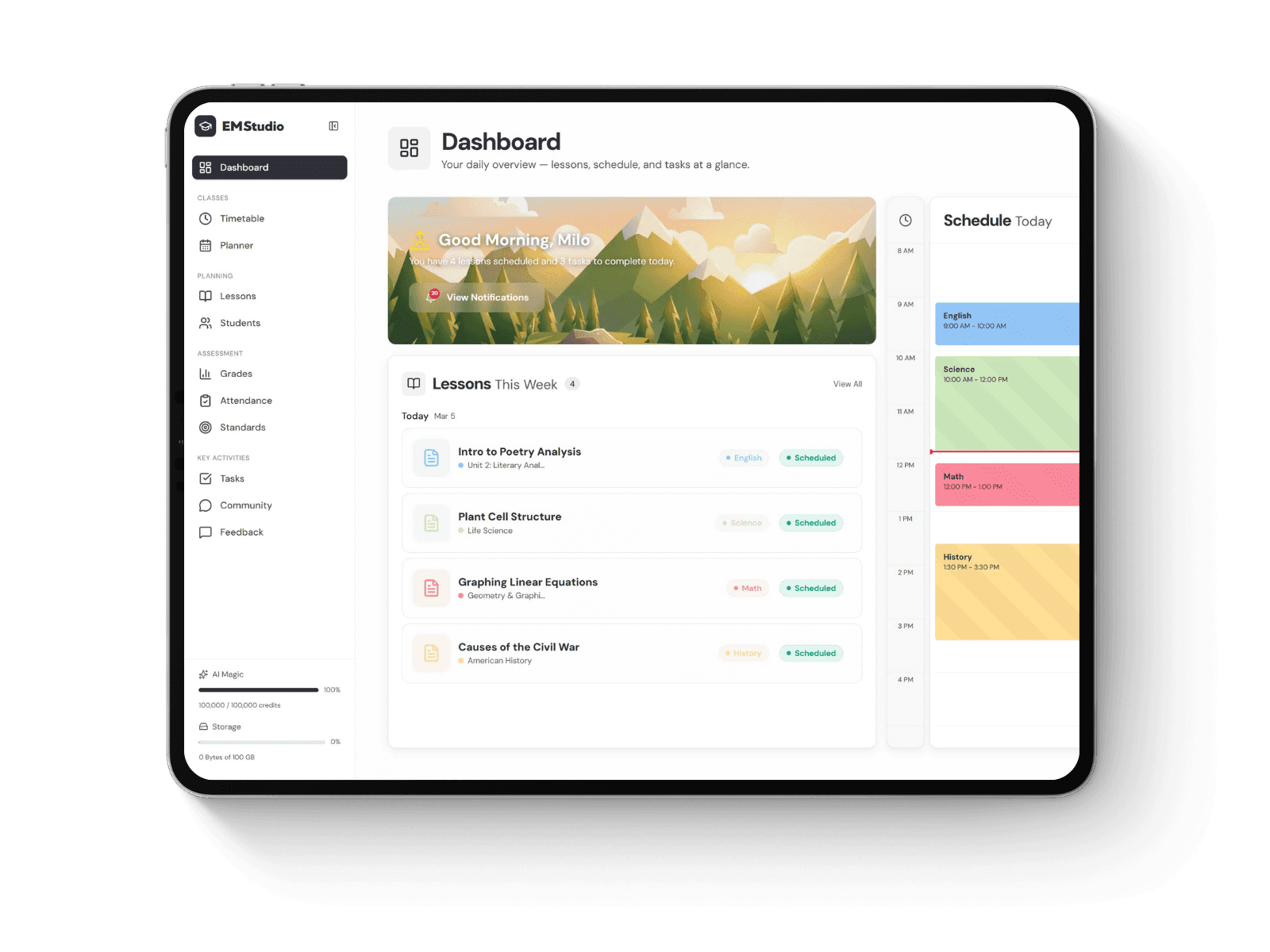
EMStudio is a free teaching management app — manage your classes, students, lessons, and more!
What Instructional Leadership Means in Practice
So what does instructional leadership look like on a typical Tuesday?
Defining the role by what leaders do
Instructional leadership is defined by behaviors, not mindset. Four core leader behaviors give everyone a shared picture of the job.
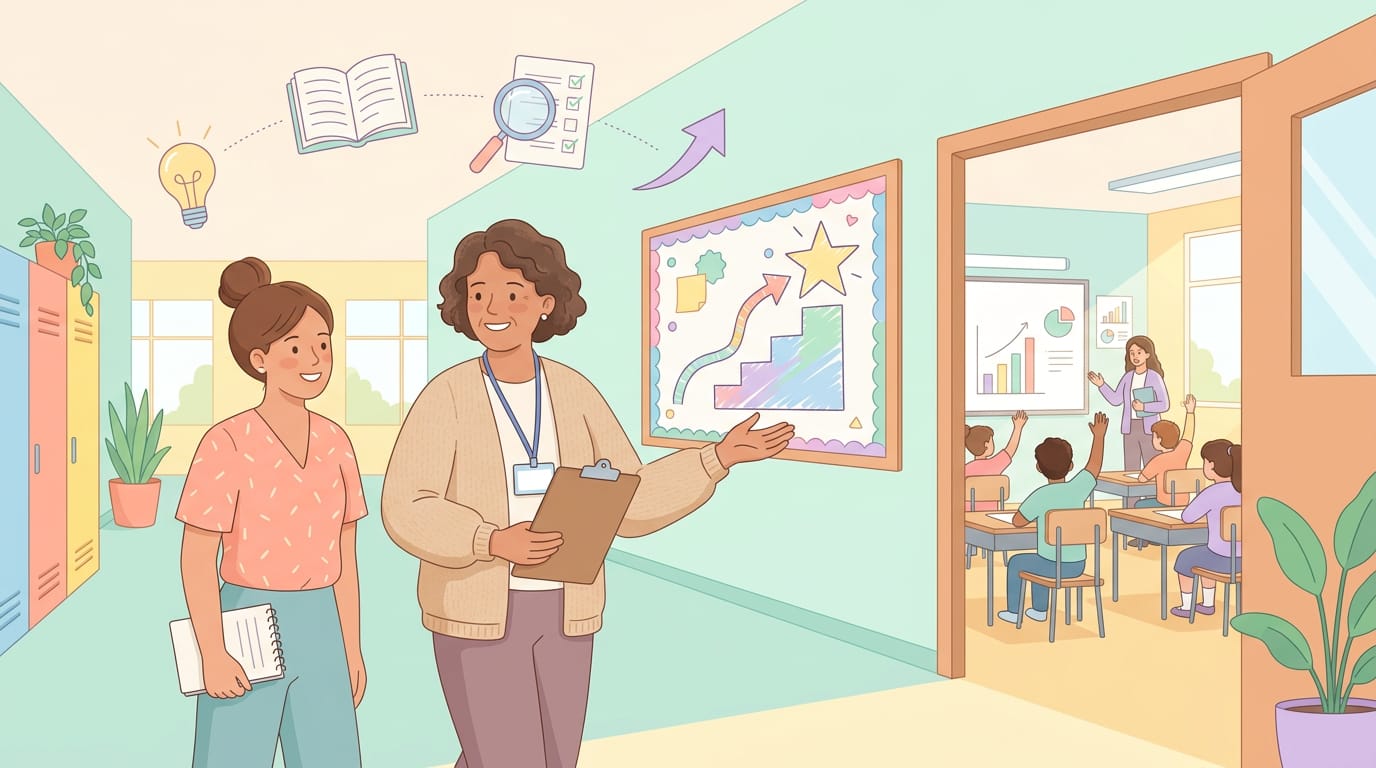
Consider a principal who spends part of a math block in a fourth-grade classroom, watching how students respond to a warm-up problem. She leaves the teacher one question and checks back Thursday.
Shared language helps too: when leaders and teachers use the same words for good teaching, feedback is easier to hear. The approach itself is research-based and practical.
Keeping the school running versus leading it
Management keeps the school running: buses, budgets, and schedules.
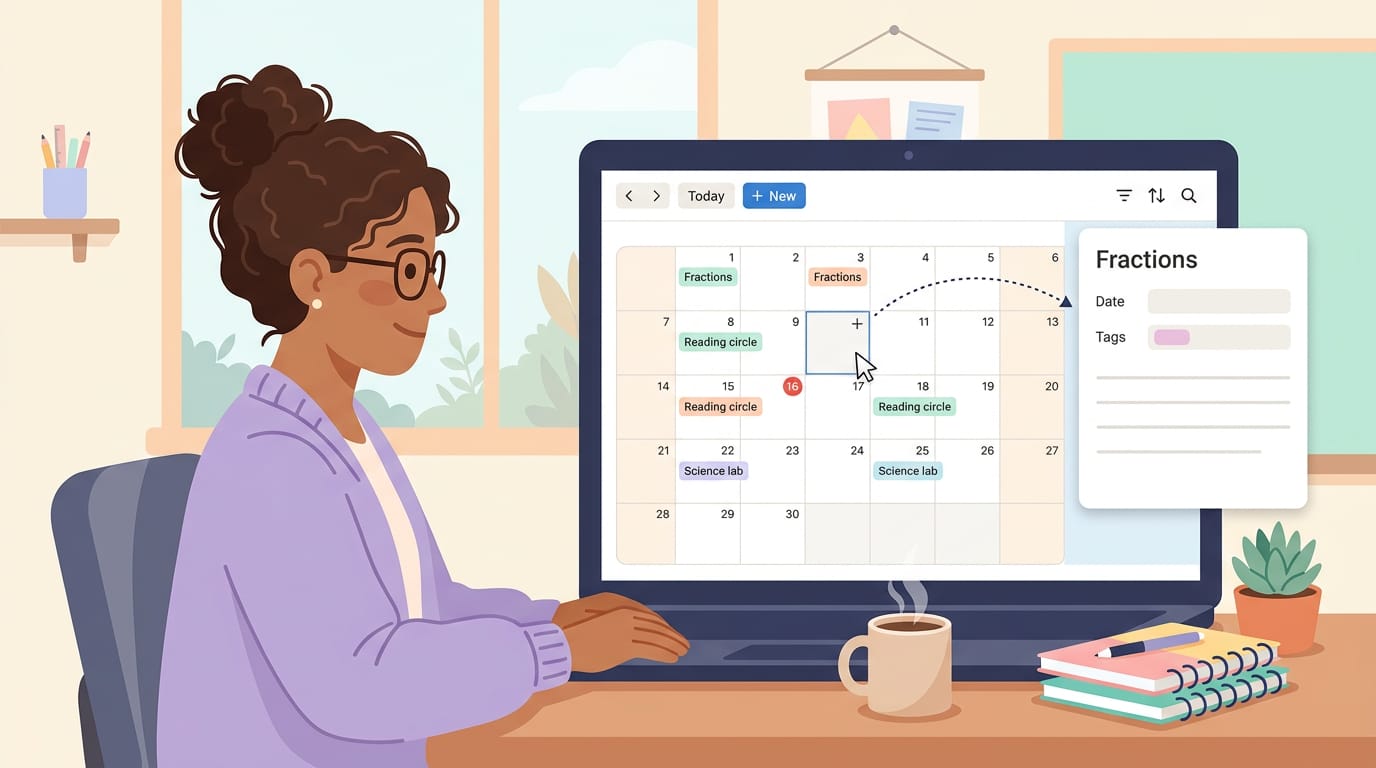
A reactive leader answers the loudest problem. A proactive one protects time for classroom visits. Your calendar decides which one you get.
Perception and reality don't always match. The 2025 Minnesota Principals Survey (MnPS) found that principals still report spending far less time than they'd like on instructional tasks and far more on administrative work like personnel issues.
Instructional leadership is less about keeping the building running and more about improving what happens inside it.
Moving beyond principals simply rating teachers
When principals only rate teachers, feedback becomes a verdict. Leadership for learning turns it into a conversation between colleagues.
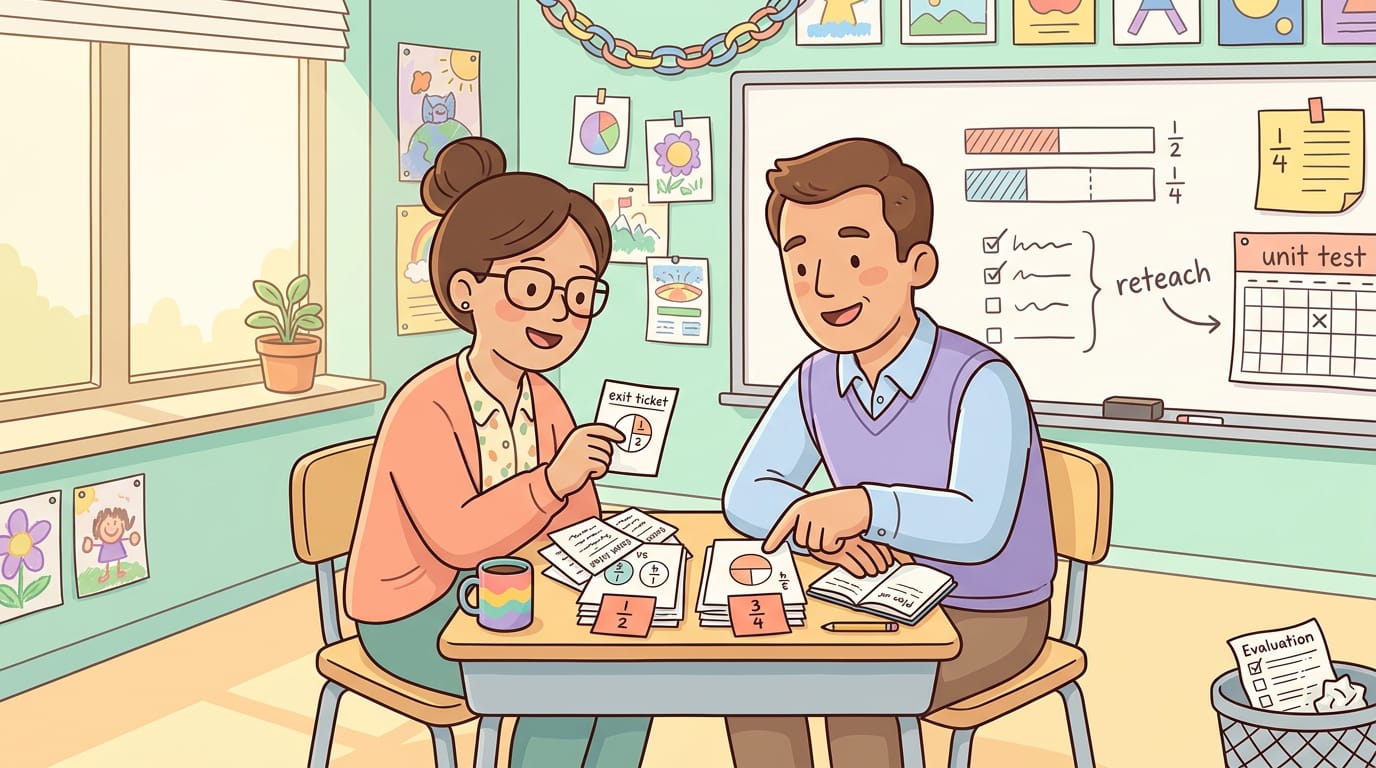
Picture a third-grade teacher and her principal reviewing exit tickets, the quick questions students answer before they leave class. They spot the two fraction skills most students missed and plan a reteach before the unit test.
Learning-centered decision making starts with one question: what will help students learn? Schedules and coaching plans get measured against that answer. Keeping students at the center of each decision is the heart of student centric learning.
Everyday Habits of Effective Leaders
Effective instructional leaders rely on steady habits more than grand gestures, and we'll look at four below. Watch for common pitfalls, too: visits that feel like inspections, feedback that arrives too late, and rubrics nobody remembers.
Making frequent, predictable classroom visits
Short, frequent, predictable visits beat occasional long ones and don't feel like audits. Your calendar shows what you value, so if classroom time isn't on it, teachers will notice.
Walkthroughs and observations help you understand what's really happening in classrooms.
An integrated review of international evidence on instructional leadership describes structured walkthroughs as systematic, brief visits that reveal teaching patterns.
Consider a middle school math teacher whose students keep waiting for the next problem. One visit looks like a fluke, but several reveal a pattern, so you bring the fix to the whole team.
Giving teachers quick, specific, supportive feedback
Feedback works best when it's specific, timely, and small. Share it within a day and stick to one practice at a time, since a teacher handed five notes will fix none of them.
The goal is support rather than surveillance. Keep feedback a conversation, not a report card.
Teachers can ask for feedback too:
Name a focus. Share the one thing you should watch for.
Ask early. Request a look before a lesson they're nervous about.
Agreeing on what good teaching looks like
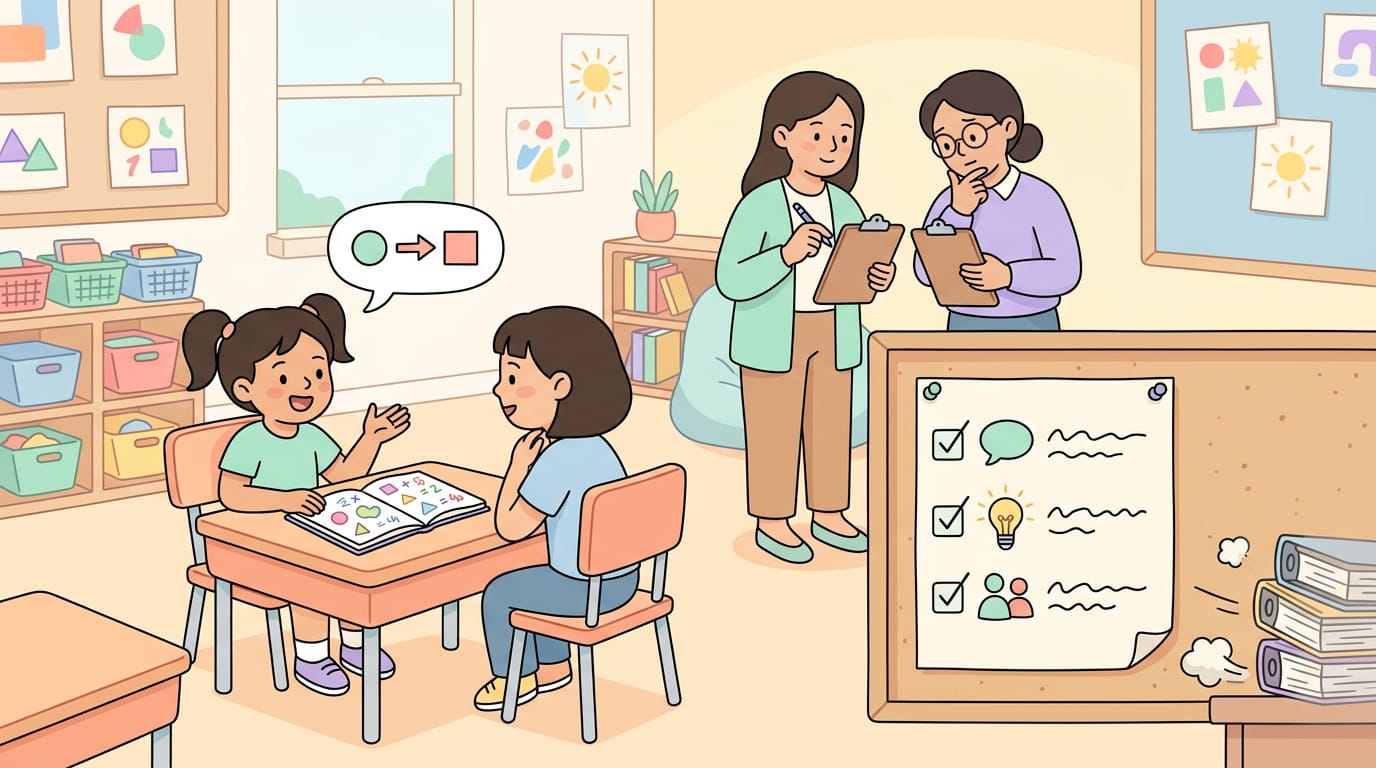
Start with a few practices you can observe and teach, such as students explaining their reasoning to a partner. Build a shared picture of good teaching as a team, and keep it to one page, since a long rubric gets filed away. Clarity beats completeness.
Calibrate your observers. Watch the same lesson with a colleague and compare notes. If you'd score it differently, talk through why.
Noticing and rewarding small improvements
Notice small improvements. A teacher who starts waiting longer for answers has made progress worth naming.
Judge reinforcement by behavior change. Praise means more when the practice shows up again.
Connect practice to student response. Tie praise to what students do: “Your students started explaining their thinking to each other” beats a general compliment.
Specific public recognition. Name the practice and the teacher in a staff meeting or newsletter. “Great job” teaches nobody anything.
What Leaders Need to Know About Learning
Before we talk about leading instruction, you need a clear picture of how students learn. These ideas show up in every classroom you visit.
Keeping the focus on what students learn
Knowledge is what students understand and can recall; skills are what they can do with it. Strong lessons build both and keep the focus on learning rather than activity. Learning also runs at three depths:
surface learning (basic recall)
deep learning (connected understanding)
transfer learning (applying ideas to new problems)
Knowledge dimensions describe the kinds of knowing a lesson can target, such as facts, concepts, and procedures. Aim for depth over coverage.
How students stay engaged and motivated
Students who feel disconnected often stop trying. That's alienation, and social-emotional learning (SEL), the skills for managing emotions and relationships, helps counter it. Student motivation grows when tasks feel worth doing.
Consider a seventh-grade science teacher who asks students which questions they most want answered, then builds the next lab around them. Students who had been tuning out tend to lean in.
Enabling conditions, like a safe room and clear expectations, make that possible. Build in student voice by asking questions such as "What would make this easier to follow?"
Teaching moves that work in real classrooms
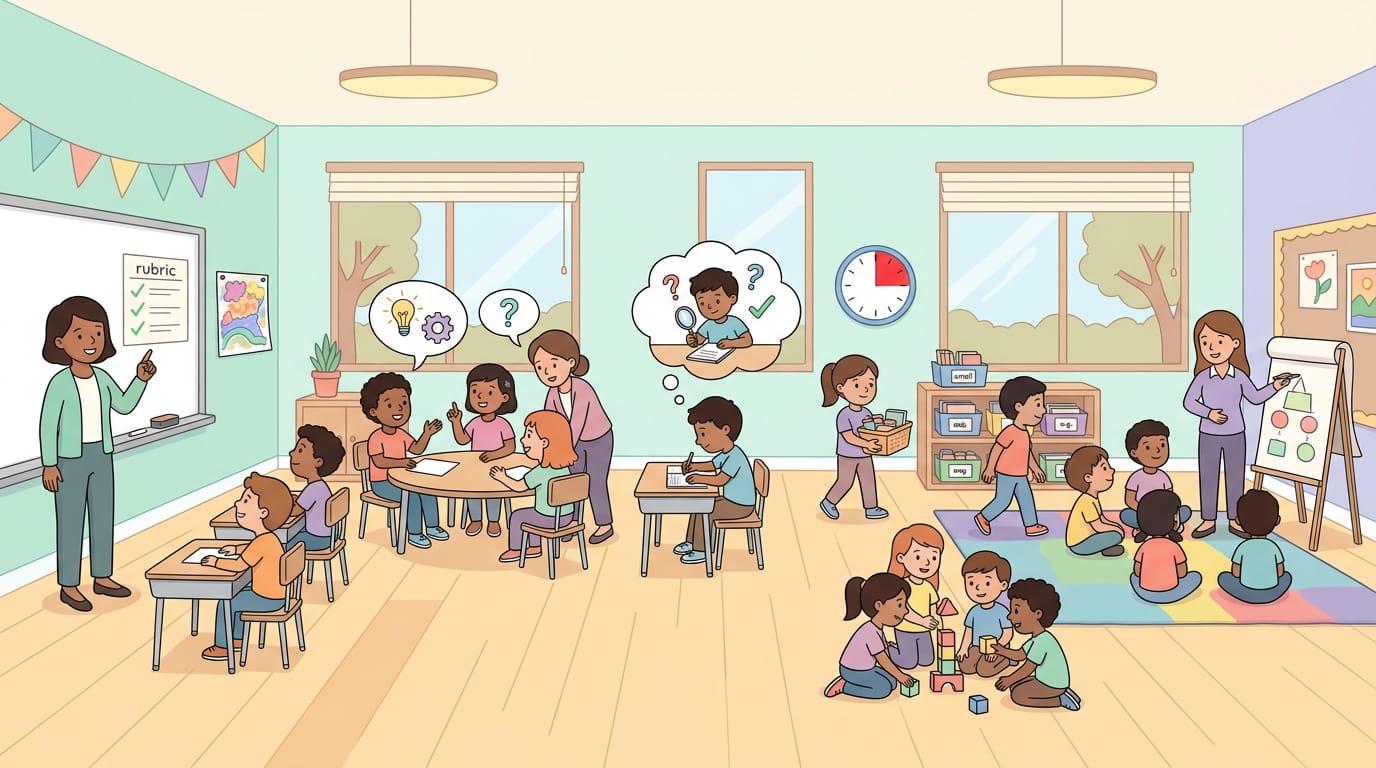
Good instruction rests on a few moves you can spot on any walkthrough:
Teacher clarity: students know what success looks like, so they waste less time guessing.
Classroom discussion: students explain their reasoning, and teachers ask follow-ups.
Metacognition: students think about their own thinking, asking "Is this working?"
Classroom management: routines and transitions that protect learning time.
Teaching approaches: direct instruction, guided practice, or group work, matched to the goal.
Reaching diverse learners and checking progress
Student diversity means one plan rarely fits everyone. Help teachers plan for the full range of student abilities and challenges: some students need more time, others are ready to stretch. Look for patterns in who's struggling, not just who's loudest.
Assessing student learning closes the loop. Quick checks like exit tickets show who's following during the lesson, while fuller assessments confirm what's been mastered. Check early, adjust often.
Leading Together Instead of Alone
Instructional leadership works best when it's shared, and you don't have to carry it alone.
What roles can teachers play as leaders?
Roles vary by school, so focus on the ones your school needs rather than a fixed list of ten. Since the job is too big for one person, teacher leaders often take on pieces of it:
Owning a grade level or department: Assistant principals own the team, and teacher leaders run its daily work.
Shared language and calibration: Teachers agree on what strong work looks like.
Principal reinforcement: The principal backs others' leadership instead of holding every decision.
Leading without a title: Some of the strongest leaders hold no formal role at all.
Take a fourth-grade teacher who leads her team's data meetings, and her colleagues plan more sharply because of it.
Separating coaching from evaluation
Coaching is about growth, not judgment. Coaches carry deep cycles of planning, observing, and reflecting with a teacher. Administrators handle evaluation, so teachers can take risks in coaching.
Consider Marcus, a second-year teacher. After a few coaching rounds on small-group reading, his groups run more smoothly.
Building shared belief among the staff
As an introduction to the topic puts it, collective teacher efficacy is teachers' shared belief in their ability to positively influence student learning. It's hard to build because a staff has to see proof over time. Belief is earned, not declared.
Leadership efficacy, the same belief held by principals and teacher leaders, keeps them steady when progress is slow.
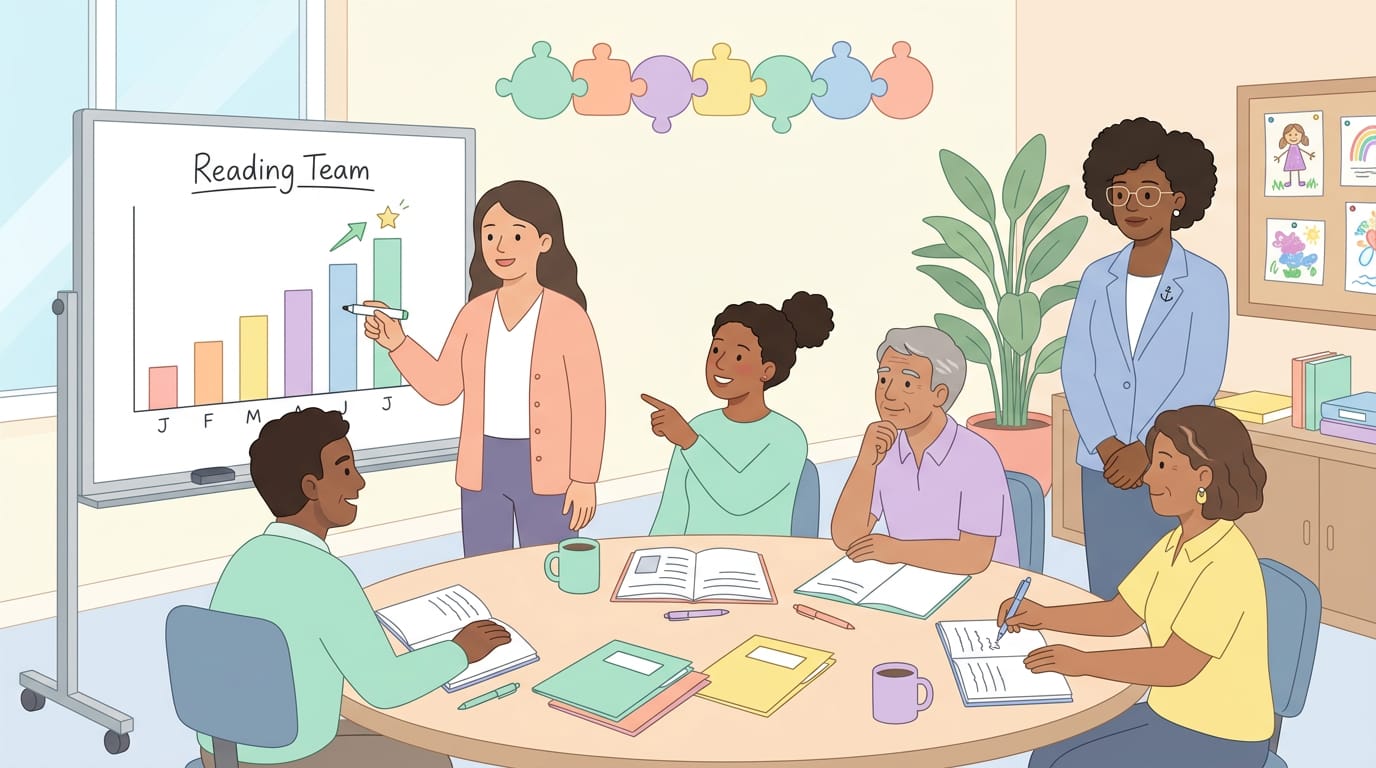
Professional learning communities (PLCs) and faculty meetings put that proof on the table. When a reading team's new routine lifts one skill, sharing the win shows the whole staff the approach is working.
Putting Improvement Systems into Practice
Good ideas rarely change a school alone. We need a sequence, a rhythm, and a way to check progress.
Rolling out change in stages, skipping fads
Start with a multi-stage implementation model: pilot with a small group, then expand, cycling through plan, try, review, and adjust at each stage. Program logic links what teachers do to the results you expect.
Begin with one entry point, such as slow feedback.
Watch out for shiny object syndrome, the urge to chase whatever's newest. Finish what you start first.
Consider a teacher who pilots a quick end-of-class check. Her colleagues then adopt it with fewer surprises. Change works best when it's sustained rather than launched.
Running a simple weekly improvement routine
The routine runs on five habits:
Three scheduled classroom blocks. Book three short visits each week.
One instructional focus. Watch one practice, such as checking for understanding.
Feedback within a day. Share what you saw while it's fresh.
Weekly evidence conversation. Review student work together and decide next steps.
Public recognition. Name what worked in front of the staff.
Picture a principal who visits three classrooms on one focus and sends a note that afternoon. Teachers know what to keep doing. Small and steady beats big and rare.
Checking whether the changes are working
Evaluate impact by asking whether students learned the practice, not whether teachers used it.
Look at student engagement evidence, such as peers answering each other or revised work after feedback.
Use a one-page reflection tool of prompts teachers complete after each cycle. Short forms get used; long ones get filed.
Use these study questions:
What did students do differently?
Which step is hardest?
What would tell us to stop?
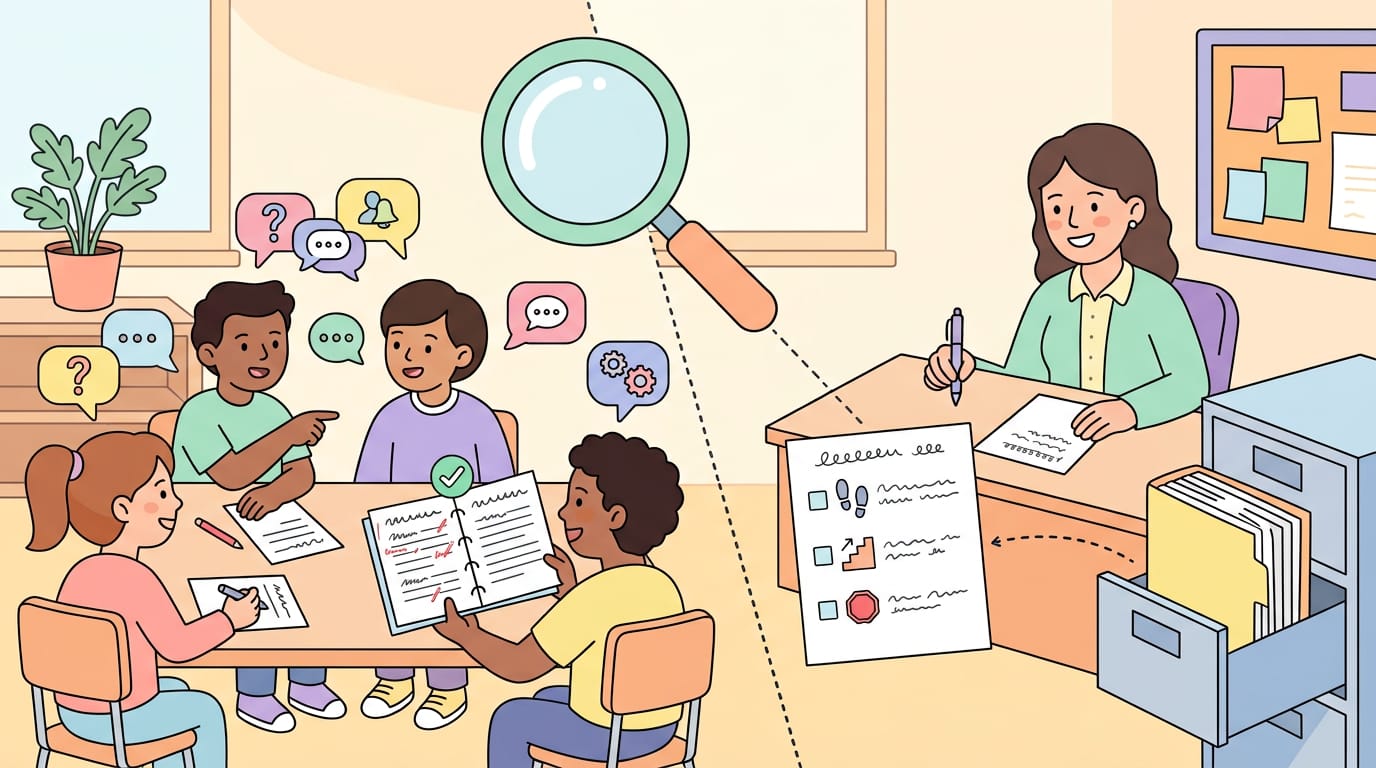
Reading and improving school culture and climate
Culture is what people believe about how work gets done; climate is how it feels. Assess climate with brief check-ins, act on one concern, and tell staff what changed.
Advisory groups of rotating teachers review climate data, test ideas, and carry feedback to colleagues. One teacher on the group notices newer colleagues rarely speak up, so she proposes small-group feedback, and more of them start talking.
Culture is the ground your improvement plan stands on. Teachers who trust feedback will try new practices in front of peers.
Where to Go from Here
The goal isn't to read more. It's to lead better, so here's where we'd send you next, from books and courses to training and tools.
Recommended books and course materials
Start with DeWitt's book from Corwin, then look at the Pearson 5th edition textbook if you want a course-style structure.
Before you buy, check the course adoption listing for your school or district, since it shows which materials have already been officially chosen. When you compare titles, look at their expert endorsements.
They're a quick credibility check, but read a few pages yourself before you commit.
Ways to get trained and coached
If you learn best face to face, look at keynote and coaching offerings. Ongoing leadership development work keeps the ideas moving well past the first read. Consider a fourth-grade teacher who has just been asked to lead her team's coaching cycle.
She reads one chapter a week, talks it through with an instructional coach, and tries one feedback routine in her next team meeting. By spring, her colleagues are asking her to share it.
The Deliberate Coaching approach is worth a look if you want a specific method to try.
Technology tools and study aids
If technology is part of your role, the technology leadership section is a natural next stop. Before you buy a digital copy, compare the eTextbook access options, since how long you keep access can vary.
Then use the study prep tools to quiz yourself on key ideas before you bring them to your team. Practice first. Then lead.
Keeping attention on teaching and learning makes every other decision easier. Instructional leadership isn't about having all the answers. It's about asking good questions, learning alongside teachers, and making improvement a shared habit.
Start small. Choose one habit from this post, like a weekly classroom visit or a focused talk about student work, and build from there.
Ready to keep going? Explore our School Leadership & Management articles for more ideas you can use this week.
References
Executive Summary: 2025 Minnesota Principals Survey (MnPS) — cehd.umn.edu (2026)
Instructional leadership, supervision, teacher learning and classroom practice: An integrated review of international evidence — doi.org (2026)
Collective Teacher Efficacy: An Introduction to Its Theoretical Constructs, Impact, and Formation — doi.org (2019)
Still grading everything by hand?
EMStudio is a free teaching management app — manage your classes, students, lessons, and more!