Teacher Evaluation Explained: How It Works, Why It Matters

Think of a coach reviewing game film with a player. The point isn't a score for its own sake. It's spotting what's working, what isn't, and what to practice next. Teacher evaluation works the same way.
Put simply, it's the process schools use to observe classroom practice, measure it against a set of standards, and decide what support teachers need.
Here, we'll compare evaluation types, unpack rubrics and rating outcomes, and walk through how these systems work and how to design them. You'll also find practical tips for preparing for your own evaluation and responding to it.
Still grading everything by hand?
EMStudio is a free teaching management app — manage your classes, students, lessons, and more!
How Teacher Evaluation Has Changed over Time
Is an assessment the same as an evaluation? Not quite. An assessment gathers information about what teachers or students know and can do, while an evaluation uses that information to judge quality. Here's how we got here.
Why federal policy pushed for accountability
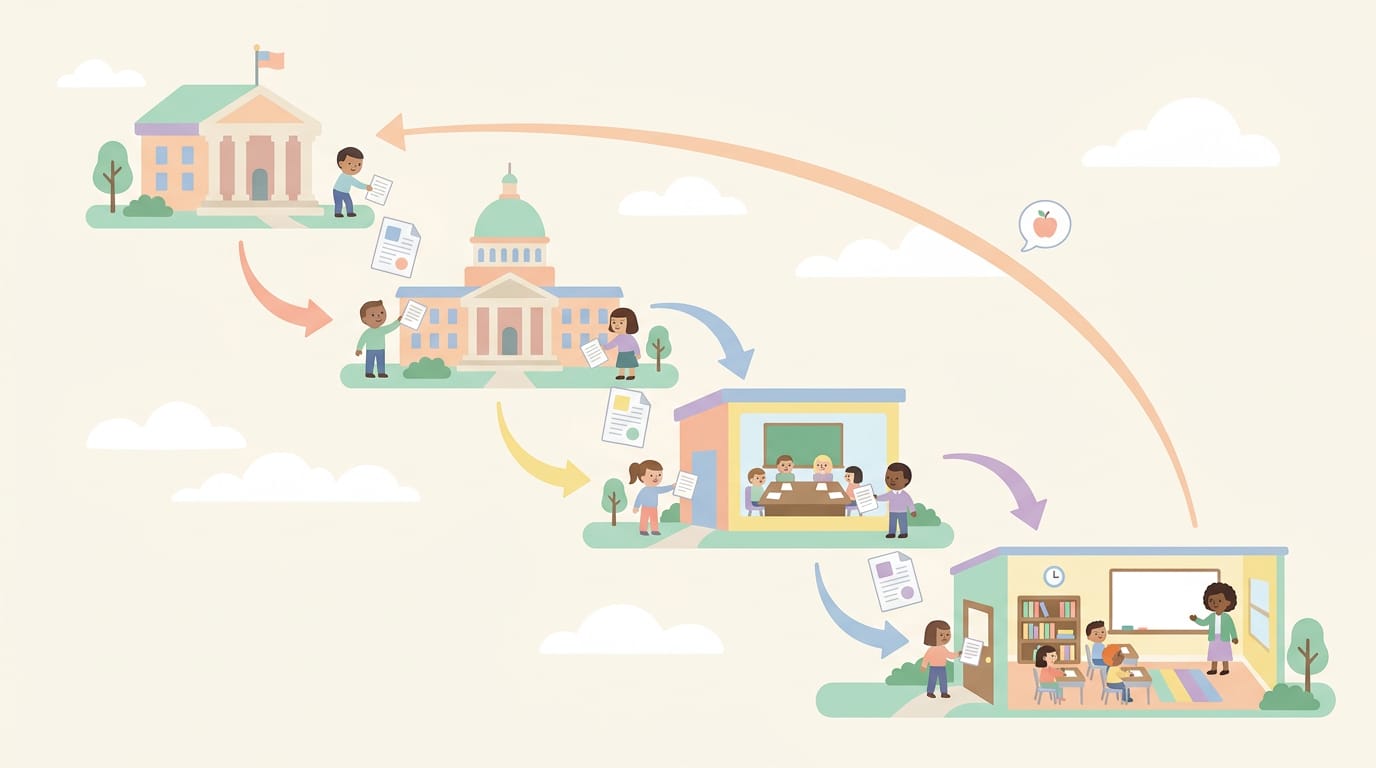
The accountability movement reshaped schools, and teacher evaluation was pulled into it. Federal efforts like Race to the Top and School Improvement Grants (SIG) pushed states and districts to rethink how they judged teachers.
The U.S. Department of Education carried that push forward, aiming to hold schools accountable while supporting teachers. Who sets rules like these is the central question in education policy.
Where old evaluation systems fell short
If you've ever received an evaluation form that felt like a formality, you're not alone.
Weisberg and colleagues' 2009 report, The Widget Effect, found that evaluations often failed to distinguish levels of teacher effectiveness and offered little useful feedback. In that study, over 99% of teachers across the U.S. were rated satisfactory.
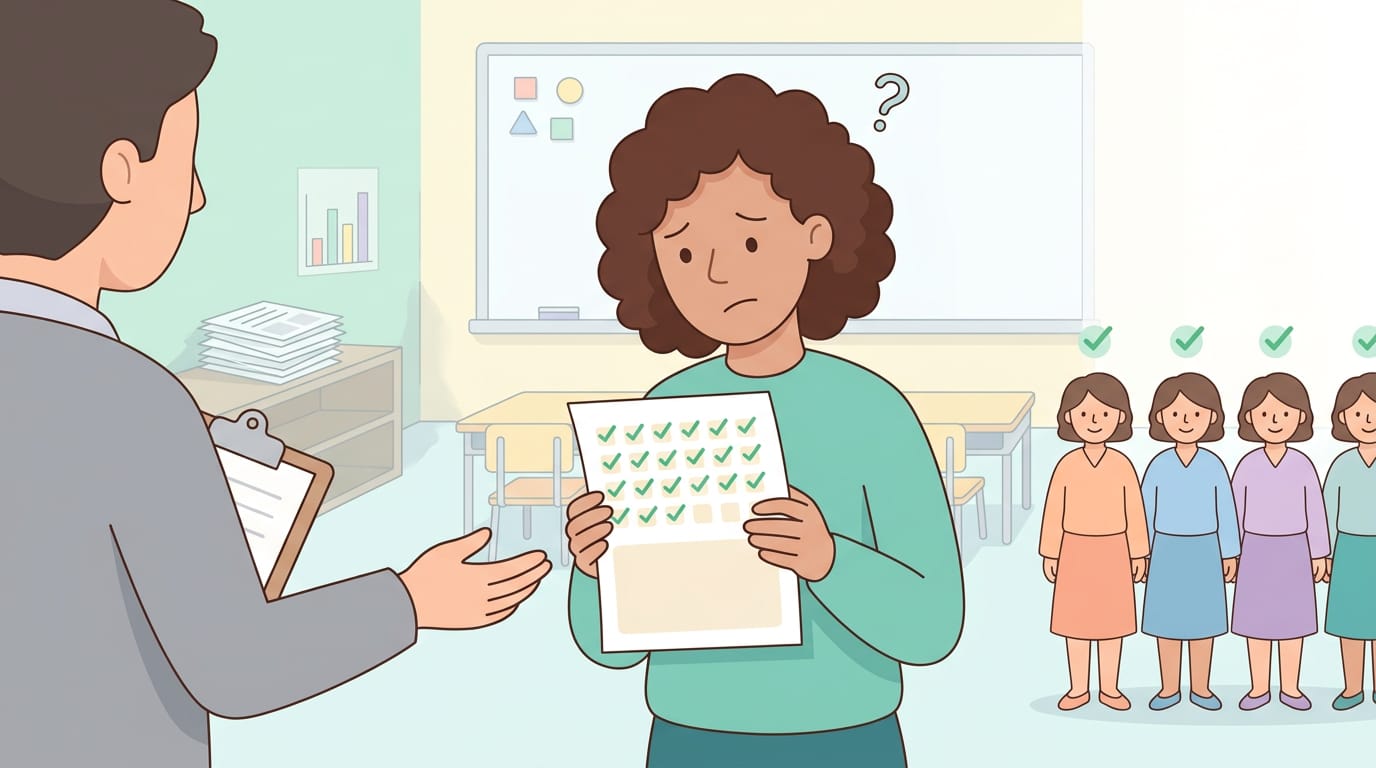
Older systems leaned on compliance-focused checklists that aimed to check boxes rather than improve teaching. Picture a teacher whose observer ticks off required items, then hands back a form with no specific advice on what to try next.
The form is complete. The teacher isn't any better off. Many also had no student learning measures, so judgments ignored whether students were learning.
What ESSA changed and where it leads
The Every Student Succeeds Act (ESSA) ended those federal incentives, and the pressure to tie evaluations to student growth eased. Funding can now go toward feedback that's useful and timely, and states and districts have room to invest in support.
The focus can shift from judging teachers to helping them grow. That's a real shift.
How to Design Teacher Evaluation Forms Well
Your evaluation form is only as useful as its design. Build it outward from one clear purpose, and evaluators and teachers will both know what counts.
Set one main goal and a few objectives
Start with a single main goal that states what the evaluation is meant to improve or confirm. Every other element should serve it. Next, choose the areas being evaluated, such as instruction, classroom environment, and assessment.
Then break each area into specific objectives, keeping the list to seven at most. Fewer objectives means each one gets real attention.
Laying out the form and rating scale
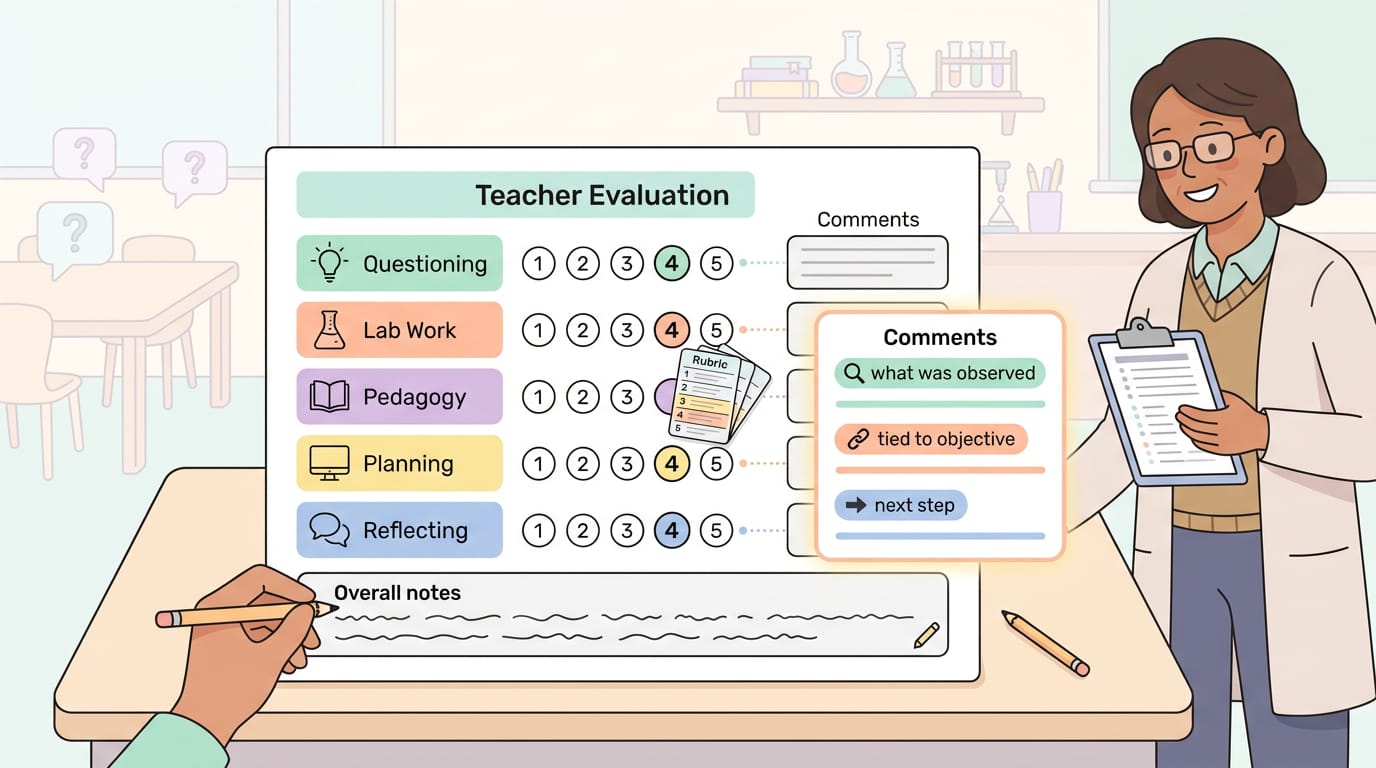
Give every objective its own space for comments, so feedback stays tied to the thing it's about. Score each objective on a numeric Likert scale (a rating from 1 to 5, where each number marks a level of performance). The number alone isn't enough, though.
A rubric is a scoring guide that describes what each level looks like for a specific objective, so the evaluator and teacher work from the same description. Finish with an overall notes section for the big-picture summary.
Include sample evaluation comments to write, so evaluators know the standard. A strong comment names what was observed, ties it to the objective, and suggests a next step. Describe what the teacher did, not what kind of teacher they are.
Think of a middle school science teacher whose evaluator writes, 'Your lab questions pushed students to explain their reasoning. Try one follow-up question per group next time.' She knows exactly what to keep and what to build on.
Preparing evaluators and following up well
Brief each evaluator before the observation so everyone scores against the same rubric and expectations. Afterward, hold a post-observation discussion to walk through the notes together.
Clarify anything vague, then agree on an action plan with one or two steps the teacher will take next. Feedback without a plan is just paperwork.
Borrow ideas from sample forms
You don't have to start from a blank page. Review other teachers' forms in your school or district to see what works and what confuses people.
Check whether your state publishes a library of observation forms, and compare how different forms handle goals, scales, and comments. Borrow the parts that fit your context, and leave the rest.
Using Evaluation to Help Teachers Grow
Evaluation works best as the start of a conversation, not a final verdict. Formative evaluation guides growth during the year, while summative evaluation informs decisions.
Better feedback from more observers
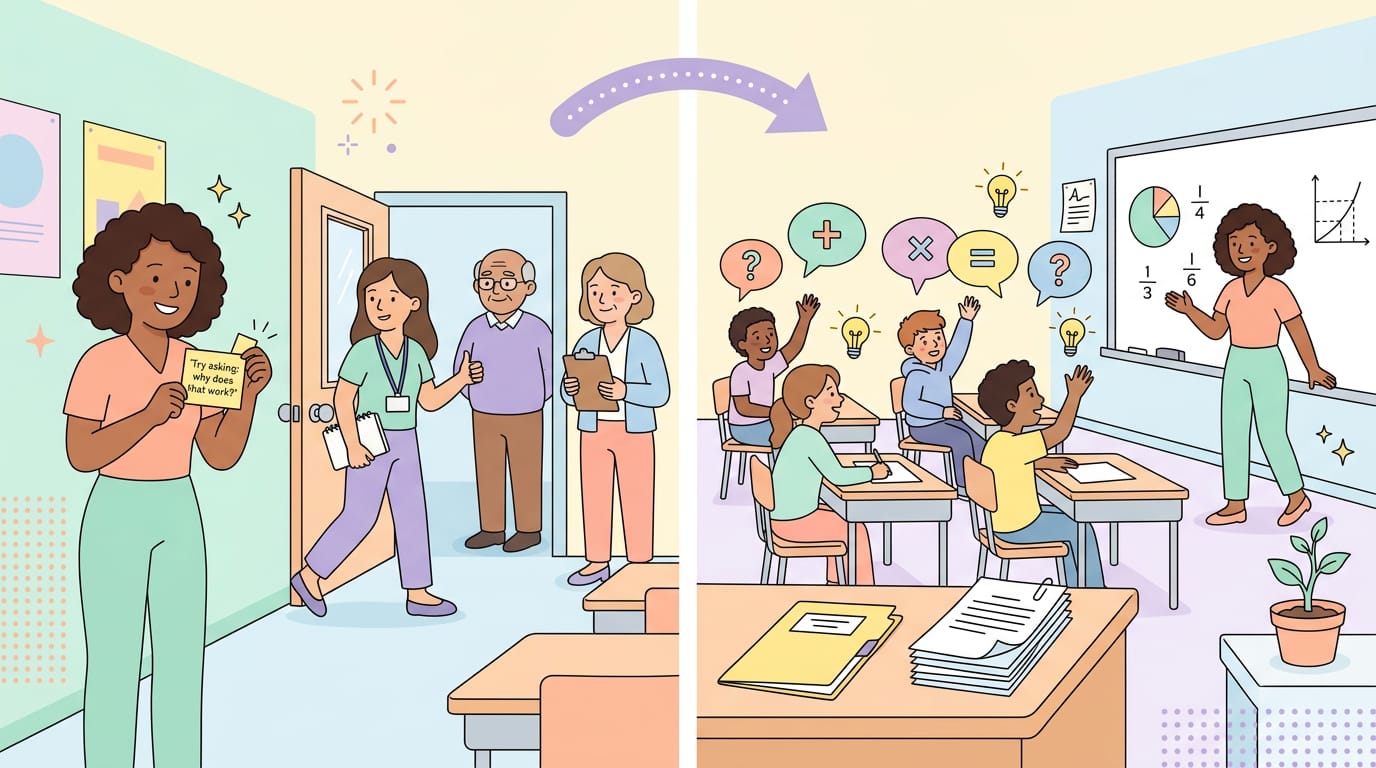
Feedback helps most when it comes often and from more than one person. Principals are typically the primary observers, but training teacher leaders adds more coaching. Teachers want feedback that helps them improve rather than just score them.
Before an observation, gather evidence, like lesson plans and student work, so your observer sees the whole picture.
Consider a middle school math teacher who gets a short visit and a note about one question she asked. She tries the change the next day and sees more students explaining their thinking. Feedback is the point.
Collaboration and training that actually help
Formal training doesn't always pay off. Teaching our teachers, a New Zealand report, found that formal professional development often does not improve teachers' instruction effectively.
Strong instructional leadership helps, and so does peer collaboration tied directly to evaluation feedback.
Look for discrete skill scores over a single rating: an overall score tells you where you landed, while skill-level scores tell you what to work on next. Specific beats vague.
What state programs and studies found
Tennessee's teacher pairing program is one example of peers supporting growth.
According to the National Council on Teacher Quality, studies in Cincinnati and Washington, D.C., examined teacher-evaluation systems and their effects on teaching practice and student learning.
TNTP found that IMPACT, the teacher-evaluation initiative in D.C. Public Schools (DCPS), is helping teachers improve their instructional skills.
Evaluation initiatives in Cincinnati and D.C. have been associated with gains in teaching practice and student learning. Systems also change over time, so revisit yours regularly.
How Value-added Measures Track Student Growth
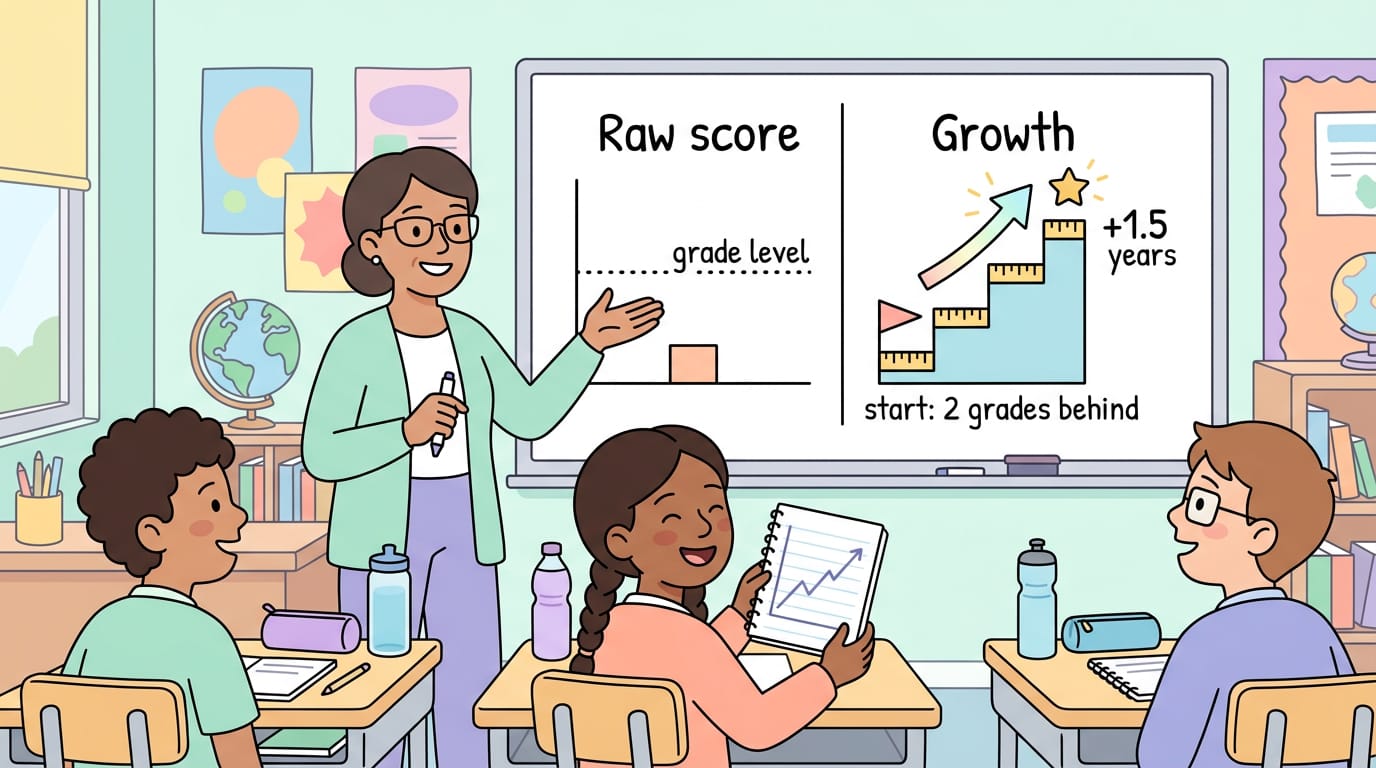
Value-added measures care less about where students finish and more about how far they grow in your class.
What value-added evaluation promises teachers
A value-added model estimates how much a teacher's students grow in a year, compared with what their prior scores predicted. Four promises stand out:
Student achievement linked to ratings. Your rating reflects how students actually perform.
Greater accountability and quantifiable data. Numbers allow consistent comparisons across classrooms.
Teachers can show student growth. You can point to progress across years.
Recognizes students' starting points. Growth is judged from where each student began.
Say you teach fifth grade and your class starts two grade levels behind. If they gain a year and a half, a growth measure credits that progress, even when a raw score doesn't show it.
Where value-added systems go wrong
Rushed, unvetted state models. Some states adopted models before testing them thoroughly.
Hodge-podge of methods. Different formulas make ratings hard to compare.
Bias toward high-achieving populations. Models can be biased against teachers of students with lower prior achievement, even when they try to account for starting points. The Importance of Student-Teacher Matching: A Multidimensional Value-Added Approach found these effects are especially pronounced among low-achieving students.
Teachers judged on students not taught. Ratings can include students you only partly taught, or never taught.
Rolling out value-added systems responsibly
Two-year vetting minimum. Test a model at least two years before it counts toward ratings.
Baseline then full implementation year. Run a baseline year first, then move to full use.
Build longitudinal data. Track students across years to build a fuller picture.
Stay the course responsibly. Keep it steady long enough to trust it, changing only with evidence.
Aim to improve teaching, not just rank it. Go slower than you'd like.
Why Most Ratings Look the Same
If nearly everyone on staff gets the same score, you're not imagining it. Here's what gets in the way.
Most teachers rated average or higher
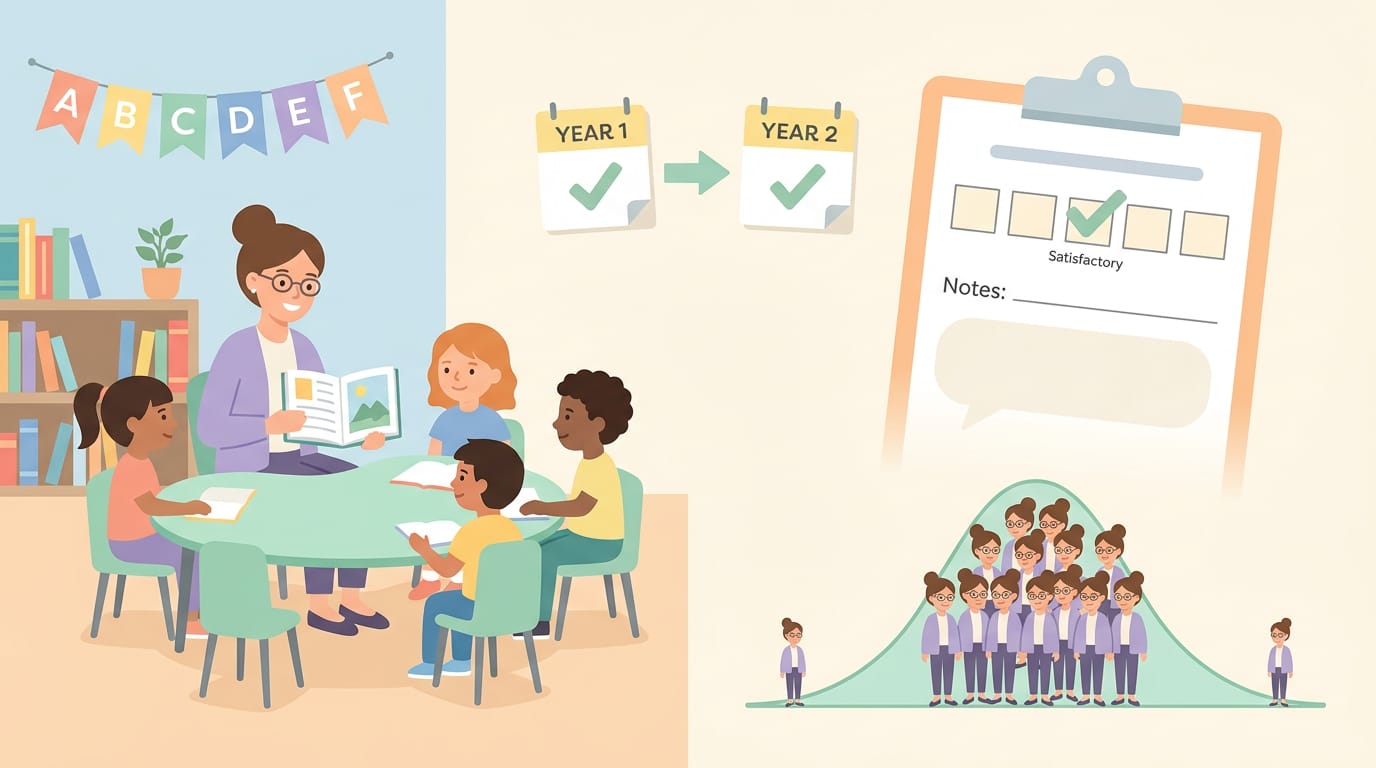
In many evaluation systems, most teachers are rated average or above. In a Center for American Progress report, this is called the “Lake Wobegon effect”: most if not all teachers receive satisfactory evaluation ratings.
Few teachers are dismissed as a result of their ratings. City Journal reports that “less than 1 percent of teachers in the two districts for which data are available were dismissed.”
Most teachers also cluster in the middle, which erodes differentiation, the ability to tell teachers apart and see who needs support.
Picture a fourth-grade teacher rated satisfactory, with no notes on her small-group reading lessons. Next year brings the same score. Nothing changes.
What keeps ratings from being honest
Several pressures pull scores toward the middle:
Principals lack time. Observations take hours many principals don't have.
Desire to maintain morale. Leaders protect staff confidence, so hard ratings feel risky.
Need for better rater training. Raters must apply the same rubric the same way, or scores drift.
School culture pressures. In close-knit buildings, a low score can feel personal.
What happens if a teacher gets a bad evaluation?
A low rating carries real weight. It can affect pay, promotion, or, in rare cases, dismissal. Where merit pay is tied to ratings, a lower score can shrink a paycheck. That's a lot riding on one number. Teachers facing a low rating may wonder what reevaluation involves.
Ratings can also drive a public narrative about schools, and teachers often push back. Here's where due process and improvement plans matter.
Well-designed systems offer due process, a formal way to question a rating, and improvement plans with clear goals and support. A science teacher with a low October rating might get a coach instead of just a score.
The rating should shape what happens next, not just what happened.
Good teacher evaluation is less about a final number and more about growth. When forms are well designed, ratings are fair, and feedback leads to real support, everyone benefits, especially the students in the room.
Whether you're observing or being observed, treat the process as a chance to get better.
Ready to keep going? Browse our School Leadership & Management articles to explore related ideas.
References
Surviving observation island — kappanonline.org (2025)
The Importance of Student-Teacher Matching: A Multidimensional Value-Added Approach — doi.org (2025)
Teaching our teachers: How effective is professional learning and development? — evidence.ero.govt.nz (2025)
Why Does Education Reform (Almost) Always Fail? — cityjournal.substack.com (2026)
Research Rationale: Evaluation — nctq.org (2026)
So Long, Lake Wobegon? — americanprogress.org
The Positive Impact of IMPACT — tntp.org
Still grading everything by hand?
EMStudio is a free teaching management app — manage your classes, students, lessons, and more!