Reevaluation Meaning: What It Is and How It Works

Think about the last time a doctor said, 'Let's take another look at those results.' Nothing went wrong. A fresh review simply gave everyone a clearer picture.
That's the heart of reevaluation: looking at something again, on purpose, to see whether the first judgment still holds.
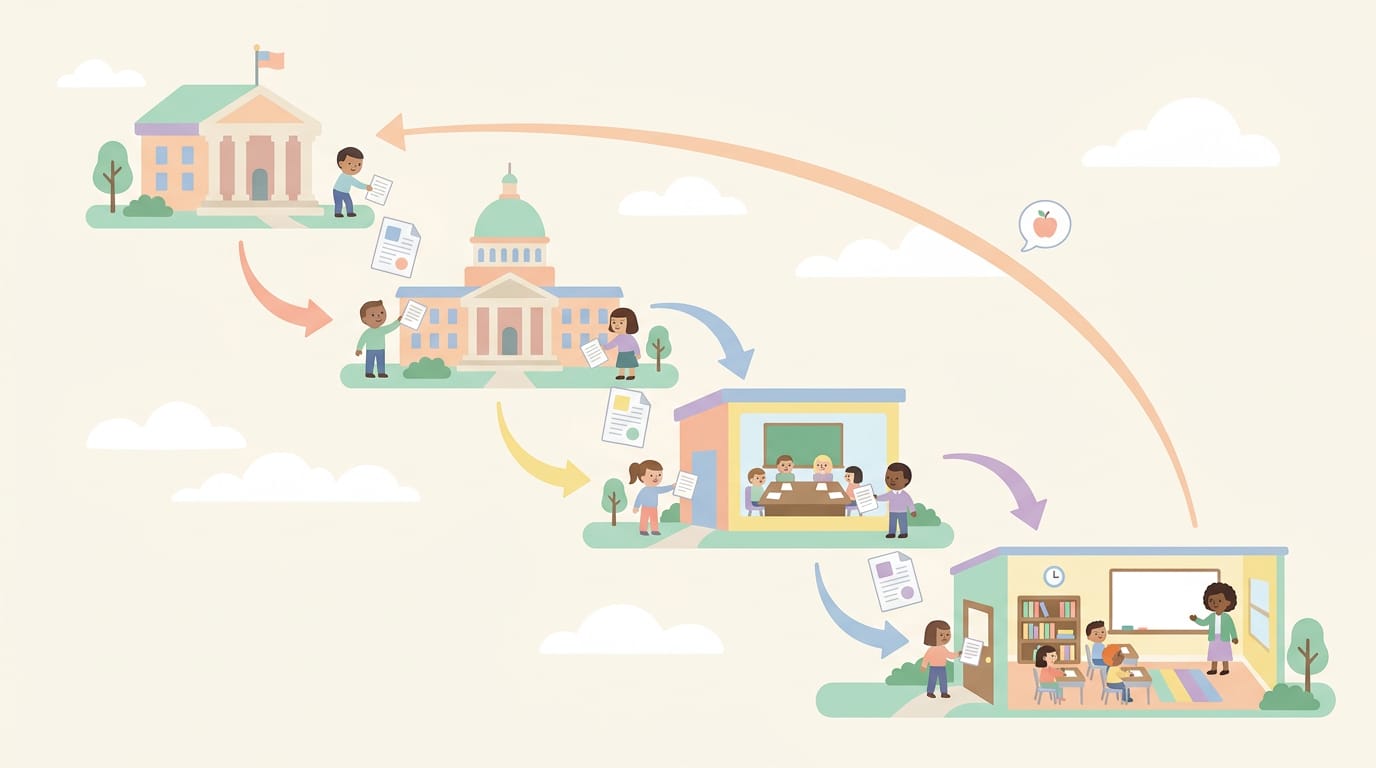
In schools, the idea shows up everywhere, from a teacher revisiting a student's progress to a formal review of a support plan.
You'll also see it spelled two ways, so we'll settle that too, then cover meaning, usage, and how formal reevaluations work in school settings.
Still grading everything by hand?
EMStudio is a free teaching management app — manage your classes, students, lessons, and more!

What Reevaluation Means and How It's Used
Reevaluation means judging something again, usually because new information has arrived. Here's how it's used, spelled, and applied in schools.
Revisiting a judgment with new information
Reevaluating means looking again at a judgment you've already made, often after a new benchmark score, observation, or concern.
Revise or renew an assessment: update a rating or conclusion with current evidence.
Reconsider or assess again: return to the question with fresh eyes.
Review in light of new information: check the original call against what you now know.
Decide if a new judgment is needed: sometimes the answer holds, and sometimes it changes.
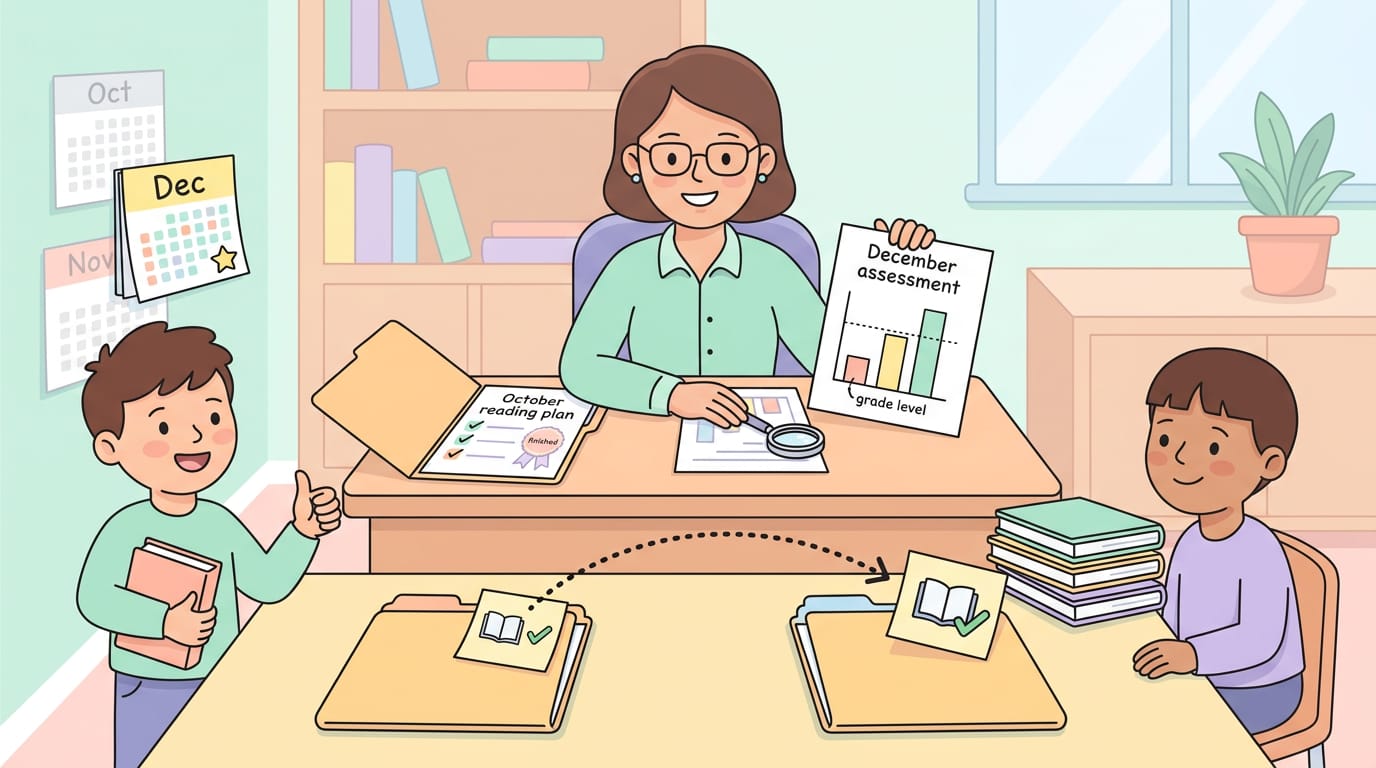
Consider a teacher who wrote a reading plan for a student in October.
When a December assessment shows that student reading at grade level, she reevaluates the plan, ends the intervention, and moves that support to a classmate who still needs it. The evidence decides.
The same process applies to school policies and programs. A school leader might reevaluate a homework policy or tutoring program after a semester of data, then decide whether to keep, change, or retire it.
Other words for taking another look
Several close synonyms overlap:
Reassess and reappraise focus on a fresh judgment of value or performance.
Reconsider, reexamine, and rethink suggest turning the question over again.
Review is the broadest term, ranging from a quick look to a full audit.
Reassessment is the noun form of reassess and a close relative of reevaluation.
The real difference is usually how you look again, not whether you do.
Verb and noun forms of reevaluate
Reevaluate is the verb, and reevaluation is the noun. The verb takes the usual endings: reevaluated for the past and reevaluating for the ongoing action.
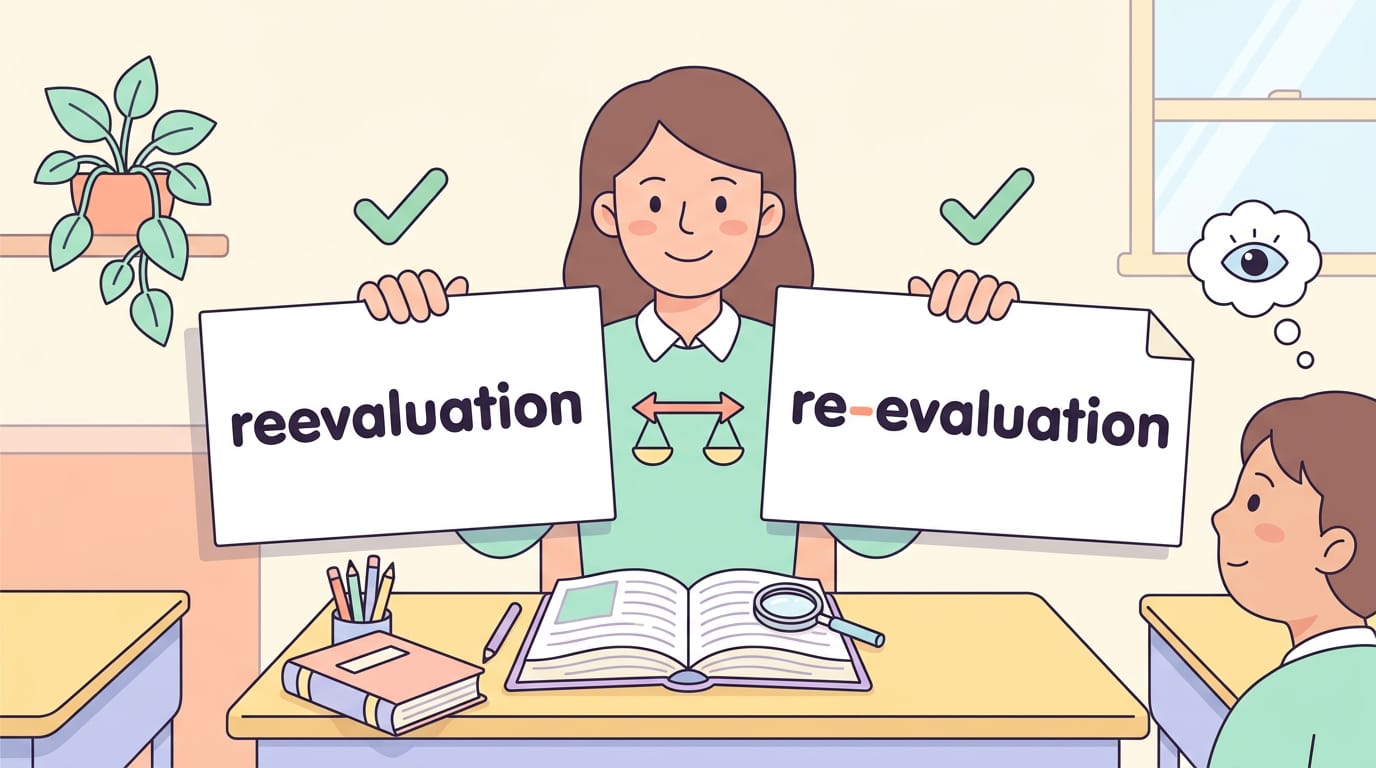
You'll see two spellings: reevaluation, the closed form most dictionaries list, and re-evaluation, the hyphenated form some writers use. Pick one and stay consistent.
Say it aloud and the verb has four syllables, ree-VAL-yoo-ayt, while the noun has five, ree-val-yoo-AY-shun.
Should You Hyphenate Reevaluation or Not?
Both spellings appear in print, so the right choice often depends on your setting and your school's habits.
Whether to keep or drop the hyphen
Is there a hyphen in reevaluation? Not in the closed form, which most American dictionaries list. The hyphenated re-evaluation is accepted too. Both spellings are accepted variants, so the choice comes down to convention rather than correctness.
The closed form is the one most readers recognize at a glance. The hyphen still has a real job, though: it can aid readability by making the prefix visible, so readers see re and evaluation as two parts.
The question isn't whether the word is correct. It's which form your readers expect.
Is reassess one word or two?
Reassess is written as one word, with no hyphen, so write it that way every time.
Is "revaluate" a word? It's real but uncommon, and you'll mostly see it in finance. For school work, reevaluate is the verb you want.
Revaluation (no extra e) usually means changing an official value, such as a currency's, while re-evaluation means judging something again. Check which one your sentence needs before you hit send.
Keeping spelling consistent across documents
Choose a form and stick with it. Two habits help:
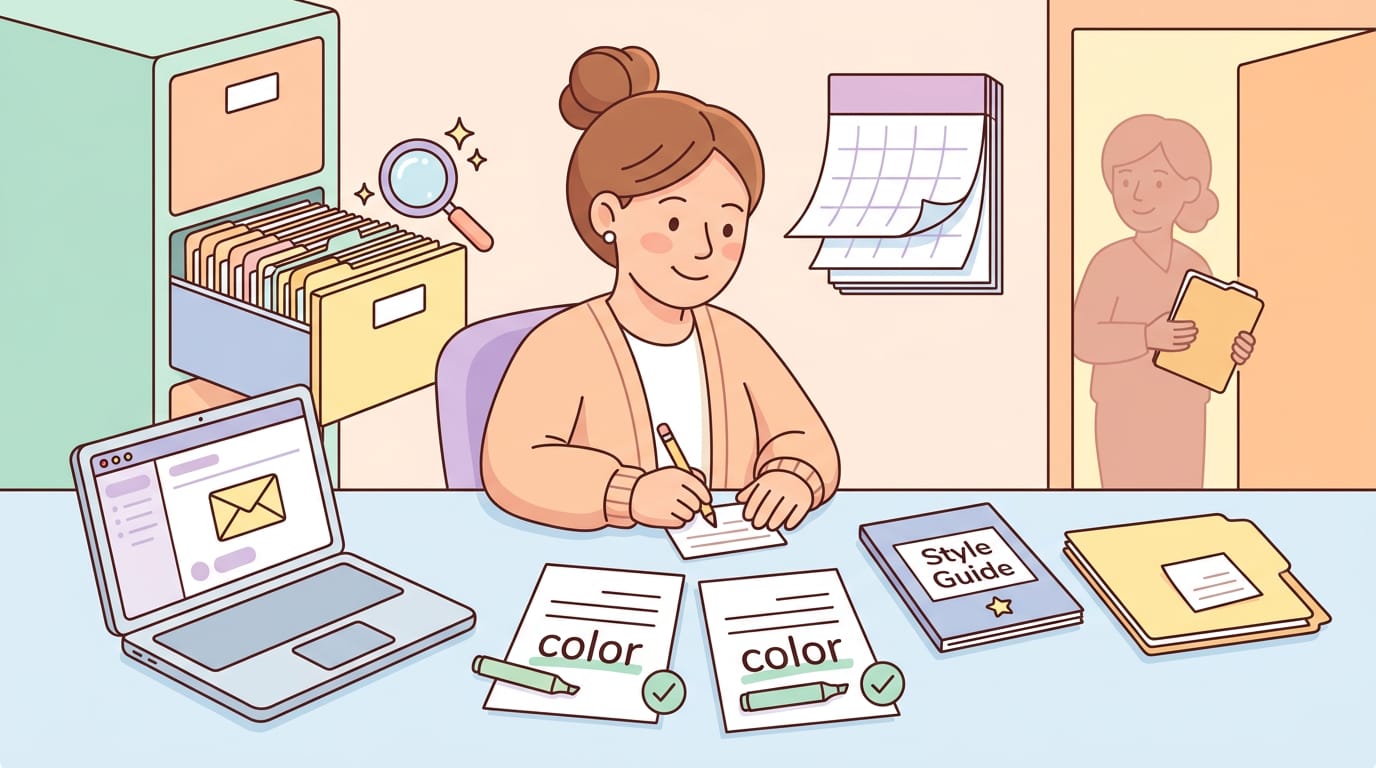
Follow your style guide. If your school or district has one, its spelling wins, even if you'd have chosen differently.
Stay consistent within one document. A report that switches forms halfway through looks unpolished, even when both spellings are correct.
Picture a fourth-grade teacher who emails a parent about a student's progress, then writes a note in the student's file. Matching spellings give the family one consistent message, and the file reads as a single, careful record.
Records outlive the year they're written, and a new teacher may read one years later. Uniform spelling also keeps entries easy to search, since a search for one form can miss the other. Small habit, lasting payoff.
What does getting re-evaluated mean?
In school, getting re-evaluated means a student's progress or plan gets another look, often because new information has come to light. It isn't a verdict on the student. It's a chance to confirm that the plan still fits.
Often the first step is a fresh look at the work itself. Consider a sixth-grade math teacher whose student's quiz scores suddenly dip. She pulls six weeks of work and finds the student struggles only with word problems.
That points to a reading gap, so the student gets support aimed at the real problem, not more drills on the wrong one.
New information might come from a test, a family conversation, or a change at home. When it does, check whether the current goals still match what you now know. Goals should follow the student.
Real Examples and How Often It's Used
Here's where reevaluation shows up in everyday life, and how often it turns up in print.
Business, finance, legal, and personal examples
In business, a reevaluation often means a team revisiting its strategy after results come in. In finance, it can mean rethinking how money is spread across investments.
In law, a settlement's value may be reevaluated when new facts emerge, and personal relationships can need the same fresh look. Same word, different stakes.
Consider a teacher who reevaluates a student's reading plan after a midyear check. Instead of repeating the same lessons, she regroups the class, and the student finally starts moving forward.
A reevaluation is less about starting over and more about checking what still holds up.
How print use has changed over time
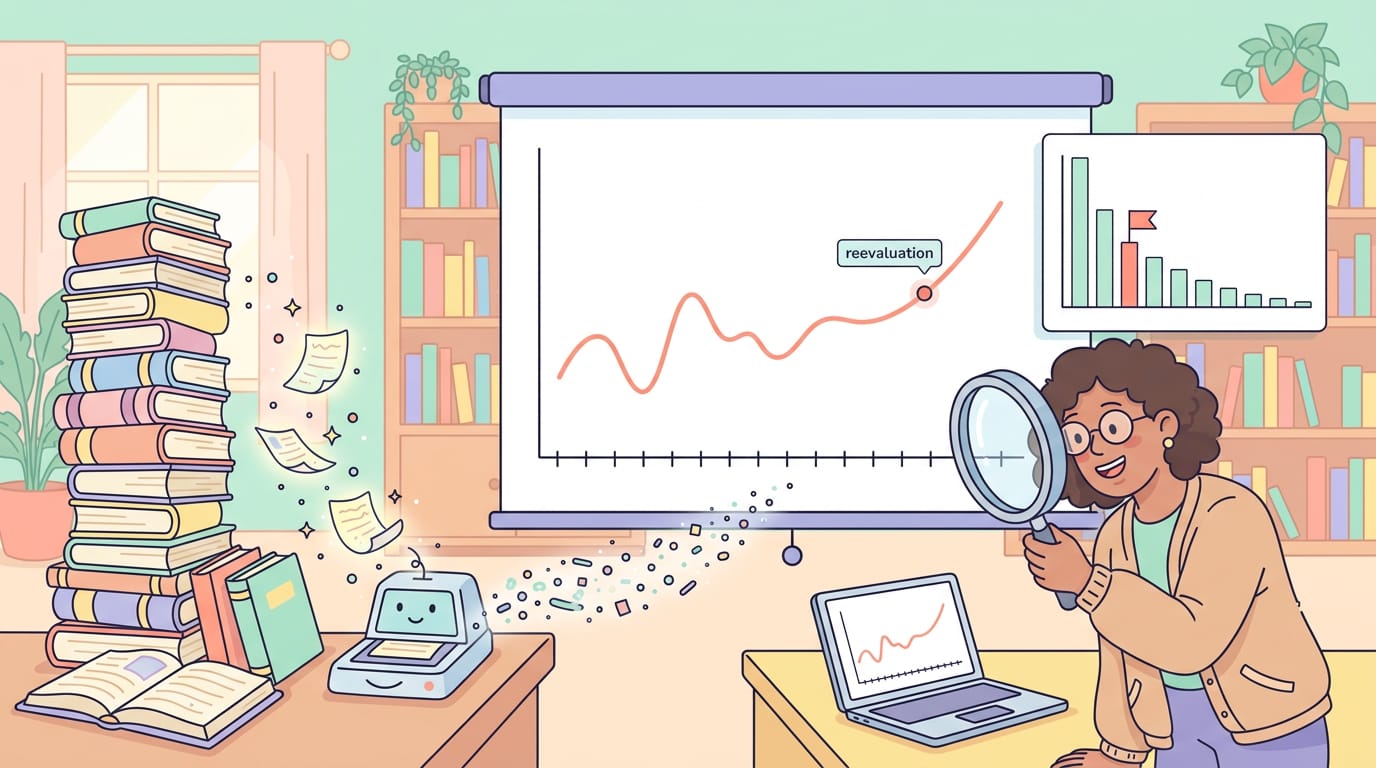
A study of millions of digitized books shows that analyzing such collections lets researchers track cultural trends, and the same approach can follow how often reevaluation appears in print over time.
Whether its use is rising is a question those numbers can answer, so let's check before we assume.
For a timeline you can explore yourself, Google Books' Ngram Viewer graphs word frequency across the Google Books collection.
Frequency also gives reevaluation a popularity rank. Word Quest 1000 explains that, under Zipf's law, a word's frequency is roughly inversely proportional to its rank, so that position shows how often it's used compared with other words.
Pronunciation, translations, and more tools
Pronunciation. Say it ree-uh-val-yoo-AY-shun, with the main stress on AY.
Translations. Equivalents vary by language, so check a bilingual dictionary for the language you need.
Sign language fingerspelling. Spell it letter by letter, and confirm each handshape in a reputable sign language reference.
Numerology values. Numbers tied to the word come from that practice's own system, not a dictionary, so don't read them as fact.
Citation formats. Your required style guide sets the exact format, so follow it rather than copying one from memory.
How Reevaluation Fits Assessment and Treatment
Reevaluation makes more sense once you see the full cycle.
Why the first evaluation matters
The first evaluation sets the baseline for everything that follows. Think of a teacher who sees a student struggling with reading but can't tell whether vocabulary or focus is the cause.
A comprehensive assessment looks at the whole picture, so the team can identify specific needs instead of guessing. Those findings anchor realistic goals, targets the student can actually reach.

Keeping progress moving with reevaluations
A plan that fit in September may not fit by spring. Reevaluation checks whether a plan is working, not just whether it exists.
Consider a teacher whose student hits a reading goal early: the target can be raised before boredom sets in, or the approach changed if goals stall. That keeps support current.
Special education reevaluations also follow set timelines.
According to an education service district's evaluation procedures, reevaluations happen when a child's needs warrant one, when a parent or teacher requests one, and at least every three years, unless the parent and district agree otherwise.
Stagnation is the quiet risk: the same plan, year after year.
Insurance, school versus medical, and teacher input
Before booking an outside evaluation, confirm which insurance plans a provider accepts. A school evaluation asks what support a student needs in school.
A medical diagnosis answers a clinical question, and the two can inform each other without being interchangeable. Either way, the aim is personalized child support: goals built around that child's actual needs, not a generic template.
Teachers see students daily, so their input carries real weight in evaluation meetings. Think of a teacher who brings two dated work samples and notes on strategies already tried. That evidence turns a vague concern into a clear starting point.
Parents can request a reevaluation and take part in timing decisions. Check your district's consent procedures for details.
At its core, reevaluation is simply looking again with fresh eyes. Whether you spell it reevaluation or re-evaluation, the meaning stays the same, and what matters most is using it well.
Formal reviews work best when they're clear about their purpose and fair to everyone involved.
Ready to dig deeper into school decisions? Check out our School Leadership & Policy posts for more on how leaders and teachers make these calls.
References
IGBAH-AR – Special Education - Evaluation and Eligibility Procedures — policy.jcesd.k12.or.us (2026)
Quantitative analysis of culture using millions of digitized books — pmc.ncbi.nlm.nih.gov (2010)
Google Books — handwiki.org (2026)
Zipf's Law and Why Frequency Lists Work — wq1k.com (2026)
Still grading everything by hand?
EMStudio is a free teaching management app — manage your classes, students, lessons, and more!