Business Communication Explained: Types and Principles

Think about the last time a message got lost on the way to its reader. A parent email read as a complaint when it was meant as a question, or a staff memo left everyone guessing about the deadline.
Business communication is the exchange of information within an organization and with the people it serves.
In this guide, we'll cover the main types, the principles that make messages land, and the barriers that derail them. Then we'll show how school and district leaders apply the same ideas with parents, staff, and boards.
Still grading everything by hand?
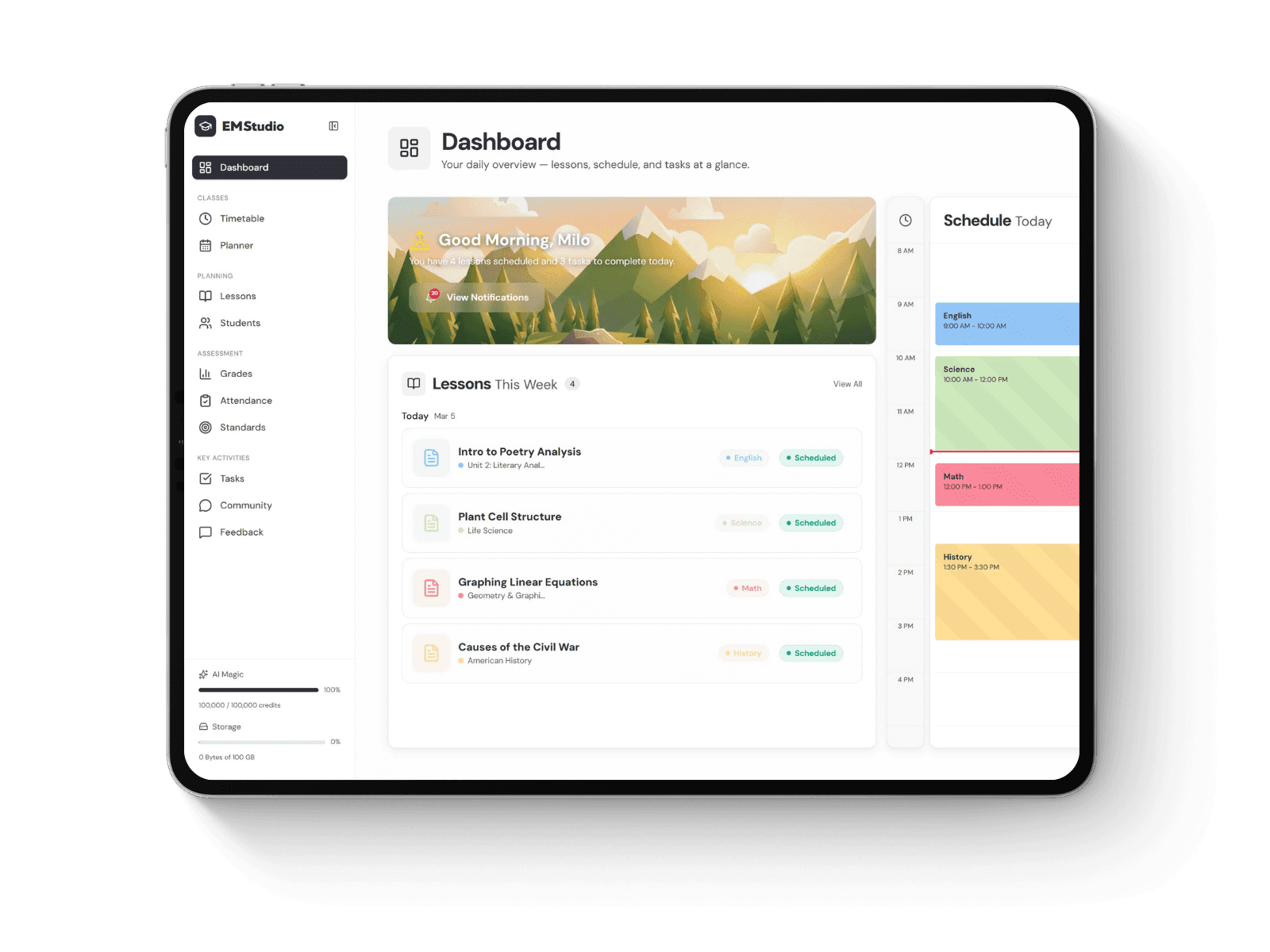
EMStudio is a free teaching management app — manage your classes, students, lessons, and more!
What Business Communication Actually Involves
Business communication covers every exchange of information that keeps an organization running, from a quick internal note to a public announcement. Here's how it plays out in practice.
Sharing information to reach business goals
Business communication does four main jobs:
Information exchange. Staff share updates, questions, and instructions inside the organization.
External reach. Customers, suppliers, and other stakeholders are part of the conversation, too.
Operations and goals. Clear messages keep daily work and bigger objectives on track.
Decision-making. Accurate, timely information helps leaders choose wisely.
The goal isn't to send more messages. It's to get the right information to the right people.
Email, meetings, calls and social media
Each channel has its own strengths:
Emails and reports give people details they can reread and keep on file.
Presentations and meetings bring people together to discuss, question, and agree.
Phone and video calls handle quick, two-way conversations when a message needs an answer now.
Social media shares updates publicly and invites replies from anyone watching.
The best channel isn't always the newest one. It's the one that fits the message.
What it looks like in everyday work
Picture a local bakery that emails its customer list about a weekend sale. The message is short, names the offer, and tells readers how to claim it. That's business communication aimed at customers.
External communication doesn't always involve a sale, though. Consider a principal who emails families about a change in dismissal time. The message is brief: it names the new time, gives the reason in one sentence, and says where to ask questions. Schools that want to go further with these messages can read our ultimate guide to effective communication in education.
Parents read it once and plan their afternoon around it. Same skills, different audience.

Main Types of Business Communication
Business communication isn't one thing, so we'll break it into the types you'll meet most often.
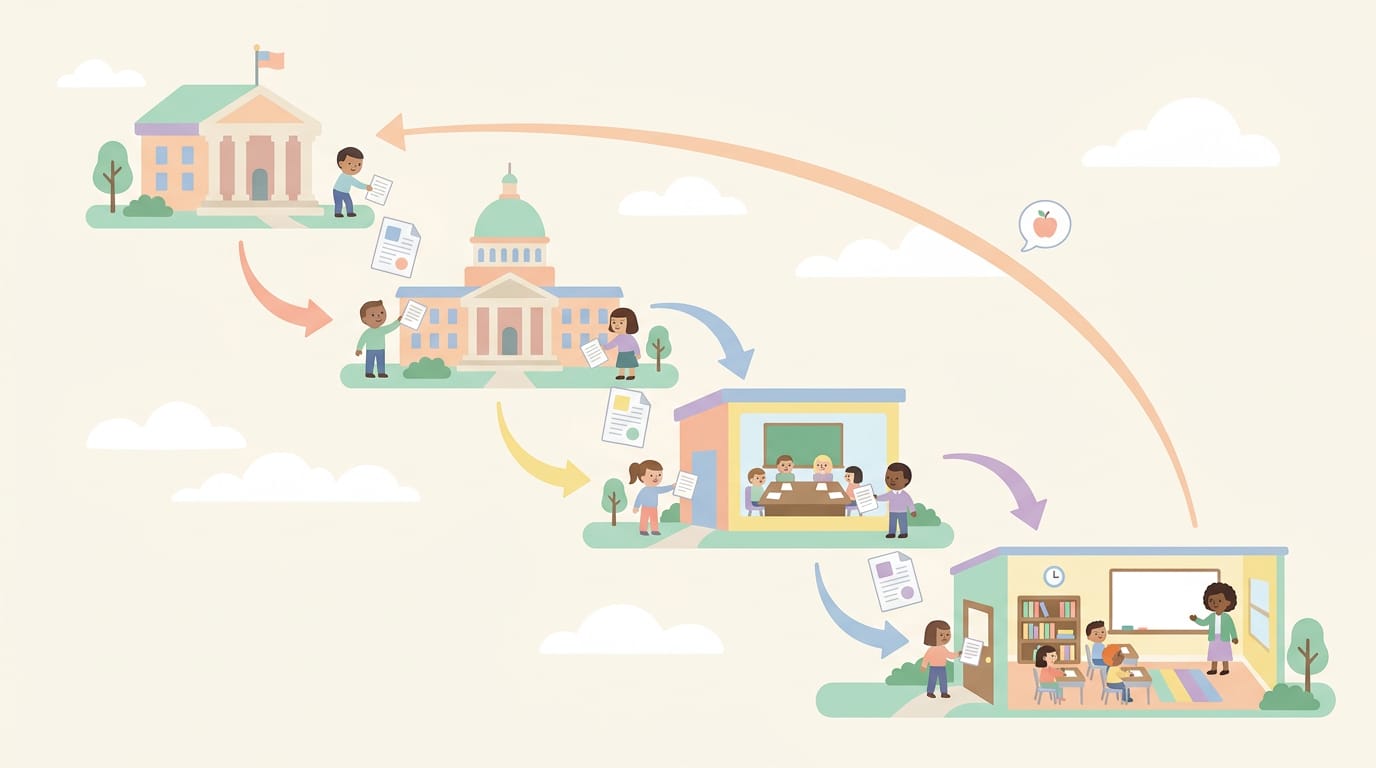
How messages flow up, down and across
Messages travel in three directions:
Upward communication carries feedback, reports, and ideas to the people making decisions.
Downward communication carries instructions and policies out to staff.
Lateral communication, also called horizontal, moves between peers who collaborate on shared work.
Picture a principal rolling out a new attendance policy. The policy flows down, questions flow up, and hallway talk flows across.
Messages kept inside versus sent outside
Internal communication reaches employees and teams. External communication reaches customers, partners, and the public through advertising, customer service, and public relations (PR), the work of shaping how people see an organization.
Think of a teacher who texts families the day before a field trip with the bus time and what to pack. That's external communication with a clear payoff: fewer last-minute questions.
Schools talk both ways, inward with staff and outward with parents and the wider community.
How companies speak to the outside world
Companies speak outward in three main ways:
Strategic positioning tells the market what a company stands for.
Operational communication covers daily exchanges with suppliers and customers.
Brand recognition efforts, like logos and slogans, make an organization easy to spot.
A district's mission statement on its website is positioning, and the same logo on every letter home is brand recognition at work. The goal is to be recognizable rather than flashy. Consistency builds trust.
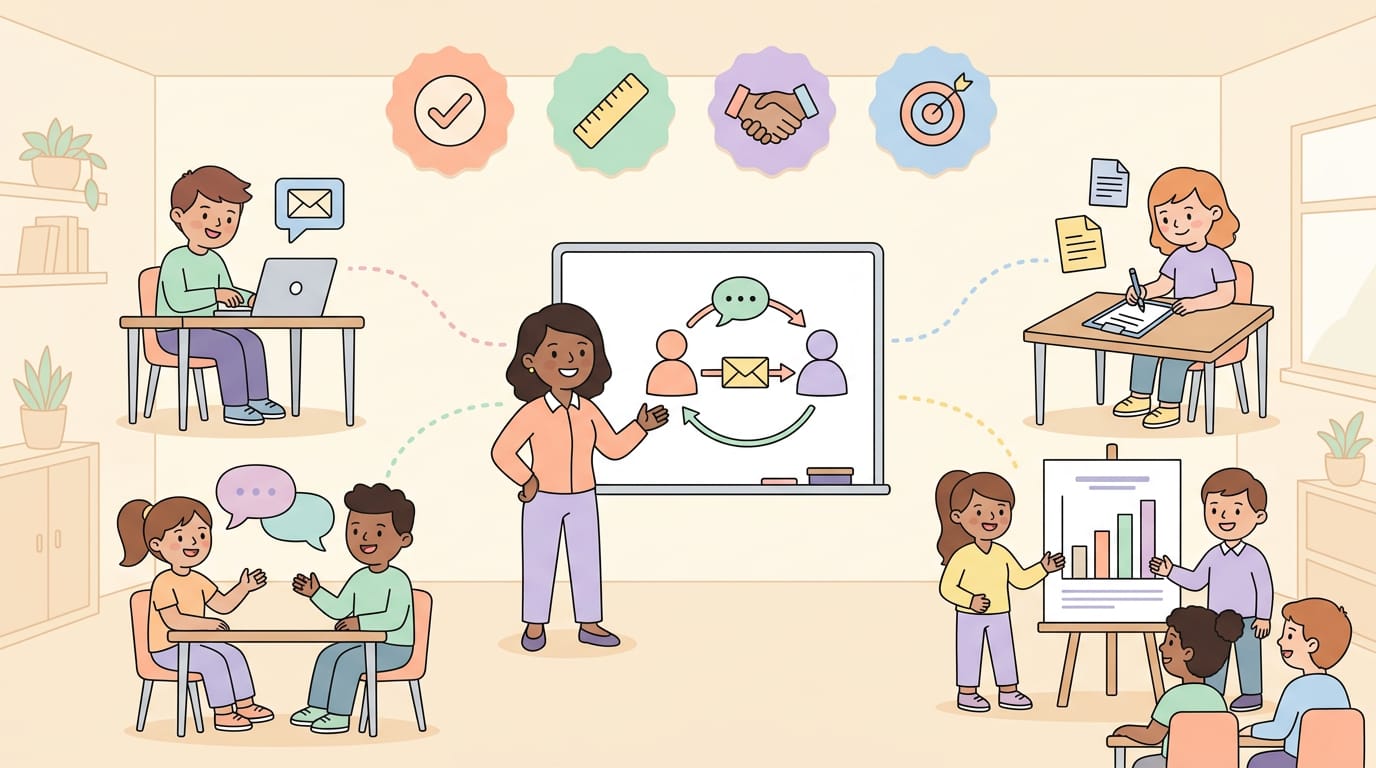
Spoken, written, visual and digital formats
Verbal communication happens face to face or by phone.
Written communication, like emails and reports, leaves a record.
Visual communication uses charts and slides to make ideas quick to grasp.
Nonverbal cues like tone carry meaning, and digital channels like chat add their own etiquette. Listening is the auditory side of communication, and many people rush past it. Active listening means you don't jump in before the whole message is out.
Think of a school secretary whose calm greeting sets the mood for every call. Callers hear her tone before they catch a single word. Tone travels faster than words.
Why Business Communication Matters Most
Why does a quick email or a five-minute huddle matter so much? That's because how information moves through a business shapes nearly everything else it does.
Getting more done with fewer errors
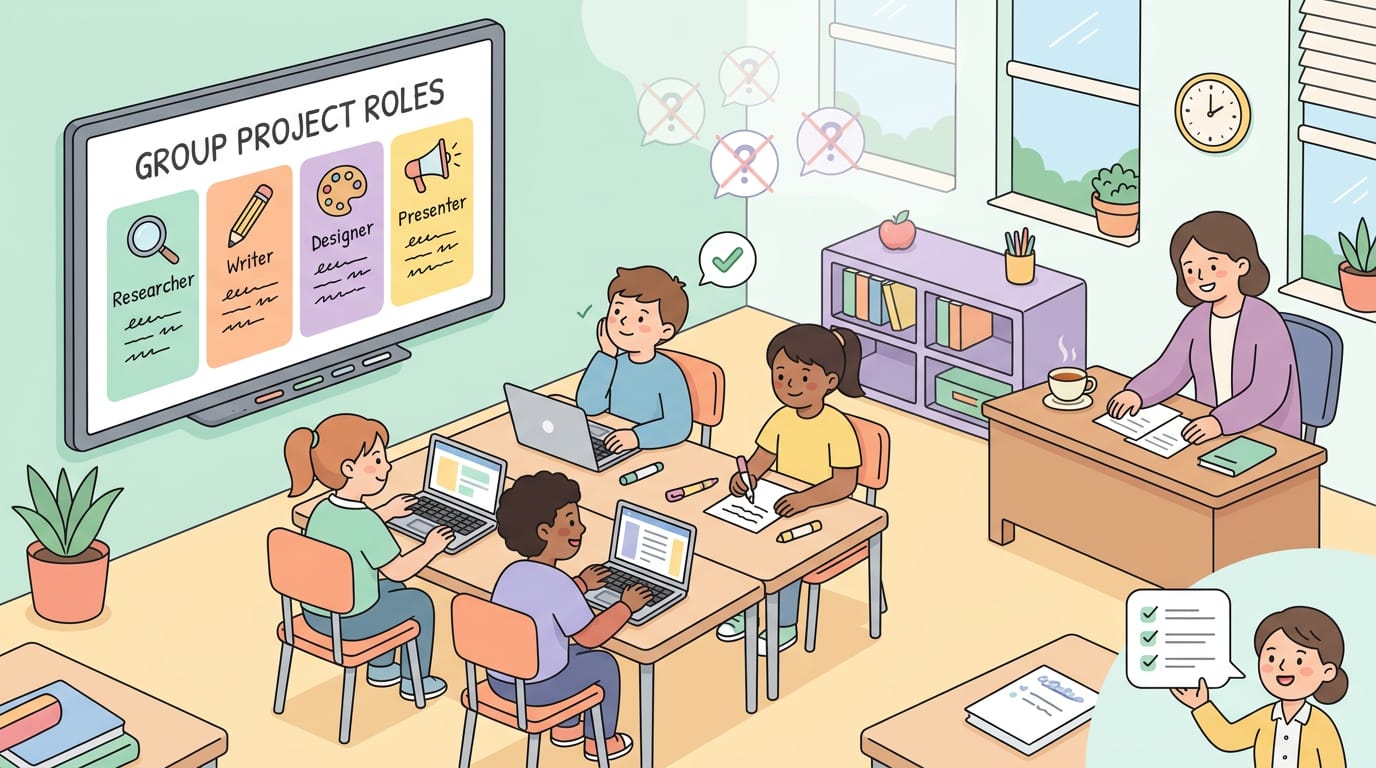
Clear communication starts with clear expectations and duties. Think of a middle school teacher who posts group project roles in one shared document. Students stop asking the same three questions every period, and she gets that time back for teaching.
Clarity also reduces errors and misunderstandings. A paper on business communication as a formula for effective communication notes that systematically applying its core dimensions helps organizations minimize misunderstandings and strengthen cooperation.
Clarity works best before the work starts, not after the mistakes show up. Consistent messages also raise professionalism, so your work reads as organized and reliable.
You can measure communication effectiveness simply: ask a colleague to restate the plan in their own words, or notice whether the same questions keep coming back.
Keeping teams trusting, motivated and together
Clear messages prevent conflict, since many disputes start with a vague or misread instruction. They also build trust and respect, and staff who understand why a decision was made tend to feel more motivated, which lifts morale across the team.
A study from National Cheng Kung University found that employees with higher communication satisfaction showed weaker intentions to leave. Everyday talk, it turns out, plays a part in who stays.
How clarity inside builds customer trust
Internal clarity shows up in service. When staff know the policy and who makes the call, customers don't have to guess. Consider a school front office where everyone gives the same answer about late pickup. Parents hear one story, not three.
Consistent answers build customer trust and loyalty, which keeps people coming back. Clear internal communication also builds a professional company image that customers notice.
Sharing data and ideas for smarter decisions
Good decisions depend on data reaching the right people in time. When attendance, budgets, or test scores move through clear channels, leaders spot problems sooner.
Open channels also invite idea sharing and brainstorming. Ideas grow when people are invited to speak, not just expected to agree. Clarity pays off.
Practical Tips for Communicating Well
Good communication is a set of habits you can start practicing today, and we'll cover the ones that matter most.
Listen well and give honest feedback
Start with active listening: give full attention, reflect back what you heard, and ask a follow-up before responding. A teacher meeting an upset parent might say, "It sounds like the feedback felt unclear," and the parent feels heard.
Avoid interrupting, even when you know the answer.
Constructive, honest feedback names a specific behavior, explains its effect, and suggests a next step. "Your exit tickets show students stall after step two" beats "Your lessons are great." Feedback is about what someone does, not who they are.
Balance talking and listening: when you're gathering information, let the other person do most of the talking.

Body language, eye contact and calm tone
Body language often says more than words. Open posture and a relaxed face signal engagement. Hold eye contact naturally, with the occasional glance away, so it doesn't feel like a stare-down. Match your volume to the room.
Staying calm matters most when emotions run high. A principal facing a frustrated parent can slow down, keep a steady tone, and say, "Let's look at this together." Calm is contagious.
Write clear, concise messages for your audience
Clear, concise wording gets to the point fast. Avoid jargon: "give struggling readers a guided start" beats "scaffold the differentiated instruction."
The 5 C's of business communication are:
clear
concise
correct
coherent
complete
Correct means accurate facts and spelling, coherent means ideas flow in order, and complete means the reader has what they need to act.
Before sending, run the 7 C's checklist:
complete
concise
considerate
concrete
clear
correct
courteous
Then tailor. A parent juggling work shifts needs the due date first, while a grade-level colleague needs the full rubric.
Reply promptly and explain your decisions honestly
Prompt email replies show respect, even when the answer is "not yet." Open, honest communication means sharing what you know, what you don't, and when you'll know more.
Explain reasons for decisions, not just the outcome. When a principal moves a staff meeting, sharing the bus constraint behind the change turns a surprise into something people accept. Silence fills with rumors.
Planning a Strategy and Choosing Tools
Before you write, settle your audience, your goals, and your tools.
Understand your company and its people
Start with your organization's objectives and culture. A district focused on family engagement will write differently than one sending compliance notices.
Then study your stakeholders: staff, parents, and board members, each with different needs and preferred channels.
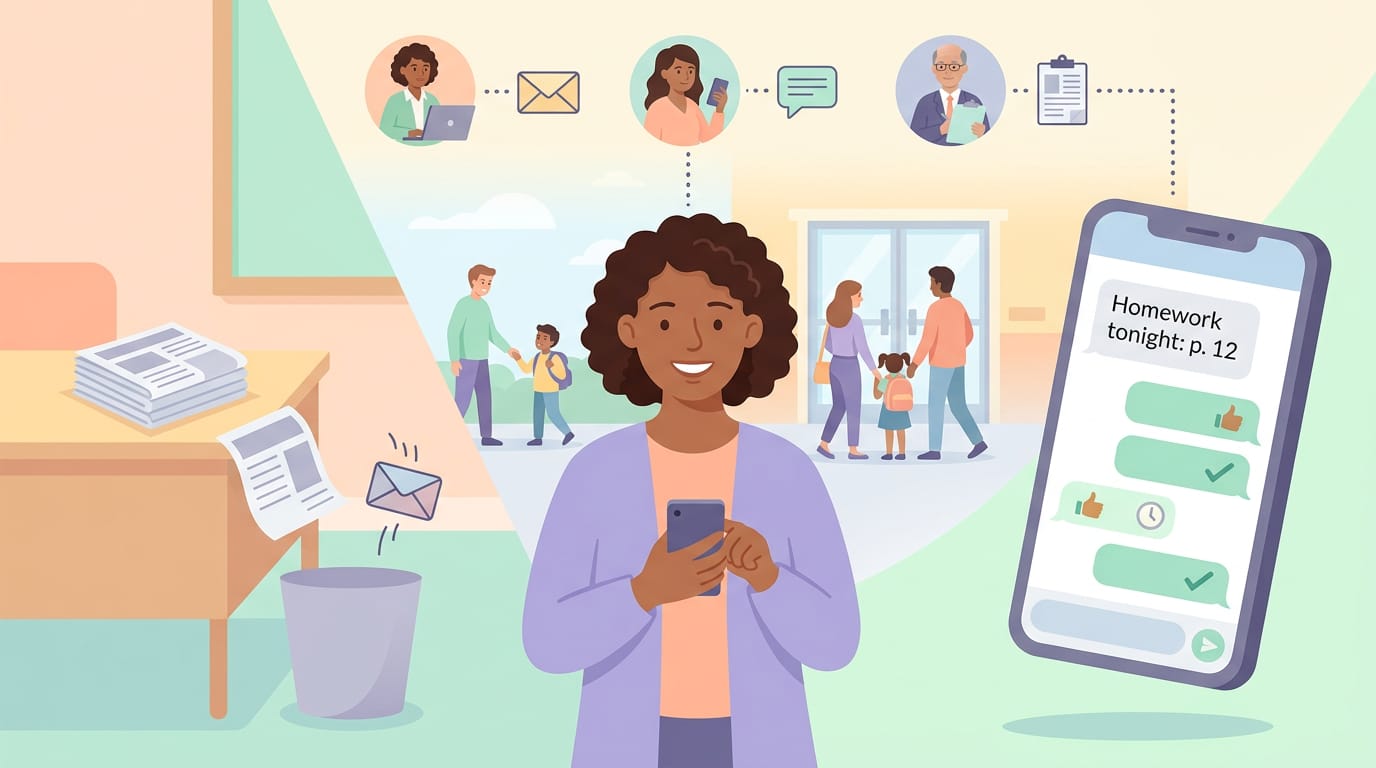
Imagine a teacher whose families answer texts fast but rarely open the newsletter. Texted homework reminders arrive the same afternoon, and fewer questions reach the teacher at pickup.
Write SMART goals you can actually measure
Vague goals like "communicate better" are easy to set and hard to check. Use SMART goals (Specific, Measurable, Achievable, Relevant, Time-bound):
Specific and measurable: Name the outcome and how you'll count it.
Achievable and relevant: Pick a realistic target tied to a real need.
Time-bound: Set a review date.
For example, rather than "more families should visit our website," a district could track monthly visits to its family resources page against a target set in advance. Measurable goals get checked.
Build your plan in five steps
Work through these five steps:
Define objectives: Decide what each message should accomplish: inform, gather feedback, or build trust.
Identify audiences: List who needs each message and what they care about most. Plan around who needs it, not just what you want to say.
Select channels: Match each message to the right tool, like email for detailed updates or text for urgent alerts.
Design messages: Lead with what matters most. Draft a difficult-news or crisis message before you need it, and say plainly what you know and what you're still confirming.
Evaluate and optimize: Track open rates, replies, and attendance, then adjust.
Together, these steps make up your school communication plan for stakeholders.
Software and tools for sharing and collaborating
Choose tools that simplify your work rather than add another login.
Centralized communication platforms: One hub keeps families and staff reading the same updates.
Document sharing and announcements: Shared folders and announcements keep forms, handbooks, and updates easy to find.
Collaboration tools: Shared calendars and editors let your team draft messages together.
Separate business phone line: A dedicated number keeps personal phones out of school business.
Pick the fewest tools that do the job well.
Mistakes and Barriers That Derail Messages
Most breakdowns trace back to a few predictable slips and barriers.
Planning slips that weaken your message
Most of these happen before anyone hits send:
Ignoring context. A teacher who emails a long field-trip update at 9 p.m. with no background will spend the next week fielding calls. A two-line summary sent Tuesday morning tends to shrink those calls.
No prepared strategy. Winging it produces mixed messages. Decide on one goal before you write.
Wrong channels. A detailed update posted where parents never look never arrives. Match the channel to your reader.
Not measuring results. If you never check whether it landed, you can't fix what's failing. A quick reply count helps.
What barriers block good communication?
A barrier is anything that stops a clear message from landing. Culture shapes how a message is read: what counts as polite directness, or who's expected to speak first, varies by community.
Physical, language, emotional, and organizational barriers each have a fix:
a quiet room,
simpler wording,
a pause to acknowledge feelings, and
one owner per message.
Lack of assertiveness. Hinting at what you need works less well than stating it: 'We need the signed forms by Friday.'
Poor listening. If you're already drafting your reply, you'll miss the real concern. Repeat back what you heard first.
Communication breakdowns cause chaos. When staff hear one plan and parents hear another, confusion spreads fast. Keep one source of truth for every update.
Jargon and misunderstanding. Terms like 'tiered intervention' mean plenty to you and nothing to a parent. Swap in everyday language and confirm it landed. Plain beats impressive.

Courses and Training to Build Your Skills
Business communication is a skill you can build on purpose. Here's where to start, whatever your role.
Courses on writing, speaking and digital skills
Many training programs organize content into modules, each focused on one area:
Writing: clear memos, reports, and messages
Oral: presenting ideas and leading discussions
Digital: choosing the right channel and formatting for screens
If your team or families span different languages and customs, look for courses in intercultural communication. They show how the same message can land differently across cultures.
Many courses also issue certificates of completion, a simple way to document your growth for a résumé or review. MIT OpenCourseWare has its own options worth exploring if you want to dig deeper.
Key skills, from email etiquette to meetings
Think of a third-grade teacher who needs to tell families about a field trip date change. A short email with the new date, the meeting spot, and one clear next step means fewer confused replies the next morning.
Build these four skills:
Business writing: Lead with the main point, and keep sentences short and specific.
Presentation and meeting skills: Name the decision you need before sharing background, then close with an owner and a date.
Cross-cultural communication: Adjust your examples, tone, and directness for the people in the room.
Email etiquette: Write a subject line that says what the message is, and ask for just one thing per message.
It's less about how much you write and more about how clearly your reader can act on it. Clarity wins.
Good business communication comes down to clarity, purpose, and checking that your message landed as intended.
Whether you're writing a memo, running a meeting, or briefing a board, the same principles apply: know your audience, say what you mean, and listen for the response.
When leaders bring these habits to parents, staff, and boards, everyone gets a clearer picture of where things stand. Ready to put these ideas to work?
Check out our School Leadership & Policy posts to sharpen how you lead conversations with your community.
References
An integrated process model of communication satisfaction and organizational outcomes — researchoutput.ncku.edu.tw (2025)
BUSINESS COMMUNICATION AS A FORMULA FOR EFFECTIVE COMMUNICATION — doi.org (2025)
Still grading everything by hand?
EMStudio is a free teaching management app — manage your classes, students, lessons, and more!