Qualities of a Good Teacher and How to Build Them

Think of the teacher who made you feel like you could finally do the hard thing. Maybe they spotted when you were stuck, or explained something in a way that finally clicked. Those teachers aren't just lucky.
They bring qualities you can name, practice, and grow.
In short, a good teacher combines core qualities you can see in daily practice with the personal strengths that keep you going.
Here, we'll group those qualities clearly, with concrete behaviors for each, then cover the part most lists skip: resilience, emotional intelligence, and self-care.
Still grading everything by hand?
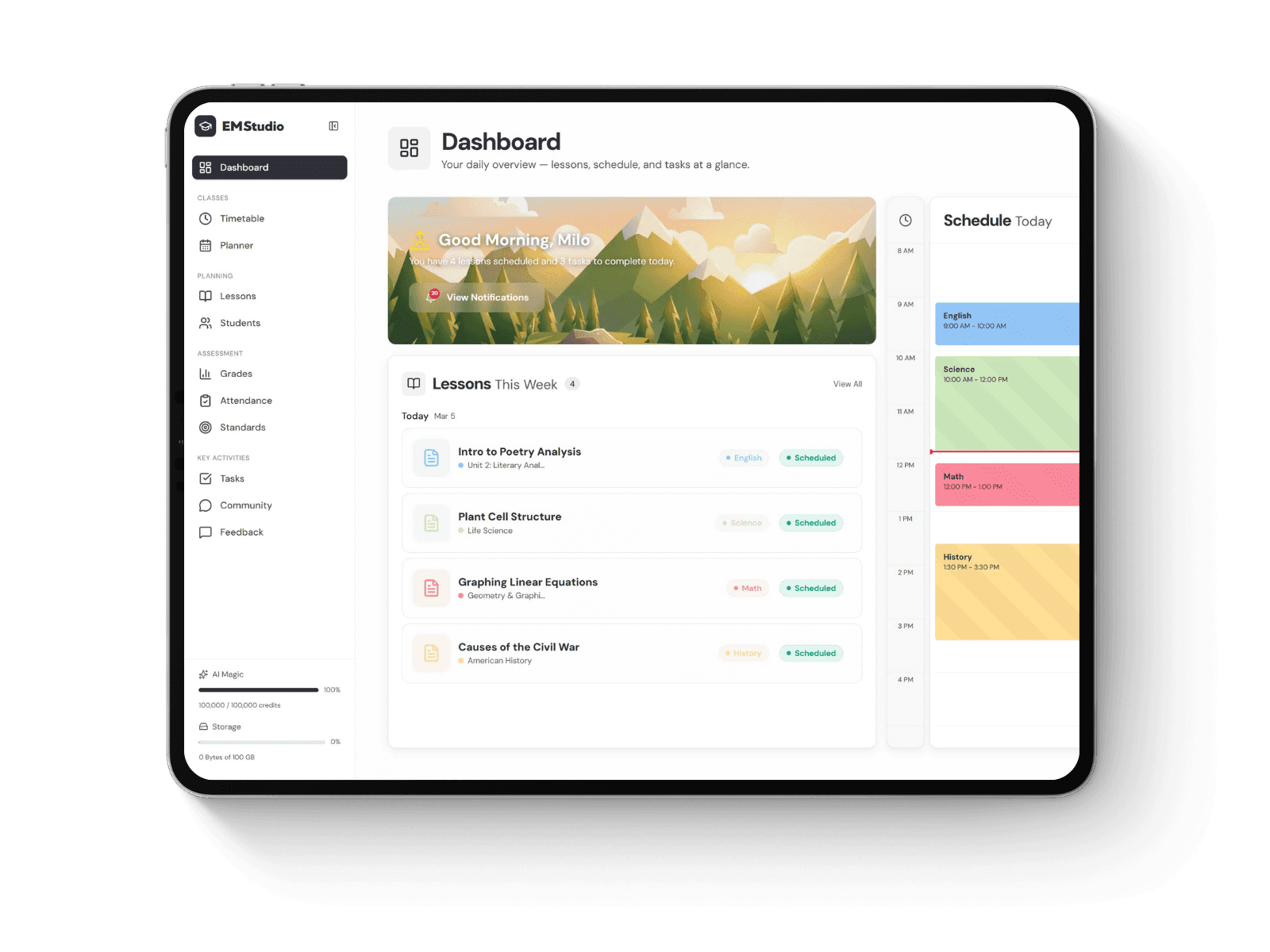
EMStudio is a free teaching management app — manage your classes, students, lessons, and more!
Qualities of a Good Teacher Through Relationships
Students rarely recall a lesson plan as clearly as they recall how a teacher made them feel. We'll cover respect, empathy, ethics, and valuing every learner.
Earning respect through warm, real connections
Respect runs both ways: treat students as capable people, and they tend to meet you there. Be approachable and friendly by greeting students by name.
Connections come before content. Think of a ninth grader who sits silently through the first week. A teacher who asks about her weekend and remembers her soccer game gives her a reason to speak up.
Building rapport, the trust that makes a student feel known, starts with genuine interest in learners as people.
Showing empathy and patience toward every student
A caring attitude starts with assuming there's a reason behind behavior. Students carrying trauma may show anger or withdrawal, so respond with curiosity, not punishment.
Watch for signs of abuse too, like sudden changes in mood or appearance. You don't have to investigate; you have to report it promptly.
Patience means understanding the why behind a missed assignment, not punishing the empty page.
What ethics should teachers model?
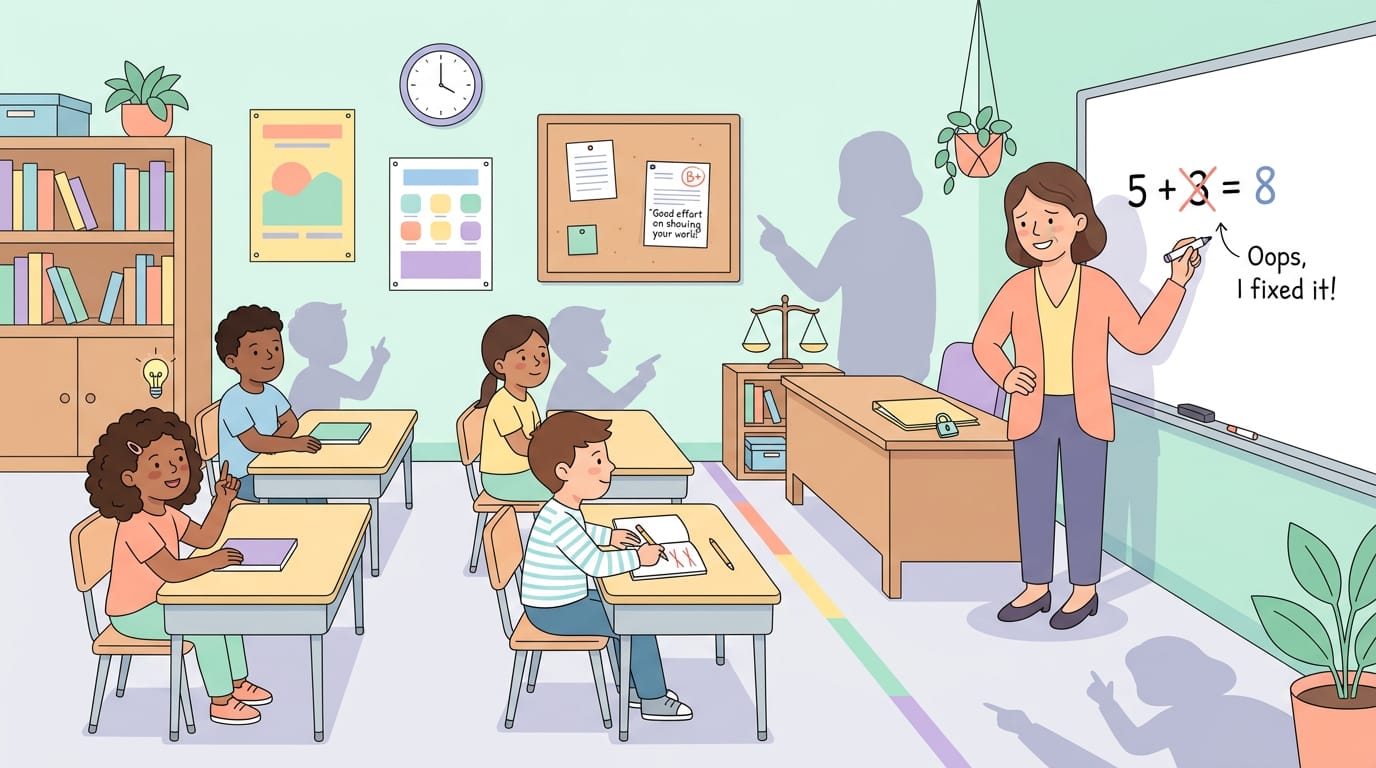
Students learn by watching you, and admitting a mistake teaches more than any lecture.
The ethics of teaching come down to a few core commitments:
Fairness. Apply the same rules and grading standards to everyone.
Confidentiality. Share student information only with people who need it to help.
Integrity. Your actions match what you ask of students, even when no one is watching.
Professional boundaries. Stay warm without blurring your role as the teacher.
Honesty in the classroom means explaining why a grade was given, not just the number.
Valuing different backgrounds and unique students
Respecting diverse backgrounds means recognizing the different languages and traditions in the room, so aim for equal access, not identical treatment. Celebrate individuality by inviting students to share what makes them unique.
Cultural awareness helps you read behavior accurately, since quiet participation can mean different things in different homes. Ask rather than assume, and avoid stereotyping by not judging ability from a name or accent.
Consider a teacher who notices a bilingual student going quiet during group work. She lets the student share ideas in their stronger language first, and soon they're volunteering answers.
[Editor note: add a verified source before covering the 7 R's of professional teachers.]
Sharing Clear Messages and Useful Feedback
Your message and your feedback both matter. Here's how to get each right.
Speaking clearly and listening actively
Your verbal and nonverbal skills need to agree. Keep sentences short, and let your tone and face show students you're glad they're there.
Active listening means giving full attention and repeating back what you heard. Think of a seventh grader who says, "These directions make no sense." Instead, ask, "Which part is confusing?" Two minutes later you've found the real problem.
Clarifying questions head off misunderstandings. When a parent's email is vague, a quick "What are you seeing at home?" beats guessing.
With parents and colleagues, keep messages specific and kind: one concern, one example, one next step.
Choose the phone for sensitive topics, urgent concerns, or anything that needs back-and-forth. Email works best for routine updates and anything you want on record.
Giving feedback that helps students improve
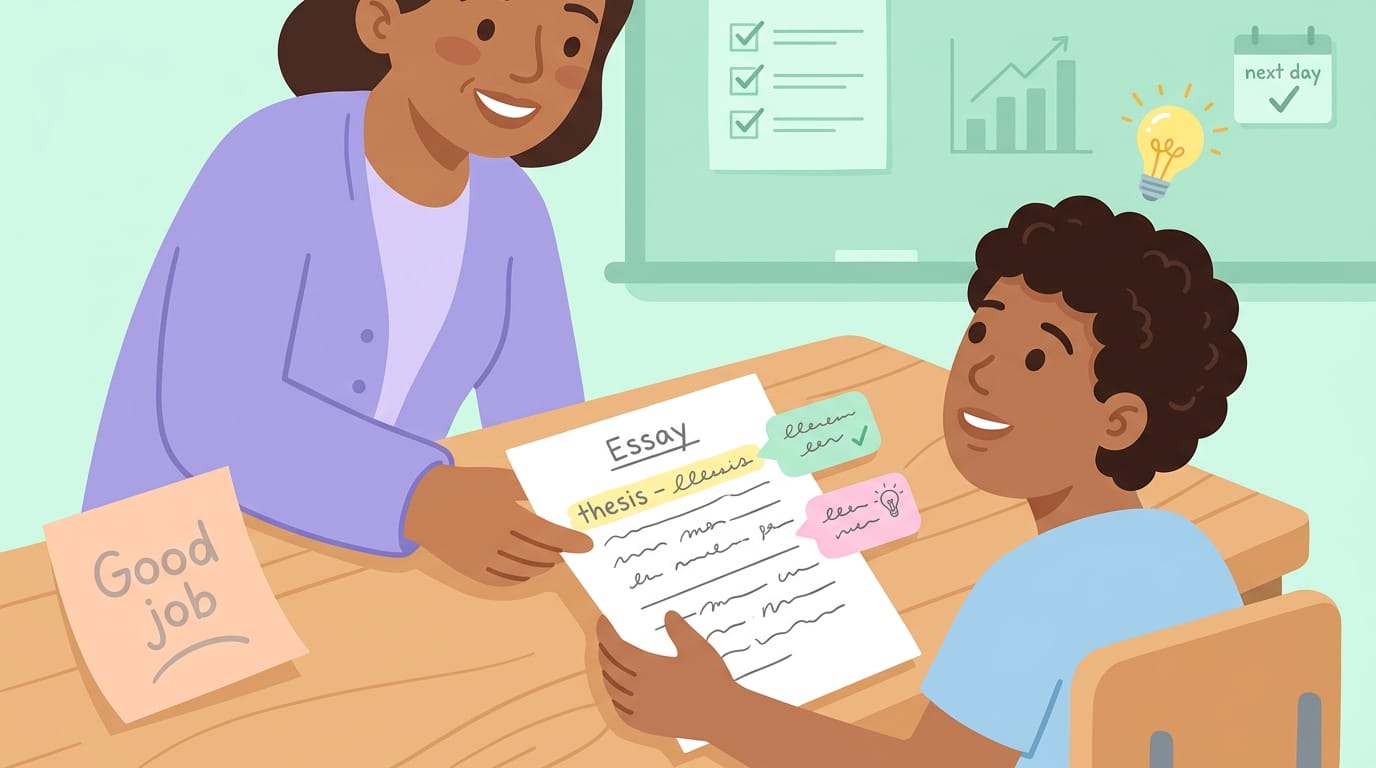
Timely, detailed feedback lands while the work is fresh. A "Good job" on an essay tells a student little. Two specific notes on a thesis, returned the next day, give them something to act on.
Use assessment data to decide what to reteach. If most of the class misses the same fractions question, revisit that skill before moving on.
Help students track progress with a checklist or a weekly goal they revisit. Progress they can see keeps them going.
Never belittle students, even when the work is weak. Critique the work, not the learner: "This paragraph needs a clearer topic sentence" helps, but "You're not a strong writer" only discourages. Mistakes are information, not verdicts.
Finally, ask students how your feedback lands. A short survey shows you what's working and what isn't.
Creating a Classroom That Motivates Students
Responsibilities are the jobs on your list, and qualities are how you carry them out.
Keeping the room organized and running smoothly
Think of Maria, a fifth-grade teacher whose class starts the same way every morning. Her consistent management plan tells students what's expected before the bell, so she spends less time repeating reminders. Your core responsibilities include:
Time management: Pace each lesson so you can finish what you planned.
Materials ready in advance: Set out handouts before students arrive.
Keeping students on task: Circulate early, before small distractions grow.
Work-life balance: Set a stopping point so planning doesn't spill into every evening.
Making mistakes feel safe to learn from
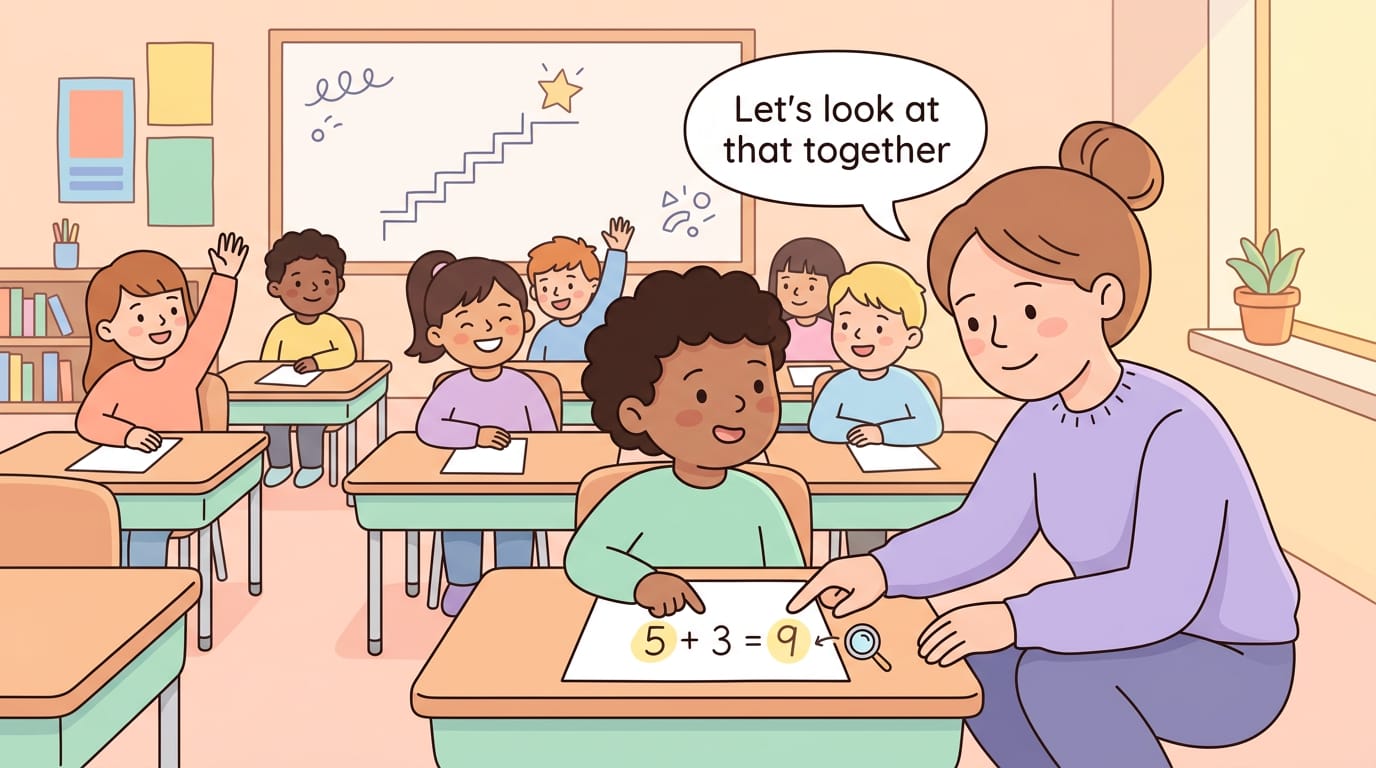
Mistakes are clues, not verdicts. Students take risks only where they feel safe, so build a climate of trust first. When a wrong answer gets "Let's look at that together" instead of a sigh, hands keep going up.
Ask, "What made that answer make sense to you?" to see exactly what to reteach. Make questions normal, not a sign of falling behind. Accept students where they are, then move them forward one step at a time.
Sparking students' love of learning
Plan lessons students actually enjoy. A quick vocabulary game, a song that drills multiplication, or a short skit can turn a tough skill into something kids look forward to.
Your passion and enthusiasm are contagious, and students notice when you're excited about a topic. Set goals a little beyond what students think they can reach, then celebrate each step.
Aim for lifelong learning: curiosity that outlasts the school year. That's the real payoff.
What Skills Does a Strong Teacher Need?
Here's the short answer: the top five skills for a teacher are planning with purpose, adjusting for every learner, using data to set goals, teaching students to think and create, and using digital tools with purpose.
Each gets its own section below, and we'll take them in order.
Planning lessons with clear purpose
A strong lesson starts with a destination. Build an intentional lesson plan backward from the grade-level standards, and unpack each standard into the specific skills it asks for. Plan around your students' strengths, not just their gaps.
Make the purpose clear in one sentence students could repeat, aimed at learning rather than keeping busy. Rigor and engagement aren't opposites: a hard problem students care about holds their attention.
Consider a seventh-grade math teacher whose class aces ratios but freezes on word problems. She builds on that strength, spending Monday on the reading skills behind the problems, and the class tackles harder work by Friday.
Adjusting lessons to fit every learner
Differentiation means changing pace, materials, or support so every student can reach the same goal. The goal holds. The path bends.
When a fire drill eats half your period, protect the core objective and let the rest flex. Blend methods by pairing a short explanation with discussion and hands-on practice.
Watch how each student responds rather than sorting them into fixed learning styles. A student who gets a concept after sketching it has told you something useful.
Setting goals and using assessment data
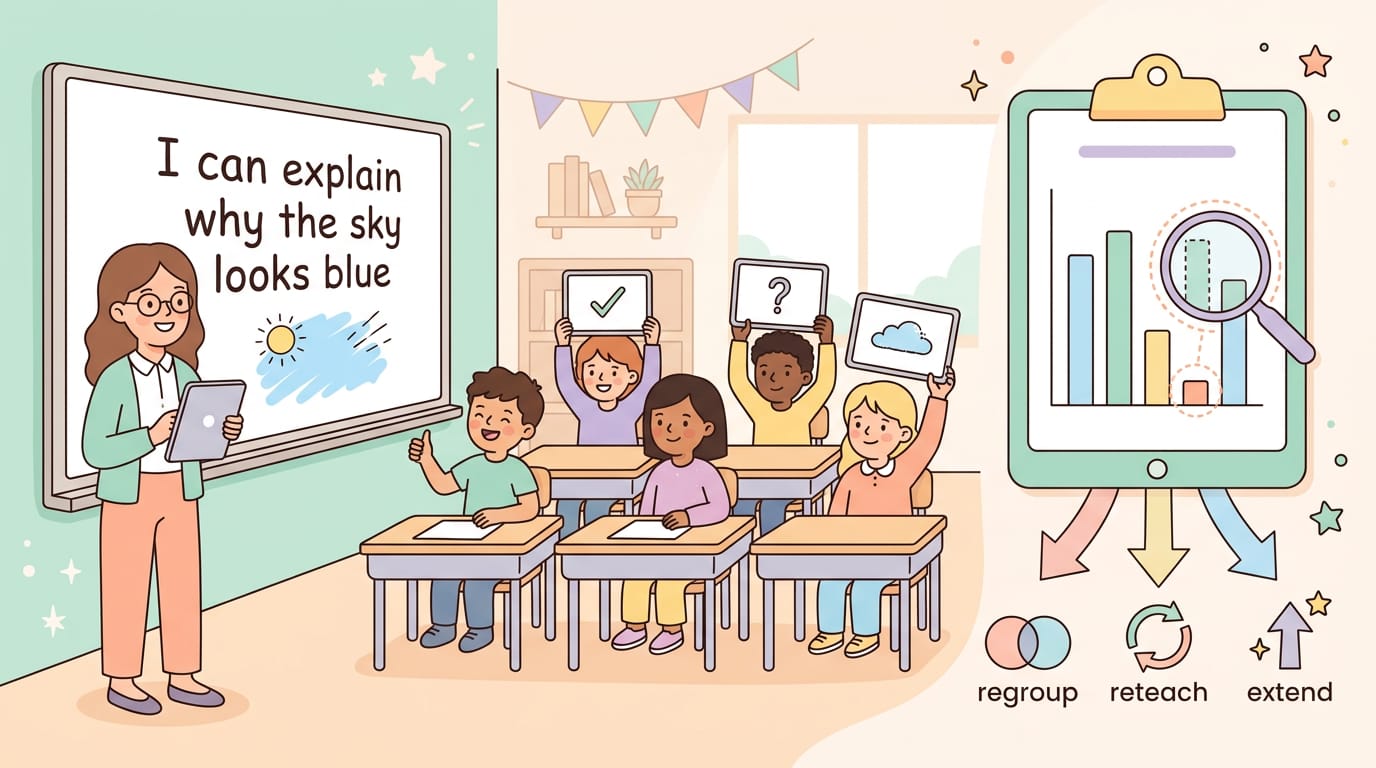
Start with clear objectives that describe what students can do, like explain why the sky looks blue, not understand light.
Check understanding mid-lesson with formative checks, such as a thumbs-up or a whiteboard response, so you can adjust in time. Waiting for the unit test is too late.
Review data for patterns, not just scores. If most of the class misses one question type, the lesson probably needs work, not the students. Use what you find to make informed decisions about each student:
regroup
reteach
or extend.
Teaching students to think and create
Teach the thinking, not just the answer. Model your reasoning out loud, then hand the process over. Ask probing questions like How do you know that? to reveal whether understanding is real.
Leave room for approaches you didn't plan, and treat a wrong turn as a clue about where the reasoning went off track. Presenting difficult concepts clearly means starting with a concrete example, then building toward the abstract rule.
Memorable teaching ties that rule to something familiar, so it sticks.
Using digital tools with real purpose
A tool earns its place only when it does something the lesson can't do alone. The lesson comes first. The tool follows.
When lessons move online, keep the same objectives and change the delivery: shorter segments, predictable routines, and more frequent checks. If your tech skills feel shaky, technology courses for teachers can build that confidence before you need it.
Growing as a Teacher Alongside Colleagues
The best teachers keep learning, and they rarely do it alone. Growth comes from your own reflection and from the people around you.
Keep learning and reflecting on your practice
Treat continuing education as part of the job, not an extra. Ask for feedback and criticism from peers and supervisors, and listen for the useful parts. The goal isn't to be finished learning. It's to keep growing.
Staying current in your field keeps your methods fresh for students. Reflect weekly on your strengths and weaknesses: name one thing that worked, one that didn't, and why.
Then bring that habit to students by having them write down what confused them and what clicked.
Working alongside teammates to support each other
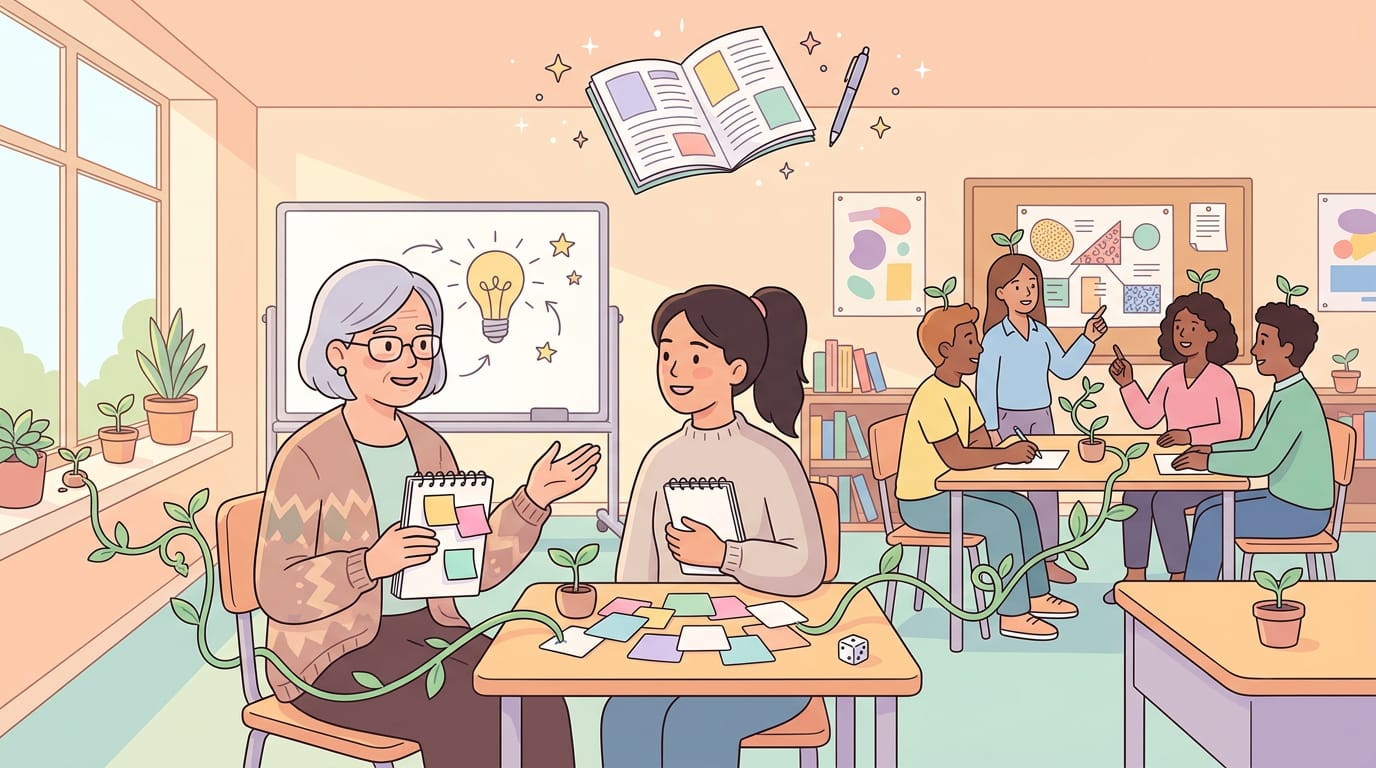
Teachers on a grade-level team can plan units together and compare what's working. Picture two fourth-grade teachers who trade reading centers each Thursday: each gets fresh ideas without building a week from scratch.
Colleagues also offer mutual support, like covering a class when a teammate is out sick. Students benefit from collaborative learning too, since explaining a concept to a peer exposes gaps. Finally, join a subject group to build wider education links.
Mentoring new teachers and sharing ideas
Experienced teachers can contribute to course design by sharing what worked at planning meetings. Mentor a novice teacher by observing their lesson and talking through what you noticed. Taking on roles like these builds leadership skills beyond the blackboard.
Write for educational publications or share a creative teaching strategy, like your vocabulary game, so others can adapt it. It's less about being the expert and more about helping others find their version. Growth spreads.
How Teaching Qualities Are Built and Kept
Teacher quality is the mix of knowledge, skill, and character that helps students learn, and most of it can be built over time. The strengths that matter shift by stage and setting: a kindergarten teacher and a chemistry teacher lean on different ones.
Some traits come naturally, others you learn
Some qualities seem inherent, like patience. Most can be learned, including resilience and emotional intelligence.
In a workshop, a new teacher recalls their best teacher, then lists the habits that made that person effective, like clear directions and genuine interest in students. Practicing one habit at a time turns that memory into a plan.
A quick self-audit helps too: note your strengths and gaps, then pick one growth goal. Growth takes time. Start small.
Training programmes, mentors and awards
Tutor training programmes build a foundation in lesson planning and classroom management. Ongoing mentoring matters just as much, since real skill grows after the workshop.
Picture a second-year teacher who meets a mentor monthly, talks through one lesson, and tries a single change. Over a school year, those talks can do more than a one-day course.
Teaching academies and awards recognize strong practice and keep teachers improving. Better test-writing skills help too: clear, fair assessments give students a truer picture of what they've learned.
Barriers schools must overcome to improve teaching
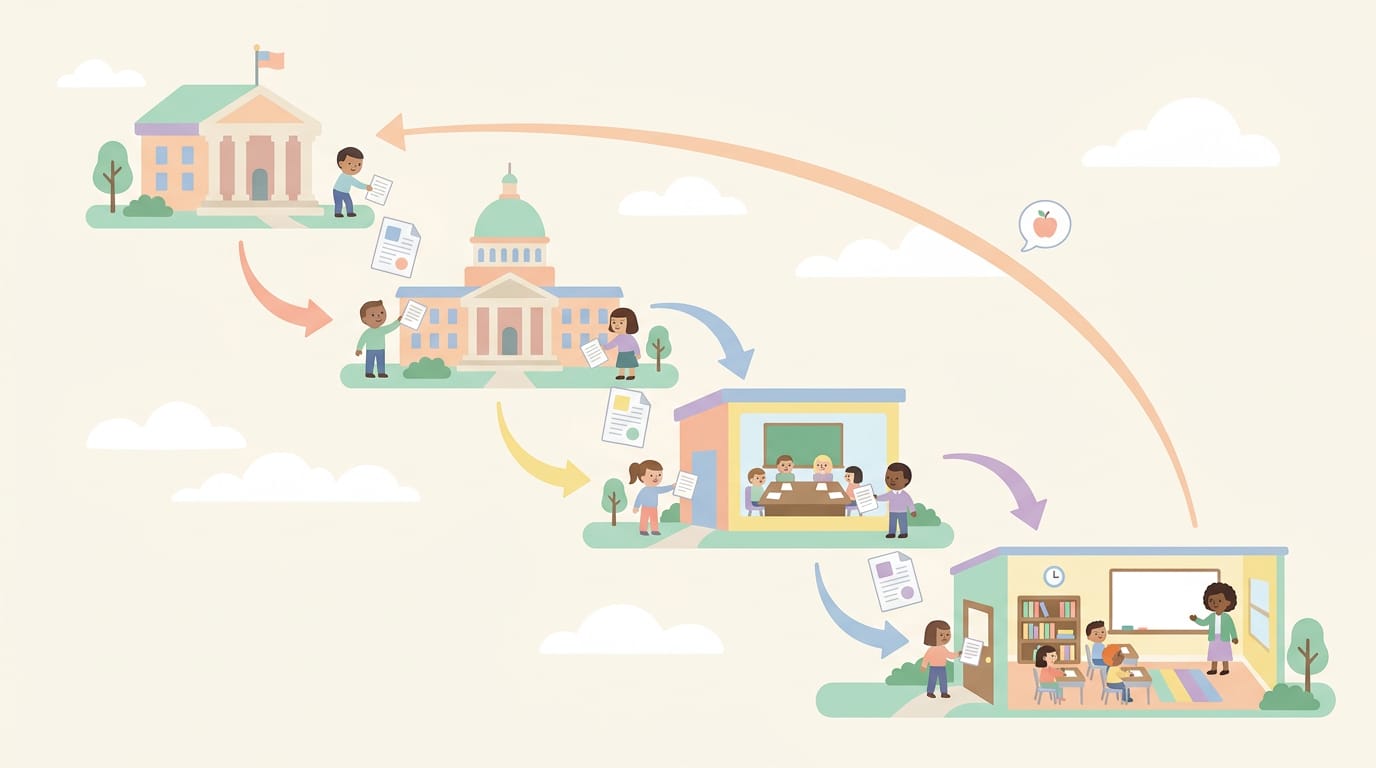
Improving teaching isn't only up to individual teachers. When research is prioritized for promotion, teachers may chase publishable work rather than classroom practice.
A lack of training programmes and limited training resources leave staff learning alone, which slows everyone down. Without clear education standards, there's no shared picture of good teaching.
Schools that tackle these barriers give every teacher a real path to build these qualities.
Good teaching isn't one trait or a single good day. It's a mix of strong relationships, clear communication, motivating classrooms, and the skills and growth that keep you improving. Becoming the best teacher you can possibly be takes steady work, well beyond a single good day.
When you look after yourself as a person, those qualities become much easier to sustain.
Ready to keep building that foundation? Check out our post, Teacher Life & Wellbeing, to keep your own wellbeing in view as you grow.
Still grading everything by hand?
EMStudio is a free teaching management app — manage your classes, students, lessons, and more!