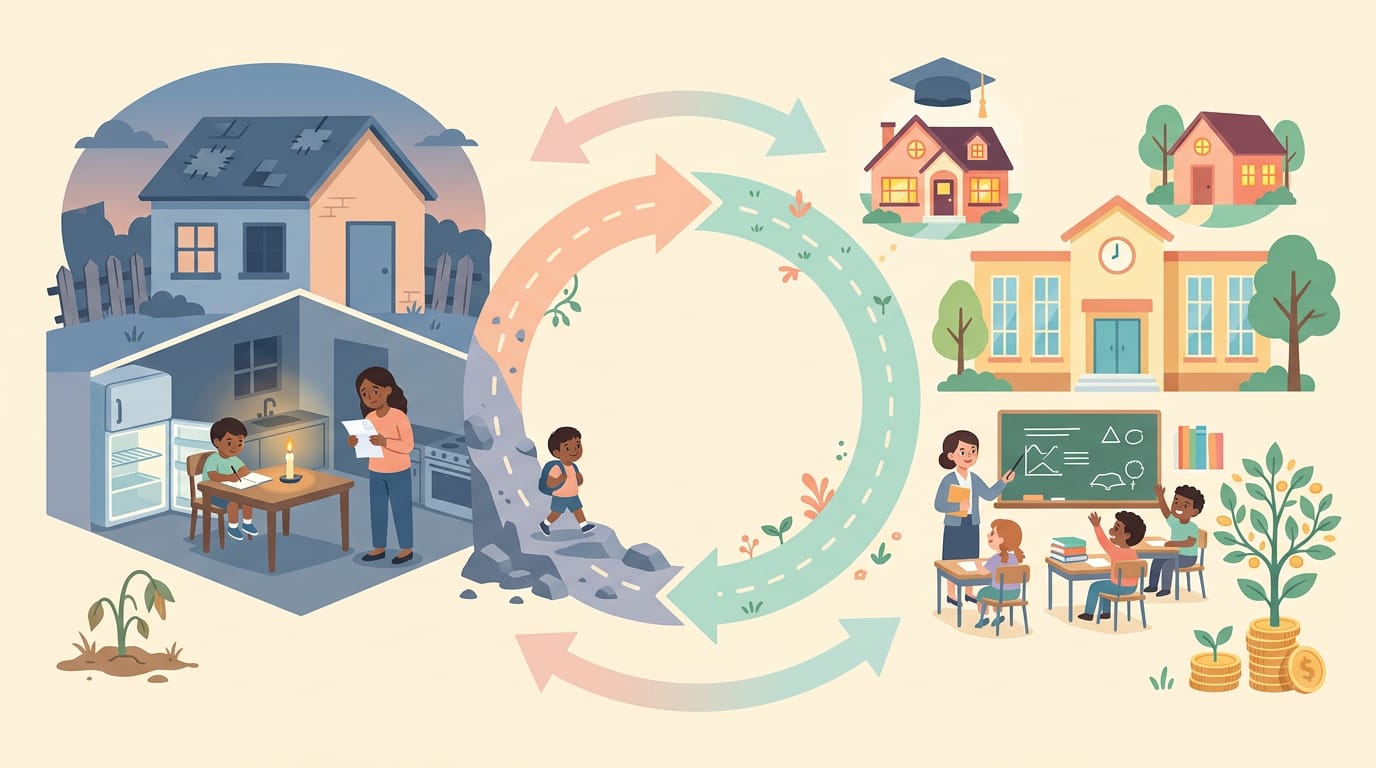
Education and Poverty: How They Shape Each Other

Picture two students in the same classroom, with the same teacher and the same lesson. One arrived after a full night's sleep and breakfast. The other came in hungry, worried about money at home, and still learning the language of instruction.
Education and poverty shape each other in just this way.
This article explains how poverty and education affect each other, from the causes and the cycle they create to what happens inside schools.
We'll cover solutions, then finish with practical, strengths-based moves you can use with low-income and multilingual students.
Still grading everything by hand?
EMStudio is a free teaching management app — manage your classes, students, lessons, and more!
How Education and Poverty Shape Classroom Results
Poverty and learning feed each other, and we see the effects in class before any test does. Parents with fewer resources often pass gaps down, so children start school with them: the intergenerational cycle of poverty.
Stress, hunger and unstable home life
Chronic stress can look a lot like attention-deficit/hyperactivity disorder (ADHD). Hunger, food and housing instability, and domestic disruption keep students on high alert.
Cortisol, the body's stress hormone, is part of the picture. One study of children's brain structure suggests chronic stress, measured through hair cortisol, may be an important mechanism behind these links.
Watch for these signs and stay calm when you spot them:
Sudden withdrawal
Constant tiredness
New irritability
Picture a teacher whose chatty student suddenly puts their head down. The teacher pulls them aside and asks how things are going. A calm check-in opens a door; a reprimand often closes it.
Language and reading gaps at home
Betty Hart and Todd Risley's book found that children from lower-income households hear a smaller everyday vocabulary than children from higher-income homes.
Less reading at home means less practice with classroom words, and illiteracy and poverty are linked.
In non-English-speaking households, children hear rich everyday talk in a language school doesn't use. Try a strengths-based move: build on students' home languages, not just fix what they lack.
A science teacher might have a newly arrived student label a diagram in Spanish, then add English terms beside it so the concept stays secure.
When students lose motivation and confidence
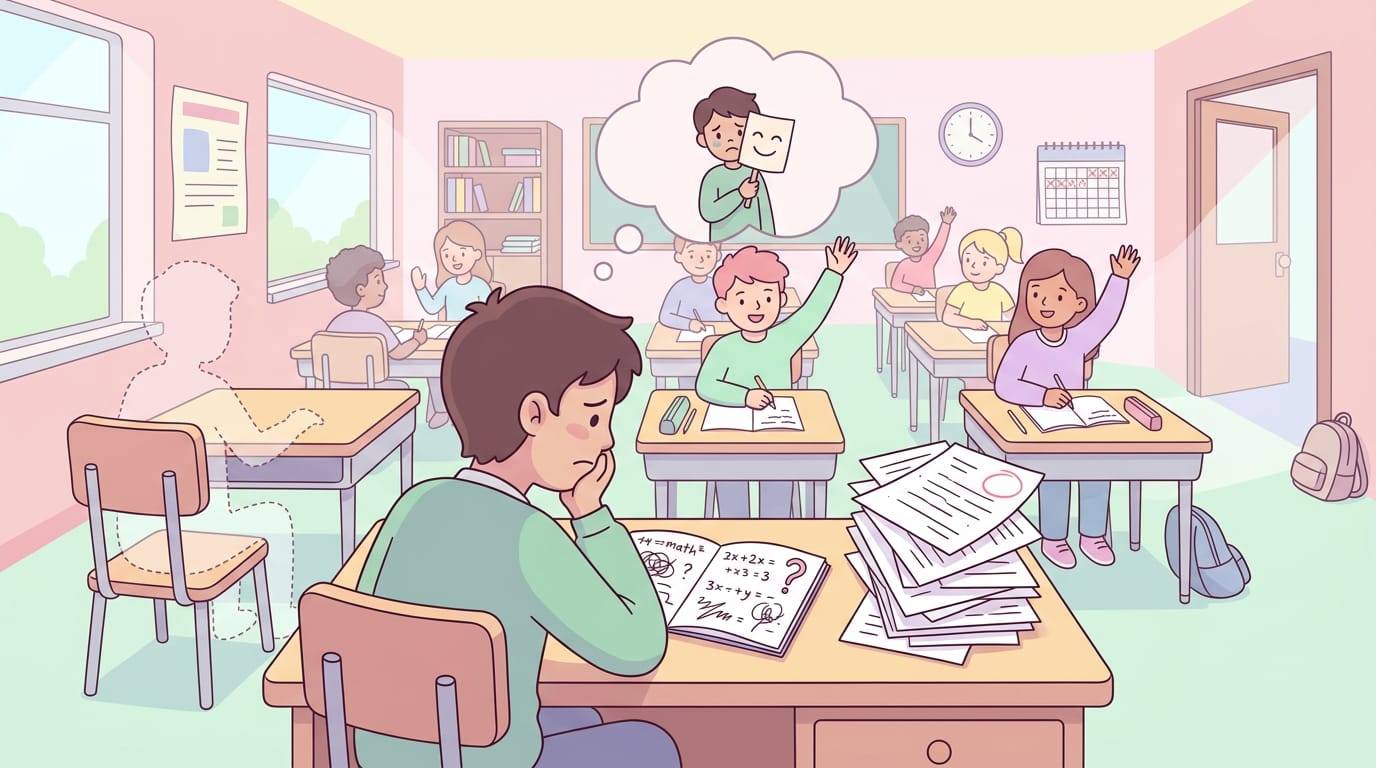
Students who keep falling behind often decide school isn't for them. Each missed lesson makes the next harder, which can lead to absenteeism and dropout.
Even capable students can carry impostor syndrome, the sense that they don't belong, and hide confusion.
Missed class time and harsher discipline
Lost days add up fast, with 22 days lost compared with 12. A review of how poverty shapes children's environments, citing Anderson and Ritter (2017), finds poor children are far more likely to face suspensions and expulsions, even for similar infractions.
A policy brief from The Ohio State University's ISSUES lab finds districts with more children in poverty face disproportionately high suspension rates.
Once you label a student a discipline problem, that tag can stick. Teacher absences and broken equipment cut into instruction too. Lost time is lost learning. Teachers dealing with these disruptions can also explore the issues reshaping K-12 teaching today.
How Unequal Funding and Segregation Divide Schools
Money and geography shape what a school can offer, and they often stack. Here's how each one plays out, and what you might notice in your own school.
Property taxes and cuts shape school budgets
Property taxes help fund many districts, so local wealth matters.
After the Great Recession, some districts cut per-student spending, and a study in Education Economics found that districts more reliant on state revenue saw larger declines, because the recession hit state tax bases harder than local ones.
Those cuts cost jobs. Education Week reported that the Des Moines schools in Iowa will eliminate roughly 10 teaching positions, mostly in high schools, and 22 to 25 central office positions.
The hit isn't even. Schools serving many low-income families often have less room to absorb a cut, so their students often feel it most.
Race, neighborhood and unequal school access
Race and neighborhood shape access, too. In California, students of some racial groups are more likely than others to attend high-poverty schools.
UCLA's Civil Rights Project describes “stark contrasts” between White and Asian students and their Black and Latinx peers.
High-poverty schools often offer fewer math, science, and college-prep courses, which narrows students' options long before graduation. Some districts are also resegregating, drifting back toward schools split by race and income.
Where students live matters for attendance, too. A long walk, an unsafe street, or a tight work schedule can keep a student home.
Outdated tools and gaps students notice
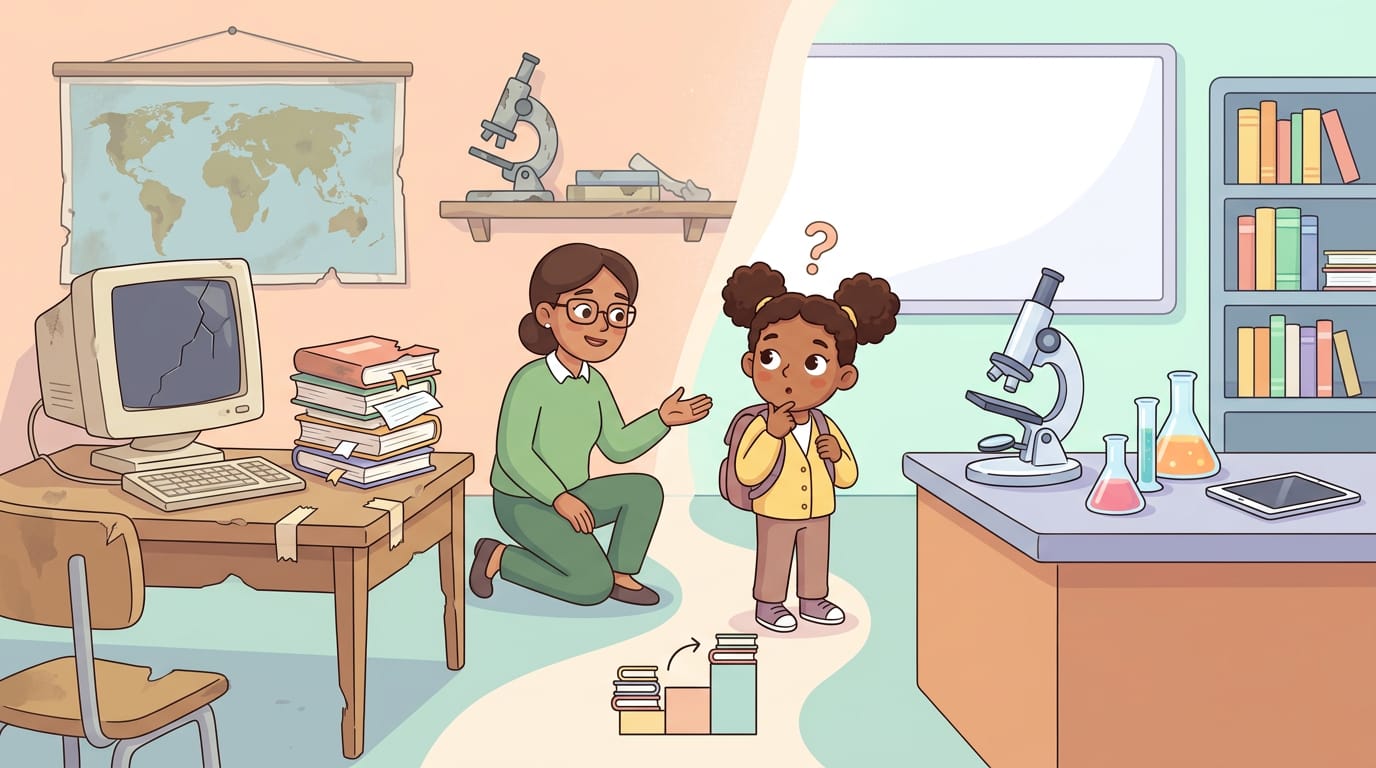
Tight budgets often mean aging technology and worn materials. Think of a fifth grader who visits a friend's school across town and sees a science lab with working equipment and newer books.
She starts asking why her own classroom looks so different, which gives a teacher a chance to talk openly about fairness.
Leveling the field takes more resources, not the same ones. Students notice school differences, and those impressions can shape how they see their own potential.
Ways Schools Can Help Students and Families
Schools already see families every day, so they're well placed to connect people with help. Here's how we can put that to work, from school-wide hubs to everyday classroom habits.
Turning schools into hubs for family help
Schools are central connection points. Families already come through the doors for drop-off and events, so the school is often the easiest place to start.
San Diego's SNAP (Supplemental Nutrition Assistance Program) screening centers show what this can look like.
Community school models go a step further. According to guidance on school nurses and food insecurity, they can connect families to food assistance by helping them navigate benefit applications.
What families often need isn't more information but more help getting through the process. Early childhood and preschool access can start that conversation earlier.
Why families miss out on benefits
Lack of outreach. Many families never hear about a program.
Transportation challenges. Getting to an office can be hard without reliable transit.
Burdensome applications. Long, confusing forms can stop a family before they start.
Stigma. Some families worry that asking for help will be judged.
Classroom habits that build trust and support
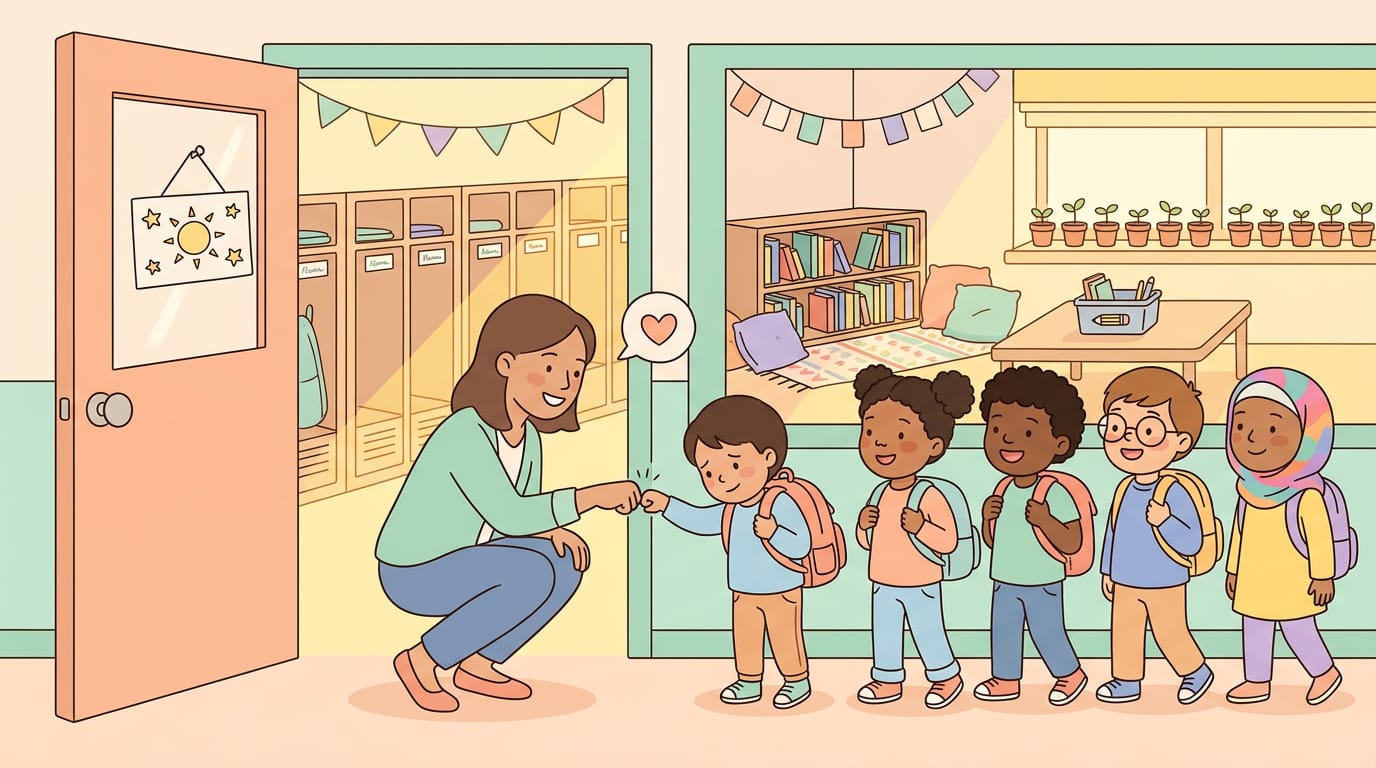
Relationships come first. Think of a second-grade teacher who greets each student by name at the door and checks in after a rough morning. That routine makes it easier for a child to speak up when something's wrong. Trust grows one greeting at a time.
Targeted one-to-one support, academic clubs, and enrichment give students attention and confidence.
An accessible library and a bright, welcoming classroom send a message too.
Retaining effective teachers keeps those relationships steady year after year.
Avoid deficit-based assumptions about families. A parent who doesn't return a note may be working a second shift, not uninterested. Reduce hidden costs like supplies and fees, too, since they can quietly keep students on the sidelines.
Lunch programs and help for homeless students
Free and reduced-price lunch can take a real weight off a family's budget. A homeless student liaison is a designated school contact who helps students and families find the support they need.
Federal backing matters too. The Every Student Succeeds Act (ESSA) is a federal education law, and federal funding for homeless students helps schools pay for these supports.
Using Education to Climb Out of Poverty
Education can open a way out of poverty, but only if people can build useful skills and reach the classroom. Here's how we see that playing out.
Skills that lift people and communities
Employers look for transferable skills like problem solving and clear communication. They care more about how you apply what you know than what you memorized.
Consider a reading teacher who has students compare cell phone contracts line by line. A student who spots a hidden fee walks into a first job with more confidence.
Literacy lifts communities, too. When a parent can read a school notice or a pay stub alone, the whole household gains independence. Reading opens everything else.
Community colleges extend that progress with shorter certificates close to home. They open a route to economic mobility, the chance to move up to better work over time.
Education is central to eradicating poverty because it builds the skills and credentials people need to shape their own futures.
How colleges can help reverse poverty
Colleges can do more than teach. Mission-driven colleges are built around serving their communities, and that shows in who they admit and how they support students.
Colleges serving Pell-eligible students, those who qualify for federal Pell Grants based on financial need, carry a responsibility to turn enrollment into completion.
Choice of major also shapes access to wealth, so advisors who connect majors to real careers help students plan ahead.
Access means more than admission. A student who can't cover textbooks, transportation, or a missed shift may not finish. A timely check-in from an advisor can help keep them enrolled.
Policy, Rights and the Global Picture
Some of the biggest forces on your classroom are decided far from it. Let's look at how laws, budgets, and global goals shape what schools can offer.
Federal policy ideas and funding debates
Congressional reports examine how schools are doing, and the funds they shape can open or close doors. The White House sets national priorities, and interagency committees, teams drawn from several agencies, coordinate programs for the same families.
The sharpest debate is over funding adequacy: whether the money matches what high-poverty schools actually need. The question isn't just how much arrives, but where it lands. Universal school voucher programs also ask where public education money should go.
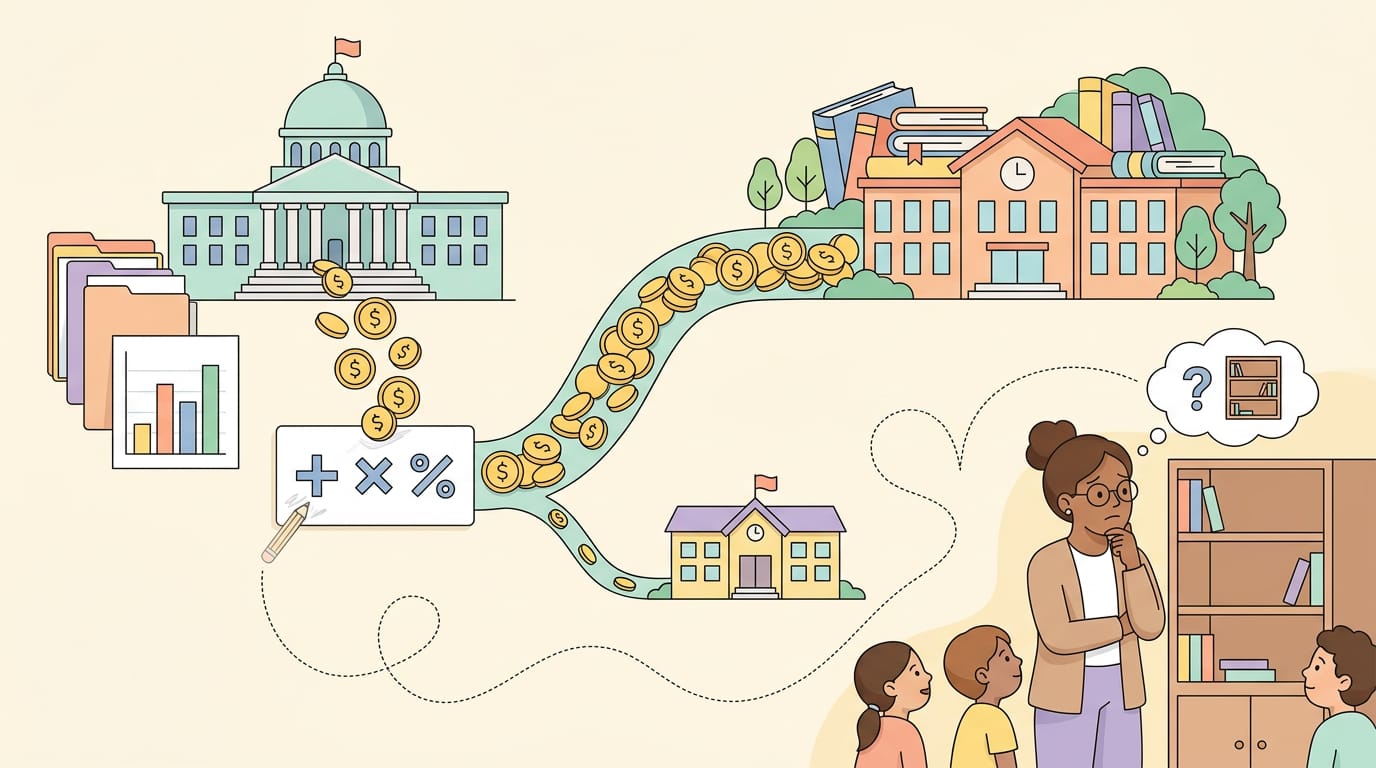
Think of a fourth-grade teacher who wonders why her classroom library has only a few shelves. Tracing the answer often leads to a funding formula she never saw being written. Follow the money.
Global push for education as a right
Beyond national borders, the right to education has become a shared goal.
The United Nations (UN) and its agency, the United Nations Educational, Scientific and Cultural Organization (UNESCO), push governments to treat schooling as a human right, not a privilege.
That goal depends on people and materials. Teacher training and basic equipment, from textbooks to technology, decide whether a right on paper becomes a lesson in practice. A right without a trained teacher is just a promise.
Illiteracy among youth shows where that promise still falls short. When students leave school unable to read well, the gap follows them into work and adult life.
The same gaps help explain why many children in low-income countries are out of school. When trained teachers and supplies run short and poverty pulls students from school, those who most need a classroom are often left out.
Getting into College and Succeeding There
Why does the college path feel smoother for some students? The answer starts before the application, and you can help shape it.
What keeps students out of college
Many colleges use holistic admissions, weighing essays, activities, and interviews alongside grades. That can favor wealthy families with more time and money for extra support.
Admissions also rewards cultural capital, the unwritten know-how that families with college experience pass along.
Admissions has a discriminatory history many families still feel. Affirmative action remains hotly debated, and the core question is how colleges should decide.
Consider a teacher who walks a junior, whose parents never went to college, through each essay. The process starts to feel like a plan, not a secret.
Covering college costs and financial aid
The affordability crisis is often what stops a student cold. Many students borrow to close the gap, and student loans can follow them for years. That's a heavy load at eighteen.
Food insecurity is a quieter barrier, since it's hard to focus on homework on an empty stomach. For many families, financial aid makes the American dream of a degree possible. Aid helps only when students know how to claim it.
Helping first-generation and low-income students succeed
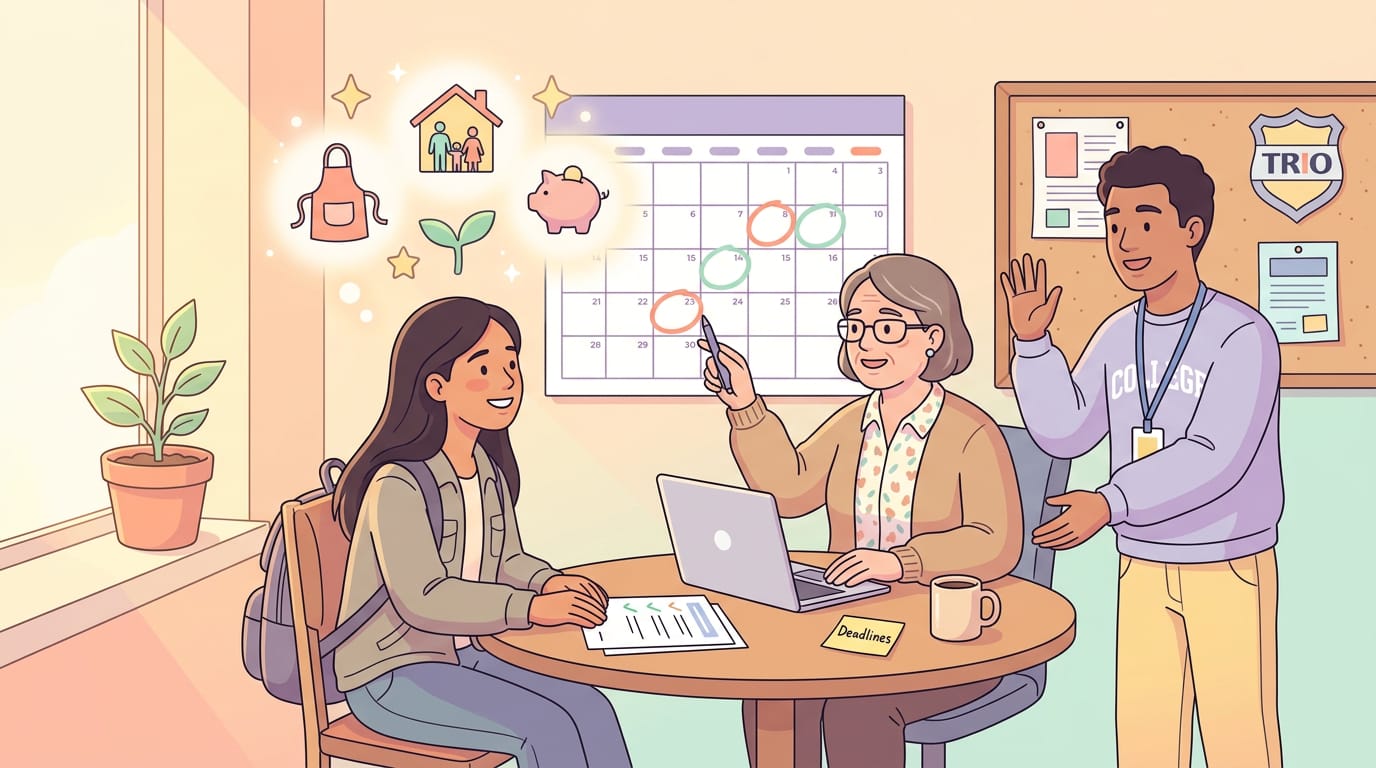
Even at elite colleges, first-generation and low-income students can fall through the cracks. Picture a counselor supporting a Latinx first-generation student. The counselor explains the deadlines and connects the student with a campus mentor.
TRIO programs are federal outreach programs for first-generation and low-income students. When teachers name social class openly, quietly struggling students feel seen. The goal is support, not pity.
Students who already juggle money or family duties bring strengths to build on.
Where Gender Gaps in Schooling Persist
Gender gaps in schooling haven't disappeared, and the numbers still show who's being left behind.
Why many girls are out of school
The gender gap shows first in who never reaches a classroom. According to the Global Education Monitoring Report, 118.5 million of the 244 million children and youth aged 6 to 18 who were out of school in 2021 were girls.
The gap shows up in adulthood, too. A report in The Indian Express notes that of the estimated 739 million adults lacking basic literacy skills, almost two-thirds are women.
Bullying, violence, and child marriage keep many girls from school, and gender bias inside classrooms can quietly suggest that some subjects or futures aren't meant for them.
The question isn't only whether girls enter school. It's whether they stay. Think of a teacher who notices the same girl's desk has been empty for a week.
A quick call to her family can reveal whether she's needed at home, afraid on the walk to school, or under pressure to marry. That early conversation can help bring her back before the absence becomes permanent.
Steps toward gender equality in learning
Closing these gaps takes several efforts working together:
Strategy. The United Nations Educational, Scientific and Cultural Organization (UNESCO) set out a gender strategy for 2019 to 2025.
Action planning. A Gender Equality Action Plan turns broad goals into specific steps.
Data, law, and teaching. Better data shows where girls are being left behind, legal frameworks back their right to learn, and teaching practices make classrooms more welcoming.
Culture. Attitudes about who belongs in school shift slowly. Change takes time.
Poverty and education are deeply connected, but that connection doesn't have to define a student's future. When schools recognize the pressures students face and build on what those students already bring, learning sticks for far more children.
Small, deliberate choices add up, especially for students learning in a second language or juggling challenges at home. You don't have to do it alone.
Ready to keep building? Check out our Inclusive & Multilingual Education collection for strategies you can use right away.
References
How Poverty Shapes Children’s Home, Neighborhood, and School Environments: An Integrative Conceptual Framework and Review — pmc.ncbi.nlm.nih.gov (2025)
The heterogeneous and longer-term effects of the Great Recession on public school district finances: Education Economics: Vol 0, No 0 — tandfonline.com (2025)
Historical Discipline in Colorado School Districts (2011–2017) | ISSUES — issues-osu.github.io (2025)
Extreme Segregation and Policy Inaction in California Schools — civilrightsproject.ucla.edu (2025)
School Nurses and Food Insecurity: Guidance for Advocacy and Action in Schools — pmc.ncbi.nlm.nih.gov (2025)
Meaningful Differences in the Everyday Experience of Young American Children - Betty Hart, Todd R. Risley — books.google.es
Socioeconomic Disparities in Chronic Physiologic Stress Are Associated With Brain Structure in Children — pubmed.ncbi.nlm.nih.gov (2019)
Out-of-school numbers are growing in sub-Saharan Africa — unesco.org (2026)
Six decades after the first Literacy Day, global literacy reaches 88 per cent | Education News — indianexpress.com (2026)
Teacher Layoffs Are Mounting. How Districts Can Soften the Blow — edweek.org
Still grading everything by hand?
EMStudio is a free teaching management app — manage your classes, students, lessons, and more!