Vicarious Learning Explained: Skills Gained by Watching

Think of the last time you watched a friend fumble through a tricky recipe and quietly noted what to do differently. You learned without touching the pan. That's vicarious learning.
Vicarious learning means learning by watching others: their actions, their choices, and what happens to them next. It's a natural way people build skills, and it's especially useful in classrooms with many languages and backgrounds.
Let's look at how it works, why it pays off, and how you can use peer and teacher modeling in your own classroom.
Still grading everything by hand?
EMStudio is a free teaching management app — manage your classes, students, lessons, and more!
What Vicarious Learning Really Means
Vicarious learning is one way people pick up skills without working through every step themselves. Here's what it looks like in a classroom, and where the idea stops.
Learning by watching, reading, or being told
Vicarious learning means learning from what happens to other people. You might watch a classmate work through a tricky equation and pick up the method before you've tried it yourself. You can also learn a consequence you never had to live through.
Picture a new student who watches a classmate skip the safety goggles and get splashed in lab. The observer never gets splashed, yet the lesson still sticks. It can also come from reading about someone's experience or being told what happened.
What it does not mean
It isn't direct instruction, where someone spells out a skill step by step. It also isn't “living vicariously,” which means enjoying someone else's wins without learning from them. Nor is it mere passive watching.
It's less about seeing what happened and more about noticing why it happened. And it doesn't replace experience. Watching a teacher demonstrate a lab procedure teaches you a lot, but at some point you still have to run the experiment yourself.
How it differs from observational learning
Many people use observational learning and vicarious learning as if they mean the same thing, and the two overlap heavily. The difference is intent.
Observational learning can happen by accident, like picking up a classmate's note-taking habit just by sitting nearby. Vicarious learning is active and sought out: you choose whom to watch and what to pay attention to.
Vicarious learning is a type of observational learning, the deliberate kind.
Learning from others versus doing it yourself
Direct experience is usually the stronger teacher, but it's also the riskier one, because the mistakes are yours to make. Vicarious learning is faster and safer: you can learn from someone else's error before you make it yourself.
A new teacher might watch a veteran run a station rotation, then run one herself with that colleague in the room. The watching builds a plan, and the practice exposes gaps while the stakes are still low.
The strongest approach usually combines the two. Watch first, then try.
The Research and Theory Behind It
Vicarious learning rests on a simple idea: we pick up skills and habits by watching others.
Albert Bandura and his social learning theory
Albert Bandura's social learning theory holds that we learn much by observing others. A student who sees a peer praised for asking questions is more likely to ask one too.
In Albert Bandura's Bobo doll experiment, children who watched adults act aggressively later imitated that aggression with no model present. Skinner's behaviorism stressed rewards and punishments you receive yourself.
Bandura added that what happens to others matters too.
The core principles come down to five ideas:
Observation drives learning. Much of what we know comes from watching.
Attention and memory matter. What we notice and store shapes what we later do.
Consequences shape choices. Watching others get rewarded or punished changes what we try.
Learning isn't always doing. We can learn a skill before we perform it.
Self-efficacy. Your belief in your ability grows when you see someone similar succeed, a form of vicarious experience.
What are the stages of observational learning?
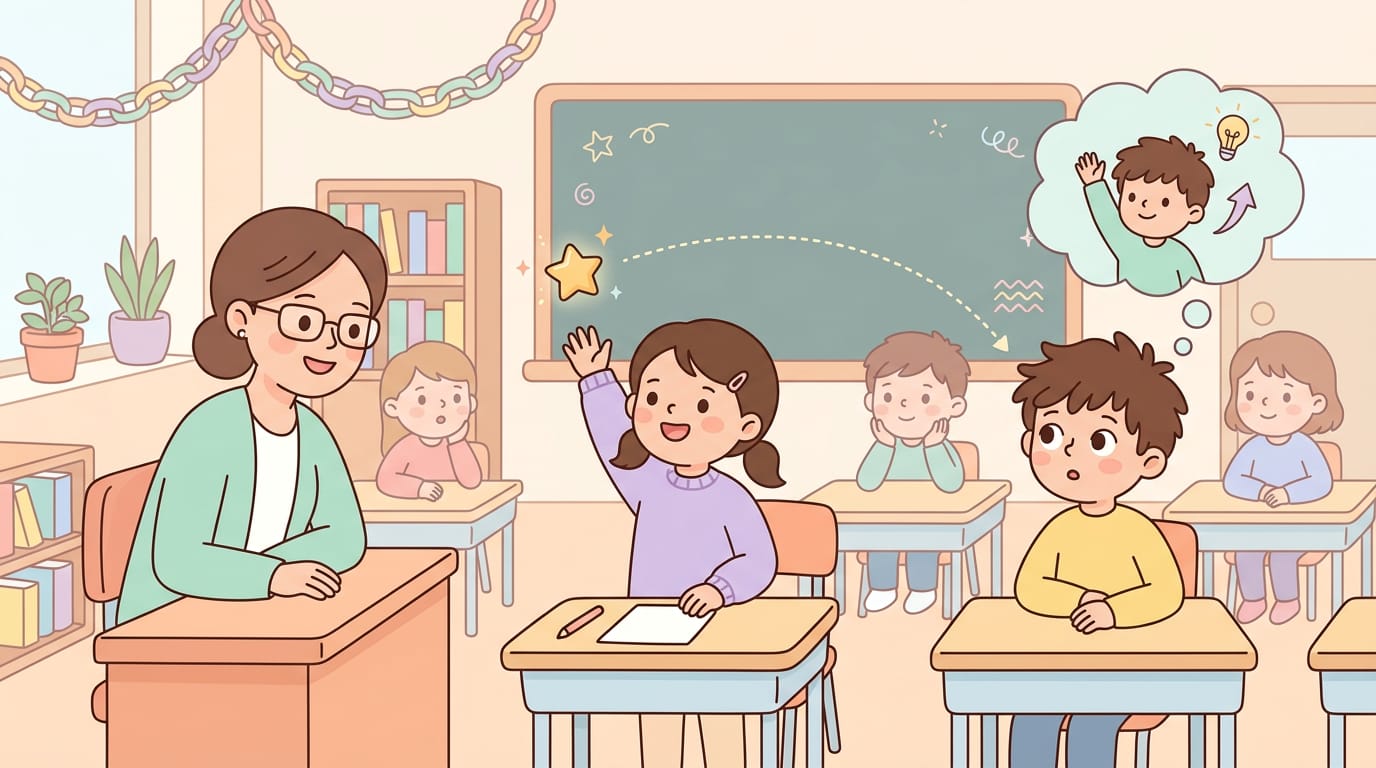
Most models of observational learning list four stages: attention, retention, reproduction, and motivation. Some frameworks add a fifth.
Attention. You notice the model and what they're doing.
Retention. You store what you saw, often by picturing it.
Reproduction (or production). You move from seeing a skill to doing it.
Motivation. You need a reason to act.
So how does attention affect learning? It decides what gets in at all. Without it, the other stages never start. Attention is the gate.
How others' reactions shape what we learn
We also learn from how others are treated for their actions. When a classmate earns praise for a careful answer, the rest of the room learns what earns it. Reviews and curated content work the same way: they show how others responded before you commit.
How role models shape children early on
Children imitate parents long before they can explain why. They also learn social cues by watching. Media and peers add to that picture. Observing others seems to be a built-in human skill.
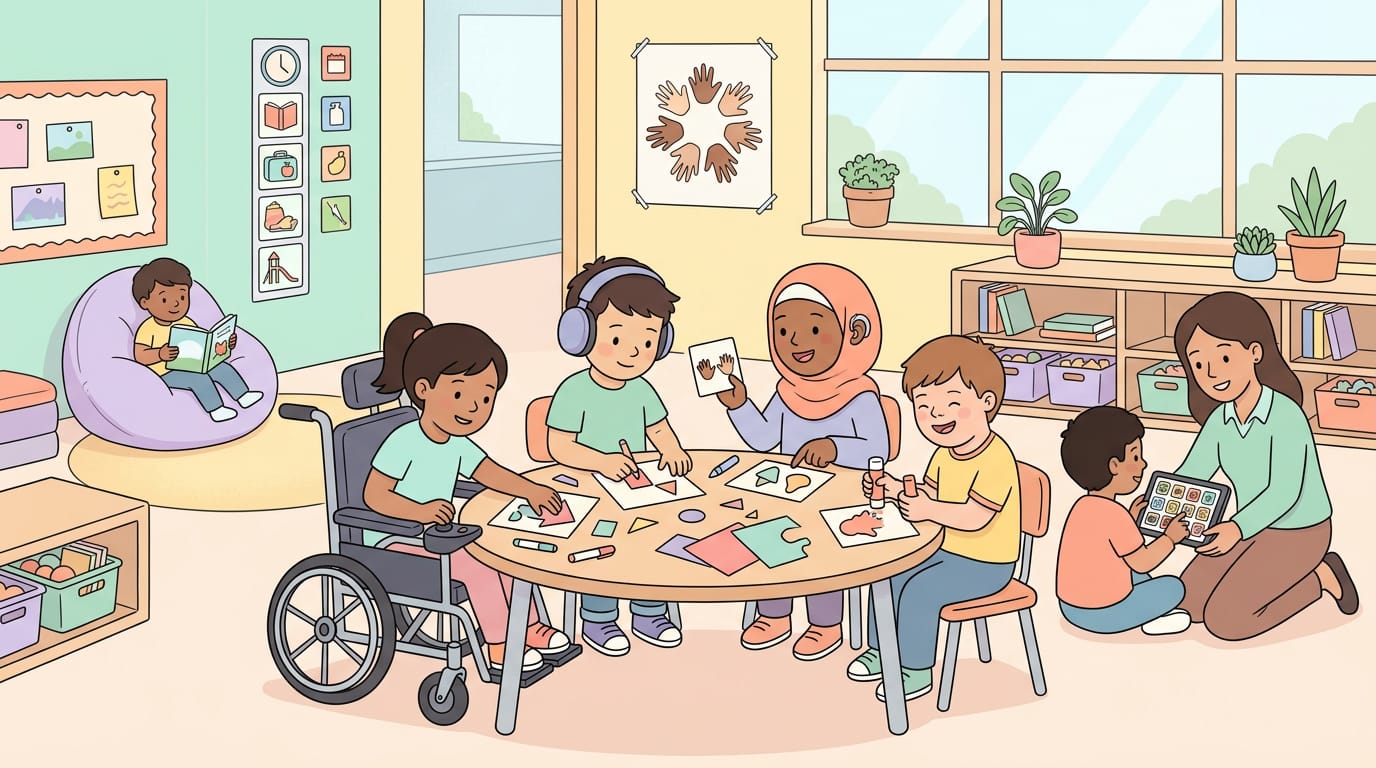
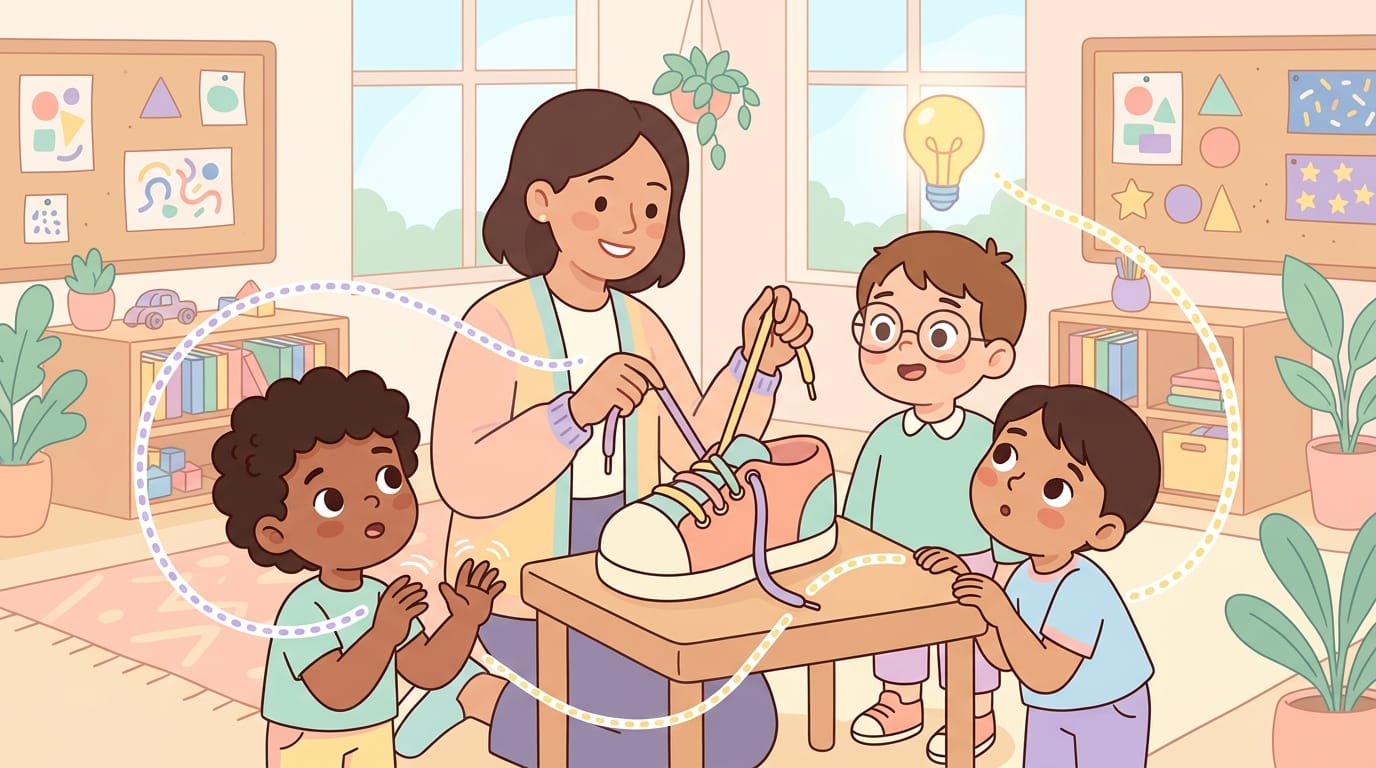
Consider a teacher who invites a bilingual student to demonstrate a lab step in both languages. Classmates who share that home language see someone like them succeed and volunteer for the next step. Who models the work matters.
Everyday Situations Where This Happens
Vicarious learning is everywhere, usually unnoticed. Here's where we see it, from home life to the staff room.
Lessons from childhood and daily life
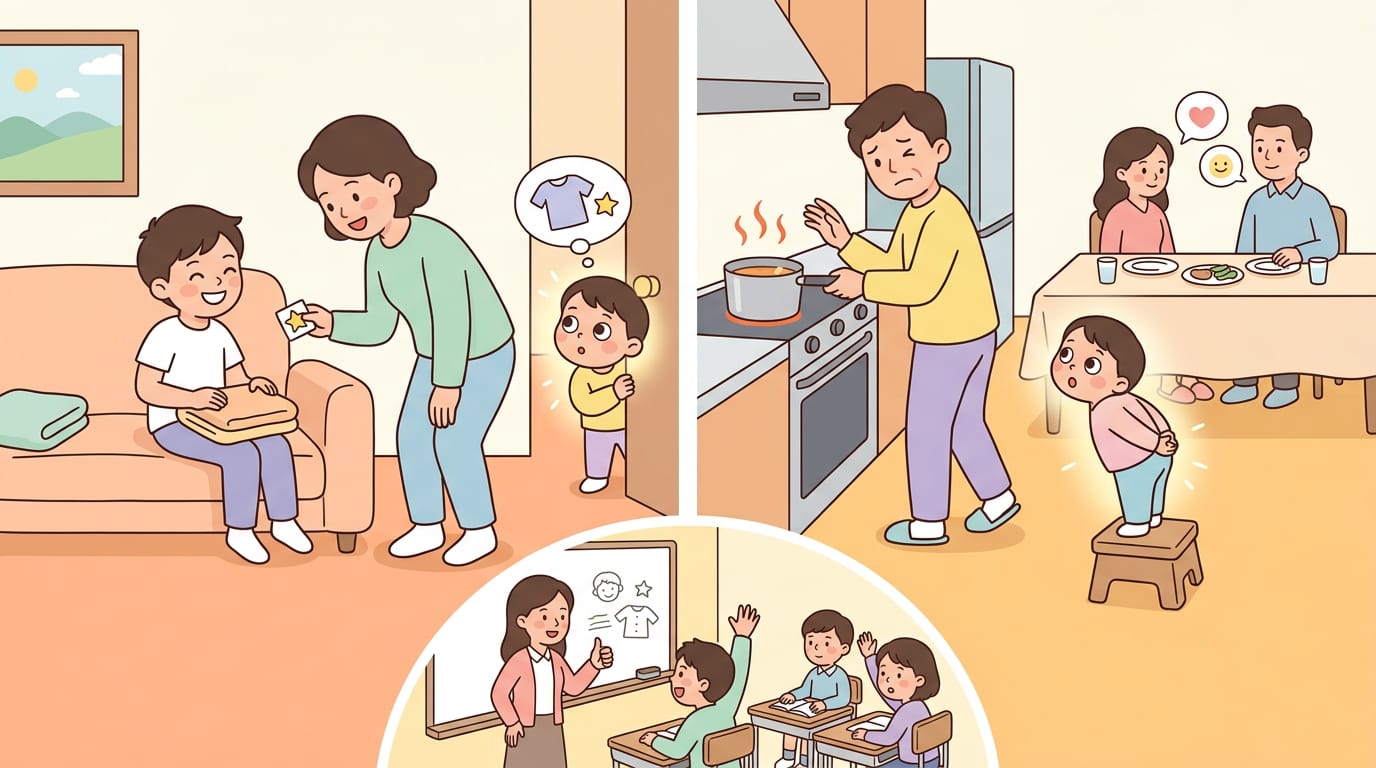
A younger sibling watches an older one get rewarded for chores, then starts folding laundry unasked. A child who hears "please" and "thank you" at dinner starts using them too.
In class, a teacher praises one student's answer, and quieter classmates take note. Think of the hand-in-the-fire lesson: a child who watches someone touch a hot stove and pull back learns to stay clear of the flame.
The lesson comes less from being told and more from seeing what happens to someone else.
Learning from books, videos, and museums
Books and biographies. A student who reads about a scientist's repeated failures picks up persistence along with the facts.
Videos and podcasts. A new teacher who watches a veteran calm a restless class sees the pacing in action.
Movies and news. A film or news story about a flood shows how people made decisions and what those choices cost.
Museums and historical sites. Walking through a restored one-room schoolhouse, students get a feel for how lessons once ran.
Workplace examples, from colleagues to case studies
A first-year teacher who watches a senior colleague open class with a quick warm-up learns the move by seeing it done. Workshops and conferences work the same way when presenters demonstrate a strategy instead of just describing it.
Case studies let you follow a school's approach, including what went wrong. When a colleague says a group project fell apart over unclear roles, you set roles from day one. Their stumble becomes your shortcut.
Why Learning from Others Pays Off
Why learn the hard way? Vicarious learning means picking up skills and knowledge by observing others.
Staying safe by learning from others' mistakes
Learning from a colleague's flop is risk-free: you get the lesson without losing class time. Consider a first-year teacher who sees a veteran calm a disruptive student with one quick redirect.
She learns it in one period, not after several rough lessons of her own.
Bandura's work explains that children acquire new behaviors and knowledge by watching others, so you don't have to rely solely on trial and error. Nobody has to get burned first.
Getting knowledge faster and more easily
Seeing the finished move makes knowledge easier to get. Watch a colleague's questioning routine or a recorded demonstration and skip straight to a working model. Learn from the best by choosing models carefully. Teachers who want more from what they see can move on to visual learning.
Self-paced video lets you pause, rewind, and rewatch at your own speed.
Broader thinking, empathy, and sharper problem-solving
Watching others shows you approaches you'd never try alone.
A study on learning traps found that watching a partner use the best decision rule helped a significant number of learners escape, though most stayed trapped. Observing is a boost, not a guarantee.
Exposure to others' experiences also builds empathy. A meta-ethnography on empathy in medical students notes that patient interaction is a valuable medium for refining communication skills vicariously.
Teachers can apply that by watching how a colleague talks with multilingual families.
Vicarious learning can also improve imitation and retention. In their 2026 narrative review, Faisal Wasim Ismail and Michelle Brown describe classic social learning theory as attention to a model, retention, reproduction, and motivation.
Imitation doesn't check for quality, though: a sarcastic aside or a shortcut copies just as readily.
Putting Vicarious Learning into Practice
It's easier than you might think to put the idea to work.
Methods to try, like demos and shadowing
These formats let you learn from a model before you try the task yourself:
Expert demonstration videos: Recordings of skilled teachers at work.
Case studies: Written accounts of how a teacher handled a real situation.
Job shadowing: Following a colleague through a lesson or a day.
Recorded peer review: Filming your lesson and reviewing it with a colleague.
Capability academies: Structured programs that build specific teaching skills.
A middle school science teacher watches a colleague's recorded lesson and borrows the follow-up question that drew out a quiet student.
Teacher think-aloud modeling shows how you reason, not just what you conclude.
Steps you can take on your own
Try these:
Choose a video, book, or podcast that shows an expert's process.
Absorb, then apply. Learn the technique, then try one part in your next lesson.
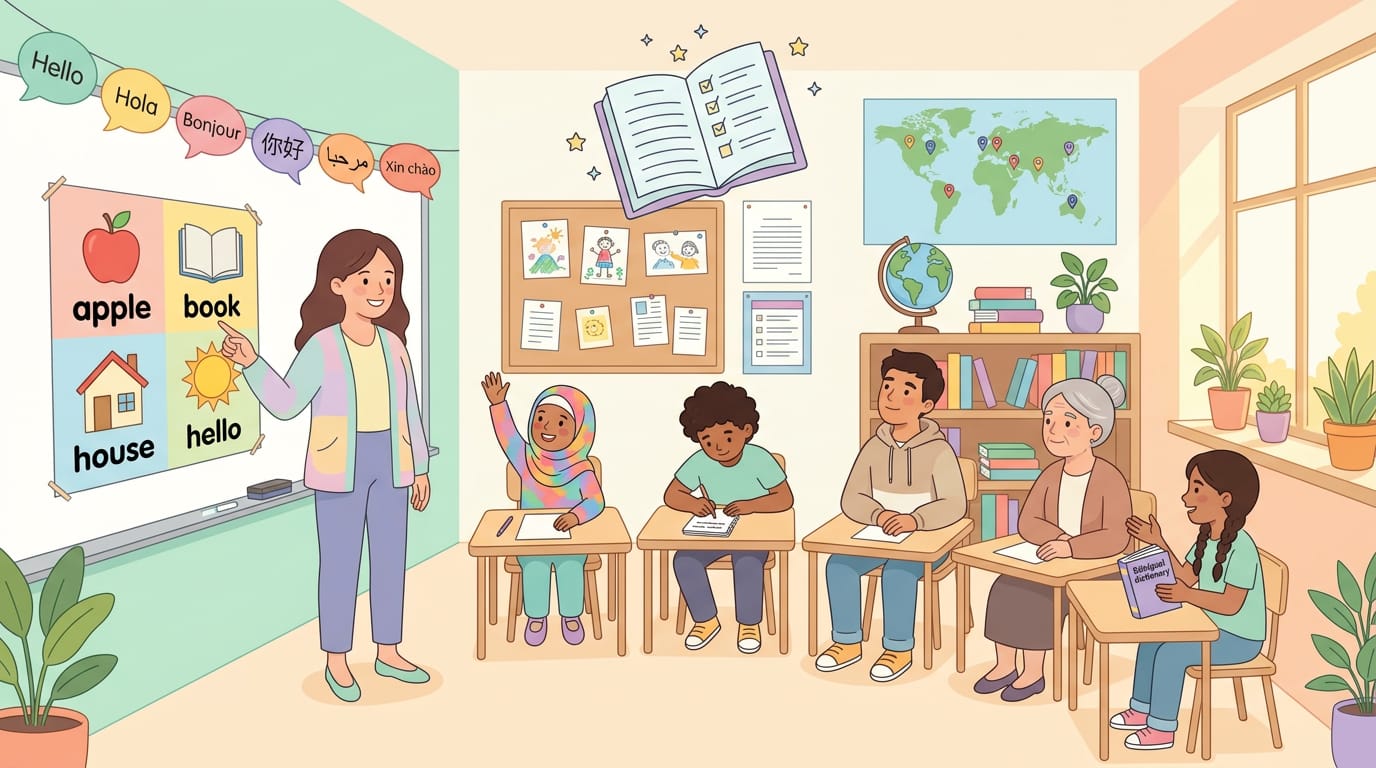
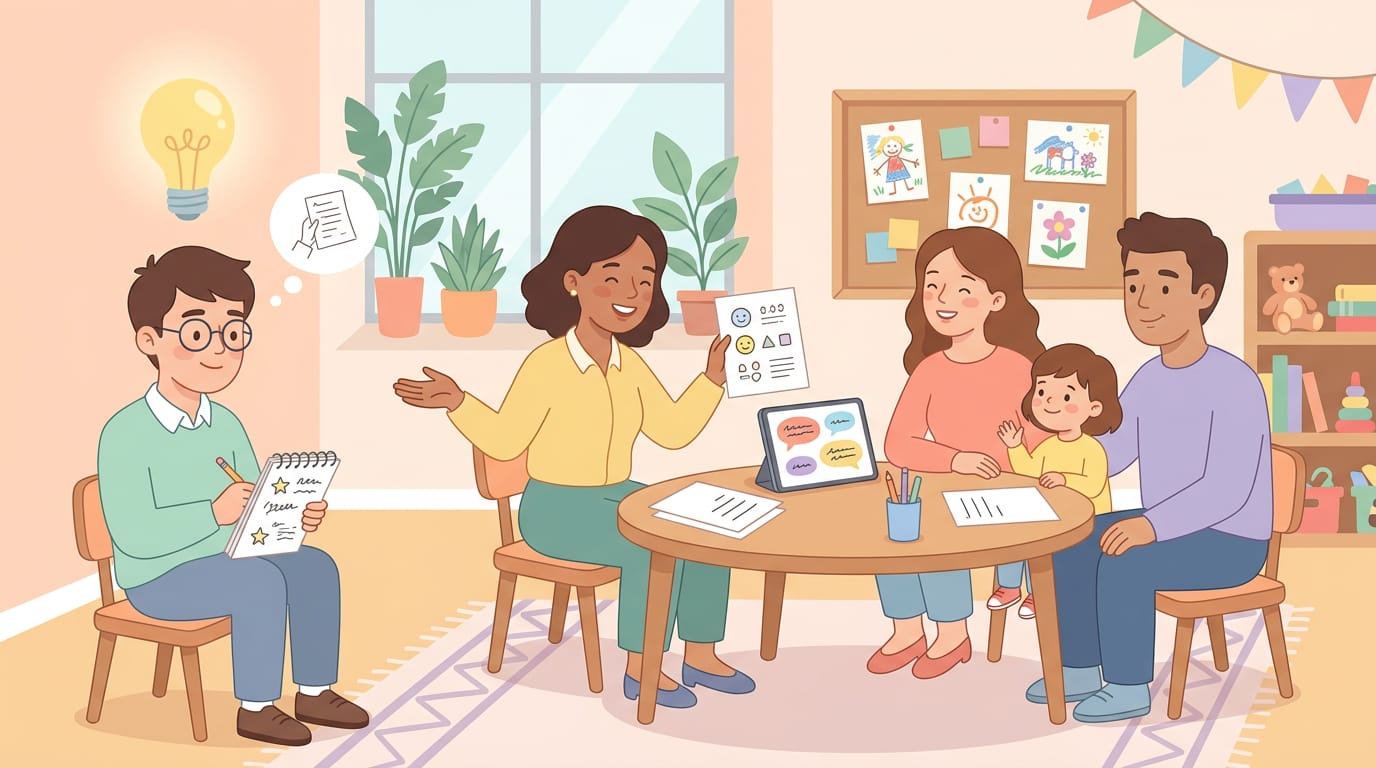
Seek out experts. Ask a colleague if you can observe. In multilingual classrooms, peer modeling helps too: a fluent classmate shows newcomers how a sentence frame such as 'The evidence suggests' works.
Pair with microlearning. Add a short expert clip to a brief practice task. Microlearning means bite-sized lessons you can finish in minutes.
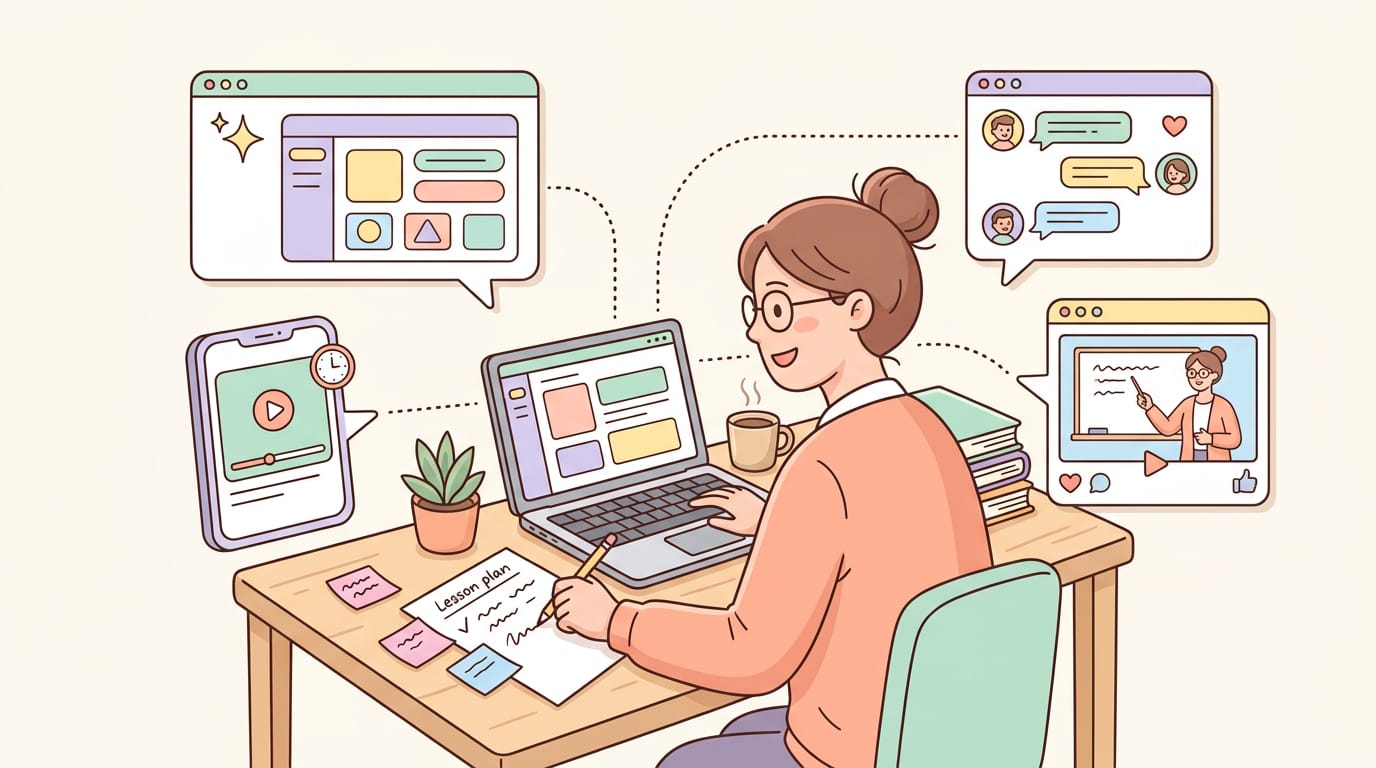
Online tools and digital experts to use
Artificial intelligence (AI) demonstrations: Some tools generate a model example on request, which you'll review and adapt.
Peer learning networks: Online communities where educators share lessons and feedback.
Microlearning platforms: Apps and sites that deliver short, focused lessons.
Social media experts: Educators who post demonstrations of their own practice.
Find the model, then make the move your own.
Test Your Grasp of the Definition
Before you move on, see whether the definition holds up under pressure. The question below uses close options on purpose, so each wrong answer shows you what the right one is not.
Picking the right answer from close options
Which term describes learning that happens by watching someone else act and seeing what follows? The correct answer is vicarious. The learner gains from someone else's experience rather than their own, which is the whole point of the term.
Three of the options are easy to rule out once you look closely:
Occupational relates to a job or line of work. It describes what someone does for a living, not how they learn.
Amplitude measures size or strength, like the height of a sound wave. It has nothing to do with watching others.
Indifferent means showing little interest or concern. A learner can feel indifferent, but that's a mood, not a learning process.
Observational is the trickiest option because it's a close relative. It points at the watching, while vicarious points at what the watcher takes away.
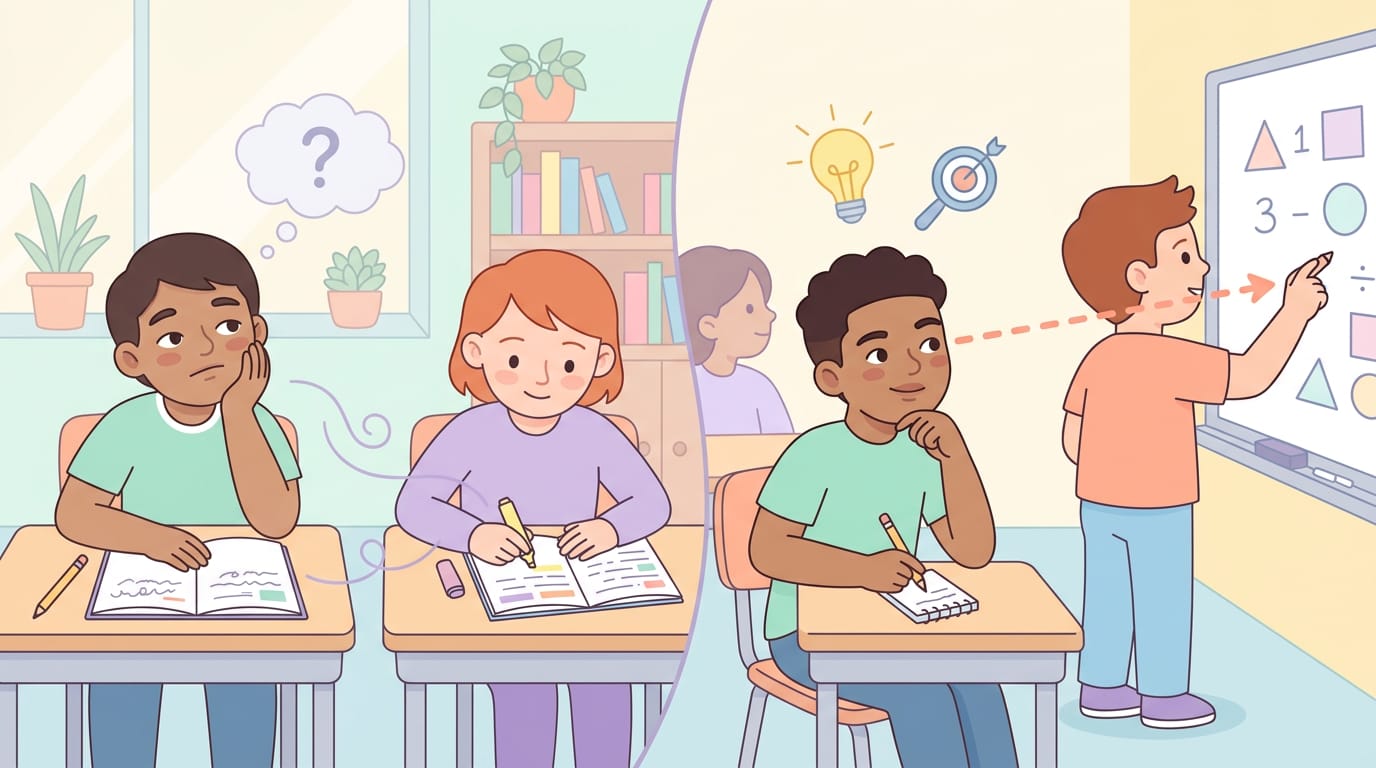
Think of a teacher who has a student watch a classmate work a long-division problem at the board. The student never touches the problem, yet afterward she can explain each step back to the teacher.
She avoids a few of the mistakes she might have made on her own. That's the vicarious part, and it's why the word fits better than observational does. Watch the wording.
Vicarious learning rests on a simple idea: watching others try, succeed, and stumble lets learners gain real knowledge without taking every risk themselves. Peer and teacher modeling put that power to work in any classroom.
Good modeling makes learning visible, so every student can see what success looks like and how to reach it.
Ready to build a more inclusive classroom? Check out our Inclusive & Multilingual Education posts for ideas you'll be able to use right away.
References
Decision rule inference limits social escape from learning traps — doi.org (2025)
The Impact of Empathy and Perspective-Taking on Medical Student Satisfaction and Performance: A Meta-Ethnography and Proposed Bow-Tie Model — mdpi.com (2025)
Social Learning Theory and Social Cognitive Theory in Healthcare Simulation – A Narrative Review — journals.sagepub.com (2026)
Bandura — doi.org (2025)
Transmission of aggression through imitation of aggressive models. — doi.org
Still grading everything by hand?
EMStudio is a free teaching management app — manage your classes, students, lessons, and more!