Inclusion Classroom Basics and How Everyone Takes Part

Think about a public library. Anyone can walk in, find a book that fits their needs, and check it out without a special pass. A classroom built on inclusion works on that same principle.
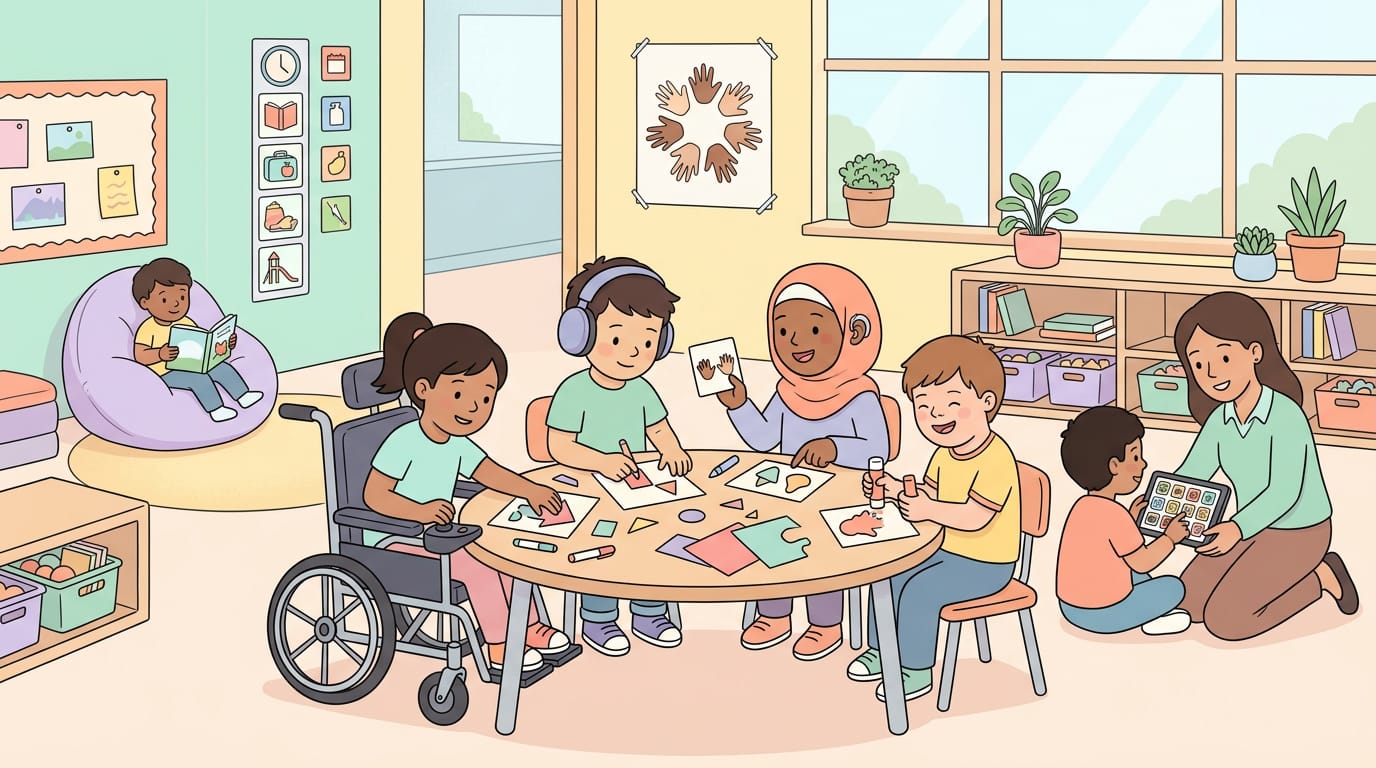
In an inclusive classroom, students with disabilities, different home languages, and varied backgrounds learn side by side, with the supports each one needs. It's less about who is in the room and more about whether everyone can fully take part.
Here, we'll cover how inclusion differs from integration, the culture behind it, and moves you can make tomorrow.
Still grading everything by hand?
EMStudio is a free teaching management app — manage your classes, students, lessons, and more!
What an Inclusion Classroom Really Is
An inclusion classroom is built on one simple idea: every student belongs in the same room, learning together.
You'll also hear inclusive education called simply inclusion, and the two terms are used interchangeably. Here's what that looks like day to day.
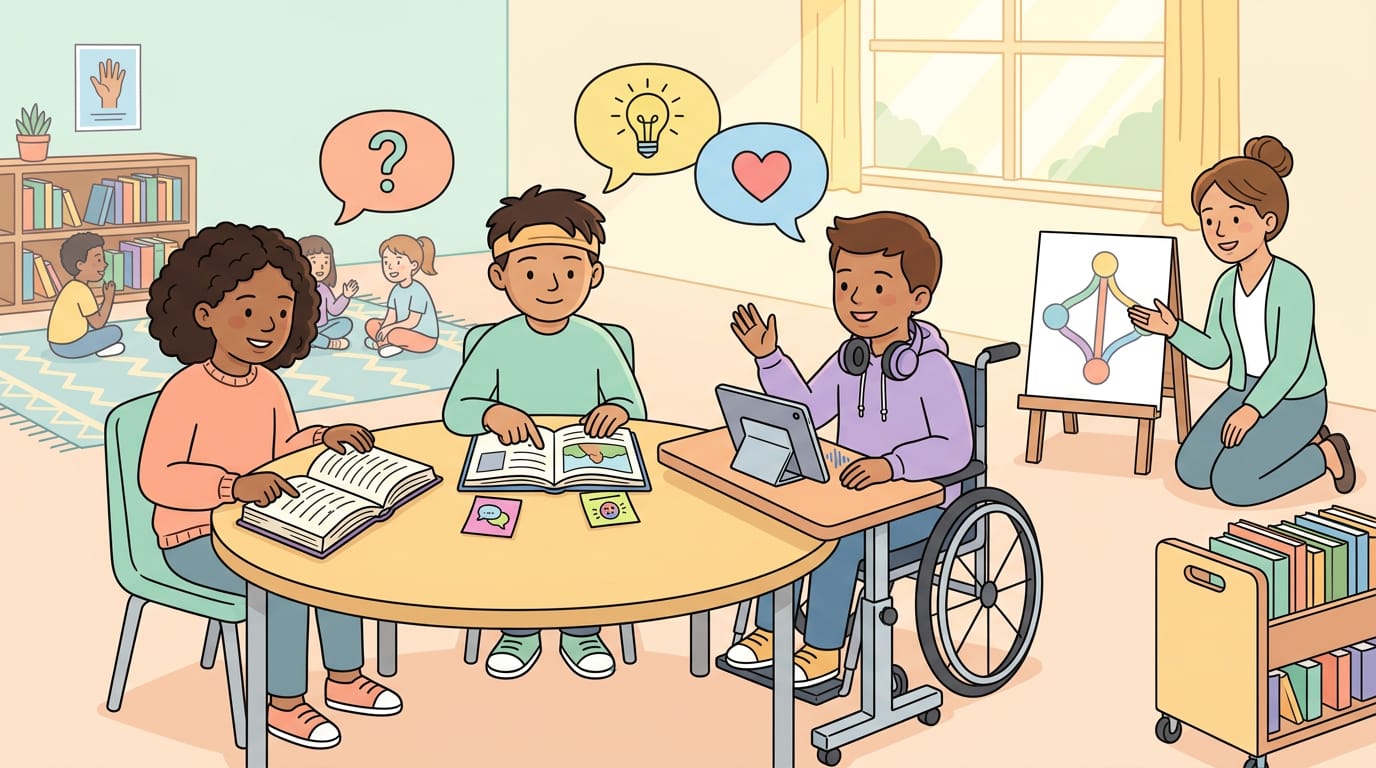
All abilities learning side by side
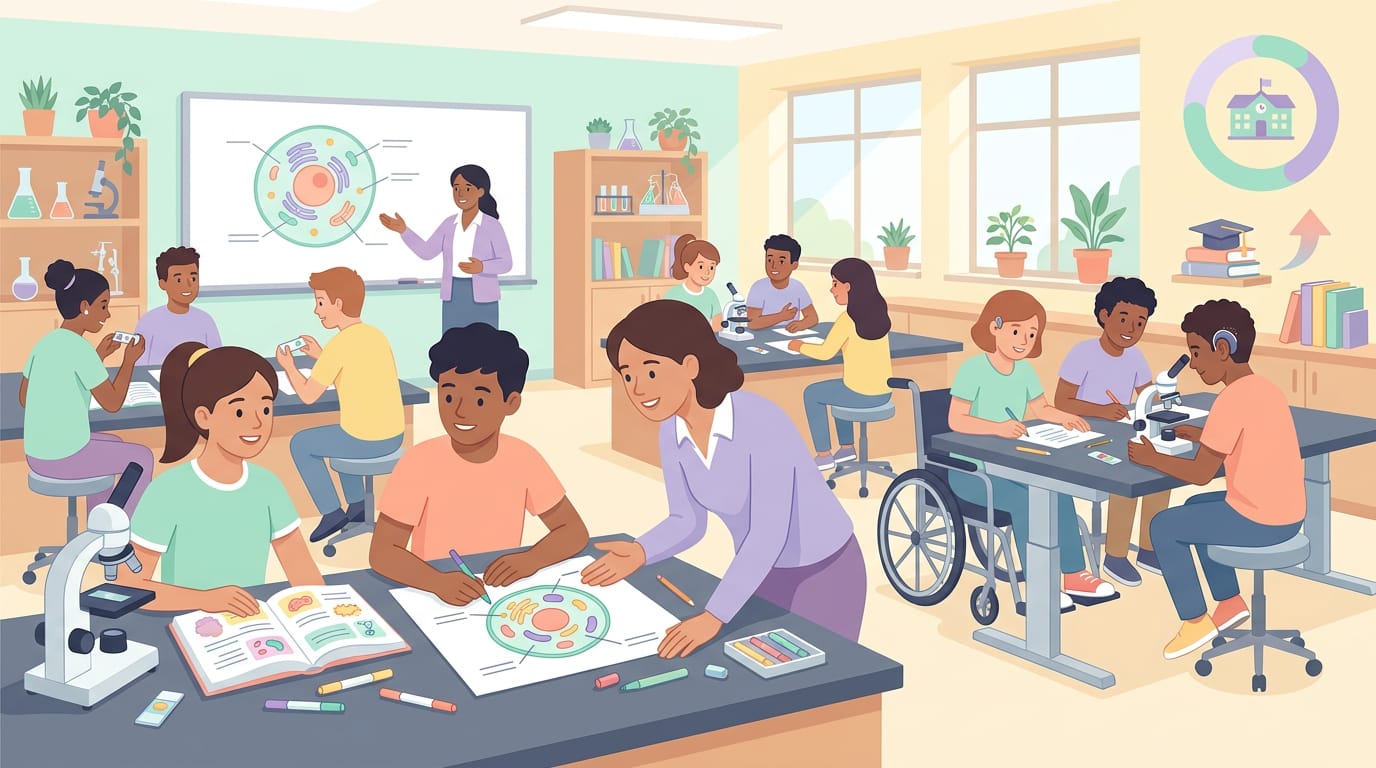
In an inclusion classroom, students of all abilities learn side by side instead of being sorted apart. They bring diverse backgrounds and learning needs, and the room is planned around that mix.
Think of a fourth-grade teacher whose class includes a student reading well above grade level, a classmate still building those skills, and a student who uses a wheelchair.
She plans one reading lesson with several entry points, so each child works at a challenging but reachable level and everyone joins the same discussion.
A supportive learning environment makes that possible. Students feel safe asking questions, making mistakes, and asking for help.
The aim is less about being in the room and more about succeeding in it, with every student feeling valued along the way. Presence alone doesn't get you there.
How inclusion differs from integration
Integration and inclusion often get mixed up. Simply placing students with disabilities in regular classes is mainstreaming, and that alone doesn't make a classroom inclusive. The differences go further:
Barriers come down. Inclusion removes systemic barriers, such as the policies, schedules, and routines that quietly shut students out.
Structures get rebuilt. It reconfigures physical and social structures, from how the room is arranged to how groups form.
No separate rooms. Inclusion is never done in separate settings, so students aren't pulled out to learn elsewhere.
Integration asks students to fit the room. Inclusion asks the room to fit them.
The Culture of Inclusive Schools
An inclusive classroom rests on its culture, and that culture shows up in daily choices. Here's how we build it.
Welcoming atmosphere and high expectations for all
A welcoming atmosphere starts with small signals, like learning names and answering mistakes with curiosity. It's less about posters and more about how adults respond when a student struggles.
Never assume a label predicts ability. A common misconception is that inclusion means lower standards. It doesn't. High expectations for all means challenging work plus the supports to reach it.
Respect for diversity means reflecting students' home lives in your materials. Build belonging on purpose. Consider a sixth-grade math teacher who opens each Monday by having students share one thing from their weekend.
Soon, the quietest students start volunteering answers. Belonging makes everything else possible.
Helping students take part and connect
Connection comes from a few deliberate choices:
Opportunities to participate. Mix in whole-class answers, partner talk, and written responses.
Seating setups for relationships. Use pods or pairs, then rotate seats so connections reach beyond one table.
Role models and buddies. Pair a newer student with a classmate who knows the routines.
Interact with same-age peers. Plan shared tasks where same-age peers solve problems together.
A common misconception is that quiet students aren't engaged. Often they're listening closely and need a lower-pressure way in.
Building on each student's goals and strengths
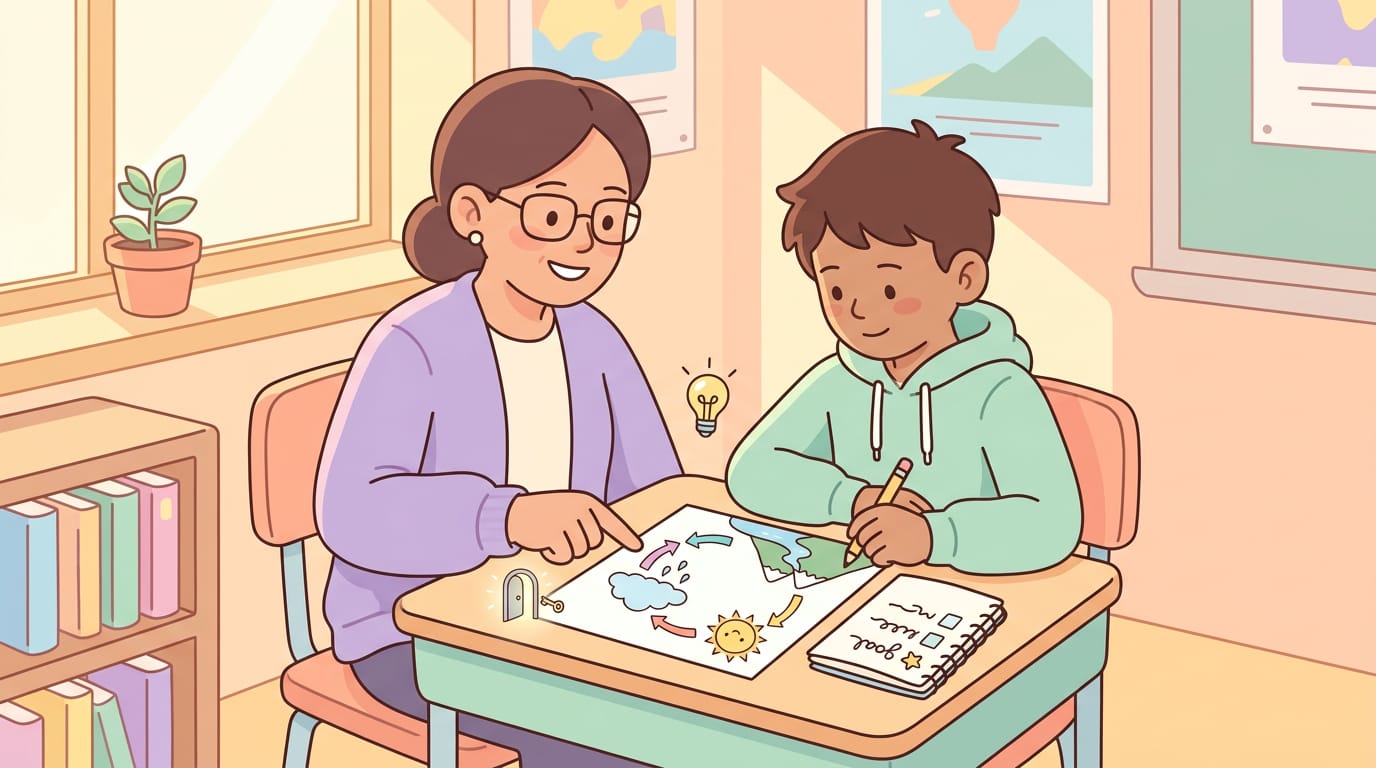
Sit down with each student and write one or two personal goals together. Then build on strengths: a student who sketches diagrams can explain a science process through a drawing first.
Start from strengths rather than deficits. Strengths give you a way in.
Treating parents as respected partners
Parents are partners who know their child's history and what helps them focus, so treat that knowledge as expertise rather than background. Many assume parents should hear from school only when something goes wrong, so reach out with good news early.
Think of a parent who gets a Friday note about a tough reading passage their child finished. When a harder conversation comes later, that parent is already on your side.
Teaching Strategies and Everyday Supports
Inclusion happens in daily routines, so here's where we turn good intentions into habits. You don't need a new program to begin.
Designing for everyone and removing barriers
Begin with Universal Design for Learning (UDL), which means planning lessons with several ways to take in information, show learning, and stay engaged.
Next, remove barriers that serve no learning purpose, like tiny-print handouts, without lowering the bar. Then accommodate what remains, like extra time.
What strategies support inclusion in class?
Three quick examples to try this week:
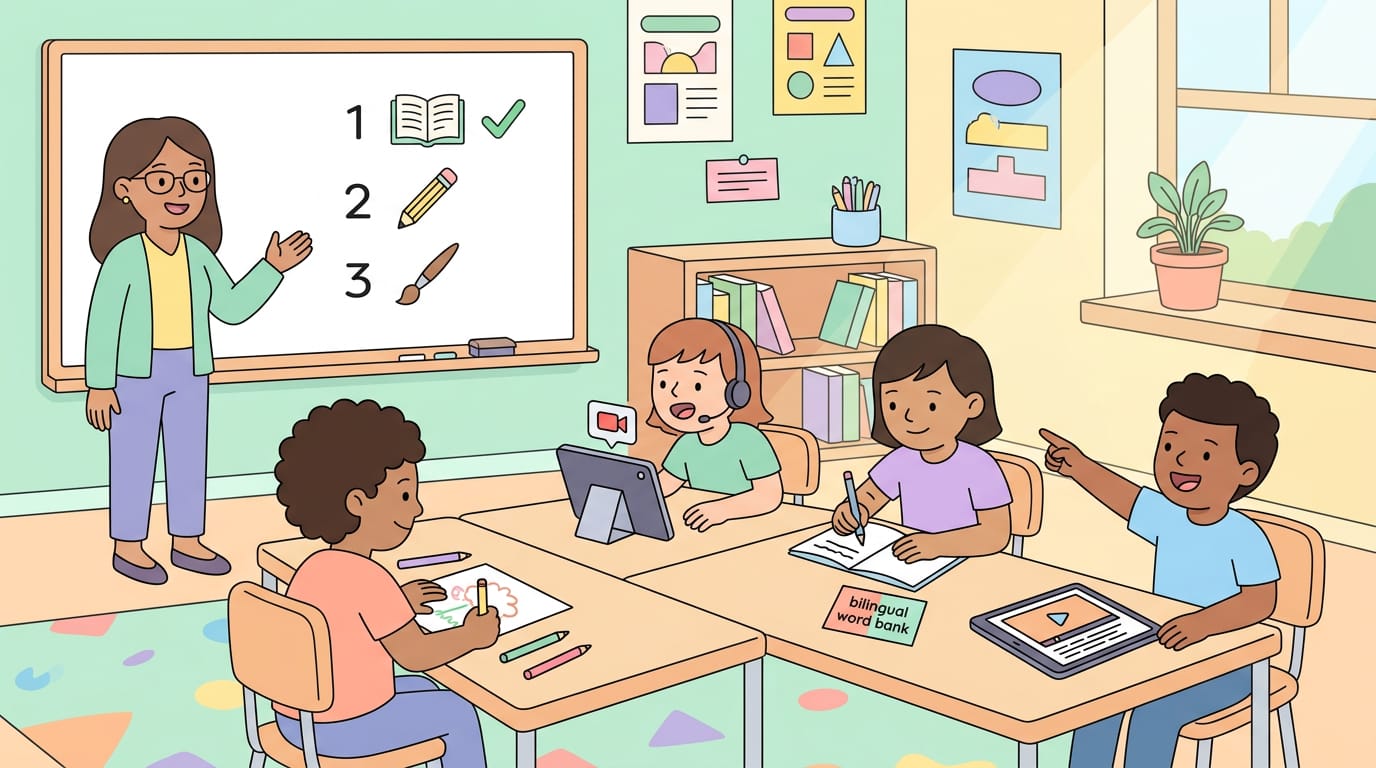
Chunked directions: Break multistep tasks into numbered steps on the board.
Visual supports: Pair key words with pictures or gestures.
Multiple ways to respond: Accept a drawing, recording, or written answer.
Flexible teaching strategies vary how you deliver a lesson, and differentiated instruction adjusts content, process, or product for different learners. It's about how students get there, not whether they get there.
Adapted materials and alternative assessment options, like a project or oral check-in instead of a timed test, let students show what they know. Accessible materials like captioned videos and readable fonts work for everyone from the start.
For multilingual learners, add a bilingual word bank or allow answers in a home language first.
Finally, start with one small change. Picture a fourth-grade teacher who adds a visual agenda to the whiteboard. Within a week, students who used to ask what's next are checking the board themselves. Small wins add up.
Making rooms accessible and sensory-friendly
Think beyond a side ramp: accessible buildings need reachable halls and restrooms too. Add sensory-friendly touches like dimmed lights and felt chair pads, plus varied seating, like a cushion or standing spot, and movement breaks.
Quiet spaces should be a choice to reset, never a punishment.
Sharing support across staff and peers
No one teacher should carry inclusion alone. Peer mentoring pairs a student with a classmate who can offer a reminder or help with a tricky step.
Co-teaching models put two adults in the room to plan and teach together, so support is built into the lesson.
A school team of counselors, specialists, and families can review what's working, and inclusion becomes shared whole-school responsibility, not one teacher's project.
The Rights and Policy Behind Inclusion
Inclusion rests on rights as well as good teaching, and we'll start with the international framework behind it.
Inclusive education as a basic human right
Inclusive education is a fundamental human right, so it isn't an optional program that schools take on when time or money allows.
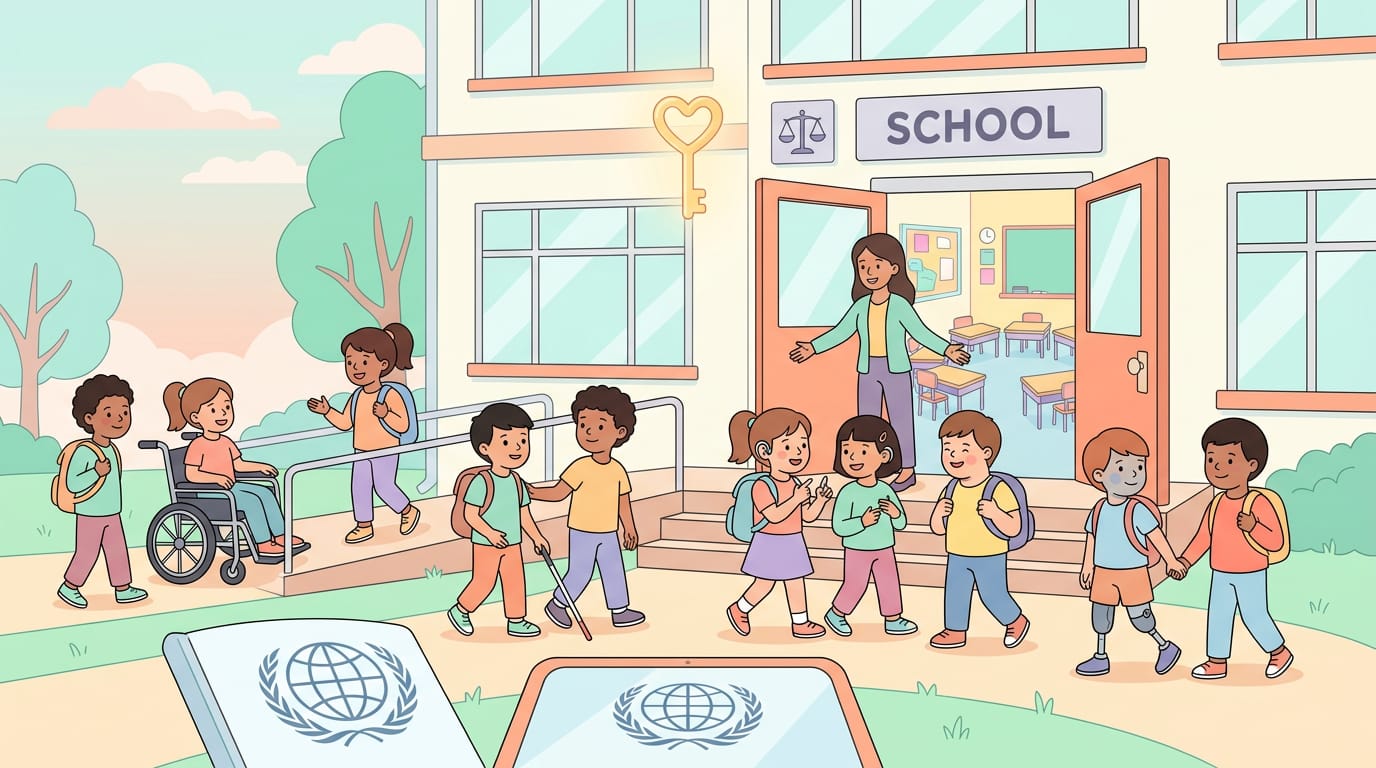
The United Nations (UN) Convention on the Rights of Persons with Disabilities (CRPD) addresses equality and non-discrimination in Article 5 and inclusive education in Article 24.
According to Gauthier de Beco's 2014 analysis, Article 24 goes beyond non-discrimination: children with disabilities should also be able to participate in the general education system.
The CRPD Committee, the body of experts that monitors compliance with the convention, issued General Comment No. 4 on “The Right to Inclusive Education.”
De Beco's 2022 article in The Modern Law Review notes that the committee set out its views on the core elements of that right.
Aligning the BC curriculum with learner diversity
Aligning the British Columbia (BC) curriculum with learner diversity means teaching to the students you actually have, not an imagined average learner.
Ending segregation is only the starting line. The goal is participation rather than placement: every learner doing meaningful work alongside peers.
An Individual Education Plan (IEP) sets out a student's goals and supports, but it only works when the general classroom teacher builds them into daily lessons. Picture a teacher whose student's IEP calls for extra reading time.
She builds that time into a class task, so the student finishes alongside classmates instead of leaving the room. That's inclusion, one lesson at a time.
What Research Shows About Benefits
Does inclusion actually work, or is it just a well-meaning ideal? The research gives a clearer answer than you might expect.
How students fare in inclusive classrooms
For students with disabilities, more time in general education classrooms tends to pay off.
A research review summarized by Newswise found that Indiana high school students with disabilities who spent 80% of their educational time in general education classrooms scored higher on state reading and math assessments.
They were also better prepared for postsecondary education and employment than peers in less inclusive settings.
Picture a ninth-grader with a reading disability who spends most of her day in biology alongside classmates, with support built into the lesson instead of pulled out of it. That's the kind of time in general education the research measured.
Research reviews have found no evidence that inclusive education harms the academic achievement of students without disabilities.
In a systematic review of student achievement in secondary schools, most studies found those students aren't disadvantaged by inclusive settings. Peers aren't held back.
Still, the proportion of students with special educational needs in a class seems to matter, so it's worth planning around.
More Examples and Resources to Explore
Principles give you direction. Here's a set of examples and resources you can put to work right away.
20 classroom inclusion examples
Picture a fourth-grade teacher planning a science lab for every student, including one who uses a wheelchair and one who's overwhelmed by noise.
Rather than build from nothing, she can scan twenty classroom examples and borrow what fits her room. Borrowing beats starting from scratch.
SEL conversation prompts toolkit
Social-emotional learning (SEL) builds the skills students need to understand feelings and get along. Our conversation prompts toolkit gives you ready-to-use questions for that work. Consider a middle school teacher who opens each Monday with one of them.
Instead of 'How was your weekend?' she asks who made students feel welcome, giving quieter students an easy first answer. The goal is less about talking at students and more about listening to them.
Video series on inclusive schools
Seeing a strategy in action makes it far easier to try. This video series shows inclusive schools at work, so you can picture each approach in a real lesson.
Picture a high school teacher who watches one episode during her planning period, then rewrites a worksheet so students can answer by drawing as well as writing. Watch, then adjust.
Intersectionality and UDL reading
Two frameworks anchor this reading. Intersectionality describes how a student's race, gender, disability, language, and other identities overlap to shape school experience.
Universal Design for Learning (UDL) builds several ways to engage, present, and show learning into a lesson from the start. The shift is less about fixing the student and more about designing the lesson.
An inclusive classroom isn't a single program or a stack of accommodations. It's a set of principles, a shared culture, and daily habits that let every learner belong and grow.
Start small: pick one lesson this week, ask who might be left out, and adjust from there.
Ready to go deeper? Check out our post, Inclusive & Multilingual Education, to find more strategies for supporting every learner.
When every learner has a real place to learn, the whole class grows stronger.
References
Full article: The benefits of inclusive education: a systematic review of student achievement in secondary schools — tandfonline.com (2025)
The Right to Inclusive Education According to Article 24 of the UN Convention on the Rights of Persons with Disabilities: Background, Requirements and (Remaining) Questions — journals.sagepub.com (2017)
The Right to ‘Inclusive’ Education - de Beco - 2022 - The Modern Law Review — onlinelibrary.wiley.com (2022)
High school students with disabilities achieve better outcomes in inclusive academic settings — newswise.com
Still grading everything by hand?
EMStudio is a free teaching management app — manage your classes, students, lessons, and more!