
Special Education Strategies: 5 Steps to Inclusive Classrooms
Special Education Strategies: 5 Steps to Inclusive Classrooms

Article by
Milo
ESL Content Coordinator & Educator
ESL Content Coordinator & Educator
All Posts
Inclusion isn't a location. It's a series of deliberate moves during reading groups, math blocks, and hallway transitions. Most special education strategies crash and burn not because the Individualized Education Program goals are wrong, but because teachers treat them as separate from the daily flow of the classroom.
You know the cabinet file. You check accommodations twice a semester. You offload the real teaching to paraprofessional support because you're flying blind. Meanwhile, the least restrictive environment becomes a buzzword on a poster instead of a lived reality for that student.
The teachers who see real growth flip the script. They build differentiated instruction into minute one, not as an afterthought for the kid in the back row. They use universal design for learning to remove barriers before they trip students up. This post walks through five concrete steps that move you from compliance paperwork to a classroom where every student—including those with IEPs—actually learns together. No extra hours required. Just better systems.
Still grading everything by hand?
EMStudio is a free teaching management app — manage your classes, students, lessons, and more!
Learn More
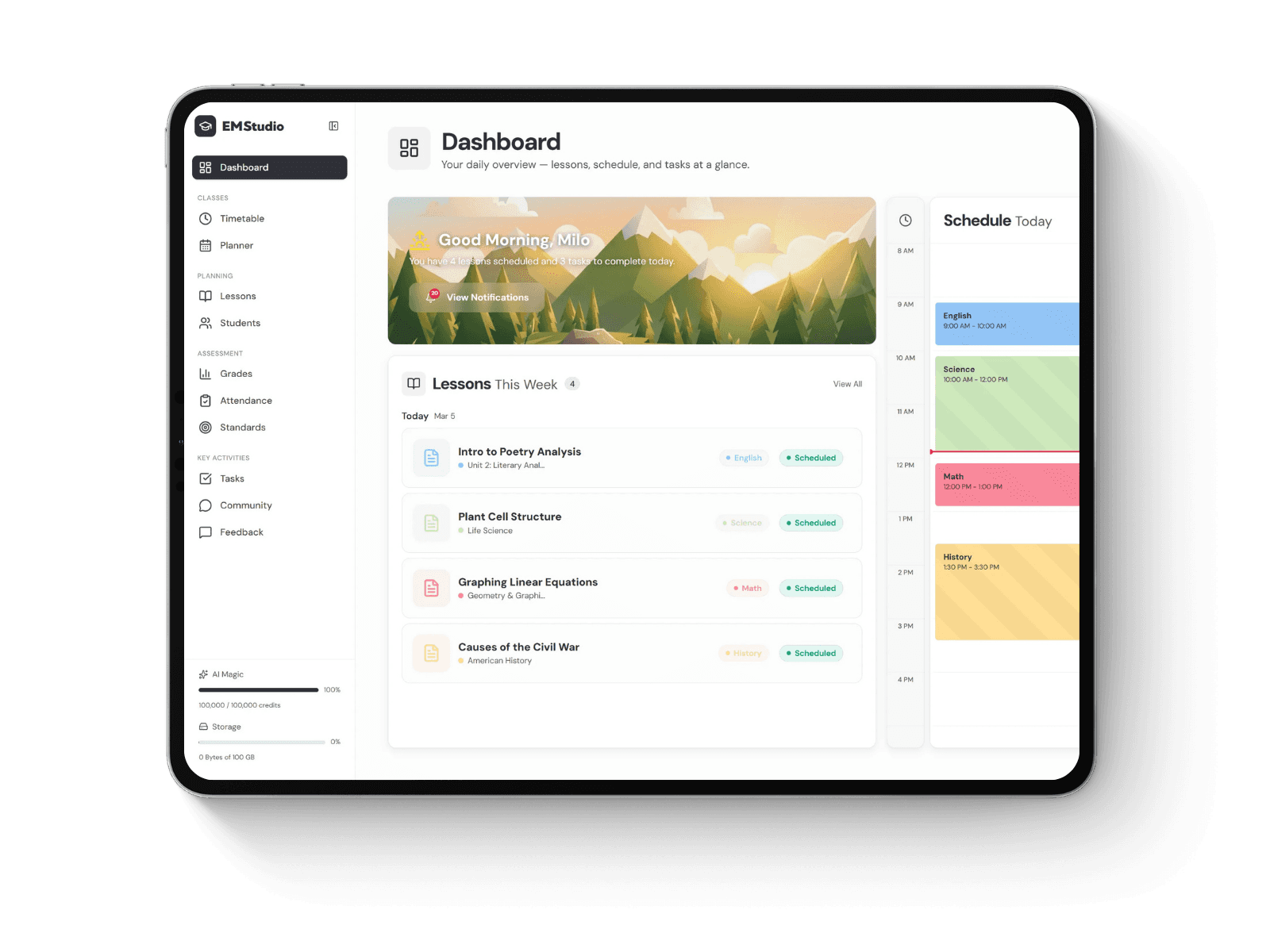
Still grading everything by hand?
EMStudio is a free teaching management app — manage your classes, students, lessons, and more!
Learn More
Table of Contents
Before You Begin: Mapping Student Needs and IEP Requirements
You cannot differentiate what you do not understand. Before you design a single lesson, you need the full picture of who sits in your room and what they legally require. That starts with distilling the Individualized Education Program into something you can actually use during your planning period.
Create a one-page IEP snapshot template. Mine lives in the front of my planning binder and gets updated after every annual review. It captures five non-negotiables: a PLAAFP summary showing current reading and math levels, annual goals with quarterly benchmarks so you know exactly when progress checks hit, testing accommodations like 1.5x time or noise-canceling headphones, related service minutes such as SLP 2x30 weekly or OT 1x30 weekly, and emergency medical protocols including seizure action plans or allergy procedures.
This single sheet answers the frantic questions that pop up at 7:45 AM when a substitute walks in or a fire drill disrupts routine.
Next, run a three-step pre-instruction audit before the first day. First, review the IEP in your Student Information System, noting goal target dates and any modification history that hints at what worked or failed last year. Second, schedule a ten-minute consult with the case manager to clarify behavioral triggers and sensory needs—ten minutes now saves forty minutes of disruption later.
Third, inventory physical accommodations available in your room or the resource closet: slant boards, weighted lap pads at 5-10% body weight, pencil grips, and fidget tools. If you do not know where the lap pad is, you cannot hand it to the student who needs it mid-meltdown.
Map these needs against the least restrictive environment continuum. Document in writing why supplementary aids and services inside general education are sufficient, or note specific push-out requirements for specialized instruction. Federal data shows most students with IEPs now spend 80% or more of their school day in general education classrooms. Your job is to make that time productive through differentiated instruction and universal design for learning, not to default automatically to the resource room when a simple visual schedule or preferential seating might solve the barrier without removal.
Finally, establish a confidential Student Needs Dashboard using Google Sheets or Excel with view-only permissions for security. Share it only with your instructional team—co-teachers, paraprofessional support staff, and related service providers. Color-code by accommodation type: green for sensory supports, blue for instructional modifications, red for behavioral interventions. When you open this during lesson planning, you see at a glance which students need what, without flipping through forty-page legal documents or guessing who gets the read-aloud. This practice aligns with mastering IEPs and collaborative planning and forms the backbone of effective special education strategies.
This groundwork turns vague response to intervention concepts into concrete daily action. Once the dashboard is set and the snapshot is taped to your desk, you are ready to assess where students actually are—not where the file says they were six months ago.

Step 1 — Conduct Comprehensive Present-Level Assessments
You can't build an Individualized Education Program on guesswork. Start with Curriculum-Based Measurement—the kind that gives you hard numbers, not hunches. Run DIBELS 8 for reading and record Oral Reading Fluency as words correct per minute. For math, use AIMSweb-Math and score computation fluency in digits correct per minute. Compare these baselines against grade-level national norms to see exactly where the gap sits. I test every student personally—watching them point to words or write digits tells me more than the score itself.
Numbers tell you there's a problem; error analysis tells you why. Use the 3-Reads protocol: first read for literal comprehension, second to spot vocabulary gaps, third to catch procedural errors in math or phonetic breakdowns in reading. Categorize what you find—conceptual misunderstandings, procedural steps out of order, or careless attention slips. Last week, I watched a 4th grader add fractions by multiplying denominators—classic procedural confusion that a standard score would miss. This shapes your strategies for teaching students with special needs better than any percentile rank.
Track everything in one place. I use a Google Form that feeds into Sheets, documenting five domains: academic performance in reading and math, behavioral frequency of off-task moments per 15-minute interval, expressive and receptive communication levels, fine and gross motor needs, and social-emotional self-regulation rated 1-5. One glance shows the whole child, not isolated snapshots. Share the Sheet with your paraprofessional support staff so they can input observational data in real time.
Pick your top three priority goals and establish baseline percentages using a 5-point rubric. Decide now whether you'll use cold probes or embedded instruction—your data collection method must match the goal criteria. This response to intervention approach through systematic progress monitoring works best when it's weekly or bi-weekly; waiting for quarterly checkpoints lets gaps grow into canyons. These special education strategies only work when you measure what matters, not just what's easy to grade.
Compile your findings into a scannable Present Levels Profile. Create a simple table with four columns: Domain, Current Performance, Gap Analysis, and Priority Goal. When the IEP team meets, everyone sees the same data instead of hunting through file folders. I project this on the screen during meetings so parents can follow along without translating edu-jargon.
Skip this step, and you're writing goals in the dark. Do it right, and every accommodation, every minute of paraprofessional support, and every placement decision in the least restrictive environment has a clear justification. The differentiated instruction and universal design for learning you plan later depend entirely on the accuracy of these numbers.

Step 2 — Design Differentiated Instruction Frameworks
Carol Tomlinson's framework gives you three dials to turn. You adjust Content (what they learn), Process (how they engage), and Product (how they show mastery). Last year, I watched an 8th-grade science team use this for a cell structure unit. Level 1 students received guided notes with a word bank to label organelles. Level 2 worked through interactive diagrams where they dragged functions to match structures. Level 3 drafted constitutional amendments comparing cell organelles to branches of government. Every student analyzed cell structures, but the complexity scaled.
Build tiered menus that offer three entry points without labeling them "easy," "medium," and "hard." Your Foundational tier might use text modified two to three grade levels below with sentence stems and graphic organizers to complete. On-Grade uses the standard text and requires concept mapping connections. Advanced pulls primary sources or needs independent research. Every tier must answer the same essential question—"How do structure and function relate in living systems?"—but the cognitive demand shifts. This prevents the trap of giving struggling students busy work while others do the real thinking.
The RAFT strategy lets students choose their output while you control the rigor. They pick a Role (lab scientist, investigative journalist, historian), an Audience (middle school peers, the school board, general public), a Format (blog post, podcast script, infographic, formal essay), and the Topic you assign. A student with dysgraphia might choose to be a podcaster explaining photosynthesis to third graders. Another might write a formal proposal to the school board. Both hit the target, but the route differs. You provide the rubric; they pick the vehicle.
Your co-teaching model should match the barrier, not the schedule. Use Station Teaching when you have twenty-eight students and need focused skill practice—rotate them through two or three stations with targeted mini-lessons. Deploy Parallel Teaching when half the class missed yesterday's concept; you and your co-teacher split them for simultaneous reteach. Pull Alternative Teaching for four to six students who need pre-teaching on vocabulary before the whole-group launch. These special education strategies serve as practical strategies for teaching learners with special needs while maintaining the least restrictive environment.
If you need a deeper walkthrough on implementation, read our guide on mastering differentiated instruction. Document these choices in the student's Individualized Education Program under accommodations or modifications. When paraprofessional support is present, assign them to stations rather than sticking them next to one student. This turns one adult into a force multiplier for your response to intervention tiers and supports universal design for learning principles.

Step 3 — Integrate Multi-Sensory and Universal Design Techniques
When I started using special education strategies that engaged more than just worksheets, my 4th graders with dyslexia stopped fleeing to the bathroom during reading blocks. Universal Design for Learning isn't an add-on; it's the foundation that makes your differentiated instruction actually reachable for every kid in your least restrictive environment.
Target the three UDL networks directly. For Engagement, offer choice boards with three or more options for topics or partners—let them pick between a podcast about volcanoes or a partner reading about earthquakes. For Representation, stop relying on text alone. Load content into NaturalReader for audio, or record yourself explaining it on video. For Action and Expression, let students use Google Voice Typing to dictate essays, type responses, or record video reflections via Flipgrid. Same standard, different doorway.
Layer in these four evidence-based multi-sensory techniques. Orton-Gillingham sand trays let students trace phonemes while saying sounds aloud—kinesthetic and auditory together. Wilson Reading System 'sky writing' forces visual tracking as kids form letters in the air. Math-U-See base-ten blocks make place value concrete for students who can't hold abstract numbers in working memory. Body spelling or 'statue' poses turn vocabulary words into physical shapes, cementing definitions through muscle memory. These aren't crafts; they're neural pathways.
Build a sensory support decision matrix so your paraprofessional support knows exactly what to grab without interrupting your response to intervention flow. For attention deficits, wrap Theraband around chair legs or hand out stress balls. For sensory seekers, use weighted lap pads at 5-10% of body weight—never more—following a strict 20 minutes on, 20 minutes off protocol. For visual processing issues, offer yellow or blue colored overlays and slant boards set at 20 degrees. Write the rules on an index card taped to the supply bin.
Before the lesson, I will provide text, audio, and video versions of the objective. During the lesson, I will offer choice boards and sensory tools based on the matrix. After the lesson, students can demonstrate learning by typing, speaking, or building. This three-phase check takes two minutes of planning but saves twenty minutes of redirection. You can find more tools for inclusive classrooms and accessible learning to flesh out these Individualized Education Program accommodations without reinventing your wheel.

Step 4 — How Do You Address Behavioral Needs Within Academic Instruction?
Address behavioral needs by embedding Positive Behavioral Interventions and Supports (PBIS) directly into lesson design using the Precorrect-Monitor-Reinforce cycle. Precorrect expectations before activities, actively monitor using proximity and scanning, and reinforce desired behaviors with specific praise or token economies. Collect ABC (Antecedent-Behavior-Consequence) data during instruction to identify triggers and adjust environmental or instructional variables without removing academic content.
You don't need to stop teaching to manage behavior. The best special education strategies weave support into the lesson itself, keeping kids in their seats and engaged with content. Think prevention, not reaction.
Use the Precorrect-Monitor-Reinforce cycle. Before group work, state: "Voice level 1 during reading." Then move. Stand within three feet of your target students, scan the room every 30 seconds, and aim for four positive interactions per one correction. This active supervision prevents escalation. Catch them being good. "I see you're using the bookmark strategy" works better than generic praise.
When behaviors spike, grab your phone. Apps like Catalyst or BehaviorSnap let you log ABC data (Antecedent-Behavior-Consequence) without stopping instruction. Track three to five incidents. Note the trigger—was it a hard math problem or a bumped elbow? Watch for patterns. This data drives your response to intervention decisions and helps you adjust the environment before the next episode.
Teach specific alternatives to disruption. For calling out, use a visual cue card showing "raise hand + wait." For wandering eyes, try a self-monitoring checklist with a MotivAider timer that vibrates every three minutes. For elopement, hand them a break card that grants five minutes in a designated calm space with a sand timer. This is universal design for learning in action—giving tools to everyone so the student with needs doesn't stand out.
Build a Brain Break Menu with five sensory options. Wall push-ups provide proprioceptive input. Carrying heavy books to the office creates paraprofessional support opportunities. The 4-7-8 breathing technique—in four, hold seven, out eight. A water break. Silent ball toss. Schedule these every 20 to 30 minutes for students with ADHD or sensory needs. John Hattie's research puts feedback at an effect size of 0.70, so consistent reinforcement beats harsh consequences.
Compare embedded support against removal. Pulling kids out costs academic minutes and marks them as different. Keeping them in builds generalization. Document this for the Individualized Education Program team. When you use behavioral interventions in the classroom, you maintain the least restrictive environment while addressing the behavioral needs of students through differentiated instruction. You're teaching students with behavioural needs, not just managing them.

Step 5 — Build Sustainable Collaboration Systems with Support Staff
Schedule a 15-minute huddle every Monday morning with your paraprofessionals before the bell rings. Run through four items fast: pull up last week's Individualized Education Program goal graphs and spot the trend lines—are they climbing or flat? This data drives your response to intervention adjustments. Assign specific students to each adult for the week's lessons, noting exactly which accommodations to deploy. Review any blowups from Friday using a quick debrief: what triggered it, what cooled it down, what to try next. Finally, flag any curriculum shifts coming that will need material adaptations. Done by 7:45.
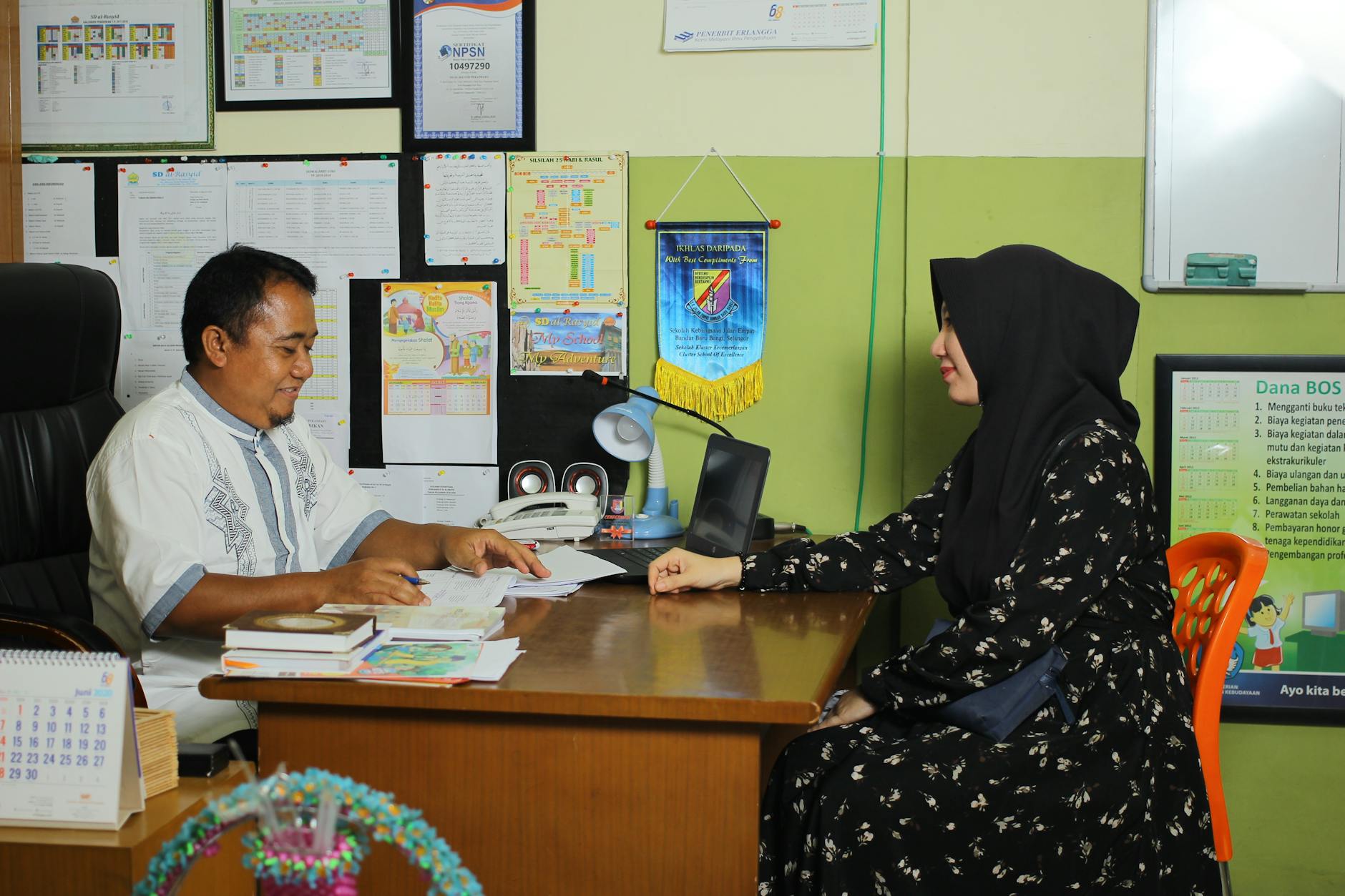
Stop passing notebooks back and forth. Set up shared folders in Google Classroom, SeeSaw, or Microsoft Teams where the whole team deposits real-time data. One running doc tracks behaviors with 30-minute timestamps. Another lists which differentiated instruction supports and universal design for learning tools were actually used during each block. Snap photos of student work samples directly into the folder for portfolio evidence—no more lost papers in backpacks. These images become proof during annual reviews.
Clarify who does what using a Zones of Support matrix to prevent hand-holding that never fades. Zone 1 means you lead while the para collects data from the back. Zone 2 puts both of you circulating to assigned groups. Zone 3 hands the para a small group while you rotate in for five minutes of oversight. Map these zones to each subject block on your schedule. Post the matrix inside your classroom library so substitute teachers can see who leads. This structure preserves the least restrictive environment by making sure students don't become tethered to adult assistance.
Establish communication channels that match the urgency. Use Remind or Slack for behavioral alerts that need a response within 15 minutes—like when a student leaves the room. Maintain a shared Google Doc for daily logs that everyone updates by 3:30 PM. Send weekly email summaries to parents and case managers every Friday by 4:00 PM. Consistent timing builds trust and prevents Sunday night panic emails. These effective co-teaching techniques turn paraprofessional support from chaotic crisis management into predictable special education strategies that outlast staffing changes.
Critical Mistakes That Sabotage Special Education Implementation
You can have perfect differentiated instruction and still fail if you fall into these traps. I watched a 4th grader slide backward for three months because his team confused accommodations with modifications. These special education strategies only work when you avoid the procedural errors that invalidate your Individualized Education Program. Use these strategies to help students with learning disabilities alongside these correction protocols.
Mistake: Providing modifications (changing the learning objective) instead of accommodations (changing access).
You water down the grade-level standard until the student is essentially working in a different curriculum.
Mistake: Over-reliance on small-group pull-out without generalization plan.
Students perform perfectly in the resource room with the special education teacher but freeze in homeroom when the prompt changes or the noise increases.
Mistake: Inconsistent data collection rendering progress monitoring invalid for IEP meetings.
You have three data points from September and two from last Tuesday.
Mistake: Creating 'learned helplessness' through excessive prompting.
The student waits for the paraprofessional to whisper the answer or physically guide the pencil.
Mistake: Failing to document LRE rationale.
The parent asks why their child is not in the general education classroom, and you have no evidence of what you tried or why it failed.
Fix these five errors, and your compliance audits become routine instead of terrifying. Your students get the full benefit of their IEPs.

Before You Begin: Mapping Student Needs and IEP Requirements
You cannot differentiate what you do not understand. Before you design a single lesson, you need the full picture of who sits in your room and what they legally require. That starts with distilling the Individualized Education Program into something you can actually use during your planning period.
Create a one-page IEP snapshot template. Mine lives in the front of my planning binder and gets updated after every annual review. It captures five non-negotiables: a PLAAFP summary showing current reading and math levels, annual goals with quarterly benchmarks so you know exactly when progress checks hit, testing accommodations like 1.5x time or noise-canceling headphones, related service minutes such as SLP 2x30 weekly or OT 1x30 weekly, and emergency medical protocols including seizure action plans or allergy procedures.
This single sheet answers the frantic questions that pop up at 7:45 AM when a substitute walks in or a fire drill disrupts routine.
Next, run a three-step pre-instruction audit before the first day. First, review the IEP in your Student Information System, noting goal target dates and any modification history that hints at what worked or failed last year. Second, schedule a ten-minute consult with the case manager to clarify behavioral triggers and sensory needs—ten minutes now saves forty minutes of disruption later.
Third, inventory physical accommodations available in your room or the resource closet: slant boards, weighted lap pads at 5-10% body weight, pencil grips, and fidget tools. If you do not know where the lap pad is, you cannot hand it to the student who needs it mid-meltdown.
Map these needs against the least restrictive environment continuum. Document in writing why supplementary aids and services inside general education are sufficient, or note specific push-out requirements for specialized instruction. Federal data shows most students with IEPs now spend 80% or more of their school day in general education classrooms. Your job is to make that time productive through differentiated instruction and universal design for learning, not to default automatically to the resource room when a simple visual schedule or preferential seating might solve the barrier without removal.
Finally, establish a confidential Student Needs Dashboard using Google Sheets or Excel with view-only permissions for security. Share it only with your instructional team—co-teachers, paraprofessional support staff, and related service providers. Color-code by accommodation type: green for sensory supports, blue for instructional modifications, red for behavioral interventions. When you open this during lesson planning, you see at a glance which students need what, without flipping through forty-page legal documents or guessing who gets the read-aloud. This practice aligns with mastering IEPs and collaborative planning and forms the backbone of effective special education strategies.
This groundwork turns vague response to intervention concepts into concrete daily action. Once the dashboard is set and the snapshot is taped to your desk, you are ready to assess where students actually are—not where the file says they were six months ago.
Step 1 — Conduct Comprehensive Present-Level Assessments
You can't build an Individualized Education Program on guesswork. Start with Curriculum-Based Measurement—the kind that gives you hard numbers, not hunches. Run DIBELS 8 for reading and record Oral Reading Fluency as words correct per minute. For math, use AIMSweb-Math and score computation fluency in digits correct per minute. Compare these baselines against grade-level national norms to see exactly where the gap sits. I test every student personally—watching them point to words or write digits tells me more than the score itself.
Numbers tell you there's a problem; error analysis tells you why. Use the 3-Reads protocol: first read for literal comprehension, second to spot vocabulary gaps, third to catch procedural errors in math or phonetic breakdowns in reading. Categorize what you find—conceptual misunderstandings, procedural steps out of order, or careless attention slips. Last week, I watched a 4th grader add fractions by multiplying denominators—classic procedural confusion that a standard score would miss. This shapes your strategies for teaching students with special needs better than any percentile rank.
Track everything in one place. I use a Google Form that feeds into Sheets, documenting five domains: academic performance in reading and math, behavioral frequency of off-task moments per 15-minute interval, expressive and receptive communication levels, fine and gross motor needs, and social-emotional self-regulation rated 1-5. One glance shows the whole child, not isolated snapshots. Share the Sheet with your paraprofessional support staff so they can input observational data in real time.
Pick your top three priority goals and establish baseline percentages using a 5-point rubric. Decide now whether you'll use cold probes or embedded instruction—your data collection method must match the goal criteria. This response to intervention approach through systematic progress monitoring works best when it's weekly or bi-weekly; waiting for quarterly checkpoints lets gaps grow into canyons. These special education strategies only work when you measure what matters, not just what's easy to grade.
Compile your findings into a scannable Present Levels Profile. Create a simple table with four columns: Domain, Current Performance, Gap Analysis, and Priority Goal. When the IEP team meets, everyone sees the same data instead of hunting through file folders. I project this on the screen during meetings so parents can follow along without translating edu-jargon.
Skip this step, and you're writing goals in the dark. Do it right, and every accommodation, every minute of paraprofessional support, and every placement decision in the least restrictive environment has a clear justification. The differentiated instruction and universal design for learning you plan later depend entirely on the accuracy of these numbers.
Step 2 — Design Differentiated Instruction Frameworks
Carol Tomlinson's framework gives you three dials to turn. You adjust Content (what they learn), Process (how they engage), and Product (how they show mastery). Last year, I watched an 8th-grade science team use this for a cell structure unit. Level 1 students received guided notes with a word bank to label organelles. Level 2 worked through interactive diagrams where they dragged functions to match structures. Level 3 drafted constitutional amendments comparing cell organelles to branches of government. Every student analyzed cell structures, but the complexity scaled.
Build tiered menus that offer three entry points without labeling them "easy," "medium," and "hard." Your Foundational tier might use text modified two to three grade levels below with sentence stems and graphic organizers to complete. On-Grade uses the standard text and requires concept mapping connections. Advanced pulls primary sources or needs independent research. Every tier must answer the same essential question—"How do structure and function relate in living systems?"—but the cognitive demand shifts. This prevents the trap of giving struggling students busy work while others do the real thinking.
The RAFT strategy lets students choose their output while you control the rigor. They pick a Role (lab scientist, investigative journalist, historian), an Audience (middle school peers, the school board, general public), a Format (blog post, podcast script, infographic, formal essay), and the Topic you assign. A student with dysgraphia might choose to be a podcaster explaining photosynthesis to third graders. Another might write a formal proposal to the school board. Both hit the target, but the route differs. You provide the rubric; they pick the vehicle.
Your co-teaching model should match the barrier, not the schedule. Use Station Teaching when you have twenty-eight students and need focused skill practice—rotate them through two or three stations with targeted mini-lessons. Deploy Parallel Teaching when half the class missed yesterday's concept; you and your co-teacher split them for simultaneous reteach. Pull Alternative Teaching for four to six students who need pre-teaching on vocabulary before the whole-group launch. These special education strategies serve as practical strategies for teaching learners with special needs while maintaining the least restrictive environment.
If you need a deeper walkthrough on implementation, read our guide on mastering differentiated instruction. Document these choices in the student's Individualized Education Program under accommodations or modifications. When paraprofessional support is present, assign them to stations rather than sticking them next to one student. This turns one adult into a force multiplier for your response to intervention tiers and supports universal design for learning principles.
Step 3 — Integrate Multi-Sensory and Universal Design Techniques
When I started using special education strategies that engaged more than just worksheets, my 4th graders with dyslexia stopped fleeing to the bathroom during reading blocks. Universal Design for Learning isn't an add-on; it's the foundation that makes your differentiated instruction actually reachable for every kid in your least restrictive environment.
Target the three UDL networks directly. For Engagement, offer choice boards with three or more options for topics or partners—let them pick between a podcast about volcanoes or a partner reading about earthquakes. For Representation, stop relying on text alone. Load content into NaturalReader for audio, or record yourself explaining it on video. For Action and Expression, let students use Google Voice Typing to dictate essays, type responses, or record video reflections via Flipgrid. Same standard, different doorway.
Layer in these four evidence-based multi-sensory techniques. Orton-Gillingham sand trays let students trace phonemes while saying sounds aloud—kinesthetic and auditory together. Wilson Reading System 'sky writing' forces visual tracking as kids form letters in the air. Math-U-See base-ten blocks make place value concrete for students who can't hold abstract numbers in working memory. Body spelling or 'statue' poses turn vocabulary words into physical shapes, cementing definitions through muscle memory. These aren't crafts; they're neural pathways.
Build a sensory support decision matrix so your paraprofessional support knows exactly what to grab without interrupting your response to intervention flow. For attention deficits, wrap Theraband around chair legs or hand out stress balls. For sensory seekers, use weighted lap pads at 5-10% of body weight—never more—following a strict 20 minutes on, 20 minutes off protocol. For visual processing issues, offer yellow or blue colored overlays and slant boards set at 20 degrees. Write the rules on an index card taped to the supply bin.
Before the lesson, I will provide text, audio, and video versions of the objective. During the lesson, I will offer choice boards and sensory tools based on the matrix. After the lesson, students can demonstrate learning by typing, speaking, or building. This three-phase check takes two minutes of planning but saves twenty minutes of redirection. You can find more tools for inclusive classrooms and accessible learning to flesh out these Individualized Education Program accommodations without reinventing your wheel.
Step 4 — How Do You Address Behavioral Needs Within Academic Instruction?
Address behavioral needs by embedding Positive Behavioral Interventions and Supports (PBIS) directly into lesson design using the Precorrect-Monitor-Reinforce cycle. Precorrect expectations before activities, actively monitor using proximity and scanning, and reinforce desired behaviors with specific praise or token economies. Collect ABC (Antecedent-Behavior-Consequence) data during instruction to identify triggers and adjust environmental or instructional variables without removing academic content.
You don't need to stop teaching to manage behavior. The best special education strategies weave support into the lesson itself, keeping kids in their seats and engaged with content. Think prevention, not reaction.
Use the Precorrect-Monitor-Reinforce cycle. Before group work, state: "Voice level 1 during reading." Then move. Stand within three feet of your target students, scan the room every 30 seconds, and aim for four positive interactions per one correction. This active supervision prevents escalation. Catch them being good. "I see you're using the bookmark strategy" works better than generic praise.
When behaviors spike, grab your phone. Apps like Catalyst or BehaviorSnap let you log ABC data (Antecedent-Behavior-Consequence) without stopping instruction. Track three to five incidents. Note the trigger—was it a hard math problem or a bumped elbow? Watch for patterns. This data drives your response to intervention decisions and helps you adjust the environment before the next episode.
Teach specific alternatives to disruption. For calling out, use a visual cue card showing "raise hand + wait." For wandering eyes, try a self-monitoring checklist with a MotivAider timer that vibrates every three minutes. For elopement, hand them a break card that grants five minutes in a designated calm space with a sand timer. This is universal design for learning in action—giving tools to everyone so the student with needs doesn't stand out.
Build a Brain Break Menu with five sensory options. Wall push-ups provide proprioceptive input. Carrying heavy books to the office creates paraprofessional support opportunities. The 4-7-8 breathing technique—in four, hold seven, out eight. A water break. Silent ball toss. Schedule these every 20 to 30 minutes for students with ADHD or sensory needs. John Hattie's research puts feedback at an effect size of 0.70, so consistent reinforcement beats harsh consequences.
Compare embedded support against removal. Pulling kids out costs academic minutes and marks them as different. Keeping them in builds generalization. Document this for the Individualized Education Program team. When you use behavioral interventions in the classroom, you maintain the least restrictive environment while addressing the behavioral needs of students through differentiated instruction. You're teaching students with behavioural needs, not just managing them.
Step 5 — Build Sustainable Collaboration Systems with Support Staff
Schedule a 15-minute huddle every Monday morning with your paraprofessionals before the bell rings. Run through four items fast: pull up last week's Individualized Education Program goal graphs and spot the trend lines—are they climbing or flat? This data drives your response to intervention adjustments. Assign specific students to each adult for the week's lessons, noting exactly which accommodations to deploy. Review any blowups from Friday using a quick debrief: what triggered it, what cooled it down, what to try next. Finally, flag any curriculum shifts coming that will need material adaptations. Done by 7:45.
Stop passing notebooks back and forth. Set up shared folders in Google Classroom, SeeSaw, or Microsoft Teams where the whole team deposits real-time data. One running doc tracks behaviors with 30-minute timestamps. Another lists which differentiated instruction supports and universal design for learning tools were actually used during each block. Snap photos of student work samples directly into the folder for portfolio evidence—no more lost papers in backpacks. These images become proof during annual reviews.
Clarify who does what using a Zones of Support matrix to prevent hand-holding that never fades. Zone 1 means you lead while the para collects data from the back. Zone 2 puts both of you circulating to assigned groups. Zone 3 hands the para a small group while you rotate in for five minutes of oversight. Map these zones to each subject block on your schedule. Post the matrix inside your classroom library so substitute teachers can see who leads. This structure preserves the least restrictive environment by making sure students don't become tethered to adult assistance.
Establish communication channels that match the urgency. Use Remind or Slack for behavioral alerts that need a response within 15 minutes—like when a student leaves the room. Maintain a shared Google Doc for daily logs that everyone updates by 3:30 PM. Send weekly email summaries to parents and case managers every Friday by 4:00 PM. Consistent timing builds trust and prevents Sunday night panic emails. These effective co-teaching techniques turn paraprofessional support from chaotic crisis management into predictable special education strategies that outlast staffing changes.
Critical Mistakes That Sabotage Special Education Implementation
You can have perfect differentiated instruction and still fail if you fall into these traps. I watched a 4th grader slide backward for three months because his team confused accommodations with modifications. These special education strategies only work when you avoid the procedural errors that invalidate your Individualized Education Program. Use these strategies to help students with learning disabilities alongside these correction protocols.
Mistake: Providing modifications (changing the learning objective) instead of accommodations (changing access).
You water down the grade-level standard until the student is essentially working in a different curriculum.
Mistake: Over-reliance on small-group pull-out without generalization plan.
Students perform perfectly in the resource room with the special education teacher but freeze in homeroom when the prompt changes or the noise increases.
Mistake: Inconsistent data collection rendering progress monitoring invalid for IEP meetings.
You have three data points from September and two from last Tuesday.
Mistake: Creating 'learned helplessness' through excessive prompting.
The student waits for the paraprofessional to whisper the answer or physically guide the pencil.
Mistake: Failing to document LRE rationale.
The parent asks why their child is not in the general education classroom, and you have no evidence of what you tried or why it failed.
Fix these five errors, and your compliance audits become routine instead of terrifying. Your students get the full benefit of their IEPs.
Still grading everything by hand?
EMStudio is a free teaching management app — manage your classes, students, lessons, and more!
Learn More
Still grading everything by hand?
EMStudio is a free teaching management app — manage your classes, students, lessons, and more!
Learn More




Notion4Teachers
Notion templates to simplify administrative tasks and enhance your teaching experience.



2026 Notion4Teachers. All Rights Reserved.
Notion4Teachers
Notion templates to simplify administrative tasks and enhance your teaching experience.
2026 Notion4Teachers. All Rights Reserved.
Notion4Teachers
Notion templates to simplify administrative tasks and enhance your teaching experience.
2026 Notion4Teachers. All Rights Reserved.