
9 Best Tools for Inclusive Classrooms and Accessible Learning
9 Best Tools for Inclusive Classrooms and Accessible Learning

Article by
Milo
ESL Content Coordinator & Educator
ESL Content Coordinator & Educator
All Posts
The choice of a suitable tool for the classroom shapes how well instructors support students from various backgrounds. Today's classrooms are comprised of students with varying physical/mental abilities, languages, learning styles, and emotional needs. The more the technology supports this diversity, the less friction there will be on a typical day of instruction, and the more time instructors will have to focus on teaching rather than ongoing troubleshooting.
Effective tools do much more than provide new functionality; they eliminate obstacles. Tools such as producing reliable transcripts of student speech, reducing the difficulty of reading materials, facilitating collaboration among students, or creating alternatives to show what a student understands, allow instructors to develop a classroom atmosphere in which more students can participate.
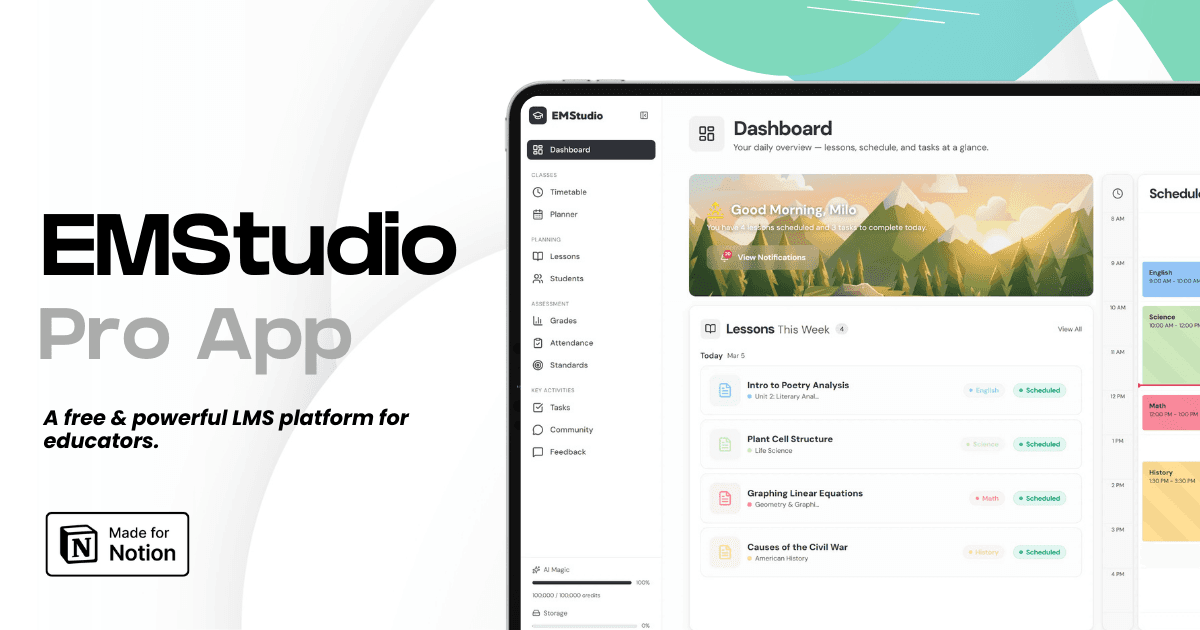
Still grading everything by hand?
EMStudio is a free teaching management app — manage your classes, students, lessons, and more!
Learn More
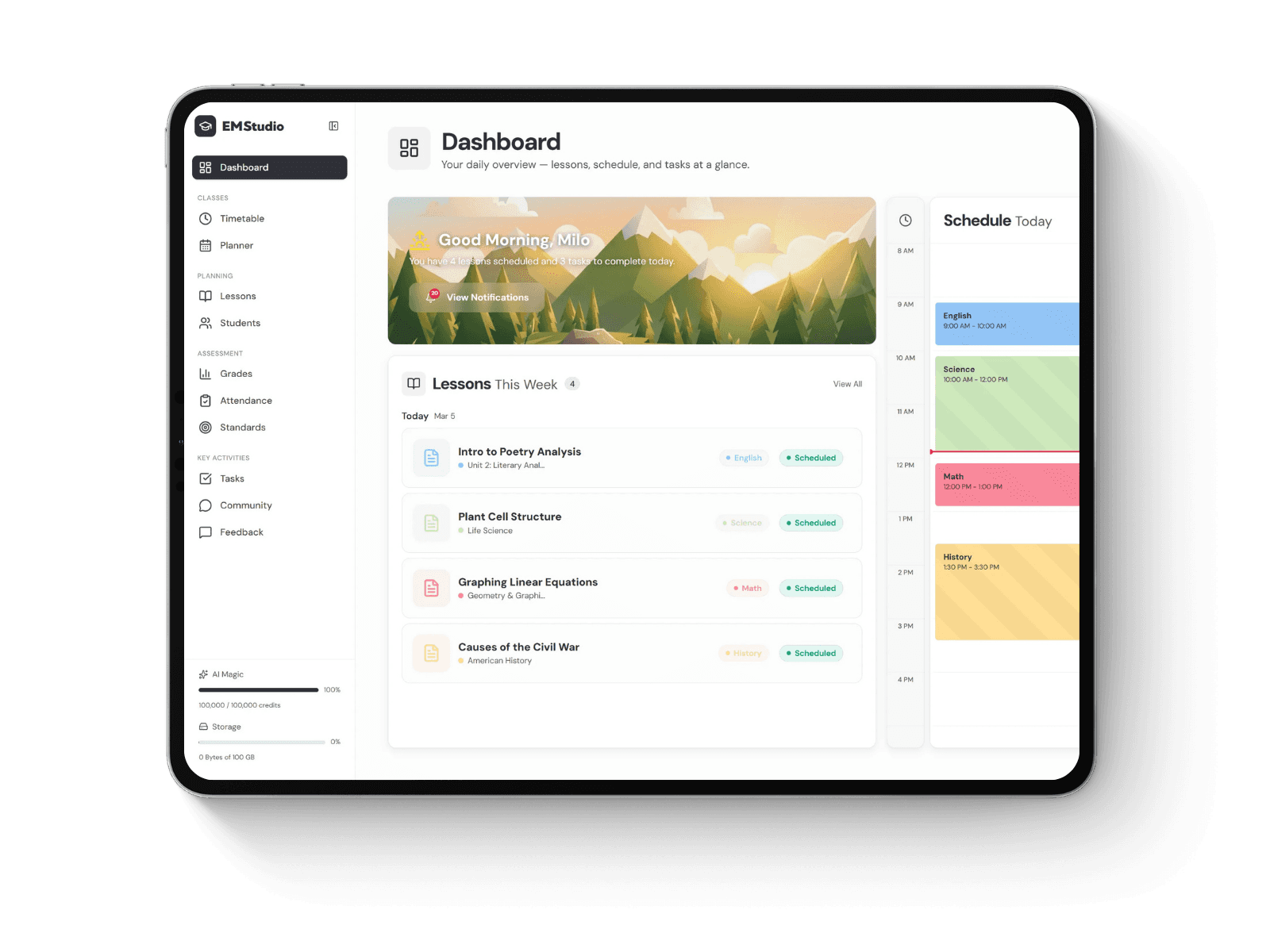
Still grading everything by hand?
EMStudio is a free teaching management app — manage your classes, students, lessons, and more!
Learn More
Table of Contents
The purpose of this resource is to illustrate practical tools that would naturally integrate into current practices. Rather than illustrating cutting-edge functionality, the purpose is to illustrate when to use each solution, the potential trade-offs associated with each, and the type of students who would benefit most from each.
HappyScribe
In many cases, when a lesson includes media, such as a video recording of a lecture, discussion, or multimedia materials, it is necessary to convert the spoken content into a written format to provide access to students. Many teachers use HappyScribe's audio-to-text tool to quickly create transcripts, helping them meet the needs of students who learn and retain information better by reading and/or need captioned versions of the material.
Typically, teachers will upload recorded classes, guest presentations, or flipped learning videos to the platform. Once created, the transcripts are shared with students via the school's Learning Management System (LMS) or a classroom hub. By providing students with searchable notes, this approach also provides multilingual students the opportunity to review the material at their own pace and assists all students in their preparation for tests/exams/review periods.
Key strengths:
Highly accurate transcription with editable output
Supports captions for video-based instruction
Scales well for departments producing frequent recordings
Improves content discoverability across school platforms
Limitation or trade-off:
Editing transcripts still requires human review for technical vocabulary
Best suited for: Educators running blended or recorded lessons who want reliable transcripts without building a time-consuming manual process.
Microsoft Immersive Reader
In many cases, reading-intensive coursework may inadvertently leave out students who have difficulty decoding reading, staying on task, and/or processing large amounts of information. However, the immersive reader can change how students engage with written content rather than simply reducing the amount of reading in the curriculum.
Teachers often embed it into assignments so students can adjust spacing, change background colors, enable text-to-speech, or break words into syllables. Because it integrates with widely used classroom platforms, adoption tends to feel natural rather than disruptive.
Key strengths:
Multiple reading supports within one interface
Translation features for multilingual classrooms
Minimal setup for teachers already using Microsoft tools
Encourages independent learning adjustments
Limitation or trade-off:
Works best inside the Microsoft ecosystem
Best suited for: Schools seeking built-in accessibility without introducing another standalone platform.
Read&Write
Even highly capable students can hit barriers when reading complex instructions or organizing written responses. Read&Write functions as a literacy support layer, helping learners engage with grade-level material while meeting academic expectations.
Examples of use include for research assignments, e ssays, and study guides before tests. It's also important to keep in mind that stress, regardless of whether there is another barrier or disability, can greatly impact a student's ability to stay focused -- therefore, pairing academic supports with online counseling or other options to assist with managing stress and/or other barriers can be helpful to maintain a student's performance during the most stressful times.
Key strengths:
Strong writing supports, including prediction tools
Audio feedback that reinforces comprehension
Helpful vocabulary assistance during research
Works across browsers and common classroom software
Limitation or trade-off:
Full functionality typically requires a paid license
Best suited for: Schools prioritizing literacy support across multiple grade levels.
Google Classroom Accessibility Features
Familiarity is one of Google Classroom’s greatest advantages when it comes to helping an institution make a decision about accessibility. It is common for both educators and their students to have a high degree of knowledge regarding how Google Classroom works, reducing the amount of training and "onboarding" required for new users.
Educators combine built-in accessibility settings with compatible extensions to distribute materials in multiple formats. Considering that nearly all students who receive special education services — roughly nineteen out of twenty — now learn in general education environments, flexible platforms become less optional and more foundational.
Key strengths:
Broad device compatibility
Streamlined assignment distribution
Strong collaboration through shared documents
Easy integration with accessibility add-ons
Limitation or trade-off:
Advanced accessibility sometimes depends on third-party tools
Best suited for: Schools seeking a widely understood platform that adapts to inclusive classroom models.
Otter.ai
Capturing a classroom discussion in real time is a challenge that educators have long known exists. As each student processes information at their own pace, it can be difficult for instructors to keep up with what all students are hearing. Otter.ai has developed an application that generates live lecture notes from a seminar, group conversation, or even a one-on-one dialogue between a teacher and a student, reducing the risk that valuable ideas fall through the cracks.
In addition to being used in project-based classrooms (where both the formal presentation and dialogue are equally important), many teachers also use the application to assist their students in recalling past conversations; this will assist with retaining information from those conversations, and will reduce some of the pressures of having to capture every detail manually.
Key strengths:
Live transcription during class sessions
Searchable notes for efficient review
Helpful for collaborative learning environments
Reduces note-taking strain
Limitation or trade-off:
Accuracy may dip in noisy classrooms
Best suited for: Discussion-driven courses where reviewing spoken content improves understanding.
Canva for Education
Graphic communication has been shown to allow for quicker comprehension of ideas than graphic communication used as supplemental to text. Educators can use Canva to create and deliver visually-based lessons, short videos, and adaptable templates with no prior design experience required.
Educators also offer options for completing assignments that include a visual project component, so students can demonstrate their mastery of a concept in an alternate format. The ability to complete assignments in multiple ways will support the needs of all learners, especially those who are most effective at communicating their thoughts and ideas through graphic or video-based media rather than written essays.
Key strengths:
Extensive template library
Encourages creative expression
Collaborative editing features
No steep learning curve
Limitation or trade-off:
Overuse of templates can lead to uniform-looking work
Best suited for: Classrooms encouraging multimodal learning and student creativity.
Flip (formerly Flipgrid)
While many students are willing to contribute in a verbal manner during live classes, some prefer to provide their thoughts in a recorded response format. The flip model allows for both recorded responses (asynchronous) and opportunities for student classroom presence.
Teachers have developed multiple ways to use this flipped model to create opportunities for all students to participate, including video reflection assignments, short language practice, and peer feedback activities. These formats allow all students to be able to participate without being forced into the real-time interactive element of a traditional classroom setting.
Key strengths:
Promotes equitable participation
Supports video-based reflection
Easy sharing within class groups
Encourages student voice
Limitation or trade-off:
Requires a stable internet for smooth recording
Best suited for: Teachers looking to expand participation beyond traditional hand-raising.
Nearpod
Maintaining engagement across varied learning needs can challenge even experienced instructors. Nearpod structures lessons around interaction, allowing teachers to check comprehension as they teach instead of waiting until after class.
Instructors typically embed polls, quizzes, and collaborative boards into presentations, creating frequent entry points for students to contribute.
Key strengths:
Real-time formative assessment
Interactive lesson delivery
Supports differentiated instruction
Clear progress visibility
Limitation or trade-off:
Preparing interactive lessons can take extra planning time
Best suited for: Educators prioritizing active participation and immediate feedback.
Bookshare
Access to grade-level books should not depend on reading ability alone. Bookshare provides alternative formats that allow students with print barriers to engage with the same material as their peers.
Teachers usually coordinate reading lists through the platform so students can switch between audio, highlighted text, or enlarged formats depending on preference.
Key strengths:
Large accessible library
Supports individualized reading approaches
Helps maintain curriculum alignment
Encourages independent study
Limitation or trade-off:
Eligibility requirements apply for full access
Best suited for: Schools committed to equitable reading access.
Choosing tools that truly support learning
While inclusive classrooms rely on thoughtful decision-making, not just good intentions, the best technology tools for inclusive classrooms are those that remove barriers for students, are easily integrated into a teacher's workflow, and are financially sustainable in the long term.
First, identify the greatest need in your current classroom environment; then make realistic trade-off decisions; and use technology that enables more students to be included in the learning process than not, while also minimizing the additional workload associated with implementing new technology.
By Srdjan Gombar
Veteran content writer, published author, and amateur boxer. Srdjan has a Bachelor of Arts in English Language & Literature and is passionate about technology, pop culture, and self-improvement. In his free time, he reads, watches movies, and plays Super Mario Bros. with his son.
The purpose of this resource is to illustrate practical tools that would naturally integrate into current practices. Rather than illustrating cutting-edge functionality, the purpose is to illustrate when to use each solution, the potential trade-offs associated with each, and the type of students who would benefit most from each.
HappyScribe
In many cases, when a lesson includes media, such as a video recording of a lecture, discussion, or multimedia materials, it is necessary to convert the spoken content into a written format to provide access to students. Many teachers use HappyScribe's audio-to-text tool to quickly create transcripts, helping them meet the needs of students who learn and retain information better by reading and/or need captioned versions of the material.
Typically, teachers will upload recorded classes, guest presentations, or flipped learning videos to the platform. Once created, the transcripts are shared with students via the school's Learning Management System (LMS) or a classroom hub. By providing students with searchable notes, this approach also provides multilingual students the opportunity to review the material at their own pace and assists all students in their preparation for tests/exams/review periods.
Key strengths:
Highly accurate transcription with editable output
Supports captions for video-based instruction
Scales well for departments producing frequent recordings
Improves content discoverability across school platforms
Limitation or trade-off:
Editing transcripts still requires human review for technical vocabulary
Best suited for: Educators running blended or recorded lessons who want reliable transcripts without building a time-consuming manual process.
Microsoft Immersive Reader
In many cases, reading-intensive coursework may inadvertently leave out students who have difficulty decoding reading, staying on task, and/or processing large amounts of information. However, the immersive reader can change how students engage with written content rather than simply reducing the amount of reading in the curriculum.
Teachers often embed it into assignments so students can adjust spacing, change background colors, enable text-to-speech, or break words into syllables. Because it integrates with widely used classroom platforms, adoption tends to feel natural rather than disruptive.
Key strengths:
Multiple reading supports within one interface
Translation features for multilingual classrooms
Minimal setup for teachers already using Microsoft tools
Encourages independent learning adjustments
Limitation or trade-off:
Works best inside the Microsoft ecosystem
Best suited for: Schools seeking built-in accessibility without introducing another standalone platform.
Read&Write
Even highly capable students can hit barriers when reading complex instructions or organizing written responses. Read&Write functions as a literacy support layer, helping learners engage with grade-level material while meeting academic expectations.
Examples of use include for research assignments, e ssays, and study guides before tests. It's also important to keep in mind that stress, regardless of whether there is another barrier or disability, can greatly impact a student's ability to stay focused -- therefore, pairing academic supports with online counseling or other options to assist with managing stress and/or other barriers can be helpful to maintain a student's performance during the most stressful times.
Key strengths:
Strong writing supports, including prediction tools
Audio feedback that reinforces comprehension
Helpful vocabulary assistance during research
Works across browsers and common classroom software
Limitation or trade-off:
Full functionality typically requires a paid license
Best suited for: Schools prioritizing literacy support across multiple grade levels.
Google Classroom Accessibility Features
Familiarity is one of Google Classroom’s greatest advantages when it comes to helping an institution make a decision about accessibility. It is common for both educators and their students to have a high degree of knowledge regarding how Google Classroom works, reducing the amount of training and "onboarding" required for new users.
Educators combine built-in accessibility settings with compatible extensions to distribute materials in multiple formats. Considering that nearly all students who receive special education services — roughly nineteen out of twenty — now learn in general education environments, flexible platforms become less optional and more foundational.
Key strengths:
Broad device compatibility
Streamlined assignment distribution
Strong collaboration through shared documents
Easy integration with accessibility add-ons
Limitation or trade-off:
Advanced accessibility sometimes depends on third-party tools
Best suited for: Schools seeking a widely understood platform that adapts to inclusive classroom models.
Otter.ai
Capturing a classroom discussion in real time is a challenge that educators have long known exists. As each student processes information at their own pace, it can be difficult for instructors to keep up with what all students are hearing. Otter.ai has developed an application that generates live lecture notes from a seminar, group conversation, or even a one-on-one dialogue between a teacher and a student, reducing the risk that valuable ideas fall through the cracks.
In addition to being used in project-based classrooms (where both the formal presentation and dialogue are equally important), many teachers also use the application to assist their students in recalling past conversations; this will assist with retaining information from those conversations, and will reduce some of the pressures of having to capture every detail manually.
Key strengths:
Live transcription during class sessions
Searchable notes for efficient review
Helpful for collaborative learning environments
Reduces note-taking strain
Limitation or trade-off:
Accuracy may dip in noisy classrooms
Best suited for: Discussion-driven courses where reviewing spoken content improves understanding.
Canva for Education
Graphic communication has been shown to allow for quicker comprehension of ideas than graphic communication used as supplemental to text. Educators can use Canva to create and deliver visually-based lessons, short videos, and adaptable templates with no prior design experience required.
Educators also offer options for completing assignments that include a visual project component, so students can demonstrate their mastery of a concept in an alternate format. The ability to complete assignments in multiple ways will support the needs of all learners, especially those who are most effective at communicating their thoughts and ideas through graphic or video-based media rather than written essays.
Key strengths:
Extensive template library
Encourages creative expression
Collaborative editing features
No steep learning curve
Limitation or trade-off:
Overuse of templates can lead to uniform-looking work
Best suited for: Classrooms encouraging multimodal learning and student creativity.
Flip (formerly Flipgrid)
While many students are willing to contribute in a verbal manner during live classes, some prefer to provide their thoughts in a recorded response format. The flip model allows for both recorded responses (asynchronous) and opportunities for student classroom presence.
Teachers have developed multiple ways to use this flipped model to create opportunities for all students to participate, including video reflection assignments, short language practice, and peer feedback activities. These formats allow all students to be able to participate without being forced into the real-time interactive element of a traditional classroom setting.
Key strengths:
Promotes equitable participation
Supports video-based reflection
Easy sharing within class groups
Encourages student voice
Limitation or trade-off:
Requires a stable internet for smooth recording
Best suited for: Teachers looking to expand participation beyond traditional hand-raising.
Nearpod
Maintaining engagement across varied learning needs can challenge even experienced instructors. Nearpod structures lessons around interaction, allowing teachers to check comprehension as they teach instead of waiting until after class.
Instructors typically embed polls, quizzes, and collaborative boards into presentations, creating frequent entry points for students to contribute.
Key strengths:
Real-time formative assessment
Interactive lesson delivery
Supports differentiated instruction
Clear progress visibility
Limitation or trade-off:
Preparing interactive lessons can take extra planning time
Best suited for: Educators prioritizing active participation and immediate feedback.
Bookshare
Access to grade-level books should not depend on reading ability alone. Bookshare provides alternative formats that allow students with print barriers to engage with the same material as their peers.
Teachers usually coordinate reading lists through the platform so students can switch between audio, highlighted text, or enlarged formats depending on preference.
Key strengths:
Large accessible library
Supports individualized reading approaches
Helps maintain curriculum alignment
Encourages independent study
Limitation or trade-off:
Eligibility requirements apply for full access
Best suited for: Schools committed to equitable reading access.
Choosing tools that truly support learning
While inclusive classrooms rely on thoughtful decision-making, not just good intentions, the best technology tools for inclusive classrooms are those that remove barriers for students, are easily integrated into a teacher's workflow, and are financially sustainable in the long term.
First, identify the greatest need in your current classroom environment; then make realistic trade-off decisions; and use technology that enables more students to be included in the learning process than not, while also minimizing the additional workload associated with implementing new technology.
By Srdjan Gombar
Veteran content writer, published author, and amateur boxer. Srdjan has a Bachelor of Arts in English Language & Literature and is passionate about technology, pop culture, and self-improvement. In his free time, he reads, watches movies, and plays Super Mario Bros. with his son.
Still grading everything by hand?
EMStudio is a free teaching management app — manage your classes, students, lessons, and more!
Learn More
Still grading everything by hand?
EMStudio is a free teaching management app — manage your classes, students, lessons, and more!
Learn More



Notion4Teachers
Notion templates to simplify administrative tasks and enhance your teaching experience.



2026 Notion4Teachers. All Rights Reserved.
Notion4Teachers
Notion templates to simplify administrative tasks and enhance your teaching experience.
2026 Notion4Teachers. All Rights Reserved.
Notion4Teachers
Notion templates to simplify administrative tasks and enhance your teaching experience.
2026 Notion4Teachers. All Rights Reserved.