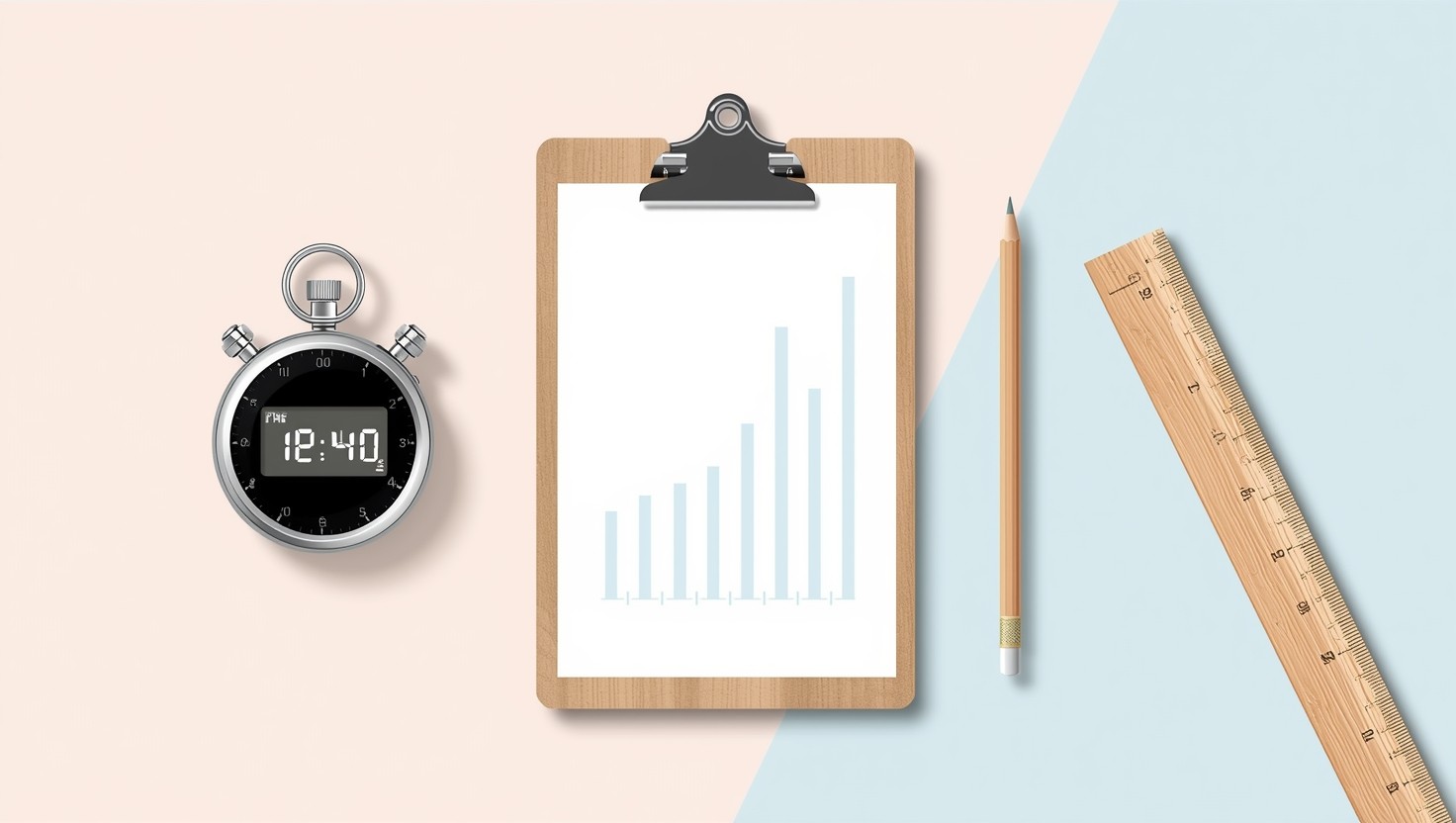
Progress Monitoring: 5 Steps for K-12 Classrooms
Progress Monitoring: 5 Steps for K-12 Classrooms

Article by
Milo
ESL Content Coordinator & Educator
ESL Content Coordinator & Educator
All Posts
You started the intervention three weeks ago. You pull Kaden for 20 minutes every morning to work on phonemic awareness, or maybe you’re running a math fact fluency group during lunch. But here’s the thing: you’re working hard, yet you have no idea if it’s working. The weeks are slipping by, and you’re worried that come the next RTI meeting, you’ll have nothing to show. That’s where progress monitoring comes in. It’s the regular check-in—weekly, bi-weekly, whatever your district demands—that tells you whether your instruction is actually moving the needle or if you’re just spinning wheels.
Too many teachers confuse this with the initial screening that placed the kid in intervention to begin with. Screening finds the problem; progress monitoring tracks the fix. Whether you’re working within an RTI framework or a full MTSS model, you need clean data to decide if the intervention stays, changes, or stops. In the next five steps, I’ll show you how to pick the right tools, set your baseline with solid curriculum-based measurement, schedule your probes without losing your prep period, and read those trend lines against your aimline so you know exactly when to pivot. No more guessing. No more surprises at those data meetings.
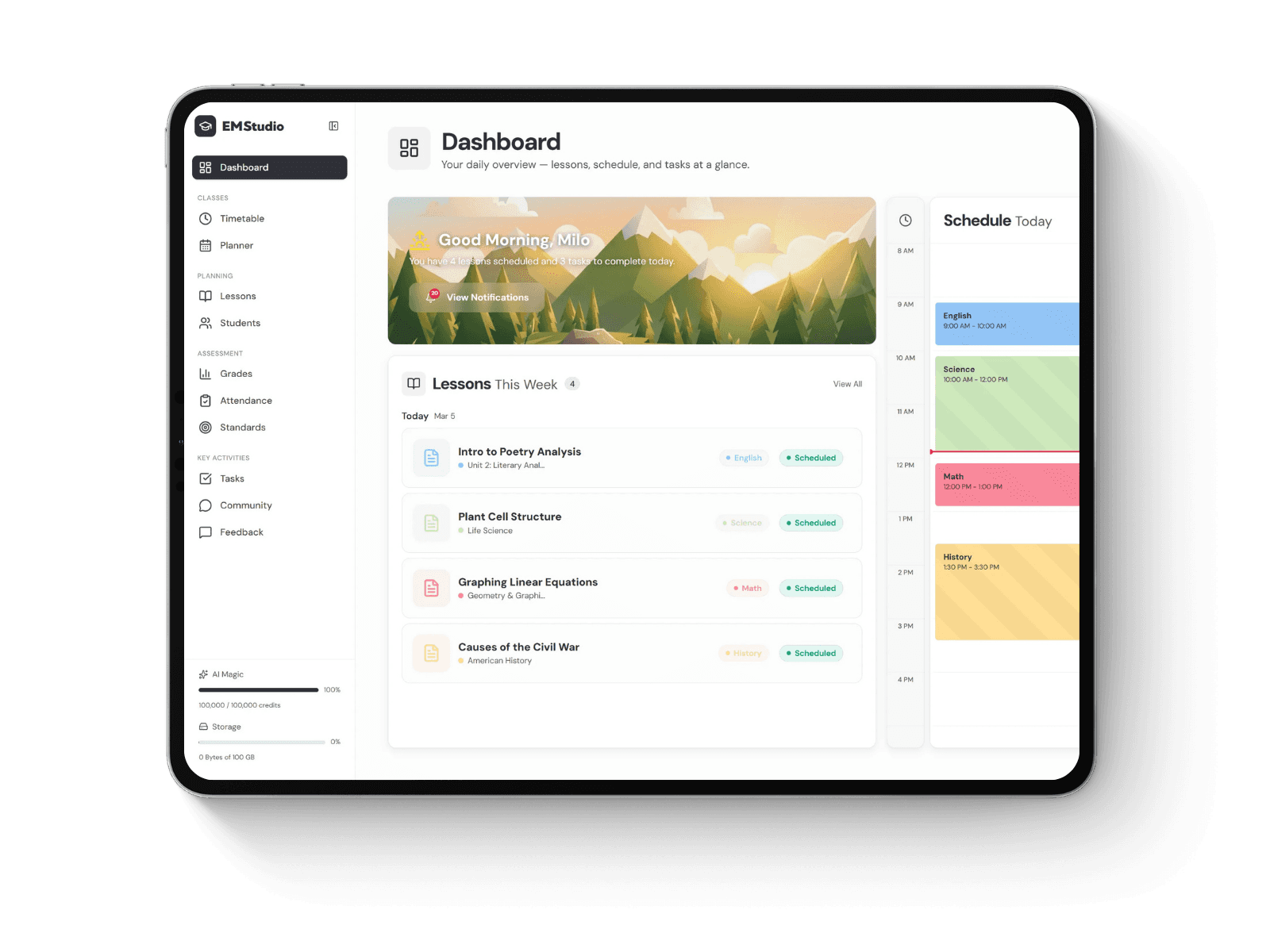
Still grading everything by hand?
EMStudio is a free teaching management app — manage your classes, students, lessons, and more!
Learn More
Still grading everything by hand?
EMStudio is a free teaching management app — manage your classes, students, lessons, and more!
Learn More
Table of Contents
What Is Progress Monitoring and How Does It Differ From Diagnostic Screening?
Progress monitoring is the frequent, brief check-up you give struggling readers or mathematicians to see if your intervention is actually working. We’re talking one to five minutes, weekly or bi-weekly, using Curriculum-Based Measurement (CBM) probes that measure the same specific skill repeatedly over time. Unlike the heavy diagnostic screening your district administers in fall, winter, and spring to sort kids into broad risk categories, progress monitoring tracks rate of improvement against a specific goal line to determine if academic interventions are working.
Diagnostic screening tools like DIBELS 8th Edition or aimswebPlus cast a wide net. They identify skill gaps and place students into percentile ranks—typically flagging kids below the 20th or 25th percentile for Tier 2 support. Progress monitoring zooms in. It asks: given where this kid started, are they closing the gap fast enough? You plot scores on an individual student graph with an aimline showing the expected growth trajectory and a trend line showing actual performance. If the trend line flattens while the aimline climbs, you know to change the intervention before the next benchmark cycle.
Defining Progress Learning vs. Mastery Measurement
Don’t confuse progress learning with the chapter tests you give at the end of a unit. Mastery measurement tells you whether a student learned this week’s spelling list or mastered the fractions unit. It’s criterion-referenced and static—pass or fail, move on or reteach. Progress learning measures velocity. It tracks the same generalized indicator repeatedly across twenty weeks to calculate a slope of improvement, regardless of what specific content you taught that week.
Take CBM-R (Curriculum-Based Measurement for Reading) as the classic example. Every Friday, you time a 3rd grader reading a fresh grade-level passage for one minute. You count words correct per minute (WCPM) and plot the point. The goal isn’t to master that particular passage; it’s to see if the line on the graph is getting steeper over time. Contrast that with your end-of-unit spelling inventory, which only tells you if they memorized those twenty words. Static tests show completion; CBM shows growth. For more on static checks, see our guide on mastery measurement and performance assessment.
The Role of Diagnostic Assessment Tools in Education
Diagnostic assessment tools in education serve a specific gatekeeping function in your MTSS or RTI framework. You give these two to three times per year to establish baseline percentile ranks and determine eligibility for tiered support. Common screeners include:
DIBELS 8th Edition for foundational reading skills
aimswebPlus for reading and math benchmarks
FastBridge aReading for adaptive literacy assessment
mCLASS Text Reading Comprehension (TRC) for leveled reading records
A 1st grader scoring below the 10th percentile on DIBELS Nonsense Word Fluency in September gets flagged for immediate Tier 2 academic interventions. These scores create the starting point for your progress monitoring graphs.
These screeners benchmark the whole school in fall, winter, and spring. They tell you who is at risk, but not whether your daily 30-minute phonics group is actually moving the needle. That’s where progress monitoring takes over. While diagnostic tools categorize students into risk bands, weekly or bi-weekly CBM probes quantify actual growth against that aimline. If your calculation shows the student must gain 1.5 words per week to close the gap and your trend line shows only 0.5, you have hard data to intensify or swap the intervention long before the next district screening.

Step 1 — Select the Right Progress Monitoring Tools for Your Classroom
Choosing between digital progress monitoring tools and paper-based CBM means weighing $8 per student against $0, and 15 minutes of setup against two hours of initial prep. Digital platforms auto-graph trend lines while paper requires you to plot each data point manually. Both track the same skills, but the time commitment diverges fast.
Grade level dictates probe selection. K-2 students need CBM-R for oral reading and early numeracy probes like quantity discrimination. Grades 3-8 shift to MAZE passages for comprehension and math computation probes. High school teachers adapt algebra and basic skills CBM for secondary content like consumer math or algebra I.
Your classroom reality determines the format. Classes over 25 require digital tools—scoring 30 oral reading probes by hand takes your entire planning period. Discrete skill tracking like math facts works better with paper you can mark up mid-assessment. IEP documentation favors digital platforms with longitudinal storage that survives coffee spills and building moves.
Digital Progress Monitoring Tools and Apps
FastBridge CBMreading runs $3-5 per student annually and includes the curriculum-based measurement probes you need. Classworks bundles assessment with instructional resources, while Intervention Compass focuses specifically on progress monitoring workflows. If your budget is locked at zero, download Excel templates from the National Center on Intensive Intervention or build digital progress monitoring tools using Google Forms with auto-grading scripts.
The efficiency gains show up in specific tasks:
Auto-generated trend lines and aimlines replace five minutes of manual plotting per student per week
Speech-to-text cuts oral reading assessment time by 40%, marking miscues automatically while you listen
Longitudinal data storage tracks students across multiple years for MTSS meetings
Paper-Based Curriculum-Based Measurement Options
Don't abandon paper yet. DIBELS 8 NWF (Nonsense Word Fluency) tests decoding in K-1, AIMSweb Math Computation M-COMP tracks fact fluency through 8th grade, and CBM-Writing measures total words written in three minutes for composition skills. These probes cost nothing beyond printing and a binder.
Organization separates functioning paper systems from chaotic piles:
Color-code folders by intervention tier: red for intensive, yellow for strategic, green for core
Store 30 students' materials in milk crates under your desk
Pre-copy probes by week before school starts to limit weekly prep to five minutes

Step 2 — Establish Baselines Using Diagnostic Assessment Tools
You can't track growth if you don't know where students started. Baseline data gives you the starting line for your progress monitoring race. I administer diagnostic screening tools during the first two weeks of school—before the heavy curriculum lifting begins. For reading, I pull out DIBELS 8th Edition ORF and have students read three 1-minute passages. I take the median score and immediately see where they land against national norms—usually somewhere between the 10th and 75th percentile. For math, I run aimsweb M-CAP or FastBridge aMath depending on what my district purchased. These CBM (curriculum-based measurement) probes take about 8 minutes per student for oral tasks, or 45 minutes for computerized adaptive tests like MAP Growth. I schedule these during arrival, lunch, or intervention blocks so I don't burn instructional minutes.
Administering Diagnostic Screening Tools in Reading and Math
In reading, I stick with DIBELS 8th Edition ORF for grades 1-6. It's a 1-minute timed read that predicts reading risk better than most state tests. For K-2, I add TRC (Text Reading and Comprehension) to check if they actually understand what they're decoding, not just barking at print. When I need broader bands or secondary data, I use MAP Growth.
Math requires different tools by grade. For kindergartners and first graders, I use FastBridge earlyMath—specifically the number naming and matching subtests. It takes 3 minutes and tells me who has number sense and who's guessing. For grades 2-8, I use aimsweb M-CAP (Math Concepts and Applications Probe) or FastBridge aMath. These show me who can apply procedures under pressure.
Logistics matter. One-on-one oral assessments eat about 8 minutes per student. With 25 kids, that's three planning periods if you're efficient. Computerized adaptive tests run 45 minutes group-style, but you need devices and headphones. I pull students during non-instructional times—morning breakfast, afternoon dismissal prep, or during specials when I can get coverage. Never sacrifice core instruction for diagnostic assessment tools in education; the data isn't worth lost teaching time.
Setting Specific, Measurable Goals for Student Growth
Once I have baseline percentile ranks, I set the aimline—the straight line connecting where the student is to where they need to be. Research from Hattie's Visible Learning shows clearly defined goals have an effect size of 0.68, nearly double that of vague "improve your reading" targets. Specificity drives acceleration.
I use these weekly growth standards:
Grades 1-3 oral reading fluency: 1.5 to 2.0 words correct per minute per week
Grades 3-5 math computation: 0.75 digits correct per week
Grades 6-8 math computation: 1.0 digits correct per week
To calculate individual targets, I use: (Goal WCPM - Baseline WCPM) ÷ Weeks = Required slope. If a 3rd grader starts at 45 words correct per minute (WCPM) in September and I want them at 70 WCPM by January (20 weeks), they need 1.25 WCPM weekly growth. That's ambitious but doable with RTI or MTSS support.
Documentation keeps me honest. I record the baseline score, the goal, the calculated aimline slope, and environmental factors—was the kid tested in the hallway or a quiet room? Morning or afternoon? I store this in my data platform so anyone running progress monitoring later can see the trend line against the aimline. For measurable goals for student growth, I write them SMART-style: "By January 15, Marcus will read 70 WCPM with 95% accuracy as measured by weekly DIBELS ORF probes, reaching the 25th percentile." No guesswork. Just math.

Step 3 — Design Your Data Collection Schedule and Methods
Decide how often to pull kids before you start. Tier 3 students—those under the 10th percentile in reading or math—need weekly curriculum-based measurement (CBM). You need five data points monthly to draw a valid trend line. Tier 2 students (10th-25th percentile) can handle bi-weekly checks. Tier 1 universal screening only happens monthly unless you spot red flags.
Time matters. Budget 90 minutes maximum for a class of 30: one to three minutes per probe. Schedule during independent practice, arrival time, or center rotations. Designate "Data Days"—Tuesday and Thursday work well—with paraprofessional support if you have it, and stagger assessments across the week, hitting ten students per day rather than the whole class simultaneously. Watch for assessment fatigue. I've seen teachers track ten objectives per student and wonder why their data looks like static. Limit simultaneous monitoring to two or three skills per kid. Anything more dilutes instructional focus and increases error rates.
Weekly vs. Bi-Weekly Check-Ins: Finding Your Rhythm
Tier 3 students need that weekly rhythm for valid decision-making. The NCII guidelines state you need six to eight data points for 90% confidence when making four-week intervention decisions. That means weekly checks or you're flying blind on whether the intervention is working.
Tier 2 students can stay bi-weekly if their slope runs parallel to the aimline. If they hit four consecutive points above the line, drop to monthly until they plateau. Map it visually to distribute the workload:
Monday/Wednesday: Eight Tier 3 students
Tuesday/Thursday: Eight Tier 2 students
Friday: Make-ups and new intakes
This rhythm keeps your progress monitoring manageable without sacrificing your sanity or instructional time.
Creating Efficient Data Collection Systems
Build efficient data collection systems that don't require a PhD to operate. You have three main options:
Paper: Clipboards with rosters, hanging file folders labeled by week containing pre-copied CBM probes, and the Interval Timer Pro app for precise one-minute timings
Digital: FastBridge auto-scheduling; Google Sheets with conditional formatting that turns cells red automatically when three consecutive scores decline
Human capital: Train fifth-grade peer tutors to administer math computation probes—one third-grade teacher I worked with cut her assessment load by 60% using trained tutors for fluency checks
Just ensure tutors understand standard administration protocols so your data stays clean for RTI/MTSS meetings. Garbage data leads to garbage decisions about progress learning gaps.

Step 4 — How Do You Analyze Data to Modify Academic Interventions?
Teachers analyze progress monitoring data by plotting 4-6 data points to establish trend lines comparing actual growth against expected aimlines. If three to four consecutive scores fall below the aimline or the slope shows less than half the expected growth rate, educators should intensify academic interventions using standard protocol decision rules.
Identifying Trends and Response to Intervention Patterns
Start by looking at the graph, not the numbers. The aimline is your straight line from baseline to goal—it's the path the student must follow to catch up. The trend line is the line of best fit through the actual data points showing where the kid is really headed. When you analyze data to modify academic interventions, you're asking one question: Is the trend line heading toward the aimline or away from it?
You'll spot three patterns. Accelerating means the trend line gains on the aimline and the gap is closing. Decelerating means the student is falling further behind. Variable looks like a heartbeat on the page; scores bounce up and down weekly. When you see variable data, check fidelity first. Did the para follow the script? Was the setting disrupted? Don't blame the kid for implementation drift.
Here's where teams mess up: They panic after two low scores and change everything. Don't. Curriculum-based measurement has high weekly variability. You need at least four data points before making any instructional decision, and six to eight points for a stable trend line. Making changes too early wastes resources and confuses the student.
Decision Rules for Intensifying or Changing Support
Use hard numbers to remove guesswork from your response to intervention patterns. Apply these quantitative triggers:
4-point rule: If four consecutive scores fall below the aimline, change the intervention immediately.
Trend line rule: With 6-8 data points, if the slope shows less than 0.5x the expected growth rate, intensify support.
Reading fluency threshold: Less than 1.0 words correct per minute growth for four consecutive weeks signals the strategy isn't working.
Consider a 3rd grader showing 0.2 WCPM growth when she needs 1.5 WCPM. The CBM graph is flat. You wouldn't continue with repeated reading. You'd switch to explicit phonics like Wilson FUNdations or SPIRE. Other intensification options include:
Switching strategies (e.g., from Cover-Copy-Compare to Taped Problems)
Increasing dosage from 20 to 40 minutes daily
Reducing group size from five students to two
Changing the implementer if fidelity is the issue
Run 15-minute weekly PLC reviews. Project the graphs and examine them visually, not just as numbers. Use If-Then logic: If the slope is less than 0.5, then reduce group size from 5 to 3. Document every move in an intervention log noting the date, specific modification, and data-based rationale. This paperwork proves you provided appropriate academic interventions before any special education referral and keeps you compliant with IDEA and MTSS requirements.

Step 5 — Implement a Strategy to Improve Learner Performance
Match your strategy to improve learner performance to the data pattern:
Accuracy below 80%: Shift to skill acquisition. Use explicit modeling and concrete manipulatives until the concept sticks.
Accuracy above 90% but rate is flat: Build fluency with timed practice and reinforcement.
For math facts, run Cover-Copy-Compare. The student studies the model problem, covers it, copies it from memory, then uncovers to compare. The whole cycle takes three minutes. For reading, use Phrase Drill on error words pulled from last week's CBM passage. Have students color their own progress monitoring charts. When they graph their own data, gains outpace teacher-only tracking by half a standard deviation. Send home weekly snapshots showing the trend line inside green, yellow, and red zones. Attach one specific task: "Practice List C sight words for five minutes nightly."
Adjusting Instruction Based on Progress Data
Study errors, not just scores. Disaggregate curriculum-based measurement by mistake type:
Math: Regrouping errors versus fact errors.
Reading: Sight word guesses versus blending mistakes.
This adjusting instruction based on progress data pinpoints the exact micro-skill. Insert five-minute booster sessions targeting that specific gap rather than reteaching the entire unit. If subtraction with regrouping is the only culprit, model two problems, let them try two, check immediately. Keep the dose small and daily.
Before swapping strategies, verify fidelity. Use an implementation checklist to confirm you delivered the intervention as designed—aim for 90% adherence. In RTI and MTSS, a flat aimline often signals broken delivery, not a broken tool. Video yourself or ask a coach to observe. If you skipped the model or rushed the practice, fix the teaching before you blame the method.
Communicating Growth with Students and Families
Hand students the crayons. When they color their own data points and see the aimline approaching, engagement jumps. Research shows student graphing increases growth by half a standard deviation compared to teacher-only monitoring. Conduct two-minute Data Talks weekly. Have them mark the current score—say, 45 words correct per minute—then set the next target at 48. Keep that visual on their desk. Tie praise to the work: "You improved three words per minute because you did the daily repeated reading."
For communicating growth with families, send visual line graphs with translated explanations showing the trend line against the goal. Shade the zones:
Green: On track. Continue current routine.
Yellow: Watch. Add five minutes of flashcard review.
Red: Concern. Implement daily sight word drills and sign the log.
Specific beats vague every time.

How Can Teachers Sustain Progress Monitoring Without Burnout?
Teachers sustain progress monitoring by automating data entry with digital tools like FastBridge or ESGI, batching assessments during center rotations, delegating to trained paraprofessionals, and limiting frequent monitoring to 5-6 Tier 2/3 students rather than entire classes. Establish 'Data Days' twice weekly and protect planning time to prevent assessment burnout. The secret is assessing the assessable: only your 5-6 intensive intervention kids need weekly curriculum-based measurement (CBM) probes. Everyone else gets screened three times a year. When you stop monitoring the entire class weekly, you cut your data load by 80 percent.
Watch for "data rich, information poor" syndrome. If you have not reviewed your trend lines and aimlines in two weeks, stop collecting immediately. Data that sits unanalyzed is just paperwork. Every probe must link to a specific intervention decision—if it does not change what you teach tomorrow, do not give it today.
Building Sustainable Systems and Automation
Stop doing math your brain can do in its sleep. Use these progress monitoring tools to reclaim your evenings:
ESGI for K-2: Assess 10 students in 15 minutes via tablet, tapping correct or incorrect as they read beside you.
Excel templates with auto-fill color coding: Red for below 10th percentile, yellow for 10-25th, green above.
Google Forms with Flubaroo for instant graphing before your last student sits down.
Mastery Manager for item analysis that shows exactly which phonics pattern failed, not just that reading is low.
Set up Assessment Centers during your literacy block. While you run guided reading groups, three students rotate through a tablet station completing 3-minute digital probes independently. They wear headphones. You teach uninterrupted. This batching saves hours.
Be honest about the time cost. Initial setup of your automation and performance dashboards takes about 60 minutes. After that, sustainable maintenance demands only 20 minutes weekly. Without systems, teachers spend 5-plus hours on data entry and graphing. That is Sunday night you cannot get back.
Year-Round Implementation Best Practices
Think in seasons, not sprints. September is for diagnostic assessment tools in English only—establish baselines but hold off on weekly probes. Start Tier 2 monitoring in October once RTI groups settle. November through March is full MTSS implementation: heavy data collection weeks 1, 6, 12, and 18 with light maintenance in between. By April, shift to monitoring high-risk students only as you prepare transition meetings.
Summer prep prevents fall panic. Create assessment binders with the first 10 weeks of pre-copied probes. Set up your digital classes in the platform before the custodians finish waxing floors. Draft parent communication templates in multiple languages now, while you have brain space.
Protect your boundaries. Use PLC time for data review, not your personal planning period. Train your instructional assistant to administer probes—you will save 60 percent of your time. Institute "No Data Fridays" so you never face a weekend of graphing. If your backlog exceeds three weeks, declare data bankruptcy: shred the old sheets, reset, and start fresh. Sustain progress monitoring without burnout by remembering that teaching happens in the classroom, not the spreadsheet.

Final Thoughts on Progress Monitoring
The biggest difference in progress monitoring isn't the tool you bought or the MTSS tier you're tracking. It's whether you actually look at the data every single week. Teachers who set a recurring Friday alarm to review one CBM graph catch kids before they fail. Everyone else just collects numbers.
Start today. Grab one student's folder who worried you this week. Find their last three scores, draw the aimline from now to the benchmark date, and decide if the line is rising fast enough. That takes four minutes.
That four minutes tells the kid you noticed. It tells you if your intervention is working. Everything else is noise.

What Is Progress Monitoring and How Does It Differ From Diagnostic Screening?
Progress monitoring is the frequent, brief check-up you give struggling readers or mathematicians to see if your intervention is actually working. We’re talking one to five minutes, weekly or bi-weekly, using Curriculum-Based Measurement (CBM) probes that measure the same specific skill repeatedly over time. Unlike the heavy diagnostic screening your district administers in fall, winter, and spring to sort kids into broad risk categories, progress monitoring tracks rate of improvement against a specific goal line to determine if academic interventions are working.
Diagnostic screening tools like DIBELS 8th Edition or aimswebPlus cast a wide net. They identify skill gaps and place students into percentile ranks—typically flagging kids below the 20th or 25th percentile for Tier 2 support. Progress monitoring zooms in. It asks: given where this kid started, are they closing the gap fast enough? You plot scores on an individual student graph with an aimline showing the expected growth trajectory and a trend line showing actual performance. If the trend line flattens while the aimline climbs, you know to change the intervention before the next benchmark cycle.
Defining Progress Learning vs. Mastery Measurement
Don’t confuse progress learning with the chapter tests you give at the end of a unit. Mastery measurement tells you whether a student learned this week’s spelling list or mastered the fractions unit. It’s criterion-referenced and static—pass or fail, move on or reteach. Progress learning measures velocity. It tracks the same generalized indicator repeatedly across twenty weeks to calculate a slope of improvement, regardless of what specific content you taught that week.
Take CBM-R (Curriculum-Based Measurement for Reading) as the classic example. Every Friday, you time a 3rd grader reading a fresh grade-level passage for one minute. You count words correct per minute (WCPM) and plot the point. The goal isn’t to master that particular passage; it’s to see if the line on the graph is getting steeper over time. Contrast that with your end-of-unit spelling inventory, which only tells you if they memorized those twenty words. Static tests show completion; CBM shows growth. For more on static checks, see our guide on mastery measurement and performance assessment.
The Role of Diagnostic Assessment Tools in Education
Diagnostic assessment tools in education serve a specific gatekeeping function in your MTSS or RTI framework. You give these two to three times per year to establish baseline percentile ranks and determine eligibility for tiered support. Common screeners include:
DIBELS 8th Edition for foundational reading skills
aimswebPlus for reading and math benchmarks
FastBridge aReading for adaptive literacy assessment
mCLASS Text Reading Comprehension (TRC) for leveled reading records
A 1st grader scoring below the 10th percentile on DIBELS Nonsense Word Fluency in September gets flagged for immediate Tier 2 academic interventions. These scores create the starting point for your progress monitoring graphs.
These screeners benchmark the whole school in fall, winter, and spring. They tell you who is at risk, but not whether your daily 30-minute phonics group is actually moving the needle. That’s where progress monitoring takes over. While diagnostic tools categorize students into risk bands, weekly or bi-weekly CBM probes quantify actual growth against that aimline. If your calculation shows the student must gain 1.5 words per week to close the gap and your trend line shows only 0.5, you have hard data to intensify or swap the intervention long before the next district screening.
Step 1 — Select the Right Progress Monitoring Tools for Your Classroom
Choosing between digital progress monitoring tools and paper-based CBM means weighing $8 per student against $0, and 15 minutes of setup against two hours of initial prep. Digital platforms auto-graph trend lines while paper requires you to plot each data point manually. Both track the same skills, but the time commitment diverges fast.
Grade level dictates probe selection. K-2 students need CBM-R for oral reading and early numeracy probes like quantity discrimination. Grades 3-8 shift to MAZE passages for comprehension and math computation probes. High school teachers adapt algebra and basic skills CBM for secondary content like consumer math or algebra I.
Your classroom reality determines the format. Classes over 25 require digital tools—scoring 30 oral reading probes by hand takes your entire planning period. Discrete skill tracking like math facts works better with paper you can mark up mid-assessment. IEP documentation favors digital platforms with longitudinal storage that survives coffee spills and building moves.
Digital Progress Monitoring Tools and Apps
FastBridge CBMreading runs $3-5 per student annually and includes the curriculum-based measurement probes you need. Classworks bundles assessment with instructional resources, while Intervention Compass focuses specifically on progress monitoring workflows. If your budget is locked at zero, download Excel templates from the National Center on Intensive Intervention or build digital progress monitoring tools using Google Forms with auto-grading scripts.
The efficiency gains show up in specific tasks:
Auto-generated trend lines and aimlines replace five minutes of manual plotting per student per week
Speech-to-text cuts oral reading assessment time by 40%, marking miscues automatically while you listen
Longitudinal data storage tracks students across multiple years for MTSS meetings
Paper-Based Curriculum-Based Measurement Options
Don't abandon paper yet. DIBELS 8 NWF (Nonsense Word Fluency) tests decoding in K-1, AIMSweb Math Computation M-COMP tracks fact fluency through 8th grade, and CBM-Writing measures total words written in three minutes for composition skills. These probes cost nothing beyond printing and a binder.
Organization separates functioning paper systems from chaotic piles:
Color-code folders by intervention tier: red for intensive, yellow for strategic, green for core
Store 30 students' materials in milk crates under your desk
Pre-copy probes by week before school starts to limit weekly prep to five minutes
Step 2 — Establish Baselines Using Diagnostic Assessment Tools
You can't track growth if you don't know where students started. Baseline data gives you the starting line for your progress monitoring race. I administer diagnostic screening tools during the first two weeks of school—before the heavy curriculum lifting begins. For reading, I pull out DIBELS 8th Edition ORF and have students read three 1-minute passages. I take the median score and immediately see where they land against national norms—usually somewhere between the 10th and 75th percentile. For math, I run aimsweb M-CAP or FastBridge aMath depending on what my district purchased. These CBM (curriculum-based measurement) probes take about 8 minutes per student for oral tasks, or 45 minutes for computerized adaptive tests like MAP Growth. I schedule these during arrival, lunch, or intervention blocks so I don't burn instructional minutes.
Administering Diagnostic Screening Tools in Reading and Math
In reading, I stick with DIBELS 8th Edition ORF for grades 1-6. It's a 1-minute timed read that predicts reading risk better than most state tests. For K-2, I add TRC (Text Reading and Comprehension) to check if they actually understand what they're decoding, not just barking at print. When I need broader bands or secondary data, I use MAP Growth.
Math requires different tools by grade. For kindergartners and first graders, I use FastBridge earlyMath—specifically the number naming and matching subtests. It takes 3 minutes and tells me who has number sense and who's guessing. For grades 2-8, I use aimsweb M-CAP (Math Concepts and Applications Probe) or FastBridge aMath. These show me who can apply procedures under pressure.
Logistics matter. One-on-one oral assessments eat about 8 minutes per student. With 25 kids, that's three planning periods if you're efficient. Computerized adaptive tests run 45 minutes group-style, but you need devices and headphones. I pull students during non-instructional times—morning breakfast, afternoon dismissal prep, or during specials when I can get coverage. Never sacrifice core instruction for diagnostic assessment tools in education; the data isn't worth lost teaching time.
Setting Specific, Measurable Goals for Student Growth
Once I have baseline percentile ranks, I set the aimline—the straight line connecting where the student is to where they need to be. Research from Hattie's Visible Learning shows clearly defined goals have an effect size of 0.68, nearly double that of vague "improve your reading" targets. Specificity drives acceleration.
I use these weekly growth standards:
Grades 1-3 oral reading fluency: 1.5 to 2.0 words correct per minute per week
Grades 3-5 math computation: 0.75 digits correct per week
Grades 6-8 math computation: 1.0 digits correct per week
To calculate individual targets, I use: (Goal WCPM - Baseline WCPM) ÷ Weeks = Required slope. If a 3rd grader starts at 45 words correct per minute (WCPM) in September and I want them at 70 WCPM by January (20 weeks), they need 1.25 WCPM weekly growth. That's ambitious but doable with RTI or MTSS support.
Documentation keeps me honest. I record the baseline score, the goal, the calculated aimline slope, and environmental factors—was the kid tested in the hallway or a quiet room? Morning or afternoon? I store this in my data platform so anyone running progress monitoring later can see the trend line against the aimline. For measurable goals for student growth, I write them SMART-style: "By January 15, Marcus will read 70 WCPM with 95% accuracy as measured by weekly DIBELS ORF probes, reaching the 25th percentile." No guesswork. Just math.
Step 3 — Design Your Data Collection Schedule and Methods
Decide how often to pull kids before you start. Tier 3 students—those under the 10th percentile in reading or math—need weekly curriculum-based measurement (CBM). You need five data points monthly to draw a valid trend line. Tier 2 students (10th-25th percentile) can handle bi-weekly checks. Tier 1 universal screening only happens monthly unless you spot red flags.
Time matters. Budget 90 minutes maximum for a class of 30: one to three minutes per probe. Schedule during independent practice, arrival time, or center rotations. Designate "Data Days"—Tuesday and Thursday work well—with paraprofessional support if you have it, and stagger assessments across the week, hitting ten students per day rather than the whole class simultaneously. Watch for assessment fatigue. I've seen teachers track ten objectives per student and wonder why their data looks like static. Limit simultaneous monitoring to two or three skills per kid. Anything more dilutes instructional focus and increases error rates.
Weekly vs. Bi-Weekly Check-Ins: Finding Your Rhythm
Tier 3 students need that weekly rhythm for valid decision-making. The NCII guidelines state you need six to eight data points for 90% confidence when making four-week intervention decisions. That means weekly checks or you're flying blind on whether the intervention is working.
Tier 2 students can stay bi-weekly if their slope runs parallel to the aimline. If they hit four consecutive points above the line, drop to monthly until they plateau. Map it visually to distribute the workload:
Monday/Wednesday: Eight Tier 3 students
Tuesday/Thursday: Eight Tier 2 students
Friday: Make-ups and new intakes
This rhythm keeps your progress monitoring manageable without sacrificing your sanity or instructional time.
Creating Efficient Data Collection Systems
Build efficient data collection systems that don't require a PhD to operate. You have three main options:
Paper: Clipboards with rosters, hanging file folders labeled by week containing pre-copied CBM probes, and the Interval Timer Pro app for precise one-minute timings
Digital: FastBridge auto-scheduling; Google Sheets with conditional formatting that turns cells red automatically when three consecutive scores decline
Human capital: Train fifth-grade peer tutors to administer math computation probes—one third-grade teacher I worked with cut her assessment load by 60% using trained tutors for fluency checks
Just ensure tutors understand standard administration protocols so your data stays clean for RTI/MTSS meetings. Garbage data leads to garbage decisions about progress learning gaps.
Step 4 — How Do You Analyze Data to Modify Academic Interventions?
Teachers analyze progress monitoring data by plotting 4-6 data points to establish trend lines comparing actual growth against expected aimlines. If three to four consecutive scores fall below the aimline or the slope shows less than half the expected growth rate, educators should intensify academic interventions using standard protocol decision rules.
Identifying Trends and Response to Intervention Patterns
Start by looking at the graph, not the numbers. The aimline is your straight line from baseline to goal—it's the path the student must follow to catch up. The trend line is the line of best fit through the actual data points showing where the kid is really headed. When you analyze data to modify academic interventions, you're asking one question: Is the trend line heading toward the aimline or away from it?
You'll spot three patterns. Accelerating means the trend line gains on the aimline and the gap is closing. Decelerating means the student is falling further behind. Variable looks like a heartbeat on the page; scores bounce up and down weekly. When you see variable data, check fidelity first. Did the para follow the script? Was the setting disrupted? Don't blame the kid for implementation drift.
Here's where teams mess up: They panic after two low scores and change everything. Don't. Curriculum-based measurement has high weekly variability. You need at least four data points before making any instructional decision, and six to eight points for a stable trend line. Making changes too early wastes resources and confuses the student.
Decision Rules for Intensifying or Changing Support
Use hard numbers to remove guesswork from your response to intervention patterns. Apply these quantitative triggers:
4-point rule: If four consecutive scores fall below the aimline, change the intervention immediately.
Trend line rule: With 6-8 data points, if the slope shows less than 0.5x the expected growth rate, intensify support.
Reading fluency threshold: Less than 1.0 words correct per minute growth for four consecutive weeks signals the strategy isn't working.
Consider a 3rd grader showing 0.2 WCPM growth when she needs 1.5 WCPM. The CBM graph is flat. You wouldn't continue with repeated reading. You'd switch to explicit phonics like Wilson FUNdations or SPIRE. Other intensification options include:
Switching strategies (e.g., from Cover-Copy-Compare to Taped Problems)
Increasing dosage from 20 to 40 minutes daily
Reducing group size from five students to two
Changing the implementer if fidelity is the issue
Run 15-minute weekly PLC reviews. Project the graphs and examine them visually, not just as numbers. Use If-Then logic: If the slope is less than 0.5, then reduce group size from 5 to 3. Document every move in an intervention log noting the date, specific modification, and data-based rationale. This paperwork proves you provided appropriate academic interventions before any special education referral and keeps you compliant with IDEA and MTSS requirements.
Step 5 — Implement a Strategy to Improve Learner Performance
Match your strategy to improve learner performance to the data pattern:
Accuracy below 80%: Shift to skill acquisition. Use explicit modeling and concrete manipulatives until the concept sticks.
Accuracy above 90% but rate is flat: Build fluency with timed practice and reinforcement.
For math facts, run Cover-Copy-Compare. The student studies the model problem, covers it, copies it from memory, then uncovers to compare. The whole cycle takes three minutes. For reading, use Phrase Drill on error words pulled from last week's CBM passage. Have students color their own progress monitoring charts. When they graph their own data, gains outpace teacher-only tracking by half a standard deviation. Send home weekly snapshots showing the trend line inside green, yellow, and red zones. Attach one specific task: "Practice List C sight words for five minutes nightly."
Adjusting Instruction Based on Progress Data
Study errors, not just scores. Disaggregate curriculum-based measurement by mistake type:
Math: Regrouping errors versus fact errors.
Reading: Sight word guesses versus blending mistakes.
This adjusting instruction based on progress data pinpoints the exact micro-skill. Insert five-minute booster sessions targeting that specific gap rather than reteaching the entire unit. If subtraction with regrouping is the only culprit, model two problems, let them try two, check immediately. Keep the dose small and daily.
Before swapping strategies, verify fidelity. Use an implementation checklist to confirm you delivered the intervention as designed—aim for 90% adherence. In RTI and MTSS, a flat aimline often signals broken delivery, not a broken tool. Video yourself or ask a coach to observe. If you skipped the model or rushed the practice, fix the teaching before you blame the method.
Communicating Growth with Students and Families
Hand students the crayons. When they color their own data points and see the aimline approaching, engagement jumps. Research shows student graphing increases growth by half a standard deviation compared to teacher-only monitoring. Conduct two-minute Data Talks weekly. Have them mark the current score—say, 45 words correct per minute—then set the next target at 48. Keep that visual on their desk. Tie praise to the work: "You improved three words per minute because you did the daily repeated reading."
For communicating growth with families, send visual line graphs with translated explanations showing the trend line against the goal. Shade the zones:
Green: On track. Continue current routine.
Yellow: Watch. Add five minutes of flashcard review.
Red: Concern. Implement daily sight word drills and sign the log.
Specific beats vague every time.
How Can Teachers Sustain Progress Monitoring Without Burnout?
Teachers sustain progress monitoring by automating data entry with digital tools like FastBridge or ESGI, batching assessments during center rotations, delegating to trained paraprofessionals, and limiting frequent monitoring to 5-6 Tier 2/3 students rather than entire classes. Establish 'Data Days' twice weekly and protect planning time to prevent assessment burnout. The secret is assessing the assessable: only your 5-6 intensive intervention kids need weekly curriculum-based measurement (CBM) probes. Everyone else gets screened three times a year. When you stop monitoring the entire class weekly, you cut your data load by 80 percent.
Watch for "data rich, information poor" syndrome. If you have not reviewed your trend lines and aimlines in two weeks, stop collecting immediately. Data that sits unanalyzed is just paperwork. Every probe must link to a specific intervention decision—if it does not change what you teach tomorrow, do not give it today.
Building Sustainable Systems and Automation
Stop doing math your brain can do in its sleep. Use these progress monitoring tools to reclaim your evenings:
ESGI for K-2: Assess 10 students in 15 minutes via tablet, tapping correct or incorrect as they read beside you.
Excel templates with auto-fill color coding: Red for below 10th percentile, yellow for 10-25th, green above.
Google Forms with Flubaroo for instant graphing before your last student sits down.
Mastery Manager for item analysis that shows exactly which phonics pattern failed, not just that reading is low.
Set up Assessment Centers during your literacy block. While you run guided reading groups, three students rotate through a tablet station completing 3-minute digital probes independently. They wear headphones. You teach uninterrupted. This batching saves hours.
Be honest about the time cost. Initial setup of your automation and performance dashboards takes about 60 minutes. After that, sustainable maintenance demands only 20 minutes weekly. Without systems, teachers spend 5-plus hours on data entry and graphing. That is Sunday night you cannot get back.
Year-Round Implementation Best Practices
Think in seasons, not sprints. September is for diagnostic assessment tools in English only—establish baselines but hold off on weekly probes. Start Tier 2 monitoring in October once RTI groups settle. November through March is full MTSS implementation: heavy data collection weeks 1, 6, 12, and 18 with light maintenance in between. By April, shift to monitoring high-risk students only as you prepare transition meetings.
Summer prep prevents fall panic. Create assessment binders with the first 10 weeks of pre-copied probes. Set up your digital classes in the platform before the custodians finish waxing floors. Draft parent communication templates in multiple languages now, while you have brain space.
Protect your boundaries. Use PLC time for data review, not your personal planning period. Train your instructional assistant to administer probes—you will save 60 percent of your time. Institute "No Data Fridays" so you never face a weekend of graphing. If your backlog exceeds three weeks, declare data bankruptcy: shred the old sheets, reset, and start fresh. Sustain progress monitoring without burnout by remembering that teaching happens in the classroom, not the spreadsheet.
Final Thoughts on Progress Monitoring
The biggest difference in progress monitoring isn't the tool you bought or the MTSS tier you're tracking. It's whether you actually look at the data every single week. Teachers who set a recurring Friday alarm to review one CBM graph catch kids before they fail. Everyone else just collects numbers.
Start today. Grab one student's folder who worried you this week. Find their last three scores, draw the aimline from now to the benchmark date, and decide if the line is rising fast enough. That takes four minutes.
That four minutes tells the kid you noticed. It tells you if your intervention is working. Everything else is noise.
Still grading everything by hand?
EMStudio is a free teaching management app — manage your classes, students, lessons, and more!
Learn More
Still grading everything by hand?
EMStudio is a free teaching management app — manage your classes, students, lessons, and more!
Learn More




Notion4Teachers
Notion templates to simplify administrative tasks and enhance your teaching experience.



2026 Notion4Teachers. All Rights Reserved.
Notion4Teachers
Notion templates to simplify administrative tasks and enhance your teaching experience.
2026 Notion4Teachers. All Rights Reserved.
Notion4Teachers
Notion templates to simplify administrative tasks and enhance your teaching experience.
2026 Notion4Teachers. All Rights Reserved.