
12 Best Teacher Quotes, Messages, and Thank You Ideas
12 Best Teacher Quotes, Messages, and Thank You Ideas

Article by
Milo
ESL Content Coordinator & Educator
ESL Content Coordinator & Educator
All Posts
You have to write the card. Maybe it's for the mentor teacher who talked you off the ledge in October, or the colleague covering your classes while you're out with the flu, or your own child's best teacher—the one who finally got them to love reading. You stare at the blank space after "Dear Mrs. Chen" and realize "Thanks for all you do" sounds hollow. You want to say the actual thing, the specific impact, but the words stick.
This post gives you quotes that capture the exhaustion and the magic without the Pinterest fluff. It shows you how to write thank you notes that mention the exact lesson or conversation that changed you. And if you need ideas beyond the Starbucks card, we have ways to show gratitude that cost little but mean everything.
Whether you're prepping for Teacher Appreciation Week or writing a retirement note, you'll find words that fit the relationship.
Still grading everything by hand?
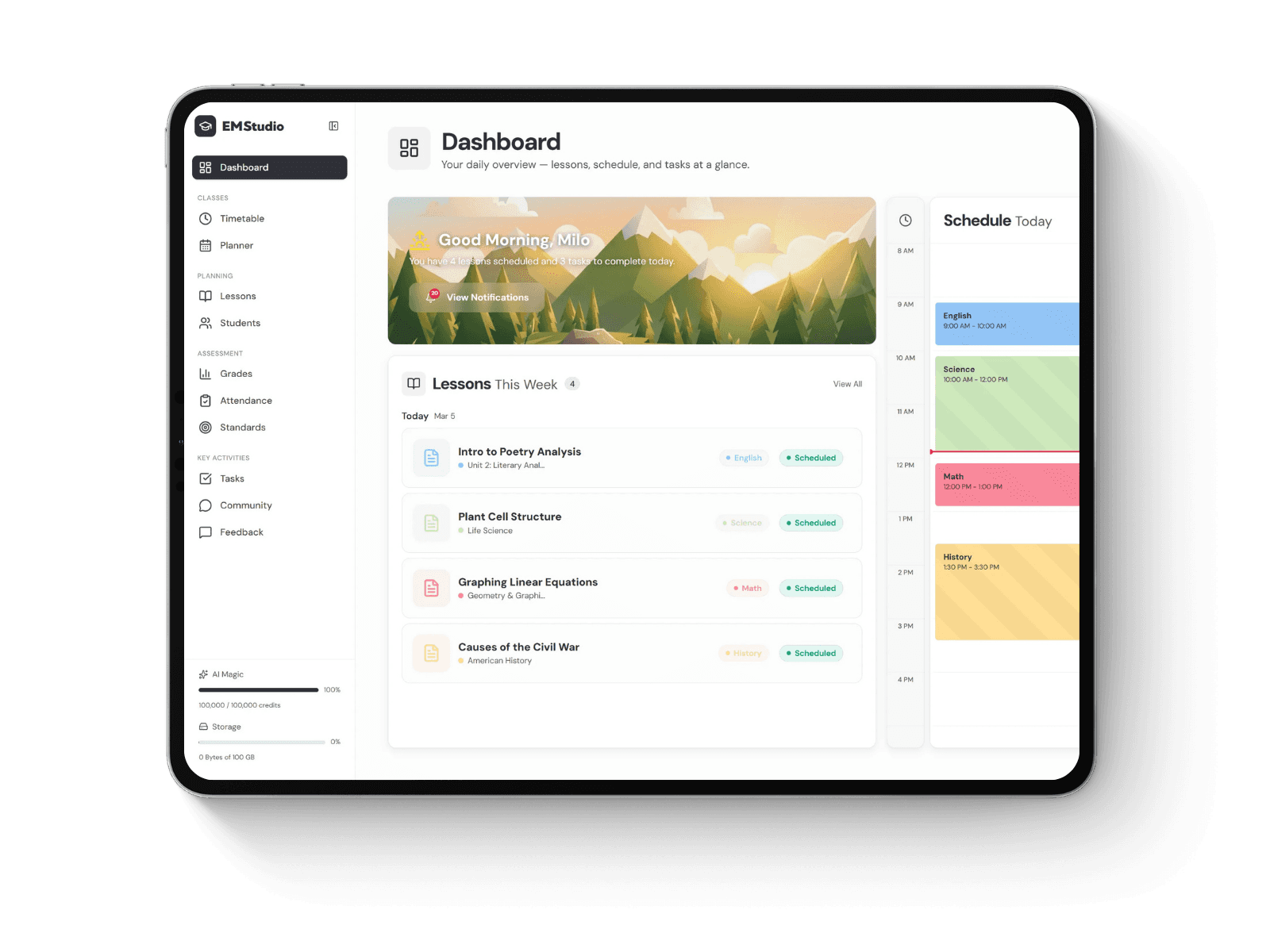
EMStudio is a free teaching management app — manage your classes, students, lessons, and more!
Learn More
Still grading everything by hand?
EMStudio is a free teaching management app — manage your classes, students, lessons, and more!
Learn More
Table of Contents
What Are the Hallmark Traits of the Best Teacher?
The best teachers combine high emotional intelligence with adaptive instruction, demonstrating classroom presence that commands respect while creating psychological safety. They pivot lessons in real-time when activities fail and consistently identify student capabilities before students recognize them in themselves, creating sustained academic growth.
John Hattie's Visible Learning meta-analysis puts numbers to what experienced educators already sense. Teacher-student relationships show an effect size of 0.48, but teacher credibility hits 0.90. That gap matters. It tells us that pedagogical excellence isn't just about being nice; it's about being trustworthy and competent in students' eyes. When you master emotional skills and classroom presence, you hit both targets.
But there's a failure mode to avoid. Teachers who over-rely on rigid lesson plans without emotional attunement see engagement drop, even in high-achieving classrooms. You can have the perfect slide deck, but if you miss the student crying at desk three, you've lost the room. The best teacher knows when to abandon ship and when to adjust the sails.
Emotional Intelligence and Classroom Presence
Daniel Goleman breaks emotional intelligence into five components: self-awareness, self-regulation, motivation, empathy, and social skill. In the classroom, this translates to specific behaviors you can measure. Student trust surveys—asking 'Does your teacher listen when you're upset?'—give you hard data. When scores drop below 70%, your classroom presence needs recalibration.
Watch a 3rd-grade teacher noticing the telltale signs of anxiety: fidgeting, shallow breathing, withdrawn posture. She doesn't default to punitive timeouts that isolate the child and shame them in front of peers. Instead, she implements a 2-minute mindfulness transition, letting the student reset without missing the math lesson. This is self-regulation and empathy in action, and it preserves the dignity that punitive measures strip away.
Then there's proximity control. When your 7th graders go off-task, you move within three feet and keep teaching. You don't stop the lesson to call them out. The disruption dies quietly because your physical presence signals "I see you" without the public power struggle. You maintain momentum. Students respect the boundary because you didn't break the learning rhythm to enforce it. These moments build classroom gratitude over time. Students remember that you saw them without embarrassing them, and that trust becomes the foundation for every hard conversation later.
Adaptability When Lessons Don't Go as Planned
Stuff breaks. Lessons flop. The measure of instructional leadership isn't preventing failure; it's recovery time. Your target is under 90 seconds. Picture a 9th-grade biology lab where the yeast refuses to activate. You've got 34 minutes left in the period. The mentor teacher down the hall pivots immediately—already pointing students to digital microscopes with prepared slides of cellular respiration, using the same learning target but different media. The students never sense panic because the shift feels intentional.
You need a clear comparison for these moments:
Rigid Scripted Teaching: Forces the failed yeast lab to completion because "it's in the pacing guide." Students complete worksheets about an experiment that didn't work. Engagement drops to compliance, even in honors classes. You spend 20 minutes troubleshooting dead yeast while the learning objective dies too.
Adaptive Responsive Teaching: Abandons the failed protocol immediately. Uses existing microscope setup to explore prepared slides. Students still hit the standard, but through a working medium. You protect the learning objective by sacrificing the lesson plan, and you maintain the energy of the room.
Here's your real-time framework: If less than 50% of students are engaged, abandon the activity entirely. If 50-70% are tracking, modify on the fly. If 70% or more are with you, proceed with individual check-ins for the stragglers. No ritualistic devotion to your slide deck.
The Ability to See Potential Before Students See It Themselves
This is the ultimate educator recognition—noticing capacity before it manifests in grades. You make intervention referrals based on observed potential, not just failing scores. Instead of waiting for the F grade to trigger the paperwork, you move six weeks earlier when you spot the argumentative writing talent hiding in a shy student's journal or the mathematical pattern recognition in a student who finishes early but never checks her work.
A high school English teacher assigns that shy student debate captain six weeks before the student self-identifies as capable. The student protests. The teacher insists. Six weeks later, the student leads the team and finally sees herself as capable. Rosenthal and Jacobson documented this in their Pygmalion effect research. When teachers held high expectations for specific students—expectations based on observed potential rather than past performance—those students showed measurable gains in student achievement over one academic year. The bar rose, and the students cleared it.
To become the best teacher you can possibly be, you have to operate like a talent scout, not a referee. You're looking for what could work, not just what did work. This kind of teaching inspiration creates growth that outlasts the semester.

Timeless Teacher Quotes That Capture Teaching Inspiration
The right teacher quotes land differently depending on the calendar. A retirement roast in June hits harder with Alexander the Great than with a first-day-of-school platitude. Match the message to the moment.
Quote | Scenario | Card or Speech Context |
|---|---|---|
Malala Yousafzai | Crisis moments, graduation | Keynote addresses, student achievement ceremonies |
William Arthur Ward | Pedagogical excellence awards | Plaques, district banquets |
Alexander the Great | Mentor teacher retirement | Toast speeches, leather journals |
Einstein | Arts integration | Gallery openings, concert programs |
Before you print that greeting card, check the copyright. Ward's 1970s essays remain protected until 2064; personal use under 50 words qualifies as fair use, but commercial greeting cards require licensing. Malala's 2013 UN speech is similarly protected. Plutarch and Einstein reside in the public domain. When you celebrate teacher appreciation week, personal handwritten notes sidestep these concerns entirely.
Classic Quotes About Shaping Young Minds
These four anchors hold up in boardrooms and back-to-school nights. They define instructional leadership without the jargon.
"One child, one teacher, one book, one pen can change the world." — Malala Yousafzai, United Nations address, July 12, 2013 (16th birthday speech). She spoke these words at sixteen, recovering from Taliban attack. Use this when your staff faces impossible odds and needs to remember that one relationship can redirect a life.
"The mediocre teacher tells. The good teacher explains. The superior teacher demonstrates. The great teacher inspires." — William Arthur Ward, motivational essay, circa 1970s. The progression matters. It reminds us that the best teacher in your building isn't the one with the prettiest slides but the one who makes students hungry to learn without prompting.
"I am indebted to my father for living, but to my teacher for living well." — Alexander the Great, attributed via Plutarch's Lives of the Noble Greeks and Romans (1st century CE historical text). Plutarch claims Alexander wrote this to Aristotle. Save it for the mentor teacher who taught you how to handle a lockdown drill with grace, not just how to file lesson plans.
"It is the supreme art of the teacher to awaken joy in creative expression and knowledge." — Albert Einstein, published interview, 1929. This belongs in the hands of art teachers, music directors, and anyone fighting to keep creativity in a data-driven building. It works for STEAM advocates too.
Short Teacher Appreciation Quotes for Quick Cards
Brevity wins when you have thirty cards to sign before the bell. These five stay under twelve words and fit specific paper sizes.
"To teach is to touch a life forever." Format: A6 card (4.1 × 5.8 inches), kraft paper, Sharpie fine point. The texture matters more than the font. A6 forces brevity; your hand won't cramp.
"Teachers plant seeds that grow forever." Format: A2 (4.25 × 5.5 inches), paired with actual pressed flowers. Print the quote; handwrite your name beneath.
"Thanks for making me feel I matter." Format: A6, printed in Calibri for dyslexic-friendly clarity; always hand-sign below to prove you meant it.
"World's okayest teacher [crossed out] best teacher." Format: A2 only, handwritten exclusively. Printing kills the strikethrough joke.
"Teaching: the profession that creates all others." Format: A6, letterpress printed for retirement ceremonies where you need weight without wordiness.
Funny Yet Heartfelt Quotes for Relatable Educators
Humor builds rapport, but read the room. Elementary principals panic at alcohol references; high school staffs roar. Check your district's social media policy before putting these on merchandise.
"I teach. Therefore I drink [coffee]." Grades 9–12 only. Never use for elementary educator recognition; parents misread the subtext. Appropriate for teacher lounge mugs, never district-wide merchandise or T-shirts that students might see.
"I put the 'fun' in fundamental learning." Grades K–5. Works for kindergarten aides, PE teachers, and anyone teaching phonics with puppet shows. Safe for district Twitter accounts.
"My students are the reason I drink... coffee." Grades 9–12. The pause matters. Use for veteran high school teachers with gallows humor about AP exam season. Never mail this to an elementary school.
"Teaching: the only job where you steal supplies from home to bring to work." Universal. Safe for any grade level, especially during budget cuts when everyone's trunk holds copy paper and dry-erase markers.

How Do You Write a Teacher Thank You Note That Actually Resonates?
Effective teacher thank you notes open with specific observed moments rather than general praise, connect teaching actions to measurable student growth, and offer concrete future support. I've kept every specific teacher thank you note parents wrote me over fifteen years. The one describing how I knelt beside Emma's desk in March—hand on her shoulder, whispering encouragement before her presentation—still lives in my planner. Generic compliments like "thanks for being a great teacher" hit the recycling bin; research shows they actually decrease retention perception compared to specific feedback. Specificity triggers recognition memory and dopamine response. When you replace vague praise with observed details like re-explaining fractions using pizza slices until the concept clicked, you document their instructional leadership in real time. Writing heartfelt notes that resonate requires the same precision you bring to effective communication strategies for modern teachers.
Opening With Specific Observation, Not Generic Praise
The Specific Moment Template works for single incidents: "On [Date], you [specific action] when [context]. I noticed [detail]." This anchors your gratitude in observable reality rather than abstract sentiment. Teachers receive dozens of notes claiming they're the best teacher. That phrase activates skepticism, not serotonin. When you describe the exact mechanics—the kneeling, the whisper, the hand on the shoulder—you prove you witnessed their craft.
Compare how these openings land:
Generic praise | Specific observation |
Thank you for teaching my son. | Thank you for the way you check in with Marcus during transition times when the hallway noise overwhelms him. (Elementary) |
You make science interesting. | You re-explained the water cycle using her soccer practice schedule as an analogy until she could teach it back to you. (Middle) |
Thanks for everything this year. | I watched you pause your lecture to acknowledge that student's coughing fit before anyone else noticed, then resume without making him feel singled out. (High) |
Specificity demonstrates classroom gratitude that respects professional skill. When you cite the exact moment they adjusted their practice, you validate their educator recognition in ways generic praise cannot.
Connecting Their Teaching to Real Student Growth
For year-long impact, use the Growth Arc Template: "Before your class, [student] [previous limitation]. Your [specific method] resulted in [measurable outcome]." This transforms classroom gratitude into documented evidence of student achievement.
Quantify the growth. Mention reading level jumps from Level C to G, math fact fluency increasing from 20 problems to 45 in three minutes, or social-emotional milestones like initiating playdates for the first time. Before your class, Marcus refused to write more than two sentences. Your comic-book writing unit resulted in his first 5-paragraph story with complex vocabulary like "meanwhile" and "suddenly." That progression—from resistance to complexity—shows you noticed their instructional choices, not just the grade on the report card.
Data matters to teachers. When you document impact through concrete metrics, you confirm their pedagogical excellence worked in real time.
Offering Continued Support Beyond the School Year
Sustain the relationship with the Future Connection Template: "I will [specific action] by [date/deadline] to support your [specific need]." Vague offers like "let me know if you need anything" place the burden back on the teacher to identify needs and overcome the awkwardness of asking. Instead, propose concrete help with boundaries:
I will volunteer 4 hours monthly next year, specifically for your literacy center rotations on Tuesday mornings.
My law firm offers free notary services for your classroom projects requiring parental permission documentation.
I maintain a subscription to Scholastic Teacher magazine and will forward relevant articles about differentiation strategies within 48 hours of publication.
Set realistic limits. Time-bound offers with specific dates or hours respect the mentor teacher's schedule while sustaining gratitude past June. A teacher thank you that ends with "I'm here through May 2025" beats one that fades with the summer heat. Your specificity here—tying your offer to their actual workflow—shows you understand that instructional leadership continues even when students move on.

Unexpected Ways to Show an Amazing Teacher You Care
Most gestures of classroom gratitude crash because they ignore basic constraints. Scented candles trigger migraines and allergies. Homemade treats end up in the trash due to hygiene policies. Gifts over $50 create awkward obligation and may violate district ethics codes capping educator recognition at $50-$100.
Timing matters more than the gift itself. May's Teacher Appreciation Week is predictable; by then, your amazing teacher is surviving on fumes. October hits different—supplies from August are depleted, and replenishment feels like rescue. March works too, when second-semester energy tanks and spring break feels distant.
Think in tiers. $0-$25 covers time-based gifts: a heartfelt note, classroom help, or a compiled video requiring 2-3 hours of coordination. $25-$75 buys thoughtful supply kits—Fiskars tools, Yeti mugs, or quality organizers that last. $75+ enters technology territory—document cameras, tablets, or specialty software—but check district policies first. The sweet spot sits at $30-$50: enough to show genuine appreciation without triggering reciprocity anxiety.
Class-Wide Video Messages With Specific Memories
Generic "thank you" videos feel like attendance checks. Instead, compile clips using Flipgrid or Google Classroom assignments. Cap each student at 60-90 seconds—anything longer loses impact, and shorter clips force students to choose their words carefully. Use prompts that spark specific memories: "What did Mrs. Johnson say that you'll never forget?" or "Show us your favorite spot in her classroom and explain why." These questions yield evidence of pedagogical excellence in action, not hollow praise.
Watch FERPA compliance like a hawk. Students must film without classmates in the background unless you have signed media releases for every visible child. If posting publicly to celebrate instructional leadership, check district policies; most require explicit permission to share student faces. Better yet, keep copies private—a shared drive link sent only to the teacher respects both student privacy and the personal nature of the gift.
This costs nothing but coordination time. Budget 2-3 hours to collect submissions, trim awkward starts, and sequence the final compilation using simple editing tools. The result outlasts flowers by months and gives the teacher concrete evidence of their impact on student achievement.
Personalized Supply Kits Based on Their Hobbies
Generic classroom supplies feel like additional workload. Hobby-specific kits show you see the human behind the lesson plans, acknowledging that the best teacher your child has ever had possesses interests beyond the bell schedule.
For the teacher who gardens: Fiskars pruning snips ($12), heirloom seed packets ($15), and a foam kneeling pad ($22) packed in a decorative ceramic pot. Total: $49.
For the coffee enthusiast: a Yeti Rambler mug ($25), locally roasted whole beans ($18), and reusable metal filters ($8). Total: $51.
For the reader: an independent bookstore gift card ($30), high-quality translucent sticky notes for annotating ($4), and a rechargeable clip-on book light ($12). Total: $46.
Stick to the $30-$50 range religiously. Below feels like an afterthought; above creates discomfort or policy headaches. Essential classroom supplies and kits work best when they connect to personal joy rather than professional duty. Wrap items in tissue paper with a note explaining why you chose each item—connecting the pruning shears to their patience in helping students "grow" transforms supplies into memories.
Volunteering Time to Help With Classroom Projects
Time beats money, but only if you package it right. Offering "whatever you need" creates work for the teacher who must now invent tasks and coordinate schedules. Instead, approach a mentor teacher with concrete tasks and fixed time estimates.
Come prepared with specific offers:
Resetting bulletin boards and hallway displays: 2 hours
Leveling and labeling library books using the Fountas & Pinnell system: 3 hours
Making field trip coordination calls and permission slip follow-ups: 1 hour
Copying and organizing differentiated materials for the next unit: 1.5 hours
These invisible tasks eat weekends; removing them restores sanity and shows you understand the hidden labor of instructional leadership. Offer specific dates rather than open availability: "I can come Tuesdays at 2:30 PM for the next three weeks." This reduces the cognitive load of scheduling. Creative teacher appreciation ideas like this require follow-through—show up when you say you will, bring your own supplies, and leave the room cleaner than you found it. Your presence becomes a living model of community support for the students watching.

Making Teacher Appreciation a Year-Round Practice
Teacher appreciation shouldn't explode in May and disappear. I've watched colleagues wilt by March because the October energy faded. Real educator recognition happens when parents and administrators bake gratitude into the full academic calendar.
Spread it across twelve months:
August: Show up with supplies. Teachers are labeling bins and hitting copy limits before kids arrive. A fresh pack of dry-erase markers hits harder than a June gift card.
October: Check on mental health. This is when the September energy crashes and the grading piles up. A text asking "Are you sleeping?" opens more doors than a pumpkin spice latte.
December: Encourage actual rest. Don't ask for extra recital help or volunteer hours. Tell them to log off and watch bad movies.
March: Fight the second-semester slump. This month feels endless. Coffee appears without being asked.
May: Do the traditional flowers and lunches. But by now this feels like catching up, not care.
July: Support planning for next year. Offer to organize the book room or preview curriculum. They are already thinking about September.
Small beats big. That thirty-second specific compliment in the pickup line—"You explained fractions differently yesterday and my kid finally got it"—carries the same psychological weight as a gift card. It proves you're watching the pedagogical excellence, not just the calendar.
Individual classroom gratitude helps. But the best teacher in your building cannot sustain student achievement without instructional leadership that fixes the roof and the copy budget. Move your appreciation from cupcakes to concrete. Claim three minutes at the next school board meeting. Vote for bond measures. Advocate for supply budgets that don't require Sunday Target runs.
When you model building strong relationships with educators year-round, you create the stability teachers need for upping your game as an educator year-round instead of just surviving until summer.
If you're a mentor teacher, teach your new educators to expect this rhythm. Don't let them believe they are only valued when the flowers arrive in May.

The Bigger Picture on Best Teacher
The best teacher doesn't need a trophy or a viral quote on a mug. They need to know you see the late nights grading and the patience during the third explanation of fractions. Educator recognition only matters when it connects to the real work happening in their room. When you pair specific observation with genuine classroom gratitude, you fuel the pedagogical excellence that drives student achievement forward. One sincere note beats a dozen generic gift cards. Teachers remember the parent who noticed their kid finally raised a hand, or the colleague who covered recess so they could make a phone call. Those moments build the resilience that keeps great teachers in the profession when the curriculum changes again and the copies jam.
Pick one teacher. Send one message. Name the exact moment they made a difference for your child or your school. Do it today, not during Teacher Appreciation Week. That's how appreciation becomes a habit instead of a holiday. The best educators don't quit because they lack passion; they quit because they feel invisible. Make sure yours doesn't. Start now.

What Are the Hallmark Traits of the Best Teacher?
The best teachers combine high emotional intelligence with adaptive instruction, demonstrating classroom presence that commands respect while creating psychological safety. They pivot lessons in real-time when activities fail and consistently identify student capabilities before students recognize them in themselves, creating sustained academic growth.
John Hattie's Visible Learning meta-analysis puts numbers to what experienced educators already sense. Teacher-student relationships show an effect size of 0.48, but teacher credibility hits 0.90. That gap matters. It tells us that pedagogical excellence isn't just about being nice; it's about being trustworthy and competent in students' eyes. When you master emotional skills and classroom presence, you hit both targets.
But there's a failure mode to avoid. Teachers who over-rely on rigid lesson plans without emotional attunement see engagement drop, even in high-achieving classrooms. You can have the perfect slide deck, but if you miss the student crying at desk three, you've lost the room. The best teacher knows when to abandon ship and when to adjust the sails.
Emotional Intelligence and Classroom Presence
Daniel Goleman breaks emotional intelligence into five components: self-awareness, self-regulation, motivation, empathy, and social skill. In the classroom, this translates to specific behaviors you can measure. Student trust surveys—asking 'Does your teacher listen when you're upset?'—give you hard data. When scores drop below 70%, your classroom presence needs recalibration.
Watch a 3rd-grade teacher noticing the telltale signs of anxiety: fidgeting, shallow breathing, withdrawn posture. She doesn't default to punitive timeouts that isolate the child and shame them in front of peers. Instead, she implements a 2-minute mindfulness transition, letting the student reset without missing the math lesson. This is self-regulation and empathy in action, and it preserves the dignity that punitive measures strip away.
Then there's proximity control. When your 7th graders go off-task, you move within three feet and keep teaching. You don't stop the lesson to call them out. The disruption dies quietly because your physical presence signals "I see you" without the public power struggle. You maintain momentum. Students respect the boundary because you didn't break the learning rhythm to enforce it. These moments build classroom gratitude over time. Students remember that you saw them without embarrassing them, and that trust becomes the foundation for every hard conversation later.
Adaptability When Lessons Don't Go as Planned
Stuff breaks. Lessons flop. The measure of instructional leadership isn't preventing failure; it's recovery time. Your target is under 90 seconds. Picture a 9th-grade biology lab where the yeast refuses to activate. You've got 34 minutes left in the period. The mentor teacher down the hall pivots immediately—already pointing students to digital microscopes with prepared slides of cellular respiration, using the same learning target but different media. The students never sense panic because the shift feels intentional.
You need a clear comparison for these moments:
Rigid Scripted Teaching: Forces the failed yeast lab to completion because "it's in the pacing guide." Students complete worksheets about an experiment that didn't work. Engagement drops to compliance, even in honors classes. You spend 20 minutes troubleshooting dead yeast while the learning objective dies too.
Adaptive Responsive Teaching: Abandons the failed protocol immediately. Uses existing microscope setup to explore prepared slides. Students still hit the standard, but through a working medium. You protect the learning objective by sacrificing the lesson plan, and you maintain the energy of the room.
Here's your real-time framework: If less than 50% of students are engaged, abandon the activity entirely. If 50-70% are tracking, modify on the fly. If 70% or more are with you, proceed with individual check-ins for the stragglers. No ritualistic devotion to your slide deck.
The Ability to See Potential Before Students See It Themselves
This is the ultimate educator recognition—noticing capacity before it manifests in grades. You make intervention referrals based on observed potential, not just failing scores. Instead of waiting for the F grade to trigger the paperwork, you move six weeks earlier when you spot the argumentative writing talent hiding in a shy student's journal or the mathematical pattern recognition in a student who finishes early but never checks her work.
A high school English teacher assigns that shy student debate captain six weeks before the student self-identifies as capable. The student protests. The teacher insists. Six weeks later, the student leads the team and finally sees herself as capable. Rosenthal and Jacobson documented this in their Pygmalion effect research. When teachers held high expectations for specific students—expectations based on observed potential rather than past performance—those students showed measurable gains in student achievement over one academic year. The bar rose, and the students cleared it.
To become the best teacher you can possibly be, you have to operate like a talent scout, not a referee. You're looking for what could work, not just what did work. This kind of teaching inspiration creates growth that outlasts the semester.
Timeless Teacher Quotes That Capture Teaching Inspiration
The right teacher quotes land differently depending on the calendar. A retirement roast in June hits harder with Alexander the Great than with a first-day-of-school platitude. Match the message to the moment.
Quote | Scenario | Card or Speech Context |
|---|---|---|
Malala Yousafzai | Crisis moments, graduation | Keynote addresses, student achievement ceremonies |
William Arthur Ward | Pedagogical excellence awards | Plaques, district banquets |
Alexander the Great | Mentor teacher retirement | Toast speeches, leather journals |
Einstein | Arts integration | Gallery openings, concert programs |
Before you print that greeting card, check the copyright. Ward's 1970s essays remain protected until 2064; personal use under 50 words qualifies as fair use, but commercial greeting cards require licensing. Malala's 2013 UN speech is similarly protected. Plutarch and Einstein reside in the public domain. When you celebrate teacher appreciation week, personal handwritten notes sidestep these concerns entirely.
Classic Quotes About Shaping Young Minds
These four anchors hold up in boardrooms and back-to-school nights. They define instructional leadership without the jargon.
"One child, one teacher, one book, one pen can change the world." — Malala Yousafzai, United Nations address, July 12, 2013 (16th birthday speech). She spoke these words at sixteen, recovering from Taliban attack. Use this when your staff faces impossible odds and needs to remember that one relationship can redirect a life.
"The mediocre teacher tells. The good teacher explains. The superior teacher demonstrates. The great teacher inspires." — William Arthur Ward, motivational essay, circa 1970s. The progression matters. It reminds us that the best teacher in your building isn't the one with the prettiest slides but the one who makes students hungry to learn without prompting.
"I am indebted to my father for living, but to my teacher for living well." — Alexander the Great, attributed via Plutarch's Lives of the Noble Greeks and Romans (1st century CE historical text). Plutarch claims Alexander wrote this to Aristotle. Save it for the mentor teacher who taught you how to handle a lockdown drill with grace, not just how to file lesson plans.
"It is the supreme art of the teacher to awaken joy in creative expression and knowledge." — Albert Einstein, published interview, 1929. This belongs in the hands of art teachers, music directors, and anyone fighting to keep creativity in a data-driven building. It works for STEAM advocates too.
Short Teacher Appreciation Quotes for Quick Cards
Brevity wins when you have thirty cards to sign before the bell. These five stay under twelve words and fit specific paper sizes.
"To teach is to touch a life forever." Format: A6 card (4.1 × 5.8 inches), kraft paper, Sharpie fine point. The texture matters more than the font. A6 forces brevity; your hand won't cramp.
"Teachers plant seeds that grow forever." Format: A2 (4.25 × 5.5 inches), paired with actual pressed flowers. Print the quote; handwrite your name beneath.
"Thanks for making me feel I matter." Format: A6, printed in Calibri for dyslexic-friendly clarity; always hand-sign below to prove you meant it.
"World's okayest teacher [crossed out] best teacher." Format: A2 only, handwritten exclusively. Printing kills the strikethrough joke.
"Teaching: the profession that creates all others." Format: A6, letterpress printed for retirement ceremonies where you need weight without wordiness.
Funny Yet Heartfelt Quotes for Relatable Educators
Humor builds rapport, but read the room. Elementary principals panic at alcohol references; high school staffs roar. Check your district's social media policy before putting these on merchandise.
"I teach. Therefore I drink [coffee]." Grades 9–12 only. Never use for elementary educator recognition; parents misread the subtext. Appropriate for teacher lounge mugs, never district-wide merchandise or T-shirts that students might see.
"I put the 'fun' in fundamental learning." Grades K–5. Works for kindergarten aides, PE teachers, and anyone teaching phonics with puppet shows. Safe for district Twitter accounts.
"My students are the reason I drink... coffee." Grades 9–12. The pause matters. Use for veteran high school teachers with gallows humor about AP exam season. Never mail this to an elementary school.
"Teaching: the only job where you steal supplies from home to bring to work." Universal. Safe for any grade level, especially during budget cuts when everyone's trunk holds copy paper and dry-erase markers.
How Do You Write a Teacher Thank You Note That Actually Resonates?
Effective teacher thank you notes open with specific observed moments rather than general praise, connect teaching actions to measurable student growth, and offer concrete future support. I've kept every specific teacher thank you note parents wrote me over fifteen years. The one describing how I knelt beside Emma's desk in March—hand on her shoulder, whispering encouragement before her presentation—still lives in my planner. Generic compliments like "thanks for being a great teacher" hit the recycling bin; research shows they actually decrease retention perception compared to specific feedback. Specificity triggers recognition memory and dopamine response. When you replace vague praise with observed details like re-explaining fractions using pizza slices until the concept clicked, you document their instructional leadership in real time. Writing heartfelt notes that resonate requires the same precision you bring to effective communication strategies for modern teachers.
Opening With Specific Observation, Not Generic Praise
The Specific Moment Template works for single incidents: "On [Date], you [specific action] when [context]. I noticed [detail]." This anchors your gratitude in observable reality rather than abstract sentiment. Teachers receive dozens of notes claiming they're the best teacher. That phrase activates skepticism, not serotonin. When you describe the exact mechanics—the kneeling, the whisper, the hand on the shoulder—you prove you witnessed their craft.
Compare how these openings land:
Generic praise | Specific observation |
Thank you for teaching my son. | Thank you for the way you check in with Marcus during transition times when the hallway noise overwhelms him. (Elementary) |
You make science interesting. | You re-explained the water cycle using her soccer practice schedule as an analogy until she could teach it back to you. (Middle) |
Thanks for everything this year. | I watched you pause your lecture to acknowledge that student's coughing fit before anyone else noticed, then resume without making him feel singled out. (High) |
Specificity demonstrates classroom gratitude that respects professional skill. When you cite the exact moment they adjusted their practice, you validate their educator recognition in ways generic praise cannot.
Connecting Their Teaching to Real Student Growth
For year-long impact, use the Growth Arc Template: "Before your class, [student] [previous limitation]. Your [specific method] resulted in [measurable outcome]." This transforms classroom gratitude into documented evidence of student achievement.
Quantify the growth. Mention reading level jumps from Level C to G, math fact fluency increasing from 20 problems to 45 in three minutes, or social-emotional milestones like initiating playdates for the first time. Before your class, Marcus refused to write more than two sentences. Your comic-book writing unit resulted in his first 5-paragraph story with complex vocabulary like "meanwhile" and "suddenly." That progression—from resistance to complexity—shows you noticed their instructional choices, not just the grade on the report card.
Data matters to teachers. When you document impact through concrete metrics, you confirm their pedagogical excellence worked in real time.
Offering Continued Support Beyond the School Year
Sustain the relationship with the Future Connection Template: "I will [specific action] by [date/deadline] to support your [specific need]." Vague offers like "let me know if you need anything" place the burden back on the teacher to identify needs and overcome the awkwardness of asking. Instead, propose concrete help with boundaries:
I will volunteer 4 hours monthly next year, specifically for your literacy center rotations on Tuesday mornings.
My law firm offers free notary services for your classroom projects requiring parental permission documentation.
I maintain a subscription to Scholastic Teacher magazine and will forward relevant articles about differentiation strategies within 48 hours of publication.
Set realistic limits. Time-bound offers with specific dates or hours respect the mentor teacher's schedule while sustaining gratitude past June. A teacher thank you that ends with "I'm here through May 2025" beats one that fades with the summer heat. Your specificity here—tying your offer to their actual workflow—shows you understand that instructional leadership continues even when students move on.
Unexpected Ways to Show an Amazing Teacher You Care
Most gestures of classroom gratitude crash because they ignore basic constraints. Scented candles trigger migraines and allergies. Homemade treats end up in the trash due to hygiene policies. Gifts over $50 create awkward obligation and may violate district ethics codes capping educator recognition at $50-$100.
Timing matters more than the gift itself. May's Teacher Appreciation Week is predictable; by then, your amazing teacher is surviving on fumes. October hits different—supplies from August are depleted, and replenishment feels like rescue. March works too, when second-semester energy tanks and spring break feels distant.
Think in tiers. $0-$25 covers time-based gifts: a heartfelt note, classroom help, or a compiled video requiring 2-3 hours of coordination. $25-$75 buys thoughtful supply kits—Fiskars tools, Yeti mugs, or quality organizers that last. $75+ enters technology territory—document cameras, tablets, or specialty software—but check district policies first. The sweet spot sits at $30-$50: enough to show genuine appreciation without triggering reciprocity anxiety.
Class-Wide Video Messages With Specific Memories
Generic "thank you" videos feel like attendance checks. Instead, compile clips using Flipgrid or Google Classroom assignments. Cap each student at 60-90 seconds—anything longer loses impact, and shorter clips force students to choose their words carefully. Use prompts that spark specific memories: "What did Mrs. Johnson say that you'll never forget?" or "Show us your favorite spot in her classroom and explain why." These questions yield evidence of pedagogical excellence in action, not hollow praise.
Watch FERPA compliance like a hawk. Students must film without classmates in the background unless you have signed media releases for every visible child. If posting publicly to celebrate instructional leadership, check district policies; most require explicit permission to share student faces. Better yet, keep copies private—a shared drive link sent only to the teacher respects both student privacy and the personal nature of the gift.
This costs nothing but coordination time. Budget 2-3 hours to collect submissions, trim awkward starts, and sequence the final compilation using simple editing tools. The result outlasts flowers by months and gives the teacher concrete evidence of their impact on student achievement.
Personalized Supply Kits Based on Their Hobbies
Generic classroom supplies feel like additional workload. Hobby-specific kits show you see the human behind the lesson plans, acknowledging that the best teacher your child has ever had possesses interests beyond the bell schedule.
For the teacher who gardens: Fiskars pruning snips ($12), heirloom seed packets ($15), and a foam kneeling pad ($22) packed in a decorative ceramic pot. Total: $49.
For the coffee enthusiast: a Yeti Rambler mug ($25), locally roasted whole beans ($18), and reusable metal filters ($8). Total: $51.
For the reader: an independent bookstore gift card ($30), high-quality translucent sticky notes for annotating ($4), and a rechargeable clip-on book light ($12). Total: $46.
Stick to the $30-$50 range religiously. Below feels like an afterthought; above creates discomfort or policy headaches. Essential classroom supplies and kits work best when they connect to personal joy rather than professional duty. Wrap items in tissue paper with a note explaining why you chose each item—connecting the pruning shears to their patience in helping students "grow" transforms supplies into memories.
Volunteering Time to Help With Classroom Projects
Time beats money, but only if you package it right. Offering "whatever you need" creates work for the teacher who must now invent tasks and coordinate schedules. Instead, approach a mentor teacher with concrete tasks and fixed time estimates.
Come prepared with specific offers:
Resetting bulletin boards and hallway displays: 2 hours
Leveling and labeling library books using the Fountas & Pinnell system: 3 hours
Making field trip coordination calls and permission slip follow-ups: 1 hour
Copying and organizing differentiated materials for the next unit: 1.5 hours
These invisible tasks eat weekends; removing them restores sanity and shows you understand the hidden labor of instructional leadership. Offer specific dates rather than open availability: "I can come Tuesdays at 2:30 PM for the next three weeks." This reduces the cognitive load of scheduling. Creative teacher appreciation ideas like this require follow-through—show up when you say you will, bring your own supplies, and leave the room cleaner than you found it. Your presence becomes a living model of community support for the students watching.
Making Teacher Appreciation a Year-Round Practice
Teacher appreciation shouldn't explode in May and disappear. I've watched colleagues wilt by March because the October energy faded. Real educator recognition happens when parents and administrators bake gratitude into the full academic calendar.
Spread it across twelve months:
August: Show up with supplies. Teachers are labeling bins and hitting copy limits before kids arrive. A fresh pack of dry-erase markers hits harder than a June gift card.
October: Check on mental health. This is when the September energy crashes and the grading piles up. A text asking "Are you sleeping?" opens more doors than a pumpkin spice latte.
December: Encourage actual rest. Don't ask for extra recital help or volunteer hours. Tell them to log off and watch bad movies.
March: Fight the second-semester slump. This month feels endless. Coffee appears without being asked.
May: Do the traditional flowers and lunches. But by now this feels like catching up, not care.
July: Support planning for next year. Offer to organize the book room or preview curriculum. They are already thinking about September.
Small beats big. That thirty-second specific compliment in the pickup line—"You explained fractions differently yesterday and my kid finally got it"—carries the same psychological weight as a gift card. It proves you're watching the pedagogical excellence, not just the calendar.
Individual classroom gratitude helps. But the best teacher in your building cannot sustain student achievement without instructional leadership that fixes the roof and the copy budget. Move your appreciation from cupcakes to concrete. Claim three minutes at the next school board meeting. Vote for bond measures. Advocate for supply budgets that don't require Sunday Target runs.
When you model building strong relationships with educators year-round, you create the stability teachers need for upping your game as an educator year-round instead of just surviving until summer.
If you're a mentor teacher, teach your new educators to expect this rhythm. Don't let them believe they are only valued when the flowers arrive in May.
The Bigger Picture on Best Teacher
The best teacher doesn't need a trophy or a viral quote on a mug. They need to know you see the late nights grading and the patience during the third explanation of fractions. Educator recognition only matters when it connects to the real work happening in their room. When you pair specific observation with genuine classroom gratitude, you fuel the pedagogical excellence that drives student achievement forward. One sincere note beats a dozen generic gift cards. Teachers remember the parent who noticed their kid finally raised a hand, or the colleague who covered recess so they could make a phone call. Those moments build the resilience that keeps great teachers in the profession when the curriculum changes again and the copies jam.
Pick one teacher. Send one message. Name the exact moment they made a difference for your child or your school. Do it today, not during Teacher Appreciation Week. That's how appreciation becomes a habit instead of a holiday. The best educators don't quit because they lack passion; they quit because they feel invisible. Make sure yours doesn't. Start now.
Still grading everything by hand?
EMStudio is a free teaching management app — manage your classes, students, lessons, and more!
Learn More
Still grading everything by hand?
EMStudio is a free teaching management app — manage your classes, students, lessons, and more!
Learn More





Notion4Teachers
Notion templates to simplify administrative tasks and enhance your teaching experience.



2026 Notion4Teachers. All Rights Reserved.
Notion4Teachers
Notion templates to simplify administrative tasks and enhance your teaching experience.
2026 Notion4Teachers. All Rights Reserved.
Notion4Teachers
Notion templates to simplify administrative tasks and enhance your teaching experience.
2026 Notion4Teachers. All Rights Reserved.