
A Letter From Your Teacher: 6 Steps to Writing Welcome Notes
A Letter From Your Teacher: 6 Steps to Writing Welcome Notes

Article by
Milo
ESL Content Coordinator & Educator
ESL Content Coordinator & Educator
All Posts
You’re staring at the blank postcard the district ordered. You need to fit the important stuff into a few sentences without sounding like the student handbook. A letter from your teacher sets the tone for the whole year. This is back to school preparation that actually matters. That first piece of parent teacher communication decides whether families see you as a partner or just another bureaucrat who sends home school supply lists.
Right now, kindergarten parents are holding their breath. They’re worried about separation anxiety, bathroom accidents, and whether their kid will eat lunch. Your welcome note needs to ease the early childhood transition without drowning them in procedures before they even meet you. You’ll explain classroom rules without sounding like a drill sergeant, outline daily routines, and build family engagement from day one. Here’s how to write it step by step so parents finish reading and actually feel better about leaving their five-year-old at your door.
Still grading everything by hand?
EMStudio is a free teaching management app — manage your classes, students, lessons, and more!
Learn More
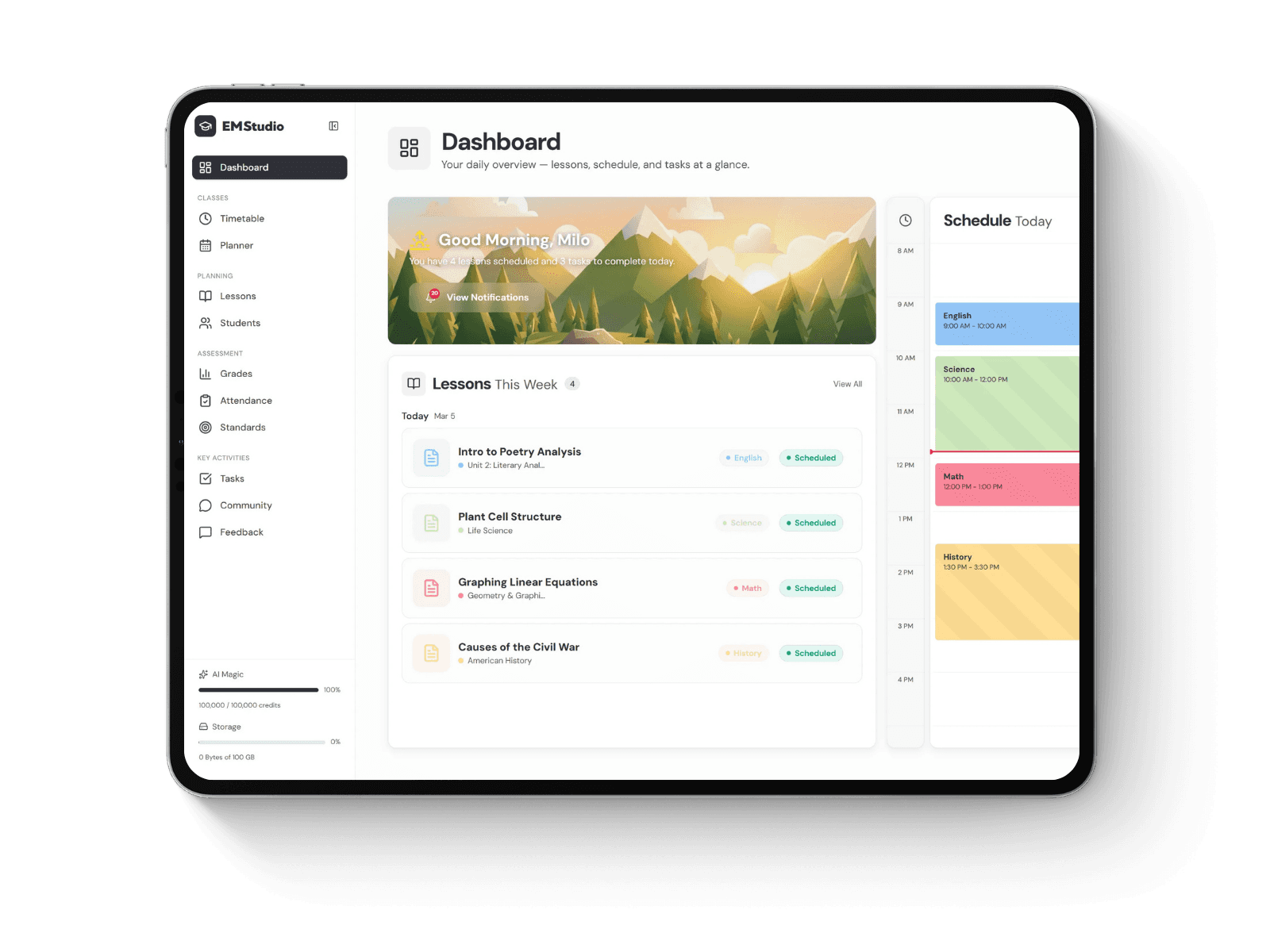
Still grading everything by hand?
EMStudio is a free teaching management app — manage your classes, students, lessons, and more!
Learn More
Table of Contents
What Essential Information Should Your Welcome Letter Include?
Your welcome letter should include six essential elements: teacher contact information with response times, a specific supply list with brands, daily schedule anchors, arrival and dismissal logistics, medical protocol mentions, and a warm personal greeting. Think of this as the cheat sheet that saves you from answering the same question thirty times on Meet the Teacher night.
Here is your non-negotiable checklist:
Your contact details with realistic response times. List your school email and classroom phone extension. State clearly that you return messages within 24 to 48 hours during the school week. Parents need to know when to panic and when to wait.
A complete school supply list with brand specifications. Don't just say "glue sticks." Request Crayola crayons, Fiskars blunt scissors, and Elmer's glue. Cheap supplies break mid-lesson and derail your kindergarten classroom routines and procedures.
Daily schedule anchors. Include only four times: arrival, snack, lunch, and dismissal. Parents don't need your 9:15 phonics block, but they do need to know when to schedule doctor appointments.
Arrival and dismissal logistics. Explain exactly where to line up, what the pickup procedure looks like, and how transport tags work for bus riders versus car riders. Confusion at 3:00 PM creates chaos.
Medical emergency protocol. Note that you follow all district health plans and 504 accommodations without listing specific diagnoses or medications. This covers your back to school preparation without violating privacy.
An invitation to communicate. Ask parents directly: "Do you prefer email, notes in the folder, or phone calls?" This opens parent teacher communication before day one.
Research on family engagement shows that clear pre-entry communication establishes predictability. When parents know exactly what to expect, separation anxiety drops for both kids and adults. A letter from your teacher that answers questions before they're asked reduces first-day tears and hallway cling-ons.
What to leave out: Never mention individual education plan details, complain about budget cuts, name specific students from previous years, or list curriculum standard codes. These either violate privacy, sound unprofessional, or confuse parents who just want to know if their kid needs a backpack. Stick to the facts that help families prepare.
Keep the letter itself between 400 and 600 words. Use 12-point sans-serif font and aim for a Flesch-Kincaid reading level around 4th to 6th grade. Simple language respects busy parents and supports smooth early childhood transition. If you're drafting this during your first year, check out these essential survival strategies for new teachers to avoid common pitfalls.

Step 1 — Open With a Personal Greeting That Eases First-Day Anxiety
The first line of your letter determines whether it gets read with excitement or hidden in a backpack. You need to address the specific emotional state waiting on the other end of that envelope. When a child receives a letter from your teacher that speaks directly to them, separation anxiety drops before they even step through the door.
Match your greeting to the child temperament you see in the enrollment file:
For anxious children: "I am so happy you are in my class. Our room has a cozy blue bean bag where you can sit if you feel worried. I will be there too, and we can look at picture books together until you feel better."
For excited learners: "Get ready for building with wooden blocks, painting at the easel, and reading about dinosaurs. Our classroom has a science table with real magnifying glasses waiting for your questions."
For shy students: "I have cubby number 12 waiting just for your backpack with your name card on it. No one else will use that space. It is yours starting on the first day."
Check your enrollment roster for nicknames before you write. If the birth certificate says William but the family engagement form says Billy, use Billy. The same goes for Charlotte versus Charlie. A child knows immediately when mail is mass-produced. They have received enough junk mail from dance studios and soccer leagues to spot a template.
Reference one specific detail from their file to prove you wrote this for them. Mention the unicorn shirt from their kindergarten screening photo, or the way they carefully lined up the crayons during the visit. This single detail transforms generic parent teacher communication into a bridge for early childhood transition. It shows you see them already.
Timing matters for back to school preparation. Draft these letters three weeks before the first day. Mail them two weeks prior. Ten to fourteen days gives five-year-olds enough time to process the information, ask questions, and walk through the building mentally before they handle the physical classroom procedures for kindergarten. Send it too early and the anxiety returns. Send it too late and they have no time to visualize success.
Do not open with "Dear Student" or "Dear Future Kindergartener." If you cannot find the time to type the actual name, parents will assume you cannot manage school supply lists or bathroom protocols either. Use "Dear [First Name]" or "Hello Future Kindergartener [Name]." The brackets matter less than the evidence that this paper was meant for one specific small person.
Step 2 — Introduce Yourself and Your Kindergarten Classroom Setup
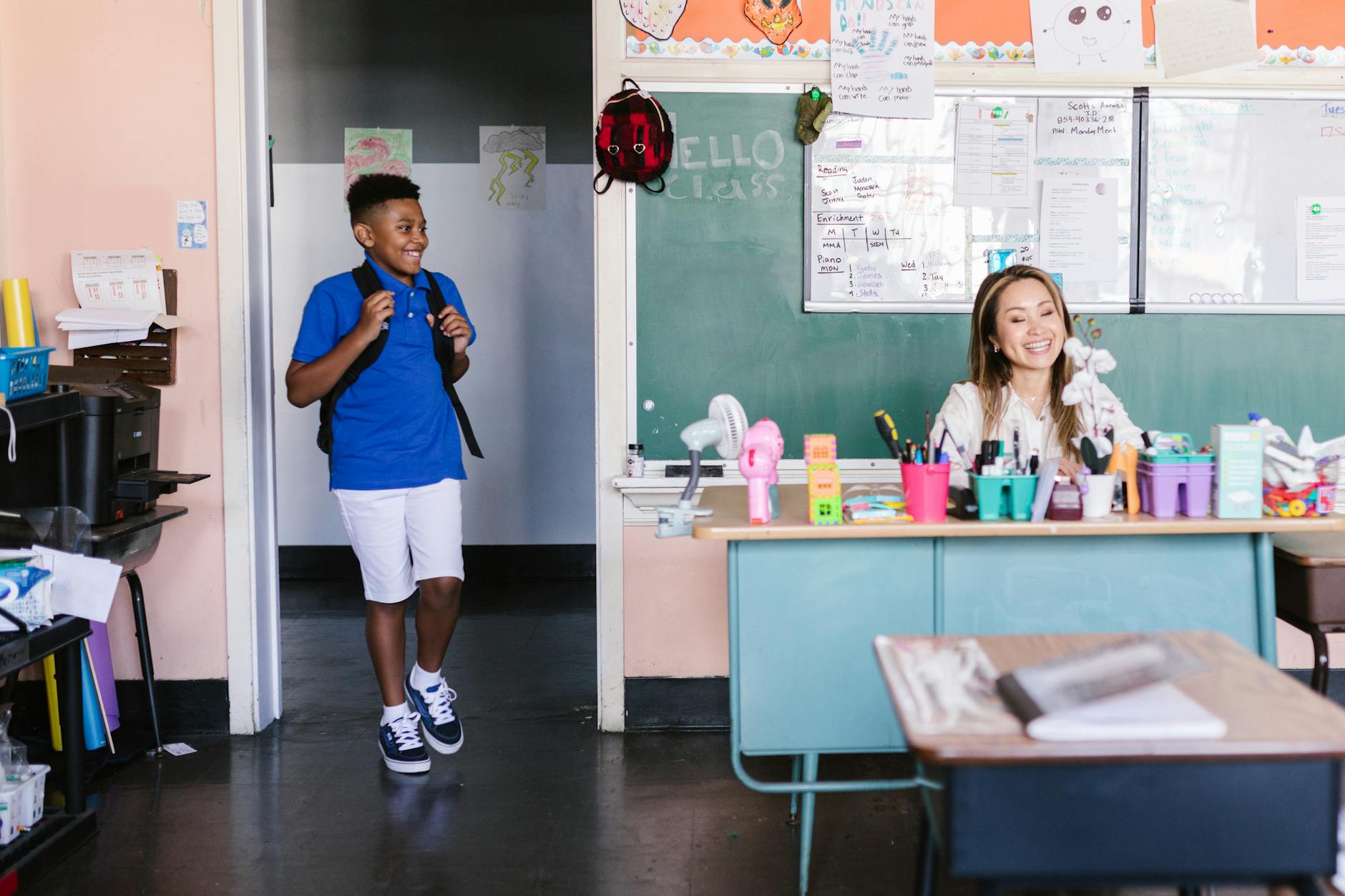
Five-year-olds cannot read a floor plan. When you write a letter from your teacher, you must paint pictures with words. They need to know where their body goes. Parents need to see you have thought through safety and supervision. This step makes the invisible visible through concrete details. Strong parent teacher communication and early family engagement here prevents confusion on day one.
Describing Your Physical Learning Environment
Start with the anchor. The Group Meeting Carpet measures six by eight feet. It sits in front of the whiteboard with a bright alphabet border running the edge. This is where we gather for stories and counting games. Twenty-four chairs wait at tables arranged in pods of four or five. Your child will sit with the same small group for the first month while we build trust and routines.
The Entry Area runs along the west wall. Numbered cubbies one through twenty-four line up at child height, ready for items from your school supply lists. Bottom hooks hold backpacks so five-year-olds never need to lift anything overhead or ask for help hanging a strap.
Light streams through north-facing windows all morning. The room stays at seventy-two degrees, cool enough for running but warm enough for sitting still. I keep a thermometer visible so students learn to check their own comfort. The bathroom door opens directly into our classroom, not the hallway. You will not wonder if your child is wandering alone or waiting in a line with older students. This kindergarten classroom setup puts safety first.
Highlighting Key Learning Centers and Zones
We rotate through four centers in twenty-minute blocks. That matches the attention span of a five-year-old brain before restlessness sets in.
The Dramatic Play corner holds a wooden kitchen set and a dress-up rack with six costumes ranging from doctor coats to firefighter helmets.
The Block Center contains two hundred wooden unit blocks sorted in five-inch increments. Towers will fall. That is the point of physics at age five.
Our Reading Nook offers floor pillows and fifty picture books shelved at twenty-four inches. Your child can see the covers without asking for help or climbing.
The Art Station features a double-sided easel and washable tempera paints only. No stains on the first-day outfit. I replace the paper rolls daily so every child starts fresh.
This effective classroom design and learning zones approach lets children choose based on developmental need, not random preference. During back to school preparation, mention that these rotations build independence without overwhelming choice.
Mentioning Comfort Items and Sensory Spaces
Big feelings happen in kindergarten. We plan for them rather than hoping they skip us.
The Calming Corner sits behind the bookshelves, visible from my desk but hidden from the group gaze. A blue bean bag chair waits there. So does a weighted lap pad at two to three pounds, fidget tools like stress balls and textured strips, and visual emotion cards showing six basic feelings from happy to frustrated.
Research shows predictable sensory spaces lower cortisol in new students facing separation anxiety. When the wave hits at minute three or minute thirty, your child has a refuge. They can breathe, squeeze a ball, match their face to a card, and return when ready. No shame. Just space. This support makes early childhood transition possible for sensitive kids.
This setup supports creating a sensory-friendly classroom environment without isolating anyone. It signals that all emotions belong here.
Step 3 — Outline Daily Routines and Procedures for Kindergarten
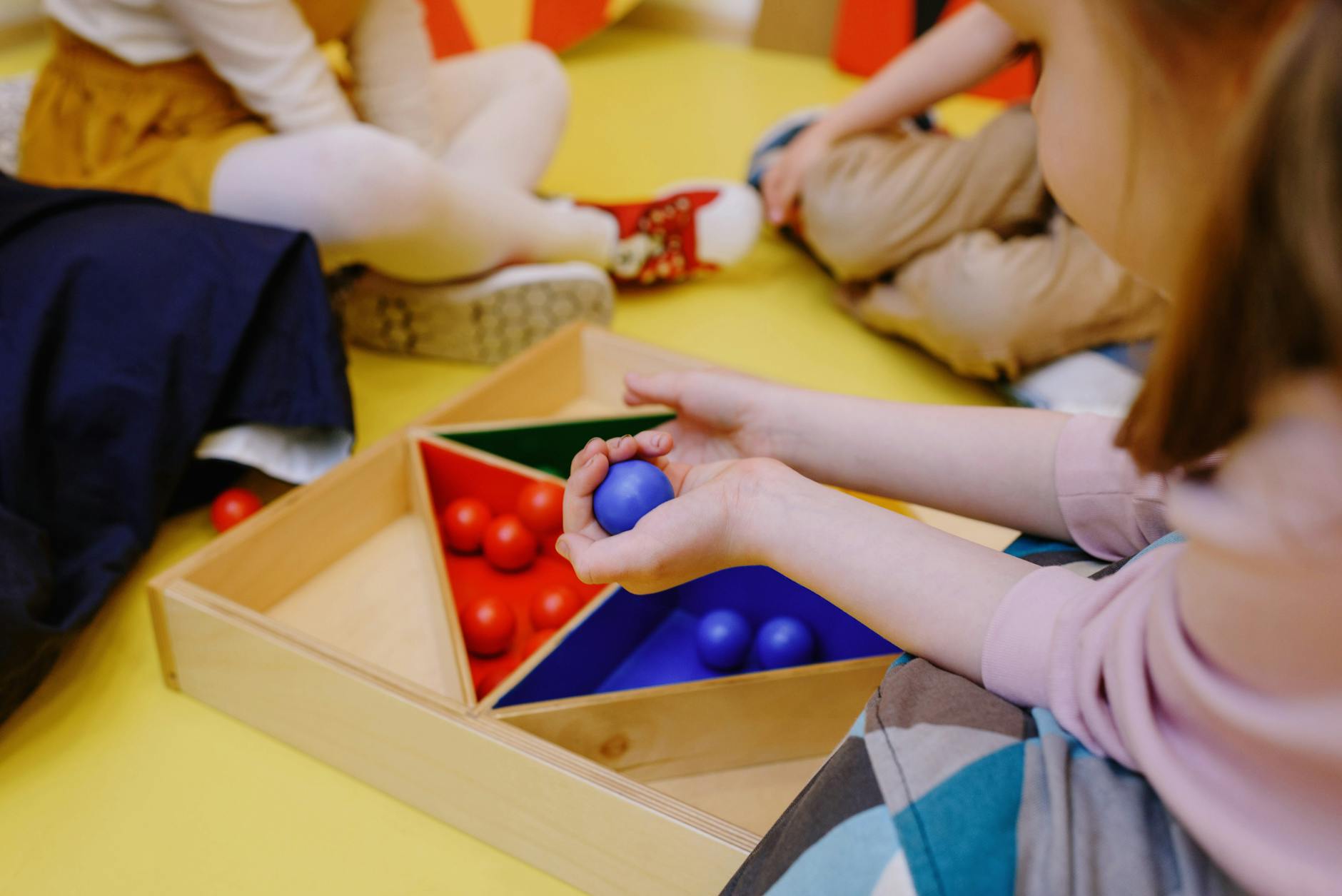
Visual schedules work for non-readers, but keep them simple. List four anchor times only: Arrival at 8:00 AM, Recess at 10:30 AM, Lunch at 11:30 AM, and Dismissal at 3:00 PM. Skip the minute-by-minute breakdowns. Five-year-olds cannot track fifteen transitions, and parents do not need to see a block schedule that looks like a spreadsheet. When you detail your routines and procedures for kindergarten in a letter from your teacher home before day one, specificity saves your phone from ringing off the hook. Vague statements like "we have a routine" cause eighty percent of first-day parent panic calls. Tell them exactly who supervises, where students go, and when things happen. That clarity cuts separation anxiety in half before the bus even arrives.
Your back to school preparation should include these details in your parent teacher communication. Families need to picture the day before they trust you with their child.
Morning Arrival and Entry Procedures
The first fifteen minutes are a soft start, not a sprint. Students enter and follow four steps:
Hang backpacks on numbered hooks one through twenty-four.
Turn communication folders into the red bin by the door.
Wash hands at the classroom sink.
Choose a quiet table activity—puzzles, coloring, or playdough—until the 8:15 AM morning bell rings.
This is unstructured time, which means chaos without boundaries. You need one teacher and one aide for twenty-four students during this window. Two adults watch the room while kids settle. If you are solo, shrink the choices. Offer only two table activities instead of six. Twenty-four five-year-olds with only one adult during arrival is a recipe for a lockdown scare. You cannot supervise the bathroom, the backpack hooks, and the red bin simultaneously. research-based classroom organization strategies show that limiting options during early childhood transition moments reduces behavioral referrals before 9:00 AM.
Bathroom Hallway and Line-Up Protocols
Teach three signals on day one:
Peace Sign: Two fingers crossed means "I need the bathroom." No words, no interrupting circle time.
Buddy System: Pairs of two hold hands in hallways. No singles, no triples.
Bubble and Ducktail: Puffed cheeks like bubble gum, hands behind back like a duck tail. This keeps hands to yourself and mouths quiet without you raising your voice.
Bathroom protocol is strict: two students maximum at one time. Set a five-minute sand timer. Only emergency interruptions allowed—blood, vomit, or fire. Everything else waits. Post this on the bathroom door so substitute teachers do not accidentally send four kids at once.
Lunch Recess and Dismissal Routines
In the cafeteria, students find assigned table numbers one through six. Kindergarteners cannot open milk cartons. Teach them to raise their hand for help rather than spilling chocolate milk across their tray. At recess, boundaries are non-negotiable: stay within the chain-link fence, wood chips only, no climbing basketball poles.
Dismissal tags save lives. Use color-coded categories:
Bus riders: Orange tags.
Walkers: Purple tags.
Car line: Yellow tags.
Check these tags against your list. If a car line parent sends a neighbor without telling you, the tag does not match. You stop the line. Not specifying dismissal procedures triggers lost-child protocols. I have seen principals initiate emergency searches because a teacher sent a bus rider to the car line by mistake. Confirm who picks up on day one. Update your list when custody arrangements change. One missing five-year-old will ruin your year faster than any school supply lists ever could. Solid family engagement starts with parents knowing their child will not get lost in the shuffle.
Step 4 — How Do You Explain Classroom Rules Without Sounding Harsh?
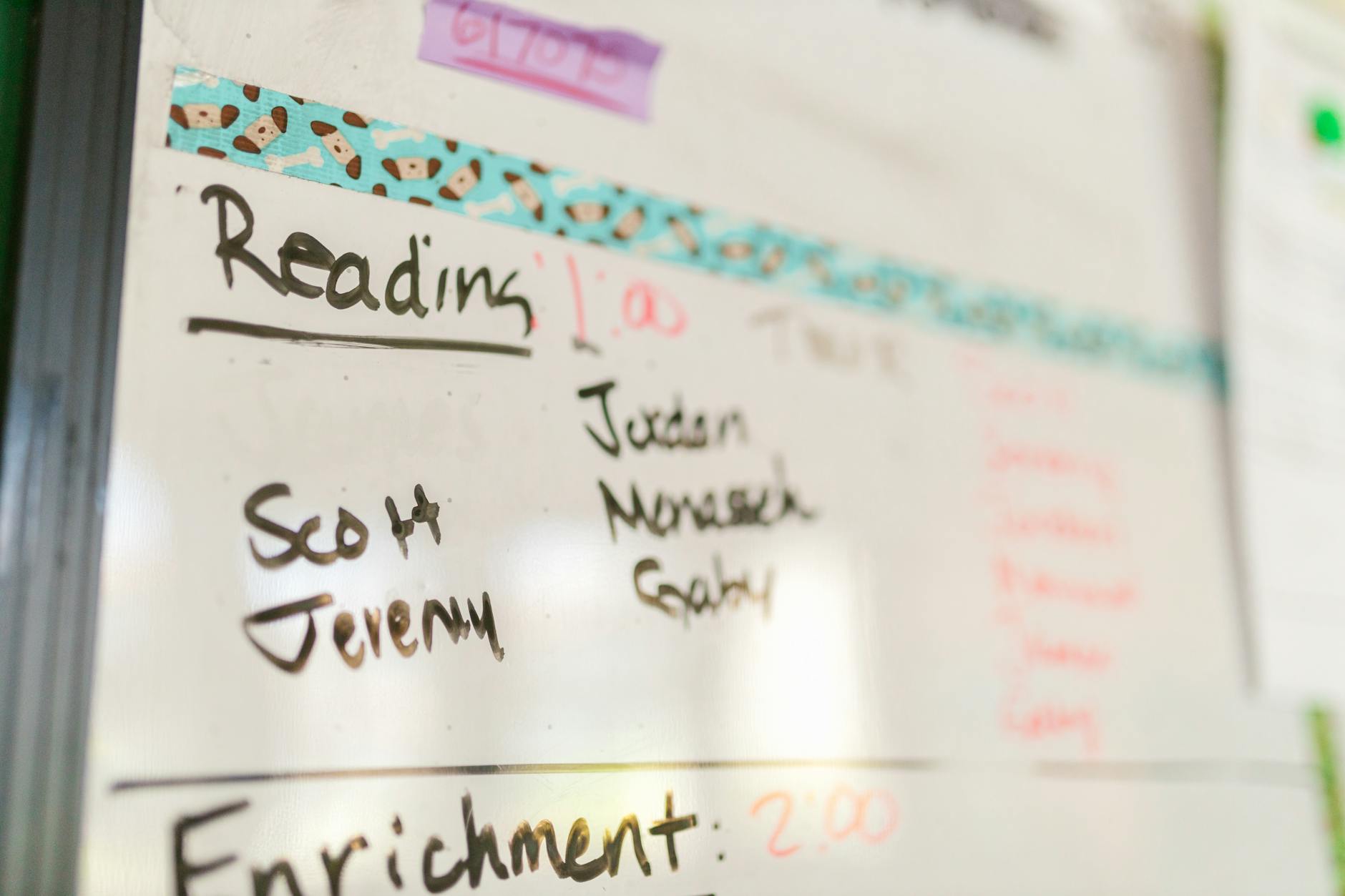
Explain rules using positive phrasing that tells children what to do rather than what to avoid. Frame expectations as walking feet instead of "no running," and limit rules to three to five simple statements like "Be Safe, Be Kind, Be Responsible" that align with kindergarten memory capacity. Present consequences as learning opportunities, not punishments. When parents read a letter from your teacher describing this gentle approach during back to school preparation, they worry less about harsh discipline and focus instead on supporting their child through the early childhood transition.
Words matter. Compare these phrases side by side:
Harsh/Negative Phrasing | Positive/Gentle Framing |
|---|---|
No running indoors | Walking feet in the classroom |
Don't yell | Inside voices (0-1 level) |
Stop touching others | Keep hands to yourself |
No whining | Use your strong voice |
Research on working memory in 5-year-olds suggests they can retain 3-5 simple rules maximum; list more than 5 and compliance drops significantly due to cognitive overload. I learned this the hard way my first year when I posted twenty classroom rules and procedures for kindergarten on bright chart paper. The kids remembered none. Their eyes glazed over during circle time. Now I stick to three.
Rule Stacking—listing 15+ expectations—overwhelms children already managing separation anxiety. Instead, use the Big Three framework:
Be Safe: Walking feet, gentle hands, sit crisscross applesauce.
Be Kind: Listening ears, helping hands, friendly words.
Be Responsible: Clean up your space, pack your backpack, check your mailbox.
These classroom rules and procedures that transform behavior work because they give kids anchor points instead of a laundry list to memorize.
When you explain consequences, avoid threats that trigger panic. Try this script: "If you forget to use walking feet, we'll practice walking together for 2 minutes." Not "You'll be in trouble" or "Go to the principal." This keeps parent teacher communication positive too—families hear about practice sessions, not punishment. During the first week, while you're also organizing school supply lists and building family engagement, this gentle approach prevents meltdowns. It builds trust faster than any color clip chart ever could.

Step 5 — Detail Supply Lists and First-Day Logistics
Supply lists trigger anxiety, especially during back to school preparation. In a letter from your teacher, specificity prevents midnight Walmart runs and angry emails about replacement costs in October.
Split your school supply lists into two clear sections. Individual items stay in their desk all year:
24-count Crayola crayons (the 48-count won't fit the box)
Fiskars blunt-tip scissors (tested on construction paper)
3 Elmer's glue sticks (we use roughly one per month)
Plastic pencil box 8x5 inches (measure this—anything bigger won't fit in the cubby)
2-pocket folder with fasteners (sturdy plastic, no prongs)
Cardboard folders die by October; metal prongs snag little fingers during procedures for kindergarten classroom cleanup.
Community supplies go straight to the shared closet on day one:
2 boxes Kleenex (flu season hits hard)
1 Clorox wipes container
1 pack baby wipes (sticky lunch hands)
1 box Ziploc gallon bags (for wet clothes after accidents)
1 pack Expo markers (we share during calendar time)
Be transparent about money. Note: "Total individual supply cost should not exceed $35; contact me privately if this creates hardship." This single sentence protects dignity and strengthens family engagement. No explanation required—just email me. This acknowledges that economic realities vary widely across your classroom community.
Skip the printed labels. They peel off plastic pencil boxes by day three. Instead, instruct families to send a black permanent Sharpie marker. Parents write the child's name directly on each item the first morning while kids explore centers. One critical failure mode: requesting "1 folder" without specifying "sturdy plastic, no prongs." Parents buy cheap paper ones that rip. Then you're spending your own money on replacements before Halloween.
Handle first-day transport with care. Do not stuff supplies into the backpack. That precious space holds lunch and a change of clothes for bathroom accidents or separation anxiety spills. Send everything in a disposable paper grocery bag labeled with the child's name in Sharpie. We'll sort items together as a community-building activity. Forgot the crayons? Left the wipes in the car? I maintain a digital teacher supply checklist and physical extras so no child sits empty-handed while others unpack. This logistical clarity in parent teacher communication removes one more barrier from the early childhood transition.

Step 6 — Close With an Invitation for Two-Way Communication
A letter from your teacher shouldn't end with "Sincerely" and a signature. It needs an open door. Families need to know exactly how to reach you before the first day of school, especially during early childhood transition when separation anxiety peaks. Now that you've covered school supply lists, you need to establish how parents will actually talk to you.
Offer three distinct ways to connect:
Digital: "Text our ClassDojo code @hjk89 to join our classroom feed, or download the Remind app for quick updates."
Email: "Reach me at m.johnson@schooldistrict.org. I check messages once daily and respond within 24 hours—not instantly, but consistently."
Phone: "Call the school office at (555) 123-4567. I'm available before 8:00 AM or after 3:30 PM only. I never answer during instruction."
Then ask for intelligence only parents possess. Attach a one-page "Tell Me About Your Child" survey requesting specifics:
What makes your child laugh?
What calms them when upset—stuffed animal, quiet time, hug?
Any food allergies, asthma, or medical needs I should know before day one?
This establishes clear parent teacher communication channels and supports solid pre k classroom procedures.
For families navigating language barriers, offer translated versions in Spanish, Mandarin, or Arabic. Picture-based communication works for non-English speakers too. Need a phone interpreter? Provide one with 48 hours notice.
Set a hard deadline to build family engagement from day zero. Write: "Please reply to this letter with your preferred contact method by August 15th." This prevents first-day information gaps and ensures your back to school preparation includes established two-way channels. It completes your parent communication strategies for modern teachers and your comprehensive family engagement plan before students even arrive.

What Final Checks Ensure Your Letter Builds Excitement?
Final checks include reading the letter aloud to test 5-year-old attention spans, verifying contact information accuracy, ensuring a 3:1 ratio of excitement to rules, checking translations for ESL families, and confirming supply list clarity. Remove curriculum jargon and testing references that overwhelm parents before school begins. When a letter from your teacher arrives in August, families should feel anticipation, not dread.
Run this five-point checklist before you hit send:
Read-Aloud Test. Find a 5-year-old. Read your draft aloud. If they fidget before you finish paragraph three, cut the text. Kindergarteners have the attention spans of goldfish; their parents are scanning while cooking dinner.
Translation Verification. Ask your ESL teacher to review key terms. "Dismissal" confuses families who use "pick-up." Small wording shifts prevent separation anxiety on day one.
Tone Check. Count your sentences. You need three positive or exciting statements for every procedural rule. If you list five rules and only mention one fun thing, rewrite.
Contact Information Accuracy. Dial every phone number. Click every email link. I once sent 24 parents to a dead number because I transposed two digits.
Supply List Check. Verify your items against the district master. Errors in school supply lists trigger last-minute shopping trips and frustration.
Check your reading level. Aim for 4th-6th grade Flesch-Kincaid. Parents read these letters at midnight after double shifts. Remove words like "scaffolding," "differentiated instruction," or "formative assessment." These terms build walls, not bridges.
Watch for information overload. Never include curriculum standards, testing schedules, or detailed discipline matrices. Save budget complaints for the union meeting. August is for family engagement and back to school preparation, not kindergarten procedures and routines overload. Parents need to know you care before they care what you teach.
Finally, check your excitement meter. Include one specific joy: "We hatch butterflies in April," or "Our class guinea pig, Max, loves carrot peels." This balances the logistics and reminds families that early childhood transition leads to wonder. Strong parent teacher communication starts with warmth, not warnings.

Final Thoughts on A Letter From Your Teacher
Your welcome letter isn't a contract. It's a bridge. The parents reading it at 11 PM, worrying about their baby crying on the first day, need to hear your voice—not a template. Swap out "we will learn" for "your child will paint at the easel and build with blocks." Name the cubby. Mention the read-aloud corner. Specificity builds trust faster than any list of credentials.
Print your draft and read it aloud to an empty classroom. If it sounds like a handbook, rewrite it. If it sounds like you inviting a nervous family into your space, you're done. Mail it this week. That early arrival in their mailbox does more for separation anxiety than any reassurance you give on Meet the Teacher night.

What Essential Information Should Your Welcome Letter Include?
Your welcome letter should include six essential elements: teacher contact information with response times, a specific supply list with brands, daily schedule anchors, arrival and dismissal logistics, medical protocol mentions, and a warm personal greeting. Think of this as the cheat sheet that saves you from answering the same question thirty times on Meet the Teacher night.
Here is your non-negotiable checklist:
Your contact details with realistic response times. List your school email and classroom phone extension. State clearly that you return messages within 24 to 48 hours during the school week. Parents need to know when to panic and when to wait.
A complete school supply list with brand specifications. Don't just say "glue sticks." Request Crayola crayons, Fiskars blunt scissors, and Elmer's glue. Cheap supplies break mid-lesson and derail your kindergarten classroom routines and procedures.
Daily schedule anchors. Include only four times: arrival, snack, lunch, and dismissal. Parents don't need your 9:15 phonics block, but they do need to know when to schedule doctor appointments.
Arrival and dismissal logistics. Explain exactly where to line up, what the pickup procedure looks like, and how transport tags work for bus riders versus car riders. Confusion at 3:00 PM creates chaos.
Medical emergency protocol. Note that you follow all district health plans and 504 accommodations without listing specific diagnoses or medications. This covers your back to school preparation without violating privacy.
An invitation to communicate. Ask parents directly: "Do you prefer email, notes in the folder, or phone calls?" This opens parent teacher communication before day one.
Research on family engagement shows that clear pre-entry communication establishes predictability. When parents know exactly what to expect, separation anxiety drops for both kids and adults. A letter from your teacher that answers questions before they're asked reduces first-day tears and hallway cling-ons.
What to leave out: Never mention individual education plan details, complain about budget cuts, name specific students from previous years, or list curriculum standard codes. These either violate privacy, sound unprofessional, or confuse parents who just want to know if their kid needs a backpack. Stick to the facts that help families prepare.
Keep the letter itself between 400 and 600 words. Use 12-point sans-serif font and aim for a Flesch-Kincaid reading level around 4th to 6th grade. Simple language respects busy parents and supports smooth early childhood transition. If you're drafting this during your first year, check out these essential survival strategies for new teachers to avoid common pitfalls.
Step 1 — Open With a Personal Greeting That Eases First-Day Anxiety
The first line of your letter determines whether it gets read with excitement or hidden in a backpack. You need to address the specific emotional state waiting on the other end of that envelope. When a child receives a letter from your teacher that speaks directly to them, separation anxiety drops before they even step through the door.
Match your greeting to the child temperament you see in the enrollment file:
For anxious children: "I am so happy you are in my class. Our room has a cozy blue bean bag where you can sit if you feel worried. I will be there too, and we can look at picture books together until you feel better."
For excited learners: "Get ready for building with wooden blocks, painting at the easel, and reading about dinosaurs. Our classroom has a science table with real magnifying glasses waiting for your questions."
For shy students: "I have cubby number 12 waiting just for your backpack with your name card on it. No one else will use that space. It is yours starting on the first day."
Check your enrollment roster for nicknames before you write. If the birth certificate says William but the family engagement form says Billy, use Billy. The same goes for Charlotte versus Charlie. A child knows immediately when mail is mass-produced. They have received enough junk mail from dance studios and soccer leagues to spot a template.
Reference one specific detail from their file to prove you wrote this for them. Mention the unicorn shirt from their kindergarten screening photo, or the way they carefully lined up the crayons during the visit. This single detail transforms generic parent teacher communication into a bridge for early childhood transition. It shows you see them already.
Timing matters for back to school preparation. Draft these letters three weeks before the first day. Mail them two weeks prior. Ten to fourteen days gives five-year-olds enough time to process the information, ask questions, and walk through the building mentally before they handle the physical classroom procedures for kindergarten. Send it too early and the anxiety returns. Send it too late and they have no time to visualize success.
Do not open with "Dear Student" or "Dear Future Kindergartener." If you cannot find the time to type the actual name, parents will assume you cannot manage school supply lists or bathroom protocols either. Use "Dear [First Name]" or "Hello Future Kindergartener [Name]." The brackets matter less than the evidence that this paper was meant for one specific small person.
Step 2 — Introduce Yourself and Your Kindergarten Classroom Setup
Five-year-olds cannot read a floor plan. When you write a letter from your teacher, you must paint pictures with words. They need to know where their body goes. Parents need to see you have thought through safety and supervision. This step makes the invisible visible through concrete details. Strong parent teacher communication and early family engagement here prevents confusion on day one.
Describing Your Physical Learning Environment
Start with the anchor. The Group Meeting Carpet measures six by eight feet. It sits in front of the whiteboard with a bright alphabet border running the edge. This is where we gather for stories and counting games. Twenty-four chairs wait at tables arranged in pods of four or five. Your child will sit with the same small group for the first month while we build trust and routines.
The Entry Area runs along the west wall. Numbered cubbies one through twenty-four line up at child height, ready for items from your school supply lists. Bottom hooks hold backpacks so five-year-olds never need to lift anything overhead or ask for help hanging a strap.
Light streams through north-facing windows all morning. The room stays at seventy-two degrees, cool enough for running but warm enough for sitting still. I keep a thermometer visible so students learn to check their own comfort. The bathroom door opens directly into our classroom, not the hallway. You will not wonder if your child is wandering alone or waiting in a line with older students. This kindergarten classroom setup puts safety first.
Highlighting Key Learning Centers and Zones
We rotate through four centers in twenty-minute blocks. That matches the attention span of a five-year-old brain before restlessness sets in.
The Dramatic Play corner holds a wooden kitchen set and a dress-up rack with six costumes ranging from doctor coats to firefighter helmets.
The Block Center contains two hundred wooden unit blocks sorted in five-inch increments. Towers will fall. That is the point of physics at age five.
Our Reading Nook offers floor pillows and fifty picture books shelved at twenty-four inches. Your child can see the covers without asking for help or climbing.
The Art Station features a double-sided easel and washable tempera paints only. No stains on the first-day outfit. I replace the paper rolls daily so every child starts fresh.
This effective classroom design and learning zones approach lets children choose based on developmental need, not random preference. During back to school preparation, mention that these rotations build independence without overwhelming choice.
Mentioning Comfort Items and Sensory Spaces
Big feelings happen in kindergarten. We plan for them rather than hoping they skip us.
The Calming Corner sits behind the bookshelves, visible from my desk but hidden from the group gaze. A blue bean bag chair waits there. So does a weighted lap pad at two to three pounds, fidget tools like stress balls and textured strips, and visual emotion cards showing six basic feelings from happy to frustrated.
Research shows predictable sensory spaces lower cortisol in new students facing separation anxiety. When the wave hits at minute three or minute thirty, your child has a refuge. They can breathe, squeeze a ball, match their face to a card, and return when ready. No shame. Just space. This support makes early childhood transition possible for sensitive kids.
This setup supports creating a sensory-friendly classroom environment without isolating anyone. It signals that all emotions belong here.
Step 3 — Outline Daily Routines and Procedures for Kindergarten
Visual schedules work for non-readers, but keep them simple. List four anchor times only: Arrival at 8:00 AM, Recess at 10:30 AM, Lunch at 11:30 AM, and Dismissal at 3:00 PM. Skip the minute-by-minute breakdowns. Five-year-olds cannot track fifteen transitions, and parents do not need to see a block schedule that looks like a spreadsheet. When you detail your routines and procedures for kindergarten in a letter from your teacher home before day one, specificity saves your phone from ringing off the hook. Vague statements like "we have a routine" cause eighty percent of first-day parent panic calls. Tell them exactly who supervises, where students go, and when things happen. That clarity cuts separation anxiety in half before the bus even arrives.
Your back to school preparation should include these details in your parent teacher communication. Families need to picture the day before they trust you with their child.
Morning Arrival and Entry Procedures
The first fifteen minutes are a soft start, not a sprint. Students enter and follow four steps:
Hang backpacks on numbered hooks one through twenty-four.
Turn communication folders into the red bin by the door.
Wash hands at the classroom sink.
Choose a quiet table activity—puzzles, coloring, or playdough—until the 8:15 AM morning bell rings.
This is unstructured time, which means chaos without boundaries. You need one teacher and one aide for twenty-four students during this window. Two adults watch the room while kids settle. If you are solo, shrink the choices. Offer only two table activities instead of six. Twenty-four five-year-olds with only one adult during arrival is a recipe for a lockdown scare. You cannot supervise the bathroom, the backpack hooks, and the red bin simultaneously. research-based classroom organization strategies show that limiting options during early childhood transition moments reduces behavioral referrals before 9:00 AM.
Bathroom Hallway and Line-Up Protocols
Teach three signals on day one:
Peace Sign: Two fingers crossed means "I need the bathroom." No words, no interrupting circle time.
Buddy System: Pairs of two hold hands in hallways. No singles, no triples.
Bubble and Ducktail: Puffed cheeks like bubble gum, hands behind back like a duck tail. This keeps hands to yourself and mouths quiet without you raising your voice.
Bathroom protocol is strict: two students maximum at one time. Set a five-minute sand timer. Only emergency interruptions allowed—blood, vomit, or fire. Everything else waits. Post this on the bathroom door so substitute teachers do not accidentally send four kids at once.
Lunch Recess and Dismissal Routines
In the cafeteria, students find assigned table numbers one through six. Kindergarteners cannot open milk cartons. Teach them to raise their hand for help rather than spilling chocolate milk across their tray. At recess, boundaries are non-negotiable: stay within the chain-link fence, wood chips only, no climbing basketball poles.
Dismissal tags save lives. Use color-coded categories:
Bus riders: Orange tags.
Walkers: Purple tags.
Car line: Yellow tags.
Check these tags against your list. If a car line parent sends a neighbor without telling you, the tag does not match. You stop the line. Not specifying dismissal procedures triggers lost-child protocols. I have seen principals initiate emergency searches because a teacher sent a bus rider to the car line by mistake. Confirm who picks up on day one. Update your list when custody arrangements change. One missing five-year-old will ruin your year faster than any school supply lists ever could. Solid family engagement starts with parents knowing their child will not get lost in the shuffle.
Step 4 — How Do You Explain Classroom Rules Without Sounding Harsh?
Explain rules using positive phrasing that tells children what to do rather than what to avoid. Frame expectations as walking feet instead of "no running," and limit rules to three to five simple statements like "Be Safe, Be Kind, Be Responsible" that align with kindergarten memory capacity. Present consequences as learning opportunities, not punishments. When parents read a letter from your teacher describing this gentle approach during back to school preparation, they worry less about harsh discipline and focus instead on supporting their child through the early childhood transition.
Words matter. Compare these phrases side by side:
Harsh/Negative Phrasing | Positive/Gentle Framing |
|---|---|
No running indoors | Walking feet in the classroom |
Don't yell | Inside voices (0-1 level) |
Stop touching others | Keep hands to yourself |
No whining | Use your strong voice |
Research on working memory in 5-year-olds suggests they can retain 3-5 simple rules maximum; list more than 5 and compliance drops significantly due to cognitive overload. I learned this the hard way my first year when I posted twenty classroom rules and procedures for kindergarten on bright chart paper. The kids remembered none. Their eyes glazed over during circle time. Now I stick to three.
Rule Stacking—listing 15+ expectations—overwhelms children already managing separation anxiety. Instead, use the Big Three framework:
Be Safe: Walking feet, gentle hands, sit crisscross applesauce.
Be Kind: Listening ears, helping hands, friendly words.
Be Responsible: Clean up your space, pack your backpack, check your mailbox.
These classroom rules and procedures that transform behavior work because they give kids anchor points instead of a laundry list to memorize.
When you explain consequences, avoid threats that trigger panic. Try this script: "If you forget to use walking feet, we'll practice walking together for 2 minutes." Not "You'll be in trouble" or "Go to the principal." This keeps parent teacher communication positive too—families hear about practice sessions, not punishment. During the first week, while you're also organizing school supply lists and building family engagement, this gentle approach prevents meltdowns. It builds trust faster than any color clip chart ever could.
Step 5 — Detail Supply Lists and First-Day Logistics
Supply lists trigger anxiety, especially during back to school preparation. In a letter from your teacher, specificity prevents midnight Walmart runs and angry emails about replacement costs in October.
Split your school supply lists into two clear sections. Individual items stay in their desk all year:
24-count Crayola crayons (the 48-count won't fit the box)
Fiskars blunt-tip scissors (tested on construction paper)
3 Elmer's glue sticks (we use roughly one per month)
Plastic pencil box 8x5 inches (measure this—anything bigger won't fit in the cubby)
2-pocket folder with fasteners (sturdy plastic, no prongs)
Cardboard folders die by October; metal prongs snag little fingers during procedures for kindergarten classroom cleanup.
Community supplies go straight to the shared closet on day one:
2 boxes Kleenex (flu season hits hard)
1 Clorox wipes container
1 pack baby wipes (sticky lunch hands)
1 box Ziploc gallon bags (for wet clothes after accidents)
1 pack Expo markers (we share during calendar time)
Be transparent about money. Note: "Total individual supply cost should not exceed $35; contact me privately if this creates hardship." This single sentence protects dignity and strengthens family engagement. No explanation required—just email me. This acknowledges that economic realities vary widely across your classroom community.
Skip the printed labels. They peel off plastic pencil boxes by day three. Instead, instruct families to send a black permanent Sharpie marker. Parents write the child's name directly on each item the first morning while kids explore centers. One critical failure mode: requesting "1 folder" without specifying "sturdy plastic, no prongs." Parents buy cheap paper ones that rip. Then you're spending your own money on replacements before Halloween.
Handle first-day transport with care. Do not stuff supplies into the backpack. That precious space holds lunch and a change of clothes for bathroom accidents or separation anxiety spills. Send everything in a disposable paper grocery bag labeled with the child's name in Sharpie. We'll sort items together as a community-building activity. Forgot the crayons? Left the wipes in the car? I maintain a digital teacher supply checklist and physical extras so no child sits empty-handed while others unpack. This logistical clarity in parent teacher communication removes one more barrier from the early childhood transition.
Step 6 — Close With an Invitation for Two-Way Communication
A letter from your teacher shouldn't end with "Sincerely" and a signature. It needs an open door. Families need to know exactly how to reach you before the first day of school, especially during early childhood transition when separation anxiety peaks. Now that you've covered school supply lists, you need to establish how parents will actually talk to you.
Offer three distinct ways to connect:
Digital: "Text our ClassDojo code @hjk89 to join our classroom feed, or download the Remind app for quick updates."
Email: "Reach me at m.johnson@schooldistrict.org. I check messages once daily and respond within 24 hours—not instantly, but consistently."
Phone: "Call the school office at (555) 123-4567. I'm available before 8:00 AM or after 3:30 PM only. I never answer during instruction."
Then ask for intelligence only parents possess. Attach a one-page "Tell Me About Your Child" survey requesting specifics:
What makes your child laugh?
What calms them when upset—stuffed animal, quiet time, hug?
Any food allergies, asthma, or medical needs I should know before day one?
This establishes clear parent teacher communication channels and supports solid pre k classroom procedures.
For families navigating language barriers, offer translated versions in Spanish, Mandarin, or Arabic. Picture-based communication works for non-English speakers too. Need a phone interpreter? Provide one with 48 hours notice.
Set a hard deadline to build family engagement from day zero. Write: "Please reply to this letter with your preferred contact method by August 15th." This prevents first-day information gaps and ensures your back to school preparation includes established two-way channels. It completes your parent communication strategies for modern teachers and your comprehensive family engagement plan before students even arrive.
What Final Checks Ensure Your Letter Builds Excitement?
Final checks include reading the letter aloud to test 5-year-old attention spans, verifying contact information accuracy, ensuring a 3:1 ratio of excitement to rules, checking translations for ESL families, and confirming supply list clarity. Remove curriculum jargon and testing references that overwhelm parents before school begins. When a letter from your teacher arrives in August, families should feel anticipation, not dread.
Run this five-point checklist before you hit send:
Read-Aloud Test. Find a 5-year-old. Read your draft aloud. If they fidget before you finish paragraph three, cut the text. Kindergarteners have the attention spans of goldfish; their parents are scanning while cooking dinner.
Translation Verification. Ask your ESL teacher to review key terms. "Dismissal" confuses families who use "pick-up." Small wording shifts prevent separation anxiety on day one.
Tone Check. Count your sentences. You need three positive or exciting statements for every procedural rule. If you list five rules and only mention one fun thing, rewrite.
Contact Information Accuracy. Dial every phone number. Click every email link. I once sent 24 parents to a dead number because I transposed two digits.
Supply List Check. Verify your items against the district master. Errors in school supply lists trigger last-minute shopping trips and frustration.
Check your reading level. Aim for 4th-6th grade Flesch-Kincaid. Parents read these letters at midnight after double shifts. Remove words like "scaffolding," "differentiated instruction," or "formative assessment." These terms build walls, not bridges.
Watch for information overload. Never include curriculum standards, testing schedules, or detailed discipline matrices. Save budget complaints for the union meeting. August is for family engagement and back to school preparation, not kindergarten procedures and routines overload. Parents need to know you care before they care what you teach.
Finally, check your excitement meter. Include one specific joy: "We hatch butterflies in April," or "Our class guinea pig, Max, loves carrot peels." This balances the logistics and reminds families that early childhood transition leads to wonder. Strong parent teacher communication starts with warmth, not warnings.
Final Thoughts on A Letter From Your Teacher
Your welcome letter isn't a contract. It's a bridge. The parents reading it at 11 PM, worrying about their baby crying on the first day, need to hear your voice—not a template. Swap out "we will learn" for "your child will paint at the easel and build with blocks." Name the cubby. Mention the read-aloud corner. Specificity builds trust faster than any list of credentials.
Print your draft and read it aloud to an empty classroom. If it sounds like a handbook, rewrite it. If it sounds like you inviting a nervous family into your space, you're done. Mail it this week. That early arrival in their mailbox does more for separation anxiety than any reassurance you give on Meet the Teacher night.
Still grading everything by hand?
EMStudio is a free teaching management app — manage your classes, students, lessons, and more!
Learn More
Still grading everything by hand?
EMStudio is a free teaching management app — manage your classes, students, lessons, and more!
Learn More





Notion4Teachers
Notion templates to simplify administrative tasks and enhance your teaching experience.



2026 Notion4Teachers. All Rights Reserved.
Notion4Teachers
Notion templates to simplify administrative tasks and enhance your teaching experience.
2026 Notion4Teachers. All Rights Reserved.
Notion4Teachers
Notion templates to simplify administrative tasks and enhance your teaching experience.
2026 Notion4Teachers. All Rights Reserved.