

Continuing Education Units Definition: What a CEU Is

Picture finishing a workshop on supporting students who are still learning English, then needing proof that you actually attended. That's where continuing education units come in.
A continuing education unit, or CEU, is a standard way to record your participation in organized learning.
In this post, we'll cover what a CEU is, how it's calculated, who awards it, and whether it counts. Then we'll show how CEUs connect to inclusive and multilingual education training.

Still grading everything by hand?
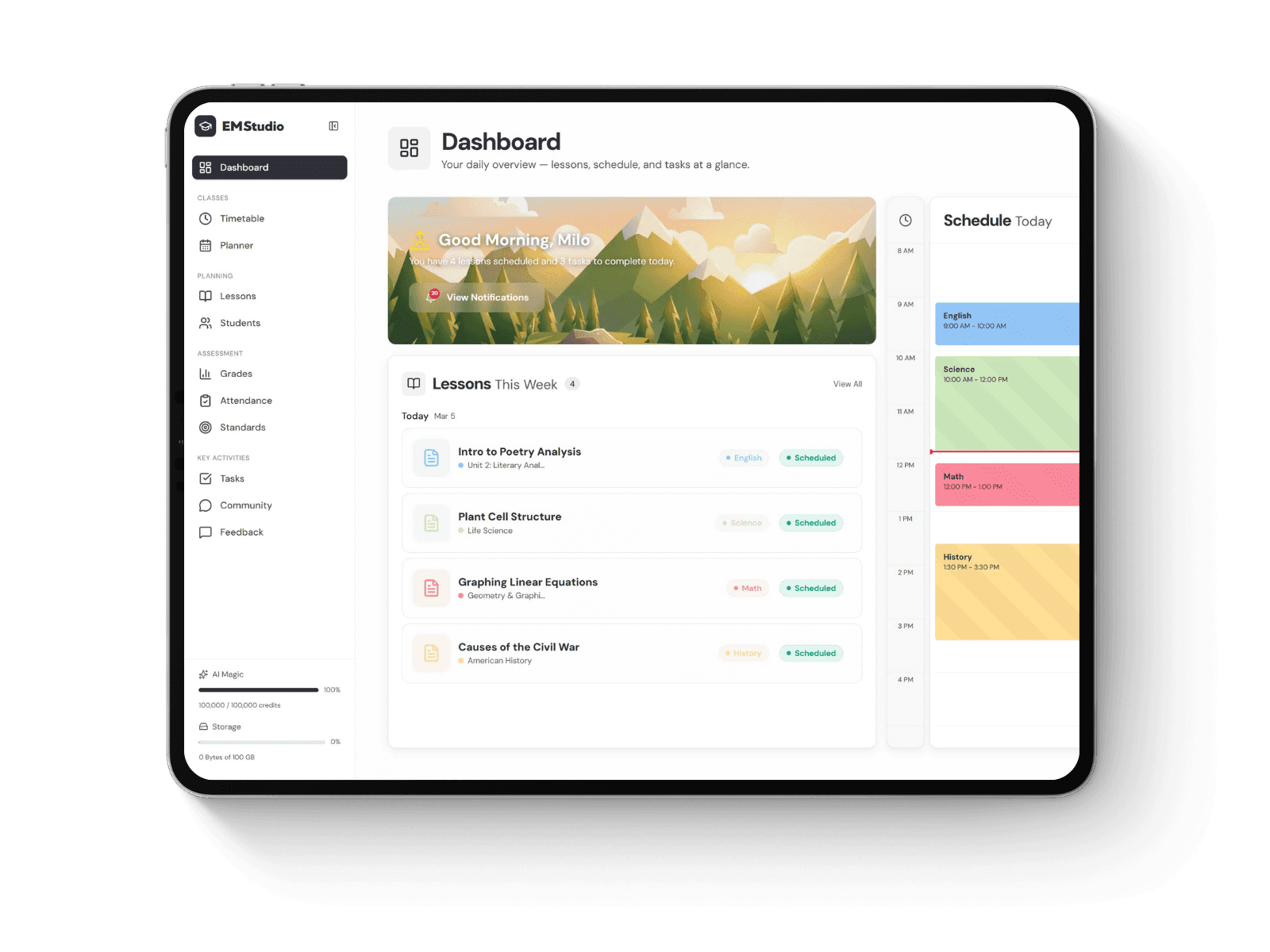
EMStudio is a free teaching management app — manage your classes, students, lessons, and more!
Continuing Education Units Definition and Overview
Seeing "CEU" on a course listing and wondering what it's worth? Here's the plain answer.
What does CEU stand for?
CEU stands for continuing education unit, the standard way to measure organized professional learning. Villanova's professional education catalog (PDF) uses the same "Continuing Education Units (CEU)" label.
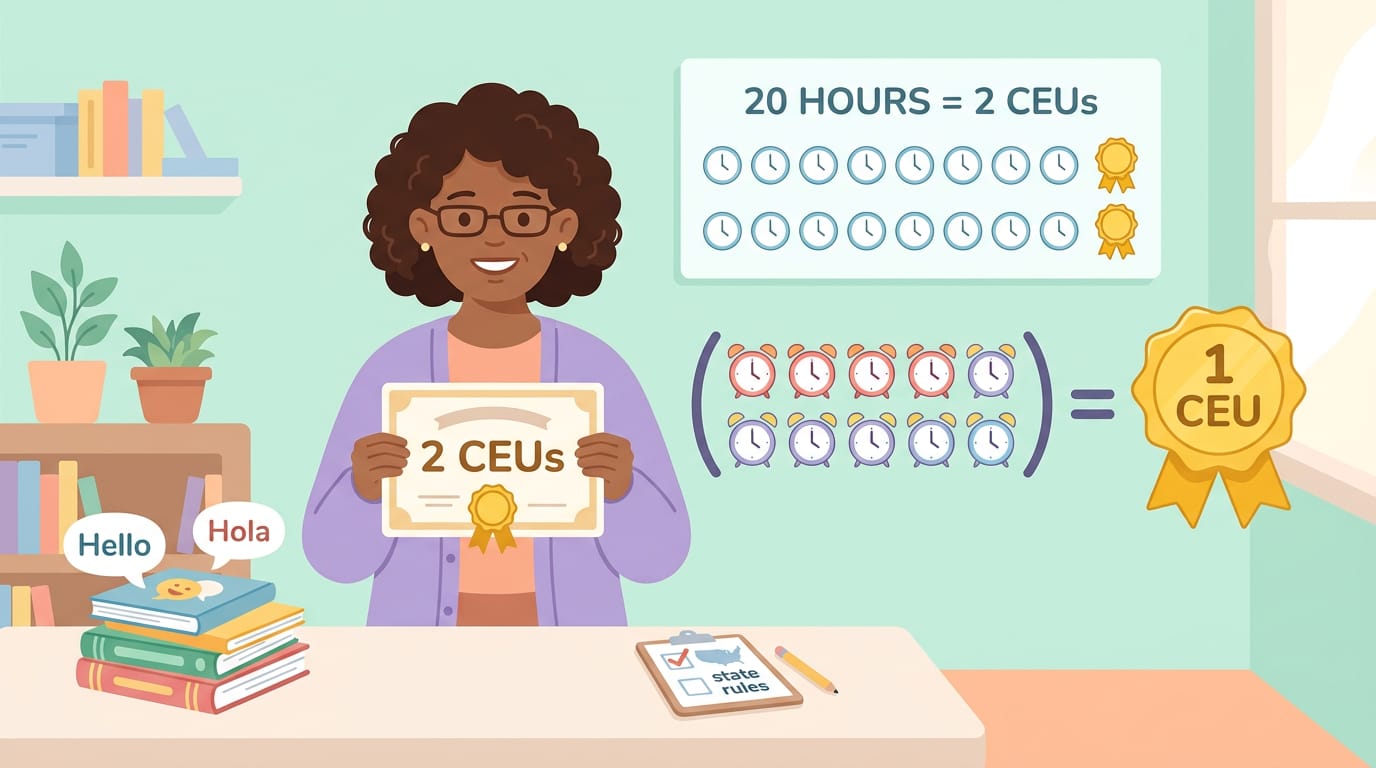
The math is simpler than it looks. According to the IACET standard from the International Association for Continuing Education and Training, "one (1) CEU is equivalent to ten (10) contact hours of participation." Ten contact hours, one CEU.
Picture a middle school teacher who finishes a 20-hour workshop on supporting multilingual students: that's two CEUs, and her certificate shows the total.
A CEU counts participation rather than academic credit, so it's easy to confuse with these:
PDH (professional development hour): a time-based unit that isn't a CEU.
College credit: issued by a college or university for coursework that goes on an academic record.
Who issues it matters too. The standard calls for programs delivered under responsible sponsorship, capable direction, and qualified instruction, so look for a provider that can show all three.
Are CEUs worth anything? That depends on whether your state, district, or employer recognizes them, so ask before you pay. Skipping continuing education works the same way: the consequences depend on your local rules.
If you're renewing a teaching license, CEUs count only when your state's requirements say so.
Training on inclusive teaching, English language learner (ELL) support, or special education (special-ed) practice can earn CEUs too, as long as it meets that standard. Check the rules, then count the hours.
CEUs give you a consistent record of the learning you've completed. Knowing how they're calculated, who awards them, and whether they count for you helps you plan with confidence.
Inclusive and multilingual training is a natural next step. Building these skills helps you reach every learner in your room, and that's where learning really takes hold.
Ready to put that learning to work? Check out our post, Inclusive & Multilingual Education, to explore how these skills fit into your teaching.
References
About the CEU — iacet.org
Still grading everything by hand?
EMStudio is a free teaching management app — manage your classes, students, lessons, and more!