Classroom Centers Explained: Setup, Materials, Routines

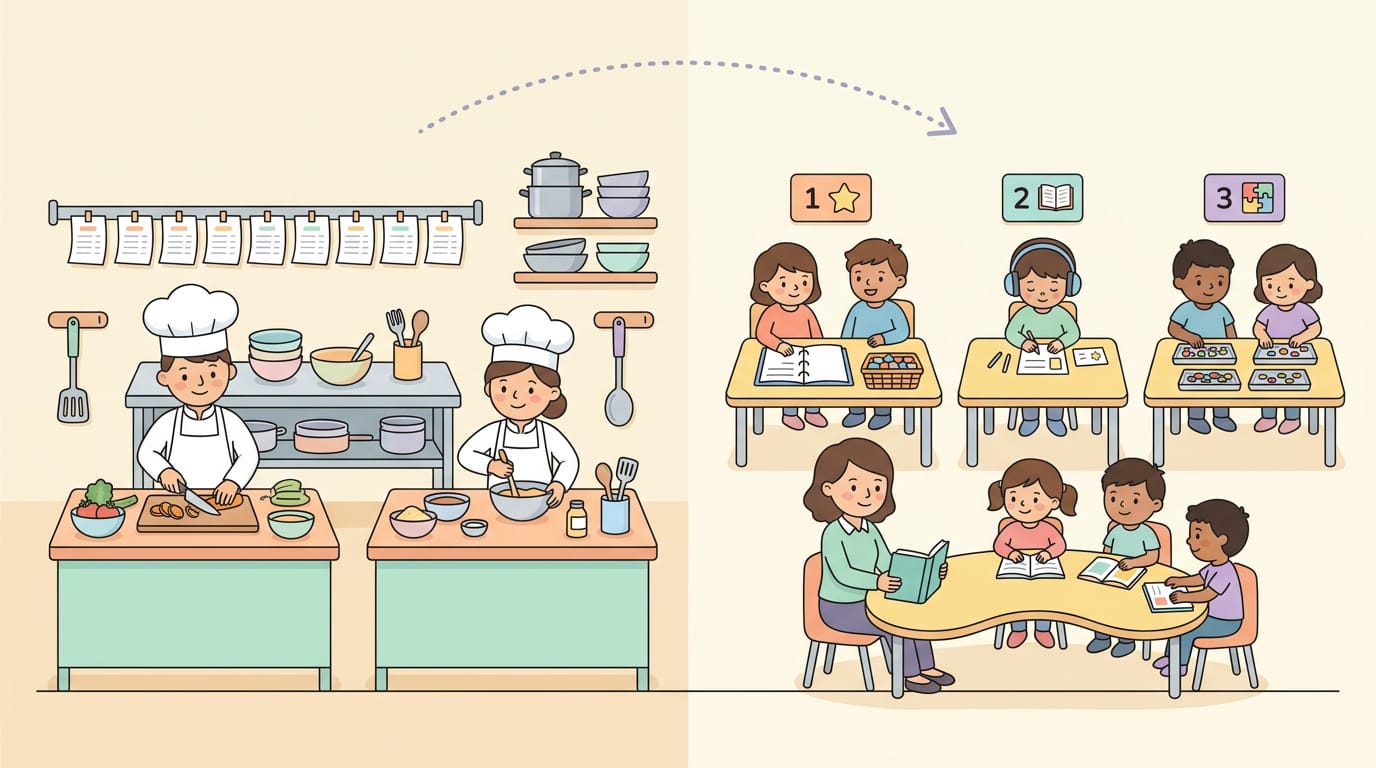
Picture a busy restaurant kitchen during the dinner rush. Each cook has a station with everything within arm's reach, so nobody is hunting for a spatula while orders pile up. Classroom centers work the same way.
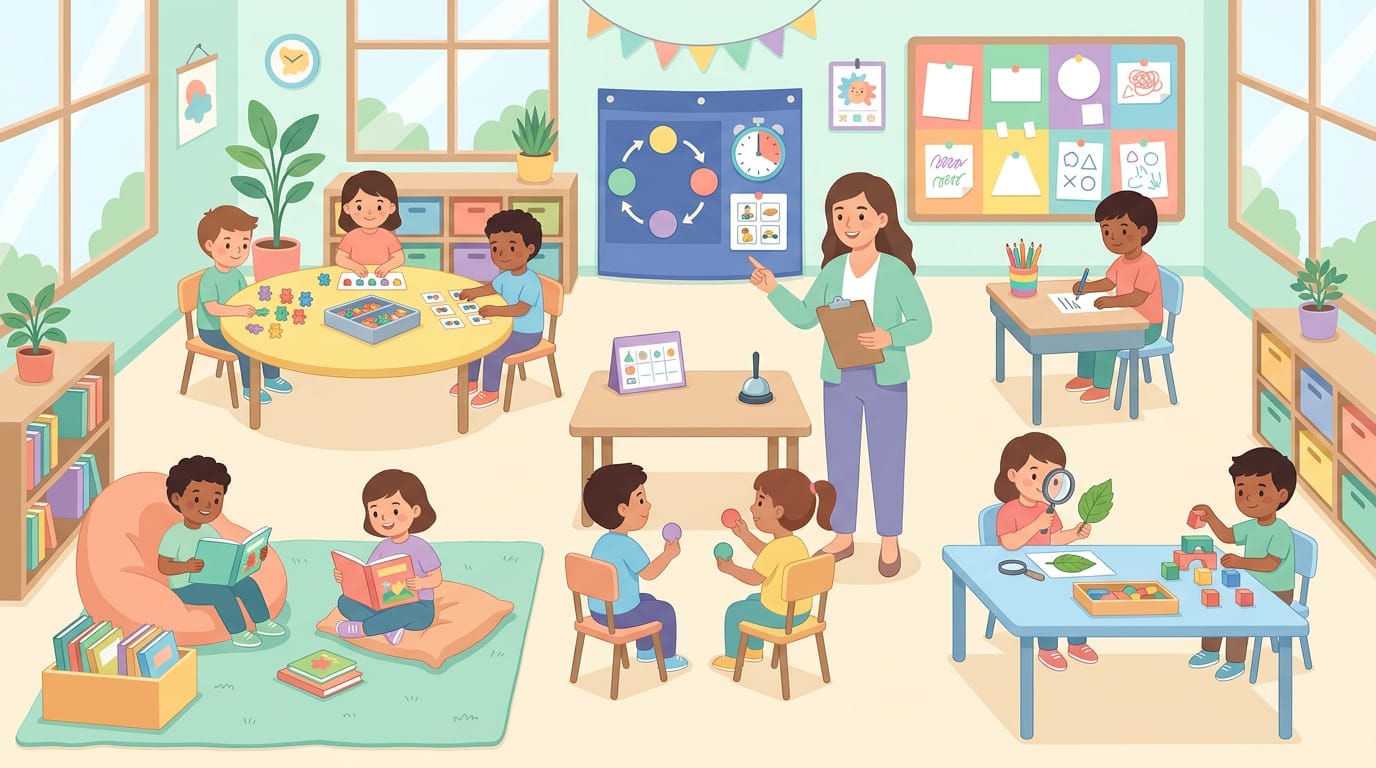
A classroom center is a set spot where students work on a focused activity, alone or in small groups, while you work with other learners.
In this post, we'll cover why organized centers matter, how to store materials in binders, what goes inside each one, and how to run centers without the chaos.
Still grading everything by hand?
EMStudio is a free teaching management app — manage your classes, students, lessons, and more!
Why Organized Classroom Centers Matter
So what's the deal with learning centers? They're defined spots in your room where students work on one task or skill, often on their own or in small groups. Common types include a literacy center and a math station.
The National Association for the Education of Young Children (NAEYC) suggests ten centers, so check its guidance for the full list.
How organization helps students every day
Organization is a pillar of classroom management, and centers put it on display. Students who know where things live spend less time asking and more time working.
As a Hamline University paper on pre-K literacy centers notes, organized centers help students learn routines and find materials more easily.
Labeled, open materials speed up access and cleanup, and students who manage their own supplies build confidence and responsibility.
Think of a teacher who calls rotations and sees every group settled at the right center within moments. That's learning time, not cleanup time.
Simple beats Pinterest-pretty every time
Those Pinterest-worthy centers look great, but simple setups usually work better. The goal is function over decoration:
Saves time and money. Plain setups cost less to build and maintain.
Avoids laminating and recutting. Skip the weekly rebuild that fragile, fancy pieces demand.
Prevents visual overwhelm. Fewer decorations means less competing for attention.
Skip fancy labels and ink. A simple handwritten or typed label does the job.
Cutting down on visual clutter
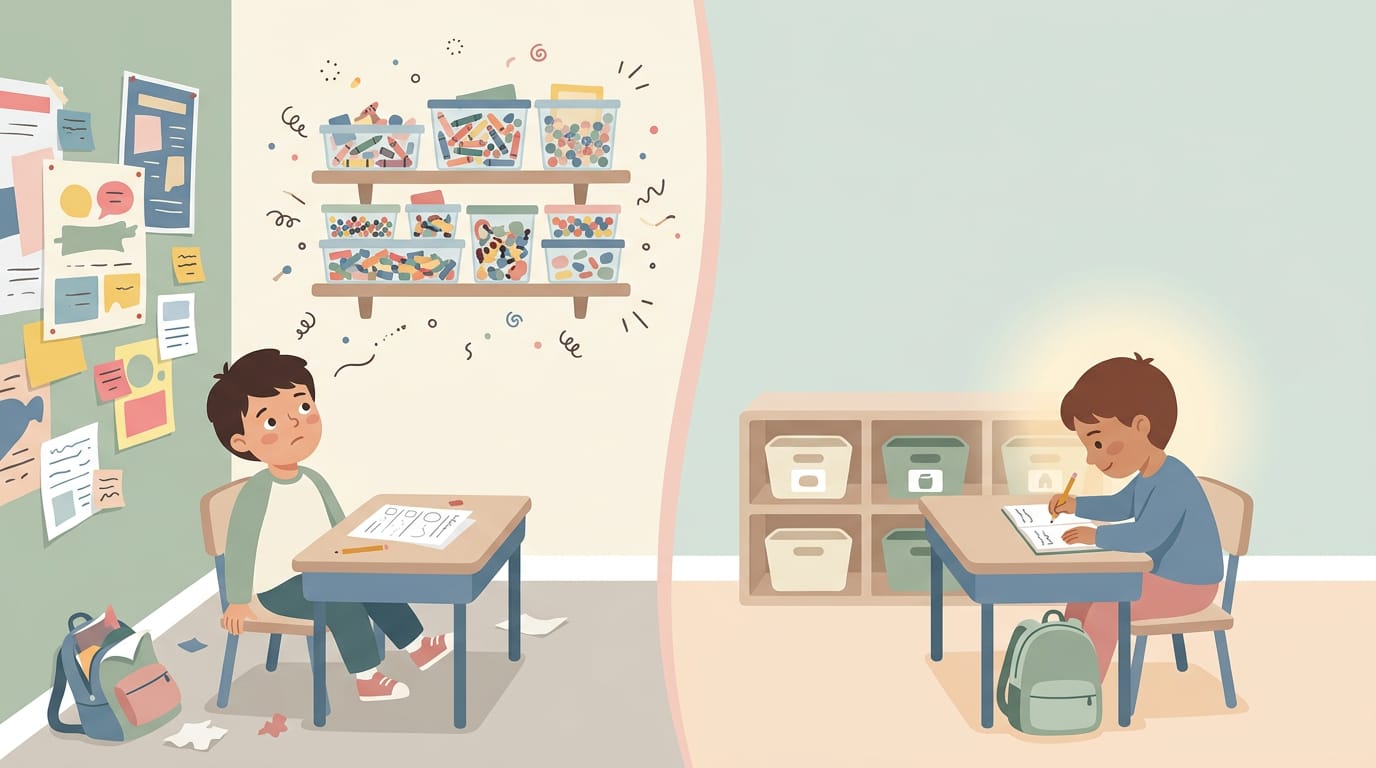
Open shelves keep materials visible, so students see what's available at a glance. Distractible students need calm, and busy displays pull them off task. Avoid busy clear bins that show every piece at once. Since distractible students need calm, classroom noise management is worth planning before centers begin.
The best systems blend into the background, so students focus on the work, not the storage.
Using Binders to Store Center Materials
Center materials pile up fast. A simple binder system keeps everything findable from one prep session to the next.
Picking the right supplies
Start with white binders for a clean, uniform look on the shelf. Slide task cards, recording sheets, and game boards into plastic sleeves so they stay protected.
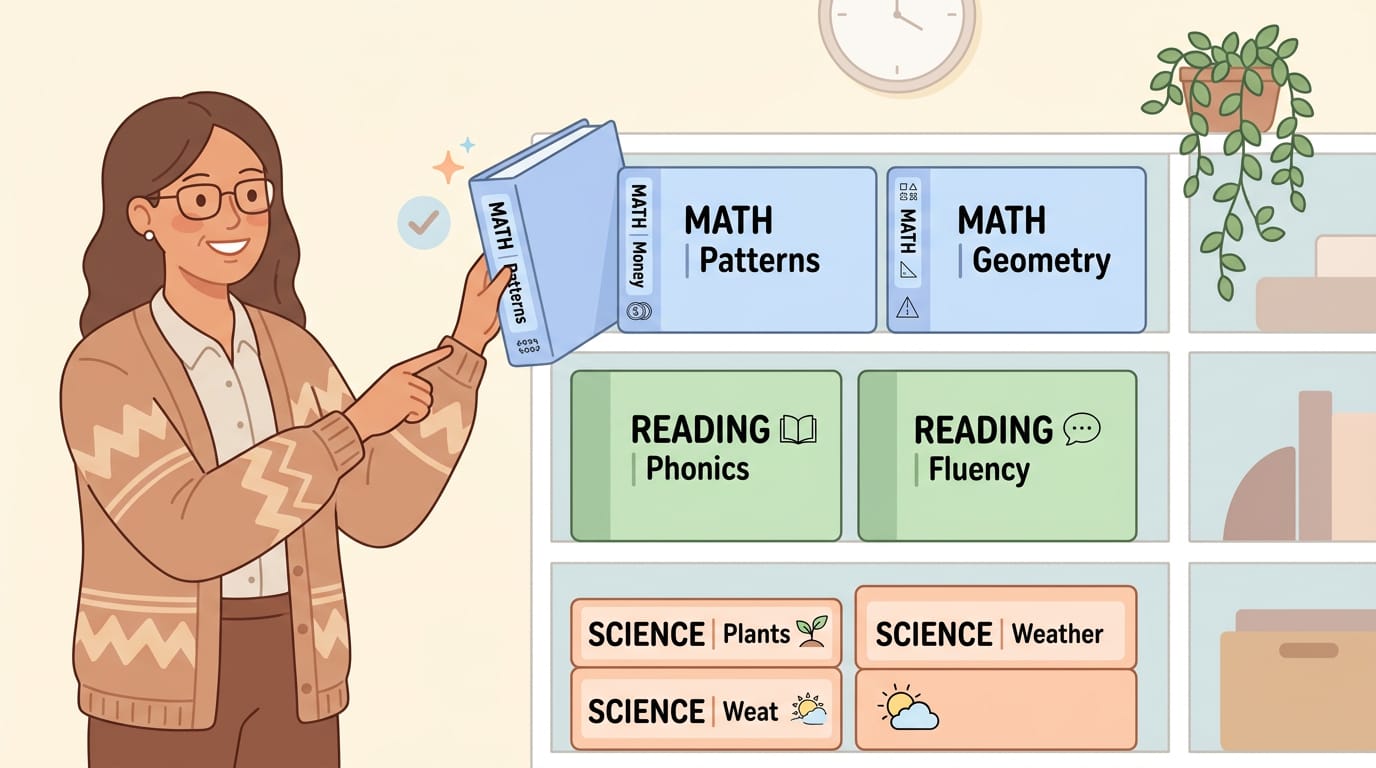
Use white labels with black print, and print them from a typed label template so every label matches. Consistent labels make the whole shelf easy to scan.
Sorting binders by subject and topic
Group binders by subject area first, then give each topic its own binder. In math, that might mean separate binders for patterns, money, and geometry. Keep labels simple and consistent, with the subject first and the topic second on every spine.
The goal is finding a set quickly, not remembering where you filed it.
Swap in seasonal and holiday binders
Some binders work best as theme binders that cut across subjects, like a fall binder that holds a reading, math, and science center. Swap binders each season so you aren't hunting through every subject for holiday materials.
The swap works whether you're ahead on planning or still catching up. Less hunting, more teaching.
Where to keep binders for easy access
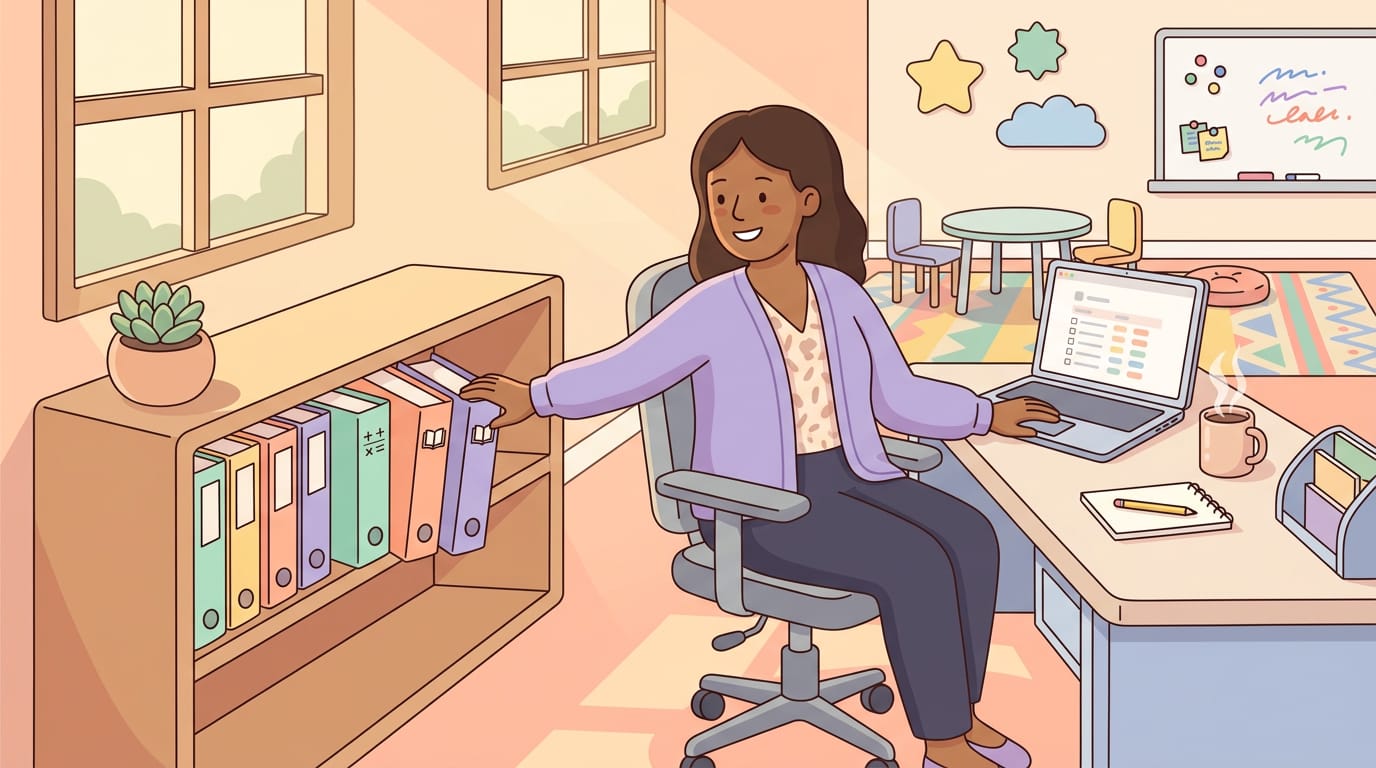
Keep binders on a shelf near your teacher desk so access during prep is quick. Think of a teacher prepping at the end of the day who needs a math binder and two reading binders.
With the shelf within arm's reach, the whole set is in hand before the coffee cools. You don't need a full library on day one, so gradually accumulate binders as you create or collect materials. Start small, and let the shelf grow.
For a digital companion, a Notion center tracker logs your centers so you can check what you have without pulling every binder down.
Setting up Materials Inside Each Binder
A binder only helps if students can find what they need. Let's order the activities first, then match each one to a challenge level.
Putting activities in the right order
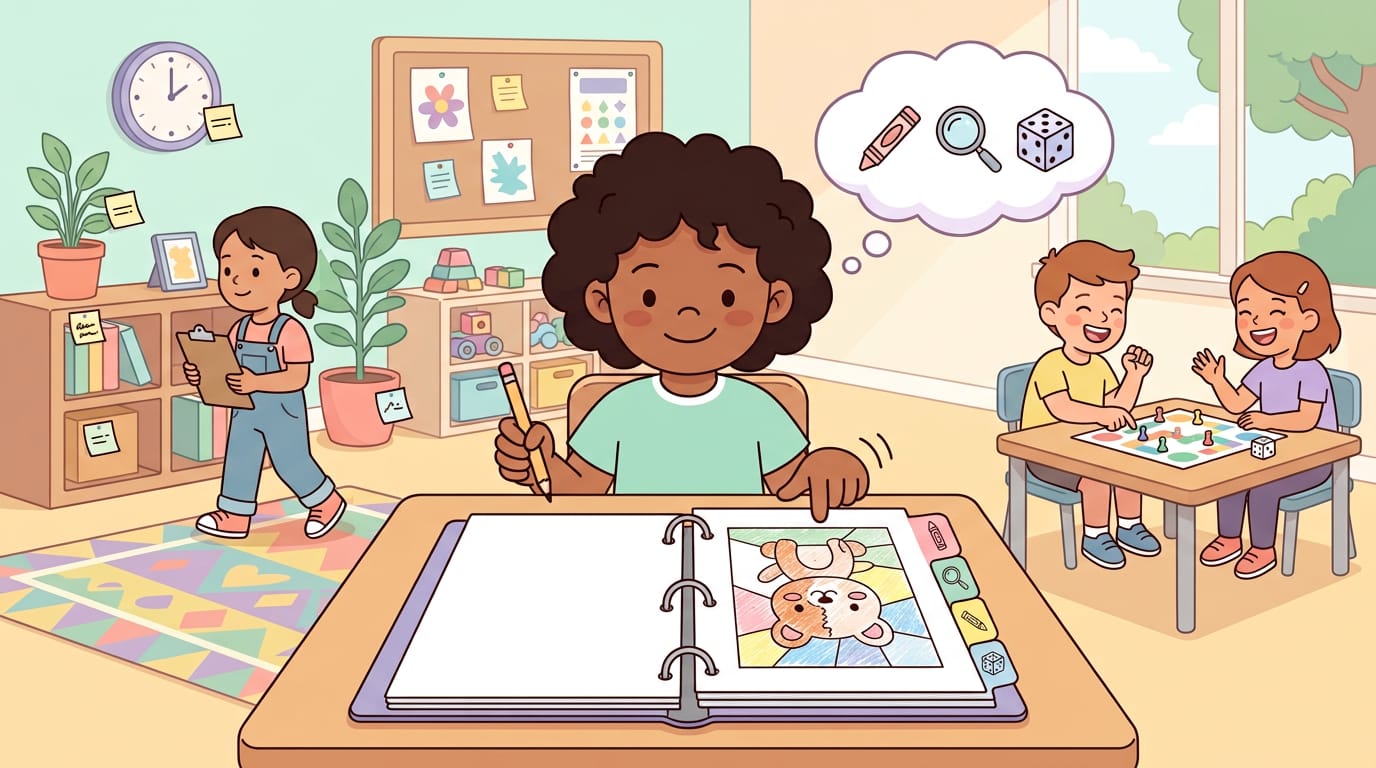
Place a divider between each activity so students can find their place fast. Then let students choose the daily activity, which builds ownership and cuts down on 'What do I do now?' questions.
Mix formats so the binder doesn't feel like a stack of worksheets:
Color by number: a quick, low-pressure way to practice.
Write the room: students hunt for and record objects or words around the classroom.
Board games: practice through play.
The goal is practice rather than busywork. Every activity should earn its spot.
Matching challenge levels to each group
Sort materials by skill level so each group gets work that stretches them without overwhelming them. Match the challenge to the group rather than handing every student the same task.
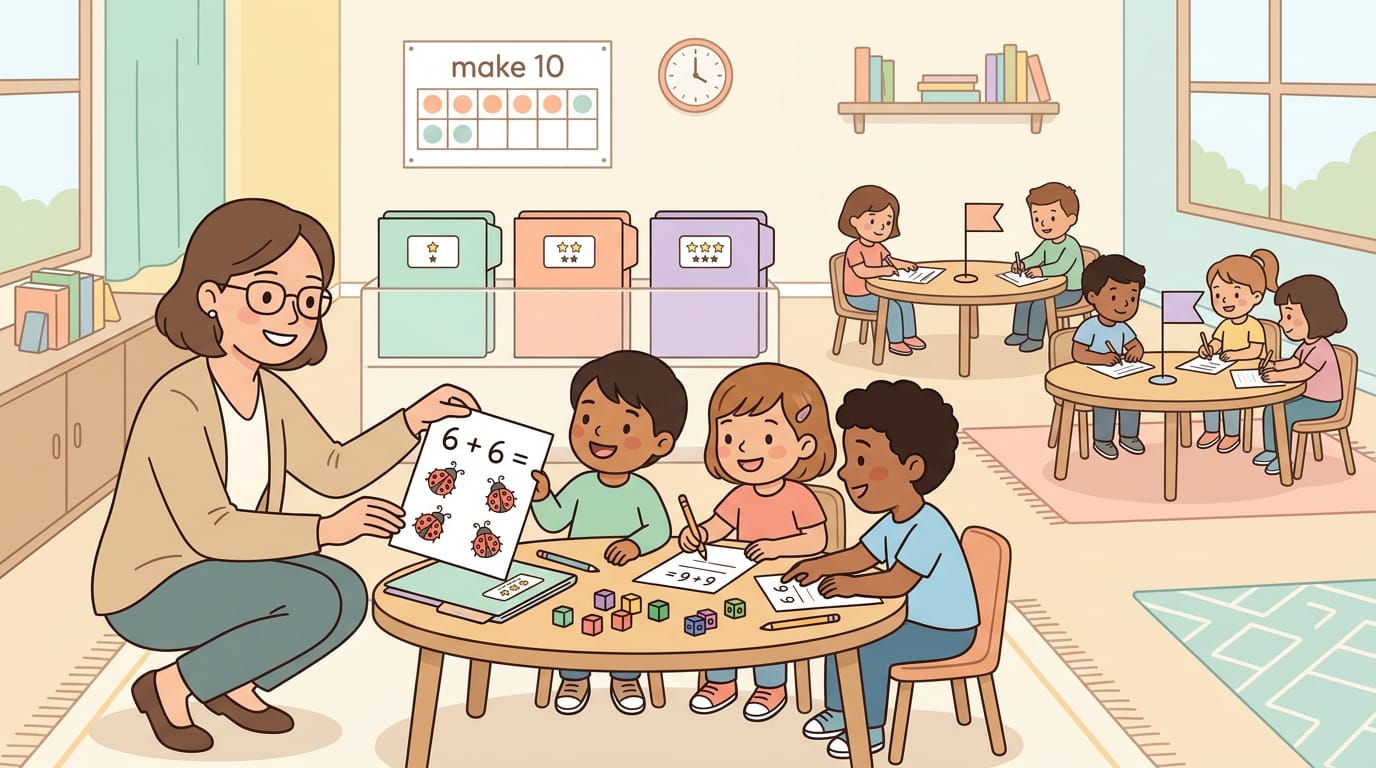
Within each level, build in strategies like make 10 (grouping numbers to total ten) and doubles (adding a number to itself, like 6 + 6). Give each strategy its own themed worksheet so the skill looks fresh.
Store each level's work in a labeled sleeve, one per small group, so the right materials reach the right table without a search.
Picture a second-grade teacher whose group is stuck on addition. She grabs that group's sleeve, pulls the doubles worksheet, and the students are back at work within a minute. Her time goes to coaching, not sorting papers. Less searching. More teaching.
Running Classroom Centers Smoothly
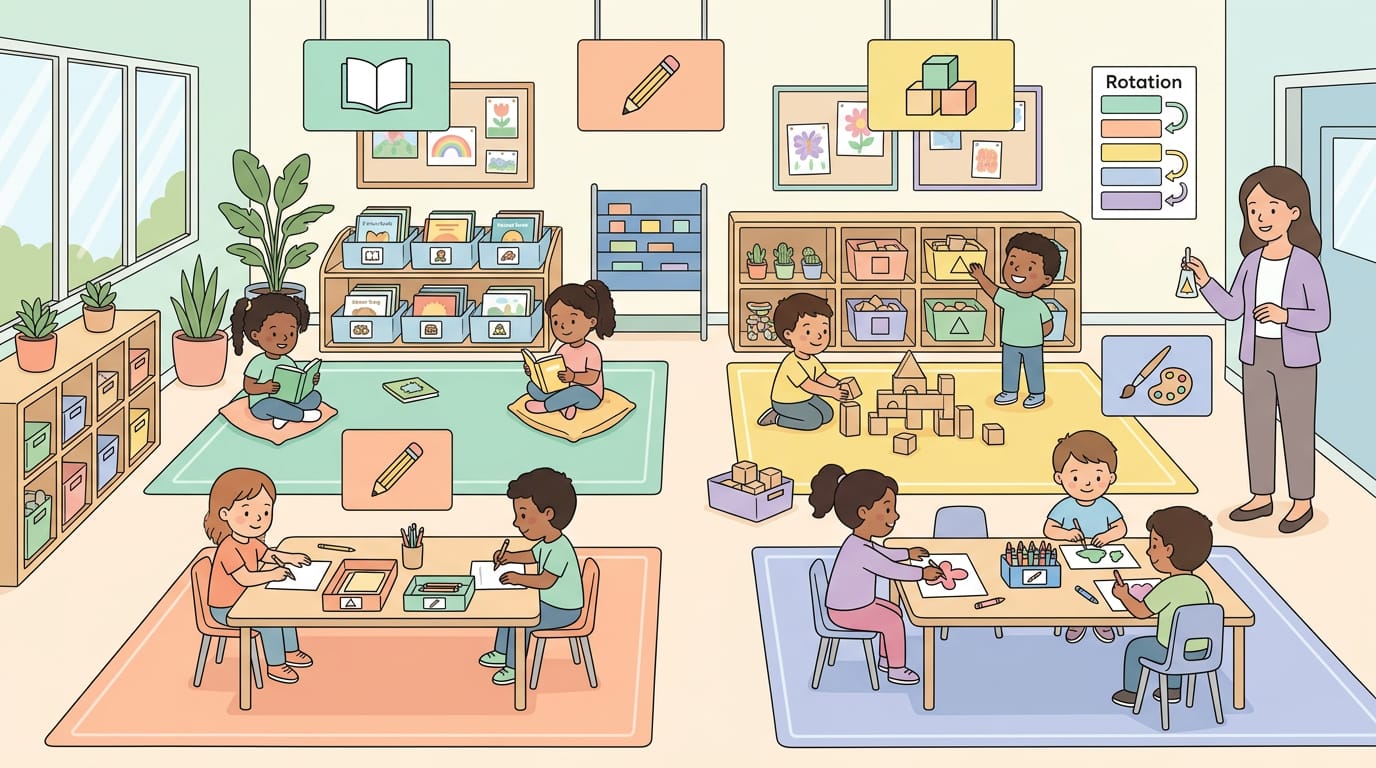
Smooth centers depend on routines students can run without you, so set group sizes and rotation timing first.
What students should know and do
Before the first rotation, students need four things:
Know what to do. Each station shows its task, group size, and finished work.
Know how to do it. Model each step once, out loud.
Appropriate behaviours. Name expectations, like quiet voices, and practice them.
Balance instruction, practice, and behaviour. Keep direct teaching short, since centers are for practice.
During centers, you coach rather than lead: circulate, and step in when a student is stuck. A visible timer keeps rotations on track. A classroom screen template can keep the rotation schedule visible on screen.
Reuse activities students already know
Reuse is a shortcut. Gradual release, your handoff to students working alone, speeds up when the format is familiar.
Same rules, different challenge. Keep the format, swap the skills.
Repeated similar activities. Familiar formats let students start right away.
Reduces gradual release time. Students need less modeling.
Good candidates include:
board games
color-by-number
task cards
The content changes; the routine stays.
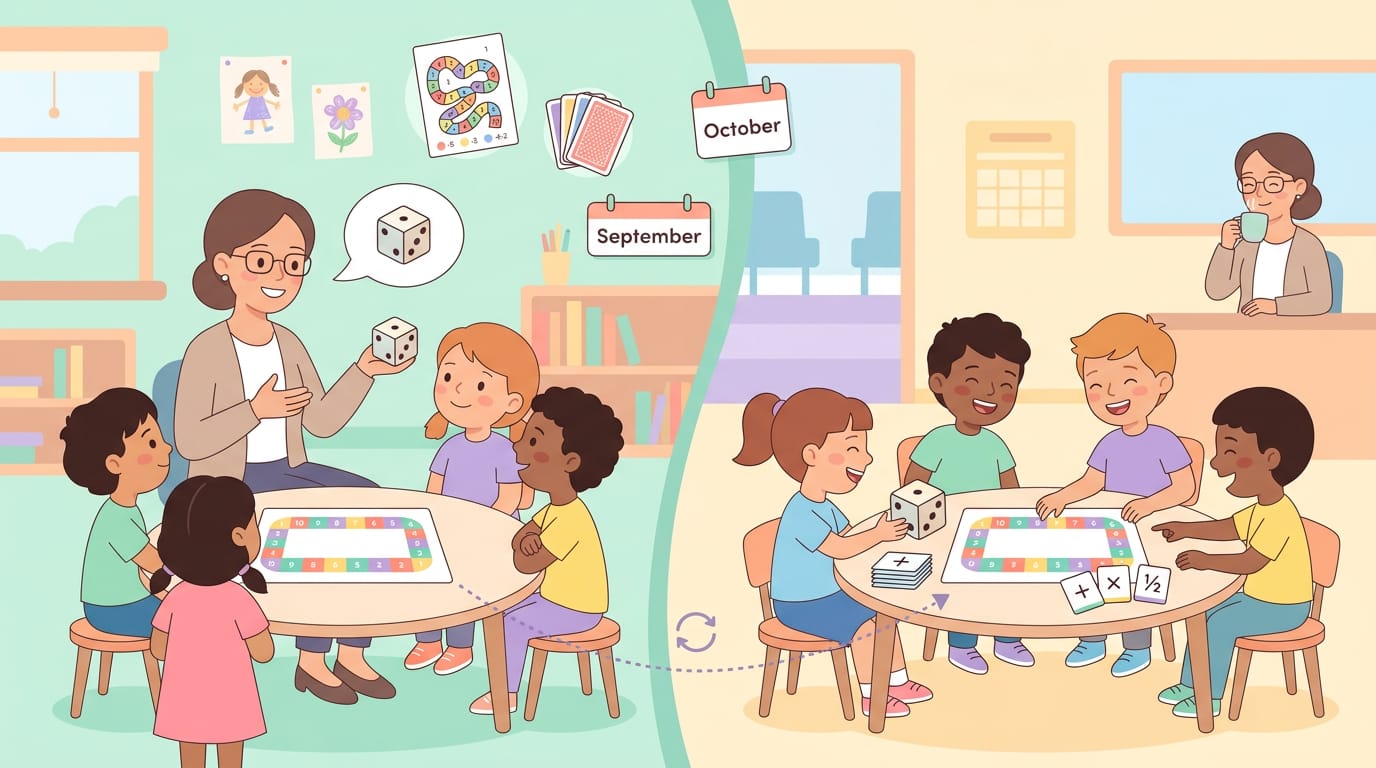
Picture a teacher who taught a dice game in September. By October, it's a math center with new cards. Students need almost no directions.
Simple routine for setup and cleanup
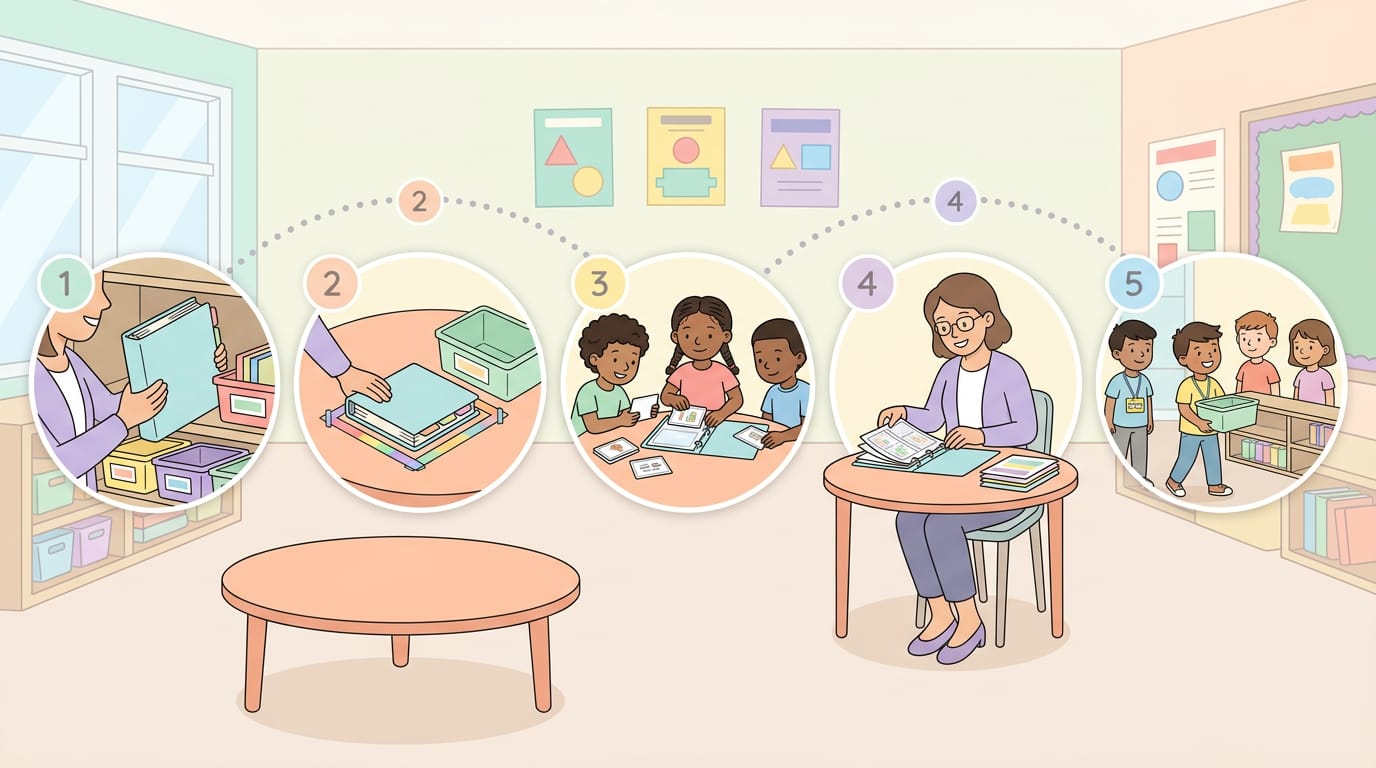
Cleanup needs a fixed sequence:
Pull out the binder. Everything the station needs lives together.
Place it on the table or in a bin. Same spot, every time.
Students return materials in sleeves. Every card goes back before the group moves.
Teacher refiles or preps the next group. Check the sleeves and set up what's next.
Assign a student helper for cleanup. One student runs it, so no one waits.
Well-organized centers come down to a few simple habits. Store materials where they're easy to grab, set up each binder so students can work without constant questions, and run rotations with clear routines.
Get those right, and centers stop feeling like one more thing to manage. Start with one binder and build from there.
Ready to build on these routines? Check out more ideas in our Teaching Strategies & Concepts category.
References
Using Literacy Centers To Support A Balanced Literacy Program In A Pre-K Classroom — digitalcommons.hamline.edu (2016)
Still grading everything by hand?
EMStudio is a free teaching management app — manage your classes, students, lessons, and more!