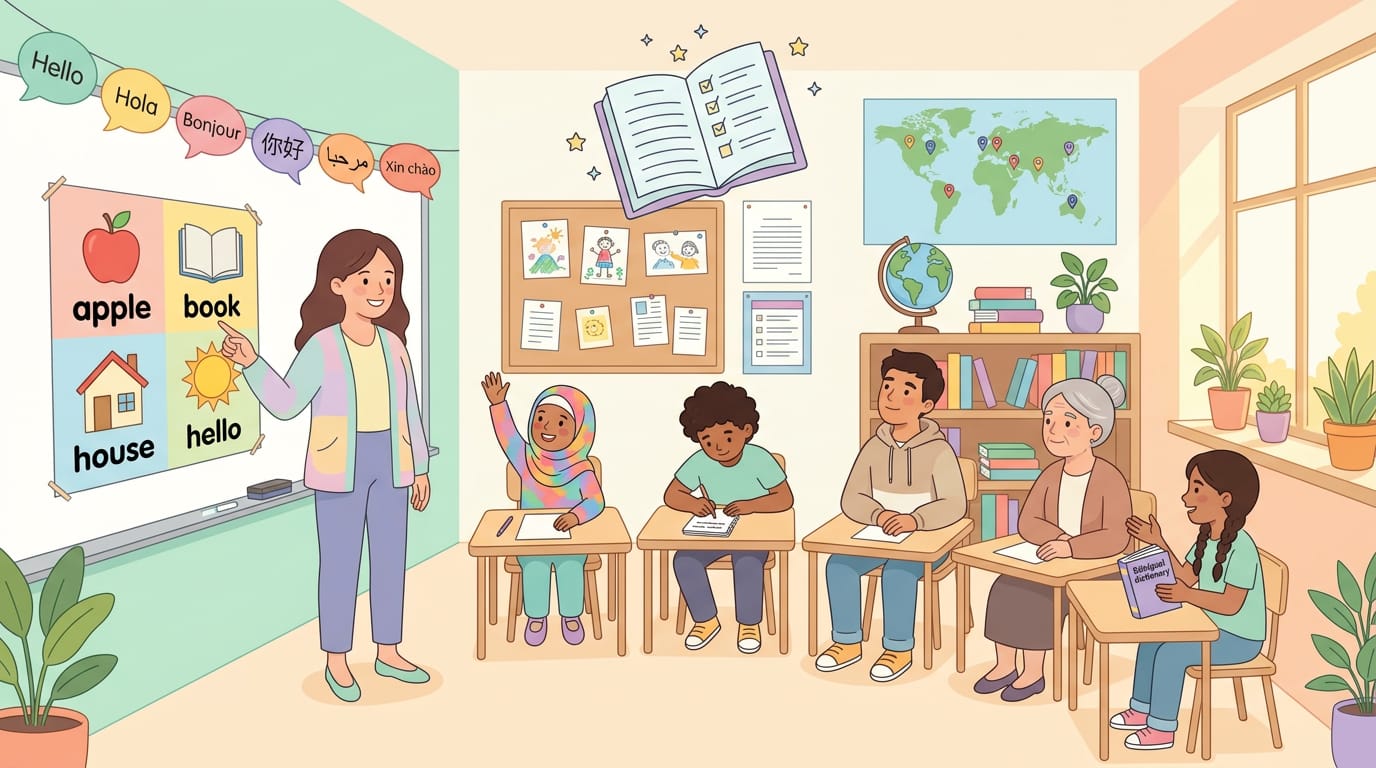
English as a Second Language Class: A Complete Guide

Picture walking into a grocery store in a new country. You know the word for bread, but the signs are a blur and the cashier talks fast. That's daily life for many multilingual learners at school.
An English as a Second Language (ESL) class helps students build English skills while they keep learning their other subjects. Think of it as a bridge, not a detour.
Here, we'll cover program models, lesson structure, and progress checks, with practical ways to honor home languages along the way.
Still grading everything by hand?
EMStudio is a free teaching management app — manage your classes, students, lessons, and more!
English as a Second Language Class Options
English as a second language (ESL) classes vary, so the right fit depends on your age, goals, and schedule.
A close cousin is English as an additional language (EAL), and the difference is mostly framing: EAL treats English as one more language a learner adds, not necessarily their second.
Where adults take ESL classes
Life skills ESL: everyday English for shopping and making appointments.
Family literacy programs: parents and children learn together, so practice carries home.
EL Civics classes: English learner courses for civic life, like citizenship prep.
Vocational and workplace ESL: a warehouse worker learns safety terms, so he can follow shift changes without a translator.
One-to-one or group instruction: private tutoring for focused help, or small groups for peer practice.
How schools deliver ESL support
Pull-out services: students leave class for targeted English lessons.
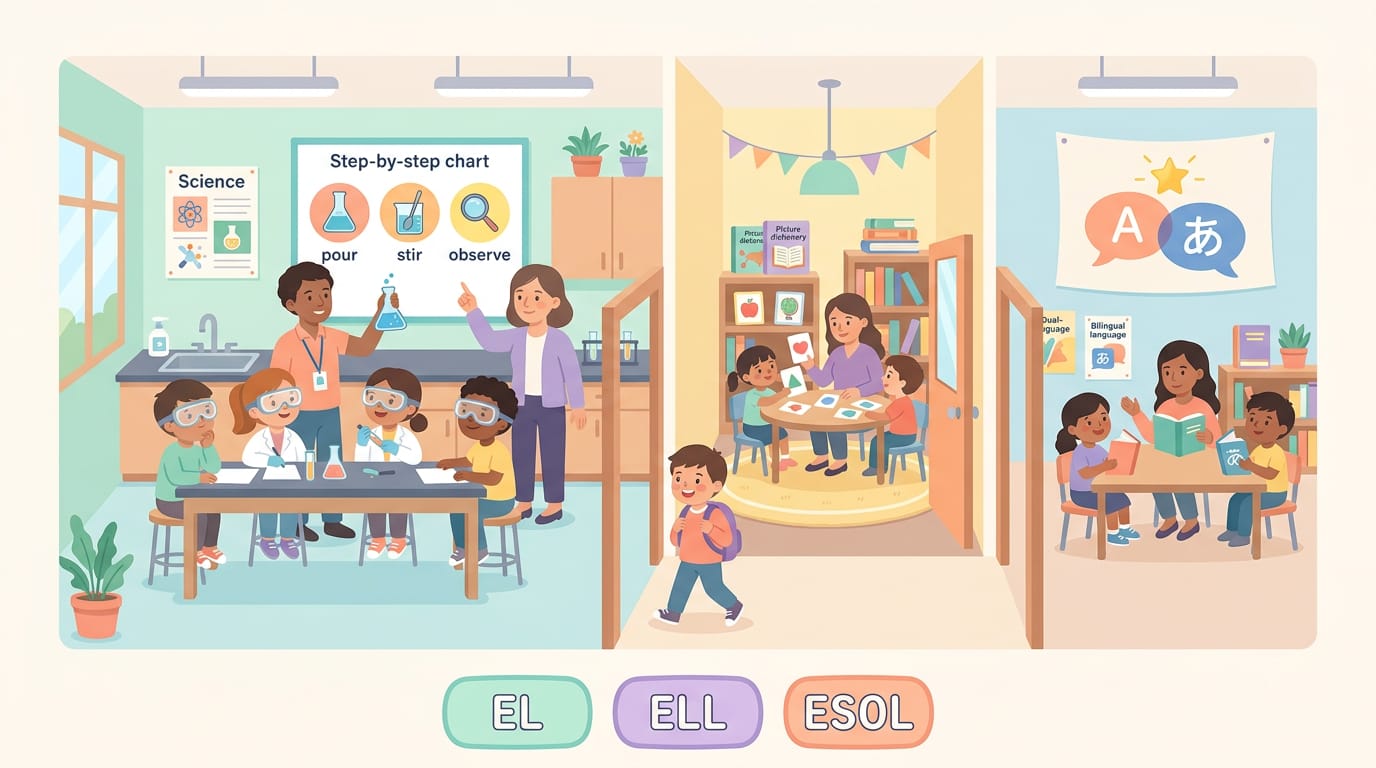
Push-in co-teaching: an ESL specialist works beside the classroom teacher during a science lab, so every learner follows the steps.
Resource rooms: a dedicated space for extra English support.
Bilingual and dual language programs: instruction in English and the home language, which is a strength, not a barrier.
State-regulated programs vary: entry, exit, and program rules depend on state policy.
ESL isn't exactly outdated, but many schools now prefer English learner (EL) or English language learner (ELL), since "second" can suggest English always follows one home language. Adult programs often use English for Speakers of Other Languages (ESOL).
Flexible schedules and mixed skill levels
Schedules and locations vary, so the real question is whether you can keep attending, not when a class meets. Mixed levels are normal. Teachers often pair stronger and newer speakers so both get practice.
Large classes make individual feedback harder, so short, frequent check-ins help.
What's the Best Way to Learn English?
No single method works for every learner, but the best approach gets learners using English for real purposes. Let's look at what that means in class.
Learning by doing real tasks together
Learners build English by tackling real tasks together. This is less about memorizing rules and more about using the language.
Words make the most sense in meaningful context, like a lunch order at a mock cafeteria counter, where soup and juice suddenly matter.
Try the Hot Seat speaking activity: one learner sits up front while classmates ask questions in English. Students bring experience too, so let them share it in their home language, then build English around it.
Their home language is a foundation, not a detour.
Why games help language learning
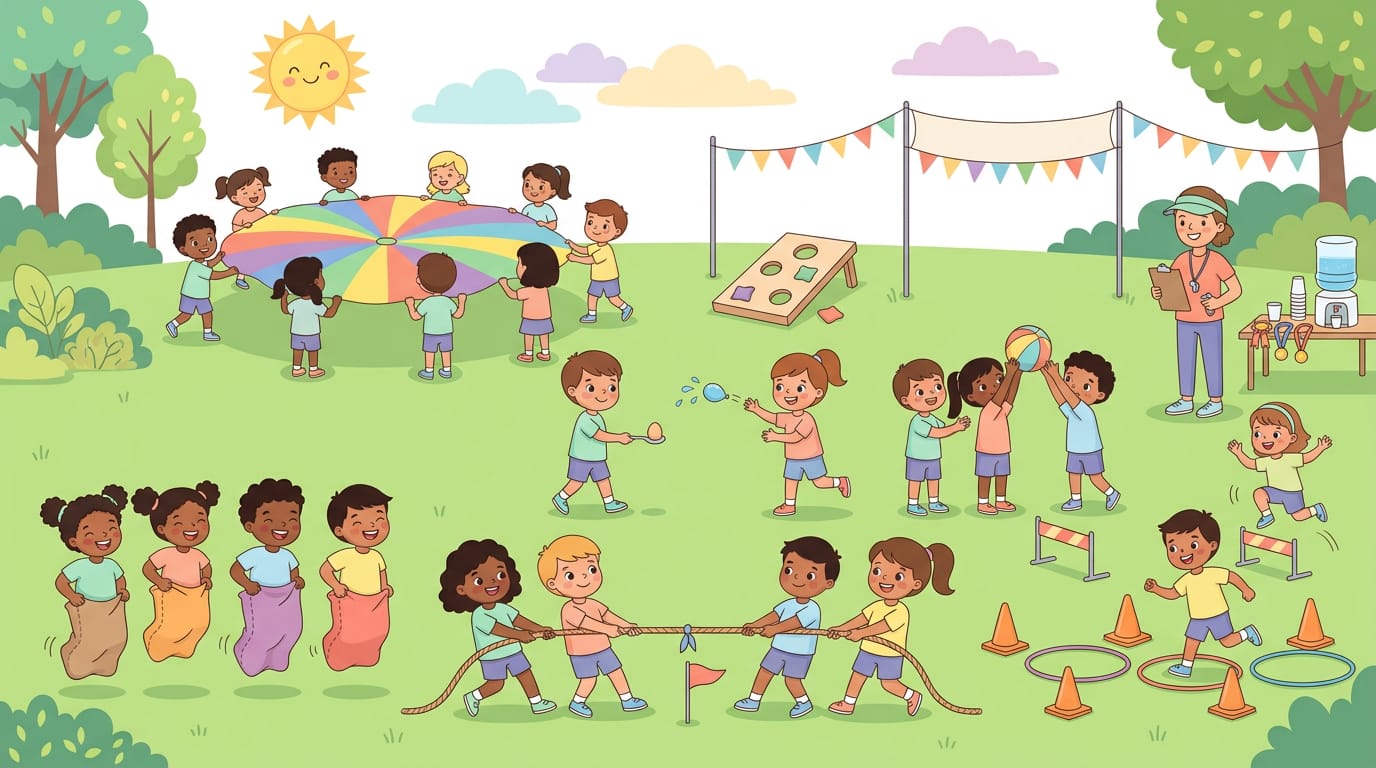
Games serve a learning purpose when the language goal is clear. Name target phrases first, so the point is practice rather than winning. Relay races get everyone moving as teams pass one word at a time to the board.
Role-play and board games let learners rehearse a shop visit or take turns asking questions. Play a short round before a quiz to build motivation and lower the stakes. Fun opens the door; practice does the rest.
Helping young ELLs in mainstream classes
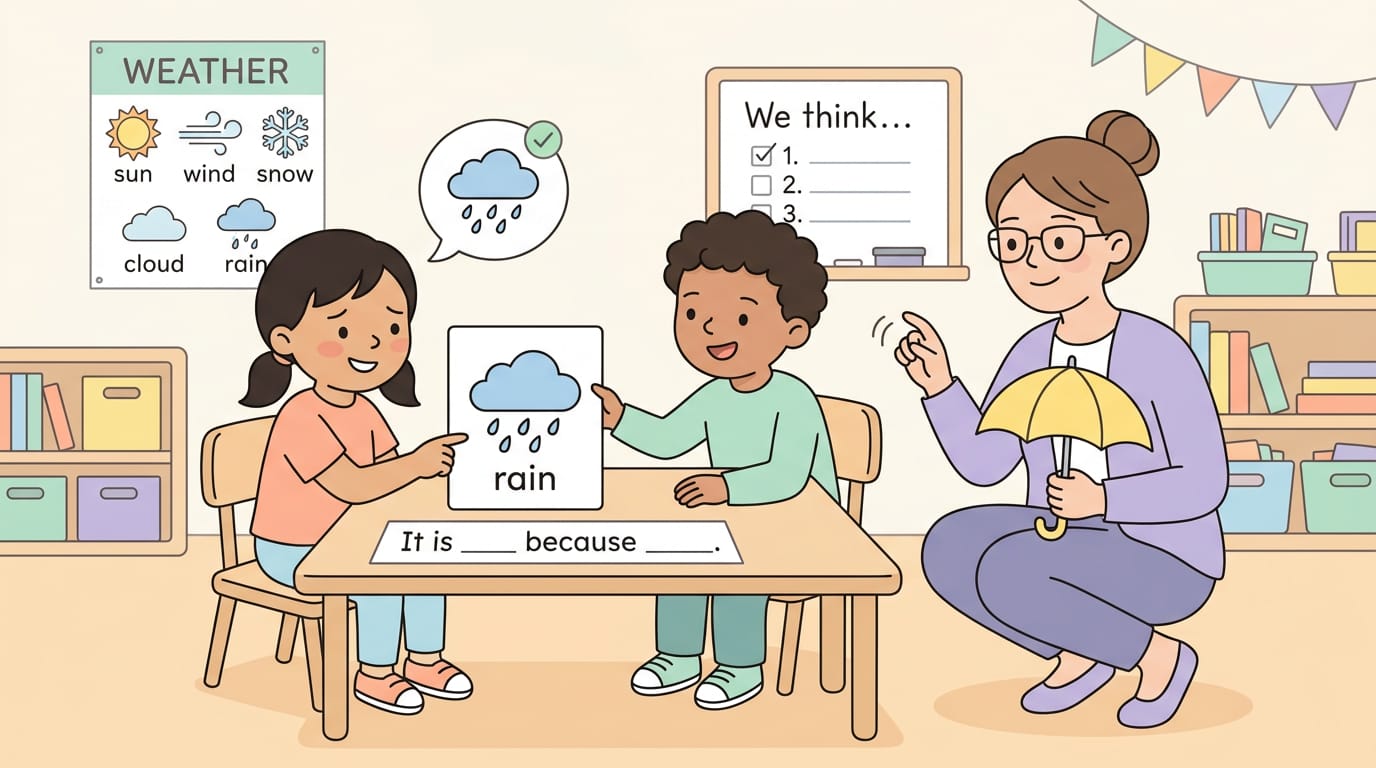
Mainstream teachers can do a lot for young English language learners (ELLs) with small moves. Take a teacher whose newest student freezes during science discussions. A labeled picture and a sentence frame let that learner answer in full sentences.
Buddy system. Pair a new learner with a classmate who shares their home language.
Thematic vocabulary. Teach words around one theme, like weather, so they connect.
Pre-teach and reteach. Introduce key words before a lesson, then revisit them after.
Gestures, realia, and visuals. Use real objects (realia), pictures, or gestures to show word meaning.
Scaffolding assignments. Break tasks into small steps with sentence starters like "We think...".
Apps, videos, and other learning tools
Apps and translation tools give learners quick practice, but they shouldn't replace speaking with real people. Distance and self-study learners need a weekly goal and a way to practice speaking, even if that's retelling a story to a family member.
Worksheets and printables work best when learners read their answers aloud afterward. Educational videos let learners hear natural speech, especially when you pause and ask for a retell.
How to Plan and Structure Lessons
Good planning starts with your learners, not the textbook. Here's how to find out where they stand, then shape each day.
Finding out what learners need first
Start with an informal level assessment: a few open questions or a picture to describe, so you see what learners already do in English. Add an intro questionnaire on goals asking why they're learning, whether for work, school, or a doctor's visit.
Learners can answer in their home language. Then run a partner interview activity, where they ask each other about their jobs and plans.
Use what you learn to place learners by language proficiency level, grouping by English ability rather than first language. Picture a hotel housekeeper whose answers show she needs polite guest requests, so you start there, not with grammar drills.
Record each learner's needs and goals in a Notion database so you can revisit them each unit.
Building each day's lesson plan
Sketch a rough timing per activity before class, such as ten minutes for review and twenty for presentation. Always keep a Plan B, a backup activity that needs no equipment. Each lesson should grow from what learners already know, not start from zero.
If last week covered ordering food, today can add asking for the bill.
A simple order for every lesson
Most lessons can follow this order:
Warm-up and review: revisit yesterday's words.
Teacher presentation: model the new language clearly.
Guided practice: learners try it with your support.
Communicative practice: pairs use it to say something real.
Assessment and out-of-class application: check what stuck, then ask learners to use one phrase at the store before next class.
Blending skills and different learning styles
Plan for listening, speaking, reading, and writing together, not in isolation. Teach receptive before productive skills: understanding through listening and reading comes before speaking and writing. Listen first.
Offer multiple presentation modes for each idea:
a picture
a gesture
an audio clip
a written example
Learners bring varied learning preferences, so don't sort them into fixed styles. Give everyone more than one way in. Letting them use their home language to compare words is one of those ways, a bridge rather than a detour.
Checking Progress and Keeping the Room Positive
Progress and atmosphere go hand in hand.
Keeping track of progress over time
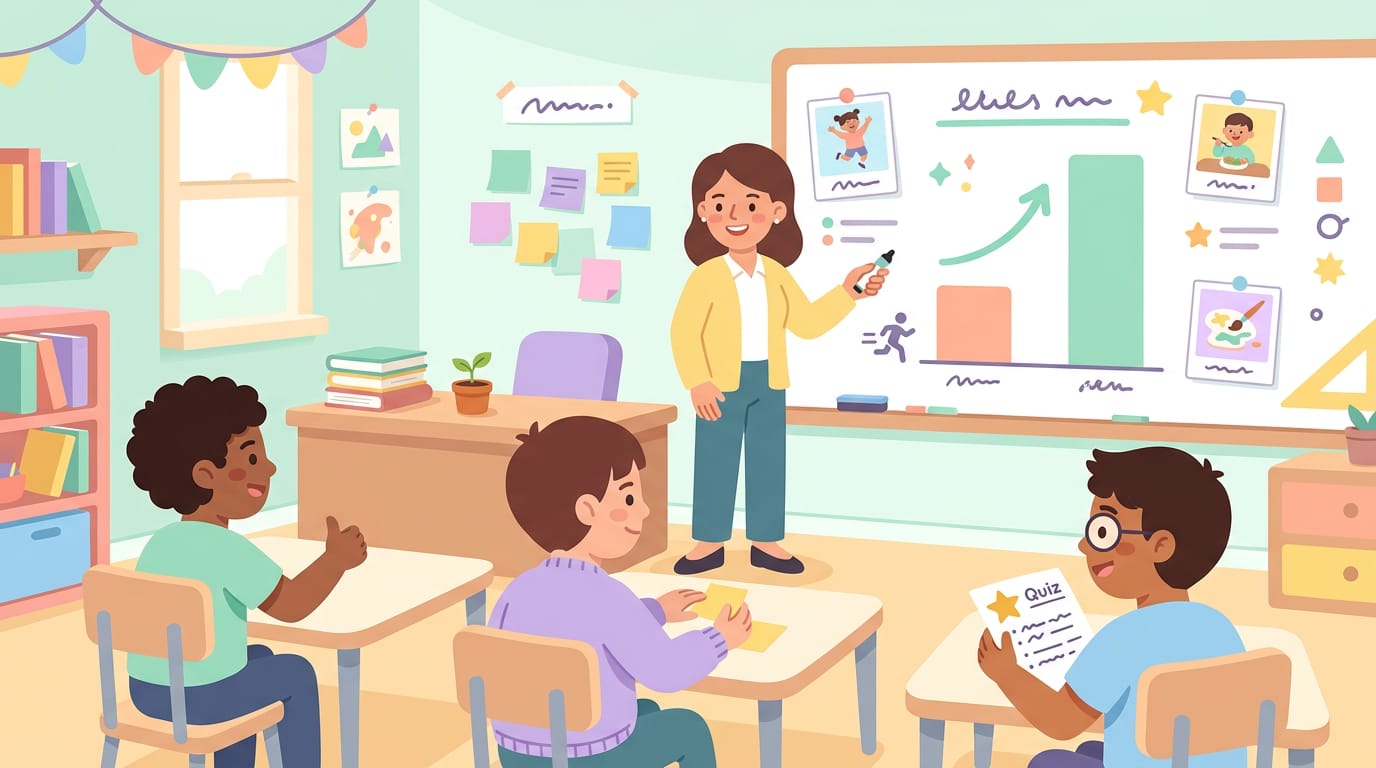
Informal assessment: Thumbs up or down, a sticky-note sentence, or a short quiz shows patterns, not just grades.
Shared progress: Keep a simple skills chart so students can watch it grow.
Lesson evaluation: If most of the class misses an item, reteach it another way.
Consider a teacher who sees half her class stumbling on past tense verbs. A quick reteach with pictures fixes it, and the next quiz shows the difference.
Watch for growth, not just scores.
Why a low-stress room helps learning
A low-stress classroom is one where students feel safe making mistakes.
A systematic review in Frontiers in Psychology agrees with earlier suggestions that a nonthreatening, friendly classroom is effective in reducing foreign language anxiety, the nervousness learners feel when speaking.
When mistakes feel safe, students try rather than freeze. Laugh with them over a mixed-up sentence, never at them.
Games, chants, and quick role plays add fun, and fun keeps students coming back.
Stress takes up room that learning needs. A student worried about being laughed at has less attention for new words. Calm comes first.
Keeping students interested and well managed
Mix listening, speaking, and movement so attention doesn't drift.
Students copy what they see. When you speak patiently and treat your own errors as ordinary, they'll do the same.
Clear rules, applied the same way every day, feel fair. Set expectations early, and follow through calmly with consequences when they're missed. Setting rules and consequences is a core part of classroom management for new teachers.
Warmth doesn't mean letting everything slide. Firm and kind work together, not against each other.
Common Problems Teachers Face in ESL
Most English as a second language (ESL) teachers hit the same few obstacles, and we'll look at each one with a workable fix.
Getting everyone talking in big classes
Picture a teacher with 45 students who asks one question and hears the same three voices every time. Classes can run from 30 to 120 students, and at that size, speaking practice gets hard.
A teacher-perspective study on communicative language teaching in large ESL classrooms reported difficulty monitoring every student and unequal participation between strong and weak learners.
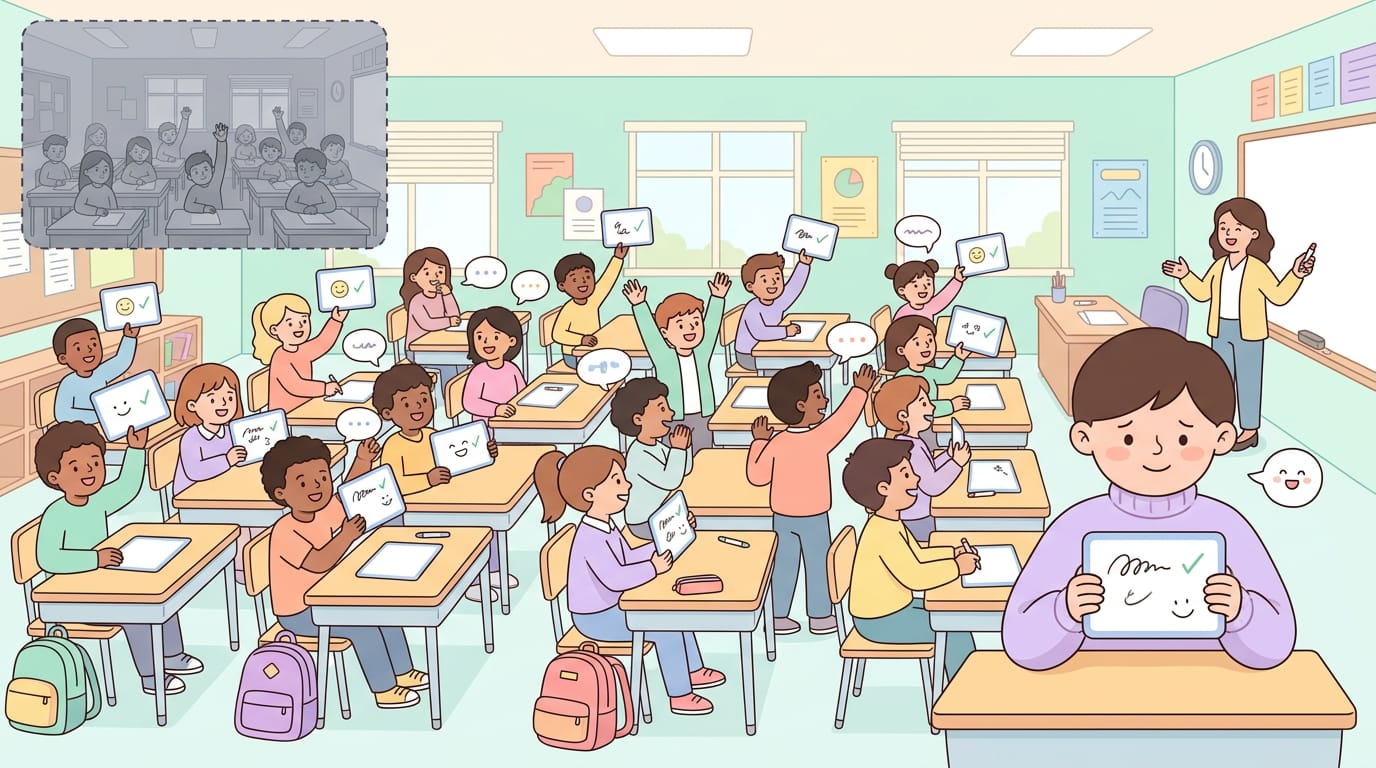
The fix is simultaneous-participation activities, where every student responds at once, like a 'stand up if' round or mini whiteboards. The aim is everyone answering, not one voice answering for the room. Quiet learners speak too.
Long courses, student attitudes, and teacher pay
Overlong programs can wear students down, and motivation fades when progress feels invisible. Students who dismiss games as childish often need a reason to play along.
Set milestones. Mark progress every few weeks so students can see how far they've come.
Tie games to real tasks. Link each game to something students will do, like ordering at a café.
Plan for turnover. Low pay can make it hard to keep experienced teachers, and each change means students rebuild trust.
When newcomers fall behind in class
Newcomers may fall behind in subjects like math while their English is still growing, and adjusting to a new country adds pressure. Let students work through ideas in their home language first, then share in English.
Send key notices in families' home languages, and use an interpreter at conferences. Some newcomers also have learning disabilities or an Individualized Education Program (IEP), so separate language gaps from learning needs.
Involving Families and the Home Language
Families are a learner's first teachers, and the home language they share is a foundation to build on, not an obstacle. Here's how we can bring them into the work.
Parents and teachers working together
Strong partnerships start with open communication. Send notes in the languages families read, and ask each one how they'd like to be reached. Picture a second-grade teacher who asks that question on day one.
When a permission slip reaches a parent in time, the child doesn't miss the field trip.
Book a translator or interpreter for conferences so families can ask real questions about their child. Relying on an older sibling can leave a parent hearing the summary without understanding the plan.
Point families toward family literacy programs where parents and children learn to read together. Share the details in the home language so the invitation isn't lost.
Using home language to support learning
Learning doesn't pause when a child enters an English classroom. Encourage families to keep reading, storytelling, and conversation going in the home language, because those build vocabulary and ideas that help in English too. Two ideas work well here:
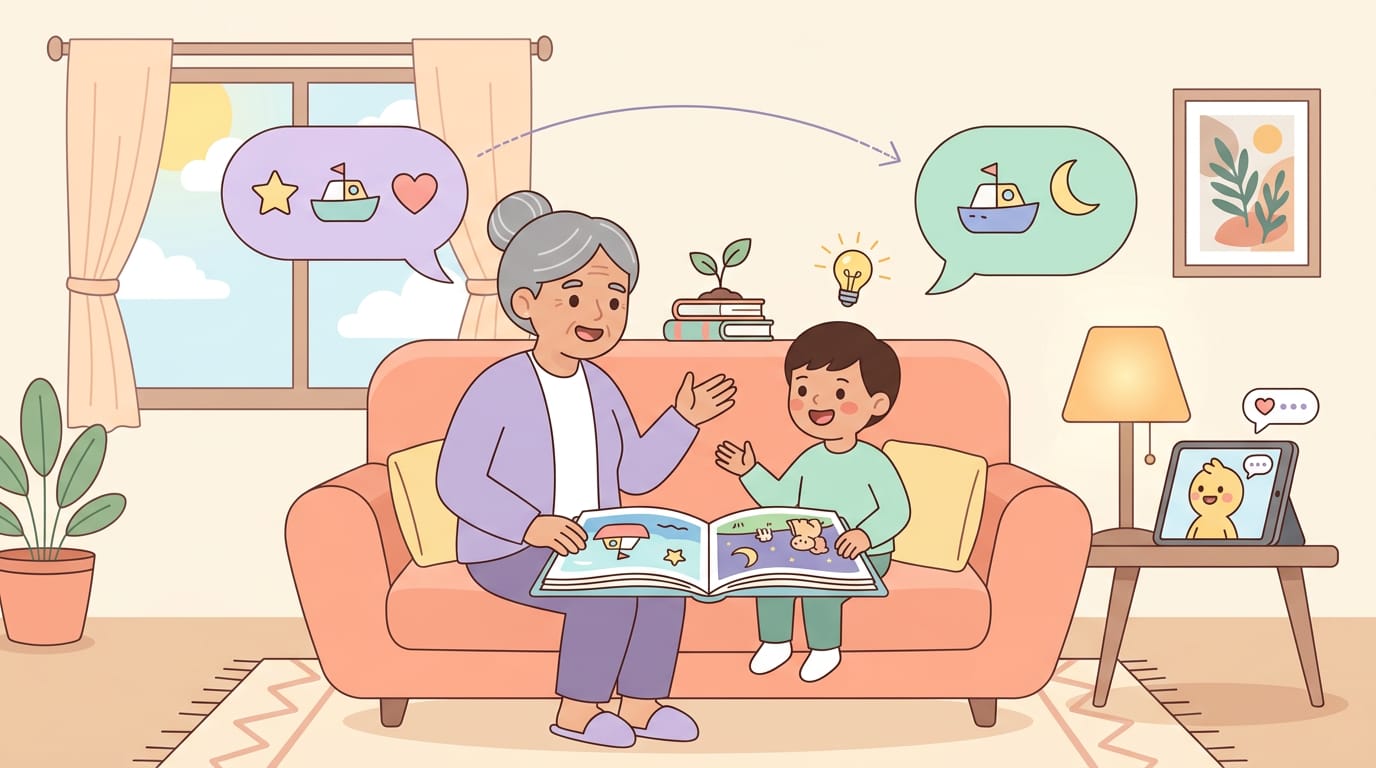
Read wordless picture books. Have a family member narrate in the home language, then the child retells it in English. The same pages give two chances to make meaning.
Educational TV and apps. Suggest shows and apps in the home language, then talk about what happened. Talking is where the learning sticks.
Frame the home language as an asset, not a deficit. A child who speaks two languages isn't behind in English; they're building a skill that lasts. That's a head start, not a setback.
Resources and Training for ESL Teachers
Strong teaching rests on good materials and steady reflection. Here's where to find both, plus how to find work.
Where to find lesson plans and guides
You don't need to write every lesson from scratch. Look here first:
Lesson plan libraries: Searchable collections of ready-made plans, so you can find a beginner reading lesson in minutes.
Practitioner toolkits and digests: Activities and roundups shared by working teachers, handy when you need a warm-up tomorrow.
Teacher guides: Longer guides that explain how a unit is built, so you can adapt the approach, not just copy the worksheet.
Reflective teaching practice: Less a download than a habit. After each lesson, note what worked and for which learners.
Think of a teacher planning a lesson on giving directions. She pulls a plan from a library, then asks students to name the same places in their home languages. More of them speak up by the end of class.
Finding ESL and EFL teaching jobs
English as a second language (ESL) means teaching learners where English is the main language of daily life. English as a foreign language (EFL) means teaching where it isn't. The real difference is where students use English, not how you teach it.
Postings use both labels, so search for each. Job boards are a solid starting point.
Teaching online widens your options. Video lessons connect you with learners in other countries and can fit around other commitments. Check each role's schedule and tools before you commit.
Search both terms, and cast a wider net.
Strong ESL teaching rests on a simple idea: students learn English best when who they are and the languages they speak are welcome in the room.
Clear program models, structured lessons, and steady progress checks give that idea a framework, and honoring home languages makes the welcome real.
Ready to go deeper? Check out our post, Inclusive & Multilingual Education, where you'll find more ways to support every learner you teach.
References
Still grading everything by hand?
EMStudio is a free teaching management app — manage your classes, students, lessons, and more!