
ESL Lesson Plans: Free Template for Adult & K-12 Teachers
ESL Lesson Plans: Free Template for Adult & K-12 Teachers

Article by
Milo
ESL Content Coordinator & Educator
ESL Content Coordinator & Educator
All Posts
Over five million English learners sit in U.S. public school classrooms right now. That is roughly one in ten students who need esl lesson plans that match their actual language level, not the grade level on their schedule. Most ready-made curricula assume native fluency. They skip the scaffolding beginners need or bore advanced kids with alphabet drills. You end up rewriting everything anyway.
I learned this the hard way in my first year teaching 7th grade newcomers. I spent Sundays cutting and pasting from three different textbooks, trying to bridge a four-grade reading gap in every subject. This template cuts that prep time in half. It builds in CEFR alignment, task-based learning, and differentiation strategies without the edu-jargon. You will see exactly where to drop your authentic materials and how to sequence activities so students speak more than you do.
You can use this same framework for adult learners at the community center and for elementary newcomers. Both groups need communicative language teaching that respects their intelligence while honoring their beginner status. The structure stays constant; only the content and pacing change. Grab your coffee. Let's build something that works.
Still grading everything by hand?
EMStudio is a free teaching management app — manage your classes, students, lessons, and more!
Learn More

Still grading everything by hand?
EMStudio is a free teaching management app — manage your classes, students, lessons, and more!
Learn More
Table of Contents
What This ESL Lesson Plan Template Includes
You can use this template with 7th graders on Monday and adult learners at the community center on Tuesday without changing a single heading. The core structure works for grades 3-12 and adult education alike—only the content and CEFR levels shift to match your group.
Five fields separate this from generic free esl lesson plans you find on Pinterest that leave you guessing about language acquisition stages and appropriate targets:
A CEFR level indicator (A1-C2) so you align activities to global standards instead of vague labels like "beginner" that vary by district.
Class size capacity up to 40 students with individual checkboxes for monitoring participation during communicative language teaching pair work and group activities.
A materials checklist distinguishing between textbook pages and authentic materials like bus schedules, menus, or podcast transcripts.
A dedicated column for differentiation strategies, split into "Support" and "Challenge" for quick scaffolding without rewriting.
A homework extension box connecting to task-based learning projects students can complete independently.
You receive dual-format delivery. The Google Docs version lets you share with co-teachers in real time during team planning or push updates to your phone when you realize you forgot the dialogue cards at home. The free esl lesson plans pdf version prints cleanly for your observation portfolio or emergency sub folder, staying under 500KB for easy email attachment.
Last year I used this with a mixed 9th-grade class of 34 students. The built-in buffers saved me when the fire drill hit right during the vocabulary presentation.
The time-blocking follows the PPP model—Presentation, Practice, Production—with pre-filled 5-minute buffers between transitions. These gaps prevent lesson overrun when your explanation of past perfect tense runs long or when students need extra scaffolding. They also give you space to redistribute comprehensive lesson plan template setup materials or handle the student who forgot their device.
Template Structure: The Essential Components
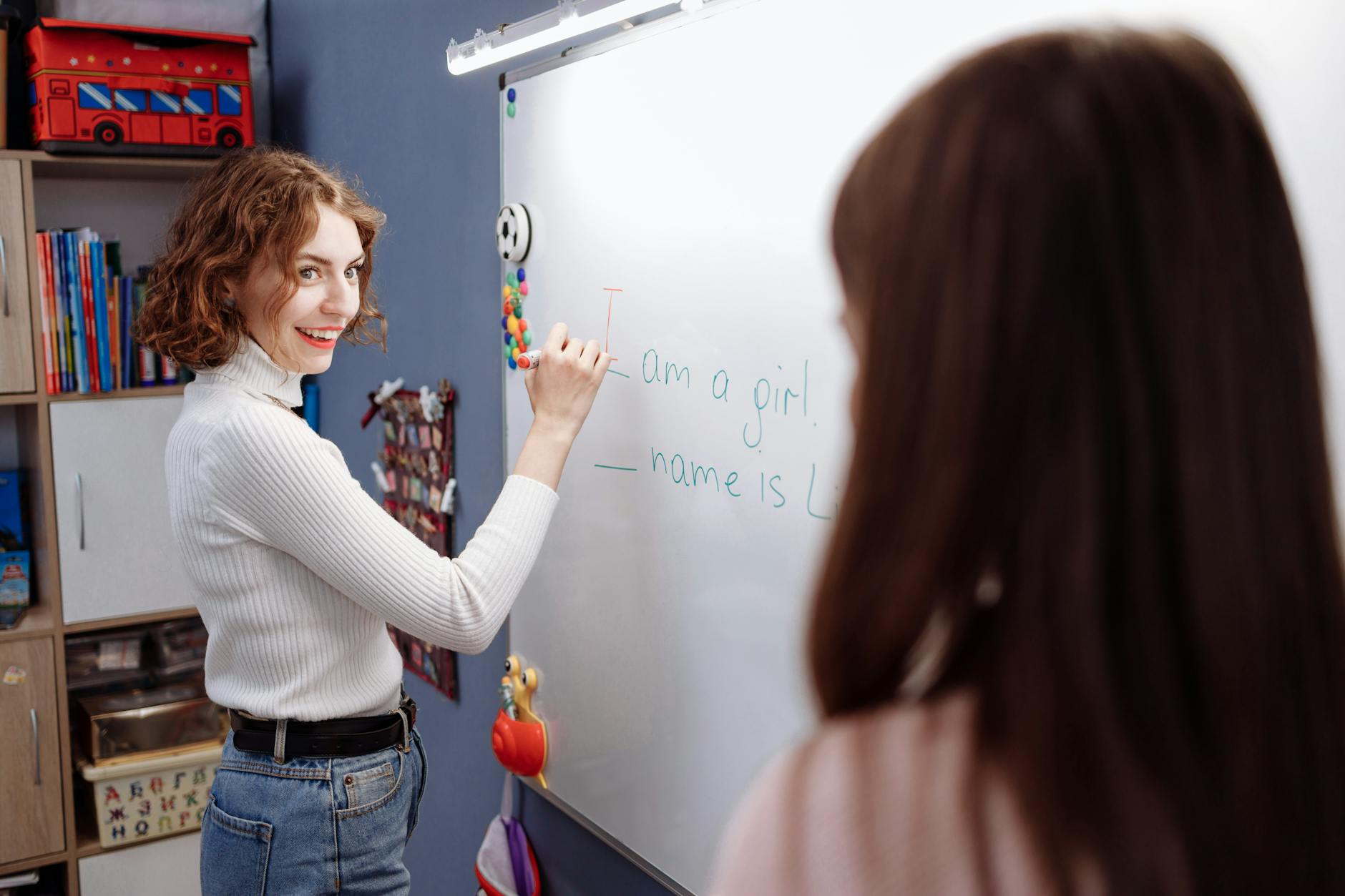
Solid esl lesson plans share a skeleton that works across CEFR levels from A1 to B2. Every section supports communicative language teaching and keeps tefl lessons from falling apart. Skip one, and the whole lesson limps toward confusion.
Warm-up/Hook (5-10 min): Use authentic materials to spark immediate curiosity. Show the photo. Play the ten-second clip. Get them talking in English before they even sit down.
Presentation/Input (10-15 min): Introduce target language through context and modeling. Avoid isolated grammar lectures that put everyone to sleep. Make it comprehensible.
Controlled Practice (10-15 min): Drill with training wheels firmly attached. Focus on accuracy before fluency. Gap fills and substitution tables work perfectly here.
Free Practice/Production (15-20 min): Students create original sentences and ideas. This is where task-based learning proves they actually own the language, not just parrot it.
Assessment/Error Correction (5-10 min): Circulate and catch errors in real time. Check who hit the target and who needs reteaching tomorrow.
Closure/Preview (3-5 min): Quick exit ticket today. Teaser for tomorrow's challenge. Bookend the learning.
The objective section sits at the very top of your template. Use SWBAT format exclusively. "Students Will Be Able To" forces you to finish the sentence with observable evidence, not hopes and dreams. This clarity drives every choice you make.
Pick verbs from Bloom's Taxonomy. Identify, demonstrate, or construct. Never use understand or learn. Those words hide lazy thinking. I once wrote "Students will learn past tense" for my 9th graders and watched half the class nod without comprehending. Vague objectives produce vague results. Specific verbs drive specific activities and assessments.
Scaffolding appears in the differentiation matrix. Draw two columns side by side on your template.
Label the left column Scaffold for students one to two CEFR levels below your target. List concrete supports like sentence frames, word banks, or native language glossaries. Label the right column Extension for early finishers. Add open-ended prompts requiring opinion, inference, or creation of original content beyond the textbook.
This differentiation strategy prevents the chaos of finished students disrupting while others struggle silently. Everyone stays in their growth zone. You teach the same lesson to multiple proficiency levels without cloning yourself or running separate activities.
Finally, include a materials inventory row at the bottom of your english lesson plan. Break it into three distinct categories. Physical items: realia, flashcards, or props with exact counts noted. Tech needs: projector cables, QR codes linking to audio files, or tablet apps tested before class. Printables: worksheets with quantity per student plus two extras for the inevitable lost papers.
Check this inventory during your prep period. Running to the copier mid-lesson destroys momentum. Those minutes never return.
Your TEFL certification and earning opportunities build your foundation, but forgetting the photocopies ruins the lesson completely.

Step-by-Step Setup Guide
You have the template structure. Now you need to fill it without drowning in decisions. These five steps take you from blank page to ready-to-teach.
Duplicate and organize by CEFR levels. Save your master template to a "Lesson Bank" folder in Google Drive. Create subfolders for A1, A2, and B1. Label files with the target language plus date. I learned this the hard way after mixing up my A1 weather unit with my B1 conditional review. Version confusion wastes prep time you don't have.
Complete the Student Profile box first. Check adult 18+ versus elementary 6-11. Note your headcount. For communicative language teaching, cap classes at eight to twelve students. Below eight lacks energy; above twelve means someone hides. List IEP accommodations here too—extra time, visual supports, or modified output expectations. Scaffolding starts with knowing who sits in those chairs.
I once taught a group of twelve adult beginners at a community center. I assumed they could handle pair work without timers. Wrong. Two dominated; four checked out. Now I write "groups of three, 8 minutes max" in every esl lesson plans template before I plan a single activity.
Write two or three measurable objectives. Use the formula: Bloom's verb plus content plus context. "SWBAT order food in a restaurant using polite modals with 80% accuracy." Avoid "understand" or "learn." You can't grade understanding on a rubric. You need evidence.
Select materials using the 70/30 rule. Seventy percent controlled content from textbook series like Headway, Interchange, or Ventures gives you grammar sequencing and built-in differentiation strategies. Thirty percent authentic materials—real bus schedules, BBC Learning English clips, actual menus—provides the messiness of real language. This balance anchors task-based learning in reality while providing safety rails for beginners.
You can source great authentic texts by using technology to enhance ESL instruction. A two-minute voice memo from a native speaker beats a textbook dialogue every time.
Time-block with Pomodoro technique. Set a 25-minute timer for each planning segment. When designing esl lessons for adults, no single activity should exceed 20 minutes. Adult attention spans collapse after that. Break input, practice, and production into distinct chunks. If your presentation runs long, cut it. Students learn by speaking, not by watching you speak.
Run through these steps once and the template becomes muscle memory. Your prep time drops. Your classroom presence sharpens. You stop managing chaos and start teaching language.

How Do You Adapt This for Adult ESL Learners?
Swap childish games for job interview role-plays and medical form practice. Add fifty percent more time to your Presentation phase so adults can take notes and think about their learning. End each class with three minutes for private questions, since adults hate being corrected in front of peers more than kids do.
Adult beginners do not need coloring pages. They need authentic materials like actual job applications or tenant rights documents from city websites. I once watched a 45-year-old engineer struggle to explain his background during a mock interview—using real forms from a nearby factory provided the scaffolding he needed because the language connected to immediate survival, not abstract play.
Your esl lesson plans for adults need longer processing windows. Add fifty percent more time to the Presentation phase—fifteen minutes instead of ten—to allow for note-taking and metacognitive strategy instruction. Adults at CEFR levels A1-A2 can grasp abstract grammar, but they need that extra time to compare the new language against existing linguistic frameworks without rushing.
Drop the show-and-tell. Replace it with expert groups where adults teach a skill from their profession using target vocabulary. This validates prior knowledge while practicing communicative language teaching principles. Task-based learning works better when a dental assistant teaches chair-side manner vocabulary to classmates. Family photos do not build professional confidence.
Adult learners carry heavier affective filters than children. Build in a three-minute warm-down at the end of every lesson for private clarifying questions. While students pack up, circulate and invite one-on-one check-ins. This differentiation strategy acknowledges that public error correction feels professionally risky for adults managing workplace hierarchies.
Finding free esl lesson plans for adults often means adapting existing frameworks. You do not need to start from scratch. Look for resources that emphasize authentic materials and task-based learning over gamified apps designed for children. The right approach respects adult cognitive capacity while providing necessary scaffolding for beginners.
Connect these methods with broader multilingual education strategies for inclusive classrooms to support diverse backgrounds. For vocabulary support, explore AI-driven vocabulary strategies for language teachers that complement authentic materials and task-based learning approaches in english lessons for beginners adults.

Sample Implementation: A Complete Beginner-Level Example
Here is a complete 90-minute session for twelve adult beginners at CEFR levels A1-A2. The objective is ordering food while explaining dietary restrictions.
Warm-up (12 minutes): Project five real restaurant menus on your board—an Italian trattoria, a vegan cafe, a burger chain, a sushi bar, and a food truck. Ask students to circle items they recognize with dry-erase markers. For literacy-level learners, hand out picture-word matching cards from your set of learning to read for adults worksheets. This differentiation strategy connects to evidence-based reading instruction by anchoring text to visual cues. Differentiation strategies like this prevent literacy gaps from silencing speaking practice.
Presentation (25 minutes): Display a side-by-side chart comparing "I want" and "I would like." Explain register explicitly—one works with friends, the other with servers. Spend fifteen minutes on the grammar, then ten minutes of choral drilling. I once ran this with a group of 1st class english lessons at a community center in Detroit; the drilling felt old-school, but the adult learners later told me the rhythm helped them overcome speaking anxiety in actual restaurants.
Practice (20 minutes): Hand out a modified restaurant dialogue with gaps targeting the target phrases. This scaffolding moves from controlled to freer use. Students complete it individually, then pair up for an information gap. Student A holds a card stating "I have a nut allergy." Student B plays the server and must negotiate safe menu options using the phrases from the worksheet. This is classic communicative language teaching—meaning comes from the exchange, not just the form.
Production (30 minutes): Set up three stations with authentic materials: a laminated cafe counter, a fine-dining table setup with cloth napkins, and a food truck window. Groups of four rotate every eight minutes. The rotation keeps energy high and simulates real-world pressure where diners must communicate clearly to strangers. Each student orders according to a role card (vegan, gluten-free, no preference). Use a simple checklist to assess: Did they use "I would like"? Did they state the restriction? Did the server accommodate? This task-based learning cycle closes the lesson with functional output.
When you build esl lesson plans around immediate survival needs—like not getting sick from a peanut—you skip the abstract fluff and give adults language they will use that same evening. Adult beginners need this practical focus more than they need perfect grammar charts. Keep the scaffolding visible and the objectives concrete.

Common Setup Mistakes That Waste Prep Time
I've watched teachers burn Sunday afternoons perfecting esl lesson plans that collapse by Tuesday. The slides look beautiful. The timing falls apart. Here are the four errors I see most.
Writing activities instead of objectives. "Students will watch a video" is not a learning goal. Write objectives with observable verbs: demonstrate, list, compare. Add success criteria. "Students will list five irregular verbs with fewer than three errors." If you cannot see it, you cannot grade it. Vague goals waste prep because you cannot measure if the lesson worked.
Grabbing random Google Images. That perfect photo of a café scene? Copyrighted. Now you're redoing your slides at 6 AM. For grammar lessons for adults, use Unsplash or Pixabay for authentic materials. Check the textbook CD that came with your teacher's edition. Districts buy esl curriculum for adults with teaching materials precisely so you skip the image search. Legal headaches steal time you do not have.
Ignoring the transition tax. You planned ten minutes for the speaking task. You forgot it takes two minutes just to move chairs and find partners. Materials go missing. Students need bathroom breaks. Technology fails. Build five-minute buffers between blocks. Use clear signals. "When I clap twice, move to station B."
One semester I tracked transitions in my intermediate adult class. We lost twelve minutes per period to movement and confusion. That adds up to entire lessons lost each month. Those buffers saved my sanity.
Grouping beginners together. "Beginner" spans CEFR levels A1 to A2. One student knows present tense; another struggles with the alphabet. Homogeneous groups fail in communicative language teaching. Try the jigsaw method. Each student masters one vocabulary set—jobs, transport, food—then teaches the group. Everyone becomes the expert at something.
This scaffolding through task-based learning builds confidence while covering more ground. No one sits lost while others race ahead. You cut your prep time because you plan one activity that adapts to all levels. Smart differentiation strategies beat perfect slides every time. I learned this while refining my own planning habits of highly effective educators.

Implementation Checklist: From Template to First Class
Forty-eight hours out, print your esl lesson plans double-sided to cut paper use in half. Test every YouTube link and QR code on the actual device students will use; a dead link kills momentum dead. Stash two logic puzzles or riddle cards in your desk drawer for the inevitable early finisher who asks what to do now with twenty minutes left on the clock.
Twenty-four hours before, scan your roster for absences that might leave a partner stranded during pair work. Verify that your objectives align with the stated CEFR levels to avoid frustrating beginners with advanced material. If you are teaching adults, fold name tents from cardstock; they build community faster than awkward icebreakers. Sort materials into color-coded folders—red for answer keys, blue for handouts—so you never grab the wrong stack while thirty eyes watch.
Arrive fifteen minutes early to test the projector and arrange desks. Use a horseshoe formation for groups of eight to fifteen adults; it forces eye contact during task-based learning discussions. For K-12, clusters of four work better for differentiation strategies. Write the agenda on the board with exact time stamps—"10:15-10:30: Warm-up"—so students track progress independently. Tape a "parking lot" poster by the door for off-topic questions, promising to address them at period's end.
I learned this timing rule during a disastrous Tuesday with my 7th graders: complete the reflection box within two hours while the memory is hot. Note what ate up too much time, which kids need follow-up after struggling with the authentic materials, and whether tomorrow requires integrating EdTech seamlessly into your plans or a full reteach at a lower level. That single habit transformed my prep from guessing to actual data.

What's Next for Esl Lesson Plans
Stop tweaking the template and teach. You have the structure, the examples, and the setup checklist. Pick one class this week and run the full sequence from warm-up to exit ticket. You'll know within ten minutes if your scaffolding held up or if you need to tighten that language objective for next time.
The field is shifting fast. Teachers are dumping expensive textbooks for authentic materials and aligning targets to CEFR levels, not just state standards. AI can generate a worksheet in seconds now, but it cannot read your room. Stay ahead by building a personal library of communicative activities that fit your actual students' daily lives, not generic textbook dialogues.
Your template is a living document. I revise mine every semester based on what flopped and what stuck. Keep what works, cut the rest, and trust your instincts. The best ESL lesson plans come from teachers who know their students' names and stories, not from perfect formatting or fancy headers.

What This ESL Lesson Plan Template Includes
You can use this template with 7th graders on Monday and adult learners at the community center on Tuesday without changing a single heading. The core structure works for grades 3-12 and adult education alike—only the content and CEFR levels shift to match your group.
Five fields separate this from generic free esl lesson plans you find on Pinterest that leave you guessing about language acquisition stages and appropriate targets:
A CEFR level indicator (A1-C2) so you align activities to global standards instead of vague labels like "beginner" that vary by district.
Class size capacity up to 40 students with individual checkboxes for monitoring participation during communicative language teaching pair work and group activities.
A materials checklist distinguishing between textbook pages and authentic materials like bus schedules, menus, or podcast transcripts.
A dedicated column for differentiation strategies, split into "Support" and "Challenge" for quick scaffolding without rewriting.
A homework extension box connecting to task-based learning projects students can complete independently.
You receive dual-format delivery. The Google Docs version lets you share with co-teachers in real time during team planning or push updates to your phone when you realize you forgot the dialogue cards at home. The free esl lesson plans pdf version prints cleanly for your observation portfolio or emergency sub folder, staying under 500KB for easy email attachment.
Last year I used this with a mixed 9th-grade class of 34 students. The built-in buffers saved me when the fire drill hit right during the vocabulary presentation.
The time-blocking follows the PPP model—Presentation, Practice, Production—with pre-filled 5-minute buffers between transitions. These gaps prevent lesson overrun when your explanation of past perfect tense runs long or when students need extra scaffolding. They also give you space to redistribute comprehensive lesson plan template setup materials or handle the student who forgot their device.
Template Structure: The Essential Components
Solid esl lesson plans share a skeleton that works across CEFR levels from A1 to B2. Every section supports communicative language teaching and keeps tefl lessons from falling apart. Skip one, and the whole lesson limps toward confusion.
Warm-up/Hook (5-10 min): Use authentic materials to spark immediate curiosity. Show the photo. Play the ten-second clip. Get them talking in English before they even sit down.
Presentation/Input (10-15 min): Introduce target language through context and modeling. Avoid isolated grammar lectures that put everyone to sleep. Make it comprehensible.
Controlled Practice (10-15 min): Drill with training wheels firmly attached. Focus on accuracy before fluency. Gap fills and substitution tables work perfectly here.
Free Practice/Production (15-20 min): Students create original sentences and ideas. This is where task-based learning proves they actually own the language, not just parrot it.
Assessment/Error Correction (5-10 min): Circulate and catch errors in real time. Check who hit the target and who needs reteaching tomorrow.
Closure/Preview (3-5 min): Quick exit ticket today. Teaser for tomorrow's challenge. Bookend the learning.
The objective section sits at the very top of your template. Use SWBAT format exclusively. "Students Will Be Able To" forces you to finish the sentence with observable evidence, not hopes and dreams. This clarity drives every choice you make.
Pick verbs from Bloom's Taxonomy. Identify, demonstrate, or construct. Never use understand or learn. Those words hide lazy thinking. I once wrote "Students will learn past tense" for my 9th graders and watched half the class nod without comprehending. Vague objectives produce vague results. Specific verbs drive specific activities and assessments.
Scaffolding appears in the differentiation matrix. Draw two columns side by side on your template.
Label the left column Scaffold for students one to two CEFR levels below your target. List concrete supports like sentence frames, word banks, or native language glossaries. Label the right column Extension for early finishers. Add open-ended prompts requiring opinion, inference, or creation of original content beyond the textbook.
This differentiation strategy prevents the chaos of finished students disrupting while others struggle silently. Everyone stays in their growth zone. You teach the same lesson to multiple proficiency levels without cloning yourself or running separate activities.
Finally, include a materials inventory row at the bottom of your english lesson plan. Break it into three distinct categories. Physical items: realia, flashcards, or props with exact counts noted. Tech needs: projector cables, QR codes linking to audio files, or tablet apps tested before class. Printables: worksheets with quantity per student plus two extras for the inevitable lost papers.
Check this inventory during your prep period. Running to the copier mid-lesson destroys momentum. Those minutes never return.
Your TEFL certification and earning opportunities build your foundation, but forgetting the photocopies ruins the lesson completely.
Step-by-Step Setup Guide
You have the template structure. Now you need to fill it without drowning in decisions. These five steps take you from blank page to ready-to-teach.
Duplicate and organize by CEFR levels. Save your master template to a "Lesson Bank" folder in Google Drive. Create subfolders for A1, A2, and B1. Label files with the target language plus date. I learned this the hard way after mixing up my A1 weather unit with my B1 conditional review. Version confusion wastes prep time you don't have.
Complete the Student Profile box first. Check adult 18+ versus elementary 6-11. Note your headcount. For communicative language teaching, cap classes at eight to twelve students. Below eight lacks energy; above twelve means someone hides. List IEP accommodations here too—extra time, visual supports, or modified output expectations. Scaffolding starts with knowing who sits in those chairs.
I once taught a group of twelve adult beginners at a community center. I assumed they could handle pair work without timers. Wrong. Two dominated; four checked out. Now I write "groups of three, 8 minutes max" in every esl lesson plans template before I plan a single activity.
Write two or three measurable objectives. Use the formula: Bloom's verb plus content plus context. "SWBAT order food in a restaurant using polite modals with 80% accuracy." Avoid "understand" or "learn." You can't grade understanding on a rubric. You need evidence.
Select materials using the 70/30 rule. Seventy percent controlled content from textbook series like Headway, Interchange, or Ventures gives you grammar sequencing and built-in differentiation strategies. Thirty percent authentic materials—real bus schedules, BBC Learning English clips, actual menus—provides the messiness of real language. This balance anchors task-based learning in reality while providing safety rails for beginners.
You can source great authentic texts by using technology to enhance ESL instruction. A two-minute voice memo from a native speaker beats a textbook dialogue every time.
Time-block with Pomodoro technique. Set a 25-minute timer for each planning segment. When designing esl lessons for adults, no single activity should exceed 20 minutes. Adult attention spans collapse after that. Break input, practice, and production into distinct chunks. If your presentation runs long, cut it. Students learn by speaking, not by watching you speak.
Run through these steps once and the template becomes muscle memory. Your prep time drops. Your classroom presence sharpens. You stop managing chaos and start teaching language.
How Do You Adapt This for Adult ESL Learners?
Swap childish games for job interview role-plays and medical form practice. Add fifty percent more time to your Presentation phase so adults can take notes and think about their learning. End each class with three minutes for private questions, since adults hate being corrected in front of peers more than kids do.
Adult beginners do not need coloring pages. They need authentic materials like actual job applications or tenant rights documents from city websites. I once watched a 45-year-old engineer struggle to explain his background during a mock interview—using real forms from a nearby factory provided the scaffolding he needed because the language connected to immediate survival, not abstract play.
Your esl lesson plans for adults need longer processing windows. Add fifty percent more time to the Presentation phase—fifteen minutes instead of ten—to allow for note-taking and metacognitive strategy instruction. Adults at CEFR levels A1-A2 can grasp abstract grammar, but they need that extra time to compare the new language against existing linguistic frameworks without rushing.
Drop the show-and-tell. Replace it with expert groups where adults teach a skill from their profession using target vocabulary. This validates prior knowledge while practicing communicative language teaching principles. Task-based learning works better when a dental assistant teaches chair-side manner vocabulary to classmates. Family photos do not build professional confidence.
Adult learners carry heavier affective filters than children. Build in a three-minute warm-down at the end of every lesson for private clarifying questions. While students pack up, circulate and invite one-on-one check-ins. This differentiation strategy acknowledges that public error correction feels professionally risky for adults managing workplace hierarchies.
Finding free esl lesson plans for adults often means adapting existing frameworks. You do not need to start from scratch. Look for resources that emphasize authentic materials and task-based learning over gamified apps designed for children. The right approach respects adult cognitive capacity while providing necessary scaffolding for beginners.
Connect these methods with broader multilingual education strategies for inclusive classrooms to support diverse backgrounds. For vocabulary support, explore AI-driven vocabulary strategies for language teachers that complement authentic materials and task-based learning approaches in english lessons for beginners adults.
Sample Implementation: A Complete Beginner-Level Example
Here is a complete 90-minute session for twelve adult beginners at CEFR levels A1-A2. The objective is ordering food while explaining dietary restrictions.
Warm-up (12 minutes): Project five real restaurant menus on your board—an Italian trattoria, a vegan cafe, a burger chain, a sushi bar, and a food truck. Ask students to circle items they recognize with dry-erase markers. For literacy-level learners, hand out picture-word matching cards from your set of learning to read for adults worksheets. This differentiation strategy connects to evidence-based reading instruction by anchoring text to visual cues. Differentiation strategies like this prevent literacy gaps from silencing speaking practice.
Presentation (25 minutes): Display a side-by-side chart comparing "I want" and "I would like." Explain register explicitly—one works with friends, the other with servers. Spend fifteen minutes on the grammar, then ten minutes of choral drilling. I once ran this with a group of 1st class english lessons at a community center in Detroit; the drilling felt old-school, but the adult learners later told me the rhythm helped them overcome speaking anxiety in actual restaurants.
Practice (20 minutes): Hand out a modified restaurant dialogue with gaps targeting the target phrases. This scaffolding moves from controlled to freer use. Students complete it individually, then pair up for an information gap. Student A holds a card stating "I have a nut allergy." Student B plays the server and must negotiate safe menu options using the phrases from the worksheet. This is classic communicative language teaching—meaning comes from the exchange, not just the form.
Production (30 minutes): Set up three stations with authentic materials: a laminated cafe counter, a fine-dining table setup with cloth napkins, and a food truck window. Groups of four rotate every eight minutes. The rotation keeps energy high and simulates real-world pressure where diners must communicate clearly to strangers. Each student orders according to a role card (vegan, gluten-free, no preference). Use a simple checklist to assess: Did they use "I would like"? Did they state the restriction? Did the server accommodate? This task-based learning cycle closes the lesson with functional output.
When you build esl lesson plans around immediate survival needs—like not getting sick from a peanut—you skip the abstract fluff and give adults language they will use that same evening. Adult beginners need this practical focus more than they need perfect grammar charts. Keep the scaffolding visible and the objectives concrete.
Common Setup Mistakes That Waste Prep Time
I've watched teachers burn Sunday afternoons perfecting esl lesson plans that collapse by Tuesday. The slides look beautiful. The timing falls apart. Here are the four errors I see most.
Writing activities instead of objectives. "Students will watch a video" is not a learning goal. Write objectives with observable verbs: demonstrate, list, compare. Add success criteria. "Students will list five irregular verbs with fewer than three errors." If you cannot see it, you cannot grade it. Vague goals waste prep because you cannot measure if the lesson worked.
Grabbing random Google Images. That perfect photo of a café scene? Copyrighted. Now you're redoing your slides at 6 AM. For grammar lessons for adults, use Unsplash or Pixabay for authentic materials. Check the textbook CD that came with your teacher's edition. Districts buy esl curriculum for adults with teaching materials precisely so you skip the image search. Legal headaches steal time you do not have.
Ignoring the transition tax. You planned ten minutes for the speaking task. You forgot it takes two minutes just to move chairs and find partners. Materials go missing. Students need bathroom breaks. Technology fails. Build five-minute buffers between blocks. Use clear signals. "When I clap twice, move to station B."
One semester I tracked transitions in my intermediate adult class. We lost twelve minutes per period to movement and confusion. That adds up to entire lessons lost each month. Those buffers saved my sanity.
Grouping beginners together. "Beginner" spans CEFR levels A1 to A2. One student knows present tense; another struggles with the alphabet. Homogeneous groups fail in communicative language teaching. Try the jigsaw method. Each student masters one vocabulary set—jobs, transport, food—then teaches the group. Everyone becomes the expert at something.
This scaffolding through task-based learning builds confidence while covering more ground. No one sits lost while others race ahead. You cut your prep time because you plan one activity that adapts to all levels. Smart differentiation strategies beat perfect slides every time. I learned this while refining my own planning habits of highly effective educators.
Implementation Checklist: From Template to First Class
Forty-eight hours out, print your esl lesson plans double-sided to cut paper use in half. Test every YouTube link and QR code on the actual device students will use; a dead link kills momentum dead. Stash two logic puzzles or riddle cards in your desk drawer for the inevitable early finisher who asks what to do now with twenty minutes left on the clock.
Twenty-four hours before, scan your roster for absences that might leave a partner stranded during pair work. Verify that your objectives align with the stated CEFR levels to avoid frustrating beginners with advanced material. If you are teaching adults, fold name tents from cardstock; they build community faster than awkward icebreakers. Sort materials into color-coded folders—red for answer keys, blue for handouts—so you never grab the wrong stack while thirty eyes watch.
Arrive fifteen minutes early to test the projector and arrange desks. Use a horseshoe formation for groups of eight to fifteen adults; it forces eye contact during task-based learning discussions. For K-12, clusters of four work better for differentiation strategies. Write the agenda on the board with exact time stamps—"10:15-10:30: Warm-up"—so students track progress independently. Tape a "parking lot" poster by the door for off-topic questions, promising to address them at period's end.
I learned this timing rule during a disastrous Tuesday with my 7th graders: complete the reflection box within two hours while the memory is hot. Note what ate up too much time, which kids need follow-up after struggling with the authentic materials, and whether tomorrow requires integrating EdTech seamlessly into your plans or a full reteach at a lower level. That single habit transformed my prep from guessing to actual data.
What's Next for Esl Lesson Plans
Stop tweaking the template and teach. You have the structure, the examples, and the setup checklist. Pick one class this week and run the full sequence from warm-up to exit ticket. You'll know within ten minutes if your scaffolding held up or if you need to tighten that language objective for next time.
The field is shifting fast. Teachers are dumping expensive textbooks for authentic materials and aligning targets to CEFR levels, not just state standards. AI can generate a worksheet in seconds now, but it cannot read your room. Stay ahead by building a personal library of communicative activities that fit your actual students' daily lives, not generic textbook dialogues.
Your template is a living document. I revise mine every semester based on what flopped and what stuck. Keep what works, cut the rest, and trust your instincts. The best ESL lesson plans come from teachers who know their students' names and stories, not from perfect formatting or fancy headers.
Still grading everything by hand?
EMStudio is a free teaching management app — manage your classes, students, lessons, and more!
Learn More
Still grading everything by hand?
EMStudio is a free teaching management app — manage your classes, students, lessons, and more!
Learn More





Notion4Teachers
Notion templates to simplify administrative tasks and enhance your teaching experience.



2026 Notion4Teachers. All Rights Reserved.
Notion4Teachers
Notion templates to simplify administrative tasks and enhance your teaching experience.
2026 Notion4Teachers. All Rights Reserved.
Notion4Teachers
Notion templates to simplify administrative tasks and enhance your teaching experience.
2026 Notion4Teachers. All Rights Reserved.