
15 Issues in Education Reshaping K-12 Teaching Today
15 Issues in Education Reshaping K-12 Teaching Today

Article by
Milo
ESL Content Coordinator & Educator
ESL Content Coordinator & Educator
All Posts
Most conversations about issues in education treat symptoms like they're diseases. We debate phone bans and standardized test scores while ignoring that half your colleagues are updating resumes during lunch. I've watched districts spend six figures on instructional technology that collects dust by November while students share outdated textbooks three to a desk. The real problems aren't mysterious. They're structural, expensive, and politically inconvenient to name out loud.
You feel it daily. The learning platform that crashes during state testing. The IEP meeting scheduled after you've already stayed late for bus duty. The parent who wants to ban a book you've never taught while your class sizes hit thirty-four. These aren't isolated frustrations. They connect to five specific pressure points: broken educational equity promises, collapsing teacher retention, battles over curriculum development, student wellbeing crises, and tech tools that solve problems you don't actually have.
This post names fifteen specific challenges reshaping your classroom reality. No policy jargon. No district-office euphemisms. Just the friction points that determine whether you stay in the profession or burn out by spring break, plus what actually helps versus what wastes your planning period. Some of these you'll recognize immediately. Others might surprise you. All of them demand that you work differently than you did five years ago.
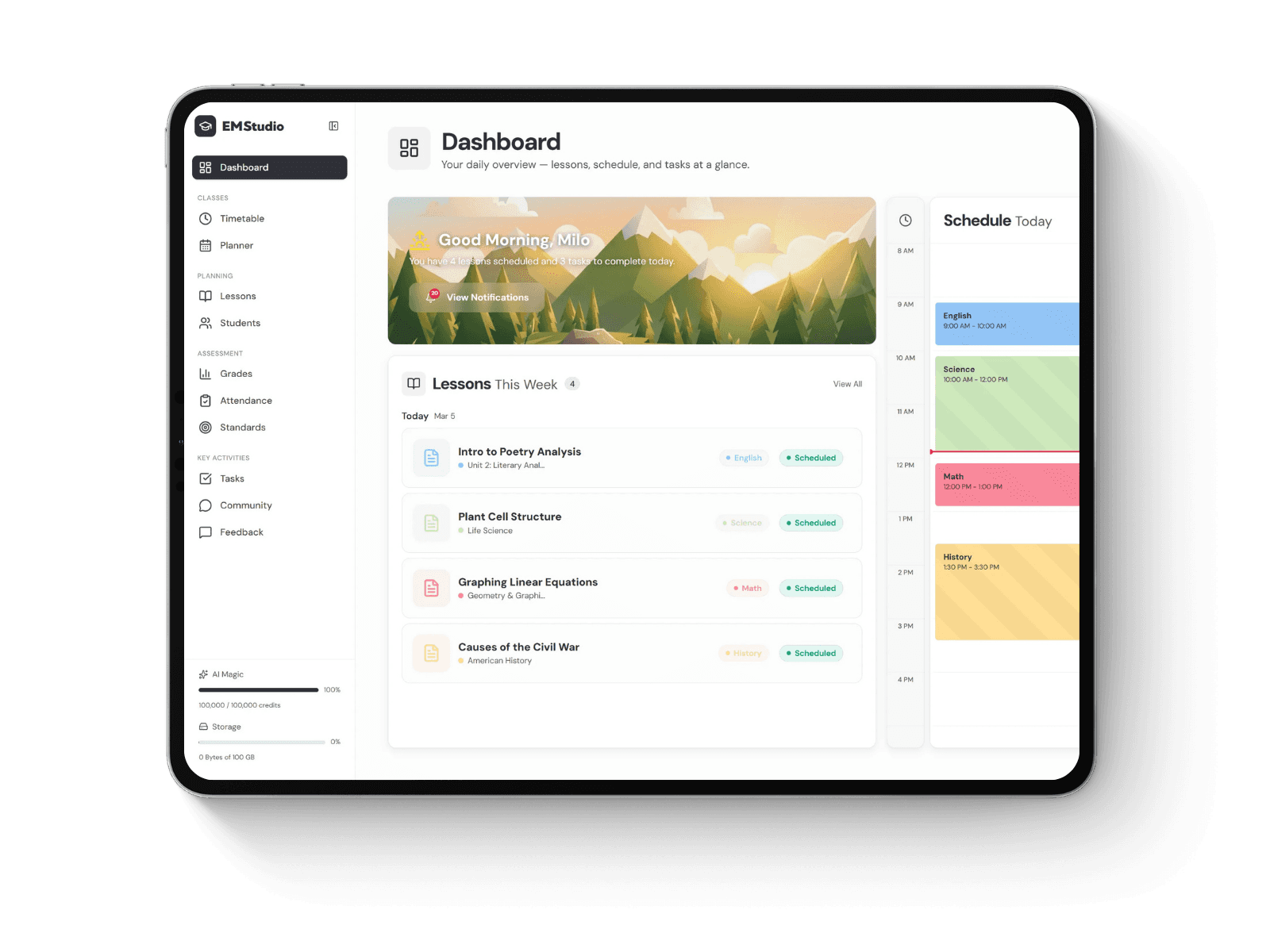
Still grading everything by hand?
EMStudio is a free teaching management app — manage your classes, students, lessons, and more!
Learn More
Still grading everything by hand?
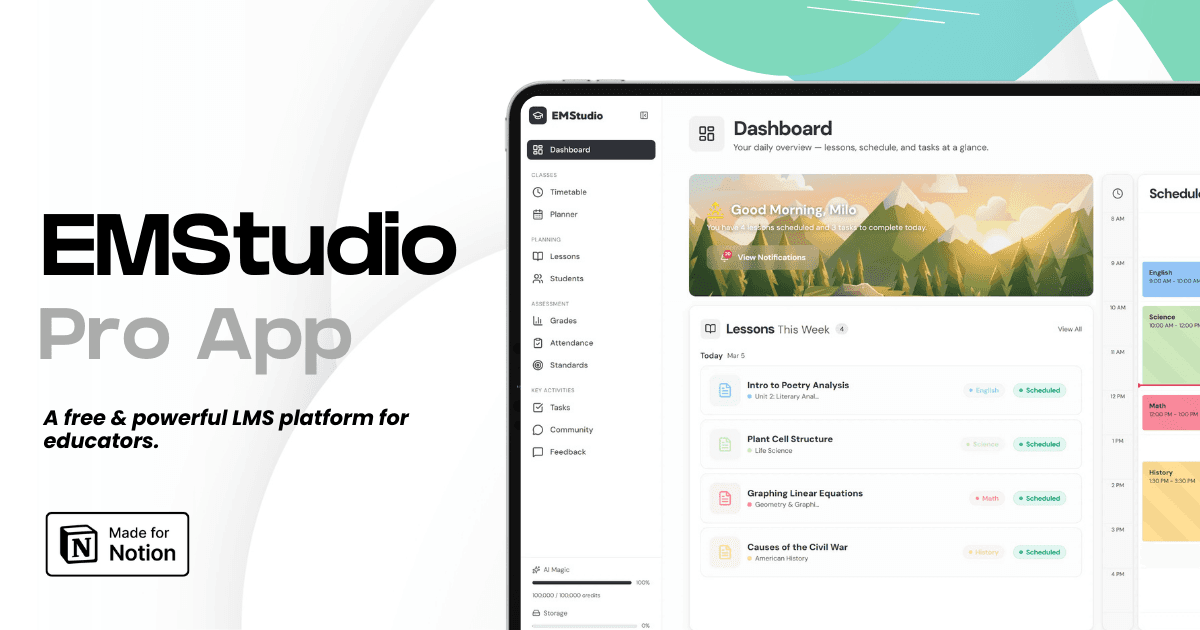
EMStudio is a free teaching management app — manage your classes, students, lessons, and more!
Learn More
Table of Contents
Technology and Innovation Issues Disrupting Classrooms
These issues in education drain your budget before you close your laptop. When over 15% of your students lack home internet, you hit the homework gap failure mode. That triggers mandatory paper-based alternatives and in-class completion time.
Issue | Immediate Impact on Teaching | 12-Month Trend Direction | Average District Cost Impact |
|---|---|---|---|
AI Academic Integrity | Constant authenticity monitoring; shift to in-class assessments | Rising detection costs | $2-8 per student annually for AI detection software |
Device Access Gaps | 15%+ students without home access require paper alternatives | Widening in rural areas | $200-400 per device plus $50/year management for 1:1 Chromebook programs |
Data Privacy Compliance | Vendor audit requirements; parent transparency demands | Increasing regulatory scrutiny | $5,000-15,000 per district for FERPA compliance audits |
AI Integration and Academic Integrity Challenges
ChatGPT-4, Claude 3, and Google Gemini generate coherent five-paragraph essays in under thirty seconds. Your students know this. You spend more time policing authenticity than teaching rhetoric. The detection arms race wastes your planning period and strains your relationship with students. You became a teacher, not a digital forensics investigator.
Detection tools like Turnitin AI Writing Detection and GPTZero claim 85-95% accuracy rates. Independent testing shows false positives run 1-5%. That margin fails kids who actually wrote their papers at 2 AM. You cannot build a classroom culture on algorithmic suspicion. You need integrating AI tools while maintaining academic integrity through authentic assessment protocols that emphasize visible process over polished product. Stop fighting the tools and start changing the task.
Shift to in-class Google Docs with version history review. Require oral defense rubrics where students explain their thesis evolution in three-to-five-minute conversations. Try this three-phase protocol:
Phase 1: Diagnostic writing samples to establish baseline voice.
Phase 2: Supervised drafting with teacher checkpoints during class.
Phase 3: Live presentations where students defend arguments in real time.
This framework removes the incentive to cheat while building actual communication skills.
The Digital Divide and Device Access Gaps
Your district probably runs a 1:1 Chromebook program costing $200-400 per device plus $50 yearly management fees. Meanwhile, NCES data patterns show 14% of students nationwide lack reliable home internet. These "hotspot deserts" cluster in rural areas and low-income urban zones. You assign digital homework assuming equity that does not exist.
When over 15% of your roster lacks home access, you hit the homework gap failure mode. You must provide paper-based alternative assignments and schedule in-class completion time. Three interventions work immediately:
WiFi-equipped school buses from Kajeet SmartBus at $400 monthly per vehicle.
Take-home Chromebook insurance programs charging families $25-50.
Community library partnership checkout systems for evening hotspot access.
Grade-level needs vary wildly. Seventh-grade science requiring Desmos graphing calculator access for complex functions cannot translate to paper worksheets. Third-grade math using physical manipulatives works as a viable equity alternative. Audit your content's digital dependency before you assign homework that requires broadband.
Data Privacy and Student Surveillance Concerns
Districts deploy Gaggle, Bark for Schools, Securly, and GoGuardian at $3-12 per student annually. These platforms offer keystroke logging and email scanning capabilities that capture every search query and private message. You can watch every tab switch in real time. The cost buys compliance headaches and parent backlash when they discover the scope of monitoring.
FERPA compliance gaps plague vendor contracts. Many EdTech companies data-mine student information for advertising profiles or third-party sales without clear disclosure. The 2023 FTC enforcement patterns show regulators finally targeting these practices with fines and consent decrees. You need data security and student privacy in digital platforms that respect boundaries while maintaining actual safety. Read the fine print before you click accept.
You can protect students without excessive intrusion. Implement minimum viable monitoring:
Activate surveillance during school hours only (8 AM to 4 PM).
Make mental health AI scanning opt-in rather than mandatory.
Publish annual transparency reports showing data collection practices.
What Equity and Access Issues Demand Immediate Action?
Immediate action is required on funding disparities where per-pupil spending gaps exceed $10,000 between districts, persistent racial achievement gaps showing 20-30 point divides in reading proficiency, and special education compliance failures leaving significant portions of IEPs under-resourced. These equity barriers compound to limit post-secondary opportunity for marginalized student populations.
You need a triage framework to sort these issues in education by immediate impact. Compare three funding models. Weighted student funding gives districts flexibility but favors wealthy areas with higher property values. Categorical state grants earmark dollars for specific programs yet create compliance headaches and inflexible line items. Local property tax reliance generates the widest gaps, with high-spending districts hitting $24,000 per pupil while neighbors scrape by on $10,000 or less.
Funding Disparities Between Urban and Rural Districts
Three state approaches show different results:
New Jersey's Abbott Districts use court-mandated equalization, pushing high-poverty districts toward funding parity with state aid dollars.
Texas Robin Hood recapture forces wealthy districts to share local revenue, triggering political backlash when communities see "their" tax dollars cross district lines.
Vermont Act 60 relies on 50-80% state contribution formulas, pooling resources statewide to prevent property-tax islands from forming.
Facility inequities compound the problem. Rural districts spend $1,200 per student annually just on transportation—bus fuel, drivers, maintenance—while compact urban districts spend $300. That $900 gap per child equals six laptop carts or a part-time reading specialist. When 20% of your budget moves bodies instead of minds, AP Physics and art electives disappear first.
True costs dwarf actual spending. Cost studies place adequate funding at $13,000 to $20,000 per pupil when accounting for special needs and poverty factors. Underfunded districts often operate $3,000 below these targets. They patch 50-year-old boilers while suburban campuses open innovation labs. High-spending districts hit $24,000 per pupil; low-spending neighbors scrape by on $10,000 or less. That $14,000 gap buys smaller classes, STEM labs, and veteran teachers who stay because salaries are competitive.
Racial and Socioeconomic Achievement Gaps
NAEP data reveals 25-30 point proficiency gaps in 4th-grade reading between White and Black students, a chasm unchanged for decades. These aren't ability gaps. They're opportunity gaps created by segregated housing patterns and funding formulas that favor wealthy ZIP codes. Strategies for addressing socioeconomic diversity and equity rarely bridge these resource divides when per-pupil spending differs by thousands within the same county.
Three interventions actually move the needle:
High-dosage tutoring yields a 0.40 effect size.
Culturally responsive teaching hits 0.48.
Pre-K expansion delivers 0.30.
These beat most curriculum purchases. Yet districts often pick the wrong approach. Remediation tracks pull students from grade-level content—the deficit model—widening gaps. Acceleration keeps kids in rigorous classes with scaffolds. You tutor before school, not during. You preview vocabulary before the lesson, not after they fail the quiz.
Special Education Resource and Compliance Shortages
Forty-eight states report special education teacher shortages. IEP timelines slip past the mandated 60-day evaluation window. Caseloads hit 30 or 40 students per teacher. When parents sue, districts face due process hearings costing $50,000 to $150,000 in legal fees per case. That money could hire a paraprofessional for two years. Special education resource shortages and professional training gaps drive these compliance failures.
MTSS tiered support requires specific staffing ratios:
One school psychologist per 500 students, not the current national average of 1:1,200.
One special education teacher per 8 students for self-contained programs.
Most states run 1:12 or worse. Without these bodies, IEP minutes go unmet. Students plateau on goals. Teachers burn out. The cycle continues until someone files a complaint.
Compliance isn't paperwork. It's minutes of service. When you lack staff, you miss minutes. Miss enough minutes, and you owe compensatory education—tutoring the district pays for after school. That costs double. Preventing shortages is cheaper than curing violations, but budgets rarely see it that way.

Teacher Workforce Retention and Burnout Crises
Your district faces a staffing emergency. Start with a shortage severity assessment. Critical vacancies trigger emergency certification pathways requiring 2-year conversion timelines. Moderate gaps suit grow-your-own programs with 3-year commitments. Stable districts choose alternative prep residencies lasting one year.
Geography determines your paycheck. Starting salaries range from $35,000 in Mississippi to $60,000-plus in California. That $25,000 gap creates geographic penalties. Young teachers cannot afford median rents in high-salary cities, forcing long commutes or exits.
Every resignation costs you. Districts spend $15,000 to $20,000 recruiting, onboarding, and covering classes per replacement. These issues in education drain budgets that could fund raises or reduce class sizes. High-poverty schools bear the brunt, losing instructional capacity while training newcomers who depart within two years.
Nationwide Teacher Shortage and Vacancy Rates
Special education, secondary mathematics, and rural districts carry the heaviest loads. Over 55,000 positions sit unfilled nationally. You see the gaps: long-term subs in chemistry, oversized SpEd caseloads, split-grade classes in isolated towns. These vacancies concentrate in high-poverty schools with the neediest students.
Emergency permits fill gaps quickly. Arizona and Nevada allow more than 10 percent of hires on emergency certification. These teachers face two-year conversion timelines while managing full classrooms and completing coursework. The clock ticks loudly for standard licensure completion.
Grow-your-own programs offer slower, stable pipelines. Teacher Academy models recruit paraprofessionals already in your hallways. Participants receive $5,000 annual tuition coverage plus stipends. They commit to three years of post-licensure service in your district. You keep talent that knows your students.
Unfilled positions force remaining staff to absorb extra preps and duties. You cover colleagues during lunch. Special educators manage double the legally mandated caseloads. These conditions accelerate departures, deepening the crisis in your building.
Educator Burnout and Mental Health Struggles
Half your colleagues show dangerous exhaustion levels. The Maslach Burnout Inventory tracks emotional exhaustion scores nationwide. Fifty percent of teachers report high levels. Depersonalization symptoms follow, making you snap at students or disconnect during lessons. Your enthusiasm becomes cynicism by October.
Concrete protections beat inspirational posters. Bargain for mandatory daily prep periods lasting 45 minutes without meetings. Cap elementary classes at 25 and secondary at 28. Negotiate telehealth therapy benefits through Cigna or Kaiser. These measures preserve your capacity.
Physical symptoms manifest as insomnia and hypertension. You dread Sunday evenings. The mental health crisis among educators mirrors student trauma rates, yet insurance rarely covers adequate counseling without high deductibles.
Skip resilience seminars when your load is structurally impossible. Systemic overload needs contract negotiation, not yoga sessions. Individual self-care mandates blame victims for broken systems. You need evidence-based strategies for teacher work-life balance that change schedules, not mindsets. Protect your prep time fiercely.
Declining Enrollment in Teacher Preparation Programs
The pipeline is drying up faster than districts can adapt. Enrollment in traditional teacher preparation programs has dropped by over a third since 2010. Fewer undergraduates choose teaching when they witness your working conditions and compensation packages. Secondary math and science candidates disappear fastest.
Alternative pathways offer different trade-offs. Compare these models:
Teach For America requires a two-year commitment, offers a $5,000–$10,000 stipend, and provides five weeks of summer training.
District residencies span one year of co-teaching, pay $20,000–$30,000 stipends, and use gradual release before solo classrooms.
Financial barriers block entry before careers begin. Praxis testing costs $300 to $500. edTPA fees add $300. Unpaid student teaching semesters create $15,000-plus opportunity costs. These debts deter diverse candidates who cannot afford to work for free.
You can learn about overhauling teacher preparation programs for the 21st century to address these structural barriers and build sustainable pipelines.
How Are Curriculum Debates Reshaping School Policies?
Curriculum debates are reshaping policies through standardized testing opt-out movements threatening federal accountability thresholds, book banning legislation affecting library collections with challenged titles like Maus and Gender Queer, and social-emotional learning backlash reframing student wellbeing as controversial content in over a dozen states with restrictive mandates.
These conflicts aren't theoretical. They're rewriting your lesson plans in real time, turning library shelves into hot topics in education.
The acceleration started in 2020 when ESSA waivers allowed testing pauses during COVID. By 2021, Texas passed HB 3979 restricting race discussions. Florida followed in 2022 with HB 7, the Stop WOKE Act. New Hampshire expanded PACE performance pilots, while Louisiana scaled LEAP 360. Now in 2024, K-12 policy shifts mandate restrictive review processes that eat planning time.
Surveys reveal a chilling effect as educational equity discussions become risky. Teachers report self-censoring content due to ambiguous laws, avoiding current events discussions, and pulling books before formal challenges. This happens quietly during your prep period.
The pressure generates distorted incentives. Schools lose 20 to 25 instructional days annually to test preparation. Worse, high-stakes accountability creates perverse motivations to exclude low-performing students from testing pools through strategic suspensions. These tactics protect school letter grades while redefining success metrics beyond standardized testing becomes harder to implement.
Standardized Testing and Accountability Pressures
ESSA mandates that 95% of students participate in state testing. When opt-out movements drop participation below that threshold, schools risk automatic failure ratings. This creates nightly stress about attendance sheets during testing week.
Some states pilot alternatives using instructional technology:
New Hampshire's PACE program uses performance-based assessments and digital portfolios
Louisiana's LEAP 360 offers interim assessments throughout the year
These innovations address issues in education caused by single high-stakes days.
The consequences remain severe. States assign letter grades based on three-year proficiency trends, triggering state takeovers when scores stagnate. Teacher evaluations use VAM (Value-Added Modeling) scores measuring your individual impact. These metrics ignore poverty and trauma while incentivizing schools to exclude low performers from testing pools through strategic scheduling.
Book Banning and Curriculum Censorship Movements
Your classroom library is under scrutiny. Districts increasingly target specific titles with challenged content:
Maus by Art Spiegelman (depictions of trauma)
The 1619 Project: Born on the Water (racial themes)
All Boys Aren't Blue by George M. Johnson (LGBTQ+ content)
Legislation drives the surge. Texas passed HB 3979 promoting the "1836 Project" while restricting discussions of systemic racism. Florida's HB 7, the Stop WOKE Act, limits how you teach about privilege. Many districts now require 15-day public review periods before texts enter libraries, creating backlogs that delay access to current topics in education.
Defense protocols exist. The ALA Office for Intellectual Freedom tracks challenges nationwide. You can file formal reconsideration forms requiring administrators to read challenged books cover-to-cover. Some librarians negotiate "restricted section" compromises rather than outright bans.
Social-Emotional Learning Implementation Backlash
Social-emotional learning has become a lightning rod. The CASEL framework covers five competencies that parental rights groups reframe as "indoctrination":
Self-awareness and self-management for emotional regulation
Social awareness and relationship skills for interpersonal dynamics
Responsible decision-making for ethical judgment
Illinois mandates these standards statewide since 2015, embedding them into curriculum development and promoting educational equity. Meanwhile, Florida and Utah banned "transformative SEL" in 2022 and 2023, prohibiting discussions of identity. This patchwork creates confusion about whether you can legally teach breathing exercises.
Smart implementation includes safeguards. Offer opt-out policies for specific lessons rather than general SEL exclusion. Maintain transparent curriculum repositories where parents review materials before instruction. These steps protect student wellbeing while navigating implementing social and emotional learning in modern classrooms without triggering blowback.

Student Mental Health and Post-Pandemic Learning Challenges
Stop calling it "learning loss." Your kids didn't misplace their education like a missing jacket. They have unfinished learning—and that shift matters. Asset-based language builds self-efficacy.
Treat recovery as a dashboard. Your evidence-based checklist for addressing critical issues in education:
High-dosage tutoring: $3,500/student, 6-18 months, 50 hours of 3:1 instruction.
CBITS trauma intervention: $500/student, 10 group sessions, 3 months.
Telehealth LCSW services: $100-150/hour, immediate access, ongoing.
Sources of Strength peer training: $1,200/student, full academic year.
MTSS Tier 2 small groups: $800/student, 6-8 weeks.
Costs range from $500 to $3,500 per student. Implementation timelines stretch from 6 to 18 months depending on intensity and fidelity. For a deeper dive, see our comprehensive guide to supporting student mental health.
Accelerated Learning Loss and Recovery Gaps
NAEP math scores dropped 8 points for 4th graders between 2019 and 2022. That is the steepest decline in decades. Disadvantaged students lost roughly 1.5 years. Affluent peers lost half a year. The gap widened during remote learning. Your 3rd graders in October felt it most.
High-dosage tutoring works when done right. The Saga model runs 3 students per tutor. Sessions happen during the school day—never after school when attendance drops and access gaps widen. Fifty hours over 36 weeks runs $3,500 per student. Expensive. But remediation is cheaper—and ineffective.
Hattie's meta-analysis puts acceleration at effect size 0.68. Remediation sits at 0.23. Teach grade-level content. Fill gaps just-in-time, not just-in-case. Stop pulling kids out for isolated skill drills. This asset-based shift changes how kids see themselves. It also aligns with sound curriculum development practice.
Youth Anxiety and Depression Epidemics
The CDC's 2021 Youth Risk Behavior Survey revealed 42% of high school students reported persistent feelings of sadness or hopelessness. Twenty-two percent seriously considered suicide. These numbers are not abstract. They sit in your third row, every period.
Schools need concrete tools, not just concern. CBITS targets 5th through 8th graders with 10 group sessions led by trained counselors. Sources of Strength trains peer leaders to spot warning signs before adults notice them. The Columbia Suicide Severity Rating Scale provides validated screening protocols that take 5 minutes but save lives when used consistently. Check news in education this week and you'll see districts adopting these models rapidly.
You cannot hire your way out of this crisis overnight. Instead, explore telehealth partnerships like Hazel Health or Headspace for Educators. Medicaid billing now covers $100-150 per hour for LCSW services delivered virtually during school hours. Students get therapy in a quiet room with a laptop instead of missing class for off-campus appointments. The average wait time drops from weeks to days. You avoid posting a full-time position that stays empty for months. This approach supports student wellbeing without breaking teacher retention budgets or requiring complex instructional technology infrastructure.
School Counselor and Support Staff Shortages
ASCA recommends 250:1 ratios. National average is 408:1. Arizona and California exceed 700:1. You cannot provide educational equity when one adult carries 700 schedules, crises, and college applications.
Fix the pipeline. Expand CASP-approved school psychology programs. Hire contract LCSWs at $75-85 per hour. These stopgap measures work while you recruit. Partner with community agencies to embed clinicians without payroll costs. These partnerships appear in education news sources as K-12 policy models.
Deploy through MTSS—a tiered framework for support. Eighty percent need Tier 1 universal guidance in classrooms. Fifteen percent need Tier 2 small groups—6 to 8 sessions on skills like anxiety management. Five percent need Tier 3 intensive individual counseling. This prevents counselor burnout while reaching every kid who needs help.
Your Roadmap for Navigating Education Issues This Year
Sort this year's chaos into an action priority matrix. Put mental health crises and special education compliance in your Urgent/Important quadrant. These issues in education demand immediate attention. Handle these fires before you touch long-term curriculum development.
Grab three quick wins this month:
Audit device checkout procedures to close digital divide gaps.
Establish clear SEL opt-out protocols for family transparency.
Implement weekly teacher wellness check-ins to boost teacher retention.
Then plan these 6-12 month investments that build real educational equity:
Launch grow-your-own teacher pipelines with local university partnerships.
Build full MTSS implementation with fidelity monitoring for student wellbeing.
Expand community broadband WiFi for true educational equity.
Stay current without drowning in information. Read Chalkbeat for local news about education and current events in education. Scan Education Week for deep K-12 policy analysis. Subscribe to AASA SmartBrief for superintendent briefings. Use NCES Data Lab for statistics on instructional technology gaps. This beats navigating current global education trends alone while supporting teacher retention and student wellbeing.

Where Issues In Education Is Heading
These issues in education aren't slowing down. K-12 policy shifts every election cycle. Instructional technology evolves faster than your district's wifi can handle. The teachers who thrive aren't the ones predicting every change. They're the ones building flexible systems that bend without breaking. Focus on what you control: your classroom culture, your relationships with kids, and your willingness to drop what isn't working.
Educational equity and teacher retention will dominate headlines this year. You don't need to solve national crises to make a difference. Pick one gap in your school and close it. Mentor one new teacher so they don't quit in October. Small actions compound faster than grand initiatives. Your stability becomes your students' anchor when everything else shifts around them.
Stay ahead by staying connected. Follow educators actually doing the work, not just posting inspirational quotes. Test one new tool each month. Read your state's K-12 policy updates—yes, they're dry, but they tell you where the money's going. The curve favors the prepared. Prepare by staying curious and skeptical in equal measure. Trust your experience, but never stop adjusting.
Technology and Innovation Issues Disrupting Classrooms
These issues in education drain your budget before you close your laptop. When over 15% of your students lack home internet, you hit the homework gap failure mode. That triggers mandatory paper-based alternatives and in-class completion time.
Issue | Immediate Impact on Teaching | 12-Month Trend Direction | Average District Cost Impact |
|---|---|---|---|
AI Academic Integrity | Constant authenticity monitoring; shift to in-class assessments | Rising detection costs | $2-8 per student annually for AI detection software |
Device Access Gaps | 15%+ students without home access require paper alternatives | Widening in rural areas | $200-400 per device plus $50/year management for 1:1 Chromebook programs |
Data Privacy Compliance | Vendor audit requirements; parent transparency demands | Increasing regulatory scrutiny | $5,000-15,000 per district for FERPA compliance audits |
AI Integration and Academic Integrity Challenges
ChatGPT-4, Claude 3, and Google Gemini generate coherent five-paragraph essays in under thirty seconds. Your students know this. You spend more time policing authenticity than teaching rhetoric. The detection arms race wastes your planning period and strains your relationship with students. You became a teacher, not a digital forensics investigator.
Detection tools like Turnitin AI Writing Detection and GPTZero claim 85-95% accuracy rates. Independent testing shows false positives run 1-5%. That margin fails kids who actually wrote their papers at 2 AM. You cannot build a classroom culture on algorithmic suspicion. You need integrating AI tools while maintaining academic integrity through authentic assessment protocols that emphasize visible process over polished product. Stop fighting the tools and start changing the task.
Shift to in-class Google Docs with version history review. Require oral defense rubrics where students explain their thesis evolution in three-to-five-minute conversations. Try this three-phase protocol:
Phase 1: Diagnostic writing samples to establish baseline voice.
Phase 2: Supervised drafting with teacher checkpoints during class.
Phase 3: Live presentations where students defend arguments in real time.
This framework removes the incentive to cheat while building actual communication skills.
The Digital Divide and Device Access Gaps
Your district probably runs a 1:1 Chromebook program costing $200-400 per device plus $50 yearly management fees. Meanwhile, NCES data patterns show 14% of students nationwide lack reliable home internet. These "hotspot deserts" cluster in rural areas and low-income urban zones. You assign digital homework assuming equity that does not exist.
When over 15% of your roster lacks home access, you hit the homework gap failure mode. You must provide paper-based alternative assignments and schedule in-class completion time. Three interventions work immediately:
WiFi-equipped school buses from Kajeet SmartBus at $400 monthly per vehicle.
Take-home Chromebook insurance programs charging families $25-50.
Community library partnership checkout systems for evening hotspot access.
Grade-level needs vary wildly. Seventh-grade science requiring Desmos graphing calculator access for complex functions cannot translate to paper worksheets. Third-grade math using physical manipulatives works as a viable equity alternative. Audit your content's digital dependency before you assign homework that requires broadband.
Data Privacy and Student Surveillance Concerns
Districts deploy Gaggle, Bark for Schools, Securly, and GoGuardian at $3-12 per student annually. These platforms offer keystroke logging and email scanning capabilities that capture every search query and private message. You can watch every tab switch in real time. The cost buys compliance headaches and parent backlash when they discover the scope of monitoring.
FERPA compliance gaps plague vendor contracts. Many EdTech companies data-mine student information for advertising profiles or third-party sales without clear disclosure. The 2023 FTC enforcement patterns show regulators finally targeting these practices with fines and consent decrees. You need data security and student privacy in digital platforms that respect boundaries while maintaining actual safety. Read the fine print before you click accept.
You can protect students without excessive intrusion. Implement minimum viable monitoring:
Activate surveillance during school hours only (8 AM to 4 PM).
Make mental health AI scanning opt-in rather than mandatory.
Publish annual transparency reports showing data collection practices.
What Equity and Access Issues Demand Immediate Action?
Immediate action is required on funding disparities where per-pupil spending gaps exceed $10,000 between districts, persistent racial achievement gaps showing 20-30 point divides in reading proficiency, and special education compliance failures leaving significant portions of IEPs under-resourced. These equity barriers compound to limit post-secondary opportunity for marginalized student populations.
You need a triage framework to sort these issues in education by immediate impact. Compare three funding models. Weighted student funding gives districts flexibility but favors wealthy areas with higher property values. Categorical state grants earmark dollars for specific programs yet create compliance headaches and inflexible line items. Local property tax reliance generates the widest gaps, with high-spending districts hitting $24,000 per pupil while neighbors scrape by on $10,000 or less.
Funding Disparities Between Urban and Rural Districts
Three state approaches show different results:
New Jersey's Abbott Districts use court-mandated equalization, pushing high-poverty districts toward funding parity with state aid dollars.
Texas Robin Hood recapture forces wealthy districts to share local revenue, triggering political backlash when communities see "their" tax dollars cross district lines.
Vermont Act 60 relies on 50-80% state contribution formulas, pooling resources statewide to prevent property-tax islands from forming.
Facility inequities compound the problem. Rural districts spend $1,200 per student annually just on transportation—bus fuel, drivers, maintenance—while compact urban districts spend $300. That $900 gap per child equals six laptop carts or a part-time reading specialist. When 20% of your budget moves bodies instead of minds, AP Physics and art electives disappear first.
True costs dwarf actual spending. Cost studies place adequate funding at $13,000 to $20,000 per pupil when accounting for special needs and poverty factors. Underfunded districts often operate $3,000 below these targets. They patch 50-year-old boilers while suburban campuses open innovation labs. High-spending districts hit $24,000 per pupil; low-spending neighbors scrape by on $10,000 or less. That $14,000 gap buys smaller classes, STEM labs, and veteran teachers who stay because salaries are competitive.
Racial and Socioeconomic Achievement Gaps
NAEP data reveals 25-30 point proficiency gaps in 4th-grade reading between White and Black students, a chasm unchanged for decades. These aren't ability gaps. They're opportunity gaps created by segregated housing patterns and funding formulas that favor wealthy ZIP codes. Strategies for addressing socioeconomic diversity and equity rarely bridge these resource divides when per-pupil spending differs by thousands within the same county.
Three interventions actually move the needle:
High-dosage tutoring yields a 0.40 effect size.
Culturally responsive teaching hits 0.48.
Pre-K expansion delivers 0.30.
These beat most curriculum purchases. Yet districts often pick the wrong approach. Remediation tracks pull students from grade-level content—the deficit model—widening gaps. Acceleration keeps kids in rigorous classes with scaffolds. You tutor before school, not during. You preview vocabulary before the lesson, not after they fail the quiz.
Special Education Resource and Compliance Shortages
Forty-eight states report special education teacher shortages. IEP timelines slip past the mandated 60-day evaluation window. Caseloads hit 30 or 40 students per teacher. When parents sue, districts face due process hearings costing $50,000 to $150,000 in legal fees per case. That money could hire a paraprofessional for two years. Special education resource shortages and professional training gaps drive these compliance failures.
MTSS tiered support requires specific staffing ratios:
One school psychologist per 500 students, not the current national average of 1:1,200.
One special education teacher per 8 students for self-contained programs.
Most states run 1:12 or worse. Without these bodies, IEP minutes go unmet. Students plateau on goals. Teachers burn out. The cycle continues until someone files a complaint.
Compliance isn't paperwork. It's minutes of service. When you lack staff, you miss minutes. Miss enough minutes, and you owe compensatory education—tutoring the district pays for after school. That costs double. Preventing shortages is cheaper than curing violations, but budgets rarely see it that way.
Teacher Workforce Retention and Burnout Crises
Your district faces a staffing emergency. Start with a shortage severity assessment. Critical vacancies trigger emergency certification pathways requiring 2-year conversion timelines. Moderate gaps suit grow-your-own programs with 3-year commitments. Stable districts choose alternative prep residencies lasting one year.
Geography determines your paycheck. Starting salaries range from $35,000 in Mississippi to $60,000-plus in California. That $25,000 gap creates geographic penalties. Young teachers cannot afford median rents in high-salary cities, forcing long commutes or exits.
Every resignation costs you. Districts spend $15,000 to $20,000 recruiting, onboarding, and covering classes per replacement. These issues in education drain budgets that could fund raises or reduce class sizes. High-poverty schools bear the brunt, losing instructional capacity while training newcomers who depart within two years.
Nationwide Teacher Shortage and Vacancy Rates
Special education, secondary mathematics, and rural districts carry the heaviest loads. Over 55,000 positions sit unfilled nationally. You see the gaps: long-term subs in chemistry, oversized SpEd caseloads, split-grade classes in isolated towns. These vacancies concentrate in high-poverty schools with the neediest students.
Emergency permits fill gaps quickly. Arizona and Nevada allow more than 10 percent of hires on emergency certification. These teachers face two-year conversion timelines while managing full classrooms and completing coursework. The clock ticks loudly for standard licensure completion.
Grow-your-own programs offer slower, stable pipelines. Teacher Academy models recruit paraprofessionals already in your hallways. Participants receive $5,000 annual tuition coverage plus stipends. They commit to three years of post-licensure service in your district. You keep talent that knows your students.
Unfilled positions force remaining staff to absorb extra preps and duties. You cover colleagues during lunch. Special educators manage double the legally mandated caseloads. These conditions accelerate departures, deepening the crisis in your building.
Educator Burnout and Mental Health Struggles
Half your colleagues show dangerous exhaustion levels. The Maslach Burnout Inventory tracks emotional exhaustion scores nationwide. Fifty percent of teachers report high levels. Depersonalization symptoms follow, making you snap at students or disconnect during lessons. Your enthusiasm becomes cynicism by October.
Concrete protections beat inspirational posters. Bargain for mandatory daily prep periods lasting 45 minutes without meetings. Cap elementary classes at 25 and secondary at 28. Negotiate telehealth therapy benefits through Cigna or Kaiser. These measures preserve your capacity.
Physical symptoms manifest as insomnia and hypertension. You dread Sunday evenings. The mental health crisis among educators mirrors student trauma rates, yet insurance rarely covers adequate counseling without high deductibles.
Skip resilience seminars when your load is structurally impossible. Systemic overload needs contract negotiation, not yoga sessions. Individual self-care mandates blame victims for broken systems. You need evidence-based strategies for teacher work-life balance that change schedules, not mindsets. Protect your prep time fiercely.
Declining Enrollment in Teacher Preparation Programs
The pipeline is drying up faster than districts can adapt. Enrollment in traditional teacher preparation programs has dropped by over a third since 2010. Fewer undergraduates choose teaching when they witness your working conditions and compensation packages. Secondary math and science candidates disappear fastest.
Alternative pathways offer different trade-offs. Compare these models:
Teach For America requires a two-year commitment, offers a $5,000–$10,000 stipend, and provides five weeks of summer training.
District residencies span one year of co-teaching, pay $20,000–$30,000 stipends, and use gradual release before solo classrooms.
Financial barriers block entry before careers begin. Praxis testing costs $300 to $500. edTPA fees add $300. Unpaid student teaching semesters create $15,000-plus opportunity costs. These debts deter diverse candidates who cannot afford to work for free.
You can learn about overhauling teacher preparation programs for the 21st century to address these structural barriers and build sustainable pipelines.
How Are Curriculum Debates Reshaping School Policies?
Curriculum debates are reshaping policies through standardized testing opt-out movements threatening federal accountability thresholds, book banning legislation affecting library collections with challenged titles like Maus and Gender Queer, and social-emotional learning backlash reframing student wellbeing as controversial content in over a dozen states with restrictive mandates.
These conflicts aren't theoretical. They're rewriting your lesson plans in real time, turning library shelves into hot topics in education.
The acceleration started in 2020 when ESSA waivers allowed testing pauses during COVID. By 2021, Texas passed HB 3979 restricting race discussions. Florida followed in 2022 with HB 7, the Stop WOKE Act. New Hampshire expanded PACE performance pilots, while Louisiana scaled LEAP 360. Now in 2024, K-12 policy shifts mandate restrictive review processes that eat planning time.
Surveys reveal a chilling effect as educational equity discussions become risky. Teachers report self-censoring content due to ambiguous laws, avoiding current events discussions, and pulling books before formal challenges. This happens quietly during your prep period.
The pressure generates distorted incentives. Schools lose 20 to 25 instructional days annually to test preparation. Worse, high-stakes accountability creates perverse motivations to exclude low-performing students from testing pools through strategic suspensions. These tactics protect school letter grades while redefining success metrics beyond standardized testing becomes harder to implement.
Standardized Testing and Accountability Pressures
ESSA mandates that 95% of students participate in state testing. When opt-out movements drop participation below that threshold, schools risk automatic failure ratings. This creates nightly stress about attendance sheets during testing week.
Some states pilot alternatives using instructional technology:
New Hampshire's PACE program uses performance-based assessments and digital portfolios
Louisiana's LEAP 360 offers interim assessments throughout the year
These innovations address issues in education caused by single high-stakes days.
The consequences remain severe. States assign letter grades based on three-year proficiency trends, triggering state takeovers when scores stagnate. Teacher evaluations use VAM (Value-Added Modeling) scores measuring your individual impact. These metrics ignore poverty and trauma while incentivizing schools to exclude low performers from testing pools through strategic scheduling.
Book Banning and Curriculum Censorship Movements
Your classroom library is under scrutiny. Districts increasingly target specific titles with challenged content:
Maus by Art Spiegelman (depictions of trauma)
The 1619 Project: Born on the Water (racial themes)
All Boys Aren't Blue by George M. Johnson (LGBTQ+ content)
Legislation drives the surge. Texas passed HB 3979 promoting the "1836 Project" while restricting discussions of systemic racism. Florida's HB 7, the Stop WOKE Act, limits how you teach about privilege. Many districts now require 15-day public review periods before texts enter libraries, creating backlogs that delay access to current topics in education.
Defense protocols exist. The ALA Office for Intellectual Freedom tracks challenges nationwide. You can file formal reconsideration forms requiring administrators to read challenged books cover-to-cover. Some librarians negotiate "restricted section" compromises rather than outright bans.
Social-Emotional Learning Implementation Backlash
Social-emotional learning has become a lightning rod. The CASEL framework covers five competencies that parental rights groups reframe as "indoctrination":
Self-awareness and self-management for emotional regulation
Social awareness and relationship skills for interpersonal dynamics
Responsible decision-making for ethical judgment
Illinois mandates these standards statewide since 2015, embedding them into curriculum development and promoting educational equity. Meanwhile, Florida and Utah banned "transformative SEL" in 2022 and 2023, prohibiting discussions of identity. This patchwork creates confusion about whether you can legally teach breathing exercises.
Smart implementation includes safeguards. Offer opt-out policies for specific lessons rather than general SEL exclusion. Maintain transparent curriculum repositories where parents review materials before instruction. These steps protect student wellbeing while navigating implementing social and emotional learning in modern classrooms without triggering blowback.
Student Mental Health and Post-Pandemic Learning Challenges
Stop calling it "learning loss." Your kids didn't misplace their education like a missing jacket. They have unfinished learning—and that shift matters. Asset-based language builds self-efficacy.
Treat recovery as a dashboard. Your evidence-based checklist for addressing critical issues in education:
High-dosage tutoring: $3,500/student, 6-18 months, 50 hours of 3:1 instruction.
CBITS trauma intervention: $500/student, 10 group sessions, 3 months.
Telehealth LCSW services: $100-150/hour, immediate access, ongoing.
Sources of Strength peer training: $1,200/student, full academic year.
MTSS Tier 2 small groups: $800/student, 6-8 weeks.
Costs range from $500 to $3,500 per student. Implementation timelines stretch from 6 to 18 months depending on intensity and fidelity. For a deeper dive, see our comprehensive guide to supporting student mental health.
Accelerated Learning Loss and Recovery Gaps
NAEP math scores dropped 8 points for 4th graders between 2019 and 2022. That is the steepest decline in decades. Disadvantaged students lost roughly 1.5 years. Affluent peers lost half a year. The gap widened during remote learning. Your 3rd graders in October felt it most.
High-dosage tutoring works when done right. The Saga model runs 3 students per tutor. Sessions happen during the school day—never after school when attendance drops and access gaps widen. Fifty hours over 36 weeks runs $3,500 per student. Expensive. But remediation is cheaper—and ineffective.
Hattie's meta-analysis puts acceleration at effect size 0.68. Remediation sits at 0.23. Teach grade-level content. Fill gaps just-in-time, not just-in-case. Stop pulling kids out for isolated skill drills. This asset-based shift changes how kids see themselves. It also aligns with sound curriculum development practice.
Youth Anxiety and Depression Epidemics
The CDC's 2021 Youth Risk Behavior Survey revealed 42% of high school students reported persistent feelings of sadness or hopelessness. Twenty-two percent seriously considered suicide. These numbers are not abstract. They sit in your third row, every period.
Schools need concrete tools, not just concern. CBITS targets 5th through 8th graders with 10 group sessions led by trained counselors. Sources of Strength trains peer leaders to spot warning signs before adults notice them. The Columbia Suicide Severity Rating Scale provides validated screening protocols that take 5 minutes but save lives when used consistently. Check news in education this week and you'll see districts adopting these models rapidly.
You cannot hire your way out of this crisis overnight. Instead, explore telehealth partnerships like Hazel Health or Headspace for Educators. Medicaid billing now covers $100-150 per hour for LCSW services delivered virtually during school hours. Students get therapy in a quiet room with a laptop instead of missing class for off-campus appointments. The average wait time drops from weeks to days. You avoid posting a full-time position that stays empty for months. This approach supports student wellbeing without breaking teacher retention budgets or requiring complex instructional technology infrastructure.
School Counselor and Support Staff Shortages
ASCA recommends 250:1 ratios. National average is 408:1. Arizona and California exceed 700:1. You cannot provide educational equity when one adult carries 700 schedules, crises, and college applications.
Fix the pipeline. Expand CASP-approved school psychology programs. Hire contract LCSWs at $75-85 per hour. These stopgap measures work while you recruit. Partner with community agencies to embed clinicians without payroll costs. These partnerships appear in education news sources as K-12 policy models.
Deploy through MTSS—a tiered framework for support. Eighty percent need Tier 1 universal guidance in classrooms. Fifteen percent need Tier 2 small groups—6 to 8 sessions on skills like anxiety management. Five percent need Tier 3 intensive individual counseling. This prevents counselor burnout while reaching every kid who needs help.
Your Roadmap for Navigating Education Issues This Year
Sort this year's chaos into an action priority matrix. Put mental health crises and special education compliance in your Urgent/Important quadrant. These issues in education demand immediate attention. Handle these fires before you touch long-term curriculum development.
Grab three quick wins this month:
Audit device checkout procedures to close digital divide gaps.
Establish clear SEL opt-out protocols for family transparency.
Implement weekly teacher wellness check-ins to boost teacher retention.
Then plan these 6-12 month investments that build real educational equity:
Launch grow-your-own teacher pipelines with local university partnerships.
Build full MTSS implementation with fidelity monitoring for student wellbeing.
Expand community broadband WiFi for true educational equity.
Stay current without drowning in information. Read Chalkbeat for local news about education and current events in education. Scan Education Week for deep K-12 policy analysis. Subscribe to AASA SmartBrief for superintendent briefings. Use NCES Data Lab for statistics on instructional technology gaps. This beats navigating current global education trends alone while supporting teacher retention and student wellbeing.
Where Issues In Education Is Heading
These issues in education aren't slowing down. K-12 policy shifts every election cycle. Instructional technology evolves faster than your district's wifi can handle. The teachers who thrive aren't the ones predicting every change. They're the ones building flexible systems that bend without breaking. Focus on what you control: your classroom culture, your relationships with kids, and your willingness to drop what isn't working.
Educational equity and teacher retention will dominate headlines this year. You don't need to solve national crises to make a difference. Pick one gap in your school and close it. Mentor one new teacher so they don't quit in October. Small actions compound faster than grand initiatives. Your stability becomes your students' anchor when everything else shifts around them.
Stay ahead by staying connected. Follow educators actually doing the work, not just posting inspirational quotes. Test one new tool each month. Read your state's K-12 policy updates—yes, they're dry, but they tell you where the money's going. The curve favors the prepared. Prepare by staying curious and skeptical in equal measure. Trust your experience, but never stop adjusting.
Still grading everything by hand?
EMStudio is a free teaching management app — manage your classes, students, lessons, and more!
Learn More
Still grading everything by hand?
EMStudio is a free teaching management app — manage your classes, students, lessons, and more!
Learn More




Notion4Teachers
Notion templates to simplify administrative tasks and enhance your teaching experience.



2026 Notion4Teachers. All Rights Reserved.
Notion4Teachers
Notion templates to simplify administrative tasks and enhance your teaching experience.
2026 Notion4Teachers. All Rights Reserved.
Notion4Teachers
Notion templates to simplify administrative tasks and enhance your teaching experience.
2026 Notion4Teachers. All Rights Reserved.