Peer Teacher Guide: Roles, Methods, and Examples

Remember when a classmate explained a tough concept in a way that finally clicked? Their words probably landed because they had just been in your shoes. That's the heart of peer teaching.
Peer teaching is when students guide one another through material, with you setting the goals and keeping the process on track.
In this post, we'll cover what a peer teacher is, the main methods, how a session runs, and how to pair students, avoid common pitfalls, and support diverse learners.
Still grading everything by hand?
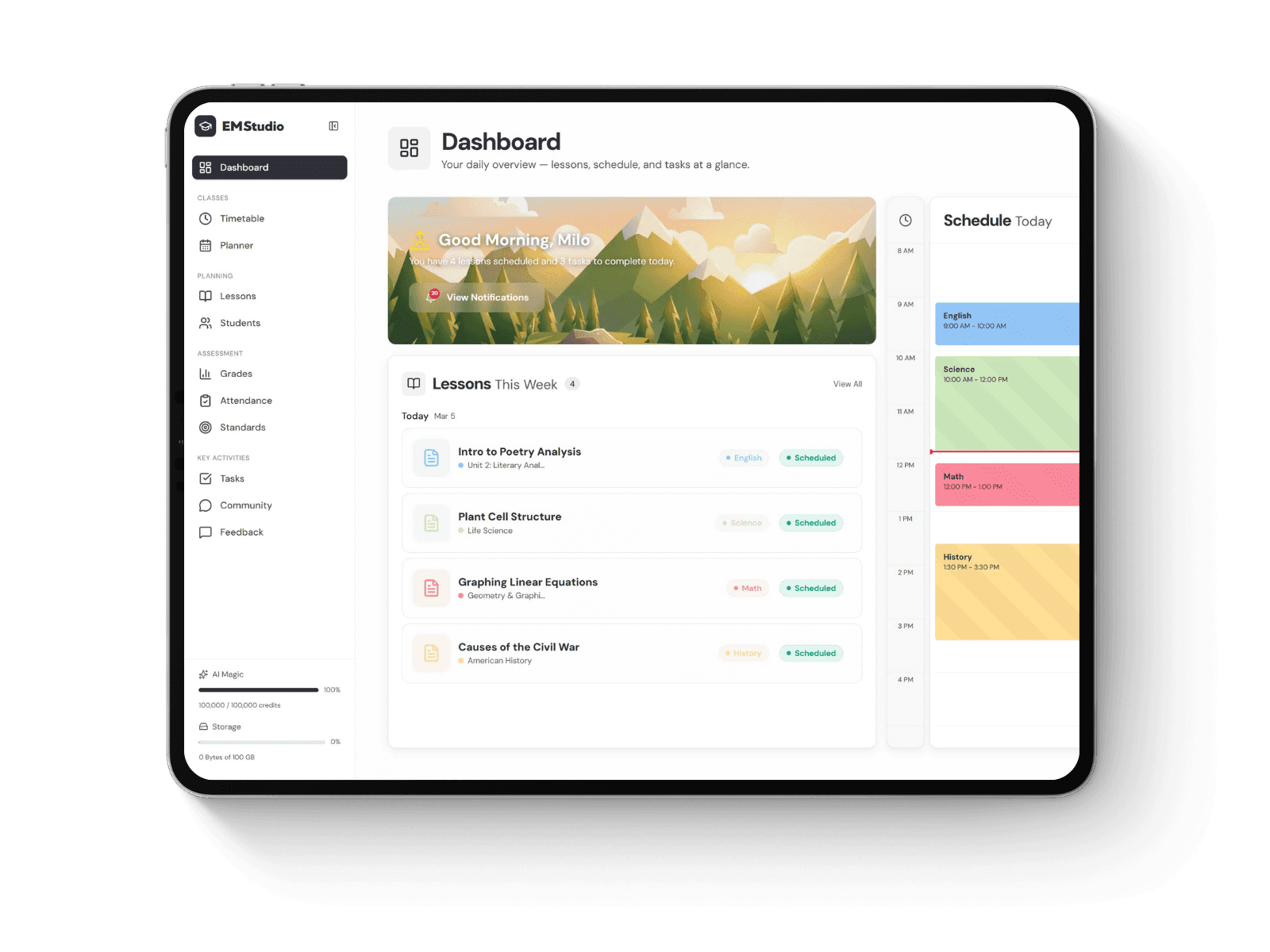
EMStudio is a free teaching management app — manage your classes, students, lessons, and more!
Peer Teacher Basics and What It's Called
Ever had a classmate explain a tough idea in a way that finally made it click? That's the heart of peer teaching. A peer teacher is a colleague: a fellow student, not an authority figure.
How students teach each other
In peer teaching, students explain material to each other, so learning happens with classmates rather than from the front of the room.
Sessions can be teacher-guided, with a teacher setting pairs and tasks, or teacher-free, with students working without one. Either way, the approach rests on social constructivism, the idea that people build understanding through interaction with others.
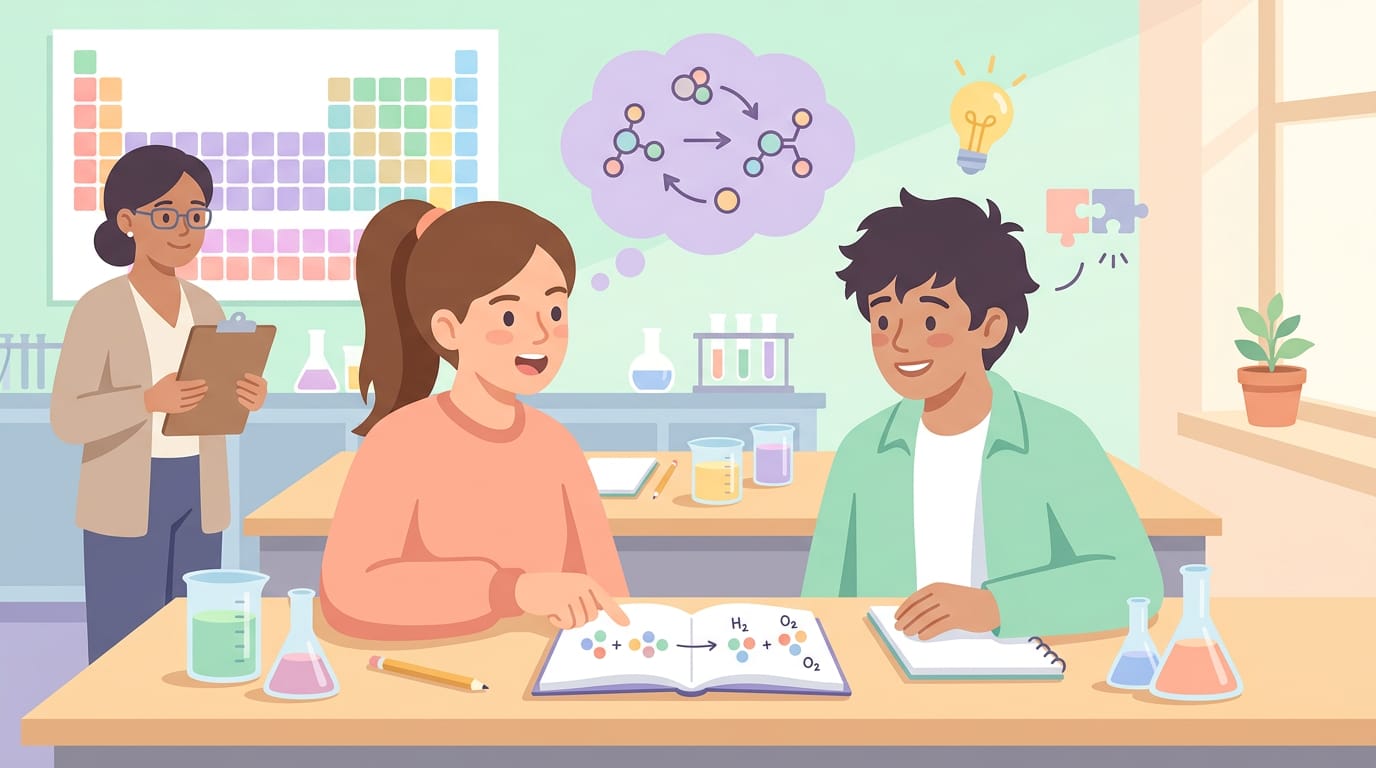
Peers also speak each other's language. Consider a student stuck on balancing chemical equations. A classmate who just mastered them might say, "Count the atoms on each side first."
Those are words she can use right away, and soon she's solving problems on her own.
Other names people use for it
You'll see the same idea under several labels:
Peer tutoring. Students tutor classmates on course content.
Peer instruction. Students work through questions together and explain their reasoning.
Peer-assisted learning. A structured approach in which students support one another's progress.
Peer research consultants. Students who help classmates with research, such as narrowing a question or finding sources.
How peer teaching differs from microteaching
Microteaching is a training technique in which teachers practice short lessons and get feedback on them. The difference is who is practicing and why.
Peer teaching is a student strategy for learning material, while microteaching is teacher training for presenting it. Microteaching centers on short lessons with feedback that sharpens the presenter's technique.
Peer sessions can be short too, but their feedback serves the learner's understanding. Same format, different purpose.
Why Peer Teaching Helps Students
Peer teaching benefits both sides of the pairing, and we see the gains in what students learn, how they feel, and the skills they take with them.
Learning more deeply and remembering longer
Explaining reorganizes material in your own words, which reinforces understanding and exposes knowledge gaps. Picture a chemistry teacher pairing a student who just mastered balancing equations with a struggling classmate.
The stronger student has to find new words, and the classmate often clicks.
A study of agricultural students in North Central Nigeria, in the Al-Hikmah Journal of Education, found better retention with peer tutoring than with traditional instruction.
The overview Peer Learning in Education describes the protégé effect: preparing to teach a concept deepens your own grasp of it.
Those gains reach exams. A meta-analysis in The Asia-Pacific Education Researcher found a moderate, positive effect on college students' academic performance.
Keeping students active and motivated
Peer teaching can promote active learning, where students do the thinking.
A study in Proceedings of the National Academy of Sciences on science, engineering, and mathematics courses found exam performance rose by 0.47 standard deviations under active learning.
Confidence grows with every explanation that lands. Each one is proof.
Peer teaching can increase student engagement. A systematic review of peer tutoring in special education found positive effects across seven domains, with engagement among the largest.
Educators often group it with High Impact Practices, a label for learning that asks students to do real, demanding work.
Building people skills that carry over
Explaining to a peer builds communication and empathy, since students rephrase ideas and notice when a classmate looks lost. Keeping a partner on track builds leadership, and students who help each other start to feel like part of the group.
Peer teaching builds hard skills, the subject knowledge itself, and soft skills that transfer to any job or course.
Support that speaks students' own language
Classmates often explain ideas in everyday words, and that's the version that finally sticks. It's about how an idea is said, not just what it says.
Peer feedback lands more easily than a grade, because it feels like help from a teammate.
Students who'd never ask in front of the class will ask a partner, lowering learning barriers.
Pairs also handle routine questions, freeing up your time for students who need you most.
Common Ways to Run Peer Teaching
Peer teaching comes in several forms, and your goals will shape which one fits best. Here's a quick look at the most common options.
Tutoring and mentoring approaches
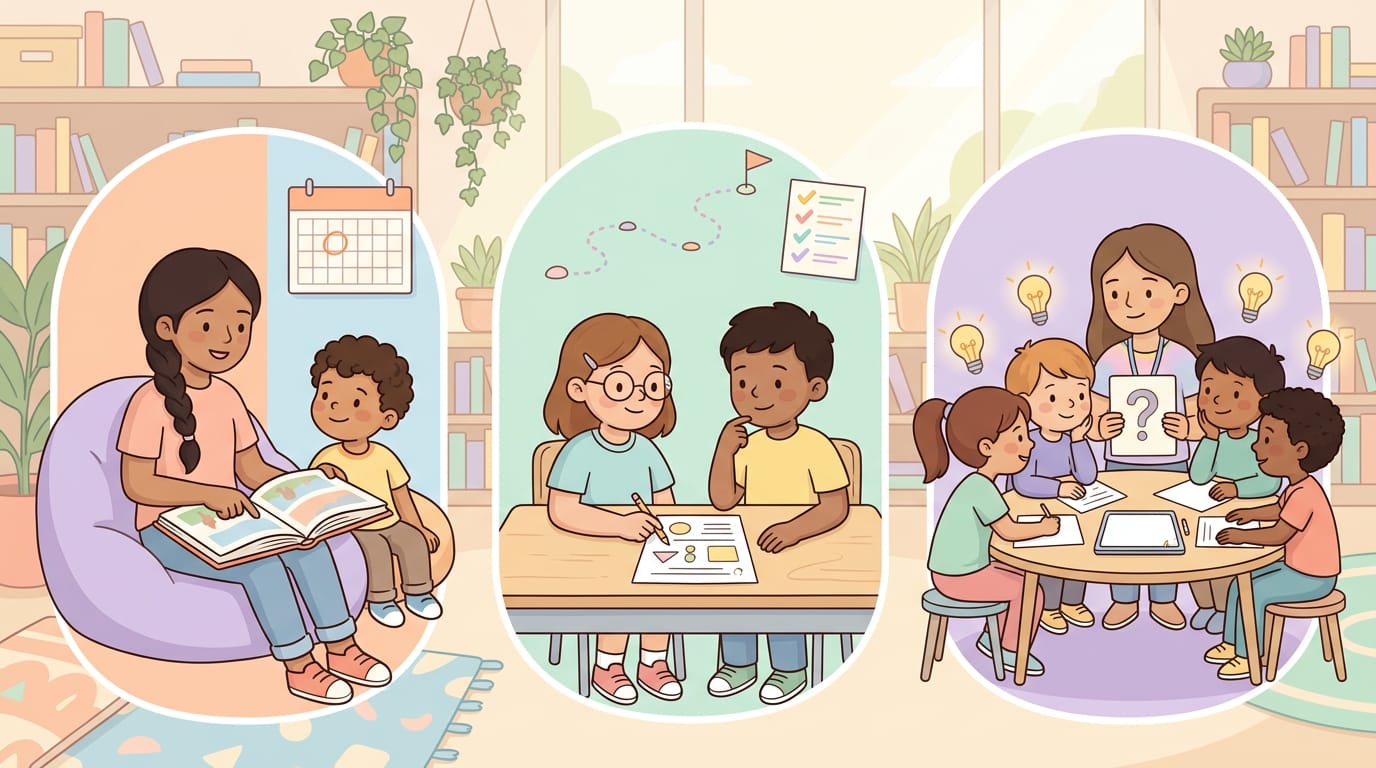
In cross-age tutoring, older students work with younger ones. Picture a fifth grader who reads with a second grader every Tuesday. The older student practices explaining, and the younger one gets patient support.
Peer tutoring pairs students who are close in ability, with one supporting the other on a specific skill. Peer mentoring runs longer, with a more experienced student guiding a classmate over several weeks on habits and steady progress.
In peer-led team learning, a trained peer leader facilitates a small group working through problems. The leader asks questions, but the group does the thinking.
Swapping between teacher and learner roles
In alternating roles, students take turns explaining a concept to a partner, then switch. Putting it in their own words is a different kind of thinking than listening.
Revision before exams works the same way. Students quiz each other or explain hard topics aloud. Think of a student who can't yet explain photosynthesis to a friend. That gap shows up fast, and it's better found during revision than on test day.
Working together in small groups
Small groups work best when everyone has a clear job. With assigned parts, each member owns one piece:
one researches
one drafts
one presents
In the expert model, each member becomes the expert on one part, then teaches it to the group. Nobody can coast.
Collaborative projects stretch that over weeks, as the group builds one shared product, such as a poster or model.
Adjust roles for students with special educational needs and multilingual learners, rather than removing them. Give a student with special educational needs a role built on a strength, like the visual summary.
Pair a multilingual learner with a classmate who shares their home language for quick clarification.
Learning by teaching the whole lesson
At the most ambitious end, students deliver entire lessons. Groups plan and teach a full class period on a topic they've studied.
Your role shifts to coach. You review their plans, offer feedback on delivery and content, and step in only when it matters. You're shaping how they teach, not what they teach. Step back, but don't check out.
A Peer Teacher's Role and Preparation
A peer teacher is a student who helps a classmate learn, and the role works best when it's clearly defined and well prepared. A clearly defined role starts with knowing what teachers do, both inside and outside class.
What peer teachers actually do
Peer teachers handle five core tasks:
Explain in student-friendly language. They use words classmates already know.
Model problem-solving. They work a problem aloud so each step is visible.
Ask guiding questions. “What comes first?” builds more thinking than the answer does.
Give immediate feedback. Errors get caught while they're still small.
Offer emotional support. They keep things calm when a classmate feels stuck.
Picture a classmate who keeps swapping two lab steps. Their peer teacher works one example aloud, then asks, “Which step comes first?” The learner fixes the mistake in seconds and tries the next step alone.
The goal is guiding the thinking, not supplying the answer.
Training peers and setting them up
Setting peers up takes some groundwork:
Prepare students for the role. Explain what a session covers and when to step in.
Provide materials and objectives. You supply goals and resources so everyone knows the target.
Train and supervise. Run a short practice round, then check early pairs.
Avoid reproducing misconceptions. Review key content first, since a confident peer can pass on a wrong idea.
That prep time saves you from untangling confusion later. Don't skip it.
How the teacher steers without lecturing
Once pairs get going, your role shifts from presenting to coaching. Three habits help:
Monitor interactions. Listen in on a few pairs to hear what's working.
Stay nearby for questions. Be close enough that a stuck peer can flag you quickly.
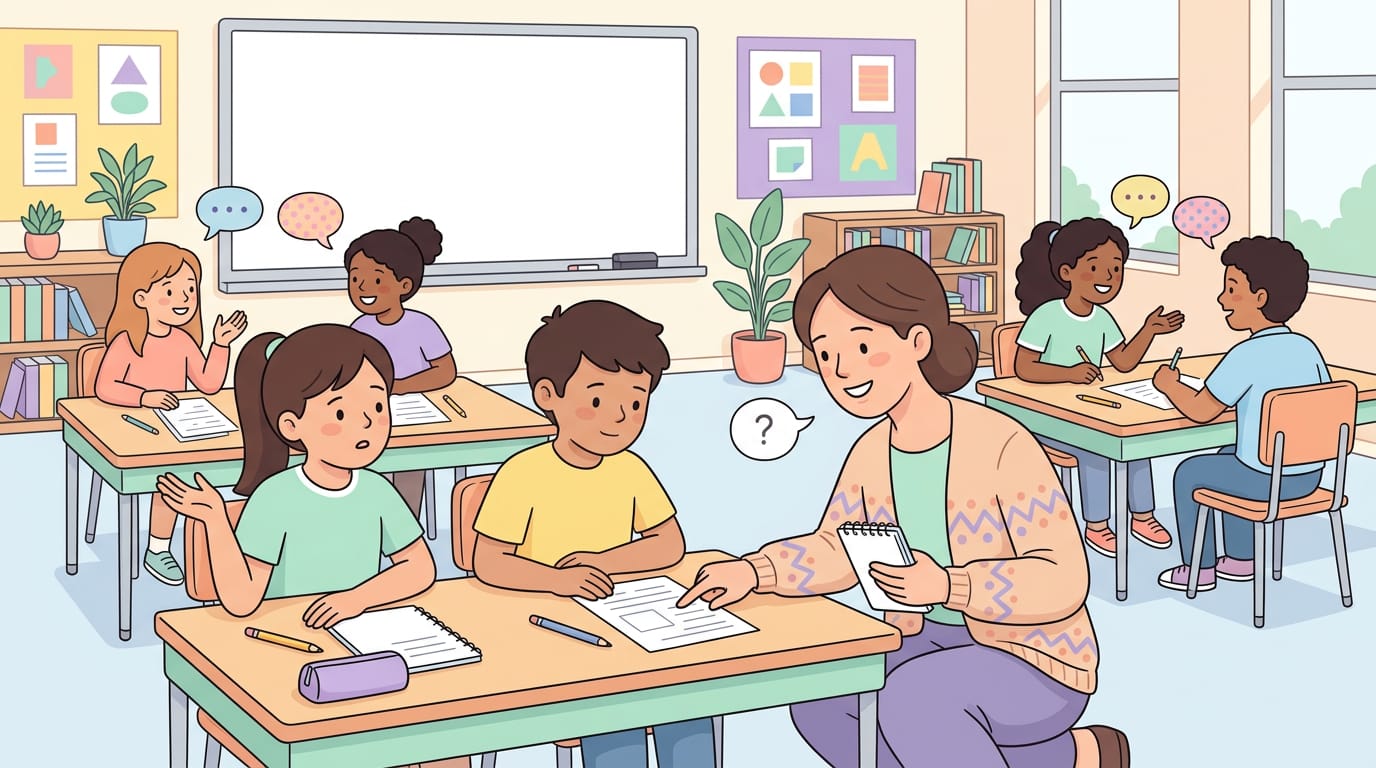
Coach rather than lecture. Offer a question or tip to the peer, not a lesson for the class.
How Does Peer Teaching Work?
In peer teaching, students take turns explaining material to classmates while you set goals and structure. Here's how a session runs:
Set one clear goal.
Group students by readiness and assign roles.
Have each student explain the material aloud.
Check what stuck and plan the next round.
Designing sessions with clear goals
Start with one question: what should students explain by the end? Select content carefully and skip anything the group has already mastered. Peer teaching is less about covering material and more about understanding it.
Think of a science teacher whose class just finished a lab. Two students who nailed each step walk a partner through it, which unsticks the partner and reveals a gap in the explainer's own understanding.
Run structured sessions regularly so students know what to expect. Track pairs and rotations digitally so you can see who has taught whom.
Putting groups together wisely
Keep groups to three to five students so everyone speaks. Assign roles like note-taker, and rotate them each session. Pair by readiness, not friendship. Friends often drift into chat, and a shaky student can't explain what they haven't grasped.
When one student does all the talking, the session stops being peer teaching. Readiness keeps everyone on task.
Plan the audience, staff, and schedule
Define audience and scope first: who attends, and which skills are in bounds. For staffing and scheduling, one teacher can circulate among several groups, stepping in only when a pair stalls.
In-person sessions let you read the room, while virtual ones need clearer instructions and a check-in at the start. For data and evaluation, note where each pair stalled, then adjust the next session.
Peer teaching fails when nobody reviews those notes, and the same gaps keep repeating.
Examples to Try in Class
These routines get students explaining ideas to one another and to themselves.
Jigsaw groups for splitting up topics
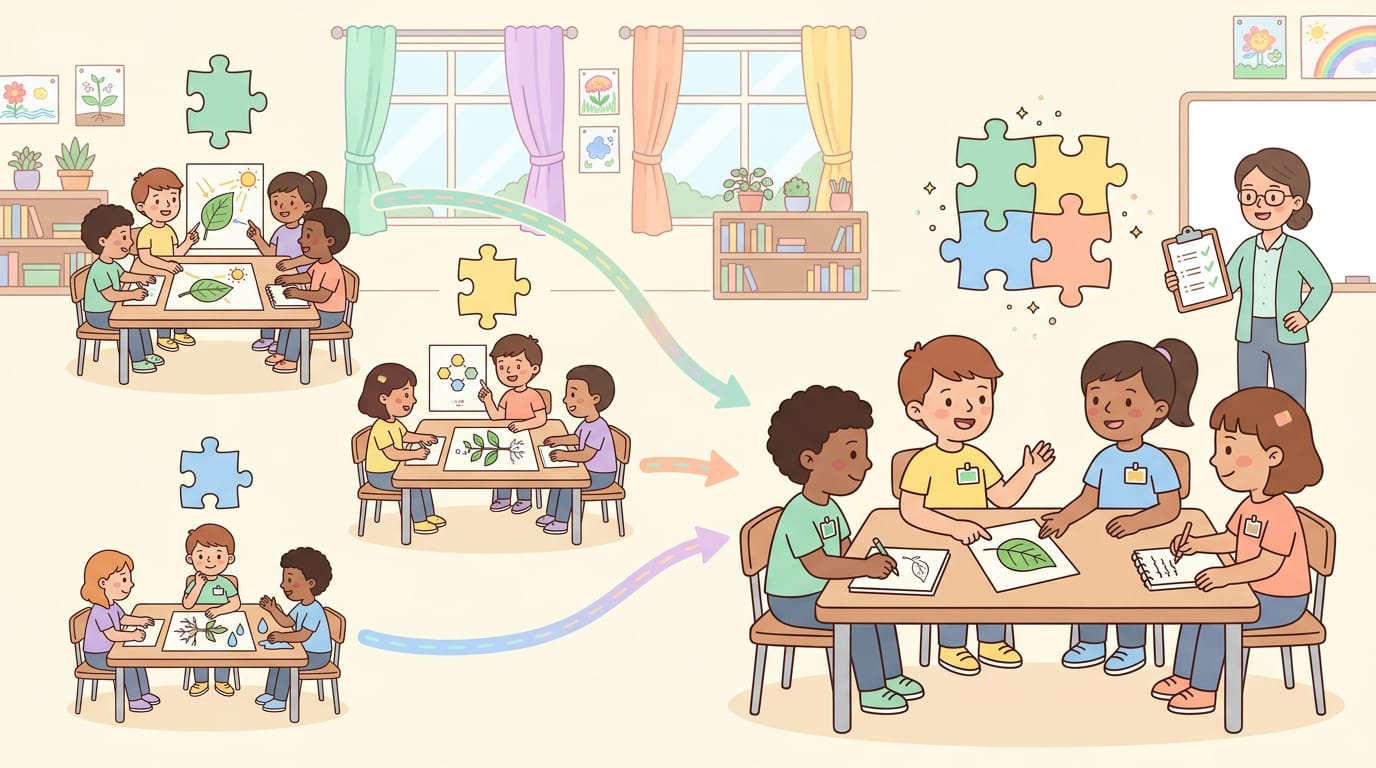
A jigsaw breaks one lesson into sub-topics so each student becomes the expert on a single piece. Split the lesson into three or four sub-topics and form expert groups to master each one.
Then regroup into home groups, with one expert per topic, so each expert teaches the rest.
Think of a biology teacher on a plant unit. One expert group studies how leaves capture light, while another explains how plants make sugar. In an atoms unit, groups could take protons, electrons, and bonding.
Close with a quiz covering every topic, so you can see whether the teaching landed.
Quick routines for peers to explain
Think, Pair, Share gives students time to form an answer alone, compare it with a partner, then contribute to the class. The pairing step catches misunderstandings before they reach the whole room.
The Three Before Me rule asks students to check with three classmates before raising a hand for you. The aim isn't fewer questions for you but more explaining from them.
Practicing teaching with no classmate
AI chatbot as a curious student: Students explain a concept to a chatbot and ask it to play a confused beginner. Each follow-up question reveals a gap.
Recorded tutorial videos: Students film a two-minute explanation, watch it back, and note where a clearer example would help.
Rubber duck explanations: Students talk through a problem aloud to an object on the desk. Saying each step often exposes the one that doesn't make sense.
Expecting to teach: Knowing they'll teach changes how students study. Studying for someone else feels far less optional than studying for yourself. Tell students on day one.
Reviewing material through teaching
Each one turns review into explanation.
Teach-back sessions: A student explains a concept to a partner without notes, and the partner names what was missing.
Summary cards: Students write the key idea on one side and a worked example on the other, then quiz each other.
Peer-made quizzes: Students write three to five questions for a classmate, which forces them to decide what matters most.
Reflective journals: Students record what they taught, what confused them, and what they'd explain differently next time.
Observing, Assessing, and Giving Feedback
Peer sessions only work if you can see how they run and whether students are learning.
Watching how peers work together
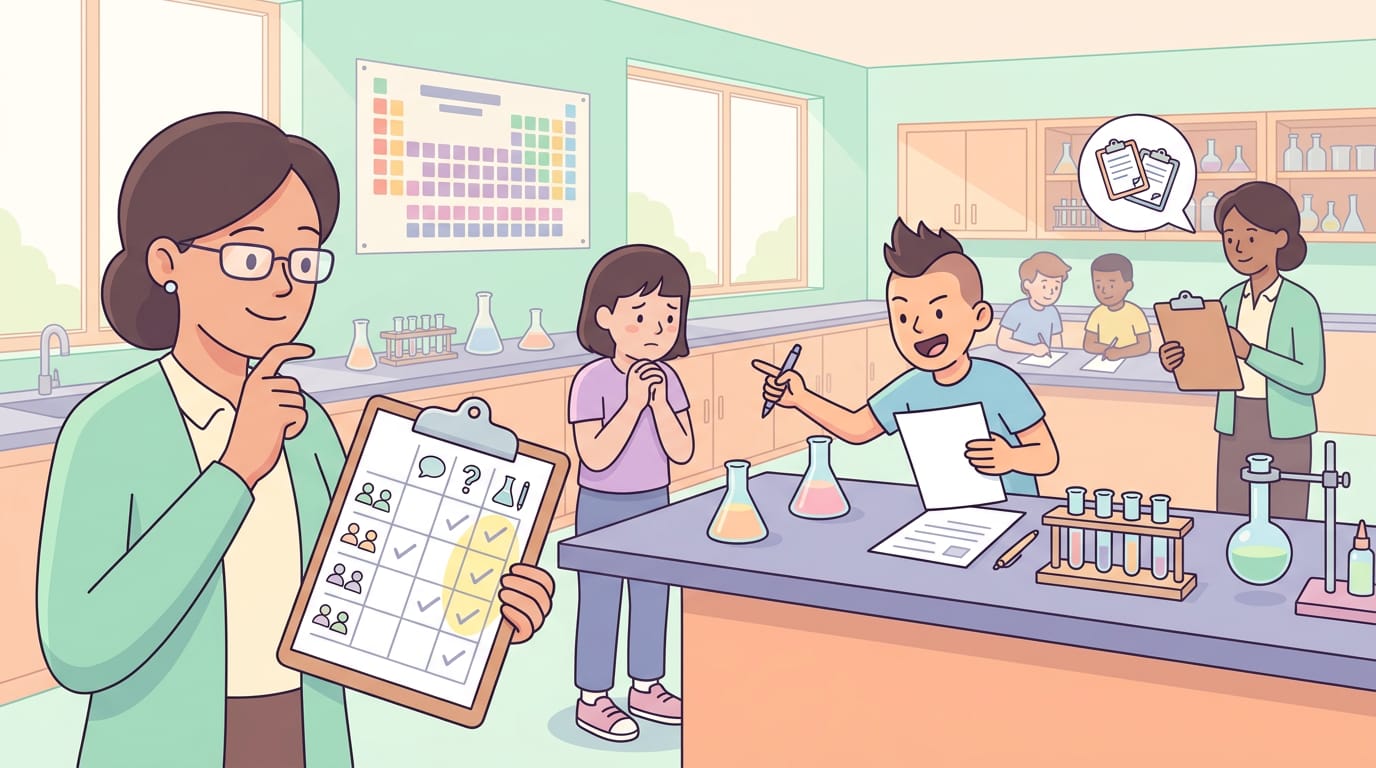
Use a structured observation grid with a row per pair and columns for who explains, who asks, and who handles materials. For example, a chemistry teacher spots one peer always grabbing the pen, which tells her when to step in.
Watch how students work together, not just whether they finish. Check two things: are explanations accurate, and does every student get a turn? A confident peer can teach a wrong method, and a quiet one can end up holding the worksheet.
Pair peer teachers to observe each other with the same grid, then trade notes. Fresh eyes catch what you miss from the front.
Checking both learning and the process
Watching shows the process; checking shows the learning. A formative assessment is a quick check during learning, so you can adjust what comes next. The simplest form is an exit ticket: two or three questions at the end of class.
A math teacher sees most students miss one question and reteaches it the next day.
Peers can also assess with a rubric: a short list of criteria rated clear, partly clear, or not yet. Specific criteria keep comments useful, so students hear what worked.
Use peer scores to inform your decisions, but don't let them replace yours. Spot-check a few rubrics to confirm everyone scores the same way.
Feedback works best in three parts:
Name one specific action. Point to what they did well.
Choose one fix. Pick the change that helps most.
Suggest a next step. Give them one thing to try.
Specific feedback gets used. Vague feedback gets ignored.
Peer Tutoring at Colleges and Libraries
Peer help doesn't stop at the classroom door. Colleges and libraries rely on students who've recently done the work to help others through it.
Research help from peer consultants
Many library research desks rely on peer research consultants, students trained to help classmates with the search itself. Picture a first-year student writing about local history who doesn't know which database to try.
A consultant who took that course last year can search alongside them and point out keywords that work. Same seat, same struggle. The student leaves knowing how to find sources, not just holding someone else's list.
A reference consultation is a one-on-one session where a student brings a specific question. The consultant asks what the assignment requires and where the student got stuck, then builds the skill rather than handing over an answer.
Peer consultants can also support course-related research projects. For example, a consultant might circulate through a class session while students plan their searches, answering questions as they come up instead of days later.
Library partnerships and real examples
Libraries can partner with writing centers, so a student working on a draft gets help with both the argument and the sources. A coordinated referral beats sending them from office to office and hoping they return.
For a real-world model, look at the Penn State Search Bar. Studying one working example gives you something concrete to plan from.
Shared tutor training brings consultants from different offices together to learn the same questioning habits. Students get a consistent experience wherever they walk in, and that's the payoff.
Peer teaching works best when students explain ideas to one another, when pairs are matched with care, and when you keep an eye on how sessions unfold.
Done well, it gives every learner a turn at being the expert, and that's a shift that often shows up across the whole room.
Ready to protect your energy while you build these routines? Check out our Teacher Life & Wellbeing posts for ideas that help you stay balanced through a busy year.
References
Effect of Peer Tutoring Strategy on Colleges of Education Agricultural Students’ Retention in Genetics in North Central, Nigeria | Al-Hikmah Journal of Education — alhikmahuniversity.edu.ng (2025)
Assessing the role of peer tutoring in special education: A systematic review — doi.org (2026)
Peer Learning in Education: Overview, Benefits, and Examples — wgu.edu
The Impact of Peer Tutoring Programs on Students’ Academic Performance in Higher Education: A Meta-analysis | The Asia-Pacific Education Researcher — link.springer.com
Active learning increases student performance in science, engineering, and mathematics — pnas.org (2014)
Still grading everything by hand?
EMStudio is a free teaching management app — manage your classes, students, lessons, and more!