
Tenure as a Teacher: What It Means and How It Works

Ever heard a colleague say they're 'on the tenure track' and wondered what that really means? Tenure comes up often, yet it's rarely explained clearly.
Put simply, teacher tenure is a status that gives educators added job protections after they've completed a probationary period. Let's break down how it works and why it sparks so much debate.
We'll cover what tenure is, how it's earned, what it protects, and how it's changing, then finish with practical tips to guard your career and wellbeing on the tenure track.
Still grading everything by hand?
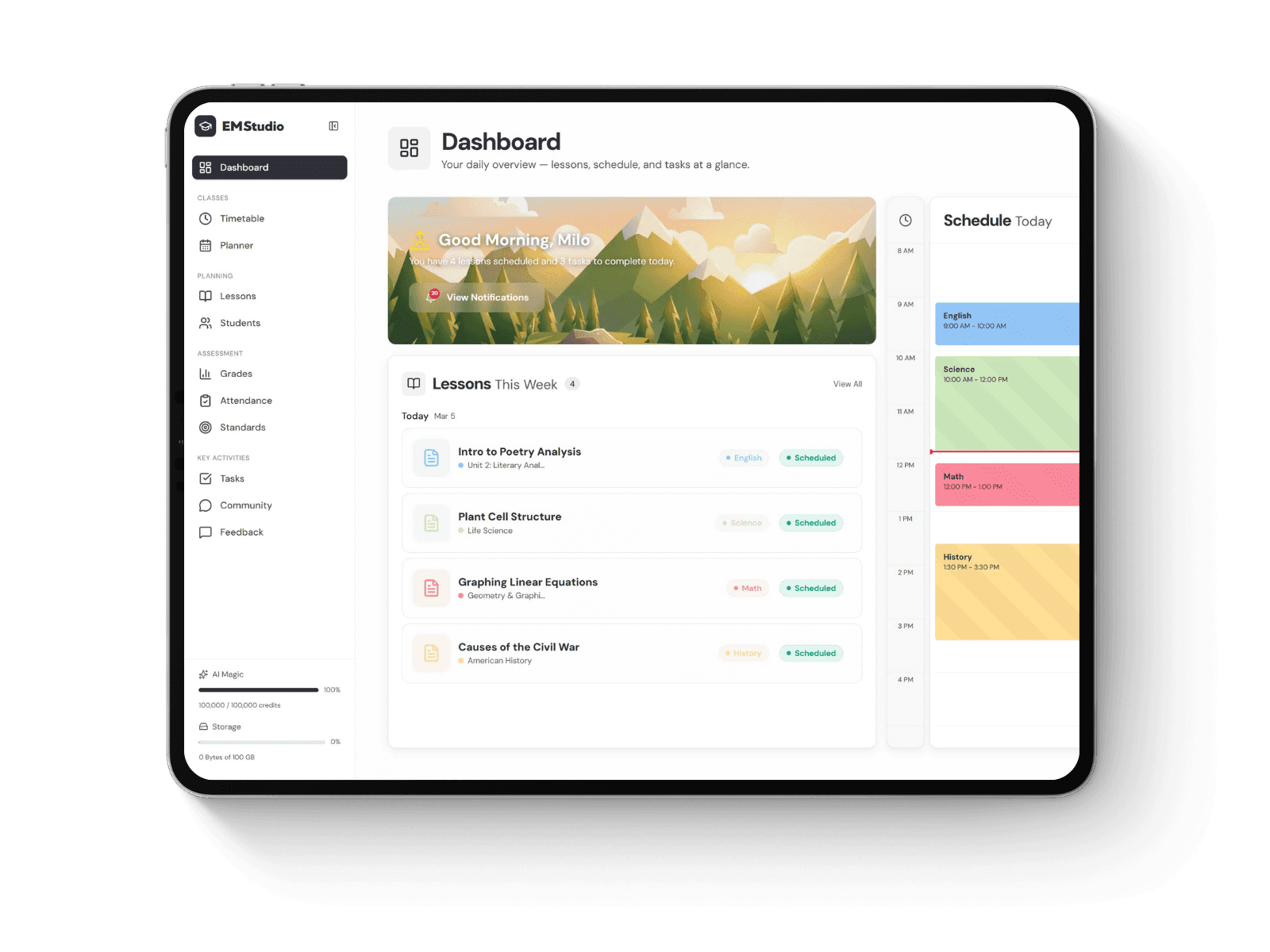
EMStudio is a free teaching management app — manage your classes, students, lessons, and more!
What Tenure as a Teacher Means
Tenure comes up often in teaching conversations, but it's frequently misunderstood. Here's what it does, where it came from, and why it varies by location.
What tenure protects and what it doesn't
Tenure is a status you earn after a probationary period. Once you have it, you gain increased job security and move onto an indefinite contract, which doesn't have to be renewed each year.
Think of a middle school science teacher who finishes her probationary years and receives tenure. Next fall, she isn't wondering whether her contract will be renewed. She's planning labs.
Tenure gives you a stronger claim to your job, not lifetime employment. Security, not immunity.
Where tenure came from
Teachers faced three problems before tenure spread:
At-will firing. A district could let a teacher go without giving a stated reason.
No due process. There was no formal way to challenge a dismissal.
Political patronage. Teaching jobs could be handed out as favors to political allies.
Tenure spread across the 1920s and 1930s, after teachers had faced those problems. A 1920s history from CFT, a union of educators and classified professionals, notes that "labor support was also instrumental in passage of the 1921 state tenure law."
Why tenure differs by district and state
Tenure isn't one national rulebook. A University of Central Florida analysis of teacher tenure legislation explains that the authority to enact tenure "lies with each state and is usually codified in state law."
That means state law can override local control, so a district's policy isn't always the final word.
With some 19,000 local districts and state laws that differ, tenure depends on where you teach.

How Teachers Earn Tenure
Tenure comes down to a few clear requirements, most of them about time and paperwork.
What makes a teacher tenured?
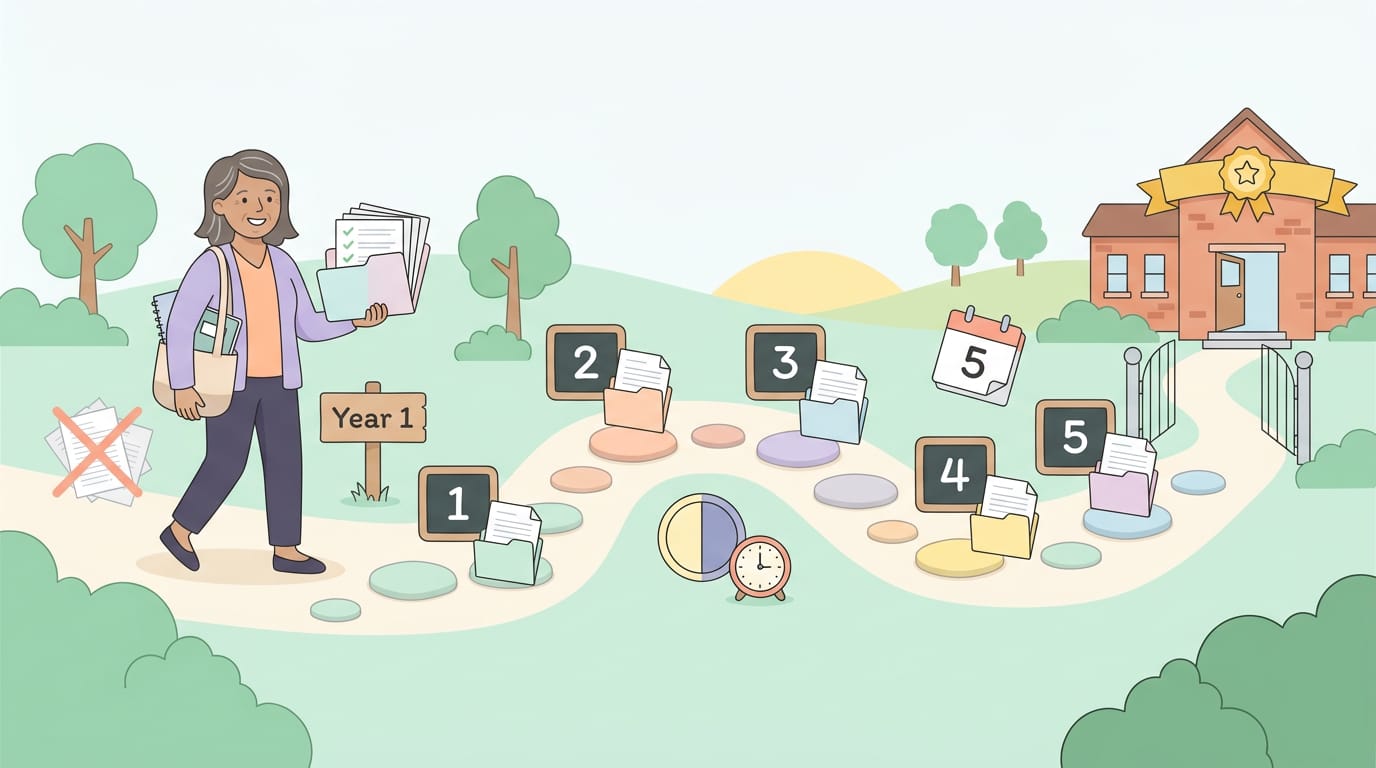
Tenure follows a probationary period, the stretch of service you must finish first:
Five consecutive years. For a college comparison, Valdosta State University requires at least five years of full-time service before awarding faculty tenure.
Credit for prior experience. Earlier experience may count toward that clock, so ask how your district credits it.
Prorated part-time credit. Part-time service counts in proportion to your load, so a half-time year counts for half.
No district discretion. Meet the requirements, and the district can't hold tenure back.
Document evaluations during probation. Keep every evaluation in one folder. A second-year teacher who does this has a complete file by year five, not a scrambled one.
Can a 40-year-old become a teacher? Age isn't among the tenure requirements covered here, so a career changer starting at 40 faces the same five-year clock. Whether earlier work counts depends on how your district credits prior experience, so ask early.
Jobs that never qualify for tenure
Some roles never qualify, however long you serve:
Extra duties like coaching. Coaching and other extra duties don't count toward tenure, even when they take real time.
Principals and supervisors. Administrative roles don't earn teacher tenure.
Non-certified at-will employees. Staff without teaching certification who work at will, meaning they can be let go without cause, don't earn tenure.
Recent moves to make tenure harder
Some states are tightening the rules. Illinois has changed its law, and North Carolina is replacing its career status. Rules change. Check yours before you plan around them.
Protections for Tenured and Probationary Teachers
Tenure and due process are related but different. Tenure governs how your employment continues from year to year, while due process governs how a district must act before it changes or ends that employment.
Contracts that continue without yearly renewal
Once you have tenure, you don't sign a new contract each year, and your position carries forward. That doesn't mean nothing changes. Changes require notice, and terms can be modified by mutual consent, meaning you and the district agree together.
If you plan to leave, give notice by June 1.
Picture a science teacher, tenured for six years, who learns her schedule will shift next fall. The required notice gives her time to plan instead of scrambling in August.
Tenure doesn't decide when you can retire. Retirement eligibility comes from your state's pension system, so whether 20 years is enough depends on where you work. Check those rules before you plan around them.
How a teacher can be dismissed
The grounds for dismissal include:
immoral conduct
incompetence
a felony
The process moves through these steps:
A 30-day improvement letter.
Written charges.
A hearing, where you can bring legal counsel, cross-examine witnesses, and use subpoenas.
Know the steps before a letter arrives.
Probationary rights and nonrenewal deadlines
Probationary teachers, still working toward tenure, have fewer protections. They keep due process rights during the contract term, but a district can decline to renew them for any reason.
That's the key difference: due process protects how a decision is made, not whether you're renewed. Districts must give nonrenewal notice by April 15, and contract issuance and return deadlines also apply, so track every date.
Waiting for that news is stressful, so keep a folder of observations, goals, and feedback. A second-year English teacher who does this walks into April knowing where she stands.

How demotion, layoffs and leave work
A demotion moves you to a lower position, and you're entitled to notice before it takes effect. Budget shortfalls can lead to unpaid leave. When positions are cut, seniority and performance are both considered.
Reinstatement rights govern whether and how you can return later.
Limits on what school boards can do
School boards have broad discretion, and courts defer to their decisions, so don't count on a judge to overrule a board's judgment. Boards must still follow their own policies, which gives you a concrete limit to point to.
Sunshine Laws, the open meetings laws, require many board decisions to happen in public. Watch the agendas.
Whether Tenure Helps or Hurts Teaching
Tenure divides people, and both sides have a point. Here's where each stands, and where unions fit in.
Why supporters want tenure kept
Supporters make five points:
Protection from personal or political firing. A principal's grudge or a shift in local politics shouldn't end a career.
Prevention of costly replacements. Without tenure, districts could swap veterans for cheaper newcomers.
Academic freedom. Teachers can tackle tough topics without fear of retaliation.
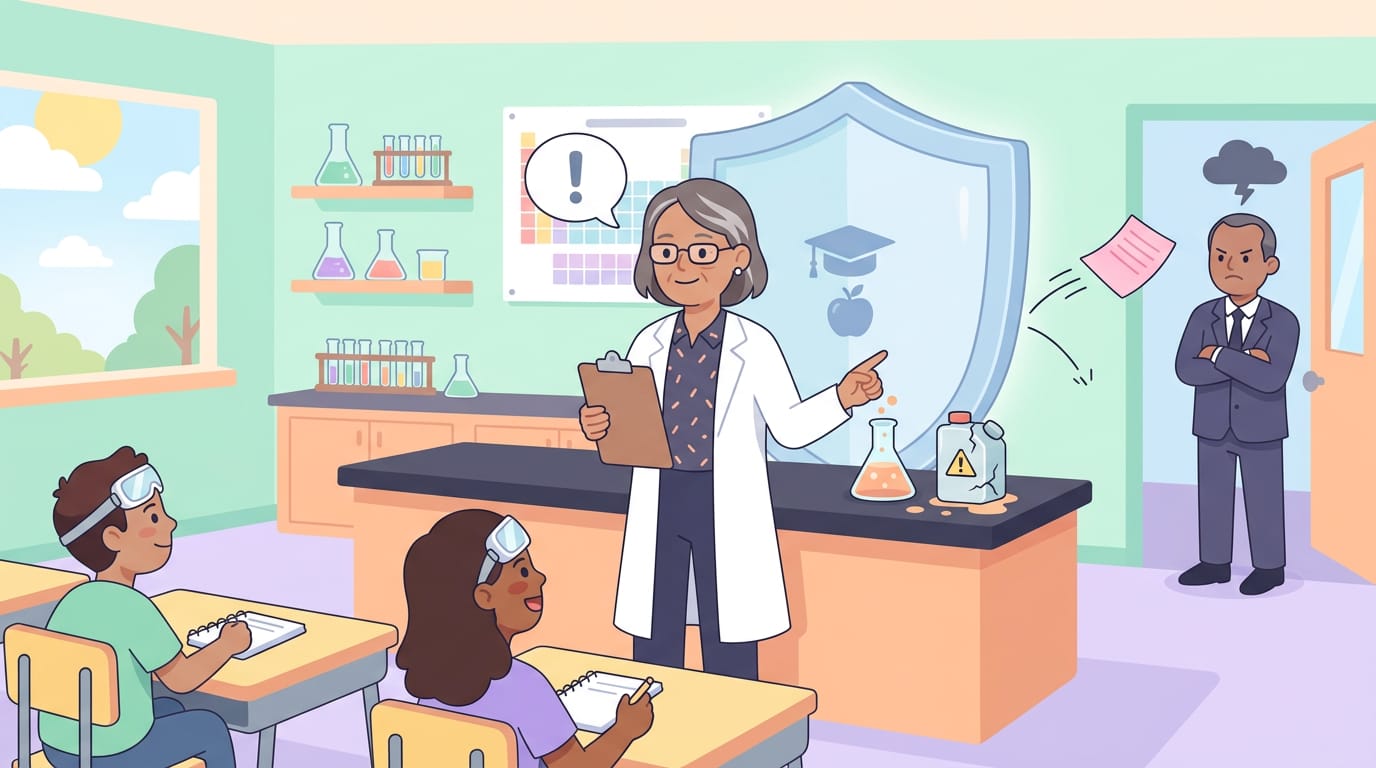
Advocacy for children. Consider a veteran science teacher who reports an unsafe lab. Tenure lets her speak up without risking her job.
Not a job for life. Tenure protects due process, not a lifetime position, so a tenured teacher can still be dismissed for cause.
Why critics say tenure should go
The concern is less about who gets protected and more about how removal works.
Hard to remove bad teachers. Dismissal often requires a long paper trail.
Costly dismissal process. Hearings and months of paperwork can discourage districts from acting.
Encourages complacency. Once the job feels secure, some teachers may stop growing.
Anti-discrimination laws suffice. Critics argue existing laws already protect teachers from unlawful firing, so tenure goes further than needed.
What teachers unions do about tenure
Unions defend tenure as a core protection for their members. Critics say they're too reactive, stepping in after a dismissal instead of helping teachers improve before problems arise.
Unions need to propose a way forward, such as early coaching, peer review, and firm timelines for fair dismissals. Picture a third-year math teacher struggling with classroom management.
A mentor who visits her room weekly could help her turn things around before any formal case. Early help beats a hearing. A support teacher is one way a school can put that kind of early help in place.
Court Fights and New Laws on Tenure
Each state sets its own tenure rules, so the protections you get depend on where you teach. Courts and lawmakers have recently pushed hard on those rules, and it's worth knowing what changed.
The Vergara ruling against California tenure laws
In *Vergara v.
State of California*, a Los Angeles Superior Court judge ruled in June 2014 that the state's tenure, dismissal, and seniority-based layoff laws were unconstitutional under the state's equal protection clause, the constitutional guarantee of equal treatment under the law.
The case is now under appeal, so the fight isn't over.
Teachers' unions have weighed in on the decision. The ruling applied to California's laws, but its impact on other states is still being debated.
New state laws reshaping tenure
Lawmakers in North Carolina, Kansas, and Florida have passed new laws that reshape tenure. Here's what stands out:
Four-year contract bonus. Some of these laws offer teachers a bonus to sign a four-year contract.
Lawsuits and protests. The changes have drawn both lawsuits and public protests.
Little negotiation. Teachers were given little room to negotiate the changes.
Think of a third-year teacher offered a four-year contract with a bonus attached. Before she signs, she'll want to weigh that bonus against the protections she's working toward and read every term closely, so she knows exactly what she's trading. Teachers weighing a bonus like this may also want to learn how the teacher incentive allotment works.
How Tenure Fits the Bigger Picture
Tenure often gets blamed for problems it didn't create. Let's zoom out first.
What really drives student achievement gaps
Achievement gaps usually trace back to poverty and segregation. Students in high-poverty neighborhoods or segregated schools start from a different place, and no contract changes that.
Underfunded budgets leave schools short on:
materials
support staff
extra help
Standardized testing overuse squeezes out the hands-on teaching struggling students need. Think of a teacher who spends weeks on test prep instead of working one-on-one with the students furthest behind.
Tenure isn't the cause. The real pressure points are the conditions teachers work in, not the job protections they hold.

Why teachers leave and face layoffs
Here's a figure to keep in mind. Australian researchers, as reported by ABC News estimate that up to half of graduate teachers leave within their first five years, further straining a sector already short on staff.
Not every departure is a choice. Budget-driven layoffs can hit highly qualified teachers too. Probationary teachers, who haven't yet earned tenure, face a different risk: nonrenewal, when a school simply doesn't offer the next contract.
Layoffs and nonrenewals can also wear down morale and raise stress for teachers already stretched thin. Think of a first-year teacher who spends the spring wondering whether a classroom will be waiting in the fall. That worry shows up in every lesson.
Context changes the conversation about tenure.
Tenure is a status earned over time, with protections that matter to you and to the students you serve. Understanding how it works, what it covers, and where the debate stands helps you plan your career with confidence.
Whatever stage you're at, protecting your wellbeing matters just as much as protecting your position.
Ready to build habits that keep you steady? Check out our Teacher Life & Wellbeing posts for practical ways to stay balanced.
References
California — ylab.law.harvard.edu (2025)
VSU Recognizes Faculty with Awarding of Tenure, Promotion — valdosta.edu (2026)
An Analysis Of Teacher Tenure Legislation In The United States — stars.library.ucf.edu (2012)
As teacher shortages loom across Australia these Queensland schools are trialling solutions — abc.net.au (2025)
Still grading everything by hand?
EMStudio is a free teaching management app — manage your classes, students, lessons, and more!