
Building Real Self-Belief as a Teacher: The Small Daily Habits That Actually Work
Building Real Self-Belief as a Teacher: The Small Daily Habits That Actually Work

Article by
Milo
ESL Content Coordinator & Educator
ESL Content Coordinator & Educator
All Posts
Teaching is one of those jobs where the gap between how much you're doing and how confident you feel doing it can be enormous. You can be marking until ten at night, running a lunchtime club, managing thirty different personalities in one room, and still lie awake wondering if you're actually any good at this.
That gap isn't proof you're failing. It's usually just a sign that your self-belief hasn't caught up with your effort yet.
Here's the part that changes everything once it clicks: self-belief isn't something you sit around waiting to feel. It's something you build, in small daily habits, the same way you'd build any other skill. It works exactly the same whether you're trying to change your whole life or just get through this term feeling more like yourself.
Here's what actually works, and why it applies just as much to a Monday morning in a classroom as it does anywhere else.

Still grading everything by hand?
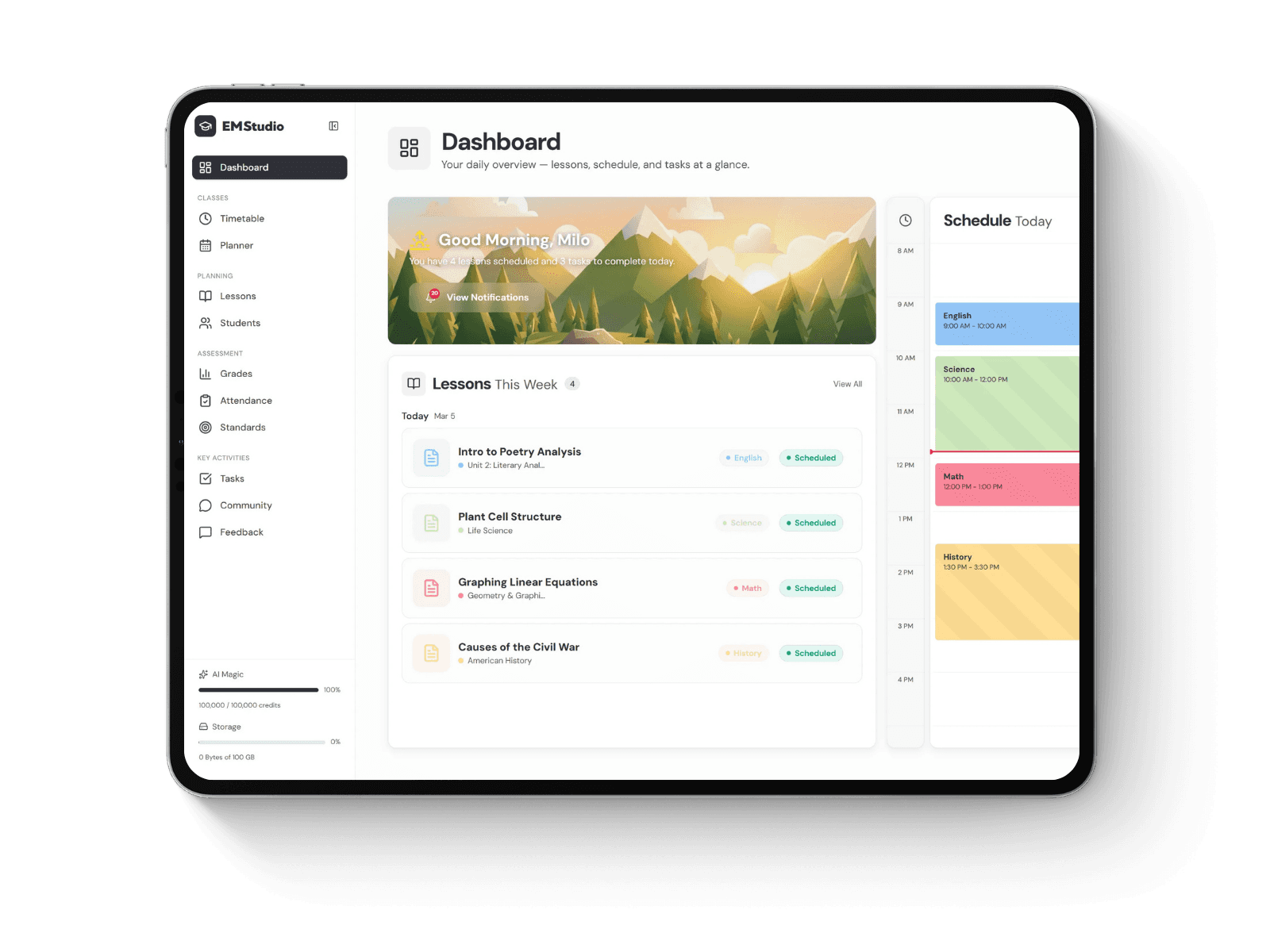
EMStudio is a free teaching management app — manage your classes, students, lessons, and more!
Learn More
Still grading everything by hand?
EMStudio is a free teaching management app — manage your classes, students, lessons, and more!
Learn More
Table of Contents
Why Self-Belief in Teaching Feels So Hard to Pin Down
Most jobs give you something to point to. A sale closed, a project shipped, a number that went up. Teaching rarely works that way. A great lesson today doesn't guarantee anything about tomorrow, and the results of your best work sometimes don't show up for years, if you ever see them at all.
That absence of clear feedback is exactly the gap self-doubt moves into. You compare yourself to the teacher next door who always seems calmer, more on top of their marking, more naturally good with the difficult class you're still figuring out. You have one lesson go sideways and it colours how you feel about the whole week.
None of that means you're not good at this. It means teaching, more than most jobs, needs you to build your own internal evidence that you're capable, instead of waiting for the job to hand it to you.
The 20-Minute Rule: Proof You Can Follow Through
The simplest habit I know for building real self-belief is what I call the 20-minute rule: twenty minutes a day, done on purpose, on something meaningful to you. Walking, reading, exercise, learning something new, it barely matters which. What matters is that you choose it and you actually do it.
For a teacher, that twenty minutes might be the walk before the first bell, without your phone, before the day starts pulling your attention into ten different directions. Or it might be the twenty minutes straight after the last class leaves, before you let marking swallow the rest of your evening.
The size is the whole point. Twenty minutes is small enough that "I don't have time" stops being a real excuse, even on the days you've got books to mark and a parents' evening to prep for. Do it consistently for a month and something shifts. You stop waiting to feel confident and start noticing you already are, because you've got thirty days of evidence sitting behind you.
Keeping a Promise to Yourself Beats Any INSET Pep Talk
Motivational talks wear off by the next staff meeting. What actually builds lasting confidence is something quieter: keeping small promises to yourself, especially on the days you don't feel like it.
You wouldn't keep letting a colleague down and still expect them to trust you. The same is true of the promises you make to yourself. Say you'll do that twenty-minute walk and then don't, and you quietly teach yourself that your own word doesn't mean much. Do it, even in a smaller form on a hard day, and you teach yourself the opposite.
That's the trick worth knowing for the weeks that get away from you, the ones with three deadlines and a difficult parent email all landing on the same Tuesday. On those days, shrink the habit instead of skipping it. Do five minutes instead of twenty. The standard stays the same, you show up in some form, only the size changes. That's what keeps the promise alive instead of broken.
Why Burnout Isn't Just Tiredness
Teaching is one of the professions most associated with burnout, and I think most people misunderstand what burnout actually does. It's not just exhaustion. Burnout quietly erodes your self-belief, convincing you that the tired, disengaged version of you showing up each day is simply who you are now, rather than a state you happen to be in.
It doesn't always look dramatic either. Sometimes it's not a breakdown, it's years of showing up, doing the job competently enough, and feeling a little less like yourself while you do it. Easy to miss precisely because nothing about it looks like a crisis.
Noticing a loss of interest or energy as a signal worth paying attention to, rather than a personal failing to push harder through, is the first real step. Pushing through alone tends to extend the fade rather than fix it.
Letting Go of the Lesson That Went Wrong
Every teacher carries a version of this: the lesson that fell apart, the comment from a parent that stung, the class you couldn't quite get control of on a Friday afternoon. What you do with that feeling afterwards matters more than the moment itself.
Most of us handle it one of three ways, none of which actually work. We push it down and carry it into tomorrow's lessons anyway. We replay it in our heads all evening, which just makes it bigger. Or we distract ourselves from it entirely, and it sits there waiting for a quieter moment to resurface, usually right before the next difficult class.
There's a fourth option, a simple technique for actually letting go of a hard feeling instead of carrying it: notice it, feel where it actually sits in your body rather than the story in your head, and let it be there without fighting it, until the energy behind it runs out. It always does, usually faster than you'd expect. That's what actually lets you walk into first period tomorrow without yesterday's bad lesson still sitting on your shoulders.
Small Habits Compound Into a Better Teacher, and a Better Person
None of this requires overhauling how you teach or rebuilding your whole routine over the summer. One small, honestly-kept habit tends to pull others in behind it without you forcing anything. The twenty-minute walk leads to picking up a book you'd been meaning to read. That leads to sleeping a little better. That shows up in how patient you are with a difficult class on a Thursday afternoon.
That's really the whole idea. You're not chasing some finished, fully-confident version of yourself that exists somewhere in the future. You're stacking small, honest pieces of evidence that you can trust yourself, and a more confident, more capable teacher builds themselves out of that evidence, one twenty-minute habit at a time.
Where to Start Tomorrow Morning
Pick one thing. Not five habits, not a whole new routine, one twenty-minute block you'll actually look forward to, and do it before you open your email. Do it again the next day. That's the entire plan.
If you want more of this kind of thing, practical, honest guidance on building self-belief without the fluff, The Catalyst Method sends free weekly tips on confidence, self-belief and the habits that actually stick. No sales pitch, just what's actually helped people build real self-belief, one small habit at a time.
Why Self-Belief in Teaching Feels So Hard to Pin Down
Most jobs give you something to point to. A sale closed, a project shipped, a number that went up. Teaching rarely works that way. A great lesson today doesn't guarantee anything about tomorrow, and the results of your best work sometimes don't show up for years, if you ever see them at all.
That absence of clear feedback is exactly the gap self-doubt moves into. You compare yourself to the teacher next door who always seems calmer, more on top of their marking, more naturally good with the difficult class you're still figuring out. You have one lesson go sideways and it colours how you feel about the whole week.
None of that means you're not good at this. It means teaching, more than most jobs, needs you to build your own internal evidence that you're capable, instead of waiting for the job to hand it to you.
The 20-Minute Rule: Proof You Can Follow Through
The simplest habit I know for building real self-belief is what I call the 20-minute rule: twenty minutes a day, done on purpose, on something meaningful to you. Walking, reading, exercise, learning something new, it barely matters which. What matters is that you choose it and you actually do it.
For a teacher, that twenty minutes might be the walk before the first bell, without your phone, before the day starts pulling your attention into ten different directions. Or it might be the twenty minutes straight after the last class leaves, before you let marking swallow the rest of your evening.
The size is the whole point. Twenty minutes is small enough that "I don't have time" stops being a real excuse, even on the days you've got books to mark and a parents' evening to prep for. Do it consistently for a month and something shifts. You stop waiting to feel confident and start noticing you already are, because you've got thirty days of evidence sitting behind you.
Keeping a Promise to Yourself Beats Any INSET Pep Talk
Motivational talks wear off by the next staff meeting. What actually builds lasting confidence is something quieter: keeping small promises to yourself, especially on the days you don't feel like it.
You wouldn't keep letting a colleague down and still expect them to trust you. The same is true of the promises you make to yourself. Say you'll do that twenty-minute walk and then don't, and you quietly teach yourself that your own word doesn't mean much. Do it, even in a smaller form on a hard day, and you teach yourself the opposite.
That's the trick worth knowing for the weeks that get away from you, the ones with three deadlines and a difficult parent email all landing on the same Tuesday. On those days, shrink the habit instead of skipping it. Do five minutes instead of twenty. The standard stays the same, you show up in some form, only the size changes. That's what keeps the promise alive instead of broken.
Why Burnout Isn't Just Tiredness
Teaching is one of the professions most associated with burnout, and I think most people misunderstand what burnout actually does. It's not just exhaustion. Burnout quietly erodes your self-belief, convincing you that the tired, disengaged version of you showing up each day is simply who you are now, rather than a state you happen to be in.
It doesn't always look dramatic either. Sometimes it's not a breakdown, it's years of showing up, doing the job competently enough, and feeling a little less like yourself while you do it. Easy to miss precisely because nothing about it looks like a crisis.
Noticing a loss of interest or energy as a signal worth paying attention to, rather than a personal failing to push harder through, is the first real step. Pushing through alone tends to extend the fade rather than fix it.
Letting Go of the Lesson That Went Wrong
Every teacher carries a version of this: the lesson that fell apart, the comment from a parent that stung, the class you couldn't quite get control of on a Friday afternoon. What you do with that feeling afterwards matters more than the moment itself.
Most of us handle it one of three ways, none of which actually work. We push it down and carry it into tomorrow's lessons anyway. We replay it in our heads all evening, which just makes it bigger. Or we distract ourselves from it entirely, and it sits there waiting for a quieter moment to resurface, usually right before the next difficult class.
There's a fourth option, a simple technique for actually letting go of a hard feeling instead of carrying it: notice it, feel where it actually sits in your body rather than the story in your head, and let it be there without fighting it, until the energy behind it runs out. It always does, usually faster than you'd expect. That's what actually lets you walk into first period tomorrow without yesterday's bad lesson still sitting on your shoulders.
Small Habits Compound Into a Better Teacher, and a Better Person
None of this requires overhauling how you teach or rebuilding your whole routine over the summer. One small, honestly-kept habit tends to pull others in behind it without you forcing anything. The twenty-minute walk leads to picking up a book you'd been meaning to read. That leads to sleeping a little better. That shows up in how patient you are with a difficult class on a Thursday afternoon.
That's really the whole idea. You're not chasing some finished, fully-confident version of yourself that exists somewhere in the future. You're stacking small, honest pieces of evidence that you can trust yourself, and a more confident, more capable teacher builds themselves out of that evidence, one twenty-minute habit at a time.
Where to Start Tomorrow Morning
Pick one thing. Not five habits, not a whole new routine, one twenty-minute block you'll actually look forward to, and do it before you open your email. Do it again the next day. That's the entire plan.
If you want more of this kind of thing, practical, honest guidance on building self-belief without the fluff, The Catalyst Method sends free weekly tips on confidence, self-belief and the habits that actually stick. No sales pitch, just what's actually helped people build real self-belief, one small habit at a time.
Still grading everything by hand?
EMStudio is a free teaching management app — manage your classes, students, lessons, and more!
Learn More
Still grading everything by hand?
EMStudio is a free teaching management app — manage your classes, students, lessons, and more!
Learn More



Notion4Teachers
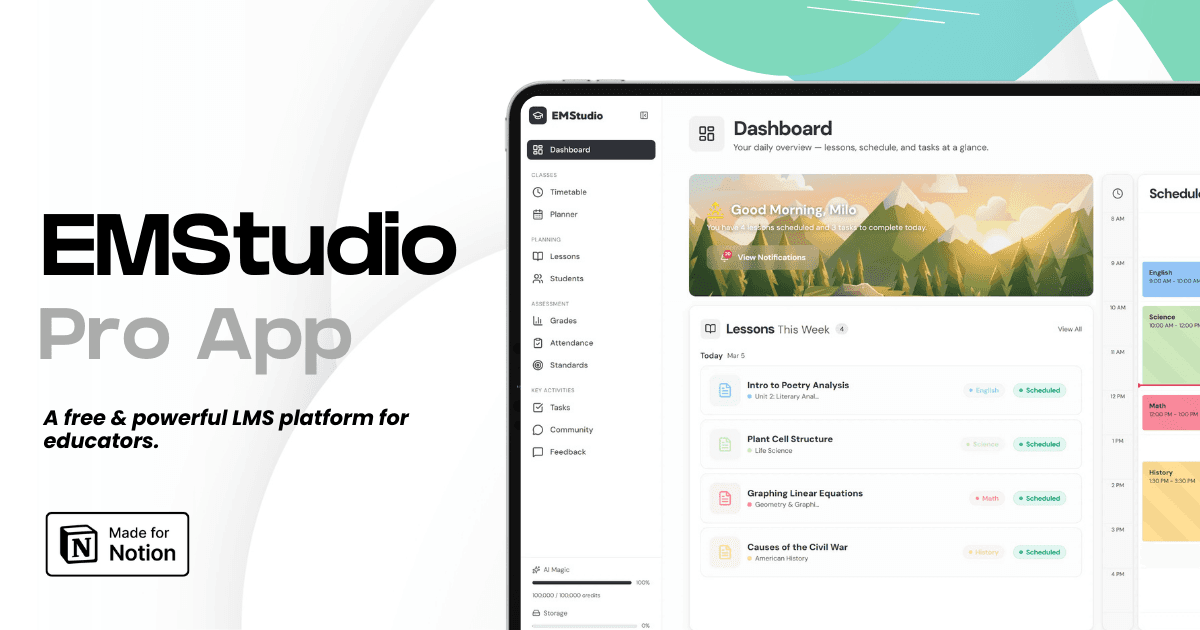
Notion templates to simplify administrative tasks and enhance your teaching experience.



2026 Notion4Teachers. All Rights Reserved.
Notion4Teachers
Notion templates to simplify administrative tasks and enhance your teaching experience.
2026 Notion4Teachers. All Rights Reserved.
Notion4Teachers
Notion templates to simplify administrative tasks and enhance your teaching experience.
2026 Notion4Teachers. All Rights Reserved.