
What do teachers do, both inside and outside class

Ask someone what teachers do and the answer is usually some version of teaching kids. That's true, but it's a bit like describing a restaurant as a place that serves food.
The meal is the part guests see, while the prep, planning, and cleanup happen mostly out of view.
In this post, we'll walk through the core of the job, the work that happens beyond the classroom, and the skills that set strong teachers apart. We'll also be honest about the emotional load, stress, and hours that job lists often leave out.
Still grading everything by hand?
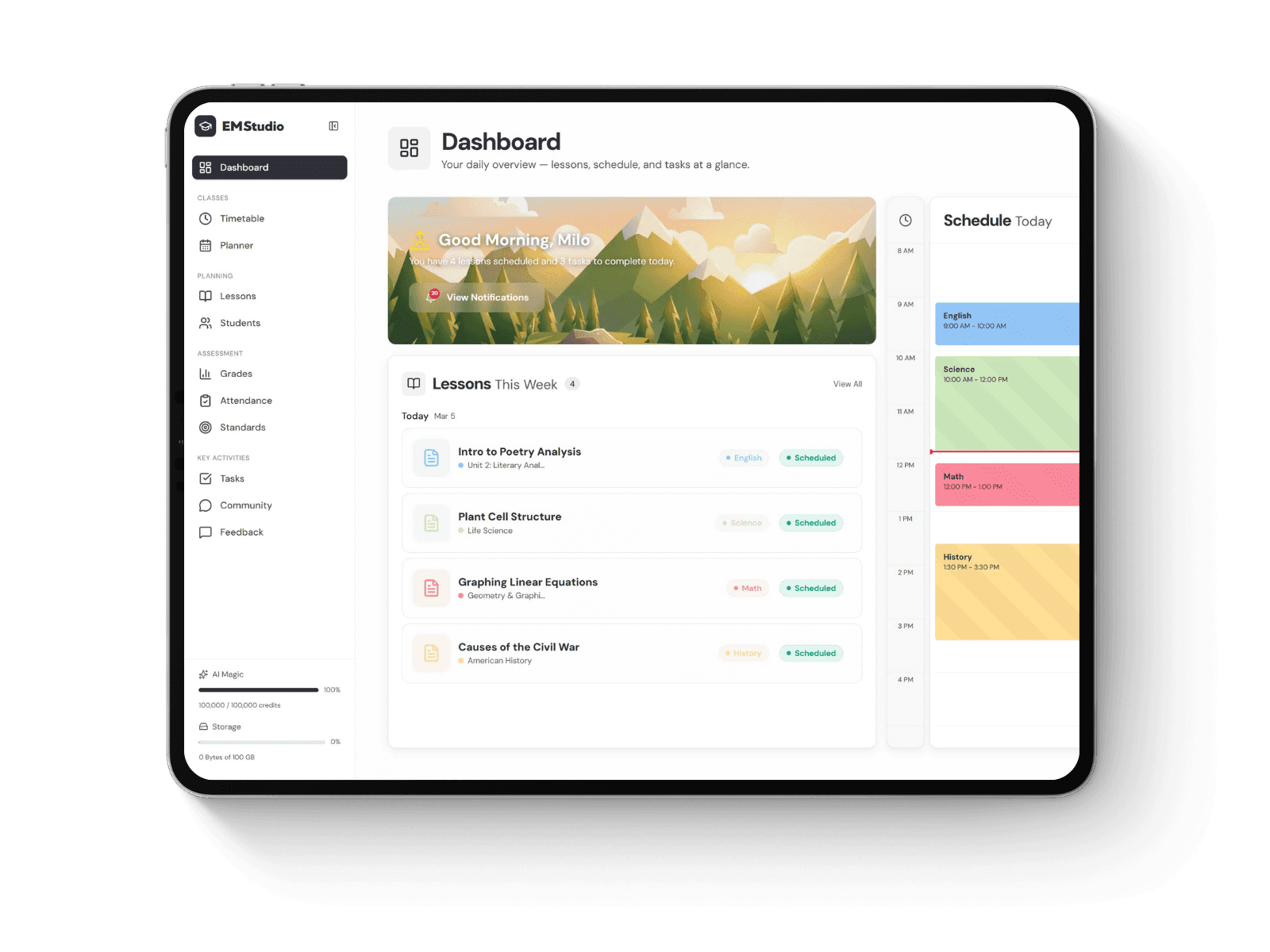
EMStudio is a free teaching management app — manage your classes, students, lessons, and more!
The Core of What Teachers Do
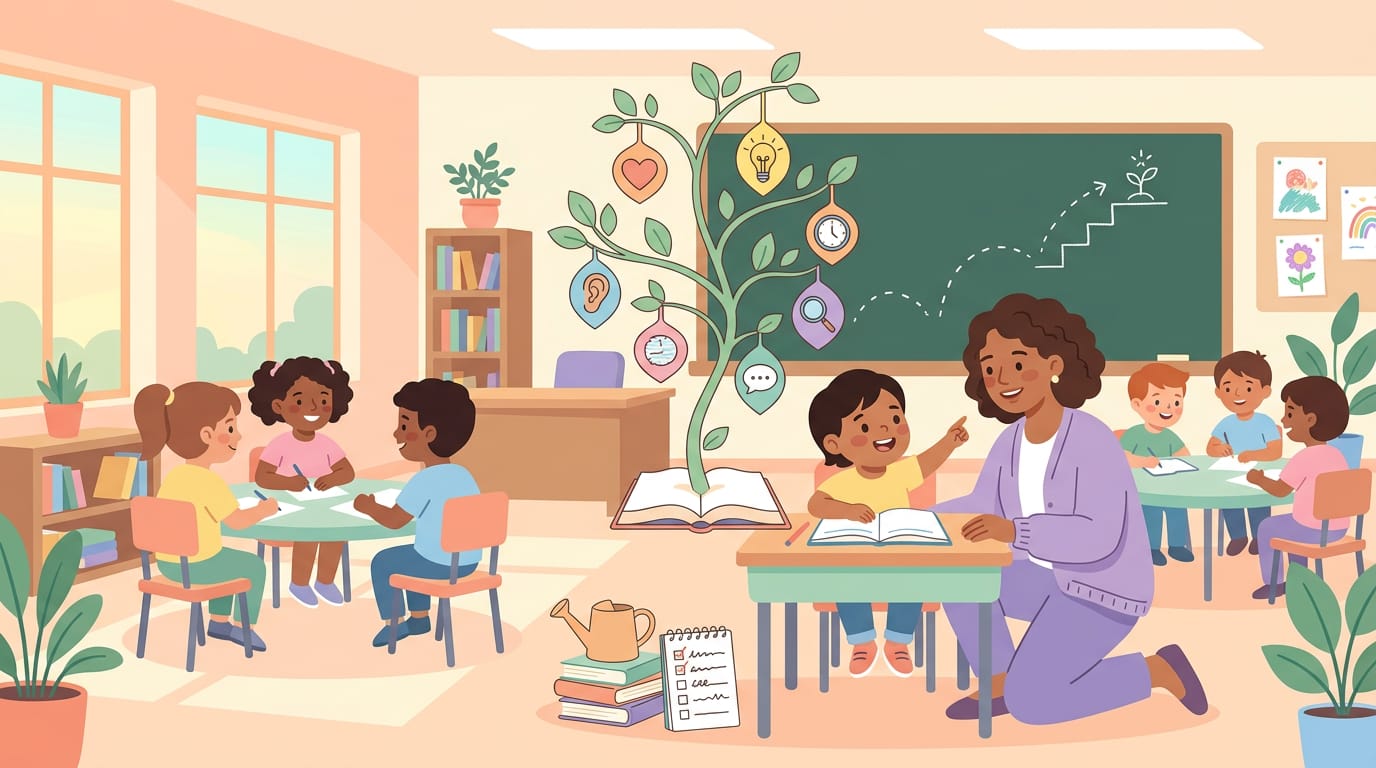
Teachers wear a lot of hats, but the core of the job is helping each student learn. If you've ever wondered what that involves, we'll walk through it step by step.
Planning lessons and getting materials ready
Good teaching starts before the bell. Teachers plan lessons tied to academic standards, the grade-level learning goals for each subject, and help shape the curriculum, the full sequence of what gets taught across a year.
Then comes setup: copying handouts, gathering supplies, and arranging the room. Picture a fifth-grade teacher who maps the week's fraction lessons on Sunday, so the tiles are ready by Monday.
A typical day moves from morning to dismissal:
Early morning: plan, prepare materials, and set up the room.
Class hours: teach and check for understanding.
Breaks: grade work and answer messages.
After school: meet with students or colleagues and plan tomorrow.
Teaching lessons in many different ways
No single method fits every lesson, so teachers mix:
Lectures and demonstrations introduce new ideas.
Discussions let students test their thinking out loud.
Individual and group teaching builds practice and peer learning.
Inquiry and project-based learning has students build answers to real questions.
Consider a science teacher whose class tests the pond behind school for water quality. Suddenly, students who usually tune out want to argue about the results.
That's engaging students at its best: less about what teachers say and more about what students do. Curiosity does the rest.
Checking progress, grading and giving feedback
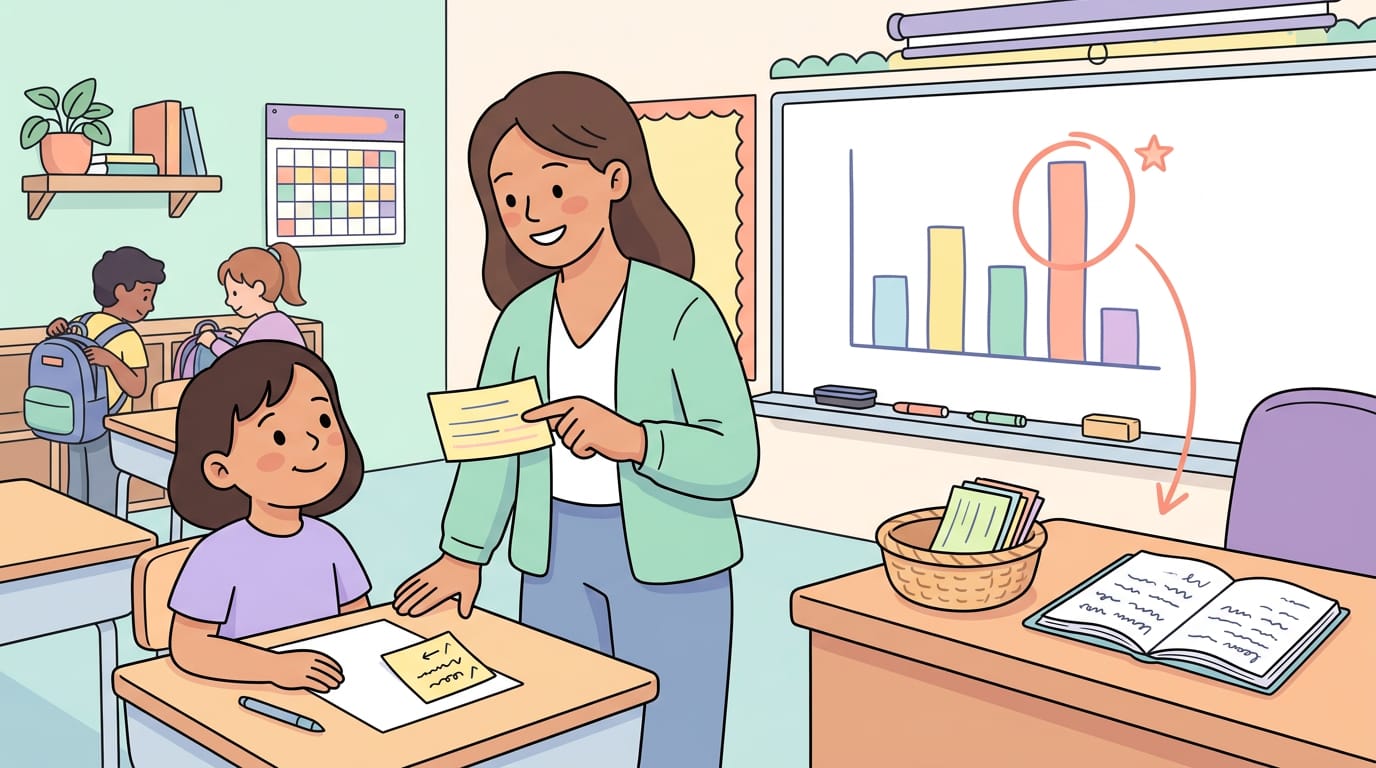
Formative assessment checks learning as it happens, like a quick exit ticket at the end of class. Summative assessment measures what stuck at the end of a unit.
Teachers grade tests and assignments, but the feedback that follows often matters more than the score. Feedback works best when it's specific, not general praise, and arrives while students can still act on it.
Results then shape planning: if half the class misses one question, tomorrow starts there.
Adapting teaching for each student's needs
Students read at different levels and need different support, so teachers adapt their methods:
An Individualized Education Program (IEP) sets goals and services for students with disabilities.
A 504 plan lists accommodations, like extra time on tests, that help students access learning.
Small group instruction gives a few students targeted practice while others work independently.
Culturally responsive teaching connects lessons to students' own backgrounds and experiences.
Using technology to build thinking skills
Teachers use a learning management system (LMS), an online hub for assignments and grades. They also teach digital citizenship, the habits of using online tools safely and respectfully.
The bigger goal is higher-order thinking: asking students to analyze, compare, and justify. The question isn't whether students can look something up, but whether they can make sense of what they find. The screen isn't the lesson; the thinking is.
Building a Classroom Where Students Thrive
A classroom runs on more than lesson plans. Rules, routines, and relationships decide whether students can focus, and that's something teachers build on purpose.
Setting rules and keeping routines steady
Teachers set a few clear rules early and enforce them the same way every time. Clear expectations and steady routines do much of the quiet work, so students spend less time waiting and more time learning.
Proactive strategies, like moving a restless student closer, stop trouble before it starts. When problems do happen, restorative practices aim for repair over punishment, letting students own what happened and make it right.
Looking out for students' feelings and struggles
Social-emotional learning (SEL) teaches students to manage feelings and get along, and teachers reinforce it daily. Watch for signs of distress, like a sudden drop in grades or a student pulling away from friends.
They often become the adult students turn to first, pointing struggling students toward counselors when needed. They also monitor social development, such as who gets left out of group work. Think of a quiet student who stops raising her hand.
One private question after class can open the door to the support she needs. Noticing is half the job.
Leading by example and inspiring students
Students notice how their teachers act, often more than what they say. When you handle a mistake gracefully, you show that effort matters more than getting it right the first time. Ever notice how a teacher's excitement spreads faster than any worksheet?
Curiosity is contagious. Honest, consistent grading and respect for every student, even the ones who are hard to like, model integrity and kindness.
Work That Happens Beyond the Classroom
Teaching doesn't stop at the final bell. Much of the job happens in emails, meetings, and compliance paperwork that never shows up on a lesson plan.
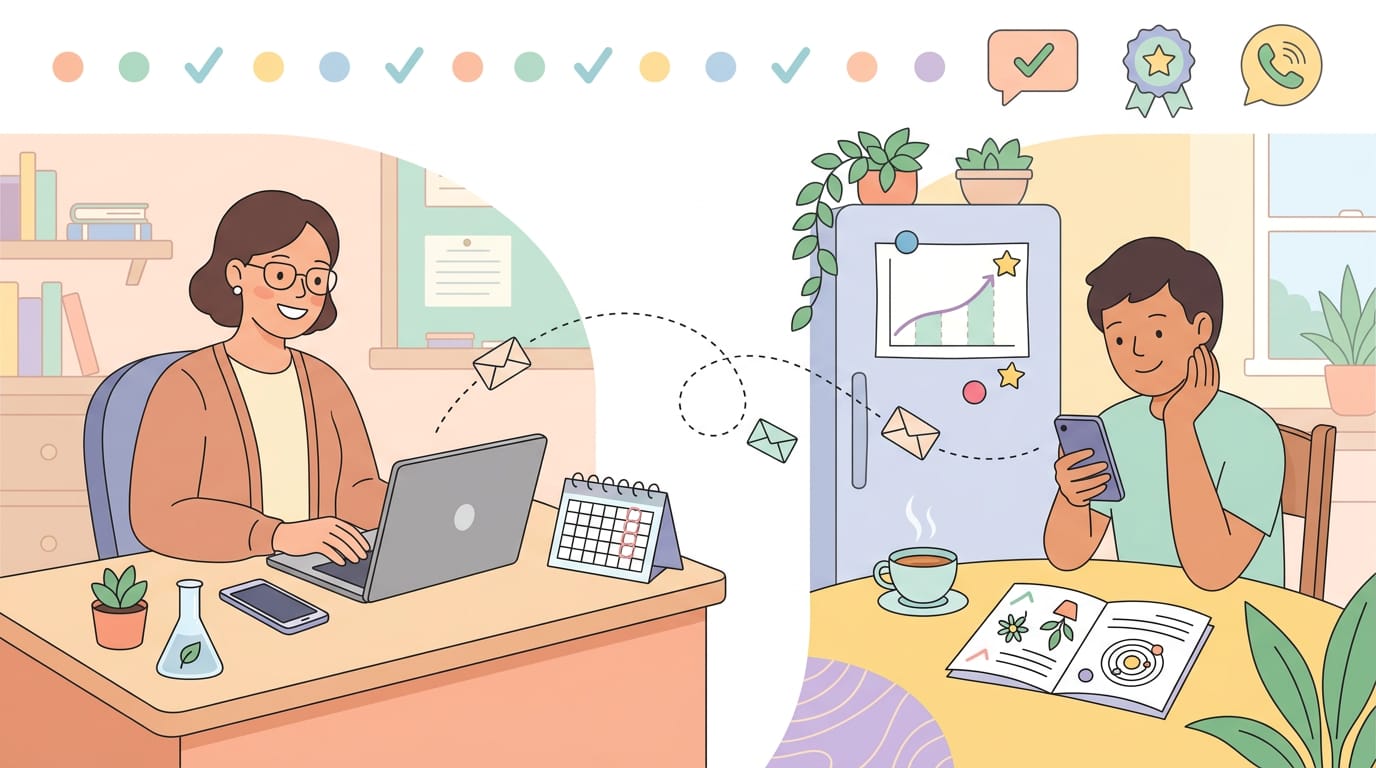
Keeping parents and families in the loop
Regular updates keep families in the picture. A seventh-grade science teacher who sends a short note every two weeks gives parents context before grades slip, so the first conversation is about solutions, not surprises.
Parent-teacher conferences are the formal side of this work, where you review progress and agree on next steps together.
Trust grows from consistency more than from grand gestures. Return calls promptly, share good news as readily as concerns, and stay straightforward when problems arise.
Teaming up with colleagues and specialists
Teachers on grade-level teams often plan together, aligning pacing so students moving between classrooms see a consistent sequence.
Schools also organize professional learning communities, groups that meet regularly to examine student data and decide what to try next.
You'll also work with counselors, special education staff, and reading specialists. If a third grader is falling behind in reading, one quick talk with the reading specialist can turn a worry into a shared plan. When a student keeps falling behind, a support teacher may be the next person to bring in.
Peer support is a daily lifeline. It often arrives in small moments, like a hallway question or a colleague who listens after a rough morning, and those moments can make a hard day manageable.
Coaching, clubs, and ties to the community
Many teachers also coach sports, advise clubs, and help run events like science fairs or family nights. Consider a high school teacher who advises the debate club, where a quiet student finds a place to shine.
Those roles add hours, but they build ties with families and the wider community.
Growing your skills through training and study
Workshops and conferences help you pick up new strategies, and some teachers pursue advanced degrees. Students teach you too: watching how a learner tackles a problem can reveal a misconception you hadn't spotted.
Staying current with research means reading about how students learn and testing new approaches in your own room. Growth is less about finishing a credential and more about ongoing curiosity.
How much time teaching really takes
The job extends past the school day. After-hours work often includes:
Lesson planning and preparing materials
Grading and written feedback
Responding to parent emails
Compliance paperwork and records
Grading takes real time, especially for essays. Nine in 10 teachers work on average more than 40 hours each week, according to a 2023 RAND Corp. report covered by Education Week.
Is teaching a stressful job? For many, it can be, and the pressure rarely comes from one place: long hours, a steady stream of tasks, and the weight of caring about how every student is doing.
Hours tell only part of the story. Teachers also carry an emotional load that doesn't clock out. Think of a teacher who spends a lunch break worrying about a student who seemed off that morning. The workday ends. The worry doesn't.

How Grade Level Changes the Job
The core work of teaching stays steady from kindergarten through twelfth grade, but the day shifts with who you teach. Here's how we see the change, and where middle school fits.
How elementary and secondary jobs differ
Elementary: academic and social skills. You usually teach most subjects to one group all day, so reading and sharing happen in the same room.
Secondary: subject-based teaching. You go deep on one discipline across several classes a day.
Shared core duties. Planning, checking understanding, talking with families, and managing the room happen at every level.
Daily work varies by level. Elementary schedules revolve around transitions, while secondary days revolve around bell schedules and passing periods.
Consider a second-grade teacher who starts with a reading group, then settles a dispute over a shared bin of markers. The reading group picks up right where it left off. Both the social and academic work get handled in one morning.
The purpose stays the same. What changes is how the day gets structured.
Life as a middle school teacher
Middle school sits between those two models. Some teachers cover one subject for several groups, while others teach two or more.
This band of grades also goes by intermediate or junior high, depending on where you live, but the job looks similar: students move from a single homeroom toward subject-based teaching.
Take a seventh-grade science teacher with three sections of the same class. After the first period, they tweak the lab instructions, so the third group avoids the confusion the first one hit. Small fix. Smoother day.
Job titles often name the subject too, like math teacher or science teacher, so the title tells you what you'll teach.
Skills That Make a Good Teacher
Subject knowledge gets you in the door, but daily teaching takes a different set of skills.
Patience, listening, and other people skills
Much of teaching is communication, and it starts with active listening: hearing what a student means, not just what they said.
Think of a student who keeps missing the same math problem. Patience gives them room to try again, and empathy helps you notice the worry behind the wrong answer.
Lessons rarely go exactly to plan. It's less about sticking to the script and more about adjusting when the class tells you something new. A demonstration that falls flat might need a fresh example on the spot.
Organization and time management keep the load in check. Between planning and grading, a teacher's week fills fast. A simple system for deadlines keeps it manageable, and without one, small slips pile up.
What employers look for in job ads
According to the study Recruiting the 'quality teacher': equity, faith, and passion, teacher job postings commonly seek skills such as classroom management and differentiated instruction. Here's what each skill involves:
Lesson planning. Deciding what students should learn, how you'll teach it, and how you'll check it stuck.
Classroom management. Routines and focus that keep learning on track.
Differentiated instruction. Adjusting the same lesson so a student who's ahead and one who's behind both stay challenged and supported.
Subject-specific education skills. Deep knowledge of your subject, plus the skill to turn it into lessons students can follow.
Parent communication. Keeping families informed about progress and concerns, using the clarity and listening you bring to students.
The job ad lists the skills. The classroom proves them.
The Goals Teachers Set and Their Impact
Teachers set learning goals, the specific things students should be able to do by the end of a unit. When we look at what teachers do, those goals are where their impact begins.
What does a teacher do for you?
A teacher's work reaches you in four connected ways:
Educate. Teachers turn a textbook into understanding, one explanation at a time.
Inspire. They spark the curiosity that keeps people learning after the final bell.
Learn. Great teachers keep learning from students, adjusting when a confused look says a lesson isn't landing.
Effect change. Each year, they shape the direction of students' lives, often in small, everyday moments.
That's what a teacher does for you: they build knowledge, confidence, and habits that last.
Think of a sixth grader who has never liked reading. Her teacher notices she lights up over graphic novels and starts there. By spring, she's reading because she wants to, not because she has to.
Stepping into leadership and shaping schools
Teachers who want to step up have three main paths:
Work in high-needs schools. Some teachers choose buildings where students face the steepest barriers, because that's where skilled, steady teachers matter most.
Earn a master's for leadership roles. A graduate degree prepares teachers to coach colleagues or move into school administration.
Shape local education. Teachers influence curriculum committees and the board meetings that set priorities for the whole district.
Picture a veteran English teacher who earns her master's and becomes her building's literacy coach. She used to reach one classroom. Now she helps colleagues sharpen their reading lessons across the whole building. Her reach just got bigger.
How to Become a Teacher
Teaching isn't one road, so the right path depends on where you're starting. Here's how we map the main routes.
Taking the traditional route to certification
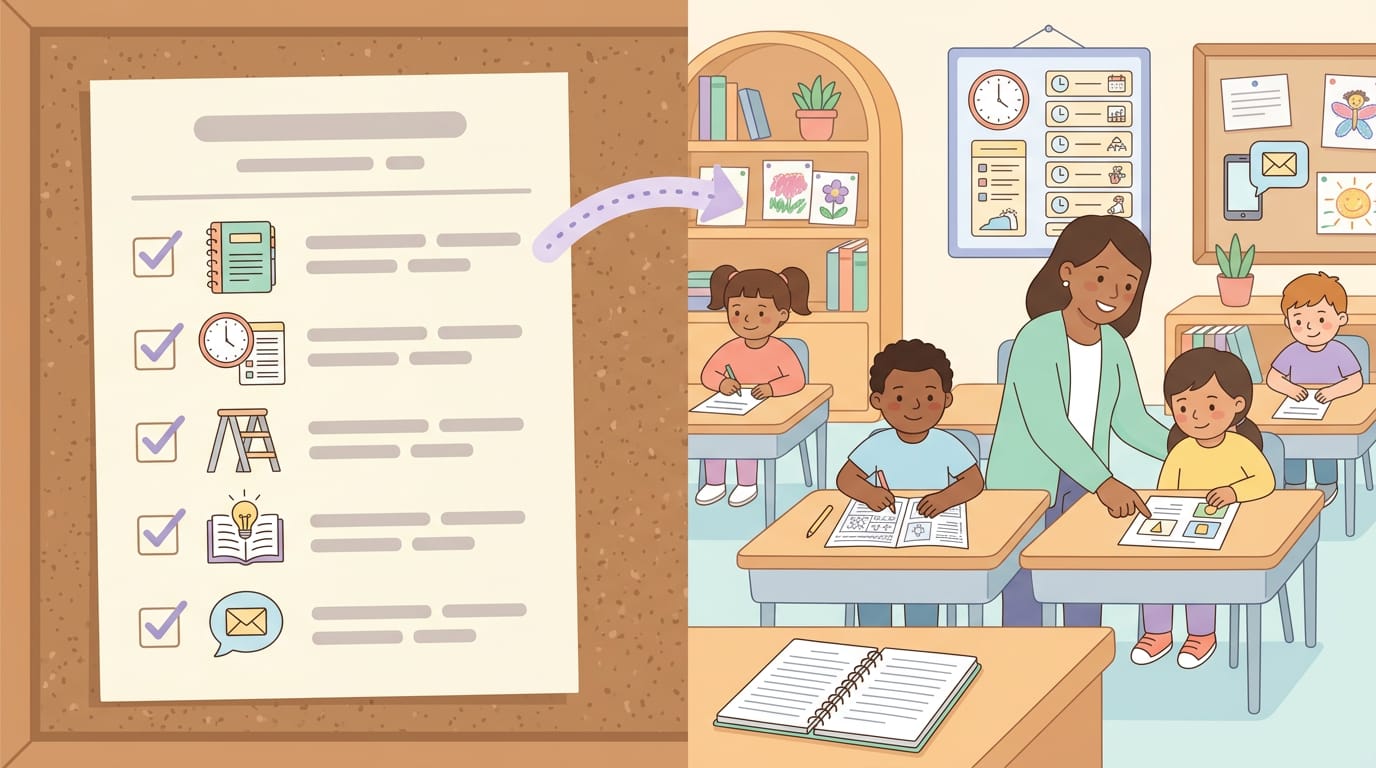
The traditional route runs in this order:
Bachelor's degree: Your starting point for almost every other step.
Teacher preparation program: Training in lesson planning, classroom management, and how students learn.
Student teaching placement: Real classroom time under an experienced teacher, where you practice with actual students.
State certification exams: Tests of basic skills and your subject, set by your state.
Apply for licensure: Submit your application once you've met every requirement. Licensure is your official permission to teach.
Picture a former accountant teaching math: she knows the subject, so her placement is about learning to explain it to thirteen-year-olds.
Which exam is best? The one your state requires, not the one a friend took. Check your state's education department before you register.

Other ways in, including graduate programs
Alternative certification serves people who already hold a degree in another field. A career changer can begin preparing while she keeps her paycheck, so the switch happens in steps, not one leap.
Online MAT programs offer a Master of Arts in Teaching (MAT), a graduate degree that combines coursework with classroom practice and fits your own schedule.
An education degree builds the training into your undergraduate years, so you graduate with the degree and the preparation.
Induction is the structured support period after you're hired, often paired with an experienced mentor who observes your lessons. Certification gets you in the door. Mentoring helps you thrive once you're inside.
What the Teaching Job Market Looks Like
Before you can say what teachers do, it helps to know where they work and where the openings are.
Where most teachers actually work
Most teachers work in local government schools, the public districts that local governments run. Public elementary and secondary schools serve students from the early grades through high school.
Religious organizations also hire teachers, such as for faith-based schools.
Pay offers useful context, too. According to the Bureau of Labor Statistics, educational instruction and library occupations had employment of 9.1 million and an annual mean wage of $67,540.
That group is broader than teaching alone, so treat it as a benchmark rather than an exact teacher figure.
Which teaching jobs have the most openings
Job postings are a direct proxy for school hiring needs, and those needs vary by subject. A study on teacher job postings describes them that way and documents how those needs vary across districts, schools, and subject areas.
Arkansas's teacher supply reporting is a useful model. It sorts applications and vacancies by level, from elementary (K-4) to middle school (5-8) and high school (9-12), and by subject, including:
math and science
language arts
social studies
For middle school science and math, that breakdown lets you compare vacancies against social studies and English language arts (ELA).
Counting postings by title is the quickest way to spot demand. Think of a middle school math teacher moving to a new city. Filtering listings for her certification shows her where openings cluster, so she can aim her applications where the jobs are.
Postings differ from district to district, so the subject behind each one often tells you more than its title does. Demand is uneven.
Teaching is far more than what happens at the front of the room. It's the daily instruction, the planning and feedback behind it, and the emotional energy that carries it all.
When you see the whole picture, the job makes more sense, and so does the toll it can take.
Ready to look after yourself too? Check out our post, Teacher Life & Wellbeing, to explore the wellbeing side of the job in more depth.
References
Occupational Employment and Wages News Release — bls.gov (2026)
Recruiting the ‘quality teacher’: equity, faith, and passion — doi.org (2023)
What Do Teacher Job Postings Tell Us About School Hiring Needs and Equity? — doi.org (2024)
Arkansas Teacher Supply — scholarworks.uark.edu (2018)
'Constant Juggling': Teachers Share the Job Stressors That Keep Them Up at Night — edweek.org (2025)
Still grading everything by hand?
EMStudio is a free teaching management app — manage your classes, students, lessons, and more!