
Teacher Explained: Roles, Challenges, and Support
Teacher Explained: Roles, Challenges, and Support

Article by
Milo
ESL Content Coordinator & Educator
ESL Content Coordinator & Educator
All Posts
A teacher in 2024 is a state-certified professional who facilitates student learning through evidence-based pedagogy, social-emotional mentorship, and advocacy. Unlike historical content-delivery models, modern teachers employ differentiated instruction, trauma-informed practices, and formative assessment to meet diverse learner needs while navigating standardized accountability systems.
You are not a textbook on legs. You are a licensed practitioner who diagnoses learning gaps, responds to trauma, and adjusts curriculum in real time while keeping thirty kids safe and engaged.
The 1950s banking model treated you as a content ATM, depositing facts into passive accounts. Today you are a learning architect. Hattie's research shows direct instruction carries an effect size of 0.59, while inquiry-based learning sits at 0.31. You choose based on context, whether teaching phonemic awareness or guiding tenth-graders through the Harkness method.
Still grading everything by hand?
EMStudio is a free teaching management app — manage your classes, students, lessons, and more!
Learn More

Still grading everything by hand?
EMStudio is a free teaching management app — manage your classes, students, lessons, and more!
Learn More
Table of Contents
What Is a Teacher in the Modern Educational field?
State certification separates you from museum docents who lack legal authority. California requires the CBEST exam plus two-year BTSA induction. New York needs the edTPA portfolio with four components and a passing score of 46. Texas requires the PPR exam. Only certified professionals can award Carnegie units, administer state assessments, or provide federally mandated special education services.
Being a teacher means juggling three distinct jobs. You facilitate learning through curriculum design. You mentor first-generation seniors through FAFSA completion. You advocate for educational equity, coordinating 504 meetings for students with ADHD.
The Evolving Definition of Teaching and Instruction
The 1950s sage on the stage lectured while students copied notes. That behaviorist framework assumed empty vessels waiting to be filled. Contemporary pedagogy shifted to constructivist models where you build knowledge alongside students. The Danielson Framework now evaluates you on creating student-centered environments, not performing perfect lectures. Social-emotional learning standards appear in teacher evaluation rubrics alongside academic standards.
Classroom management evolved from silence enforcement to community building. Professional development reflects this shift. Teachers and teaching now center on facilitation skills, not content delivery. You attend workshops on trauma-informed practices, not chalkboard technique. Student engagement matters more than teacher performance.
Certified Roles Versus Informal Educators
Only certified teachers possess legal authority to award Carnegie units toward graduation. Museum docents can inspire, but they cannot provide special education services or administer state assessments. Homeschooling parents guide their own children without state oversight. Corporate trainers deliver professional development without tracking IEP goals. Paraprofessionals support instruction but cannot design curriculum independently.
This legal distinction protects educational equity. When you earn your credential, you gain the power to modify diplomas, accommodate disabilities, and make decisions that alter a child's legal educational classification. Informal educators lack this scope of practice regardless of their content expertise.
The Teacher as Facilitator, Mentor, and Advocate
The teacher as facilitator, mentor, and advocate operates through distinct frameworks. As facilitator, you run the 5E instructional model with seventh-graders exploring cell division through microscopes before explaining mitosis. The National Mentoring Standards guide your mentorship of ninth-graders navigating high school culture. As advocate, you spend five to ten hours weekly documenting accommodations and coordinating IEP meetings for students with learning disabilities.
These roles demand different skills. Facilitation requires curriculum design knowledge. Mentorship relies on relational trust built during lunch periods. Advocacy needs fluency in federal disability law and the patience to translate medical diagnoses into classroom supports that actually happen.

Why Teachers Remain Essential in the Age of Technology?
You remain irreplaceable because algorithms cannot model empathy, ethical reasoning, or adaptive responsive teaching. Research consistently shows that strong teacher-student relationships significantly boost academic achievement and social-emotional development. Educators teach critical thinking through Socratic dialogue and democratic citizenship through facilitated discourse—functions that require human judgment and relational trust.
John Hattie's Visible Learning meta-analysis puts teacher-student relationships at a 0.48 effect size. That beats the 0.40 hinge point representing one year of student growth. You build these bonds through simple acts like the 2x10 strategy: two minutes of genuine conversation with a struggling student for ten consecutive school days.
Human Connection and Social-Emotional Development
The biology of co-regulation explains why your presence matters more than any app. When you maintain physiological calmness during a student's distress, you literally lower their cortisol levels. Your regulated breathing and steady voice activate their parasympathetic nervous system. This is classroom management rooted in neuroscience, not algorithms.
Third graders in October need this biological safety to learn. Morning meeting circles using the Responsive Classroom model provide exactly that structure. You gather students on the rug, greet each child by name, and practice respectful discourse through simple sharing questions. These fifteen minutes build the educational equity that technology cannot manufacture. Students who feel seen show up differently in math and reading.
The relationship comes first. You cannot code genuine care. While adaptive learning platforms adjust question difficulty, they cannot adjust a child's emotional state through co-regulation. Your pedagogy includes knowing when to push and when to pause. That judgment requires human connection developed through daily presence and sustained attention.
Critical Thinking and Character Formation
Bloom's Taxonomy separates information retrieval from genuine thinking. Computers handle 'remember' and 'understand' efficiently. They fail at 'analyze,' 'evaluate,' and 'create' because these require ethical judgment and contextual awareness. Your curriculum design must target these upper levels exclusively.
Consider a ninth-grade media literacy class. You guide students through the LENS protocol: Look at the source, Examine the evidence, Note the bias, and Share conclusions. When analyzing a TikTok video about climate change or a political meme, students must evaluate the creator's credentials and detect emotional manipulation. They learn to ask who benefits from this framing.
AI retrieves information without teaching discernment. In an eleventh-grade English class, you use the Socratic method to analyze primary sources through Structured Academic Controversy. Students argue both sides of a historical debate, evaluating evidence quality and ethical implications. You model the hesitation and intellectual humility that algorithms cannot replicate. Professional development often focuses on tools, but your real work involves teaching the patience required to form independent judgments.
The Importance of Teaching in Democratic Societies
The importance of teaching in democratic societies extends beyond test scores to the health of our republic. Research on the C3 Framework shows that students receiving structured civic education demonstrate significantly higher civic engagement scores than peers in traditional lecture courses. You are training citizens, not just workers. This is the foundation of student engagement that lasts a lifetime.
This requires specific pedagogy. You run mock trials in civics classes where students argue both sides of constitutional questions. You facilitate Structured Academic Controversy protocols on current events, making sure students ground arguments in evidence, not identity. The teacher must remain neutral while pressing for stronger arguments and recognizing logical fallacies.
This work needs curriculum design that prioritizes evidence-based argumentation over indoctrination. When you teach democratic discourse through facilitated discussion, you prepare students for participation in a pluralistic society. They learn to disagree without dehumanizing opponents. That skill preserves democracy through every election cycle and builds the civic trust necessary for self-government.

The Daily Work and Hidden Responsibilities of Teachers
Your contract as a teacher says 37.5 hours weekly. That covers the seven-hour day, five days a week. Reality looks different. Direct instruction eats up 25 hours. Grading and planning add another 15. Administrative tasks and meetings consume 8 more hours, while professional development tacks on 2. You are working 50-plus hours before you touch the hidden responsibilities. The math does not match your paycheck.
Differentiation sounds elegant until you clock it. Tiering one 7th-grade math assessment into three levels takes 45 minutes. Grading 90 essays with rubric-based feedback needs 7.5 hours at five minutes per paper. Universal Design for Learning checkpoints add 30 minutes to every lesson plan. That is just the assessment architecture. The real cost is mental bandwidth.
Classroom Instruction and Differentiated Assessment
You start with the standard. For Algebra I linear equations, you identify the core skill: solving for x with variables on both sides. Then you build three entry points. Foundational students work with integer coefficients only. Grade-level students handle fractions and decimals. Advanced students tackle word problems requiring equation construction from scratch.
The rubric keeps common criteria but varies complexity. Everyone gets graded on mathematical reasoning, but the evidence looks different. Foundational level requires identifying the variable correctly. Grade-level needs accurate calculation. Advanced level requires interpreting the solution in context. Creating this matrix takes the bulk of your prep time.
That tiering process burns 45 minutes per assessment. Grading 90 essays with specific rubric feedback adds 7.5 hours. You spend five minutes per paper, typing personalized comments that connect to the rubric cells. Universal Design for Learning checkpoints add another 30 minutes to each lesson plan. This is the invisible architecture holding up your instruction.
Individualized Student Support and Intervention
Multi-Tiered System of Supports divides your intervention into layers. Tier 1 covers your whole class with quality first instruction. Tier 2 pulls 3 to 5 students for 30 minutes of targeted small-group work daily. Tier 3 isolates individual learners for 45 minutes of intensive daily support. Each tier needs different data collection.
Progress monitoring eats your calendar. Tier 2 students need probes every two weeks. Tier 3 students require weekly check-ins. You track fluency, accuracy, and growth rates on spreadsheets. Then there are the compliance meetings. IEP conferences run 2.5 hours each, and you attend 8 to 12 annually. 504 plans demand 3 hours for initial documentation and another hour for annual reviews.
Your inbox never empties. Thirty to fifty parent emails arrive daily, each requiring two minutes to read and respond thoughtfully. That is one to two hours of invisible labor. Mandatory reporting paperwork adds 30 minutes per incident. You complete these forms after dismissal, when the building is quiet but your brain is fried.
Administrative Duties and Collaborative Planning
Professional Learning Communities follow the DuFour model. You meet for 90 minutes weekly with your grade-level team. You dissect common formative assessment data, student by student. The agenda must address the four essential questions: what do we want students to learn, how will we know they learned it, what will we do if they did not, and what will we do if they already know it.
You document SMART goals for each cycle. Specific, measurable, achievable, relevant, time-bound targets drive your instruction. This is not optional collaboration. It is structured, audited, and tied to your evaluation. administrative duties and collaborative planning strategies can streamline this work, but the hours remain real.
Between these meetings, you manage the infrastructure of schooling. Attendance interventions, behavior documentation, and curriculum pacing guides fill the margins. You update the LMS, log contact attempts, and file incident reports. This administrative load sits on top of your 25 hours of direct instruction. It is why your prep period disappears before you open your planner.

What Challenges Do Teachers Face Inside and Outside the Classroom?
Teachers face escalating challenges including diverse learning needs requiring intensive documentation, professional burnout from 50-plus hour workweeks, and increasing scrutiny from social media recordings. They juggle resource shortages, standardized testing pressures, and emotional labor from secondary trauma exposure while maintaining high instructional standards with limited planning time.
Managing Diverse Learning Needs and Behavioral Dynamics
Today's inclusive classrooms serve students with vastly different needs, and your curriculum design must flex for every learner. Research suggests 15 to 20 percent of your roster may carry IEPs or 504 plans, each requiring specific accommodations and documentation trails. That paperwork piles up fast, stealing time from actual pedagogy.
Co-teaching partnerships often crumble when roles stay vague. Who grades the essay? Who handles the discipline? When you share a room but not a plan, you get two adults stumbling over each other or, worse, one doing everything while the other becomes a pricey aide.
Use a co-teaching menu to define your approach before the first bell. The six models include one teach with one assist, station teaching, parallel teaching, alternative teaching, teaming, and one teach with one observe. Match the model to the lesson objective.
Special education teachers face impossible caseloads that threaten educational equity. When you exceed twenty-five students per teacher, the ten hours weekly spent on accommodation planning still isn't enough. IEPs slip into non-compliance not from neglect, but from sheer volume and impossible deadlines.
Work-Life Balance and Professional Burnout
Studies indicate educators report emotional exhaustion rates higher than many other professions, and the data matches what you feel by October. You carry your students' trauma home with you. When a child discloses ACEs—Adverse Childhood Experiences—you absorb that weight, often without processing time or professional development to help you cope.
The Sunday Scaries hit different in this job. You check email at 10 PM "just in case," blurring the line between home and school until the boundaries dissolve completely. No one teaches you how to shut off the teacher brain.
Your contract says 7:30 AM to 3:00 PM. Reality looks like 5:30 AM to 8:00 PM during grading periods, with six hours of uninterrupted student contact where you can't even use the bathroom. That emotional labor of maintaining composure while managing constant classroom management crises drains your battery fast.
Watch for warning signs of compassion fatigue: cynicism about student engagement, dreading the alarm, or snapping at loved ones over small things. Work-life balance and professional burnout aren't buzzwords. They're survival skills for staying in this profession without losing yourself.
Navigating Social Media Scrutiny and Public Perception
Teachers and social media have a complicated relationship that complicates modern classroom management. Students record lessons on cell phones without consent, posting clipped moments to TikTok that strip away pedagogical context and intent. One viral clip taken out of context can derail your career before administration finishes their morning coffee.
Parent Facebook groups operate as shadow administration. They share your name, critique your curriculum design choices, and organize complaints that bypass the chain-of-command entirely. You lose the backstage privacy that previous generations of teachers enjoyed, with every rough day potentially becoming public record.
Understand the legal field. Two-party consent states require everyone in the room to agree to recording, yet enforcement remains tricky when phones hide in pockets. Yondr pouches offer a physical solution, locking devices away during instruction and restoring your control of the room.
Protect yourself with strict professional boundaries. Keep personal accounts private, never friend current students, and disable location tags that reveal where you teach. Navigating social media scrutiny means assuming every lesson might end up on Twitter, so teach accordingly and document everything.

How Teachers Balance Student Needs With System Demands
Differentiation Under Standardized Constraints
Standardized testing consumes 20 to 30 instructional days annually. When that pressure mounts, pedagogy shifts. You stop doing ecosystem modeling labs and hand out vocabulary drill sheets instead. I watched a biology teacher skip the entire population dynamics unit to review flashcards for state assessments. The kids memorized terms they forgot by June. Nothing stuck.
District pacing guides often mandate 180 standards in 180 days. That leaves zero room for reteaching or recovery days. You cannot remediate when the calendar itself forbids it. This is where differentiation under standardized constraints becomes survival, not luxury. You protect the learning that matters most.
Smart teachers use power standards. Filter your curriculum design through R.E.A.D.: Readiness for next year, Endurance beyond the test, Assessed on high-stakes exams, and DoK level 3 or higher. You teach 20 to 30 essential standards deeply. The rest get honest coverage, not false mastery. Your schedule prioritizes thinking over checklist completion.
Resource Limitations and Creative Problem-Solving
The federal educator expense deduction is $250. That covers less than ten percent of what teachers actually spend out of pocket. Meanwhile, copy room limits cap you at 200 pages per month. Textbook adoption cycles stretch past ten years in some districts. You are teaching cell biology with resources from 2014.
Teacher experiences with scarcity breed innovation. DonorsChoose projects average $600 and post a 75 percent success rate when you write specific, urgent titles. "Help Us See the Invisible" beats "Microscopes for Science Class." Interactive digital notebooks replace photocopy costs entirely. Students type, draw, and submit work on tablets you already have.
Community supply drives work too. Create an Amazon Wish List with specific items: Expo markers, not "classroom supplies." Print a QR code linking to the list. Tape it to your door at back-to-school night. Parents scan and ship while you talk to families. No shopping required.
Policy Compliance Versus Student-Centered Practice
ESSA mandates require 95 percent test participation. Charlotte Danielson Framework evaluations demand 40 or more artifacts annually. You spend five hours weekly on compliance documentation versus three hours on actual lesson design. The math is brutal. You are a teacher moonlighting as a file clerk. Student engagement drops when you are too tired to plan properly.
This tension creates "creative compliance." You meet the policy letter while preserving instructional integrity. Post the daily standard on your board as required. Check that box. Then weave that same standard into an authentic project. Avoid isolated skill drills. Classroom management improves when work has meaning. Kids notice the difference between busywork and real learning.
Educational equity suffers when compliance dominates. Students need your attention on feedback, not folder organization. Professional development should sharpen your craft, not your paperwork speed. Protect your planning time fiercely. Audit your weekly hours. If documentation steals half your prep, push back or streamline ruthlessly. Your energy belongs in the classroom, not the filing cabinet.

The Skills and Mindsets That Define Effective Educators
Adaptive Teaching Strategies and Pedagogical Flexibility
You need formative assessment tools that match your setup and budget. Pear Deck ($149/year) lives inside Google Slides—perfect for ELA or science teachers already using that ecosystem. Nearpod ($120/year) brings VR field trips to tablets, ideal for social studies with 1:1 device availability. Formative offers real-time drawing responses for math or art classes, though the free tier caps you at 30 student responses. Choose Pear Deck for seamless Google integration, Nearpod for immersive experiences, and Formative when students need to sketch their thinking, not type on a keyboard.
Hinge questions diagnose misconceptions in real time before you move forward with new material. You pose a multiple-choice question where wrong answers reveal specific errors, not just random mistakes. Ask seventh graders: "Which decimal is largest? A) 0.25 B) 0.125 C) 0.5 D) 0.052." Kids choosing A or B show place value confusion; selecting D reveals misunderstanding of decimal magnitude versus whole number rules. Each distractor teaches you something specific about their thinking.
The pivot rule is simple: if fewer than 70% answer correctly, you reteach immediately. Do not proceed to the next standard. Stop and fix the gap using a different approach, visual model, or manipulative. This protects student engagement and prevents snowballing gaps in curriculum design. Hinge questions make your pedagogy responsive rather than rigid, making sure educational equity by catching strugglers early.
Emotional Intelligence and Trauma-Informed Practices
Being a teacher means reading the room before teaching the content. SAMHSA's 4 Rs framework guides trauma-informed work: Realize trauma is widespread, Recognize signs in behavior and attendance, Respond with policy changes, and Resist Re-traumatization through punitive measures. When a student melts down, swap "Stop that" for "I see you're frustrated." This validates emotion while setting boundaries. The 2x10 protocol builds safety: spend two minutes daily for ten consecutive days talking with a specific student about anything except schoolwork and grades. This repairs ACEs damage through consistent connection and proves you see them as human, not just a test score.
Goleman's emotional intelligence framework needs self-awareness (knowing your triggers), self-regulation (pausing before reacting), empathy (perspective-taking), and social skills (repairing after conflict). These competencies allow you to remain calm when chaos erupts and model healthy regulation for your students. Pair this with trauma-informed classroom management: predictable routines, student choice in assignments, and physical safety. These elements create the stability traumatized brains need to access curriculum design, as detailed in our guide to emotional intelligence and trauma-informed practices.
Without these foundations, student engagement remains superficial, compliance-based, and fragile. Kids cannot learn when their nervous systems are flooded. Master these emotional intelligence skills to build the trust required for academic risk-taking, genuine classroom community, and lasting educational equity.
Continuous Professional Growth and Reflective Practice
Professional development should yield tangible growth, not just seat time. National Board Certification offers a rigorous four-component portfolio taking one to three years to complete. It costs $1,900 but delivers salary increases between $2,000 and $10,000 depending on your state. Cognitive Coaching, developed by Costa and Garmston, sharpens your reflective dialogue through structured conversations that uncover your assumptions. Micro-credentialing through Digital Promise provides focused badges like "Embedding Formative Assessment," requiring eight weeks of classroom implementation evidence rather than passive theory. Choose the path that fits your career stage and context.
Reflective practice cements these gains. Run a failed lesson through the Gibbs Reflective Cycle. Describe what happened, examine your feelings, evaluate outcomes, analyze causes, draw conclusions, and plan your next action. Try instructional rounds where triads observe each other and debrief immediately using non-judgmental language and probing questions. Keep a teaching journal with five-minute daily entries tracking patterns in your pedagogy. Read more about continuous professional growth and reflective practice.
This ongoing reflective work separates good teachers from great ones. You cannot pour from an empty cup, nor can you teach last year's curriculum design to this year's students without constant adaptation and refinement. Growth is not extra. It is the core work of being a teacher who honors educational equity.

How Communities Can Support Our Teachers and Strengthen Education?
Communities support our teachers by advocating for competitive compensation (median $61,000-$62,000 nationally), adequate classroom resources, and reduced standardized testing mandates. Effective support includes respecting professional autonomy and establishing clear parent-teacher communication protocols. Pursue policy reforms that eliminate bureaucratic paperwork so educators can focus on evidence-based instruction and student relationships.
Advocacy for Adequate Resources and Compensation
Start with the numbers. The Bureau of Labor Statistics puts elementary median pay at $61,690 and secondary at $62,360. That masks the reality of $46,000 in Mississippi versus $90,000-plus in New York. Your district likely falls somewhere in between, struggling to retain staff when neighboring states pay more. When communities pass operational levies and bond measures, they directly fund facility upgrades and cap class sizes at manageable levels.
Show up armed with data. Attend school board meetings carrying per-pupil spending comparisons between your district and the state average. Write legislators about unfunded mandates that drain your classroom budget and ignore teacher needs. When bargaining reaches impasse, community support for strikes or work-to-contract actions signals that residents value educational equity over political convenience.
Building Authentic Parent and Community Partnerships
Real partnership starts outside the classroom. The Parent Teacher Home Visit Project offers a proven model: voluntary visits during compensated teacher time, focused solely on relationship building, not logistics. These conversations shift parent-teacher dynamics from transactional to collaborative, improving student engagement through shared trust.
Establish communication guardrails. Set 24-hour response expectations and channel-specific norms: ClassDojo for behavior updates, email for academic questions, phone calls only for crises. Non-classroom support matters too. Organize meal trains during report card week. Donate twenty diverse books for classroom libraries. Volunteer for field trips respecting the 1:10 adult-to-elementary-student ratio. Most importantly, respect professional boundaries by avoiding requests for special favors that undermine classroom management. Learn more about building authentic parent and community partnerships that actually reduce teacher workload.
Policy Changes That Empower Classroom Autonomy
Local advocacy should target the policies consuming your prep periods. Push districts to reduce testing mandates to federal minimums and eliminate value-added metrics from teacher evaluations. Demand guaranteed 45-minute daily prep periods written into contracts, not optional slots that disappear when colleagues are absent. Curriculum design belongs to educators, so resist attempts to script pedagogy while supporting diverse text selections within standards frameworks.
Look to successful state models. Massachusetts modified its RETELL policy to decouple evaluations from single-test-score growth models, allowing teachers professional development days for growth, not more student contact hours. Advocate for removing seat-time requirements for credit recovery and securing instructional days for professional development. These policy changes that empower classroom autonomy restore time for the relationships that drive learning.
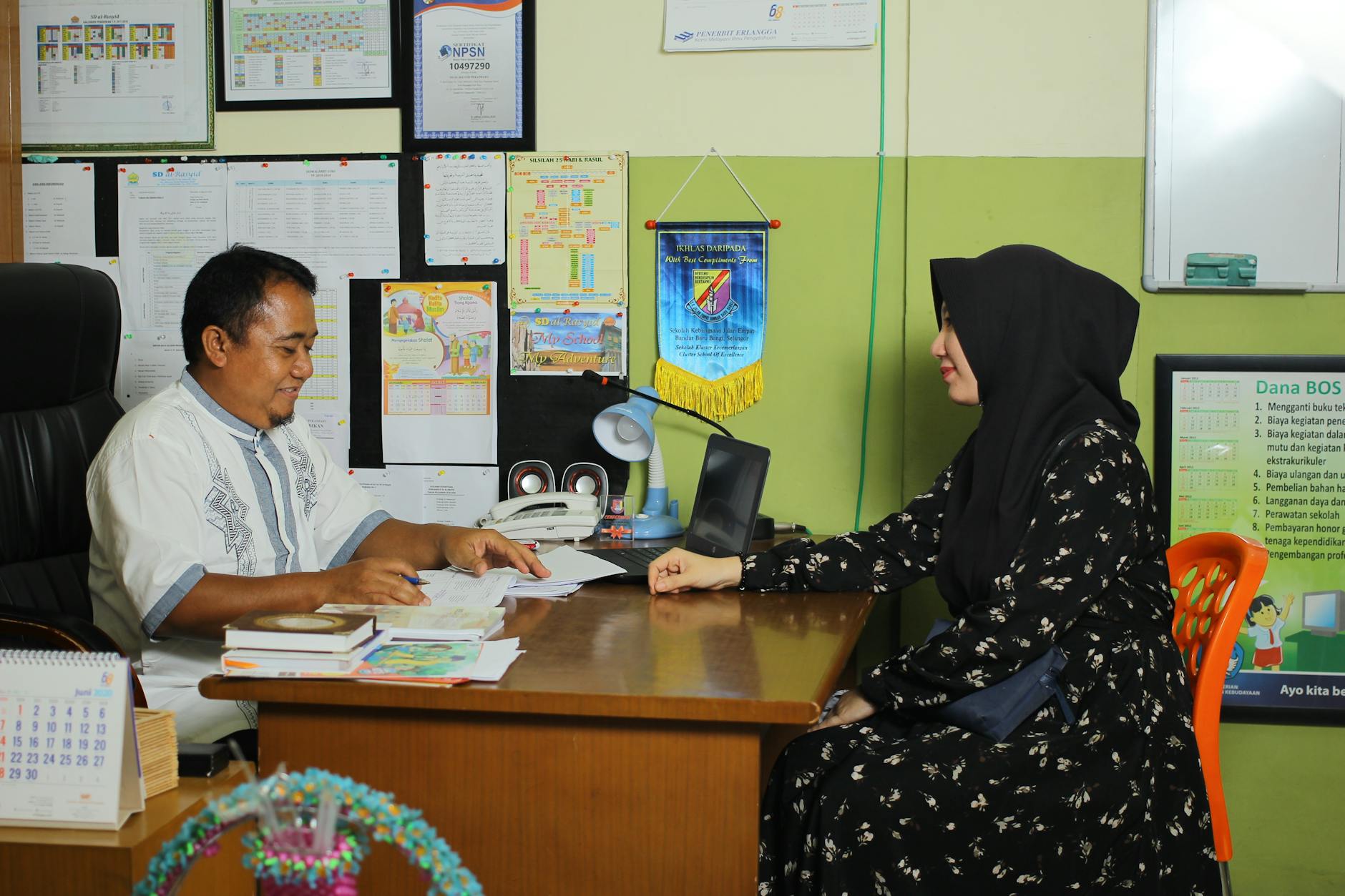
Put Teacher to Work Tomorrow
Teaching is not a theoretical exercise. It is the daily act of showing up with a plan that will change by second period, of reading the room and adjusting on the fly. You have seen what happens when a teacher has backing. The curriculum design clicks, the classroom management softens, and the pedagogy comes alive. You have also seen the opposite. The difference usually comes down to whether someone in the building or the community actually asked what was needed and then acted on the answer without delay.
Start there. Ask one teacher you know what they are running low on. Then buy the pencils, share the article, or sit in their classroom for twenty minutes and take the attendance so they can reset. Do not wait for Teacher Appreciation Week. Do it on a random Tuesday when the copies are jammed and the grading pile is high. Send one email today before you close your laptop.

What Is a Teacher in the Modern Educational field?
State certification separates you from museum docents who lack legal authority. California requires the CBEST exam plus two-year BTSA induction. New York needs the edTPA portfolio with four components and a passing score of 46. Texas requires the PPR exam. Only certified professionals can award Carnegie units, administer state assessments, or provide federally mandated special education services.
Being a teacher means juggling three distinct jobs. You facilitate learning through curriculum design. You mentor first-generation seniors through FAFSA completion. You advocate for educational equity, coordinating 504 meetings for students with ADHD.
The Evolving Definition of Teaching and Instruction
The 1950s sage on the stage lectured while students copied notes. That behaviorist framework assumed empty vessels waiting to be filled. Contemporary pedagogy shifted to constructivist models where you build knowledge alongside students. The Danielson Framework now evaluates you on creating student-centered environments, not performing perfect lectures. Social-emotional learning standards appear in teacher evaluation rubrics alongside academic standards.
Classroom management evolved from silence enforcement to community building. Professional development reflects this shift. Teachers and teaching now center on facilitation skills, not content delivery. You attend workshops on trauma-informed practices, not chalkboard technique. Student engagement matters more than teacher performance.
Certified Roles Versus Informal Educators
Only certified teachers possess legal authority to award Carnegie units toward graduation. Museum docents can inspire, but they cannot provide special education services or administer state assessments. Homeschooling parents guide their own children without state oversight. Corporate trainers deliver professional development without tracking IEP goals. Paraprofessionals support instruction but cannot design curriculum independently.
This legal distinction protects educational equity. When you earn your credential, you gain the power to modify diplomas, accommodate disabilities, and make decisions that alter a child's legal educational classification. Informal educators lack this scope of practice regardless of their content expertise.
The Teacher as Facilitator, Mentor, and Advocate
The teacher as facilitator, mentor, and advocate operates through distinct frameworks. As facilitator, you run the 5E instructional model with seventh-graders exploring cell division through microscopes before explaining mitosis. The National Mentoring Standards guide your mentorship of ninth-graders navigating high school culture. As advocate, you spend five to ten hours weekly documenting accommodations and coordinating IEP meetings for students with learning disabilities.
These roles demand different skills. Facilitation requires curriculum design knowledge. Mentorship relies on relational trust built during lunch periods. Advocacy needs fluency in federal disability law and the patience to translate medical diagnoses into classroom supports that actually happen.
Why Teachers Remain Essential in the Age of Technology?
You remain irreplaceable because algorithms cannot model empathy, ethical reasoning, or adaptive responsive teaching. Research consistently shows that strong teacher-student relationships significantly boost academic achievement and social-emotional development. Educators teach critical thinking through Socratic dialogue and democratic citizenship through facilitated discourse—functions that require human judgment and relational trust.
John Hattie's Visible Learning meta-analysis puts teacher-student relationships at a 0.48 effect size. That beats the 0.40 hinge point representing one year of student growth. You build these bonds through simple acts like the 2x10 strategy: two minutes of genuine conversation with a struggling student for ten consecutive school days.
Human Connection and Social-Emotional Development
The biology of co-regulation explains why your presence matters more than any app. When you maintain physiological calmness during a student's distress, you literally lower their cortisol levels. Your regulated breathing and steady voice activate their parasympathetic nervous system. This is classroom management rooted in neuroscience, not algorithms.
Third graders in October need this biological safety to learn. Morning meeting circles using the Responsive Classroom model provide exactly that structure. You gather students on the rug, greet each child by name, and practice respectful discourse through simple sharing questions. These fifteen minutes build the educational equity that technology cannot manufacture. Students who feel seen show up differently in math and reading.
The relationship comes first. You cannot code genuine care. While adaptive learning platforms adjust question difficulty, they cannot adjust a child's emotional state through co-regulation. Your pedagogy includes knowing when to push and when to pause. That judgment requires human connection developed through daily presence and sustained attention.
Critical Thinking and Character Formation
Bloom's Taxonomy separates information retrieval from genuine thinking. Computers handle 'remember' and 'understand' efficiently. They fail at 'analyze,' 'evaluate,' and 'create' because these require ethical judgment and contextual awareness. Your curriculum design must target these upper levels exclusively.
Consider a ninth-grade media literacy class. You guide students through the LENS protocol: Look at the source, Examine the evidence, Note the bias, and Share conclusions. When analyzing a TikTok video about climate change or a political meme, students must evaluate the creator's credentials and detect emotional manipulation. They learn to ask who benefits from this framing.
AI retrieves information without teaching discernment. In an eleventh-grade English class, you use the Socratic method to analyze primary sources through Structured Academic Controversy. Students argue both sides of a historical debate, evaluating evidence quality and ethical implications. You model the hesitation and intellectual humility that algorithms cannot replicate. Professional development often focuses on tools, but your real work involves teaching the patience required to form independent judgments.
The Importance of Teaching in Democratic Societies
The importance of teaching in democratic societies extends beyond test scores to the health of our republic. Research on the C3 Framework shows that students receiving structured civic education demonstrate significantly higher civic engagement scores than peers in traditional lecture courses. You are training citizens, not just workers. This is the foundation of student engagement that lasts a lifetime.
This requires specific pedagogy. You run mock trials in civics classes where students argue both sides of constitutional questions. You facilitate Structured Academic Controversy protocols on current events, making sure students ground arguments in evidence, not identity. The teacher must remain neutral while pressing for stronger arguments and recognizing logical fallacies.
This work needs curriculum design that prioritizes evidence-based argumentation over indoctrination. When you teach democratic discourse through facilitated discussion, you prepare students for participation in a pluralistic society. They learn to disagree without dehumanizing opponents. That skill preserves democracy through every election cycle and builds the civic trust necessary for self-government.
The Daily Work and Hidden Responsibilities of Teachers
Your contract as a teacher says 37.5 hours weekly. That covers the seven-hour day, five days a week. Reality looks different. Direct instruction eats up 25 hours. Grading and planning add another 15. Administrative tasks and meetings consume 8 more hours, while professional development tacks on 2. You are working 50-plus hours before you touch the hidden responsibilities. The math does not match your paycheck.
Differentiation sounds elegant until you clock it. Tiering one 7th-grade math assessment into three levels takes 45 minutes. Grading 90 essays with rubric-based feedback needs 7.5 hours at five minutes per paper. Universal Design for Learning checkpoints add 30 minutes to every lesson plan. That is just the assessment architecture. The real cost is mental bandwidth.
Classroom Instruction and Differentiated Assessment
You start with the standard. For Algebra I linear equations, you identify the core skill: solving for x with variables on both sides. Then you build three entry points. Foundational students work with integer coefficients only. Grade-level students handle fractions and decimals. Advanced students tackle word problems requiring equation construction from scratch.
The rubric keeps common criteria but varies complexity. Everyone gets graded on mathematical reasoning, but the evidence looks different. Foundational level requires identifying the variable correctly. Grade-level needs accurate calculation. Advanced level requires interpreting the solution in context. Creating this matrix takes the bulk of your prep time.
That tiering process burns 45 minutes per assessment. Grading 90 essays with specific rubric feedback adds 7.5 hours. You spend five minutes per paper, typing personalized comments that connect to the rubric cells. Universal Design for Learning checkpoints add another 30 minutes to each lesson plan. This is the invisible architecture holding up your instruction.
Individualized Student Support and Intervention
Multi-Tiered System of Supports divides your intervention into layers. Tier 1 covers your whole class with quality first instruction. Tier 2 pulls 3 to 5 students for 30 minutes of targeted small-group work daily. Tier 3 isolates individual learners for 45 minutes of intensive daily support. Each tier needs different data collection.
Progress monitoring eats your calendar. Tier 2 students need probes every two weeks. Tier 3 students require weekly check-ins. You track fluency, accuracy, and growth rates on spreadsheets. Then there are the compliance meetings. IEP conferences run 2.5 hours each, and you attend 8 to 12 annually. 504 plans demand 3 hours for initial documentation and another hour for annual reviews.
Your inbox never empties. Thirty to fifty parent emails arrive daily, each requiring two minutes to read and respond thoughtfully. That is one to two hours of invisible labor. Mandatory reporting paperwork adds 30 minutes per incident. You complete these forms after dismissal, when the building is quiet but your brain is fried.
Administrative Duties and Collaborative Planning
Professional Learning Communities follow the DuFour model. You meet for 90 minutes weekly with your grade-level team. You dissect common formative assessment data, student by student. The agenda must address the four essential questions: what do we want students to learn, how will we know they learned it, what will we do if they did not, and what will we do if they already know it.
You document SMART goals for each cycle. Specific, measurable, achievable, relevant, time-bound targets drive your instruction. This is not optional collaboration. It is structured, audited, and tied to your evaluation. administrative duties and collaborative planning strategies can streamline this work, but the hours remain real.
Between these meetings, you manage the infrastructure of schooling. Attendance interventions, behavior documentation, and curriculum pacing guides fill the margins. You update the LMS, log contact attempts, and file incident reports. This administrative load sits on top of your 25 hours of direct instruction. It is why your prep period disappears before you open your planner.
What Challenges Do Teachers Face Inside and Outside the Classroom?
Teachers face escalating challenges including diverse learning needs requiring intensive documentation, professional burnout from 50-plus hour workweeks, and increasing scrutiny from social media recordings. They juggle resource shortages, standardized testing pressures, and emotional labor from secondary trauma exposure while maintaining high instructional standards with limited planning time.
Managing Diverse Learning Needs and Behavioral Dynamics
Today's inclusive classrooms serve students with vastly different needs, and your curriculum design must flex for every learner. Research suggests 15 to 20 percent of your roster may carry IEPs or 504 plans, each requiring specific accommodations and documentation trails. That paperwork piles up fast, stealing time from actual pedagogy.
Co-teaching partnerships often crumble when roles stay vague. Who grades the essay? Who handles the discipline? When you share a room but not a plan, you get two adults stumbling over each other or, worse, one doing everything while the other becomes a pricey aide.
Use a co-teaching menu to define your approach before the first bell. The six models include one teach with one assist, station teaching, parallel teaching, alternative teaching, teaming, and one teach with one observe. Match the model to the lesson objective.
Special education teachers face impossible caseloads that threaten educational equity. When you exceed twenty-five students per teacher, the ten hours weekly spent on accommodation planning still isn't enough. IEPs slip into non-compliance not from neglect, but from sheer volume and impossible deadlines.
Work-Life Balance and Professional Burnout
Studies indicate educators report emotional exhaustion rates higher than many other professions, and the data matches what you feel by October. You carry your students' trauma home with you. When a child discloses ACEs—Adverse Childhood Experiences—you absorb that weight, often without processing time or professional development to help you cope.
The Sunday Scaries hit different in this job. You check email at 10 PM "just in case," blurring the line between home and school until the boundaries dissolve completely. No one teaches you how to shut off the teacher brain.
Your contract says 7:30 AM to 3:00 PM. Reality looks like 5:30 AM to 8:00 PM during grading periods, with six hours of uninterrupted student contact where you can't even use the bathroom. That emotional labor of maintaining composure while managing constant classroom management crises drains your battery fast.
Watch for warning signs of compassion fatigue: cynicism about student engagement, dreading the alarm, or snapping at loved ones over small things. Work-life balance and professional burnout aren't buzzwords. They're survival skills for staying in this profession without losing yourself.
Navigating Social Media Scrutiny and Public Perception
Teachers and social media have a complicated relationship that complicates modern classroom management. Students record lessons on cell phones without consent, posting clipped moments to TikTok that strip away pedagogical context and intent. One viral clip taken out of context can derail your career before administration finishes their morning coffee.
Parent Facebook groups operate as shadow administration. They share your name, critique your curriculum design choices, and organize complaints that bypass the chain-of-command entirely. You lose the backstage privacy that previous generations of teachers enjoyed, with every rough day potentially becoming public record.
Understand the legal field. Two-party consent states require everyone in the room to agree to recording, yet enforcement remains tricky when phones hide in pockets. Yondr pouches offer a physical solution, locking devices away during instruction and restoring your control of the room.
Protect yourself with strict professional boundaries. Keep personal accounts private, never friend current students, and disable location tags that reveal where you teach. Navigating social media scrutiny means assuming every lesson might end up on Twitter, so teach accordingly and document everything.
How Teachers Balance Student Needs With System Demands
Differentiation Under Standardized Constraints
Standardized testing consumes 20 to 30 instructional days annually. When that pressure mounts, pedagogy shifts. You stop doing ecosystem modeling labs and hand out vocabulary drill sheets instead. I watched a biology teacher skip the entire population dynamics unit to review flashcards for state assessments. The kids memorized terms they forgot by June. Nothing stuck.
District pacing guides often mandate 180 standards in 180 days. That leaves zero room for reteaching or recovery days. You cannot remediate when the calendar itself forbids it. This is where differentiation under standardized constraints becomes survival, not luxury. You protect the learning that matters most.
Smart teachers use power standards. Filter your curriculum design through R.E.A.D.: Readiness for next year, Endurance beyond the test, Assessed on high-stakes exams, and DoK level 3 or higher. You teach 20 to 30 essential standards deeply. The rest get honest coverage, not false mastery. Your schedule prioritizes thinking over checklist completion.
Resource Limitations and Creative Problem-Solving
The federal educator expense deduction is $250. That covers less than ten percent of what teachers actually spend out of pocket. Meanwhile, copy room limits cap you at 200 pages per month. Textbook adoption cycles stretch past ten years in some districts. You are teaching cell biology with resources from 2014.
Teacher experiences with scarcity breed innovation. DonorsChoose projects average $600 and post a 75 percent success rate when you write specific, urgent titles. "Help Us See the Invisible" beats "Microscopes for Science Class." Interactive digital notebooks replace photocopy costs entirely. Students type, draw, and submit work on tablets you already have.
Community supply drives work too. Create an Amazon Wish List with specific items: Expo markers, not "classroom supplies." Print a QR code linking to the list. Tape it to your door at back-to-school night. Parents scan and ship while you talk to families. No shopping required.
Policy Compliance Versus Student-Centered Practice
ESSA mandates require 95 percent test participation. Charlotte Danielson Framework evaluations demand 40 or more artifacts annually. You spend five hours weekly on compliance documentation versus three hours on actual lesson design. The math is brutal. You are a teacher moonlighting as a file clerk. Student engagement drops when you are too tired to plan properly.
This tension creates "creative compliance." You meet the policy letter while preserving instructional integrity. Post the daily standard on your board as required. Check that box. Then weave that same standard into an authentic project. Avoid isolated skill drills. Classroom management improves when work has meaning. Kids notice the difference between busywork and real learning.
Educational equity suffers when compliance dominates. Students need your attention on feedback, not folder organization. Professional development should sharpen your craft, not your paperwork speed. Protect your planning time fiercely. Audit your weekly hours. If documentation steals half your prep, push back or streamline ruthlessly. Your energy belongs in the classroom, not the filing cabinet.
The Skills and Mindsets That Define Effective Educators
Adaptive Teaching Strategies and Pedagogical Flexibility
You need formative assessment tools that match your setup and budget. Pear Deck ($149/year) lives inside Google Slides—perfect for ELA or science teachers already using that ecosystem. Nearpod ($120/year) brings VR field trips to tablets, ideal for social studies with 1:1 device availability. Formative offers real-time drawing responses for math or art classes, though the free tier caps you at 30 student responses. Choose Pear Deck for seamless Google integration, Nearpod for immersive experiences, and Formative when students need to sketch their thinking, not type on a keyboard.
Hinge questions diagnose misconceptions in real time before you move forward with new material. You pose a multiple-choice question where wrong answers reveal specific errors, not just random mistakes. Ask seventh graders: "Which decimal is largest? A) 0.25 B) 0.125 C) 0.5 D) 0.052." Kids choosing A or B show place value confusion; selecting D reveals misunderstanding of decimal magnitude versus whole number rules. Each distractor teaches you something specific about their thinking.
The pivot rule is simple: if fewer than 70% answer correctly, you reteach immediately. Do not proceed to the next standard. Stop and fix the gap using a different approach, visual model, or manipulative. This protects student engagement and prevents snowballing gaps in curriculum design. Hinge questions make your pedagogy responsive rather than rigid, making sure educational equity by catching strugglers early.
Emotional Intelligence and Trauma-Informed Practices
Being a teacher means reading the room before teaching the content. SAMHSA's 4 Rs framework guides trauma-informed work: Realize trauma is widespread, Recognize signs in behavior and attendance, Respond with policy changes, and Resist Re-traumatization through punitive measures. When a student melts down, swap "Stop that" for "I see you're frustrated." This validates emotion while setting boundaries. The 2x10 protocol builds safety: spend two minutes daily for ten consecutive days talking with a specific student about anything except schoolwork and grades. This repairs ACEs damage through consistent connection and proves you see them as human, not just a test score.
Goleman's emotional intelligence framework needs self-awareness (knowing your triggers), self-regulation (pausing before reacting), empathy (perspective-taking), and social skills (repairing after conflict). These competencies allow you to remain calm when chaos erupts and model healthy regulation for your students. Pair this with trauma-informed classroom management: predictable routines, student choice in assignments, and physical safety. These elements create the stability traumatized brains need to access curriculum design, as detailed in our guide to emotional intelligence and trauma-informed practices.
Without these foundations, student engagement remains superficial, compliance-based, and fragile. Kids cannot learn when their nervous systems are flooded. Master these emotional intelligence skills to build the trust required for academic risk-taking, genuine classroom community, and lasting educational equity.
Continuous Professional Growth and Reflective Practice
Professional development should yield tangible growth, not just seat time. National Board Certification offers a rigorous four-component portfolio taking one to three years to complete. It costs $1,900 but delivers salary increases between $2,000 and $10,000 depending on your state. Cognitive Coaching, developed by Costa and Garmston, sharpens your reflective dialogue through structured conversations that uncover your assumptions. Micro-credentialing through Digital Promise provides focused badges like "Embedding Formative Assessment," requiring eight weeks of classroom implementation evidence rather than passive theory. Choose the path that fits your career stage and context.
Reflective practice cements these gains. Run a failed lesson through the Gibbs Reflective Cycle. Describe what happened, examine your feelings, evaluate outcomes, analyze causes, draw conclusions, and plan your next action. Try instructional rounds where triads observe each other and debrief immediately using non-judgmental language and probing questions. Keep a teaching journal with five-minute daily entries tracking patterns in your pedagogy. Read more about continuous professional growth and reflective practice.
This ongoing reflective work separates good teachers from great ones. You cannot pour from an empty cup, nor can you teach last year's curriculum design to this year's students without constant adaptation and refinement. Growth is not extra. It is the core work of being a teacher who honors educational equity.
How Communities Can Support Our Teachers and Strengthen Education?
Communities support our teachers by advocating for competitive compensation (median $61,000-$62,000 nationally), adequate classroom resources, and reduced standardized testing mandates. Effective support includes respecting professional autonomy and establishing clear parent-teacher communication protocols. Pursue policy reforms that eliminate bureaucratic paperwork so educators can focus on evidence-based instruction and student relationships.
Advocacy for Adequate Resources and Compensation
Start with the numbers. The Bureau of Labor Statistics puts elementary median pay at $61,690 and secondary at $62,360. That masks the reality of $46,000 in Mississippi versus $90,000-plus in New York. Your district likely falls somewhere in between, struggling to retain staff when neighboring states pay more. When communities pass operational levies and bond measures, they directly fund facility upgrades and cap class sizes at manageable levels.
Show up armed with data. Attend school board meetings carrying per-pupil spending comparisons between your district and the state average. Write legislators about unfunded mandates that drain your classroom budget and ignore teacher needs. When bargaining reaches impasse, community support for strikes or work-to-contract actions signals that residents value educational equity over political convenience.
Building Authentic Parent and Community Partnerships
Real partnership starts outside the classroom. The Parent Teacher Home Visit Project offers a proven model: voluntary visits during compensated teacher time, focused solely on relationship building, not logistics. These conversations shift parent-teacher dynamics from transactional to collaborative, improving student engagement through shared trust.
Establish communication guardrails. Set 24-hour response expectations and channel-specific norms: ClassDojo for behavior updates, email for academic questions, phone calls only for crises. Non-classroom support matters too. Organize meal trains during report card week. Donate twenty diverse books for classroom libraries. Volunteer for field trips respecting the 1:10 adult-to-elementary-student ratio. Most importantly, respect professional boundaries by avoiding requests for special favors that undermine classroom management. Learn more about building authentic parent and community partnerships that actually reduce teacher workload.
Policy Changes That Empower Classroom Autonomy
Local advocacy should target the policies consuming your prep periods. Push districts to reduce testing mandates to federal minimums and eliminate value-added metrics from teacher evaluations. Demand guaranteed 45-minute daily prep periods written into contracts, not optional slots that disappear when colleagues are absent. Curriculum design belongs to educators, so resist attempts to script pedagogy while supporting diverse text selections within standards frameworks.
Look to successful state models. Massachusetts modified its RETELL policy to decouple evaluations from single-test-score growth models, allowing teachers professional development days for growth, not more student contact hours. Advocate for removing seat-time requirements for credit recovery and securing instructional days for professional development. These policy changes that empower classroom autonomy restore time for the relationships that drive learning.
Put Teacher to Work Tomorrow
Teaching is not a theoretical exercise. It is the daily act of showing up with a plan that will change by second period, of reading the room and adjusting on the fly. You have seen what happens when a teacher has backing. The curriculum design clicks, the classroom management softens, and the pedagogy comes alive. You have also seen the opposite. The difference usually comes down to whether someone in the building or the community actually asked what was needed and then acted on the answer without delay.
Start there. Ask one teacher you know what they are running low on. Then buy the pencils, share the article, or sit in their classroom for twenty minutes and take the attendance so they can reset. Do not wait for Teacher Appreciation Week. Do it on a random Tuesday when the copies are jammed and the grading pile is high. Send one email today before you close your laptop.
Still grading everything by hand?
EMStudio is a free teaching management app — manage your classes, students, lessons, and more!
Learn More
Still grading everything by hand?
EMStudio is a free teaching management app — manage your classes, students, lessons, and more!
Learn More




Notion4Teachers
Notion templates to simplify administrative tasks and enhance your teaching experience.



2026 Notion4Teachers. All Rights Reserved.
Notion4Teachers
Notion templates to simplify administrative tasks and enhance your teaching experience.
2026 Notion4Teachers. All Rights Reserved.
Notion4Teachers
Notion templates to simplify administrative tasks and enhance your teaching experience.
2026 Notion4Teachers. All Rights Reserved.