
Importance of Education: A Guide for K-12 Teachers
Importance of Education: A Guide for K-12 Teachers

Article by
Milo
ESL Content Coordinator & Educator
ESL Content Coordinator & Educator
All Posts
Education extends beyond academic achievement to encompass economic mobility, cognitive development, and civic participation. It equips individuals with critical thinking skills, social-emotional competencies, and health literacy that drive lifetime earnings and quality of life. For K-12 teachers, understanding educational value means measuring success through both standardized metrics and qualitative growth in student agency.
John Dewey saw education as life itself, not just preparation for it. Today's mandates often reduce it to test prep. The importance of education lives in that tension between living ideas and filling bubbles.
The Bureau of Labor Statistics shows the economic reality: bachelor's degree holders earn $1,334 weekly versus $853 for high school graduates. But classroom impact matters too. Hattie's research ranks feedback at 0.70 and direct instruction at 0.59 effect sizes. Add CASEL's five SEL competencies—self-awareness, self-management, social awareness, relationship skills, and responsible decision-making—and you have a fuller picture of student outcomes.
Still grading everything by hand?
EMStudio is a free teaching management app — manage your classes, students, lessons, and more!
Learn More
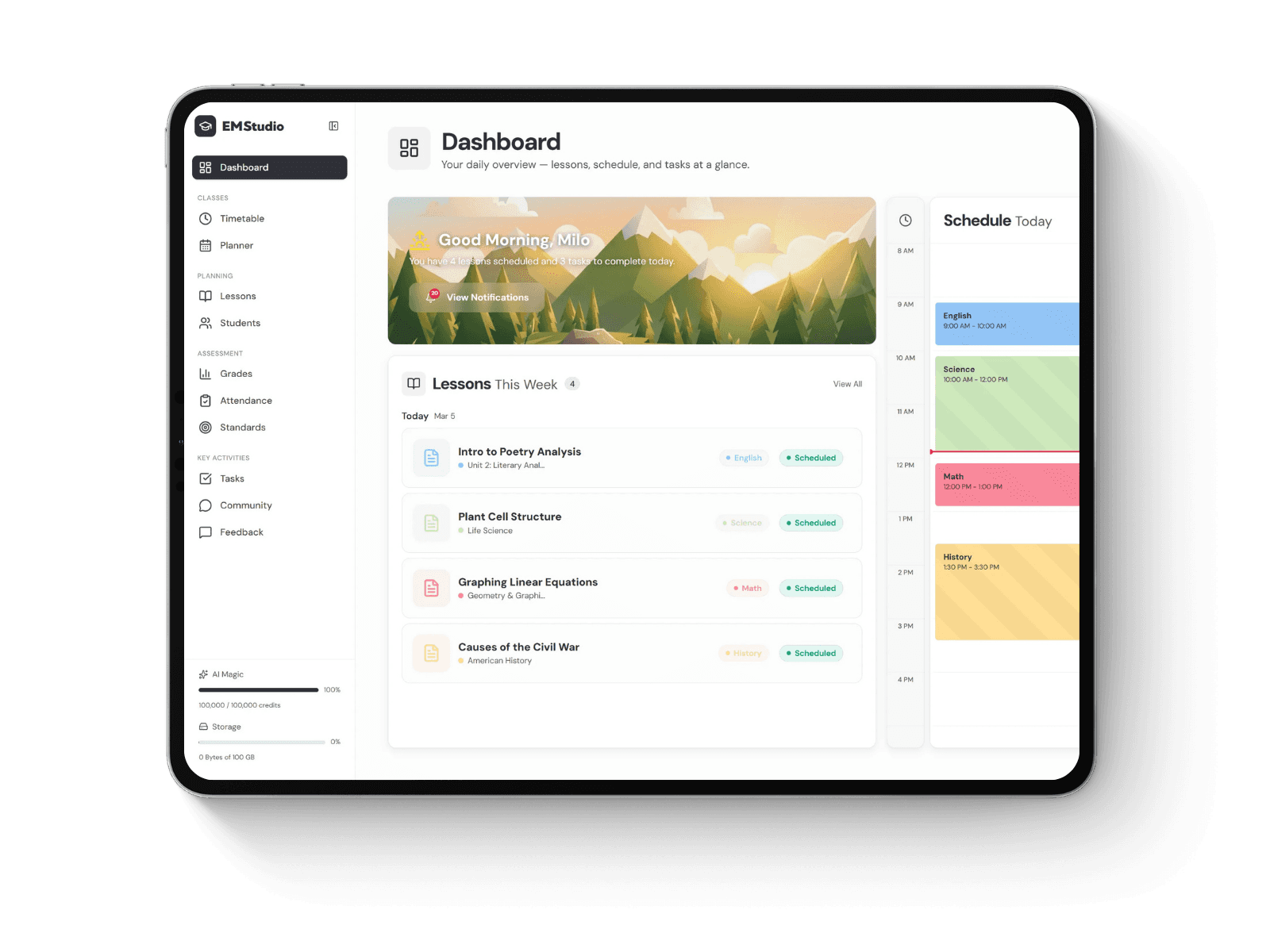
Still grading everything by hand?
EMStudio is a free teaching management app — manage your classes, students, lessons, and more!
Learn More
Table of Contents
What Is the Importance of Education?
Stop talking about "closing achievement gaps." Start recognizing multilingual brilliance in your 4th-grade dual-language program. When students defend portfolios showing growth across two languages, you measure educational attainment by what they can do, not what they lack. Asset-based framing changes how kids see themselves.
I've landed pieces with Edutopia and TeachThought. The write for us education ecosystem pays $50-$300 for 800-1,200 word pieces. Most require pitches of 100-300 words and pay within 30 days of publication. That's real money for your expertise.
Defining Educational Value Beyond Test Scores
PISA rankings and SAT percentiles tell you where students stand compared to others. They don't tell you what students can create. Envision Education's Portfolio Defense model has 12th graders present four years of work to external panels. That's educational value beyond standardized test scores made visible.
Non-cognitive skills drive lifelong learning more than test scores predict. Use these instruments in grades 6-12 to capture that growth.
Duckworth's Grit Scale: Ten items measuring perseverance and passion for long-term goals.
PANAS: The Positive and Negative Affect Schedule tracks emotional states weekly.
Self-Regulation Questionnaire: Assesses ability to manage emotions and behaviors during complex tasks.
Growth Mindset Surveys: Dweck's instrument measures beliefs about intelligence malleability.
Collaborative Problem-Solving Rubrics: PISA-developed tools for peer interaction assessment.
Historical and Modern Ideas About Education
Bloom's Taxonomy (1956) had us climbing from knowledge to evaluation. Webb's Depth of Knowledge (1997) added complexity layers, distinguishing between recalling facts and strategic thinking. The P21 Partnership's 21st Century Skills Framework pushed further, emphasizing creation and real-world application. These shifting pedagogical strategies mirror how curriculum development has moved from memorization to meaning-making.
Your formative assessment practices fit these modern frameworks. Share them through teacher voice platforms. Edutopia (George Lucas Foundation) wants evidence-based practice pieces with a 300-word pitch. They respond within two weeks. ASCD Inservice prefers 800-word practical takes on ideas about education. Both build your profile while helping colleagues.
Why Does Education Matter for Future Generations?
Education serves as the primary engine for economic mobility, democratic stability, and innovation capacity. Research indicates that each additional year of schooling correlates with 8-13% higher earnings and increased civic engagement. Globally, education quality determines workforce readiness and a nation's ability to solve complex challenges.
Your students' diplomas will determine whether they rent or own, vote or check out, solve problems or patch leaks. The importance of education isn't abstract—it's concrete, mathematical, and deeply personal for the kids in your third-period class.
Economic Mobility and Global Competitiveness
The Bureau of Labor Statistics Current Population Survey shows the math clearly. Workers with bachelor's degrees earn $1,432 weekly median versus $853 for high school graduates. That's a $30,000 annual gap. But context matters. Federal student loan averages hover near $37,000, and monthly payments can swallow that premium.
We need to talk about economic mobility and the return on investment for students honestly. Not just the sticker price of admission.
Cross-national data exposes stark realities. The US matches UK math performance but lags in social mobility. Finland scores slightly lower on PISA but achieves higher equity through teacher autonomy and consistent curriculum development.
United States: PISA math 489, social mobility rank 27, GDP per capita $76,000, teacher starting salary $44,000
United Kingdom: PISA math 489, recent education news uk coverage highlights funding inequities, GDP $46,000, teacher starting salary $38,000
Finland: PISA math 484, high equity, GDP $54,000, teacher starting salary $45,000 with master's required
Recent education news uk coverage reveals these tensions through the National Education Union strikes and Department for Education 2023 white papers. Teachers walked out over pay erosion, showing how advocacy shapes policy directly.
Watch for credential inflation. In the 1970s, 12% of administrative assistant listings required bachelor's degrees. Today that figure hits 65%. The job hasn't changed; the barrier has. This wastes potential and drives unnecessary debt.
Not every path requires four years of debt. Department of Labor statistics show apprentices earn $15-20 hourly in year one while university students accumulate $100,000+ costs. Journeymen electricians median $60,000 annually with zero loan balance. Lifelong learning matters, but multiple on-ramps to prosperity exist.
Civic Engagement and Democratic Participation
Educational attainment predicts civic participation with uncomfortable precision. In the 2020 US election, college graduates voted at 80% rates while high school graduates hit 52%. Jury service rates and volunteerism follow similar patterns. Educated citizens show up for the boring, essential work of democracy. They read ballot initiatives and attend school board meetings.
But we're teaching less of it. The failure mode is real. Schools averaged three civics courses in the 1960s. Today the average sits at half a course. Students graduate knowing the three branches but unable to name their city council member. This is curricular abandonment with democratic consequences.
Action Civics offers a countermodel. Generation Citizen places 8th graders in 8-week local policy projects with measurable student outcomes. Seventy-eight percent of participants contact elected officials. Forty-five percent attend public meetings. These aren't field trips—they're authentic civic practice. Students research zoning laws, draft petitions, and present to actual boards. Real democracy requires real practice, not just textbook diagrams.
Innovation and Societal Progress
Education drives innovation through specific, replicable pedagogical strategies. Singapore's math method uses concrete-pictorial-abstract sequences. Students handle physical blocks, then draw diagrams, then write equations. Finnish phenomenon-based learning breaks down subject silos for interdisciplinary modules. High Tech High achieves 99% college acceptance through project-based portfolios rather than tests.
The STEM pipeline depends on these foundations. OECD reports show countries with strong PISA scores produce 40% more engineering graduates per capita. Singapore's method creates problem-solvers who manipulate concepts visually before touching variables. Finnish students tackle climate change modules combining biology and economics. American students often get worksheets divorced from context.
The importance of education reveals itself here—not in test anxiety, but in preparing minds that can build renewable grids or code medical breakthroughs. Quality schooling isn't consumption. It's infrastructure for human progress. When we get curriculum development right, we don't just fill jobs. We invent new industries.
These models share common DNA. They prioritize formative assessment over high-stakes testing. They treat teachers as professionals who adapt methods to local needs. And they measure success by what students can do, not just what they know.

How Does Education Transform Individual Lives?
Education fundamentally reshapes neural pathways, social networks, and health trajectories. Students develop executive function and critical thinking through structured inquiry, while longitudinal studies show strong correlations between educational attainment and longevity. These transformations manifest through improved decision-making capabilities, career flexibility, and enhanced capacity for meaningful civic participation throughout adulthood.
Your brain changes when you learn. New neural connections form every time a student grapples with complex text or solves an unfamiliar math problem. This isn't abstract theory. It's biological reality.
John Hattie's Visible Learning meta-analyses give us hard numbers on what works. Here are five high-impact pedagogical strategies that physically reshape how students think:
Classroom discussion (effect size 0.82): Peer dialogue builds neural pathways faster than silent worksheets.
Feedback (0.70): Timely, specific comments trigger dopamine release and strengthen memory encoding.
Direct instruction (0.59): Explicit modeling creates mental scaffolds that students internalize.
Spaced practice (0.71): Distributed review sessions physically strengthen synaptic connections.
Metacognitive strategies (0.69): Teaching students to monitor their own thinking builds prefrontal cortex capacity.
But transformation cuts both ways. When we use extrinsic rewards carelessly, we break intrinsic motivation. The classic Lepper, Greene & Nisbett study found that paying students for reading logs reduced voluntary reading by 36% once payments stopped. The overjustification effect kicked in. Students who once read for pleasure now required cash. Extrinsic motivators can poison the very curiosity we're trying to cultivate. This is why I never use pizza parties for reading goals.
The importance of education extends beyond academics. CDC data shows college graduates live nine years longer than high school dropouts. Smoking rates drop from 24% to 8%. These aren't coincidences. Schooling develops health literacy—the ability to interpret medical information and delay gratification.
Cognitive Development and Critical Thinking
Real cognitive growth happens when students move beyond memorization. I saw this last year with my 7th graders during our The Giver unit. They weren't just reading a book; they were restructuring how they thought about society. We used Bloom's Revised Taxonomy to build mental complexity step by step.
We started with Remember: simple plot sequencing activities where students ordered key events from Jonas's selection ceremony to his escape. Then Understand: character mapping assignments tracking how Jonas's perceptions of "sameness" evolved. Students moved to Apply: creating community rules that balanced safety with individual freedom, mirroring the Elders' dilemmas.
The real growth happened in the upper tiers. For Analyze, students compared Jonas's society to historical authoritarian regimes, noting parallels to Mao's Cultural Revolution. During Evaluate, we held formal debates on whether eliminating pain justifies eliminating choice, with students citing evidence from the text and current events. Finally, Create: each student designed a utopia proposal with a detailed rubric assessing feasibility, ethics, and human rights protections. One student proposed a "memory archive" system that rivaled Lowry's original, complete with consent protocols the Elders ignored.
Three specific protocols drive this development. First, Socratic Seminar in fishbowl format: fifteen students in the outer circle track claims using Cornell notes while an inner circle debates. Second, Claim-Evidence-Reasoning (CER) for 8th-grade science labs—students can't just observe; they must defend conclusions. Third, De Bono's Six Thinking Hats for 10th-grade history debates, forcing students to switch perspectives from emotional (red hat) to critical (black hat) to creative (green hat). cognitive development and critical thinking strategies like these create lifelong learning habits.
Social-Emotional Learning and Character Building
Academic growth means nothing without emotional intelligence. I've watched brilliant students fail because they couldn't handle frustration. social-emotional learning in modern classrooms requires specific tools mapped to CASEL's five competencies.
For self-awareness, I use the Yale Center's Mood Meter in 2nd grade. Kids plot their emotional states using color quadrants. For self-management, the Zones of Regulation curriculum gives students concrete strategies to move from red zone (crisis) to green zone (ready to learn). Social awareness comes alive through Empatico virtual exchanges—my students video-chatted with a classroom in Kenya last fall, dismantling stereotypes about "Africa" as a monolith.
Relationship skills require structured practice. We use Center for Restorative Process circles after conflicts, not as punishment but as skill-building through scripted prompts like "What happened?" and "Who was affected?" For responsible decision-making, I teach the 7-step decision model: identify problem, gather info, consider consequences, explore alternatives, weigh choices, decide, evaluate. We practice this with real scenarios—"Your friend wants to cheat on the quiz"—not vague "what would you do" hypotheticals that lack context.
But SEL fails when it becomes value clarification without skill building. Warning signs include generic "be kind" posters without strategy instruction, one-off assemblies about bullying with no follow-up practice, or assuming students naturally know how to apologize. Three fixes work: explicitly name the skill ("Today we're practicing active listening, not just being nice"), create repeated practice protocols with formative assessment, and design transfer opportunities like homework asking students to use the 7-step model for a real decision at home.
Long-Term Health and Quality of Life Outcomes
Education saves lives. Literally. CDC statistics show adults with bachelor's degrees smoke at 8% versus 24% for high school graduates. They live roughly nine additional years with better quality of life. Gallup data shows 47% higher life satisfaction among degree holders. But correlation isn't destiny. Education enables health literacy behaviors; it doesn't guarantee them.
The mechanism works through a dual pathway model. The income pathway is straightforward: higher educational attainment leads to better jobs, health insurance, and housing in low-pollution areas with green space. But the behavioral pathway matters more for daily habits. Complex jobs demand cognitive flexibility, which correlates with delayed gratification capacity. Diverse social networks—built through years of collaborative schooling—expose people to health norms and information sources. Rigorous curriculum development that emphasizes critical thinking creates adults who question cigarette marketing and recognize fad diets.
These student outcomes accumulate over decades. The 3rd grader learning to regulate emotions through Zones of Regulation becomes the adult who manages stress without reaching for cigarettes. The 7th grader analyzing The Giver becomes the citizen who evaluates political claims using evidence, not fear. Educational attainment doesn't just open career doors. It fundamentally rewires how we handle uncertainty, resist temptation, and maintain human connection across a lifetime.
Practical Applications in Modern K-12 Classrooms
Student-Centered Learning Environments
Build a decision matrix using pre-test scores and Webb's Depth of Knowledge levels. High prior knowledge plus DOK 1 or 2 complexity means run Genius Hour or 20% time—kids already know the basics, so get out of their way. Low prior knowledge plus DOK 3 or 4 complexity demands Explicit Direct Instruction with gradual release.
They need the schema before they can wrestle with the hard stuff. Mixed readiness across the class? Deploy Station Rotation with four distinct stations: teacher-led small group for targeted reteaching, collaborative desk pods for peer processing, a tech station with Chromebooks for adaptive practice, and a hands-on station for kinesthetic application.
The failure mode strikes when student-centered becomes teacher-absent. I've watched classrooms where kids group-work themselves into chaos while the teacher answers emails at the desk. Prevent this with tight structure. Assign specific roles like timekeeper and materials manager. Set a visible countdown timer. Run formative assessment checkpoints every ten minutes. I use a simple thumb check—thumbs up means tracking, sideways means confused. If I spot three sideways thumbs, I immediately pause the entire room for a thirty-second clarification.
Time allocation data reveals why this shift matters. Traditional teacher-centered models put you at the front talking for 80% of the block, leaving only 20% for actual student work. Student-centered learning environments redistribute that time: you facilitate for 30%, collaborative work takes 40%, and independent practice covers 30%. That's the ratio that produces measurable gains in student outcomes.
For a class of 28, specific inventory matters. Order eight Hokki stools for wigglers, six standing desks for high-energy kids, four stability balls for core strength, and keep ten traditional chairs for students who prefer stability. Zone the room intentionally. The quiet cave features noise-canceling headphones and study carrels for focused solo work. The watering hole has whiteboard tables and markers for messy collaborative drafting. The campfire area uses a rug for whole-group mini-lessons. Maintain three feet of clear traffic flow between zones so kids move without bumping elbows or tripping over backpacks.
Integrating Real-World Problem Solving
Match projects to grade-band capacity with measurable outcomes. Kindergarten through second grade designs accessible playground equipment using cardboard prototypes, then tests their designs with an actual wheelchair to check for barriers. Third through fifth grade conducts a week-long cafeteria food waste audit, weighs the scraps daily, calculates weekly cost savings, and presents data-driven recommendations to the principal. Sixth through eighth grade maps neighborhood heat islands using ArcGIS Online or Google Earth Engine, identifying concrete-heavy zones that spike temperatures. Ninth through twelfth grade secures internship credit with local business partners, completing 120 documented hours of professional work alongside mentors.
Budget for reality. Project-Based Learning implementation costs run $200 to $500 per project for materials like lumber, sensors, or art supplies, compared to near-zero costs for traditional textbook instruction. Fund these through DonorsChoose campaigns or local education foundation grants. I write grants during planning periods and typically secure funding within three weeks. The importance of education becomes tangible when students handle physical materials, not secondhand accounts. Track every receipt for your administrator and photograph student work for the grant reports.
Assess authentically using a four-point rubric across four domains:
Problem definition: 1 for vague complaints, 4 for specific researchable questions with defined constraints.
Solution feasibility: 1 for untested ideas, 4 for prototypes tested against multiple criteria.
Presentation quality: 1 for rambling, 4 for organized arguments with visual aids.
Reflection depth: 1 for generic summaries, 4 for specific analysis of failures and learning.
Integrating real-world problem solving into the curriculum requires rubrics that mirror actual workplace feedback rather than arbitrary point systems.
Recognizing the Importance of Teachers in Daily Practice
Contrast the archetypes with specific time breakdowns. The sage on the stage lectures for 45 minutes then assigns 15 minutes of silent worksheets, assuming coverage equals learning. The guide on the side delivers a 10-minute mini-lesson using a mentor text or demonstration, spends 20 minutes conferring with individual students at their desks, pulls small groups for targeted instruction at the kidney table for 20 minutes, and closes with 10 minutes of synthesis and exit tickets. Your choice of pedagogical strategies determines whether students become passive recipients or active constructors of knowledge.
Watch for the martyr complex failure mode. Signs include working 70-hour weeks, grading papers at midnight, skipping lunch to tutor kids, and responding to parent emails at 10 PM. You cannot sustain lifelong learning modeling when you're exhausted. Set three hard boundaries:
Automate grading for multiple choice using Google Forms with Flubaroo—results populate in seconds.
Restrict email responses to 7:30 AM–4:00 PM only; use auto-responders after hours.
Delegate clerical tasks to student jobs like paper passer, tech support, and classroom librarian.
Your daily presence drives educational attainment more than any textbook selection. Essential traits and the importance of teachers show up in small moves: asking follow-up questions instead of giving answers, circulating during work time to catch misconceptions early, and knowing precisely when to rescue a struggling student versus when to let them wrestle with productive struggle. These micro-interactions build trust.
Strong curriculum development means nothing without the teacher executing it with energy and precision. The human connection matters more than the perfect slide deck. Protect your time and sanity so you can bring full attention to the 30% facilitation time that makes the other 70% of student work actually function. That protection is itself a professional responsibility that honors the importance of teachers in the system.
How Can Educators Advocate for Educational Value?
Educators can advocate by joining professional organizations like the National Education Association for collective bargaining power, leveraging George Lucas Foundation resources to demonstrate evidence-based practices, and crafting data-driven narratives for stakeholders. Effective advocacy combines student work samples with economic impact data, presented through accessible visual formats during school board and legislative sessions.
Real change happens when teachers stop complaining in the parking lot and start speaking in rooms where decisions get made. You don't need a doctorate to advocate. You need a union card, a data story, and the courage to show up.
Engaging with the National Education Association
Stop griping about class sizes in the faculty lounge. The national education association gives you the structure to fix them. Here's how to activate your membership:
Visit nea.org/join and select your state affiliate (California Teachers Association, United Federation of Teachers, etc.).
Access immediate benefits including $2 million aggregate liability coverage and legal defense for contract disputes.
Attend your local Representative Assembly, typically held March through May, to vote on micro-grants ($500-$2,000 for classroom projects).
Redeem 20% discounts on car insurance through Liberty Mutual or MetLife, plus claim continuing education credits.
The liability coverage alone justifies the annual dues when you consider frivolous lawsuit risks. One angry parent claiming negligence can cost thousands in legal fees even when you're completely innocent.
Watch for the failure mode. When advocacy becomes adversarial—using accusatory language in board meetings or torching relationships with administration—you lose leverage. Repair the damage by pivoting to data. Show research proving 18-student caps in K-3 boost literacy rates. Bring solution-oriented proposals, not just complaints. You can push hard for change while maintaining the professional relationships you'll need next year.
Your advocating for educational policy and value carries more weight when backed by the NEA's research arm. They publish district-specific data on salary competitiveness and class size averages. Walk into a board meeting with their statistics, and trustees can't dismiss you as just another angry teacher. You're a professional citing professional sources.
Leveraging Resources from the George Lucas Foundation
The george lucas foundation bankrolls Edutopia, and smart teachers treat it like a free graduate degree in pedagogical strategies. Create your account using your school email, then download the PBL Toolkit PDF. It includes rubrics and project planning templates that actually work with real kids, not just theory.
Watch the "Schools That Work" video series—each episode runs 15 to 20 minutes and comes with implementation guides. You'll see how a Title I school in Ohio runs their morning meetings or how a Texas district handles formative assessment in 1:1 environments. When you're ready to share your own success, submit your school for feature consideration. You'll need a 300-word description, high-resolution photos with releases, and your principal's contact information.
Specific tools worth your time include the Responsive Classroom management videos for elementary teachers, the assessment bank for middle school SEL competencies, and the technology integration guides covering Google Classroom and Nearpod with step-by-step screenshots. Download the assessment banks for SEL competencies before your next parent conference. Having concrete behavioral checklists makes those awkward conversations about social skills much more productive. These resources demonstrate the importance of education through practical demonstration and not abstract policy papers.
Leveraging project-based learning resources from Edutopia helps you prove that curriculum development isn't just about covering standards. It's about depth. Show parents video evidence of students collaborating on authentic problems, and suddenly they understand why you're fighting for smaller groups or planning time.
Communicating Impact to Parents and Policymakers
Data wins arguments, but stories win hearts. Combine them. Create a one-page "data story" using Canva for Education templates. Start with a direct student quote or voice recording. Show September baseline data using Fountas & Pinnell levels. Describe your intervention—maybe 90 minutes daily of Orton-Gillingham instruction. Then display February growth data alongside the student's actual writing sample.
When meeting with legislators, schedule 15-minute "coffee chats" during NEA lobbying days. Bring a one-page fact sheet highlighting local economic impact—research consistently shows every $1 invested in education returns $7 in economic growth and educational attainment. Prepare two versions of your pitch: a two-minute elevator version for busy hallways and a ten-minute deep dive for sit-down meetings.
Focus on student outcomes, not adult grievances. Don't complain about being overwhelmed. Show how lifelong learning stalls when class sizes hit 32. Share your formative assessment trackers proving that individualized attention works. When you frame advocacy around student growth and not teacher comfort, even skeptical board members lean in.
Repair broken advocacy relationships by returning to neutral data. If you burned bridges last year with inflammatory comments, come back with spreadsheets. Show up at the next meeting with solution-oriented proposals and maintain eye contact with administrators while you push for change. You can be relentless and respectful simultaneously.
Is Importance Of Education Right for Your Students?
You already know the answer. Every lesson plan you write, every pedagogical strategy you test, every late-night grading session proves the importance of education in real time. It's not about test scores or graduation statistics. It's about showing kids they can think harder than they did yesterday. You see the shift when a student finally gets it. That's the work.
I've watched curriculum development choices make or break a kid's year. Your classroom is where lifelong learning starts or dies. The assignments you pick this week shape how students see themselves years from now. Will they remember your room as a place where they learned to ask questions? Or just another space with rules? That's the weight we carry. But it's also why I stay when the paperwork piles up and the emails never stop.
Educational attainment opens doors, sure. But you open minds. You get to decide what matters most in your room. So what's the one lesson you'll teach tomorrow that makes students want to keep learning long after they leave your grade?
What Is the Importance of Education?
Stop talking about "closing achievement gaps." Start recognizing multilingual brilliance in your 4th-grade dual-language program. When students defend portfolios showing growth across two languages, you measure educational attainment by what they can do, not what they lack. Asset-based framing changes how kids see themselves.
I've landed pieces with Edutopia and TeachThought. The write for us education ecosystem pays $50-$300 for 800-1,200 word pieces. Most require pitches of 100-300 words and pay within 30 days of publication. That's real money for your expertise.
Defining Educational Value Beyond Test Scores
PISA rankings and SAT percentiles tell you where students stand compared to others. They don't tell you what students can create. Envision Education's Portfolio Defense model has 12th graders present four years of work to external panels. That's educational value beyond standardized test scores made visible.
Non-cognitive skills drive lifelong learning more than test scores predict. Use these instruments in grades 6-12 to capture that growth.
Duckworth's Grit Scale: Ten items measuring perseverance and passion for long-term goals.
PANAS: The Positive and Negative Affect Schedule tracks emotional states weekly.
Self-Regulation Questionnaire: Assesses ability to manage emotions and behaviors during complex tasks.
Growth Mindset Surveys: Dweck's instrument measures beliefs about intelligence malleability.
Collaborative Problem-Solving Rubrics: PISA-developed tools for peer interaction assessment.
Historical and Modern Ideas About Education
Bloom's Taxonomy (1956) had us climbing from knowledge to evaluation. Webb's Depth of Knowledge (1997) added complexity layers, distinguishing between recalling facts and strategic thinking. The P21 Partnership's 21st Century Skills Framework pushed further, emphasizing creation and real-world application. These shifting pedagogical strategies mirror how curriculum development has moved from memorization to meaning-making.
Your formative assessment practices fit these modern frameworks. Share them through teacher voice platforms. Edutopia (George Lucas Foundation) wants evidence-based practice pieces with a 300-word pitch. They respond within two weeks. ASCD Inservice prefers 800-word practical takes on ideas about education. Both build your profile while helping colleagues.
Why Does Education Matter for Future Generations?
Education serves as the primary engine for economic mobility, democratic stability, and innovation capacity. Research indicates that each additional year of schooling correlates with 8-13% higher earnings and increased civic engagement. Globally, education quality determines workforce readiness and a nation's ability to solve complex challenges.
Your students' diplomas will determine whether they rent or own, vote or check out, solve problems or patch leaks. The importance of education isn't abstract—it's concrete, mathematical, and deeply personal for the kids in your third-period class.
Economic Mobility and Global Competitiveness
The Bureau of Labor Statistics Current Population Survey shows the math clearly. Workers with bachelor's degrees earn $1,432 weekly median versus $853 for high school graduates. That's a $30,000 annual gap. But context matters. Federal student loan averages hover near $37,000, and monthly payments can swallow that premium.
We need to talk about economic mobility and the return on investment for students honestly. Not just the sticker price of admission.
Cross-national data exposes stark realities. The US matches UK math performance but lags in social mobility. Finland scores slightly lower on PISA but achieves higher equity through teacher autonomy and consistent curriculum development.
United States: PISA math 489, social mobility rank 27, GDP per capita $76,000, teacher starting salary $44,000
United Kingdom: PISA math 489, recent education news uk coverage highlights funding inequities, GDP $46,000, teacher starting salary $38,000
Finland: PISA math 484, high equity, GDP $54,000, teacher starting salary $45,000 with master's required
Recent education news uk coverage reveals these tensions through the National Education Union strikes and Department for Education 2023 white papers. Teachers walked out over pay erosion, showing how advocacy shapes policy directly.
Watch for credential inflation. In the 1970s, 12% of administrative assistant listings required bachelor's degrees. Today that figure hits 65%. The job hasn't changed; the barrier has. This wastes potential and drives unnecessary debt.
Not every path requires four years of debt. Department of Labor statistics show apprentices earn $15-20 hourly in year one while university students accumulate $100,000+ costs. Journeymen electricians median $60,000 annually with zero loan balance. Lifelong learning matters, but multiple on-ramps to prosperity exist.
Civic Engagement and Democratic Participation
Educational attainment predicts civic participation with uncomfortable precision. In the 2020 US election, college graduates voted at 80% rates while high school graduates hit 52%. Jury service rates and volunteerism follow similar patterns. Educated citizens show up for the boring, essential work of democracy. They read ballot initiatives and attend school board meetings.
But we're teaching less of it. The failure mode is real. Schools averaged three civics courses in the 1960s. Today the average sits at half a course. Students graduate knowing the three branches but unable to name their city council member. This is curricular abandonment with democratic consequences.
Action Civics offers a countermodel. Generation Citizen places 8th graders in 8-week local policy projects with measurable student outcomes. Seventy-eight percent of participants contact elected officials. Forty-five percent attend public meetings. These aren't field trips—they're authentic civic practice. Students research zoning laws, draft petitions, and present to actual boards. Real democracy requires real practice, not just textbook diagrams.
Innovation and Societal Progress
Education drives innovation through specific, replicable pedagogical strategies. Singapore's math method uses concrete-pictorial-abstract sequences. Students handle physical blocks, then draw diagrams, then write equations. Finnish phenomenon-based learning breaks down subject silos for interdisciplinary modules. High Tech High achieves 99% college acceptance through project-based portfolios rather than tests.
The STEM pipeline depends on these foundations. OECD reports show countries with strong PISA scores produce 40% more engineering graduates per capita. Singapore's method creates problem-solvers who manipulate concepts visually before touching variables. Finnish students tackle climate change modules combining biology and economics. American students often get worksheets divorced from context.
The importance of education reveals itself here—not in test anxiety, but in preparing minds that can build renewable grids or code medical breakthroughs. Quality schooling isn't consumption. It's infrastructure for human progress. When we get curriculum development right, we don't just fill jobs. We invent new industries.
These models share common DNA. They prioritize formative assessment over high-stakes testing. They treat teachers as professionals who adapt methods to local needs. And they measure success by what students can do, not just what they know.
How Does Education Transform Individual Lives?
Education fundamentally reshapes neural pathways, social networks, and health trajectories. Students develop executive function and critical thinking through structured inquiry, while longitudinal studies show strong correlations between educational attainment and longevity. These transformations manifest through improved decision-making capabilities, career flexibility, and enhanced capacity for meaningful civic participation throughout adulthood.
Your brain changes when you learn. New neural connections form every time a student grapples with complex text or solves an unfamiliar math problem. This isn't abstract theory. It's biological reality.
John Hattie's Visible Learning meta-analyses give us hard numbers on what works. Here are five high-impact pedagogical strategies that physically reshape how students think:
Classroom discussion (effect size 0.82): Peer dialogue builds neural pathways faster than silent worksheets.
Feedback (0.70): Timely, specific comments trigger dopamine release and strengthen memory encoding.
Direct instruction (0.59): Explicit modeling creates mental scaffolds that students internalize.
Spaced practice (0.71): Distributed review sessions physically strengthen synaptic connections.
Metacognitive strategies (0.69): Teaching students to monitor their own thinking builds prefrontal cortex capacity.
But transformation cuts both ways. When we use extrinsic rewards carelessly, we break intrinsic motivation. The classic Lepper, Greene & Nisbett study found that paying students for reading logs reduced voluntary reading by 36% once payments stopped. The overjustification effect kicked in. Students who once read for pleasure now required cash. Extrinsic motivators can poison the very curiosity we're trying to cultivate. This is why I never use pizza parties for reading goals.
The importance of education extends beyond academics. CDC data shows college graduates live nine years longer than high school dropouts. Smoking rates drop from 24% to 8%. These aren't coincidences. Schooling develops health literacy—the ability to interpret medical information and delay gratification.
Cognitive Development and Critical Thinking
Real cognitive growth happens when students move beyond memorization. I saw this last year with my 7th graders during our The Giver unit. They weren't just reading a book; they were restructuring how they thought about society. We used Bloom's Revised Taxonomy to build mental complexity step by step.
We started with Remember: simple plot sequencing activities where students ordered key events from Jonas's selection ceremony to his escape. Then Understand: character mapping assignments tracking how Jonas's perceptions of "sameness" evolved. Students moved to Apply: creating community rules that balanced safety with individual freedom, mirroring the Elders' dilemmas.
The real growth happened in the upper tiers. For Analyze, students compared Jonas's society to historical authoritarian regimes, noting parallels to Mao's Cultural Revolution. During Evaluate, we held formal debates on whether eliminating pain justifies eliminating choice, with students citing evidence from the text and current events. Finally, Create: each student designed a utopia proposal with a detailed rubric assessing feasibility, ethics, and human rights protections. One student proposed a "memory archive" system that rivaled Lowry's original, complete with consent protocols the Elders ignored.
Three specific protocols drive this development. First, Socratic Seminar in fishbowl format: fifteen students in the outer circle track claims using Cornell notes while an inner circle debates. Second, Claim-Evidence-Reasoning (CER) for 8th-grade science labs—students can't just observe; they must defend conclusions. Third, De Bono's Six Thinking Hats for 10th-grade history debates, forcing students to switch perspectives from emotional (red hat) to critical (black hat) to creative (green hat). cognitive development and critical thinking strategies like these create lifelong learning habits.
Social-Emotional Learning and Character Building
Academic growth means nothing without emotional intelligence. I've watched brilliant students fail because they couldn't handle frustration. social-emotional learning in modern classrooms requires specific tools mapped to CASEL's five competencies.
For self-awareness, I use the Yale Center's Mood Meter in 2nd grade. Kids plot their emotional states using color quadrants. For self-management, the Zones of Regulation curriculum gives students concrete strategies to move from red zone (crisis) to green zone (ready to learn). Social awareness comes alive through Empatico virtual exchanges—my students video-chatted with a classroom in Kenya last fall, dismantling stereotypes about "Africa" as a monolith.
Relationship skills require structured practice. We use Center for Restorative Process circles after conflicts, not as punishment but as skill-building through scripted prompts like "What happened?" and "Who was affected?" For responsible decision-making, I teach the 7-step decision model: identify problem, gather info, consider consequences, explore alternatives, weigh choices, decide, evaluate. We practice this with real scenarios—"Your friend wants to cheat on the quiz"—not vague "what would you do" hypotheticals that lack context.
But SEL fails when it becomes value clarification without skill building. Warning signs include generic "be kind" posters without strategy instruction, one-off assemblies about bullying with no follow-up practice, or assuming students naturally know how to apologize. Three fixes work: explicitly name the skill ("Today we're practicing active listening, not just being nice"), create repeated practice protocols with formative assessment, and design transfer opportunities like homework asking students to use the 7-step model for a real decision at home.
Long-Term Health and Quality of Life Outcomes
Education saves lives. Literally. CDC statistics show adults with bachelor's degrees smoke at 8% versus 24% for high school graduates. They live roughly nine additional years with better quality of life. Gallup data shows 47% higher life satisfaction among degree holders. But correlation isn't destiny. Education enables health literacy behaviors; it doesn't guarantee them.
The mechanism works through a dual pathway model. The income pathway is straightforward: higher educational attainment leads to better jobs, health insurance, and housing in low-pollution areas with green space. But the behavioral pathway matters more for daily habits. Complex jobs demand cognitive flexibility, which correlates with delayed gratification capacity. Diverse social networks—built through years of collaborative schooling—expose people to health norms and information sources. Rigorous curriculum development that emphasizes critical thinking creates adults who question cigarette marketing and recognize fad diets.
These student outcomes accumulate over decades. The 3rd grader learning to regulate emotions through Zones of Regulation becomes the adult who manages stress without reaching for cigarettes. The 7th grader analyzing The Giver becomes the citizen who evaluates political claims using evidence, not fear. Educational attainment doesn't just open career doors. It fundamentally rewires how we handle uncertainty, resist temptation, and maintain human connection across a lifetime.
Practical Applications in Modern K-12 Classrooms
Student-Centered Learning Environments
Build a decision matrix using pre-test scores and Webb's Depth of Knowledge levels. High prior knowledge plus DOK 1 or 2 complexity means run Genius Hour or 20% time—kids already know the basics, so get out of their way. Low prior knowledge plus DOK 3 or 4 complexity demands Explicit Direct Instruction with gradual release.
They need the schema before they can wrestle with the hard stuff. Mixed readiness across the class? Deploy Station Rotation with four distinct stations: teacher-led small group for targeted reteaching, collaborative desk pods for peer processing, a tech station with Chromebooks for adaptive practice, and a hands-on station for kinesthetic application.
The failure mode strikes when student-centered becomes teacher-absent. I've watched classrooms where kids group-work themselves into chaos while the teacher answers emails at the desk. Prevent this with tight structure. Assign specific roles like timekeeper and materials manager. Set a visible countdown timer. Run formative assessment checkpoints every ten minutes. I use a simple thumb check—thumbs up means tracking, sideways means confused. If I spot three sideways thumbs, I immediately pause the entire room for a thirty-second clarification.
Time allocation data reveals why this shift matters. Traditional teacher-centered models put you at the front talking for 80% of the block, leaving only 20% for actual student work. Student-centered learning environments redistribute that time: you facilitate for 30%, collaborative work takes 40%, and independent practice covers 30%. That's the ratio that produces measurable gains in student outcomes.
For a class of 28, specific inventory matters. Order eight Hokki stools for wigglers, six standing desks for high-energy kids, four stability balls for core strength, and keep ten traditional chairs for students who prefer stability. Zone the room intentionally. The quiet cave features noise-canceling headphones and study carrels for focused solo work. The watering hole has whiteboard tables and markers for messy collaborative drafting. The campfire area uses a rug for whole-group mini-lessons. Maintain three feet of clear traffic flow between zones so kids move without bumping elbows or tripping over backpacks.
Integrating Real-World Problem Solving
Match projects to grade-band capacity with measurable outcomes. Kindergarten through second grade designs accessible playground equipment using cardboard prototypes, then tests their designs with an actual wheelchair to check for barriers. Third through fifth grade conducts a week-long cafeteria food waste audit, weighs the scraps daily, calculates weekly cost savings, and presents data-driven recommendations to the principal. Sixth through eighth grade maps neighborhood heat islands using ArcGIS Online or Google Earth Engine, identifying concrete-heavy zones that spike temperatures. Ninth through twelfth grade secures internship credit with local business partners, completing 120 documented hours of professional work alongside mentors.
Budget for reality. Project-Based Learning implementation costs run $200 to $500 per project for materials like lumber, sensors, or art supplies, compared to near-zero costs for traditional textbook instruction. Fund these through DonorsChoose campaigns or local education foundation grants. I write grants during planning periods and typically secure funding within three weeks. The importance of education becomes tangible when students handle physical materials, not secondhand accounts. Track every receipt for your administrator and photograph student work for the grant reports.
Assess authentically using a four-point rubric across four domains:
Problem definition: 1 for vague complaints, 4 for specific researchable questions with defined constraints.
Solution feasibility: 1 for untested ideas, 4 for prototypes tested against multiple criteria.
Presentation quality: 1 for rambling, 4 for organized arguments with visual aids.
Reflection depth: 1 for generic summaries, 4 for specific analysis of failures and learning.
Integrating real-world problem solving into the curriculum requires rubrics that mirror actual workplace feedback rather than arbitrary point systems.
Recognizing the Importance of Teachers in Daily Practice
Contrast the archetypes with specific time breakdowns. The sage on the stage lectures for 45 minutes then assigns 15 minutes of silent worksheets, assuming coverage equals learning. The guide on the side delivers a 10-minute mini-lesson using a mentor text or demonstration, spends 20 minutes conferring with individual students at their desks, pulls small groups for targeted instruction at the kidney table for 20 minutes, and closes with 10 minutes of synthesis and exit tickets. Your choice of pedagogical strategies determines whether students become passive recipients or active constructors of knowledge.
Watch for the martyr complex failure mode. Signs include working 70-hour weeks, grading papers at midnight, skipping lunch to tutor kids, and responding to parent emails at 10 PM. You cannot sustain lifelong learning modeling when you're exhausted. Set three hard boundaries:
Automate grading for multiple choice using Google Forms with Flubaroo—results populate in seconds.
Restrict email responses to 7:30 AM–4:00 PM only; use auto-responders after hours.
Delegate clerical tasks to student jobs like paper passer, tech support, and classroom librarian.
Your daily presence drives educational attainment more than any textbook selection. Essential traits and the importance of teachers show up in small moves: asking follow-up questions instead of giving answers, circulating during work time to catch misconceptions early, and knowing precisely when to rescue a struggling student versus when to let them wrestle with productive struggle. These micro-interactions build trust.
Strong curriculum development means nothing without the teacher executing it with energy and precision. The human connection matters more than the perfect slide deck. Protect your time and sanity so you can bring full attention to the 30% facilitation time that makes the other 70% of student work actually function. That protection is itself a professional responsibility that honors the importance of teachers in the system.
How Can Educators Advocate for Educational Value?
Educators can advocate by joining professional organizations like the National Education Association for collective bargaining power, leveraging George Lucas Foundation resources to demonstrate evidence-based practices, and crafting data-driven narratives for stakeholders. Effective advocacy combines student work samples with economic impact data, presented through accessible visual formats during school board and legislative sessions.
Real change happens when teachers stop complaining in the parking lot and start speaking in rooms where decisions get made. You don't need a doctorate to advocate. You need a union card, a data story, and the courage to show up.
Engaging with the National Education Association
Stop griping about class sizes in the faculty lounge. The national education association gives you the structure to fix them. Here's how to activate your membership:
Visit nea.org/join and select your state affiliate (California Teachers Association, United Federation of Teachers, etc.).
Access immediate benefits including $2 million aggregate liability coverage and legal defense for contract disputes.
Attend your local Representative Assembly, typically held March through May, to vote on micro-grants ($500-$2,000 for classroom projects).
Redeem 20% discounts on car insurance through Liberty Mutual or MetLife, plus claim continuing education credits.
The liability coverage alone justifies the annual dues when you consider frivolous lawsuit risks. One angry parent claiming negligence can cost thousands in legal fees even when you're completely innocent.
Watch for the failure mode. When advocacy becomes adversarial—using accusatory language in board meetings or torching relationships with administration—you lose leverage. Repair the damage by pivoting to data. Show research proving 18-student caps in K-3 boost literacy rates. Bring solution-oriented proposals, not just complaints. You can push hard for change while maintaining the professional relationships you'll need next year.
Your advocating for educational policy and value carries more weight when backed by the NEA's research arm. They publish district-specific data on salary competitiveness and class size averages. Walk into a board meeting with their statistics, and trustees can't dismiss you as just another angry teacher. You're a professional citing professional sources.
Leveraging Resources from the George Lucas Foundation
The george lucas foundation bankrolls Edutopia, and smart teachers treat it like a free graduate degree in pedagogical strategies. Create your account using your school email, then download the PBL Toolkit PDF. It includes rubrics and project planning templates that actually work with real kids, not just theory.
Watch the "Schools That Work" video series—each episode runs 15 to 20 minutes and comes with implementation guides. You'll see how a Title I school in Ohio runs their morning meetings or how a Texas district handles formative assessment in 1:1 environments. When you're ready to share your own success, submit your school for feature consideration. You'll need a 300-word description, high-resolution photos with releases, and your principal's contact information.
Specific tools worth your time include the Responsive Classroom management videos for elementary teachers, the assessment bank for middle school SEL competencies, and the technology integration guides covering Google Classroom and Nearpod with step-by-step screenshots. Download the assessment banks for SEL competencies before your next parent conference. Having concrete behavioral checklists makes those awkward conversations about social skills much more productive. These resources demonstrate the importance of education through practical demonstration and not abstract policy papers.
Leveraging project-based learning resources from Edutopia helps you prove that curriculum development isn't just about covering standards. It's about depth. Show parents video evidence of students collaborating on authentic problems, and suddenly they understand why you're fighting for smaller groups or planning time.
Communicating Impact to Parents and Policymakers
Data wins arguments, but stories win hearts. Combine them. Create a one-page "data story" using Canva for Education templates. Start with a direct student quote or voice recording. Show September baseline data using Fountas & Pinnell levels. Describe your intervention—maybe 90 minutes daily of Orton-Gillingham instruction. Then display February growth data alongside the student's actual writing sample.
When meeting with legislators, schedule 15-minute "coffee chats" during NEA lobbying days. Bring a one-page fact sheet highlighting local economic impact—research consistently shows every $1 invested in education returns $7 in economic growth and educational attainment. Prepare two versions of your pitch: a two-minute elevator version for busy hallways and a ten-minute deep dive for sit-down meetings.
Focus on student outcomes, not adult grievances. Don't complain about being overwhelmed. Show how lifelong learning stalls when class sizes hit 32. Share your formative assessment trackers proving that individualized attention works. When you frame advocacy around student growth and not teacher comfort, even skeptical board members lean in.
Repair broken advocacy relationships by returning to neutral data. If you burned bridges last year with inflammatory comments, come back with spreadsheets. Show up at the next meeting with solution-oriented proposals and maintain eye contact with administrators while you push for change. You can be relentless and respectful simultaneously.
Is Importance Of Education Right for Your Students?
You already know the answer. Every lesson plan you write, every pedagogical strategy you test, every late-night grading session proves the importance of education in real time. It's not about test scores or graduation statistics. It's about showing kids they can think harder than they did yesterday. You see the shift when a student finally gets it. That's the work.
I've watched curriculum development choices make or break a kid's year. Your classroom is where lifelong learning starts or dies. The assignments you pick this week shape how students see themselves years from now. Will they remember your room as a place where they learned to ask questions? Or just another space with rules? That's the weight we carry. But it's also why I stay when the paperwork piles up and the emails never stop.
Educational attainment opens doors, sure. But you open minds. You get to decide what matters most in your room. So what's the one lesson you'll teach tomorrow that makes students want to keep learning long after they leave your grade?
Still grading everything by hand?
EMStudio is a free teaching management app — manage your classes, students, lessons, and more!
Learn More
Still grading everything by hand?
EMStudio is a free teaching management app — manage your classes, students, lessons, and more!
Learn More



Notion4Teachers
Notion templates to simplify administrative tasks and enhance your teaching experience.



2026 Notion4Teachers. All Rights Reserved.
Notion4Teachers
Notion templates to simplify administrative tasks and enhance your teaching experience.
2026 Notion4Teachers. All Rights Reserved.
Notion4Teachers
Notion templates to simplify administrative tasks and enhance your teaching experience.
2026 Notion4Teachers. All Rights Reserved.