
Direct Instruction: A Complete Guide for K-12 Teachers
Direct Instruction: A Complete Guide for K-12 Teachers

Article by
Milo
ESL Content Coordinator & Educator
ESL Content Coordinator & Educator
All Posts
Stop apologizing for standing at the front of your room. Direct instruction isn't the enemy of engagement—it's the foundation that makes independent work possible. The guilt-trip about being the "sage on the stage" has left too many teachers fumbling through group activities while kids stare blankly because nobody taught them the actual skill yet. Real explicit instruction isn't talking at kids for forty minutes. It's systematic instruction: you show exactly how to do it, you do it together, then they try it alone. The I do we do you do model isn't boring when you're teaching something worth knowing, and this guide will show you how Rosenshine's principles and proven teacher-led instruction strategies work in real classrooms.
Still grading everything by hand?
EMStudio is a free teaching management app — manage your classes, students, lessons, and more!
Learn More
Still grading everything by hand?
EMStudio is a free teaching management app — manage your classes, students, lessons, and more!
Learn More
Table of Contents
What Is Direct Instruction?
Direct instruction is a teacher-led, explicit instructional method where learning objectives are clearly stated, skills are broken into small sequential steps, and students engage in guided and independent practice with immediate feedback. It emphasizes high student engagement rates and systematic pacing to maximize learning efficiency. John Hattie's Visible Learning research puts the effect size at 0.59, which lands it squarely in the "zone of desired effects" above the 0.40 hinge point. That means it works better than most things you've tried.
But here's the confusion everyone faces during PD. Direct Instruction with capital letters refers to the specific scripted curriculum programs developed by Siegfried Engelmann and the National Institute for Direct Instruction. Think Reading Mastery, Connecting Math Concepts, or Corrective Reading. Those require strict fidelity, prescribed wording, and usually special training. Lowercase direct instruction describes the general explicit teaching approach you can use with any material. Use it with your district's ELA curriculum or that random worksheet you found at 11 PM. Same DNA, different packaging.
Use scripted Direct Instruction programs when your district mandates them, when students are significantly below grade level and need precisely sequenced intervention, or when you have instructional assistants who need tight scripts to ensure consistency.
Use lowercase direct instruction methods when you're teaching your regular standards, designing your own explicit lessons, working with general education classrooms, or comparing evidence-based teaching models to see what fits your context.
The method has five non-negotiable elements that separate it from just "teaching clearly." You need clear learning objectives stated in kid-friendly language so students know what success looks like. You need teacher modeling using think-alouds so kids hear your brain work. You need a high frequency of student responses every 30 to 60 seconds to check for understanding constantly. You need immediate error correction with feedback loops so mistakes don't get practiced wrong. And you need pacing driven by mastery data rather than the calendar or the pacing guide.
The Core Components of Explicit Teaching
These five elements map onto the I do, We do, You do framework—also called gradual release of responsibility—and align closely with Rosenshine's principles of effective instruction. But there's more precision here than the poster on your wall suggests. During "I do," you don't just show; you model exactly what you want using worked examples and verbalizing your thinking process step by step. "We do" involves guided practice with choral responding, whiteboard checks, or turn-and-talks where you see every student's response, not just the hand-wavers. "You do" means independent practice with unmastered material, followed by mastery checks. When errors occur, you use a four-step error correction: model the correct response, have students repeat it with you, have them do it alone, and then check again later. Finally, you schedule distributed review across days and weeks so skills actually stick instead of disappearing after the Friday test.
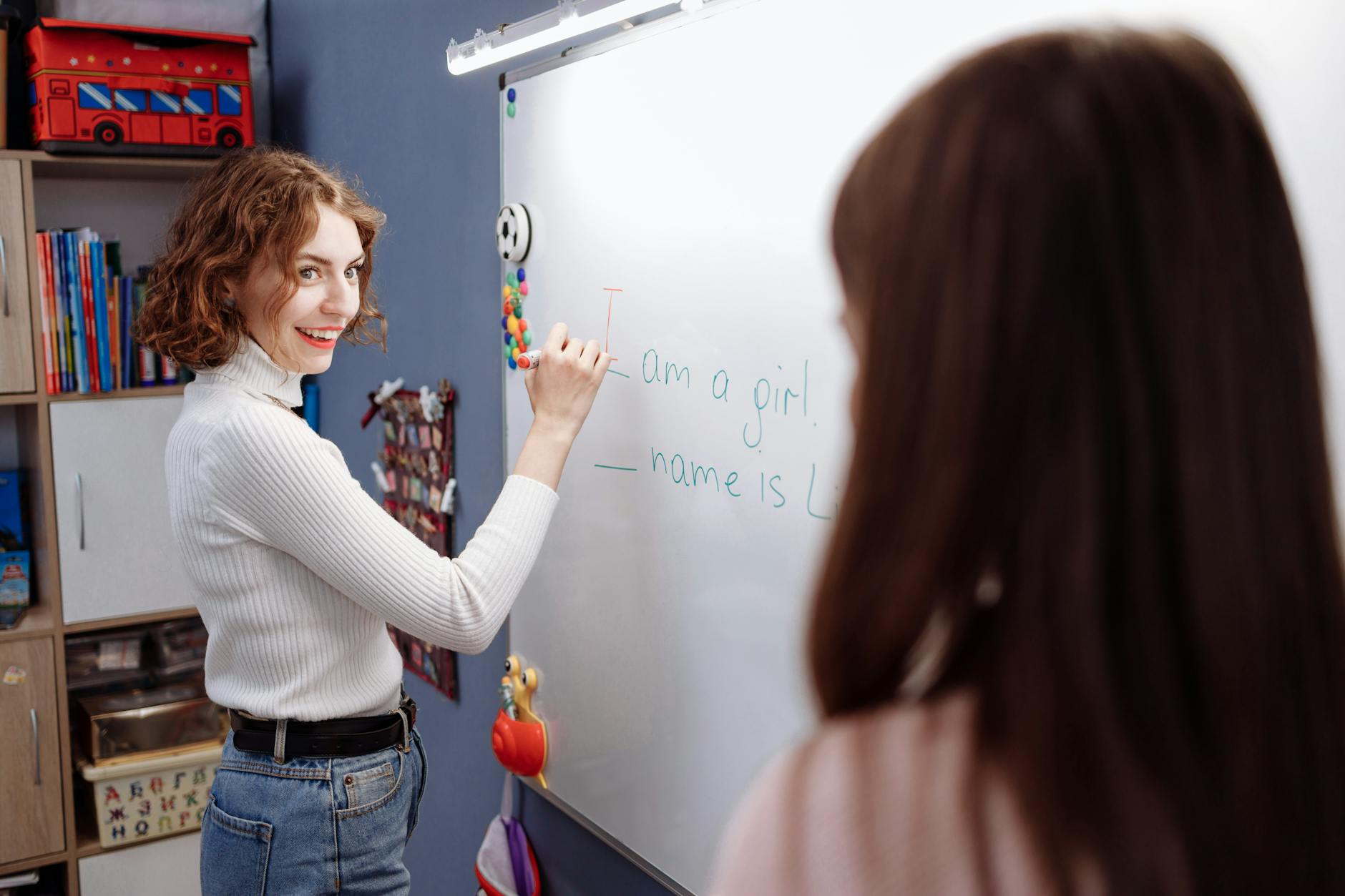
Picture a 2nd-grade phonics lesson on silent "e." You start by writing "cap" and "cape" on the board. "Watch me. I'm looking at the vowel. I see the 'e' at the end, so I know the 'a' says its name. Cap. Cape." That's your modeling with think-aloud. Then you point to new words: "tap," "tape," "fin," "fine." "Together. Tap and tape. Ready, go." The whole class responds while you scan for hesitation. You spot a kid who says "tap" for "tape." You stop immediately. "My turn. The 'e' makes the 'a' say its name. Tape. Your turn." The kid repeats it. You check another word thirty seconds later to ensure it stuck. Finally, you hand out a six-item check. If they get five out of six, you move on. If not, you reteach right then for two minutes rather than waiting until the test to discover the gap.
The pacing is relentless. You're getting a response every 30 seconds. It sounds exhausting, and honestly, it is at first. But it keeps kids locked in. No one disappears into their hoodie or starts sharpening pencils because they know you're watching every single response.
Direct Instruction vs. Discovery-Based Learning
So when do you pick explicit teaching over discovery? Look at cognitive load first. Direct instruction manages working memory by chunking information and providing scaffolds immediately before students get overwhelmed. Discovery learning dumps the whole problem on kids and waits for them to figure it out, which works great if they already have background knowledge and crashes hard if they don't. Time to mastery is faster with explicit methods because you're not waiting for accidental discoveries or hoping kids notice the pattern. However, engagement looks different. Direct instruction keeps kids busy responding and succeeding; discovery lets them argue, explore, and sometimes fail productively.
Transfer to novel problems is where people get nervous about explicit teaching. Critics say it creates robots who can't apply knowledge. That's only true if you skip the "You do" phase with varied examples and real-world applications. When done right, students actually transfer better because they have solid schemas to hang new information on instead of half-baked misconceptions they discovered themselves.
Don't use direct instruction for everything. Skip it during open-ended creative writing workshops where voice and choice matter most, authentic scientific inquiry where outcomes are genuinely unknown and the process is the point, or social problem-solving that requires perspective-taking and collaborative negotiation. Kids need to struggle productively sometimes. But when you're teaching specific skills, facts, or procedures—especially to novices or when you need to close gaps fast—explicit is faster, fairer, and less frustrating for everyone.
Why Does Direct Instruction Matter for Student Achievement?
Research from Hattie's Visible Learning places direct instruction at an effect size of 0.59. That crushes the 0.40 hinge point representing one year of student growth. Discovery learning stalls at 0.31. In practical terms, using this method gives you nearly a year and a half of progress in the same time other methods give you one. Barak Rosenshine's 2012 Principles of Instruction breaks down what makes this direct instruction approach tick. Three principles stand out: start every lesson reviewing yesterday's content, present new material in small steps with student practice after each step, and ask a large number of questions while checking for understanding. These aren't suggestions. They're the mechanics that keep cognitive load manageable while building automaticity. Project Follow Through (1968-1977) provides the smoking gun. This federally funded study remains the largest educational experiment in U.S. history, tracking 75,000 low-income students across multiple teaching models for nearly a decade. The direct instruction as a teaching strategy produced the highest gains in reading, math, spelling, and language. Constructivist models couldn't touch these results, especially for students with learning disabilities who need explicit skill building. Here's where teachers stumble. If you shift into lecture mode while students passively take notes, that 0.59 effect size plummets toward zero. Explicit instruction does not mean talking for twenty minutes straight. It's highly interactive teacher-led instruction where you constantly probe, students respond chorally or individually, and you adjust based on errors. Think I do we do you do, not "I talk you listen while you copy."
Cognitive Science Behind Systematic Teaching
Working memory can only juggle 4-7 items simultaneously. That's a hard limit. Systematic instruction works within this constraint through information processing theory. You manage intrinsic cognitive load by sequencing information carefully and using worked examples.
When you demonstrate every step of long division before releasing students to practice, you free up mental bandwidth for schema construction rather than procedure memorization. Students watch the expert model first. Then they attempt similar problems with guidance. This sequencing prevents the mental gridlock that happens when novices try to solve novel problems while simultaneously remembering rules.
The curse of knowledge blinds expert teachers. You forget what it's like not to know. You skip micro-steps that seem obvious but leave novices stranded. For example, you might say "carry the one" without explaining why the ten moves left. Direct instruction prevents this by scripting every micro-step in skill acquisition. This is why gradual release of responsibility matters. You don't throw kids into independent practice until they've seen the complete process modeled multiple times with immediate error correction.
Evidence From the National Institute for Direct Instruction
The National Institute for Direct Instruction tracks longitudinal data from high-poverty schools using Engelmann's curricula. Schools implementing Reading Mastery or Connecting Math Concepts for three or more years close achievement gaps by 1.5 grade levels annually. These aren't wealthy districts with small class sizes. These are Title I schools with 80% free-and-reduced lunch populations proving that the direct instruction as a teaching strategy works when implemented with fidelity over time.
English Language Learners show particularly dramatic gains. NIFDI studies demonstrate ELLs using DI programs score 20-30 percentile points higher on standardized assessments compared to peers in balanced literacy controls. The explicit vocabulary development and systematic phonics instruction remove the guesswork that frustrates language learners.
Kids know exactly what you expect because Rosenshine's principles ensure you modeled every component clearly before asking them to perform independently. The data holds steady across demographics. Whether you're teaching 3rd graders in October or high schoolers preparing for exit exams, the explicit instruction framework produces measurable gains. Schools don't need special funding or technology. They need consistent implementation of systematic instruction and trained teachers who follow the foundational teaching methods with fidelity.

How the Direct Instruction Model Works Step by Step
The direct instruction model follows a precise five-step cycle. You move through each phase based on student data, not the clock. Think of it as a flowchart where the exit ticket dictates your next move, not the lesson plan timer.
Orientation (2-3 minutes): Hook attention and state the objective in student-friendly language. Connect to prior learning.
Presentation (5-10 minutes): Model with think-alouds using the I do we do you do framework.
Structured Practice (5-8 minutes): High-frequency responses where every student answers multiple times with high success.
Guided Practice (5-7 minutes): Monitored trials with immediate formative assessment and error correction.
Independent Practice (10-15 minutes): Mastery check where students work alone while you circulate to verify understanding.
Move from Guided to Independent only when 80% of students achieve 90% accuracy on exit tickets. Otherwise, reteach using alternative examples the same day. This decision point protects you from pushing kids into independent work before they're ready, which creates error patterns that take weeks to unlearn.
Time varies by level. Elementary lessons should cycle through all direct instruction steps in 20-30 minutes total. Secondary can extend to 45 minutes but must maintain 90-100 pacing events per hour. That's roughly two student responses every minute to keep engagement tight and follow Rosenshine's principles of high success rates.
Modeling and Demonstration Phase
During Presentation, use the worked example technique. Show three to four fully solved problems step-by-step using your document camera or smart board. Narrate every decision point out loud: "I'm looking at the ones place... I see I need to regroup... I'm checking my work by estimating." This explicit instruction makes invisible thinking visible to kids who don't know what "good thinking" sounds like yet.
Use a consistent transition signal before you start. Say "Mirror my words" or "Watch me first," then pause. Wait until you have 100% eye contact and hands are empty. Then demonstrate the procedure exactly as students will perform it, at the speed they should work. This prevents kids from trying to work ahead while you're still explaining the concept, which is when most errors begin.
Guided Practice With Immediate Feedback
Structured Practice relies on choral response. All students respond simultaneously using whiteboards, response cards, or verbal unison responses. Ask the question, wait three full seconds, then signal for the response. That wait time is non-negotiable—it gives processors time to think without the fast hands dominating the pace.
During Guided Practice, use the round the room check. Scan 100% of student work within 60 seconds using a predetermined route. I always go left-to-right, back-to-front. Spot an error? Stop and fix it immediately before it becomes entrenched. This is teacher-led instruction at its most systematic—you're catching misconceptions while they're still small and easy to correct.
Independent Practice and Mastery Checking
Follow the 80/80 mastery rule: 80% of students must achieve 80% accuracy before independent practice. If you don't hit this threshold, return to Structured Practice with corrective feedback. Don't let kids practice errors alone at their desks. That's how bad habits form that persist for months.
When you spot mistakes during independent work, use the error correction protocol. First, stop and model the correct response. Second, lead the student through a parallel item shoulder-to-shoulder. Third, test with a new item. Fourth, reintegrate them to the previous success point. This gradual release of responsibility ensures mastery before you walk away, preventing kids from spinning their wheels on half-understood concepts while you check email.

Direct Instruction Examples Across Subjects and Grade Levels
You need to see what this looks like in real classrooms. Here are seven direct instruction examples that show how the model adapts across subjects while keeping the same architectural bones.
Subject | Grade Level | Specific Skill | DI Implementation | Student Response Method |
|---|---|---|---|---|
Reading | K-2 | Letter-sound correspondence (Weeks 1-6) | Reading Mastery: Scripted introduction of /m/, /a/, /s/, /t/ with mouth formation modeling | Choral response: "Sound?" "mmmm" |
Reading | 6-12 | Decoding multisyllabic words | Corrective Reading: Error correction script—"My turn. The word is... Say it with me... Your turn" | Whisper read to teacher, then reintegrate into sentence context |
Math | 3-5 | Double-digit multiplication algorithm | Connecting Math Concepts: 5 micro-steps with verification after each | Whiteboard check: Complete step, hold up board for scan |
Math | 4 | Long division (initial introduction) | Full explicit instruction: 4 worked examples, teacher think-aloud, step naming | Oral step naming during guided practice |
Math | 7 | Long division (remediation) | Same 5 micro-steps compressed: 2 worked examples then immediate independent practice | Written response with error analysis checklist |
Science | 6-8 | Lab safety protocols | Rule-statement with physical demonstration, explicit non-examples shown | Thumbs up/down on safety scenario cards |
ELA | 9-12 | Thesis statement writing | Expressive Writing: Formula provided (Topic + Claim + Reasons), modeled with think-aloud | Sentence frames filled on mini whiteboards |
Notice how the teacher-led instruction stays tight regardless of grade level. Whether you're using commercial scripts or your own designs, the pattern holds: model, lead, test, then move to independence.
Early Reading and Phonics Programs
Synthetic phonics through direct instruction follows a locked sequence. Weeks 1-6 hit letter-sound correspondence for m, a, s, t, i, f. You model mouth formation. Students mirror you. Weeks 7-12 move into blending CVC words like "mat" using continuous blending. Weeks 13-18 introduce consonant digraphs such as sh, ch, th as single sound units. Weeks 19-24 tackle silent e patterns, showing how the vowel "says its name."
This maps onto science of reading and phonics instruction research. When a student misreads "ship" as "sip," you run the correction: "My turn. The word is ship. Say it with me. Ship. Your turn. What word?" The student repeats "ship," then reads the full sentence again to reintegrate the correction. You don't just fix the word. You fix the context.
Choral response keeps pace brisk. If half the class misses the vowel sound, you stop. You model again. You don't move forward until the group response is crisp. Programs like Reading Mastery script this, but you can replicate it with any decodable text using this error correction protocol.
Mathematical Procedures and Algorithm Instruction
The "fading worked examples" technique follows Rosenshine's principles of gradual release with mathematical precision. In Lesson 1, you demonstrate 4 worked examples while thinking aloud through every cognitive step, then guide students through 1 together. Lesson 2 drops to 3 worked examples and 2 guided attempts. By Lesson 3, you're showing 2 worked examples and releasing to 3 independent problems. This isn't just I do we do you do—it's a calculated fade where the ratio shifts based on student error rates.
Take double-digit multiplication. You break it into 5 micro-steps: multiply the ones digit, write the ones and carry the tens, multiply the tens digit, add the carried amount, combine the partial products. After each micro-skill, students check their work before proceeding. If they miss the carry step, you stop the whole group. You reteach that micro-step. This systematic instruction prevents error patterns from fossilizing into habits that are hard to break later.
Here's how differentiation looks in practice. With 4th graders learning long division for the first time, you spend 15 minutes on the first worked example. You name each step aloud: "Divide, multiply, subtract, bring down." You use manipulatives to show the grouping. With 7th graders who need remediation, you use the same 5 micro-steps but compress the modeling to 5 minutes. You provide 2 worked examples instead of 4, then jump immediately to independent practice with an error-analysis checklist. The architecture stays constant; only the pacing, example complexity, and wait time shift.
Science Vocabulary and Concept Introduction
You can adapt the Frayer Model for explicit instruction by controlling every input initially. You present the definition: "Photosynthesis is the process where plants use light energy to make food." Students chorally repeat it twice. You provide non-examples immediately: "Breathing is not photosynthesis because animals don't make their own food using light. Eating is not photosynthesis because the plant isn't consuming other organisms." Then students use response cards—green for "is photosynthesis," red for "is not"—to classify new examples you present rapidly.
The vocabulary introduction sequence follows a four-step lockstep. First, you say the word and definition while students track with their eyes. Second, students repeat both the word and definition in unison. Third, you provide a context sentence: "The plant's photosynthesis slowed in the dark closet because it lacked light energy." Fourth, students generate novel sentences on whiteboards using a sentence frame: "Photosynthesis requires ______ because ______." You scan the boards. You spot-check three students. You correct misconceptions on the spot.
This beats passing out word lists and hoping kids figure it out through osmosis. You control the input, check for understanding every 90 seconds, and correct errors immediately. That's the gradual release of responsibility done right—tight control moving to independent application only after you see evidence of mastery.

Direct Instruction Strategies to Maximize Engagement
The biggest trap in direct instruction? Passive lecture wearing DI's clothing. You explain the math strategy for six minutes while third graders stare. That's not DI. That's just talking.
Real DI demands a response every 30 to 60 seconds. Hit 90 seconds of teacher talk without student output, and you've crashed. The research on Rosenshine's principles is clear: high success rates require high engagement rates. You need to hear or see every kid, constantly.
Script four signals until they're muscle memory. Eyes on me: tap your eyes, then chest, drop your voice and say "Mirror my words." They echo you verbatim while copying your gestures. Whiteboards ready: students pull out markers. You pose the question. They write. You say "Show me," they hold boards high, you scan. Think and write: give 20 seconds of silent writing, then "Hold them high." Teach your partner: they turn to a neighbor, explain for 30 seconds, then you clap and say "Switch" so the listener teaches back. Every transition has a physical anchor. No anchor, no momentum.
When errors happen, use the four-step correction as an engagement tool. Model the correct step. Lead the class through it chorally. Test the original student alone. Reintegrate them back into independent work within 60 seconds. The pace protects dignity. Slow corrections kill confidence.
Choral Responding and Active Participation Signals
The echo effect destroys DI. You ask a question, three hands shoot up, you call on one, and the other 24 check out. Stop this. Use unison response instead.
Cue it with a hand drop. Hold your hand at chest height while posing the question. Drop it to waist level as you say "Together." Every voice answers simultaneously. The drop signals timing. Without the hand drop, you get the ugly staggered echo where the fast kids answer first and the slow kids mumble along half a beat behind. The hand drop synchronizes them. Practice this until it's crisp. You want 90 to 100 pacing events per hour in a solid DI block. That sounds like a marathon until you realize each event takes 15 seconds.
Response cards upgrade your data. Each student holds colored cards for A/B/C/D or writes on whiteboards. You pose the question. They select. You scan the room in 10 seconds. If you see 75 percent correct, say "Seventy-five percent correct, let's review number three" within 15 seconds, then keep moving. If you see 50 percent wrong, that's your reteach trigger. This is one of those active classroom participation techniques that feels like a game but works like an assessment. No tech required.
The gesture matters. When scanning whiteboards, physically turn your whole body. Students notice. It keeps them honest. If you just glance at the front row, the back row stops writing. Fast students hate waiting. Slow students hide. Unison response flattens the hierarchy. Everyone works. Everyone shows. No one disappears.
Pacing Techniques to Maintain Attention
DI isn't a race. But it isn't a nap either. You need delta moments — intentional 2 to 3 second pauses after delivering critical information. Freeze your hand in mid-air. Hold the freeze. Let the words land. Then release and cue the response. Those seconds feel eternal to you. To a 7-year-old processing new vocabulary, they're oxygen.
When energy dips, don't stop the lesson. Use transition signals that demand physical movement without breaking flow. Say "Snap twice if you're with me" and snap your fingers at chest level. They snap back. You get auditory feedback that they're listening. Try "Fingers on the roof if you know the next step in long division." Hands shoot up. You scan. If half the roof is missing, you reteach. If the roof is full, you move faster. The physical motion reboots their attention filters without you having to say "Pay attention," which never works anyway.
These micro-interventions are part of effective classroom control strategies that keep DI from becoming a monologue. The goal is 90 to 100 engagement events per hour. That means cueing a response every 36 seconds. Sound exhausting? It is. That's why the delta moments matter. You sprint, then you breathe.
Vary your voice volume. Whisper the prompt so they lean in. Then cue the loud unison response. The contrast wakes them up without disrupting the gradual release of responsibility structure you're building.
Error Correction Procedures That Build Confidence
Errors in DI aren't failures. They're data. But public humiliation kills the method. Use positive error correction to maintain pace and dignity.
When a student misses a step, deploy the four-step loop immediately. Model: "Watch me. My turn." You demonstrate correctly. Lead: "Your turn with me." You do it together chorally. Test: "Now you try." The student attempts it alone. Reintegrate: "Perfect. Back to problem four." Total time: 45 seconds. The class never stops working. The student never feels singled out for long.
The script matters more than you think. Avoid "No, that's wrong." Try "I like how you got the first part. Watch me for the next step." Start with validation. End with success. Never leave a student hanging in error. The immediate correction prevents the mistake from fossilizing in their brain. Plus, the other 29 kids who were about to make the same error just saw exactly how to fix it. Public correction becomes public instruction.
Set a reteach trigger based on your response card scans or whiteboard checks. If more than 20 percent of your class makes the same error, stop independent practice immediately. Return to choral responding on that specific step for two minutes. Drill it hard. Then release them back to the worksheet. Don't wait until the end of the lesson. Don't wait until tomorrow. Fix it now, or you're not doing systematic instruction. You're just hoping they figure it out eventually. They won't.

How to Implement Direct Instruction Without Sacrificing Creativity?
Implement direct instruction for foundational skills and procedural knowledge while reserving 30-40% of instructional time for inquiry-based activities. Use explicit teaching to frontload essential concepts, then transition to collaborative application. Students need baseline competencies before creative exploration actually works.
Use teacher-led instruction for procedural knowledge like decoding, math algorithms, or lab safety protocols. Use it for factual knowledge like vocabulary definitions or historical dates. Use it when prior knowledge is low. Switch to inquiry for conceptual understanding—like why photosynthesis matters to ecosystems—or creative production like poetry and art. Reserve inquiry for when students have solid foundational schemas to build from.
Run a 60-70/30-40 split. Spend 60-70% of instructional time on systematic instruction for foundational skills, and 30-40% on application through collaborative learning methods or inquiry. A daily schedule might look like: 15 minutes of DI phonics, 20 minutes of guided reading with student choice, then 10 minutes of explicit writing mechanics. The phonics and mechanics are your foundation; the guided reading is where they apply it creatively.
Watch for signs you've overdone the structure. If students can't apply skills to novel contexts, stop asking questions, or check out during independent work, you've created a false dichotomy. Insert "application days" where kids use DI-taught skills in open-ended projects. Don't attempt direct teaching methods for complex, ill-structured problems like "design a sustainable city" where goals are unclear. DI requires terminal objectives specified in advance. That city project needs inquiry; the research skills needed to do it need DI first.
Assessing When Explicit Teaching Is the Right Choice
Run three questions before planning your lesson. Is the skill procedural or conceptual? Do 80% of your students lack prior knowledge? Is there one right answer or multiple valid approaches? If you answered procedural/yes/one right answer, use explicit instruction. If you answered conceptual/no/multiple approaches, use inquiry. Simple as that. Don't overcomplicate the decision. Your gut often knows which one fits, but these questions keep you honest when you're tempted to default to your comfort zone.
The novice versus expert distinction clarifies this further. Novices—kids with low prior knowledge—need direct teaching to build schemas in long-term memory. Without those mental frameworks, they can't hold new information. Experts—kids who already have solid foundational knowledge—benefit from inquiry to refine and extend existing schemas. Teaching 8th graders who've never seen algebra using pure discovery learning fails because they lack the schema. They don't know what to look for. Teaching calculus students who've mastered limits using rigid DI wastes their readiness to explore. They already have the schema; they need to stretch it.
Differentiating explicit instruction means matching the method to the student's current schema, not their grade level. A 5th grader reading at a 2nd grade level needs DI for phonics even if the rest of the class is ready for literature circles. That's not remedial. That's building the foundation. Meanwhile, that same student's gifted math peer might skip the DI lecture on fractions and move straight to inquiry-based problem solving because they already own the concept. Check prior knowledge first. Always. Use a quick five-question pre-assessment to decide which kids get the direct teaching and which ones are ready to explore.
Blending Direct Instruction With Collaborative Learning
Try a station rotation. Station 1: You deliver 15 minutes of I do we do you do gradual release of responsibility on a new skill. Station 2: Students collaboratively apply yesterday's DI skill to a novel problem. Station 3: Independent practice of the current DI skill. Rotate every 15 minutes. This keeps the ratio tight while ensuring nobody sits through 45 minutes of lecture. Kids stay fresh. You stay sane.
Use the jigsaw with DI frontload. Spend 15 minutes using Rosenshine's principles to teach all groups the foundational vocabulary or procedures. Then break into expert groups for 20 minutes where students analyze different texts or solve different problems using those exact terms. You frontloaded the knowledge directly so the collaborative work actually produces learning, not confusion. The expert groups work because every student brings the same baseline knowledge to their discussion. Without that frontload, the jigsaw collapses into the blind leading the blind. I've seen it happen. One kid does all the work while others nod along, or worse, they all get the concept wrong because nobody had the prerequisite knowledge.
The blend works because direct instruction builds the toolbox, and inquiry teaches kids which tool to grab. You don't sacrifice creativity by teaching grammar explicitly. You make creativity possible by giving students the linguistic tools to express complex ideas. Structure first, freedom second. Your 3rd graders can't write compelling stories if they're still sounding out every word. Teach the phonics directly. Then let them write the dragon story. They'll use better vocabulary because you taught it explicitly first.
Your Next Move with Direct Instruction
Direct instruction gets a bad rap from people who picture a teacher droning at the board for 45 minutes straight. That isn't it. Real explicit instruction is sharp, fast, and gets kids from confusion to confidence quicker than anything else I've tried in fifteen years. When you script your explanations and check for understanding every two minutes, you stop losing kids during the first five.
You don't need to tear up your lesson plans or become a robot. Pick one of Rosenshine's principles—maybe guided practice—and use it intentionally in your very next class. Watch what happens when you model the thinking out loud instead of just showing the steps. The kids who usually check out after thirty seconds start tracking with you because you've removed the guesswork.
The best teachers I know blend systematic instruction with creativity, not instead of it. Your concrete move? Grab a sticky note and script your opening explanation for tomorrow's toughest lesson. Just three sentences. Write them down tonight so you're not improvising when the bell rings. That's your first step. Start there.

What Is Direct Instruction?
Direct instruction is a teacher-led, explicit instructional method where learning objectives are clearly stated, skills are broken into small sequential steps, and students engage in guided and independent practice with immediate feedback. It emphasizes high student engagement rates and systematic pacing to maximize learning efficiency. John Hattie's Visible Learning research puts the effect size at 0.59, which lands it squarely in the "zone of desired effects" above the 0.40 hinge point. That means it works better than most things you've tried.
But here's the confusion everyone faces during PD. Direct Instruction with capital letters refers to the specific scripted curriculum programs developed by Siegfried Engelmann and the National Institute for Direct Instruction. Think Reading Mastery, Connecting Math Concepts, or Corrective Reading. Those require strict fidelity, prescribed wording, and usually special training. Lowercase direct instruction describes the general explicit teaching approach you can use with any material. Use it with your district's ELA curriculum or that random worksheet you found at 11 PM. Same DNA, different packaging.
Use scripted Direct Instruction programs when your district mandates them, when students are significantly below grade level and need precisely sequenced intervention, or when you have instructional assistants who need tight scripts to ensure consistency.
Use lowercase direct instruction methods when you're teaching your regular standards, designing your own explicit lessons, working with general education classrooms, or comparing evidence-based teaching models to see what fits your context.
The method has five non-negotiable elements that separate it from just "teaching clearly." You need clear learning objectives stated in kid-friendly language so students know what success looks like. You need teacher modeling using think-alouds so kids hear your brain work. You need a high frequency of student responses every 30 to 60 seconds to check for understanding constantly. You need immediate error correction with feedback loops so mistakes don't get practiced wrong. And you need pacing driven by mastery data rather than the calendar or the pacing guide.
The Core Components of Explicit Teaching
These five elements map onto the I do, We do, You do framework—also called gradual release of responsibility—and align closely with Rosenshine's principles of effective instruction. But there's more precision here than the poster on your wall suggests. During "I do," you don't just show; you model exactly what you want using worked examples and verbalizing your thinking process step by step. "We do" involves guided practice with choral responding, whiteboard checks, or turn-and-talks where you see every student's response, not just the hand-wavers. "You do" means independent practice with unmastered material, followed by mastery checks. When errors occur, you use a four-step error correction: model the correct response, have students repeat it with you, have them do it alone, and then check again later. Finally, you schedule distributed review across days and weeks so skills actually stick instead of disappearing after the Friday test.
Picture a 2nd-grade phonics lesson on silent "e." You start by writing "cap" and "cape" on the board. "Watch me. I'm looking at the vowel. I see the 'e' at the end, so I know the 'a' says its name. Cap. Cape." That's your modeling with think-aloud. Then you point to new words: "tap," "tape," "fin," "fine." "Together. Tap and tape. Ready, go." The whole class responds while you scan for hesitation. You spot a kid who says "tap" for "tape." You stop immediately. "My turn. The 'e' makes the 'a' say its name. Tape. Your turn." The kid repeats it. You check another word thirty seconds later to ensure it stuck. Finally, you hand out a six-item check. If they get five out of six, you move on. If not, you reteach right then for two minutes rather than waiting until the test to discover the gap.
The pacing is relentless. You're getting a response every 30 seconds. It sounds exhausting, and honestly, it is at first. But it keeps kids locked in. No one disappears into their hoodie or starts sharpening pencils because they know you're watching every single response.
Direct Instruction vs. Discovery-Based Learning
So when do you pick explicit teaching over discovery? Look at cognitive load first. Direct instruction manages working memory by chunking information and providing scaffolds immediately before students get overwhelmed. Discovery learning dumps the whole problem on kids and waits for them to figure it out, which works great if they already have background knowledge and crashes hard if they don't. Time to mastery is faster with explicit methods because you're not waiting for accidental discoveries or hoping kids notice the pattern. However, engagement looks different. Direct instruction keeps kids busy responding and succeeding; discovery lets them argue, explore, and sometimes fail productively.
Transfer to novel problems is where people get nervous about explicit teaching. Critics say it creates robots who can't apply knowledge. That's only true if you skip the "You do" phase with varied examples and real-world applications. When done right, students actually transfer better because they have solid schemas to hang new information on instead of half-baked misconceptions they discovered themselves.
Don't use direct instruction for everything. Skip it during open-ended creative writing workshops where voice and choice matter most, authentic scientific inquiry where outcomes are genuinely unknown and the process is the point, or social problem-solving that requires perspective-taking and collaborative negotiation. Kids need to struggle productively sometimes. But when you're teaching specific skills, facts, or procedures—especially to novices or when you need to close gaps fast—explicit is faster, fairer, and less frustrating for everyone.
Why Does Direct Instruction Matter for Student Achievement?
Research from Hattie's Visible Learning places direct instruction at an effect size of 0.59. That crushes the 0.40 hinge point representing one year of student growth. Discovery learning stalls at 0.31. In practical terms, using this method gives you nearly a year and a half of progress in the same time other methods give you one. Barak Rosenshine's 2012 Principles of Instruction breaks down what makes this direct instruction approach tick. Three principles stand out: start every lesson reviewing yesterday's content, present new material in small steps with student practice after each step, and ask a large number of questions while checking for understanding. These aren't suggestions. They're the mechanics that keep cognitive load manageable while building automaticity. Project Follow Through (1968-1977) provides the smoking gun. This federally funded study remains the largest educational experiment in U.S. history, tracking 75,000 low-income students across multiple teaching models for nearly a decade. The direct instruction as a teaching strategy produced the highest gains in reading, math, spelling, and language. Constructivist models couldn't touch these results, especially for students with learning disabilities who need explicit skill building. Here's where teachers stumble. If you shift into lecture mode while students passively take notes, that 0.59 effect size plummets toward zero. Explicit instruction does not mean talking for twenty minutes straight. It's highly interactive teacher-led instruction where you constantly probe, students respond chorally or individually, and you adjust based on errors. Think I do we do you do, not "I talk you listen while you copy."
Cognitive Science Behind Systematic Teaching
Working memory can only juggle 4-7 items simultaneously. That's a hard limit. Systematic instruction works within this constraint through information processing theory. You manage intrinsic cognitive load by sequencing information carefully and using worked examples.
When you demonstrate every step of long division before releasing students to practice, you free up mental bandwidth for schema construction rather than procedure memorization. Students watch the expert model first. Then they attempt similar problems with guidance. This sequencing prevents the mental gridlock that happens when novices try to solve novel problems while simultaneously remembering rules.
The curse of knowledge blinds expert teachers. You forget what it's like not to know. You skip micro-steps that seem obvious but leave novices stranded. For example, you might say "carry the one" without explaining why the ten moves left. Direct instruction prevents this by scripting every micro-step in skill acquisition. This is why gradual release of responsibility matters. You don't throw kids into independent practice until they've seen the complete process modeled multiple times with immediate error correction.
Evidence From the National Institute for Direct Instruction
The National Institute for Direct Instruction tracks longitudinal data from high-poverty schools using Engelmann's curricula. Schools implementing Reading Mastery or Connecting Math Concepts for three or more years close achievement gaps by 1.5 grade levels annually. These aren't wealthy districts with small class sizes. These are Title I schools with 80% free-and-reduced lunch populations proving that the direct instruction as a teaching strategy works when implemented with fidelity over time.
English Language Learners show particularly dramatic gains. NIFDI studies demonstrate ELLs using DI programs score 20-30 percentile points higher on standardized assessments compared to peers in balanced literacy controls. The explicit vocabulary development and systematic phonics instruction remove the guesswork that frustrates language learners.
Kids know exactly what you expect because Rosenshine's principles ensure you modeled every component clearly before asking them to perform independently. The data holds steady across demographics. Whether you're teaching 3rd graders in October or high schoolers preparing for exit exams, the explicit instruction framework produces measurable gains. Schools don't need special funding or technology. They need consistent implementation of systematic instruction and trained teachers who follow the foundational teaching methods with fidelity.
How the Direct Instruction Model Works Step by Step
The direct instruction model follows a precise five-step cycle. You move through each phase based on student data, not the clock. Think of it as a flowchart where the exit ticket dictates your next move, not the lesson plan timer.
Orientation (2-3 minutes): Hook attention and state the objective in student-friendly language. Connect to prior learning.
Presentation (5-10 minutes): Model with think-alouds using the I do we do you do framework.
Structured Practice (5-8 minutes): High-frequency responses where every student answers multiple times with high success.
Guided Practice (5-7 minutes): Monitored trials with immediate formative assessment and error correction.
Independent Practice (10-15 minutes): Mastery check where students work alone while you circulate to verify understanding.
Move from Guided to Independent only when 80% of students achieve 90% accuracy on exit tickets. Otherwise, reteach using alternative examples the same day. This decision point protects you from pushing kids into independent work before they're ready, which creates error patterns that take weeks to unlearn.
Time varies by level. Elementary lessons should cycle through all direct instruction steps in 20-30 minutes total. Secondary can extend to 45 minutes but must maintain 90-100 pacing events per hour. That's roughly two student responses every minute to keep engagement tight and follow Rosenshine's principles of high success rates.
Modeling and Demonstration Phase
During Presentation, use the worked example technique. Show three to four fully solved problems step-by-step using your document camera or smart board. Narrate every decision point out loud: "I'm looking at the ones place... I see I need to regroup... I'm checking my work by estimating." This explicit instruction makes invisible thinking visible to kids who don't know what "good thinking" sounds like yet.
Use a consistent transition signal before you start. Say "Mirror my words" or "Watch me first," then pause. Wait until you have 100% eye contact and hands are empty. Then demonstrate the procedure exactly as students will perform it, at the speed they should work. This prevents kids from trying to work ahead while you're still explaining the concept, which is when most errors begin.
Guided Practice With Immediate Feedback
Structured Practice relies on choral response. All students respond simultaneously using whiteboards, response cards, or verbal unison responses. Ask the question, wait three full seconds, then signal for the response. That wait time is non-negotiable—it gives processors time to think without the fast hands dominating the pace.
During Guided Practice, use the round the room check. Scan 100% of student work within 60 seconds using a predetermined route. I always go left-to-right, back-to-front. Spot an error? Stop and fix it immediately before it becomes entrenched. This is teacher-led instruction at its most systematic—you're catching misconceptions while they're still small and easy to correct.
Independent Practice and Mastery Checking
Follow the 80/80 mastery rule: 80% of students must achieve 80% accuracy before independent practice. If you don't hit this threshold, return to Structured Practice with corrective feedback. Don't let kids practice errors alone at their desks. That's how bad habits form that persist for months.
When you spot mistakes during independent work, use the error correction protocol. First, stop and model the correct response. Second, lead the student through a parallel item shoulder-to-shoulder. Third, test with a new item. Fourth, reintegrate them to the previous success point. This gradual release of responsibility ensures mastery before you walk away, preventing kids from spinning their wheels on half-understood concepts while you check email.
Direct Instruction Examples Across Subjects and Grade Levels
You need to see what this looks like in real classrooms. Here are seven direct instruction examples that show how the model adapts across subjects while keeping the same architectural bones.
Subject | Grade Level | Specific Skill | DI Implementation | Student Response Method |
|---|---|---|---|---|
Reading | K-2 | Letter-sound correspondence (Weeks 1-6) | Reading Mastery: Scripted introduction of /m/, /a/, /s/, /t/ with mouth formation modeling | Choral response: "Sound?" "mmmm" |
Reading | 6-12 | Decoding multisyllabic words | Corrective Reading: Error correction script—"My turn. The word is... Say it with me... Your turn" | Whisper read to teacher, then reintegrate into sentence context |
Math | 3-5 | Double-digit multiplication algorithm | Connecting Math Concepts: 5 micro-steps with verification after each | Whiteboard check: Complete step, hold up board for scan |
Math | 4 | Long division (initial introduction) | Full explicit instruction: 4 worked examples, teacher think-aloud, step naming | Oral step naming during guided practice |
Math | 7 | Long division (remediation) | Same 5 micro-steps compressed: 2 worked examples then immediate independent practice | Written response with error analysis checklist |
Science | 6-8 | Lab safety protocols | Rule-statement with physical demonstration, explicit non-examples shown | Thumbs up/down on safety scenario cards |
ELA | 9-12 | Thesis statement writing | Expressive Writing: Formula provided (Topic + Claim + Reasons), modeled with think-aloud | Sentence frames filled on mini whiteboards |
Notice how the teacher-led instruction stays tight regardless of grade level. Whether you're using commercial scripts or your own designs, the pattern holds: model, lead, test, then move to independence.
Early Reading and Phonics Programs
Synthetic phonics through direct instruction follows a locked sequence. Weeks 1-6 hit letter-sound correspondence for m, a, s, t, i, f. You model mouth formation. Students mirror you. Weeks 7-12 move into blending CVC words like "mat" using continuous blending. Weeks 13-18 introduce consonant digraphs such as sh, ch, th as single sound units. Weeks 19-24 tackle silent e patterns, showing how the vowel "says its name."
This maps onto science of reading and phonics instruction research. When a student misreads "ship" as "sip," you run the correction: "My turn. The word is ship. Say it with me. Ship. Your turn. What word?" The student repeats "ship," then reads the full sentence again to reintegrate the correction. You don't just fix the word. You fix the context.
Choral response keeps pace brisk. If half the class misses the vowel sound, you stop. You model again. You don't move forward until the group response is crisp. Programs like Reading Mastery script this, but you can replicate it with any decodable text using this error correction protocol.
Mathematical Procedures and Algorithm Instruction
The "fading worked examples" technique follows Rosenshine's principles of gradual release with mathematical precision. In Lesson 1, you demonstrate 4 worked examples while thinking aloud through every cognitive step, then guide students through 1 together. Lesson 2 drops to 3 worked examples and 2 guided attempts. By Lesson 3, you're showing 2 worked examples and releasing to 3 independent problems. This isn't just I do we do you do—it's a calculated fade where the ratio shifts based on student error rates.
Take double-digit multiplication. You break it into 5 micro-steps: multiply the ones digit, write the ones and carry the tens, multiply the tens digit, add the carried amount, combine the partial products. After each micro-skill, students check their work before proceeding. If they miss the carry step, you stop the whole group. You reteach that micro-step. This systematic instruction prevents error patterns from fossilizing into habits that are hard to break later.
Here's how differentiation looks in practice. With 4th graders learning long division for the first time, you spend 15 minutes on the first worked example. You name each step aloud: "Divide, multiply, subtract, bring down." You use manipulatives to show the grouping. With 7th graders who need remediation, you use the same 5 micro-steps but compress the modeling to 5 minutes. You provide 2 worked examples instead of 4, then jump immediately to independent practice with an error-analysis checklist. The architecture stays constant; only the pacing, example complexity, and wait time shift.
Science Vocabulary and Concept Introduction
You can adapt the Frayer Model for explicit instruction by controlling every input initially. You present the definition: "Photosynthesis is the process where plants use light energy to make food." Students chorally repeat it twice. You provide non-examples immediately: "Breathing is not photosynthesis because animals don't make their own food using light. Eating is not photosynthesis because the plant isn't consuming other organisms." Then students use response cards—green for "is photosynthesis," red for "is not"—to classify new examples you present rapidly.
The vocabulary introduction sequence follows a four-step lockstep. First, you say the word and definition while students track with their eyes. Second, students repeat both the word and definition in unison. Third, you provide a context sentence: "The plant's photosynthesis slowed in the dark closet because it lacked light energy." Fourth, students generate novel sentences on whiteboards using a sentence frame: "Photosynthesis requires ______ because ______." You scan the boards. You spot-check three students. You correct misconceptions on the spot.
This beats passing out word lists and hoping kids figure it out through osmosis. You control the input, check for understanding every 90 seconds, and correct errors immediately. That's the gradual release of responsibility done right—tight control moving to independent application only after you see evidence of mastery.
Direct Instruction Strategies to Maximize Engagement
The biggest trap in direct instruction? Passive lecture wearing DI's clothing. You explain the math strategy for six minutes while third graders stare. That's not DI. That's just talking.
Real DI demands a response every 30 to 60 seconds. Hit 90 seconds of teacher talk without student output, and you've crashed. The research on Rosenshine's principles is clear: high success rates require high engagement rates. You need to hear or see every kid, constantly.
Script four signals until they're muscle memory. Eyes on me: tap your eyes, then chest, drop your voice and say "Mirror my words." They echo you verbatim while copying your gestures. Whiteboards ready: students pull out markers. You pose the question. They write. You say "Show me," they hold boards high, you scan. Think and write: give 20 seconds of silent writing, then "Hold them high." Teach your partner: they turn to a neighbor, explain for 30 seconds, then you clap and say "Switch" so the listener teaches back. Every transition has a physical anchor. No anchor, no momentum.
When errors happen, use the four-step correction as an engagement tool. Model the correct step. Lead the class through it chorally. Test the original student alone. Reintegrate them back into independent work within 60 seconds. The pace protects dignity. Slow corrections kill confidence.
Choral Responding and Active Participation Signals
The echo effect destroys DI. You ask a question, three hands shoot up, you call on one, and the other 24 check out. Stop this. Use unison response instead.
Cue it with a hand drop. Hold your hand at chest height while posing the question. Drop it to waist level as you say "Together." Every voice answers simultaneously. The drop signals timing. Without the hand drop, you get the ugly staggered echo where the fast kids answer first and the slow kids mumble along half a beat behind. The hand drop synchronizes them. Practice this until it's crisp. You want 90 to 100 pacing events per hour in a solid DI block. That sounds like a marathon until you realize each event takes 15 seconds.
Response cards upgrade your data. Each student holds colored cards for A/B/C/D or writes on whiteboards. You pose the question. They select. You scan the room in 10 seconds. If you see 75 percent correct, say "Seventy-five percent correct, let's review number three" within 15 seconds, then keep moving. If you see 50 percent wrong, that's your reteach trigger. This is one of those active classroom participation techniques that feels like a game but works like an assessment. No tech required.
The gesture matters. When scanning whiteboards, physically turn your whole body. Students notice. It keeps them honest. If you just glance at the front row, the back row stops writing. Fast students hate waiting. Slow students hide. Unison response flattens the hierarchy. Everyone works. Everyone shows. No one disappears.
Pacing Techniques to Maintain Attention
DI isn't a race. But it isn't a nap either. You need delta moments — intentional 2 to 3 second pauses after delivering critical information. Freeze your hand in mid-air. Hold the freeze. Let the words land. Then release and cue the response. Those seconds feel eternal to you. To a 7-year-old processing new vocabulary, they're oxygen.
When energy dips, don't stop the lesson. Use transition signals that demand physical movement without breaking flow. Say "Snap twice if you're with me" and snap your fingers at chest level. They snap back. You get auditory feedback that they're listening. Try "Fingers on the roof if you know the next step in long division." Hands shoot up. You scan. If half the roof is missing, you reteach. If the roof is full, you move faster. The physical motion reboots their attention filters without you having to say "Pay attention," which never works anyway.
These micro-interventions are part of effective classroom control strategies that keep DI from becoming a monologue. The goal is 90 to 100 engagement events per hour. That means cueing a response every 36 seconds. Sound exhausting? It is. That's why the delta moments matter. You sprint, then you breathe.
Vary your voice volume. Whisper the prompt so they lean in. Then cue the loud unison response. The contrast wakes them up without disrupting the gradual release of responsibility structure you're building.
Error Correction Procedures That Build Confidence
Errors in DI aren't failures. They're data. But public humiliation kills the method. Use positive error correction to maintain pace and dignity.
When a student misses a step, deploy the four-step loop immediately. Model: "Watch me. My turn." You demonstrate correctly. Lead: "Your turn with me." You do it together chorally. Test: "Now you try." The student attempts it alone. Reintegrate: "Perfect. Back to problem four." Total time: 45 seconds. The class never stops working. The student never feels singled out for long.
The script matters more than you think. Avoid "No, that's wrong." Try "I like how you got the first part. Watch me for the next step." Start with validation. End with success. Never leave a student hanging in error. The immediate correction prevents the mistake from fossilizing in their brain. Plus, the other 29 kids who were about to make the same error just saw exactly how to fix it. Public correction becomes public instruction.
Set a reteach trigger based on your response card scans or whiteboard checks. If more than 20 percent of your class makes the same error, stop independent practice immediately. Return to choral responding on that specific step for two minutes. Drill it hard. Then release them back to the worksheet. Don't wait until the end of the lesson. Don't wait until tomorrow. Fix it now, or you're not doing systematic instruction. You're just hoping they figure it out eventually. They won't.
How to Implement Direct Instruction Without Sacrificing Creativity?
Implement direct instruction for foundational skills and procedural knowledge while reserving 30-40% of instructional time for inquiry-based activities. Use explicit teaching to frontload essential concepts, then transition to collaborative application. Students need baseline competencies before creative exploration actually works.
Use teacher-led instruction for procedural knowledge like decoding, math algorithms, or lab safety protocols. Use it for factual knowledge like vocabulary definitions or historical dates. Use it when prior knowledge is low. Switch to inquiry for conceptual understanding—like why photosynthesis matters to ecosystems—or creative production like poetry and art. Reserve inquiry for when students have solid foundational schemas to build from.
Run a 60-70/30-40 split. Spend 60-70% of instructional time on systematic instruction for foundational skills, and 30-40% on application through collaborative learning methods or inquiry. A daily schedule might look like: 15 minutes of DI phonics, 20 minutes of guided reading with student choice, then 10 minutes of explicit writing mechanics. The phonics and mechanics are your foundation; the guided reading is where they apply it creatively.
Watch for signs you've overdone the structure. If students can't apply skills to novel contexts, stop asking questions, or check out during independent work, you've created a false dichotomy. Insert "application days" where kids use DI-taught skills in open-ended projects. Don't attempt direct teaching methods for complex, ill-structured problems like "design a sustainable city" where goals are unclear. DI requires terminal objectives specified in advance. That city project needs inquiry; the research skills needed to do it need DI first.
Assessing When Explicit Teaching Is the Right Choice
Run three questions before planning your lesson. Is the skill procedural or conceptual? Do 80% of your students lack prior knowledge? Is there one right answer or multiple valid approaches? If you answered procedural/yes/one right answer, use explicit instruction. If you answered conceptual/no/multiple approaches, use inquiry. Simple as that. Don't overcomplicate the decision. Your gut often knows which one fits, but these questions keep you honest when you're tempted to default to your comfort zone.
The novice versus expert distinction clarifies this further. Novices—kids with low prior knowledge—need direct teaching to build schemas in long-term memory. Without those mental frameworks, they can't hold new information. Experts—kids who already have solid foundational knowledge—benefit from inquiry to refine and extend existing schemas. Teaching 8th graders who've never seen algebra using pure discovery learning fails because they lack the schema. They don't know what to look for. Teaching calculus students who've mastered limits using rigid DI wastes their readiness to explore. They already have the schema; they need to stretch it.
Differentiating explicit instruction means matching the method to the student's current schema, not their grade level. A 5th grader reading at a 2nd grade level needs DI for phonics even if the rest of the class is ready for literature circles. That's not remedial. That's building the foundation. Meanwhile, that same student's gifted math peer might skip the DI lecture on fractions and move straight to inquiry-based problem solving because they already own the concept. Check prior knowledge first. Always. Use a quick five-question pre-assessment to decide which kids get the direct teaching and which ones are ready to explore.
Blending Direct Instruction With Collaborative Learning
Try a station rotation. Station 1: You deliver 15 minutes of I do we do you do gradual release of responsibility on a new skill. Station 2: Students collaboratively apply yesterday's DI skill to a novel problem. Station 3: Independent practice of the current DI skill. Rotate every 15 minutes. This keeps the ratio tight while ensuring nobody sits through 45 minutes of lecture. Kids stay fresh. You stay sane.
Use the jigsaw with DI frontload. Spend 15 minutes using Rosenshine's principles to teach all groups the foundational vocabulary or procedures. Then break into expert groups for 20 minutes where students analyze different texts or solve different problems using those exact terms. You frontloaded the knowledge directly so the collaborative work actually produces learning, not confusion. The expert groups work because every student brings the same baseline knowledge to their discussion. Without that frontload, the jigsaw collapses into the blind leading the blind. I've seen it happen. One kid does all the work while others nod along, or worse, they all get the concept wrong because nobody had the prerequisite knowledge.
The blend works because direct instruction builds the toolbox, and inquiry teaches kids which tool to grab. You don't sacrifice creativity by teaching grammar explicitly. You make creativity possible by giving students the linguistic tools to express complex ideas. Structure first, freedom second. Your 3rd graders can't write compelling stories if they're still sounding out every word. Teach the phonics directly. Then let them write the dragon story. They'll use better vocabulary because you taught it explicitly first.
Your Next Move with Direct Instruction
Direct instruction gets a bad rap from people who picture a teacher droning at the board for 45 minutes straight. That isn't it. Real explicit instruction is sharp, fast, and gets kids from confusion to confidence quicker than anything else I've tried in fifteen years. When you script your explanations and check for understanding every two minutes, you stop losing kids during the first five.
You don't need to tear up your lesson plans or become a robot. Pick one of Rosenshine's principles—maybe guided practice—and use it intentionally in your very next class. Watch what happens when you model the thinking out loud instead of just showing the steps. The kids who usually check out after thirty seconds start tracking with you because you've removed the guesswork.
The best teachers I know blend systematic instruction with creativity, not instead of it. Your concrete move? Grab a sticky note and script your opening explanation for tomorrow's toughest lesson. Just three sentences. Write them down tonight so you're not improvising when the bell rings. That's your first step. Start there.
Still grading everything by hand?
EMStudio is a free teaching management app — manage your classes, students, lessons, and more!
Learn More
Still grading everything by hand?
EMStudio is a free teaching management app — manage your classes, students, lessons, and more!
Learn More


Notion4Teachers
Notion templates to simplify administrative tasks and enhance your teaching experience.



2026 Notion4Teachers. All Rights Reserved.
Notion4Teachers
Notion templates to simplify administrative tasks and enhance your teaching experience.
2026 Notion4Teachers. All Rights Reserved.
Notion4Teachers
Notion templates to simplify administrative tasks and enhance your teaching experience.
2026 Notion4Teachers. All Rights Reserved.