Think Pair Share Strategy: Complete Classroom Guide
Think Pair Share Strategy: Complete Classroom Guide

Article by
Milo
ESL Content Coordinator & Educator
ESL Content Coordinator & Educator
All Posts
Research from the 1970s still holds up: the average teacher provides less than one second of wait time between asking a question and expecting an answer. That explains why your most confident students dominate classroom discussion while everyone else is still processing what you said. Think pair share fixes this built-in bias by forcing the pause.
I've used this discussion protocol for fifteen years across 4th grade through 8th. It takes ninety seconds: you ask a question, students think silently, they talk to one partner, then they share with the group. Suddenly your quiet kids have something to say because they've rehearsed it aloud once already. No more blank stares when you call on someone, and no more watching the same three hands wave while twenty-five others check out.
This cooperative learning strategy works for math problem-solving, analyzing primary sources, or decoding poetry. The magic isn't in the steps—it's in the academic discourse that happens during the pair phase. When students explain their thinking to a peer before the whole-group share, retention jumps. Below, I'll walk you through exactly how I implement it, where teachers usually mess it up, and how to adapt it for kindergarten or AP seniors.
Still grading everything by hand?
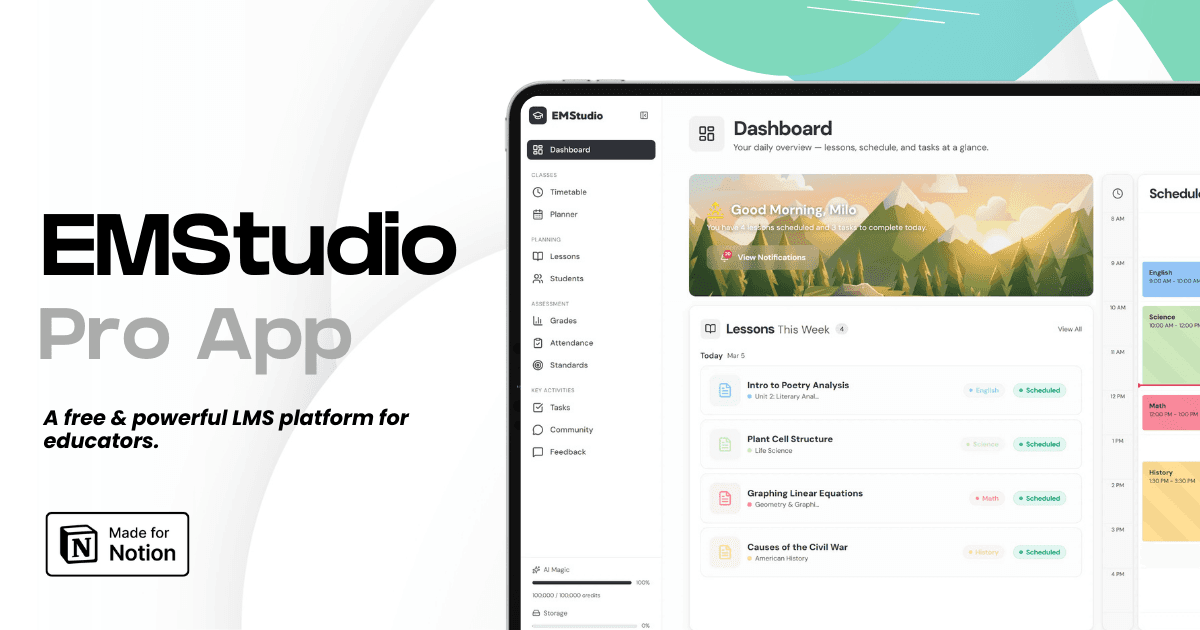
EMStudio is a free teaching management app — manage your classes, students, lessons, and more!
Learn More
Still grading everything by hand?
EMStudio is a free teaching management app — manage your classes, students, lessons, and more!
Learn More
Table of Contents
What Is the Think Pair Share Strategy?
Think Pair Share is a structured discussion protocol where students first contemplate a question individually (Think), then discuss with a partner (Pair), and finally share with the class (Share). Developed by Frank Lyman in 1981 at the University of Maryland, it ensures every student processes content before speaking, increasing participation and cognitive engagement.
Frank Lyman built this cooperative learning structure as a formal discussion protocol, not a vague "turn and talk." It is not casual conversation. The think pair share strategy forces every child to wrestle with the question before speaking, closing the participation gap that sinks most classroom discussion.
The structure ensures wait time is baked into the process, not dependent on a teacher counting silently. This distinction matters. Student engagement shifts from performance to processing. The cycle runs Think (one to three minutes), Pair (two to five), and Share (five to seven). Elementary students stick to the shorter end; secondary students need the full duration for complex academic discourse.
Standard Q&A rewards the fastest hand. TPS redistributes the cognitive load. The difference shows up in three metrics.
Metric | Standard Q&A | Think Pair Share |
|---|---|---|
Student Participation Rate | 15-20% (high achievers) | 85-100% (structured inclusion) |
Cognitive Load Distribution | Concentrated on respondent | Distributed across all students |
Teacher Wait Time | 0.8 seconds average | 3+ minutes built-in |
Breaking Down the Three Distinct Phases
The Think phase needs non-negotiable silence. I use a "write first" protocol. Students complete sentence frames like "I believe ___ because ___" or "The evidence suggests ___." First graders get ninety seconds. High schoolers need the full three minutes to unpack complex texts. No talking. Just pencils moving. This written artifact becomes their ticket to the conversation. If they haven't written, they cannot pair. This rule protects introverts from being talked over and gives extroverts a brake pedal.
Pair works best with deliberate assignments. I use several methods:
A/B partners assigned by ability for heterogeneous pairing
Elbow partners for zero-prep transitions
Clock partners for pre-planned variety
Students turn and face knee-to-knee. This positioning forces eye contact. I project Accountable Talk stems: "I hear you saying..." or "Can you clarify..." These scaffolds keep the conversation academic. I circulate with a clipboard, listening for misconceptions to address later or insights to spotlight during Share.
The Share phase requires collection strategies that honor risk:
Cold calling with safety nets: "I'll hear from table three, and anyone there can speak"
Volunteer pyramids that start with volunteers then require the next layer
Whip-arounds limited to one-word responses for consensus checks
I record key contributions on chart paper. This validates voice and creates an anchor for later writing. The goal is synthesis, not performance.
How Think Pair Share Differs From Turn and Talk
Turn and Talk is TPS's impulsive cousin. Both get kids talking, but the similarities end there. I use Turn and Talk for quick comprehension checks—thirty seconds to verify a fact. I use think pair share when the question needs evidence or analysis. The time investment tells the story: Turn and Talk takes under a minute. TPS requires five to seven minutes.
Turn and Talk needs immediate verbal response. Students pivot and speak. There is no writing, no private processing. This works for checking literal comprehension or releasing tension after dense instruction. It fails when the question has depth because only the fastest processors contribute.
TPS needs evidence. The Think phase forces every student to generate their own answer before contamination from louder voices. The written anchor prevents parroting. It creates individual accountability within the cooperative learning structure. This is the protocol for active learning strategies that require cognitive heavy lifting.
Here is how they stack up.
Feature | Turn and Talk | Think Pair Share |
|---|---|---|
Individual Processing | None—immediate response | 1-3 minutes written prep |
Best Use | Fact checks, opinion polls | Evidence-based reasoning |
Equity | Fast processors dominate | Structured inclusion |
Use Turn and Talk when you need a pulse check. Use TPS when you want every brain analyzing the academic discourse. Match the protocol to the depth of the question.
Why Is Think Pair Share Effective for All Learners?
Think Pair Share works because it distributes cognitive load across individual processing, peer rehearsal, and public speaking, making sure 100% student participation. Research suggests structured peer discussion improves retention by allowing students to articulate and refine thinking before whole-group exposure.
John Hattie's Visible Learning research places classroom discussion at an effect size of 0.82, nearly double the hinge point for high-impact strategies. When you use this cooperative learning protocol, you're not just filling time. You're using peer interaction that Hattie identifies as one of the most powerful influences on student achievement.
Traditional Q&A favors the quick thinkers. In most classrooms, 20% of students dominate the conversation while the rest check out. Think Pair Share breaks this pattern by requiring every student to engage with the prompt before anyone speaks. You get 100% participation equity because silence isn't an option during the Think and Pair phases.
Choose this discussion protocol based on three factors. Use it when questions have moderate complexity—deep enough to require processing but not so complex that students need extensive scaffolding. It fits perfectly in 5-7 minute windows. Skip it when the objective is introducing brand new vocabulary without context, or when you need to assess individual mastery not collaborative thinking.
Processing Time Benefits for Introverted Students
Susan Cain's research on introverted learners changed how I structure response time. Her work shows that introverts need response latency—typically 8-10 seconds minimum—to formulate high-quality answers. Traditional cold-calling needs immediate verbal processing that favors extroverts. The Think phase gives introverted students the silence they need to organize thoughts without the pressure of performative speed.
I offer a specific accommodation for anxious speakers. During the Share phase, introverts can opt to speak for the partnership. They share the pair's combined thinking so they don't have to offer individual contributions. This reduces social anxiety while maintaining accountability. The spotlight feels less intense because they're reporting shared thinking not personal vulnerability. The partner knows this might happen, so they prepare joint language that feels safer to present.
This approach aligns with information processing theory. When students have adequate wait time, they move beyond surface recall to deeper analysis. I've watched hesitant 4th graders deliver sophisticated insights after 90 seconds of thinking time—insights they would have abandoned if forced to respond in the first three seconds. The pair share structure honors different processing speeds without singling anyone out. It builds academic discourse habits in students who might otherwise spend the entire year silent in whole-group settings.
Language Development for ELL Classrooms
For English Language Learners, the Pair phase functions as a rehearsal for the language. Multilingual education strategies emphasize that ELLs need low-stakes practice before public performance. This cooperative learning protocol aligns perfectly with WIDA standards that prioritize academic discourse development across all proficiency levels. The protocol respects the silent period that many ELLs experience while still demanding cognitive engagement.
Consider a 6th-grade ELL student learning science vocabulary. During Think, she references a word bank containing "photosynthesis," "chlorophyll," and "glucose." During Pair, she practices pronouncing "photosynthesis" with her partner. She tests the sentence structure: "Plants use photosynthesis to make food." By the Share phase, she presents a complete sentence with confidence because she has already worked through the linguistic challenges privately. Her partner might offer a correction about word order that the teacher never hears.
This rehearsal time is important for Tier 2 and Tier 3 words. Academic vocabulary requires multiple exposures in multiple contexts. The Pair phase provides the first exposure to speaking the terms aloud without the penalty of public error. Students refine their language before the teacher hears it, which means the Share phase shows competence not struggle. You get to hear the polished version, not the messy drafting process.
Cognitive Processing and Retention Advantages
The protégé effect suggests we learn more when we teach others. During the Pair phase, students explain concepts to peers, which strengthens neural pathways more effectively than silent reading or passive listening. This aligns with Rosenshine's Principles of Instruction regarding questioning techniques—specifically the principle that students need opportunities to verbalize their thinking and check their understanding. When you explain photosynthesis to a confused lab partner, you can't hide gaps in your own knowledge.
I've seen measurable differences in follow-up writing tasks. Students who engage in structured peer discussion before writing demonstrate stronger argumentation and more precise vocabulary use compared to those who only hear teacher explanations. The act of articulating ideas to a partner is a drafting process for written responses. When students reach for paper, they've already organized their thinking through conversation. They write more because they've already spoken the ideas aloud.
This isn't just student engagement for its own sake. It's cognitive architecture. Every time a student explains a concept to a peer, they encode that information more deeply. The Pair phase isn't break time—it's when the actual synthesis happens. Your role shifts from lecturer to facilitator of these micro-teaching moments. The classroom discussion becomes the curriculum, not just a check for understanding.

How Does Think Pair Share Work Step by Step?
Implement Think Pair Share by first posting a cognitively demanding question, allowing 1-3 minutes of silent individual writing (Think), transitioning to structured partner discussion using sentence frames (Pair), and concluding with a facilitated whole-group share using random selection or volunteer protocols (Share).
The protocol fails when you rush the Think phase or let the Pair phase drift into off-task chatter. Nail the timing and transitions, and you create genuine academic discourse instead of superficial turn-and-talk.
Here's your implementation checklist:
Question design criteria: Craft prompts that are open-ended, text-dependent, or opinion-based requiring evidence. Avoid yes/no questions.
Timing signals: Use a visual timer, chime, or countdown to mark phase shifts. Students need to see time remaining.
Transition cues: Use clear verbal markers like "Turn and face your partner" paired with a physical signal.
Accountability documentation: Collect exit tickets or use an observation checklist to ensure participation.
Differentiation matters. For kindergarten, let students draw pictures during the Think phase before speaking. For AP Literature, require textual citations with line numbers during Pair and Share phases. The cooperative learning structure stays identical; the cognitive load shifts.
Watch your clock. Elementary students lose focus if the total protocol exceeds 8-10 minutes. Secondary students can handle 12-15 minutes, but only if the question needs deep analysis. Shorter is usually better than longer.
Designing High-Quality Discussion Prompts
Use the Three Levels of Questioning framework to guide your prompt selection. Level 1 questions ask for literal recall—right there in the text. Level 2 requires inference and reading between the lines. Level 3 needs evaluation and synthesis. For maximum impact with this discussion protocol, stick to Level 2 or 3.
Specificity drives student engagement. Try these examples:
ELA: "How does the author's word choice in paragraph 3 reveal bias?"
Math: "Which mathematical strategy is more efficient for this problem and why?"
Science: "Predict what happens if we remove the control variable."
Each prompt forces students to process information rather than retrieve it. That's where the learning happens. Avoid asking students to simply summarize what they read; instead, ask them to argue, predict, or compare. The think pair share strategy only works when the question warrants deep thinking.
Provide sentence frames for the Pair phase. "I believe ___ because the text says ___" scaffolds the conversation. Without this linguistic support, English learners and reluctant speakers struggle to enter the academic discourse. Post these frames on the board or print them on desk cards.
Test your question before class. If you can answer it with a single word, rewrite it. The best prompts generate three or four distinct possible responses, creating natural debate during the Pair phase.
Consider the cognitive load. If students need to reference a complex diagram or lengthy text during the Think phase, provide the materials on their desks beforehand. Hunting for resources wastes the silent thinking time you've allocated.
Managing Transitions Between Phases
Enforce the 10-Second Transition rule. When you signal the shift from Think to Pair, students have ten seconds to turn and face their partner. Use an auditory signal—a chime, clap pattern, or bell—combined with physical proximity. If pairs aren't formed in ten seconds, return to the Think phase and try again. Students learn quickly that transition time is talk time.
Your physical position signals expectations. During Think, circulate through desks to monitor writing and discourage early talking. During Pair, stand at the room's perimeter to listen without interrupting the wait time students need. During Share, position yourself at the front to facilitate and maintain eye contact with speakers.
Consistency matters. Use the same signals every time you run the protocol. When students hear that specific chime, they should automatically stop talking and look at you. This predictability reduces transition time from thirty seconds to five, preserving precious instructional minutes.
When transitions fail, pause and reset. If the room volume spikes during Pair, freeze the class and model the voice level you expect. Practice the transition without content until they get it right. It feels tedious, but it pays dividends for the rest of the year.
Facilitating Equitable Whole-Group Share-Outs
To lead effective student discussions, vary your share-out methods. Use a Random Name Generator—digital tools or popsicle sticks—to remove bias. Try the Volunteer Pyramid: start with volunteers, then require specific students to contribute. Use Representative Share by asking, "What did your partner say?" to emphasize listening. Or use Written Share via Google Form for shy students or large classes.
Implement the No Opt-Out strategy. If a student draws a blank when called upon, give them thirty seconds to consult notes or repeat a peer's contribution. They cannot pass. This maintains accountability while reducing anxiety. Every voice joins the classroom discussion.
Track participation over time. Keep a simple roster to mark who shared today. Target quiet students in subsequent rounds. Equity doesn't mean everyone speaks every time; it means everyone speaks regularly and knows their voice carries weight in your room.
Follow up every share with a probing question. Ask "What makes you say that?" or "Who agrees or disagrees?" This keeps the conversation moving between students rather than bouncing back to you. Your role shifts from lecturer to facilitator of peer-to-peer learning.
Practical Applications Across Subjects and Grade Levels
Think pair share works from kindergarten picture walks to AP document analysis without costing a dime. You need zero technology—though Padlet can enhance the Share phase—and minimal prep: index cards for the Think phase suffice. Here is the breakdown by grade:
Kindergarten: Picture-based prediction using wordless books.
5th Grade: Text evidence analysis with page number citations.
8th Grade: Algebraic error analysis identifying misconceptions in worked problems.
11th Grade: Historical document evaluation using primary sources.
Embed this cooperative learning strategy three to four times weekly by replacing exit tickets or warm-up discussions. Slip it in after introducing new vocabulary, before solving sample problems, or during reading transitions. It adds five minutes but doubles student engagement without disrupting pacing guides.
Elementary Literacy and Reading Comprehension
During guided reading, use the Stop and Jot variation. Place sticky notes at prediction points. Students stop, write predictions on whiteboards (Think), then turn to partners using the sentence frame "I predict... because..." (Pair). Finally, they post predictions on an anchor chart (Share).
In K-2, students draw pictures and use oral stems. By 3rd through 5th grade, they cite textual evidence with specific page numbers. This builds academic discourse from scribbles to citations.
Middle School Mathematics Problem Solving
Implement the Error Analysis Protocol. Present a worked problem containing an intentional error. Students identify the mistake individually (Think), justify the misconception to their partner (Pair), and discuss common pitfalls as a class (Share). See our mathematics implementation strategies for more.
Assign specific roles: the Solver explains their method while the Checker verifies the logic. Switch roles for the next problem to ensure equitable participation and increase wait time for deeper processing.
High School Science Argumentation and Humanities Discussion
Adapt the Claim-Evidence-Reasoning framework. During Think, students write full C-E-R statements. In Pair, they peer-review using a checklist. The Share phase presents the strongest arguments to the class. Learn more about using evidence to back up arguments.
Use this discussion protocol as a pre-seminar activity. When students enter Socratic Seminar having already rehearsed their contributions through pair share, classroom discussion quality improves. Everyone enters with prepared talking points. You avoid the silence of cold-calling.

Common Implementation Mistakes and How to Avoid Them
Watch for these red flags that signal your discussion protocol needs reteaching:
Fewer than 80% of students participate during the Share phase.
Students talk during the Think phase instead of writing or processing silently.
Pairs discuss weekend plans rather than the academic content.
If you see any of these, stop and reset expectations immediately.
The most damaging failure mode is rushing to Share. Teachers often cut the Pair phase after 30 seconds, sending students to whole-group discussion before they've processed their thoughts. This destroys the cooperative learning benefit.
Cutting the Think Phase Too Short
Implement the Minimum Think Time rule: 90 seconds absolute minimum for any grade, extending to 3 minutes for secondary complex texts. Use this self-correction script: "I will wait until I see 80% of pens moving before I call Pair."
When you rush the phases, students default to "I agree with what [smart kid] said" rather than forming original thoughts. This defeats the think pair share strategy entirely. Provide question stems like "The author implies..." to prevent surface-level responses.
The consequence of truncated thinking is predictable. Without adequate wait time, you sacrifice depth for speed. Classroom discussion suffers as student engagement drops and kids realize they can simply echo the first speaker without contributing original analysis.
Mismanaging Pair Dynamics and Off-Task Behavior
Match pairs intentionally. Use heterogeneous grouping for differentiation (high/medium or medium/low), homogeneous pairs for extension activities, and strategic separation for behavior management. This prevents the frustration of mismatched readiness levels.
When pairs drift off-task, implement a Silent Think restart. Return students to individual writing for 60 seconds before resuming the Pair phase. This resets expectations without public shaming.
Use structured hand signals—closed fist for "thinking," thumbs up for "ready"—to maintain focus during transitions. These nonverbal cues support your classroom control and management strategies without interrupting the flow. Watch body language during Pair. If one student dominates the desk space while the other shrinks back, you have a participation imbalance that needs immediate correction.
Allowing Dominant Voices to Control the Share Phase
Deploy the Partner Report safeguard. Require students to share their partner's idea, not their own, during the Share phase. This forces active listening and democratizes airtime. Assign listener roles during Pair—one speaks while the other takes notes, then switch—to build accountability.
This approach particularly helps English learners and shy students who process well but hesitate to compete for airtime. They know their idea will be represented even if they don't speak loudly.
Integrate technology for digital Share phases. Tools like Mentimeter or Pear Deck allow all students to submit responses simultaneously, preventing vocal dominance and making sure every student contributes to the academic discourse.

Your First Week Launching Think Pair Share
Day One: Modeling the Protocol Explicitly
Before students can manage a think pair share independently, they need three micro-skills drilled in isolation. I spend fifteen minutes on Monday morning teaching students how to turn their bodies knee-to-knee, how to start sentences with "I think" rather than "You should," and how to paraphrase a partner's idea before adding their own. Without these, your cooperative learning structures will collapse into chaos.
Then comes the Fishbowl. I sit in the center of the carpet with my coteacher. I play Student A, she plays Student B. We model the Pair phase twice: first correctly with eye contact and voice level one, then incorrectly with me staring at the ceiling and talking during the Think phase. Poor examples include facing away during Pair and interrupting during Share. Kids spot the errors immediately. I correct them on the spot.
After the demo, I run a meta-cognitive debrief. I ask, "What did you notice about how I listened?" Hands shoot up. They caught the nodding, the leaning in, the paraphrasing. Now those observations become our rules. I also model wait time explicitly, showing how I pause three seconds before answering. This discussion protocol only works when students see exactly what success looks like before they try it themselves.
Building Routines and Student Accountability
Tuesday and Wednesday move from guided to independent practice. Tuesday I use simple questions like "Which season do you prefer?" while I circle the room with a clipboard, catching kids who forget to face each other. Wednesday I step back and observe only, resisting the urge to rescue shy students. By mid-week, they should run the routine without your voice.
This is when I hang the permanent Anchor Chart. It needs to be visible from every desk, so I use a 24x36 inch poster board above the whiteboard. The chart shows three icons: a head with thought bubbles for Think, two figures knee-to-knee for Pair, and a speaker for Share. I mark noise levels 0, 1, and 2 beside each phase. Below, I tape sentence stems like "I agree because..." that we add to throughout the year.
The TPS Non-Negotiables poster hangs beside it. This keeps classroom discussion structured:
Eyes on paper during Think.
Knee-to-knee and eye-to-eye during Pair.
Voice level one during Pair.
Active listening during Share.
For accountability, students self-assess their engagement on a 1-4 rubric at day's end. Four means they paraphrased their partner; one means they didn't participate. This establishing classroom rules and procedures step prevents entropy.
Scaling to Complex Academic Discourse
Thursday we integrate actual content. If we're studying erosion, the question becomes "How do plants slow erosion?" The pair share now serves the lesson, not the other way around. Friday is for reflection and refinement. I ask students what felt hard about listening, and we adjust the noise levels or seating chart based on their feedback. We celebrate growth. This closes the week.
But academic discourse should grow. I use a Complexity Progression ladder taped inside notebooks:
Week 1: Opinion questions ("I think...")
Week 3: Text-based questions ("The article states...")
Week 6: Multi-step synthesis ("The data suggests X, which connects to Y.")
Week 9: Counter-argumentation ("While the author argues X, the data indicates Y.")
The Sentence Stem Expansion Pack supports this climb. We start with simple frames like "I agree." Then we add academic transitions like "This evidence suggests..." and "While [Author] argues..., the data indicates..." We laminate them so students can grab them from the caddy. These scaffolds prevent that awkward silence when kids don't know how to disagree politely. Student engagement spikes when they have the language to argue like scholars.
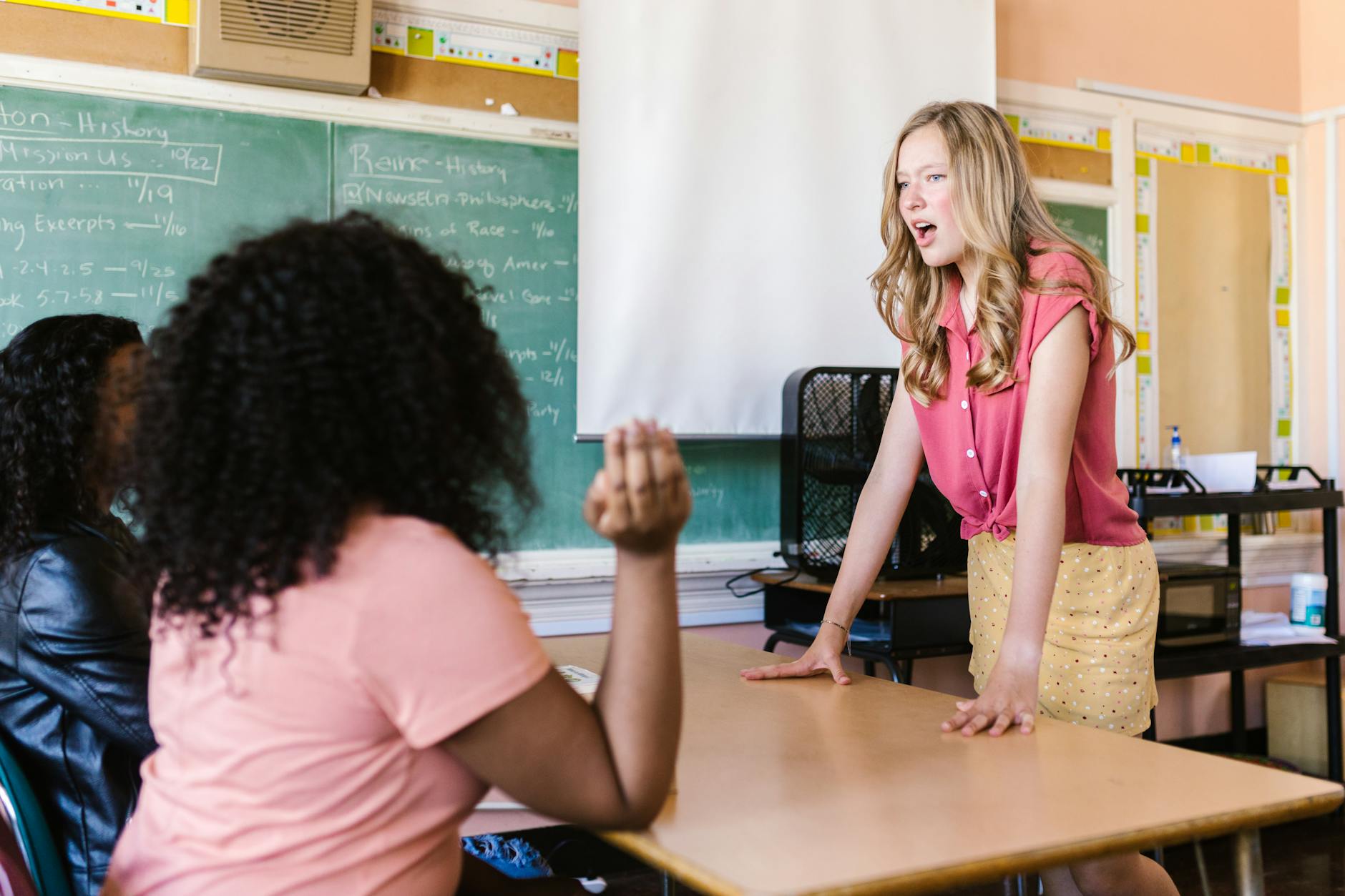
Getting Started with Think Pair Share
You do not need a perfect script or a silent classroom to make this work. I have seen 7th graders argue about mitochondria and 2nd graders puzzle through word problems using this same framework. The magic is in the structure—giving every kid a chance to think before the loud voices take over.
Start small. One discussion protocol used well beats five strategies done halfway. When you hear the room buzz with actual academic discourse, you will know the wait time was worth it.
Pick one lesson tomorrow where you usually lecture for five minutes.
Stop at the three-minute mark. Give students 30 seconds of silent wait time to jot a thought.
Have them turn to a partner and share for 60 seconds.
Call on two pairs to share with the class. That is it.

What Is the Think Pair Share Strategy?
Think Pair Share is a structured discussion protocol where students first contemplate a question individually (Think), then discuss with a partner (Pair), and finally share with the class (Share). Developed by Frank Lyman in 1981 at the University of Maryland, it ensures every student processes content before speaking, increasing participation and cognitive engagement.
Frank Lyman built this cooperative learning structure as a formal discussion protocol, not a vague "turn and talk." It is not casual conversation. The think pair share strategy forces every child to wrestle with the question before speaking, closing the participation gap that sinks most classroom discussion.
The structure ensures wait time is baked into the process, not dependent on a teacher counting silently. This distinction matters. Student engagement shifts from performance to processing. The cycle runs Think (one to three minutes), Pair (two to five), and Share (five to seven). Elementary students stick to the shorter end; secondary students need the full duration for complex academic discourse.
Standard Q&A rewards the fastest hand. TPS redistributes the cognitive load. The difference shows up in three metrics.
Metric | Standard Q&A | Think Pair Share |
|---|---|---|
Student Participation Rate | 15-20% (high achievers) | 85-100% (structured inclusion) |
Cognitive Load Distribution | Concentrated on respondent | Distributed across all students |
Teacher Wait Time | 0.8 seconds average | 3+ minutes built-in |
Breaking Down the Three Distinct Phases
The Think phase needs non-negotiable silence. I use a "write first" protocol. Students complete sentence frames like "I believe ___ because ___" or "The evidence suggests ___." First graders get ninety seconds. High schoolers need the full three minutes to unpack complex texts. No talking. Just pencils moving. This written artifact becomes their ticket to the conversation. If they haven't written, they cannot pair. This rule protects introverts from being talked over and gives extroverts a brake pedal.
Pair works best with deliberate assignments. I use several methods:
A/B partners assigned by ability for heterogeneous pairing
Elbow partners for zero-prep transitions
Clock partners for pre-planned variety
Students turn and face knee-to-knee. This positioning forces eye contact. I project Accountable Talk stems: "I hear you saying..." or "Can you clarify..." These scaffolds keep the conversation academic. I circulate with a clipboard, listening for misconceptions to address later or insights to spotlight during Share.
The Share phase requires collection strategies that honor risk:
Cold calling with safety nets: "I'll hear from table three, and anyone there can speak"
Volunteer pyramids that start with volunteers then require the next layer
Whip-arounds limited to one-word responses for consensus checks
I record key contributions on chart paper. This validates voice and creates an anchor for later writing. The goal is synthesis, not performance.
How Think Pair Share Differs From Turn and Talk
Turn and Talk is TPS's impulsive cousin. Both get kids talking, but the similarities end there. I use Turn and Talk for quick comprehension checks—thirty seconds to verify a fact. I use think pair share when the question needs evidence or analysis. The time investment tells the story: Turn and Talk takes under a minute. TPS requires five to seven minutes.
Turn and Talk needs immediate verbal response. Students pivot and speak. There is no writing, no private processing. This works for checking literal comprehension or releasing tension after dense instruction. It fails when the question has depth because only the fastest processors contribute.
TPS needs evidence. The Think phase forces every student to generate their own answer before contamination from louder voices. The written anchor prevents parroting. It creates individual accountability within the cooperative learning structure. This is the protocol for active learning strategies that require cognitive heavy lifting.
Here is how they stack up.
Feature | Turn and Talk | Think Pair Share |
|---|---|---|
Individual Processing | None—immediate response | 1-3 minutes written prep |
Best Use | Fact checks, opinion polls | Evidence-based reasoning |
Equity | Fast processors dominate | Structured inclusion |
Use Turn and Talk when you need a pulse check. Use TPS when you want every brain analyzing the academic discourse. Match the protocol to the depth of the question.
Why Is Think Pair Share Effective for All Learners?
Think Pair Share works because it distributes cognitive load across individual processing, peer rehearsal, and public speaking, making sure 100% student participation. Research suggests structured peer discussion improves retention by allowing students to articulate and refine thinking before whole-group exposure.
John Hattie's Visible Learning research places classroom discussion at an effect size of 0.82, nearly double the hinge point for high-impact strategies. When you use this cooperative learning protocol, you're not just filling time. You're using peer interaction that Hattie identifies as one of the most powerful influences on student achievement.
Traditional Q&A favors the quick thinkers. In most classrooms, 20% of students dominate the conversation while the rest check out. Think Pair Share breaks this pattern by requiring every student to engage with the prompt before anyone speaks. You get 100% participation equity because silence isn't an option during the Think and Pair phases.
Choose this discussion protocol based on three factors. Use it when questions have moderate complexity—deep enough to require processing but not so complex that students need extensive scaffolding. It fits perfectly in 5-7 minute windows. Skip it when the objective is introducing brand new vocabulary without context, or when you need to assess individual mastery not collaborative thinking.
Processing Time Benefits for Introverted Students
Susan Cain's research on introverted learners changed how I structure response time. Her work shows that introverts need response latency—typically 8-10 seconds minimum—to formulate high-quality answers. Traditional cold-calling needs immediate verbal processing that favors extroverts. The Think phase gives introverted students the silence they need to organize thoughts without the pressure of performative speed.
I offer a specific accommodation for anxious speakers. During the Share phase, introverts can opt to speak for the partnership. They share the pair's combined thinking so they don't have to offer individual contributions. This reduces social anxiety while maintaining accountability. The spotlight feels less intense because they're reporting shared thinking not personal vulnerability. The partner knows this might happen, so they prepare joint language that feels safer to present.
This approach aligns with information processing theory. When students have adequate wait time, they move beyond surface recall to deeper analysis. I've watched hesitant 4th graders deliver sophisticated insights after 90 seconds of thinking time—insights they would have abandoned if forced to respond in the first three seconds. The pair share structure honors different processing speeds without singling anyone out. It builds academic discourse habits in students who might otherwise spend the entire year silent in whole-group settings.
Language Development for ELL Classrooms
For English Language Learners, the Pair phase functions as a rehearsal for the language. Multilingual education strategies emphasize that ELLs need low-stakes practice before public performance. This cooperative learning protocol aligns perfectly with WIDA standards that prioritize academic discourse development across all proficiency levels. The protocol respects the silent period that many ELLs experience while still demanding cognitive engagement.
Consider a 6th-grade ELL student learning science vocabulary. During Think, she references a word bank containing "photosynthesis," "chlorophyll," and "glucose." During Pair, she practices pronouncing "photosynthesis" with her partner. She tests the sentence structure: "Plants use photosynthesis to make food." By the Share phase, she presents a complete sentence with confidence because she has already worked through the linguistic challenges privately. Her partner might offer a correction about word order that the teacher never hears.
This rehearsal time is important for Tier 2 and Tier 3 words. Academic vocabulary requires multiple exposures in multiple contexts. The Pair phase provides the first exposure to speaking the terms aloud without the penalty of public error. Students refine their language before the teacher hears it, which means the Share phase shows competence not struggle. You get to hear the polished version, not the messy drafting process.
Cognitive Processing and Retention Advantages
The protégé effect suggests we learn more when we teach others. During the Pair phase, students explain concepts to peers, which strengthens neural pathways more effectively than silent reading or passive listening. This aligns with Rosenshine's Principles of Instruction regarding questioning techniques—specifically the principle that students need opportunities to verbalize their thinking and check their understanding. When you explain photosynthesis to a confused lab partner, you can't hide gaps in your own knowledge.
I've seen measurable differences in follow-up writing tasks. Students who engage in structured peer discussion before writing demonstrate stronger argumentation and more precise vocabulary use compared to those who only hear teacher explanations. The act of articulating ideas to a partner is a drafting process for written responses. When students reach for paper, they've already organized their thinking through conversation. They write more because they've already spoken the ideas aloud.
This isn't just student engagement for its own sake. It's cognitive architecture. Every time a student explains a concept to a peer, they encode that information more deeply. The Pair phase isn't break time—it's when the actual synthesis happens. Your role shifts from lecturer to facilitator of these micro-teaching moments. The classroom discussion becomes the curriculum, not just a check for understanding.
How Does Think Pair Share Work Step by Step?
Implement Think Pair Share by first posting a cognitively demanding question, allowing 1-3 minutes of silent individual writing (Think), transitioning to structured partner discussion using sentence frames (Pair), and concluding with a facilitated whole-group share using random selection or volunteer protocols (Share).
The protocol fails when you rush the Think phase or let the Pair phase drift into off-task chatter. Nail the timing and transitions, and you create genuine academic discourse instead of superficial turn-and-talk.
Here's your implementation checklist:
Question design criteria: Craft prompts that are open-ended, text-dependent, or opinion-based requiring evidence. Avoid yes/no questions.
Timing signals: Use a visual timer, chime, or countdown to mark phase shifts. Students need to see time remaining.
Transition cues: Use clear verbal markers like "Turn and face your partner" paired with a physical signal.
Accountability documentation: Collect exit tickets or use an observation checklist to ensure participation.
Differentiation matters. For kindergarten, let students draw pictures during the Think phase before speaking. For AP Literature, require textual citations with line numbers during Pair and Share phases. The cooperative learning structure stays identical; the cognitive load shifts.
Watch your clock. Elementary students lose focus if the total protocol exceeds 8-10 minutes. Secondary students can handle 12-15 minutes, but only if the question needs deep analysis. Shorter is usually better than longer.
Designing High-Quality Discussion Prompts
Use the Three Levels of Questioning framework to guide your prompt selection. Level 1 questions ask for literal recall—right there in the text. Level 2 requires inference and reading between the lines. Level 3 needs evaluation and synthesis. For maximum impact with this discussion protocol, stick to Level 2 or 3.
Specificity drives student engagement. Try these examples:
ELA: "How does the author's word choice in paragraph 3 reveal bias?"
Math: "Which mathematical strategy is more efficient for this problem and why?"
Science: "Predict what happens if we remove the control variable."
Each prompt forces students to process information rather than retrieve it. That's where the learning happens. Avoid asking students to simply summarize what they read; instead, ask them to argue, predict, or compare. The think pair share strategy only works when the question warrants deep thinking.
Provide sentence frames for the Pair phase. "I believe ___ because the text says ___" scaffolds the conversation. Without this linguistic support, English learners and reluctant speakers struggle to enter the academic discourse. Post these frames on the board or print them on desk cards.
Test your question before class. If you can answer it with a single word, rewrite it. The best prompts generate three or four distinct possible responses, creating natural debate during the Pair phase.
Consider the cognitive load. If students need to reference a complex diagram or lengthy text during the Think phase, provide the materials on their desks beforehand. Hunting for resources wastes the silent thinking time you've allocated.
Managing Transitions Between Phases
Enforce the 10-Second Transition rule. When you signal the shift from Think to Pair, students have ten seconds to turn and face their partner. Use an auditory signal—a chime, clap pattern, or bell—combined with physical proximity. If pairs aren't formed in ten seconds, return to the Think phase and try again. Students learn quickly that transition time is talk time.
Your physical position signals expectations. During Think, circulate through desks to monitor writing and discourage early talking. During Pair, stand at the room's perimeter to listen without interrupting the wait time students need. During Share, position yourself at the front to facilitate and maintain eye contact with speakers.
Consistency matters. Use the same signals every time you run the protocol. When students hear that specific chime, they should automatically stop talking and look at you. This predictability reduces transition time from thirty seconds to five, preserving precious instructional minutes.
When transitions fail, pause and reset. If the room volume spikes during Pair, freeze the class and model the voice level you expect. Practice the transition without content until they get it right. It feels tedious, but it pays dividends for the rest of the year.
Facilitating Equitable Whole-Group Share-Outs
To lead effective student discussions, vary your share-out methods. Use a Random Name Generator—digital tools or popsicle sticks—to remove bias. Try the Volunteer Pyramid: start with volunteers, then require specific students to contribute. Use Representative Share by asking, "What did your partner say?" to emphasize listening. Or use Written Share via Google Form for shy students or large classes.
Implement the No Opt-Out strategy. If a student draws a blank when called upon, give them thirty seconds to consult notes or repeat a peer's contribution. They cannot pass. This maintains accountability while reducing anxiety. Every voice joins the classroom discussion.
Track participation over time. Keep a simple roster to mark who shared today. Target quiet students in subsequent rounds. Equity doesn't mean everyone speaks every time; it means everyone speaks regularly and knows their voice carries weight in your room.
Follow up every share with a probing question. Ask "What makes you say that?" or "Who agrees or disagrees?" This keeps the conversation moving between students rather than bouncing back to you. Your role shifts from lecturer to facilitator of peer-to-peer learning.
Practical Applications Across Subjects and Grade Levels
Think pair share works from kindergarten picture walks to AP document analysis without costing a dime. You need zero technology—though Padlet can enhance the Share phase—and minimal prep: index cards for the Think phase suffice. Here is the breakdown by grade:
Kindergarten: Picture-based prediction using wordless books.
5th Grade: Text evidence analysis with page number citations.
8th Grade: Algebraic error analysis identifying misconceptions in worked problems.
11th Grade: Historical document evaluation using primary sources.
Embed this cooperative learning strategy three to four times weekly by replacing exit tickets or warm-up discussions. Slip it in after introducing new vocabulary, before solving sample problems, or during reading transitions. It adds five minutes but doubles student engagement without disrupting pacing guides.
Elementary Literacy and Reading Comprehension
During guided reading, use the Stop and Jot variation. Place sticky notes at prediction points. Students stop, write predictions on whiteboards (Think), then turn to partners using the sentence frame "I predict... because..." (Pair). Finally, they post predictions on an anchor chart (Share).
In K-2, students draw pictures and use oral stems. By 3rd through 5th grade, they cite textual evidence with specific page numbers. This builds academic discourse from scribbles to citations.
Middle School Mathematics Problem Solving
Implement the Error Analysis Protocol. Present a worked problem containing an intentional error. Students identify the mistake individually (Think), justify the misconception to their partner (Pair), and discuss common pitfalls as a class (Share). See our mathematics implementation strategies for more.
Assign specific roles: the Solver explains their method while the Checker verifies the logic. Switch roles for the next problem to ensure equitable participation and increase wait time for deeper processing.
High School Science Argumentation and Humanities Discussion
Adapt the Claim-Evidence-Reasoning framework. During Think, students write full C-E-R statements. In Pair, they peer-review using a checklist. The Share phase presents the strongest arguments to the class. Learn more about using evidence to back up arguments.
Use this discussion protocol as a pre-seminar activity. When students enter Socratic Seminar having already rehearsed their contributions through pair share, classroom discussion quality improves. Everyone enters with prepared talking points. You avoid the silence of cold-calling.
Common Implementation Mistakes and How to Avoid Them
Watch for these red flags that signal your discussion protocol needs reteaching:
Fewer than 80% of students participate during the Share phase.
Students talk during the Think phase instead of writing or processing silently.
Pairs discuss weekend plans rather than the academic content.
If you see any of these, stop and reset expectations immediately.
The most damaging failure mode is rushing to Share. Teachers often cut the Pair phase after 30 seconds, sending students to whole-group discussion before they've processed their thoughts. This destroys the cooperative learning benefit.
Cutting the Think Phase Too Short
Implement the Minimum Think Time rule: 90 seconds absolute minimum for any grade, extending to 3 minutes for secondary complex texts. Use this self-correction script: "I will wait until I see 80% of pens moving before I call Pair."
When you rush the phases, students default to "I agree with what [smart kid] said" rather than forming original thoughts. This defeats the think pair share strategy entirely. Provide question stems like "The author implies..." to prevent surface-level responses.
The consequence of truncated thinking is predictable. Without adequate wait time, you sacrifice depth for speed. Classroom discussion suffers as student engagement drops and kids realize they can simply echo the first speaker without contributing original analysis.
Mismanaging Pair Dynamics and Off-Task Behavior
Match pairs intentionally. Use heterogeneous grouping for differentiation (high/medium or medium/low), homogeneous pairs for extension activities, and strategic separation for behavior management. This prevents the frustration of mismatched readiness levels.
When pairs drift off-task, implement a Silent Think restart. Return students to individual writing for 60 seconds before resuming the Pair phase. This resets expectations without public shaming.
Use structured hand signals—closed fist for "thinking," thumbs up for "ready"—to maintain focus during transitions. These nonverbal cues support your classroom control and management strategies without interrupting the flow. Watch body language during Pair. If one student dominates the desk space while the other shrinks back, you have a participation imbalance that needs immediate correction.
Allowing Dominant Voices to Control the Share Phase
Deploy the Partner Report safeguard. Require students to share their partner's idea, not their own, during the Share phase. This forces active listening and democratizes airtime. Assign listener roles during Pair—one speaks while the other takes notes, then switch—to build accountability.
This approach particularly helps English learners and shy students who process well but hesitate to compete for airtime. They know their idea will be represented even if they don't speak loudly.
Integrate technology for digital Share phases. Tools like Mentimeter or Pear Deck allow all students to submit responses simultaneously, preventing vocal dominance and making sure every student contributes to the academic discourse.
Your First Week Launching Think Pair Share
Day One: Modeling the Protocol Explicitly
Before students can manage a think pair share independently, they need three micro-skills drilled in isolation. I spend fifteen minutes on Monday morning teaching students how to turn their bodies knee-to-knee, how to start sentences with "I think" rather than "You should," and how to paraphrase a partner's idea before adding their own. Without these, your cooperative learning structures will collapse into chaos.
Then comes the Fishbowl. I sit in the center of the carpet with my coteacher. I play Student A, she plays Student B. We model the Pair phase twice: first correctly with eye contact and voice level one, then incorrectly with me staring at the ceiling and talking during the Think phase. Poor examples include facing away during Pair and interrupting during Share. Kids spot the errors immediately. I correct them on the spot.
After the demo, I run a meta-cognitive debrief. I ask, "What did you notice about how I listened?" Hands shoot up. They caught the nodding, the leaning in, the paraphrasing. Now those observations become our rules. I also model wait time explicitly, showing how I pause three seconds before answering. This discussion protocol only works when students see exactly what success looks like before they try it themselves.
Building Routines and Student Accountability
Tuesday and Wednesday move from guided to independent practice. Tuesday I use simple questions like "Which season do you prefer?" while I circle the room with a clipboard, catching kids who forget to face each other. Wednesday I step back and observe only, resisting the urge to rescue shy students. By mid-week, they should run the routine without your voice.
This is when I hang the permanent Anchor Chart. It needs to be visible from every desk, so I use a 24x36 inch poster board above the whiteboard. The chart shows three icons: a head with thought bubbles for Think, two figures knee-to-knee for Pair, and a speaker for Share. I mark noise levels 0, 1, and 2 beside each phase. Below, I tape sentence stems like "I agree because..." that we add to throughout the year.
The TPS Non-Negotiables poster hangs beside it. This keeps classroom discussion structured:
Eyes on paper during Think.
Knee-to-knee and eye-to-eye during Pair.
Voice level one during Pair.
Active listening during Share.
For accountability, students self-assess their engagement on a 1-4 rubric at day's end. Four means they paraphrased their partner; one means they didn't participate. This establishing classroom rules and procedures step prevents entropy.
Scaling to Complex Academic Discourse
Thursday we integrate actual content. If we're studying erosion, the question becomes "How do plants slow erosion?" The pair share now serves the lesson, not the other way around. Friday is for reflection and refinement. I ask students what felt hard about listening, and we adjust the noise levels or seating chart based on their feedback. We celebrate growth. This closes the week.
But academic discourse should grow. I use a Complexity Progression ladder taped inside notebooks:
Week 1: Opinion questions ("I think...")
Week 3: Text-based questions ("The article states...")
Week 6: Multi-step synthesis ("The data suggests X, which connects to Y.")
Week 9: Counter-argumentation ("While the author argues X, the data indicates Y.")
The Sentence Stem Expansion Pack supports this climb. We start with simple frames like "I agree." Then we add academic transitions like "This evidence suggests..." and "While [Author] argues..., the data indicates..." We laminate them so students can grab them from the caddy. These scaffolds prevent that awkward silence when kids don't know how to disagree politely. Student engagement spikes when they have the language to argue like scholars.
Getting Started with Think Pair Share
You do not need a perfect script or a silent classroom to make this work. I have seen 7th graders argue about mitochondria and 2nd graders puzzle through word problems using this same framework. The magic is in the structure—giving every kid a chance to think before the loud voices take over.
Start small. One discussion protocol used well beats five strategies done halfway. When you hear the room buzz with actual academic discourse, you will know the wait time was worth it.
Pick one lesson tomorrow where you usually lecture for five minutes.
Stop at the three-minute mark. Give students 30 seconds of silent wait time to jot a thought.
Have them turn to a partner and share for 60 seconds.
Call on two pairs to share with the class. That is it.
Still grading everything by hand?
EMStudio is a free teaching management app — manage your classes, students, lessons, and more!
Learn More
Still grading everything by hand?
EMStudio is a free teaching management app — manage your classes, students, lessons, and more!
Learn More




Notion4Teachers
Notion templates to simplify administrative tasks and enhance your teaching experience.



2026 Notion4Teachers. All Rights Reserved.
Notion4Teachers
Notion templates to simplify administrative tasks and enhance your teaching experience.
2026 Notion4Teachers. All Rights Reserved.
Notion4Teachers
Notion templates to simplify administrative tasks and enhance your teaching experience.
2026 Notion4Teachers. All Rights Reserved.