
Teacher Modelling: A 4-Step Guide for K-12 Classrooms
Teacher Modelling: A 4-Step Guide for K-12 Classrooms

Article by
Milo
ESL Content Coordinator & Educator
ESL Content Coordinator & Educator
All Posts
Ever watch a student stare at a blank worksheet and realize they have no idea where to start—even after you explained it twice? That gap between your explanation and their execution is exactly where teacher modelling closes the loop. You don't just assign the work; you make your thinking visible first.
I learned this the hard way with my 7th graders last fall. I kept describing essay hooks, but their openings stayed weak until I stood at the document camera and wrote one in real time, narrating every false start and revision. The room went quiet. They leaned in. That moment clicked when I stopped talking about the skill and started showing the messy process of actually doing it. This four-step guide walks you through that same gradual release of responsibility—from "I Do" to "You Do"—so your students see the work before they face it alone.
Still grading everything by hand?
EMStudio is a free teaching management app — manage your classes, students, lessons, and more!
Learn More

Still grading everything by hand?
EMStudio is a free teaching management app — manage your classes, students, lessons, and more!
Learn More
Table of Contents
Setting the Stage: Prerequisites for Effective Teacher Modelling
Identify the Specific Learning Objective and Success Criteria
Before you demonstrate, nail down what students will do independently. Use Wiggins and McTighe's Understanding by Design framework. For 8th-grade algebra solving linear equations:
Transfer goal: Apply solution strategies to novel word problems.
Meaning goal: Grasp that equations model balanced relationships.
Acquisition goal: Master combining like terms and inverse operations.
Hattie's Visible Learning research puts teacher clarity at an effect size of 0.75. Post a measurable success criteria checklist where students see it: (1) Identify the variable term, (2) Isolate using inverse operations, (3) Verify by substitution. These look-fors launch the gradual release of responsibility and focus your demonstration as a teaching strategy.
Break Down Complex Skills Into Observable Steps
Miller's research shows working memory manages 7±2 items, but complex tasks drop that to 4±1 chunks. When planning your modeling teaching strategy, limit elementary lessons to 3-4 discrete steps and secondary to 5-6. Each chunk must be observable and actionable.
Identify divisor and dividend.
Estimate quotient using rounding.
Multiply and subtract.
Bring down next digit.
Check with multiplication.
This 5th-grade division sequence becomes your anchor chart. Post it where students reference it during independent practice. Explicit direct instruction models collapse when we ignore these cognitive limits and skip explicit instruction chunks.
Anticipate Common Student Misconceptions
Choose teacher modelling deliberately. Deploy it for procedural skills like long division, cognitive strategies like close reading, or untangling error patterns. Skip it for discovery learning or bare review.
Math (3rd): "Multiplication always makes numbers bigger" fails with fractions/decimals.
Writing (7th): "Longer sentences are better" creates run-ons.
Science (9th): "Plants get food from soil" ignores photosynthesis.
During your think aloud protocol, spotlight these errors using metacognitive strategies. Name the error explicitly so students recognize it in their own work. Connect to science of learning principles through scaffolding techniques and cognitive apprenticeship that prevent these traps.
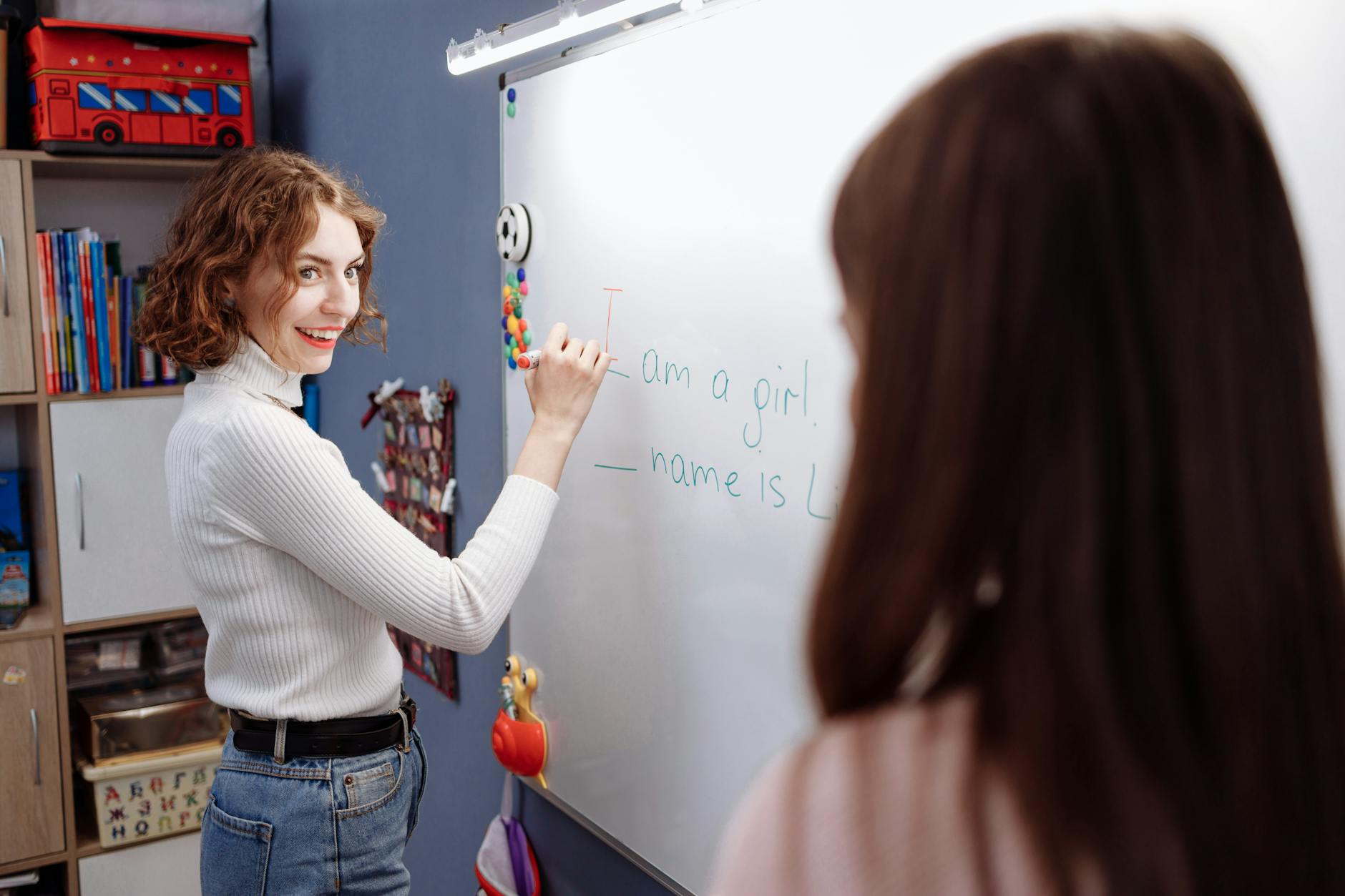
Step 1 — Model Explicitly Using the 'I Do' Method
Use Think-Alouds to Make Your Thinking Visible
Your internal dialogue becomes the curriculum during the "I Do" phase of the gradual release of responsibility. Externalize your thinking with these metacognitive strategies:
"I notice that..."
"This pattern reminds me of..."
"I'm choosing this strategy because..."
"Wait, that calculation doesn't match my estimate, so I need to..."
"The key word here is... which tells me to..."
Watch this 4-minute teacher modelling example with a 6th-grade class. The teacher approaches a history primary source: "I notice that the author uses the word 'tyranny' three times. This pattern reminds me of our unit on colonial governance. I'm choosing to circle 'taxation without representation' because the repetition signals importance. Wait, that date doesn't match my estimate, so I need to check the caption again. The key word here is 'unrest,' which tells me to look for conflict." Students witness hesitation and revision in real time.
Demonstrate Both Expert Execution and Error Correction
Perfection paralyzes students. At minute three of your five-minute session, insert a deliberate error. A 4th-grade teacher solving 326 minus 189 writes 237, forgetting to borrow from the tens place. She pauses. "Wait, that calculation doesn't match my estimate. 237 plus 189 should equal 326, but my check shows 426. I need to fix this." She models the self-correction aloud, restarting with proper borrowing.
This cognitive apprenticeship moment takes forty-five to sixty seconds. It demonstrates resilience and proves expertise includes monitoring, not just speed. Students learn that effective thinkers use scaffolding techniques like estimation checks. The mistake makes the direct instruction framework feel achievable. They leave knowing errors are data, not disasters.
Keep the Initial Modelling Focused and Brief
Attention evaporates fast. Respect these grade-specific limits for teacher modelling: K-2 runs two to three minutes, grades 3-5 needs four to five minutes, 6-8 requires six to seven minutes, and 9-12 maxes at eight to ten minutes. Exceed these windows and you violate cognitive load principles. Working memory floods; retention drops.
Position yourself facing your students, not the whiteboard. Use a document camera or projector so they watch your face and your hand simultaneously. For blended classrooms, record using Camtasia or Loom to capture the same immediacy. This explicit instruction stays brief, sharp, and visibly human. The think aloud protocol succeeds only when students remain engaged.
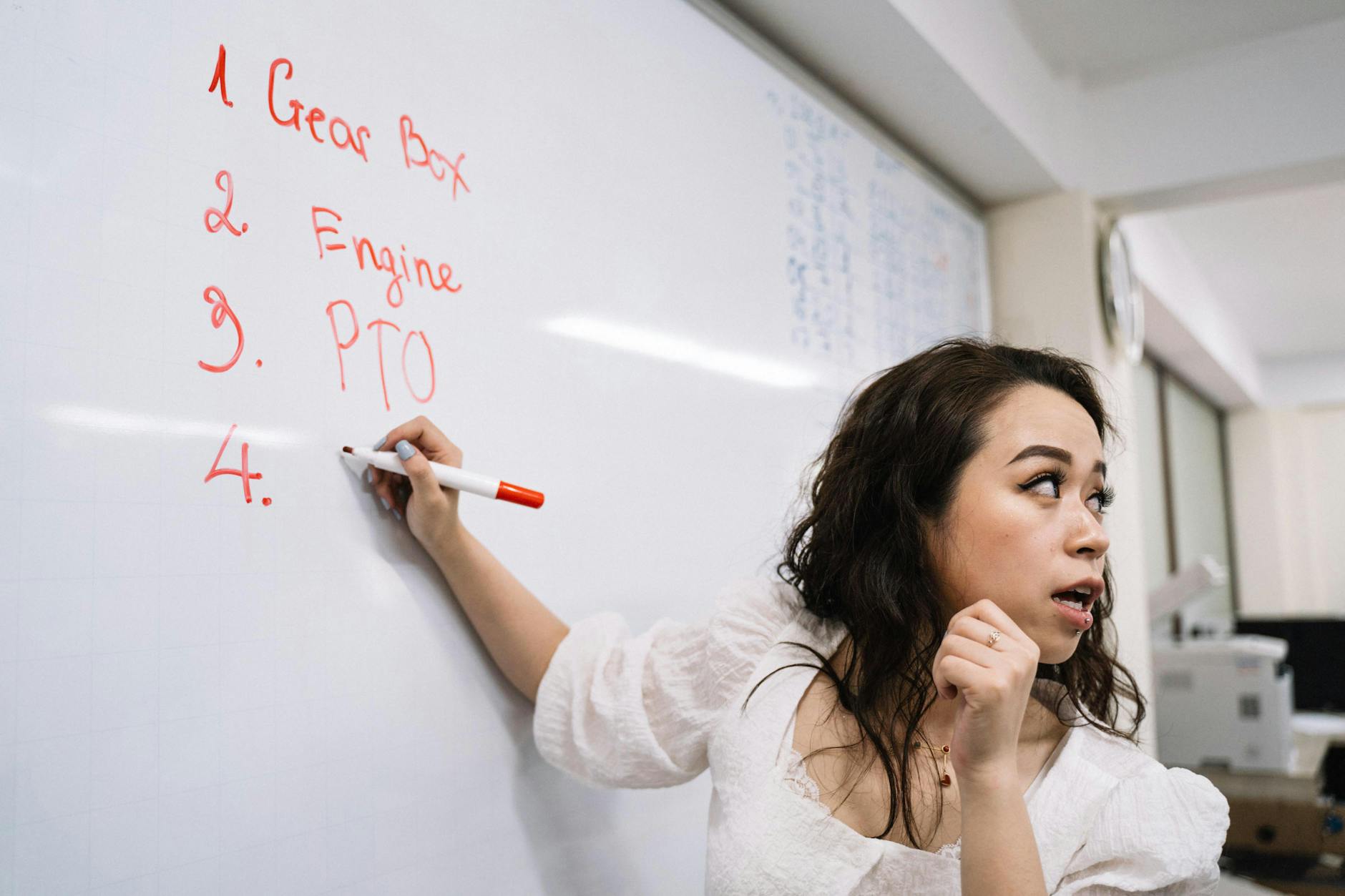
Step 2 — Facilitate Guided Practice During the 'We Do' Phase
Rosenshine's Principles of Instruction set the bar at 80% accuracy during guided practice. That's your Goldilocks zone—challenging enough to require scaffolding techniques, but achievable enough to build confidence. Anything lower means you moved to independence too soon.
Shift the cognitive load gradually through the i do you do we do teaching strategy. Open with you doing 70% of the thinking, move to 50/50 by midpoint, and end at 30% teacher/70% student. This gradual release of responsibility bridges teacher modelling and true independence without dropping support too fast.
Use a decision tree for every response. If correct, ask "How did you know?" to surface metacognitive strategies. If partially correct, say "You're on the right track because [specific element], but consider [specific correction]." If wrong, stop and re-model the exact step where the error started immediately.
The handover technique keeps momentum high while preserving the think aloud protocol. You scribe on the board while students dictate steps orally. Then transition to individual whiteboards—students write while you circulate, checking five boards per minute.
Invite Students to Contribute Steps While You Scribe
Open the We Do phase with the imitation method of teaching in full effect. You hold the marker; students provide every step orally. This cognitive apprenticeship makes thinking visible without the motor load of writing cluttering their working memory.
Transition to individual whiteboards after two successful problems. Students write solutions while you monitor circulation. Aim for the 40/60 rule: by phase's end, students shoulder 60% of cognitive work.
Then pair students to compare boards, spotting discrepancies before you confirm answers. These class participation methods catch errors faster than whole-group hand-raising.
Ask Probing Questions to Check Understanding
Socratic questioning drives deep processing. Vary your prompts by Bloom's level:
Remembering: "What step comes next?"
Understanding: "Why do we regroup here?"
Applying: "What would happen if we changed this number to eight?"
Analyzing: "Is this more like the first problem or the second?"
After asking, count 3-Mississippi silently before accepting answers. That pause feels awkward but yields deeper processing. Drop the question into the silence; let them wrestle with the concept not race to fill the quiet.
Provide Immediate Corrective Feedback
Rosenshine's research is clear: feedback within three seconds prevents error consolidation. In explicit instruction, immediacy matters more than perfection.
Script your reactions to maintain consistency. For correct answers: "Yes, you divided before multiplying because PEMDAS requires left-to-right processing for operations of equal weight."
For errors: "I see you added the denominators. Watch as I re-model step two: we only add numerators when denominators match." Avoid "good job"—praise the strategy, not the student. These active learning strategies reinforce precision without inflating ego.

Step 3 — How Do You Transition to Independent 'You Do' Practice?
Transition to independent practice by gradually removing scaffolds: first eliminate teacher scribing while keeping verbal cues, then reduce cues to checklists only, and finally assign solo work. Monitor by circulating with a clipboard, intervening only when students demonstrate three consecutive errors or request help, allowing productive struggle within 5-minute struggle windows.
The jump from "we do" to "you do" trips up more lessons than bad Wi-Fi. You can't just stop helping cold turkey. Effective teacher modelling means knowing when to fade your presence, not just when to appear.
Gradually Remove Scaffolding and Support
Stage 1 is the Handover. You stop scribing on the board but keep your voice in the room. Students write independently while you continue verbal cues drawn from your earlier think aloud protocol. Set a visual timer for five minutes and stick to it. If they stall, wait. Don't rescue yet.
Stage 2, Reference Only, drops the voice cues. You point to the anchor chart, gesture toward the checklist, but stay silent. This bridges explicit instruction toward autonomy. Students rely on the visual scaffolding techniques you've left posted. Your presence becomes furniture, not a crutch.
Stage 3 is complete release. Reference materials remain available, but you don't direct attention to them. This gradual release of responsibility moves from shared cognition to independent application. Watch who confidently begins versus those who freeze. The gap tells you who needs small group reteaching tomorrow.
Monitor Circulation and Offer Targeted Help
Grab a clipboard. Seriously, the physical act of holding it changes your posture from lecturer to coach. Use the 5-by-5 method: visit five students in five minutes, spending roughly thirty seconds with each. Check names off as you go.
Glance at their work for patterns, not perfection. If you spot three consecutive errors, a full minute of silence, or a raised hand, you intervene. Otherwise, offer a quick thumbs up or point to the next step on their checklist. This keeps them in charge of the thinking.
Your teacher modeling examples from earlier matter here. Students mentally reference your demonstrations when they get stuck. Don't rob them of the chance to use those metacognitive strategies by talking too soon. Let them sweat a little. That's where learning sticks.
Allow Productive Struggle Within Defined Parameters
Set a visible timer for five minutes. Tell students, "I'm not answering questions until this dings." Sounds harsh, but boundaries create safety. This window separates productive grappling from wasted time. Write the time on the board so they see it ticking.
Watch for the good signs: erasing and restarting, whispering to themselves, flipping back to their notes. That's cognitive apprenticeship working. The bad signs are obvious—head down, pencil tapping, blank stares lasting past the five-minute mark. Trust your gut on which is which.
When you do step in, use the anchor chart. Say: "I see you're stuck at step two. Look at the example up there. What do you notice about the first line?" Then walk away. Don't linger. The goal is getting them unstuck, not holding their hand through the whole worksheet.

Step 4 — Assess Mastery and Plan for Reteaching
You taught it. They practiced it. Now you need to know who actually owns the skill.
Use Exit Tickets or Quick Checks for Understanding
Exit tickets are your radar. They tell you whether your teacher modelling transferred or disappeared the moment you stopped guiding. Without this check, you risk building tomorrow's lesson on a foundation of sand. This closes the loop on your modeling teaching strategy.
Format | Time | What It Shows |
|---|---|---|
Hinge Question | 30 seconds | Binary choice with distractors targeting common misconceptions |
3-2-1 Reflection | 3 minutes | 3 things learned, 2 questions, 1 connection using metacognitive strategies |
Demonstration Problem | 5 minutes | Students solve one problem showing full work and reasoning |
Score them before you leave the building. If 70-80% demonstrate mastery, move on tomorrow. Below 50% accuracy means the whole class needs another round of explicit instruction using different scaffolding techniques. Between those marks, plan targeted small group reteach. Digital tools like Google Forms auto-grade hinge questions. Physical sticky notes let you sort piles instantly. See more formative assessment examples for quick checks.
Analyze Errors to Determine If Re-Modelling Is Needed
Wrong answers tell a story if you listen. Sort them into three categories before you plan your next move. Each type needs a different response.
Procedural slips are calculation errors or messy handwriting. These need practice, not another lecture. Conceptual misunderstandings mean students applied the wrong concept entirely, like confusing area with perimeter. These require fresh teacher modelling using a different modality—if you used visual arrays Monday, use kinesthetic tiles Tuesday. Application errors show students cannot transfer skills to new word problems. Bridge these with think aloud protocols comparing side-by-side examples.
This analyzing student assessment data protocol turns guesswork into specific action steps for tomorrow's cognitive apprenticeship.
Document Which Students Need Additional Support
Memory fails. Spreadsheets don't. Create a running log with five columns: Student Name, Error Type, Re-teaching Strategy, Date, and Mastery Check. This documentation aligns with RTI/MTSS Tier 1 requirements and creates a clear trail for Tier 2 referrals.
For quick reference during planning, use a three-column chart: Student Name, Specific Error Pattern (e.g., "confuses area/perimeter"), and Intervention Plan (e.g., "Small group Tuesday 2pm"). This paper trail satisfies administrators and gives you concrete data for parent conferences.
Use Google Sheets for sorting and filtering, ClassDojo for behavior links, or a physical binder. The best tool is the one you will actually check during your prep period.

Implementation Tips and Common Pitfalls to Avoid
Avoid Modelling Without Clear Learning Intentions
Don't start solving that math problem before telling kids what they're watching for. Last week I saw a teacher dive into long division without stating the objective. Students copied the steps but missed the concept entirely. That's invisible intention, and it wastes your explicit instruction time.
Visible intention means writing WALT (We Are Learning To) in letters you can see from the back: "We Are Learning To identify author's purpose with 90% accuracy." Point to it at minute 0, minute 3, and when you wrap up. This keeps your demonstration as a teaching strategy locked on target. This simple act prevents the gradual release of responsibility from drifting off course.
Common Pitfall | The Fix | Grade Level |
|---|---|---|
Modelling without stating the learning intention | Write WALT on board and reference it 3 times during demonstration | All |
Adapt Your Pace for Different Grade Levels and Abilities
Your think aloud protocol dies after minute three with 7-year-olds. Kindergarteners need 2-3 minutes of modelling max, with sensory-motor breaks every 60 seconds. Jump, stretch, then resume. Without these breaks, you lose them. This aligns with the imitation method of teaching at their developmental level.
Grades 3-5 handle 4-5 minutes if you switch between doc cam and physical demonstration. Grades 6-8 sustain 6-7 minutes when you connect to prior schema through scaffolding techniques. High schoolers manage 8-10 minutes of abstract reasoning through cognitive apprenticeship.
Students with processing disabilities need 1.5x time or previewed vocabulary cards. Apply differentiated instruction for various abilities to adjust these windows.
When to Use Peer Modelling Instead of Teacher-Led
Save teacher modelling for new cognitive skills, error correction strategies, and complex conceptual understanding. These require your metacognitive strategies and precise language. Use peer models for social scripts like turn-taking, fluency practice, or lining up procedures.
Teacher Modelling | Peer Modelling |
|---|---|
New skills, error correction, complex concepts | Social scripts, fluency practice, procedure demonstration |
Select peers who've demonstrated 90%+ accuracy on a pre-check, with strong verbal skills and genuine willingness. Never use struggling students as models unless you're conducting intentional error analysis with class consent and explicit framing. For reliable success, use errorless learning techniques when selecting models. The class trusts the model when they see perfection first.

Your Next Move with Teacher Modelling
Teacher modelling isn't a performance. It's the bridge between knowing something and being able to do it yourself. When you narrate your thinking aloud during the I Do phase, you make the invisible visible. Students see how experts handle confusion, backtrack, and recover. That's the heart of cognitive apprenticeship—showing the mess, not just the final product. Kids don't need perfect. They need transparent.
The gradual release of responsibility works only if you actually let go. Stay too long in We Do and you create dependency. Exit too early and kids drown. Watch their faces. When three students start finishing sentences for you, shift to independent practice. Your explicit instruction should fade like training wheels, not disappear overnight.
Today, pick one strategy you've been explaining poorly. Maybe it's annotating text or solving two-step equations. Tomorrow, open class by modelling it cold. Talk through your first mistake, your correction, and your final check. Set a timer for five minutes. Then stop. Let them try. That's your first step toward real metacognitive strategies in their heads, not just yours.

Setting the Stage: Prerequisites for Effective Teacher Modelling
Identify the Specific Learning Objective and Success Criteria
Before you demonstrate, nail down what students will do independently. Use Wiggins and McTighe's Understanding by Design framework. For 8th-grade algebra solving linear equations:
Transfer goal: Apply solution strategies to novel word problems.
Meaning goal: Grasp that equations model balanced relationships.
Acquisition goal: Master combining like terms and inverse operations.
Hattie's Visible Learning research puts teacher clarity at an effect size of 0.75. Post a measurable success criteria checklist where students see it: (1) Identify the variable term, (2) Isolate using inverse operations, (3) Verify by substitution. These look-fors launch the gradual release of responsibility and focus your demonstration as a teaching strategy.
Break Down Complex Skills Into Observable Steps
Miller's research shows working memory manages 7±2 items, but complex tasks drop that to 4±1 chunks. When planning your modeling teaching strategy, limit elementary lessons to 3-4 discrete steps and secondary to 5-6. Each chunk must be observable and actionable.
Identify divisor and dividend.
Estimate quotient using rounding.
Multiply and subtract.
Bring down next digit.
Check with multiplication.
This 5th-grade division sequence becomes your anchor chart. Post it where students reference it during independent practice. Explicit direct instruction models collapse when we ignore these cognitive limits and skip explicit instruction chunks.
Anticipate Common Student Misconceptions
Choose teacher modelling deliberately. Deploy it for procedural skills like long division, cognitive strategies like close reading, or untangling error patterns. Skip it for discovery learning or bare review.
Math (3rd): "Multiplication always makes numbers bigger" fails with fractions/decimals.
Writing (7th): "Longer sentences are better" creates run-ons.
Science (9th): "Plants get food from soil" ignores photosynthesis.
During your think aloud protocol, spotlight these errors using metacognitive strategies. Name the error explicitly so students recognize it in their own work. Connect to science of learning principles through scaffolding techniques and cognitive apprenticeship that prevent these traps.
Step 1 — Model Explicitly Using the 'I Do' Method
Use Think-Alouds to Make Your Thinking Visible
Your internal dialogue becomes the curriculum during the "I Do" phase of the gradual release of responsibility. Externalize your thinking with these metacognitive strategies:
"I notice that..."
"This pattern reminds me of..."
"I'm choosing this strategy because..."
"Wait, that calculation doesn't match my estimate, so I need to..."
"The key word here is... which tells me to..."
Watch this 4-minute teacher modelling example with a 6th-grade class. The teacher approaches a history primary source: "I notice that the author uses the word 'tyranny' three times. This pattern reminds me of our unit on colonial governance. I'm choosing to circle 'taxation without representation' because the repetition signals importance. Wait, that date doesn't match my estimate, so I need to check the caption again. The key word here is 'unrest,' which tells me to look for conflict." Students witness hesitation and revision in real time.
Demonstrate Both Expert Execution and Error Correction
Perfection paralyzes students. At minute three of your five-minute session, insert a deliberate error. A 4th-grade teacher solving 326 minus 189 writes 237, forgetting to borrow from the tens place. She pauses. "Wait, that calculation doesn't match my estimate. 237 plus 189 should equal 326, but my check shows 426. I need to fix this." She models the self-correction aloud, restarting with proper borrowing.
This cognitive apprenticeship moment takes forty-five to sixty seconds. It demonstrates resilience and proves expertise includes monitoring, not just speed. Students learn that effective thinkers use scaffolding techniques like estimation checks. The mistake makes the direct instruction framework feel achievable. They leave knowing errors are data, not disasters.
Keep the Initial Modelling Focused and Brief
Attention evaporates fast. Respect these grade-specific limits for teacher modelling: K-2 runs two to three minutes, grades 3-5 needs four to five minutes, 6-8 requires six to seven minutes, and 9-12 maxes at eight to ten minutes. Exceed these windows and you violate cognitive load principles. Working memory floods; retention drops.
Position yourself facing your students, not the whiteboard. Use a document camera or projector so they watch your face and your hand simultaneously. For blended classrooms, record using Camtasia or Loom to capture the same immediacy. This explicit instruction stays brief, sharp, and visibly human. The think aloud protocol succeeds only when students remain engaged.
Step 2 — Facilitate Guided Practice During the 'We Do' Phase
Rosenshine's Principles of Instruction set the bar at 80% accuracy during guided practice. That's your Goldilocks zone—challenging enough to require scaffolding techniques, but achievable enough to build confidence. Anything lower means you moved to independence too soon.
Shift the cognitive load gradually through the i do you do we do teaching strategy. Open with you doing 70% of the thinking, move to 50/50 by midpoint, and end at 30% teacher/70% student. This gradual release of responsibility bridges teacher modelling and true independence without dropping support too fast.
Use a decision tree for every response. If correct, ask "How did you know?" to surface metacognitive strategies. If partially correct, say "You're on the right track because [specific element], but consider [specific correction]." If wrong, stop and re-model the exact step where the error started immediately.
The handover technique keeps momentum high while preserving the think aloud protocol. You scribe on the board while students dictate steps orally. Then transition to individual whiteboards—students write while you circulate, checking five boards per minute.
Invite Students to Contribute Steps While You Scribe
Open the We Do phase with the imitation method of teaching in full effect. You hold the marker; students provide every step orally. This cognitive apprenticeship makes thinking visible without the motor load of writing cluttering their working memory.
Transition to individual whiteboards after two successful problems. Students write solutions while you monitor circulation. Aim for the 40/60 rule: by phase's end, students shoulder 60% of cognitive work.
Then pair students to compare boards, spotting discrepancies before you confirm answers. These class participation methods catch errors faster than whole-group hand-raising.
Ask Probing Questions to Check Understanding
Socratic questioning drives deep processing. Vary your prompts by Bloom's level:
Remembering: "What step comes next?"
Understanding: "Why do we regroup here?"
Applying: "What would happen if we changed this number to eight?"
Analyzing: "Is this more like the first problem or the second?"
After asking, count 3-Mississippi silently before accepting answers. That pause feels awkward but yields deeper processing. Drop the question into the silence; let them wrestle with the concept not race to fill the quiet.
Provide Immediate Corrective Feedback
Rosenshine's research is clear: feedback within three seconds prevents error consolidation. In explicit instruction, immediacy matters more than perfection.
Script your reactions to maintain consistency. For correct answers: "Yes, you divided before multiplying because PEMDAS requires left-to-right processing for operations of equal weight."
For errors: "I see you added the denominators. Watch as I re-model step two: we only add numerators when denominators match." Avoid "good job"—praise the strategy, not the student. These active learning strategies reinforce precision without inflating ego.
Step 3 — How Do You Transition to Independent 'You Do' Practice?
Transition to independent practice by gradually removing scaffolds: first eliminate teacher scribing while keeping verbal cues, then reduce cues to checklists only, and finally assign solo work. Monitor by circulating with a clipboard, intervening only when students demonstrate three consecutive errors or request help, allowing productive struggle within 5-minute struggle windows.
The jump from "we do" to "you do" trips up more lessons than bad Wi-Fi. You can't just stop helping cold turkey. Effective teacher modelling means knowing when to fade your presence, not just when to appear.
Gradually Remove Scaffolding and Support
Stage 1 is the Handover. You stop scribing on the board but keep your voice in the room. Students write independently while you continue verbal cues drawn from your earlier think aloud protocol. Set a visual timer for five minutes and stick to it. If they stall, wait. Don't rescue yet.
Stage 2, Reference Only, drops the voice cues. You point to the anchor chart, gesture toward the checklist, but stay silent. This bridges explicit instruction toward autonomy. Students rely on the visual scaffolding techniques you've left posted. Your presence becomes furniture, not a crutch.
Stage 3 is complete release. Reference materials remain available, but you don't direct attention to them. This gradual release of responsibility moves from shared cognition to independent application. Watch who confidently begins versus those who freeze. The gap tells you who needs small group reteaching tomorrow.
Monitor Circulation and Offer Targeted Help
Grab a clipboard. Seriously, the physical act of holding it changes your posture from lecturer to coach. Use the 5-by-5 method: visit five students in five minutes, spending roughly thirty seconds with each. Check names off as you go.
Glance at their work for patterns, not perfection. If you spot three consecutive errors, a full minute of silence, or a raised hand, you intervene. Otherwise, offer a quick thumbs up or point to the next step on their checklist. This keeps them in charge of the thinking.
Your teacher modeling examples from earlier matter here. Students mentally reference your demonstrations when they get stuck. Don't rob them of the chance to use those metacognitive strategies by talking too soon. Let them sweat a little. That's where learning sticks.
Allow Productive Struggle Within Defined Parameters
Set a visible timer for five minutes. Tell students, "I'm not answering questions until this dings." Sounds harsh, but boundaries create safety. This window separates productive grappling from wasted time. Write the time on the board so they see it ticking.
Watch for the good signs: erasing and restarting, whispering to themselves, flipping back to their notes. That's cognitive apprenticeship working. The bad signs are obvious—head down, pencil tapping, blank stares lasting past the five-minute mark. Trust your gut on which is which.
When you do step in, use the anchor chart. Say: "I see you're stuck at step two. Look at the example up there. What do you notice about the first line?" Then walk away. Don't linger. The goal is getting them unstuck, not holding their hand through the whole worksheet.
Step 4 — Assess Mastery and Plan for Reteaching
You taught it. They practiced it. Now you need to know who actually owns the skill.
Use Exit Tickets or Quick Checks for Understanding
Exit tickets are your radar. They tell you whether your teacher modelling transferred or disappeared the moment you stopped guiding. Without this check, you risk building tomorrow's lesson on a foundation of sand. This closes the loop on your modeling teaching strategy.
Format | Time | What It Shows |
|---|---|---|
Hinge Question | 30 seconds | Binary choice with distractors targeting common misconceptions |
3-2-1 Reflection | 3 minutes | 3 things learned, 2 questions, 1 connection using metacognitive strategies |
Demonstration Problem | 5 minutes | Students solve one problem showing full work and reasoning |
Score them before you leave the building. If 70-80% demonstrate mastery, move on tomorrow. Below 50% accuracy means the whole class needs another round of explicit instruction using different scaffolding techniques. Between those marks, plan targeted small group reteach. Digital tools like Google Forms auto-grade hinge questions. Physical sticky notes let you sort piles instantly. See more formative assessment examples for quick checks.
Analyze Errors to Determine If Re-Modelling Is Needed
Wrong answers tell a story if you listen. Sort them into three categories before you plan your next move. Each type needs a different response.
Procedural slips are calculation errors or messy handwriting. These need practice, not another lecture. Conceptual misunderstandings mean students applied the wrong concept entirely, like confusing area with perimeter. These require fresh teacher modelling using a different modality—if you used visual arrays Monday, use kinesthetic tiles Tuesday. Application errors show students cannot transfer skills to new word problems. Bridge these with think aloud protocols comparing side-by-side examples.
This analyzing student assessment data protocol turns guesswork into specific action steps for tomorrow's cognitive apprenticeship.
Document Which Students Need Additional Support
Memory fails. Spreadsheets don't. Create a running log with five columns: Student Name, Error Type, Re-teaching Strategy, Date, and Mastery Check. This documentation aligns with RTI/MTSS Tier 1 requirements and creates a clear trail for Tier 2 referrals.
For quick reference during planning, use a three-column chart: Student Name, Specific Error Pattern (e.g., "confuses area/perimeter"), and Intervention Plan (e.g., "Small group Tuesday 2pm"). This paper trail satisfies administrators and gives you concrete data for parent conferences.
Use Google Sheets for sorting and filtering, ClassDojo for behavior links, or a physical binder. The best tool is the one you will actually check during your prep period.
Implementation Tips and Common Pitfalls to Avoid
Avoid Modelling Without Clear Learning Intentions
Don't start solving that math problem before telling kids what they're watching for. Last week I saw a teacher dive into long division without stating the objective. Students copied the steps but missed the concept entirely. That's invisible intention, and it wastes your explicit instruction time.
Visible intention means writing WALT (We Are Learning To) in letters you can see from the back: "We Are Learning To identify author's purpose with 90% accuracy." Point to it at minute 0, minute 3, and when you wrap up. This keeps your demonstration as a teaching strategy locked on target. This simple act prevents the gradual release of responsibility from drifting off course.
Common Pitfall | The Fix | Grade Level |
|---|---|---|
Modelling without stating the learning intention | Write WALT on board and reference it 3 times during demonstration | All |
Adapt Your Pace for Different Grade Levels and Abilities
Your think aloud protocol dies after minute three with 7-year-olds. Kindergarteners need 2-3 minutes of modelling max, with sensory-motor breaks every 60 seconds. Jump, stretch, then resume. Without these breaks, you lose them. This aligns with the imitation method of teaching at their developmental level.
Grades 3-5 handle 4-5 minutes if you switch between doc cam and physical demonstration. Grades 6-8 sustain 6-7 minutes when you connect to prior schema through scaffolding techniques. High schoolers manage 8-10 minutes of abstract reasoning through cognitive apprenticeship.
Students with processing disabilities need 1.5x time or previewed vocabulary cards. Apply differentiated instruction for various abilities to adjust these windows.
When to Use Peer Modelling Instead of Teacher-Led
Save teacher modelling for new cognitive skills, error correction strategies, and complex conceptual understanding. These require your metacognitive strategies and precise language. Use peer models for social scripts like turn-taking, fluency practice, or lining up procedures.
Teacher Modelling | Peer Modelling |
|---|---|
New skills, error correction, complex concepts | Social scripts, fluency practice, procedure demonstration |
Select peers who've demonstrated 90%+ accuracy on a pre-check, with strong verbal skills and genuine willingness. Never use struggling students as models unless you're conducting intentional error analysis with class consent and explicit framing. For reliable success, use errorless learning techniques when selecting models. The class trusts the model when they see perfection first.
Your Next Move with Teacher Modelling
Teacher modelling isn't a performance. It's the bridge between knowing something and being able to do it yourself. When you narrate your thinking aloud during the I Do phase, you make the invisible visible. Students see how experts handle confusion, backtrack, and recover. That's the heart of cognitive apprenticeship—showing the mess, not just the final product. Kids don't need perfect. They need transparent.
The gradual release of responsibility works only if you actually let go. Stay too long in We Do and you create dependency. Exit too early and kids drown. Watch their faces. When three students start finishing sentences for you, shift to independent practice. Your explicit instruction should fade like training wheels, not disappear overnight.
Today, pick one strategy you've been explaining poorly. Maybe it's annotating text or solving two-step equations. Tomorrow, open class by modelling it cold. Talk through your first mistake, your correction, and your final check. Set a timer for five minutes. Then stop. Let them try. That's your first step toward real metacognitive strategies in their heads, not just yours.
Still grading everything by hand?
EMStudio is a free teaching management app — manage your classes, students, lessons, and more!
Learn More
Still grading everything by hand?
EMStudio is a free teaching management app — manage your classes, students, lessons, and more!
Learn More



Notion4Teachers
Notion templates to simplify administrative tasks and enhance your teaching experience.



2026 Notion4Teachers. All Rights Reserved.
Notion4Teachers
Notion templates to simplify administrative tasks and enhance your teaching experience.
2026 Notion4Teachers. All Rights Reserved.
Notion4Teachers
Notion templates to simplify administrative tasks and enhance your teaching experience.
2026 Notion4Teachers. All Rights Reserved.