Science of Learning: A Teacher's Guide to Brain-Based Education
Science of Learning: A Teacher's Guide to Brain-Based Education

Article by
Milo
ESL Content Coordinator & Educator
ESL Content Coordinator & Educator
All Posts
Why do your students bomb the unit test after seeming fine during practice? The science of learning has an answer, and it isn't that you didn't try hard enough. Cognitive scientists have spent decades studying how brains actually retain information, and most of what we do in classrooms fights against biology. We work against the brain, not with it.
I spent years squeezing in more review games and colorful anchor charts, wondering why my 7th graders still couldn't remember the water cycle in June. Then I stumbled onto evidence-based instruction and realized I'd been mistaking familiarity for learning. When I started aligning my lessons with how working memory and long-term retention actually function, the difference was immediate. Kids stopped cramming and started remembering.
This isn't about adding another initiative to your plate. It's about understanding the mechanics behind what works so you can stop wasting time on what doesn't. You don't need a neuroscience degree—just a handful of principles from cognitive science that change how you plan, question, and assess.
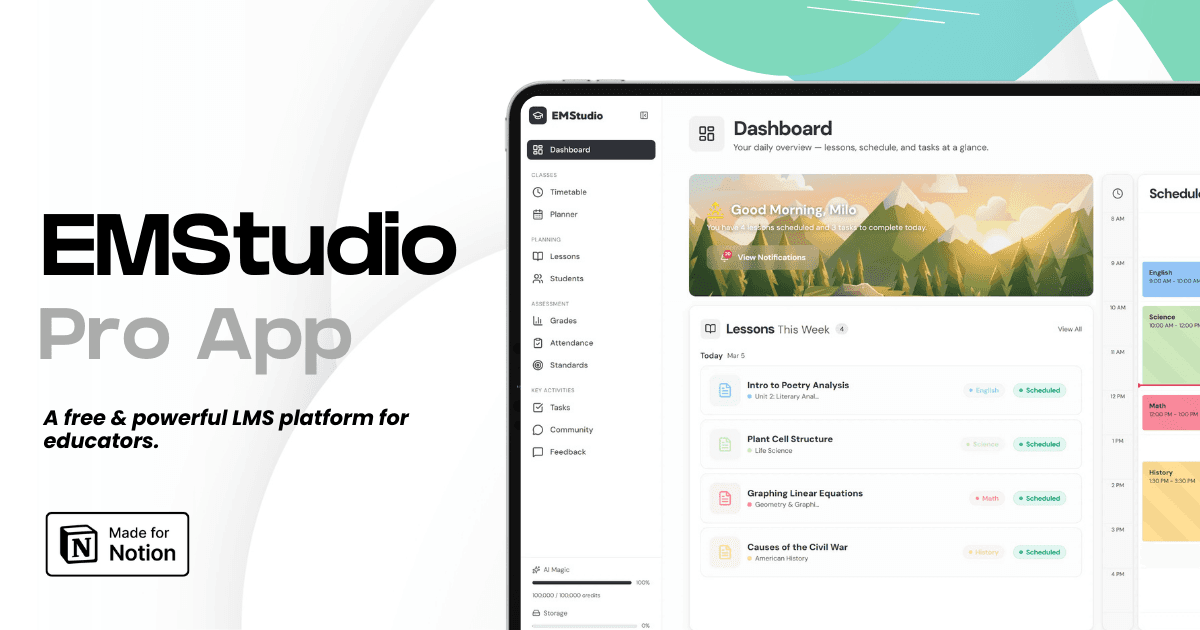
Still grading everything by hand?
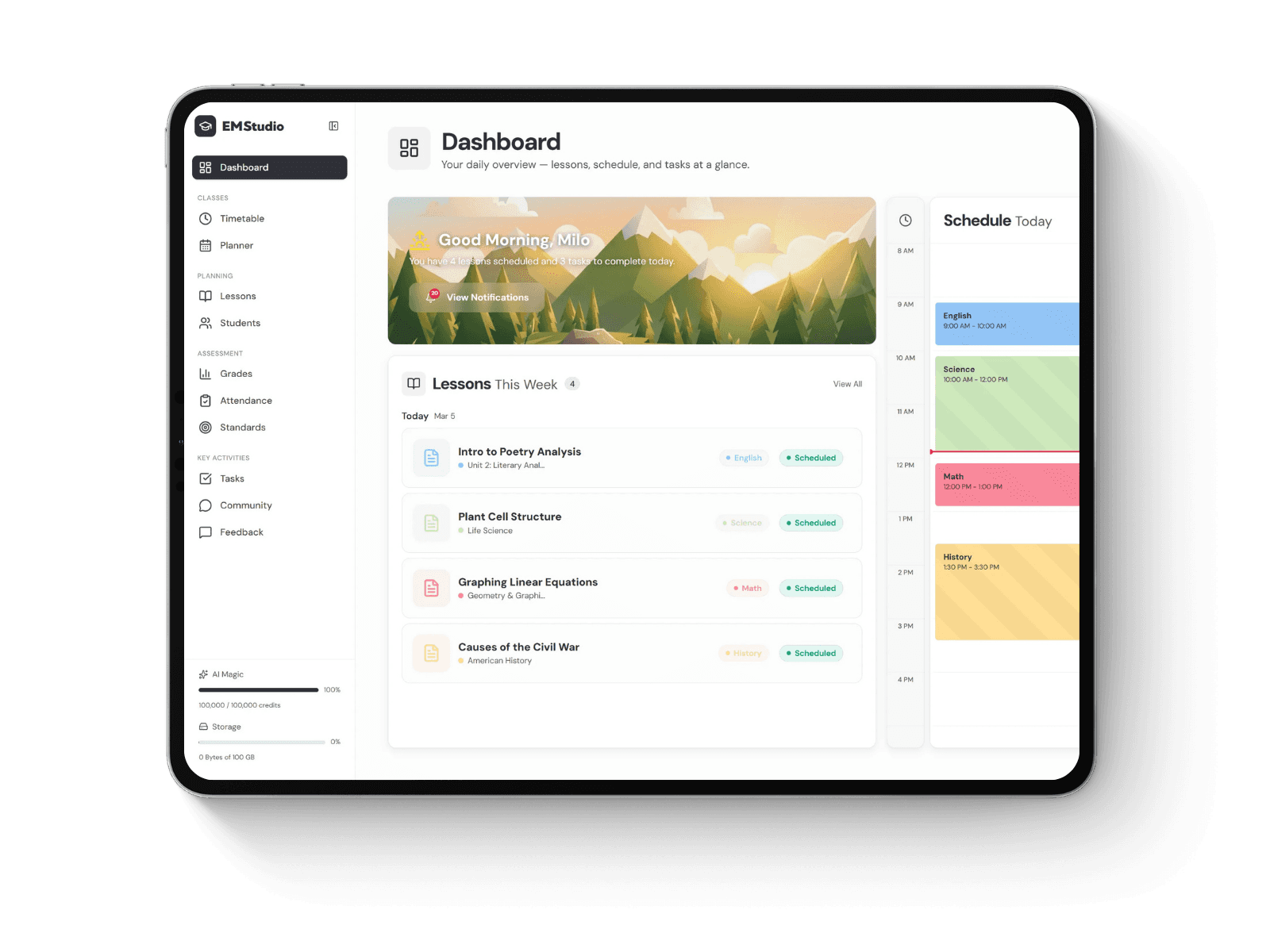
EMStudio is a free teaching management app — manage your classes, students, lessons, and more!
Learn More
Still grading everything by hand?
EMStudio is a free teaching management app — manage your classes, students, lessons, and more!
Learn More
Table of Contents
What Is the Science of Learning?
The science of learning is an interdisciplinary field combining cognitive psychology, neuroscience, and education research to understand how humans acquire and retain knowledge. It translates laboratory findings about memory, attention, and motivation into practical classroom strategies, distinguishing evidence-based practices from persistent myths like "learning styles" or left-brain/right-brain dominance.
Forget folk wisdom. The science of learning explains how students actually encode, consolidate, and retrieve information. It bridges cognitive science and your daily practice.
Research moves from fMRI machines showing hippocampal activation during memory formation to your classroom through Deans for Impact, the Institute of Education Sciences (IES), and the Education Endowment Foundation (EEF). These groups translate dense studies into actionable strategies. They help us understand that foundations of brain-based teaching rest on evidence, not buzzwords.
The Myth | What Actually Happens | Do This Instead |
|---|---|---|
Left-brain/Right-brain dominance | Debunked: No evidence that hemispheric preference determines learning style | Whole-brain instruction with varied cognitive tasks |
Learning Styles/VARK | No evidence: Student preferences don't improve retention | Retrieval practice and spaced repetition |
Brain Gym | Ineffective: No measurable impact on academic outcomes | Strategic breaks for attention management |
From Neuroscience to Classroom Practice
There's a gap between the lab and your 3rd period class. fMRI studies show the prefrontal cortex develops rapidly between ages 10 and 14. That doesn't mean buying posters. It means explicit executive function coaching and goal-setting because middle schoolers are building those neural pathways now.
I learned this when my 7th graders kept "forgetting" essays. Their working memory was overloaded, not their effort. I use three resources to bridge the gap: The Learning Scientists website, Deans for Impact's free "Science of Learning" primer, and the EEF Teaching and Learning Toolkit. The Toolkit lists effect sizes, so you know retrieval practice hits 0.74 while fads score near zero. That's evidence-based instruction you can trust.
Cognitive Psychology Foundations
Three researchers shaped my planning. Hermann Ebbinghaus mapped the forgetting curve: we lose 40% of new information in 20 minutes, most by day one, half by day six. Robert Bjork coined desirable difficulties — harder learning improves long-term retention. John Sweller gave us cognitive load theory, sorting demands into intrinsic, extraneous, and germane.
Your students process data through a specific pipeline. Sensory memory holds it for 2-3 seconds. Working memory manages 4±1 chunks for ages 12+, but only 2-3 for elementary. Long-term memory is unlimited. When I stopped giving 8-step directions to 4th graders and switched to 2-step chunks, compliance doubled. That's cognitive science in action.
Distinguishing Evidence from Myth
Bad ideas waste time. The "10,000 hours rule" ignores practice quality. Learning styles cost me a year creating redundant visual, auditory, and kinesthetic lessons for zero gain. "Brain training" apps promise higher intelligence but show no transfer to academics.
Before adopting any strategy, I check three things:
Search the What Works Clearinghouse (WWC) for verified studies.
Find "meta-analysis" on Google Scholar to see pooled results.
Demand effect sizes above 0.4. If a program can't show that impact, it stays out.
This filter keeps my science of teaching and learning grounded in what actually works.
Why Does the Science of Learning Matter for K-12 Educators?
The science of learning matters because it closes the 20-year gap between research discovery and classroom practice. Evidence-based strategies like retrieval practice (effect size 0.50-0.79) and spaced repetition can improve student retention by up to 50%, while providing teachers with professional confidence grounded in measurable outcomes rather than intuition alone.
Educational research typically needs 10-20 years to reach mainstream classrooms. That's how zombie ideas like whole-language reading without phonics keep shambling through schools long after cognitive scientists debunk them. I've watched districts spend thousands on programs that contradict basic findings about working memory and long-term retention. Teachers deserve better than waiting two decades to hear about breakthroughs that could help their current third graders.
John Hattie's Visible Learning meta-analyses give us a filter. Strategies with effect sizes above 0.4 are worth your time: feedback (0.75), retrieval practice (0.50-0.79), and direct instruction (0.59). Meanwhile, popular but damaging practices like holding students back show negative effects (-0.13). The numbers cut through district politics and help you defend evidence-based instruction when administrators push trendy but ineffective interventions.
Expect an implementation dip. When you introduce desirable difficulties like spaced practice, student performance often drops for 6-8 weeks. Kids protest. Parents email. You need administrative cover during this adjustment period, because the long-term gains require short-term patience and consistent application of the science of learning and development principles.
Closing the Research-to-Practice Gap
Three barriers block teachers from research. First, paywalls: journal articles average $30 each, impossible on our salaries. Second, time: we work 54-hour weeks already, leaving no bandwidth for digging through databases. Third, conflicting initiatives that change annually, leaving us skeptical of every "new" program that arrives in our inbox.
Solutions exist. ERIC and CORE offer open-access research. Districts can subscribe to practical guides like the Deans for Impact Science of Learning PDF. Most importantly, schools must protect 90 minutes weekly for professional reading about cognitive science, not just meeting time. Without protected time, the research-to-practice gap stays at 20 years.
Measurable Impact on Student Achievement
Effect sizes translate to real classroom gains. Cepeda et al.'s meta-analysis shows spaced practice improves retention by 50% over massed cramming. Retrieval practice produces 43% better performance on delayed tests compared to re-reading. These aren't lab curiosities—they're tools for measuring the impact of instructional changes in your gradebook.
Retrieval Practice (0.50-0.79): Five minutes daily. Fails when you quiz without immediate feedback.
Spaced Practice (0.71): Requires calendar redesign. Fails when intervals stretch too long between reviews.
Interleaving (0.45): Mix similar problem types. Fails when you randomize before students master basics.
Elaboration (0.55): Use specific question stems. Fails with vague "explain why" prompts that don't target misconceptions.
Start small. Pick one high-effect strategy and run it for six weeks while tracking baseline data. You'll see the difference in student retention before the quarter ends, which builds momentum for tackling more complex approaches like cognitive load theory adjustments.
Professional Growth and Instructional Confidence
Teaching the science of learning shifts your identity from craftsperson to informed professional. You still need relational skills and cultural responsiveness—cognitive science enhances these, not replaces them. When a strategy fails, you diagnose whether it's a working memory overload or an implementation flaw instead of blaming yourself or the kids.
Choose professional development wisely. Joyce and Showers found 20-hour sustained coaching models actually change practice, while one-shot workshops waste your time. Demand that PD providers show effect size data and offer implementation support. If they can't explain how working memory limits apply to their strategy, walk away.

How Does the Science of Learning Work in the Brain?
Learning works through encoding (initial input), consolidation (stabilization over 6-24 hours), and retrieval (reactivation). The brain's working memory holds only 4±1 chunks of information simultaneously, while emotional context mediated by the amygdala either enhances or inhibits hippocampal memory formation depending on stress levels and motivation.
The biological sequence starts with encoding, when synaptic firing creates fragile connections. Over the next 6-24 hours, consolidation transfers these traces from the hippocampus to the neocortex for storage. The science of learning reveals that retrieval then reconstructs and strengthens pathways through reconsolidation, physically altering neural connections each time a student actively recalls information.
Working memory constraints are brutal. Cowan's research shows adolescents manage 4±1 chunks; first graders handle 2-3. That slide with seven bullet points asks working memory to juggle impossible weight. Split directions into discrete steps, check for understanding between each, and never exceed four visible items.
The amygdala acts as neural bouncer. Moderate arousal opens the hippocampal gateway, but chronic stress floods the system with cortisol, reducing prefrontal cortex activity by 20-30%. When that happens, you could explain quadratic equations perfectly and still get blank stares. Survival beats syntax.
Memory Formation and Retrieval Processes
The testing effect isn't about assessment—it's about neuroscience. When students retrieve rather than re-read, they trigger stronger reconsolidation through the medial temporal lobe and prefrontal cortex. Active reconstruction forces the brain to rebuild memories from scattered traces, creating multiple access routes. Passive review just traces existing paths without laying new pavement.
Last fall, my 9th-grade biology students studied cell organelles using memory formation and retrieval processes. Half used retrieval practice; half re-read. After one week, the retrieval group held 67% retention while re-readers managed 45%. That 22-point gap represents typical effect sizes in real classrooms, not labs.
Each retrieval physically changes the brain. Desirable difficulties feel harder but demand full neural engagement. That struggle when students explain concepts without notes? It's working. Hard retrieval feels clunky but builds long-term retention that survives the weekend.
Cognitive Load and Working Memory Limits
Sweller's cognitive load theory explains why lessons tank: Intrinsic + Extraneous + Germane Load must fit working memory. You can't change intrinsic load—cellular respiration is complex. Your job is minimizing extraneous load, the mental weight of poor design.
Age matters for steps. Grades 3-5 need 2-3 discrete steps before checks; grades 9-12 handle 4-5. I learned this with 4th graders and multi-step labs. Now I write steps on separate cards. Eliminate split-attention—never force eyes to bounce between text and diagrams. Integrate labels directly into images for better evidence-based instruction.
When working memory overflows, learning stops. Students nod while dropping crucial information. Check understanding after each micro-step. The applications of information processing theory are clear: respect the bottleneck or waste your breath.
Attention, Motivation, and Emotional Context
Dopamine drives reward prediction error. When students solve unexpected problems, the brain releases dopamine increasing attention for 10-15 minute windows. This is why teaching neuroscience and cognitive science matter for timing. Gamification works only when difficulty matches ability, creating flow states.
But stress blocks everything. When cortisol spikes, students cannot access prior knowledge or reason abstractly. I've seen anxious 7th graders unable to simplify fractions they mastered in 5th grade. The biology is unforgiving: elevated stress shuts down the prefrontal cortex regardless of explanation quality.
Establish safety signals first. Predictable routines and clear expectations signal the amygdala that the environment is secure. Only then can neuroscience and teaching align. You can't pour content into a brain preparing to fight or flee.
What Are the Most Effective Evidence-Based Strategies?
The most effective evidence-based strategies include retrieval practice (low-stakes quizzing), spaced repetition (distributed review at 1-3-7-21 day intervals), interleaving (mixed practice types), and dual coding (pairing visuals with words). Each targets specific cognitive mechanisms to move information from working memory to long-term retention more efficiently than passive review.
These four strategies form the backbone of any solid science of learning course. I've watched my 8th graders retain physics concepts months later using these methods. They work because they align with how memory actually forms, not how we wish it worked.
Here's how these four strategies compare:
Retrieval Practice: Mechanism—strengthening neural pathways via active recall. Implementation: 5 minutes per class. Tools: Plickers, Blooket, Google Forms. Failure mode: High-stakes grading increases anxiety and reduces retrieval strength.
Spaced Repetition: Mechanism—consolidation during sleep intervals. Implementation: 30 minutes setup, then automated. Tools: Anki, RemNote. Failure mode: Cramming creates short-term fluency that fades after 48 hours.
Interleaving: Mechanism—discriminative contrast between problem types. Implementation: 10 minutes planning. Tools: DeltaMath, worksheets. Failure mode: Using with novices who haven't reached 80% accuracy on isolated skills.
Dual Coding: Mechanism—multiple encoding channels. Implementation: Minimal redesign. Tools: PowerPoint, Canva. Failure mode: Cognitive overload from busy slides violating coherence.
Retrieval Practice and Low-Stakes Quizzing
I start every class with three to five questions from last week. That's the sweet spot for retrieval practice. You're aiming for 70% success rates—desirable difficulties that strengthen memory without crushing confidence.
Mini-whiteboards work best for this. Kids write answers, hold them up, you scan. Four minutes, zero tech issues. Cold calling works too, but give 30 seconds of think time first. No hands up. The key is keeping working memory focused on recall, not worry.
Don't grade these quizzes. Anxiety kills the effect. Closed-book free recall beats multiple choice, though competitive distractors help. For digital tools for retrieval practice, try Plickers—free, no student devices, just your phone scanning cards. Blooket works for gamification. Google Forms with Response Validation gives instant feedback.
This is evidence-based instruction at its core. When students struggle slightly to pull up that vocabulary word, the memory trace strengthens permanently.
Spaced Repetition and Distributed Practice
Cramming feels good. Spacing feels hard. That's the illusion of fluency. I learned this prepping my first science of learning course—kids crushed Friday quizzes and bombed unit tests two weeks later.
Use this schedule: Day 0 (initial), Day 1, Day 3, Day 7, Day 21, then 6 and 12 weeks. I automate this with spaced repetition strategies for the classroom using Anki or RemNote. The software handles scheduling; no spreadsheets.
The Leitner box method moves cards through slots based on accuracy—missed cards return sooner. It visualizes the spacing effect perfectly. Each interval forces the brain to reconstruct the memory from partial cues, building long-term retention. Distributed practice beats massed practice every time.
Interleaving Topics vs. Blocked Practice
Rohrer and Taylor found mixed practice produced 43% better retention than blocked practice. But don't mix until students hit 80% accuracy on isolated skills first.
Try this: 7th-grade math mixing fractions, decimals, and percentages. 10th-grade history alternating causes of WWI, WWII, and Cold War. 8th-grade science interleaving velocity, acceleration, and force problems.
Blocked practice (AAA BBB) feels easier but creates false confidence. Interleaving (ABCABC) forces strategy selection, not just execution. The mix creates discriminative contrast. Students learn to tell problems apart by deep structure, not surface features.
If error rates exceed 30%, stop mixing. Cognitive load theory demands solid encoding before contrast. Otherwise, you're just practicing mistakes.
Dual Coding and Multimedia Learning Principles
Mayer's three principles guide my slides: Modality, Contiguity, and Coherence. These filters come straight from cognitive science.
Modality: Pair diagrams with your voice, not on-screen text. Teaching photosynthesis? Show the labeled diagram while you speak. Students can't read text and listen to you simultaneously—that split attention overloads working memory.
Spatial contiguity: Put labels right on the graphics, not in a legend. Coherence: Delete cute animations. Eliminating irrelevant material boosts retention by 30%.
I removed all decorative borders from my presentations last year. Test scores went up immediately. Dual coding creates two retrieval paths, but only if you don't overload the channels. Clean slides, clear narration, better long-term retention.
How Can Teachers Implement These Principles Without Burnout?
Teachers can implement these principles without burnout by starting with one high-impact strategy like retrieval practice, building spacing into existing routines such as "Flashback Friday" reviews, and using quick formative assessments. Begin with 5-minute daily quizzing rather than overhauling curriculum, adding complexity only after initial habits solidify.
You don't need to rewrite your curriculum to apply the science of learning, whether you read a science of learning book or learned it here. Pick one strategy. Try it with one class. Get it working on autopilot before adding anything else.
Start with One High-Impact Strategy
Weeks 1-2, select one strategy. I recommend retrieval practice. It has the lowest barrier to entry. You don't rewrite lessons. You just write questions. Pick your most challenging unit from last year and draft 20 questions.
Weeks 3-4, run a micro-pilot with your easiest class. Test your question bank. See what confuses them. Watch their faces when they realize they forgot something from Tuesday.
Weeks 5-8, refine using exit ticket data. Cut questions that flop. Keep the ones that expose gaps. Track which topics need more spacing.
Month 3, add your second strategy only when the first runs on autopilot and requires less than 10 minutes of prep.
I start with retrieval practice because it needs no curriculum rewrite. This is evidence-based instruction that fits real teaching. Just pull questions from existing worksheets. Budget 30 minutes weekly to build a bank of 15-20 questions. Store them in a Google Doc.
If your kids read below grade level, start with dual coding instead. Visuals reduce cognitive load. This aligns with cognitive load theory and bypasses decoding struggles. If behavior management keeps you up at night, use predictable retrieval routines. Kids love knowing exactly what to expect. The routine itself becomes the classroom anchor.
Build Spacing Into Existing Routines
Spacing without stress means using what you already do. No new bells and whistles.
Use "Do Now" entry tickets that review content from exactly 3 days and 7 days prior. Five minutes max. Students retrieve Tuesday's concept on Friday, and last week's concept this Monday. The timing feels random to them, but you planned it.
Try "Flashback Friday." One question from September appears on your May quiz. Students groan, then laugh when they realize they still know it. That's long-term retention backed by cognitive science.
For homework, use the 3-2-1 spiral. Three current problems, two from last week, one from last month. Students see the pattern immediately. They stop cramming and start actually remembering.
Tech shortcuts help. In Google Classroom, use "Reuse post" to redistribute old assignments at set intervals. Create a "Spiral Review" topic in your LMS and recycle three problems weekly. Check out these time-saving classroom hacks for more automation ideas.
Prefer low-tech? Build a Leitner box with index cards. Organize slots for daily, weekly, and monthly review. Students self-manage their spacing schedule. You just refill the box. It teaches them metacognition while saving you time.
Use Quick Formative Assessments for Feedback
You need data without drowning in grading. Use the 3-2-1 exit ticket format. Three facts recalled, two connections made, one question remaining. It takes students four minutes and shows you exactly who got it.
Target 80% accuracy for pacing decisions. Below 50% triggers an immediate five-minute reteach using a different modality. Switch from text to manipulatives. Or from lecture to drawing.
Run a "2-minute check" during transitions. Cold call three students with questions from last week, last month, and today's lesson. If less than half the class nails the old material, stop. Insert a five-minute review right then.
Here's your decision flowchart:
80% or higher: Move forward.
50-80%: Brief partner discussion and retry.
Below 50%: Stop and reteach using concrete manipulatives or visual aids. That modality switch bypasses the working memory bottleneck.
These quick formative assessment examples keep you from overhauling lessons based on guesswork.
Avoid strategy stacking. Don't combine interleaving, dual coding, and spaced practice in week one. That's cognitive overload for you and them. Master one strategy until it requires less than 10 minutes of prep. Then add the next layer of desirable difficulties. Your brain needs the habit installed before you add complexity.

Building a Sustainable Science of Learning Practice
Creating a Professional Reading Routine
Twenty minutes every Tuesday and Thursday morning. That's my non-negotiable reading window. I grab coffee, open my laptop, and dive into the Deans for Impact "Science of Learning" PDF. It's free, cited constantly, and cuts through the jargon. When I need depth, I pull out How Learning Happens by Kirschner and Hendrick. The American Educator archives from AFT round out my rotation—solid research without the paywall.
My sources follow three tiers:
Tier 1: Free PDFs like the science of learning pdf from Deans for Impact and the EEF Toolkit.
Tier 2: Essential books that transform classroom practice like Make It Stick and Why Don't Students Like School?
Tier 3: Heavy journals—Educational Psychologist and Learning and Instruction—for deep dives into cognitive load theory and working memory limits.
Everything goes into Notion. Each entry gets three fields: Key Finding, Actionable Strategy, and Date Implemented. I also tag by subject so I can find that perfect example about working memory when planning my 7th grade unit. When my principal asks why I'm using retrieval practice instead of test prep packets, I show them my log. It's my guide to educational research methods in action.
Connecting with Research Communities
You don't have to do this alone. I joined ResearchEd three years ago—the conferences and local networks connect me with teachers actually implementing retrieval practice in subjects like mine. I follow The Learning Scientists on social media for quick visual summaries of dual coding and spaced practice. The "Cognitive Science in the Classroom" LinkedIn group has over 10,000 members posting daily about evidence-based instruction and cognitive science applications.
Online, I lurk in r/ScienceOfLearning and follow hashtags like #CogSciSci and #eduresearch. The Learning Scientists Podcast translates concepts from the new science of learning pdf research into actual classroom moves. Cult of Pedagogy's cognitive science episodes keep me company during commutes. These bite-sized updates prevent the isolation that kills good practice in a departmental silo.
Locally, I run a Journal Club with three colleagues. We meet for 45 minutes biweekly. Twenty minutes dissecting an article on desirable difficulties or working memory limits. Twenty minutes sharing what flopped in our classrooms last week. Five minutes picking next week's reading. This accountability keeps me from chasing "shiny object syndrome." I maintain a "parking lot" list for new strategies—everything sits there for six months before I touch it. If it's still worth doing after that delay, I bring it to the club.
Measuring Impact and Adjusting Over Time
Stop trusting immediate post-tests. They lie. I track long-term retention using identical assessment items four weeks apart. Same question, different day. No hints. My tracking template has five columns: Date, Strategy, Immediate Score, 4-Week Retention Score, and Adjustment Made. I use a simple Google Sheet. After twelve weeks of consistent implementation, I look for a 15-20% improvement in month-end retention rates. That's my win.
Set realistic benchmarks so you don't quit in November:
Months one and two: Establish the routine and get comfortable with the tracking sheet.
Months three and four: Watch for retention gains as desirable difficulties start working.
Month six and beyond: Students improve their own metacognition and space their own study sessions without prompting.
When the data stalls, check your parking lot. Sometimes the best adjustment is delaying that new app your district bought until next semester. Stick with the fundamentals—retrieval, spacing, interleaving. These strategies respect cognitive load theory and build long-term retention without draining your prep time. Measure twice, adopt once. This is how you build a sustainable science of learning practice that outlasts the latest fad.

The Bigger Picture on Science Of Learning
You don't need a PhD in neuroscience to teach better. The science of learning isn't about adding another initiative to your plate—it's about making the work you're already doing stick. When you space out your quizzes across the unit, you're working with the brain's natural rhythms. When you let third graders struggle with a math problem for three extra minutes before jumping in, you're applying cognitive science. You're respecting the limits of working memory and building long-term retention without burning yourself out.
I spent years teaching the same lesson three different times because my first two attempts didn't stick. Once I started using evidence-based instruction—retrieval practice, concrete examples, spaced review—I stopped reteaching so much. My students actually retained the content. I got time back in my planning period.
Start small. Pick one strategy from this guide and test it for two weeks. Notice what changes in your students' recall. That's how sustainable practice builds—not through grand overhauls, but through tiny shifts that honor how brains actually work.
What Is the Science of Learning?
The science of learning is an interdisciplinary field combining cognitive psychology, neuroscience, and education research to understand how humans acquire and retain knowledge. It translates laboratory findings about memory, attention, and motivation into practical classroom strategies, distinguishing evidence-based practices from persistent myths like "learning styles" or left-brain/right-brain dominance.
Forget folk wisdom. The science of learning explains how students actually encode, consolidate, and retrieve information. It bridges cognitive science and your daily practice.
Research moves from fMRI machines showing hippocampal activation during memory formation to your classroom through Deans for Impact, the Institute of Education Sciences (IES), and the Education Endowment Foundation (EEF). These groups translate dense studies into actionable strategies. They help us understand that foundations of brain-based teaching rest on evidence, not buzzwords.
The Myth | What Actually Happens | Do This Instead |
|---|---|---|
Left-brain/Right-brain dominance | Debunked: No evidence that hemispheric preference determines learning style | Whole-brain instruction with varied cognitive tasks |
Learning Styles/VARK | No evidence: Student preferences don't improve retention | Retrieval practice and spaced repetition |
Brain Gym | Ineffective: No measurable impact on academic outcomes | Strategic breaks for attention management |
From Neuroscience to Classroom Practice
There's a gap between the lab and your 3rd period class. fMRI studies show the prefrontal cortex develops rapidly between ages 10 and 14. That doesn't mean buying posters. It means explicit executive function coaching and goal-setting because middle schoolers are building those neural pathways now.
I learned this when my 7th graders kept "forgetting" essays. Their working memory was overloaded, not their effort. I use three resources to bridge the gap: The Learning Scientists website, Deans for Impact's free "Science of Learning" primer, and the EEF Teaching and Learning Toolkit. The Toolkit lists effect sizes, so you know retrieval practice hits 0.74 while fads score near zero. That's evidence-based instruction you can trust.
Cognitive Psychology Foundations
Three researchers shaped my planning. Hermann Ebbinghaus mapped the forgetting curve: we lose 40% of new information in 20 minutes, most by day one, half by day six. Robert Bjork coined desirable difficulties — harder learning improves long-term retention. John Sweller gave us cognitive load theory, sorting demands into intrinsic, extraneous, and germane.
Your students process data through a specific pipeline. Sensory memory holds it for 2-3 seconds. Working memory manages 4±1 chunks for ages 12+, but only 2-3 for elementary. Long-term memory is unlimited. When I stopped giving 8-step directions to 4th graders and switched to 2-step chunks, compliance doubled. That's cognitive science in action.
Distinguishing Evidence from Myth
Bad ideas waste time. The "10,000 hours rule" ignores practice quality. Learning styles cost me a year creating redundant visual, auditory, and kinesthetic lessons for zero gain. "Brain training" apps promise higher intelligence but show no transfer to academics.
Before adopting any strategy, I check three things:
Search the What Works Clearinghouse (WWC) for verified studies.
Find "meta-analysis" on Google Scholar to see pooled results.
Demand effect sizes above 0.4. If a program can't show that impact, it stays out.
This filter keeps my science of teaching and learning grounded in what actually works.
Why Does the Science of Learning Matter for K-12 Educators?
The science of learning matters because it closes the 20-year gap between research discovery and classroom practice. Evidence-based strategies like retrieval practice (effect size 0.50-0.79) and spaced repetition can improve student retention by up to 50%, while providing teachers with professional confidence grounded in measurable outcomes rather than intuition alone.
Educational research typically needs 10-20 years to reach mainstream classrooms. That's how zombie ideas like whole-language reading without phonics keep shambling through schools long after cognitive scientists debunk them. I've watched districts spend thousands on programs that contradict basic findings about working memory and long-term retention. Teachers deserve better than waiting two decades to hear about breakthroughs that could help their current third graders.
John Hattie's Visible Learning meta-analyses give us a filter. Strategies with effect sizes above 0.4 are worth your time: feedback (0.75), retrieval practice (0.50-0.79), and direct instruction (0.59). Meanwhile, popular but damaging practices like holding students back show negative effects (-0.13). The numbers cut through district politics and help you defend evidence-based instruction when administrators push trendy but ineffective interventions.
Expect an implementation dip. When you introduce desirable difficulties like spaced practice, student performance often drops for 6-8 weeks. Kids protest. Parents email. You need administrative cover during this adjustment period, because the long-term gains require short-term patience and consistent application of the science of learning and development principles.
Closing the Research-to-Practice Gap
Three barriers block teachers from research. First, paywalls: journal articles average $30 each, impossible on our salaries. Second, time: we work 54-hour weeks already, leaving no bandwidth for digging through databases. Third, conflicting initiatives that change annually, leaving us skeptical of every "new" program that arrives in our inbox.
Solutions exist. ERIC and CORE offer open-access research. Districts can subscribe to practical guides like the Deans for Impact Science of Learning PDF. Most importantly, schools must protect 90 minutes weekly for professional reading about cognitive science, not just meeting time. Without protected time, the research-to-practice gap stays at 20 years.
Measurable Impact on Student Achievement
Effect sizes translate to real classroom gains. Cepeda et al.'s meta-analysis shows spaced practice improves retention by 50% over massed cramming. Retrieval practice produces 43% better performance on delayed tests compared to re-reading. These aren't lab curiosities—they're tools for measuring the impact of instructional changes in your gradebook.
Retrieval Practice (0.50-0.79): Five minutes daily. Fails when you quiz without immediate feedback.
Spaced Practice (0.71): Requires calendar redesign. Fails when intervals stretch too long between reviews.
Interleaving (0.45): Mix similar problem types. Fails when you randomize before students master basics.
Elaboration (0.55): Use specific question stems. Fails with vague "explain why" prompts that don't target misconceptions.
Start small. Pick one high-effect strategy and run it for six weeks while tracking baseline data. You'll see the difference in student retention before the quarter ends, which builds momentum for tackling more complex approaches like cognitive load theory adjustments.
Professional Growth and Instructional Confidence
Teaching the science of learning shifts your identity from craftsperson to informed professional. You still need relational skills and cultural responsiveness—cognitive science enhances these, not replaces them. When a strategy fails, you diagnose whether it's a working memory overload or an implementation flaw instead of blaming yourself or the kids.
Choose professional development wisely. Joyce and Showers found 20-hour sustained coaching models actually change practice, while one-shot workshops waste your time. Demand that PD providers show effect size data and offer implementation support. If they can't explain how working memory limits apply to their strategy, walk away.
How Does the Science of Learning Work in the Brain?
Learning works through encoding (initial input), consolidation (stabilization over 6-24 hours), and retrieval (reactivation). The brain's working memory holds only 4±1 chunks of information simultaneously, while emotional context mediated by the amygdala either enhances or inhibits hippocampal memory formation depending on stress levels and motivation.
The biological sequence starts with encoding, when synaptic firing creates fragile connections. Over the next 6-24 hours, consolidation transfers these traces from the hippocampus to the neocortex for storage. The science of learning reveals that retrieval then reconstructs and strengthens pathways through reconsolidation, physically altering neural connections each time a student actively recalls information.
Working memory constraints are brutal. Cowan's research shows adolescents manage 4±1 chunks; first graders handle 2-3. That slide with seven bullet points asks working memory to juggle impossible weight. Split directions into discrete steps, check for understanding between each, and never exceed four visible items.
The amygdala acts as neural bouncer. Moderate arousal opens the hippocampal gateway, but chronic stress floods the system with cortisol, reducing prefrontal cortex activity by 20-30%. When that happens, you could explain quadratic equations perfectly and still get blank stares. Survival beats syntax.
Memory Formation and Retrieval Processes
The testing effect isn't about assessment—it's about neuroscience. When students retrieve rather than re-read, they trigger stronger reconsolidation through the medial temporal lobe and prefrontal cortex. Active reconstruction forces the brain to rebuild memories from scattered traces, creating multiple access routes. Passive review just traces existing paths without laying new pavement.
Last fall, my 9th-grade biology students studied cell organelles using memory formation and retrieval processes. Half used retrieval practice; half re-read. After one week, the retrieval group held 67% retention while re-readers managed 45%. That 22-point gap represents typical effect sizes in real classrooms, not labs.
Each retrieval physically changes the brain. Desirable difficulties feel harder but demand full neural engagement. That struggle when students explain concepts without notes? It's working. Hard retrieval feels clunky but builds long-term retention that survives the weekend.
Cognitive Load and Working Memory Limits
Sweller's cognitive load theory explains why lessons tank: Intrinsic + Extraneous + Germane Load must fit working memory. You can't change intrinsic load—cellular respiration is complex. Your job is minimizing extraneous load, the mental weight of poor design.
Age matters for steps. Grades 3-5 need 2-3 discrete steps before checks; grades 9-12 handle 4-5. I learned this with 4th graders and multi-step labs. Now I write steps on separate cards. Eliminate split-attention—never force eyes to bounce between text and diagrams. Integrate labels directly into images for better evidence-based instruction.
When working memory overflows, learning stops. Students nod while dropping crucial information. Check understanding after each micro-step. The applications of information processing theory are clear: respect the bottleneck or waste your breath.
Attention, Motivation, and Emotional Context
Dopamine drives reward prediction error. When students solve unexpected problems, the brain releases dopamine increasing attention for 10-15 minute windows. This is why teaching neuroscience and cognitive science matter for timing. Gamification works only when difficulty matches ability, creating flow states.
But stress blocks everything. When cortisol spikes, students cannot access prior knowledge or reason abstractly. I've seen anxious 7th graders unable to simplify fractions they mastered in 5th grade. The biology is unforgiving: elevated stress shuts down the prefrontal cortex regardless of explanation quality.
Establish safety signals first. Predictable routines and clear expectations signal the amygdala that the environment is secure. Only then can neuroscience and teaching align. You can't pour content into a brain preparing to fight or flee.
What Are the Most Effective Evidence-Based Strategies?
The most effective evidence-based strategies include retrieval practice (low-stakes quizzing), spaced repetition (distributed review at 1-3-7-21 day intervals), interleaving (mixed practice types), and dual coding (pairing visuals with words). Each targets specific cognitive mechanisms to move information from working memory to long-term retention more efficiently than passive review.
These four strategies form the backbone of any solid science of learning course. I've watched my 8th graders retain physics concepts months later using these methods. They work because they align with how memory actually forms, not how we wish it worked.
Here's how these four strategies compare:
Retrieval Practice: Mechanism—strengthening neural pathways via active recall. Implementation: 5 minutes per class. Tools: Plickers, Blooket, Google Forms. Failure mode: High-stakes grading increases anxiety and reduces retrieval strength.
Spaced Repetition: Mechanism—consolidation during sleep intervals. Implementation: 30 minutes setup, then automated. Tools: Anki, RemNote. Failure mode: Cramming creates short-term fluency that fades after 48 hours.
Interleaving: Mechanism—discriminative contrast between problem types. Implementation: 10 minutes planning. Tools: DeltaMath, worksheets. Failure mode: Using with novices who haven't reached 80% accuracy on isolated skills.
Dual Coding: Mechanism—multiple encoding channels. Implementation: Minimal redesign. Tools: PowerPoint, Canva. Failure mode: Cognitive overload from busy slides violating coherence.
Retrieval Practice and Low-Stakes Quizzing
I start every class with three to five questions from last week. That's the sweet spot for retrieval practice. You're aiming for 70% success rates—desirable difficulties that strengthen memory without crushing confidence.
Mini-whiteboards work best for this. Kids write answers, hold them up, you scan. Four minutes, zero tech issues. Cold calling works too, but give 30 seconds of think time first. No hands up. The key is keeping working memory focused on recall, not worry.
Don't grade these quizzes. Anxiety kills the effect. Closed-book free recall beats multiple choice, though competitive distractors help. For digital tools for retrieval practice, try Plickers—free, no student devices, just your phone scanning cards. Blooket works for gamification. Google Forms with Response Validation gives instant feedback.
This is evidence-based instruction at its core. When students struggle slightly to pull up that vocabulary word, the memory trace strengthens permanently.
Spaced Repetition and Distributed Practice
Cramming feels good. Spacing feels hard. That's the illusion of fluency. I learned this prepping my first science of learning course—kids crushed Friday quizzes and bombed unit tests two weeks later.
Use this schedule: Day 0 (initial), Day 1, Day 3, Day 7, Day 21, then 6 and 12 weeks. I automate this with spaced repetition strategies for the classroom using Anki or RemNote. The software handles scheduling; no spreadsheets.
The Leitner box method moves cards through slots based on accuracy—missed cards return sooner. It visualizes the spacing effect perfectly. Each interval forces the brain to reconstruct the memory from partial cues, building long-term retention. Distributed practice beats massed practice every time.
Interleaving Topics vs. Blocked Practice
Rohrer and Taylor found mixed practice produced 43% better retention than blocked practice. But don't mix until students hit 80% accuracy on isolated skills first.
Try this: 7th-grade math mixing fractions, decimals, and percentages. 10th-grade history alternating causes of WWI, WWII, and Cold War. 8th-grade science interleaving velocity, acceleration, and force problems.
Blocked practice (AAA BBB) feels easier but creates false confidence. Interleaving (ABCABC) forces strategy selection, not just execution. The mix creates discriminative contrast. Students learn to tell problems apart by deep structure, not surface features.
If error rates exceed 30%, stop mixing. Cognitive load theory demands solid encoding before contrast. Otherwise, you're just practicing mistakes.
Dual Coding and Multimedia Learning Principles
Mayer's three principles guide my slides: Modality, Contiguity, and Coherence. These filters come straight from cognitive science.
Modality: Pair diagrams with your voice, not on-screen text. Teaching photosynthesis? Show the labeled diagram while you speak. Students can't read text and listen to you simultaneously—that split attention overloads working memory.
Spatial contiguity: Put labels right on the graphics, not in a legend. Coherence: Delete cute animations. Eliminating irrelevant material boosts retention by 30%.
I removed all decorative borders from my presentations last year. Test scores went up immediately. Dual coding creates two retrieval paths, but only if you don't overload the channels. Clean slides, clear narration, better long-term retention.
How Can Teachers Implement These Principles Without Burnout?
Teachers can implement these principles without burnout by starting with one high-impact strategy like retrieval practice, building spacing into existing routines such as "Flashback Friday" reviews, and using quick formative assessments. Begin with 5-minute daily quizzing rather than overhauling curriculum, adding complexity only after initial habits solidify.
You don't need to rewrite your curriculum to apply the science of learning, whether you read a science of learning book or learned it here. Pick one strategy. Try it with one class. Get it working on autopilot before adding anything else.
Start with One High-Impact Strategy
Weeks 1-2, select one strategy. I recommend retrieval practice. It has the lowest barrier to entry. You don't rewrite lessons. You just write questions. Pick your most challenging unit from last year and draft 20 questions.
Weeks 3-4, run a micro-pilot with your easiest class. Test your question bank. See what confuses them. Watch their faces when they realize they forgot something from Tuesday.
Weeks 5-8, refine using exit ticket data. Cut questions that flop. Keep the ones that expose gaps. Track which topics need more spacing.
Month 3, add your second strategy only when the first runs on autopilot and requires less than 10 minutes of prep.
I start with retrieval practice because it needs no curriculum rewrite. This is evidence-based instruction that fits real teaching. Just pull questions from existing worksheets. Budget 30 minutes weekly to build a bank of 15-20 questions. Store them in a Google Doc.
If your kids read below grade level, start with dual coding instead. Visuals reduce cognitive load. This aligns with cognitive load theory and bypasses decoding struggles. If behavior management keeps you up at night, use predictable retrieval routines. Kids love knowing exactly what to expect. The routine itself becomes the classroom anchor.
Build Spacing Into Existing Routines
Spacing without stress means using what you already do. No new bells and whistles.
Use "Do Now" entry tickets that review content from exactly 3 days and 7 days prior. Five minutes max. Students retrieve Tuesday's concept on Friday, and last week's concept this Monday. The timing feels random to them, but you planned it.
Try "Flashback Friday." One question from September appears on your May quiz. Students groan, then laugh when they realize they still know it. That's long-term retention backed by cognitive science.
For homework, use the 3-2-1 spiral. Three current problems, two from last week, one from last month. Students see the pattern immediately. They stop cramming and start actually remembering.
Tech shortcuts help. In Google Classroom, use "Reuse post" to redistribute old assignments at set intervals. Create a "Spiral Review" topic in your LMS and recycle three problems weekly. Check out these time-saving classroom hacks for more automation ideas.
Prefer low-tech? Build a Leitner box with index cards. Organize slots for daily, weekly, and monthly review. Students self-manage their spacing schedule. You just refill the box. It teaches them metacognition while saving you time.
Use Quick Formative Assessments for Feedback
You need data without drowning in grading. Use the 3-2-1 exit ticket format. Three facts recalled, two connections made, one question remaining. It takes students four minutes and shows you exactly who got it.
Target 80% accuracy for pacing decisions. Below 50% triggers an immediate five-minute reteach using a different modality. Switch from text to manipulatives. Or from lecture to drawing.
Run a "2-minute check" during transitions. Cold call three students with questions from last week, last month, and today's lesson. If less than half the class nails the old material, stop. Insert a five-minute review right then.
Here's your decision flowchart:
80% or higher: Move forward.
50-80%: Brief partner discussion and retry.
Below 50%: Stop and reteach using concrete manipulatives or visual aids. That modality switch bypasses the working memory bottleneck.
These quick formative assessment examples keep you from overhauling lessons based on guesswork.
Avoid strategy stacking. Don't combine interleaving, dual coding, and spaced practice in week one. That's cognitive overload for you and them. Master one strategy until it requires less than 10 minutes of prep. Then add the next layer of desirable difficulties. Your brain needs the habit installed before you add complexity.
Building a Sustainable Science of Learning Practice
Creating a Professional Reading Routine
Twenty minutes every Tuesday and Thursday morning. That's my non-negotiable reading window. I grab coffee, open my laptop, and dive into the Deans for Impact "Science of Learning" PDF. It's free, cited constantly, and cuts through the jargon. When I need depth, I pull out How Learning Happens by Kirschner and Hendrick. The American Educator archives from AFT round out my rotation—solid research without the paywall.
My sources follow three tiers:
Tier 1: Free PDFs like the science of learning pdf from Deans for Impact and the EEF Toolkit.
Tier 2: Essential books that transform classroom practice like Make It Stick and Why Don't Students Like School?
Tier 3: Heavy journals—Educational Psychologist and Learning and Instruction—for deep dives into cognitive load theory and working memory limits.
Everything goes into Notion. Each entry gets three fields: Key Finding, Actionable Strategy, and Date Implemented. I also tag by subject so I can find that perfect example about working memory when planning my 7th grade unit. When my principal asks why I'm using retrieval practice instead of test prep packets, I show them my log. It's my guide to educational research methods in action.
Connecting with Research Communities
You don't have to do this alone. I joined ResearchEd three years ago—the conferences and local networks connect me with teachers actually implementing retrieval practice in subjects like mine. I follow The Learning Scientists on social media for quick visual summaries of dual coding and spaced practice. The "Cognitive Science in the Classroom" LinkedIn group has over 10,000 members posting daily about evidence-based instruction and cognitive science applications.
Online, I lurk in r/ScienceOfLearning and follow hashtags like #CogSciSci and #eduresearch. The Learning Scientists Podcast translates concepts from the new science of learning pdf research into actual classroom moves. Cult of Pedagogy's cognitive science episodes keep me company during commutes. These bite-sized updates prevent the isolation that kills good practice in a departmental silo.
Locally, I run a Journal Club with three colleagues. We meet for 45 minutes biweekly. Twenty minutes dissecting an article on desirable difficulties or working memory limits. Twenty minutes sharing what flopped in our classrooms last week. Five minutes picking next week's reading. This accountability keeps me from chasing "shiny object syndrome." I maintain a "parking lot" list for new strategies—everything sits there for six months before I touch it. If it's still worth doing after that delay, I bring it to the club.
Measuring Impact and Adjusting Over Time
Stop trusting immediate post-tests. They lie. I track long-term retention using identical assessment items four weeks apart. Same question, different day. No hints. My tracking template has five columns: Date, Strategy, Immediate Score, 4-Week Retention Score, and Adjustment Made. I use a simple Google Sheet. After twelve weeks of consistent implementation, I look for a 15-20% improvement in month-end retention rates. That's my win.
Set realistic benchmarks so you don't quit in November:
Months one and two: Establish the routine and get comfortable with the tracking sheet.
Months three and four: Watch for retention gains as desirable difficulties start working.
Month six and beyond: Students improve their own metacognition and space their own study sessions without prompting.
When the data stalls, check your parking lot. Sometimes the best adjustment is delaying that new app your district bought until next semester. Stick with the fundamentals—retrieval, spacing, interleaving. These strategies respect cognitive load theory and build long-term retention without draining your prep time. Measure twice, adopt once. This is how you build a sustainable science of learning practice that outlasts the latest fad.
The Bigger Picture on Science Of Learning
You don't need a PhD in neuroscience to teach better. The science of learning isn't about adding another initiative to your plate—it's about making the work you're already doing stick. When you space out your quizzes across the unit, you're working with the brain's natural rhythms. When you let third graders struggle with a math problem for three extra minutes before jumping in, you're applying cognitive science. You're respecting the limits of working memory and building long-term retention without burning yourself out.
I spent years teaching the same lesson three different times because my first two attempts didn't stick. Once I started using evidence-based instruction—retrieval practice, concrete examples, spaced review—I stopped reteaching so much. My students actually retained the content. I got time back in my planning period.
Start small. Pick one strategy from this guide and test it for two weeks. Notice what changes in your students' recall. That's how sustainable practice builds—not through grand overhauls, but through tiny shifts that honor how brains actually work.
Still grading everything by hand?
EMStudio is a free teaching management app — manage your classes, students, lessons, and more!
Learn More
Still grading everything by hand?
EMStudio is a free teaching management app — manage your classes, students, lessons, and more!
Learn More



Notion4Teachers
Notion templates to simplify administrative tasks and enhance your teaching experience.



2026 Notion4Teachers. All Rights Reserved.
Notion4Teachers
Notion templates to simplify administrative tasks and enhance your teaching experience.
2026 Notion4Teachers. All Rights Reserved.
Notion4Teachers
Notion templates to simplify administrative tasks and enhance your teaching experience.
2026 Notion4Teachers. All Rights Reserved.