
Spatial Learner: Complete Guide for K-12 Educators
Spatial Learner: Complete Guide for K-12 Educators

Article by
Milo
ESL Content Coordinator & Educator
ESL Content Coordinator & Educator
All Posts
Why does that one student solve the geometry proof in seconds but forget every word you just said? That kid is probably a spatial learner. They think in pictures, not sentences. While you were explaining the steps out loud, they were rotating the triangle in their mind. They see the answer through visual processing, not verbal logic.
I’ve watched these students ace complex mental rotation tasks while struggling to write a paragraph. Their brains process information through visual thinking and spatial reasoning, not verbal sequences. They see the whole puzzle before finding the edge pieces. This is holistic learning in action, and it often looks like daydreaming or inattention until you know what to look for.
This guide shows you how to spot these learners in your room. You’ll see why their spatial ability matters for STEM careers. You can teach them without forcing them to become someone they’re not. You don’t need new curriculum. You need new eyes.
Still grading everything by hand?
EMStudio is a free teaching management app — manage your classes, students, lessons, and more!
Learn More

Still grading everything by hand?
EMStudio is a free teaching management app — manage your classes, students, lessons, and more!
Learn More
Table of Contents
What Is a Spatial Learner?
A spatial learner processes information through mental imagery and visual patterns, not sequential verbal steps. These students think in pictures, excel at reading maps and charts, and often solve problems through visualization. Approximately one-third of students demonstrate this learning preference, though traditional schooling typically favors verbal-sequential processing.
I first noticed it with Marcus. He could rebuild a Lego set from memory after seeing it once, yet stumbled when reading aloud. He wasn't struggling—he was processing differently. Spatial learners think in pictures before words, needing the complete image before they can examine the details.
Dr. Linda Silverman defines these students as visual-spatial learners who display asynchronous development. They might calculate area using advanced geometric reasoning while still sounding out simple CVC words. The disconnect isn't cognitive delay—it's a brain wired for holistic learning, not linear progression.
Watch a fourth grader solve 247 plus 158. While classmates chant "carry the one," the spatial child mentally slides base-ten blocks together, seeing the answer as 405 before touching pencil to paper. Ask them to explain the steps, and they freeze. They saw the answer; they didn't memorize the procedure.
Teachers often mistake this processing delay for attention deficit. When a spatial visual learner stares blankly after being called on, they aren't daydreaming. They're translating complex internal imagery into language—a task that requires ten to fifteen additional seconds. Label them "slow," and you miss the advanced visual thinking happening behind their eyes.
Defining the Visual Spatial Learning Style
You can spot a visual spatial learning style through specific behaviors. In my classroom, these patterns emerge consistently across subjects. These students:
Think in pictures before accessing verbal labels
Learn complex concepts instantly but struggle with sequential skills like phonics or timed math facts
Display exceptional long-term memory for faces, places, and images but forget names and verbal instructions
Struggle with timed tests requiring rapid verbal retrieval
Demonstrate strong gestalt perception, identifying hidden images or patterns in complex visual fields
The whole-to-part requirement defines their academic experience. Present step-by-step phonics drills to a spatial child, and they shut down. They need to see the entire word in context first—through sight-word methods or whole-language approaches—before analyzing component parts. Without the gestalt, the details remain disconnected noise.
This explains why flashcard drills fail while comprehensive visual learning strategies succeed. Give them the big picture first, and they master the components faster than anyone.
The Neuroscience Behind Spatial Reasoning
Spatial reasoning lives primarily in the right hemisphere, specifically the parietal lobe. When students perform mental rotation tasks—turning 3D objects in their minds—neuroimaging reveals intense activation in the intraparietal sulcus. This neural pathway matures unevenly. Some children demonstrate adult-level spatial ability by age eight, while others develop these capabilities steadily through adolescence.
This biology explains the working memory divide. Spatial learners use the visuospatial sketchpad, not the phonological loop. They remember complex diagrams effortlessly but lose track of oral multi-step directions immediately. The brain prioritizes visual processing over verbal rehearsal.
Understanding this neurology stops us from forcing round pegs into square holes. When we insist on auditory processing for these students, we ask them to use neural pathways that aren't their strength. Respect the wiring, and visual thinking becomes an asset, not a deficit.
How Do Spatial Learners Process Information Differently?
Spatial learners encode information through mental imagery, creating detailed visual representations rather than verbal labels. They process data holistically, recognizing patterns and gestalts instantly. This visualization allows complex problem-solving but requires additional processing time compared to verbal-sequential methods.
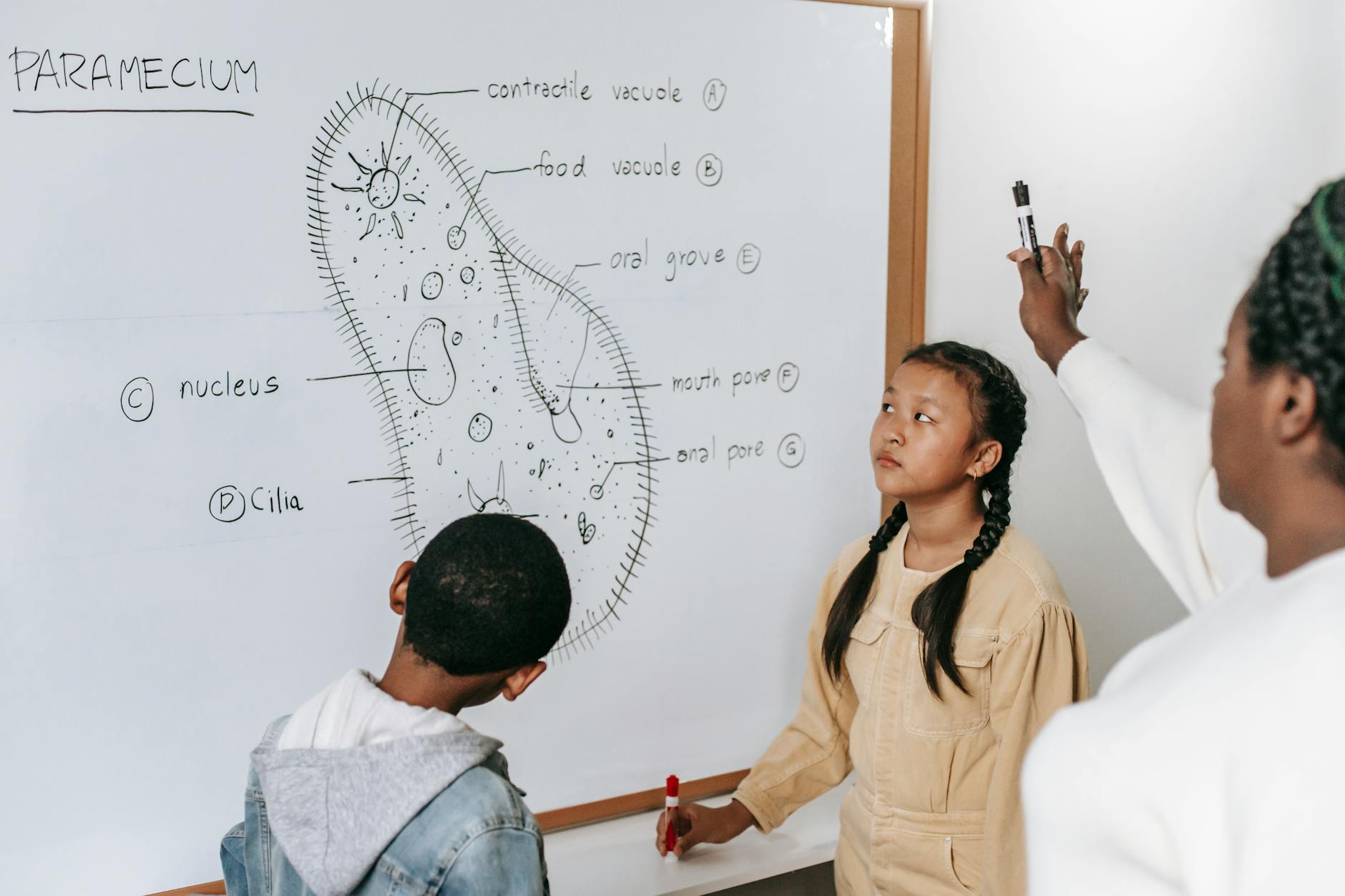
Kids who tell me "im a visual learner" aren't being difficult. When a spatial learner encounters new information, the brain projects an internal film complete with color and movement. This visual processing creates rich memory traces but needs extra cognitive bandwidth.
I watched this last October with a 7th grader reading historical fiction. While others finished the chapter in ten minutes, she spent twenty describing the mud on soldiers' boots and terrain slopes. Her visual thinking captured details verbal learners missed, though her pace hovered near 150 words per minute versus the class average of 250.
Verbal learners rely on phonological loops, rehearsing facts through silent speech. Spatial learners use the visuospatial sketchpad. After 24 hours, mine retain complex geometry proofs better than verbal peers. They don't remember "side-angle-side"; they see overlapping triangles. This spatial ability creates durable visual memories.
Three techniques leverage this strength:
Mental rotation: Students turn fraction pieces mentally to find equivalents.
Visual pegging: Linking vocabulary words to classroom locations like doors or windows.
Schema activation: Drawing science concepts before reading to anchor spatial reasoning.
Mental Imagery and Visualization Techniques
The Method of Loci works with 3rd graders. Students place ten vocabulary words at room stations—door, window, bookshelf—and mentally walk the path during quizzes. Maria sees "photosynthesis" glowing on the window sill. Kids must choose their own visual locations for this to stick.
Word problems require translation. A 5th grader solved a train problem by visualizing toy trains on tracks, not writing equations. He calculated the meeting point through mental rotation. This aligns with information processing theory—dual coding through imagery creates stronger retrieval cues.
Pattern Recognition and Holistic Thinking
Holistic learning shows up in milliseconds. Show twenty geometric shapes where one is rotated, and spatial reasoning students spot the outlier in two seconds. They feel the pattern disruption. Verbal learners take eight to ten seconds analyzing angles individually. They see the whole first.
Writing instruction requires the framework before the details. When I taught paragraph writing starting with topic sentences, my spatial kids froze. They needed the visual outline of the entire essay—the gestalt—before drafting individual sentences. Without the big picture, they face writing paralysis. Show the skeleton first.

Why Does Spatial Intelligence Matter in STEM Education?
Spatial intelligence strongly predicts achievement in STEM fields because it underlies the ability to interpret diagrams, manipulate 3D models, and understand abstract mathematical relationships. Research indicates spatial reasoning correlates with mathematics performance across all grade levels, particularly in geometry and measurement domains important for engineering and design careers.
Strong spatial ability in high school predicts STEM career success eleven years later better than verbal SAT scores. Longitudinal studies show validity coefficients for spatial measures exceed verbal scores when predicting engineering and architecture achievements. This isn't a minor correlation—it's a stronger predictor than many standardized tests we obsess over.
The "4th-grade slump" hits spatial learners hard. These kids often dominate geometry and pattern work in early elementary, then crash when instruction pivots to timed fact drills and algorithmic procedures. Grades three and four represent a critical intervention window—you must maintain spatial accommodations before the achievement gap calcifies into permanent disengagement.
When middle school teachers remove visual components from science instruction, spatial learners tank immediately. Eliminating diagramming or model-building in favor of textbook reading forces verbal processing that overloads working memory. Cognitive load theory confirms this: forcing verbal pathways significantly reduces working memory capacity for students who rely on visual learning style examples to process information.
The Link Between Spatial Skills and Math Achievement
Spatial reasoning drives success in geometry, measurement, proportional reasoning, and algebraic variables. The correlation to rote computation remains significantly weaker—memorizing times tables requires different neural pathways than visualizing fraction equivalencies. Your visual thinking students grasp slope as rise-over-run only when they see stair-step models, not when they hear abstract verbal descriptions.
Spatial ability requires concrete materials two to three years longer than verbal peers need them. Abruptly removing Cuisenaire rods or fraction tiles in third grade causes immediate conceptual regression in visual processing students. I've watched kids solve complex equations with manipulatives yet fail the same problems on worksheets—their calculation abilities remain intact, but understanding evaporates without the spatial scaffold.
Engineering and Design Thinking Applications
Integrative STEM education activates spatial ability through grade-specific hands-on projects. Fourth graders visualize force distribution in egg-drop challenges, eighth graders engineer CAD designs in Tinkercad, and eleventh graders test structural loads using West Point Bridge Designer. These activities develop mental rotation skills important for technical careers, not just enrichment for gifted students.
According to Bureau of Labor Statistics data, architects, engineers, and drafters earn median salaries 30 to 50 percent above national averages. Early spatial skill development functions as genuine economic mobility for holistic learning students. When you preserve visual pathways through middle school, you maintain access to high-wage career pipelines for kids who think in pictures rather than words.

Identifying Spatial Learners: Classroom Behavioral Markers
You spot a spatial learner by watching them work, not by their test scores. I look for these specific behaviors during independent practice.
Gives directions using landmarks ("past the red barn") rather than street names.
Rotates test paper to solve geometry problems, performing mental rotation physically.
Excels at jigsaw puzzles and mazes but struggles with timed math facts.
Draws detailed sketches during lectures that represent content, not off-task doodling.
Builds complex Lego structures beyond grade level.
Prefers graph paper for all math work for visual alignment.
Uses extensive gestures when explaining concepts.
Remembers faces but forgets names.
Don't confuse visual processing with attention disorders. I've seen spatial ability mistaken for ADHD when kids stare out windows during verbal instruction. Watch closely: spatial learners remain still with eyes tracking middle distance while visualizing complex problems, whereas ADHD presents as physical fidgeting and external distractibility. The key is the stillness.
These markers appear early. In K-2, they create 3D structures from 2D diagrams without instructions. By grades 5-6, they draw elaborate maps of imaginary worlds with consistent scale. In high school, they photograph the whiteboard instead of writing linear notes, capturing the spatial layout of information.
Visual Problem-Solving Preferences
Watch their hands. I see them trace shapes in the air or solve Rubik's cubes during free time. They arrange desk materials in specific visual patterns and always choose seats that let them see the entire classroom layout.
Their drawings differ from random doodling. During my biology lectures, these students sketch mitosis stages with labels and arrows showing relationships. This is an example of visual learning style in action—holistic learning through imagery rather than sequential notes.
I implement visual thinking strategies to channel this strength. When I see fingers tracing invisible geometry during math tests, I know they're calculating area through spatial reasoning rather than applying memorized formulas.
Navigation and Directional Strengths
Ask for directions to the library. Verbal sequential learners say "Turn left on Oak Street, right on 3rd Avenue." Spatial learners say "Turn at the big oak tree, past the blue door." This reveals how they encode space through landmarks rather than symbolic labels.
This difference matters for teaching geography. I stopped giving written sequential directions to these kids. Instead, I hand them topographic maps. They read contours and architectural blueprints two to three years above grade level, though they still struggle with written step-by-step instructions.
Their visual thinking creates cognitive maps. When I teach navigation, I let them draw the route first rather than write it. They need to see the whole path before trusting the individual turns.
Drawing and Doodling During Verbal Instruction
I instituted "sketchnote permission" in my classroom. Students may draw during lectures, but drawings must include text labels. This distinguishes productive visual note-taking from off-task cartooning. The requirement ensures cognitive processing happens, not just pen movement.
The rubric is simple. Content sketches include labels, arrows, and relationships between concepts. Off-task drawings are isolated images without context. When doodling prevents task completion—work doesn't get submitted—I switch them to structured graphic organizers instead of blank paper.
This intervention channels their visual processing without eliminating it. They still think in pictures, but now those pictures connect to the learning target rather than floating in isolation.

Spatial Learners vs. Verbal Sequential Learners: Key Contrasts
Understanding the different categories of learning styles helps you decode classroom behaviors. The gap between spatial reasoning and verbal-sequential processing determines who thrives in discussion and who needs to draw first.
Dimension | Spatial Learner | Verbal Sequential Learner |
|---|---|---|
Processing Style | Holistic/Gestalt | Sequential/Step-by-step |
Memory Strategy | Visual Imagery | Verbal Rehearsal |
Note-Taking Format | Mind Maps/Sketchnotes | Cornell Notes/Outlines |
Assessment Response Time | Slower initial response, faster complex problem-solving | Fast initial recall, methodical complex analysis |
Error Patterns | Gestalt errors—close overall concept but wrong detail | Detail errors—missed procedural step |
Forcing a spatial learner to use verbal-sequential note-taking increases extraneous cognitive load. Research suggests this mismatch significantly reduces working memory capacity available for learning. The brain power spent translating formats disappears from content retention.
Watch for this pattern. A child completes 100-piece puzzles faster than peers but cannot recite multiplication tables sequentially. That's a spatial learner. If they memorize spelling easily but struggle with map reading, that's verbal sequential.
Information Processing Speed Differences
Verbal sequential learners process lecture information at 120-150 words per minute with immediate response capability. They hear the question and their hand shoots up. Spatial learners require 90-100 wpm with 5-10 seconds of "translate time" to convert auditory input to visual processing.
I timed this last month. I asked about erosion, and my spatial reasoning kid sat frozen for eight seconds. Then he drew a hillside with arrows showing water flow. He knew the answer. He just couldn't say it yet.
Implement wait time of 3+ seconds after questions. Use think-pair-share specifically allowing sketch time before verbal sharing. Give them time to build the picture.
Note-Taking Style Variations
Verbal learners use hierarchical outlines and Cornell Notes. They thrive on linear structure. Spatial learners use non-linear mind maps with color coding and icons. They produce fewer words but achieve higher concept retention through visual thinking.
Forcing linear note-taking on visual kids creates extraneous cognitive load. Research suggests this mismatch significantly reduces working memory capacity available for learning. I watched a student spend twenty minutes copying headers while missing the science concept.
Try hybrid "structured sketch notes" with boxes and arrows. Skip the forced linear formats. Provide blank 11x17 paper and colored pencils for holistic learning. Give verbal learners lined paper and highlighters. Match the tool to the wiring.
When kids announce, "i am a visual learner," they are usually describing strong spatial ability. Last year, I let those students draw their understanding of the water cycle while others wrote paragraphs. The artists scored higher on the unit test. The notes looked like chaos to me, but the connections were there.
Assessment Performance Patterns
Spatial learners score significantly higher on untimed visual-spatial assessments. They excel at Block Design or mental rotation tasks. They bomb timed verbal fluency tests.
They excel at performance-based assessments such as building, diagramming, or lab work. They underperform on multiple-choice speed tests.
Verbal sequential learners show the reverse pattern. They thrive on rapid recall and timed tests. They struggle when asked to manipulate physical models or interpret complex diagrams without text.
Accommodate with extended time—time-and-a-half—for assessments heavy in verbal processing. Provide visual response options. Let students build or diagram their answers.
Watch for gestalt errors versus detail errors. The spatial kid gets the ecosystem relationships right but spells "photosynthesis" wrong. The verbal kid spells it perfectly but draws the arrows pointing backward.
Evidence-Based Teaching Strategies for Visual Spatial Learning
Graphic Organizers and Concept Mapping
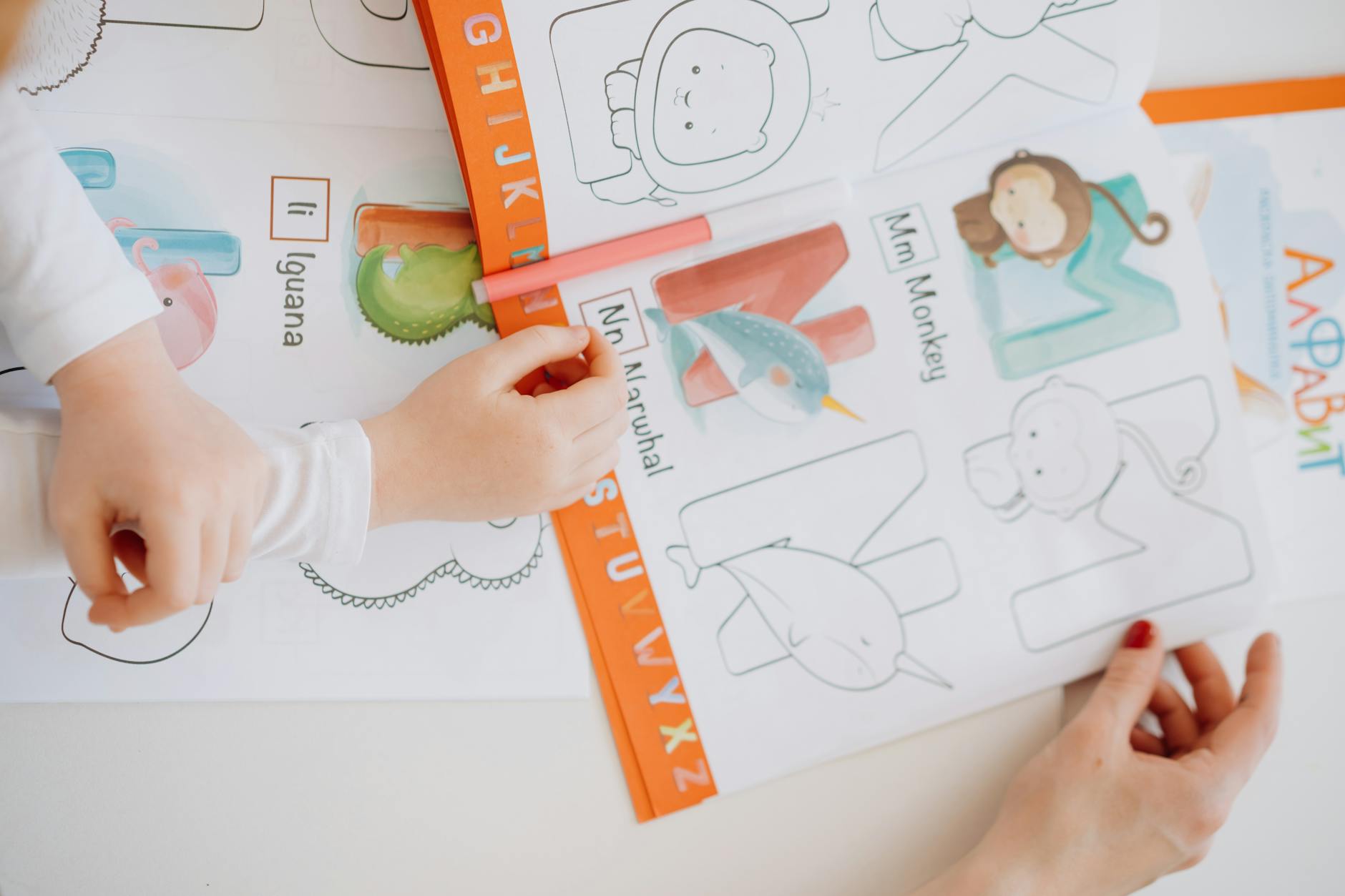
Four specific organizers support visual spatial learning style development. Use the Frayer Model with a visual quadrant for grades 3-12 vocabulary—students draw the concept instead of writing definitions, filling the quadrant with images that represent the word. Flowcharts with directional arrows help trace historical causation. For primary grades, draw Venn diagrams on the floor using hula hoops for kinesthetic-visual integration. Concept maps built with movable Post-it notes allow rearrangement as understanding shifts.
Implementation needs 15-20 minutes of initial modeling before students generate their own. I use Coggle, Popplet, or simply 11x17 paper with colored pencils for low-tech reliability. Student-created organizers produce higher retention than teacher-provided templates. Model one type weekly for four weeks, then offer a choice menu. This builds spatial reasoning and mental rotation skills as learners practice translating verbal information into visual formats independently.
Manipulative-Based Mathematics Instruction
Concrete materials anchor visual processing for mathematical concepts. Grades K-2 need pattern blocks and tangrams—a $20 classroom set suffices. Grades 3-5 use fraction tiles and base-ten blocks. For middle school, algebra tiles and geometric solids support abstract concepts. Store these in individual shoebox-sized "math toolkits" to prevent the daily hunt for missing pieces.
The Concrete-Representational-Abstract model requires modification: a spatial learner typically needs six to eight additional weeks at the concrete stage before transitioning to abstract symbols. I watched an 8th grader solve equations with algebra tiles long after peers moved to notation-only work. Essential tools include Cuisenaire rods ($18), fraction tiles ($15), and algebra tiles ($22). Painted wooden dowels and cardstock work as DIY substitutes. These differentiated instruction strategies honor developmental readiness over arbitrary pacing guides.
Visual Metaphors and Analogical Thinking
Holistic learning accelerates when students build visual analogies. Teach the "Cell as Factory" metaphor explicitly: nucleus equals main office, mitochondria equals power plant, ribosomes equals production workers. Require students to draw the metaphor with detailed labels and annotations—never just listen and nod. Electrical circuits become water flowing through pipes, where voltage is pressure and current is flow rate. History timelines become physical pathways on the floor.
Historical timelines work as physical lines on the classroom floor with students standing at specific dates. Fractions transform into pizza slices or chocolate bars during number talks. True assessment of spatial ability requires students to generate their own visual metaphor for a completely new concept. This demonstrates transfer beyond rote memorization. Recalling my factory example proves only memory; creating a unique analogy shows they own the visual thinking process.
Free and Low-Cost Tools to Support Spatial Learners
Digital Whiteboarding and Visualization Apps
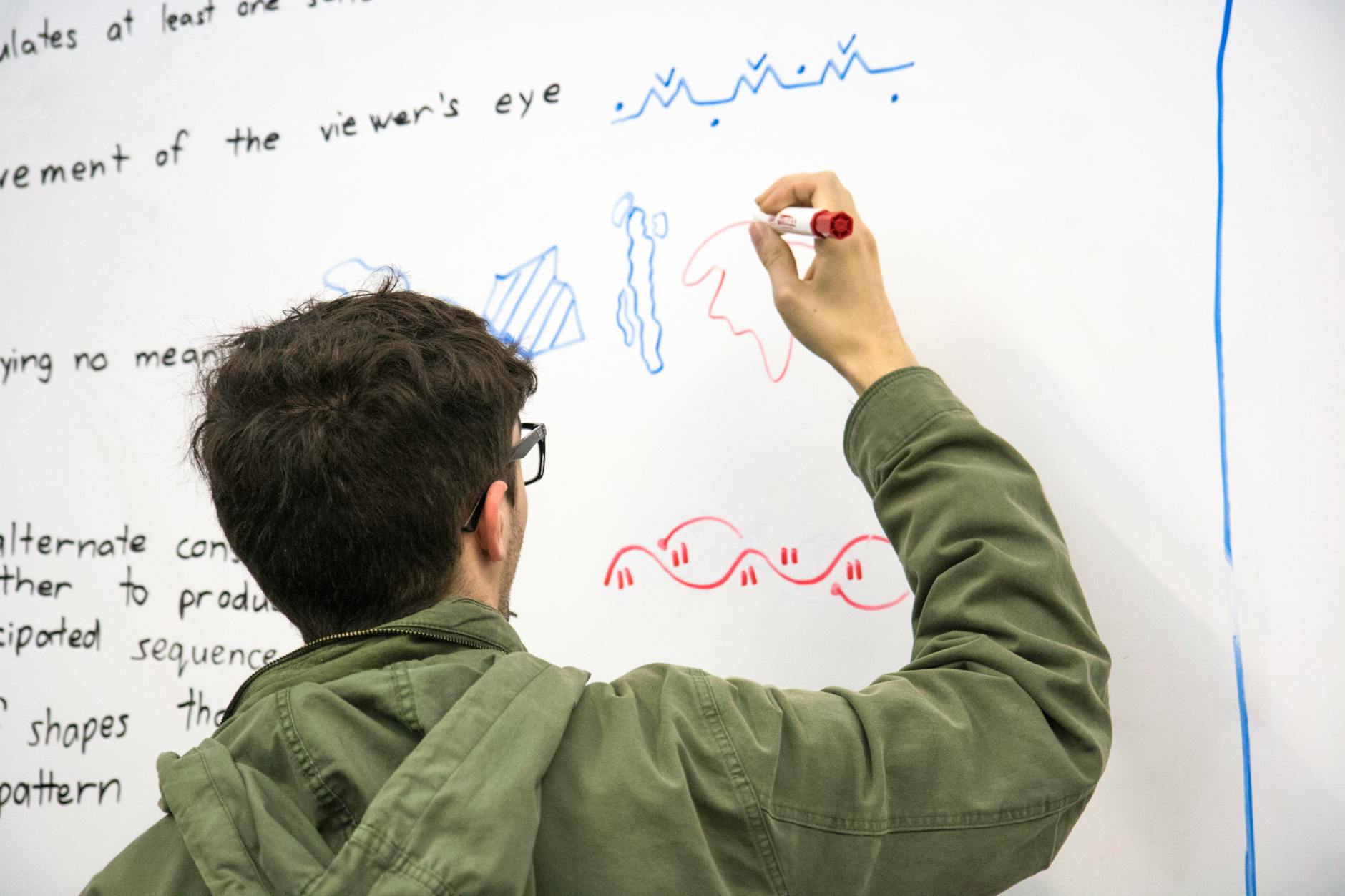
GeoGebra handles dynamic geometry for grades 6-12 without costing a dime. Desmos graphs functions instantly. I’ve run these on Chromebooks with 50 kids simultaneously—no stylus required, though adding one improves drawing precision by about 40 percent.
Jamboard stays free until late 2024, then FigJam offers three boards on their free tier. Miro matches that with three boards but allows unlimited collaborators. Each board caps at 20 frames. You’ll want at least a 9-inch tablet for detailed work. When integrating interactive whiteboards, spend ten minutes upfront teaching digital citizenship—no drawing over others’ work—or you’ll fight chaos all period.
Physical Manipulatives and DIY Alternatives
Commercial manipulatives drain budgets fast.
Cuisenaire rods: $18 retail vs. painted wooden dowels $4.
Base-ten blocks: $25 retail vs. poker chips with stickers $5.
Pattern blocks: $20 retail vs. laminated cardstock $2.
Fraction bars: $15 purchased vs. construction paper $2.
Hit the dollar store for popsicle sticks and erasers. Ask parents for LEGO bricks for spatial building challenges. Dried beans work for place value columns, and cereal boxes become 3D nets for free. I’ve had students build angles with pipe cleaners: 45°, 90°, 120°. Google Slides works as a free digital whiteboard alternative in a pinch.
Video and Animation Resources
PhET Interactive Simulations from the University of Colorado covers all STEM subjects at zero cost. 3Blue1Brown breaks calculus into visual stories for high schoolers. Amoeba Sisters simplifies biology for middle school with clear animations. Numberphile explores spatial math concepts for grades 7-12. BrainPOP runs $145 yearly if your district pays.
Never let a spatial learner sit through more than ten minutes of passive video. I cap clips at five to seven minutes, then immediate task: draw what you saw or build what you saw. This converts visual processing into active spatial reasoning rather than glazed staring.

How Can Teachers Balance Visual and Verbal Instruction?
Teachers should implement Universal Design for Learning principles by providing information through both visual and verbal channels simultaneously, not sequentially. Offer choice in representation formats—allowing students to demonstrate learning through diagrams, models, or text. This dual-coding approach benefits all learners while specifically accommodating spatial processing needs.
Stop treating visuals as accommodations. They're access points. When I started dual-coding—projecting the diagram while explaining the concept, not after—my spatial learners stopped checking out during lectures.
Universal Design for Learning Principles
CAST Checkpoint 1.3 asks us to offer alternatives for visual information. I audit every lesson for visual components. If I'm lecturing about cell division, I project the animation while I talk, not as a separate "now look at this" moment. This supports visual processing without isolating it.
Checkpoint 2.5 pushes us to illustrate through multiple media. I add one spatial access point per lesson. Sometimes it's a graphic organizer offered as an optional scaffold—not mandatory busywork for everyone. Other times it's consistent color-coding: blue for vocabulary, yellow for key concepts. The predictability aids holistic learning and visual thinking.
My classroom protocol follows four steps. First, I pre-assess using "Draw-A-Scientist" or a visualization task—five minutes, no pressure. Second, I present new content using dual-coding: words and images simultaneously. Third, I provide fifteen seconds of think time before calling on anyone. Fourth, I allow sketchnotes during lectures with quarterly check-ins to ensure they're processing, not just doodling.
The physical environment matters too. I arrange desks so every kid can see the board without craning necks. I carved out a "thinking space" in the back corner with whiteboards and manipulatives where kids can exercise spatial ability away from verbal noise. They return when they're ready.
Differentiated Assessment Methods
I stopped requiring essays from everyone. Now my summative assessments offer three tracks. Option A stays traditional: the written essay. Option B requires a visual infographic with a 200-word explanation. Option C asks for a 3D model with a 3-minute oral defense. The rubric stays identical: forty percent for content accuracy, forty percent for depth of analysis, twenty percent for clarity of communication. The format changes; the learning objectives don't.
Spatial reasoning shows up differently in each. Last month, a student used Stop Motion Studio to animate the water cycle. Another submitted a sketchnote summary of The Giver that revealed plot structure better than any paragraph she'd written. For a history unit on ancient Rome, a kid designed an aqueduct with labeled forces and load-bearing calculations.
I provide exemplars for visual submissions—showing last year's top infographic or a model that hit all criteria. This keeps grading consistent and shows students what "depth" looks like in a diagram versus an essay. The mental rotation required to design a working model demonstrates understanding that words sometimes obscure. This aligns with evidence-based best practices for learning styles that emphasize multiple means of representation.

Getting Started with Spatial Learner
You don't need to rebuild your curriculum overnight. I started with one sketch-and-label activity per week in my 7th-grade science class. Within a month, three students who had been silent all year started raising their hands during discussions. Small shifts create the biggest breakthroughs.
Spatial reasoning isn't an extra subject you tack on. It's the foundation of how your future engineers and artists already process reality. When you draw a quick diagram, you aren't dumbing things down. You're finally speaking their native language after months of talking past them.
Start small. Your verbal sequential students will still get what they need from the text. But your visual thinkers will finally see themselves in the lesson. That inclusion is what keeps them coming back.
Pick one lesson this week and swap five minutes of talking for a quick diagram on the board.
Watch which students lean forward or track your pen when you draw.
Ask those students to explain the concept back using your sketch as a reference.
Repeat with another lesson next week and watch the pattern grow.

What Is a Spatial Learner?
A spatial learner processes information through mental imagery and visual patterns, not sequential verbal steps. These students think in pictures, excel at reading maps and charts, and often solve problems through visualization. Approximately one-third of students demonstrate this learning preference, though traditional schooling typically favors verbal-sequential processing.
I first noticed it with Marcus. He could rebuild a Lego set from memory after seeing it once, yet stumbled when reading aloud. He wasn't struggling—he was processing differently. Spatial learners think in pictures before words, needing the complete image before they can examine the details.
Dr. Linda Silverman defines these students as visual-spatial learners who display asynchronous development. They might calculate area using advanced geometric reasoning while still sounding out simple CVC words. The disconnect isn't cognitive delay—it's a brain wired for holistic learning, not linear progression.
Watch a fourth grader solve 247 plus 158. While classmates chant "carry the one," the spatial child mentally slides base-ten blocks together, seeing the answer as 405 before touching pencil to paper. Ask them to explain the steps, and they freeze. They saw the answer; they didn't memorize the procedure.
Teachers often mistake this processing delay for attention deficit. When a spatial visual learner stares blankly after being called on, they aren't daydreaming. They're translating complex internal imagery into language—a task that requires ten to fifteen additional seconds. Label them "slow," and you miss the advanced visual thinking happening behind their eyes.
Defining the Visual Spatial Learning Style
You can spot a visual spatial learning style through specific behaviors. In my classroom, these patterns emerge consistently across subjects. These students:
Think in pictures before accessing verbal labels
Learn complex concepts instantly but struggle with sequential skills like phonics or timed math facts
Display exceptional long-term memory for faces, places, and images but forget names and verbal instructions
Struggle with timed tests requiring rapid verbal retrieval
Demonstrate strong gestalt perception, identifying hidden images or patterns in complex visual fields
The whole-to-part requirement defines their academic experience. Present step-by-step phonics drills to a spatial child, and they shut down. They need to see the entire word in context first—through sight-word methods or whole-language approaches—before analyzing component parts. Without the gestalt, the details remain disconnected noise.
This explains why flashcard drills fail while comprehensive visual learning strategies succeed. Give them the big picture first, and they master the components faster than anyone.
The Neuroscience Behind Spatial Reasoning
Spatial reasoning lives primarily in the right hemisphere, specifically the parietal lobe. When students perform mental rotation tasks—turning 3D objects in their minds—neuroimaging reveals intense activation in the intraparietal sulcus. This neural pathway matures unevenly. Some children demonstrate adult-level spatial ability by age eight, while others develop these capabilities steadily through adolescence.
This biology explains the working memory divide. Spatial learners use the visuospatial sketchpad, not the phonological loop. They remember complex diagrams effortlessly but lose track of oral multi-step directions immediately. The brain prioritizes visual processing over verbal rehearsal.
Understanding this neurology stops us from forcing round pegs into square holes. When we insist on auditory processing for these students, we ask them to use neural pathways that aren't their strength. Respect the wiring, and visual thinking becomes an asset, not a deficit.
How Do Spatial Learners Process Information Differently?
Spatial learners encode information through mental imagery, creating detailed visual representations rather than verbal labels. They process data holistically, recognizing patterns and gestalts instantly. This visualization allows complex problem-solving but requires additional processing time compared to verbal-sequential methods.
Kids who tell me "im a visual learner" aren't being difficult. When a spatial learner encounters new information, the brain projects an internal film complete with color and movement. This visual processing creates rich memory traces but needs extra cognitive bandwidth.
I watched this last October with a 7th grader reading historical fiction. While others finished the chapter in ten minutes, she spent twenty describing the mud on soldiers' boots and terrain slopes. Her visual thinking captured details verbal learners missed, though her pace hovered near 150 words per minute versus the class average of 250.
Verbal learners rely on phonological loops, rehearsing facts through silent speech. Spatial learners use the visuospatial sketchpad. After 24 hours, mine retain complex geometry proofs better than verbal peers. They don't remember "side-angle-side"; they see overlapping triangles. This spatial ability creates durable visual memories.
Three techniques leverage this strength:
Mental rotation: Students turn fraction pieces mentally to find equivalents.
Visual pegging: Linking vocabulary words to classroom locations like doors or windows.
Schema activation: Drawing science concepts before reading to anchor spatial reasoning.
Mental Imagery and Visualization Techniques
The Method of Loci works with 3rd graders. Students place ten vocabulary words at room stations—door, window, bookshelf—and mentally walk the path during quizzes. Maria sees "photosynthesis" glowing on the window sill. Kids must choose their own visual locations for this to stick.
Word problems require translation. A 5th grader solved a train problem by visualizing toy trains on tracks, not writing equations. He calculated the meeting point through mental rotation. This aligns with information processing theory—dual coding through imagery creates stronger retrieval cues.
Pattern Recognition and Holistic Thinking
Holistic learning shows up in milliseconds. Show twenty geometric shapes where one is rotated, and spatial reasoning students spot the outlier in two seconds. They feel the pattern disruption. Verbal learners take eight to ten seconds analyzing angles individually. They see the whole first.
Writing instruction requires the framework before the details. When I taught paragraph writing starting with topic sentences, my spatial kids froze. They needed the visual outline of the entire essay—the gestalt—before drafting individual sentences. Without the big picture, they face writing paralysis. Show the skeleton first.
Why Does Spatial Intelligence Matter in STEM Education?
Spatial intelligence strongly predicts achievement in STEM fields because it underlies the ability to interpret diagrams, manipulate 3D models, and understand abstract mathematical relationships. Research indicates spatial reasoning correlates with mathematics performance across all grade levels, particularly in geometry and measurement domains important for engineering and design careers.
Strong spatial ability in high school predicts STEM career success eleven years later better than verbal SAT scores. Longitudinal studies show validity coefficients for spatial measures exceed verbal scores when predicting engineering and architecture achievements. This isn't a minor correlation—it's a stronger predictor than many standardized tests we obsess over.
The "4th-grade slump" hits spatial learners hard. These kids often dominate geometry and pattern work in early elementary, then crash when instruction pivots to timed fact drills and algorithmic procedures. Grades three and four represent a critical intervention window—you must maintain spatial accommodations before the achievement gap calcifies into permanent disengagement.
When middle school teachers remove visual components from science instruction, spatial learners tank immediately. Eliminating diagramming or model-building in favor of textbook reading forces verbal processing that overloads working memory. Cognitive load theory confirms this: forcing verbal pathways significantly reduces working memory capacity for students who rely on visual learning style examples to process information.
The Link Between Spatial Skills and Math Achievement
Spatial reasoning drives success in geometry, measurement, proportional reasoning, and algebraic variables. The correlation to rote computation remains significantly weaker—memorizing times tables requires different neural pathways than visualizing fraction equivalencies. Your visual thinking students grasp slope as rise-over-run only when they see stair-step models, not when they hear abstract verbal descriptions.
Spatial ability requires concrete materials two to three years longer than verbal peers need them. Abruptly removing Cuisenaire rods or fraction tiles in third grade causes immediate conceptual regression in visual processing students. I've watched kids solve complex equations with manipulatives yet fail the same problems on worksheets—their calculation abilities remain intact, but understanding evaporates without the spatial scaffold.
Engineering and Design Thinking Applications
Integrative STEM education activates spatial ability through grade-specific hands-on projects. Fourth graders visualize force distribution in egg-drop challenges, eighth graders engineer CAD designs in Tinkercad, and eleventh graders test structural loads using West Point Bridge Designer. These activities develop mental rotation skills important for technical careers, not just enrichment for gifted students.
According to Bureau of Labor Statistics data, architects, engineers, and drafters earn median salaries 30 to 50 percent above national averages. Early spatial skill development functions as genuine economic mobility for holistic learning students. When you preserve visual pathways through middle school, you maintain access to high-wage career pipelines for kids who think in pictures rather than words.
Identifying Spatial Learners: Classroom Behavioral Markers
You spot a spatial learner by watching them work, not by their test scores. I look for these specific behaviors during independent practice.
Gives directions using landmarks ("past the red barn") rather than street names.
Rotates test paper to solve geometry problems, performing mental rotation physically.
Excels at jigsaw puzzles and mazes but struggles with timed math facts.
Draws detailed sketches during lectures that represent content, not off-task doodling.
Builds complex Lego structures beyond grade level.
Prefers graph paper for all math work for visual alignment.
Uses extensive gestures when explaining concepts.
Remembers faces but forgets names.
Don't confuse visual processing with attention disorders. I've seen spatial ability mistaken for ADHD when kids stare out windows during verbal instruction. Watch closely: spatial learners remain still with eyes tracking middle distance while visualizing complex problems, whereas ADHD presents as physical fidgeting and external distractibility. The key is the stillness.
These markers appear early. In K-2, they create 3D structures from 2D diagrams without instructions. By grades 5-6, they draw elaborate maps of imaginary worlds with consistent scale. In high school, they photograph the whiteboard instead of writing linear notes, capturing the spatial layout of information.
Visual Problem-Solving Preferences
Watch their hands. I see them trace shapes in the air or solve Rubik's cubes during free time. They arrange desk materials in specific visual patterns and always choose seats that let them see the entire classroom layout.
Their drawings differ from random doodling. During my biology lectures, these students sketch mitosis stages with labels and arrows showing relationships. This is an example of visual learning style in action—holistic learning through imagery rather than sequential notes.
I implement visual thinking strategies to channel this strength. When I see fingers tracing invisible geometry during math tests, I know they're calculating area through spatial reasoning rather than applying memorized formulas.
Navigation and Directional Strengths
Ask for directions to the library. Verbal sequential learners say "Turn left on Oak Street, right on 3rd Avenue." Spatial learners say "Turn at the big oak tree, past the blue door." This reveals how they encode space through landmarks rather than symbolic labels.
This difference matters for teaching geography. I stopped giving written sequential directions to these kids. Instead, I hand them topographic maps. They read contours and architectural blueprints two to three years above grade level, though they still struggle with written step-by-step instructions.
Their visual thinking creates cognitive maps. When I teach navigation, I let them draw the route first rather than write it. They need to see the whole path before trusting the individual turns.
Drawing and Doodling During Verbal Instruction
I instituted "sketchnote permission" in my classroom. Students may draw during lectures, but drawings must include text labels. This distinguishes productive visual note-taking from off-task cartooning. The requirement ensures cognitive processing happens, not just pen movement.
The rubric is simple. Content sketches include labels, arrows, and relationships between concepts. Off-task drawings are isolated images without context. When doodling prevents task completion—work doesn't get submitted—I switch them to structured graphic organizers instead of blank paper.
This intervention channels their visual processing without eliminating it. They still think in pictures, but now those pictures connect to the learning target rather than floating in isolation.
Spatial Learners vs. Verbal Sequential Learners: Key Contrasts
Understanding the different categories of learning styles helps you decode classroom behaviors. The gap between spatial reasoning and verbal-sequential processing determines who thrives in discussion and who needs to draw first.
Dimension | Spatial Learner | Verbal Sequential Learner |
|---|---|---|
Processing Style | Holistic/Gestalt | Sequential/Step-by-step |
Memory Strategy | Visual Imagery | Verbal Rehearsal |
Note-Taking Format | Mind Maps/Sketchnotes | Cornell Notes/Outlines |
Assessment Response Time | Slower initial response, faster complex problem-solving | Fast initial recall, methodical complex analysis |
Error Patterns | Gestalt errors—close overall concept but wrong detail | Detail errors—missed procedural step |
Forcing a spatial learner to use verbal-sequential note-taking increases extraneous cognitive load. Research suggests this mismatch significantly reduces working memory capacity available for learning. The brain power spent translating formats disappears from content retention.
Watch for this pattern. A child completes 100-piece puzzles faster than peers but cannot recite multiplication tables sequentially. That's a spatial learner. If they memorize spelling easily but struggle with map reading, that's verbal sequential.
Information Processing Speed Differences
Verbal sequential learners process lecture information at 120-150 words per minute with immediate response capability. They hear the question and their hand shoots up. Spatial learners require 90-100 wpm with 5-10 seconds of "translate time" to convert auditory input to visual processing.
I timed this last month. I asked about erosion, and my spatial reasoning kid sat frozen for eight seconds. Then he drew a hillside with arrows showing water flow. He knew the answer. He just couldn't say it yet.
Implement wait time of 3+ seconds after questions. Use think-pair-share specifically allowing sketch time before verbal sharing. Give them time to build the picture.
Note-Taking Style Variations
Verbal learners use hierarchical outlines and Cornell Notes. They thrive on linear structure. Spatial learners use non-linear mind maps with color coding and icons. They produce fewer words but achieve higher concept retention through visual thinking.
Forcing linear note-taking on visual kids creates extraneous cognitive load. Research suggests this mismatch significantly reduces working memory capacity available for learning. I watched a student spend twenty minutes copying headers while missing the science concept.
Try hybrid "structured sketch notes" with boxes and arrows. Skip the forced linear formats. Provide blank 11x17 paper and colored pencils for holistic learning. Give verbal learners lined paper and highlighters. Match the tool to the wiring.
When kids announce, "i am a visual learner," they are usually describing strong spatial ability. Last year, I let those students draw their understanding of the water cycle while others wrote paragraphs. The artists scored higher on the unit test. The notes looked like chaos to me, but the connections were there.
Assessment Performance Patterns
Spatial learners score significantly higher on untimed visual-spatial assessments. They excel at Block Design or mental rotation tasks. They bomb timed verbal fluency tests.
They excel at performance-based assessments such as building, diagramming, or lab work. They underperform on multiple-choice speed tests.
Verbal sequential learners show the reverse pattern. They thrive on rapid recall and timed tests. They struggle when asked to manipulate physical models or interpret complex diagrams without text.
Accommodate with extended time—time-and-a-half—for assessments heavy in verbal processing. Provide visual response options. Let students build or diagram their answers.
Watch for gestalt errors versus detail errors. The spatial kid gets the ecosystem relationships right but spells "photosynthesis" wrong. The verbal kid spells it perfectly but draws the arrows pointing backward.
Evidence-Based Teaching Strategies for Visual Spatial Learning
Graphic Organizers and Concept Mapping
Four specific organizers support visual spatial learning style development. Use the Frayer Model with a visual quadrant for grades 3-12 vocabulary—students draw the concept instead of writing definitions, filling the quadrant with images that represent the word. Flowcharts with directional arrows help trace historical causation. For primary grades, draw Venn diagrams on the floor using hula hoops for kinesthetic-visual integration. Concept maps built with movable Post-it notes allow rearrangement as understanding shifts.
Implementation needs 15-20 minutes of initial modeling before students generate their own. I use Coggle, Popplet, or simply 11x17 paper with colored pencils for low-tech reliability. Student-created organizers produce higher retention than teacher-provided templates. Model one type weekly for four weeks, then offer a choice menu. This builds spatial reasoning and mental rotation skills as learners practice translating verbal information into visual formats independently.
Manipulative-Based Mathematics Instruction
Concrete materials anchor visual processing for mathematical concepts. Grades K-2 need pattern blocks and tangrams—a $20 classroom set suffices. Grades 3-5 use fraction tiles and base-ten blocks. For middle school, algebra tiles and geometric solids support abstract concepts. Store these in individual shoebox-sized "math toolkits" to prevent the daily hunt for missing pieces.
The Concrete-Representational-Abstract model requires modification: a spatial learner typically needs six to eight additional weeks at the concrete stage before transitioning to abstract symbols. I watched an 8th grader solve equations with algebra tiles long after peers moved to notation-only work. Essential tools include Cuisenaire rods ($18), fraction tiles ($15), and algebra tiles ($22). Painted wooden dowels and cardstock work as DIY substitutes. These differentiated instruction strategies honor developmental readiness over arbitrary pacing guides.
Visual Metaphors and Analogical Thinking
Holistic learning accelerates when students build visual analogies. Teach the "Cell as Factory" metaphor explicitly: nucleus equals main office, mitochondria equals power plant, ribosomes equals production workers. Require students to draw the metaphor with detailed labels and annotations—never just listen and nod. Electrical circuits become water flowing through pipes, where voltage is pressure and current is flow rate. History timelines become physical pathways on the floor.
Historical timelines work as physical lines on the classroom floor with students standing at specific dates. Fractions transform into pizza slices or chocolate bars during number talks. True assessment of spatial ability requires students to generate their own visual metaphor for a completely new concept. This demonstrates transfer beyond rote memorization. Recalling my factory example proves only memory; creating a unique analogy shows they own the visual thinking process.
Free and Low-Cost Tools to Support Spatial Learners
Digital Whiteboarding and Visualization Apps
GeoGebra handles dynamic geometry for grades 6-12 without costing a dime. Desmos graphs functions instantly. I’ve run these on Chromebooks with 50 kids simultaneously—no stylus required, though adding one improves drawing precision by about 40 percent.
Jamboard stays free until late 2024, then FigJam offers three boards on their free tier. Miro matches that with three boards but allows unlimited collaborators. Each board caps at 20 frames. You’ll want at least a 9-inch tablet for detailed work. When integrating interactive whiteboards, spend ten minutes upfront teaching digital citizenship—no drawing over others’ work—or you’ll fight chaos all period.
Physical Manipulatives and DIY Alternatives
Commercial manipulatives drain budgets fast.
Cuisenaire rods: $18 retail vs. painted wooden dowels $4.
Base-ten blocks: $25 retail vs. poker chips with stickers $5.
Pattern blocks: $20 retail vs. laminated cardstock $2.
Fraction bars: $15 purchased vs. construction paper $2.
Hit the dollar store for popsicle sticks and erasers. Ask parents for LEGO bricks for spatial building challenges. Dried beans work for place value columns, and cereal boxes become 3D nets for free. I’ve had students build angles with pipe cleaners: 45°, 90°, 120°. Google Slides works as a free digital whiteboard alternative in a pinch.
Video and Animation Resources
PhET Interactive Simulations from the University of Colorado covers all STEM subjects at zero cost. 3Blue1Brown breaks calculus into visual stories for high schoolers. Amoeba Sisters simplifies biology for middle school with clear animations. Numberphile explores spatial math concepts for grades 7-12. BrainPOP runs $145 yearly if your district pays.
Never let a spatial learner sit through more than ten minutes of passive video. I cap clips at five to seven minutes, then immediate task: draw what you saw or build what you saw. This converts visual processing into active spatial reasoning rather than glazed staring.
How Can Teachers Balance Visual and Verbal Instruction?
Teachers should implement Universal Design for Learning principles by providing information through both visual and verbal channels simultaneously, not sequentially. Offer choice in representation formats—allowing students to demonstrate learning through diagrams, models, or text. This dual-coding approach benefits all learners while specifically accommodating spatial processing needs.
Stop treating visuals as accommodations. They're access points. When I started dual-coding—projecting the diagram while explaining the concept, not after—my spatial learners stopped checking out during lectures.
Universal Design for Learning Principles
CAST Checkpoint 1.3 asks us to offer alternatives for visual information. I audit every lesson for visual components. If I'm lecturing about cell division, I project the animation while I talk, not as a separate "now look at this" moment. This supports visual processing without isolating it.
Checkpoint 2.5 pushes us to illustrate through multiple media. I add one spatial access point per lesson. Sometimes it's a graphic organizer offered as an optional scaffold—not mandatory busywork for everyone. Other times it's consistent color-coding: blue for vocabulary, yellow for key concepts. The predictability aids holistic learning and visual thinking.
My classroom protocol follows four steps. First, I pre-assess using "Draw-A-Scientist" or a visualization task—five minutes, no pressure. Second, I present new content using dual-coding: words and images simultaneously. Third, I provide fifteen seconds of think time before calling on anyone. Fourth, I allow sketchnotes during lectures with quarterly check-ins to ensure they're processing, not just doodling.
The physical environment matters too. I arrange desks so every kid can see the board without craning necks. I carved out a "thinking space" in the back corner with whiteboards and manipulatives where kids can exercise spatial ability away from verbal noise. They return when they're ready.
Differentiated Assessment Methods
I stopped requiring essays from everyone. Now my summative assessments offer three tracks. Option A stays traditional: the written essay. Option B requires a visual infographic with a 200-word explanation. Option C asks for a 3D model with a 3-minute oral defense. The rubric stays identical: forty percent for content accuracy, forty percent for depth of analysis, twenty percent for clarity of communication. The format changes; the learning objectives don't.
Spatial reasoning shows up differently in each. Last month, a student used Stop Motion Studio to animate the water cycle. Another submitted a sketchnote summary of The Giver that revealed plot structure better than any paragraph she'd written. For a history unit on ancient Rome, a kid designed an aqueduct with labeled forces and load-bearing calculations.
I provide exemplars for visual submissions—showing last year's top infographic or a model that hit all criteria. This keeps grading consistent and shows students what "depth" looks like in a diagram versus an essay. The mental rotation required to design a working model demonstrates understanding that words sometimes obscure. This aligns with evidence-based best practices for learning styles that emphasize multiple means of representation.
Getting Started with Spatial Learner
You don't need to rebuild your curriculum overnight. I started with one sketch-and-label activity per week in my 7th-grade science class. Within a month, three students who had been silent all year started raising their hands during discussions. Small shifts create the biggest breakthroughs.
Spatial reasoning isn't an extra subject you tack on. It's the foundation of how your future engineers and artists already process reality. When you draw a quick diagram, you aren't dumbing things down. You're finally speaking their native language after months of talking past them.
Start small. Your verbal sequential students will still get what they need from the text. But your visual thinkers will finally see themselves in the lesson. That inclusion is what keeps them coming back.
Pick one lesson this week and swap five minutes of talking for a quick diagram on the board.
Watch which students lean forward or track your pen when you draw.
Ask those students to explain the concept back using your sketch as a reference.
Repeat with another lesson next week and watch the pattern grow.
Still grading everything by hand?
EMStudio is a free teaching management app — manage your classes, students, lessons, and more!
Learn More
Still grading everything by hand?
EMStudio is a free teaching management app — manage your classes, students, lessons, and more!
Learn More




Notion4Teachers
Notion templates to simplify administrative tasks and enhance your teaching experience.



2026 Notion4Teachers. All Rights Reserved.
Notion4Teachers
Notion templates to simplify administrative tasks and enhance your teaching experience.
2026 Notion4Teachers. All Rights Reserved.
Notion4Teachers
Notion templates to simplify administrative tasks and enhance your teaching experience.
2026 Notion4Teachers. All Rights Reserved.