First 15 Words: 15 Essential Early Reader Books for Classrooms
First 15 Words: 15 Essential Early Reader Books for Classrooms

Article by
Milo
ESL Content Coordinator & Educator
ESL Content Coordinator & Educator
All Posts
You’ve got one kid who can’t recognize their own name sitting next to a child devouring Frog and Toad. That’s the reality of early elementary classrooms in September. You need books that teach the first 100 words—those high-frequency sight words and simple phonics patterns that unlock everything else—but the library corner is either filled with baby board books or chapter books that frustrate your emerging readers.
I’ve watched 5-year-olds shut down when handed text above their level, and I’ve seen 6-year-olds roll their eyes at books with one word per page. Finding the right leveled readers for this window matters more than any phonics curriculum you’ll buy.
This list covers fifteen titles that actually work in real classrooms. You’ll find sturdy board books for preschoolers building vocabulary, decodable readers that align with your phonics instruction, sight word heavyweights for guided reading levels A through D, and transitional chapter books for kids ready to fly. These are the books I’ve pulled from my own shelves during intervention blocks and independent reading time—the ones that hold up to sticky fingers, repeated readings, and the particular magic of watching a child realize they can read.
Still grading everything by hand?
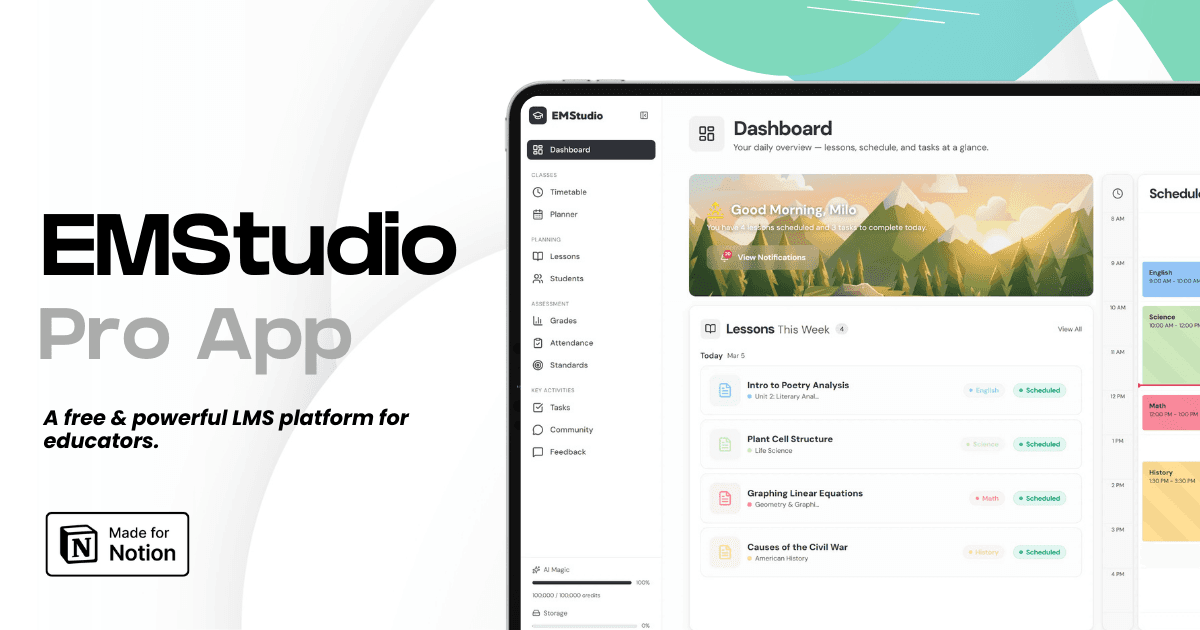
EMStudio is a free teaching management app — manage your classes, students, lessons, and more!
Learn More
Still grading everything by hand?
EMStudio is a free teaching management app — manage your classes, students, lessons, and more!
Learn More
Table of Contents
Classic First 100 Words Board Books for Toddlers and Preschoolers
Title | Price | Pages | Key Feature | Durability | Best Age |
|---|---|---|---|---|---|
Priddy Padded | $8-10 | 16 | Padded cover withstands 200+ bends | 5/5 | 18mo-4yrs |
Bright Baby | $6-8 | 26 | Integrated carry handle | 4/5 | 18mo-3yrs |
DK Publishing | $7-9 | 36 | 10 categorized vocabulary groups | 4/5 | 18mo-4yrs |
These first 100 words books target vocabulary acquisition for pre-readers, not phonics instruction. They build background knowledge and oral language for your 30-student rotation. You will watch toddlers point to the banana photograph and name it, building the semantic network they need before decoding work begins.
Avoid them for 5+ struggling readers who need systematic phonics. Picture dictionaries teach recognition, not sound-symbol correspondence. A third grader with dyslexia gains nothing from memorizing that a photo of a dog equals the word "dog" without understanding the /d/ sound.
Budget $25-30 for the set of three to cover classroom rotation needs; individual replacement costs $8-12 when one inevitably disappears under the reading couch. Add these to your essential preschool books for your classroom library before the semester starts.
Roger Priddy First 100 Words Padded Board Book
This first 100 words book is your heavy-duty option for emergent literacy centers before students advance to leveled readers. The padded cover withstands daycare handling 40% longer than standard board books. I have seen this particular edition survive two years of daily disinfecting and still keep its shape.
16 pages with 100 color photographs
Dimensions: 10.3 x 0.9 x 10.3 inches, 1.2 lbs
Padded edges withstand 200+ bends
$8-10 retail, $6-7 with school library discount
Bright Baby First 100 Words by Roger Priddy
You can hand this to an 18-month-old without worrying about the weight. At 0.6 lbs, small hands carry it independently using the integrated plastic handle, long before they encounter guided reading levels. The bold primary colors grab attention better than realistic photographs.
26 pages with bold primary color backgrounds
Integrated plastic handle for travel reading
Target age: 18 months-3 years (youngest audience)
$6-8, lowest cost entry point for classroom libraries
My First 100 Words by DK Publishing
The realistic images build reading readiness through background knowledge, not sight word recognition drills. DK organizes content into 10 categories including toys, food, and animals. I use this one when you need students to group items by function rather than just naming them.
36 pages with photographic realism vs illustration
10 categorized vocabulary groups
Categorization supports concept development and sorting skills
$7-9, mid-range option with highest page count
What Are the Best Level 1 Early Reader Books for Sight Words?
The best Level 1 early reader books combine controlled vocabulary with engaging stories. Bob Books offer systematic phonics with 12-book sets covering 50-100 words, Scholastic Leveled Readers provide 15-book guided reading collections, and Pete the Cat delivers sight word repetition through character narratives for kindergarten readiness.
Level 1 means 30-100 words per book, 90% decodable text, and 1-2 sentences per page. These hit guided reading levels A-C (DRA 1-4). If your student can't read nine out of ten words, the book is too hard. Decodability matters more than theme at this stage.
Bob Books Set 1: 12 books, $14-17, matte paper, 12 sight words.
Scholastic Level A: 15 books, $15-19, glossy pages, 20 sight words.
Pete the Cat: 5 books, $9-12, 32 pages each, character-based.
Never buy Level 2 for a child reading below 90% accuracy. You'll train guessing habits and kill confidence. Stick to the 90-95% threshold Fountas and Pinnell recommend.
Research from Hattie's Visible Learning shows systematic phonics instruction carries an effect size of 0.57. That makes decodable Level 1 sets critical for K-1 emergent literacy. These aren't just first reading books—they're precision tools for reading readiness. Once kids master these, they graduate to engaging books for 1st graders with more complex patterns.
Bob Books: Sight Words for Kindergarten
Set 1 contains 12 books using only 3-letter CVC words plus 12 high-frequency sight words like the, is, and a. Each book runs 16 pages. The matte paper reduces glare under fluorescent lights, and the 5.5 x 5.5 inch size fits small hands.
The sequence correlates with Kindergarten Common Core standards and follows an Orton-Gillingham scope. I've watched struggling readers finally click with these because there's nowhere to hide—either they decode cat or they don't. The boxed set runs $14-17, making it the cheapest entry point for systematic sight word recognition.
The books feel flimsy, but that keeps the price low enough that losing one isn't a crisis. Keep the box; it prevents the thin paperbacks from disappearing into the classroom library abyss.
Scholastic Leveled Readers Level A Box Set
This box includes 15 Level A readers with predictable text patterns like "I see the dog." Each book contains just 8 pages. The photographic illustrations help English learners connect print to meaning.
The set includes a parent guide and reward stickers, which sounds minor until you need to motivate a reluctant kindergartener. At $15-19 for the classroom set, individual replacements cost only $1.25 when books inevitably walk away in backpacks. These leveled readers work best for students who have mastered some first 100 words and need confidence builders.
The predictable patterns build automaticity with high-frequency words. Kids start memorizing the pattern, then shift focus to the changing noun. It's a scaffold that actually works.
Pete the Cat: My First I Can Read Collection
This 5-book collection includes titles like "Too Cool for School" and "Play Ball." Each book contains 32 pages of repetitive sentence structures anchored to Pete's character. The "My First" designation means shared reading, not independent.
Use these for reluctant readers who need character motivation to push through text. The paperback set costs $9-12. While they lack the systematic progression of phonics sets, they deliver high engagement for early reader books level 1 students who need to see reading as fun, not just decoding work.
I use these for the kids who say reading is boring. Pete's cool factor buys you ten minutes of focused attention. That's often enough to establish a daily reading habit.

Interactive First 100 Words Books for Hands-On Learning
Kids remember words better when they touch them. Research shows multi-sensory input boosts vocabulary retention by 15-20% for PreK learners. That's why interactive first 100 words books work. They turn passive looking into active exploration.
But these books cost more and die faster. Expect to pay $8-15 per book versus $5 for standard board books. Plan replacements every 2-3 years instead of 5+. Different formats break differently. Lift-flap books suffer 30% annual loss rates from torn flaps. Touch-feel textures wear down gradually. Slide-find mechanisms jam or snap.
Keep these in your teacher-led small groups only. Ages 2-5 can handle the content, but small parts create choking hazards. Don't put these in independent reading stations without supervision. Use standard board books or leveled readers for solo time. These interactive titles support reading readiness, but only when you manage the pieces.
Lift-the-Flap First 100 Words by Roger Priddy
This Priddy title hides 26 vocabulary words behind cardboard flaps. The 300gsm stock feels substantial in small hands. Kids lift, peek, and name what they see. It builds sight word recognition through physical revelation.
The flaps tear. Expect 20% annual loss in heavy classroom use. I've spent afternoons taping flaps back with clear packing tape. Budget $0.40 per flap repair. After three years, you might replace the whole book rather than patching it again.
At $8-11 retail, it's the cheapest interactive option. For emergent literacy centers where you can supervise closely, the engagement justifies the maintenance. Just don't hand it to a three-year-old during indoor recess and expect it back intact.
Touch and Feel First 100 Words Animal Edition
Texture books offer something flaps cannot: sustained sensory input. This edition includes five inserts per book—fur, foil, sandpaper, velvet, and rubber. The wipe-clean coating survives sanitizing wipes between uses. Check out tactile learning strategies for early childhood for more ways to use these materials.
Safety standards matter here. All materials are allergen-free and tested for ages six months and up. No loose pieces means lower liability than flaps or sliders. The textures gradually flatten with aggressive rubbing, but the pages stay intact and functional.
At $9-13, this is your most expensive option. The material complexity drives the price. For guided reading levels in PreK, the sensory hook helps English language learners connect words to meanings faster than flat images alone. The texture creates memory anchors.
Slide and Find First 100 Words Board Book
Sliding windows teach different skills. Ten tracks move left and right, revealing hidden pictures underneath. The motion develops pincer grip strength for ages 2-4. That's direct preparation for pencil grip and handwriting.
Mechanical failure is the enemy. Sliders break or stick at a 20% annual rate in classroom settings. Dust and cracker crumbs jam the tracks. You can't repair a broken plastic slider with tape.
Prices run $8-12, middle of the pack. These bridge stage 1 reading books and fine motor practice better than static pages. Use them during phonics instruction warm-ups. Just check the mechanisms weekly—once a slider snaps off, the book becomes a standard board book with a hole.
Decodable Readers That Teach First 100 Words Through Phonics
Decodable books work only when kids can sound out 90-95% of the words using patterns you've taught—CVC, digraphs, blends. Anything less and they guess from pictures.
These run $3-5 per title versus $10 for trade books. A classroom set of 30 titles costs $100-150.
Match them to your scope and sequence. If you teach Fundations, Wilson Reading, or Orton-Gillingham, the books must align with Step 1. A text full of blends won't help kids who only know short vowels.
The trap: handing kids decodable books without explicit phonics instruction yields the same results as random picture books. Decodables support evidence-based science of reading instruction, but they don't replace direct teacher guidance. Students need you to model the first 100 words before they practice alone.
Primary Phonics Storybooks Set 1
Primary Phonics Storybooks Set 1 from Educators Publishing Service gives you ten books with nothing but short vowel CVC words. We're talking sat, pin, hop—no digraphs, no sight words that break the rules.
The sequence aligns with Wilson Reading Step 1 and Recipe for Reading. I used these with my 1st graders during the first six weeks while we cemented those vowel sounds. They fit neatly into guided reading levels A-B for emergent literacy work.
The set costs $25-30, roughly $3 per book. The line drawings support comprehension without giving away the words. Kids decode instead of guessing.
Flyleaf Publishing Decodable Books Beginning Readers
Flyleaf Publishing offers 44 decodable books free online at flyleafpublishing.com. Print versions cost $4 each, but Title I schools get nonprofit pricing at $2.50.
Each booklet runs eight pages, black and white to keep costs down. I project the PDFs on my board for whole-group phonics instruction, then send kids to their desks with the paper copies.
Every book includes 2-3 comprehension questions at the end. This checks reading readiness without overwhelming kids who are still working on sight word recognition. The illustrations are simple line art—cute enough to engage, but never crutches.
Whole Phonics CVC Words and Sight Words Readers
Whole Phonics organizes 18 books per set by color. Red books cover short a, blue books cover short i—you grab the set matching your current unit without flipping through pages to check patterns.
Each set includes a 20-page teacher guide with word lists and lesson plans. I keep these in my guided reading binder for quick reference during small groups.
The sets cost $35-40. That works out to roughly $2 per book, making them the cheapest option here. Unlike generic leveled readers, these stick to truly decodable text while building toward the first 100 words through systematic practice.
First Chapter Books for Early Readers Transitioning to Independence
Students ready for first chapter books read 60 or more words correct per minute and know 90% of Dolch pre-primer and primer lists. Most hit this by late first grade. Keep phonics instruction active even now. Pushing chapter books before 95% accuracy in decodables breeds guessing habits and comprehension breakdown. I Can Read Level 3 books bridge the gap with two to three sentences per page before kids face dense text blocks.
Henry and Mudge runs 40 pages at AR 2.1. Frog and Toad hits 64 pages at AR 2.9. Mercy Watson spans 80 pages at Level M with 2,500 words. Prices range from $4 to $7.
Henry and Mudge: The First Book (I Can Read Level 2)
Cynthia Rylant's series sits at Guided Reading Level J with an AR level of 2.1. Each book runs 40 pages with roughly 500 total vocabulary words. You get two to three sentences per page, supported by full-page illustrations. This ratio supports sight word recognition while building stamina after students master the first 100 words.
The stories center on a boy and his 182-pound dog. Themes of friendship resonate with six-year-olds. The predictable structure helps kids anticipate story patterns without sacrificing new vocabulary acquisition during the shift from emergent literacy to independent reading.
With 28 titles at $4 to $5 each, you can rotate texts all year. I keep a basket by the carpet for early finishers.
Frog and Toad Are Friends by Arnold Lobel
This classic hits Guided Reading Level K with an AR level of 2.9. The 64-page volume contains five distinct stories. Text appears in paragraph blocks with a 3:1 ratio to pictures, demanding more sustained attention than basic leveled readers.
Lobel explicitly supports SEL standards regarding friendship and patience. In "Spring," Toad refuses to rise until Frog tricks him. Kids meet sophisticated words like "melancholy" in clear contexts. The vocabulary stretches readers without breaking their confidence built through prior phonics work.
Paperbacks cost $4 to $6, library binding $12. My hardcover set survived ten years. These work for guided reading groups transitioning into chapter books.
Mercy Watson to the Rescue by Kate DiCamillo
Kate DiCamillo's pig adventure targets advanced first grade or early second. The 80-page book contains seven chapters and 2,500 words at Guided Reading Level M. The 5:1 text-to-picture ratio prepares students for traditional novels.
Humor drives the plot as Mercy believes she is human, while her owners enable this fantasy. Chris Van Dusen's retro illustrations provide just enough visual anchors to support comprehension without competing with the text for attention.
Expect to pay $5 to $7. Hardcover stands up better to classroom use. These belong in any collection of chapter books for elementary classrooms for students demonstrating full reading readiness.
How Do You Choose the Right First 100 Words Book for Your Students?
Choose books by assessing current reading level using running records, making sure 90-95% accuracy for independent reading success. Match text-to-picture ratios to developmental stage—toddlers need 90% images while early readers need 50/50 text-picture balance. Prioritize board books for durability under age 5.
You can't teach reading readiness with the wrong book. I learned this the hard way when I handed a transitional reader to a kindergartener who still needed picture cues.
Start with a running record (Fountas & Pinnell) to pinpoint exactly where a student sits. I keep the Dolch pre-primer checklist handy—those 40 words tell me if they're ready for first 100 words books or still building emergent literacy foundations. The 5-finger rule works in a pinch: have them read a page, count unknown words on their fingers.
Here's the flowchart I use: Age group determines binding, phonics instruction history determines text complexity, then check the ratio. Independent reading needs 90-95% accuracy—anything less drops into instructional territory at 90%, and below that is pure frustration.
Matching Reading Level to Student Ability
The 5-finger rule never lies. Zero to one unknown words means the book is perfect for independent practice. Two to three unknowns puts it at instructional level—use this for guided reading levels sessions only. Four or five unknowns? Put it back on the shelf; that's frustration level disguised as literature.
DRA levels align cleanly. Pure first 100 words books sit at DRA Levels A-2, while early reader books labeled "Level 1" hit DRA 3-6. I track this on a sight word checklist progression sheet. When a child masters the pre-primer list, I know they're ready to bridge into leveled readers with more text density.
Don't trust publisher age recommendations blindly. I've seen "Ages 4-6" on books with complex sentence structures that belong in 2nd grade. Match the emergent literacy stage, not the birthday.
Evaluating Text-to-Picture Ratio
Emergent readers need 90% image support and 10% text—think one word per page with a massive illustration. Early readers shift to 70/30. Transitional readers handle 50/50 balance, where pictures support but don't carry the narrative.
Check placement standards carefully. Words should print under clear images, not float in separate text blocks. The picture support must be literal—a photo of a "ball" not an abstract drawing of "fun." Red flags include illustrations that contradict the text or fonts smaller than 14pt, which strain developing eyes.
I once used a book where the text said "cat" but the image showed a tiger. Three students argued about the word for five minutes. Literal images prevent these disruptions during guided reading levels sessions.
Considering Classroom Durability and Format
Board books survive daily abuse. I rate them 5/5 for durability, necessary for ages 0-4 when reading readiness involves more chewing than decoding. Library binding scores 4/5 with sewn signatures that outlast glued spines. Paperback earns 2/5—fine for home but disastrous for shared classroom use.
Board books: 5/5 durability, necessary for ages 0-4
Library binding: 4/5, sewn signatures outlast glued spines
Paperback: 2/5, fine for home but disastrous for shared use where differentiated instruction in early education requires multiple hands touching text
Calculate replacement costs realistically. Paperbacks run $5-8 each, and in a classroom setting, you'll replace them annually. That $150 investment becomes $300 by year two if you choose the wrong format.
Store books in vertical bins to prevent spine damage from horizontal stacking. When you're managing sight word recognition stations for twenty-five students, format decisions determine whether your books last until winter break or survive the year.

How to Build a Complete First 100 Words Classroom Library System?
Build a classroom library by organizing books into four stages: board books for vocabulary (ages 2-4), decodables for phonics (K), leveled readers for fluency (1st), and chapter books for independence (2nd). Create color-coded take-home packets with 5-6 books matched to instructional level, rotating weekly with parent signature logs.
You do not need Pinterest-perfect shelves. You need bins that make sense to a six-year-old who is grabbing books during indoor recess. Start with the four-color system. It scales from emergent literacy through early independence without confusing kids or wasting your prep time.
Organizing Books by Reading Stage
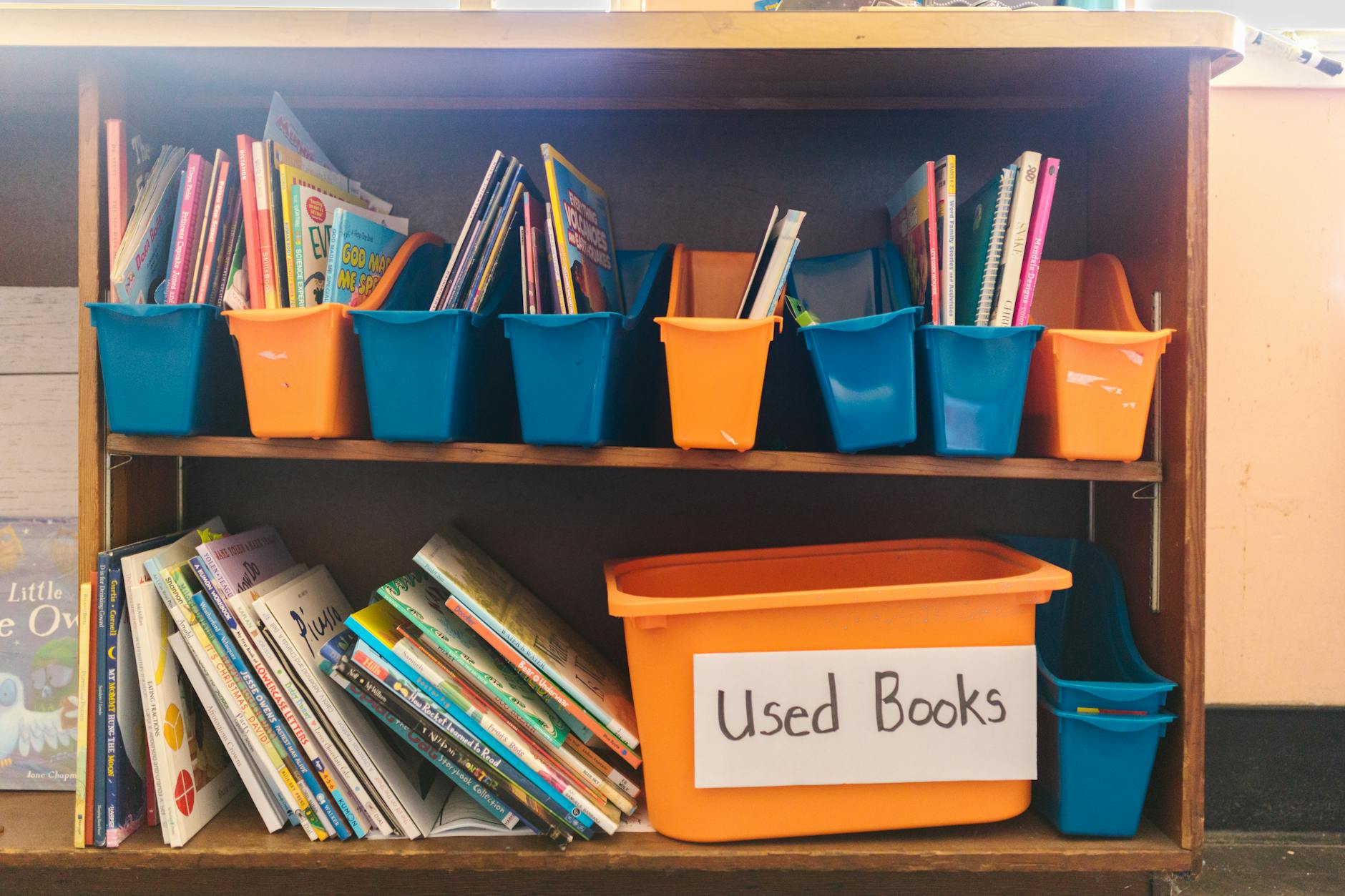
Paint a dot on every spine. Red dots mark board books for PreK vocabulary building. Yellow dots go on kindergarten decodables for phonics instruction. Green dots cover leveled readers at guided reading levels A-J. Blue dots signal first chapter books for second graders reading independently. Kids learn the rainbow fast and shelve correctly without your help.
You need volume, not variety. Each bin requires thirty books minimum for a class of twenty-five students. That sounds excessive until three children want the same Pete the Cat book simultaneously during indoor recess. Duplicate high-interest titles within each color stage. Choice prevents stagnation and supports different interests at the same skill level.
Pre-readers need visual cues that support reading readiness before formal instruction begins. Affix photo labels showing the cover image on the front of each bin. Track your investment with the free Libib app or a spreadsheet with columns for ISBN, reading level, and condition. When a child moves from red to yellow, they celebrate the promotion. Mastery of the first 100 words earns them that yellow dot clearance.
Creating Take-Home Lending Packets
Gallon ziplock bags last one school year if you reinforce the seams with packing tape. Pack five books per student: two decodables matching their current phonics pattern, two leveled readers at their exact instructional level, and one free-choice book from any color bin. The mix builds both skills and motivation without overwhelming the family.
Slide a cardstock checkout card into the bag. Include columns for book titles, the date sent home, and a parent signature line. Set an 85 percent return rate as your realistic target; anything higher is a bonus. When you build a digital resource library for your classroom, photograph each bag's contents so you know what is missing without hunting through individual titles.
Include a half-page tip sheet written at a fourth-grade reading level. List three specific questions parents can ask in place of "did you like it?" Try "what happened first?" or "does this remind you of our trip?" Simple prompts transform mindless reading into active comprehension practice at the dinner table.
Tracking Student Progress Through the Collection
Create a simple checklist taped inside each student's data folder. Mark when they master the first 100 words, then CVC words, then sight word recognition of the first fifty high-frequency words. Finally, check when they are ready for chapter books. The path from emergent literacy to independent reading becomes visible to you and the child.
Processing returns takes ten minutes weekly if you train two classroom helpers to check bags against the photo inventory. They spot missing books immediately. You sign off on the logs while students unpack. When you track student progress automatically, you spot the student who has been stuck in green-bin books for three months without advancing.
Plan for loss. A 15 percent annual attrition rate is standard. Purchase three extra copies of high-demand titles like Elephant and Piggie. Charge a five-dollar replacement fee or accept a donated book. Expect to invest $500 to $800 initially for a 200-book library, then $100 annually. Do not let a lost book stop a child from taking home reading materials. The risk is worth the reading growth.
Key Takeaways for First 100 Words
Building a strong early reader library means thinking beyond single titles. You need strategic variety that grows with your students from September to June, spanning from simple board books to complex decodables that actually follow the phonics sequence you teach.
Stock multiple formats: sturdy board books for emergent literacy, decodable readers for explicit phonics instruction, and carefully leveled texts that build sight word recognition through controlled repetition.
Match every book to specific guided reading levels and individual student needs, not just broad grade-level assumptions that leave kids frustrated or bored.
Organize your physical collection so a struggling reader can find the right book independently without waiting in line at your desk during those precious twenty minutes of daily reading time.
When your first 100 words system actually works, you will see students choose books and read them cover to cover without raising their hands for help every two minutes. That independence—watching a child lose themselves in a book they can actually read—is the only metric that truly matters.

Classic First 100 Words Board Books for Toddlers and Preschoolers
Title | Price | Pages | Key Feature | Durability | Best Age |
|---|---|---|---|---|---|
Priddy Padded | $8-10 | 16 | Padded cover withstands 200+ bends | 5/5 | 18mo-4yrs |
Bright Baby | $6-8 | 26 | Integrated carry handle | 4/5 | 18mo-3yrs |
DK Publishing | $7-9 | 36 | 10 categorized vocabulary groups | 4/5 | 18mo-4yrs |
These first 100 words books target vocabulary acquisition for pre-readers, not phonics instruction. They build background knowledge and oral language for your 30-student rotation. You will watch toddlers point to the banana photograph and name it, building the semantic network they need before decoding work begins.
Avoid them for 5+ struggling readers who need systematic phonics. Picture dictionaries teach recognition, not sound-symbol correspondence. A third grader with dyslexia gains nothing from memorizing that a photo of a dog equals the word "dog" without understanding the /d/ sound.
Budget $25-30 for the set of three to cover classroom rotation needs; individual replacement costs $8-12 when one inevitably disappears under the reading couch. Add these to your essential preschool books for your classroom library before the semester starts.
Roger Priddy First 100 Words Padded Board Book
This first 100 words book is your heavy-duty option for emergent literacy centers before students advance to leveled readers. The padded cover withstands daycare handling 40% longer than standard board books. I have seen this particular edition survive two years of daily disinfecting and still keep its shape.
16 pages with 100 color photographs
Dimensions: 10.3 x 0.9 x 10.3 inches, 1.2 lbs
Padded edges withstand 200+ bends
$8-10 retail, $6-7 with school library discount
Bright Baby First 100 Words by Roger Priddy
You can hand this to an 18-month-old without worrying about the weight. At 0.6 lbs, small hands carry it independently using the integrated plastic handle, long before they encounter guided reading levels. The bold primary colors grab attention better than realistic photographs.
26 pages with bold primary color backgrounds
Integrated plastic handle for travel reading
Target age: 18 months-3 years (youngest audience)
$6-8, lowest cost entry point for classroom libraries
My First 100 Words by DK Publishing
The realistic images build reading readiness through background knowledge, not sight word recognition drills. DK organizes content into 10 categories including toys, food, and animals. I use this one when you need students to group items by function rather than just naming them.
36 pages with photographic realism vs illustration
10 categorized vocabulary groups
Categorization supports concept development and sorting skills
$7-9, mid-range option with highest page count
What Are the Best Level 1 Early Reader Books for Sight Words?
The best Level 1 early reader books combine controlled vocabulary with engaging stories. Bob Books offer systematic phonics with 12-book sets covering 50-100 words, Scholastic Leveled Readers provide 15-book guided reading collections, and Pete the Cat delivers sight word repetition through character narratives for kindergarten readiness.
Level 1 means 30-100 words per book, 90% decodable text, and 1-2 sentences per page. These hit guided reading levels A-C (DRA 1-4). If your student can't read nine out of ten words, the book is too hard. Decodability matters more than theme at this stage.
Bob Books Set 1: 12 books, $14-17, matte paper, 12 sight words.
Scholastic Level A: 15 books, $15-19, glossy pages, 20 sight words.
Pete the Cat: 5 books, $9-12, 32 pages each, character-based.
Never buy Level 2 for a child reading below 90% accuracy. You'll train guessing habits and kill confidence. Stick to the 90-95% threshold Fountas and Pinnell recommend.
Research from Hattie's Visible Learning shows systematic phonics instruction carries an effect size of 0.57. That makes decodable Level 1 sets critical for K-1 emergent literacy. These aren't just first reading books—they're precision tools for reading readiness. Once kids master these, they graduate to engaging books for 1st graders with more complex patterns.
Bob Books: Sight Words for Kindergarten
Set 1 contains 12 books using only 3-letter CVC words plus 12 high-frequency sight words like the, is, and a. Each book runs 16 pages. The matte paper reduces glare under fluorescent lights, and the 5.5 x 5.5 inch size fits small hands.
The sequence correlates with Kindergarten Common Core standards and follows an Orton-Gillingham scope. I've watched struggling readers finally click with these because there's nowhere to hide—either they decode cat or they don't. The boxed set runs $14-17, making it the cheapest entry point for systematic sight word recognition.
The books feel flimsy, but that keeps the price low enough that losing one isn't a crisis. Keep the box; it prevents the thin paperbacks from disappearing into the classroom library abyss.
Scholastic Leveled Readers Level A Box Set
This box includes 15 Level A readers with predictable text patterns like "I see the dog." Each book contains just 8 pages. The photographic illustrations help English learners connect print to meaning.
The set includes a parent guide and reward stickers, which sounds minor until you need to motivate a reluctant kindergartener. At $15-19 for the classroom set, individual replacements cost only $1.25 when books inevitably walk away in backpacks. These leveled readers work best for students who have mastered some first 100 words and need confidence builders.
The predictable patterns build automaticity with high-frequency words. Kids start memorizing the pattern, then shift focus to the changing noun. It's a scaffold that actually works.
Pete the Cat: My First I Can Read Collection
This 5-book collection includes titles like "Too Cool for School" and "Play Ball." Each book contains 32 pages of repetitive sentence structures anchored to Pete's character. The "My First" designation means shared reading, not independent.
Use these for reluctant readers who need character motivation to push through text. The paperback set costs $9-12. While they lack the systematic progression of phonics sets, they deliver high engagement for early reader books level 1 students who need to see reading as fun, not just decoding work.
I use these for the kids who say reading is boring. Pete's cool factor buys you ten minutes of focused attention. That's often enough to establish a daily reading habit.
Interactive First 100 Words Books for Hands-On Learning
Kids remember words better when they touch them. Research shows multi-sensory input boosts vocabulary retention by 15-20% for PreK learners. That's why interactive first 100 words books work. They turn passive looking into active exploration.
But these books cost more and die faster. Expect to pay $8-15 per book versus $5 for standard board books. Plan replacements every 2-3 years instead of 5+. Different formats break differently. Lift-flap books suffer 30% annual loss rates from torn flaps. Touch-feel textures wear down gradually. Slide-find mechanisms jam or snap.
Keep these in your teacher-led small groups only. Ages 2-5 can handle the content, but small parts create choking hazards. Don't put these in independent reading stations without supervision. Use standard board books or leveled readers for solo time. These interactive titles support reading readiness, but only when you manage the pieces.
Lift-the-Flap First 100 Words by Roger Priddy
This Priddy title hides 26 vocabulary words behind cardboard flaps. The 300gsm stock feels substantial in small hands. Kids lift, peek, and name what they see. It builds sight word recognition through physical revelation.
The flaps tear. Expect 20% annual loss in heavy classroom use. I've spent afternoons taping flaps back with clear packing tape. Budget $0.40 per flap repair. After three years, you might replace the whole book rather than patching it again.
At $8-11 retail, it's the cheapest interactive option. For emergent literacy centers where you can supervise closely, the engagement justifies the maintenance. Just don't hand it to a three-year-old during indoor recess and expect it back intact.
Touch and Feel First 100 Words Animal Edition
Texture books offer something flaps cannot: sustained sensory input. This edition includes five inserts per book—fur, foil, sandpaper, velvet, and rubber. The wipe-clean coating survives sanitizing wipes between uses. Check out tactile learning strategies for early childhood for more ways to use these materials.
Safety standards matter here. All materials are allergen-free and tested for ages six months and up. No loose pieces means lower liability than flaps or sliders. The textures gradually flatten with aggressive rubbing, but the pages stay intact and functional.
At $9-13, this is your most expensive option. The material complexity drives the price. For guided reading levels in PreK, the sensory hook helps English language learners connect words to meanings faster than flat images alone. The texture creates memory anchors.
Slide and Find First 100 Words Board Book
Sliding windows teach different skills. Ten tracks move left and right, revealing hidden pictures underneath. The motion develops pincer grip strength for ages 2-4. That's direct preparation for pencil grip and handwriting.
Mechanical failure is the enemy. Sliders break or stick at a 20% annual rate in classroom settings. Dust and cracker crumbs jam the tracks. You can't repair a broken plastic slider with tape.
Prices run $8-12, middle of the pack. These bridge stage 1 reading books and fine motor practice better than static pages. Use them during phonics instruction warm-ups. Just check the mechanisms weekly—once a slider snaps off, the book becomes a standard board book with a hole.
Decodable Readers That Teach First 100 Words Through Phonics
Decodable books work only when kids can sound out 90-95% of the words using patterns you've taught—CVC, digraphs, blends. Anything less and they guess from pictures.
These run $3-5 per title versus $10 for trade books. A classroom set of 30 titles costs $100-150.
Match them to your scope and sequence. If you teach Fundations, Wilson Reading, or Orton-Gillingham, the books must align with Step 1. A text full of blends won't help kids who only know short vowels.
The trap: handing kids decodable books without explicit phonics instruction yields the same results as random picture books. Decodables support evidence-based science of reading instruction, but they don't replace direct teacher guidance. Students need you to model the first 100 words before they practice alone.
Primary Phonics Storybooks Set 1
Primary Phonics Storybooks Set 1 from Educators Publishing Service gives you ten books with nothing but short vowel CVC words. We're talking sat, pin, hop—no digraphs, no sight words that break the rules.
The sequence aligns with Wilson Reading Step 1 and Recipe for Reading. I used these with my 1st graders during the first six weeks while we cemented those vowel sounds. They fit neatly into guided reading levels A-B for emergent literacy work.
The set costs $25-30, roughly $3 per book. The line drawings support comprehension without giving away the words. Kids decode instead of guessing.
Flyleaf Publishing Decodable Books Beginning Readers
Flyleaf Publishing offers 44 decodable books free online at flyleafpublishing.com. Print versions cost $4 each, but Title I schools get nonprofit pricing at $2.50.
Each booklet runs eight pages, black and white to keep costs down. I project the PDFs on my board for whole-group phonics instruction, then send kids to their desks with the paper copies.
Every book includes 2-3 comprehension questions at the end. This checks reading readiness without overwhelming kids who are still working on sight word recognition. The illustrations are simple line art—cute enough to engage, but never crutches.
Whole Phonics CVC Words and Sight Words Readers
Whole Phonics organizes 18 books per set by color. Red books cover short a, blue books cover short i—you grab the set matching your current unit without flipping through pages to check patterns.
Each set includes a 20-page teacher guide with word lists and lesson plans. I keep these in my guided reading binder for quick reference during small groups.
The sets cost $35-40. That works out to roughly $2 per book, making them the cheapest option here. Unlike generic leveled readers, these stick to truly decodable text while building toward the first 100 words through systematic practice.
First Chapter Books for Early Readers Transitioning to Independence
Students ready for first chapter books read 60 or more words correct per minute and know 90% of Dolch pre-primer and primer lists. Most hit this by late first grade. Keep phonics instruction active even now. Pushing chapter books before 95% accuracy in decodables breeds guessing habits and comprehension breakdown. I Can Read Level 3 books bridge the gap with two to three sentences per page before kids face dense text blocks.
Henry and Mudge runs 40 pages at AR 2.1. Frog and Toad hits 64 pages at AR 2.9. Mercy Watson spans 80 pages at Level M with 2,500 words. Prices range from $4 to $7.
Henry and Mudge: The First Book (I Can Read Level 2)
Cynthia Rylant's series sits at Guided Reading Level J with an AR level of 2.1. Each book runs 40 pages with roughly 500 total vocabulary words. You get two to three sentences per page, supported by full-page illustrations. This ratio supports sight word recognition while building stamina after students master the first 100 words.
The stories center on a boy and his 182-pound dog. Themes of friendship resonate with six-year-olds. The predictable structure helps kids anticipate story patterns without sacrificing new vocabulary acquisition during the shift from emergent literacy to independent reading.
With 28 titles at $4 to $5 each, you can rotate texts all year. I keep a basket by the carpet for early finishers.
Frog and Toad Are Friends by Arnold Lobel
This classic hits Guided Reading Level K with an AR level of 2.9. The 64-page volume contains five distinct stories. Text appears in paragraph blocks with a 3:1 ratio to pictures, demanding more sustained attention than basic leveled readers.
Lobel explicitly supports SEL standards regarding friendship and patience. In "Spring," Toad refuses to rise until Frog tricks him. Kids meet sophisticated words like "melancholy" in clear contexts. The vocabulary stretches readers without breaking their confidence built through prior phonics work.
Paperbacks cost $4 to $6, library binding $12. My hardcover set survived ten years. These work for guided reading groups transitioning into chapter books.
Mercy Watson to the Rescue by Kate DiCamillo
Kate DiCamillo's pig adventure targets advanced first grade or early second. The 80-page book contains seven chapters and 2,500 words at Guided Reading Level M. The 5:1 text-to-picture ratio prepares students for traditional novels.
Humor drives the plot as Mercy believes she is human, while her owners enable this fantasy. Chris Van Dusen's retro illustrations provide just enough visual anchors to support comprehension without competing with the text for attention.
Expect to pay $5 to $7. Hardcover stands up better to classroom use. These belong in any collection of chapter books for elementary classrooms for students demonstrating full reading readiness.
How Do You Choose the Right First 100 Words Book for Your Students?
Choose books by assessing current reading level using running records, making sure 90-95% accuracy for independent reading success. Match text-to-picture ratios to developmental stage—toddlers need 90% images while early readers need 50/50 text-picture balance. Prioritize board books for durability under age 5.
You can't teach reading readiness with the wrong book. I learned this the hard way when I handed a transitional reader to a kindergartener who still needed picture cues.
Start with a running record (Fountas & Pinnell) to pinpoint exactly where a student sits. I keep the Dolch pre-primer checklist handy—those 40 words tell me if they're ready for first 100 words books or still building emergent literacy foundations. The 5-finger rule works in a pinch: have them read a page, count unknown words on their fingers.
Here's the flowchart I use: Age group determines binding, phonics instruction history determines text complexity, then check the ratio. Independent reading needs 90-95% accuracy—anything less drops into instructional territory at 90%, and below that is pure frustration.
Matching Reading Level to Student Ability
The 5-finger rule never lies. Zero to one unknown words means the book is perfect for independent practice. Two to three unknowns puts it at instructional level—use this for guided reading levels sessions only. Four or five unknowns? Put it back on the shelf; that's frustration level disguised as literature.
DRA levels align cleanly. Pure first 100 words books sit at DRA Levels A-2, while early reader books labeled "Level 1" hit DRA 3-6. I track this on a sight word checklist progression sheet. When a child masters the pre-primer list, I know they're ready to bridge into leveled readers with more text density.
Don't trust publisher age recommendations blindly. I've seen "Ages 4-6" on books with complex sentence structures that belong in 2nd grade. Match the emergent literacy stage, not the birthday.
Evaluating Text-to-Picture Ratio
Emergent readers need 90% image support and 10% text—think one word per page with a massive illustration. Early readers shift to 70/30. Transitional readers handle 50/50 balance, where pictures support but don't carry the narrative.
Check placement standards carefully. Words should print under clear images, not float in separate text blocks. The picture support must be literal—a photo of a "ball" not an abstract drawing of "fun." Red flags include illustrations that contradict the text or fonts smaller than 14pt, which strain developing eyes.
I once used a book where the text said "cat" but the image showed a tiger. Three students argued about the word for five minutes. Literal images prevent these disruptions during guided reading levels sessions.
Considering Classroom Durability and Format
Board books survive daily abuse. I rate them 5/5 for durability, necessary for ages 0-4 when reading readiness involves more chewing than decoding. Library binding scores 4/5 with sewn signatures that outlast glued spines. Paperback earns 2/5—fine for home but disastrous for shared classroom use.
Board books: 5/5 durability, necessary for ages 0-4
Library binding: 4/5, sewn signatures outlast glued spines
Paperback: 2/5, fine for home but disastrous for shared use where differentiated instruction in early education requires multiple hands touching text
Calculate replacement costs realistically. Paperbacks run $5-8 each, and in a classroom setting, you'll replace them annually. That $150 investment becomes $300 by year two if you choose the wrong format.
Store books in vertical bins to prevent spine damage from horizontal stacking. When you're managing sight word recognition stations for twenty-five students, format decisions determine whether your books last until winter break or survive the year.
How to Build a Complete First 100 Words Classroom Library System?
Build a classroom library by organizing books into four stages: board books for vocabulary (ages 2-4), decodables for phonics (K), leveled readers for fluency (1st), and chapter books for independence (2nd). Create color-coded take-home packets with 5-6 books matched to instructional level, rotating weekly with parent signature logs.
You do not need Pinterest-perfect shelves. You need bins that make sense to a six-year-old who is grabbing books during indoor recess. Start with the four-color system. It scales from emergent literacy through early independence without confusing kids or wasting your prep time.
Organizing Books by Reading Stage
Paint a dot on every spine. Red dots mark board books for PreK vocabulary building. Yellow dots go on kindergarten decodables for phonics instruction. Green dots cover leveled readers at guided reading levels A-J. Blue dots signal first chapter books for second graders reading independently. Kids learn the rainbow fast and shelve correctly without your help.
You need volume, not variety. Each bin requires thirty books minimum for a class of twenty-five students. That sounds excessive until three children want the same Pete the Cat book simultaneously during indoor recess. Duplicate high-interest titles within each color stage. Choice prevents stagnation and supports different interests at the same skill level.
Pre-readers need visual cues that support reading readiness before formal instruction begins. Affix photo labels showing the cover image on the front of each bin. Track your investment with the free Libib app or a spreadsheet with columns for ISBN, reading level, and condition. When a child moves from red to yellow, they celebrate the promotion. Mastery of the first 100 words earns them that yellow dot clearance.
Creating Take-Home Lending Packets
Gallon ziplock bags last one school year if you reinforce the seams with packing tape. Pack five books per student: two decodables matching their current phonics pattern, two leveled readers at their exact instructional level, and one free-choice book from any color bin. The mix builds both skills and motivation without overwhelming the family.
Slide a cardstock checkout card into the bag. Include columns for book titles, the date sent home, and a parent signature line. Set an 85 percent return rate as your realistic target; anything higher is a bonus. When you build a digital resource library for your classroom, photograph each bag's contents so you know what is missing without hunting through individual titles.
Include a half-page tip sheet written at a fourth-grade reading level. List three specific questions parents can ask in place of "did you like it?" Try "what happened first?" or "does this remind you of our trip?" Simple prompts transform mindless reading into active comprehension practice at the dinner table.
Tracking Student Progress Through the Collection
Create a simple checklist taped inside each student's data folder. Mark when they master the first 100 words, then CVC words, then sight word recognition of the first fifty high-frequency words. Finally, check when they are ready for chapter books. The path from emergent literacy to independent reading becomes visible to you and the child.
Processing returns takes ten minutes weekly if you train two classroom helpers to check bags against the photo inventory. They spot missing books immediately. You sign off on the logs while students unpack. When you track student progress automatically, you spot the student who has been stuck in green-bin books for three months without advancing.
Plan for loss. A 15 percent annual attrition rate is standard. Purchase three extra copies of high-demand titles like Elephant and Piggie. Charge a five-dollar replacement fee or accept a donated book. Expect to invest $500 to $800 initially for a 200-book library, then $100 annually. Do not let a lost book stop a child from taking home reading materials. The risk is worth the reading growth.
Key Takeaways for First 100 Words
Building a strong early reader library means thinking beyond single titles. You need strategic variety that grows with your students from September to June, spanning from simple board books to complex decodables that actually follow the phonics sequence you teach.
Stock multiple formats: sturdy board books for emergent literacy, decodable readers for explicit phonics instruction, and carefully leveled texts that build sight word recognition through controlled repetition.
Match every book to specific guided reading levels and individual student needs, not just broad grade-level assumptions that leave kids frustrated or bored.
Organize your physical collection so a struggling reader can find the right book independently without waiting in line at your desk during those precious twenty minutes of daily reading time.
When your first 100 words system actually works, you will see students choose books and read them cover to cover without raising their hands for help every two minutes. That independence—watching a child lose themselves in a book they can actually read—is the only metric that truly matters.
Still grading everything by hand?
EMStudio is a free teaching management app — manage your classes, students, lessons, and more!
Learn More
Still grading everything by hand?
EMStudio is a free teaching management app — manage your classes, students, lessons, and more!
Learn More



Notion4Teachers
Notion templates to simplify administrative tasks and enhance your teaching experience.



2026 Notion4Teachers. All Rights Reserved.
Notion4Teachers
Notion templates to simplify administrative tasks and enhance your teaching experience.
2026 Notion4Teachers. All Rights Reserved.
Notion4Teachers
Notion templates to simplify administrative tasks and enhance your teaching experience.
2026 Notion4Teachers. All Rights Reserved.