
12 Books for 3rd Graders That Build Lifelong Readers
12 Books for 3rd Graders That Build Lifelong Readers

Article by
Milo
ESL Content Coordinator & Educator
ESL Content Coordinator & Educator
All Posts
It is October and your 3rd graders are transitioning from picture books to longer texts. Some kids are flying through chapter books while others stumble over sight words, and you are standing in the classroom library wondering which titles will stick. Finding the right books for 3rd graders means balancing lexile level with genuine interest, because a book that is too hard kills motivation and one that is too easy bores them. You need stories that work for independent reading, read aloud time, and reluctant readers who would rather stare at the ceiling than crack a spine.
This list covers twelve titles that work in real classrooms, from Newbery Medal winners to graphic novels that hook kids who claim they hate reading. You will find diverse books that reflect your students' lives and non-fiction that answers the weird questions 8-year-olds ask, like why octopuses have three hearts. I have read these aloud during Friday wind-downs, watched kids fight over them during silent reading, and seen them turn reluctant readers into students who miss recess to finish just one more chapter.
You will also learn exactly where to access these titles without draining your classroom budget or waiting six months for library holds. Some of these are free online, others are worth the Amazon order if your PTA has any funds left. Whether you're stocking your classroom library or just need tomorrow's emergency read aloud, these are the books for 3rd graders that actually get finished.
Still grading everything by hand?
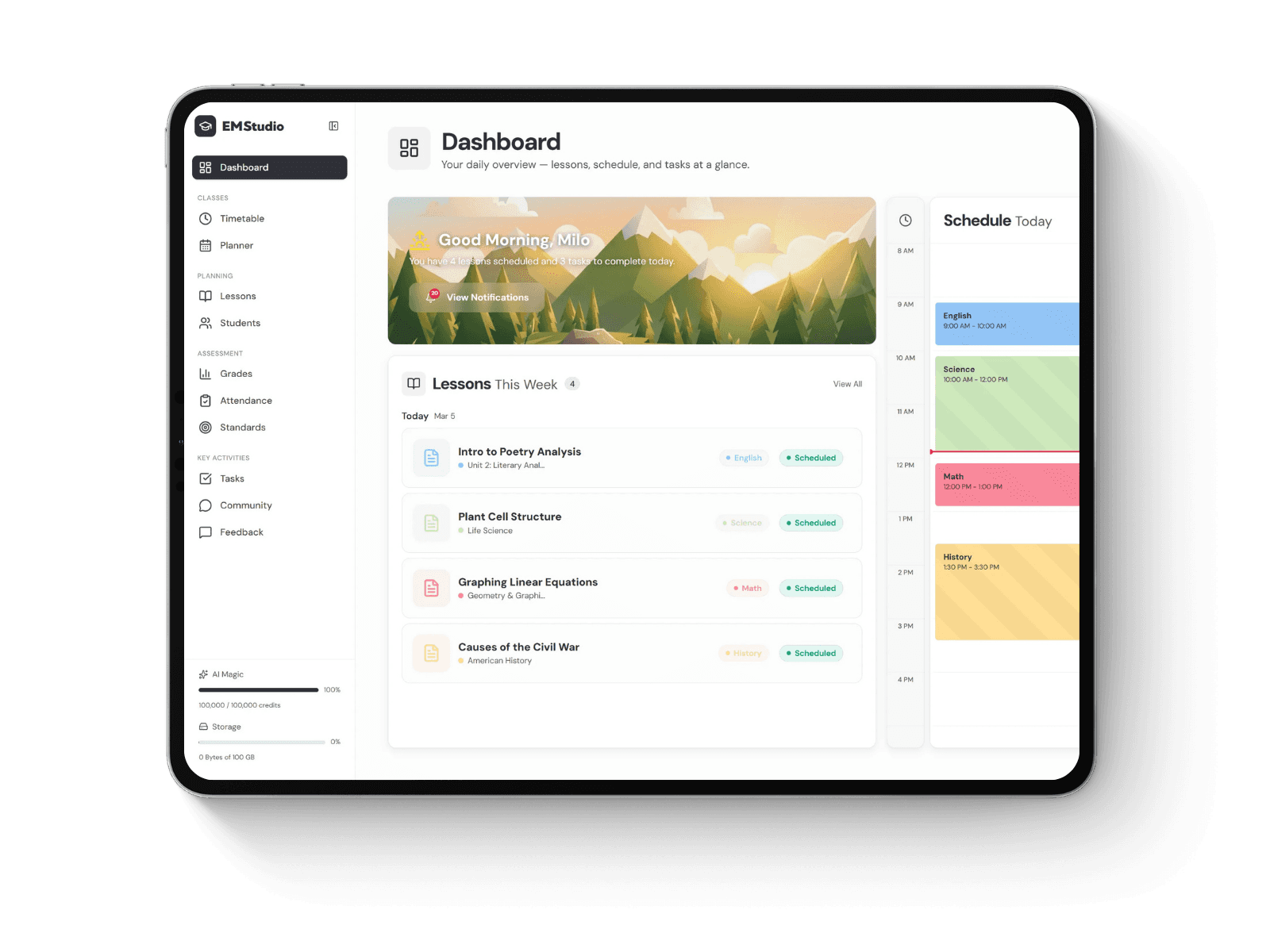
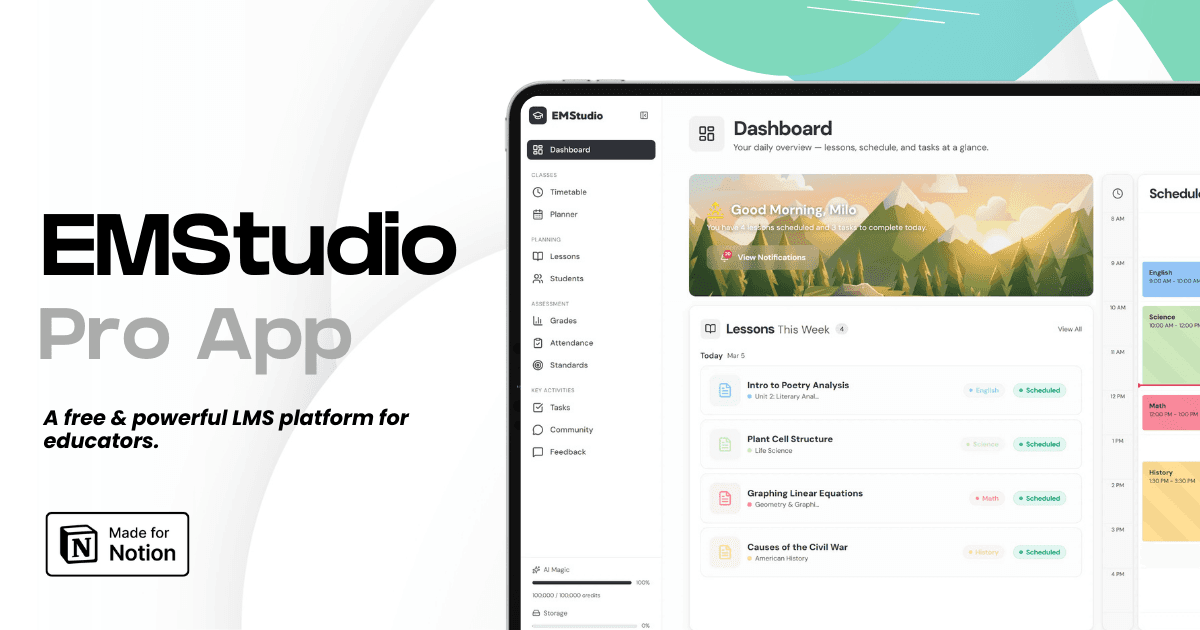
EMStudio is a free teaching management app — manage your classes, students, lessons, and more!
Learn More
Still grading everything by hand?
EMStudio is a free teaching management app — manage your classes, students, lessons, and more!
Learn More
Table of Contents
What Are the Best Fiction Books for 3rd Graders?
The best fiction books for 3rd graders include Charlotte's Web (Lexile 680L), The One and Only Ivan (570L), and Matilda (840L). These titles offer age-appropriate themes of friendship, identity, and resilience while matching 8-9 year old cognitive development and building reading stamina for 150-300 page books.
Third grade marks the pivot from learning to read toward reading to learn. Your students need chapter books that challenge without frustrating them.
Most 8-year-olds read at a Lexile level between 500L and 800L, roughly DRA 28-38. They can handle 150 to 300 pages if the content holds their attention. This is the sweet spot where chapter books replace picture books as the primary diet.
These best books for third graders fit that Lexile range perfectly. Each offers distinct instructional value, from descriptive writing mentors to STEM connections. Use them during literature circles, independent reading blocks, or as read aloud choices for struggling decoders who need to hear fluent modeling while following along in the text.
Summer slide hits decoding skills hard. Research shows 20-30 minutes of daily reading with high-interest books for 3rd graders prevents the backslide that derails rising 4th graders in August. These three titles work well for summer reading lists because they balance challenge with genuine engagement.
Charlotte's Web by E.B. White
E.B. White published this masterpiece in 1952. The hardcover runs exactly 192 pages across 22 chapters, with a Lexile level of 680L. The episodic structure allows you to pause after any chapter.
Use chapters 1-3 as your mentor text for descriptive writing. White describes the barn through smell, sound, and shadow. Have students sketch the setting while you read aloud, then write their own sensory descriptions. This works perfectly in October when you are teaching personal narratives with concrete settings.
Chapters 19-22 require emotional preparation. Charlotte dies naturally. Before chapter 12, teach this vocabulary explicitly so students grasp the wordplay:
radiant (shining very brightly)
humble (not thinking you are better than others)
salutations (friendly greetings)
terrific (unusually fine)
versatile (able to do many things well)
languishing (becoming weak)
sedentary (sitting still)
summons (an order to appear)
These Tier 2 words appear in Charlotte's web and require direct instruction for full comprehension.
Teacher Tip: Handling Death in Charlotte's Web
Chapters 21-22 hit hard. Preview the death theme with sensitive readers using this script: "Charlotte's life cycle ends naturally, just like real spiders do. Wilbur survives and keeps her memory alive." Keep digital reading list templates handy to note which students might need check-ins during those chapters. The Dougy Center offers grief resources for schools if a child has recent loss or trauma.
The One and Only Ivan by Katherine Applegate
Katherine Applegate won the Newbery Medal in 2013 for this 307-page novel. It measures 570L and uses free verse with 1-2 page chapters. The newbery medal signals high quality literature that withstands classroom use.
Short chapters build confidence. A student who fears thick books finishes two pages and feels success. By chapter fifty, they have read sixty pages without panic. This structure supports struggling decoders who need white space.
Connect to STEM and art. Ivan was a real silverback at Zoo Atlanta until 2012. Study the real animal welfare standards that changed because of his public story. Then create finger paintings like Ivan does in the mall. Track student progress using Accelerated Reader (AR) books resources.
Matilda by Roald Dahl
Roald Dahl published this novel in 1988. It runs 240 pages with an 840L Lexile level, making it ideal for gifted readers or whole-class read aloud sessions. The higher difficulty requires background knowledge of British schools.
Pages 1-50 establish Matilda reading Dickens at age four. This hooks advanced 3rd graders who see themselves in her precociousness. The British currency and school system references require explanation, so pause to clarify terms like "headmistress" and "pence."
Preview chapter 8 with parents. Miss Trunchbull describes the Chokey, a narrow punishment closet. Her disciplinary methods disturb sensitive readers. Send a warning email suggesting parents preview if their child has anxiety about strict authority figures.

Which Non-Fiction Books Engage 3rd Grade Readers?
The most engaging non-fiction books for 3rd graders combine narrative storytelling with rich visuals, such as Shark Lady (650L) for STEM representation and Who Was Rosa Parks? (600L) for history. National Geographic Readers offer highly accessible entry points at 500L with photographic support and captions for emerging readers.
Third graders are curious about real things. Sharks. Space. Civil rights heroes. The best books for 3rd graders in non-fiction don't just dump facts—they tell stories. That distinction matters more than you'd think.
Narrative non-fiction reads like a novel. It has characters, tension, and a beginning-middle-end. Expository text dumps facts in boxes, diagrams, and lists. Research shows kids engage more with the story form. They'll stick with Eugenie Clark's shark adventures longer than an encyclopedia entry on fish anatomy.
That's what separates good books for 3rd graders from reference material that collects dust.
You won't find a Newbery Medal sticker on these. You don't need one. They win something better—actual engagement from kids who claim they hate reading.
Text Feature | Location in Book | How It Aids Comprehension |
|---|---|---|
Timelines | Back of Who Was Rosa Parks? | Shows sequence of Civil Rights events across decades |
Captions | Under photos in National Geographic Readers | Explains visual content in 25-50 word chunks |
Sidebars | Throughout Shark Lady | Provides scientific facts without breaking narrative flow |
Diagrams | Bus layout in Who Was Rosa Parks? | Visualizes segregation logistics spatially |
Photo Inserts | Center of Who Was Rosa Parks? | Anchors historical events in real faces and places |
When kids pick non-fiction that's too dense, they shut down. The 5-finger rule works differently here than with fiction. On one page, have them count unknown words PLUS text has they can't interpret—charts they don't get, captions that confuse them, timelines that lose them. Three or more? Too hard.
Shark Lady: The True Story of Eugenie Clark by Jess Keating
Jess Keating's 2017 biography runs 650L with 48 pages. It's a picture book format that works for shared reading or solo completion in one or two sittings. The scientific method integration shines—Eugenie Clark forms hypotheses about shark intelligence at Cape Haze Marine Laboratory, then tests them. You see her process, not just her results.
The STEM representation hits hard. Clark earned her master's in 1946 when women made up less than 10% of marine biology graduate students. That's a conversation starter about gender barriers in science. Your 8-year-olds will connect with her determination when they learn she faced dismissal simply for being female in a male lab.
This belongs on your diverse books shelf. The illustrations balance scientific accuracy with narrative emotion, showing Clark diving with sharks but also facing skeptical professors. This meets evidence-based literacy instruction standards while keeping kids turning pages.
National Geographic Kids Readers: Planets by Elizabeth Carney
Elizabeth Carney's Level 2 reader hits 500L across 32 pages. The photo-realistic images carry 25-50 word captions that explain without overwhelming. Diagrams break down planetary orbits and atmospheric layers. This is gold for reluctant readers who need high visual support to stick with text.
The lexile level aligns with early 3rd grade expectations, making it perfect for independent reading during your space unit. Kids recognize planets immediately from the NASA-quality photography. The text doesn't talk down to them, but the visual scaffolding keeps frustration low.
Pair this with NASA Jet Propulsion Laboratory's 'Space Place' website. Try these extensions:
Model Saturn's rings with glitter and glue after reading about planetary composition.
Compare the book's diagrams to live Webb telescope images.
Use the captions as mentor texts for student space photography projects.
Who Was Rosa Parks? by Yona Zeldis McDonough
Yona Zeldis McDonough's 2010 chapter book spans 112 pages at 600L. The 16-page black-and-white photo insert grounds the story in reality. A timeline runs 1913-2005, showing Parks' life against the backdrop of major Civil Rights milestones. Kids need that chronological anchor.
The content covers the 1955 Montgomery Bus Boycott through 1956 without graphic violence. It's appropriate for 8-9 year olds meeting segregation concepts for the first time. The read aloud potential here is strong—complex ideas delivered in accessible prose.
Use the bus diagram activity. Have students map where Parks sat versus where white passengers sat. Visualizing the logistics makes the boycott's physical constraints real. This turns abstract history into spatial understanding they can manipulate.
Graphic Novels That Hook Reluctant 3rd Grade Readers
Graphic novels aren't just comic books with covers. For reluctant readers, they're entry points that build confidence before tackling traditional chapter books. The best titles combine visual cues with accessible text, giving kids who stare at walls during silent reading something they actually want to finish.
But you can't just hand these out and hope for the best. You need to match the book to the reader's specific barrier.
Title | Lexile Level | Visual Complexity | Best For |
|---|---|---|---|
Dog Man: Mothering Heights | 390L | High action, simple panels | ADHD/attention issues |
Amulet: The Stonekeeper | 310L | Cinematic, directional shifts | Dyslexia support |
New Kid | 320L | Full-color, detailed backgrounds | Social-emotional learning |
Here's the catch. Graphic novels with low text density—anything below lexile level 400L—shouldn't replace prose instruction for kids reading at grade level. The vocabulary load is too thin to support growth. Stick to a 60/40 prose-to-graphic ratio in your classroom library to keep word exposure high.
That said, don't dismiss the cognitive load. Visual learning strategies research shows that parsing panel-to-panel transitions builds inference skills that transfer directly to traditional comprehension. This matters most for students with processing differences who need explicit scaffolding to connect visual and textual clues.
Dog Man: Mothering Heights by Dav Pilkey
This is book ten in Pilkey's series, but you don't need the backstory. At lexile level 390L and 240 pages, it hits the sweet spot for 3rd graders reading one to two years below grade level. The Flip-O-Rama pages appear every twenty to thirty pages, giving kids with attention issues a legitimate kinetic break. They flip the pages rapidly to animate the action, which satisfies that hand-brain connection without disrupting comprehension.
I've watched students with ADHD sustain twenty minutes of silent reading for the first time just to reach the next interactive spread. The physical engagement keeps their brains anchored to the narrative when traditional chapter books lose them by page three. You can literally see the difference in posture—they lean forward instead of slumping.
The Supa Buddies plot structure repeats predictably across the series. That's a feature, not a bug. Kids with working memory challenges can anticipate the story arc without keeping dense prose details straight. They know the heroes will bumble, the villain will monologue, and the flip section will reward their patience.
The toilet humor makes you roll your eyes during read aloud sessions, but it teaches prediction and cause-and-effect. Use this as a stamina builder, not a permanent home. Once they trust that reading can feel good, nudge them toward prose hybrids like Diary of a Wimpy Kid.
Amulet: The Stonekeeper by Kazu Kibuishi
Kibuishi's 2008 fantasy clocks in at lexile level 310L across 192 pages. The cinematic panel layouts borrow from manga, requiring readers to track left-to-right on some pages and right-to-left on others. This directional switching trains the eye patterns that support dyslexia interventions, forcing deliberate tracking across the page.
The mechanical rabbit Miskit and the stone amulet's mysterious power give you concrete anchors for genre study. Is this fantasy or science fiction? The robot characters open STEM conversations without abandoning the story. I've used Miskit's construction to launch simple machine discussions during reading groups.
The visual complexity is higher than Dog Man, so scaffold the first chapter heavily. Point out the gutter spaces between panels and model how to read the silent beats. Once they catch the rhythm, students with processing differences often outperform their peers on inference questions because they've learned to read the negative space.
Don't let the 310L lexile level fool you into thinking this is too easy. The inference needs are high. Students must connect emotional beats that happen between panels, filling in what the author leaves visually unstated. That's advanced work disguised as a picture book.
New Kid by Jerry Craft
Craft's 2019 Newbery Medal winner proves graphic novels can carry serious weight. At lexile level 320L and 256 pages of full-color digital art, this is one of the best books for 3rd graders exploring identity and belonging. Jordan Banks navigates Riverdale Academy Day School as one of the few African American students, encountering microaggressions that mirror real classroom dynamics.
The guidance counselor bias scene in chapter four stops every class I've taught. Jordan's counselor steers him toward sports rather than art, assuming his interests based on race. That page gives you a natural entry point for discussing academic tracking and implicit bias without a lecture. Ask students what the counselor's facial expression reveals that her words don't.
This is diverse books done right—offering both mirror and window opportunities. For a read aloud, project the pages so kids catch the visual sarcasm in Jordan's notebook sketches. The humor lands differently when they see the art, modeling how books for 3rd graders can handle heavy topics with grace.
Keep an eye on the background details. The posters in the hallways and the book covers Jordan draws in his sketchbook reward close attention. Students who finish early can hunt for visual motifs that repeat throughout the 256 pages, building the close reading skills they'll need for prose novels next year.
Diverse Chapter Books Every 3rd Grader Should Read
Diverse books give kids windows into other lives, mirrors of their own, and sliding glass doors into different worlds—what researcher Rudine Sims Bishop called the framework for multicultural literature. These three engaging chapter books for elementary students map directly to your curriculum:
Front Desk: Immigration and economics standards
Merci Suárez Changes Gears: Family structures and multigenerational households
The Wild Robot: Environmental science and robotics units
These titles dig into real economic realities. You’ll find characters facing motel poverty, working-class family businesses, and technological displacement. No superficial representations here.
For mixed-ability groups, note the lexile level spread. Merci Suárez hits 750L as a stretch text, while Wild Robot offers illustrated support at 740L. Both challenge strong readers, but the visuals reduce cognitive load.
Front Desk by Kelly Yang
Kelly Yang’s 2018 novel draws from her own childhood managing a California motel in the 1990s. Ten-year-old Mia Tang runs the front desk while her parents clean rooms for $50 a night. She translates for guests, navigates casual racism, and hides her poverty from classmates.
The motel setting exposes Mia to late-night emergencies, stolen property, and the indignity of minimum-wage service work. She processes these adult problems while maintaining her grades and protecting her younger brother’s innocence.
The lexile level sits at 640L, making it accessible for most 3rd graders in October. The 304-page length looks intimidating, but short chapters keep momentum. I’ve watched reluctant readers race through this during independent reading blocks.
The economics integration feels natural. The broken pantyhose machine subplot and nightly rates create authentic math word problems. Students calculate weekly profits while absorbing supply and demand concepts that connect to your social studies standards.
Merci Suárez Changes Gears by Meg Medina
Meg Medina’s 2018 Newbery Medal winner explores Cuban-American family dynamics through 11-year-old Merci’s eyes. Her extended family includes abuela, three tíos, and a grandfather with early Alzheimer’s disease. Spanish phrases offer context clues not direct translation.
The lupus diagnosis adds medical reality rarely seen in chapter books. At 750L, this 272-page novel works as a stretch text for advanced readers or a read aloud over 3-4 weeks. The multigenerational household reflects working-class wealth. You can use the integrated Spanish vocabulary as enrichment. Terms like lupus and coquí appear naturally, building cultural literacy alongside decoding skills.
Merci’s family owns a bodega and three homes, complicating the typical rich/poor binary. The neurodiversity element emerges gradually. Lolo’s memory loss culminates in a “no-driving” crisis that prompts safety discussions.
The progression is gentle enough for 3rd graders but emotionally honest. Kids understand Lolo’s confusion without graphic medical detail. Pair this with reading comprehension strategies for tracking complex family timelines.
The Wild Robot by Peter Brown
Peter Brown’s 2016 novel drops ROZZUM unit 7134 onto a deserted island. Roz must learn survival from otters, deer, and bears after a cargo ship sinks. The 288 pages include 96 black-and-white illustrations offering visual rest stops during complex passages.
The lexile level hits 740L, nearly matching Merci Suárez, but the visual scaffolding makes it feel less intimidating. Students get the challenge without the overwhelm. It works perfectly for mixed-ability groups where some kids need that cognitive support to access grade-level complexity.
The robot’s literal interpretation of language also creates humor that keeps pages turning. The STEM connections run deep. Roz operates on if/then logic that mirrors basic coding concepts.
Her observation of animal adaptation aligns with 3rd grade biology units. When she builds shelters and solves problems through trial and error, kids see engineering in action. The illustrated format supports visual learners who might struggle with dense text pages.
This belongs in your rotation of books for 3rd graders bridging fiction and science. It’s one of the best books for third graders exploring artificial intelligence ethics without heavy-handed lessons, especially for reluctant readers who claim they only like non-fiction.
How Can You Access Free Books for 3rd Graders?
Access free books for 3rd graders through Epic!'s free educator tier during school hours, public library apps like Libby with a card, and Open Library's digital borrowing. For physical books, locate Little Free Libraries using the world map. Be aware that Epic requires school email verification and digital access depends on reliable home internet.
Free doesn't mean one-size-fits-all. Your classroom has kids with tablets and kids with nothing but a school Chromebook that stays at school.
I've watched kids light up when they realize they can keep a physical book forever from a Little Free Library. I've also watched them cry when Epic logs them out at 4:05pm.
Physical vs. Digital: Which Free Option?
Start with device inventory. If a student has reliable Wi-Fi and a tablet at home, go digital.
Next, check retention needs. Digital loans expire—Libby/OverDrive gives you 21 days, Open Library only one hour for in-copyright works. Physical books from Little Free Library stay until the kid finishes them, but you can't guarantee quality or appropriate content.
Last, consider the lexile level tracking. Digital platforms show you reading levels; Little Free Libraries are a grab bag of chapter books that might be too easy or too hard for your reluctant readers.
Platform Specifics That Matter
Epic! offers 40,000+ titles including Newbery Medal winners and diverse books. The free educator tier works during school hours only—7am to 4pm local time. You'll need a .edu email to verify, and kids lose access at home unless parents pay for a subscription.
Libby/OverDrive requires a public library card. Loans last 21 days, and the app works on Kindle Fire. You can send books directly to the device or read in the browser. No late fees—the book just disappears. Great for read aloud prep when you need a specific title fast.
Open Library lets you borrow in-copyright works for one hour at a time. Perfect for research, terrible for nightly reading. You can renew if no one else is waiting. Browse their digital libraries and free book programs to see what's available.
Little Free Library uses a world map at littlefreelibrary.org. No card required. Drive to the pin, take a book, leave a book. Quality varies wildly—I've found moldy covers and adult thrillers mixed in with books for 3rd graders free. Stick to locations near schools for better kid selections.
When Free Access Fails
The digital divide is real. Research shows low-income 3rd graders often compete for shared family tablets. When the device goes to a sibling with homework or a parent with night shifts, that Epic assignment sits undone.
Little Free Libraries suffer from donation chaos. You might find a pristine Newbery Medal winner or a water-damaged romance novel. Check the box personally before sending kids, or you’ll waste a trip.
Epic!'s time restrictions kill homework completion. The bell rings at 3:30, access cuts off, and kids without home subscriptions can't finish their read aloud responses. This hits reluctant readers hardest—they need the full evening to finish a chapter book.
Home internet instability breaks the flow. A kid finally gets interested in a diverse book about dragons, then the Wi-Fi drops. They lose their place and their motivation.
Library Card + Holds
For families without devices, pivot to physical holds. Get every parent a library card—most systems allow 5-10 holds at once. NYPL allows 10, LAPL allows 8. Both offer curbside pickup that takes five minutes.
Teach parents to queue up chapter books at their child's lexile level. When the email arrives saying holds are ready, grab the whole stack during one pickup trip. This beats daily digital logins.
You can organize a digital resource library to track which students need physical versus digital access. Keep a column for "home device: yes/no" and assign books for 3rd graders accordingly. Update it weekly as family situations change.

Books For 3Rd Graders: The 3-Step Kickoff
Picking books for 3rd graders isn't about building the perfect classroom library. It's about matching the right story to the right kid at the right time. You don't need two hundred titles crowding your shelves and draining your budget. You need a tight rotation that hits different lexile levels, interests, and identities.
Your reluctant readers will grab graphic novels first. Your chapter book addicts want the next Newbery Medal winner. Keep free digital options bookmarked for the kid who forgets their book on the bus or loses it under their bed. Simple beats fancy every single time.
Audit your current shelf. Do you have engaging choices for kids reading at 400L and kids reading at 800L?
Add two high-interest graphic novels and one diverse chapter book to your next book order.
Bookmark those free book sites on three classroom devices for emergency reading time.
Let students actually choose their next read. Stop doing whole-class novels for one month.
What Are the Best Fiction Books for 3rd Graders?
The best fiction books for 3rd graders include Charlotte's Web (Lexile 680L), The One and Only Ivan (570L), and Matilda (840L). These titles offer age-appropriate themes of friendship, identity, and resilience while matching 8-9 year old cognitive development and building reading stamina for 150-300 page books.
Third grade marks the pivot from learning to read toward reading to learn. Your students need chapter books that challenge without frustrating them.
Most 8-year-olds read at a Lexile level between 500L and 800L, roughly DRA 28-38. They can handle 150 to 300 pages if the content holds their attention. This is the sweet spot where chapter books replace picture books as the primary diet.
These best books for third graders fit that Lexile range perfectly. Each offers distinct instructional value, from descriptive writing mentors to STEM connections. Use them during literature circles, independent reading blocks, or as read aloud choices for struggling decoders who need to hear fluent modeling while following along in the text.
Summer slide hits decoding skills hard. Research shows 20-30 minutes of daily reading with high-interest books for 3rd graders prevents the backslide that derails rising 4th graders in August. These three titles work well for summer reading lists because they balance challenge with genuine engagement.
Charlotte's Web by E.B. White
E.B. White published this masterpiece in 1952. The hardcover runs exactly 192 pages across 22 chapters, with a Lexile level of 680L. The episodic structure allows you to pause after any chapter.
Use chapters 1-3 as your mentor text for descriptive writing. White describes the barn through smell, sound, and shadow. Have students sketch the setting while you read aloud, then write their own sensory descriptions. This works perfectly in October when you are teaching personal narratives with concrete settings.
Chapters 19-22 require emotional preparation. Charlotte dies naturally. Before chapter 12, teach this vocabulary explicitly so students grasp the wordplay:
radiant (shining very brightly)
humble (not thinking you are better than others)
salutations (friendly greetings)
terrific (unusually fine)
versatile (able to do many things well)
languishing (becoming weak)
sedentary (sitting still)
summons (an order to appear)
These Tier 2 words appear in Charlotte's web and require direct instruction for full comprehension.
Teacher Tip: Handling Death in Charlotte's Web
Chapters 21-22 hit hard. Preview the death theme with sensitive readers using this script: "Charlotte's life cycle ends naturally, just like real spiders do. Wilbur survives and keeps her memory alive." Keep digital reading list templates handy to note which students might need check-ins during those chapters. The Dougy Center offers grief resources for schools if a child has recent loss or trauma.
The One and Only Ivan by Katherine Applegate
Katherine Applegate won the Newbery Medal in 2013 for this 307-page novel. It measures 570L and uses free verse with 1-2 page chapters. The newbery medal signals high quality literature that withstands classroom use.
Short chapters build confidence. A student who fears thick books finishes two pages and feels success. By chapter fifty, they have read sixty pages without panic. This structure supports struggling decoders who need white space.
Connect to STEM and art. Ivan was a real silverback at Zoo Atlanta until 2012. Study the real animal welfare standards that changed because of his public story. Then create finger paintings like Ivan does in the mall. Track student progress using Accelerated Reader (AR) books resources.
Matilda by Roald Dahl
Roald Dahl published this novel in 1988. It runs 240 pages with an 840L Lexile level, making it ideal for gifted readers or whole-class read aloud sessions. The higher difficulty requires background knowledge of British schools.
Pages 1-50 establish Matilda reading Dickens at age four. This hooks advanced 3rd graders who see themselves in her precociousness. The British currency and school system references require explanation, so pause to clarify terms like "headmistress" and "pence."
Preview chapter 8 with parents. Miss Trunchbull describes the Chokey, a narrow punishment closet. Her disciplinary methods disturb sensitive readers. Send a warning email suggesting parents preview if their child has anxiety about strict authority figures.
Which Non-Fiction Books Engage 3rd Grade Readers?
The most engaging non-fiction books for 3rd graders combine narrative storytelling with rich visuals, such as Shark Lady (650L) for STEM representation and Who Was Rosa Parks? (600L) for history. National Geographic Readers offer highly accessible entry points at 500L with photographic support and captions for emerging readers.
Third graders are curious about real things. Sharks. Space. Civil rights heroes. The best books for 3rd graders in non-fiction don't just dump facts—they tell stories. That distinction matters more than you'd think.
Narrative non-fiction reads like a novel. It has characters, tension, and a beginning-middle-end. Expository text dumps facts in boxes, diagrams, and lists. Research shows kids engage more with the story form. They'll stick with Eugenie Clark's shark adventures longer than an encyclopedia entry on fish anatomy.
That's what separates good books for 3rd graders from reference material that collects dust.
You won't find a Newbery Medal sticker on these. You don't need one. They win something better—actual engagement from kids who claim they hate reading.
Text Feature | Location in Book | How It Aids Comprehension |
|---|---|---|
Timelines | Back of Who Was Rosa Parks? | Shows sequence of Civil Rights events across decades |
Captions | Under photos in National Geographic Readers | Explains visual content in 25-50 word chunks |
Sidebars | Throughout Shark Lady | Provides scientific facts without breaking narrative flow |
Diagrams | Bus layout in Who Was Rosa Parks? | Visualizes segregation logistics spatially |
Photo Inserts | Center of Who Was Rosa Parks? | Anchors historical events in real faces and places |
When kids pick non-fiction that's too dense, they shut down. The 5-finger rule works differently here than with fiction. On one page, have them count unknown words PLUS text has they can't interpret—charts they don't get, captions that confuse them, timelines that lose them. Three or more? Too hard.
Shark Lady: The True Story of Eugenie Clark by Jess Keating
Jess Keating's 2017 biography runs 650L with 48 pages. It's a picture book format that works for shared reading or solo completion in one or two sittings. The scientific method integration shines—Eugenie Clark forms hypotheses about shark intelligence at Cape Haze Marine Laboratory, then tests them. You see her process, not just her results.
The STEM representation hits hard. Clark earned her master's in 1946 when women made up less than 10% of marine biology graduate students. That's a conversation starter about gender barriers in science. Your 8-year-olds will connect with her determination when they learn she faced dismissal simply for being female in a male lab.
This belongs on your diverse books shelf. The illustrations balance scientific accuracy with narrative emotion, showing Clark diving with sharks but also facing skeptical professors. This meets evidence-based literacy instruction standards while keeping kids turning pages.
National Geographic Kids Readers: Planets by Elizabeth Carney
Elizabeth Carney's Level 2 reader hits 500L across 32 pages. The photo-realistic images carry 25-50 word captions that explain without overwhelming. Diagrams break down planetary orbits and atmospheric layers. This is gold for reluctant readers who need high visual support to stick with text.
The lexile level aligns with early 3rd grade expectations, making it perfect for independent reading during your space unit. Kids recognize planets immediately from the NASA-quality photography. The text doesn't talk down to them, but the visual scaffolding keeps frustration low.
Pair this with NASA Jet Propulsion Laboratory's 'Space Place' website. Try these extensions:
Model Saturn's rings with glitter and glue after reading about planetary composition.
Compare the book's diagrams to live Webb telescope images.
Use the captions as mentor texts for student space photography projects.
Who Was Rosa Parks? by Yona Zeldis McDonough
Yona Zeldis McDonough's 2010 chapter book spans 112 pages at 600L. The 16-page black-and-white photo insert grounds the story in reality. A timeline runs 1913-2005, showing Parks' life against the backdrop of major Civil Rights milestones. Kids need that chronological anchor.
The content covers the 1955 Montgomery Bus Boycott through 1956 without graphic violence. It's appropriate for 8-9 year olds meeting segregation concepts for the first time. The read aloud potential here is strong—complex ideas delivered in accessible prose.
Use the bus diagram activity. Have students map where Parks sat versus where white passengers sat. Visualizing the logistics makes the boycott's physical constraints real. This turns abstract history into spatial understanding they can manipulate.
Graphic Novels That Hook Reluctant 3rd Grade Readers
Graphic novels aren't just comic books with covers. For reluctant readers, they're entry points that build confidence before tackling traditional chapter books. The best titles combine visual cues with accessible text, giving kids who stare at walls during silent reading something they actually want to finish.
But you can't just hand these out and hope for the best. You need to match the book to the reader's specific barrier.
Title | Lexile Level | Visual Complexity | Best For |
|---|---|---|---|
Dog Man: Mothering Heights | 390L | High action, simple panels | ADHD/attention issues |
Amulet: The Stonekeeper | 310L | Cinematic, directional shifts | Dyslexia support |
New Kid | 320L | Full-color, detailed backgrounds | Social-emotional learning |
Here's the catch. Graphic novels with low text density—anything below lexile level 400L—shouldn't replace prose instruction for kids reading at grade level. The vocabulary load is too thin to support growth. Stick to a 60/40 prose-to-graphic ratio in your classroom library to keep word exposure high.
That said, don't dismiss the cognitive load. Visual learning strategies research shows that parsing panel-to-panel transitions builds inference skills that transfer directly to traditional comprehension. This matters most for students with processing differences who need explicit scaffolding to connect visual and textual clues.
Dog Man: Mothering Heights by Dav Pilkey
This is book ten in Pilkey's series, but you don't need the backstory. At lexile level 390L and 240 pages, it hits the sweet spot for 3rd graders reading one to two years below grade level. The Flip-O-Rama pages appear every twenty to thirty pages, giving kids with attention issues a legitimate kinetic break. They flip the pages rapidly to animate the action, which satisfies that hand-brain connection without disrupting comprehension.
I've watched students with ADHD sustain twenty minutes of silent reading for the first time just to reach the next interactive spread. The physical engagement keeps their brains anchored to the narrative when traditional chapter books lose them by page three. You can literally see the difference in posture—they lean forward instead of slumping.
The Supa Buddies plot structure repeats predictably across the series. That's a feature, not a bug. Kids with working memory challenges can anticipate the story arc without keeping dense prose details straight. They know the heroes will bumble, the villain will monologue, and the flip section will reward their patience.
The toilet humor makes you roll your eyes during read aloud sessions, but it teaches prediction and cause-and-effect. Use this as a stamina builder, not a permanent home. Once they trust that reading can feel good, nudge them toward prose hybrids like Diary of a Wimpy Kid.
Amulet: The Stonekeeper by Kazu Kibuishi
Kibuishi's 2008 fantasy clocks in at lexile level 310L across 192 pages. The cinematic panel layouts borrow from manga, requiring readers to track left-to-right on some pages and right-to-left on others. This directional switching trains the eye patterns that support dyslexia interventions, forcing deliberate tracking across the page.
The mechanical rabbit Miskit and the stone amulet's mysterious power give you concrete anchors for genre study. Is this fantasy or science fiction? The robot characters open STEM conversations without abandoning the story. I've used Miskit's construction to launch simple machine discussions during reading groups.
The visual complexity is higher than Dog Man, so scaffold the first chapter heavily. Point out the gutter spaces between panels and model how to read the silent beats. Once they catch the rhythm, students with processing differences often outperform their peers on inference questions because they've learned to read the negative space.
Don't let the 310L lexile level fool you into thinking this is too easy. The inference needs are high. Students must connect emotional beats that happen between panels, filling in what the author leaves visually unstated. That's advanced work disguised as a picture book.
New Kid by Jerry Craft
Craft's 2019 Newbery Medal winner proves graphic novels can carry serious weight. At lexile level 320L and 256 pages of full-color digital art, this is one of the best books for 3rd graders exploring identity and belonging. Jordan Banks navigates Riverdale Academy Day School as one of the few African American students, encountering microaggressions that mirror real classroom dynamics.
The guidance counselor bias scene in chapter four stops every class I've taught. Jordan's counselor steers him toward sports rather than art, assuming his interests based on race. That page gives you a natural entry point for discussing academic tracking and implicit bias without a lecture. Ask students what the counselor's facial expression reveals that her words don't.
This is diverse books done right—offering both mirror and window opportunities. For a read aloud, project the pages so kids catch the visual sarcasm in Jordan's notebook sketches. The humor lands differently when they see the art, modeling how books for 3rd graders can handle heavy topics with grace.
Keep an eye on the background details. The posters in the hallways and the book covers Jordan draws in his sketchbook reward close attention. Students who finish early can hunt for visual motifs that repeat throughout the 256 pages, building the close reading skills they'll need for prose novels next year.
Diverse Chapter Books Every 3rd Grader Should Read
Diverse books give kids windows into other lives, mirrors of their own, and sliding glass doors into different worlds—what researcher Rudine Sims Bishop called the framework for multicultural literature. These three engaging chapter books for elementary students map directly to your curriculum:
Front Desk: Immigration and economics standards
Merci Suárez Changes Gears: Family structures and multigenerational households
The Wild Robot: Environmental science and robotics units
These titles dig into real economic realities. You’ll find characters facing motel poverty, working-class family businesses, and technological displacement. No superficial representations here.
For mixed-ability groups, note the lexile level spread. Merci Suárez hits 750L as a stretch text, while Wild Robot offers illustrated support at 740L. Both challenge strong readers, but the visuals reduce cognitive load.
Front Desk by Kelly Yang
Kelly Yang’s 2018 novel draws from her own childhood managing a California motel in the 1990s. Ten-year-old Mia Tang runs the front desk while her parents clean rooms for $50 a night. She translates for guests, navigates casual racism, and hides her poverty from classmates.
The motel setting exposes Mia to late-night emergencies, stolen property, and the indignity of minimum-wage service work. She processes these adult problems while maintaining her grades and protecting her younger brother’s innocence.
The lexile level sits at 640L, making it accessible for most 3rd graders in October. The 304-page length looks intimidating, but short chapters keep momentum. I’ve watched reluctant readers race through this during independent reading blocks.
The economics integration feels natural. The broken pantyhose machine subplot and nightly rates create authentic math word problems. Students calculate weekly profits while absorbing supply and demand concepts that connect to your social studies standards.
Merci Suárez Changes Gears by Meg Medina
Meg Medina’s 2018 Newbery Medal winner explores Cuban-American family dynamics through 11-year-old Merci’s eyes. Her extended family includes abuela, three tíos, and a grandfather with early Alzheimer’s disease. Spanish phrases offer context clues not direct translation.
The lupus diagnosis adds medical reality rarely seen in chapter books. At 750L, this 272-page novel works as a stretch text for advanced readers or a read aloud over 3-4 weeks. The multigenerational household reflects working-class wealth. You can use the integrated Spanish vocabulary as enrichment. Terms like lupus and coquí appear naturally, building cultural literacy alongside decoding skills.
Merci’s family owns a bodega and three homes, complicating the typical rich/poor binary. The neurodiversity element emerges gradually. Lolo’s memory loss culminates in a “no-driving” crisis that prompts safety discussions.
The progression is gentle enough for 3rd graders but emotionally honest. Kids understand Lolo’s confusion without graphic medical detail. Pair this with reading comprehension strategies for tracking complex family timelines.
The Wild Robot by Peter Brown
Peter Brown’s 2016 novel drops ROZZUM unit 7134 onto a deserted island. Roz must learn survival from otters, deer, and bears after a cargo ship sinks. The 288 pages include 96 black-and-white illustrations offering visual rest stops during complex passages.
The lexile level hits 740L, nearly matching Merci Suárez, but the visual scaffolding makes it feel less intimidating. Students get the challenge without the overwhelm. It works perfectly for mixed-ability groups where some kids need that cognitive support to access grade-level complexity.
The robot’s literal interpretation of language also creates humor that keeps pages turning. The STEM connections run deep. Roz operates on if/then logic that mirrors basic coding concepts.
Her observation of animal adaptation aligns with 3rd grade biology units. When she builds shelters and solves problems through trial and error, kids see engineering in action. The illustrated format supports visual learners who might struggle with dense text pages.
This belongs in your rotation of books for 3rd graders bridging fiction and science. It’s one of the best books for third graders exploring artificial intelligence ethics without heavy-handed lessons, especially for reluctant readers who claim they only like non-fiction.
How Can You Access Free Books for 3rd Graders?
Access free books for 3rd graders through Epic!'s free educator tier during school hours, public library apps like Libby with a card, and Open Library's digital borrowing. For physical books, locate Little Free Libraries using the world map. Be aware that Epic requires school email verification and digital access depends on reliable home internet.
Free doesn't mean one-size-fits-all. Your classroom has kids with tablets and kids with nothing but a school Chromebook that stays at school.
I've watched kids light up when they realize they can keep a physical book forever from a Little Free Library. I've also watched them cry when Epic logs them out at 4:05pm.
Physical vs. Digital: Which Free Option?
Start with device inventory. If a student has reliable Wi-Fi and a tablet at home, go digital.
Next, check retention needs. Digital loans expire—Libby/OverDrive gives you 21 days, Open Library only one hour for in-copyright works. Physical books from Little Free Library stay until the kid finishes them, but you can't guarantee quality or appropriate content.
Last, consider the lexile level tracking. Digital platforms show you reading levels; Little Free Libraries are a grab bag of chapter books that might be too easy or too hard for your reluctant readers.
Platform Specifics That Matter
Epic! offers 40,000+ titles including Newbery Medal winners and diverse books. The free educator tier works during school hours only—7am to 4pm local time. You'll need a .edu email to verify, and kids lose access at home unless parents pay for a subscription.
Libby/OverDrive requires a public library card. Loans last 21 days, and the app works on Kindle Fire. You can send books directly to the device or read in the browser. No late fees—the book just disappears. Great for read aloud prep when you need a specific title fast.
Open Library lets you borrow in-copyright works for one hour at a time. Perfect for research, terrible for nightly reading. You can renew if no one else is waiting. Browse their digital libraries and free book programs to see what's available.
Little Free Library uses a world map at littlefreelibrary.org. No card required. Drive to the pin, take a book, leave a book. Quality varies wildly—I've found moldy covers and adult thrillers mixed in with books for 3rd graders free. Stick to locations near schools for better kid selections.
When Free Access Fails
The digital divide is real. Research shows low-income 3rd graders often compete for shared family tablets. When the device goes to a sibling with homework or a parent with night shifts, that Epic assignment sits undone.
Little Free Libraries suffer from donation chaos. You might find a pristine Newbery Medal winner or a water-damaged romance novel. Check the box personally before sending kids, or you’ll waste a trip.
Epic!'s time restrictions kill homework completion. The bell rings at 3:30, access cuts off, and kids without home subscriptions can't finish their read aloud responses. This hits reluctant readers hardest—they need the full evening to finish a chapter book.
Home internet instability breaks the flow. A kid finally gets interested in a diverse book about dragons, then the Wi-Fi drops. They lose their place and their motivation.
Library Card + Holds
For families without devices, pivot to physical holds. Get every parent a library card—most systems allow 5-10 holds at once. NYPL allows 10, LAPL allows 8. Both offer curbside pickup that takes five minutes.
Teach parents to queue up chapter books at their child's lexile level. When the email arrives saying holds are ready, grab the whole stack during one pickup trip. This beats daily digital logins.
You can organize a digital resource library to track which students need physical versus digital access. Keep a column for "home device: yes/no" and assign books for 3rd graders accordingly. Update it weekly as family situations change.
Books For 3Rd Graders: The 3-Step Kickoff
Picking books for 3rd graders isn't about building the perfect classroom library. It's about matching the right story to the right kid at the right time. You don't need two hundred titles crowding your shelves and draining your budget. You need a tight rotation that hits different lexile levels, interests, and identities.
Your reluctant readers will grab graphic novels first. Your chapter book addicts want the next Newbery Medal winner. Keep free digital options bookmarked for the kid who forgets their book on the bus or loses it under their bed. Simple beats fancy every single time.
Audit your current shelf. Do you have engaging choices for kids reading at 400L and kids reading at 800L?
Add two high-interest graphic novels and one diverse chapter book to your next book order.
Bookmark those free book sites on three classroom devices for emergency reading time.
Let students actually choose their next read. Stop doing whole-class novels for one month.
Still grading everything by hand?
EMStudio is a free teaching management app — manage your classes, students, lessons, and more!
Learn More
Still grading everything by hand?
EMStudio is a free teaching management app — manage your classes, students, lessons, and more!
Learn More



Notion4Teachers
Notion templates to simplify administrative tasks and enhance your teaching experience.



2026 Notion4Teachers. All Rights Reserved.
Notion4Teachers
Notion templates to simplify administrative tasks and enhance your teaching experience.
2026 Notion4Teachers. All Rights Reserved.
Notion4Teachers
Notion templates to simplify administrative tasks and enhance your teaching experience.
2026 Notion4Teachers. All Rights Reserved.