
12 Active Learning Examples That Engage Every Student
12 Active Learning Examples That Engage Every Student

Article by
Milo
ESL Content Coordinator & Educator
ESL Content Coordinator & Educator
All Posts
You know that hollow silence after you ask "Any questions?" and nobody moves. You've been there. I spent my first three years thinking I was teaching when I was really just performing—me talking, them nodding, nobody actually thinking. That's the gap active learning examples close. They move students from passive reception to genuine cognitive engagement without requiring you to rewrite your entire curriculum or buy fancy supplies. These aren't theoretical constructs from a university lecture hall. They're classroom-tested moves that shift cognitive load off your shoulders and onto your students where it belongs.
The twelve strategies below range from low-prep warm-ups for tomorrow to collaborative protocols that make group work productive. I've organized them by your constraints: prep time, whether you're building critical thinking or checking understanding, and which play nice with Chromebooks. Some use metacognitive strategies where students monitor their own confusion. Others use peer instruction that takes two minutes to set up. All respect that you have twenty-five students, mixed readiness, and forty-five minutes. No theory survives a Tuesday afternoon in October when half the class is out with the flu.
Still grading everything by hand?
EMStudio is a free teaching management app — manage your classes, students, lessons, and more!
Learn More
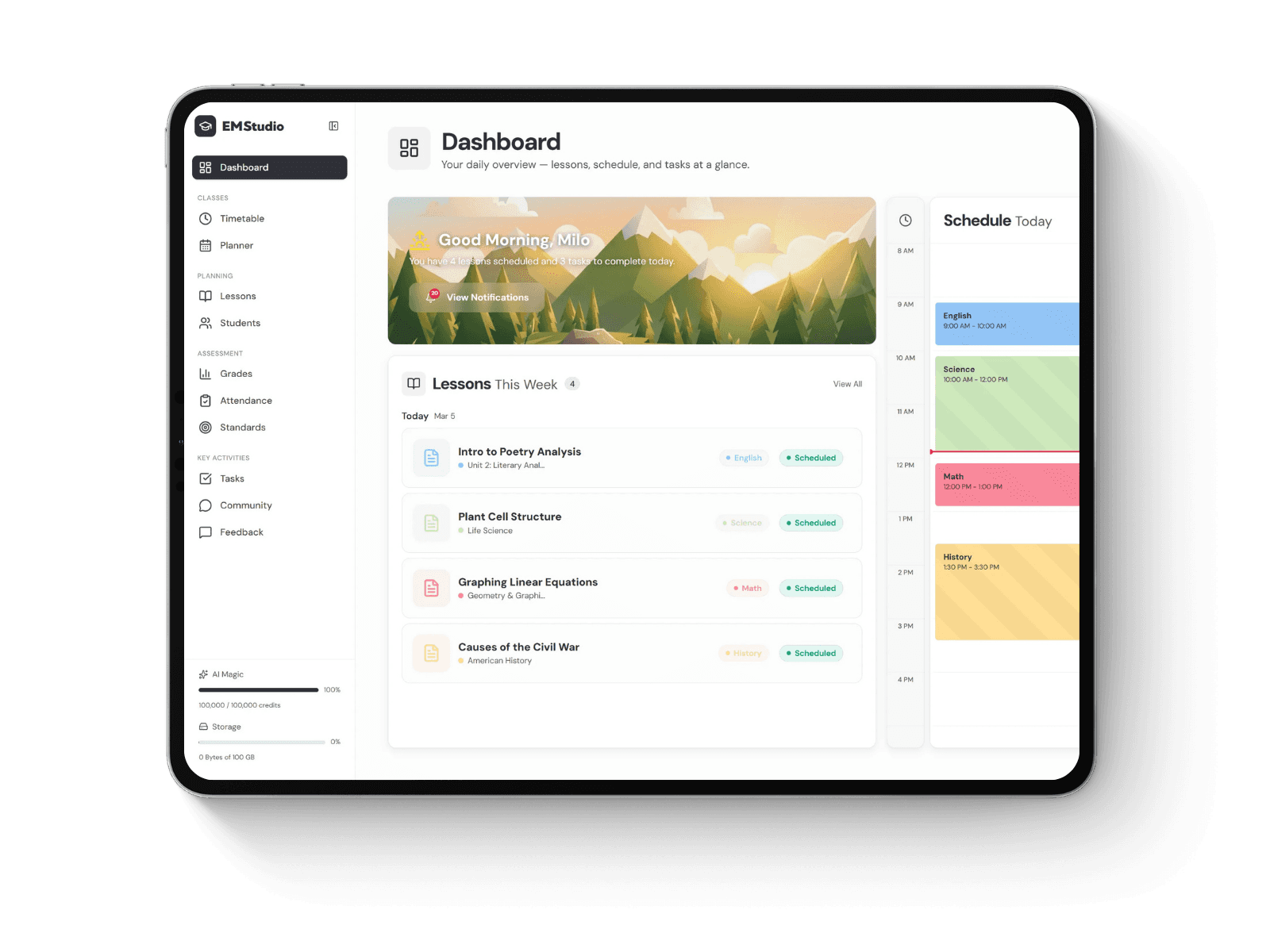
Still grading everything by hand?
EMStudio is a free teaching management app — manage your classes, students, lessons, and more!
Learn More
Table of Contents
What Are the Best Low-Prep Active Learning Examples?
The best low-prep active learning examples include Think-Pair-Share (30-60-120 second protocol), Turn and Talk with shoulder partners or clock appointments, and Cold Calling with 3-5 second structured wait time. These require zero handouts or technology, work in any classroom layout, and take under 5 minutes to implement while boosting participation rates significantly.
You have forty-five minutes, maybe fifty. You cannot spend half an hour cutting cardstock or setting up stations. These three protocols demand zero copies, no devices, and no rearranged furniture. They work whether you have fifteen students or forty.
Think-Pair-Share Protocols: 30 seconds silent thinking, 60 seconds partner discussion, 120 seconds full-class debrief. Optimal for classes of 15-40 students.
Turn and Talk Variations: 30-90 seconds of structured conversation using shoulder partners, clock appointments, or standing pairs. Works with 15-40 students.
Cold Calling with Structured Wait Time: 3-5 seconds of wait time after question before naming a student. Effective for 15-40 students.
Introverted students need structure, not spotlight trauma. I track participation using a simple clipboard checklist to ensure every voice enters the room within two weeks. Offer a "pass" option with written follow-up for anxious learners. True equity means cognitive engagement for all, not just the loud.
Think-Pair-Share Protocols
Frank Lyman developed this protocol in 1981, and it remains the backbone of constructivist pedagogy. I run it with a strict timer: thirty seconds of silent individual thinking, sixty seconds of peer instruction with a partner, and two minutes for the debrief. The auditory signal matters. I use a chime or project a countdown so students feel the boundary.
Last week my tenth-grade ELA students analyzed rhetorical devices in Churchill's "Blood, Toil, Tears, and Sweat" speech. During the sixty-second pair phase, I circled with a clipboard, eavesdropping on misconceptions about parallelism. I noted three specific errors, then addressed them during the debrief instead of letting them fossilize. That is formative assessment in motion, and it took zero photocopies.
Turn and Talk Variations
Shoulder Partners work for immediate proximity, but Clock Appointments add metacognitive strategies by requiring students to pre-schedule four partners at 12, 3, 6, and 9 positions on a clock face. Standing Pairs get blood flowing to the brain. I use these strategies for active learning daily because they force student-centered instruction without photocopying a thing.
Safety matters more than speed. I institute a universal three-second wait time after asking the question, then permit discussion. Anxious students get a "pass option"—they may submit a written response after class instead of speaking aloud. This maintains cognitive engagement while respecting neurological differences. No child should dread the turn-and-talk bell.
Cold Calling with Structured Wait Time
Doug Lemov popularized this in Teach Like a Champion, but the research originates with Mary Budd Rowe's studies on wait time. I use a structured three to five second pause after posing a question. This creates genuine thinking space rather than a race to raise hands.
I combine this with "No Opt Out"—if a student cannot answer, they use a lifeline such as Phone a Friend, Crowd Source, or Fifty-Fifty. No one gets to hide, but no one faces public failure either.
Equity requires systematic tracking. I use popsicle sticks or a ClassDojo randomizer to ensure one hundred percent student coverage over a two-week period. I avoid hunting for correct answers by pre-calling on students while they are still thinking, not after hands shoot up. This keeps active learning examples equitable rather than performative.
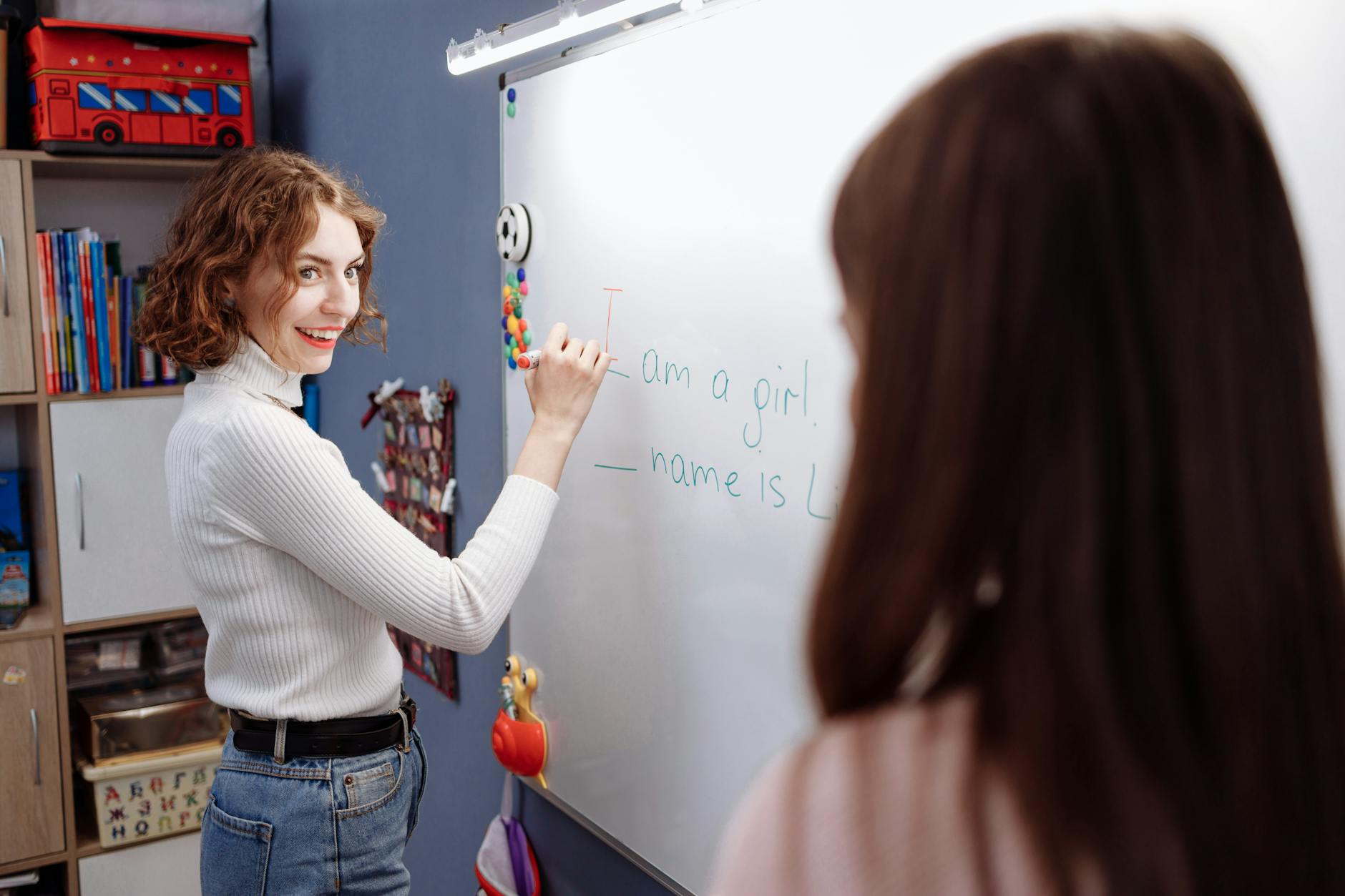
Collaborative Active Learning Examples for Group Work
John Hattie's Visible Learning meta-analysis puts cooperative learning at an effect size of 0.59, crushing individual work at 0.40. For these active learning teaching strategies, stick to groups of three or four. At five members, you get passengers.
Group structure works best with triads or quads, heterogeneous by ability. Avoid groups of five or more.
Individual accountability requires rotating roles—Recorder, Timekeeper, Skeptic, Reporter—to prevent the loud kid from dominating every session.
Prep time investment runs fifteen to thirty minutes to assign roles, set up materials, and explain protocols.
Uneven participation is the failure mode that sinks these active learning methods. I assign mandatory rotating roles so every student practices questioning and presenting. The Skeptic asks hard questions. The Reporter speaks for the group. Rotate every session.
Jigsaw Method for Content Mastery
Elliot Aronson designed this in 1971 as a cornerstone of constructivist pedagogy. Home Groups of four split into Expert Groups by topic segment—say, mitochondria, nucleus, ribosomes, or membrane for 8th-grade cell biology. Experts get twenty minutes to master their chunk; Home Groups get ten minutes for peer teaching.
Accountability comes first. Last October, my 8th-grade biology students took a five-question "expert quiz" before returning to their Home Groups. The mitochondria group initially bombed it because they skimmed. They had to reteach themselves before the Home Group could proceed. The synthesis task asked them to compare the cell to city government, forcing integration of all four organelles.
Jigsaw Method for Content Mastery works because it creates positive interdependence through these active learning techniques. They literally need every expert to pass.
Numbered Heads Together
This Kagan structure keeps everyone alert. Students number off one through four in base groups. You pose the question; they literally put heads together to ensure all four can explain the answer. They must use evidence from the text.
Random selection prevents coasting. Roll a die or use a spinner app to pick the respondent. The team earns points only if that student answers correctly with no teammate help during the final response. This formative assessment reveals who actually knows it.
In higher ed, add a Devil's Advocate role. That student must challenge the group's consensus with counter-arguments before the Reporter speaks, driving deeper cognitive engagement and metacognitive strategies.
Gallery Walk Activities
Post five to seven chart papers around the room with different data sets or prompts. Groups of three rotate every three minutes with thirty-second transitions. I project a timer on the board; when it hits zero, they move regardless of completion.
Use "Two Stars and a Wish" for feedback on sticky notes or via QR codes linked to Padlet. Each comment includes two specific positives and one constructive suggestion. This makes thinking visible and creates concrete opportunities for peer instruction.
Clear your aisles. In packed rooms, run a Stationary Gallery where materials rotate in folders instead of students moving. Same collaborative learning methods that drive results, fewer tripping hazards and less chaos.

What Active Learning Examples Build Critical Thinking?
Critical thinking develops through Socratic Seminars (inner/outer circle discussions), Case Study investigations analyzing real-world dilemmas, and Problem-Based Learning scenarios spanning 5-7 days. These methods target Webb's Depth of Knowledge levels 3-4, requiring students to evaluate evidence, construct arguments, and solve ill-structured problems, not recall facts.
These active learning examples push past worksheets. They force students to sit with confusion and build their own answers. You become the guide who asks the next question.
Most worksheets sit at DOK 1 or 2. They ask kids to recall or apply algorithms. These methods hit DOK 3 and 4. Students strategize, justify, and extend thinking over time. They weigh multiple solutions and defend their reasoning with evidence. This is where cognitive engagement deepens.
Listen for the transition from "I think" to "The text suggests." Watch for students citing line numbers or data points. Strong seminars feature "However..." and "Building on that..." instead of simple agreement. When they start poking holes in their own arguments, you know the metacognitive strategies are working.
These methods demand 20 to 45 minutes minimum. You cannot rush deep thinking. Prep work matters too. You need texts marked for ambiguity, cases with gaps, or problem scenarios with constraints. I learned this with my 10th-grade history class. I handed them Federalist No. 10 cold and the discussion flopped. The next period I used a double-entry journal first. Night and day difference.
Socratic Seminar Circles
Set up two concentric circles. The inner ring holds 8 to 12 students discussing text. The outer ring observes, tallying how often speakers cite evidence.
Ground rules matter:
No hand raising.
Address peers, not the teacher.
Cite specific passages.
You stand at the whiteboard mapping the conversation flow with lines and arrows. Stay silent until you must ask "What evidence supports that interpretation?" or "Who has a different reading?" Socratic Seminar Circles work best with advance prep. Twelfth-grade AP Government students analyzing Federalist No. 10 complete a double-entry journal with three text citations and two clarifying questions beforehand. The difference between prepared and cold discussions is stark.
Case Study Investigations
Adapt the Harvard Business School method for secondary students. Hand them a 2 to 3 page narrative presenting a real dilemma with incomplete information. Give 15 minutes for individual reading, then 20 minutes for group analysis.
Follow this protocol:
Identify four stakeholders.
List three possible decisions with pros and cons.
Select one with supporting evidence.
Articulate drawbacks of your chosen solution.
This last step reveals critical awareness. Eleventh-grade environmental science students investigating the Flint water crisis role-play the EPA official, mayor, pediatrician, and resident arguing over budget allocation. Watching them realize that every solution carried human costs shows that these critical thinking strategies for educators actually work.
Problem-Based Learning Scenarios
Structure this as a 5 to 7 day unit. Post the ill-structured driving question where everyone sees it daily. Students generate a "Need to Know" list on chart paper. The problem has no single right answer.
Bring in experts via 15-minute Zoom calls or simulated video interviews. Students build public products like proposals or prototypes. These active learning examples require students to construct knowledge through iteration.
Seventh-grade math students designing a school carnival game work within specific constraints:
$200 budget limit.
Win probability between 15 and 25 percent.
Must fit in 10 by 10 foot space.
Include profit and loss calculations.
They defend designs to the principal for actual budget approval.

Technology-Enhanced Active Learning Examples
Technology should solve data collection or engagement problems, never replace solid pedagogy. We define active learning as student-centered instruction where cognitive engagement matters more than screen time. Before you digitize, ask what paper cannot do.
Tool | Free Tier | Device Needs | Setup |
|---|---|---|---|
Pear Deck | 30 students | Student devices + projector | 15 min |
Nearpod | 40 students | Student devices + projector | 15 min |
Mentimeter | 2 questions/event | Student devices | 5 min |
Tech failures kill momentum. Always have the paper equivalent ready. When the Wi-Fi dies, you should transition to the low-tech version in under 30 seconds.
Interactive Whiteboard Challenges
Pear Deck, Nearpod, and Classkick turn slides into interactive whiteboard challenges. Students drag organs to body systems or draw lines of best fit on scatter plots. The free Pear Deck tier caps at 30 students; Nearpod allows 40.
Last October, my 7th graders used their phones to label a digestive system diagram while Chromebooks were charging. The dashboard showed me exactly who confused the esophagus with the trachea. I toggled to Teacher-Paced mode to pause and address the misconception before moving on.
Setup takes 15 minutes. Student-Paced mode lets faster kids continue while I circulate. The projector displays aggregate results without showing names, which invites peer instruction without embarrassment. These active learning strategies for students create genuine cognitive engagement.
Digital Exit Ticket Strategies
Digital exit ticket strategies close the feedback loop in 30-90 seconds. Mentimeter builds word clouds but limits free users to 2 questions per event. Google Forms handles unlimited responses with auto-grading. Padlet offers 3 free boards for bulletin-style responses.
I use stems like "Muddiest point was..." and "One question I still have..." Students submit before they pack up. I scan the data during passing period—5 minutes max—to adjust tomorrow's opening. This quick formative assessment defines whether I reteach or move on.
Google Forms conditional logic redirects wrong answers to remediation videos. The automated summary hits my inbox before the bell rings. This is formative assessment that actually informs instruction rather than collecting dust.
Virtual Think-Pair-Share Platforms
Synchronous platforms use breakout rooms configured for 2-3 students with 4-minute auto-close timers. I assign Google Slides by number: Student A edits Slide 2, Student B edits Slide 3. This creates shared accountability without chaos during peer instruction activities.
Asynchronous options like Flipgrid—now Flip—enforce 90-second video limits. Students respond to two peers using comment stems. This constructivist pedagogy forces concise thinking and metacognitive strategies that last beyond the class period.
Provide equity backups for camera anxiety or poor bandwidth. Text-based chat or phone dial-in work fine. Never require video on. These active learning examples support active learning in higher education and K-12 equally.

How Do You Match Active Learning to Your Learning Objective?
Match active learning to objectives using Bloom's Taxonomy: use Turn and Talk or Think-Pair-Share for Remember/Understand levels; Jigsaw or Numbered Heads Together for Apply/Analyze; and Socratic Seminars or Problem-Based Learning for Evaluate/Create. Align strategy complexity to cognitive demand—avoid over-engineering simple recall tasks or under-scaffolding complex analysis.
Think of it as matching the tool to the job. You wouldn't use a chainsaw to cut a birthday cake. Low-level verbs need light structures; high-level thinking needs heavy scaffolding.
Here's the matrix I keep taped inside my planbook. Rows show Bloom's levels; columns show prep intensity.
Remember/Understand (Low Prep): Turn and Talk, Think-Pair-Share, Exit Tickets. Use when objectives ask students to identify, list, or define discrete facts.
Apply/Analyze (Medium Prep): Jigsaw, Numbered Heads Together, or Peer Instruction. Deploy when verbs target compare, classify, or analyze relationships between concepts.
Evaluate/Create (High Prep): Socratic Seminars, Problem-Based Learning, Case Studies. Reserve for evaluate, judge, or design tasks requiring sustained cognitive engagement over multiple days.
This alignment honors constructivist pedagogy. Students build knowledge through appropriate challenge, not through busywork disguised as active learning activities. The strategy should fade into the background so the thinking takes center stage.
The verb in your objective is your compass. If it says "identify," "list," or "define," stay in the low-prep lane. If it says "compare," "analyze," or "classify," move to collaborative structures. If you see "evaluate," "judge," or "design," bring out the heavy scaffolding. See my full guide on matching active learning to your learning objective for printable charts of these 12 active learning strategies.
Last year I tried using Jigsaw for a simple vocabulary list in my 7th-grade science class. I spent twenty minutes setting up home groups and expert groups. The kids spent four minutes memorizing five definitions. Then they taught each other content they already knew. Total cognitive payoff: minimal. Total prep time lost: significant. I violated the cardinal rule—don't rent a moving van to carry a single envelope.
The reverse sin is worse. Asking students to defend a thesis using Think-Pair-Share is like bringing a spoon to dig a foundation. They need Socratic Seminar or structured academic controversy with sentence frames and text evidence protocols. Under-scaffolding complex thinking produces frustration, not deep student-centered instruction.
Count the cost. Low-prep active learning examples like Exit Tickets cost you two minutes and yield immediate formative assessment data. Jigsaw costs twenty minutes of setup and yields rich peer instruction—but only if the content actually benefits from distributed expertise. Metacognitive strategies work best when the thinking is worth the meta. Time is non-refundable. Spend it where the cognitive engagement justifies the investment.
Match tight. Teach smart.

Implementation Roadmap: From Planning to First Activity
You have the objective. You have the strategy. Now you need a sequence that keeps you from abandoning ship when the timer goes off. I learned this the hard way with a 9th-grade biology class. They spent seventeen minutes debating whether bacteria were "animals" because I hadn't scripted the CHAMPs protocol first. Here is the exact sequence I use now.
Audit your current lecture-to-active ratio. Track one class period. Mark a tally every time you speak versus when students speak. Most of us guess 50-50. The reality is closer to 80-20.
Select one strategy matching next week's objective, choosing from the active learning examples above. Do not overhaul your unit. Pick one approach that aligns with your specific target.
Script instructions using CHAMPs. Write out Conversation (voice level), Help (hand signal), Activity (exact task), Movement (can they get up?), Participation (what finished looks like). Never improvise this.
Time the activity. Never exceed 20% of your class period initially. For a 50-minute block, that's ten minutes max. Set a visible timer.
Prepare materials. Paper beats tech in week one. Have photocopies ready before you walk in.
Deploy with the timer visible. Start the countdown the moment you finish giving instructions. Watch the room, not your slides.
Debrief with an exit ticket. This formative assessment asks one question: "What is one thing you learned from peer instruction today?"
Failure Modes and Quick Fixes
Things will break. Here is the triage.
The Chaos: Students talk over each other or off-task. Fix: Explicit modeling first. Show them what it looks like, what it sounds like, before they start.
The Dominant Voice: One student does all the talking in groups. Fix: Assigned roles—recorder, timekeeper, skeptic, reporter. Rotate every activity.
The Empty Discussion: Silence or "I don't know." Fix: Sentence stems on the board. "I agree with X because..." or "The text suggests..."
The Tech Fail: WiFi dies, laptops freeze. Fix: Paper backup always. Active learning methodologies work with index cards and markers.
Tracking Success
Track student talk time versus your talk time using simple tally marks in your plan book. Goal is 40% student talk by week four, 60% by semester end. This shift toward student-centered instruction takes patience. Rosenshine's Principles of Instruction remind us that students need guided practice. They should hit an 80% success rate before independent work.
This approach mirrors the planning habits of highly effective educators. For a broader view, see our roadmap to transform your teaching.

Active Learning Examples: The 3-Step Kickoff
You do not need to overhaul your entire curriculum by Friday. I started with one think-pair-share per week. Then I added a gallery walk when we reviewed for the test. Small shifts create momentum. Your students will notice the difference immediately. They lean forward. The slumping stops.
The best active learning examples meet your kids where they are. My 7th graders needed movement, so we used stations. My AP group needed argumentation, so we used structured academic controversy. Match the strategy to the objective, not the other way around. That is the difference between busy work and real cognitive engagement.
Pick one strategy from this list that fits your objective tomorrow.
Plan the transition cues. I write them on a sticky note.
Run it for ten minutes. Reflect after class.

What Are the Best Low-Prep Active Learning Examples?
The best low-prep active learning examples include Think-Pair-Share (30-60-120 second protocol), Turn and Talk with shoulder partners or clock appointments, and Cold Calling with 3-5 second structured wait time. These require zero handouts or technology, work in any classroom layout, and take under 5 minutes to implement while boosting participation rates significantly.
You have forty-five minutes, maybe fifty. You cannot spend half an hour cutting cardstock or setting up stations. These three protocols demand zero copies, no devices, and no rearranged furniture. They work whether you have fifteen students or forty.
Think-Pair-Share Protocols: 30 seconds silent thinking, 60 seconds partner discussion, 120 seconds full-class debrief. Optimal for classes of 15-40 students.
Turn and Talk Variations: 30-90 seconds of structured conversation using shoulder partners, clock appointments, or standing pairs. Works with 15-40 students.
Cold Calling with Structured Wait Time: 3-5 seconds of wait time after question before naming a student. Effective for 15-40 students.
Introverted students need structure, not spotlight trauma. I track participation using a simple clipboard checklist to ensure every voice enters the room within two weeks. Offer a "pass" option with written follow-up for anxious learners. True equity means cognitive engagement for all, not just the loud.
Think-Pair-Share Protocols
Frank Lyman developed this protocol in 1981, and it remains the backbone of constructivist pedagogy. I run it with a strict timer: thirty seconds of silent individual thinking, sixty seconds of peer instruction with a partner, and two minutes for the debrief. The auditory signal matters. I use a chime or project a countdown so students feel the boundary.
Last week my tenth-grade ELA students analyzed rhetorical devices in Churchill's "Blood, Toil, Tears, and Sweat" speech. During the sixty-second pair phase, I circled with a clipboard, eavesdropping on misconceptions about parallelism. I noted three specific errors, then addressed them during the debrief instead of letting them fossilize. That is formative assessment in motion, and it took zero photocopies.
Turn and Talk Variations
Shoulder Partners work for immediate proximity, but Clock Appointments add metacognitive strategies by requiring students to pre-schedule four partners at 12, 3, 6, and 9 positions on a clock face. Standing Pairs get blood flowing to the brain. I use these strategies for active learning daily because they force student-centered instruction without photocopying a thing.
Safety matters more than speed. I institute a universal three-second wait time after asking the question, then permit discussion. Anxious students get a "pass option"—they may submit a written response after class instead of speaking aloud. This maintains cognitive engagement while respecting neurological differences. No child should dread the turn-and-talk bell.
Cold Calling with Structured Wait Time
Doug Lemov popularized this in Teach Like a Champion, but the research originates with Mary Budd Rowe's studies on wait time. I use a structured three to five second pause after posing a question. This creates genuine thinking space rather than a race to raise hands.
I combine this with "No Opt Out"—if a student cannot answer, they use a lifeline such as Phone a Friend, Crowd Source, or Fifty-Fifty. No one gets to hide, but no one faces public failure either.
Equity requires systematic tracking. I use popsicle sticks or a ClassDojo randomizer to ensure one hundred percent student coverage over a two-week period. I avoid hunting for correct answers by pre-calling on students while they are still thinking, not after hands shoot up. This keeps active learning examples equitable rather than performative.
Collaborative Active Learning Examples for Group Work
John Hattie's Visible Learning meta-analysis puts cooperative learning at an effect size of 0.59, crushing individual work at 0.40. For these active learning teaching strategies, stick to groups of three or four. At five members, you get passengers.
Group structure works best with triads or quads, heterogeneous by ability. Avoid groups of five or more.
Individual accountability requires rotating roles—Recorder, Timekeeper, Skeptic, Reporter—to prevent the loud kid from dominating every session.
Prep time investment runs fifteen to thirty minutes to assign roles, set up materials, and explain protocols.
Uneven participation is the failure mode that sinks these active learning methods. I assign mandatory rotating roles so every student practices questioning and presenting. The Skeptic asks hard questions. The Reporter speaks for the group. Rotate every session.
Jigsaw Method for Content Mastery
Elliot Aronson designed this in 1971 as a cornerstone of constructivist pedagogy. Home Groups of four split into Expert Groups by topic segment—say, mitochondria, nucleus, ribosomes, or membrane for 8th-grade cell biology. Experts get twenty minutes to master their chunk; Home Groups get ten minutes for peer teaching.
Accountability comes first. Last October, my 8th-grade biology students took a five-question "expert quiz" before returning to their Home Groups. The mitochondria group initially bombed it because they skimmed. They had to reteach themselves before the Home Group could proceed. The synthesis task asked them to compare the cell to city government, forcing integration of all four organelles.
Jigsaw Method for Content Mastery works because it creates positive interdependence through these active learning techniques. They literally need every expert to pass.
Numbered Heads Together
This Kagan structure keeps everyone alert. Students number off one through four in base groups. You pose the question; they literally put heads together to ensure all four can explain the answer. They must use evidence from the text.
Random selection prevents coasting. Roll a die or use a spinner app to pick the respondent. The team earns points only if that student answers correctly with no teammate help during the final response. This formative assessment reveals who actually knows it.
In higher ed, add a Devil's Advocate role. That student must challenge the group's consensus with counter-arguments before the Reporter speaks, driving deeper cognitive engagement and metacognitive strategies.
Gallery Walk Activities
Post five to seven chart papers around the room with different data sets or prompts. Groups of three rotate every three minutes with thirty-second transitions. I project a timer on the board; when it hits zero, they move regardless of completion.
Use "Two Stars and a Wish" for feedback on sticky notes or via QR codes linked to Padlet. Each comment includes two specific positives and one constructive suggestion. This makes thinking visible and creates concrete opportunities for peer instruction.
Clear your aisles. In packed rooms, run a Stationary Gallery where materials rotate in folders instead of students moving. Same collaborative learning methods that drive results, fewer tripping hazards and less chaos.
What Active Learning Examples Build Critical Thinking?
Critical thinking develops through Socratic Seminars (inner/outer circle discussions), Case Study investigations analyzing real-world dilemmas, and Problem-Based Learning scenarios spanning 5-7 days. These methods target Webb's Depth of Knowledge levels 3-4, requiring students to evaluate evidence, construct arguments, and solve ill-structured problems, not recall facts.
These active learning examples push past worksheets. They force students to sit with confusion and build their own answers. You become the guide who asks the next question.
Most worksheets sit at DOK 1 or 2. They ask kids to recall or apply algorithms. These methods hit DOK 3 and 4. Students strategize, justify, and extend thinking over time. They weigh multiple solutions and defend their reasoning with evidence. This is where cognitive engagement deepens.
Listen for the transition from "I think" to "The text suggests." Watch for students citing line numbers or data points. Strong seminars feature "However..." and "Building on that..." instead of simple agreement. When they start poking holes in their own arguments, you know the metacognitive strategies are working.
These methods demand 20 to 45 minutes minimum. You cannot rush deep thinking. Prep work matters too. You need texts marked for ambiguity, cases with gaps, or problem scenarios with constraints. I learned this with my 10th-grade history class. I handed them Federalist No. 10 cold and the discussion flopped. The next period I used a double-entry journal first. Night and day difference.
Socratic Seminar Circles
Set up two concentric circles. The inner ring holds 8 to 12 students discussing text. The outer ring observes, tallying how often speakers cite evidence.
Ground rules matter:
No hand raising.
Address peers, not the teacher.
Cite specific passages.
You stand at the whiteboard mapping the conversation flow with lines and arrows. Stay silent until you must ask "What evidence supports that interpretation?" or "Who has a different reading?" Socratic Seminar Circles work best with advance prep. Twelfth-grade AP Government students analyzing Federalist No. 10 complete a double-entry journal with three text citations and two clarifying questions beforehand. The difference between prepared and cold discussions is stark.
Case Study Investigations
Adapt the Harvard Business School method for secondary students. Hand them a 2 to 3 page narrative presenting a real dilemma with incomplete information. Give 15 minutes for individual reading, then 20 minutes for group analysis.
Follow this protocol:
Identify four stakeholders.
List three possible decisions with pros and cons.
Select one with supporting evidence.
Articulate drawbacks of your chosen solution.
This last step reveals critical awareness. Eleventh-grade environmental science students investigating the Flint water crisis role-play the EPA official, mayor, pediatrician, and resident arguing over budget allocation. Watching them realize that every solution carried human costs shows that these critical thinking strategies for educators actually work.
Problem-Based Learning Scenarios
Structure this as a 5 to 7 day unit. Post the ill-structured driving question where everyone sees it daily. Students generate a "Need to Know" list on chart paper. The problem has no single right answer.
Bring in experts via 15-minute Zoom calls or simulated video interviews. Students build public products like proposals or prototypes. These active learning examples require students to construct knowledge through iteration.
Seventh-grade math students designing a school carnival game work within specific constraints:
$200 budget limit.
Win probability between 15 and 25 percent.
Must fit in 10 by 10 foot space.
Include profit and loss calculations.
They defend designs to the principal for actual budget approval.
Technology-Enhanced Active Learning Examples
Technology should solve data collection or engagement problems, never replace solid pedagogy. We define active learning as student-centered instruction where cognitive engagement matters more than screen time. Before you digitize, ask what paper cannot do.
Tool | Free Tier | Device Needs | Setup |
|---|---|---|---|
Pear Deck | 30 students | Student devices + projector | 15 min |
Nearpod | 40 students | Student devices + projector | 15 min |
Mentimeter | 2 questions/event | Student devices | 5 min |
Tech failures kill momentum. Always have the paper equivalent ready. When the Wi-Fi dies, you should transition to the low-tech version in under 30 seconds.
Interactive Whiteboard Challenges
Pear Deck, Nearpod, and Classkick turn slides into interactive whiteboard challenges. Students drag organs to body systems or draw lines of best fit on scatter plots. The free Pear Deck tier caps at 30 students; Nearpod allows 40.
Last October, my 7th graders used their phones to label a digestive system diagram while Chromebooks were charging. The dashboard showed me exactly who confused the esophagus with the trachea. I toggled to Teacher-Paced mode to pause and address the misconception before moving on.
Setup takes 15 minutes. Student-Paced mode lets faster kids continue while I circulate. The projector displays aggregate results without showing names, which invites peer instruction without embarrassment. These active learning strategies for students create genuine cognitive engagement.
Digital Exit Ticket Strategies
Digital exit ticket strategies close the feedback loop in 30-90 seconds. Mentimeter builds word clouds but limits free users to 2 questions per event. Google Forms handles unlimited responses with auto-grading. Padlet offers 3 free boards for bulletin-style responses.
I use stems like "Muddiest point was..." and "One question I still have..." Students submit before they pack up. I scan the data during passing period—5 minutes max—to adjust tomorrow's opening. This quick formative assessment defines whether I reteach or move on.
Google Forms conditional logic redirects wrong answers to remediation videos. The automated summary hits my inbox before the bell rings. This is formative assessment that actually informs instruction rather than collecting dust.
Virtual Think-Pair-Share Platforms
Synchronous platforms use breakout rooms configured for 2-3 students with 4-minute auto-close timers. I assign Google Slides by number: Student A edits Slide 2, Student B edits Slide 3. This creates shared accountability without chaos during peer instruction activities.
Asynchronous options like Flipgrid—now Flip—enforce 90-second video limits. Students respond to two peers using comment stems. This constructivist pedagogy forces concise thinking and metacognitive strategies that last beyond the class period.
Provide equity backups for camera anxiety or poor bandwidth. Text-based chat or phone dial-in work fine. Never require video on. These active learning examples support active learning in higher education and K-12 equally.
How Do You Match Active Learning to Your Learning Objective?
Match active learning to objectives using Bloom's Taxonomy: use Turn and Talk or Think-Pair-Share for Remember/Understand levels; Jigsaw or Numbered Heads Together for Apply/Analyze; and Socratic Seminars or Problem-Based Learning for Evaluate/Create. Align strategy complexity to cognitive demand—avoid over-engineering simple recall tasks or under-scaffolding complex analysis.
Think of it as matching the tool to the job. You wouldn't use a chainsaw to cut a birthday cake. Low-level verbs need light structures; high-level thinking needs heavy scaffolding.
Here's the matrix I keep taped inside my planbook. Rows show Bloom's levels; columns show prep intensity.
Remember/Understand (Low Prep): Turn and Talk, Think-Pair-Share, Exit Tickets. Use when objectives ask students to identify, list, or define discrete facts.
Apply/Analyze (Medium Prep): Jigsaw, Numbered Heads Together, or Peer Instruction. Deploy when verbs target compare, classify, or analyze relationships between concepts.
Evaluate/Create (High Prep): Socratic Seminars, Problem-Based Learning, Case Studies. Reserve for evaluate, judge, or design tasks requiring sustained cognitive engagement over multiple days.
This alignment honors constructivist pedagogy. Students build knowledge through appropriate challenge, not through busywork disguised as active learning activities. The strategy should fade into the background so the thinking takes center stage.
The verb in your objective is your compass. If it says "identify," "list," or "define," stay in the low-prep lane. If it says "compare," "analyze," or "classify," move to collaborative structures. If you see "evaluate," "judge," or "design," bring out the heavy scaffolding. See my full guide on matching active learning to your learning objective for printable charts of these 12 active learning strategies.
Last year I tried using Jigsaw for a simple vocabulary list in my 7th-grade science class. I spent twenty minutes setting up home groups and expert groups. The kids spent four minutes memorizing five definitions. Then they taught each other content they already knew. Total cognitive payoff: minimal. Total prep time lost: significant. I violated the cardinal rule—don't rent a moving van to carry a single envelope.
The reverse sin is worse. Asking students to defend a thesis using Think-Pair-Share is like bringing a spoon to dig a foundation. They need Socratic Seminar or structured academic controversy with sentence frames and text evidence protocols. Under-scaffolding complex thinking produces frustration, not deep student-centered instruction.
Count the cost. Low-prep active learning examples like Exit Tickets cost you two minutes and yield immediate formative assessment data. Jigsaw costs twenty minutes of setup and yields rich peer instruction—but only if the content actually benefits from distributed expertise. Metacognitive strategies work best when the thinking is worth the meta. Time is non-refundable. Spend it where the cognitive engagement justifies the investment.
Match tight. Teach smart.
Implementation Roadmap: From Planning to First Activity
You have the objective. You have the strategy. Now you need a sequence that keeps you from abandoning ship when the timer goes off. I learned this the hard way with a 9th-grade biology class. They spent seventeen minutes debating whether bacteria were "animals" because I hadn't scripted the CHAMPs protocol first. Here is the exact sequence I use now.
Audit your current lecture-to-active ratio. Track one class period. Mark a tally every time you speak versus when students speak. Most of us guess 50-50. The reality is closer to 80-20.
Select one strategy matching next week's objective, choosing from the active learning examples above. Do not overhaul your unit. Pick one approach that aligns with your specific target.
Script instructions using CHAMPs. Write out Conversation (voice level), Help (hand signal), Activity (exact task), Movement (can they get up?), Participation (what finished looks like). Never improvise this.
Time the activity. Never exceed 20% of your class period initially. For a 50-minute block, that's ten minutes max. Set a visible timer.
Prepare materials. Paper beats tech in week one. Have photocopies ready before you walk in.
Deploy with the timer visible. Start the countdown the moment you finish giving instructions. Watch the room, not your slides.
Debrief with an exit ticket. This formative assessment asks one question: "What is one thing you learned from peer instruction today?"
Failure Modes and Quick Fixes
Things will break. Here is the triage.
The Chaos: Students talk over each other or off-task. Fix: Explicit modeling first. Show them what it looks like, what it sounds like, before they start.
The Dominant Voice: One student does all the talking in groups. Fix: Assigned roles—recorder, timekeeper, skeptic, reporter. Rotate every activity.
The Empty Discussion: Silence or "I don't know." Fix: Sentence stems on the board. "I agree with X because..." or "The text suggests..."
The Tech Fail: WiFi dies, laptops freeze. Fix: Paper backup always. Active learning methodologies work with index cards and markers.
Tracking Success
Track student talk time versus your talk time using simple tally marks in your plan book. Goal is 40% student talk by week four, 60% by semester end. This shift toward student-centered instruction takes patience. Rosenshine's Principles of Instruction remind us that students need guided practice. They should hit an 80% success rate before independent work.
This approach mirrors the planning habits of highly effective educators. For a broader view, see our roadmap to transform your teaching.
Active Learning Examples: The 3-Step Kickoff
You do not need to overhaul your entire curriculum by Friday. I started with one think-pair-share per week. Then I added a gallery walk when we reviewed for the test. Small shifts create momentum. Your students will notice the difference immediately. They lean forward. The slumping stops.
The best active learning examples meet your kids where they are. My 7th graders needed movement, so we used stations. My AP group needed argumentation, so we used structured academic controversy. Match the strategy to the objective, not the other way around. That is the difference between busy work and real cognitive engagement.
Pick one strategy from this list that fits your objective tomorrow.
Plan the transition cues. I write them on a sticky note.
Run it for ten minutes. Reflect after class.
Still grading everything by hand?
EMStudio is a free teaching management app — manage your classes, students, lessons, and more!
Learn More
Still grading everything by hand?
EMStudio is a free teaching management app — manage your classes, students, lessons, and more!
Learn More




Notion4Teachers
Notion templates to simplify administrative tasks and enhance your teaching experience.



2026 Notion4Teachers. All Rights Reserved.
Notion4Teachers
Notion templates to simplify administrative tasks and enhance your teaching experience.
2026 Notion4Teachers. All Rights Reserved.
Notion4Teachers
Notion templates to simplify administrative tasks and enhance your teaching experience.
2026 Notion4Teachers. All Rights Reserved.