15 Classroom Games That Actually Improve Learning
15 Classroom Games That Actually Improve Learning

Article by
Milo
ESL Content Coordinator & Educator
ESL Content Coordinator & Educator
All Posts
You've watched students play classroom games that look fun but teach nothing. The Kahoot frenzy where kids guess random answers just to beat the timer. The vocabulary Bingo where half the class spaces out, waiting for someone to finally call "photosynthesis." You came here because you need active learning that actually sticks, not just noise and movement filling the last ten minutes of class.
The problem isn't that games waste time. It's that most aren't built for student-centered learning or real formative assessment. This post cuts through the Pinterest boards. I'll show you 15 classroom games that serve as instructional tools—not rewards for finishing worksheets early. You'll get quick games for 5-minute transitions, cooperative structures that force genuine collaboration instead of one kid doing all the work, and peer instruction setups where students teach each other. Plus, the classroom management tricks to implement these without losing your entire math block to chaos.
Still grading everything by hand?
EMStudio is a free teaching management app — manage your classes, students, lessons, and more!
Learn More

Still grading everything by hand?
EMStudio is a free teaching management app — manage your classes, students, lessons, and more!
Learn More
Table of Contents
What Are the Best Quick Class Games for Busy Schedules?
Quick class games include Zip Zap Zop for focus (90 seconds), Four Corners for academic review (3 minutes), Silent Ball for transitions (2-5 minutes), Statue Garden for energy regulation (2 minutes), and Telephone Charades for communication (4 minutes). Each requires zero materials and deploys instantly when you have unexpected time or need to reset classroom energy. Use Statue Garden for K-2; all five work for grades 3-8; Zip Zap Zop and Telephone Charades fit best for 9-12.
Game Name | Best Use Case | Setup Time | Noise Level | Space Needed |
|---|---|---|---|---|
Zip Zap Zop | Focus/Energy Regulation | 0-1 min | Medium-High | Circle (clear floor) |
Four Corners | Content Review | 1-2 min | Medium | Room with corners |
Silent Ball | Transitions | 0 min | Silent | Seated or standing circle |
Statue Garden | Energy Regulation | 0-1 min | Low | Open floor |
Telephone Charades | Communication/Review | 1 min | Low-Medium | Line or circle |
But quick classroom games can backfire. Zip Zap Zop sometimes leaves kids bouncing off walls instead of settling down. If students are too wired after Zip Zap Zop, immediately transition to Statue Garden. The contrast between high-speed pointing and frozen stillness resets the nervous system. Follow with a 30-second cool-down: eyes closed, hands on bellies, three deep breaths in through the nose, out through the mouth. This recovery protocol—part of science-backed methods to improve student focus—prevents your 2-minute brain break from derailing the next 20 minutes of instruction.
Zip Zap Zop for Instant Focus
You stand in a circle. Point to someone across from you and say "zip." They point to a new person and say "zap." That person points and says "zop." The pattern repeats, speeding up until someone breaks the chain. Add the energy clap variation—everyone claps twice between rounds—to keep the rhythm tight and prevent wandering minds.
This works best for grades 3-12, especially after lunch or before tests when focus crumbles. The failure point is always the same: one confused student who didn't catch the pattern points randomly, breaking the flow. Fix this with a mandatory 30-second demo round first. No exceptions. Even 8th graders need the refresher. I learned this the hard way when my 7th graders devolved into pointing chaos because I assumed they remembered from last time.
Four Corners with Academic Twists
Label each corner A, B, C, and D. Read a multiple-choice question—"Which organelle produces energy?"—and students walk to their chosen corner. Once there, they defend their answer with a partner for 30 seconds using turn-and-talk. This turns movement into formative assessment. You see misconceptions immediately when seven kids cluster in the wrong corner.
Safety rule: walk, don't run, hands to yourself. Works for grades 2-8, but caps at 24-32 students. Larger groups create dangerous bottlenecks at the corners. I once had 36 students try this and nearly lost a monitor to the crowd surge.
Silent Ball for Transitions
The rules are simple:
Zero talking. One whisper and you're out.
Toss underhand only—overhand throws destroy the calm.
If you drop it, sit on your desk or do five jumping jacks to rejoin, depending on whether you need to burn energy or restore order.
Use a 6-inch foam ball or even a stress ball. Limit play to 2-4 minutes max; beyond that, engagement drops and students start throwing curveballs. Deploy this while passing back papers or waiting for three stragglers to finish their exit tickets. It fills dead time without chaos, supporting classroom management during those awkward two-minute gaps before the bell.
Statue Garden for Energy Regulation
Play 60-90 seconds of instrumental music—something without lyrics to prevent singing along—while students move freely. When the music cuts, call out "Statue of... a right triangle" or "Statue of photosynthesis." They freeze in that pose. For K-2, use animals or shapes. For grades 6-12, try historical figures—"Statue of someone signing the Declaration of Independence."
This builds self-regulation through contrast. After the wildness of movement comes the stillness of freezing. It anchors active learning and student-centered learning with physical metaphor, forcing students to embody abstract concepts rather than just memorize them.
Telephone Charades for Communication
Student one whispers an academic concept to student two—"mitochondria is the powerhouse of the cell." Student two acts this out without words for student three, who guesses the term. The degradation is immediate and often hilarious. The message rarely survives three people intact.
Debrief with peer instruction questions: Where did the meaning get lost? How does this relate to clear writing instructions? Use active learning games for the classroom like this to demonstrate why precise language matters more than clever phrasing in group projects.
Which Cooperative Games for the Classroom Build Real Teamwork?
Classroom games like Human Knot with reflection prompts, Desert Island survival challenges, classroom escape rooms, resource-limited tower building, and review-question Jenga build real teamwork by requiring interdependent problem-solving and shared accountability for outcomes. These work best with groups of 4-12 students and include structured debriefing to transfer skills to academic collaboration and student-centered learning.
Game | Best For | The Catch | Group/Time | Quiet Student Fix |
|---|---|---|---|---|
Human Knot | Physical trust, nonverbal comms | Physical touch consent issues | 8-12 students, 10 min | Assign 'Untangler' role to quiet student |
Desert Island | Consensus building, prioritization | Requires abstract thinking | 4-6 students, 15 min | Round-robin only, no interruptions |
Escape Room | Complex problem solving, engagement | Material intensive | 6-8 students or whole class, 30-45 min | Lock box assignments |
Tower Building | Engineering design, prototyping | Risk of competitive drift | 3-4 students, 18 min | Materials manager rotates |
Cooperative Jenga | Content review, fine motor control | Time consuming | 2-4 students, 20 min | Reader vs puller roles |
The Human Knot with Reflection Prompts
8-12 students stand in a circle, reach across to grab two random hands—not adjacent to their own—and untangle into a circle without letting go. Check for comfortable grip strength first, and always offer a 'pass' option for students uncomfortable with touch. This isn't just fun; it's classroom management practice disguised as play. I've seen 7th graders solve this in four minutes and others take twelve; the time isn't the point, the working through is.
To prevent the loudest student from taking over, assign the Untangler role to your quietest participant. They are the only one who can suggest moves; everyone else follows their directions. This flips the typical power dynamic instantly.
Who took leadership during the tangle?
What moment felt most frustrating?
How did you solve disagreements without talking over each other?
Desert Island Survival Challenges
Present the scenario: plane crash, desert island, choose five items from a list of fifteen to survive. Mix practical items like water purification tablets with useless ones like a grand piano. This forces genuine debate rather than obvious choices. Cooperative learning strategies that drive active learning work best when the problem has no single right answer.
Use a strict consensus-building protocol: round-robin only, no interruptions allowed. Each person explains one item selection before anyone responds. This shuts down the student who usually dominates by volume.
Which item caused the most disagreement?
Did you change your mind after hearing someone else's reasoning?
How is this like choosing sources for a research project?
Classroom Escape Room Collaborations
Use BreakoutEDU kits or DIY with 3-digit padlocks, lockable boxes, and envelopes. Hide academic content inside—solve five math problems to get the combinations. Teams of 6-8 work best; whole-class versions work but lose some individual accountability. Make sure students know how to reset the locks, or you'll spend your planning period fixing them. For more on group structures, see these collaborative learning methods that drive results.
Prevent one brain from running the show by assigning specific lock boxes to specific students. Sarah opens Box A, Marcus opens Box B. They must collaborate to get the codes, but everyone has a non-negotiable role in the physical unlocking.
What clue did you miss at first?
How did you divide tasks?
What would you do differently with five minutes left?
Tower Building with Limited Resources
Hand each team 20 uncooked spaghetti sticks, one yard of masking tape, and one marshmallow. The goal: tallest freestanding structure measured from table to marshmallow top in 18 minutes. Use 50 index cards instead of food if allergies are a concern. This teaches rapid prototyping and peer instruction better than any lecture on the engineering design process.
Watch for competitive drift—teams trying to sabotage neighbors or build secretly. Rotate the Materials Manager role every six minutes so no one hoards supplies or dictates the build.
How did your first design fail?
Who tested the structure before time ran out?
How does this mirror drafting and revising an essay?
Cooperative Jenga with Review Questions
Grab a standard Jenga set and write review questions on 20 blocks with dry-erase marker. When a student pulls a block, they must answer the question before placing it on top. If the tower falls, the team answers three questions together before rebuilding. This prevents individual elimination and creates instant formative assessment data. I use this for vocabulary in 3rd grade and math facts in 8th; the format scales up with harder questions.
Split roles to balance participation: one student reads the question, another pulls the block, a third verifies the answer. Rotate roles every three turns. This ensures your reluctant speakers still handle the physical game pieces while verbal students manage content.
Which question stumped the group?
How did you support someone who didn't know the answer?
When did you choose safety over risk, and what did that cost you?
Play Teacher Teacher: Games Where Students Lead Learning
Fisher and Frey's Gradual Release of Responsibility maps the cognitive load for these playteachers setups. Mini Lessons hit recall. Peer Teaching Stations demand application. Be the Professor requires analysis. Flipped Presentations force creation. Teaching Assistant roles build metacognition. Each step shifts the work to students for true student-centered learning while you circulate as safety net.
Grade their teaching, not just their content. My Student Teaching Rubric breaks down like this:
Content Accuracy (40%): Facts straight, no shortcuts.
Engagement Techniques (30%): Uses call-and-response, think-pair-share, or other moves to wake up the room.
Question Handling (20%): Waits after asking, doesn't panic-silence-fill.
Time Management (10%): Starts and ends when they said they would.
They need a 3 out of 5 to pass. Post this rubric before anyone stands up.
Skip these play teacher teacher activities for virgin content—students will encode errors you can't un-teach. Don't debut them in August when relationships aren't set, and shelve them completely with classes where authority is negotiable. Use them only for review or extension, never for the first pass.
Student-Led Mini Lessons on Recent Topics
Cap these at five minutes. One student reviews yesterday's concept while you sit in the back. They prep two questions using Bloom's levels one and two—recall and understanding. I've run this with 4th graders through seniors.
The prep checklist keeps them from rambling: 30-second hook, three minutes explaining the content with a diagram or chart (nonlinguistic representation), one minute for thumbs up/down checks, and 30 seconds for a written exit ticket. If they finish early, they don't get to sit down. They ask their review questions.
Peer Teaching Stations Rotation
Split the room into four mixed-ability groups. Each group masters one station for ten minutes using expert cards. They cannot rotate until they pass a three-question quiz proving they know the material cold.
Then the rotation begins. Groups move clockwise and teach the next station's content to the newcomers. The cycle runs twenty minutes total. You circulate with an observation checklist tracking who is actually teaching versus just reading the card. This is peer instruction at its messiest and most effective.
Be the Professor Review Sessions
Drag a tall chair to the front. Hand the kid glasses or a pointer—some prop that signals authority. Peers fire questions about the topic. The student answers using the Socratic method, tossing questions back: "What do you think the evidence suggests?"
You step in only when they're stuck, modeling the leading effective student discussions moves you've been demonstrating all year. Ten minutes per professor keeps the pace brisk. This works best with 7th graders and up who can handle the abstract thinking.
Flipped Classroom Student Presentations
Students record a three-minute Flipgrid video or present live, teaching a skill like solving two-step equations. The audience takes Cornell notes and must ask two questions each—no exceptions. This forces active learning even among the listeners.
Immediately after, everyone takes a five-question clarity quiz. If half the class bombs, the teaching failed, not the learning. Reserve this for grades 9-12 with complex content where the formative assessment data actually changes your next day's plan.
Teaching Assistant for a Day Roleplay
One student runs the routine. They take attendance, pass papers, and fill out "While You Were Out" forms for absent kids, explaining missed instructions in their own words. They facilitate the rules for your classroom games that period.
Set hard limits. They cannot write referrals or assign consequences. They redirect using "I" statements only. At day's end, they write a reflection on how exhausting it is to manage 32 people. These leadership skills that translate beyond the classroom stick when kids experience the fatigue firsthand. Rotate weekly through grades 6-12.
How to Choose the Right Game for Your Learning Objective?
Match games to learning objectives by first identifying the Bloom's Taxonomy level needed—recall versus creation—then selecting formats targeting that cognitive skill. Consider your time budget using the 5% rule, available physical space, and differentiate complexity based on grade level readiness.
Start with what you want students to do. If you need Remembering, use Zip Zap Zop for rapid recall. For Understanding, Four Corners checks comprehension through physical movement. Applying works best with Tower Building or hands-on challenges. When students need to analyze, Desert Island forces comparison and prioritization. Evaluating suits Be the Professor or peer instruction scenarios where students judge quality. For Creating, nothing beats Student Mini Lessons where they build the content themselves.
Track your minutes using the 5% Rule. In a 50-minute period, that means 2.5 minutes maximum for quick games. A 90-minute block gives you 4.5 minutes. If the game IS the instruction—like an Escape Room reviewing cellular biology—you can stretch to 20% of class time, but only when every minute ties to specific standards.
Matching Games to Learning Standards
Robert Marzano's high-yield strategies map neatly to these classroom games. Use Four Corners for identifying similarities and differences. Statue Garden creates nonlinguistic representations of concepts. Student Mini Lessons force summarizing in their own words. Human Knot builds cooperative learning and communication.
Build a simple alignment chart for your own use. List your district or CCSS standard in one column, the game in the next, and the specific skill practiced. For example, a 7th-grade ELA standard requiring analysis of text structure pairs with Desert Island debates. A math standard on geometric construction matches Tower Building with specific material constraints. This beats guessing. See our guide on aligning activities with curriculum standards for a template.
Considering Time and Space Constraints
Use the 30-second setup rule. If explaining the rules and preparing materials takes longer than 30 seconds, it is not a "quick game." It becomes a production. Your students lose the cognitive boost of rapid transitions.
Audit your room. Four Corners needs clear corners without computer cords or backpacks. Silent Ball works even in crowded rooms with desks in rows. Human Knot demands open floor space and a "desks to sides in 60 seconds" drill that you practice once until students can clear the center automatically. Measure your square footage against the engagement you want. Try these proven methods for classroom gamification that fit tight spaces.
Differentiating for Grade Levels
Elementary students need concrete rules with 2-3 steps maximum. Use visual rule cards for Zip Zap Zop. Keep these class games under 2-3 minutes. High schoolers can handle complexity. Run Four Corners with a twist: students must justify their corner using textual evidence from last night's reading. Add metacognitive reflection essays after the game asking what strategies worked and why.
Active learning looks different at each level. Match the complexity to their readiness, and you get formative assessment data instead of chaos.
Elementary (K-2): Concrete materials, visual aids, 2-minute maximum, heavy teacher scaffolding, focus on classroom management routines.
Middle (6-8): Social competition acceptable, 10-minute duration, abstract concepts introduced, peer instruction models.
High School (9-12): Complex scenarios, 15+ minutes, minimal scaffolding, student-designed rule variations, metacognitive reflection required.

How Do You Implement These Games Without Losing Instructional Time?
Implement games without losing time by establishing clear entry and exit rituals like countdowns and anchor charts, using games as embedded formative assessment rather than supplemental activities, and building student ownership through co-created rules and rotating referee roles to minimize teacher facilitation.
Creating Rituals Around Game Play
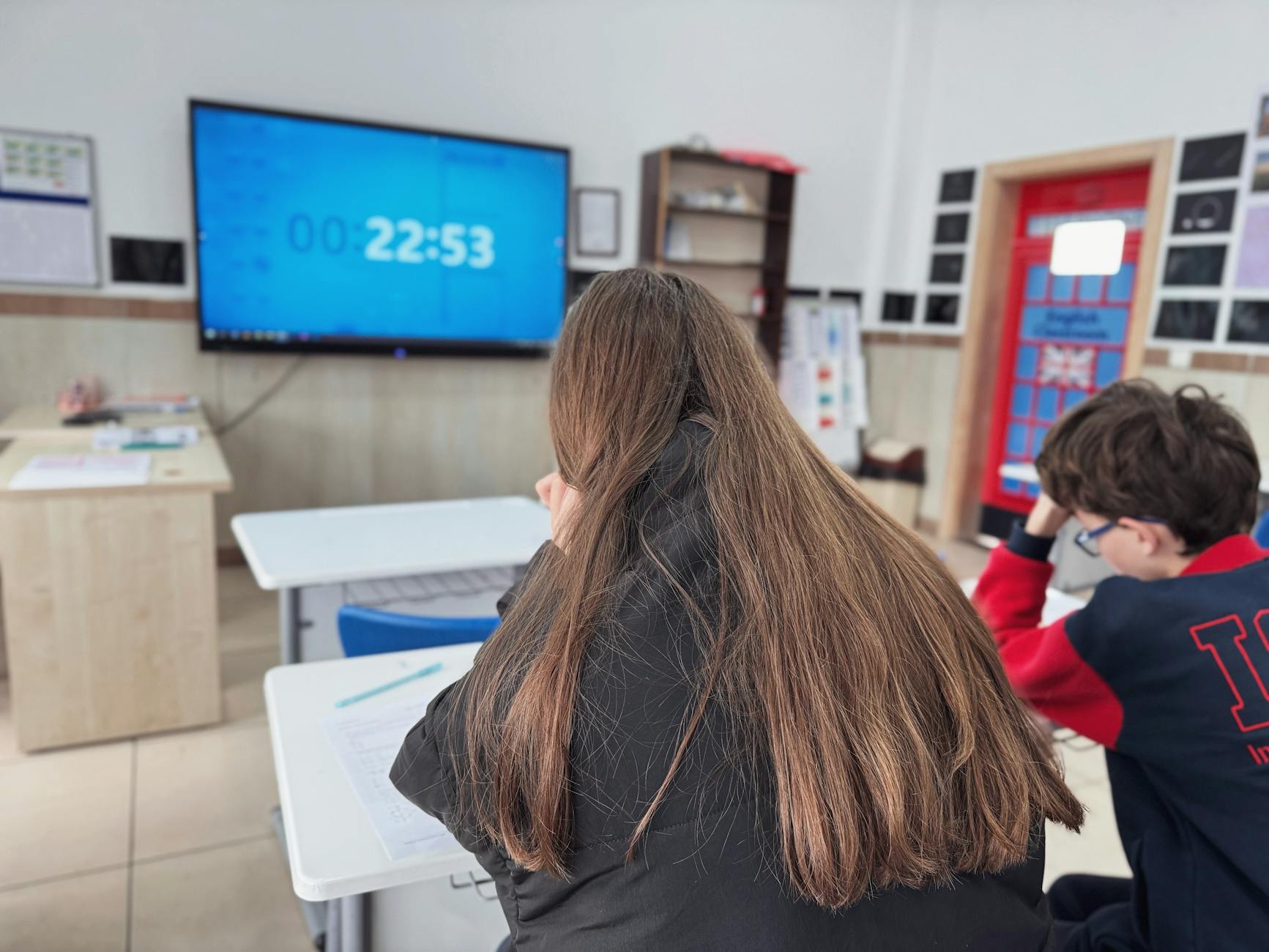
Games eat your clock when you don't guard the edges. Project a visible timer where every student can see it. When it hits zero, enforce the 'stop mid-sentence' rule. Mid-word, mid-laugh, mid-throw. This hard boundary trains students that classroom games never bleed into writing instruction or math blocks.
Transition chaos destroys pacing. Solve it with assigned Materials Managers. Two students rotate this role weekly. They move during the 30-second setup window while everyone else stays seated finishing the bell ringer. They handle cards, balls, and boards. When play ends, those same managers supervise the 10-second cleanup competition—table versus table. Slowest table sits last.
Post a Game On anchor chart listing three non-negotiables:
Safety: Bodies stay in control
Participation: Everyone plays
Respect: Words stay kind
Your Game Off signal needs to be a specific phrase like "Back to business in 3-2-1." Pair this with non-verbal cues. Raised hand means freeze immediately. Countdown from five means finish your sentence. Play the same 15-second music cue every time you shift into or out of active learning mode. Students hear those opening notes and automatically reach for supplies. No verbal instructions. No repeated directions.
Using Games as Formative Assessment
Stop treating games as dessert. They are the meal. Use them as embedded formative assessment instead of separate activities. I carry an Anecdotal Record Grid during Silent Ball or Four Corners. Columns list the learning standards. Rows list student names. I mark mastery with a plus (+), partial understanding with a triangle (△), or a misconception with a minus (-). That evening, I sort the papers into groups for tomorrow's reteach.
Watch Four Corners carefully. Note which students walk to incorrect corners. Those physical choices reveal misconceptions faster than any exit slip. During Cooperative Jenga, listen to the peer instruction happening when students debate answers. Record which questions they miss. Don't stop play to correct. Observe and note.
Run a 90-second exit ticket protocol. Students write one thing learned and one thing confused. Collect at the door. You now have sorted data before the next bell rings. These examples of immediate formative assessment save instructional time because you assess during engagement rather than adding another worksheet.
Building Student Ownership of Rules
You cannot referee and teach simultaneously. Build student-centered learning structures instead. Start with rule co-creation. The class suggests ten possible rules. They vote on the top five by applause volume. You retain veto power for any safety issues. Post these five visibly on the wall. When conflicts arise during play, students use Rock-Paper-Scissors for any dispute under ten seconds. No judge. No jury. Just best two out of three. Move on.
Solve off-task behavior with rotating Game Referees. Every five minutes, a special lanyard passes to a new student. The referee carries a clipboard and has full authority to pause play if they spot unsafe moves or hear off-task chatter. They mark checks on a simple tally sheet. Three checks means a player sits out for two minutes. This classroom management strategy works because peers police volume and fairness, not you.
Cooperative games for the classroom only function when students own the process. These hacks to save time in class work because they transfer facilitation duties to students. You gain back precious minutes. They gain autonomy. That's the trade that makes classroom games sustainable without sacrificing your curriculum pacing.

Final Thoughts on Classroom Games
The biggest difference isn't picking the perfect game from this list. It's picking one game and using it until it runs itself. I've watched teachers collect fifteen different warm-ups and abandon them all by October because each one took too much explaining. Choose the game that felt most natural to you while reading, print the directions on a single sheet, and run it tomorrow. Same game. Same rules. Until your kids can start it without you speaking.
That repetition turns novelty into routine. Once the mechanics are automatic, real active learning takes over. Your students stop worrying about how to play and start wrestling with the content. That's when you see genuine engagement and honest formative assessment happening—and you realize you've built true student-centered learning without lowering your standards or adding hours to your prep.
Start with five minutes. Open your plan book right now, find tomorrow's lesson, and swap the first five minutes for one game. Don't wait for the perfect unit or the right Friday. Just start.
What Are the Best Quick Class Games for Busy Schedules?
Quick class games include Zip Zap Zop for focus (90 seconds), Four Corners for academic review (3 minutes), Silent Ball for transitions (2-5 minutes), Statue Garden for energy regulation (2 minutes), and Telephone Charades for communication (4 minutes). Each requires zero materials and deploys instantly when you have unexpected time or need to reset classroom energy. Use Statue Garden for K-2; all five work for grades 3-8; Zip Zap Zop and Telephone Charades fit best for 9-12.
Game Name | Best Use Case | Setup Time | Noise Level | Space Needed |
|---|---|---|---|---|
Zip Zap Zop | Focus/Energy Regulation | 0-1 min | Medium-High | Circle (clear floor) |
Four Corners | Content Review | 1-2 min | Medium | Room with corners |
Silent Ball | Transitions | 0 min | Silent | Seated or standing circle |
Statue Garden | Energy Regulation | 0-1 min | Low | Open floor |
Telephone Charades | Communication/Review | 1 min | Low-Medium | Line or circle |
But quick classroom games can backfire. Zip Zap Zop sometimes leaves kids bouncing off walls instead of settling down. If students are too wired after Zip Zap Zop, immediately transition to Statue Garden. The contrast between high-speed pointing and frozen stillness resets the nervous system. Follow with a 30-second cool-down: eyes closed, hands on bellies, three deep breaths in through the nose, out through the mouth. This recovery protocol—part of science-backed methods to improve student focus—prevents your 2-minute brain break from derailing the next 20 minutes of instruction.
Zip Zap Zop for Instant Focus
You stand in a circle. Point to someone across from you and say "zip." They point to a new person and say "zap." That person points and says "zop." The pattern repeats, speeding up until someone breaks the chain. Add the energy clap variation—everyone claps twice between rounds—to keep the rhythm tight and prevent wandering minds.
This works best for grades 3-12, especially after lunch or before tests when focus crumbles. The failure point is always the same: one confused student who didn't catch the pattern points randomly, breaking the flow. Fix this with a mandatory 30-second demo round first. No exceptions. Even 8th graders need the refresher. I learned this the hard way when my 7th graders devolved into pointing chaos because I assumed they remembered from last time.
Four Corners with Academic Twists
Label each corner A, B, C, and D. Read a multiple-choice question—"Which organelle produces energy?"—and students walk to their chosen corner. Once there, they defend their answer with a partner for 30 seconds using turn-and-talk. This turns movement into formative assessment. You see misconceptions immediately when seven kids cluster in the wrong corner.
Safety rule: walk, don't run, hands to yourself. Works for grades 2-8, but caps at 24-32 students. Larger groups create dangerous bottlenecks at the corners. I once had 36 students try this and nearly lost a monitor to the crowd surge.
Silent Ball for Transitions
The rules are simple:
Zero talking. One whisper and you're out.
Toss underhand only—overhand throws destroy the calm.
If you drop it, sit on your desk or do five jumping jacks to rejoin, depending on whether you need to burn energy or restore order.
Use a 6-inch foam ball or even a stress ball. Limit play to 2-4 minutes max; beyond that, engagement drops and students start throwing curveballs. Deploy this while passing back papers or waiting for three stragglers to finish their exit tickets. It fills dead time without chaos, supporting classroom management during those awkward two-minute gaps before the bell.
Statue Garden for Energy Regulation
Play 60-90 seconds of instrumental music—something without lyrics to prevent singing along—while students move freely. When the music cuts, call out "Statue of... a right triangle" or "Statue of photosynthesis." They freeze in that pose. For K-2, use animals or shapes. For grades 6-12, try historical figures—"Statue of someone signing the Declaration of Independence."
This builds self-regulation through contrast. After the wildness of movement comes the stillness of freezing. It anchors active learning and student-centered learning with physical metaphor, forcing students to embody abstract concepts rather than just memorize them.
Telephone Charades for Communication
Student one whispers an academic concept to student two—"mitochondria is the powerhouse of the cell." Student two acts this out without words for student three, who guesses the term. The degradation is immediate and often hilarious. The message rarely survives three people intact.
Debrief with peer instruction questions: Where did the meaning get lost? How does this relate to clear writing instructions? Use active learning games for the classroom like this to demonstrate why precise language matters more than clever phrasing in group projects.
Which Cooperative Games for the Classroom Build Real Teamwork?
Classroom games like Human Knot with reflection prompts, Desert Island survival challenges, classroom escape rooms, resource-limited tower building, and review-question Jenga build real teamwork by requiring interdependent problem-solving and shared accountability for outcomes. These work best with groups of 4-12 students and include structured debriefing to transfer skills to academic collaboration and student-centered learning.
Game | Best For | The Catch | Group/Time | Quiet Student Fix |
|---|---|---|---|---|
Human Knot | Physical trust, nonverbal comms | Physical touch consent issues | 8-12 students, 10 min | Assign 'Untangler' role to quiet student |
Desert Island | Consensus building, prioritization | Requires abstract thinking | 4-6 students, 15 min | Round-robin only, no interruptions |
Escape Room | Complex problem solving, engagement | Material intensive | 6-8 students or whole class, 30-45 min | Lock box assignments |
Tower Building | Engineering design, prototyping | Risk of competitive drift | 3-4 students, 18 min | Materials manager rotates |
Cooperative Jenga | Content review, fine motor control | Time consuming | 2-4 students, 20 min | Reader vs puller roles |
The Human Knot with Reflection Prompts
8-12 students stand in a circle, reach across to grab two random hands—not adjacent to their own—and untangle into a circle without letting go. Check for comfortable grip strength first, and always offer a 'pass' option for students uncomfortable with touch. This isn't just fun; it's classroom management practice disguised as play. I've seen 7th graders solve this in four minutes and others take twelve; the time isn't the point, the working through is.
To prevent the loudest student from taking over, assign the Untangler role to your quietest participant. They are the only one who can suggest moves; everyone else follows their directions. This flips the typical power dynamic instantly.
Who took leadership during the tangle?
What moment felt most frustrating?
How did you solve disagreements without talking over each other?
Desert Island Survival Challenges
Present the scenario: plane crash, desert island, choose five items from a list of fifteen to survive. Mix practical items like water purification tablets with useless ones like a grand piano. This forces genuine debate rather than obvious choices. Cooperative learning strategies that drive active learning work best when the problem has no single right answer.
Use a strict consensus-building protocol: round-robin only, no interruptions allowed. Each person explains one item selection before anyone responds. This shuts down the student who usually dominates by volume.
Which item caused the most disagreement?
Did you change your mind after hearing someone else's reasoning?
How is this like choosing sources for a research project?
Classroom Escape Room Collaborations
Use BreakoutEDU kits or DIY with 3-digit padlocks, lockable boxes, and envelopes. Hide academic content inside—solve five math problems to get the combinations. Teams of 6-8 work best; whole-class versions work but lose some individual accountability. Make sure students know how to reset the locks, or you'll spend your planning period fixing them. For more on group structures, see these collaborative learning methods that drive results.
Prevent one brain from running the show by assigning specific lock boxes to specific students. Sarah opens Box A, Marcus opens Box B. They must collaborate to get the codes, but everyone has a non-negotiable role in the physical unlocking.
What clue did you miss at first?
How did you divide tasks?
What would you do differently with five minutes left?
Tower Building with Limited Resources
Hand each team 20 uncooked spaghetti sticks, one yard of masking tape, and one marshmallow. The goal: tallest freestanding structure measured from table to marshmallow top in 18 minutes. Use 50 index cards instead of food if allergies are a concern. This teaches rapid prototyping and peer instruction better than any lecture on the engineering design process.
Watch for competitive drift—teams trying to sabotage neighbors or build secretly. Rotate the Materials Manager role every six minutes so no one hoards supplies or dictates the build.
How did your first design fail?
Who tested the structure before time ran out?
How does this mirror drafting and revising an essay?
Cooperative Jenga with Review Questions
Grab a standard Jenga set and write review questions on 20 blocks with dry-erase marker. When a student pulls a block, they must answer the question before placing it on top. If the tower falls, the team answers three questions together before rebuilding. This prevents individual elimination and creates instant formative assessment data. I use this for vocabulary in 3rd grade and math facts in 8th; the format scales up with harder questions.
Split roles to balance participation: one student reads the question, another pulls the block, a third verifies the answer. Rotate roles every three turns. This ensures your reluctant speakers still handle the physical game pieces while verbal students manage content.
Which question stumped the group?
How did you support someone who didn't know the answer?
When did you choose safety over risk, and what did that cost you?
Play Teacher Teacher: Games Where Students Lead Learning
Fisher and Frey's Gradual Release of Responsibility maps the cognitive load for these playteachers setups. Mini Lessons hit recall. Peer Teaching Stations demand application. Be the Professor requires analysis. Flipped Presentations force creation. Teaching Assistant roles build metacognition. Each step shifts the work to students for true student-centered learning while you circulate as safety net.
Grade their teaching, not just their content. My Student Teaching Rubric breaks down like this:
Content Accuracy (40%): Facts straight, no shortcuts.
Engagement Techniques (30%): Uses call-and-response, think-pair-share, or other moves to wake up the room.
Question Handling (20%): Waits after asking, doesn't panic-silence-fill.
Time Management (10%): Starts and ends when they said they would.
They need a 3 out of 5 to pass. Post this rubric before anyone stands up.
Skip these play teacher teacher activities for virgin content—students will encode errors you can't un-teach. Don't debut them in August when relationships aren't set, and shelve them completely with classes where authority is negotiable. Use them only for review or extension, never for the first pass.
Student-Led Mini Lessons on Recent Topics
Cap these at five minutes. One student reviews yesterday's concept while you sit in the back. They prep two questions using Bloom's levels one and two—recall and understanding. I've run this with 4th graders through seniors.
The prep checklist keeps them from rambling: 30-second hook, three minutes explaining the content with a diagram or chart (nonlinguistic representation), one minute for thumbs up/down checks, and 30 seconds for a written exit ticket. If they finish early, they don't get to sit down. They ask their review questions.
Peer Teaching Stations Rotation
Split the room into four mixed-ability groups. Each group masters one station for ten minutes using expert cards. They cannot rotate until they pass a three-question quiz proving they know the material cold.
Then the rotation begins. Groups move clockwise and teach the next station's content to the newcomers. The cycle runs twenty minutes total. You circulate with an observation checklist tracking who is actually teaching versus just reading the card. This is peer instruction at its messiest and most effective.
Be the Professor Review Sessions
Drag a tall chair to the front. Hand the kid glasses or a pointer—some prop that signals authority. Peers fire questions about the topic. The student answers using the Socratic method, tossing questions back: "What do you think the evidence suggests?"
You step in only when they're stuck, modeling the leading effective student discussions moves you've been demonstrating all year. Ten minutes per professor keeps the pace brisk. This works best with 7th graders and up who can handle the abstract thinking.
Flipped Classroom Student Presentations
Students record a three-minute Flipgrid video or present live, teaching a skill like solving two-step equations. The audience takes Cornell notes and must ask two questions each—no exceptions. This forces active learning even among the listeners.
Immediately after, everyone takes a five-question clarity quiz. If half the class bombs, the teaching failed, not the learning. Reserve this for grades 9-12 with complex content where the formative assessment data actually changes your next day's plan.
Teaching Assistant for a Day Roleplay
One student runs the routine. They take attendance, pass papers, and fill out "While You Were Out" forms for absent kids, explaining missed instructions in their own words. They facilitate the rules for your classroom games that period.
Set hard limits. They cannot write referrals or assign consequences. They redirect using "I" statements only. At day's end, they write a reflection on how exhausting it is to manage 32 people. These leadership skills that translate beyond the classroom stick when kids experience the fatigue firsthand. Rotate weekly through grades 6-12.
How to Choose the Right Game for Your Learning Objective?
Match games to learning objectives by first identifying the Bloom's Taxonomy level needed—recall versus creation—then selecting formats targeting that cognitive skill. Consider your time budget using the 5% rule, available physical space, and differentiate complexity based on grade level readiness.
Start with what you want students to do. If you need Remembering, use Zip Zap Zop for rapid recall. For Understanding, Four Corners checks comprehension through physical movement. Applying works best with Tower Building or hands-on challenges. When students need to analyze, Desert Island forces comparison and prioritization. Evaluating suits Be the Professor or peer instruction scenarios where students judge quality. For Creating, nothing beats Student Mini Lessons where they build the content themselves.
Track your minutes using the 5% Rule. In a 50-minute period, that means 2.5 minutes maximum for quick games. A 90-minute block gives you 4.5 minutes. If the game IS the instruction—like an Escape Room reviewing cellular biology—you can stretch to 20% of class time, but only when every minute ties to specific standards.
Matching Games to Learning Standards
Robert Marzano's high-yield strategies map neatly to these classroom games. Use Four Corners for identifying similarities and differences. Statue Garden creates nonlinguistic representations of concepts. Student Mini Lessons force summarizing in their own words. Human Knot builds cooperative learning and communication.
Build a simple alignment chart for your own use. List your district or CCSS standard in one column, the game in the next, and the specific skill practiced. For example, a 7th-grade ELA standard requiring analysis of text structure pairs with Desert Island debates. A math standard on geometric construction matches Tower Building with specific material constraints. This beats guessing. See our guide on aligning activities with curriculum standards for a template.
Considering Time and Space Constraints
Use the 30-second setup rule. If explaining the rules and preparing materials takes longer than 30 seconds, it is not a "quick game." It becomes a production. Your students lose the cognitive boost of rapid transitions.
Audit your room. Four Corners needs clear corners without computer cords or backpacks. Silent Ball works even in crowded rooms with desks in rows. Human Knot demands open floor space and a "desks to sides in 60 seconds" drill that you practice once until students can clear the center automatically. Measure your square footage against the engagement you want. Try these proven methods for classroom gamification that fit tight spaces.
Differentiating for Grade Levels
Elementary students need concrete rules with 2-3 steps maximum. Use visual rule cards for Zip Zap Zop. Keep these class games under 2-3 minutes. High schoolers can handle complexity. Run Four Corners with a twist: students must justify their corner using textual evidence from last night's reading. Add metacognitive reflection essays after the game asking what strategies worked and why.
Active learning looks different at each level. Match the complexity to their readiness, and you get formative assessment data instead of chaos.
Elementary (K-2): Concrete materials, visual aids, 2-minute maximum, heavy teacher scaffolding, focus on classroom management routines.
Middle (6-8): Social competition acceptable, 10-minute duration, abstract concepts introduced, peer instruction models.
High School (9-12): Complex scenarios, 15+ minutes, minimal scaffolding, student-designed rule variations, metacognitive reflection required.
How Do You Implement These Games Without Losing Instructional Time?
Implement games without losing time by establishing clear entry and exit rituals like countdowns and anchor charts, using games as embedded formative assessment rather than supplemental activities, and building student ownership through co-created rules and rotating referee roles to minimize teacher facilitation.
Creating Rituals Around Game Play
Games eat your clock when you don't guard the edges. Project a visible timer where every student can see it. When it hits zero, enforce the 'stop mid-sentence' rule. Mid-word, mid-laugh, mid-throw. This hard boundary trains students that classroom games never bleed into writing instruction or math blocks.
Transition chaos destroys pacing. Solve it with assigned Materials Managers. Two students rotate this role weekly. They move during the 30-second setup window while everyone else stays seated finishing the bell ringer. They handle cards, balls, and boards. When play ends, those same managers supervise the 10-second cleanup competition—table versus table. Slowest table sits last.
Post a Game On anchor chart listing three non-negotiables:
Safety: Bodies stay in control
Participation: Everyone plays
Respect: Words stay kind
Your Game Off signal needs to be a specific phrase like "Back to business in 3-2-1." Pair this with non-verbal cues. Raised hand means freeze immediately. Countdown from five means finish your sentence. Play the same 15-second music cue every time you shift into or out of active learning mode. Students hear those opening notes and automatically reach for supplies. No verbal instructions. No repeated directions.
Using Games as Formative Assessment
Stop treating games as dessert. They are the meal. Use them as embedded formative assessment instead of separate activities. I carry an Anecdotal Record Grid during Silent Ball or Four Corners. Columns list the learning standards. Rows list student names. I mark mastery with a plus (+), partial understanding with a triangle (△), or a misconception with a minus (-). That evening, I sort the papers into groups for tomorrow's reteach.
Watch Four Corners carefully. Note which students walk to incorrect corners. Those physical choices reveal misconceptions faster than any exit slip. During Cooperative Jenga, listen to the peer instruction happening when students debate answers. Record which questions they miss. Don't stop play to correct. Observe and note.
Run a 90-second exit ticket protocol. Students write one thing learned and one thing confused. Collect at the door. You now have sorted data before the next bell rings. These examples of immediate formative assessment save instructional time because you assess during engagement rather than adding another worksheet.
Building Student Ownership of Rules
You cannot referee and teach simultaneously. Build student-centered learning structures instead. Start with rule co-creation. The class suggests ten possible rules. They vote on the top five by applause volume. You retain veto power for any safety issues. Post these five visibly on the wall. When conflicts arise during play, students use Rock-Paper-Scissors for any dispute under ten seconds. No judge. No jury. Just best two out of three. Move on.
Solve off-task behavior with rotating Game Referees. Every five minutes, a special lanyard passes to a new student. The referee carries a clipboard and has full authority to pause play if they spot unsafe moves or hear off-task chatter. They mark checks on a simple tally sheet. Three checks means a player sits out for two minutes. This classroom management strategy works because peers police volume and fairness, not you.
Cooperative games for the classroom only function when students own the process. These hacks to save time in class work because they transfer facilitation duties to students. You gain back precious minutes. They gain autonomy. That's the trade that makes classroom games sustainable without sacrificing your curriculum pacing.
Final Thoughts on Classroom Games
The biggest difference isn't picking the perfect game from this list. It's picking one game and using it until it runs itself. I've watched teachers collect fifteen different warm-ups and abandon them all by October because each one took too much explaining. Choose the game that felt most natural to you while reading, print the directions on a single sheet, and run it tomorrow. Same game. Same rules. Until your kids can start it without you speaking.
That repetition turns novelty into routine. Once the mechanics are automatic, real active learning takes over. Your students stop worrying about how to play and start wrestling with the content. That's when you see genuine engagement and honest formative assessment happening—and you realize you've built true student-centered learning without lowering your standards or adding hours to your prep.
Start with five minutes. Open your plan book right now, find tomorrow's lesson, and swap the first five minutes for one game. Don't wait for the perfect unit or the right Friday. Just start.
Still grading everything by hand?
EMStudio is a free teaching management app — manage your classes, students, lessons, and more!
Learn More
Still grading everything by hand?
EMStudio is a free teaching management app — manage your classes, students, lessons, and more!
Learn More




Notion4Teachers
Notion templates to simplify administrative tasks and enhance your teaching experience.



2026 Notion4Teachers. All Rights Reserved.
Notion4Teachers
Notion templates to simplify administrative tasks and enhance your teaching experience.
2026 Notion4Teachers. All Rights Reserved.
Notion4Teachers
Notion templates to simplify administrative tasks and enhance your teaching experience.
2026 Notion4Teachers. All Rights Reserved.