
12 Student Centered Learning Strategies That Transform Your Classroom
12 Student Centered Learning Strategies That Transform Your Classroom

Article by
Milo
ESL Content Coordinator & Educator
ESL Content Coordinator & Educator
All Posts
Student centered learning strategies aren't a teaching style. They're a survival mechanism for anyone who's watched 30 kids glaze over during a lecture. I stopped being the sage on the stage five years ago, not because some PD told me to, but because my 7th graders were literally falling asleep with their heads on desks. The shift wasn't gentle. It was necessary.
When you flip the focus from your performance to their thinking, the room changes. Kids argue about math problems. They chase down primary sources without being asked. I've watched quiet students become experts who teach their peers. That's not magic. It's intentional design using student centered learning strategies that put the work where it belongs: on them.
This isn't about handing kids worksheets and calling it inquiry-based learning. Real constructivist pedagogy requires structure, clear goals, and teacher control behind the scenes. I'll walk you through twelve approaches that actually work. No theory-heavy fluff. Just what I've tested in real classrooms with real reluctant learners.
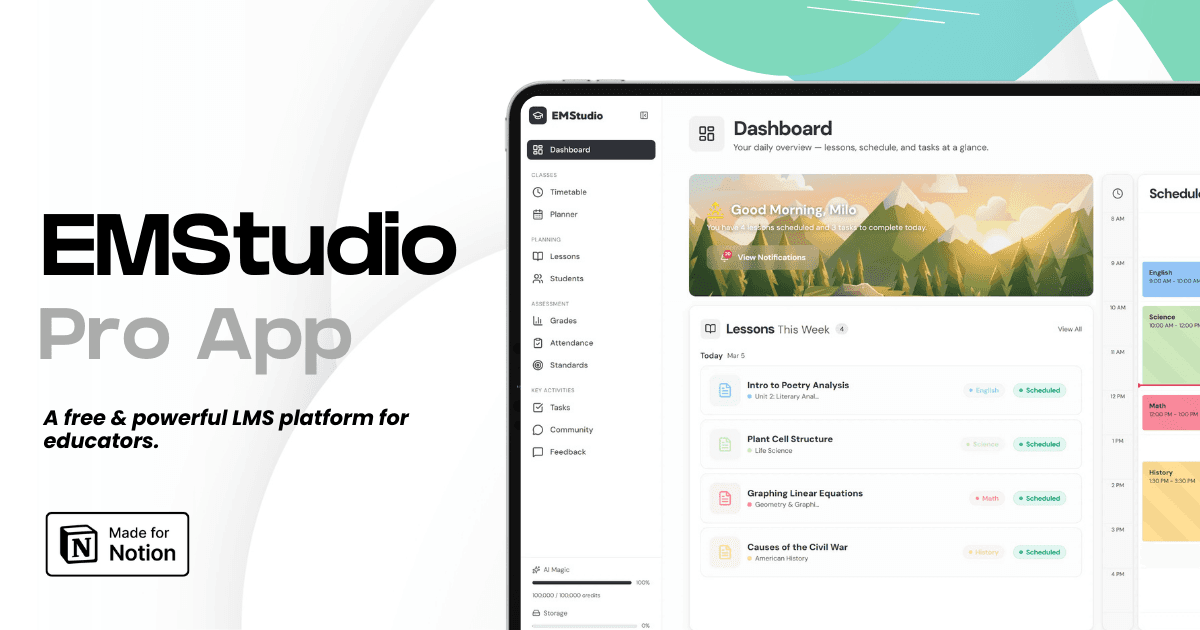
Still grading everything by hand?
EMStudio is a free teaching management app — manage your classes, students, lessons, and more!
Learn More
Still grading everything by hand?
EMStudio is a free teaching management app — manage your classes, students, lessons, and more!
Learn More
Table of Contents
What Are the Best Student Centered Learning Strategies for Active Engagement?
The best student centered learning strategies for active engagement include Think-Pair-Share protocols (2-minute silent thinking, structured partner talk), flipped classroom video lessons (7-12 minute Edpuzzle videos with embedded checks), and Socratic Seminars (inner/outer circle format with 80% student talk time). These techniques shift cognitive load to students while maintaining academic rigor.
I use these three protocols weekly. They force students to do the heavy lifting instead of watching me perform. The magic happens in the structure.
Think-Pair-Share runs on precise timers: 2 minutes of silent writing using a visible thinking routine, 3 minutes of structured pair talk with sentence stems, and 4 minutes of whole-class sharing with random selection. Flipped classroom videos run 7 minutes for middle school or 12 minutes for high school, with embedded questions every 3 minutes using Edpuzzle. Socratic Seminars seat 8-10 students in an inner circle with an outer circle backchannel, targeting 80% student talk time tracked by a timer app. These reflect constructivist pedagogy in action.
John Hattie's Visible Learning research places classroom discussion at an effect size of 0.82. That is huge. But these student centered strategies flop without clear learning intentions and success criteria posted on the board. I've watched Think-Pair-Share degrade into gossip sessions when teachers skip the written thinking phase. The fix is simple: require a written response first, use academic stems like "The text evidence suggests," and cold call after pairs share.
Strategy | Prep Time | Tech Needs | Class Size | Best Content Fit |
|---|---|---|---|---|
Think-Pair-Share | Low | None | 15-40 | Processing new concepts |
Flipped Classroom | Medium | Video platform | 15-40 | Foundational knowledge |
Socratic Seminar | High | Google Docs | 15-35 | Textual analysis |
Think-Pair-Share Protocols for Processing
Structure this for retention. Begin with 2 minutes of silent individual writing using Claim-Evidence-Reasoning. Follow with 3 minutes of structured pair talk using Accountable Talk Moves anchor charts with stems like "I agree because..." End with 4 minutes of whole-class sharing using popsicle sticks to prevent opt-outs.
Adapt for ELL and SPED populations by providing sentence stems on desk tents. Allow sketch-to-stretch options for the think phase. Pair students strategically by reading level, not friendship. This differentiated instruction happens in preparation, not during the timer. I watched a reluctant 7th grade writer argue for 3 minutes straight because he had the stems in front of him.
These metacognitive strategies force students to articulate thinking before speaking. The writing slows quick responders and gives processing time to deep thinkers. Everyone enters with ammunition. This constructivist pedagogy only works if you resist lecturing during the share phase.
Flipped Classroom Video Lessons
Create videos using Screencastify or Loom. Cap them at 7 minutes for grades 6-8 and 12 minutes for grades 9-12. Embed 3-5 formative checks using Edpuzzle at 3-minute intervals. These active learning strategies depend on brevity.
Students complete a 3-2-1 entrance ticket upon arrival: 3 things learned, 2 questions, 1 connection. This takes 4 minutes. Then move into collaborative problem-solving stations while you pull small groups. Last Tuesday, my 9th graders applied video content to primary sources while I re-taught four kids who missed the embedded question.
This learner centered strategy works only with viewing accountability. I sort the entrance tickets into two piles: ready to apply or needs support. This formative assessment drives your instruction for the day.
Socratic Seminars and Student-Led Discussions
Set up the physical space with purpose. Arrange 8-10 chairs in an inner circle. Create an outer circle with Chromebooks for live Google Doc commentary using hashtags like #question or #evidence. Require 4 text citations per student. The backchannel keeps everyone engaged.
Establish the 80/20 rule immediately. You speak only 20% of the time using wait time of 5 seconds minimum. Students track talk time using Equity Maps. When you lead effective student discussions, you actually talk less.
These inquiry-based learning discussions fail if you rescue them too early. Stay silent through awkward pauses. The autonomous learning happens when they realize you will not provide the answer. I count to ten in my head before speaking. Usually someone breaks the silence with a breakthrough observation.
Which Collaborative Student Centered Strategies Build Social Skills?
Collaborative strategies that build social skills include the Jigsaw Method (home/expert groups with individual accountability quizzes), Literature Circles (rotating roles like Discussion Director over 3-week cycles), and Project-Based Learning teams (4-member heterogeneous groups using scrum boards and team contracts). These structures create positive interdependence while making sure individual accountability through signed commitments and public exhibitions.
Group work fails when one kid does everything. These three collaborative learning methods prevent that. Each forces real talk without letting anyone hide.
Johnson and Johnson's research is clear. True cooperative learning needs positive interdependence—we sink or swim together—and individual accountability—I get my own grade. Without both, you get social loafing. These student centered learning strategies build negotiation skills and empathy only because they include both elements by design.
Jigsaw prevents hitchhiking with individual quizzes worth 20% of the grade. Setup takes 15 minutes. Grading is fast via Scantron.
Literature Circles use rotating role sheets. Setup takes 45 minutes. They require detailed rubric grading.
PBL Teams rely on public exhibitions and team contracts. Setup takes 2 hours. They grade efficiently through exhibition rubrics.
The Jigsaw Method for Content Mastery
I follow six specific steps with my 8th graders. First, I divide the unit content into 4 distinct segments. Second, I assign students to diverse home groups of 4 mixed by reading level and personality. Third, they form expert groups of 4-6 to master one segment for 25 minutes. Fourth, experts return home and teach using 2-minute timed presentations. Fifth, I give an individual quiz covering all 4 segments. Sixth, groups correct errors together before the final test.
The hitchhiker problem dies here. Each expert submits a graphic organizer to me before returning home. I check it while they work. This ticket-to-teach ensures they know the material cold. The follow-up quiz counts for 15-20% of the grade. That weight matters. Kids know they cannot coast on group credit alone. Everyone prepares because the grade is personal and separate from the group effort.
I first tried this with 7th graders studying ecosystems. Individual accountability forced quiet kids to speak up during expert groups. High achievers couldn't dominate because they only knew one segment. Everyone needed everyone else. That's positive interdependence in action. The Jigsaw Learning Method builds real communication skills because the grade depends on teaching and learning from peers, not just regurgitating facts from a textbook.
This structure creates metacognitive strategies as students realize what they don't understand while teaching. They learn to read audience confusion and adjust their explanation. That's a social skill that transfers to every area of life.
Literature Circles and Book Clubs
This learner centered strategy runs on rotating roles with specific deliverables:
Discussion Director: Writes 5 open-ended questions starting with "why" or "how."
Literary Luminary: Selects 3 significant passages with page numbers and explains importance.
Connector: Finds 2 text-to-world links to current events or personal experience.
Illustrator: Draws a visual metaphor capturing the theme.
Word Wizard: Chooses 5 vocabulary words and writes context sentences proving meaning.
Everyone brings something required. No one can sit back.
Meetings follow a strict 30-minute protocol. First 5 minutes: students prep using bookmarks and sticky notes to flag their evidence. Next 20 minutes: discussion follows the agenda starting with predictions, then moving to vocabulary, then themes. The Discussion Director facilitates using their questions, not me. Final 5 minutes: students complete a Plus/Delta T-chart showing on what worked and what needs changing next time.
I cycle roles every meeting across 3-week units with 25-page reading chunks. This means every student practices every role twice per book. No one gets stuck being the "artist" because they draw well. Everyone facilitates discussion. Everyone hunts vocabulary. This differentiated instruction ensures social skills develop evenly across the group. Kids learn to yield the floor when their role finishes and ask probing questions when it's their turn to lead the conversation.
The formative assessment happens during the discussion. I circulate with a clipboard tracking participation. I hear who asks follow-up questions and who dominates. This data drives my mini-lessons the next day.
Project-Based Learning Teams
I form teams using Kagan's STAD method for intentional heterogeneity. Each 4-member team gets one high, two middle, and one low readiness level based on my pre-assessment data. I balance demographics carefully and separate friends who will chat about weekend plans instead of working. Before touching content, teams draft a Team Contract. They establish norms, define consequences for breaking them, and everyone signs. This autonomous learning structure makes expectations public and binding.
We use scrum methodology stolen from software development. Teams maintain physical or digital Kanban boards with To Do, Doing, and Done columns that everyone can see. They hold 10-minute daily stand-ups where each member reports three things: what I completed yesterday, what I'm working on today, and what obstacles block my progress. We run 3-week sprint cycles with specific deliverables due each Friday to keep momentum.
The public exhibition creates the accountability. We co-create rubrics using RubiStar before starting so everyone knows the standards. Final products face real audiences—parents, other classes, or community members. Nobody wants to look unprepared in public. This constructivist pedagogy forces teams to manage conflict internally because the deadline and the audience are real. They learn to negotiate, divide labor fairly, and check each other's work before showing anyone. That's social skill building through authentic pressure.
The scrum boards make invisible work visible. When one column gets clogged, the team sees it immediately. They learn to redistribute work without my intervention. That's the self-regulation we want in inquiry-based learning environments.
How Do Student Centered Assessment Strategies Shift the Learning Dynamic?
Student centered assessment strategies flip the script by putting learners in the driver's seat. They use Marzano's 4-point scales to monitor their own understanding, TAG protocols to give structured peer feedback, and scripted 15-minute conferences to present digital portfolios to parents. The teacher becomes coach; the student becomes evaluator.
I stopped grading rough drafts three years ago. Instead, I hand students a rubric and ask, "Where does your work land?" The silence that follows is uncomfortable. Then someone raises a hand and admits, "I'm at a 2, but I want to get to a 3." That's the shift.
Self-Assessment and Goal-Setting Protocols
I teach the 0-4 scale on day one. Zero means "Even with help, I'm lost." One means "I need help." Two means "I can do this with notes." Three means "I can do this alone." Four means "I can teach this to others." I post exemplars for each level—actual student work with names removed—so my seventh graders can compare their essay to the "3" on the wall.
0 = Even with help, I don't understand
1 = I need help to complete this
2 = I can do this with notes or resources
3 = I can do this independently
4 = I can teach this to others
We use self-assessment tools for students built in Google Sheets. They write SMART goals—Specific, Measurable, Achievable, Relevant, Time-bound—in the first column. Conditional formatting turns cells green when they hit targets, yellow when they're close, red when they're stuck. Every Friday, five minutes of silent journaling. Two prompts only: "What confused me was..." and "My evidence of growth is..."
Hattie's visible learning research shows self-assessment and self-grading have high effect sizes. But here's the catch: it only works if you teach them explicitly how to judge quality using rubrics and anchor papers. I spend two full periods analyzing exemplars before letting them rate their own work. Skip this step, and they just pick "3" to be safe.
When students can accurately judge their own understanding, they stop asking "Is this good?" and start asking "What needs work?" That's the shift from compliance to ownership in student centered learning strategies.
Peer Review and Feedback Workshops
I use the TAG protocol for peer feedback. T means Tell the writer specifically what you noticed: "Your thesis clearly states three supporting reasons." A means Ask one clarifying question: "Why did you choose this evidence over the quote on page 32?" G means Give one actionable suggestion: "Consider adding a transition word between paragraphs 2 and 3."
Anonymous submission via Google Forms using ID codes
20-minute rotation using Two Stars and a Wish protocol
Revision tracking in Microsoft Word Track Changes or Google Docs Version History
Differentiate anonymity based on genre. Use Google Forms for poetry and personal narratives where vulnerability matters. Use face-to-face workshops for technical writing and lab reports where they need to ask follow-up questions. Display sentence stems on anchor charts so no one defaults to "It's good."
Time each rotation strictly at six minutes per paper. This prevents the "I'll just fix your grammar" trap and keeps energy high. When the timer rings, papers rotate, no exceptions.
Hattie's visible learning research shows peer assessment has a significant effect size. But it only works when you teach explicit protocols. You can't just say "give feedback." You have to script it. That's constructivist pedagogy in action—structured autonomy where students build understanding through collaborative critique.
I model the TAG protocol first with a sample essay projected on the board. I think aloud: "I'm telling what I notice about the hook... I'm asking about the evidence choice... I'm giving a suggestion about the conclusion." They need to hear the difference between these three moves before they can do it themselves.
Student-Led Conferences and Portfolios
Student-led conferences put kids in charge of reporting progress. I give them a curation checklist: select three pieces total. One shows their best work. One shows growth from draft to final. One shows process, like brainstorming or revision notes. No more than three—parents check out after that.
Best work: one piece showing mastery
Growth work: showing improvement from draft to final
Process work: showing revision, brainstorming, or research notes
They script their introduction using a template: "Welcome to my conference. Today I will show you how I grew in... My goal for next quarter is..." They practice with a partner first. The talking points keep them from mumbling or reading slides word for word.
Logistics are simple. I schedule 15-minute blocks during class time while other students work on independent inquiry projects. I send a parent prep letter explaining their role: ask questions, don't dominate, let the kid drive. We use Google Sites or Seesaw for digital portfolio hosting with QR codes taped to the desk for easy access.
The magic happens when a student explains their own growth. Last fall, Maria showed her mom how she revised her essay five times using Track Changes. Her mom cried. I didn't say a word. That's the power of autonomous learning.
This fits perfectly with differentiated instruction. Every student presents their own journey. The struggling learner shows growth from a 1 to a 3. The advanced learner shows how they taught a peer. Both own their story.
I use creating effective student portfolios as a resource for templates. The QR codes eliminate tech headaches—parents scan and see everything without downloading apps. If the internet fails, kids have printed backups in manila folders. Always have a backup.
The 15-minute limit is strict. It forces kids to prioritize. They can't show everything, so they have to choose what matters. That curation process is metacognitive work in itself. They learn their own learning.
Parents often try to hijack the conversation. The prep letter helps, but I also give kids a script for handling interruptions: "Thank you for that question, Mom. I'll address that in a moment." It teaches advocacy.

What Student Centered Techniques Support Differentiated Instruction?
Techniques supporting differentiated instruction include Choice Boards (Tic-Tac-Toe grids with 9 options tiered by difficulty), Rotating Learning Stations (4 stations with 15-minute rotations and clipboard accountability), and Genius Hour (20% time for passion projects with 6-week research cycles). These student centered learning strategies provide voice and choice while targeting individual readiness levels without tracking kids into rigid groups.
Choice Boards and Learning Menus
Design your board like a Tic-Tac-Toe grid. The middle square holds your meat-and-potatoes standard assignment at DOK 2. Corner squares offer creative heavy lifting at DOK 3 or 4, like writing a letter to the author debating the theme. Edge squares cover foundational practice at DOK 1, such as creating flashcards. Force students to complete three in a row including one corner so they can't dodge the hard work.
Watch the trap. Choice boards become busy work menus if you let kids pick nine easy options. Require one black diamond challenge per board using RAFT construction. Add a free space option where kids pitch their own product using a standardized proposal form. Go digital with Genially or Google Slides, color-coding green for easy, yellow for medium, red for hard. These learner centered techniques of teaching suit 3rd through 12th graders and cost nothing but two hours of prep.
Rotating Learning Stations
Structure four distinct stations that rotate every 15 minutes. Station one is teacher-led with 4 to 6 students grouped by formative assessment data. Station two is collaborative practice with accountable talk sentence stems. Station three is independent spiral review or sustained reading. Station four is tech-based, using IXL, Khan Academy, or creation tools. Students initial a clipboard rotation tracker at each stop to prove completion.
Management makes or breaks this. Project a visible timer and play a specific 2-minute transition song so kids know when to move. Use a must do and may do system where everyone finishes the must do at their level before the may do extension. This prevents early finishers from distracting others while you work with small groups. Rotating learning stations work from kindergarten through 12th grade. You need moderate prep and multiple activities ready, plus space to spread out.
Genius Hour and Passion Projects
Implement true 20 percent time for inquiry-based learning. Students get one class period weekly, typically Friday, for six-week cycles. Require a one-page proposal first: driving question, research plan, product description, and timeline. They maintain a research notebook using the three-column method: what I researched, what I created, what I need next. Weekly check-ins keep them honest.
Culminate with a Gallery Walk or TED-style show where students present for three minutes to authentic audiences like other classes, parents, or community members. Use a single-point rubric assessing inquiry process and research quality, not product perfection. This fits 5th through 12th graders who can handle autonomous learning. It costs minimal money but requires 25 percent of your instructional time that quarter. These student centered teaching techniques build metacognitive strategies and constructivist pedagogy through sustained inquiry and mastering differentiated instruction.
How Do You Transition to Student Centered Learning Without Losing Control?
Transition without losing control by first auditing current practices (track teacher vs student talk time using 30-second interval coding), implementing one strategy weekly with the gradual release model (I Do, We Do, You Do Together, You Do Alone over 4 weeks), and building independence through anchor charts and clear success criteria before releasing responsibility.
Audit Your Current Teacher-Centered Practices
I started with a brutal truth: I was talking too much. I recorded 15 minutes of my direct instruction and coded every 30 seconds using a simple tally sheet—TT for Teacher Talk, ST for Student Talk, S for Silence. When I calculated the percentages, I was clocking 70% teacher talk. No wonder they weren't thinking independently. The numbers don't lie.
I created a T-chart labeled "Release Points." The left side listed everything I was doing—lecturing, questioning, summarizing. The right side listed what students could do instead. This audit revealed my first learner centered teaching strategy: replacing my summaries with student exit tickets. It showed exactly where to insert Turn and Talks and cut my lecturing time.
Record 15 minutes using your phone or an app like Equity Maps.
Code every 30 seconds. Target is 30% teacher talk, 70% student processing.
Create a T-chart of "Current Teacher Actions" versus "Potential Student Replacements."
Use classroom management for new teachers to maintain order while you release control, especially during the transition weeks.
Start with One Strategy Per Week
I learned the hard way that trying three new strategies at once leads to chaos. Pick one student centered learning strategy and stick with it for the full week. I use a simple log: strategy name, date introduced, photo of student work as evidence, and a quick reflection note.
Monday is pure modeling with think-alouds. Tuesday shifts to guided practice with sentence stems. Wednesday they collaborate using role cards while I circulate with a clipboard. Thursday they work independently with rubric self-checks. Friday we reflect using Plus/Delta—what worked, what needs tweaking. This builds autonomous learning habits slowly.
Monday: Model with meta-cognitive think-aloud.
Tuesday: Guided practice with prompts.
Wednesday: Collaborative with check-ins.
Thursday: Independent with feedback.
Friday: Plus/Delta reflection.
Do not add a second strategy until the first shows 75% implementation success. transition to student-centered learning works best when you slow down.
Build Student Independence Through Gradual Release
I follow Fisher and Frey's Gradual Release over four weeks. Week one is "I Do" with heavy modeling and students observing. Week two shifts to "We Do" with heavy scaffolding. Week three moves to "You Do Together" while I circulate with a clipboard. Week four is "You Do Alone"—but only if formative assessment data shows 80% proficiency. Never advance based on the calendar alone.
The failure modes are predictable when shifting to inquiry-based learning. Releasing too fast without metacognitive strategies causes panic. Unclear success criteria creates confusion. Missing anchor charts means you answer the same question forty times. These teaching strategies for student centered learning require safety nets.
Provide "Help Cards" with three things to try before asking the teacher.
Create a "parking lot" poster for non-emergency questions.
Use the "Ask 3 Before Me" rule to build resourcefulness.

Your Next Move with Student Centered Learning Strategies
Pick one strategy from this list. Don't overhaul your entire room next Monday. I tried flipping everything at once my first year. Three weeks of herding cats. Start small. The kids won't even notice you're experimenting, and you'll actually keep your sanity intact.
Student centered learning strategies aren't about you talking less just to look progressive on an observation rubric. They're about letting kids build the thinking while you stop handing them every answer. That shift feels weird at first. The silence will tempt you to jump in and rescue them. Don't. That's exactly where the learning happens.
Tomorrow, try the pause-and-predict move. When you're explaining a concept, stop mid-sentence. Ask them what comes next. Wait ten seconds. Let someone guess wrong if they need to. That's your concrete first step. You're already doing it differently.

What Are the Best Student Centered Learning Strategies for Active Engagement?
The best student centered learning strategies for active engagement include Think-Pair-Share protocols (2-minute silent thinking, structured partner talk), flipped classroom video lessons (7-12 minute Edpuzzle videos with embedded checks), and Socratic Seminars (inner/outer circle format with 80% student talk time). These techniques shift cognitive load to students while maintaining academic rigor.
I use these three protocols weekly. They force students to do the heavy lifting instead of watching me perform. The magic happens in the structure.
Think-Pair-Share runs on precise timers: 2 minutes of silent writing using a visible thinking routine, 3 minutes of structured pair talk with sentence stems, and 4 minutes of whole-class sharing with random selection. Flipped classroom videos run 7 minutes for middle school or 12 minutes for high school, with embedded questions every 3 minutes using Edpuzzle. Socratic Seminars seat 8-10 students in an inner circle with an outer circle backchannel, targeting 80% student talk time tracked by a timer app. These reflect constructivist pedagogy in action.
John Hattie's Visible Learning research places classroom discussion at an effect size of 0.82. That is huge. But these student centered strategies flop without clear learning intentions and success criteria posted on the board. I've watched Think-Pair-Share degrade into gossip sessions when teachers skip the written thinking phase. The fix is simple: require a written response first, use academic stems like "The text evidence suggests," and cold call after pairs share.
Strategy | Prep Time | Tech Needs | Class Size | Best Content Fit |
|---|---|---|---|---|
Think-Pair-Share | Low | None | 15-40 | Processing new concepts |
Flipped Classroom | Medium | Video platform | 15-40 | Foundational knowledge |
Socratic Seminar | High | Google Docs | 15-35 | Textual analysis |
Think-Pair-Share Protocols for Processing
Structure this for retention. Begin with 2 minutes of silent individual writing using Claim-Evidence-Reasoning. Follow with 3 minutes of structured pair talk using Accountable Talk Moves anchor charts with stems like "I agree because..." End with 4 minutes of whole-class sharing using popsicle sticks to prevent opt-outs.
Adapt for ELL and SPED populations by providing sentence stems on desk tents. Allow sketch-to-stretch options for the think phase. Pair students strategically by reading level, not friendship. This differentiated instruction happens in preparation, not during the timer. I watched a reluctant 7th grade writer argue for 3 minutes straight because he had the stems in front of him.
These metacognitive strategies force students to articulate thinking before speaking. The writing slows quick responders and gives processing time to deep thinkers. Everyone enters with ammunition. This constructivist pedagogy only works if you resist lecturing during the share phase.
Flipped Classroom Video Lessons
Create videos using Screencastify or Loom. Cap them at 7 minutes for grades 6-8 and 12 minutes for grades 9-12. Embed 3-5 formative checks using Edpuzzle at 3-minute intervals. These active learning strategies depend on brevity.
Students complete a 3-2-1 entrance ticket upon arrival: 3 things learned, 2 questions, 1 connection. This takes 4 minutes. Then move into collaborative problem-solving stations while you pull small groups. Last Tuesday, my 9th graders applied video content to primary sources while I re-taught four kids who missed the embedded question.
This learner centered strategy works only with viewing accountability. I sort the entrance tickets into two piles: ready to apply or needs support. This formative assessment drives your instruction for the day.
Socratic Seminars and Student-Led Discussions
Set up the physical space with purpose. Arrange 8-10 chairs in an inner circle. Create an outer circle with Chromebooks for live Google Doc commentary using hashtags like #question or #evidence. Require 4 text citations per student. The backchannel keeps everyone engaged.
Establish the 80/20 rule immediately. You speak only 20% of the time using wait time of 5 seconds minimum. Students track talk time using Equity Maps. When you lead effective student discussions, you actually talk less.
These inquiry-based learning discussions fail if you rescue them too early. Stay silent through awkward pauses. The autonomous learning happens when they realize you will not provide the answer. I count to ten in my head before speaking. Usually someone breaks the silence with a breakthrough observation.
Which Collaborative Student Centered Strategies Build Social Skills?
Collaborative strategies that build social skills include the Jigsaw Method (home/expert groups with individual accountability quizzes), Literature Circles (rotating roles like Discussion Director over 3-week cycles), and Project-Based Learning teams (4-member heterogeneous groups using scrum boards and team contracts). These structures create positive interdependence while making sure individual accountability through signed commitments and public exhibitions.
Group work fails when one kid does everything. These three collaborative learning methods prevent that. Each forces real talk without letting anyone hide.
Johnson and Johnson's research is clear. True cooperative learning needs positive interdependence—we sink or swim together—and individual accountability—I get my own grade. Without both, you get social loafing. These student centered learning strategies build negotiation skills and empathy only because they include both elements by design.
Jigsaw prevents hitchhiking with individual quizzes worth 20% of the grade. Setup takes 15 minutes. Grading is fast via Scantron.
Literature Circles use rotating role sheets. Setup takes 45 minutes. They require detailed rubric grading.
PBL Teams rely on public exhibitions and team contracts. Setup takes 2 hours. They grade efficiently through exhibition rubrics.
The Jigsaw Method for Content Mastery
I follow six specific steps with my 8th graders. First, I divide the unit content into 4 distinct segments. Second, I assign students to diverse home groups of 4 mixed by reading level and personality. Third, they form expert groups of 4-6 to master one segment for 25 minutes. Fourth, experts return home and teach using 2-minute timed presentations. Fifth, I give an individual quiz covering all 4 segments. Sixth, groups correct errors together before the final test.
The hitchhiker problem dies here. Each expert submits a graphic organizer to me before returning home. I check it while they work. This ticket-to-teach ensures they know the material cold. The follow-up quiz counts for 15-20% of the grade. That weight matters. Kids know they cannot coast on group credit alone. Everyone prepares because the grade is personal and separate from the group effort.
I first tried this with 7th graders studying ecosystems. Individual accountability forced quiet kids to speak up during expert groups. High achievers couldn't dominate because they only knew one segment. Everyone needed everyone else. That's positive interdependence in action. The Jigsaw Learning Method builds real communication skills because the grade depends on teaching and learning from peers, not just regurgitating facts from a textbook.
This structure creates metacognitive strategies as students realize what they don't understand while teaching. They learn to read audience confusion and adjust their explanation. That's a social skill that transfers to every area of life.
Literature Circles and Book Clubs
This learner centered strategy runs on rotating roles with specific deliverables:
Discussion Director: Writes 5 open-ended questions starting with "why" or "how."
Literary Luminary: Selects 3 significant passages with page numbers and explains importance.
Connector: Finds 2 text-to-world links to current events or personal experience.
Illustrator: Draws a visual metaphor capturing the theme.
Word Wizard: Chooses 5 vocabulary words and writes context sentences proving meaning.
Everyone brings something required. No one can sit back.
Meetings follow a strict 30-minute protocol. First 5 minutes: students prep using bookmarks and sticky notes to flag their evidence. Next 20 minutes: discussion follows the agenda starting with predictions, then moving to vocabulary, then themes. The Discussion Director facilitates using their questions, not me. Final 5 minutes: students complete a Plus/Delta T-chart showing on what worked and what needs changing next time.
I cycle roles every meeting across 3-week units with 25-page reading chunks. This means every student practices every role twice per book. No one gets stuck being the "artist" because they draw well. Everyone facilitates discussion. Everyone hunts vocabulary. This differentiated instruction ensures social skills develop evenly across the group. Kids learn to yield the floor when their role finishes and ask probing questions when it's their turn to lead the conversation.
The formative assessment happens during the discussion. I circulate with a clipboard tracking participation. I hear who asks follow-up questions and who dominates. This data drives my mini-lessons the next day.
Project-Based Learning Teams
I form teams using Kagan's STAD method for intentional heterogeneity. Each 4-member team gets one high, two middle, and one low readiness level based on my pre-assessment data. I balance demographics carefully and separate friends who will chat about weekend plans instead of working. Before touching content, teams draft a Team Contract. They establish norms, define consequences for breaking them, and everyone signs. This autonomous learning structure makes expectations public and binding.
We use scrum methodology stolen from software development. Teams maintain physical or digital Kanban boards with To Do, Doing, and Done columns that everyone can see. They hold 10-minute daily stand-ups where each member reports three things: what I completed yesterday, what I'm working on today, and what obstacles block my progress. We run 3-week sprint cycles with specific deliverables due each Friday to keep momentum.
The public exhibition creates the accountability. We co-create rubrics using RubiStar before starting so everyone knows the standards. Final products face real audiences—parents, other classes, or community members. Nobody wants to look unprepared in public. This constructivist pedagogy forces teams to manage conflict internally because the deadline and the audience are real. They learn to negotiate, divide labor fairly, and check each other's work before showing anyone. That's social skill building through authentic pressure.
The scrum boards make invisible work visible. When one column gets clogged, the team sees it immediately. They learn to redistribute work without my intervention. That's the self-regulation we want in inquiry-based learning environments.
How Do Student Centered Assessment Strategies Shift the Learning Dynamic?
Student centered assessment strategies flip the script by putting learners in the driver's seat. They use Marzano's 4-point scales to monitor their own understanding, TAG protocols to give structured peer feedback, and scripted 15-minute conferences to present digital portfolios to parents. The teacher becomes coach; the student becomes evaluator.
I stopped grading rough drafts three years ago. Instead, I hand students a rubric and ask, "Where does your work land?" The silence that follows is uncomfortable. Then someone raises a hand and admits, "I'm at a 2, but I want to get to a 3." That's the shift.
Self-Assessment and Goal-Setting Protocols
I teach the 0-4 scale on day one. Zero means "Even with help, I'm lost." One means "I need help." Two means "I can do this with notes." Three means "I can do this alone." Four means "I can teach this to others." I post exemplars for each level—actual student work with names removed—so my seventh graders can compare their essay to the "3" on the wall.
0 = Even with help, I don't understand
1 = I need help to complete this
2 = I can do this with notes or resources
3 = I can do this independently
4 = I can teach this to others
We use self-assessment tools for students built in Google Sheets. They write SMART goals—Specific, Measurable, Achievable, Relevant, Time-bound—in the first column. Conditional formatting turns cells green when they hit targets, yellow when they're close, red when they're stuck. Every Friday, five minutes of silent journaling. Two prompts only: "What confused me was..." and "My evidence of growth is..."
Hattie's visible learning research shows self-assessment and self-grading have high effect sizes. But here's the catch: it only works if you teach them explicitly how to judge quality using rubrics and anchor papers. I spend two full periods analyzing exemplars before letting them rate their own work. Skip this step, and they just pick "3" to be safe.
When students can accurately judge their own understanding, they stop asking "Is this good?" and start asking "What needs work?" That's the shift from compliance to ownership in student centered learning strategies.
Peer Review and Feedback Workshops
I use the TAG protocol for peer feedback. T means Tell the writer specifically what you noticed: "Your thesis clearly states three supporting reasons." A means Ask one clarifying question: "Why did you choose this evidence over the quote on page 32?" G means Give one actionable suggestion: "Consider adding a transition word between paragraphs 2 and 3."
Anonymous submission via Google Forms using ID codes
20-minute rotation using Two Stars and a Wish protocol
Revision tracking in Microsoft Word Track Changes or Google Docs Version History
Differentiate anonymity based on genre. Use Google Forms for poetry and personal narratives where vulnerability matters. Use face-to-face workshops for technical writing and lab reports where they need to ask follow-up questions. Display sentence stems on anchor charts so no one defaults to "It's good."
Time each rotation strictly at six minutes per paper. This prevents the "I'll just fix your grammar" trap and keeps energy high. When the timer rings, papers rotate, no exceptions.
Hattie's visible learning research shows peer assessment has a significant effect size. But it only works when you teach explicit protocols. You can't just say "give feedback." You have to script it. That's constructivist pedagogy in action—structured autonomy where students build understanding through collaborative critique.
I model the TAG protocol first with a sample essay projected on the board. I think aloud: "I'm telling what I notice about the hook... I'm asking about the evidence choice... I'm giving a suggestion about the conclusion." They need to hear the difference between these three moves before they can do it themselves.
Student-Led Conferences and Portfolios
Student-led conferences put kids in charge of reporting progress. I give them a curation checklist: select three pieces total. One shows their best work. One shows growth from draft to final. One shows process, like brainstorming or revision notes. No more than three—parents check out after that.
Best work: one piece showing mastery
Growth work: showing improvement from draft to final
Process work: showing revision, brainstorming, or research notes
They script their introduction using a template: "Welcome to my conference. Today I will show you how I grew in... My goal for next quarter is..." They practice with a partner first. The talking points keep them from mumbling or reading slides word for word.
Logistics are simple. I schedule 15-minute blocks during class time while other students work on independent inquiry projects. I send a parent prep letter explaining their role: ask questions, don't dominate, let the kid drive. We use Google Sites or Seesaw for digital portfolio hosting with QR codes taped to the desk for easy access.
The magic happens when a student explains their own growth. Last fall, Maria showed her mom how she revised her essay five times using Track Changes. Her mom cried. I didn't say a word. That's the power of autonomous learning.
This fits perfectly with differentiated instruction. Every student presents their own journey. The struggling learner shows growth from a 1 to a 3. The advanced learner shows how they taught a peer. Both own their story.
I use creating effective student portfolios as a resource for templates. The QR codes eliminate tech headaches—parents scan and see everything without downloading apps. If the internet fails, kids have printed backups in manila folders. Always have a backup.
The 15-minute limit is strict. It forces kids to prioritize. They can't show everything, so they have to choose what matters. That curation process is metacognitive work in itself. They learn their own learning.
Parents often try to hijack the conversation. The prep letter helps, but I also give kids a script for handling interruptions: "Thank you for that question, Mom. I'll address that in a moment." It teaches advocacy.
What Student Centered Techniques Support Differentiated Instruction?
Techniques supporting differentiated instruction include Choice Boards (Tic-Tac-Toe grids with 9 options tiered by difficulty), Rotating Learning Stations (4 stations with 15-minute rotations and clipboard accountability), and Genius Hour (20% time for passion projects with 6-week research cycles). These student centered learning strategies provide voice and choice while targeting individual readiness levels without tracking kids into rigid groups.
Choice Boards and Learning Menus
Design your board like a Tic-Tac-Toe grid. The middle square holds your meat-and-potatoes standard assignment at DOK 2. Corner squares offer creative heavy lifting at DOK 3 or 4, like writing a letter to the author debating the theme. Edge squares cover foundational practice at DOK 1, such as creating flashcards. Force students to complete three in a row including one corner so they can't dodge the hard work.
Watch the trap. Choice boards become busy work menus if you let kids pick nine easy options. Require one black diamond challenge per board using RAFT construction. Add a free space option where kids pitch their own product using a standardized proposal form. Go digital with Genially or Google Slides, color-coding green for easy, yellow for medium, red for hard. These learner centered techniques of teaching suit 3rd through 12th graders and cost nothing but two hours of prep.
Rotating Learning Stations
Structure four distinct stations that rotate every 15 minutes. Station one is teacher-led with 4 to 6 students grouped by formative assessment data. Station two is collaborative practice with accountable talk sentence stems. Station three is independent spiral review or sustained reading. Station four is tech-based, using IXL, Khan Academy, or creation tools. Students initial a clipboard rotation tracker at each stop to prove completion.
Management makes or breaks this. Project a visible timer and play a specific 2-minute transition song so kids know when to move. Use a must do and may do system where everyone finishes the must do at their level before the may do extension. This prevents early finishers from distracting others while you work with small groups. Rotating learning stations work from kindergarten through 12th grade. You need moderate prep and multiple activities ready, plus space to spread out.
Genius Hour and Passion Projects
Implement true 20 percent time for inquiry-based learning. Students get one class period weekly, typically Friday, for six-week cycles. Require a one-page proposal first: driving question, research plan, product description, and timeline. They maintain a research notebook using the three-column method: what I researched, what I created, what I need next. Weekly check-ins keep them honest.
Culminate with a Gallery Walk or TED-style show where students present for three minutes to authentic audiences like other classes, parents, or community members. Use a single-point rubric assessing inquiry process and research quality, not product perfection. This fits 5th through 12th graders who can handle autonomous learning. It costs minimal money but requires 25 percent of your instructional time that quarter. These student centered teaching techniques build metacognitive strategies and constructivist pedagogy through sustained inquiry and mastering differentiated instruction.
How Do You Transition to Student Centered Learning Without Losing Control?
Transition without losing control by first auditing current practices (track teacher vs student talk time using 30-second interval coding), implementing one strategy weekly with the gradual release model (I Do, We Do, You Do Together, You Do Alone over 4 weeks), and building independence through anchor charts and clear success criteria before releasing responsibility.
Audit Your Current Teacher-Centered Practices
I started with a brutal truth: I was talking too much. I recorded 15 minutes of my direct instruction and coded every 30 seconds using a simple tally sheet—TT for Teacher Talk, ST for Student Talk, S for Silence. When I calculated the percentages, I was clocking 70% teacher talk. No wonder they weren't thinking independently. The numbers don't lie.
I created a T-chart labeled "Release Points." The left side listed everything I was doing—lecturing, questioning, summarizing. The right side listed what students could do instead. This audit revealed my first learner centered teaching strategy: replacing my summaries with student exit tickets. It showed exactly where to insert Turn and Talks and cut my lecturing time.
Record 15 minutes using your phone or an app like Equity Maps.
Code every 30 seconds. Target is 30% teacher talk, 70% student processing.
Create a T-chart of "Current Teacher Actions" versus "Potential Student Replacements."
Use classroom management for new teachers to maintain order while you release control, especially during the transition weeks.
Start with One Strategy Per Week
I learned the hard way that trying three new strategies at once leads to chaos. Pick one student centered learning strategy and stick with it for the full week. I use a simple log: strategy name, date introduced, photo of student work as evidence, and a quick reflection note.
Monday is pure modeling with think-alouds. Tuesday shifts to guided practice with sentence stems. Wednesday they collaborate using role cards while I circulate with a clipboard. Thursday they work independently with rubric self-checks. Friday we reflect using Plus/Delta—what worked, what needs tweaking. This builds autonomous learning habits slowly.
Monday: Model with meta-cognitive think-aloud.
Tuesday: Guided practice with prompts.
Wednesday: Collaborative with check-ins.
Thursday: Independent with feedback.
Friday: Plus/Delta reflection.
Do not add a second strategy until the first shows 75% implementation success. transition to student-centered learning works best when you slow down.
Build Student Independence Through Gradual Release
I follow Fisher and Frey's Gradual Release over four weeks. Week one is "I Do" with heavy modeling and students observing. Week two shifts to "We Do" with heavy scaffolding. Week three moves to "You Do Together" while I circulate with a clipboard. Week four is "You Do Alone"—but only if formative assessment data shows 80% proficiency. Never advance based on the calendar alone.
The failure modes are predictable when shifting to inquiry-based learning. Releasing too fast without metacognitive strategies causes panic. Unclear success criteria creates confusion. Missing anchor charts means you answer the same question forty times. These teaching strategies for student centered learning require safety nets.
Provide "Help Cards" with three things to try before asking the teacher.
Create a "parking lot" poster for non-emergency questions.
Use the "Ask 3 Before Me" rule to build resourcefulness.
Your Next Move with Student Centered Learning Strategies
Pick one strategy from this list. Don't overhaul your entire room next Monday. I tried flipping everything at once my first year. Three weeks of herding cats. Start small. The kids won't even notice you're experimenting, and you'll actually keep your sanity intact.
Student centered learning strategies aren't about you talking less just to look progressive on an observation rubric. They're about letting kids build the thinking while you stop handing them every answer. That shift feels weird at first. The silence will tempt you to jump in and rescue them. Don't. That's exactly where the learning happens.
Tomorrow, try the pause-and-predict move. When you're explaining a concept, stop mid-sentence. Ask them what comes next. Wait ten seconds. Let someone guess wrong if they need to. That's your concrete first step. You're already doing it differently.
Still grading everything by hand?
EMStudio is a free teaching management app — manage your classes, students, lessons, and more!
Learn More
Still grading everything by hand?
EMStudio is a free teaching management app — manage your classes, students, lessons, and more!
Learn More


Notion4Teachers
Notion templates to simplify administrative tasks and enhance your teaching experience.



2026 Notion4Teachers. All Rights Reserved.
Notion4Teachers
Notion templates to simplify administrative tasks and enhance your teaching experience.
2026 Notion4Teachers. All Rights Reserved.
Notion4Teachers
Notion templates to simplify administrative tasks and enhance your teaching experience.
2026 Notion4Teachers. All Rights Reserved.