Subjects in Schools: What Students Learn and Why

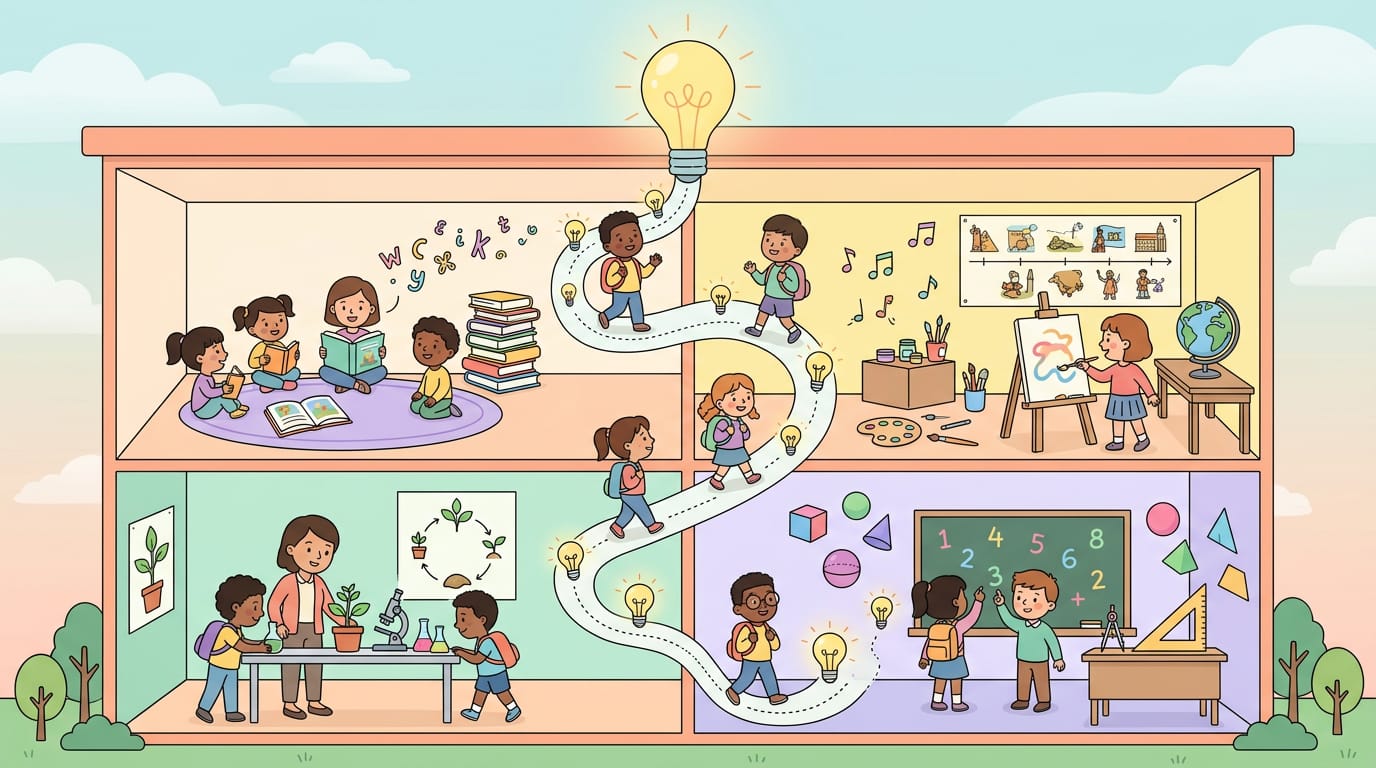
Think back to the school timetable you once knew by heart: a grid of maths, science, history, and art, with each block marking a new way of thinking. Each of those blocks is a school subject.
A subject is a distinct field of knowledge with its own content, skills, and vocabulary.
In this post, we'll look at how subjects shift from primary to secondary school and across countries, which ones are compulsory and which you can choose, and how you can help multilingual learners master the words that unlock each one.
Still grading everything by hand?
EMStudio is a free teaching management app — manage your classes, students, lessons, and more!
What Are Subjects in Schools?
A subject is one area of learning, such as math or history, with its own lessons and slot on the timetable. Schools split learning this way so each area gets focused attention, though names and groupings vary from place to place.
How learning gets split into subjects
Picture a timetable: math at nine, reading at ten, science after lunch. Each block is a subject. Subject names are the labels schools use for those blocks, and learning is usually divided into broad parts that each hold several of them:
Languages: English and foreign languages
Mathematics
Sciences: biology, chemistry, and physics
Humanities: history and geography
The arts: music, drama, and visual art
Health and movement: physical education
Technology: computing and design
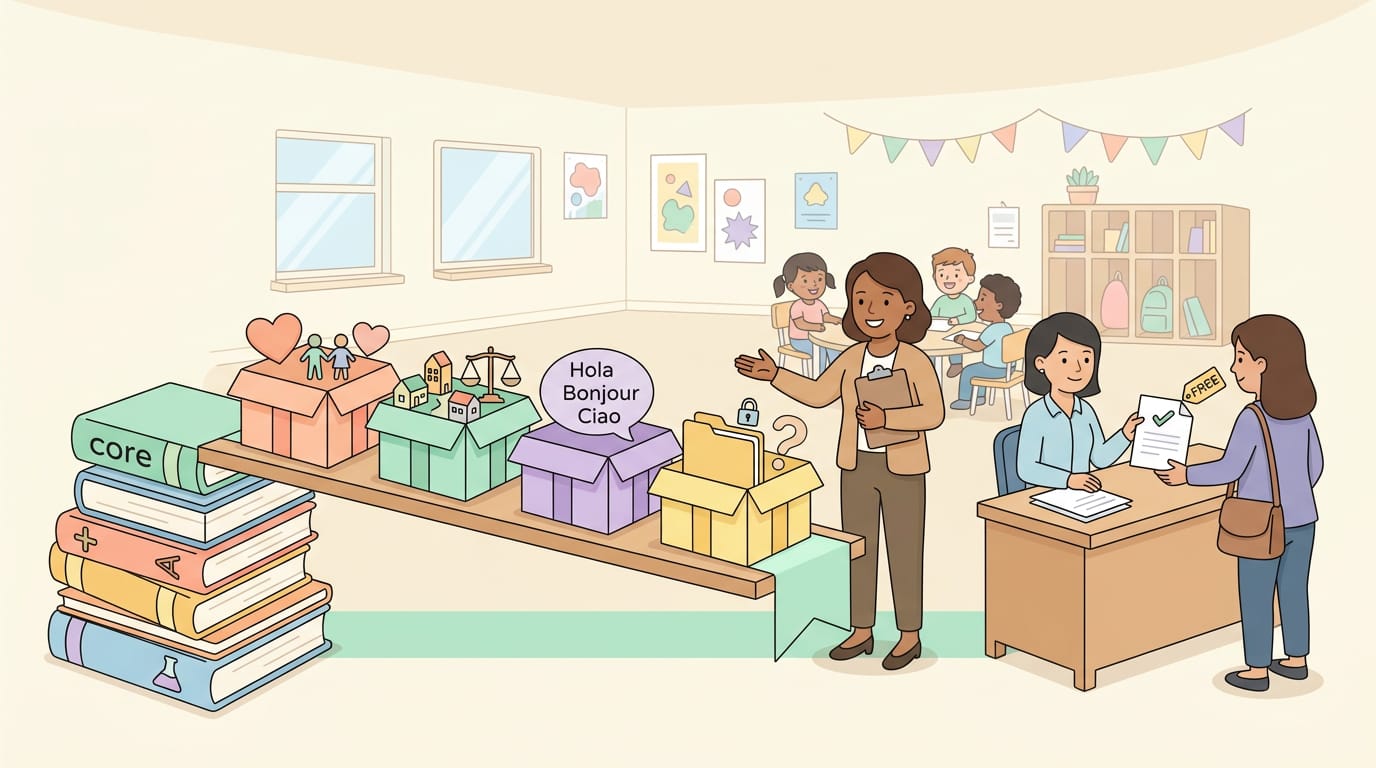
Some subjects are core subjects, the foundation other learning builds on. English, mathematics, and science are the common examples.
A lesson usually centers on one subject, not a blend of several. Think of a teacher planning a fractions lesson in math. Because it stays focused, she can check at the end who got it, and students always know what they're working toward.
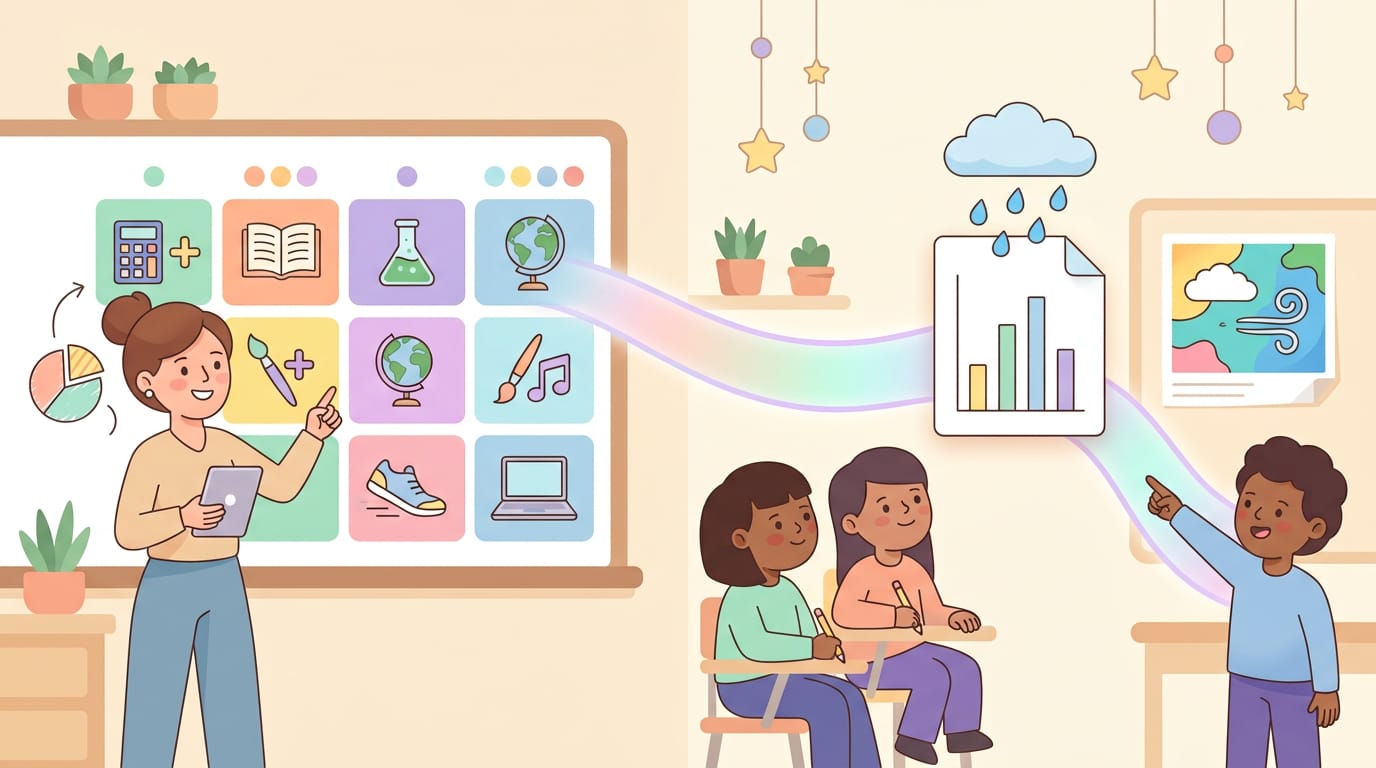
Subjects also connect. A teacher might have students graph rainfall in math, then use that graph to explain a weather pattern in science. That's a cross-curricular link, and it shows a skill working in more than one place. Same graph, two subjects.
Some national curricula group subjects into a fixed set of broader learning areas. The eight learning areas are the groupings in one such framework, and the names you'll see depend on the country.
Subjects Children Study in Primary School
Primary school covers a wide mix of subjects, but they don't all carry the same weight. Here's what's required, what's optional, and where languages fit.
Core and foundation subjects every pupil studies
Some subjects are the core, and every pupil studies them. Think of a Year 3 teacher mapping the week: literacy and maths go in first, with science, history, and geography fitted around them. Nothing compulsory gets squeezed out.
Literacy and maths: compulsory for every pupil.
Science, history, and geography: how children make sense of the world.
Art, music, and physical education (PE): creative and physical learning.
Design and technology: hands-on making and problem-solving.
Extras schools are encouraged to add
These sit beyond the core, so schools are encouraged to add them rather than required to. Two carry rules worth knowing.
Personal, social, health and economic education (PSHE): everyday skills for health and relationships.
Citizenship: how communities, rules, and rights work.
Modern foreign language (MFL): required in England at Key Stage 2 (KS2), covered below.
Sex education policy: explained below.
GOV.UK's national curriculum guidance says primary schools in England must have a written policy on relationships education, which they must make available to parents for free. Sex education itself isn't compulsory at primary level.
Ages 4 to 11, with KS2 languages
Ages 4 to 11: primary covers this whole span, so what children study grows in depth as they move up.
KS2 languages: according to the House of Lords Library, languages are a required part of the national curriculum in England at KS2, which covers ages 7 to 11. That's a requirement, not a bonus.
Subjects Students Take in Secondary School
Secondary subjects follow a clear pattern: a fixed core early on, then more choice as pupils get older. This describes England; other countries organise subjects differently, so check your own framework.
What pupils study in Key Stage 3
Key Stage 3 covers ages 11 to 14, and it's when the timetable is set, not chosen. Pupils follow the compulsory national curriculum: the subjects they met in primary school, plus languages, computing and citizenship. Everyone takes that same core.
Subjects pupils take in Key Stage 4
Key Stage 4 covers ages 14 to 16, where choice begins. The core subjects are taken by everyone, and the foundation subjects are where options come in.
According to a guide to GCSE options, schools in England must make arts and humanities courses available as options at this stage. The four entitlement areas are:
the arts
design and technology
humanities (geography and history)
modern foreign languages
None is compulsory after 14, so the choice is real.
Courses lead to GCSEs (General Certificates of Secondary Education) or Technical Awards. Think of a pupil who loves drawing but dreads essays. A pupil like this may be a spatial learner, so how they take in ideas matters.
Because arts and humanities must both be on offer, their teacher can help them pick art and still keep history or geography.
A typical list of secondary subjects
Across ages 11 to 16, you'll often see a mix like this:
English, maths and science: the subjects that run through the full stretch.
Business, drama and dance: common options alongside the core.
ICT (information and communication technology), RE (religious education) and PSHE (personal, social, health and economic education): often timetabled, though the mix varies by school.
Study skills: how to plan, revise and organise work.
Check your school's timetable to see which of these it actually offers.
Required Extras and How Parents Opt Out
Some required lessons aren't core subjects, but schools still have to offer them. Compulsory doesn't always mean no choice for families, so here's the list and where parents get a say.
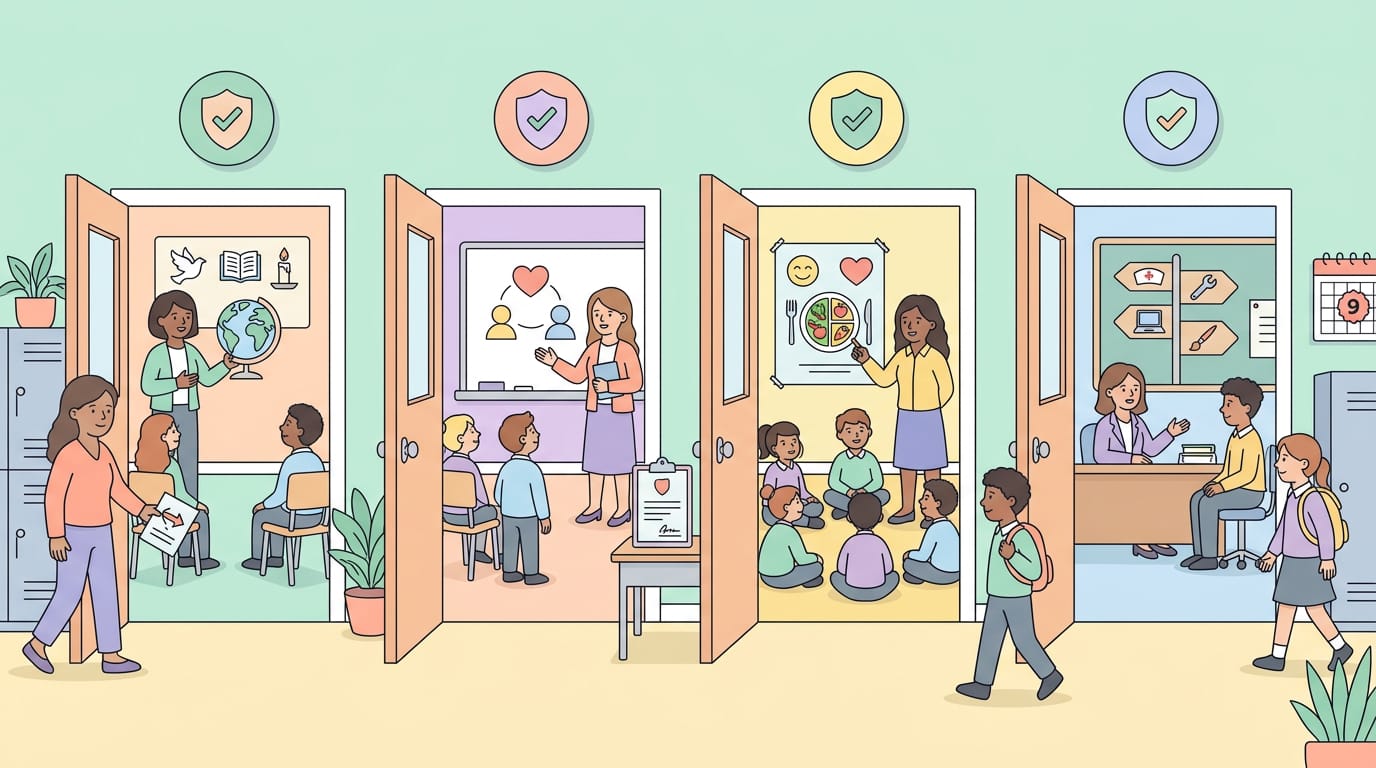
Non-core lessons every school must offer
Religious education. Schools must offer it, and in England parents have the right to withdraw their child, as GOV.UK's guidance on other compulsory subjects confirms.
Sex and relationship education. Schools must offer it, and families can withdraw from parts of it, as covered below.
Relationships and health education. Schools must offer it too.
Careers guidance in Year 9. In England, maintained schools and pupil referral units have a statutory duty to give pupils from Year 8 through Year 13 independent careers guidance, so Year 9 is included. A guide from Empowering SEND Families (SEND stands for special educational needs and disabilities) explains this.
How parents can withdraw their children
Opt out of sex education. In England, parents can ask to withdraw their child from parts or all of sex education, subject to the applicable statutory rules. GOV.UK's guidance on other compulsory subjects confirms this.
Opt out of religious education (RE). Parents can also ask to withdraw from parts or all of these lessons. Keep a written record of any request so both sides know exactly what was agreed.
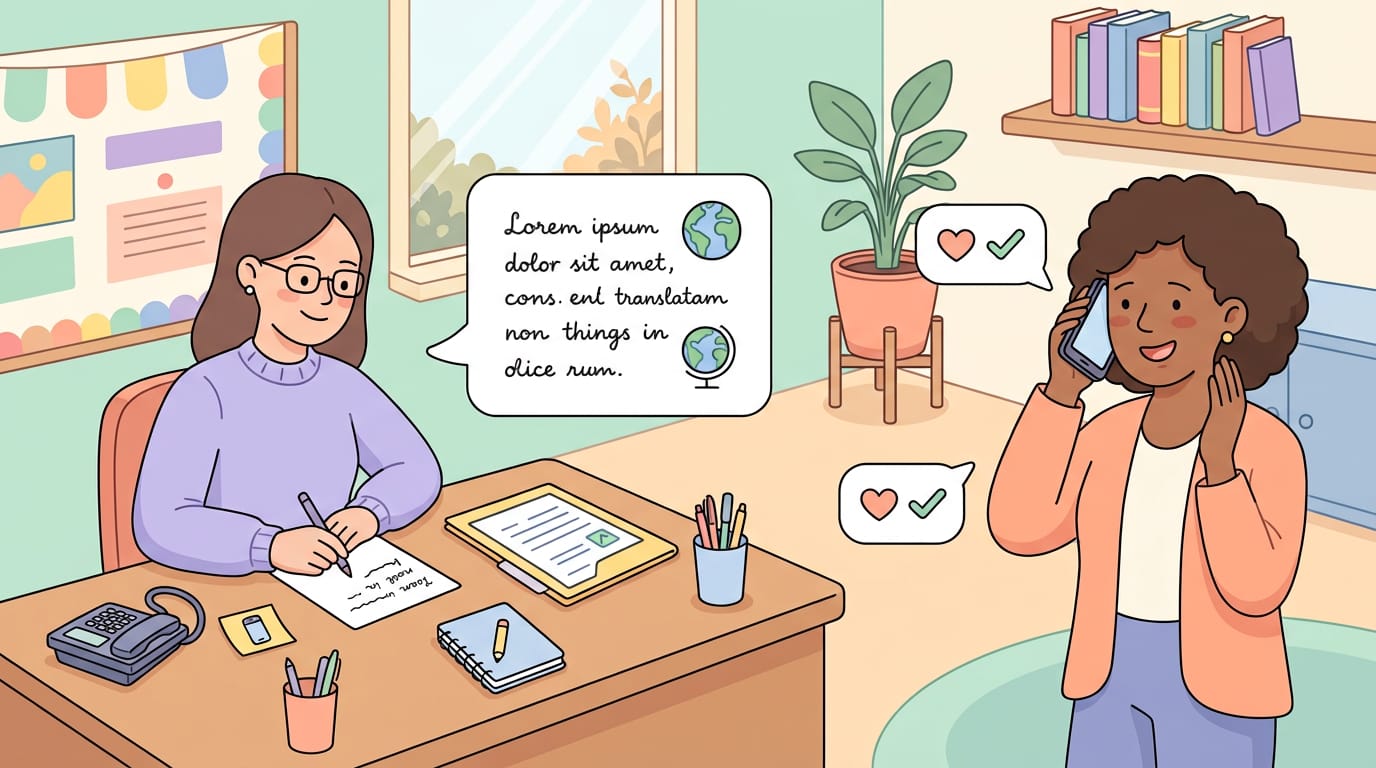
Communicating opt-outs inclusively with families. Think of a teacher who gets a withdrawal request from a family whose first language isn't English. A short note in that language, offering a phone call, means the parent knows exactly what's changing, and the teacher skips a tense chat at the school gate. Keep the wording plain and don't guess at the family's reasons. The family is making a choice, not a complaint.
How Pupils Pick and Measure Subjects
Two things shape which General Certificate of Secondary Education (GCSE) subjects pupils take: the choice they make themselves and the school measure that tracks those choices. Here's how each one works.
Picking GCSE subjects in Year 9
Pupils choose their GCSE subjects in Year 9. Think of a pupil who loves languages but dreads chemistry. She talks it through with her form tutor, checks which subjects fit her plans, and locks in a choice she can stick with.
Check your school's GCSE guidance before the form goes in.
How the English Baccalaureate measures GCSE uptake
The English Baccalaureate (EBacc) is a school performance measure. According to the Key stage 4 performance release on GOV.UK, it's built from pupils' GCSE results in these subjects:
English
Maths
Sciences
History or geography
A language
It's about the school, not the individual pupil: it counts how many of its pupils take GCSEs across this set. Consider a languages teacher during options week.
Her count of Year 9 pupils picking a language is the kind of figure the EBacc tracks, so she sees early where the school stands. Individual choices add up.
Elective Subjects Students Can Choose
Once the core subjects are covered, many schools let you pick courses that match your interests. These picks are called electives, and the range is wider than most people expect. Let's look at what's on offer.
Broader options, from separate sciences to commerce
Here's what you'll often find on an elective list:
Separate sciences: biology, chemistry, and physics taught as their own subjects instead of one combined course.
Classical languages: Latin and ancient Greek.
Foreign languages: learning a language other than the one spoken in class.
Home economics and woodwork: hands-on courses in cooking and building.
Psychology, sociology, and commerce: how people think, how societies work, and how business runs.
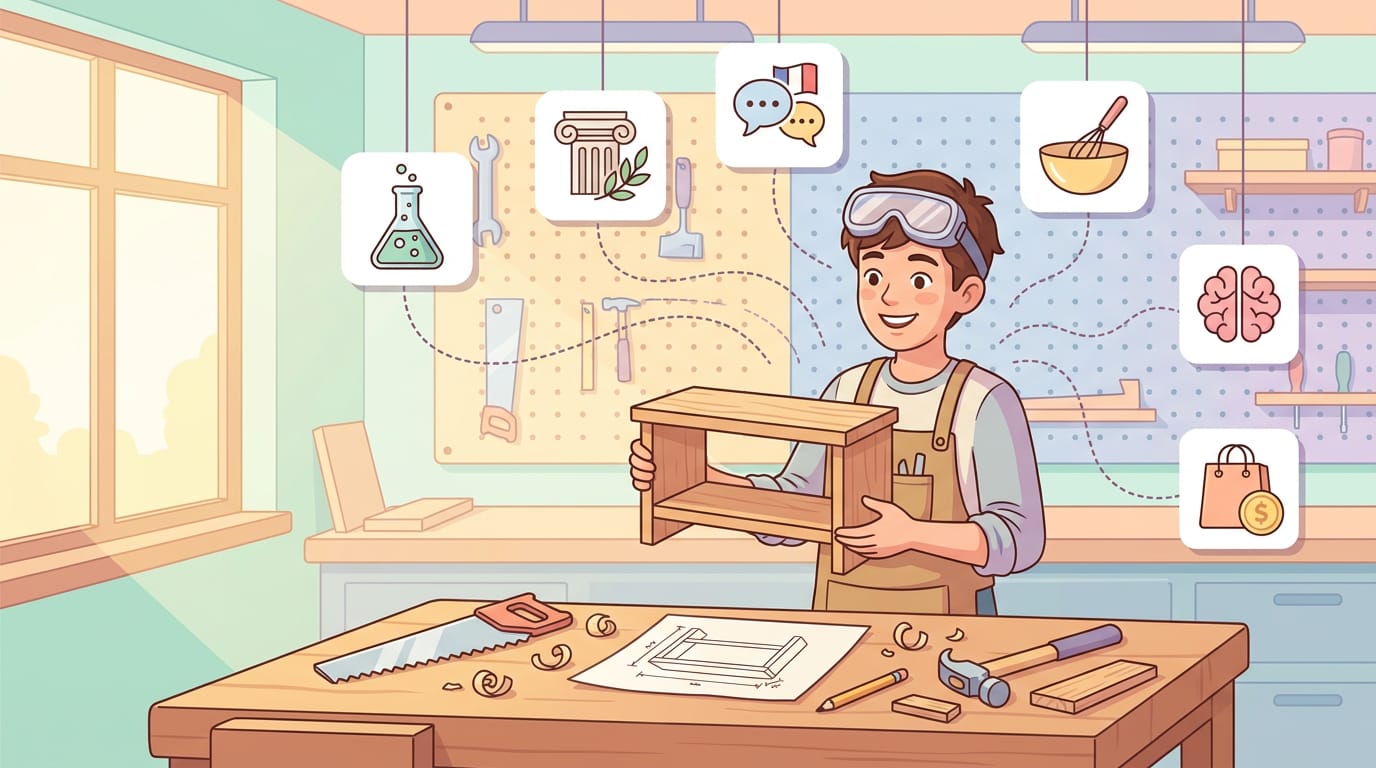
Consider a student who loves building things. Woodwork lets them turn a sketch into a working shelf, and that tangible result can keep them motivated long after the bell rings.
Electives are less about what a school requires and more about who a student is becoming. Choice keeps learners engaged. Students who want to take that choice further can explore independent studies.
Wondering which subjects are no longer taught in school? Some subjects that once filled timetables have since been dropped or folded into other courses, so your school's current course list is the best guide. And what are the subjects in America?
They vary by state and district, but English, math, science, and social studies usually form the core, with electives filling the rest of the day.
Ways to Build Subject Vocabulary
Every subject has its own subject vocabulary, so build it on purpose. Here's how, including support for English language learners (ELLs).
Downloadable word lists for each subject
Secondary students meet new terms in almost every lesson, so a spelling list for each subject saves time. Maths, sciences, geography, and music each need their own list, from equation to tempo.
Save each as a downloadable PDF (portable document format) you can print, share, and reuse. Start with one subject.
Teach subject vocabulary to ELLs
Don't assume a word is known just because it's on the list. Teach the key words before students meet them in a text. Consider a music teacher who introduces tempo by clapping slowly, then quickly, and asks students to explain which is which.
Now students can use the word, not just recognise it.
Games and worksheets to practise new words
Sentence crossword. Each clue is a sentence with a blank, so students must read the context to fill in the subject word.
Words in context. Place each term in a short passage, so students work out its meaning from the surrounding words. Knowing where a word fits can matter as much as what it means.
Word search worksheets. They give students a low-pressure way to practise spellings. Have them say each word aloud once found.
Setting work and own lists. Set work where students build their own list from each unit: the word, its meaning in their own words, and an example sentence. Their lists show which terms each learner still needs.
Subjects give a school day its shape, but the real goal is understanding. Whether a child is just starting out in primary school or choosing electives in secondary school, clear subject knowledge helps them see how ideas connect.
When you pair that clarity with support for subject-specific vocabulary, multilingual learners get the words they need to take part fully.
Ready to make every lesson more accessible? Explore our Inclusive & Multilingual Education posts for more ideas.
References
Modern foreign language education in England — lordslibrary.parliament.uk (2025)
Release home - Key stage 4 performance - Explore education statistics — explore-education-statistics.service.gov.uk (2026)
GCSE Options: What's Really a Choice, and What Closes a Door — distinguishedteaching.co.uk (2026)
Preparation for Adulthood from year 9 onwards — empoweringsendfamilies.co.uk (2025)
Still grading everything by hand?
EMStudio is a free teaching management app — manage your classes, students, lessons, and more!