
Secondary Education Explained: Structure, Purpose, and Implementation
Secondary Education Explained: Structure, Purpose, and Implementation

Article by
Milo
ESL Content Coordinator & Educator
ESL Content Coordinator & Educator
All Posts
You got the schedule change and suddenly you're staring at six different class rosters instead of one. Or maybe you're sitting in a curriculum meeting hearing about Carnegie units and graduation pathways, wondering when teaching turned into credit accumulation. Secondary education sits in this weird middle space—too structured to feel like exploration, too fragmented to feel like community. You teach 150 kids a day in 47-minute blocks, and somewhere between the bell schedule and the state standards, you're supposed to actually get them to learn something beyond how to game the gradebook.
This post cuts through the jargon. We'll look at how secondary education actually fits into the K-12 pipeline—not just the bureaucratic definition, but what happens to pedagogy when you shift from self-contained elementary rooms to departmentalized instruction. We'll break down the credit system, why the middle school transition wrecks so many kids, and how the secondary curriculum prepares students (or doesn't) for what comes next. Whether you're new to grades 6-12 or just trying to understand why your school is structured like a factory, here's what actually matters.
Still grading everything by hand?
EMStudio is a free teaching management app — manage your classes, students, lessons, and more!
Learn More

Still grading everything by hand?
EMStudio is a free teaching management app — manage your classes, students, lessons, and more!
Learn More
Table of Contents
What Is Secondary Education?
Secondary education encompasses the formal schooling students receive during adolescence, typically covering grades 6 through 12 in the United States, or ages 11 to 18. This phase bridges primary foundational learning and postsecondary training, offering increasingly specialized subject matter, departmentalized instruction, and preparation for higher education or career entry.
In the UK, secondary schooling spans Years 7 through 13, while the International Baccalaureate Middle Years Programme targets ages 11 to 16. Compulsory attendance laws in the US generally apply until ages 16 to 18, depending on your state statute. Students must stay enrolled through high school graduation or the specified age threshold, whichever comes first. Dropout ages vary; some states allow exit at 16 with parental permission, while others require attendance until 18.
The organizational shift hits hard in sixth grade. Elementary K-5 education keeps kids in self-contained classrooms with one teacher integrating reading, math, and science at the same desk. Secondary flips that model entirely. Students rotate through six or seven periods daily, each taught by content specialists who only teach their discipline. Instead of promotion based on portfolio or age-level readiness, secondary curriculum runs on the Carnegie unit: 120 hours of documented instruction equals one credit. You accumulate credits, not just passing grades, to advance toward graduation.
Middle School (Grades 6-8)
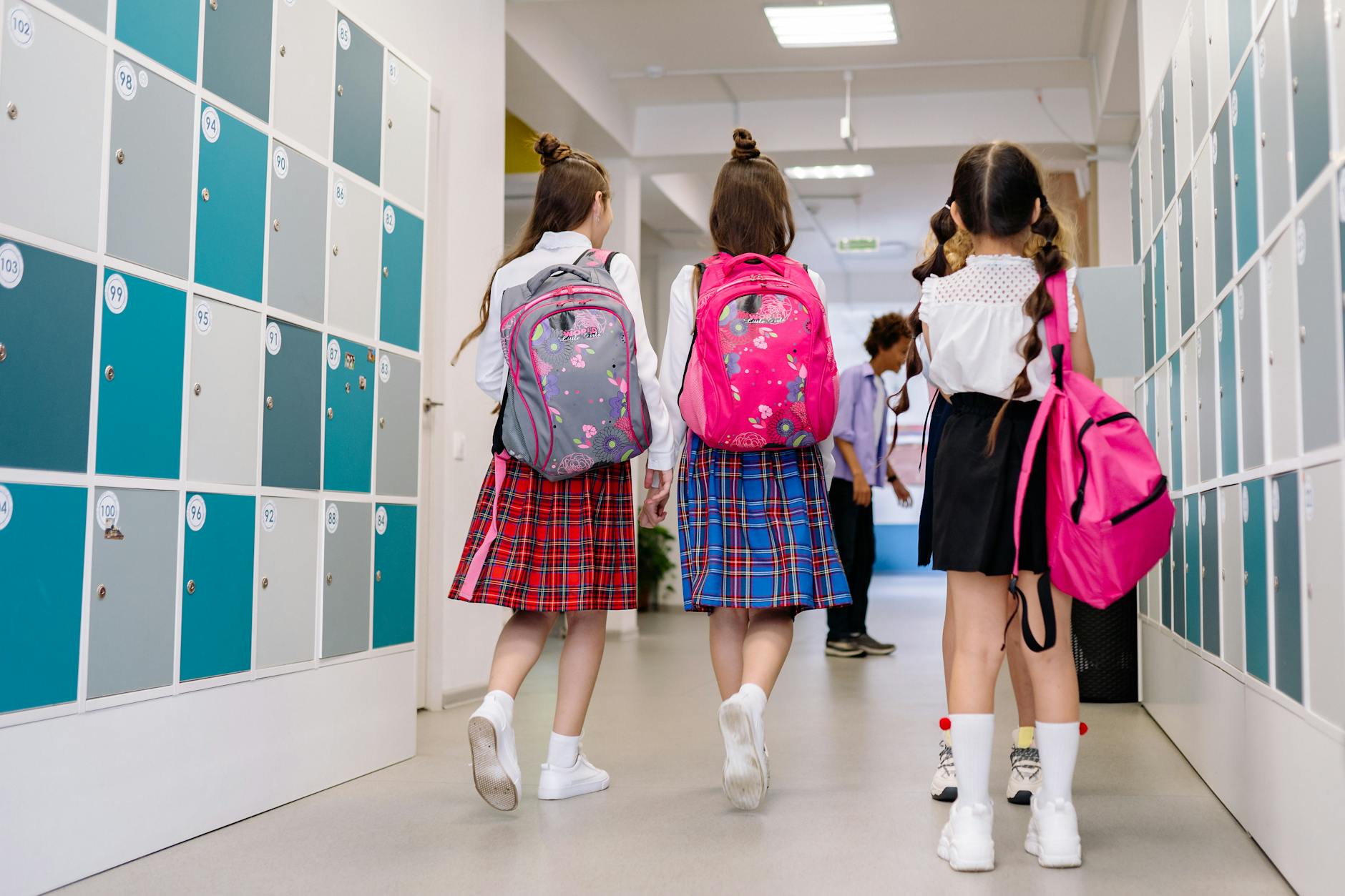
Your sixth graders walk into a building with combination locks and four minutes between bells. The middle school transition means abandoning the single-teacher safety net for an interdisciplinary team of four or five content specialists sharing roughly 120 students. These teachers coordinate schedules so tests do not cluster on Tuesdays, but each operates independently. You are no longer the primary adult; you are one of seven.
Daily advisory periods last 20 to 30 minutes, functioning as academic insurance. This homeroom block covers binder organization, conflict resolution, or silent reading. Unlike elementary specials that rotate weekly on a cart, middle school electives run by semester—art, music, technology, or introductory world languages. Kids carry backpacks between buildings. They manage passing periods without escorts. It is structured independence with guardrails.
Smart buildings run intensive transition programs. Sixth grade orientations happen in August, when 11-year-olds practice locker combinations and hallway maps. Summer bridge programs run two to three weeks, previewing note-taking and schedule reading. Some counselors reduce course loads for the first quarter, easing the shock of navigating seven teachers with seven different late-work policies. The goal is survival through October.
High School (Grades 9-12)
High school operates on credit accumulation. Students need approximately 24 to 28 Carnegie units to graduate—each representing 120 hours of seat time in specific subject areas. GPA calculation starts in ninth grade and never stops. Every course appears on the permanent transcript that college admissions officers review. A failed biology class in freshman year leaves a mark that weighted senior AP courses cannot fully erase.
Grade-level milestones track like this:
Ninth grade course selection determines tracking—honors, standard, or remedial sequences that lock in by sophomore year and dictate AP eligibility.
Tenth and eleventh grades host PSAT, SAT, and ACT testing windows that drive college remediation planning and dual-enrollment eligibility.
Twelfth grade brings FAFSA completion deadlines, college application due dates in November, and the last chance to retake failed state assessments required for graduation.
Accountability tightens here. End-of-Course exams count toward final grades in many states. State graduation requirements often include civics tests, financial literacy modules, or senior projects. And here is the catch: drop foreign language or advanced math in tenth grade, and you cannot claw back into competitive college prep tracks. K12 education builds sequentially, but secondary locks the doors behind you. That is the reality of adolescent learning in these years—choices become permanent.
How Does Secondary Education Fit Into the K-12 Continuum?
Secondary education serves as the capstone of the K-12 continuum, connecting foundational primary skills with specialized postsecondary pathways. It transitions students from single-teacher classrooms to departmentalized learning while introducing credit-based systems, cumulative transcripts, and career exploration beginning in middle school.
K through 12 represents the continuous pipeline from kindergarten entry at age five through 12th grade graduation at seventeen or eighteen. Secondary education occupies the final six or seven years of this sequence, fundamentally shifting how students experience school. Where primary grades build basic literacy and numeracy through integrated, thematic units taught by generalists managing 22 students, secondary curriculum fractures into discrete disciplines. Content specialists handle 28 to 32 students per 50-minute period, delivering departmentalized instruction in siloed subjects rather than blended learning. The shift hits hardest in 9th grade. Research consistently identifies this transition point as the most dangerous in the K to 12 journey, with failure rates jumping as students confront increased autonomy, heavier homework loads, and reduced individual monitoring compared to the K-8 environment.
The Bridge From Primary Education
Schools handle the middle school transition differently, and you see the results in your 9th grade rosters. Districts deploy three common structures to manage this shift:
6th grade academies isolate incoming students in separate wings or buildings while they master rotating schedules and locker combinations.
Houses or teams group 120 students with four core teachers who share planning periods and coordinate interventions.
K-8 configurations keep adolescents with younger children, avoiding the social turbulence of traditional middle schools but limiting elective access.
Support structures change dramatically. Elementary counselors carry caseloads of 500 students, running lunch groups and crisis response for general needs. Secondary counselors manage 250 to 400 students, but their focus shifts to transcript audits, credit recovery, and preparing students for the transition to higher education. You lose the elementary practice of "looping"—keeping the same teacher for two consecutive years—which research shows builds deep relational trust. Instead, this fragmentation of adult relationships changes the nature of adolescent learning. Students navigate semester-based course changes, attempting to connect with six or seven different teachers while managing increased autonomy. The 9th grade achievement drop reflects this whiplash: failure rates spike when students move from the monitored environment of K-8 to the credit-bearing, self-directed world where missing assignments accumulate silently.
Preparation for Postsecondary Pathways
Secondary education operates on the Carnegie unit system—120 hours of instruction equals one credit—creating a cumulative GPA that follows students to college applications and military enlistment. Unlike the social promotion common in elementary grades, 9th graders fail courses and must recover credits through summer school or online platforms. Course selection carries stakes; choosing Algebra I versus Pre-Algebra in 8th grade determines whether a student reaches Calculus by senior year, affecting STEM pathway eligibility and scholarship opportunities.
Dual enrollment partnerships with community colleges let juniors and seniors earn transcripted college credit, often tuition-free, while still enrolled in high school. Requirements typically include:
A 3.0 GPA or higher
Passing placement tests in English and math
Parental permission and transportation arrangements for off-campus courses
Career exploration starts earlier than most parents realize. Holland Code assessments in 8th or 9th grade categorize students into six personality types, matching them to the 16 CTE career clusters. Platforms like Naviance or Xello host interest inventories that drive course selections—whether that's welding certification or AP Biology. Benchmarks signal readiness: SAT college readiness scores sit at 480 for Evidence-Based Reading and Writing and 530 for Math; ACT equivalents run 18 for English and 22 for Math. Schools offering extensive AP or IB programs provide the rigorous secondary curriculum that predicts reduced college remediation rates. By 12th grade, the K to 12 pipeline funnels students toward distinct exits: apprenticeships, two-year degrees, or four-year university admission, each requiring specific transcript patterns established during these final years.
The Structure and Components of Secondary Schooling
Moving from elementary classrooms to departmentalized instruction marks the biggest structural shift in education k12. Suddenly your 6th graders have six teachers, six expectations, and six places to lose homework. This organizational change defines how secondary education operates differently from primary years.
Curriculum Frameworks and Academic Standards
Scope and sequence documents are your roadmap. Districts stretch state standards across 180 days, creating pacing guides that dictate Unit 1 consumes six weeks covering standards 8.EE.A.1 through 8.EE.A.4. These documents determine textbook adoption—whether Pearson's enVision, McGraw-Hill's StudySync, or OpenStax—and how deeply you move through content before spring testing.
Most states review materials every 5-7 years. Adoption committees evaluate alignment, accessibility features, and platform functionality on older Chromebooks. Here's what they're choosing between:
Framework | Subjects | Adoption |
|---|---|---|
Common Core State Standards | Mathematics, ELA | 41 states (CA, NY use adapted versions; TX, VA never adopted) |
Next Generation Science Standards | Science (Physics, Chemistry, Biology, Earth Science) | 20 states plus D.C.; others use state-specific variants like Texas TEKS Science |
State-Specific History | Social Studies, Civics, Economics | Texas TEKS, Virginia SOL remain independent; others use adapted C3 Frameworks |
There's always a gap between intended curriculum (the standards document), enacted curriculum (what you teach when the fire drill eats Tuesday), and assessed curriculum (what appears on the state test). aligning academic standards with curriculum frameworks helps close that distance.
Credit Requirements and Graduation Benchmarks
A Carnegie unit equals 120 hours of seat time, or mastery demonstration in competency-based systems. Graduation requires 24 units: 4 English, 4 Math (including Algebra II), 3 Science with lab components, 3 Social Studies, 1 PE/Health, 1 Arts, and 8 electives. Most districts require a 2.0 GPA minimum.
Transfer students create headaches. International transcripts need WES evaluation. State-to-state portability fails when sequences don't align—you might have a junior who covered Shakespeare in London but missed your state's specific American literature standards.
Failed courses trigger alternative pathways:
Credit recovery: Computer-based labs using Edgenuity or Plato Courseware, letting students retake English 10 while enrolled in English 11
Summer school: Compressed 4-6 week sessions running 4-6 hours daily
Online labs: Virtual options for students with work or transportation barriers
Weighted GPAs complicate rankings. AP and IB courses often carry 5.0 weighting against 4.0 for standard courses, meaning a B in AP Chemistry beats an A in regular Chemistry for class rank. This is why understanding how weighted honors coursework affects a student’s cumulative GPA is one of the most strategically important pieces of information families and counselors can equip students with before ninth-grade course selection.
Assessment Systems and Accountability Measures
Testing operates in three tiers. Formative assessments—daily exit tickets, weekly quizzes—tell you who needs reteaching. Benchmark assessments like NWEA MAP or Renaissance STAR hit quarterly, predicting performance on end-of-course exams. Then come summative measures: state EOCs, SAT, ACT—the high-stakes gates to graduation and college.
The full matrix includes:
Diagnostic: Beginning-of-year tools like i-Ready identifying gaps from the middle school transition
Formative: Ongoing checks—exit tickets, thumbs up/down—that inform daily instruction
Interim: Quarterly benchmarks measuring progress toward standards mastery
Summative: Final exams, state EOCs, and national admissions tests
Federal ESSA mandates annual testing in grades 3-8 and once in high school, with reporting on 4-year graduation rates and college/career readiness. Locally, policies vary: some districts allow retakes for highest grade, others average attempts; grading scales range from 90-100 A to 93-100 A.
Here's the failure mode: when accountability pressure peaks, comprehensive performance assessment systems get replaced with test prep. Schools narrow the secondary curriculum to tested subjects—ELA and Math—slashing arts and CTE. Adolescent learning suffers when students practice multiple-choice strategies instead of reading novels or conducting labs. That's when college remediation rates climb and k12 students lose access to a complete education.

Why Does Secondary Education Matter for Adolescent Development?
Secondary education matters because adolescence represents the final period of major brain plasticity before adulthood, when students develop abstract reasoning, executive function, and specialized knowledge. Research indicates this is when interventions have lasting impacts on college persistence and career trajectory, making rigorous secondary schooling critical for long-term outcomes.
Hattie's Visible Learning meta-analyses show adolescent learning accelerates when secondary students receive specific instructional moves. Feedback carries an effect size of 0.70; direct instruction sits at 0.59. These numbers mean that when you're teaching rhetorical analysis or quadratic functions, how you correct errors and model thinking matters more than in earlier years. The secondary curriculum builds complexity rapidly, and pedagogical choices here have outsized returns.
The prefrontal cortex undergoes major reconstruction between ages 12 and 25. Synaptic pruning and myelination reshape executive function, decision-making, and risk assessment. This biological reality makes structured secondary education environments necessary. Within the prek 12 continuum, these years offer the last window for intensive skill building before neural pathways solidify.
NCES data reveals that roughly 40% of first-time college students enroll in college remediation. These students sat in our classrooms but never mastered the writing or algebra needed for credit-bearing courses. The gap starts with Carnegie unit sequences that fail to align with postsecondary demands.
Then there's the middle school transition cliff. Failure rates spike in 9th grade when students lack self-regulation skills. Effective programs explicitly teach study strategies—Cornell notes, time management, and metacognitive checks. Advisory periods monitor transition stress before it becomes a dropout risk.
Academic Rigor and College Readiness
College readiness benchmarks are concrete. Students need:
SAT scores of 480 in Evidence-Based Reading and Writing and 530 in Math
ACT scores of 18 in English and 22 in Math
Those who hit these numbers avoid remediation. Students completing rigorous coursework—AP, IB, or Calculus—show measurably higher persistence rates than those stopping at Algebra II.
The opportunity to learn standard exposes equity gaps. Students in schools offering 15 or more AP courses plus Calculus complete bachelor's degrees at significantly higher rates than those in schools with limited advanced offerings. Exposure to complex texts, timed writing, and departmentalized instruction matters.
Balance is key. Academic press—high expectations, rigorous grading, homework loads of 1-2 hours nightly—must coexist with support. Tutoring centers, writing labs, and teacher office hours provide the scaffolds that make rigor sustainable. Schools that demand without supporting create anxiety. Schools that support without demanding create dependence.
Social-Emotional Growth and Identity Formation
Advisory periods aren't homeroom 2.0. Effective structures dedicate 20-30 minutes daily to explicit social-emotional curriculum. Circle practices, check-in/check-out systems, and goal-setting protocols provide tools for supporting adolescent mental health and social-emotional growth during turbulent years. These routines matter because peer influence peaks now, and students need structured time to process identity questions away from content pressure.
Discipline practices shift too. Restorative justice—community circles for conflict resolution—replaces zero-tolerance policies that disproportionately push secondary students out. When a student damages community trust, they work to repair it rather than sitting in suspension. This approach acknowledges Erikson's identity versus role confusion stage: adolescents aged 12-18 are experimenting with who they are, and they need room to make mistakes without permanent exclusion.
Extracurricular participation completes the picture. Sports, arts, and clubs provide belonging and competence that classrooms alone can't guarantee. They also build transcripts, but their primary value is developmental. They give adolescents safe contexts to practice leadership, collaboration, and resilience before adulthood demands these skills full-time.

Types of Secondary Education Programs
The structure of secondary education shapes adolescent learning daily. Traditional public schools charge nothing, pack 25 to 32 kids per class, and follow state-mandated curriculum. Teachers carry state licenses. Private independent schools run $15,000 to $50,000 yearly, cap classes at 12 to 15, and design their own secondary curriculum. Accreditation comes through AdvancED or SAIS. Charter schools split the difference. Admission runs by lottery, class sizes vary by authorizer, and many focus on themes like STEM or classical studies.
Match the model to the student.
Hands-on kinesthetic learners need CTE pathways with tangible outcomes.
Students seeking international mobility should pursue the IB Diploma Programme.
Kids needing flexible pacing due to health or athletics thrive in virtual academies.
Students requiring therapeutic support belong in specialized boarding schools.
Traditional Public and Private Schools
Public school teachers must hold state licensure and rack up ongoing PD hours to keep it. Private schools often skip the licensure requirement but demand subject-specific degrees. Accreditation matters. Public schools carry regional accreditation through state boards. Private schools might hold regional, national, or state accreditation, which affects transcript acceptance during a middle school transition or transfer.
Athletics show the divide clearly. Public schools play under state associations like UIL in Texas or CIF in California. Private schools run independent leagues. Funding works differently too. Public schools tap Title I when poverty rates hit 40 percent. Private schools depend on fundraising, though 20 to 40 percent of families receive tuition assistance.
Governance structures feel different on parent night. Public schools answer to elected school boards. Private schools often have appointed boards and active parent associations that function like part-time development offices. You vote in one system; you write checks in the other.
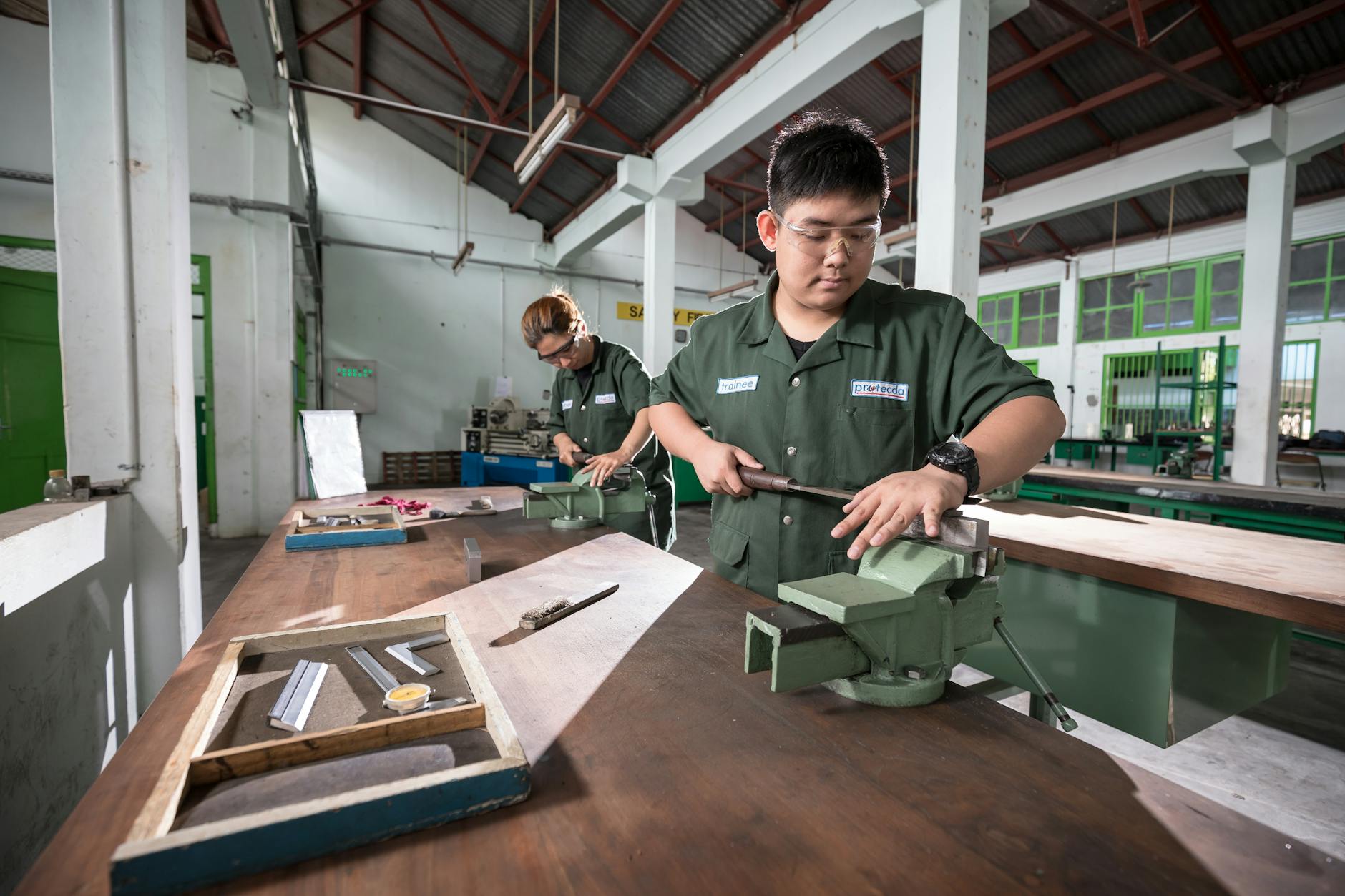
Career and Technical Education (CTE) Pathways
CTE isn't the shop class of 1995. Under Perkins V funding, students become CTE concentrators by completing two or more courses in a sequence. These programs of study run three courses deep and align with 16 career clusters. Work-based learning demands 120 plus hours for concentrators. Credentials matter here. Students walk out with AWS Certified Cloud Practitioner, CompTIA A+, or CNA certifications. These beat a Carnegie unit on a transcript when the kid applies for jobs. For deeper technical tracks, explore specialized career and technical education pathways that fast-track careers.
Student organizations make this stick. CTSOs like SkillsUSA, FFA, and DECA run competitive events that teach leadership better than any slideshow. Dual-credit agreements with community colleges let students knock out gen-ed requirements during the k to 12 program, often for free. This cuts college remediation later.
Work-based learning takes four shapes.
Job shadowing lasts one to two days.
Internships run semester-long, paid or unpaid.
Apprenticeships are DOL-registered programs starting at age 16.
Clinical rotations serve healthcare pathways.
Alternative and Specialized School Models
Magnet schools pull from across district boundaries. Admission requires applications, not ZIP codes. Themes drive the design—STEM, performing arts, or International Baccalaureate. Districts provide transportation because the value lies in mixing kids who choose to be there.
Early college high schools extend the k twelve timeline to five years. Students graduate with associate degrees—60 college credits—alongside their diplomas. These target first-generation college students who need a head start on credit accumulation.
Full-time virtual academies like K12 Inc. and Connections Academy serve students who need location flexibility. Athletes training twelve hours daily or kids managing chronic illness log in asynchronously. Other models serve different needs. Montessori Erdkinder programs for ages 12 to 18 use farm-based or urban studio settings. Waldorf high schools run main lesson blocks with no standardized testing until college entrance exams. Project-Based Learning schools like the High Tech High model replace departmentalized instruction with interdisciplinary exhibitions. Credit recovery schools offer smaller settings—50 to 150 students—with four-hour days and therapeutic supports for kids who fell behind or face behavioral challenges.
How Can Families and Educators Navigate Secondary Education Choices?
Families and educators should navigate secondary choices by auditing current transcripts against graduation requirements, visiting schools during operational hours, and evaluating support structures such as counselor-to-student ratios. Map student interests to available academic tracks, verify accreditation status, and establish transition support systems during pivotal grade shifts. Before committing to any secondary education pathway, run through this checklist.
You need to request a transcript audit comparing credits earned against the 24 Carnegie units required for graduation.
You should compare course catalogs for AP, IB, or CTE availability—some schools offer six advanced courses, others offer thirty.
You must visit during lunch or recess to observe real culture, not the scripted tour.
You should verify counselor-to-student ratios; under 250:1 allows for actual guidance, while the national average of 408:1 leaves students underserved.
You need to check the four-year graduation rate; above 85% indicates a stable environment.
You should watch for red flags that signal trouble. Chronic absenteeism rates above 30% suggest systemic issues. Schools lacking MTSS or RTI support systems leave struggling students without intervention. Counselor loads exceeding 500:1 indicate inadequate guidance support. When you are selecting the right school environment for a child's needs, ask how departmentalized instruction begins in sixth grade and whether teachers coordinate assignments to prevent overload.
Selecting Courses and Academic Tracks
Tracking decisions made in ninth grade often lock students into four-year trajectories. Honors, standard, and remedial pathways typically begin with math and foreign language placements. Adolescent learning research confirms that students placed in standard math rarely move up to Calculus by twelfth grade, effectively closing STEM doors before students fully mature academically. You should watch for "tracking by another name" where certain demographics fill remedial sections despite test scores suggesting capability for advanced work.
You need to balance career-aligned electives with exploratory options. A student interested in architecture should take engineering graphics, but also needs psychology or debate to meet secondary curriculum breadth requirements. You should map four-year plans in eighth grade, understanding prerequisite chains: taking Algebra I in eighth grade allows Calculus by twelfth, a sequence necessary for competitive engineering programs. Ninth grade GPA carries disproportionate weight in college admissions; a single failed class freshman year can drop a GPA below eligibility thresholds for four-year universities.
Dropping sequences is often irreversible. Leaving foreign language in ninth grade eliminates most four-year college options. Sliding from honors to regular math may reduce stress now, but it precludes STEM majors later. These decisions ripple through k through 12 education, potentially forcing students into college remediation for classes they could have mastered in high school.
Supporting Students Through Key Transitions
You should establish specific protocols to prevent credit loss during transitions. Enroll students in summer bridge programs, typically running two to three weeks before ninth grade begins, to acclimate them to high school expectations. You should request upperclassmen mentor assignments so freshmen have peers to text when they forget locker combinations. You need to schedule quarterly transcript reviews to catch credit deficiencies early; waiting until spring of senior year to discover a missing half-credit in physical education derails graduation.
The move to sixth grade marks the first major middle school transition. Students shift from single classrooms to departmentalized instruction with six teachers and six homework streams. Strong programs offer locker combination practice days, schedule walking tours before the first bell, and reduce homework loads during the first quarter. Some schools use "house" systems keeping students with the same core teachers, creating stability within the new structure.
Ninth grade academies physically separate freshmen from upper grades and assign dedicated counselors to monitor the crucial first year. Freshmen-only lunch periods reduce bullying and increase belonging. For twelfth grade, senior seminar courses force students to complete FAFSA, apprenticeship applications, or college essays during school hours. You must monitor for "senioritis"—transcript drops after college acceptance can still rescind admissions offers. These structures ensure students exit secondary education prepared rather than scrambled.
Strategies for Effective Secondary Education Implementation
Secondary education sits at the intersection of adolescent development and adult preparation. You need systems that handle diverse readiness levels without trapping kids in permanent tracks, plus real pathways to postsecondary success. I've seen Tomlinson's tiered assignments work in departmentalized instruction settings—offering three levels in that 10th-grade Biology mitosis unit: the cell division poster for foundational learners, the stop-motion animation for on-grade students, and the cancer research proposal for advanced learners. But differentiation fails when it becomes rigid ability grouping. The same applies to your Carnegie unit counting: ensure your CCR programs include 40+ hours of work-based learning for every student, not just CTE concentrators, and require senior capstone projects with community panels. Families need weekly grade portal checks and multilingual nights, but watch out for the traps—honors tracks often exclude underrepresented groups, and struggling schools sometimes narrow the secondary curriculum by cutting arts and CTE to focus only on tested subjects.
Differentiated Instruction for Diverse Learners
When you're implementing differentiated instruction for diverse learners in departmentalized settings, Tomlinson's tiered assignments keep everyone moving toward the same standards at different entry points. In that 10th-grade Biology mitosis unit, you might offer:
Foundational: A cell division poster labeling phases with definitions.
On-grade: A stop-motion animation showing the complete process.
Advanced: A research proposal investigating cancer cell division mechanisms.
Same content, different complexity. Flexible grouping keeps this from becoming tracking. Regroup students every 4-6 weeks based on formative data, not permanent labels. I use stations in secondary classrooms—ten minutes at each rotation:
Direct instruction with me for targeted clarification.
Collaborative work with peers on application tasks.
Independent practice with immediate feedback.
Technology-based review using adaptive platforms.
It works for adolescent learning because they move before they check out.
Close the loop with daily learning targets posted clearly and assessed via three-question exit tickets. Read them that night and adjust tomorrow's lesson. Don't just grade them. Apply UDL principles by offering text-to-speech for dense secondary texts, graphic organizers for essay writing, and choice in how students demonstrate mastery—video, written essay, or live presentation. College remediation rates drop when kids get these scaffolds early rather than hitting college without ever having choices in how they show what they know.
Building College and Career Readiness Programs
Start with early warning indicator systems that flag the ABCs:
Attendance below 90%.
Behavior incidents requiring administrative intervention.
Course failures in core subjects.
When a flag pops, assign the intervention immediately—don't wait for the next report card. This is especially critical during the middle school transition when academic patterns solidify.
Use advisory curriculum platforms like Naviance or Xello for career inventories and college searches, but don't stop there. Require 40+ hours of work-based learning for every student to earn their Carnegie unit credits, not just your CTE concentrators. Build formal apprenticeship agreements with local employers in manufacturing, IT, and healthcare for paid, credit-bearing experience that counts toward graduation requirements. These apprenticeships need structured mentorship and regular check-ins between employers, students, and coordinators to ensure quality.
Run FAFSA completion campaigns with school-wide events offering tax preparation assistance. Use NCAN's Form Your Future resources and target 100% senior completion in low-income schools. Cap it all with senior projects presented to community panels—real audiences force real preparation. This prevents the secondary curriculum from becoming just test prep and keeps the secondary education experience connected to actual adult outcomes.
Family and Community Engagement
When developing robust family and community engagement plans, structure specific touchpoints. Require weekly grade portal checks through PowerSchool or Infinite Campus—train families how to read them rather than assuming they know. Host multilingual family nights with interpretation services, not just translated flyers. For at-risk students, implement Check and Connect mentor models where a consistent adult checks in weekly and problem-solves barriers.
Build volunteer pipelines through structured opportunities:
Monthly career speaker series with 45-minute presentations from local professionals.
Job shadowing days coordinated through your chamber of commerce.
Internship placement support for upperclassmen.
Set clear communication protocols: weekly email blasts for detailed updates versus text-based apps like Remind or ClassDojo for quick reminders. Ensure all platforms offer multilingual access for families with limited English proficiency.
Establish partnerships with hospitals for health science pathways, manufacturing plants for engineering internships, and universities for research mentorships like Garcia Summer Scholars. But watch the failure modes: ability grouping often becomes permanent tracking, honors tracks frequently exclude underrepresented groups, and struggling schools sometimes narrow the curriculum by cutting arts and CTE to focus only on tested subjects. Fight that. Kids need the full breadth to thrive.

Final Thoughts on Secondary Education
All the Carnegie units and master schedules in the world won't matter if a student can't see the point. The most effective secondary education happens when teachers and counselors bridge the gap between departmentalized instruction and a teenager's actual future. Adolescent learning sticks when the geometry credit connects to the apprenticeship they want, or when the English essay answers a question they actually asked.
This week, pick one student who is tuning out or at risk of college remediation. Pull their transcript. Look at their schedule. Then ask them: "What do you actually want to do at 18?" Find one concrete way to connect this semester's work to that answer. It might mean swapping an elective, or simply showing how this specific class builds that skill. Do this for one kid. Then another. That is how you fix secondary education—not with new software or bigger budgets, but with relevance.

What Is Secondary Education?
Secondary education encompasses the formal schooling students receive during adolescence, typically covering grades 6 through 12 in the United States, or ages 11 to 18. This phase bridges primary foundational learning and postsecondary training, offering increasingly specialized subject matter, departmentalized instruction, and preparation for higher education or career entry.
In the UK, secondary schooling spans Years 7 through 13, while the International Baccalaureate Middle Years Programme targets ages 11 to 16. Compulsory attendance laws in the US generally apply until ages 16 to 18, depending on your state statute. Students must stay enrolled through high school graduation or the specified age threshold, whichever comes first. Dropout ages vary; some states allow exit at 16 with parental permission, while others require attendance until 18.
The organizational shift hits hard in sixth grade. Elementary K-5 education keeps kids in self-contained classrooms with one teacher integrating reading, math, and science at the same desk. Secondary flips that model entirely. Students rotate through six or seven periods daily, each taught by content specialists who only teach their discipline. Instead of promotion based on portfolio or age-level readiness, secondary curriculum runs on the Carnegie unit: 120 hours of documented instruction equals one credit. You accumulate credits, not just passing grades, to advance toward graduation.
Middle School (Grades 6-8)
Your sixth graders walk into a building with combination locks and four minutes between bells. The middle school transition means abandoning the single-teacher safety net for an interdisciplinary team of four or five content specialists sharing roughly 120 students. These teachers coordinate schedules so tests do not cluster on Tuesdays, but each operates independently. You are no longer the primary adult; you are one of seven.
Daily advisory periods last 20 to 30 minutes, functioning as academic insurance. This homeroom block covers binder organization, conflict resolution, or silent reading. Unlike elementary specials that rotate weekly on a cart, middle school electives run by semester—art, music, technology, or introductory world languages. Kids carry backpacks between buildings. They manage passing periods without escorts. It is structured independence with guardrails.
Smart buildings run intensive transition programs. Sixth grade orientations happen in August, when 11-year-olds practice locker combinations and hallway maps. Summer bridge programs run two to three weeks, previewing note-taking and schedule reading. Some counselors reduce course loads for the first quarter, easing the shock of navigating seven teachers with seven different late-work policies. The goal is survival through October.
High School (Grades 9-12)
High school operates on credit accumulation. Students need approximately 24 to 28 Carnegie units to graduate—each representing 120 hours of seat time in specific subject areas. GPA calculation starts in ninth grade and never stops. Every course appears on the permanent transcript that college admissions officers review. A failed biology class in freshman year leaves a mark that weighted senior AP courses cannot fully erase.
Grade-level milestones track like this:
Ninth grade course selection determines tracking—honors, standard, or remedial sequences that lock in by sophomore year and dictate AP eligibility.
Tenth and eleventh grades host PSAT, SAT, and ACT testing windows that drive college remediation planning and dual-enrollment eligibility.
Twelfth grade brings FAFSA completion deadlines, college application due dates in November, and the last chance to retake failed state assessments required for graduation.
Accountability tightens here. End-of-Course exams count toward final grades in many states. State graduation requirements often include civics tests, financial literacy modules, or senior projects. And here is the catch: drop foreign language or advanced math in tenth grade, and you cannot claw back into competitive college prep tracks. K12 education builds sequentially, but secondary locks the doors behind you. That is the reality of adolescent learning in these years—choices become permanent.
How Does Secondary Education Fit Into the K-12 Continuum?
Secondary education serves as the capstone of the K-12 continuum, connecting foundational primary skills with specialized postsecondary pathways. It transitions students from single-teacher classrooms to departmentalized learning while introducing credit-based systems, cumulative transcripts, and career exploration beginning in middle school.
K through 12 represents the continuous pipeline from kindergarten entry at age five through 12th grade graduation at seventeen or eighteen. Secondary education occupies the final six or seven years of this sequence, fundamentally shifting how students experience school. Where primary grades build basic literacy and numeracy through integrated, thematic units taught by generalists managing 22 students, secondary curriculum fractures into discrete disciplines. Content specialists handle 28 to 32 students per 50-minute period, delivering departmentalized instruction in siloed subjects rather than blended learning. The shift hits hardest in 9th grade. Research consistently identifies this transition point as the most dangerous in the K to 12 journey, with failure rates jumping as students confront increased autonomy, heavier homework loads, and reduced individual monitoring compared to the K-8 environment.
The Bridge From Primary Education
Schools handle the middle school transition differently, and you see the results in your 9th grade rosters. Districts deploy three common structures to manage this shift:
6th grade academies isolate incoming students in separate wings or buildings while they master rotating schedules and locker combinations.
Houses or teams group 120 students with four core teachers who share planning periods and coordinate interventions.
K-8 configurations keep adolescents with younger children, avoiding the social turbulence of traditional middle schools but limiting elective access.
Support structures change dramatically. Elementary counselors carry caseloads of 500 students, running lunch groups and crisis response for general needs. Secondary counselors manage 250 to 400 students, but their focus shifts to transcript audits, credit recovery, and preparing students for the transition to higher education. You lose the elementary practice of "looping"—keeping the same teacher for two consecutive years—which research shows builds deep relational trust. Instead, this fragmentation of adult relationships changes the nature of adolescent learning. Students navigate semester-based course changes, attempting to connect with six or seven different teachers while managing increased autonomy. The 9th grade achievement drop reflects this whiplash: failure rates spike when students move from the monitored environment of K-8 to the credit-bearing, self-directed world where missing assignments accumulate silently.
Preparation for Postsecondary Pathways
Secondary education operates on the Carnegie unit system—120 hours of instruction equals one credit—creating a cumulative GPA that follows students to college applications and military enlistment. Unlike the social promotion common in elementary grades, 9th graders fail courses and must recover credits through summer school or online platforms. Course selection carries stakes; choosing Algebra I versus Pre-Algebra in 8th grade determines whether a student reaches Calculus by senior year, affecting STEM pathway eligibility and scholarship opportunities.
Dual enrollment partnerships with community colleges let juniors and seniors earn transcripted college credit, often tuition-free, while still enrolled in high school. Requirements typically include:
A 3.0 GPA or higher
Passing placement tests in English and math
Parental permission and transportation arrangements for off-campus courses
Career exploration starts earlier than most parents realize. Holland Code assessments in 8th or 9th grade categorize students into six personality types, matching them to the 16 CTE career clusters. Platforms like Naviance or Xello host interest inventories that drive course selections—whether that's welding certification or AP Biology. Benchmarks signal readiness: SAT college readiness scores sit at 480 for Evidence-Based Reading and Writing and 530 for Math; ACT equivalents run 18 for English and 22 for Math. Schools offering extensive AP or IB programs provide the rigorous secondary curriculum that predicts reduced college remediation rates. By 12th grade, the K to 12 pipeline funnels students toward distinct exits: apprenticeships, two-year degrees, or four-year university admission, each requiring specific transcript patterns established during these final years.
The Structure and Components of Secondary Schooling
Moving from elementary classrooms to departmentalized instruction marks the biggest structural shift in education k12. Suddenly your 6th graders have six teachers, six expectations, and six places to lose homework. This organizational change defines how secondary education operates differently from primary years.
Curriculum Frameworks and Academic Standards
Scope and sequence documents are your roadmap. Districts stretch state standards across 180 days, creating pacing guides that dictate Unit 1 consumes six weeks covering standards 8.EE.A.1 through 8.EE.A.4. These documents determine textbook adoption—whether Pearson's enVision, McGraw-Hill's StudySync, or OpenStax—and how deeply you move through content before spring testing.
Most states review materials every 5-7 years. Adoption committees evaluate alignment, accessibility features, and platform functionality on older Chromebooks. Here's what they're choosing between:
Framework | Subjects | Adoption |
|---|---|---|
Common Core State Standards | Mathematics, ELA | 41 states (CA, NY use adapted versions; TX, VA never adopted) |
Next Generation Science Standards | Science (Physics, Chemistry, Biology, Earth Science) | 20 states plus D.C.; others use state-specific variants like Texas TEKS Science |
State-Specific History | Social Studies, Civics, Economics | Texas TEKS, Virginia SOL remain independent; others use adapted C3 Frameworks |
There's always a gap between intended curriculum (the standards document), enacted curriculum (what you teach when the fire drill eats Tuesday), and assessed curriculum (what appears on the state test). aligning academic standards with curriculum frameworks helps close that distance.
Credit Requirements and Graduation Benchmarks
A Carnegie unit equals 120 hours of seat time, or mastery demonstration in competency-based systems. Graduation requires 24 units: 4 English, 4 Math (including Algebra II), 3 Science with lab components, 3 Social Studies, 1 PE/Health, 1 Arts, and 8 electives. Most districts require a 2.0 GPA minimum.
Transfer students create headaches. International transcripts need WES evaluation. State-to-state portability fails when sequences don't align—you might have a junior who covered Shakespeare in London but missed your state's specific American literature standards.
Failed courses trigger alternative pathways:
Credit recovery: Computer-based labs using Edgenuity or Plato Courseware, letting students retake English 10 while enrolled in English 11
Summer school: Compressed 4-6 week sessions running 4-6 hours daily
Online labs: Virtual options for students with work or transportation barriers
Weighted GPAs complicate rankings. AP and IB courses often carry 5.0 weighting against 4.0 for standard courses, meaning a B in AP Chemistry beats an A in regular Chemistry for class rank. This is why understanding how weighted honors coursework affects a student’s cumulative GPA is one of the most strategically important pieces of information families and counselors can equip students with before ninth-grade course selection.
Assessment Systems and Accountability Measures
Testing operates in three tiers. Formative assessments—daily exit tickets, weekly quizzes—tell you who needs reteaching. Benchmark assessments like NWEA MAP or Renaissance STAR hit quarterly, predicting performance on end-of-course exams. Then come summative measures: state EOCs, SAT, ACT—the high-stakes gates to graduation and college.
The full matrix includes:
Diagnostic: Beginning-of-year tools like i-Ready identifying gaps from the middle school transition
Formative: Ongoing checks—exit tickets, thumbs up/down—that inform daily instruction
Interim: Quarterly benchmarks measuring progress toward standards mastery
Summative: Final exams, state EOCs, and national admissions tests
Federal ESSA mandates annual testing in grades 3-8 and once in high school, with reporting on 4-year graduation rates and college/career readiness. Locally, policies vary: some districts allow retakes for highest grade, others average attempts; grading scales range from 90-100 A to 93-100 A.
Here's the failure mode: when accountability pressure peaks, comprehensive performance assessment systems get replaced with test prep. Schools narrow the secondary curriculum to tested subjects—ELA and Math—slashing arts and CTE. Adolescent learning suffers when students practice multiple-choice strategies instead of reading novels or conducting labs. That's when college remediation rates climb and k12 students lose access to a complete education.
Why Does Secondary Education Matter for Adolescent Development?
Secondary education matters because adolescence represents the final period of major brain plasticity before adulthood, when students develop abstract reasoning, executive function, and specialized knowledge. Research indicates this is when interventions have lasting impacts on college persistence and career trajectory, making rigorous secondary schooling critical for long-term outcomes.
Hattie's Visible Learning meta-analyses show adolescent learning accelerates when secondary students receive specific instructional moves. Feedback carries an effect size of 0.70; direct instruction sits at 0.59. These numbers mean that when you're teaching rhetorical analysis or quadratic functions, how you correct errors and model thinking matters more than in earlier years. The secondary curriculum builds complexity rapidly, and pedagogical choices here have outsized returns.
The prefrontal cortex undergoes major reconstruction between ages 12 and 25. Synaptic pruning and myelination reshape executive function, decision-making, and risk assessment. This biological reality makes structured secondary education environments necessary. Within the prek 12 continuum, these years offer the last window for intensive skill building before neural pathways solidify.
NCES data reveals that roughly 40% of first-time college students enroll in college remediation. These students sat in our classrooms but never mastered the writing or algebra needed for credit-bearing courses. The gap starts with Carnegie unit sequences that fail to align with postsecondary demands.
Then there's the middle school transition cliff. Failure rates spike in 9th grade when students lack self-regulation skills. Effective programs explicitly teach study strategies—Cornell notes, time management, and metacognitive checks. Advisory periods monitor transition stress before it becomes a dropout risk.
Academic Rigor and College Readiness
College readiness benchmarks are concrete. Students need:
SAT scores of 480 in Evidence-Based Reading and Writing and 530 in Math
ACT scores of 18 in English and 22 in Math
Those who hit these numbers avoid remediation. Students completing rigorous coursework—AP, IB, or Calculus—show measurably higher persistence rates than those stopping at Algebra II.
The opportunity to learn standard exposes equity gaps. Students in schools offering 15 or more AP courses plus Calculus complete bachelor's degrees at significantly higher rates than those in schools with limited advanced offerings. Exposure to complex texts, timed writing, and departmentalized instruction matters.
Balance is key. Academic press—high expectations, rigorous grading, homework loads of 1-2 hours nightly—must coexist with support. Tutoring centers, writing labs, and teacher office hours provide the scaffolds that make rigor sustainable. Schools that demand without supporting create anxiety. Schools that support without demanding create dependence.
Social-Emotional Growth and Identity Formation
Advisory periods aren't homeroom 2.0. Effective structures dedicate 20-30 minutes daily to explicit social-emotional curriculum. Circle practices, check-in/check-out systems, and goal-setting protocols provide tools for supporting adolescent mental health and social-emotional growth during turbulent years. These routines matter because peer influence peaks now, and students need structured time to process identity questions away from content pressure.
Discipline practices shift too. Restorative justice—community circles for conflict resolution—replaces zero-tolerance policies that disproportionately push secondary students out. When a student damages community trust, they work to repair it rather than sitting in suspension. This approach acknowledges Erikson's identity versus role confusion stage: adolescents aged 12-18 are experimenting with who they are, and they need room to make mistakes without permanent exclusion.
Extracurricular participation completes the picture. Sports, arts, and clubs provide belonging and competence that classrooms alone can't guarantee. They also build transcripts, but their primary value is developmental. They give adolescents safe contexts to practice leadership, collaboration, and resilience before adulthood demands these skills full-time.
Types of Secondary Education Programs
The structure of secondary education shapes adolescent learning daily. Traditional public schools charge nothing, pack 25 to 32 kids per class, and follow state-mandated curriculum. Teachers carry state licenses. Private independent schools run $15,000 to $50,000 yearly, cap classes at 12 to 15, and design their own secondary curriculum. Accreditation comes through AdvancED or SAIS. Charter schools split the difference. Admission runs by lottery, class sizes vary by authorizer, and many focus on themes like STEM or classical studies.
Match the model to the student.
Hands-on kinesthetic learners need CTE pathways with tangible outcomes.
Students seeking international mobility should pursue the IB Diploma Programme.
Kids needing flexible pacing due to health or athletics thrive in virtual academies.
Students requiring therapeutic support belong in specialized boarding schools.
Traditional Public and Private Schools
Public school teachers must hold state licensure and rack up ongoing PD hours to keep it. Private schools often skip the licensure requirement but demand subject-specific degrees. Accreditation matters. Public schools carry regional accreditation through state boards. Private schools might hold regional, national, or state accreditation, which affects transcript acceptance during a middle school transition or transfer.
Athletics show the divide clearly. Public schools play under state associations like UIL in Texas or CIF in California. Private schools run independent leagues. Funding works differently too. Public schools tap Title I when poverty rates hit 40 percent. Private schools depend on fundraising, though 20 to 40 percent of families receive tuition assistance.
Governance structures feel different on parent night. Public schools answer to elected school boards. Private schools often have appointed boards and active parent associations that function like part-time development offices. You vote in one system; you write checks in the other.
Career and Technical Education (CTE) Pathways
CTE isn't the shop class of 1995. Under Perkins V funding, students become CTE concentrators by completing two or more courses in a sequence. These programs of study run three courses deep and align with 16 career clusters. Work-based learning demands 120 plus hours for concentrators. Credentials matter here. Students walk out with AWS Certified Cloud Practitioner, CompTIA A+, or CNA certifications. These beat a Carnegie unit on a transcript when the kid applies for jobs. For deeper technical tracks, explore specialized career and technical education pathways that fast-track careers.
Student organizations make this stick. CTSOs like SkillsUSA, FFA, and DECA run competitive events that teach leadership better than any slideshow. Dual-credit agreements with community colleges let students knock out gen-ed requirements during the k to 12 program, often for free. This cuts college remediation later.
Work-based learning takes four shapes.
Job shadowing lasts one to two days.
Internships run semester-long, paid or unpaid.
Apprenticeships are DOL-registered programs starting at age 16.
Clinical rotations serve healthcare pathways.
Alternative and Specialized School Models
Magnet schools pull from across district boundaries. Admission requires applications, not ZIP codes. Themes drive the design—STEM, performing arts, or International Baccalaureate. Districts provide transportation because the value lies in mixing kids who choose to be there.
Early college high schools extend the k twelve timeline to five years. Students graduate with associate degrees—60 college credits—alongside their diplomas. These target first-generation college students who need a head start on credit accumulation.
Full-time virtual academies like K12 Inc. and Connections Academy serve students who need location flexibility. Athletes training twelve hours daily or kids managing chronic illness log in asynchronously. Other models serve different needs. Montessori Erdkinder programs for ages 12 to 18 use farm-based or urban studio settings. Waldorf high schools run main lesson blocks with no standardized testing until college entrance exams. Project-Based Learning schools like the High Tech High model replace departmentalized instruction with interdisciplinary exhibitions. Credit recovery schools offer smaller settings—50 to 150 students—with four-hour days and therapeutic supports for kids who fell behind or face behavioral challenges.
How Can Families and Educators Navigate Secondary Education Choices?
Families and educators should navigate secondary choices by auditing current transcripts against graduation requirements, visiting schools during operational hours, and evaluating support structures such as counselor-to-student ratios. Map student interests to available academic tracks, verify accreditation status, and establish transition support systems during pivotal grade shifts. Before committing to any secondary education pathway, run through this checklist.
You need to request a transcript audit comparing credits earned against the 24 Carnegie units required for graduation.
You should compare course catalogs for AP, IB, or CTE availability—some schools offer six advanced courses, others offer thirty.
You must visit during lunch or recess to observe real culture, not the scripted tour.
You should verify counselor-to-student ratios; under 250:1 allows for actual guidance, while the national average of 408:1 leaves students underserved.
You need to check the four-year graduation rate; above 85% indicates a stable environment.
You should watch for red flags that signal trouble. Chronic absenteeism rates above 30% suggest systemic issues. Schools lacking MTSS or RTI support systems leave struggling students without intervention. Counselor loads exceeding 500:1 indicate inadequate guidance support. When you are selecting the right school environment for a child's needs, ask how departmentalized instruction begins in sixth grade and whether teachers coordinate assignments to prevent overload.
Selecting Courses and Academic Tracks
Tracking decisions made in ninth grade often lock students into four-year trajectories. Honors, standard, and remedial pathways typically begin with math and foreign language placements. Adolescent learning research confirms that students placed in standard math rarely move up to Calculus by twelfth grade, effectively closing STEM doors before students fully mature academically. You should watch for "tracking by another name" where certain demographics fill remedial sections despite test scores suggesting capability for advanced work.
You need to balance career-aligned electives with exploratory options. A student interested in architecture should take engineering graphics, but also needs psychology or debate to meet secondary curriculum breadth requirements. You should map four-year plans in eighth grade, understanding prerequisite chains: taking Algebra I in eighth grade allows Calculus by twelfth, a sequence necessary for competitive engineering programs. Ninth grade GPA carries disproportionate weight in college admissions; a single failed class freshman year can drop a GPA below eligibility thresholds for four-year universities.
Dropping sequences is often irreversible. Leaving foreign language in ninth grade eliminates most four-year college options. Sliding from honors to regular math may reduce stress now, but it precludes STEM majors later. These decisions ripple through k through 12 education, potentially forcing students into college remediation for classes they could have mastered in high school.
Supporting Students Through Key Transitions
You should establish specific protocols to prevent credit loss during transitions. Enroll students in summer bridge programs, typically running two to three weeks before ninth grade begins, to acclimate them to high school expectations. You should request upperclassmen mentor assignments so freshmen have peers to text when they forget locker combinations. You need to schedule quarterly transcript reviews to catch credit deficiencies early; waiting until spring of senior year to discover a missing half-credit in physical education derails graduation.
The move to sixth grade marks the first major middle school transition. Students shift from single classrooms to departmentalized instruction with six teachers and six homework streams. Strong programs offer locker combination practice days, schedule walking tours before the first bell, and reduce homework loads during the first quarter. Some schools use "house" systems keeping students with the same core teachers, creating stability within the new structure.
Ninth grade academies physically separate freshmen from upper grades and assign dedicated counselors to monitor the crucial first year. Freshmen-only lunch periods reduce bullying and increase belonging. For twelfth grade, senior seminar courses force students to complete FAFSA, apprenticeship applications, or college essays during school hours. You must monitor for "senioritis"—transcript drops after college acceptance can still rescind admissions offers. These structures ensure students exit secondary education prepared rather than scrambled.
Strategies for Effective Secondary Education Implementation
Secondary education sits at the intersection of adolescent development and adult preparation. You need systems that handle diverse readiness levels without trapping kids in permanent tracks, plus real pathways to postsecondary success. I've seen Tomlinson's tiered assignments work in departmentalized instruction settings—offering three levels in that 10th-grade Biology mitosis unit: the cell division poster for foundational learners, the stop-motion animation for on-grade students, and the cancer research proposal for advanced learners. But differentiation fails when it becomes rigid ability grouping. The same applies to your Carnegie unit counting: ensure your CCR programs include 40+ hours of work-based learning for every student, not just CTE concentrators, and require senior capstone projects with community panels. Families need weekly grade portal checks and multilingual nights, but watch out for the traps—honors tracks often exclude underrepresented groups, and struggling schools sometimes narrow the secondary curriculum by cutting arts and CTE to focus only on tested subjects.
Differentiated Instruction for Diverse Learners
When you're implementing differentiated instruction for diverse learners in departmentalized settings, Tomlinson's tiered assignments keep everyone moving toward the same standards at different entry points. In that 10th-grade Biology mitosis unit, you might offer:
Foundational: A cell division poster labeling phases with definitions.
On-grade: A stop-motion animation showing the complete process.
Advanced: A research proposal investigating cancer cell division mechanisms.
Same content, different complexity. Flexible grouping keeps this from becoming tracking. Regroup students every 4-6 weeks based on formative data, not permanent labels. I use stations in secondary classrooms—ten minutes at each rotation:
Direct instruction with me for targeted clarification.
Collaborative work with peers on application tasks.
Independent practice with immediate feedback.
Technology-based review using adaptive platforms.
It works for adolescent learning because they move before they check out.
Close the loop with daily learning targets posted clearly and assessed via three-question exit tickets. Read them that night and adjust tomorrow's lesson. Don't just grade them. Apply UDL principles by offering text-to-speech for dense secondary texts, graphic organizers for essay writing, and choice in how students demonstrate mastery—video, written essay, or live presentation. College remediation rates drop when kids get these scaffolds early rather than hitting college without ever having choices in how they show what they know.
Building College and Career Readiness Programs
Start with early warning indicator systems that flag the ABCs:
Attendance below 90%.
Behavior incidents requiring administrative intervention.
Course failures in core subjects.
When a flag pops, assign the intervention immediately—don't wait for the next report card. This is especially critical during the middle school transition when academic patterns solidify.
Use advisory curriculum platforms like Naviance or Xello for career inventories and college searches, but don't stop there. Require 40+ hours of work-based learning for every student to earn their Carnegie unit credits, not just your CTE concentrators. Build formal apprenticeship agreements with local employers in manufacturing, IT, and healthcare for paid, credit-bearing experience that counts toward graduation requirements. These apprenticeships need structured mentorship and regular check-ins between employers, students, and coordinators to ensure quality.
Run FAFSA completion campaigns with school-wide events offering tax preparation assistance. Use NCAN's Form Your Future resources and target 100% senior completion in low-income schools. Cap it all with senior projects presented to community panels—real audiences force real preparation. This prevents the secondary curriculum from becoming just test prep and keeps the secondary education experience connected to actual adult outcomes.
Family and Community Engagement
When developing robust family and community engagement plans, structure specific touchpoints. Require weekly grade portal checks through PowerSchool or Infinite Campus—train families how to read them rather than assuming they know. Host multilingual family nights with interpretation services, not just translated flyers. For at-risk students, implement Check and Connect mentor models where a consistent adult checks in weekly and problem-solves barriers.
Build volunteer pipelines through structured opportunities:
Monthly career speaker series with 45-minute presentations from local professionals.
Job shadowing days coordinated through your chamber of commerce.
Internship placement support for upperclassmen.
Set clear communication protocols: weekly email blasts for detailed updates versus text-based apps like Remind or ClassDojo for quick reminders. Ensure all platforms offer multilingual access for families with limited English proficiency.
Establish partnerships with hospitals for health science pathways, manufacturing plants for engineering internships, and universities for research mentorships like Garcia Summer Scholars. But watch the failure modes: ability grouping often becomes permanent tracking, honors tracks frequently exclude underrepresented groups, and struggling schools sometimes narrow the curriculum by cutting arts and CTE to focus only on tested subjects. Fight that. Kids need the full breadth to thrive.
Final Thoughts on Secondary Education
All the Carnegie units and master schedules in the world won't matter if a student can't see the point. The most effective secondary education happens when teachers and counselors bridge the gap between departmentalized instruction and a teenager's actual future. Adolescent learning sticks when the geometry credit connects to the apprenticeship they want, or when the English essay answers a question they actually asked.
This week, pick one student who is tuning out or at risk of college remediation. Pull their transcript. Look at their schedule. Then ask them: "What do you actually want to do at 18?" Find one concrete way to connect this semester's work to that answer. It might mean swapping an elective, or simply showing how this specific class builds that skill. Do this for one kid. Then another. That is how you fix secondary education—not with new software or bigger budgets, but with relevance.
Still grading everything by hand?
EMStudio is a free teaching management app — manage your classes, students, lessons, and more!
Learn More
Still grading everything by hand?
EMStudio is a free teaching management app — manage your classes, students, lessons, and more!
Learn More





Notion4Teachers
Notion templates to simplify administrative tasks and enhance your teaching experience.



2026 Notion4Teachers. All Rights Reserved.
Notion4Teachers
Notion templates to simplify administrative tasks and enhance your teaching experience.
2026 Notion4Teachers. All Rights Reserved.
Notion4Teachers
Notion templates to simplify administrative tasks and enhance your teaching experience.
2026 Notion4Teachers. All Rights Reserved.