
Reciprocal Teaching: 4 Steps to Implement in Your Classroom
Reciprocal Teaching: 4 Steps to Implement in Your Classroom

Article by
Milo
ESL Content Coordinator & Educator
ESL Content Coordinator & Educator
All Posts
It's October. Your 4th graders stare at the science textbook like it's written in another language. Three kids raised their hands in the first two minutes to ask what "photosynthesis" means, and you're pretty sure the rest are faking comprehension just to move on. You need a way to teach them how to grapple with hard text without you standing next to every desk.
That's where reciprocal teaching comes in. Annemarie Palincsar and Ann Brown developed this framework in the 1980s, and I've been using it since my second year in the classroom. It's not another worksheet strategy. You teach four specific metacognitive strategies—predicting, questioning, clarifying, and summarizing—then gradually hand the discussion leadership to students. Think of it as cognitive apprenticeship where you make your invisible reading process visible to them through deliberate think-aloud protocols.
You start with heavy scaffolding, modeling exactly how you wrestle with a confusing paragraph. Then you fade into the background as students run the groups themselves. The goal isn't perfect summaries. It's getting kids to catch themselves when meaning breaks down and fix it without raising their hand and waiting for rescue.
I've seen it turn passive readers into active problem-solvers, especially with struggling comprehenders who finally have a script for what good readers do inside their heads. Over the next sections, I'll walk you through exactly how to prepare your materials, introduce those four core reading comprehension strategies, model the process, shift control to student-led groups, and handle the inevitable bumps when kids try to skip the clarifying step.
Still grading everything by hand?
EMStudio is a free teaching management app — manage your classes, students, lessons, and more!
Learn More
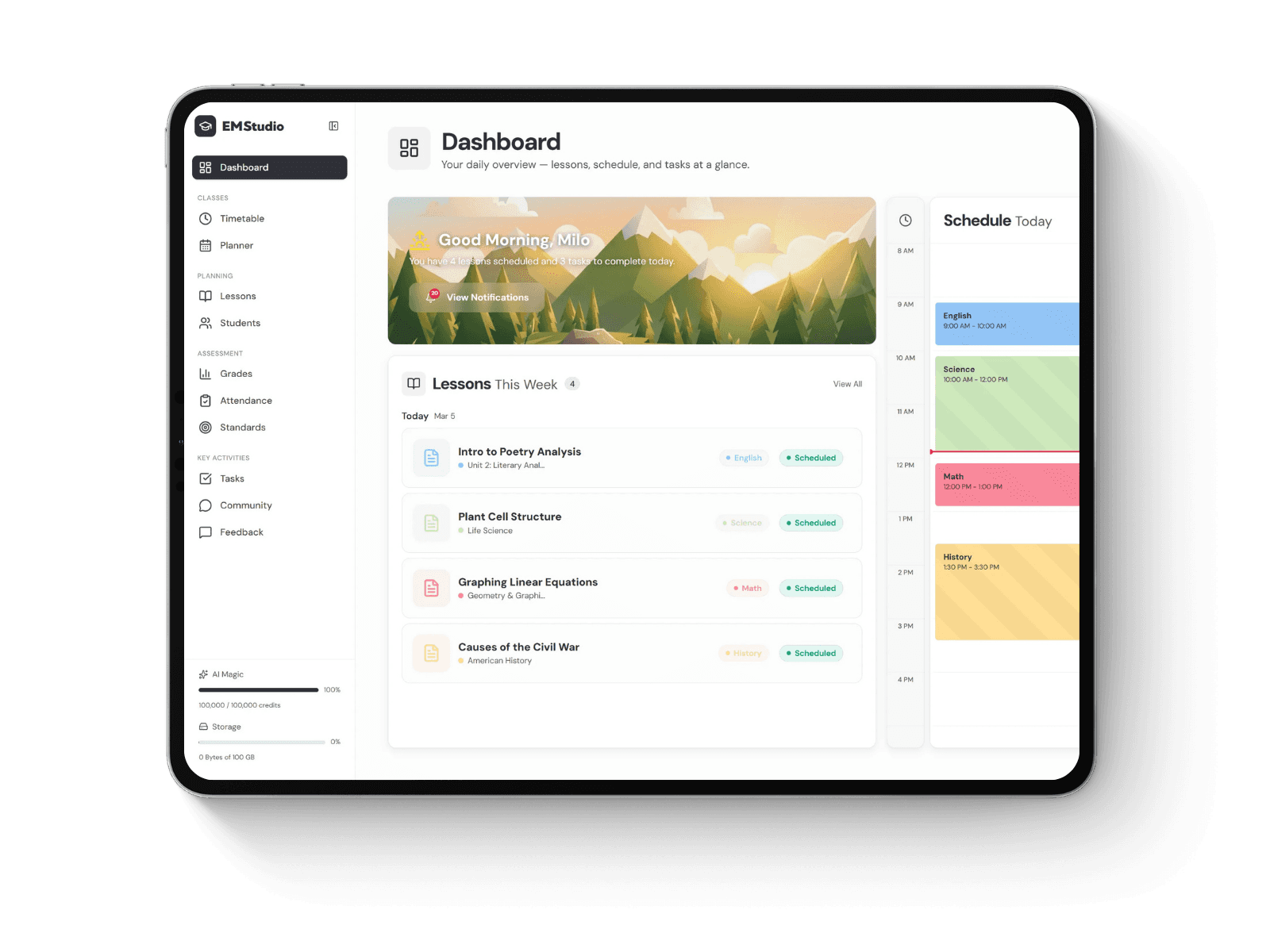
Still grading everything by hand?
EMStudio is a free teaching management app — manage your classes, students, lessons, and more!
Learn More
Table of Contents
What Do You Need to Prepare Before Implementing Reciprocal Teaching?
Before implementing reciprocal teaching, prepare by selecting texts 100-200 Lexile points below students' independent level, forming heterogeneous groups of three to four students mixing ability levels, and creating strategy cards with visual icons and sentence stems for predicting, questioning, clarifying, and summarizing.
Selecting Appropriate Texts for Different Grade Levels
I learned this the hard way with my 7th graders last fall. I handed them a complex poem for our first reciprocal teaching session. We crashed because they spent all their energy decoding, ignoring the reading comprehension strategies.
Now I use texts one hundred to two hundred Lexile points below their independent level. If you lack Lexile data, use the five-finger rule. Five missed words on one page means the book is too hard. This lets them focus on metacognitive strategies, not decoding.
For the first four weeks, avoid figurative language. Choose expository texts with clear subheadings or linear narratives. Grades three to five need two hundred to four hundred words and three new terms max. Grades six to eight handle five hundred to eight hundred words and five new terms. High schoolers read eight hundred to twelve hundred words with seven new terms.
Designing Heterogeneous Student Groups
I group students using recent standardized data. Each triad needs one strong reader from the eightieth percentile or above, one or two middle readers from the fortieth to seventy-ninth percentile, and one struggling reader below the fortieth percentile. Never put two bottom-quartile students together.
Keep groups small. Three students is the sweet spot for reciprocal teaching activities. Four is the absolute maximum. Pairs create too much pressure to perform, and groups of five or more let students hide behind their peers.
I run these groups for three-week cycles, then reshuffle based on progress monitoring. This prevents tracking and builds relationships across the classroom. Kids learn to rely on different partners for scaffolding, not the same faces all year.
Creating Strategy Cards and Anchor Charts
I spend one planning period each August creating strategy cards and anchor charts that last all year. I make four-by-six laminated cards with color-coded icons. Blue crystal balls represent predicting, green magnifying glasses questioning, yellow wrenches clarifying, and red notebooks summarizing.
Each card includes three sentence stems. For predicting, I use "Based on the title..." For questioning, "I wonder why..." For clarifying, "I don't understand the word..." For summarizing, "The main idea is..."
I also hang twenty-four-by-thirty-six anchor charts with matching color quadrants. We add physical gestures. Students touch their ear when clarifying or point up when predicting. These think-aloud protocols make the cognitive apprenticeship visible. Palincsar and Brown designed this system so students could see expert thinking in action.

Step 1 — How Do You Introduce the Four Core Strategies?
Introduce the four core strategies by explicitly teaching each with concrete sentence stems. Use predicting with title clues and prior knowledge. Use questioning with the QAR method. Use clarifying with fix-up strategies for unknown words. Use summarizing with SWBST or main idea frameworks. Model each with grade-appropriate think-alouds.
I learned this the hard way with my fourth graders. I tried teaching all four strategies in one block. They remembered nothing. Now I spread them across four separate twenty-minute mini-lessons using gradual release and explicit think-aloud protocols. I do, we do, you do. Each strategy needs space to breathe before we weave them into the full reciprocal teaching protocol.
Palincsar and Brown showed in their 1984 research that eighty percent of students reached criterion after twenty sessions. Hattie's meta-analysis confirms this works, showing effect sizes of zero point seven four for these reading comprehension strategies. That data convinced me to slow down. Teach each strategy in isolation first. Predicting one day. Questioning the next. Clarifying and summarizing follow. Only then do we combine them into the full cognitive apprenticeship cycle.
Teaching Predicting to Activate Prior Knowledge
Use the Crystal Ball protocol with any grade. Students examine only the title, subtitles, and graphics. They complete the stem: "Based on the [text feature], I predict [event] because my experience with [prior knowledge] suggests..." Demonstrate with a social studies text about westward expansion. When the text contradicts the guess, model revising the hypothesis.
Use hand signals: hand to forehead for predictions, thumbs up or down for confirmation. This metacognitive strategy makes thinking visible.
Teaching Questioning Using Reciprocal Questioning Strategy
Teach the Question-Answer-Relationship method explicitly. Right There questions have answers in one sentence. Think and Search requires scanning multiple paragraphs. With a seventh-grade science text, model: "What is the function of the mitochondria?" is Right There. "How does the mitochondria compare to a solar panel?" requires Think and Search.
Use a four-color coding system and provide question stem banks. Why did the author include this? What caused this change? This reciprocal questioning strategy becomes the anchor.
Teaching Clarifying to Fix Comprehension Breakdowns
When students hit a wall, they need a comprehension strategy to fix breakdowns. Teach the four-step Fix-up Strategy. Reread the sentence. Use context clues. Break the word into parts. Check an external resource.
Demonstrate with ninth-grade biology text containing technical vocabulary like mitochondria. Verbalize the confusion: "This word is blocking me." Then walk through the steps. Use physical signals: hand to ear means I missed that, circling motion means let's reread. This scaffolding prevents shutdown.
Teaching Summarizing to Identify Key Information
For narratives, teach SWBST: Somebody, Wanted, But, So, Then. For expository, use Main Idea plus three supporting details. With a fifth-grade ecosystems text, have students underline the main idea in blue. Details get marked in yellow before writing.
Their summary must answer three checkpoints. Did I include the most important who or what? Did I leave out minor details? Can someone else understand the text from my summary alone? These research-backed methods for literacy instruction create independence.
Step 2 — How Do You Model the Reciprocal Teaching Process?
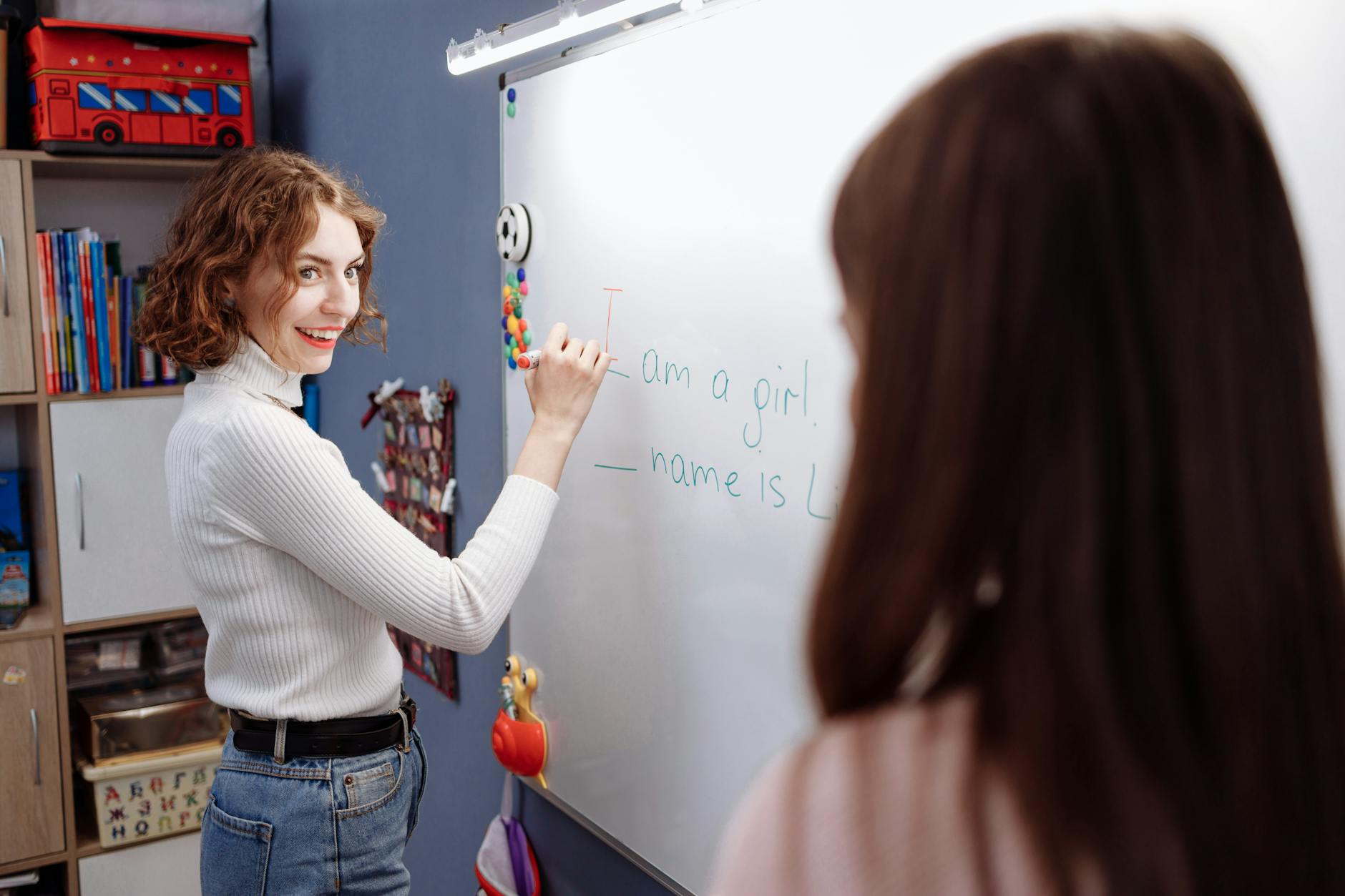
Model reciprocal teaching using think-alouds where you verbalize your thinking process, demonstrating how expert readers predict, question, clarify, and summarize. Use fishbowl arrangements where four students practice while others observe, and establish dialogue norms using discussion stems like 'I agree because...' and 'Can you clarify...' This modern collaborative approach shares many principles with the historical origins of peer-led learning discussed by artkarel, where students take responsibility for each other's progress.
You cannot simply explain reciprocal teaching and expect mastery. Students need to see your brain working in real time, stumbling and recovering. This cognitive apprenticeship takes time.
Using Think-Alouds to Demonstrate Strategy Use
I script my think-alouds to last six minutes, following Palincsar and Brown's research on visible reading comprehension strategies. I read one paragraph, then verbalize my thinking: "I'm predicting the character will regret this because the author mentions storm clouds." I name the strategy, explain my reasoning, and point to text evidence.
I deliberately pause at difficult words to model authentic confusion. Last October, my fifth graders watched me stumble over "metamorphosis" in our science passage. I reread the sentence, checked the photograph, and celebrated the "aha" moment. Those awkward pauses normalize struggle.
I keep a Think-Aloud Checklist: Did I name the strategy? Explain why? Connect to evidence? If I miss one, I model it again. This scaffolding ensures students see complete mental models, not just highlights.
Practicing Whole-Class Guided Sessions
The Fishbowl technique transforms observers into analysts. I place four students in an inner circle with roles—Predictor, Questioner, Clarifier, Summarizer—while the outer circle tracks behaviors on a four-column sheet: Strategy, User, Quality, and Evidence. We rotate every ten minutes.
Outer circle students look for concrete markers: Did the Predictor cite evidence? Did the Questioner require inference? Did the group reference the text three times? This keeps everyone engaged during these reciprocal teaching activities.
I coach from outside using nonverbal cues, pointing to strategy cards when students get stuck. If the group stalls for sixty seconds, I step in. By week three, I fade to silence. The progression moves from teacher-led (ninety percent in weeks one and two) to facilitator (fifty percent in weeks three and four) to monitor (ten percent by week five).
Establishing Dialogue Norms and Discussion Stems
Academic conversation requires structure. I post an anchor chart with eight stems: "I agree with ___ because...", "I respectfully disagree because...", "Can you clarify...", "I would like to add...", "The text says... which supports...", "What evidence do you have...", "I see your point, but...", and "Can we go back to..." These bridge social talk and academic discourse.
I teach the Ping-Pong Rule: every response must reference the previous speaker. "Building on what Maria said..." This forces active listening. We practice this during establishing dialogue norms and discussion stems until automatic.
We also practice Wait Time. I teach students to count silently to five before answering. This allows slower processors to formulate thoughts and prevents the same three students from dominating. The silence feels uncomfortable, but response quality improves immediately.

Step 3 — How Do You Transition to Student-Led Groups?
Implement color-coded role rotation with lanyards or badges to track who does what. Monitor groups using clipboard tracking sheets that log strategy use without interrupting the flow. Remove scaffolds gradually over six to eight weeks, starting with teacher prompts, then strategy cards once students hit 80% accuracy.
Implementing Role Rotation Systems
I assign each reciprocal teaching role a physical marker matching our anchor chart colors. Red lanyards for Summarizers, blue for Predictors, green for Questioners, yellow for Clarifiers. Students wear these so everyone knows who handles which reading comprehension strategy.
We rotate every fifteen minutes or at chapter breaks. I project a visual timer so groups self-regulate without asking if time is up.
I track rotations on a class chart. Every student performs every role twice per two-week cycle. I prevent avoidance by assigning the Summarizer role—which needs the most linguistic lifting—to stronger readers initially. As implementing role rotation systems becomes routine, I release control to student-selected roles based on confidence.
Monitoring Progress Without Intervening
I follow what I call the Ninety-Second Rule. I observe from the perimeter without making eye contact that breaks concentration. If students productively struggle, I wait. I step in only if they stay off-task for thirty seconds, if incorrect metacognitive strategies persist after ninety seconds of peer correction, or if emotional shutdown occurs.
I stand at the room’s edge with a clipboard. My tracking sheet has four columns: Student Name, Strategy Observed, Quality Rating from one to four, and Specific Evidence quoted from the text. I fill this without interrupting their discussion.
This data drives tomorrow’s groups. This mirrors the cognitive apprenticeship model. We are designing and facilitating cooperative learning that depends on peer interaction, not teacher rescue. My fifth graders needed three weeks before they stopped looking at me every time they hit a difficult text.
Gradually Removing Scaffolding and Supports
I fade scaffolding over six to eight weeks. Weeks one and two include full strategy cards plus my teacher prompts. By week three, I eliminate think-aloud protocols. During week four, I reduce sentence stems on cards from three to one. By week five, cards stay in a caddy unless requested. Week six, they vanish.
Exit criteria are specific. Students must execute strategies without cards while using academic vocabulary like “I need to clarify this,” not “I don’t get this.” They must reference text evidence with eighty percent accuracy across three consecutive sessions.
If accuracy drops below sixty percent, I reintroduce the previous scaffold for one week. I document these decisions in my planning journal. This gradual release makes Palincsar and Brown’s framework sustainable in classrooms with real curriculum gaps.

Step 4 — How Do You Troubleshoot Common Implementation Challenges?
Use talking chips to cap dominant voices at three turns per session. Force participation from silent members with timed round-robin protocols or Process Observer roles. Support ELL students with bilingual strategy cards and pre-taught vocabulary. Grade both individual mastery through exit tickets and group dynamics through participation rubrics.
Implementation fails when one voice dominates or others hide. I learned this the hard way with my 7th graders last fall. You need concrete protocols, not just encouragement. Chips, timers, and specific role assignments keep the cognitive apprenticeship equitable.
Managing Dominant or Silent Group Members
Talking Chips solve the monologue problem fast. Hand each student three poker chips at the start of the session. To speak, they place one in the center of the table. Once their chips are gone, they cannot speak again until everyone has spent theirs. If a student jumps in chipless, the group must self-correct. The goal is an empty chip pile by session end.
Watch for the round-robin reading trap. If students decode text aloud without applying the four strategies, stop immediately. This signals the text is too difficult or the metacognitive strategies are not yet internalized. Return to teacher-led think-aloud protocols and scaffolding before releasing them to groups again. Do not let reciprocal teaching become passive turn-taking.
Role assignment solves personality imbalances. Give dominant talkers the Summarizer role, which forces listening before speaking. Avoid letting them monopolize Questioner or Predicter, which allow performance without deep reading. For silent members, assign the Process Observer role to build confidence before active participation, or use Written Preparation. Give two minutes to write predictions before discussion. Let them read from cards initially. This managing group dynamics and silent members technique reduces anxiety.
Adapting Reciprocal Teaching Activities for ELL Students
ELL students need the metacognitive strategies in both languages. Provide bilingual strategy cards showing native language equivalents for Predictor, Questioner, Clarifier, and Summarizer. Include sentence stems in both languages. Allow code-switching specifically during the Clarifier role; if a student needs to ask about "predicción" versus "prediction," that linguistic negotiation deepens understanding. This adapting activities for ELL students approach honors their cognitive assets while building English academic vocabulary.
Pre-teach high-utility vocabulary using Marzano's six-step process before students encounter the text. Select five to seven words per passage. The teacher provides the definition first. Students restate it in their own words, draw a picture, engage in an activity with the word, discuss it with a peer, and play review games. This scaffolding ensures students recognize strategy-specific terms like "infer" or "conflict" when they appear in the reading comprehension strategies discussion.
Modify the Summarizer role for emerging bilinguals. For the first two weeks, let them draw the summary instead of writing it. Then transition to a single sentence, then a full paragraph. Accept phonetic spelling initially. The goal is comprehension, not orthographic perfection. Palincsar and Brown emphasized understanding over decoding accuracy, and this adaptation maintains that priority.
Assessing Individual Accountability in Group Settings
Individual accountability prevents the free-rider problem. At session end, distribute a four-question exit ticket covering literal comprehension, inference, vocabulary clarification, and summary writing. Students complete these silently. Grade them individually, never as a group. This shows you who actually mastered the reciprocal teaching strategies versus who nodded along. Weight these exit tickets at sixty percent of the total grade.
Balance this with collaborative skills using a group process rubric. Score groups zero to four on referencing text evidence, using strategy language, maintaining equitable participation where no one speaks more than forty percent of the time, and remaining on task. Have students self-assess before you grade. Weight this rubric at forty percent. This dual system recognizes that effective reciprocal teaching requires both personal mastery of metacognitive strategies and social negotiation within the cognitive apprenticeship model.
Present the grading breakdown as a comparison matrix. Individual Test Only guarantees accountability but kills collaboration. Group Grade Only builds teamwork but invites free-riders. The Dual System balances both. When students see that their individual exit ticket matters more than the group score, the coasters start preparing. The dominators learn to listen so their group rubric score does not drop.

Where Reciprocal Teaching Is Heading
Palincsar and Brown built reciprocal teaching for paper and pencil. Now my 5th graders practice predicting and clarifying with digital texts that update in real time. The strategies stay identical. The medium shifts. Kids still need to question the author and summarize main ideas. But now they do it while toggling between browser tabs and embedded videos. The cognitive apprenticeship model holds up because thinking out loud matters more than the format.
Stay ahead by keeping the scaffolding tight but invisible. Don't abandon the four strategies when students hit middle school. That's when they need the structure most. Watch for AI tools that generate summaries too fast. If a bot can answer the question in three seconds, your prompt needs changing. The curve moves toward deeper questioning, not faster answers. Stick to the reading comprehension strategies that make kids wrestle with text. That never goes out of style.

What Do You Need to Prepare Before Implementing Reciprocal Teaching?
Before implementing reciprocal teaching, prepare by selecting texts 100-200 Lexile points below students' independent level, forming heterogeneous groups of three to four students mixing ability levels, and creating strategy cards with visual icons and sentence stems for predicting, questioning, clarifying, and summarizing.
Selecting Appropriate Texts for Different Grade Levels
I learned this the hard way with my 7th graders last fall. I handed them a complex poem for our first reciprocal teaching session. We crashed because they spent all their energy decoding, ignoring the reading comprehension strategies.
Now I use texts one hundred to two hundred Lexile points below their independent level. If you lack Lexile data, use the five-finger rule. Five missed words on one page means the book is too hard. This lets them focus on metacognitive strategies, not decoding.
For the first four weeks, avoid figurative language. Choose expository texts with clear subheadings or linear narratives. Grades three to five need two hundred to four hundred words and three new terms max. Grades six to eight handle five hundred to eight hundred words and five new terms. High schoolers read eight hundred to twelve hundred words with seven new terms.
Designing Heterogeneous Student Groups
I group students using recent standardized data. Each triad needs one strong reader from the eightieth percentile or above, one or two middle readers from the fortieth to seventy-ninth percentile, and one struggling reader below the fortieth percentile. Never put two bottom-quartile students together.
Keep groups small. Three students is the sweet spot for reciprocal teaching activities. Four is the absolute maximum. Pairs create too much pressure to perform, and groups of five or more let students hide behind their peers.
I run these groups for three-week cycles, then reshuffle based on progress monitoring. This prevents tracking and builds relationships across the classroom. Kids learn to rely on different partners for scaffolding, not the same faces all year.
Creating Strategy Cards and Anchor Charts
I spend one planning period each August creating strategy cards and anchor charts that last all year. I make four-by-six laminated cards with color-coded icons. Blue crystal balls represent predicting, green magnifying glasses questioning, yellow wrenches clarifying, and red notebooks summarizing.
Each card includes three sentence stems. For predicting, I use "Based on the title..." For questioning, "I wonder why..." For clarifying, "I don't understand the word..." For summarizing, "The main idea is..."
I also hang twenty-four-by-thirty-six anchor charts with matching color quadrants. We add physical gestures. Students touch their ear when clarifying or point up when predicting. These think-aloud protocols make the cognitive apprenticeship visible. Palincsar and Brown designed this system so students could see expert thinking in action.
Step 1 — How Do You Introduce the Four Core Strategies?
Introduce the four core strategies by explicitly teaching each with concrete sentence stems. Use predicting with title clues and prior knowledge. Use questioning with the QAR method. Use clarifying with fix-up strategies for unknown words. Use summarizing with SWBST or main idea frameworks. Model each with grade-appropriate think-alouds.
I learned this the hard way with my fourth graders. I tried teaching all four strategies in one block. They remembered nothing. Now I spread them across four separate twenty-minute mini-lessons using gradual release and explicit think-aloud protocols. I do, we do, you do. Each strategy needs space to breathe before we weave them into the full reciprocal teaching protocol.
Palincsar and Brown showed in their 1984 research that eighty percent of students reached criterion after twenty sessions. Hattie's meta-analysis confirms this works, showing effect sizes of zero point seven four for these reading comprehension strategies. That data convinced me to slow down. Teach each strategy in isolation first. Predicting one day. Questioning the next. Clarifying and summarizing follow. Only then do we combine them into the full cognitive apprenticeship cycle.
Teaching Predicting to Activate Prior Knowledge
Use the Crystal Ball protocol with any grade. Students examine only the title, subtitles, and graphics. They complete the stem: "Based on the [text feature], I predict [event] because my experience with [prior knowledge] suggests..." Demonstrate with a social studies text about westward expansion. When the text contradicts the guess, model revising the hypothesis.
Use hand signals: hand to forehead for predictions, thumbs up or down for confirmation. This metacognitive strategy makes thinking visible.
Teaching Questioning Using Reciprocal Questioning Strategy
Teach the Question-Answer-Relationship method explicitly. Right There questions have answers in one sentence. Think and Search requires scanning multiple paragraphs. With a seventh-grade science text, model: "What is the function of the mitochondria?" is Right There. "How does the mitochondria compare to a solar panel?" requires Think and Search.
Use a four-color coding system and provide question stem banks. Why did the author include this? What caused this change? This reciprocal questioning strategy becomes the anchor.
Teaching Clarifying to Fix Comprehension Breakdowns
When students hit a wall, they need a comprehension strategy to fix breakdowns. Teach the four-step Fix-up Strategy. Reread the sentence. Use context clues. Break the word into parts. Check an external resource.
Demonstrate with ninth-grade biology text containing technical vocabulary like mitochondria. Verbalize the confusion: "This word is blocking me." Then walk through the steps. Use physical signals: hand to ear means I missed that, circling motion means let's reread. This scaffolding prevents shutdown.
Teaching Summarizing to Identify Key Information
For narratives, teach SWBST: Somebody, Wanted, But, So, Then. For expository, use Main Idea plus three supporting details. With a fifth-grade ecosystems text, have students underline the main idea in blue. Details get marked in yellow before writing.
Their summary must answer three checkpoints. Did I include the most important who or what? Did I leave out minor details? Can someone else understand the text from my summary alone? These research-backed methods for literacy instruction create independence.
Step 2 — How Do You Model the Reciprocal Teaching Process?
Model reciprocal teaching using think-alouds where you verbalize your thinking process, demonstrating how expert readers predict, question, clarify, and summarize. Use fishbowl arrangements where four students practice while others observe, and establish dialogue norms using discussion stems like 'I agree because...' and 'Can you clarify...' This modern collaborative approach shares many principles with the historical origins of peer-led learning discussed by artkarel, where students take responsibility for each other's progress.
You cannot simply explain reciprocal teaching and expect mastery. Students need to see your brain working in real time, stumbling and recovering. This cognitive apprenticeship takes time.
Using Think-Alouds to Demonstrate Strategy Use
I script my think-alouds to last six minutes, following Palincsar and Brown's research on visible reading comprehension strategies. I read one paragraph, then verbalize my thinking: "I'm predicting the character will regret this because the author mentions storm clouds." I name the strategy, explain my reasoning, and point to text evidence.
I deliberately pause at difficult words to model authentic confusion. Last October, my fifth graders watched me stumble over "metamorphosis" in our science passage. I reread the sentence, checked the photograph, and celebrated the "aha" moment. Those awkward pauses normalize struggle.
I keep a Think-Aloud Checklist: Did I name the strategy? Explain why? Connect to evidence? If I miss one, I model it again. This scaffolding ensures students see complete mental models, not just highlights.
Practicing Whole-Class Guided Sessions
The Fishbowl technique transforms observers into analysts. I place four students in an inner circle with roles—Predictor, Questioner, Clarifier, Summarizer—while the outer circle tracks behaviors on a four-column sheet: Strategy, User, Quality, and Evidence. We rotate every ten minutes.
Outer circle students look for concrete markers: Did the Predictor cite evidence? Did the Questioner require inference? Did the group reference the text three times? This keeps everyone engaged during these reciprocal teaching activities.
I coach from outside using nonverbal cues, pointing to strategy cards when students get stuck. If the group stalls for sixty seconds, I step in. By week three, I fade to silence. The progression moves from teacher-led (ninety percent in weeks one and two) to facilitator (fifty percent in weeks three and four) to monitor (ten percent by week five).
Establishing Dialogue Norms and Discussion Stems
Academic conversation requires structure. I post an anchor chart with eight stems: "I agree with ___ because...", "I respectfully disagree because...", "Can you clarify...", "I would like to add...", "The text says... which supports...", "What evidence do you have...", "I see your point, but...", and "Can we go back to..." These bridge social talk and academic discourse.
I teach the Ping-Pong Rule: every response must reference the previous speaker. "Building on what Maria said..." This forces active listening. We practice this during establishing dialogue norms and discussion stems until automatic.
We also practice Wait Time. I teach students to count silently to five before answering. This allows slower processors to formulate thoughts and prevents the same three students from dominating. The silence feels uncomfortable, but response quality improves immediately.
Step 3 — How Do You Transition to Student-Led Groups?
Implement color-coded role rotation with lanyards or badges to track who does what. Monitor groups using clipboard tracking sheets that log strategy use without interrupting the flow. Remove scaffolds gradually over six to eight weeks, starting with teacher prompts, then strategy cards once students hit 80% accuracy.
Implementing Role Rotation Systems
I assign each reciprocal teaching role a physical marker matching our anchor chart colors. Red lanyards for Summarizers, blue for Predictors, green for Questioners, yellow for Clarifiers. Students wear these so everyone knows who handles which reading comprehension strategy.
We rotate every fifteen minutes or at chapter breaks. I project a visual timer so groups self-regulate without asking if time is up.
I track rotations on a class chart. Every student performs every role twice per two-week cycle. I prevent avoidance by assigning the Summarizer role—which needs the most linguistic lifting—to stronger readers initially. As implementing role rotation systems becomes routine, I release control to student-selected roles based on confidence.
Monitoring Progress Without Intervening
I follow what I call the Ninety-Second Rule. I observe from the perimeter without making eye contact that breaks concentration. If students productively struggle, I wait. I step in only if they stay off-task for thirty seconds, if incorrect metacognitive strategies persist after ninety seconds of peer correction, or if emotional shutdown occurs.
I stand at the room’s edge with a clipboard. My tracking sheet has four columns: Student Name, Strategy Observed, Quality Rating from one to four, and Specific Evidence quoted from the text. I fill this without interrupting their discussion.
This data drives tomorrow’s groups. This mirrors the cognitive apprenticeship model. We are designing and facilitating cooperative learning that depends on peer interaction, not teacher rescue. My fifth graders needed three weeks before they stopped looking at me every time they hit a difficult text.
Gradually Removing Scaffolding and Supports
I fade scaffolding over six to eight weeks. Weeks one and two include full strategy cards plus my teacher prompts. By week three, I eliminate think-aloud protocols. During week four, I reduce sentence stems on cards from three to one. By week five, cards stay in a caddy unless requested. Week six, they vanish.
Exit criteria are specific. Students must execute strategies without cards while using academic vocabulary like “I need to clarify this,” not “I don’t get this.” They must reference text evidence with eighty percent accuracy across three consecutive sessions.
If accuracy drops below sixty percent, I reintroduce the previous scaffold for one week. I document these decisions in my planning journal. This gradual release makes Palincsar and Brown’s framework sustainable in classrooms with real curriculum gaps.
Step 4 — How Do You Troubleshoot Common Implementation Challenges?
Use talking chips to cap dominant voices at three turns per session. Force participation from silent members with timed round-robin protocols or Process Observer roles. Support ELL students with bilingual strategy cards and pre-taught vocabulary. Grade both individual mastery through exit tickets and group dynamics through participation rubrics.
Implementation fails when one voice dominates or others hide. I learned this the hard way with my 7th graders last fall. You need concrete protocols, not just encouragement. Chips, timers, and specific role assignments keep the cognitive apprenticeship equitable.
Managing Dominant or Silent Group Members
Talking Chips solve the monologue problem fast. Hand each student three poker chips at the start of the session. To speak, they place one in the center of the table. Once their chips are gone, they cannot speak again until everyone has spent theirs. If a student jumps in chipless, the group must self-correct. The goal is an empty chip pile by session end.
Watch for the round-robin reading trap. If students decode text aloud without applying the four strategies, stop immediately. This signals the text is too difficult or the metacognitive strategies are not yet internalized. Return to teacher-led think-aloud protocols and scaffolding before releasing them to groups again. Do not let reciprocal teaching become passive turn-taking.
Role assignment solves personality imbalances. Give dominant talkers the Summarizer role, which forces listening before speaking. Avoid letting them monopolize Questioner or Predicter, which allow performance without deep reading. For silent members, assign the Process Observer role to build confidence before active participation, or use Written Preparation. Give two minutes to write predictions before discussion. Let them read from cards initially. This managing group dynamics and silent members technique reduces anxiety.
Adapting Reciprocal Teaching Activities for ELL Students
ELL students need the metacognitive strategies in both languages. Provide bilingual strategy cards showing native language equivalents for Predictor, Questioner, Clarifier, and Summarizer. Include sentence stems in both languages. Allow code-switching specifically during the Clarifier role; if a student needs to ask about "predicción" versus "prediction," that linguistic negotiation deepens understanding. This adapting activities for ELL students approach honors their cognitive assets while building English academic vocabulary.
Pre-teach high-utility vocabulary using Marzano's six-step process before students encounter the text. Select five to seven words per passage. The teacher provides the definition first. Students restate it in their own words, draw a picture, engage in an activity with the word, discuss it with a peer, and play review games. This scaffolding ensures students recognize strategy-specific terms like "infer" or "conflict" when they appear in the reading comprehension strategies discussion.
Modify the Summarizer role for emerging bilinguals. For the first two weeks, let them draw the summary instead of writing it. Then transition to a single sentence, then a full paragraph. Accept phonetic spelling initially. The goal is comprehension, not orthographic perfection. Palincsar and Brown emphasized understanding over decoding accuracy, and this adaptation maintains that priority.
Assessing Individual Accountability in Group Settings
Individual accountability prevents the free-rider problem. At session end, distribute a four-question exit ticket covering literal comprehension, inference, vocabulary clarification, and summary writing. Students complete these silently. Grade them individually, never as a group. This shows you who actually mastered the reciprocal teaching strategies versus who nodded along. Weight these exit tickets at sixty percent of the total grade.
Balance this with collaborative skills using a group process rubric. Score groups zero to four on referencing text evidence, using strategy language, maintaining equitable participation where no one speaks more than forty percent of the time, and remaining on task. Have students self-assess before you grade. Weight this rubric at forty percent. This dual system recognizes that effective reciprocal teaching requires both personal mastery of metacognitive strategies and social negotiation within the cognitive apprenticeship model.
Present the grading breakdown as a comparison matrix. Individual Test Only guarantees accountability but kills collaboration. Group Grade Only builds teamwork but invites free-riders. The Dual System balances both. When students see that their individual exit ticket matters more than the group score, the coasters start preparing. The dominators learn to listen so their group rubric score does not drop.
Where Reciprocal Teaching Is Heading
Palincsar and Brown built reciprocal teaching for paper and pencil. Now my 5th graders practice predicting and clarifying with digital texts that update in real time. The strategies stay identical. The medium shifts. Kids still need to question the author and summarize main ideas. But now they do it while toggling between browser tabs and embedded videos. The cognitive apprenticeship model holds up because thinking out loud matters more than the format.
Stay ahead by keeping the scaffolding tight but invisible. Don't abandon the four strategies when students hit middle school. That's when they need the structure most. Watch for AI tools that generate summaries too fast. If a bot can answer the question in three seconds, your prompt needs changing. The curve moves toward deeper questioning, not faster answers. Stick to the reading comprehension strategies that make kids wrestle with text. That never goes out of style.
Still grading everything by hand?
EMStudio is a free teaching management app — manage your classes, students, lessons, and more!
Learn More
Still grading everything by hand?
EMStudio is a free teaching management app — manage your classes, students, lessons, and more!
Learn More





Notion4Teachers
Notion templates to simplify administrative tasks and enhance your teaching experience.



2026 Notion4Teachers. All Rights Reserved.
Notion4Teachers
Notion templates to simplify administrative tasks and enhance your teaching experience.
2026 Notion4Teachers. All Rights Reserved.
Notion4Teachers
Notion templates to simplify administrative tasks and enhance your teaching experience.
2026 Notion4Teachers. All Rights Reserved.