Pets in the Classroom: Benefits, Choices, and Downsides

Picture a Monday morning when the door swings open and a few students head straight for the corner tank before they've even unpacked their bags.
That small burst of curiosity is exactly why so many teachers wonder whether a class pet could do something for their lessons too.
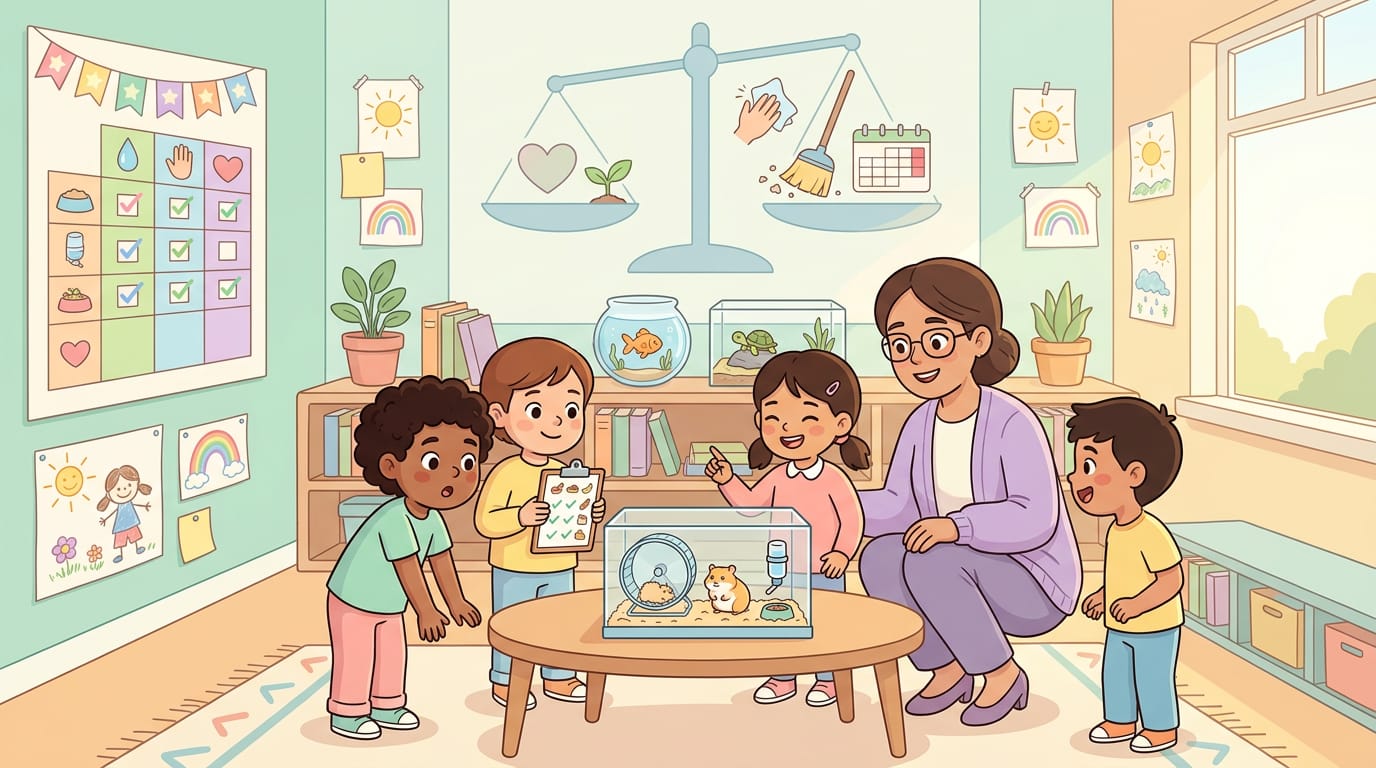
A classroom pet is any animal that lives in your room and becomes part of the daily routine, from feeding and cleaning to quiet observation.
In this post, we'll cover the benefits, the evidence, how to choose a species, the downsides, and how to fund and start one well.
Ultimate Teacher Planner
The ultimate all-in-one education management system in Notion.

How Pets in the Classroom Help Students
Does a class pet really change how students act and learn? Here's where the benefits show up.
Building empathy and social confidence
Empathy grows through doing, not just hearing about kindness. Think of a shy student who learns to move slowly when the class pet hides. That's empathy in practice. In a 2025 teacher survey, 97% of teachers reported improvements in empathy and compassion.
Pets also give classmates a shared topic, which builds community. A student who becomes the go-to expert gets to teach others and grows in confidence.
And a pet gives students a reason to look forward to school, a positive attitude that's easy to underestimate.
Daily care builds responsibility and independence
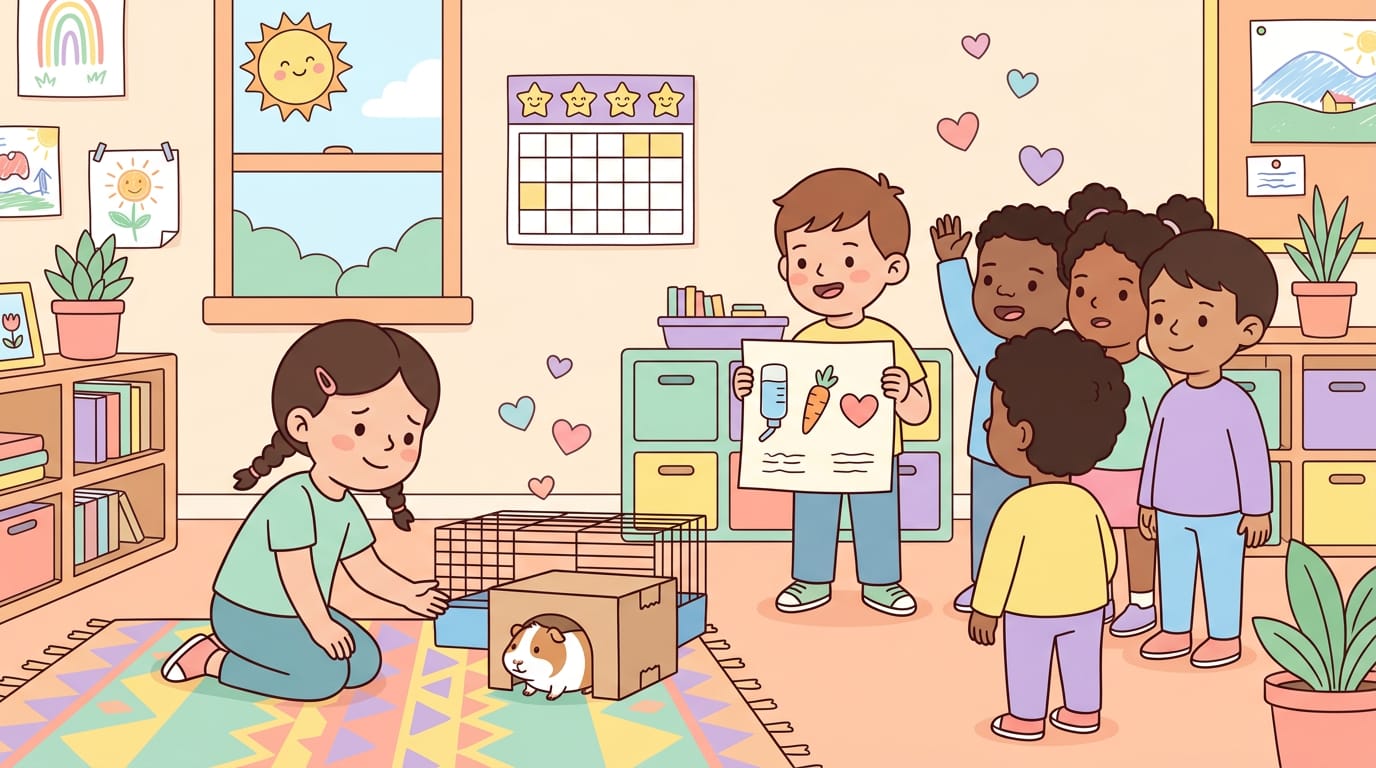
Daily care turns a pet from a novelty into a job, and students learn responsibility when someone counts on them. As routines become habit, students start the day without a reminder.
Those habits can travel home, too, so students may become better pet owners for the animals they already have.
Set up a care roster, a job chart that rotates these tasks weekly:
Feeding. Measure the food and note what's left.
Watering. Refill and check the water each day.
Cleaning. Spot-clean the habitat on a set schedule.
Checking. Report anything unusual to the teacher.
Easing stress and anxiety in class
On a tense test morning, a quiet pet gives anxious students something calm to watch besides their worries. It offers companionship without judgment: it doesn't grade, correct, or compare, so it's easier to relax around it.
The effect may show up in the body, too: a study of canine-assisted intervention recorded lower pulse rates and systolic blood pressure (the top number). Since it wasn't a classroom study, treat it as encouraging rather than conclusive.
Hands-on lessons across science, math and reading
A class pet turns textbook questions into real ones. Students can track how much food is eaten, graph it, and ask why it changes.
Reading evidence is early but encouraging. A Purdue dissertation, Reading with Maggie, found that a reading intervention with a classroom pet dog may affect student motivation in reading activities.
That's a useful signal, not proof of stronger reading skills.
Habitat questions come naturally: what does the pet need, and what does the room provide?
Build STEAM (science, technology, engineering, arts, and mathematics) lesson plans around those questions, and daily observation notes give students writing practice.
Motivating better behavior and supporting special needs
Time with the pet works as a free reward for finished work or good choices. Fewer disciplinary issues are another benefit. In a 2025 teacher survey, 84% of teachers reported improvements in behavior and disciplinary measures.
A pet can offer a predictable, low-pressure role for students with special needs, matched to each student's strengths. Teachers also reported improved attendance (76%) in that same survey, though these are teachers' own reports.
Picking the Right Pet for Your Class
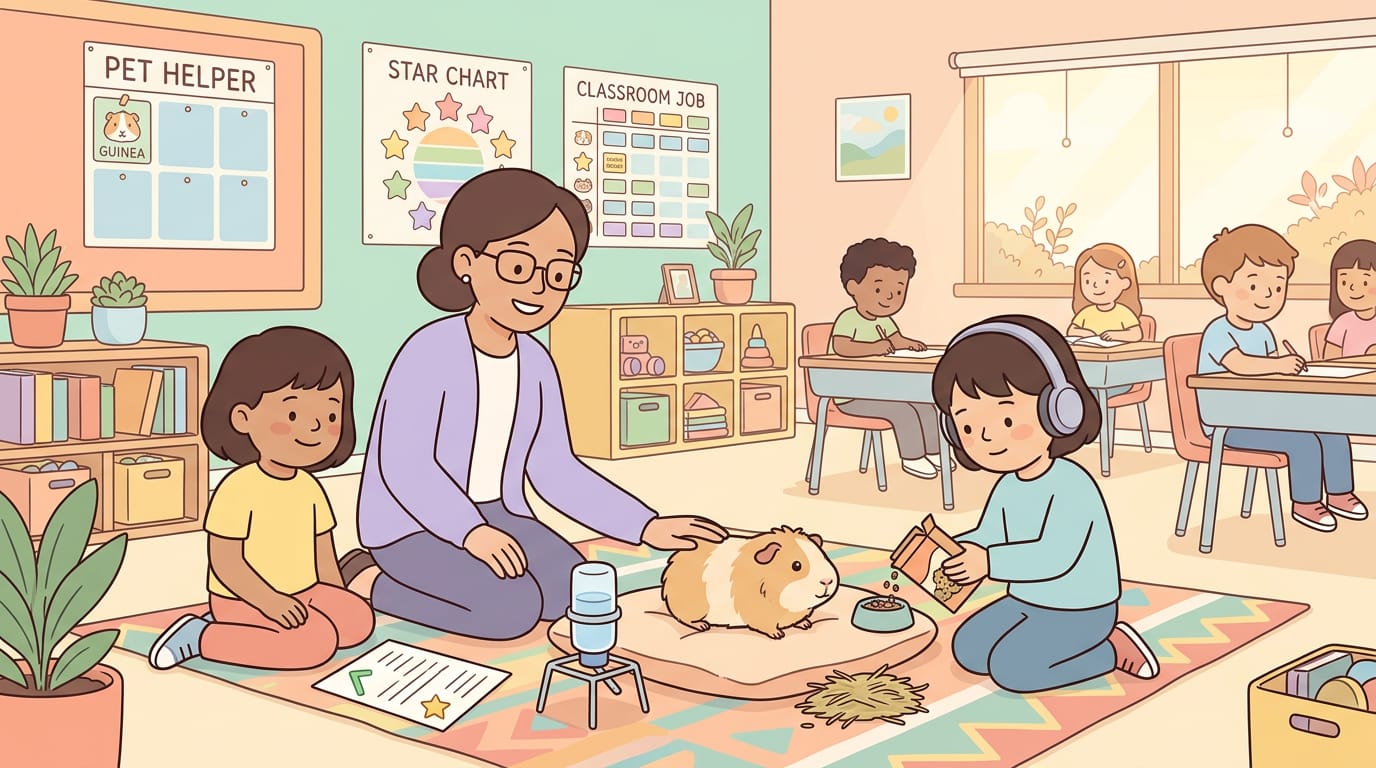
Not every animal belongs in a classroom, so we'd start with what your room and schedule can support.
Small pets and fish that suit classrooms
Fish are the easy yes: they're low maintenance and hold attention without eating up your day. Hamsters, guinea pigs, rats, and mice are popular too, but each has its own needs. Turtles need a warm tank, so plan the heating first.
Hermit crabs and gerbils round out the list.
Think of a second-grade teacher with a fish tank by the window. Each morning, a different student reads the feeding chart aloud. Responsibility gets shared around the room, and the chart becomes a daily reading practice.
Lizards, frogs and spiders worth considering
Bearded dragons and leopard geckos bring reptile appeal, while snakes and frogs need a closer look at habitat. Tarantulas and jumping spiders bring the wow factor. Here the animal matters less than the lesson it teaches.
Molting, when a spider or lizard sheds its outer layer, is a live demonstration of growth. Have students track the change over several weeks. Patience is the lesson.
Birds and animals to avoid
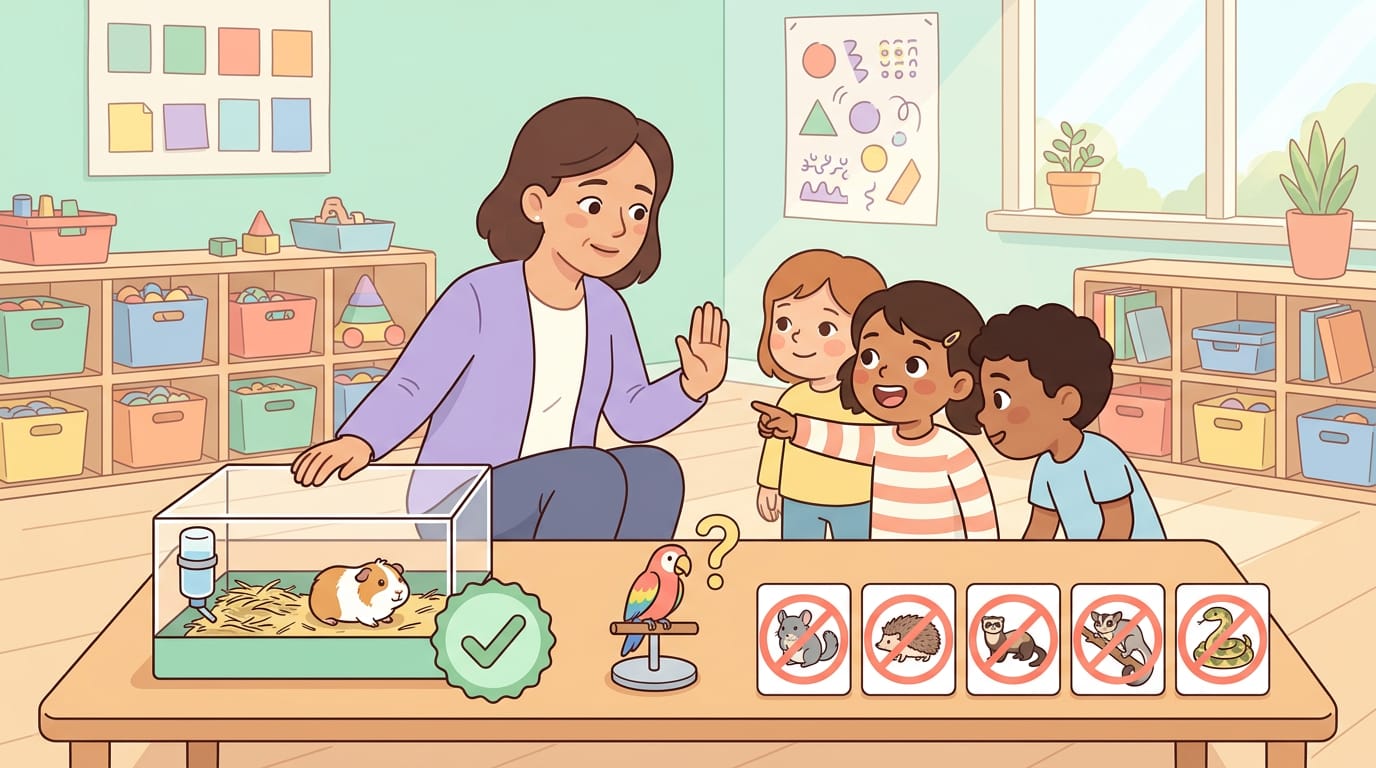
Birds are a less common option, so weigh them carefully. Chinchillas, hedgehogs, and ferrets are best avoided, and so are sugar gliders and large snakes.
The rule is simple: choose the animal your class can care for well, not the one that looks most exciting. When in doubt, leave it out.
Having therapy and school dogs visit
If a live pet isn't realistic, a visiting dog offers contact without the daily care. The Dogs in the Classroom program is one example, and school dogs in Europe are another model worth researching.
In reading-to-dogs programs, students read aloud to a dog that listens without correcting them.
Think of a reading teacher whose most hesitant student reads to a visiting dog that never interrupts, and who may find it easier to read in front of the class afterward. A therapy animal team pairs a handler with an animal and visits as a unit.
What Studies and Teacher Surveys Show
Before you bring a pet into your room, it helps to know what the research and teacher reports actually show. Here's what's verified so far, and where the picture is still incomplete.
What academic studies have found
Research on classroom pets is still taking shape. Purdue researcher Nieforth says researchers are partnering with teachers across the country and the Pet Care Trust to study the impacts of classroom pets on teachers and students.
The question is less about whether pets matter and more about how they affect the people in the room. Those answers are still coming in. [Needs sources: findings from the 41-classroom study and Loyola Marymount research.]
How teachers rate their classroom pets
[Needs sources: positive-experience percentages, daily curriculum use, and teacher testimonials.] For example, picture a third-grade teacher who has each student check the class pet's water and log it each morning.
Those few minutes of care become a lesson in responsibility, and the whole class gets a shared job.
How far these programs have reached
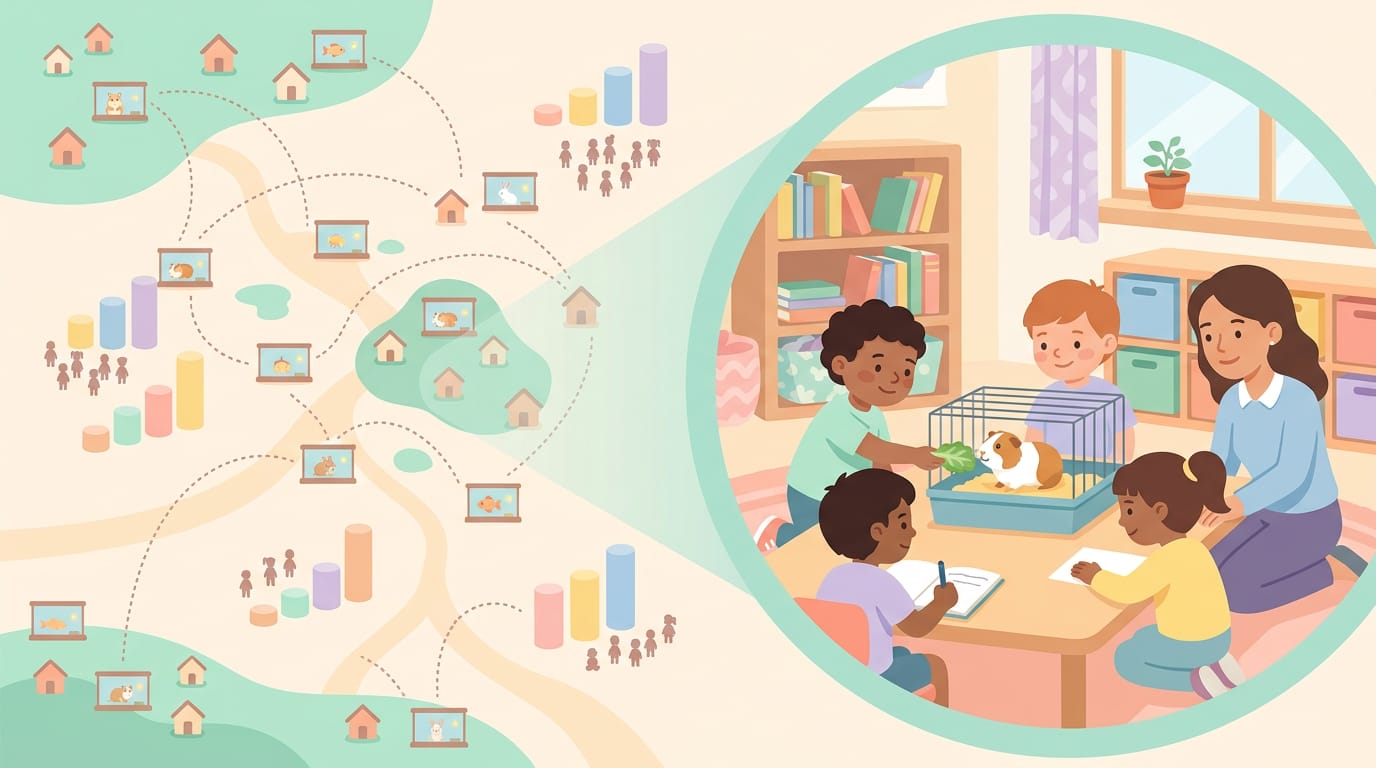
According to Pets in the Classroom, the program has issued over 279,000 grants since its inception in 2010, impacting an estimated 11.1 million children.
Those numbers show how many children the program reaches, but they don't show how well a pet works in any single room. Both questions matter.
[Editor note before publishing: the supplied quote names the Pet Care Trust but not American Humane, so confirm that attribution; the 41-classroom study and Loyola Marymount research need verified sources; and the grant source gives 2010 as the inception year, so check the 2011 start date in the brief.]
Downsides to Weigh Before Adopting
Before you commit, check school policy and get written parent permission. Then weigh the downsides honestly.
Whether your class can handle the care
Daily feeding, cleaning, and socialization take time. Some animals are stress-prone, so noise or rough handling can make them hide or bite. Budget for the pet and its supplies, including food and bedding.
Young students can't manage the care alone. The class gets to name the pet, but remembering to feed it is your job.
If an animal dies, you'll need to talk through the loss with students honestly and kindly. It's not a conversation to improvise.
Pets don't take weekends off. Think of a fourth-grade teacher who sends a sign-up sheet home before winter break, so families cover each day off and she doesn't have to drive in on a Sunday.
Staying safe from germs and allergies
Turtles need extra caution. According to the Centers for Disease Control and Prevention (CDC), any turtle can carry Salmonella germs that spread to people and make them sick, and turtles with shells less than 4 inches long are a known source of illness.
Animals can also pass illnesses to people. Zoonotic diseases spread between animals and humans, so make handwashing part of every visit.
Before you adopt, survey allergies. Animal dander and saliva can trigger reactions, so ask families about allergies and asthma on a short, confidential form.
When pets become a distraction
For students with attention disorders, a pet can become a constant pull on focus, so we'd set clear rules for when they can interact with it.
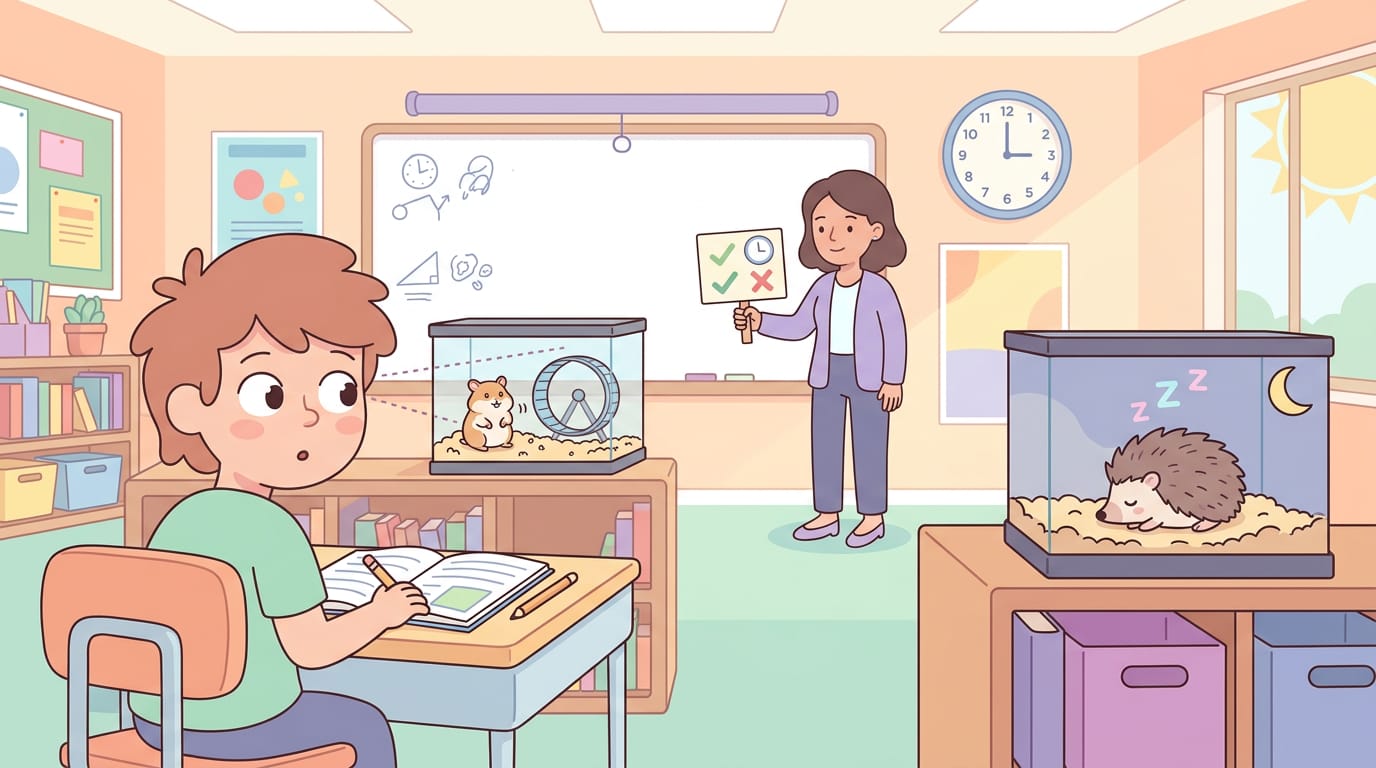
Nocturnal animals sleep through the day, so one that's most active at night may nap through your lessons. Match the animal to your schedule.
Funding a Class Pet and Getting Started
Cost is often the first hurdle, but it doesn't have to stop a teacher. Here's where funding can come from and how you can help.
Grants from Pets in the Classroom
Pets in the Classroom offers both initial and sustaining grants. Here's what to know:
Grants cover at least 50% of the cost
Prekindergarten through 9th grade classrooms qualify
Available in the United States and Canada
Real classrooms show what that looks like. In a profile from The 223 Eagles, an HS223 student put it plainly: "A grant called Pets in the Classroom allowed me to get the pet for 50% off."
Think of a teacher with a dream of a class pet but a thin supply budget. A grant that covers at least half the cost can turn someday into this semester.
Ways to support or refer a teacher
Not everyone can fund a pet directly, and that's fine. Here's how you can still make a difference:
Tell a Teacher referral. Know a teacher who'd love a class pet? Refer them through Tell a Teacher.
Donate or sponsor a classroom. Your gift can cover the costs grants don't, so the teacher can focus on students.
Social media sharing. A single post can reach someone who never knew the program existed. Sharing takes seconds.
Facebook fundraiser. A Facebook fundraiser lets friends and neighbors chip in toward a classroom pet.
A class pet works best when it's chosen with care, cared for on a routine, and matched to what your students and your room can realistically support.
When those pieces line up, a single animal can turn everyday science and responsibility into lessons students remember.
Ready to bring more hands-on routines into your classroom? Check out our Teaching Strategies & Concepts section for more ideas you can try this term.
References
Effects of canine-assisted intervention on stress and depression in humans — pmc.ncbi.nlm.nih.gov (2025)
From horses to classroom pets, Purdue researcher examines how human-animal connections shape resilience and well-being – News — purdue.edu (2026)
Salmonella Outbreak Linked to Turtles — cdc.gov (2026)
Reading with Maggie: The Effect of the Presence/Absence of a Classroom Pet Dog in a Reading Intervention Package. — docs.lib.purdue.edu (2011)
This HS223 Student Never Misses Class (And Eats Crickets) — hs223eagleexpress.com (2025)
Survey Shows Class Pets Enhance Learning — petsintheclassroom.org (2025)
2026-27 School Year: Applications Open — petsintheclassroom.org (2026)
Ultimate Teacher Planner
The ultimate all-in-one education management system in Notion.