
Deeper Learning vs Passive and Incidental Strategies
Deeper Learning vs Passive and Incidental Strategies

Article by
Milo
ESL Content Coordinator & Educator
ESL Content Coordinator & Educator
All Posts
Why can your students ace the unit test but forget the content by summer break? You're watching surface learning in action. They crammed facts for Friday's assessment, but nothing transferred to long-term memory because you never gave them the chance to wrestle with the material or connect it to what they already knew.
Deeper learning fixes this. It moves kids past memorization into critical thinking skills and metacognition. Instead of worksheets and lectures, you use inquiry-based instruction and academic discourse so students build connections that actually stick. The result is real cognitive transfer: they apply old knowledge to new problems months later without you prompting them. That's the difference between teaching for the test and teaching for keeps.
Still grading everything by hand?
EMStudio is a free teaching management app — manage your classes, students, lessons, and more!
Learn More
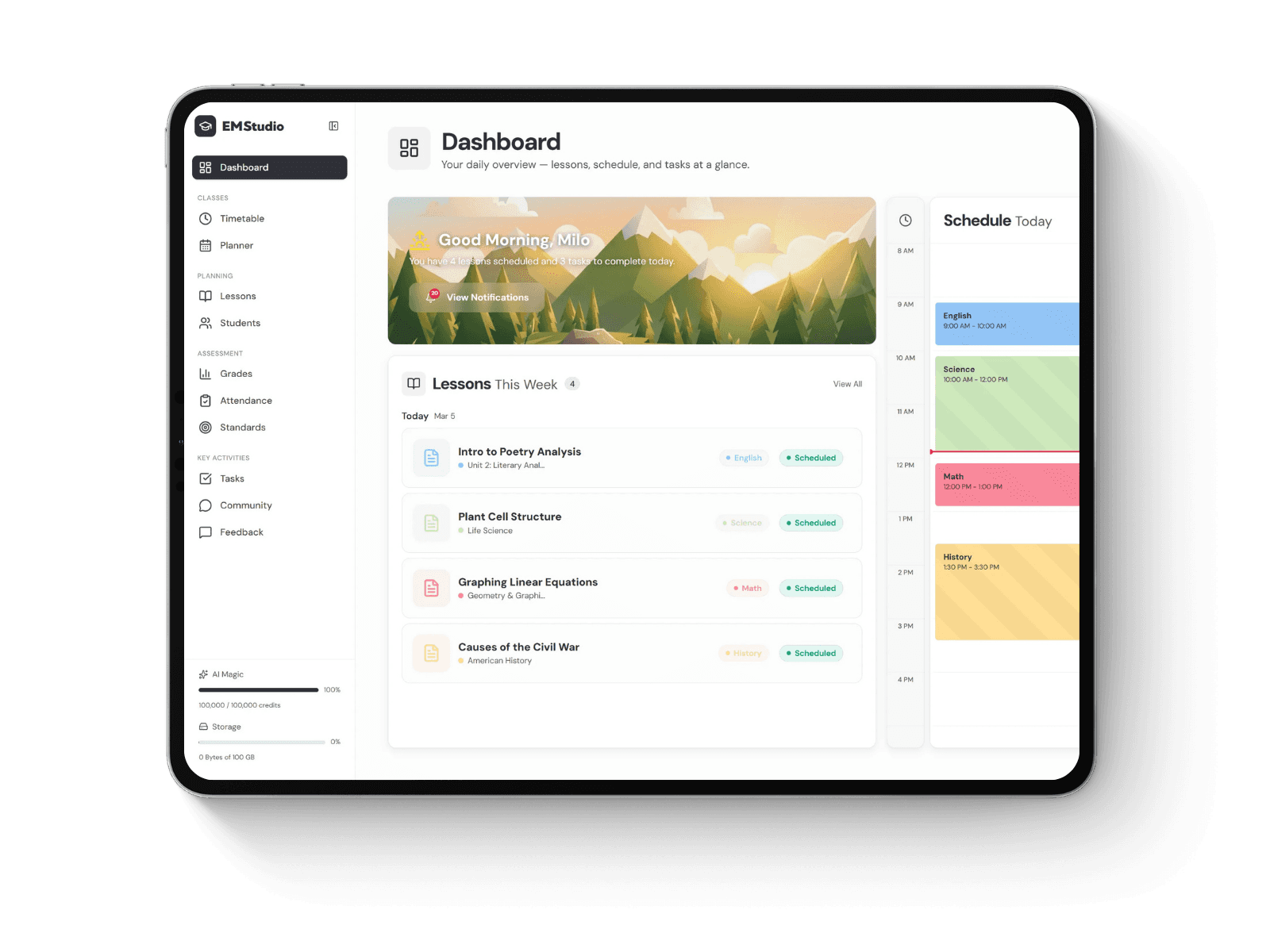
Still grading everything by hand?
EMStudio is a free teaching management app — manage your classes, students, lessons, and more!
Learn More
Table of Contents
Quick Overview
Picture a seventh grader facing a circle area problem. At surface learning, they memorize πr² and plug in radius values. At passive learning, they watch you calculate three examples while copying steps. At deeper learning, they design a circular garden maximizing plantings within a fixed budget, transferring that formula into a real decision. This progression mirrors Webb's Depth of Knowledge Levels 1 through 4.
Level 1 asks them to recall the formula. Level 2 has them calculate the area of three different circles from a worksheet. Level 3 pushes them to compare circle areas against rectangular plots for a school garden project using scale drawings. Level 4 requires them to analyze actual survey data about community green space needs and defend their geometric choices using mathematical evidence.
Passive/Inactive Learning | Incidental Learning | Deeper Learning | |
Cognitive demand | Low (reception) | Variable | High (transfer) |
Student role | Listener | Bystander | Designer |
Teacher role | Deliverer | Unintentional facilitator | Coach |
Typical duration | 10-15 min max | Unstructured | Extended |
Retention rates | 5-10% after 24 hours | Unpredictable | 75-90% |
This article examines when each approach serves your students best, grounded in cognitive load theory. Passive delivery works for brand new information, but only with checks for understanding every 8-10 minutes. Deeper learning demands authentic audiences and iterative feedback. We will map specific active learning strategies against these frameworks so you can stop guessing and start designing.
The Spectrum from Surface to Deep
Webb's Depth of Knowledge gives us the ladder. Level 1 is recall: listing state capitals, defining vocabulary, identifying the parts of a cell. This is pure memorization without context. Students retrieve facts but do not manipulate them. Most worksheets live here.
Level 2 moves into skills and concepts. Students classify organisms, summarize passages, or solve multi-step equations. They work with the material, but the path is still prescribed. This is focused practice, not exploration.
Levels 3 and 4 demand strategic and extending thinking. Level 3 asks students to analyze migration patterns using historical data, justify experimental designs, or develop mathematical models for local traffic patterns. Level 4 requires them to synthesize across disciplines, conducting inquiry-based instruction that generates new questions. Here, critical thinking skills and metacognition drive the work.
I learned this distinction in my seventh-grade classroom. I once spent a week having kids copy definitions of geometric terms. They could list that a rhombus has four equal sides, but they could not explain why the kite in the playground was not one. I was stuck at Level 1. The shift happened when I stopped giving notes and started giving problems: design a wheelchair ramp that meets ADA slope requirements using ratios they had to derive from actual case studies. That was Level 4. The cognitive transfer was immediate and lasting.
Critical Distinctions for Instructional Design
Cognitive load theory separates these approaches clearly. Passive learning often generates extraneous load. Students spend mental energy copying notes or waiting for the next slide without building schemas. The information enters working memory and exits just as fast. No anchor exists for future retrieval.
Deeper learning manages intrinsic load through sequencing. You provide worked examples, then partially completed problems, then independent challenges. Students process the complexity in chunks, allowing for genuine academic discourse and reflection. This is where alternative learning structures like Socratic seminars outperform lectures.
Designing for passive delivery requires three non-negotiables. State a clear objective students can see written on the board. Check for understanding every 8-10 minutes to combat attention decay. And provide immediate application before the bell rings, even if it is just one practice problem.
Designing for deeper learning demands different constraints. Establish authentic audiences so students write or present for real stakeholders, not just you. Build in metacognitive pauses where students explain their thinking processes aloud. And ensure the task requires transfer to a novel context, not just replication of the example you modeled.
What Is Deeper Learning?
Deeper learning is an educational approach where students develop transferable knowledge through critical thinking, collaboration, and self-directed inquiry. According to the Hewlett Foundation, it encompasses six core competencies including mastery of rigorous content, effective communication, and academic mindsets that enable students to solve complex problems in unfamiliar contexts.
It is not worksheets with fancier fonts. It is not group work where only one kid works. Real deeper learning demands that students wrestle with ambiguity and produce novel solutions.
The Hewlett Foundation established the definitive framework in 2013. Their six competencies include: master core academic content, think critically and solve complex problems, work collaboratively, communicate effectively, learn how to learn, and develop academic mindsets. These skills create cognitive transfer—the ability to apply knowledge to new situations instead of just repeating facts on demand.
I saw this in my 9th-grade humanities class during a water quality unit. Students tested local creek samples, analyzed municipal data, and presented findings to the city council over three weeks. They spent forty percent of their time revising arguments based on peer feedback and expert critique. This is inquiry-based instruction with real stakes.
Know when to skip it. Do not attempt deeper learning for emergency sub plans, during the final two weeks before standardized testing, or when automating foundational skills like multiplication facts for 3rd and 4th graders. These moments require surface learning and minimal cognitive load.
Core Competencies and Cognitive Skills
You can spot critical thinking when students question source reliability using the Stanford History Education Group's Lateral Reading protocol. They open new tabs to verify claims rather than accepting the first website they find. This behavior signals genuine critical thinking skills rather than compliance.
Cognitive science supports this approach, but only after students possess a background knowledge threshold. They need approximately three to five key concepts stored in long-term memory before inquiry-based instruction can begin. Without this foundation, you get frustrated students and shallow discoveries.
The competencies also include metacognition—students recognizing what they do not know. When a learner asks, "What evidence would change my mind?" they demonstrate the academic discourse habits essential for complex work.
Instructional Hallmarks of Deep Learning
Specific structures separate deeper learning from busywork. I use four distinct pedagogical approaches depending on the learning target.
Socratic seminars using the Save the Last Word for Me protocol, where students respond to text before hearing the facilitator's interpretation.
Project-based learning following the High Tech High model, with adult-world connections and public deliverables.
Inquiry cycles using the 5E model: Engage, Explore, Explain, Elaborate, Evaluate.
Performance assessments including defense of learning panels where students justify their thinking to authentic audiences.
These structures demand higher order thinking skills rather than recall. They position you as a coach, not a lecturer.
Assessment Indicators and Observable Outcomes
Look for three specific assessment types that signal genuine understanding. Portfolio defenses require fifteen-minute student-led conferences where learners present growth evidence. Transfer tasks challenge students to apply physics concepts to design a Rube Goldberg machine with specific constraints. Public exhibitions like Gallery Walks use peer feedback rubrics to refine work before final submission.
These performance assessment indicators reveal more than multiple-choice tests. You will see students asking clarifying questions about criteria before starting. They self-assess using rubrics prior to submission.
Most importantly, they revise work based on feedback within forty-eight hours. This cycle of creation, feedback, and revision defines focused learning. When students beg for one more day to perfect their argument, you know deeper learning has taken hold.
Passive Learning: The Traditional Alternative
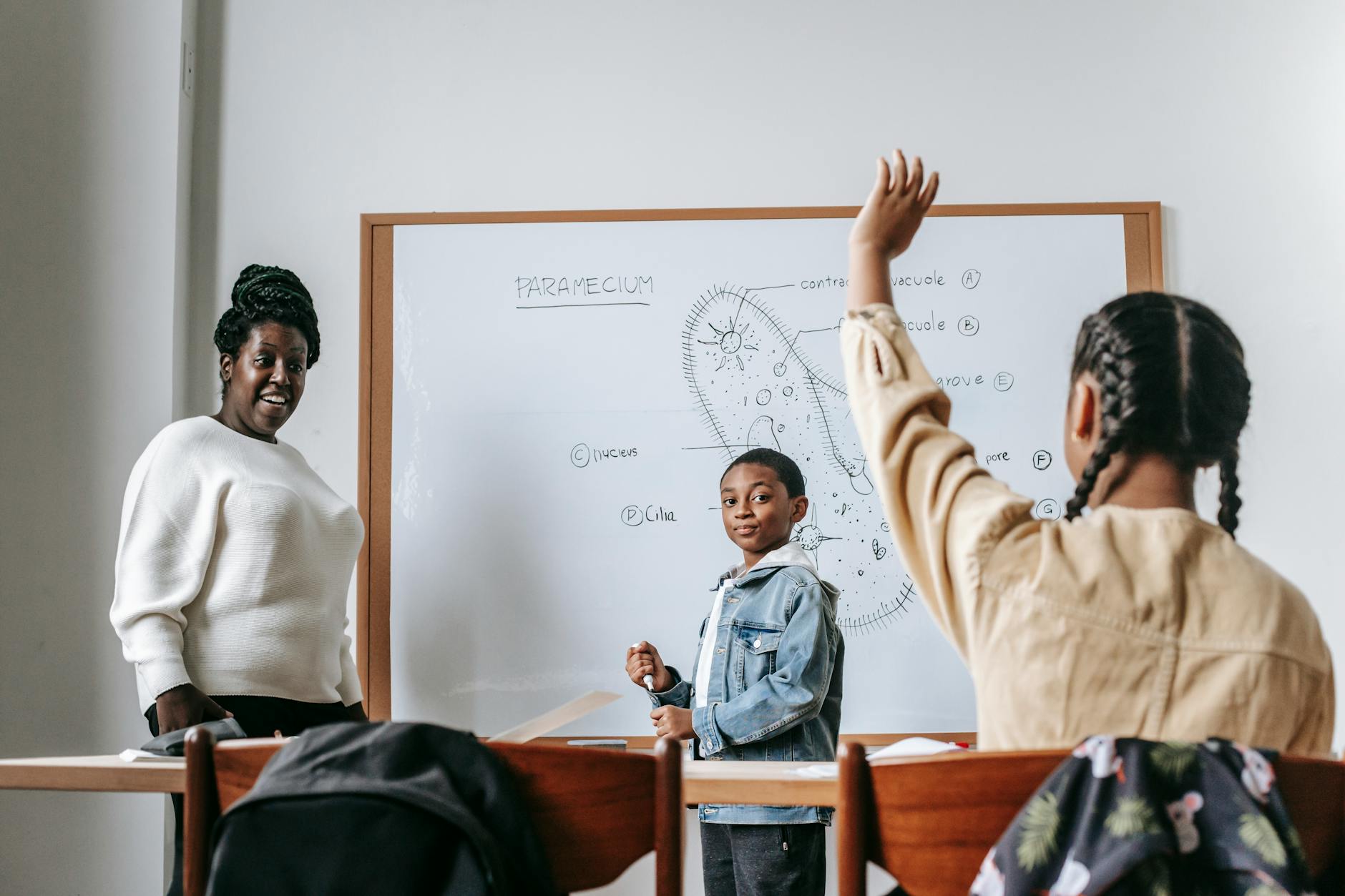
Passive learning happens when students receive information through lecture, video, or text without immediate application or interaction. Bonwell and Eison's 1991 criteria for active engagement state that students must do more than listen: they must read, write, discuss, or solve problems immediately. Passive models miss this mark entirely.
Here's the trade-off matrix. Preparation time for passive methods stays low; you can lecture tomorrow with today's notes. Deeper learning demands heavy upfront design. Scalability favors passive models—I've taught 40 kids with a PowerPoint, while inquiry-based instruction caps around 25 before quality collapses. Immediate recall gains look impressive after a lecture; students parrot back definitions. But cognitive transfer potential remains low for passive methods, whereas deeper learning builds skills that migrate to new contexts.
Attention span research confirms what we see by October: students check out after 10 to 15 minutes of uninterrupted passive lecture. The brain needs structured breaks or active retrieval every quarter hour, or you lose the room regardless of your charisma.
Characteristics of Passive and Inactive Learning
The "I do, we do, you do" model dominates traditional direct instruction. In my Grade 4 classroom last October, I demonstrated two-digit multiplication on the board, we completed three problems together chorally, then students worked independently at their desks. No partners, no discussion, no inquiry-based instruction. The "you do" phase was silent seatwork with zero collaboration.
This becomes inactive learning when students engage in behaviors that look productive but generate zero metacognition:
Highlighting entire textbook pages in neon yellow without annotating.
Copying notes verbatim without paraphrasing or questioning.
Watching instructional videos without embedded questions or pause points.
If there's no pause point and no academic discourse, you've got passive consumption. These methods produce surface learning—familiarity without understanding. Students recognize the multiplication algorithm but cannot explain why the partial products work.
When Surface Learning Is Appropriate
Passive learning isn't malpractice. It makes sense for emergency sub plans when you need minimal facilitation—video notes keep the class safe and occupied while you're home with the flu. Safety protocols for grades K-5, like fire drill procedures or lab safety rules, demand exact replication; deviation is dangerous. And two weeks before high-stakes testing, passive vocabulary memorization builds the surface knowledge students need to decode complex questions.
Follow the 80/20 rule. Foundational knowledge—basic procedures, Tier 3 vocabulary, grammar rules—can start 80% passive through direct explanation. But once fluency establishes, shift to active application. That final 20% must demand deeper learning where students manipulate the knowledge in novel situations. Keeping multiplication facts or grammar rules in the passive realm forever wastes everyone's time and prevents transfer.
Limitations in Modern Classroom Contexts
The illusion of competence destroys us. Students nod along during a clear lecture, the material feels easy to process, and they mistake that fluency for mastery. Forty-eight hours later, the content evaporates from their notebooks. This fluency heuristic convinces kids they know the material because the explanation made sense, not because they can reconstruct it independently.
Equity issues compound the problem. Passive methods disproportionately benefit students with prior background knowledge and strong working memory. Kids who came in knowing the vocabulary soak up lectures effortlessly; struggling learners get left behind without the opportunity to engage. Research on opportunity to learn indicators shows these gaps widen significantly when teachers rely solely on passive delivery, privileging those who already have academic capital and leaving others further back.
How Do Incidental and Focused Learning Compare?
Incidental learning occurs unconsciously through classroom routines, ambient exposure, and casual interactions, such as students absorbing vocabulary from word walls or historical dates from timelines. Focused learning employs deliberate practice with specific objectives, feedback loops, and advanced organizers like KWL charts or Frayer Models to systematically build expertise in targeted skills.
You cannot build a curriculum on accidents.
Incidental learning happens while students focus on something else—picking up tier 2 vocabulary during read-alouds. It is unplanned, contextual, and hard to measure. Focused learning follows Ericsson’s deliberate practice model: specific goals, immediate feedback, and structured repetition. Compare intentionality (accidental vs planned), measurement (unobserved vs tracked), and time structure (ambient vs scheduled).
I watched this play out in my sixth grade classroom last October. During read-alouds, students picked up words like "benevolent" incidentally. That is surface learning—familiarity without mastery. The next day, I used Marzano’s six-step process in forty-minute sessions targeting ninety percent accuracy through deliberate practice and spaced repetition. Retention doubled.
Here is the danger: incidental learning allows misconceptions to fossilize. A student inferring irregular grammar rules from novels will persist in error unless you provide focused learning correction. You need planned incidental moments—rich environments where you monitor for metacognition and cognitive transfer—paired with targeted intervention.
Incidental Learning in Daily Instruction
Create print-rich environments with word walls and historical timelines visible during every lesson. Rotate classroom jobs so students learn responsibility through ambient accountability, not direct instruction. Model academic discourse during think alouds, letting complex language soak in unconsciously while you solve problems. These setups foster inquiry-based instruction without stopping to teach explicitly.
Print-rich environments with word walls and historical timelines.
Classroom management systems with job rotations teaching responsibility.
Ambient exposure to complex language during teacher think alouds.
However, incidental learning produces only thirty to fifty percent retention of vocabulary without intentional reinforcement. It enriches but never achieves deeper learning required for core standards mastery. Use it as a supplement, not a foundation, or you leave knowledge gaps that widen over time.
Focused Learning and Deliberate Practice
Ericsson’s deliberate practice requires four elements: well-defined goals with ninety percent accuracy targets, immediate informative feedback, repetition with refinement, and expert coaching availability. In a middle school band rehearsal, the director isolates specific measures, listens for articulation, and corrects fingering in real time. That is focused learning with no ambiguity about success criteria.
Apply this to writing conferences using the Look-Fors protocol. During twenty-minute focused sessions, track thesis statement clarity using a four-point rubric while the student writes beside you. You provide immediate guidance, creating critical thinking skills through structured pre learning cycles aligned with brain-based teaching principles.
Pre-Learning Strategies and Advanced Organizers
Before new content, deploy advance organizers to bridge prior knowledge. Use the KWL+ chart, adding "How" to prompt strategy thinking. Apply the Frayer Model, requiring students to generate definitions, characteristics, examples, and non-examples. Run concept attainment lessons where students sort yes/no examples to discover patterns independently through comparison.
Implement these during the first ten to fifteen minutes of a unit. They work best when activating prior knowledge within seventy-two hours of new content, and most effectively when students create their own examples. This prevents the gaps that incidental methods miss.

Which Approach Should You Choose for Your Classroom?
Select passive learning for foundational facts and emergency coverage. Use incidental learning for classroom culture and enrichment vocabulary. Reserve deeper learning for transfer and critical thinking objectives. Match your approach to time constraints, assessment stakes, and student readiness. Never commit to just one methodology.
You do not need to pick a side. You need a decision tree.
Matching Strategy to Specific Learning Objectives
Start with one question: Is this foundational fluency or cognitive transfer? If students need automatic recall—like memorizing the fifty states and capitals—deploy passive learning with spaced repetition software. If they need to analyze migration patterns using GIS mapping, shift to inquiry-based instruction.
Check prerequisite schema before diving deep. When seventy percent of your class scores below sixty percent on a diagnostic, pivot immediately to focused direct instruction. Surface learning must come first.
I learned this the hard way with my 10th-grade civics class last spring. I opened with a mock Congressional hearing using a student-centered learning approach before students knew the Articles of the Constitution. The simulation collapsed. The next period, I flipped the order: twenty minutes of passive lecture on the Founding Fathers, followed by current events discussions for incidental vocabulary, then the simulation with clear rubrics. That hybrid unit worked because I matched the method to the readiness.
Building a Flexible Instructional Toolkit
You need tools that coexist without cluttering your desk. For passive delivery, stock Nearpod interactive videos, Cornell notes, and retrieval practice quizzes. For incidental exposure, use classroom museum displays, vocabulary in context, and job charts that force academic discourse daily. For deeper work, keep PBLWorks planning templates, Socratic seminar rubrics, and peer critique protocols in your digital flexible instructional toolkit.
Balance your cognitive diet using the 20-60-20 rule. Spend twenty percent of your week on passive input, sixty percent on focused practice, and twenty percent on deeper transfer tasks. This ratio prevents the burnout that comes from attempting inquiry-based instruction every period while ensuring students still build critical thinking skills.
When you audit next week's schedule, tag each block with its approach. If you spot three consecutive days of passive delivery, insert a metacognition check or alternative learning station. Your cognitive transfer goals depend on this variety.
Implementation Roadmap Without Teacher Burnout
Shift gradually or you will crash. Week one, conduct a ruthless time audit. Log every ten-minute block as passive, focused, or deep. Week two, convert just one forty-five minute lecture into a station rotation with one deeper learning station. Week three, add incidental learning structures like environmental print or current event warm-ups. Week four, survey students using a five-point cognitive engagement scale.
Watch your data like a hawk. If formative assessment scores drop more than ten percent during your transition, hit the failure checkpoint. Return to a fifty-fifty passive-deep blend immediately. Do not power through the dip.
Alternative learning paths require patience and metacognition. Your first attempt at shifting cognitive load will feel messy. Students may resist the ambiguity. That is normal. Adjust the ratio, watch their academic discourse improve, and trust that inquiry-based instruction builds slowly.

Start Here: Deeper Learning
Stop thinking about coverage and start thinking about connections. Deeper learning isn't another initiative to layer on top of your curriculum—it's what happens when you trust that students can handle complexity. I've watched 7th graders explain the carbon cycle using evidence from three different sources, arguing with each other using academic discourse while I stepped back. That moment of metacognition—when they realized they were teaching each other—lasted longer than any lecture I could have given.
You don't need to rebuild your entire course tomorrow. Pick one unit next month and replace the study guide with an inquiry-based instruction task that forces students to apply concepts in an unfamiliar context. That's cognitive transfer in action, and it's the only proof that learning actually stuck. When students struggle to connect ideas without your hints, you'll see where the gaps are—and where the real teaching happens.
Today, open your next lesson plan and delete the slide where you explain the answer. Replace it with one good question and three minutes of wait time. Let the silence be uncomfortable. That's your first step.
Quick Overview
Picture a seventh grader facing a circle area problem. At surface learning, they memorize πr² and plug in radius values. At passive learning, they watch you calculate three examples while copying steps. At deeper learning, they design a circular garden maximizing plantings within a fixed budget, transferring that formula into a real decision. This progression mirrors Webb's Depth of Knowledge Levels 1 through 4.
Level 1 asks them to recall the formula. Level 2 has them calculate the area of three different circles from a worksheet. Level 3 pushes them to compare circle areas against rectangular plots for a school garden project using scale drawings. Level 4 requires them to analyze actual survey data about community green space needs and defend their geometric choices using mathematical evidence.
Passive/Inactive Learning | Incidental Learning | Deeper Learning | |
Cognitive demand | Low (reception) | Variable | High (transfer) |
Student role | Listener | Bystander | Designer |
Teacher role | Deliverer | Unintentional facilitator | Coach |
Typical duration | 10-15 min max | Unstructured | Extended |
Retention rates | 5-10% after 24 hours | Unpredictable | 75-90% |
This article examines when each approach serves your students best, grounded in cognitive load theory. Passive delivery works for brand new information, but only with checks for understanding every 8-10 minutes. Deeper learning demands authentic audiences and iterative feedback. We will map specific active learning strategies against these frameworks so you can stop guessing and start designing.
The Spectrum from Surface to Deep
Webb's Depth of Knowledge gives us the ladder. Level 1 is recall: listing state capitals, defining vocabulary, identifying the parts of a cell. This is pure memorization without context. Students retrieve facts but do not manipulate them. Most worksheets live here.
Level 2 moves into skills and concepts. Students classify organisms, summarize passages, or solve multi-step equations. They work with the material, but the path is still prescribed. This is focused practice, not exploration.
Levels 3 and 4 demand strategic and extending thinking. Level 3 asks students to analyze migration patterns using historical data, justify experimental designs, or develop mathematical models for local traffic patterns. Level 4 requires them to synthesize across disciplines, conducting inquiry-based instruction that generates new questions. Here, critical thinking skills and metacognition drive the work.
I learned this distinction in my seventh-grade classroom. I once spent a week having kids copy definitions of geometric terms. They could list that a rhombus has four equal sides, but they could not explain why the kite in the playground was not one. I was stuck at Level 1. The shift happened when I stopped giving notes and started giving problems: design a wheelchair ramp that meets ADA slope requirements using ratios they had to derive from actual case studies. That was Level 4. The cognitive transfer was immediate and lasting.
Critical Distinctions for Instructional Design
Cognitive load theory separates these approaches clearly. Passive learning often generates extraneous load. Students spend mental energy copying notes or waiting for the next slide without building schemas. The information enters working memory and exits just as fast. No anchor exists for future retrieval.
Deeper learning manages intrinsic load through sequencing. You provide worked examples, then partially completed problems, then independent challenges. Students process the complexity in chunks, allowing for genuine academic discourse and reflection. This is where alternative learning structures like Socratic seminars outperform lectures.
Designing for passive delivery requires three non-negotiables. State a clear objective students can see written on the board. Check for understanding every 8-10 minutes to combat attention decay. And provide immediate application before the bell rings, even if it is just one practice problem.
Designing for deeper learning demands different constraints. Establish authentic audiences so students write or present for real stakeholders, not just you. Build in metacognitive pauses where students explain their thinking processes aloud. And ensure the task requires transfer to a novel context, not just replication of the example you modeled.
What Is Deeper Learning?
Deeper learning is an educational approach where students develop transferable knowledge through critical thinking, collaboration, and self-directed inquiry. According to the Hewlett Foundation, it encompasses six core competencies including mastery of rigorous content, effective communication, and academic mindsets that enable students to solve complex problems in unfamiliar contexts.
It is not worksheets with fancier fonts. It is not group work where only one kid works. Real deeper learning demands that students wrestle with ambiguity and produce novel solutions.
The Hewlett Foundation established the definitive framework in 2013. Their six competencies include: master core academic content, think critically and solve complex problems, work collaboratively, communicate effectively, learn how to learn, and develop academic mindsets. These skills create cognitive transfer—the ability to apply knowledge to new situations instead of just repeating facts on demand.
I saw this in my 9th-grade humanities class during a water quality unit. Students tested local creek samples, analyzed municipal data, and presented findings to the city council over three weeks. They spent forty percent of their time revising arguments based on peer feedback and expert critique. This is inquiry-based instruction with real stakes.
Know when to skip it. Do not attempt deeper learning for emergency sub plans, during the final two weeks before standardized testing, or when automating foundational skills like multiplication facts for 3rd and 4th graders. These moments require surface learning and minimal cognitive load.
Core Competencies and Cognitive Skills
You can spot critical thinking when students question source reliability using the Stanford History Education Group's Lateral Reading protocol. They open new tabs to verify claims rather than accepting the first website they find. This behavior signals genuine critical thinking skills rather than compliance.
Cognitive science supports this approach, but only after students possess a background knowledge threshold. They need approximately three to five key concepts stored in long-term memory before inquiry-based instruction can begin. Without this foundation, you get frustrated students and shallow discoveries.
The competencies also include metacognition—students recognizing what they do not know. When a learner asks, "What evidence would change my mind?" they demonstrate the academic discourse habits essential for complex work.
Instructional Hallmarks of Deep Learning
Specific structures separate deeper learning from busywork. I use four distinct pedagogical approaches depending on the learning target.
Socratic seminars using the Save the Last Word for Me protocol, where students respond to text before hearing the facilitator's interpretation.
Project-based learning following the High Tech High model, with adult-world connections and public deliverables.
Inquiry cycles using the 5E model: Engage, Explore, Explain, Elaborate, Evaluate.
Performance assessments including defense of learning panels where students justify their thinking to authentic audiences.
These structures demand higher order thinking skills rather than recall. They position you as a coach, not a lecturer.
Assessment Indicators and Observable Outcomes
Look for three specific assessment types that signal genuine understanding. Portfolio defenses require fifteen-minute student-led conferences where learners present growth evidence. Transfer tasks challenge students to apply physics concepts to design a Rube Goldberg machine with specific constraints. Public exhibitions like Gallery Walks use peer feedback rubrics to refine work before final submission.
These performance assessment indicators reveal more than multiple-choice tests. You will see students asking clarifying questions about criteria before starting. They self-assess using rubrics prior to submission.
Most importantly, they revise work based on feedback within forty-eight hours. This cycle of creation, feedback, and revision defines focused learning. When students beg for one more day to perfect their argument, you know deeper learning has taken hold.
Passive Learning: The Traditional Alternative
Passive learning happens when students receive information through lecture, video, or text without immediate application or interaction. Bonwell and Eison's 1991 criteria for active engagement state that students must do more than listen: they must read, write, discuss, or solve problems immediately. Passive models miss this mark entirely.
Here's the trade-off matrix. Preparation time for passive methods stays low; you can lecture tomorrow with today's notes. Deeper learning demands heavy upfront design. Scalability favors passive models—I've taught 40 kids with a PowerPoint, while inquiry-based instruction caps around 25 before quality collapses. Immediate recall gains look impressive after a lecture; students parrot back definitions. But cognitive transfer potential remains low for passive methods, whereas deeper learning builds skills that migrate to new contexts.
Attention span research confirms what we see by October: students check out after 10 to 15 minutes of uninterrupted passive lecture. The brain needs structured breaks or active retrieval every quarter hour, or you lose the room regardless of your charisma.
Characteristics of Passive and Inactive Learning
The "I do, we do, you do" model dominates traditional direct instruction. In my Grade 4 classroom last October, I demonstrated two-digit multiplication on the board, we completed three problems together chorally, then students worked independently at their desks. No partners, no discussion, no inquiry-based instruction. The "you do" phase was silent seatwork with zero collaboration.
This becomes inactive learning when students engage in behaviors that look productive but generate zero metacognition:
Highlighting entire textbook pages in neon yellow without annotating.
Copying notes verbatim without paraphrasing or questioning.
Watching instructional videos without embedded questions or pause points.
If there's no pause point and no academic discourse, you've got passive consumption. These methods produce surface learning—familiarity without understanding. Students recognize the multiplication algorithm but cannot explain why the partial products work.
When Surface Learning Is Appropriate
Passive learning isn't malpractice. It makes sense for emergency sub plans when you need minimal facilitation—video notes keep the class safe and occupied while you're home with the flu. Safety protocols for grades K-5, like fire drill procedures or lab safety rules, demand exact replication; deviation is dangerous. And two weeks before high-stakes testing, passive vocabulary memorization builds the surface knowledge students need to decode complex questions.
Follow the 80/20 rule. Foundational knowledge—basic procedures, Tier 3 vocabulary, grammar rules—can start 80% passive through direct explanation. But once fluency establishes, shift to active application. That final 20% must demand deeper learning where students manipulate the knowledge in novel situations. Keeping multiplication facts or grammar rules in the passive realm forever wastes everyone's time and prevents transfer.
Limitations in Modern Classroom Contexts
The illusion of competence destroys us. Students nod along during a clear lecture, the material feels easy to process, and they mistake that fluency for mastery. Forty-eight hours later, the content evaporates from their notebooks. This fluency heuristic convinces kids they know the material because the explanation made sense, not because they can reconstruct it independently.
Equity issues compound the problem. Passive methods disproportionately benefit students with prior background knowledge and strong working memory. Kids who came in knowing the vocabulary soak up lectures effortlessly; struggling learners get left behind without the opportunity to engage. Research on opportunity to learn indicators shows these gaps widen significantly when teachers rely solely on passive delivery, privileging those who already have academic capital and leaving others further back.
How Do Incidental and Focused Learning Compare?
Incidental learning occurs unconsciously through classroom routines, ambient exposure, and casual interactions, such as students absorbing vocabulary from word walls or historical dates from timelines. Focused learning employs deliberate practice with specific objectives, feedback loops, and advanced organizers like KWL charts or Frayer Models to systematically build expertise in targeted skills.
You cannot build a curriculum on accidents.
Incidental learning happens while students focus on something else—picking up tier 2 vocabulary during read-alouds. It is unplanned, contextual, and hard to measure. Focused learning follows Ericsson’s deliberate practice model: specific goals, immediate feedback, and structured repetition. Compare intentionality (accidental vs planned), measurement (unobserved vs tracked), and time structure (ambient vs scheduled).
I watched this play out in my sixth grade classroom last October. During read-alouds, students picked up words like "benevolent" incidentally. That is surface learning—familiarity without mastery. The next day, I used Marzano’s six-step process in forty-minute sessions targeting ninety percent accuracy through deliberate practice and spaced repetition. Retention doubled.
Here is the danger: incidental learning allows misconceptions to fossilize. A student inferring irregular grammar rules from novels will persist in error unless you provide focused learning correction. You need planned incidental moments—rich environments where you monitor for metacognition and cognitive transfer—paired with targeted intervention.
Incidental Learning in Daily Instruction
Create print-rich environments with word walls and historical timelines visible during every lesson. Rotate classroom jobs so students learn responsibility through ambient accountability, not direct instruction. Model academic discourse during think alouds, letting complex language soak in unconsciously while you solve problems. These setups foster inquiry-based instruction without stopping to teach explicitly.
Print-rich environments with word walls and historical timelines.
Classroom management systems with job rotations teaching responsibility.
Ambient exposure to complex language during teacher think alouds.
However, incidental learning produces only thirty to fifty percent retention of vocabulary without intentional reinforcement. It enriches but never achieves deeper learning required for core standards mastery. Use it as a supplement, not a foundation, or you leave knowledge gaps that widen over time.
Focused Learning and Deliberate Practice
Ericsson’s deliberate practice requires four elements: well-defined goals with ninety percent accuracy targets, immediate informative feedback, repetition with refinement, and expert coaching availability. In a middle school band rehearsal, the director isolates specific measures, listens for articulation, and corrects fingering in real time. That is focused learning with no ambiguity about success criteria.
Apply this to writing conferences using the Look-Fors protocol. During twenty-minute focused sessions, track thesis statement clarity using a four-point rubric while the student writes beside you. You provide immediate guidance, creating critical thinking skills through structured pre learning cycles aligned with brain-based teaching principles.
Pre-Learning Strategies and Advanced Organizers
Before new content, deploy advance organizers to bridge prior knowledge. Use the KWL+ chart, adding "How" to prompt strategy thinking. Apply the Frayer Model, requiring students to generate definitions, characteristics, examples, and non-examples. Run concept attainment lessons where students sort yes/no examples to discover patterns independently through comparison.
Implement these during the first ten to fifteen minutes of a unit. They work best when activating prior knowledge within seventy-two hours of new content, and most effectively when students create their own examples. This prevents the gaps that incidental methods miss.
Which Approach Should You Choose for Your Classroom?
Select passive learning for foundational facts and emergency coverage. Use incidental learning for classroom culture and enrichment vocabulary. Reserve deeper learning for transfer and critical thinking objectives. Match your approach to time constraints, assessment stakes, and student readiness. Never commit to just one methodology.
You do not need to pick a side. You need a decision tree.
Matching Strategy to Specific Learning Objectives
Start with one question: Is this foundational fluency or cognitive transfer? If students need automatic recall—like memorizing the fifty states and capitals—deploy passive learning with spaced repetition software. If they need to analyze migration patterns using GIS mapping, shift to inquiry-based instruction.
Check prerequisite schema before diving deep. When seventy percent of your class scores below sixty percent on a diagnostic, pivot immediately to focused direct instruction. Surface learning must come first.
I learned this the hard way with my 10th-grade civics class last spring. I opened with a mock Congressional hearing using a student-centered learning approach before students knew the Articles of the Constitution. The simulation collapsed. The next period, I flipped the order: twenty minutes of passive lecture on the Founding Fathers, followed by current events discussions for incidental vocabulary, then the simulation with clear rubrics. That hybrid unit worked because I matched the method to the readiness.
Building a Flexible Instructional Toolkit
You need tools that coexist without cluttering your desk. For passive delivery, stock Nearpod interactive videos, Cornell notes, and retrieval practice quizzes. For incidental exposure, use classroom museum displays, vocabulary in context, and job charts that force academic discourse daily. For deeper work, keep PBLWorks planning templates, Socratic seminar rubrics, and peer critique protocols in your digital flexible instructional toolkit.
Balance your cognitive diet using the 20-60-20 rule. Spend twenty percent of your week on passive input, sixty percent on focused practice, and twenty percent on deeper transfer tasks. This ratio prevents the burnout that comes from attempting inquiry-based instruction every period while ensuring students still build critical thinking skills.
When you audit next week's schedule, tag each block with its approach. If you spot three consecutive days of passive delivery, insert a metacognition check or alternative learning station. Your cognitive transfer goals depend on this variety.
Implementation Roadmap Without Teacher Burnout
Shift gradually or you will crash. Week one, conduct a ruthless time audit. Log every ten-minute block as passive, focused, or deep. Week two, convert just one forty-five minute lecture into a station rotation with one deeper learning station. Week three, add incidental learning structures like environmental print or current event warm-ups. Week four, survey students using a five-point cognitive engagement scale.
Watch your data like a hawk. If formative assessment scores drop more than ten percent during your transition, hit the failure checkpoint. Return to a fifty-fifty passive-deep blend immediately. Do not power through the dip.
Alternative learning paths require patience and metacognition. Your first attempt at shifting cognitive load will feel messy. Students may resist the ambiguity. That is normal. Adjust the ratio, watch their academic discourse improve, and trust that inquiry-based instruction builds slowly.
Start Here: Deeper Learning
Stop thinking about coverage and start thinking about connections. Deeper learning isn't another initiative to layer on top of your curriculum—it's what happens when you trust that students can handle complexity. I've watched 7th graders explain the carbon cycle using evidence from three different sources, arguing with each other using academic discourse while I stepped back. That moment of metacognition—when they realized they were teaching each other—lasted longer than any lecture I could have given.
You don't need to rebuild your entire course tomorrow. Pick one unit next month and replace the study guide with an inquiry-based instruction task that forces students to apply concepts in an unfamiliar context. That's cognitive transfer in action, and it's the only proof that learning actually stuck. When students struggle to connect ideas without your hints, you'll see where the gaps are—and where the real teaching happens.
Today, open your next lesson plan and delete the slide where you explain the answer. Replace it with one good question and three minutes of wait time. Let the silence be uncomfortable. That's your first step.
Still grading everything by hand?
EMStudio is a free teaching management app — manage your classes, students, lessons, and more!
Learn More
Still grading everything by hand?
EMStudio is a free teaching management app — manage your classes, students, lessons, and more!
Learn More



Notion4Teachers
Notion templates to simplify administrative tasks and enhance your teaching experience.



2026 Notion4Teachers. All Rights Reserved.
Notion4Teachers
Notion templates to simplify administrative tasks and enhance your teaching experience.
2026 Notion4Teachers. All Rights Reserved.
Notion4Teachers
Notion templates to simplify administrative tasks and enhance your teaching experience.
2026 Notion4Teachers. All Rights Reserved.