
Collaborating Learning: Complete Guide for K-12 Teachers
Collaborating Learning: Complete Guide for K-12 Teachers

Article by
Milo
ESL Content Coordinator & Educator
ESL Content Coordinator & Educator
All Posts
In 1934, psychologist Lev Vygotsky established that students learn more effectively when they work together within their zone of proximal development—the gap between what a learner can do alone and what they can achieve with guidance. Nearly a century later, collaborating learning remains one of the few strategies backed by both cognitive science and classroom reality. You have seen it happen: a student explains a concept to a peer and suddenly understands it better themselves.
But group work often collapses into chaos. One kid does everything while three others check their phones. The difference between productive peer instruction and wasted time comes down to structure. This guide breaks down the five components that make collaboration actually work—from elementary circle time to high school lab groups—without losing control of your classroom.
Still grading everything by hand?
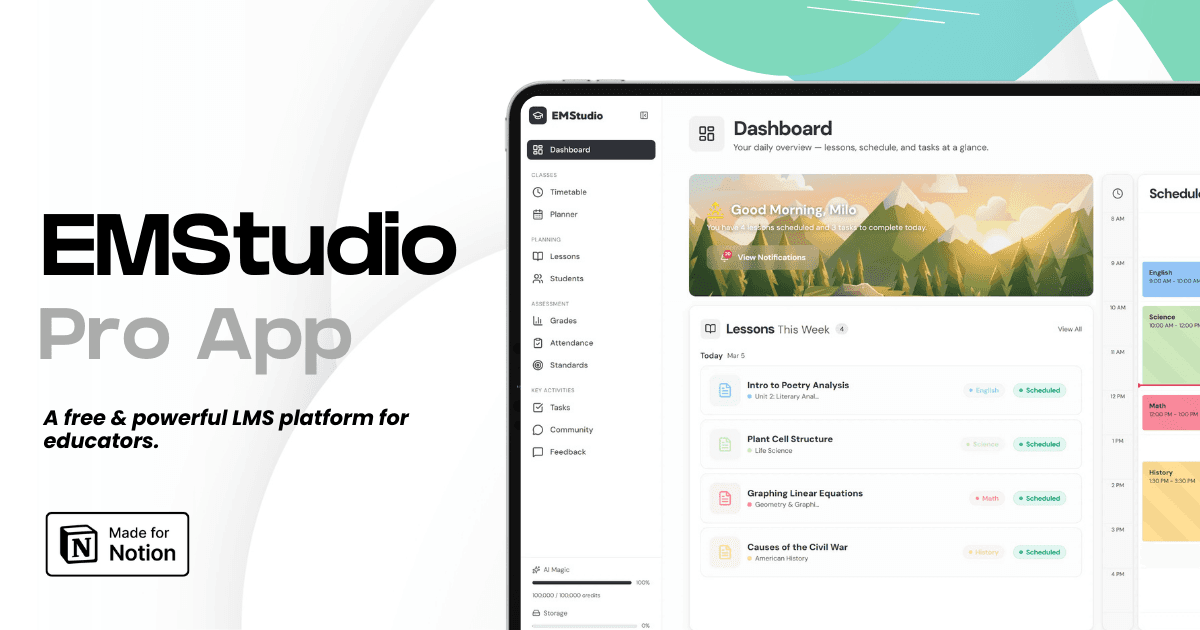
EMStudio is a free teaching management app — manage your classes, students, lessons, and more!
Learn More
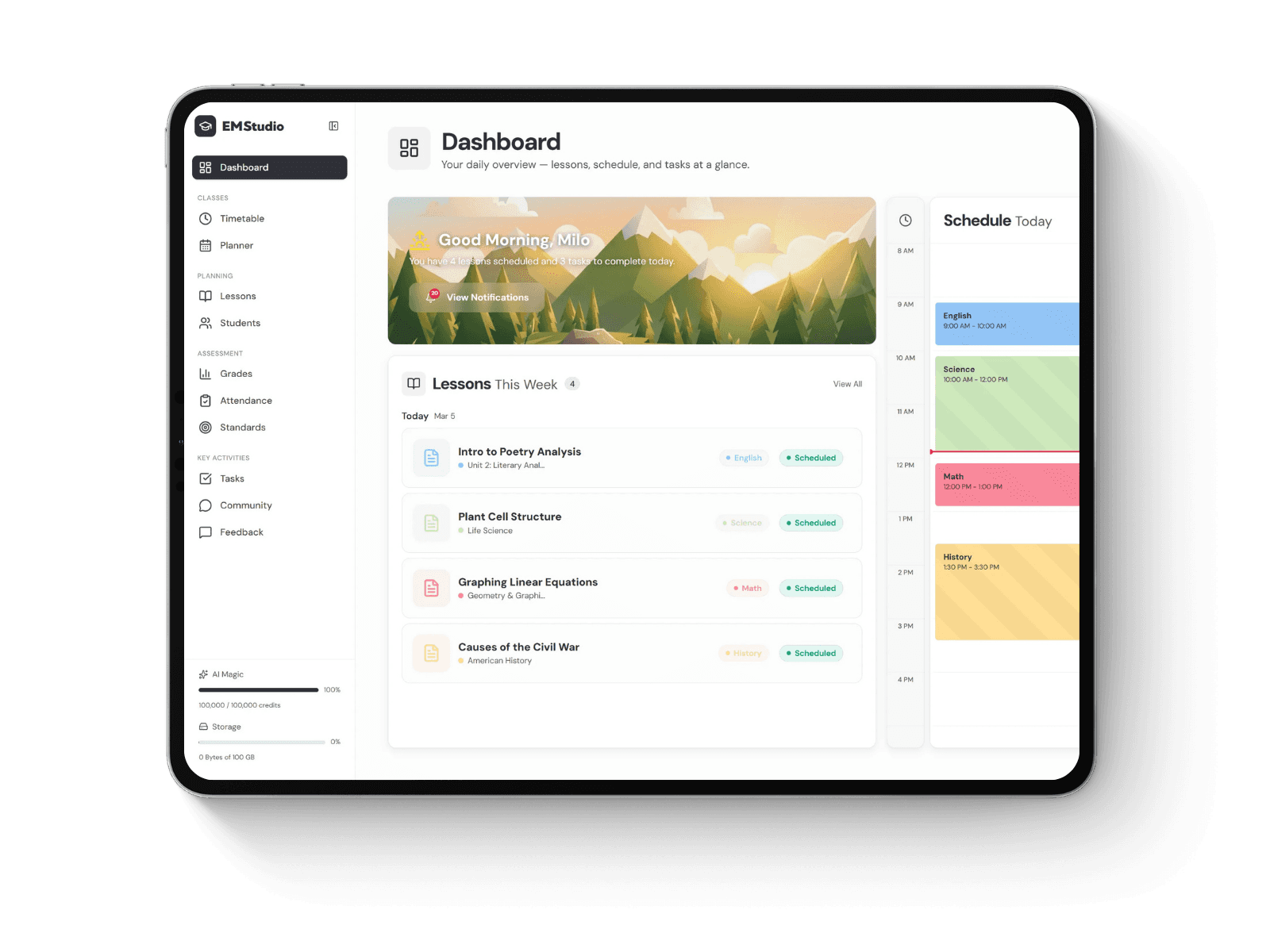
Still grading everything by hand?
EMStudio is a free teaching management app — manage your classes, students, lessons, and more!
Learn More
Table of Contents
What Is Collaborating Learning and How Is It Different From Cooperative Learning?
Collaborating learning emphasizes emergent, shared knowledge construction among peers with negotiated roles and distributed expertise, while cooperative learning uses teacher-structured tasks with pre-assigned roles and clear division of labor. Collaborative learning treats knowledge as socially constructed through sustained dialogue, whereas cooperative learning focuses on efficiently completing teacher-defined objectives through task specialization.
Think of it this way. Cooperative learning is when you assign jigsaw roles and kids report back pieces. Collaborating learning is when they argue about what the pieces mean until something new emerges. One divides the work. The other constructs the understanding.
Pierre Dillenbourg and Lev Vygotsky both inform this distinction. Dillenbourg argued that cooperation means dividing the work between students—like assigning one kid to research the causes of World War I while another handles the effects. You get efficiency.
Collaboration, however, requires constructing shared meaning through sustained dialogue, rooted in Vygotsky's social constructivism. The group doesn't just split the task; they negotiate the interpretation together. They question each other's assumptions. This difference matters when you're deciding whether you want students to complete a worksheet faster or actually change their minds about a text.
The structure reveals everything. In cooperative learning, you design the task, assign the roles, and transmit the knowledge authority. You might tell Maria she's the vocabulary expert and Jamal he's the timeline keeper before they ever open the book. In collaborating learning, the structure emerges from the group's negotiation within their zone of proximal development. Maria and Jamal decide together who tracks what based on where their discussion leads. The authority shifts from your lesson plan to their collective reasoning, with you providing scaffolding only when their dialogue stalls.
Assessment tells a similar story. Cooperative models reward individual products assembled into a group display—five separate paragraphs pasted together. Each grade reflects individual mastery of a slice. Collaborative assessment looks for interdependent reasoning that couldn't exist without the group's dialogue. You see this when three students submit a historical argument where every sentence carries traces of their debate. The product is inseparable from the process.
Knowledge authority works differently too. In cooperative group work, the textbook or your lecture remains the final word. Students consult you to settle disputes about facts. In true collaboration in education, the peer group becomes a valid source of knowledge. They learn to trust their collective interpretation, even when it diverges from the teacher's guide. This shift scares some teachers. It shouldn't. It simply means you've moved from peer instruction as information delivery to peer instruction as collective sense-making.
Picture your AP History class examining primary sources about the New Deal. A cooperative approach assigns Document Expert roles. Sarah analyzes the Banking Act, David tackles the TVA, and they compile individual summaries into a group poster. Each student masters their slice. They teach each other the content.
The collaborative version drops the same documents on a triad without prescribed roles. They negotiate an analytical framework together. Sarah challenges David's interpretation of relief spending. David revises his thinking based on her evidence. They co-construct a thesis through that dialogue and submit one joint historical argument showing how their reasoning intertwined.
You can spot the difference in the writing. One reads like five separate essays stitched together with topic sentences. The other reads like a conversation that produced something none of them could have written alone. The first shows what they know. The second shows how they think.
John Hattie's Visible Learning meta-analysis gives you hard numbers to consider. Cooperative learning shows an effect size of 0.40—solid, especially for surface-level knowledge and basic skills acquisition. But collaborative learning approaches emphasizing sustained peer dialogue and genuine knowledge construction show stronger effects on higher-order thinking. Studies focusing on critical thinking and problem-solving land in the 0.65 to 0.75 range. That's significant.
When your goal is simply covering content efficiently before the state test, cooperative structures work fine. They keep kids accountable and moving through the material. When you want students to wrestle with ambiguity and build new understanding together, the data favors cooperative learning and collaborative learning approaches that center genuine knowledge construction. Choose based on what you need them to learn, not what's easier to grade.

Why Does Collaborating Learning Matter for Student Success?
Research indicates collaborative learning improves long-term retention by approximately 50% compared to individual study and develops critical thinking skills important for modern workplaces. It particularly benefits underrepresented students in STEM fields when teachers implement structured positive interdependence, individual accountability, and explicit social skills instruction.
The shift to collaborating learning changes the noise level in your room for good. Kids remember what they explain to each other. The benefits of collaborative learning aren't soft skills—they're measurable cognitive gains that stick longer than solo cramming.
John Dunlosky's work on generative learning shows that explaining concepts to peers triggers elaborative encoding. This process produces retention improvements of approximately 50% compared to passive individual study. When your students teach each other, they reorganize information in their own words, creating stronger memory traces than showing alone ever could. This is why peer instruction beats re-reading textbooks.
Albanese and Mitchell's meta-analysis of problem-based learning in medical education found significant critical thinking gains when students wrestled with ill-structured problems together. Medical students who collaborated through clinical cases outperformed lecture-based peers on diagnostic reasoning. These findings translate to secondary classrooms—your sophomores analyzing primary sources in methods that drive results develop similar analytical habits. The dialectic forces them to justify conclusions with evidence, not guessing.
For underrepresented students in STEM, structured student collaboration in education rebuilds academic self-concept. When status treatments interrupt typical classroom hierarchies, previously marginalized students begin contributing physics insights or coding solutions. Their persistence improves because they see themselves as knowledge-holders, not outsiders. One well-designed group task can shift a student's identity from 'bad at math' to 'the one who explains circuits.'
The roots trace back to Vygotsky and social constructivism. Peer instruction creates a zone of proximal development where scaffolding from a slightly-more-knowledgeable classmate bridges gaps you can't reach during whole-group instruction. Unlike ability tracking, which isolates struggling learners, effective types of collaborative learning circulate multiple solution strategies through heterogeneous groups. The collective brain becomes greater than its individual parts.
The Secretary's Commission on Achieving Necessary Skills identified teamwork and interpersonal competencies as key workplace skills back in 1991. Three decades later, the Partnership for 21st Century Skills still lists communication and collaboration as core pillars. You're not just teaching content; you're rehearsing the peer-to-peer recognition culture that mirrors professional environments. Employers consistently rank these competencies above content knowledge when hiring new graduates. The SCANS report specifically noted that workers who cannot negotiate, lead, or serve customers fail regardless of technical expertise.
But group work without guardrails produces process loss. High-status students hijack discussions while free-riders coast on others' efforts. Poorly structured collaboration often yields worse outcomes than individual work because social loafing replaces cognitive effort. The benefits only appear when you engineer positive interdependence and individual accountability into every task. Without these structures, you're just seating students near each other while they work alone.
Elizabeth Cohen's Complex Instruction research proves that heterogeneous groups outperform tracked grouping when teachers implement status treatments. Expectation training—where you publicly value multiple intellectual strengths—prevents the usual suspects from dominating. Mixed-ability grouping reduces achievement gaps because it forces the circulation of diverse problem-solving approaches. It prevents clustering struggling students together without models. Every student needs access to high-status academic tasks.
How Collaborating Learning Works: The Five Core Components
Effective collaborating learning rests on five interlocking elements drawn from the Johnson & Johnson framework. Positive Interdependence creates the first bond: students must truly need each other to complete the task. You achieve this through resource interdependence, where each student holds unique information or materials the group needs, or through role interdependence, assigning complementary jobs like Facilitator, Questioner, and Recorder so no one can coast while others work. Without this mutual reliance, you have group work in name only.
To check if your interdependence is real, ask three questions. Can the group finish the project if one member stays silent? Does each student possess data no one else has? Is the final product impossible to create without every contribution? If you answer yes to any, you have work to do.
Individual Accountability prevents the free-rider problem. Each member must teach others their unique contribution and cannot let the strongest writer do all the typing. You assess this by observing whether each student can explain the group's conclusion without notes, making sure each student's name appears on the product, and verifying that each student contributed unique data without copying from a neighbor.
Promotive Interaction moves beyond sitting together to actual intellectual exchange. Students engage in face-to-face dialogue using questioning and elaborating techniques. You hear them asking "Why do you think that?" or "Can you explain how you got that answer?" This verbal processing cements understanding before anyone writes a final answer. Check for this by listening for clarifying questions, observing paraphrasing before responding, and confirming every voice contributes.
Collaborative Skills do not appear naturally. You must teach consensus building, conflict resolution, and shared decision-making explicitly. Third graders need scripts for disagreeing politely. Eighth graders need protocols for when two strong-willed students want opposite approaches. I spend time modeling how to paraphrase a partner's idea before adding my own. Look for these skills by watching students compromise during disagreements, distribute materials fairly, and check for understanding before moving forward.
Group Processing closes the loop. After completing the task, students step back and reflect metacognitively on how well their group functioned. Ask them: What helped us succeed? What slowed us down? What will we do differently next time? This reflection transforms a single activity into lasting skill development. Assess it by asking whether students can name one strength, identify one behavior to change, and commit to a concrete improvement strategy.
These components align with major collaborative learning theories. Vygotsky's Zone of Proximal Development explains why peer interaction works: learning occurs first in social interaction before a child internalizes the concept. Students scaffold each other's thinking through talk, operating in that sweet spot between what they can do alone and what they can do with help. This is the heart of social constructivism.
Bandura's Social Learning Theory adds the observation that students learn by watching peers model strategies and persist through struggle. When one student verbalizes their problem-solving process, others adopt those cognitive moves. Reciprocal learning techniques capitalize on this, structuring peer instruction so every student becomes both teacher and learner.
Dillenbourg's framework for computer-supported collaborative learning extends these ideas to digital environments, though the core remains human interaction. Theories on collaborative learning agree that the software cannot replace the promotive interaction. Types of collaborative learning strategies vary from informal group work to structured academic controversy, but all require these five components to avoid becoming mere seating arrangements.
When you design your next lesson, check each component against your plan. Are students truly interdependent? Can you hold every individual accountable? Have you taught the social skills required? Did you leave time for group processing? Getting these foundations right matters more than the specific activity. Strong structure lets the content shine.
Practical Applications: Strategies for Elementary Through High School
Collaborating learning changes shape as students mature. A first grader needs training wheels; a senior needs a roadmap. You don't need to master all 20 collaborative learning tips and strategies for teachers circulating online. The following strategies for teaching collaboration in the classroom match developmental readiness without creating management headaches.
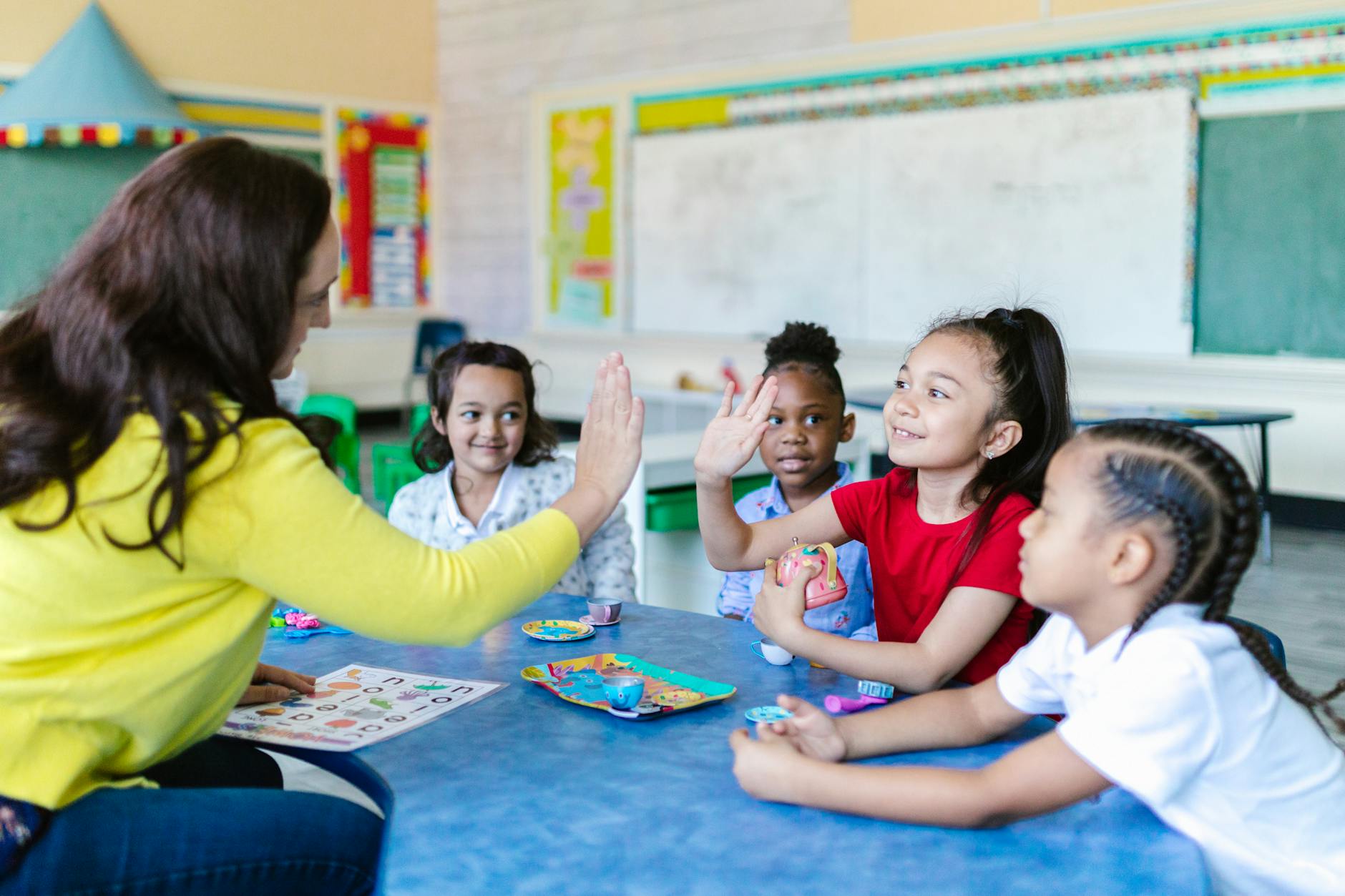
Start with Turn and Talk for K-2. Display a math problem image—maybe three apples and two oranges—without asking the question. Set a sand timer for 90 seconds. Partners use sentence stems taped to their desks: "I predict the answer will be..." or "I notice there are..." It keeps them talking during the brief window before attention drifts. You are building the habit of verbalizing thinking before they can write it fully.
For grades 2-5, Round Robin builds vocabulary ownership. Each student gets a mini whiteboard. You announce a word like "photosynthesis." They have three minutes to write one grammatically correct sentence using it. Then they pass boards clockwise. The receiving student reads the work, gives a thumbs up or fixes errors, and writes their own version. If the sentence is weak, the group pauses to discuss why. You need a class set of whiteboards and markers, roughly $25, but the format eliminates hand-raising delays.
Jigsaw Junior fits 3rd through 5th grade science standards. In a 45-minute block, assign expert groups to research one animal adaptation—camouflage, mimicry, or migration. Give each group a different colored graphic organizer. After 15 minutes of expert work, they regroup into teams of four where each member has a different color. They teach their adaptation while teammates ask clarifying questions. You will need a kitchen timer, the graphic organizers, and role cards labeled "Speaker" and "Question Asker." The materials run about $10 if you print the cards on cardstock.
Middle schoolers need structures that force interdependence. Literature Circles prevent the student who read ahead from dominating the conversation. Assign four defined roles: Summarizer captures the plot, Questioner raises three discussion questions, Illustrator draws a key symbol, and Connector links the text to current events or history. Rotate roles every 20 minutes using laminated role sheets. The Connector specifically must find a news article that mirrors the book’s conflict. It creates group work that fails if one person opts out.
Use Reciprocal Teaching, the Palincsar and Brown method, for 30-minute reading cycles. Groups of four follow a strict protocol: Predict, Question, Clarify, Summarize. Each student leads one phase for seven minutes using specific sentence starters. When a student stumbles over a difficult paragraph, another steps in to clarify using the text. This is social constructivism in action—Vygotsky argued learning happens in the zone of proximal development, and here that zone is built when a peer explains a confusing concept using slightly simpler language than you might use.
For review sessions, Numbered Heads Together keeps everyone accountable. Number students 1-4 in each group. Ask a review question and give groups dry-erase boards to reach consensus before writing. Roll a die to randomly call a number. Only that student can display the answer. If they get it wrong, the group discusses the error and tries again. The structure creates positive interdependence. You can find more collaborative learning strategies examples like this in Kagan’s research.
High schoolers can handle 90-minute inquiry cycles. POGIL—Process Oriented Guided Inquiry Learning—works for chemistry or biology labs. Assign permanent roles for the period: Manager watches the clock and keeps supplies, Spokesperson is the only one who can call you over with questions, Recorder writes the group consensus on the worksheet, Reflector monitors participation equity. They work through guided inquiry worksheets while you circulate. Official POGIL role card sets cost around $35, but you can make your own with index cards for free.
Socratic Seminar uses the inner/outer circle format for mature discussion. Arrange desks in two concentric circles. The inner circle discusses text-dependent questions for 25 minutes while the outer circle tracks specific behaviors on an evaluation rubric—who cited page numbers as evidence, who built on another’s point versus changing the subject. Then they switch places. The rubric makes the speaking and listening standards visible instead of vague participation grades.
Finally, implement Peer Instruction, Eric Mazur’s method from Harvard physics, in any conceptual class. Display a multiple-choice conceptual question about force or symbolism. Students vote using colored cards or Plickers. If the split is 40-60, do not lecture. Tell them to find someone with a different colored answer and convince them in exactly two minutes. The peer instruction creates scaffolding through conversation. Students hear misconceptions articulated and corrected by classmates, which often resonates more than teacher correction.
Here is how these approaches compare across grade bands.
Strategy Name | Grade Range | Time Required | Subject Examples | Materials Cost |
|---|---|---|---|---|
Turn and Talk | K-2 | 90 seconds | Math problem predictions | Free (sentence stems on paper) |
Round Robin | 2-5 | 3 minutes per student | Vocabulary sentence creation | $25 (class set of whiteboards) |
Jigsaw Junior | 3-5 | 45 minutes | Science animal adaptations | $10 (graphic organizers, timer, role cards) |
Literature Circles | 6-8 | 20-minute rotations | Novel study, short stories | $15 (laminated role sheets) |
Reciprocal Teaching | 6-8 | 30-minute cycles | Reading comprehension | Free (protocol cards) |
Numbered Heads Together | 6-8 | 10-15 minutes | Review games, test prep | $20 (dry-erase boards) |
POGIL | 9-12 | 90-minute cycles | Chemistry, Biology labs | $35 (official role card sets) |
Socratic Seminar | 9-12 | 50 minutes | English, History, Philosophy | $5 (evaluation rubric copies) |
Peer Instruction | 9-12 | 2-minute partner discussions | Physics, Calculus, Economics | $0-$25 (Plickers cards or colored paper) |
How Can Teachers Implement Collaborating Learning Without Classroom Chaos?
Start with micro-lessons. Ten minutes daily for three days beats an hour of theory. Use heterogeneous groups of four with temporary assigned roles, then fade the structure over four weeks after pre-teaching paraphrasing and academic disagreement.
Chaos happens when we assume kids know how to collaborate. They don't. You wouldn't hand a 7th grader a Bunsen burner without safety training, so don't hand 30 students a group project without social skills instruction. The collaboration method of teaching requires scaffolding just like academic content.
One week before launch, survey your students. Ask who they work well with and who triggers their social anxiety. Check IEPs for modifications regarding peer interaction. Then form heterogeneous groups of four using ranked randomization—mix high, medium, and low achievers deliberately while monitoring social compatibility to prevent isolation. I once placed a shy student with her soccer teammate; she spoke up for the first time all year. This balance honors both academic growth and emotional safety.
Spend three days teaching specific collaborative skills in ten-minute micro-lessons. Day one covers active listening. Students practice the paraphrase protocol—saying "What I heard you say is..."—until it feels automatic rather than awkward. Day two focuses on questioning using Bloom's Taxonomy starters. Day three introduces academic disagreement with sentence frames like "I appreciate X, and I think Y." These brief, focused lessons prevent the domination and silence that typically ruin group work in September.
Week one requires heavy scaffolding. Assign temporary roles using tent cards placed at each desk: Facilitator keeps the group on task, Recorder handles documentation, Materials Manager gathers supplies, Reporter shares findings. Use clock buddies for quick pairing when groups get stuck. Have students sign group contracts listing specific consequences for non-participation. This structure isn't micromanaging; it's the scaffolding Vygotsky described in the zone of proximal development. Students need external structure before internalizing collaborative norms.
Weeks two through four, gradually release the training wheels. By week three, fade the assigned roles and let groups negotiate their own division of labor. Introduce five-minute group processing logs as exit tickets: "What did we do well today? What needs improvement tomorrow?" By week four, transition to student-selected roles based on emerging strengths. This progression mirrors social constructivism—students internalize collaborative skills through supported practice before attempting independent application. The fade prevents learned helplessness while building autonomy.
Avoid ability grouping at all costs. It creates tracking effects and limits peer instruction opportunities. One high achiever explaining ratios to a struggling classmate solidifies understanding for both—that's the sweet spot of collaborative teaching and learning. Mixed-ability groups force students to translate concepts for different audiences, which deepens comprehension better than homogenous clusters ever could. The research on cooperative learning consistently shows that heterogeneous grouping raises achievement for everyone, including the top performers who gain depth through teaching.
Don't assign simple tasks. If one student can complete the work alone in five minutes, they will, and the others will watch. Design complex challenges requiring multiple perspectives, like "design a solution to cafeteria waste" or "prove which character bears the most responsibility for the conflict." These necessitate genuine collaborating learning rather than mere division of labor. Complex tasks force interdependence; students actually need each other's insights to succeed, preventing the hijacking that ruins group work reputation.
Never skip the skill instruction. Expecting collaboration without teaching specific protocols leads to the chaos you're trying to avoid. You can find online collaborative learning examples that break down these micro-lessons digitally, but the principle remains constant: teach the process before the product. Otherwise you get one student doing all the work while others check out. This preparation phase separates effective collaborative teaching and learning from mere seating arrangement changes.
There are specific times to avoid group work entirely. During initial skill acquisition phases, follow Cognitive Load Theory—students need individual practice to automate procedures before collaborative processing adds social complexity. High-stakes standardized test preparation requires individual accountability, not shared responsibility. And never use collaborative teaching and learning models for chemistry labs with safety hazards before protocols are individually mastered. Safety and basic skill fluency come before social interaction.
Implementing these structures takes patience and precision. Rushing the process or using eliminate daily chaos strategies without the social skills foundation backfires spectacularly. Start with ten minutes of skill work. Build your collaborative teaching and learning models gradually across the semester. The goal isn't perpetual group work; it's teaching students to think together effectively so they can eventually think critically alone. That independence is the ultimate measure of success.
Quick-Start Guide for Collaborating Learning
You have the roadmap now. Collaborating learning moves your classroom from quiet rows to noisy thinking. It honors Vygotsky’s social constructivism—kids learn by talking, arguing, and building ideas together. Start small. Pick one protocol next week. Watch how peer instruction changes the room’s energy.
Group work fails when we throw kids together without structure. The five components you read about—interdependence, individual accountability, face-to-face interaction, social skills, and group processing—are your guardrails. Use them. Your 3rd graders can handle complex problems. Your high schoolers need the talk time more than they need another lecture.
Pick your first protocol—Think-Pair-Share or a numbered heads-together.
Assign roles so every student owns a piece.
Teach the social skill explicitly before you start.
Stop five minutes early to process what worked.

What Is Collaborating Learning and How Is It Different From Cooperative Learning?
Collaborating learning emphasizes emergent, shared knowledge construction among peers with negotiated roles and distributed expertise, while cooperative learning uses teacher-structured tasks with pre-assigned roles and clear division of labor. Collaborative learning treats knowledge as socially constructed through sustained dialogue, whereas cooperative learning focuses on efficiently completing teacher-defined objectives through task specialization.
Think of it this way. Cooperative learning is when you assign jigsaw roles and kids report back pieces. Collaborating learning is when they argue about what the pieces mean until something new emerges. One divides the work. The other constructs the understanding.
Pierre Dillenbourg and Lev Vygotsky both inform this distinction. Dillenbourg argued that cooperation means dividing the work between students—like assigning one kid to research the causes of World War I while another handles the effects. You get efficiency.
Collaboration, however, requires constructing shared meaning through sustained dialogue, rooted in Vygotsky's social constructivism. The group doesn't just split the task; they negotiate the interpretation together. They question each other's assumptions. This difference matters when you're deciding whether you want students to complete a worksheet faster or actually change their minds about a text.
The structure reveals everything. In cooperative learning, you design the task, assign the roles, and transmit the knowledge authority. You might tell Maria she's the vocabulary expert and Jamal he's the timeline keeper before they ever open the book. In collaborating learning, the structure emerges from the group's negotiation within their zone of proximal development. Maria and Jamal decide together who tracks what based on where their discussion leads. The authority shifts from your lesson plan to their collective reasoning, with you providing scaffolding only when their dialogue stalls.
Assessment tells a similar story. Cooperative models reward individual products assembled into a group display—five separate paragraphs pasted together. Each grade reflects individual mastery of a slice. Collaborative assessment looks for interdependent reasoning that couldn't exist without the group's dialogue. You see this when three students submit a historical argument where every sentence carries traces of their debate. The product is inseparable from the process.
Knowledge authority works differently too. In cooperative group work, the textbook or your lecture remains the final word. Students consult you to settle disputes about facts. In true collaboration in education, the peer group becomes a valid source of knowledge. They learn to trust their collective interpretation, even when it diverges from the teacher's guide. This shift scares some teachers. It shouldn't. It simply means you've moved from peer instruction as information delivery to peer instruction as collective sense-making.
Picture your AP History class examining primary sources about the New Deal. A cooperative approach assigns Document Expert roles. Sarah analyzes the Banking Act, David tackles the TVA, and they compile individual summaries into a group poster. Each student masters their slice. They teach each other the content.
The collaborative version drops the same documents on a triad without prescribed roles. They negotiate an analytical framework together. Sarah challenges David's interpretation of relief spending. David revises his thinking based on her evidence. They co-construct a thesis through that dialogue and submit one joint historical argument showing how their reasoning intertwined.
You can spot the difference in the writing. One reads like five separate essays stitched together with topic sentences. The other reads like a conversation that produced something none of them could have written alone. The first shows what they know. The second shows how they think.
John Hattie's Visible Learning meta-analysis gives you hard numbers to consider. Cooperative learning shows an effect size of 0.40—solid, especially for surface-level knowledge and basic skills acquisition. But collaborative learning approaches emphasizing sustained peer dialogue and genuine knowledge construction show stronger effects on higher-order thinking. Studies focusing on critical thinking and problem-solving land in the 0.65 to 0.75 range. That's significant.
When your goal is simply covering content efficiently before the state test, cooperative structures work fine. They keep kids accountable and moving through the material. When you want students to wrestle with ambiguity and build new understanding together, the data favors cooperative learning and collaborative learning approaches that center genuine knowledge construction. Choose based on what you need them to learn, not what's easier to grade.
Why Does Collaborating Learning Matter for Student Success?
Research indicates collaborative learning improves long-term retention by approximately 50% compared to individual study and develops critical thinking skills important for modern workplaces. It particularly benefits underrepresented students in STEM fields when teachers implement structured positive interdependence, individual accountability, and explicit social skills instruction.
The shift to collaborating learning changes the noise level in your room for good. Kids remember what they explain to each other. The benefits of collaborative learning aren't soft skills—they're measurable cognitive gains that stick longer than solo cramming.
John Dunlosky's work on generative learning shows that explaining concepts to peers triggers elaborative encoding. This process produces retention improvements of approximately 50% compared to passive individual study. When your students teach each other, they reorganize information in their own words, creating stronger memory traces than showing alone ever could. This is why peer instruction beats re-reading textbooks.
Albanese and Mitchell's meta-analysis of problem-based learning in medical education found significant critical thinking gains when students wrestled with ill-structured problems together. Medical students who collaborated through clinical cases outperformed lecture-based peers on diagnostic reasoning. These findings translate to secondary classrooms—your sophomores analyzing primary sources in methods that drive results develop similar analytical habits. The dialectic forces them to justify conclusions with evidence, not guessing.
For underrepresented students in STEM, structured student collaboration in education rebuilds academic self-concept. When status treatments interrupt typical classroom hierarchies, previously marginalized students begin contributing physics insights or coding solutions. Their persistence improves because they see themselves as knowledge-holders, not outsiders. One well-designed group task can shift a student's identity from 'bad at math' to 'the one who explains circuits.'
The roots trace back to Vygotsky and social constructivism. Peer instruction creates a zone of proximal development where scaffolding from a slightly-more-knowledgeable classmate bridges gaps you can't reach during whole-group instruction. Unlike ability tracking, which isolates struggling learners, effective types of collaborative learning circulate multiple solution strategies through heterogeneous groups. The collective brain becomes greater than its individual parts.
The Secretary's Commission on Achieving Necessary Skills identified teamwork and interpersonal competencies as key workplace skills back in 1991. Three decades later, the Partnership for 21st Century Skills still lists communication and collaboration as core pillars. You're not just teaching content; you're rehearsing the peer-to-peer recognition culture that mirrors professional environments. Employers consistently rank these competencies above content knowledge when hiring new graduates. The SCANS report specifically noted that workers who cannot negotiate, lead, or serve customers fail regardless of technical expertise.
But group work without guardrails produces process loss. High-status students hijack discussions while free-riders coast on others' efforts. Poorly structured collaboration often yields worse outcomes than individual work because social loafing replaces cognitive effort. The benefits only appear when you engineer positive interdependence and individual accountability into every task. Without these structures, you're just seating students near each other while they work alone.
Elizabeth Cohen's Complex Instruction research proves that heterogeneous groups outperform tracked grouping when teachers implement status treatments. Expectation training—where you publicly value multiple intellectual strengths—prevents the usual suspects from dominating. Mixed-ability grouping reduces achievement gaps because it forces the circulation of diverse problem-solving approaches. It prevents clustering struggling students together without models. Every student needs access to high-status academic tasks.
How Collaborating Learning Works: The Five Core Components
Effective collaborating learning rests on five interlocking elements drawn from the Johnson & Johnson framework. Positive Interdependence creates the first bond: students must truly need each other to complete the task. You achieve this through resource interdependence, where each student holds unique information or materials the group needs, or through role interdependence, assigning complementary jobs like Facilitator, Questioner, and Recorder so no one can coast while others work. Without this mutual reliance, you have group work in name only.
To check if your interdependence is real, ask three questions. Can the group finish the project if one member stays silent? Does each student possess data no one else has? Is the final product impossible to create without every contribution? If you answer yes to any, you have work to do.
Individual Accountability prevents the free-rider problem. Each member must teach others their unique contribution and cannot let the strongest writer do all the typing. You assess this by observing whether each student can explain the group's conclusion without notes, making sure each student's name appears on the product, and verifying that each student contributed unique data without copying from a neighbor.
Promotive Interaction moves beyond sitting together to actual intellectual exchange. Students engage in face-to-face dialogue using questioning and elaborating techniques. You hear them asking "Why do you think that?" or "Can you explain how you got that answer?" This verbal processing cements understanding before anyone writes a final answer. Check for this by listening for clarifying questions, observing paraphrasing before responding, and confirming every voice contributes.
Collaborative Skills do not appear naturally. You must teach consensus building, conflict resolution, and shared decision-making explicitly. Third graders need scripts for disagreeing politely. Eighth graders need protocols for when two strong-willed students want opposite approaches. I spend time modeling how to paraphrase a partner's idea before adding my own. Look for these skills by watching students compromise during disagreements, distribute materials fairly, and check for understanding before moving forward.
Group Processing closes the loop. After completing the task, students step back and reflect metacognitively on how well their group functioned. Ask them: What helped us succeed? What slowed us down? What will we do differently next time? This reflection transforms a single activity into lasting skill development. Assess it by asking whether students can name one strength, identify one behavior to change, and commit to a concrete improvement strategy.
These components align with major collaborative learning theories. Vygotsky's Zone of Proximal Development explains why peer interaction works: learning occurs first in social interaction before a child internalizes the concept. Students scaffold each other's thinking through talk, operating in that sweet spot between what they can do alone and what they can do with help. This is the heart of social constructivism.
Bandura's Social Learning Theory adds the observation that students learn by watching peers model strategies and persist through struggle. When one student verbalizes their problem-solving process, others adopt those cognitive moves. Reciprocal learning techniques capitalize on this, structuring peer instruction so every student becomes both teacher and learner.
Dillenbourg's framework for computer-supported collaborative learning extends these ideas to digital environments, though the core remains human interaction. Theories on collaborative learning agree that the software cannot replace the promotive interaction. Types of collaborative learning strategies vary from informal group work to structured academic controversy, but all require these five components to avoid becoming mere seating arrangements.
When you design your next lesson, check each component against your plan. Are students truly interdependent? Can you hold every individual accountable? Have you taught the social skills required? Did you leave time for group processing? Getting these foundations right matters more than the specific activity. Strong structure lets the content shine.
Practical Applications: Strategies for Elementary Through High School
Collaborating learning changes shape as students mature. A first grader needs training wheels; a senior needs a roadmap. You don't need to master all 20 collaborative learning tips and strategies for teachers circulating online. The following strategies for teaching collaboration in the classroom match developmental readiness without creating management headaches.
Start with Turn and Talk for K-2. Display a math problem image—maybe three apples and two oranges—without asking the question. Set a sand timer for 90 seconds. Partners use sentence stems taped to their desks: "I predict the answer will be..." or "I notice there are..." It keeps them talking during the brief window before attention drifts. You are building the habit of verbalizing thinking before they can write it fully.
For grades 2-5, Round Robin builds vocabulary ownership. Each student gets a mini whiteboard. You announce a word like "photosynthesis." They have three minutes to write one grammatically correct sentence using it. Then they pass boards clockwise. The receiving student reads the work, gives a thumbs up or fixes errors, and writes their own version. If the sentence is weak, the group pauses to discuss why. You need a class set of whiteboards and markers, roughly $25, but the format eliminates hand-raising delays.
Jigsaw Junior fits 3rd through 5th grade science standards. In a 45-minute block, assign expert groups to research one animal adaptation—camouflage, mimicry, or migration. Give each group a different colored graphic organizer. After 15 minutes of expert work, they regroup into teams of four where each member has a different color. They teach their adaptation while teammates ask clarifying questions. You will need a kitchen timer, the graphic organizers, and role cards labeled "Speaker" and "Question Asker." The materials run about $10 if you print the cards on cardstock.
Middle schoolers need structures that force interdependence. Literature Circles prevent the student who read ahead from dominating the conversation. Assign four defined roles: Summarizer captures the plot, Questioner raises three discussion questions, Illustrator draws a key symbol, and Connector links the text to current events or history. Rotate roles every 20 minutes using laminated role sheets. The Connector specifically must find a news article that mirrors the book’s conflict. It creates group work that fails if one person opts out.
Use Reciprocal Teaching, the Palincsar and Brown method, for 30-minute reading cycles. Groups of four follow a strict protocol: Predict, Question, Clarify, Summarize. Each student leads one phase for seven minutes using specific sentence starters. When a student stumbles over a difficult paragraph, another steps in to clarify using the text. This is social constructivism in action—Vygotsky argued learning happens in the zone of proximal development, and here that zone is built when a peer explains a confusing concept using slightly simpler language than you might use.
For review sessions, Numbered Heads Together keeps everyone accountable. Number students 1-4 in each group. Ask a review question and give groups dry-erase boards to reach consensus before writing. Roll a die to randomly call a number. Only that student can display the answer. If they get it wrong, the group discusses the error and tries again. The structure creates positive interdependence. You can find more collaborative learning strategies examples like this in Kagan’s research.
High schoolers can handle 90-minute inquiry cycles. POGIL—Process Oriented Guided Inquiry Learning—works for chemistry or biology labs. Assign permanent roles for the period: Manager watches the clock and keeps supplies, Spokesperson is the only one who can call you over with questions, Recorder writes the group consensus on the worksheet, Reflector monitors participation equity. They work through guided inquiry worksheets while you circulate. Official POGIL role card sets cost around $35, but you can make your own with index cards for free.
Socratic Seminar uses the inner/outer circle format for mature discussion. Arrange desks in two concentric circles. The inner circle discusses text-dependent questions for 25 minutes while the outer circle tracks specific behaviors on an evaluation rubric—who cited page numbers as evidence, who built on another’s point versus changing the subject. Then they switch places. The rubric makes the speaking and listening standards visible instead of vague participation grades.
Finally, implement Peer Instruction, Eric Mazur’s method from Harvard physics, in any conceptual class. Display a multiple-choice conceptual question about force or symbolism. Students vote using colored cards or Plickers. If the split is 40-60, do not lecture. Tell them to find someone with a different colored answer and convince them in exactly two minutes. The peer instruction creates scaffolding through conversation. Students hear misconceptions articulated and corrected by classmates, which often resonates more than teacher correction.
Here is how these approaches compare across grade bands.
Strategy Name | Grade Range | Time Required | Subject Examples | Materials Cost |
|---|---|---|---|---|
Turn and Talk | K-2 | 90 seconds | Math problem predictions | Free (sentence stems on paper) |
Round Robin | 2-5 | 3 minutes per student | Vocabulary sentence creation | $25 (class set of whiteboards) |
Jigsaw Junior | 3-5 | 45 minutes | Science animal adaptations | $10 (graphic organizers, timer, role cards) |
Literature Circles | 6-8 | 20-minute rotations | Novel study, short stories | $15 (laminated role sheets) |
Reciprocal Teaching | 6-8 | 30-minute cycles | Reading comprehension | Free (protocol cards) |
Numbered Heads Together | 6-8 | 10-15 minutes | Review games, test prep | $20 (dry-erase boards) |
POGIL | 9-12 | 90-minute cycles | Chemistry, Biology labs | $35 (official role card sets) |
Socratic Seminar | 9-12 | 50 minutes | English, History, Philosophy | $5 (evaluation rubric copies) |
Peer Instruction | 9-12 | 2-minute partner discussions | Physics, Calculus, Economics | $0-$25 (Plickers cards or colored paper) |
How Can Teachers Implement Collaborating Learning Without Classroom Chaos?
Start with micro-lessons. Ten minutes daily for three days beats an hour of theory. Use heterogeneous groups of four with temporary assigned roles, then fade the structure over four weeks after pre-teaching paraphrasing and academic disagreement.
Chaos happens when we assume kids know how to collaborate. They don't. You wouldn't hand a 7th grader a Bunsen burner without safety training, so don't hand 30 students a group project without social skills instruction. The collaboration method of teaching requires scaffolding just like academic content.
One week before launch, survey your students. Ask who they work well with and who triggers their social anxiety. Check IEPs for modifications regarding peer interaction. Then form heterogeneous groups of four using ranked randomization—mix high, medium, and low achievers deliberately while monitoring social compatibility to prevent isolation. I once placed a shy student with her soccer teammate; she spoke up for the first time all year. This balance honors both academic growth and emotional safety.
Spend three days teaching specific collaborative skills in ten-minute micro-lessons. Day one covers active listening. Students practice the paraphrase protocol—saying "What I heard you say is..."—until it feels automatic rather than awkward. Day two focuses on questioning using Bloom's Taxonomy starters. Day three introduces academic disagreement with sentence frames like "I appreciate X, and I think Y." These brief, focused lessons prevent the domination and silence that typically ruin group work in September.
Week one requires heavy scaffolding. Assign temporary roles using tent cards placed at each desk: Facilitator keeps the group on task, Recorder handles documentation, Materials Manager gathers supplies, Reporter shares findings. Use clock buddies for quick pairing when groups get stuck. Have students sign group contracts listing specific consequences for non-participation. This structure isn't micromanaging; it's the scaffolding Vygotsky described in the zone of proximal development. Students need external structure before internalizing collaborative norms.
Weeks two through four, gradually release the training wheels. By week three, fade the assigned roles and let groups negotiate their own division of labor. Introduce five-minute group processing logs as exit tickets: "What did we do well today? What needs improvement tomorrow?" By week four, transition to student-selected roles based on emerging strengths. This progression mirrors social constructivism—students internalize collaborative skills through supported practice before attempting independent application. The fade prevents learned helplessness while building autonomy.
Avoid ability grouping at all costs. It creates tracking effects and limits peer instruction opportunities. One high achiever explaining ratios to a struggling classmate solidifies understanding for both—that's the sweet spot of collaborative teaching and learning. Mixed-ability groups force students to translate concepts for different audiences, which deepens comprehension better than homogenous clusters ever could. The research on cooperative learning consistently shows that heterogeneous grouping raises achievement for everyone, including the top performers who gain depth through teaching.
Don't assign simple tasks. If one student can complete the work alone in five minutes, they will, and the others will watch. Design complex challenges requiring multiple perspectives, like "design a solution to cafeteria waste" or "prove which character bears the most responsibility for the conflict." These necessitate genuine collaborating learning rather than mere division of labor. Complex tasks force interdependence; students actually need each other's insights to succeed, preventing the hijacking that ruins group work reputation.
Never skip the skill instruction. Expecting collaboration without teaching specific protocols leads to the chaos you're trying to avoid. You can find online collaborative learning examples that break down these micro-lessons digitally, but the principle remains constant: teach the process before the product. Otherwise you get one student doing all the work while others check out. This preparation phase separates effective collaborative teaching and learning from mere seating arrangement changes.
There are specific times to avoid group work entirely. During initial skill acquisition phases, follow Cognitive Load Theory—students need individual practice to automate procedures before collaborative processing adds social complexity. High-stakes standardized test preparation requires individual accountability, not shared responsibility. And never use collaborative teaching and learning models for chemistry labs with safety hazards before protocols are individually mastered. Safety and basic skill fluency come before social interaction.
Implementing these structures takes patience and precision. Rushing the process or using eliminate daily chaos strategies without the social skills foundation backfires spectacularly. Start with ten minutes of skill work. Build your collaborative teaching and learning models gradually across the semester. The goal isn't perpetual group work; it's teaching students to think together effectively so they can eventually think critically alone. That independence is the ultimate measure of success.
Quick-Start Guide for Collaborating Learning
You have the roadmap now. Collaborating learning moves your classroom from quiet rows to noisy thinking. It honors Vygotsky’s social constructivism—kids learn by talking, arguing, and building ideas together. Start small. Pick one protocol next week. Watch how peer instruction changes the room’s energy.
Group work fails when we throw kids together without structure. The five components you read about—interdependence, individual accountability, face-to-face interaction, social skills, and group processing—are your guardrails. Use them. Your 3rd graders can handle complex problems. Your high schoolers need the talk time more than they need another lecture.
Pick your first protocol—Think-Pair-Share or a numbered heads-together.
Assign roles so every student owns a piece.
Teach the social skill explicitly before you start.
Stop five minutes early to process what worked.
Still grading everything by hand?
EMStudio is a free teaching management app — manage your classes, students, lessons, and more!
Learn More
Still grading everything by hand?
EMStudio is a free teaching management app — manage your classes, students, lessons, and more!
Learn More



Notion4Teachers
Notion templates to simplify administrative tasks and enhance your teaching experience.



2026 Notion4Teachers. All Rights Reserved.
Notion4Teachers
Notion templates to simplify administrative tasks and enhance your teaching experience.
2026 Notion4Teachers. All Rights Reserved.
Notion4Teachers
Notion templates to simplify administrative tasks and enhance your teaching experience.
2026 Notion4Teachers. All Rights Reserved.