
12 Classroom Jobs That Build Student Responsibility
12 Classroom Jobs That Build Student Responsibility

Article by
Milo
ESL Content Coordinator & Educator
ESL Content Coordinator & Educator
All Posts
It's October in a third-grade classroom and you're trying to sort dismissal tags while six kids hover asking "what do I do now?" and the line at the pencil sharpener snakes around the room. This is where classroom jobs save your sanity.
I've seen elementary classrooms transform once teachers stop being the sole manager of every pencil, paper, and pointer. The right classroom jobs distribute the mental load while teaching kids to own their space. This isn't about busywork or fake classroom economy tokens that require more tracking than they're worth. These are real responsibilities—organizing the library, running tech checks, greeting visitors—that build genuine student leadership skills. Below are twelve roles that actually work, plus how to assign them fairly and launch without the usual chaos.
Still grading everything by hand?
EMStudio is a free teaching management app — manage your classes, students, lessons, and more!
Learn More
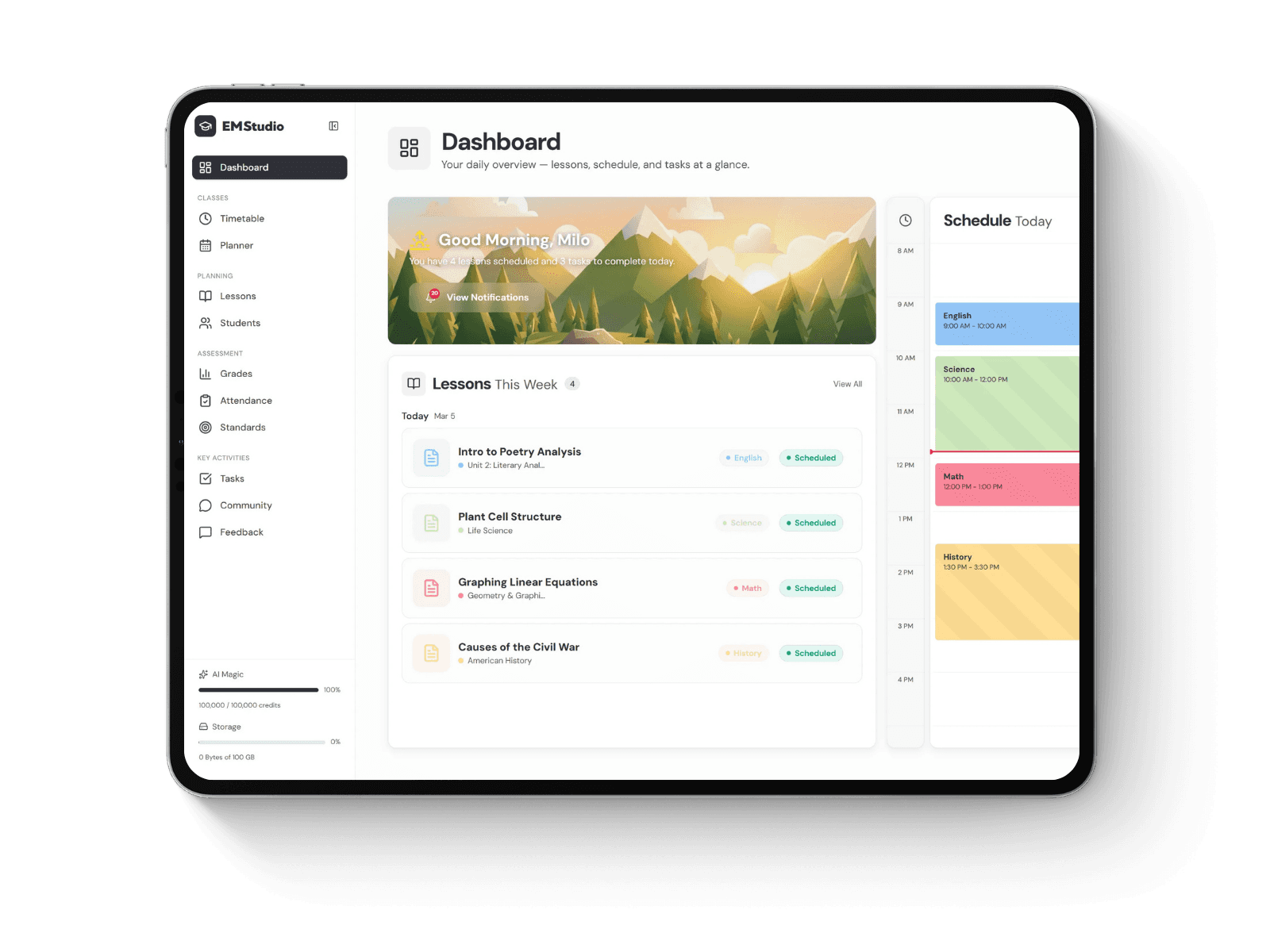
Still grading everything by hand?
EMStudio is a free teaching management app — manage your classes, students, lessons, and more!
Learn More
Table of Contents
What Are the Best Organizational Classroom Jobs?
The best organizational classroom jobs include Materials Manager, Library Book Monitor, Paper Passer, and Calendar Keeper. These roles manage physical systems—supply distribution, book returns, homework collection, and schedule maintenance—teaching elementary students executive function skills through predictable daily routines and tangible responsibility.
Organizational classroom jobs form the infrastructure layer that prevents you from becoming the bottleneck during every transition. In grades K-5, these roles handle physical systems so you can teach instead of performing logistics.
Materials Manager (Grades 3-5): Manages supply inventory using checkout protocols, requiring 5-10 minutes daily for distribution and restocking.
Library Book Monitor (Grades K-5): Sorts returns into genre bins and tracks checkouts, spending 10 minutes daily during dismissal plus Wednesday overdue hunts.
Paper Passer (Grades K-2): Distributes handouts and collects homework using row or table captain methods, taking 30 seconds per transition.
Calendar Keeper (Grades K-5): Updates date display and announces schedule changes during 3-5 minute morning meetings.
Materials Managers move constantly while managing heavy inventory, requiring reading skills for laminated checklists. Paper Passers stay seated or move horizontally through rows, working silently with minimal literacy demands. Library Monitors balance mobility with stationary sorting, needing literacy skills for genre classification and book spine labels.
Students who manage physical classroom resources demonstrate improved organization skills transferable to personal belongings, according to research-based classroom organization strategies. When a third grader tracks math manipulatives daily using systematic checklists, they apply that same organizational approach to keeping their desk tidy.
Materials Manager and Supply Organizer
The Materials Manager runs a three-step checkout protocol. They complete a pre-class inventory check using a laminated checklist. During the thirty-second transition window, they distribute items, then restock at dismissal with photo documentation on the classroom tablet.
This student manages only designated lightweight supplies. They handle math manipulatives like Unifix cubes and fraction tiles. They also manage art supplies and science tools such as magnifying glasses. They never transport textbooks exceeding five pounds.
I enforce the two-trip rule. The Materials Manager may make maximum two trips from storage to distribute items, preventing hallway wandering during instructional minutes. For complex inventories, consider tracking classroom materials with a digital inventory.
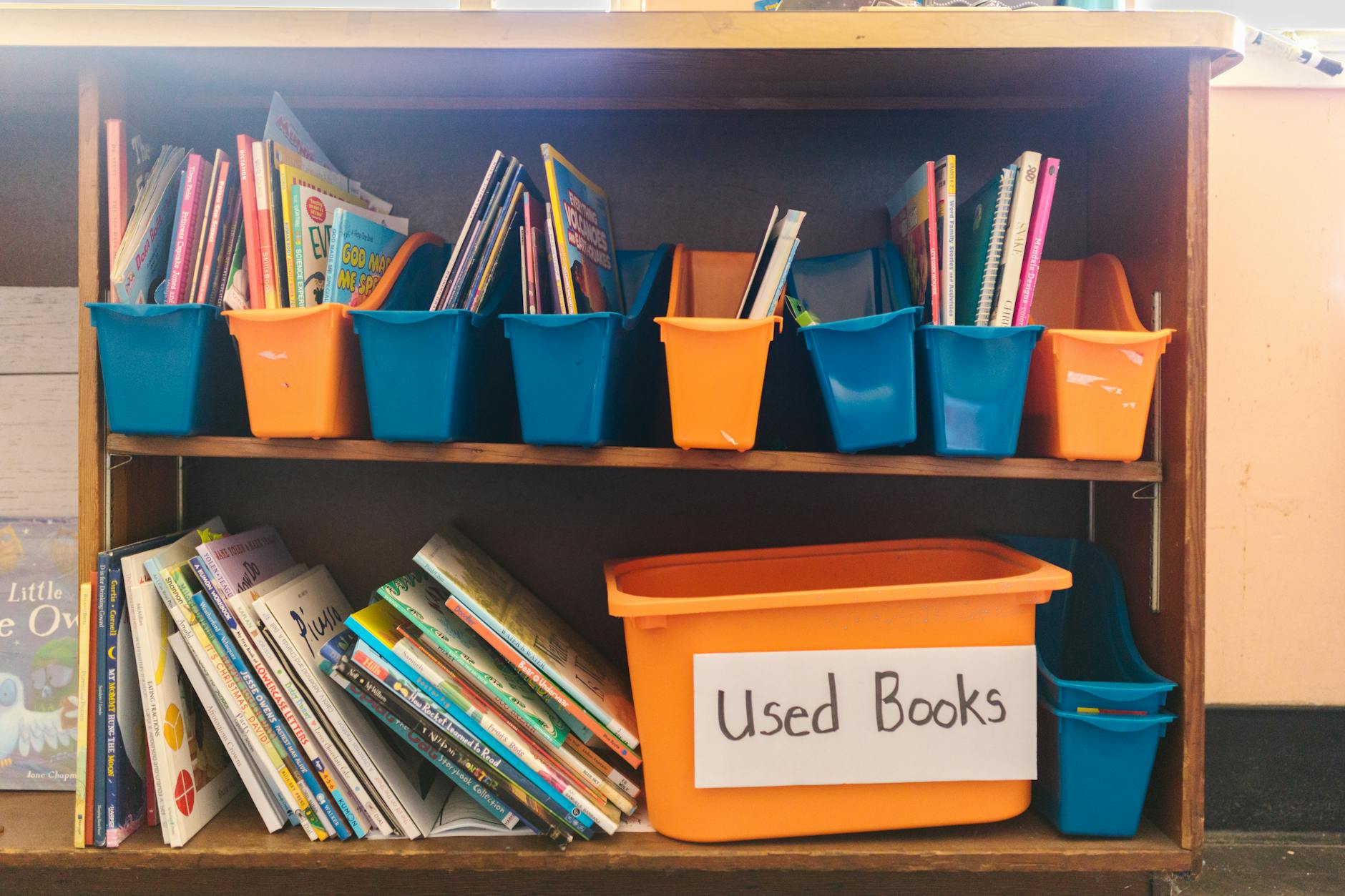
Library Book Monitor and Return Coordinator
The Library Book Monitor operates the shelf-elf system during the ten-minute dismissal window. They sort returns into genre-labeled bins marked Picture Books, Early Readers, and Chapter Books. They inspect for damage like torn pages or water marks, and manage either the checkout clipboard or library app for grades four through six.
Every Wednesday, they conduct the overdue hunt using a printed class roster to locate missing books before library day. This prevents frantic searches when the librarian arrives.
During flu season, train this student to sanitize hands after handling returned books. Rotating through thirty picture books daily means touching surfaces thirty other students touched.
Paper Passer and Homework Collector
Paper Passers differentiate their method based on your seating arrangement. For traditional rows, they use horizontal left-to-right distribution. For flexible seating, they employ the vertical table captain method. Both styles must complete the task within thirty seconds.
For homework collection, they use the stack and count protocol. They collect papers face-down, tap the stack against the desk corner for alignment, and verify the count against attendance before placing papers in your bin. Twenty-five students means twenty-five papers.
Provide a quiet hands signal option for students with noise sensitivity. This allows them to indicate completion without verbal interruption during your mini-lesson.
Calendar and Daily Schedule Keeper
The Calendar Keeper manages four timestamped duties during the three-minute morning meeting. At 8:30 AM, they update the date display. At 8:35 AM, they announce specials using the color-coded chart. At 8:40 AM, they recognize birthdays. Finally, they lead countdowns to upcoming field trips.
This role requires projecting voice to the class threshold. I model the sixty-decibel speaking level during the first week so they learn to reach the back row without shouting.
Provide sentence frames for ELL students: "Today is..." "Yesterday was..." "Tomorrow will be..." This scaffolds their leadership while building academic vocabulary.
What Creative Roles Build Leadership Skills?
Creative leadership classroom jobs include Classroom Greeter, Bulletin Board Designer, Class Photographer, and Wellness Checker. These positions develop public speaking, artistic curation, digital literacy, and emotional intelligence in grades 3-8. Students gain visible, decision-making roles that shape classroom culture and community, building leadership skills beyond the blackboard.
These classroom jobs put students in the spotlight. Unlike paper passers, these roles require independent judgment and public presence. Students own the outcome.
Research connects student leadership roles to increased self-efficacy when students hold high-autonomy, high-visibility positions. John Hattie's Visible Learning research identifies student expectations and responsibility with an effect size of 1.44, indicating significant impact on achievement. When a fourth grader designs the hallway display or greets visitors, they internalize that their actions shape the learning environment.
Educators report that students in these creative leadership roles demonstrate improved peer relationships within three to four weeks of assignment. The responsibility creates natural conversation starters and builds empathy across social groups.
Avoid assigning the Classroom Greeter role to students with severe social anxiety without proper scaffolding. The verbal needs can trigger shutdown or avoidance behaviors. Offer the alternative "Door Holder" position, which requires only nonverbal acknowledgment and reduces social pressure while maintaining visibility.
Classroom Greeter and Morning Host
This role carries high social risk but builds public speaking confidence rapidly. Extroverts thrive here, though introverts can succeed with supports. Preparation requires fifteen minutes weekly to rehearse scripts and restock materials.
Script the three-part greeting protocol: eye contact with a three-second hold, a specific welcome phrase such as "Good morning, welcome to Room 12, please hang your backpack and start the bell ringer," and a directional gesture toward current activity.
Train using a three-day sequence. Day one, you model with a co-teacher. Day two, the student practices with you acting as a visitor. Day three, they implement with real students. Provide a "wave only" accommodation for students with selective mutism. Supply a lanyard badge or special clipboard to signal "on duty" status, reducing anxiety through clear role distinction.
Bulletin Board Designer and Display Curator
This role suits creative personalities who prefer working behind the scenes initially. Social risk remains moderate since work is displayed publicly but created privately. Expect twenty minutes weekly for layout planning and installation.
Follow a four-week production cycle. Week one, sketch approval with teacher sign-off on layout. Week two, content creation including student work selection and mounting. Week three, border installation and lettering. Week four, maintenance and repair.
Budget wisely using reusable mounting putty at eight dollars per pack, avoiding staples to preserve walls and allow error correction. Ensure displayed work is all students equitably by photocopying art if originals distribute unevenly, and maintain a forty-eight-inch height minimum for wheelchair visibility.
Class Photographer and Digital Historian
This position needs high digital literacy and low social risk for the photographer, though subjects experience moderate exposure. Detail-oriented students excel here. Preparation requires ten minutes weekly to review shot lists and manage files.
Use school-approved devices or classroom iPads with a specific shot list: three candid learning moments, one group photo, and one environmental detail. Establish a digital folder naming convention using YYYYMMDD_Activity_Description format for easy retrieval.
Enforce a strict "no faces without permission" rule. The photographer must verify signed media release lists before photographing peers, and you should review all images before posting to ClassDojo or your website. Upload files to a shared drive within twenty-four hours and delete blurry images immediately to preserve storage space.
Wellness Checker and Mood Monitor
This role fits empathetic students who notice subtle social cues. Social risk is low since check-ins are private, but emotional labor is high. Daily preparation requires five minutes to review the check-in board and restock strategy cards.
Implement the Zones of Regulation framework or a homemade one-to-five emotion thermometer. The student checks a private check-in board during morning work between eight-thirty and eight-forty-five AM. Green zone levels one through two mean proceeding with the day. Yellow zone level three triggers offering a strategy card suggesting a break, water, or buddy support. Red zone levels four through five require a discreet hand signal to you for immediate check-in.
Track anonymized weekly tallies to identify class-wide trends such as elevated stress on Mondays for proactive schedule adjustments. For digital tracking options, explore mood tracker templates for wellness monitoring to streamline data collection.

What Technology and Communication Jobs Work Best?
Effective technology and communication classroom jobs include Tech Support Specialist, Class Email Correspondent, Lunch Count Reporter, and Weather Reporter. These roles use tools like Google Classroom and presentation software to build digital citizenship, data accuracy, and public speaking confidence in upper elementary and middle school students.
Choose Tech Support if your room runs one-to-one and your candidate already knows how to restart a Chromebook. Choose Weather Reporter if you need to build verbal confidence in a kid who lacks tech access at home. Match the job to the child, not the child to the job.
None of these classroom jobs require paid subscriptions. They do demand setup time. The Email Correspondent needs a forty-five minute safety training before touching the inbox. That is non-negotiable.
Do not assign Email Correspondent if your district's FERPA policy bars students from contacting families, or if any IEP restricts digital sharing. Pivot to Message Runner, a paper-based alternative where the student delivers printed notes instead.
Tech jobs fit grades four through eight. Weather and Lunch Count work for grades two through eight. Second graders can count lunches; they cannot troubleshoot WiFi.
Tech Support Specialist and Device Manager
This role handles Tier One troubleshooting only. Volume adjustments, WiFi reconnection, and login verification—not password resets—are in scope. They manage the charging station using color-coded cables: blue for tablets, yellow for laptops. I learned the hard way that without color coding, kids spend ten minutes hunting for the right cord.
The student never touches your laptop, document camera, or gradebook. Ever. They keep a daily digital dashboard for tech support roles on a clipboard to track which devices need attention. If they spot hardware damage or inappropriate content, they stop immediately and get you.
Post a physical "hands-off" list at the charging station. Teacher devices stay off limits. This protects you from accidental gradebook changes and keeps the focus on peer devices where they can actually help.
Training takes thirty minutes. Teach the Chromebook hard reset—Refresh plus Power—and how to wrap cables in loose loops to prevent fraying. Do not skip the cable wrapping lesson. Replacing charging cords drains your supply budget faster than you think.
Class Email Correspondent and Home Communicator
The template is rigid: greeting, two sentences summarizing the week’s reading topic and math skill, one home-connection question like "Ask your child about our volcano experiment," then a sign-off. Keep it at fourth-grade reading level maximum. If the Flesch-Kincaid score climbs higher, families with limited English get left out.
Privacy rules are strict. BCC every family address to kill reply-all storms. Never use student names in the body; write "our scientists" or "the class" instead. You preview every draft before they hit send. No exceptions. This builds digital citizenship while keeping you legally safe.
Initial training takes forty-five minutes. Cover district FERPA guidelines, appropriate tone, and the BCC function. This upfront investment pays off when you gain thirty minutes of planning time while they draft the weekly update.
Send no more than twice weekly—Monday preview and Friday reflection works. Keep emails under one hundred words. Longer messages train parents to ignore your classroom. Short, predictable communication builds trust without overwhelming inboxes.
Lunch Count Reporter and Attendance Monitor
Use a magnetic board with student name magnets sliding to "Hot," "Cold," or "Home" columns. In one-to-one rooms, a Google Form works, but the magnetic board is faster and visible to everyone. Place a customized student attendance tracker beside it to cross-check numbers.
The count-twice rule prevents chaos. The student counts verbally, then points finger-to-finger while counting again. Twenty-five kids present means twenty-five lunch choices. Report to the office by nine AM via phone or portal. Accuracy here saves the cafeteria manager from emergency sandwich runs.
When numbers mismatch, the student announces "Check your lunch choice" to the whole room. They wait two minutes, then recount. Never single out the kid who forgot to move their magnet. Public shaming over lunch choices destroys the classroom economy faster than you can fix it.
This job works for grades two through eight. Second graders handle the magnetic board fine; eighth graders appreciate the responsibility of calling the office. Match the complexity to the age.
Weather Reporter and Daily Fact Presenter
The sixty-second morning report covers current temperature, precipitation chance, clothing advice like "Bring a jacket," and one "Did you know?" fact. They pull data from Weather.com or your school station. Stick to the clock; long reports derail morning meeting.
Fifth through eighth graders can use a green screen app like Do Ink for $2.99 to project maps behind them. Second through fourth graders use a physical map pointer. Do not make second graders manage green screen tech unless you enjoy troubleshooting before coffee.
At recess, check the forecast against reality. Track weekly accuracy percentages as a math activity. When the meteorologist is wrong, which is often, it becomes a lesson on probability and data collection rather than a failure.
This role builds public speaking confidence without requiring home tech access. Kids speak to the class, not to a camera going home. That equity matters when not everyone has WiFi.

How to Assign and Rotate Classroom Jobs Fairly?
Assign classroom jobs fairly using a hybrid preference-random system: students rank top three choices, then draw lots for remaining slots. Rotate positions every two weeks to balance skill mastery with variety. Establish a 'substitute bucket' with backup names to cover absences without teacher intervention.
Fairness beats fun. A messy rotation crashes your classroom economy faster than no system at all.
Rotate too fast and you babysit confused helpers. Rotate too slow and kids check out. I tried daily switches once—spent forty percent of my time re-teaching the pencil sharpener protocol. Never again.
The research backs this up. Routine formation requires ten to fourteen days for competency to stick. Daily rotations prevent skill mastery and spike your redirection time significantly. Bi-weekly hits the sweet spot: ten school days lets kids nail the procedure without dying of boredom.
You need a tracking grid. List every student down the side and every job across the top. Check off when someone is Greeter or Photographer. Premium student leadership roles must circulate completely before anyone gets seconds. This prevents the same extrovert from hogging the spotlight while quiet kids miss out.
Rotation Period | Memory Retention | Relationship Building | Boredom Factor | Teacher Administrative Load |
|---|---|---|---|---|
Weekly | Low—just as competence forms, you switch | Minimal surface-level interactions | Low—constant novelty | High—weekly retraining required |
Bi-weekly | High—10 days allows mastery | Strong—time to develop trust | Moderate—ends before monotony | Low—single Friday turnover session |
Monthly | Very High—deep expertise develops | Very Strong—partnership forms | High—risk of burnout | Very Low—set and forget |
Choosing Between Random Selection and Student Preference
I use a Google Form on Monday morning. Students rank their top three classroom jobs for students from the master list. I assign seventy percent of slots based on preference, then randomize the remaining thirty percent using a digital generator. This hybrid prevents the "why did she get it again?" accusations while honoring most wishes. It also stops you from playing favorites accidentally when you're tired on a Tuesday.
The random camp prefers physical tools. A job wheel spinner mounted near the whiteboard works well, or Wheel of Names projected during morning meeting. Both methods require one critical add-on: a posted history log showing exact last assignment dates. Prevent back-to-back repeats or you will hear about it at parent conferences.
Maintain a semester-long spreadsheet with student names in rows and job titles across columns. Log every assignment with a simple date stamp. If any student draws three consecutive organizational-only roles—line leader, paper passer, chair stacker—without touching creative or tech classroom helpers, intervene manually. Equity in elementary classroom management means everyone experiences the full range of student responsibility and student leadership roles, not just the jobs that happen when your back is turned.
Setting Up Weekly vs. Monthly Rotation Schedules
Bi-weekly rotation wins. Ten instructional days allows genuine skill consolidation while preventing the zombie effect. Research suggests 66% of procedural learning occurs by day eight, and competence forms fully without monotony setting in. This timeline aligns with rules and procedures that transform student behavior by giving adequate practice time before the next shift.
Friday afternoon drives the transition. Schedule ten minutes for the outgoing student to teach the incoming student using a laminated duty checklist. Both sign off on the skills transfer. This peer-to-peer training cements learning for the veteran and prevents costly mistakes for the rookie. It also builds your classroom routine without you speaking a single word. You get ten minutes of quiet while they work.
Reserve monthly rotations for complex positions only. Tech Support Lead or Bulletin Board Manager need deep expertise that daily or weekly switches destroy. Run these as promotions: require two weeks as Assistant Tech Lead first, then graduate to the main role. This protects your devices and walls from well-meaning beginners while creating clear advancement paths in your classroom economy.
Handling Absences and Job Substitutions
Absences kill momentum without a backup plan. I run a Floater system. Two students per week wear special badges and carry quick-reference cards listing all twelve classroom jobs. When someone is absent, the Floater nearest the empty desk handles the duty. No interruptions. No "what do I do?" questions reaching your ears during the bellringer. Your morning stays smooth.
Alternatively, use the Buddy system. Post a wall chart showing each primary job holder paired with a specific backup partner. If the primary is absent, the buddy automatically assumes duties. This creates redundancy and teaches mutual reliability. Kids learn quickly that their partner depends on them showing up prepared.
Establish emergency protocols for double absences. If both primary and backup are out, default to teacher handling only if the job involves supplies that could be damaged unsupervised—like the tablet charger or document camera. For low-stakes roles like Door Holder, pick a volunteer. Never force a shy child into an unexpected spotlight just because you need a warm body standing by the door.
How Do You Launch a Classroom Jobs System Successfully?
Launch classroom jobs successfully by modeling each role for three to five minutes during the first week, conducting two-minute 'interviews' for high-interest positions, and posting laminated duty cards with checklists. Establish a Friday five-minute reflection protocol where students self-assess using a simple three-point rubric. By week three, the system should require less than five minutes of your daily attention.
Introducing Expectations Through Modeling and Practice
Skip the modeling phase and you will spend forty percent more time redirecting students during weeks two and three. I learned this the hard way. Follow a strict five-day timeline: spend fifteen minutes on Day one introducing roles, twenty minutes modeling on Day two, twenty minutes practicing on Day three, fifteen minutes on applications Day four, and ten minutes finalizing assignments on Day five.
Perform think-alouds while executing duties. Count scissors aloud, noting you expect twenty-four because that is your class count. When two are missing, check the floor while verbalizing your reasoning. On Day three, have a volunteer attempt the Materials Manager role while you coach in real-time. Offer three minutes of immediate feedback using the Two Stars and a Wish format. By Day four, half the class performs jobs while observers hold thumbs-up or thumbs-down cards to signal procedure accuracy, then rotate.
Creating Job Applications and Interviews for Buy-In
Students invest more deeply when they submit applications. Have them write three sentences on an index card explaining why they want the job plus one concrete skill evidence. I organize my desk daily works better than I am responsible. Limit choices to three positions maximum to prevent decision paralysis.
Conduct two-minute interviews during independent work time using standardized questions. Ask what they would do if supplies were missing and how they will remember duties without your reminder. For students with writing disabilities or language barriers, accept drawings or short video submissions, not written cards.
These brief conversations reveal who understands the responsive classroom modeling techniques you demonstrated earlier. You will spot the fourth grader who plans to set a phone reminder versus the one who expects you to nag them. That distinction matters for long-term autonomy.
Establishing Accountability Without Micromanaging
Post a three-point rubric using only observable behaviors. Exceeds means completing the checklist plus one extra task like restocking supplies. Meets covers the five items on the laminated duty card. Needs Support indicates fewer than three checks or required teacher prompting. Never measure attitude or enthusiasm.
Students self-monitor using laminated cards with dry-erase checkboxes, initialing and placing them in a Completed bin by dismissal. Establish job partners where the Greeter checks the Calendar Keeper and the Photographer verifies the Bulletin Board. These pairs provide mutual support without your involvement.
If a student misses three duties, schedule retraining, not immediate dismissal. Have them shadow the previous job holder for one week to preserve self-concept. By week three, your daily management should drop below five minutes. This is your benchmark for steps to successful classroom management.

Getting Started with Classroom Jobs
Classroom jobs shift the daily workload off your shoulders while building genuine student responsibility. When third graders check out library books or fifth graders troubleshoot Chromebooks, they stop seeing the room as yours and start treating it as shared space. That ownership cuts your elementary classroom management headaches in half and builds skills that outlast the school year.
You do not need a full classroom economy or twelve jobs running perfectly on day one. Pick three roles that solve your biggest friction points—maybe line leader, paper passer, and tech helper—and launch those first. Consistency matters more than creativity. When students see that classroom helpers are non-negotiable daily fixtures, not optional extras, they step up. The system only works if you protect the time for students to actually do the jobs.
List your daily time-wasters (attendance, paper passing, board erasing).
Match each task to a job title from this article.
Post a simple application or assign randomly for week one.
Rotate every Friday so everyone gets a turn by month’s end.

What Are the Best Organizational Classroom Jobs?
The best organizational classroom jobs include Materials Manager, Library Book Monitor, Paper Passer, and Calendar Keeper. These roles manage physical systems—supply distribution, book returns, homework collection, and schedule maintenance—teaching elementary students executive function skills through predictable daily routines and tangible responsibility.
Organizational classroom jobs form the infrastructure layer that prevents you from becoming the bottleneck during every transition. In grades K-5, these roles handle physical systems so you can teach instead of performing logistics.
Materials Manager (Grades 3-5): Manages supply inventory using checkout protocols, requiring 5-10 minutes daily for distribution and restocking.
Library Book Monitor (Grades K-5): Sorts returns into genre bins and tracks checkouts, spending 10 minutes daily during dismissal plus Wednesday overdue hunts.
Paper Passer (Grades K-2): Distributes handouts and collects homework using row or table captain methods, taking 30 seconds per transition.
Calendar Keeper (Grades K-5): Updates date display and announces schedule changes during 3-5 minute morning meetings.
Materials Managers move constantly while managing heavy inventory, requiring reading skills for laminated checklists. Paper Passers stay seated or move horizontally through rows, working silently with minimal literacy demands. Library Monitors balance mobility with stationary sorting, needing literacy skills for genre classification and book spine labels.
Students who manage physical classroom resources demonstrate improved organization skills transferable to personal belongings, according to research-based classroom organization strategies. When a third grader tracks math manipulatives daily using systematic checklists, they apply that same organizational approach to keeping their desk tidy.
Materials Manager and Supply Organizer
The Materials Manager runs a three-step checkout protocol. They complete a pre-class inventory check using a laminated checklist. During the thirty-second transition window, they distribute items, then restock at dismissal with photo documentation on the classroom tablet.
This student manages only designated lightweight supplies. They handle math manipulatives like Unifix cubes and fraction tiles. They also manage art supplies and science tools such as magnifying glasses. They never transport textbooks exceeding five pounds.
I enforce the two-trip rule. The Materials Manager may make maximum two trips from storage to distribute items, preventing hallway wandering during instructional minutes. For complex inventories, consider tracking classroom materials with a digital inventory.
Library Book Monitor and Return Coordinator
The Library Book Monitor operates the shelf-elf system during the ten-minute dismissal window. They sort returns into genre-labeled bins marked Picture Books, Early Readers, and Chapter Books. They inspect for damage like torn pages or water marks, and manage either the checkout clipboard or library app for grades four through six.
Every Wednesday, they conduct the overdue hunt using a printed class roster to locate missing books before library day. This prevents frantic searches when the librarian arrives.
During flu season, train this student to sanitize hands after handling returned books. Rotating through thirty picture books daily means touching surfaces thirty other students touched.
Paper Passer and Homework Collector
Paper Passers differentiate their method based on your seating arrangement. For traditional rows, they use horizontal left-to-right distribution. For flexible seating, they employ the vertical table captain method. Both styles must complete the task within thirty seconds.
For homework collection, they use the stack and count protocol. They collect papers face-down, tap the stack against the desk corner for alignment, and verify the count against attendance before placing papers in your bin. Twenty-five students means twenty-five papers.
Provide a quiet hands signal option for students with noise sensitivity. This allows them to indicate completion without verbal interruption during your mini-lesson.
Calendar and Daily Schedule Keeper
The Calendar Keeper manages four timestamped duties during the three-minute morning meeting. At 8:30 AM, they update the date display. At 8:35 AM, they announce specials using the color-coded chart. At 8:40 AM, they recognize birthdays. Finally, they lead countdowns to upcoming field trips.
This role requires projecting voice to the class threshold. I model the sixty-decibel speaking level during the first week so they learn to reach the back row without shouting.
Provide sentence frames for ELL students: "Today is..." "Yesterday was..." "Tomorrow will be..." This scaffolds their leadership while building academic vocabulary.
What Creative Roles Build Leadership Skills?
Creative leadership classroom jobs include Classroom Greeter, Bulletin Board Designer, Class Photographer, and Wellness Checker. These positions develop public speaking, artistic curation, digital literacy, and emotional intelligence in grades 3-8. Students gain visible, decision-making roles that shape classroom culture and community, building leadership skills beyond the blackboard.
These classroom jobs put students in the spotlight. Unlike paper passers, these roles require independent judgment and public presence. Students own the outcome.
Research connects student leadership roles to increased self-efficacy when students hold high-autonomy, high-visibility positions. John Hattie's Visible Learning research identifies student expectations and responsibility with an effect size of 1.44, indicating significant impact on achievement. When a fourth grader designs the hallway display or greets visitors, they internalize that their actions shape the learning environment.
Educators report that students in these creative leadership roles demonstrate improved peer relationships within three to four weeks of assignment. The responsibility creates natural conversation starters and builds empathy across social groups.
Avoid assigning the Classroom Greeter role to students with severe social anxiety without proper scaffolding. The verbal needs can trigger shutdown or avoidance behaviors. Offer the alternative "Door Holder" position, which requires only nonverbal acknowledgment and reduces social pressure while maintaining visibility.
Classroom Greeter and Morning Host
This role carries high social risk but builds public speaking confidence rapidly. Extroverts thrive here, though introverts can succeed with supports. Preparation requires fifteen minutes weekly to rehearse scripts and restock materials.
Script the three-part greeting protocol: eye contact with a three-second hold, a specific welcome phrase such as "Good morning, welcome to Room 12, please hang your backpack and start the bell ringer," and a directional gesture toward current activity.
Train using a three-day sequence. Day one, you model with a co-teacher. Day two, the student practices with you acting as a visitor. Day three, they implement with real students. Provide a "wave only" accommodation for students with selective mutism. Supply a lanyard badge or special clipboard to signal "on duty" status, reducing anxiety through clear role distinction.
Bulletin Board Designer and Display Curator
This role suits creative personalities who prefer working behind the scenes initially. Social risk remains moderate since work is displayed publicly but created privately. Expect twenty minutes weekly for layout planning and installation.
Follow a four-week production cycle. Week one, sketch approval with teacher sign-off on layout. Week two, content creation including student work selection and mounting. Week three, border installation and lettering. Week four, maintenance and repair.
Budget wisely using reusable mounting putty at eight dollars per pack, avoiding staples to preserve walls and allow error correction. Ensure displayed work is all students equitably by photocopying art if originals distribute unevenly, and maintain a forty-eight-inch height minimum for wheelchair visibility.
Class Photographer and Digital Historian
This position needs high digital literacy and low social risk for the photographer, though subjects experience moderate exposure. Detail-oriented students excel here. Preparation requires ten minutes weekly to review shot lists and manage files.
Use school-approved devices or classroom iPads with a specific shot list: three candid learning moments, one group photo, and one environmental detail. Establish a digital folder naming convention using YYYYMMDD_Activity_Description format for easy retrieval.
Enforce a strict "no faces without permission" rule. The photographer must verify signed media release lists before photographing peers, and you should review all images before posting to ClassDojo or your website. Upload files to a shared drive within twenty-four hours and delete blurry images immediately to preserve storage space.
Wellness Checker and Mood Monitor
This role fits empathetic students who notice subtle social cues. Social risk is low since check-ins are private, but emotional labor is high. Daily preparation requires five minutes to review the check-in board and restock strategy cards.
Implement the Zones of Regulation framework or a homemade one-to-five emotion thermometer. The student checks a private check-in board during morning work between eight-thirty and eight-forty-five AM. Green zone levels one through two mean proceeding with the day. Yellow zone level three triggers offering a strategy card suggesting a break, water, or buddy support. Red zone levels four through five require a discreet hand signal to you for immediate check-in.
Track anonymized weekly tallies to identify class-wide trends such as elevated stress on Mondays for proactive schedule adjustments. For digital tracking options, explore mood tracker templates for wellness monitoring to streamline data collection.
What Technology and Communication Jobs Work Best?
Effective technology and communication classroom jobs include Tech Support Specialist, Class Email Correspondent, Lunch Count Reporter, and Weather Reporter. These roles use tools like Google Classroom and presentation software to build digital citizenship, data accuracy, and public speaking confidence in upper elementary and middle school students.
Choose Tech Support if your room runs one-to-one and your candidate already knows how to restart a Chromebook. Choose Weather Reporter if you need to build verbal confidence in a kid who lacks tech access at home. Match the job to the child, not the child to the job.
None of these classroom jobs require paid subscriptions. They do demand setup time. The Email Correspondent needs a forty-five minute safety training before touching the inbox. That is non-negotiable.
Do not assign Email Correspondent if your district's FERPA policy bars students from contacting families, or if any IEP restricts digital sharing. Pivot to Message Runner, a paper-based alternative where the student delivers printed notes instead.
Tech jobs fit grades four through eight. Weather and Lunch Count work for grades two through eight. Second graders can count lunches; they cannot troubleshoot WiFi.
Tech Support Specialist and Device Manager
This role handles Tier One troubleshooting only. Volume adjustments, WiFi reconnection, and login verification—not password resets—are in scope. They manage the charging station using color-coded cables: blue for tablets, yellow for laptops. I learned the hard way that without color coding, kids spend ten minutes hunting for the right cord.
The student never touches your laptop, document camera, or gradebook. Ever. They keep a daily digital dashboard for tech support roles on a clipboard to track which devices need attention. If they spot hardware damage or inappropriate content, they stop immediately and get you.
Post a physical "hands-off" list at the charging station. Teacher devices stay off limits. This protects you from accidental gradebook changes and keeps the focus on peer devices where they can actually help.
Training takes thirty minutes. Teach the Chromebook hard reset—Refresh plus Power—and how to wrap cables in loose loops to prevent fraying. Do not skip the cable wrapping lesson. Replacing charging cords drains your supply budget faster than you think.
Class Email Correspondent and Home Communicator
The template is rigid: greeting, two sentences summarizing the week’s reading topic and math skill, one home-connection question like "Ask your child about our volcano experiment," then a sign-off. Keep it at fourth-grade reading level maximum. If the Flesch-Kincaid score climbs higher, families with limited English get left out.
Privacy rules are strict. BCC every family address to kill reply-all storms. Never use student names in the body; write "our scientists" or "the class" instead. You preview every draft before they hit send. No exceptions. This builds digital citizenship while keeping you legally safe.
Initial training takes forty-five minutes. Cover district FERPA guidelines, appropriate tone, and the BCC function. This upfront investment pays off when you gain thirty minutes of planning time while they draft the weekly update.
Send no more than twice weekly—Monday preview and Friday reflection works. Keep emails under one hundred words. Longer messages train parents to ignore your classroom. Short, predictable communication builds trust without overwhelming inboxes.
Lunch Count Reporter and Attendance Monitor
Use a magnetic board with student name magnets sliding to "Hot," "Cold," or "Home" columns. In one-to-one rooms, a Google Form works, but the magnetic board is faster and visible to everyone. Place a customized student attendance tracker beside it to cross-check numbers.
The count-twice rule prevents chaos. The student counts verbally, then points finger-to-finger while counting again. Twenty-five kids present means twenty-five lunch choices. Report to the office by nine AM via phone or portal. Accuracy here saves the cafeteria manager from emergency sandwich runs.
When numbers mismatch, the student announces "Check your lunch choice" to the whole room. They wait two minutes, then recount. Never single out the kid who forgot to move their magnet. Public shaming over lunch choices destroys the classroom economy faster than you can fix it.
This job works for grades two through eight. Second graders handle the magnetic board fine; eighth graders appreciate the responsibility of calling the office. Match the complexity to the age.
Weather Reporter and Daily Fact Presenter
The sixty-second morning report covers current temperature, precipitation chance, clothing advice like "Bring a jacket," and one "Did you know?" fact. They pull data from Weather.com or your school station. Stick to the clock; long reports derail morning meeting.
Fifth through eighth graders can use a green screen app like Do Ink for $2.99 to project maps behind them. Second through fourth graders use a physical map pointer. Do not make second graders manage green screen tech unless you enjoy troubleshooting before coffee.
At recess, check the forecast against reality. Track weekly accuracy percentages as a math activity. When the meteorologist is wrong, which is often, it becomes a lesson on probability and data collection rather than a failure.
This role builds public speaking confidence without requiring home tech access. Kids speak to the class, not to a camera going home. That equity matters when not everyone has WiFi.
How to Assign and Rotate Classroom Jobs Fairly?
Assign classroom jobs fairly using a hybrid preference-random system: students rank top three choices, then draw lots for remaining slots. Rotate positions every two weeks to balance skill mastery with variety. Establish a 'substitute bucket' with backup names to cover absences without teacher intervention.
Fairness beats fun. A messy rotation crashes your classroom economy faster than no system at all.
Rotate too fast and you babysit confused helpers. Rotate too slow and kids check out. I tried daily switches once—spent forty percent of my time re-teaching the pencil sharpener protocol. Never again.
The research backs this up. Routine formation requires ten to fourteen days for competency to stick. Daily rotations prevent skill mastery and spike your redirection time significantly. Bi-weekly hits the sweet spot: ten school days lets kids nail the procedure without dying of boredom.
You need a tracking grid. List every student down the side and every job across the top. Check off when someone is Greeter or Photographer. Premium student leadership roles must circulate completely before anyone gets seconds. This prevents the same extrovert from hogging the spotlight while quiet kids miss out.
Rotation Period | Memory Retention | Relationship Building | Boredom Factor | Teacher Administrative Load |
|---|---|---|---|---|
Weekly | Low—just as competence forms, you switch | Minimal surface-level interactions | Low—constant novelty | High—weekly retraining required |
Bi-weekly | High—10 days allows mastery | Strong—time to develop trust | Moderate—ends before monotony | Low—single Friday turnover session |
Monthly | Very High—deep expertise develops | Very Strong—partnership forms | High—risk of burnout | Very Low—set and forget |
Choosing Between Random Selection and Student Preference
I use a Google Form on Monday morning. Students rank their top three classroom jobs for students from the master list. I assign seventy percent of slots based on preference, then randomize the remaining thirty percent using a digital generator. This hybrid prevents the "why did she get it again?" accusations while honoring most wishes. It also stops you from playing favorites accidentally when you're tired on a Tuesday.
The random camp prefers physical tools. A job wheel spinner mounted near the whiteboard works well, or Wheel of Names projected during morning meeting. Both methods require one critical add-on: a posted history log showing exact last assignment dates. Prevent back-to-back repeats or you will hear about it at parent conferences.
Maintain a semester-long spreadsheet with student names in rows and job titles across columns. Log every assignment with a simple date stamp. If any student draws three consecutive organizational-only roles—line leader, paper passer, chair stacker—without touching creative or tech classroom helpers, intervene manually. Equity in elementary classroom management means everyone experiences the full range of student responsibility and student leadership roles, not just the jobs that happen when your back is turned.
Setting Up Weekly vs. Monthly Rotation Schedules
Bi-weekly rotation wins. Ten instructional days allows genuine skill consolidation while preventing the zombie effect. Research suggests 66% of procedural learning occurs by day eight, and competence forms fully without monotony setting in. This timeline aligns with rules and procedures that transform student behavior by giving adequate practice time before the next shift.
Friday afternoon drives the transition. Schedule ten minutes for the outgoing student to teach the incoming student using a laminated duty checklist. Both sign off on the skills transfer. This peer-to-peer training cements learning for the veteran and prevents costly mistakes for the rookie. It also builds your classroom routine without you speaking a single word. You get ten minutes of quiet while they work.
Reserve monthly rotations for complex positions only. Tech Support Lead or Bulletin Board Manager need deep expertise that daily or weekly switches destroy. Run these as promotions: require two weeks as Assistant Tech Lead first, then graduate to the main role. This protects your devices and walls from well-meaning beginners while creating clear advancement paths in your classroom economy.
Handling Absences and Job Substitutions
Absences kill momentum without a backup plan. I run a Floater system. Two students per week wear special badges and carry quick-reference cards listing all twelve classroom jobs. When someone is absent, the Floater nearest the empty desk handles the duty. No interruptions. No "what do I do?" questions reaching your ears during the bellringer. Your morning stays smooth.
Alternatively, use the Buddy system. Post a wall chart showing each primary job holder paired with a specific backup partner. If the primary is absent, the buddy automatically assumes duties. This creates redundancy and teaches mutual reliability. Kids learn quickly that their partner depends on them showing up prepared.
Establish emergency protocols for double absences. If both primary and backup are out, default to teacher handling only if the job involves supplies that could be damaged unsupervised—like the tablet charger or document camera. For low-stakes roles like Door Holder, pick a volunteer. Never force a shy child into an unexpected spotlight just because you need a warm body standing by the door.
How Do You Launch a Classroom Jobs System Successfully?
Launch classroom jobs successfully by modeling each role for three to five minutes during the first week, conducting two-minute 'interviews' for high-interest positions, and posting laminated duty cards with checklists. Establish a Friday five-minute reflection protocol where students self-assess using a simple three-point rubric. By week three, the system should require less than five minutes of your daily attention.
Introducing Expectations Through Modeling and Practice
Skip the modeling phase and you will spend forty percent more time redirecting students during weeks two and three. I learned this the hard way. Follow a strict five-day timeline: spend fifteen minutes on Day one introducing roles, twenty minutes modeling on Day two, twenty minutes practicing on Day three, fifteen minutes on applications Day four, and ten minutes finalizing assignments on Day five.
Perform think-alouds while executing duties. Count scissors aloud, noting you expect twenty-four because that is your class count. When two are missing, check the floor while verbalizing your reasoning. On Day three, have a volunteer attempt the Materials Manager role while you coach in real-time. Offer three minutes of immediate feedback using the Two Stars and a Wish format. By Day four, half the class performs jobs while observers hold thumbs-up or thumbs-down cards to signal procedure accuracy, then rotate.
Creating Job Applications and Interviews for Buy-In
Students invest more deeply when they submit applications. Have them write three sentences on an index card explaining why they want the job plus one concrete skill evidence. I organize my desk daily works better than I am responsible. Limit choices to three positions maximum to prevent decision paralysis.
Conduct two-minute interviews during independent work time using standardized questions. Ask what they would do if supplies were missing and how they will remember duties without your reminder. For students with writing disabilities or language barriers, accept drawings or short video submissions, not written cards.
These brief conversations reveal who understands the responsive classroom modeling techniques you demonstrated earlier. You will spot the fourth grader who plans to set a phone reminder versus the one who expects you to nag them. That distinction matters for long-term autonomy.
Establishing Accountability Without Micromanaging
Post a three-point rubric using only observable behaviors. Exceeds means completing the checklist plus one extra task like restocking supplies. Meets covers the five items on the laminated duty card. Needs Support indicates fewer than three checks or required teacher prompting. Never measure attitude or enthusiasm.
Students self-monitor using laminated cards with dry-erase checkboxes, initialing and placing them in a Completed bin by dismissal. Establish job partners where the Greeter checks the Calendar Keeper and the Photographer verifies the Bulletin Board. These pairs provide mutual support without your involvement.
If a student misses three duties, schedule retraining, not immediate dismissal. Have them shadow the previous job holder for one week to preserve self-concept. By week three, your daily management should drop below five minutes. This is your benchmark for steps to successful classroom management.
Getting Started with Classroom Jobs
Classroom jobs shift the daily workload off your shoulders while building genuine student responsibility. When third graders check out library books or fifth graders troubleshoot Chromebooks, they stop seeing the room as yours and start treating it as shared space. That ownership cuts your elementary classroom management headaches in half and builds skills that outlast the school year.
You do not need a full classroom economy or twelve jobs running perfectly on day one. Pick three roles that solve your biggest friction points—maybe line leader, paper passer, and tech helper—and launch those first. Consistency matters more than creativity. When students see that classroom helpers are non-negotiable daily fixtures, not optional extras, they step up. The system only works if you protect the time for students to actually do the jobs.
List your daily time-wasters (attendance, paper passing, board erasing).
Match each task to a job title from this article.
Post a simple application or assign randomly for week one.
Rotate every Friday so everyone gets a turn by month’s end.
Still grading everything by hand?
EMStudio is a free teaching management app — manage your classes, students, lessons, and more!
Learn More
Still grading everything by hand?
EMStudio is a free teaching management app — manage your classes, students, lessons, and more!
Learn More




Notion4Teachers
Notion templates to simplify administrative tasks and enhance your teaching experience.



2026 Notion4Teachers. All Rights Reserved.
Notion4Teachers
Notion templates to simplify administrative tasks and enhance your teaching experience.
2026 Notion4Teachers. All Rights Reserved.
Notion4Teachers
Notion templates to simplify administrative tasks and enhance your teaching experience.
2026 Notion4Teachers. All Rights Reserved.