
15 Online Courses for Teachers to Advance Your Career
15 Online Courses for Teachers to Advance Your Career

Article by
Milo
ESL Content Coordinator & Educator
ESL Content Coordinator & Educator
All Posts
Your license renewal deadline is creeping closer and those professional development hours aren't going to earn themselves. You could sit through another district-mandated session on "classroom mindfulness" that eats your Saturday and teaches you nothing. Or you could find online courses for teachers that actually fit your prep period and solve real problems you're facing with your actual students. The good ones exist. They're just buried under a mountain of irrelevant, click-through modules designed by people who haven't been in a classroom since 2008.
I've wasted weekends on asynchronous learning platforms that felt like digital detention. I've earned micro-credentials that nobody recognized and sat through differentiated instruction workshops that weren't differentiated at all. You need courses that offer graduate credit hours for salary advancement. You need SIOP training that actually prepares you for the ESL cluster grouping on your roster next year. You need STEM strategies that work with your existing materials, not another list of expensive robots to buy.
This list cuts the noise. Every option here comes from platforms I've personally used or from colleagues who teach the same grades you do. We looked for courses that respect your time—short formats for busy seasons, substantive content for breaks, and zero filler. Whether you need three quick hours or a full endorsement, these are the online courses worth your Sunday afternoon.
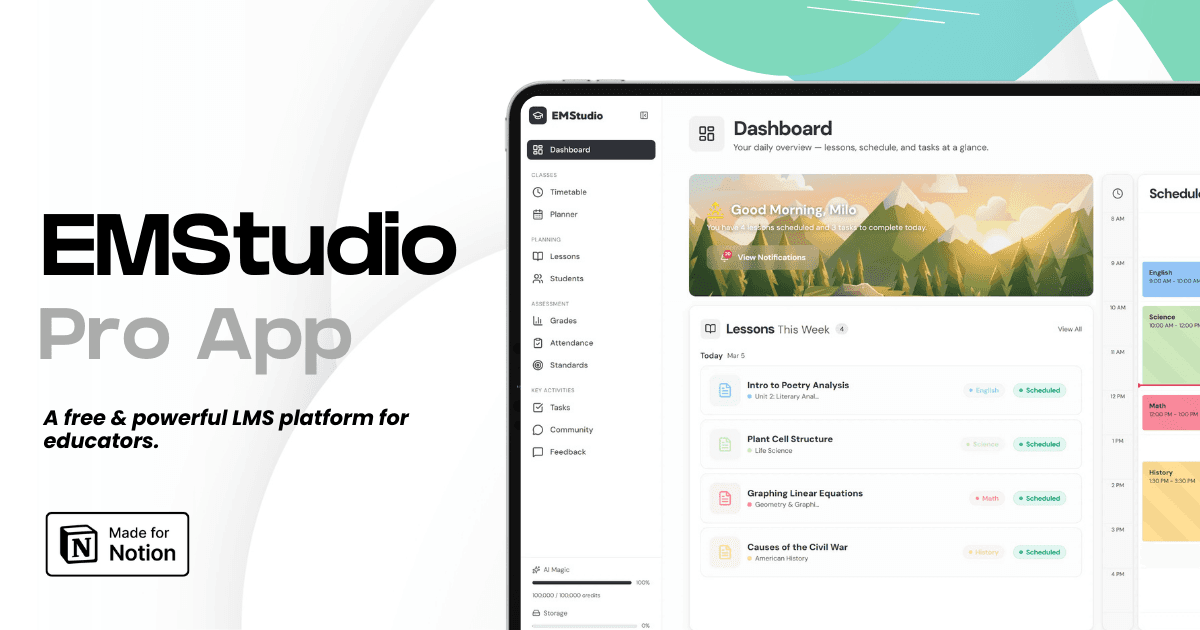
Still grading everything by hand?
EMStudio is a free teaching management app — manage your classes, students, lessons, and more!
Learn More
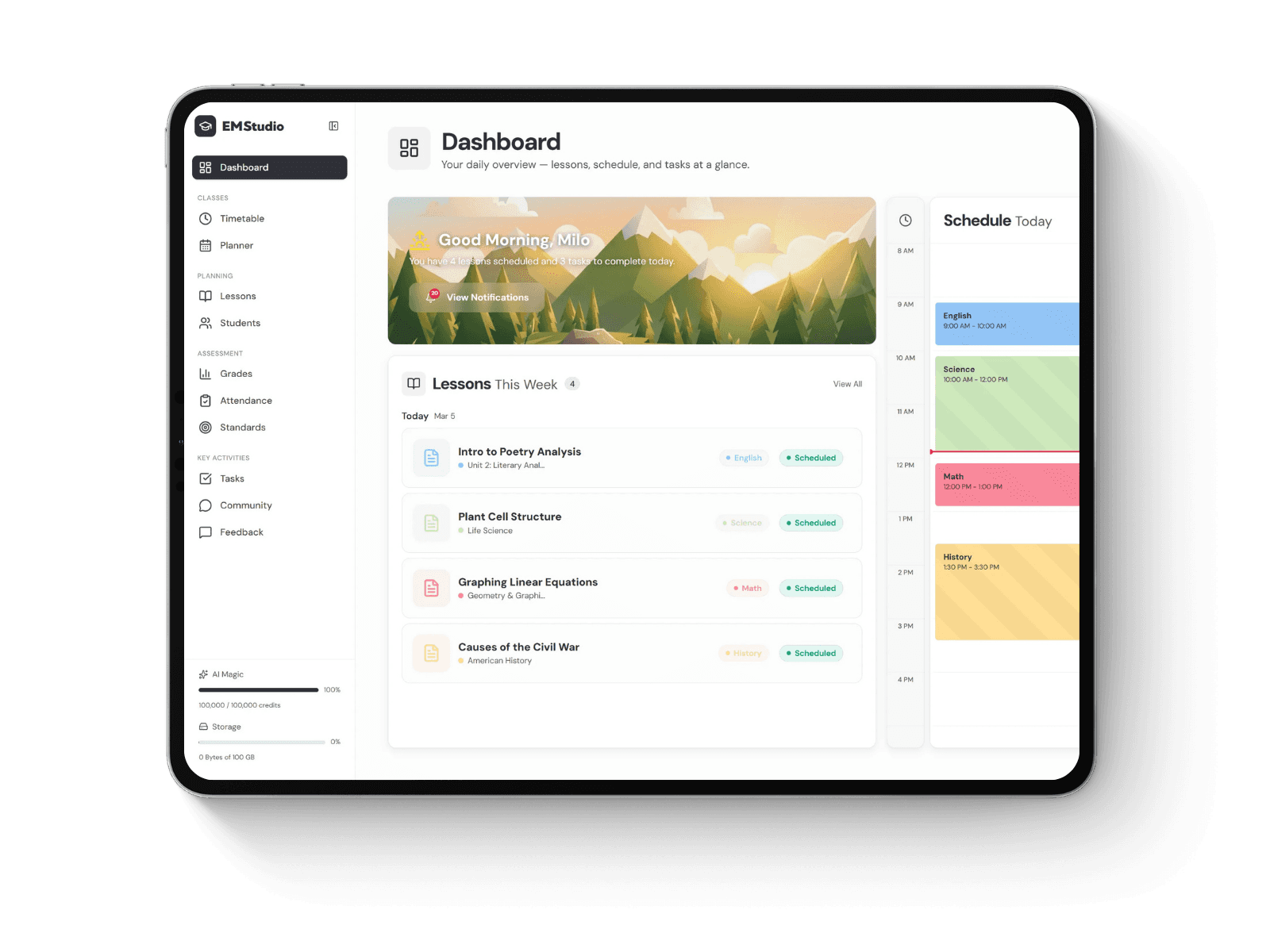
Still grading everything by hand?
EMStudio is a free teaching management app — manage your classes, students, lessons, and more!
Learn More
Table of Contents
What Are the Best Free Online Courses for Teachers?
The best free online courses for teachers include Coursera's Foundations of Teaching for Learning Specialization from the Commonwealth Education Trust (free audit), Stanford Online's Instructional Design Basics, and Khan Academy's Teacher Training Portal. These platforms deliver university-quality content at zero cost, with optional certificates ranging from $49 to $95 if you need the credential.
You do not need a district credit card to access world-class pedagogical content knowledge. These online courses for teachers deliver asynchronous learning that fits around your bell schedule.
Coursera hosts the Commonwealth Education Trust's four-course series spanning 4-6 months. You need only a browser and stable internet; the content suits pre-service teachers and current educators seeking recertification.
Stanford Online runs 4-6 weeks on the OLI platform with an instructional design focus for grades 6-12. You will need an internet connection and may want the optional $30 supplementary texts.
Khan Academy offers 100% free mastery-based dashboard training for immediate K-12 implementation. It runs on any device including phones with zero textbook costs.
Coursera offers free audits but charges $49 per certificate or $399 yearly for Coursera Plus. Stanford suggests optional $30 supplementary texts. Only Khan Academy provides completely unrestricted content without upsells. Zero hidden fees.
Digital credentials from Coursera integrate directly with LinkedIn and arrive as downloadable PDF certificates. Stanford issues printable completion certificates bearing instructor signatures. Khan Academy provides progress-tracking dashboards displaying mastery percentages for each of your 25-35 students, letting you spot struggling learners before the unit test.
Coursera Foundations of Teaching for Learning Specialization
The four-course sequence begins with Course 1 (Foundations of Teaching) lasting 3-4 weeks, followed by Planning & Preparation, Instruction, and Professional Development. Each requires 3-4 hours weekly watching video lectures and completing peer-graded assignments. This structure builds differentiated instruction skills progressively.
Pre-service teachers seeking international certification and current educators needing professional development hours accepted by 40-plus state DOEs comprise the core audience. These micro-credentials appear on your LinkedIn profile, though remember that the audit version excludes graded assessments.
Stanford Online Instructional Design Basics for Educators
Stanford's OLI platform uses adaptive pre-tests that exempt experienced teachers from 20-30 percent of content. The interactive tutor mode gives immediate feedback on your lesson design decisions, helping you refine graduate credit hours worthy work without sitting through basics you already know.
You will create a five-lesson instructional module using Stanford's three-column format: Learning Objectives, Activities, and Assessment Evidence. I used this last year with my 7th-grade algebra classes to map out a linear equations unit, and the template forced me to align every activity with specific evidence of learning.
Khan Academy Teacher Training and Resource Portal
The teacher dashboard training shows you how to set up classes of 30-35 students and assign standards-aligned content using CCSS or MAP benchmarks. The assignment scores report highlights students below 70 percent mastery, perfect for identifying who needs small-group reteaching. These free teacher training courses help you manage large classrooms effectively.
Mastery mechanics require an 80 percent threshold for skill progression. You can assign hints versus video hints for differentiated instruction, and correlate Khan Academy mastery percentages with state test performance data. These free online classes for teachers complement top-tier university online courses and learning design certificate programs.
Short Courses for Teachers With Limited Time
You don't need a semester to build new skills. Last October, I squeezed in a micro-credential between parent conferences and 4th grade report cards. These online courses for teachers fit between grading periods without crushing you.
These short courses for teachers match your academic calendar. Digital Promise micro-credentials demand 10-15 hours of asynchronous learning—perfect for active semesters when you're drowning in paperwork and wishing for time-saving classroom hacks. Two-week intensives run 40-50 hours, requiring 3-4 hours daily. Save those for winter break or June. Weekend workshops clock in at 4-8 hours total, synchronous and sharp.
Each option carries different weight:
Micro-credentials stack into competency proof and earn 0.5-1 CEU each, though they won't transfer as graduate credit hours.
Certificates bring 10-15 professional development hours but lock you into rigid schedules.
Workshops verify participation only, yet they fit when you're barely treading water.
Avoid the trap. Skip two-week intensives during report card weeks or standardized testing windows. Never attempt micro-credentials requiring video evidence if your district bans classroom filming.
Digital Promise Micro-credentials for Quick Skill Building
The Deeper Learning stack bundles five micro-credentials totaling 50 hours. Adult Learning Theory takes three. Computational Thinking for Problem Solving requires four. Each runs $50-$75.
Submit an unedited 2-5 minute classroom video, three student work samples showing growth, and a 500-word reflection using the "What? So What? Now What?" framework. Assessors return feedback within ten business days.
Two-Week Intensive Classroom Management Certificates
Learners Edge offers "Classroom Management Essentials" for $279—45 hours over ten days. Responsive Classroom Online Institutes run $450 for 35 hours. Center for Teacher Effectiveness delivers "Time to Teach" certification in 40 hours. These teacher online classes demand your full attention.
Daily structure means two hours synchronous Zoom from 9-11 AM EST plus three hours of asynchronous module work, Monday through Friday. You need your webcam on for 80% of live time.
Weekend Workshop Series from EdX and Coursera
University of Michigan's "Leading Educational Innovation and Improvement" on EdX breaks into four weekend workshops. These online classes for educators cost $199 per workshop and run Saturday-Sunday for four hours each, yielding a verified certificate.
Coursera Guided Projects offer "Create a Classroom Management Plan" using Google Docs for $9.99. The two-hour session runs in a browser-based Rhyme virtual environment—no software installation required. Weekend cohorts cap at thirty participants.

Which Platforms Offer the Best SIOP Training for Teachers?
The best SIOP training platforms are the SIOP Institute (18-hour official certification, $350-$450), Colorín Colorado (free ESL strategy modules aligned with WIDA standards), and the Center for Applied Linguistics (12-hour virtual workshop series, $295). Each provides Sheltered Instruction Observation Protocol methods for supporting English learners.
When choosing online courses for teachers focused on sheltered instruction, you have three real options. Two will certify you. One is free but won't count toward state endorsements. I filmed my 20-minute submission with 7th graders debating renewable energy while using sentence frames—evaluators specifically checked for the Interaction component.
The SIOP Institute offers an 18-hour basic certification for $395 ($295 for CALEA members) or a 24-hour advanced track for $450. Both run asynchronous learning over 3 weeks part-time. CAL's series spans 6 weeks with live Tuesday sessions. Colorín Colorado offers modules at no cost but awards no certificate.
Platform | Duration | Cost | Type |
SIOP Institute | 18-24 hours / 3 weeks | $295-$450 | Official cert |
Colorín Colorado | 40+ hours / self-paced | Free | Modules only |
CAL | 12 hours / 6 weeks | $295 | Research-focused |
Official SIOP Institute certification is recognized by WIDA consortium states for ESL endorsements. Colorín Colorado modules align with TESOL standards but don't certify; use them for micro-credentials or district professional development hours only. CAL focuses on secondary implementation with differentiated instruction and academic language objectives.
All quality programs require a 20-30 minute video submission of you teaching a sheltered instruction lesson. You must demonstrate all 8 components: Lesson Preparation, Building Background, Comprehensible Input, Strategies, Interaction, Practice/Application, Lesson Delivery, and Review/Assessment. Evaluators score your pedagogical content knowledge using the official 0-4 rubric per component.
SIOP Institute Official Online Certification Program
The SIOP Institute curriculum drills into the 8 components with heavy emphasis on writing distinct Content Objectives versus Language Objectives. You will submit lesson plans using the official protocol template and pass a 25-question exam with an 80% pass rate.
Certification is recognized in 42 states for ESL add-on endorsements. Your certificate expires after 5 years and requires a 6-hour refresher course. Non-members pay $395; CALEA members pay $295.
Colorín Colorado ESL Strategy and Implementation Modules
Colorín Colorado offers free modules including "Introducing ELLs to the Classroom" (2 hours, K-5), "Academic Vocabulary Instruction" (3 hours), and "Reading Comprehension Strategies" (2.5 hours). The library totals 40+ hours of teacher training courses online.
Modules align with WIDA standards and include 50+ downloadable graphic organizers. You will find Frayer models, Venn diagrams, and sequence chains with Spanish cognate supports. These resources pair well with multilingual education strategies for scaffolded support.
Center for Applied Linguistics Virtual Workshop Series
CAL runs 6 two-hour sessions on Tuesdays from 6-8 PM EST across 6 weeks. Cohorts cap at 20 participants for breakout room activities. The $295 fee includes all digital materials.
The curriculum focuses on research by Echevarria and Short. You will analyze SIOP lesson videos and practice scoring using the protocol rubric. This series counts toward graduate credit hours at select universities and integrates technology for ESL teachers through video analysis tools.
Continuing Education Courses for Career Advancement
Smart investments in online courses for teachers require calculating return on investment against your district's salary schedule.
Credential | Total Cost | Annual Stipend | Break-even |
|---|---|---|---|
National Board Certification | $1,900 | $3,000-$10,000 | 2-3 years |
Graduate Certificates | $8,000-$12,000 | Admin promotion | 5+ years |
Reading Specialist | $3,000 | $2,000 | Varies |
Hattie's Visible Learning meta-analysis identifies collective teacher efficacy as having a 1.57 effect size on student achievement—nearly double the impact of typical interventions. Completing rigorous continuing education courses for teachers online builds the pedagogical content knowledge that drives this efficacy, particularly through National Board's intensive reflective cycles where you analyze student work samples against standards.
Avoid these pathways if you lack three years of classroom experience; National Board requires baseline footage of your practice with students. Skip them if your district froze salary lanes or offers no stipends. If you hold a provisional license, wait for standard certification before investing.
National Board Certification Preparation Programs
In my 4th grade classroom, filming Component 2 meant setting up a tripod during our fractions unit and hoping no one knocked it over while I worked with my two focus students. The certification comprises four components.
Component 1 ($475) assesses content knowledge. Component 2 demands a portfolio with two videos and a 12-page commentary analyzing your differentiated instruction choices. Component 3 captures evidence of teaching practice and learning environment. Component 4 documents your impact as an effective and reflective practitioner. Support options include National Board Jump Start weekend intensives ($350) and Candidate Support Provider (CSP) coaching ($500-$800 for 12-month support). Retakes cost $475 per component.
Graduate Certificates in Educational Leadership
These programs require 12-18 graduate credit hours—typically 4-6 courses at $400-$800 per credit. Specializations include Principal Licensure Prep (requires two years teaching minimum), Curriculum & Instruction aligned with ISTE standards, or Educational Leadership. Verify regional accreditation (SACS, HLC, MSCHE) and CAEP approval. Non-accredited micro-credentials rarely qualify for salary advancement or count toward professional development hours you need for license renewal. Explore online EdD programs for educational leadership for terminal degrees.
Reading Specialist and Literacy Coach Endorsements
Compare training intensity: IMSE Orton-Gillingham Comprehensive offers 30 hours for $800; Wilson Reading System Level 1 provides 60 hours for $3,000; LETRS Volume 1 delivers 45 hours of asynchronous learning for $2,400. OG requires a 100-lesson practicum with two students observed by a Fellow. The endorsement requires 15-21 graduate credits including assessment courses and passing the Praxis Reading Specialist exam (5301) with a score of 164 or higher. Review teacher career advancement pathways to plan your next step.

Subject-Specific Online Classes for Reading and STEM
NGSS Science Instruction Methods and Lab Safety
The NSTA runs two solid asynchronous learning options for shifting to NGSS. "Teaching 3-Dimensional Learning" runs six weeks for $450 and walks you through anchoring phenomena like "Why do some things sink and others float?" instead of starting with vocabulary lists. "Science and Engineering Practices" is four weeks at $350 and focuses on modeling and argumentation. Both count toward professional development hours and give you lesson plans you can use Monday morning without rewriting your entire curriculum.
Lab safety isn't optional. Forty states now require documented safety training for high school chemistry teachers before you can legally supervise wet labs, and the Flinn Scientific "Safer Science" bundle covers it in three hours for $45. For virtual labs, you have real choices. PhET simulations from the University of Colorado are free, run on Chromebooks without installation, and work for basic conceptual work like gas laws or circuit building.
Labster runs $30 per student yearly and offers full virtual reality dissections and advanced equipment that looks like a video game. I used PhET with my 8th graders last year for circuit building. It saved me from setting up 30 physical kits while still letting them see ammeter readings change in real time.
These online courses for teachers emphasize the CER framework: Claim, Evidence, Reasoning. You will build units around crosscutting concepts like patterns, cause and effect, and systems modeling, moving away from lecture notes toward phenomenon-driven instruction where students argue from data they collected. integrative STEM education methods work best when kids engineer solutions to problems they actually care about.
Orton-Gillingham Reading Certification Levels
If you teach elementary, you need structured literacy training that goes deeper than free online reading courses for teachers. The IMSE Orton-Gillingham program offers three distinct micro-credentials depending on your role:
Classroom Educator: 50 hours of coursework, ~$800. Best for general education teachers.
Comprehensive: 30 hours coursework plus 100-hour practicum, ~$2,400.
Associate Level: 100 hours plus ten observations by an AOGPE Fellow, ~$2,400. This isn't a weekend workshop—plan for 8 to 12 months.
The practicum is where theory becomes muscle memory. You deliver 100 lessons (60 minutes each) to two different students while mastering multisensory techniques. Think sand tray spelling for tactile feedback, sky writing for gross motor patterns, simultaneous oral spelling for auditory reinforcement, and blending boards for phonemic awareness. You will need serious differentiated instruction strategies because you're addressing specific decoding deficits in real time, not following a basal reader script.
Thirty-eight states now mandate dyslexia-specific training for renewal, and OG certification satisfies requirements in Texas, Florida, and California. This investment builds pedagogical content knowledge that permanently changes how you teach phonics. For evidence-based reading instruction, this is the gold standard that actually moves reading scores.
Mathematical Mindsets for Elementary and Middle School
Jo Boaler's Stanford course "Mathematical Mindsets" through youcubed.org costs $99 for eight weeks of asynchronous learning. You get permanent access to the "Week of Inspirational Math" curriculum for grades K-12. You will learn to design low floor, high ceiling tasks that let struggling students participate while advanced kids dig deeper into the same prompt. The course splits into two distinct tracks: K-5 covers number talks, dot patterns, and subitizing cards, while 6-8 focuses on algebraic reasoning, visual mathematics, and pattern generalization. Each track has separate discussion forums so you're not parsing AP Calculus comments when you teach fourth grade place value.
The focus is on growth mindset interventions and undoing math anxiety through neuroplasticity research and "yet" language. You will earn graduate credit hours through Stanford Continuing Studies if you need them for lane changes or recertification.
For a zero-cost alternative, Teacher Daniel Online on YouTube has over two million subscribers and offers physics demonstrations and step-by-step math explanations perfect for 6-12 teachers seeking quick concept refreshers. When you need a five-minute explanation of angular momentum or quadratic factoring before tomorrow's lesson, his videos provide targeted pedagogical content knowledge without the $500 price tag. This supplements integrative STEM education methods while keeping your stipend intact for classroom supplies.

How Do You Choose the Right Online Course for Your Goals?
Choose the right online course by verifying accreditation through IACET or your state DOE, calculating total costs including textbooks and proctoring fees, and confirming practical components like video submissions. Match format to your schedule—micro-credentials for 5-hour weekly commitments or graduate courses for 10+ hours. If a new credential leads to a job search, a free ATS resume checker can help confirm that your updated qualifications and teaching experience are clearly represented for applicant tracking systems.
Educators who want to strengthen their wider workplace technology skills may also benefit from exploring AI courses for professionals. The Case HQ offers flexible, self-paced learning in areas such as artificial intelligence, educational leadership and case-based learning, helping teachers develop practical skills they can apply beyond the classroom. For educators also building workplace technology skills, ai courses for professionals can complement formal teaching credentials without replacing accreditation or district approval.
Picking the wrong course wastes money and weekends. I learned this after enrolling in a "differentiated instruction" certificate that my district wouldn't accept for lane change. Now I run through this checklist before clicking enroll.
Start with your goal. Are you chasing salary advancement through graduate credit hours or filling professional development hours for license renewal? This determines whether you need regionally accredited credits or IACET-approved CEUs.
Verify the provider. Check your state DOE's Approved Provider List. Courses missing from this list won't count for renewal even if a university offers them.
Calculate true cost. Add tuition, textbooks, proctoring fees, and your time. If you make $30 an hour tutoring, a 40-hour course costs $1,200 in lost income plus tuition.
Match format to life. Asynchronous learning works for irregular schedules. Cohort models keep you accountable but require set meeting times. Pick what you'll actually finish.
No instructor bios or credentials listed.
Syllabus not available for preview.
'Lifetime access' with last update 2018 or earlier.
No discussion forums or peer interaction.
100% quiz-based assessment with no practical application component.
Check salary schedule page for lane change requirements—graduate credits vs CEUs.
Verify CEU conversion rate; typically 1 graduate credit equals 15 professional development hours.
Confirm reimbursement deadlines; most districts require pre-approval 30 days before course start.
Verify Accreditation and District Acceptance Policies
Not all teacher training courses online carry weight with your district. IACET accreditation covers professional development hours, while ACE recommendations signal college credit potential. For graduate-level work, look for NCATE or CAEP approval. Verify the approval matches your specific goal.
Check your state DOE's Approved Provider List before enrolling. Last year, a colleague completed a 45-hour pedagogical content knowledge course only to discover it wasn't on our state's APL. The course counted for nothing. Regional accreditation matters for salary lane changes, but state approval matters for license renewal.
Email your district's HR office with the course syllabus. Ask specifically: "Does this count toward lane change or just license renewal?" Get the answer in writing before you pay.
Calculate Total Time Commitment and Hidden Costs
The sticker price lies. Calculate your real investment: weekly hours multiplied by course duration multiplied by your hourly rate. If you tutor for $35 an hour, a 10-week course requiring 5 hours weekly costs $1,750 in lost income plus $600 tuition.
Hidden fees add up fast. Proctoring services charge $25 per exam. Textbooks run $150 to $300. Some courses require Vimeo Pro subscriptions for video submissions. Graduation fees hit you at the finish line.
Compare micro-credentials against full graduate courses. A 15-hour micro-credential might cost $200 and fit between grading sessions. A 3-credit graduate course demands 10+ hours weekly for 16 weeks. Choose based on your season of life.
Evaluate Practical Classroom Application Components
Avoid theory-only traps. Quality online courses for teachers require you to apply concepts immediately. Look for peer review of lesson plans using detailed rubrics. Demand video feedback from instructors, not auto-graded quizzes.
Last fall, I took a reading intervention course that required filming my 7th graders during small-group instruction. The instructor timestamped specific moments and suggested alternative questioning techniques. That's skills enhancement for educators that transfers directly to Monday morning.
Check discussion forum activity before enrolling. Instructors should post at least three times weekly. Capstone projects must require actual classroom implementation with student work samples. If objectives stop at "identify" without reaching "create," you're buying a book report.
What Are the Best Free Online Courses for Teachers?
The best free online courses for teachers include Coursera's Foundations of Teaching for Learning Specialization from the Commonwealth Education Trust (free audit), Stanford Online's Instructional Design Basics, and Khan Academy's Teacher Training Portal. These platforms deliver university-quality content at zero cost, with optional certificates ranging from $49 to $95 if you need the credential.
You do not need a district credit card to access world-class pedagogical content knowledge. These online courses for teachers deliver asynchronous learning that fits around your bell schedule.
Coursera hosts the Commonwealth Education Trust's four-course series spanning 4-6 months. You need only a browser and stable internet; the content suits pre-service teachers and current educators seeking recertification.
Stanford Online runs 4-6 weeks on the OLI platform with an instructional design focus for grades 6-12. You will need an internet connection and may want the optional $30 supplementary texts.
Khan Academy offers 100% free mastery-based dashboard training for immediate K-12 implementation. It runs on any device including phones with zero textbook costs.
Coursera offers free audits but charges $49 per certificate or $399 yearly for Coursera Plus. Stanford suggests optional $30 supplementary texts. Only Khan Academy provides completely unrestricted content without upsells. Zero hidden fees.
Digital credentials from Coursera integrate directly with LinkedIn and arrive as downloadable PDF certificates. Stanford issues printable completion certificates bearing instructor signatures. Khan Academy provides progress-tracking dashboards displaying mastery percentages for each of your 25-35 students, letting you spot struggling learners before the unit test.
Coursera Foundations of Teaching for Learning Specialization
The four-course sequence begins with Course 1 (Foundations of Teaching) lasting 3-4 weeks, followed by Planning & Preparation, Instruction, and Professional Development. Each requires 3-4 hours weekly watching video lectures and completing peer-graded assignments. This structure builds differentiated instruction skills progressively.
Pre-service teachers seeking international certification and current educators needing professional development hours accepted by 40-plus state DOEs comprise the core audience. These micro-credentials appear on your LinkedIn profile, though remember that the audit version excludes graded assessments.
Stanford Online Instructional Design Basics for Educators
Stanford's OLI platform uses adaptive pre-tests that exempt experienced teachers from 20-30 percent of content. The interactive tutor mode gives immediate feedback on your lesson design decisions, helping you refine graduate credit hours worthy work without sitting through basics you already know.
You will create a five-lesson instructional module using Stanford's three-column format: Learning Objectives, Activities, and Assessment Evidence. I used this last year with my 7th-grade algebra classes to map out a linear equations unit, and the template forced me to align every activity with specific evidence of learning.
Khan Academy Teacher Training and Resource Portal
The teacher dashboard training shows you how to set up classes of 30-35 students and assign standards-aligned content using CCSS or MAP benchmarks. The assignment scores report highlights students below 70 percent mastery, perfect for identifying who needs small-group reteaching. These free teacher training courses help you manage large classrooms effectively.
Mastery mechanics require an 80 percent threshold for skill progression. You can assign hints versus video hints for differentiated instruction, and correlate Khan Academy mastery percentages with state test performance data. These free online classes for teachers complement top-tier university online courses and learning design certificate programs.
Short Courses for Teachers With Limited Time
You don't need a semester to build new skills. Last October, I squeezed in a micro-credential between parent conferences and 4th grade report cards. These online courses for teachers fit between grading periods without crushing you.
These short courses for teachers match your academic calendar. Digital Promise micro-credentials demand 10-15 hours of asynchronous learning—perfect for active semesters when you're drowning in paperwork and wishing for time-saving classroom hacks. Two-week intensives run 40-50 hours, requiring 3-4 hours daily. Save those for winter break or June. Weekend workshops clock in at 4-8 hours total, synchronous and sharp.
Each option carries different weight:
Micro-credentials stack into competency proof and earn 0.5-1 CEU each, though they won't transfer as graduate credit hours.
Certificates bring 10-15 professional development hours but lock you into rigid schedules.
Workshops verify participation only, yet they fit when you're barely treading water.
Avoid the trap. Skip two-week intensives during report card weeks or standardized testing windows. Never attempt micro-credentials requiring video evidence if your district bans classroom filming.
Digital Promise Micro-credentials for Quick Skill Building
The Deeper Learning stack bundles five micro-credentials totaling 50 hours. Adult Learning Theory takes three. Computational Thinking for Problem Solving requires four. Each runs $50-$75.
Submit an unedited 2-5 minute classroom video, three student work samples showing growth, and a 500-word reflection using the "What? So What? Now What?" framework. Assessors return feedback within ten business days.
Two-Week Intensive Classroom Management Certificates
Learners Edge offers "Classroom Management Essentials" for $279—45 hours over ten days. Responsive Classroom Online Institutes run $450 for 35 hours. Center for Teacher Effectiveness delivers "Time to Teach" certification in 40 hours. These teacher online classes demand your full attention.
Daily structure means two hours synchronous Zoom from 9-11 AM EST plus three hours of asynchronous module work, Monday through Friday. You need your webcam on for 80% of live time.
Weekend Workshop Series from EdX and Coursera
University of Michigan's "Leading Educational Innovation and Improvement" on EdX breaks into four weekend workshops. These online classes for educators cost $199 per workshop and run Saturday-Sunday for four hours each, yielding a verified certificate.
Coursera Guided Projects offer "Create a Classroom Management Plan" using Google Docs for $9.99. The two-hour session runs in a browser-based Rhyme virtual environment—no software installation required. Weekend cohorts cap at thirty participants.
Which Platforms Offer the Best SIOP Training for Teachers?
The best SIOP training platforms are the SIOP Institute (18-hour official certification, $350-$450), Colorín Colorado (free ESL strategy modules aligned with WIDA standards), and the Center for Applied Linguistics (12-hour virtual workshop series, $295). Each provides Sheltered Instruction Observation Protocol methods for supporting English learners.
When choosing online courses for teachers focused on sheltered instruction, you have three real options. Two will certify you. One is free but won't count toward state endorsements. I filmed my 20-minute submission with 7th graders debating renewable energy while using sentence frames—evaluators specifically checked for the Interaction component.
The SIOP Institute offers an 18-hour basic certification for $395 ($295 for CALEA members) or a 24-hour advanced track for $450. Both run asynchronous learning over 3 weeks part-time. CAL's series spans 6 weeks with live Tuesday sessions. Colorín Colorado offers modules at no cost but awards no certificate.
Platform | Duration | Cost | Type |
SIOP Institute | 18-24 hours / 3 weeks | $295-$450 | Official cert |
Colorín Colorado | 40+ hours / self-paced | Free | Modules only |
CAL | 12 hours / 6 weeks | $295 | Research-focused |
Official SIOP Institute certification is recognized by WIDA consortium states for ESL endorsements. Colorín Colorado modules align with TESOL standards but don't certify; use them for micro-credentials or district professional development hours only. CAL focuses on secondary implementation with differentiated instruction and academic language objectives.
All quality programs require a 20-30 minute video submission of you teaching a sheltered instruction lesson. You must demonstrate all 8 components: Lesson Preparation, Building Background, Comprehensible Input, Strategies, Interaction, Practice/Application, Lesson Delivery, and Review/Assessment. Evaluators score your pedagogical content knowledge using the official 0-4 rubric per component.
SIOP Institute Official Online Certification Program
The SIOP Institute curriculum drills into the 8 components with heavy emphasis on writing distinct Content Objectives versus Language Objectives. You will submit lesson plans using the official protocol template and pass a 25-question exam with an 80% pass rate.
Certification is recognized in 42 states for ESL add-on endorsements. Your certificate expires after 5 years and requires a 6-hour refresher course. Non-members pay $395; CALEA members pay $295.
Colorín Colorado ESL Strategy and Implementation Modules
Colorín Colorado offers free modules including "Introducing ELLs to the Classroom" (2 hours, K-5), "Academic Vocabulary Instruction" (3 hours), and "Reading Comprehension Strategies" (2.5 hours). The library totals 40+ hours of teacher training courses online.
Modules align with WIDA standards and include 50+ downloadable graphic organizers. You will find Frayer models, Venn diagrams, and sequence chains with Spanish cognate supports. These resources pair well with multilingual education strategies for scaffolded support.
Center for Applied Linguistics Virtual Workshop Series
CAL runs 6 two-hour sessions on Tuesdays from 6-8 PM EST across 6 weeks. Cohorts cap at 20 participants for breakout room activities. The $295 fee includes all digital materials.
The curriculum focuses on research by Echevarria and Short. You will analyze SIOP lesson videos and practice scoring using the protocol rubric. This series counts toward graduate credit hours at select universities and integrates technology for ESL teachers through video analysis tools.
Continuing Education Courses for Career Advancement
Smart investments in online courses for teachers require calculating return on investment against your district's salary schedule.
Credential | Total Cost | Annual Stipend | Break-even |
|---|---|---|---|
National Board Certification | $1,900 | $3,000-$10,000 | 2-3 years |
Graduate Certificates | $8,000-$12,000 | Admin promotion | 5+ years |
Reading Specialist | $3,000 | $2,000 | Varies |
Hattie's Visible Learning meta-analysis identifies collective teacher efficacy as having a 1.57 effect size on student achievement—nearly double the impact of typical interventions. Completing rigorous continuing education courses for teachers online builds the pedagogical content knowledge that drives this efficacy, particularly through National Board's intensive reflective cycles where you analyze student work samples against standards.
Avoid these pathways if you lack three years of classroom experience; National Board requires baseline footage of your practice with students. Skip them if your district froze salary lanes or offers no stipends. If you hold a provisional license, wait for standard certification before investing.
National Board Certification Preparation Programs
In my 4th grade classroom, filming Component 2 meant setting up a tripod during our fractions unit and hoping no one knocked it over while I worked with my two focus students. The certification comprises four components.
Component 1 ($475) assesses content knowledge. Component 2 demands a portfolio with two videos and a 12-page commentary analyzing your differentiated instruction choices. Component 3 captures evidence of teaching practice and learning environment. Component 4 documents your impact as an effective and reflective practitioner. Support options include National Board Jump Start weekend intensives ($350) and Candidate Support Provider (CSP) coaching ($500-$800 for 12-month support). Retakes cost $475 per component.
Graduate Certificates in Educational Leadership
These programs require 12-18 graduate credit hours—typically 4-6 courses at $400-$800 per credit. Specializations include Principal Licensure Prep (requires two years teaching minimum), Curriculum & Instruction aligned with ISTE standards, or Educational Leadership. Verify regional accreditation (SACS, HLC, MSCHE) and CAEP approval. Non-accredited micro-credentials rarely qualify for salary advancement or count toward professional development hours you need for license renewal. Explore online EdD programs for educational leadership for terminal degrees.
Reading Specialist and Literacy Coach Endorsements
Compare training intensity: IMSE Orton-Gillingham Comprehensive offers 30 hours for $800; Wilson Reading System Level 1 provides 60 hours for $3,000; LETRS Volume 1 delivers 45 hours of asynchronous learning for $2,400. OG requires a 100-lesson practicum with two students observed by a Fellow. The endorsement requires 15-21 graduate credits including assessment courses and passing the Praxis Reading Specialist exam (5301) with a score of 164 or higher. Review teacher career advancement pathways to plan your next step.
Subject-Specific Online Classes for Reading and STEM
NGSS Science Instruction Methods and Lab Safety
The NSTA runs two solid asynchronous learning options for shifting to NGSS. "Teaching 3-Dimensional Learning" runs six weeks for $450 and walks you through anchoring phenomena like "Why do some things sink and others float?" instead of starting with vocabulary lists. "Science and Engineering Practices" is four weeks at $350 and focuses on modeling and argumentation. Both count toward professional development hours and give you lesson plans you can use Monday morning without rewriting your entire curriculum.
Lab safety isn't optional. Forty states now require documented safety training for high school chemistry teachers before you can legally supervise wet labs, and the Flinn Scientific "Safer Science" bundle covers it in three hours for $45. For virtual labs, you have real choices. PhET simulations from the University of Colorado are free, run on Chromebooks without installation, and work for basic conceptual work like gas laws or circuit building.
Labster runs $30 per student yearly and offers full virtual reality dissections and advanced equipment that looks like a video game. I used PhET with my 8th graders last year for circuit building. It saved me from setting up 30 physical kits while still letting them see ammeter readings change in real time.
These online courses for teachers emphasize the CER framework: Claim, Evidence, Reasoning. You will build units around crosscutting concepts like patterns, cause and effect, and systems modeling, moving away from lecture notes toward phenomenon-driven instruction where students argue from data they collected. integrative STEM education methods work best when kids engineer solutions to problems they actually care about.
Orton-Gillingham Reading Certification Levels
If you teach elementary, you need structured literacy training that goes deeper than free online reading courses for teachers. The IMSE Orton-Gillingham program offers three distinct micro-credentials depending on your role:
Classroom Educator: 50 hours of coursework, ~$800. Best for general education teachers.
Comprehensive: 30 hours coursework plus 100-hour practicum, ~$2,400.
Associate Level: 100 hours plus ten observations by an AOGPE Fellow, ~$2,400. This isn't a weekend workshop—plan for 8 to 12 months.
The practicum is where theory becomes muscle memory. You deliver 100 lessons (60 minutes each) to two different students while mastering multisensory techniques. Think sand tray spelling for tactile feedback, sky writing for gross motor patterns, simultaneous oral spelling for auditory reinforcement, and blending boards for phonemic awareness. You will need serious differentiated instruction strategies because you're addressing specific decoding deficits in real time, not following a basal reader script.
Thirty-eight states now mandate dyslexia-specific training for renewal, and OG certification satisfies requirements in Texas, Florida, and California. This investment builds pedagogical content knowledge that permanently changes how you teach phonics. For evidence-based reading instruction, this is the gold standard that actually moves reading scores.
Mathematical Mindsets for Elementary and Middle School
Jo Boaler's Stanford course "Mathematical Mindsets" through youcubed.org costs $99 for eight weeks of asynchronous learning. You get permanent access to the "Week of Inspirational Math" curriculum for grades K-12. You will learn to design low floor, high ceiling tasks that let struggling students participate while advanced kids dig deeper into the same prompt. The course splits into two distinct tracks: K-5 covers number talks, dot patterns, and subitizing cards, while 6-8 focuses on algebraic reasoning, visual mathematics, and pattern generalization. Each track has separate discussion forums so you're not parsing AP Calculus comments when you teach fourth grade place value.
The focus is on growth mindset interventions and undoing math anxiety through neuroplasticity research and "yet" language. You will earn graduate credit hours through Stanford Continuing Studies if you need them for lane changes or recertification.
For a zero-cost alternative, Teacher Daniel Online on YouTube has over two million subscribers and offers physics demonstrations and step-by-step math explanations perfect for 6-12 teachers seeking quick concept refreshers. When you need a five-minute explanation of angular momentum or quadratic factoring before tomorrow's lesson, his videos provide targeted pedagogical content knowledge without the $500 price tag. This supplements integrative STEM education methods while keeping your stipend intact for classroom supplies.
How Do You Choose the Right Online Course for Your Goals?
Choose the right online course by verifying accreditation through IACET or your state DOE, calculating total costs including textbooks and proctoring fees, and confirming practical components like video submissions. Match format to your schedule—micro-credentials for 5-hour weekly commitments or graduate courses for 10+ hours. If a new credential leads to a job search, a free ATS resume checker can help confirm that your updated qualifications and teaching experience are clearly represented for applicant tracking systems.
Educators who want to strengthen their wider workplace technology skills may also benefit from exploring AI courses for professionals. The Case HQ offers flexible, self-paced learning in areas such as artificial intelligence, educational leadership and case-based learning, helping teachers develop practical skills they can apply beyond the classroom. For educators also building workplace technology skills, ai courses for professionals can complement formal teaching credentials without replacing accreditation or district approval.
Picking the wrong course wastes money and weekends. I learned this after enrolling in a "differentiated instruction" certificate that my district wouldn't accept for lane change. Now I run through this checklist before clicking enroll.
Start with your goal. Are you chasing salary advancement through graduate credit hours or filling professional development hours for license renewal? This determines whether you need regionally accredited credits or IACET-approved CEUs.
Verify the provider. Check your state DOE's Approved Provider List. Courses missing from this list won't count for renewal even if a university offers them.
Calculate true cost. Add tuition, textbooks, proctoring fees, and your time. If you make $30 an hour tutoring, a 40-hour course costs $1,200 in lost income plus tuition.
Match format to life. Asynchronous learning works for irregular schedules. Cohort models keep you accountable but require set meeting times. Pick what you'll actually finish.
No instructor bios or credentials listed.
Syllabus not available for preview.
'Lifetime access' with last update 2018 or earlier.
No discussion forums or peer interaction.
100% quiz-based assessment with no practical application component.
Check salary schedule page for lane change requirements—graduate credits vs CEUs.
Verify CEU conversion rate; typically 1 graduate credit equals 15 professional development hours.
Confirm reimbursement deadlines; most districts require pre-approval 30 days before course start.
Verify Accreditation and District Acceptance Policies
Not all teacher training courses online carry weight with your district. IACET accreditation covers professional development hours, while ACE recommendations signal college credit potential. For graduate-level work, look for NCATE or CAEP approval. Verify the approval matches your specific goal.
Check your state DOE's Approved Provider List before enrolling. Last year, a colleague completed a 45-hour pedagogical content knowledge course only to discover it wasn't on our state's APL. The course counted for nothing. Regional accreditation matters for salary lane changes, but state approval matters for license renewal.
Email your district's HR office with the course syllabus. Ask specifically: "Does this count toward lane change or just license renewal?" Get the answer in writing before you pay.
Calculate Total Time Commitment and Hidden Costs
The sticker price lies. Calculate your real investment: weekly hours multiplied by course duration multiplied by your hourly rate. If you tutor for $35 an hour, a 10-week course requiring 5 hours weekly costs $1,750 in lost income plus $600 tuition.
Hidden fees add up fast. Proctoring services charge $25 per exam. Textbooks run $150 to $300. Some courses require Vimeo Pro subscriptions for video submissions. Graduation fees hit you at the finish line.
Compare micro-credentials against full graduate courses. A 15-hour micro-credential might cost $200 and fit between grading sessions. A 3-credit graduate course demands 10+ hours weekly for 16 weeks. Choose based on your season of life.
Evaluate Practical Classroom Application Components
Avoid theory-only traps. Quality online courses for teachers require you to apply concepts immediately. Look for peer review of lesson plans using detailed rubrics. Demand video feedback from instructors, not auto-graded quizzes.
Last fall, I took a reading intervention course that required filming my 7th graders during small-group instruction. The instructor timestamped specific moments and suggested alternative questioning techniques. That's skills enhancement for educators that transfers directly to Monday morning.
Check discussion forum activity before enrolling. Instructors should post at least three times weekly. Capstone projects must require actual classroom implementation with student work samples. If objectives stop at "identify" without reaching "create," you're buying a book report.
Still grading everything by hand?
EMStudio is a free teaching management app — manage your classes, students, lessons, and more!
Learn More
Still grading everything by hand?
EMStudio is a free teaching management app — manage your classes, students, lessons, and more!
Learn More




Notion4Teachers
Notion templates to simplify administrative tasks and enhance your teaching experience.



2026 Notion4Teachers. All Rights Reserved.
Notion4Teachers
Notion templates to simplify administrative tasks and enhance your teaching experience.
2026 Notion4Teachers. All Rights Reserved.
Notion4Teachers
Notion templates to simplify administrative tasks and enhance your teaching experience.
2026 Notion4Teachers. All Rights Reserved.