
15 Learning Games for 4th Graders That Boost Engagement
15 Learning Games for 4th Graders That Boost Engagement

Article by
Milo
ESL Content Coordinator & Educator
ESL Content Coordinator & Educator
All Posts
By the end of 4th grade, your students should hit multiplication fact fluency at 20 correct facts per minute. These learning games for 4th graders target CCSS.MATH.CONTENT.4.NBT.B.5 and CCSS.MATH.CONTENT.4.NF.A.1 specifically. They work for 9- and 10-year-olds ready for more than single-digit review.
Unlike educational games for 4th graders that drill addition and subtraction, these require multi-digit computation and fraction understanding. You will see classroom engagement spike when kids move beyond worksheets into interactive learning. You are hiding rigor inside play.
Each game costs under $25 and sets up in 10 to 15 minutes. They fit standard classrooms of 24 to 30 students.
Still grading everything by hand?
EMStudio is a free teaching management app — manage your classes, students, lessons, and more!
Learn More

Still grading everything by hand?
EMStudio is a free teaching management app — manage your classes, students, lessons, and more!
Learn More
Table of Contents
Math Learning Games That Build Number Sense
Multiplication Bingo Battle: Free printable cards, factor deck, markers. Setup: 10 minutes. Group size: 30.
Fraction Pizza Shop: Foam fraction circles or paper plates ($19.99). Setup: 10 minutes. Group size: 24-30.
Decimal Scavenger Hunt: Price tags, clipboards. Setup: 15 minutes. Group size: 24-30 pairs.
Math Fact Fluency Races: Stopwatch, whiteboard, pencils. Setup: 10 minutes. Group size: 24-30 in teams of 4.
Game Name | Target Skill | Prep Time | Cost | Standards |
|---|---|---|---|---|
Multiplication Bingo Battle | Two-digit multiplication | 10 minutes | Under $5 | 4.NBT.B.5 |
Fraction Pizza Shop | Equivalent fractions | 10 minutes | $19.99 | 4.NF.A.1 |
Decimal Scavenger Hunt | Decimal comparison | 15 minutes | Under $10 | 4.NF.C.7 |
Math Fact Fluency Races | Multiplication fluency | 10 minutes | Free | 4.NBT.B.5 |
Multiplication Bingo Battle
You create 5x5 bingo cards with products from 0 to 144. The caller draws factor cards like "6 times 7" and students mark 42. First to complete a row wins. You run three rounds in 20 minutes.
Grab printable cards from Teachers Pay Teachers for free. You need a factor card deck and bingo markers. The game accommodates 30 students easily.
This targets CCSS.MATH.CONTENT.4.NBT.B.5 for multiplying two two-digit numbers. For differentiated instruction, hand out multiplication charts to students below grade level. This formative assessment shows you immediately who knows their facts.
Fraction Pizza Shop
Students draw order cards reading "3/8 pepperoni, 1/4 mushroom." They build pizzas using foam fraction circles within five minutes. You check accuracy against an answer key.
Buy the Learning Resources Pizza Fraction Fun Jr. set for $19.99. You can also use DIY paper plates marked in fractions. Setup takes 10 minutes.
Use green cards with halves and fourths for struggling learners. Use red cards with mixed numbers for advanced students. This aligns with CCSS.MATH.CONTENT.4.NF.A.1. The gamification turns abstract numerators into tangible slices.
Decimal Scavenger Hunt
Hide 20 price tags showing $0.10 to $9.99 around your room. Students use clipboards to record values and order them from least to greatest. Pairs check work against your master list.
Budget 15 minutes to hide tags and 25 minutes for the hunt. This aligns with CCSS.MATH.CONTENT.4.NF.C.7. The kinesthetic learning gets kids out of seats.
Research suggests kinesthetic math activities improve retention. You see the benefits of math challenges for student development when students remember decimal placement because they physically hunted for it.
Math Fact Fluency Races
Run timed relays of two minutes per round. Teams of four solve 20 multiplication problems, then switch every two minutes. Track totals on your whiteboard for four rounds.
The benchmark goal remains 20 correct per minute by year-end. Use Rocket Math worksheets or homemade cards. You need a stopwatch, whiteboard, and pencils.
Build heterogeneous teams mixing ability levels. This prevents one team from dominating. You hit fluency targets while building classroom engagement through competition.

What Are the Best ELA Games for Reading Comprehension?
The best ELA games for 4th grade reading comprehension include Context Clue Detectives for vocabulary inference, Vocabulary Charades for word retention, Story Sequencing Relay for narrative structure, and Figurative Language Matching for literary device recognition. These align with CCSS.ELA-LITERACY.RL.4.4 and RL.4.5 standards.
Stop drilling vocabulary in isolation. Fourth graders need to read between the lines, not just sound out words. These four games bridge that gap through interactive learning that gets them moving and thinking.
Learning games for 3rd graders build decoding skills. By fourth, the Lexile jumps from 450-650L to 740-940L, and suddenly students must infer meaning from context. Fifth grade pushes further into theme and analysis. This shift needs learning games for 4th graders that practice inferential thinking, not just fluency. You're training detectives, not just readers.
Reading Skill | Game Title | Text Complexity | Assessment Method
Vocabulary Inference | Context Clue Detectives | Lexile 740-940L | Detective notebooks with text evidence
Word Retention | Vocabulary Charades | Beck's Tier 2 words | Observation during 10 rounds
Narrative Structure | Story Sequencing Relay | 4-paragraph mixed texts | Correct sequence + signal word identification
Literary Devices | Figurative Language Matching | 4th grade phrase banks | Match + explanation scoring (2 points)
Speed-based gamification backfires with ELL students and struggling readers. When you reward the first hand raised, you reinforce inequity. Try differentiated instruction through extra time cards—three per game for students who need processing time—or partner support where stronger readers whisper clues without giving answers. This keeps classroom engagement high without the anxiety.
Context Clue Detectives
Set up mystery passages at Lexile 740-940. Highlight five unfamiliar words. Students hunt for adjacent sentence clues to infer meaning, recording guesses in detective notebooks. I use evidence-based reading comprehension strategies here—teaching them to circle the sentence before and after as their "clue zone."
Materials make it stick. Print 'Word Detective' badges and grab dollar-store magnifying glasses. Create clue recording sheets with four columns: Word | Clue Sentence | My Definition | Dictionary Check. The assessment comes when students justify their inferences using text evidence, hitting CCSS.ELA-LITERACY.RL.4.4.
Vocabulary Charades
Students draw Tier 2 vocabulary cards—words like 'bizarre,' 'tremendous,' or 'glimmer' from Beck's academic list. They act out the meaning without speaking while their team guesses within one minute. Run ten rounds total, rotating actors every two minutes so no one hides in the back.
Group teams of six to eight for thirty minutes total. For differentiated instruction, hand ELL students the definition card alongside the word. Require advanced students to use the word in a sentence context before their team can guess. This keeps the kinesthetic learning accessible to everyone.
Story Sequencing Relay
Print narrative paragraphs on colored paper—beginning, middle, and end—and cut them into strips. Teams race to arrange the logical order using signal words like "first," "meanwhile," or "finally." Groups of four work best. This targets CCSS.ELA-LITERACY.RL.4.5 for structural elements.
Differentiation matters. Provide picture cues for struggling readers who need visual anchors. For advanced students, add a fourth strip identifying the theme. Store the mixed-up stories in envelopes with glue sticks and construction paper for final sequences. The physical manipulation builds retention better than digital drag-and-drop.
Figurative Language Matching
Play memory-style concentration. Match phrase cards like "the wind whispered" to type cards labeled "personification." Use thirty pairs total covering simile, metaphor, personification, hyperbole, and idiom—the five types from 4th grade standards. Pairs play for fifteen minutes.
Scoring adds rigor. Award one point per match, but two points only if the student explains the meaning in context. Laminate cards at three-by-five inches and store in labeled baggies. This aligns with CCSS.ELA-LITERACY.RL.4.4 and creates a reusable center for formative assessment.

Science and Social Studies Games for Curious Minds
Fourth graders ask "why" about everything. Channel that energy into interactive learning that sticks. Research consistently shows that kinesthetic learning activities boost science vocabulary retention beyond lecture-only methods. These learning games for 4th graders align with NGSS 4-LS1-1 (organism structures) and 4-ESS1-1 (Earth patterns), while building foundations for learning games for 5th graders that explore matter and energy cycles.
Before you buy another software license, consider the trade-offs:
Cost: Physical games run $0-$50 in supplies. Digital simulations cost $60-$300 yearly per classroom.
Setup Time: Plan 15 minutes to arrange materials for physical activities. Digital platforms load instantly but require login troubleshooting.
Engagement Duration: Physical games sustain focus for full class periods. Digital engagement varies—some students rush, others get stuck on loading screens.
Assessment Capability: You observe and document learning during physical games. Digital tools offer automated data exports.
State history standards fit naturally here too. While you might explore digital tools that transform history classrooms, these face-to-face activities build the classroom engagement that makes historical facts memorable.
Ecosystem Simulation Builder
Students become ecologists for the afternoon. Give each child a 3x5 card with an organism name—producers like oak trees, primary consumers like rabbits, secondary consumers like foxes—and a ball of yarn. They stand in a circle and toss the yarn to create a food web, each student holding strands to show energy connections. When you randomly remove one species, the web collapses tangibly. Watch them physically feel the tension drop as they realize interdependence is not just a vocabulary word.
This takes 45 minutes and aligns with NGSS 4-LS1-1 (structures and functions) and 4-LS1-2 (internal and external structures). Run this with groups of 8-10 to keep the web manageable. Use forest, desert, and ocean ecosystems with field guides for authenticity. It prepares students for learning games for 5th graders that tackle matter and energy cycles in greater depth. Differentiated instruction happens naturally—struggling students receive cards with pictures; advanced students research trophic levels before the activity begins.
State Capital Capture the Flag
Take the rote memorization of fifty states into the gym or out to the blacktop. Divide your class into four teams, each guarding a home base with ten state flashcards clipped to flag belts. To steal an opponent's flag, a student must correctly name the capital of a state they draw from the pile. Wrong answers freeze them for one minute—standing still on the sideline while the game continues. The geography focus hits fourth-grade standards using regional chunks, not all fifty states at once. Try ten to twelve Southeast or Midwest states per session.
You need flag football belts, laminated state flashcards, and boundary cones. This is gamification at its most basic: high stakes, immediate feedback, and full-body movement that burns off October energy. They learn regional neighbors because they hear other teams shouting answers across the gym. Break it into regional rounds so kids master manageable chunks. The repetition of stealing flags cements the capitals better than flashcard drills at desks. You will hear them whispering "Montgomery, Alabama" while they strategize.
Simple Machine Challenge Cards
Engineering fits in a shoebox. Create twenty challenge cards with tasks like "Move this heavy book three feet without touching it." Groups of three draw a card, then raid your supply box. They use cardboard scraps, rulers, pencils, books, and empty thread spools for pulleys. Build working solutions within five minutes. They must demonstrate success to earn points.
They follow the full engineering design process: Ask, Imagine, Plan, Create, Improve. This hits NGSS 3-5-ETS1-2 and bridges toward fifth-grade engineering standards, though fourth graders handle the concepts comfortably. The formative assessment happens live when they demonstrate. You see immediately who understands leverage and mechanical advantage versus who is just taping things together randomly. One group's janky cardboard lever often teaches more than a thousand-dollar robotics set because they built it themselves and can explain exactly why it failed when the book slipped.
Timeline History Trivia
Turn your classroom into a human timeline that takes up the whole floor space. Give twenty-five students event cards with dates hidden on the back—wearing them on lanyards or shirts. They must arrange themselves in chronological order without talking, using only gestures and logical reasoning about sequence. Check their line against a master timeline on your whiteboard, then discuss cause and effect relationships between adjacent events. The spatial distance between the Declaration of Independence and the Constitution becomes a three-foot gap they can pace out.
Use state history or US History 1600-1800 topics. For differentiated instruction, give struggling students date ranges (1750-1775) printed on their cards while advanced students get specific years only. You need cards with hook-and-loop tape and a rope on the floor for spatial reference. Thirty minutes includes the debrief and correction phase. The physical arrangement forces them to see historical distance as actual space, not just numbers on a page. When they stand three feet apart representing fifty years, the gaps between events become viscerally real.

Which Critical Thinking Games Develop Problem-Solving Skills?
Critical thinking games that develop problem-solving skills for 4th graders include Logic Grid Puzzles for deductive reasoning, Engineering Design Challenges for iterative thinking, and Mystery Solving Escape Rooms for collaborative analysis. These build executive function skills important for middle school readiness. They work best when you match the specific format to your students' current blockers.
Choose your starting point based on what you observe during morning work:
If students struggle with deductive reasoning, start with Logic Grid Puzzles.
If they need collaboration practice, use Engineering Challenges.
If engagement is low, use Escape Rooms.
This simple flowchart saves you from mismatching cognitive load to readiness.
Remember that learning games for 4th graders must honor the concrete operational stage. While learning games for middle schoolers can demand abstract hypothetical reasoning, and learning games for 8th graders often require algebraic proofs, your students still need manipulatives. They learn through touch and trial, not pure theory. A 4th grader needs to feel the tape stick, not calculate tensile strength on paper.
Watch for the failure mode of over-competition. When elimination mechanics trigger anxiety, shift immediately. Try cooperative scoring where the class beats the puzzle together. Or switch to "beat your own best" individual tracking. Developing problem-solving skills in education works best when the stakes feel challenging, not threatening to self-worth.
Logic Grid Puzzles
Start with 4x4 grids, simpler than the 5x5 versions you'll find in middle school resources. Use categories like pet, food, sport, and color. Students read clues—"The dog owner doesn't like red"—and deduce matches through elimination. The constraint keeps the problem manageable while the logic remains rigorous.
Source these from Puzzle Baron Logic Puzzles modified for 4th grade, or use Teach-nology generators. Each puzzle takes 15-20 minutes. For differentiated instruction, provide the first answer as a starter for struggling students. Let advanced kids create their own puzzles for peers. The creation process reveals gaps in their own logic.
Engineering Design Challenges
Challenge teams: "Build a bridge spanning 12 inches using only 20 straws and 36 inches of tape that holds 100 pennies." Give them 30 minutes to build, test, and redesign. This kinesthetic learning approach makes abstract physics concrete. The first collapse teaches more than the final success.
Graph class results by the number of pennies held. Compare design features. Use plastic cups to hold pennies for easier counting. Unlike learning games for 8th graders where students calculate load-bearing mathematically, 4th graders learn through trial and observation. The formative assessment happens when you ask why the triangle design held more weight than the flat one.
Mystery Solving Escape Rooms
Set up a classroom lockbox with a 4-digit combination. Create four stations: a math problem, a word cipher, pattern recognition, and a key hidden in a book. Teams have 45 minutes to "escape." This drives classroom engagement through narrative immersion. The story carries the math.
Materials cost about $25 for a directional lock box on Amazon, plus envelopes, red decoder lenses for invisible ink, and a blacklight flashlight. Reset takes 10 minutes between classes. Group 5-6 students heterogeneously. Assign roles: Reader, Recorder, Timekeeper, Materials Manager, and Checker. These interactive learning structures support strategies for teaching critical thinking through collaborative pressure.
Keep the gamification cooperative rather than competitive. If teams race against each other, the anxiety shuts down the thinking. Instead, track how many groups solved it before the bell. Celebrate the collective win. The puzzle is the opponent, not the other table.
How Do You Choose Games That Match Your Curriculum?
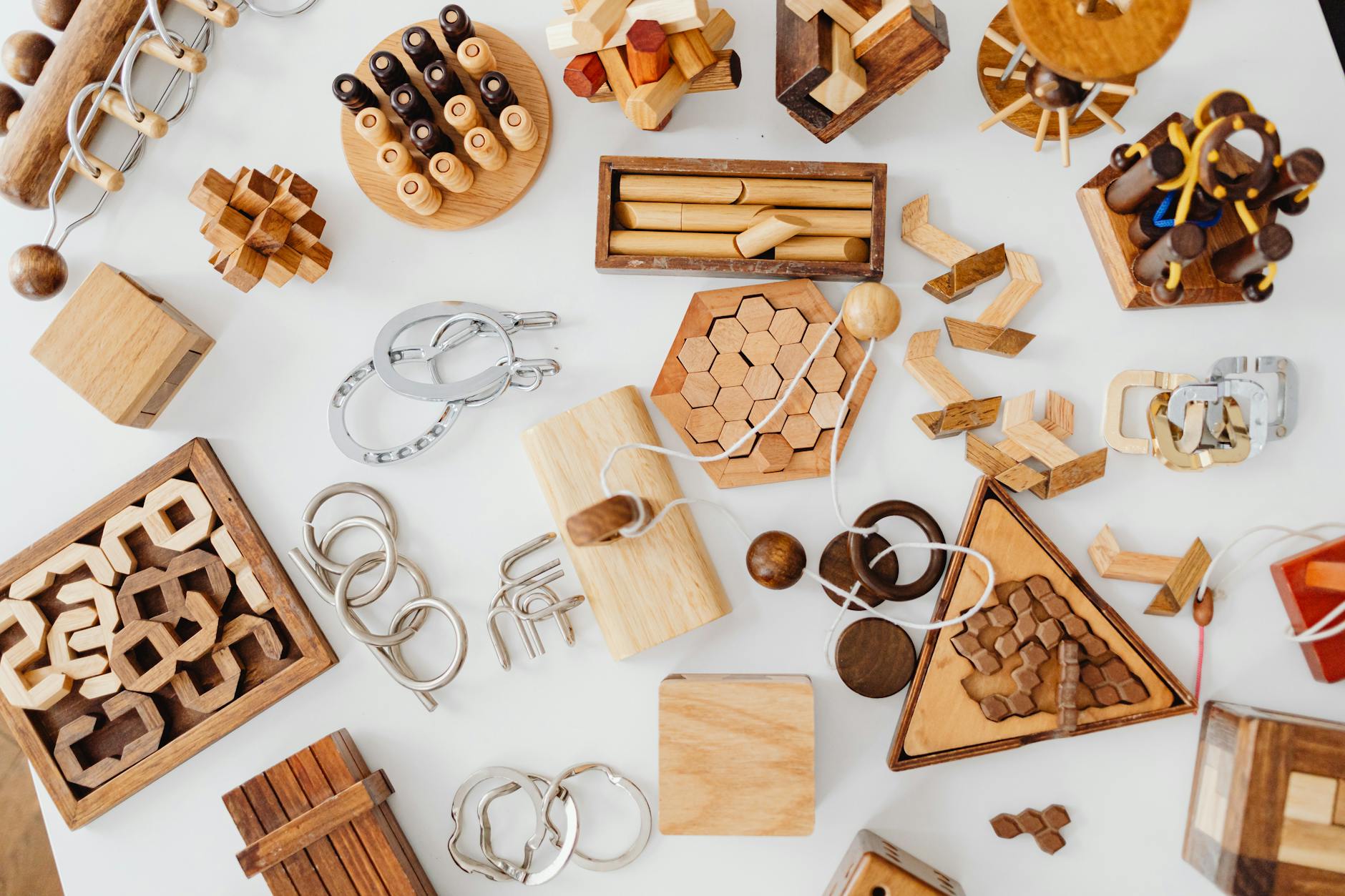
Choose curriculum-aligned games by first mapping state standards to game objectives, then selecting digital or physical formats based on technology access and learning goals, finally differentiating rules or content for below-, on-, and above-grade-level learners within the same activity.
Aligning with State Standards
Start with the standard, not the game. I use a three-step protocol: First, identify the exact standard code like CCSS.MATH.CONTENT.4.NBT.B.6. Second, map the game mechanic to the specific skill—division as repeated subtraction, for instance. Third, build a simple rubric that shows mastery during gameplay rather than just final scores.
This process creates clear documentation for administrators. Last year, I posted "I Can" statements on my board: "I can multiply 2-digit by 2-digit numbers." Students knew exactly why we were playing Multiplication Bingo Battle. You can find standard codes on the aligning classroom activities with state standards resource page or your state DOE portal. Keep a binder index organized by domain—Number Operations gets blue tabs, Fractions get yellow. Update it each quarter when you unpack new units.
Balancing Digital and Physical Play
Digital tools track data. Physical games build negotiation skills. Choose based on your target.
Compare the formats across six dimensions:
Initial Cost: Physical games run $5-$50 one-time; digital needs tablets upfront.
Annual Cost: Subscriptions cost $60-$120 yearly; board games have zero recurring fees.
Storage Needs: Physical games demand labeled bins; digital needs cloud space only.
Screen Time Concerns: Limit digital to 20 minutes; physical offers kinesthetic learning without blue light.
Data Tracking Capability: Apps provide instant formative assessment; physical games need observation checklists.
Social Skill Development: Card games require turn-taking; solo apps lack peer negotiation.
Avoid giving 4th graders learning apps for 8th graders that preview Algebra I or abstract logic puzzles. That cognitive load crushes confidence. Stick to age-appropriate interactive learning tools like SplashLearn or Khan Academy Kids. Use proven classroom gamification methods that match developmental stages. Title I funds often cover physical manipulatives if digital subscriptions strain your budget. Check your library for free physical game loans before spending discretionary funds.
Differentiating for Mixed Skill Levels
One game can serve three levels simultaneously. The secret is tiered challenge cards that adjust the cognitive demand without changing the rules.
Use color-coded difficulty: Green cards target approaching grade level, Yellow hits on-level standards, and Red pushes above. In Fraction Pizza Shop, Green covers halves and fourths, Yellow adds thirds and eighths, while Red needs mixed numbers and improper fractions. Students self-select their starting point, though you reserve the right to redirect. This approach honors differentiating instruction for mixed skill levels without isolating struggling learners in the corner.
Never sort kids by ability for game time. Instead, build heterogeneous groups of four and assign roles: Materials Manager, Checker, Scorekeeper, and Encourager. Everyone accesses the same learning games for 4th graders, but the Red card student might calculate tax while the Green card student counts currency. Roles rotate weekly. This structure boosts classroom engagement because every player contributes meaningfully regardless of their math fluency speed. The social pressure lifts when kids realize they have different jobs, not different intelligence levels. You will hear better math talk around the table when the stakes are cooperative rather than competitive.
Math Learning Games That Build Number Sense
Multiplication Bingo Battle: Free printable cards, factor deck, markers. Setup: 10 minutes. Group size: 30.
Fraction Pizza Shop: Foam fraction circles or paper plates ($19.99). Setup: 10 minutes. Group size: 24-30.
Decimal Scavenger Hunt: Price tags, clipboards. Setup: 15 minutes. Group size: 24-30 pairs.
Math Fact Fluency Races: Stopwatch, whiteboard, pencils. Setup: 10 minutes. Group size: 24-30 in teams of 4.
Game Name | Target Skill | Prep Time | Cost | Standards |
|---|---|---|---|---|
Multiplication Bingo Battle | Two-digit multiplication | 10 minutes | Under $5 | 4.NBT.B.5 |
Fraction Pizza Shop | Equivalent fractions | 10 minutes | $19.99 | 4.NF.A.1 |
Decimal Scavenger Hunt | Decimal comparison | 15 minutes | Under $10 | 4.NF.C.7 |
Math Fact Fluency Races | Multiplication fluency | 10 minutes | Free | 4.NBT.B.5 |
Multiplication Bingo Battle
You create 5x5 bingo cards with products from 0 to 144. The caller draws factor cards like "6 times 7" and students mark 42. First to complete a row wins. You run three rounds in 20 minutes.
Grab printable cards from Teachers Pay Teachers for free. You need a factor card deck and bingo markers. The game accommodates 30 students easily.
This targets CCSS.MATH.CONTENT.4.NBT.B.5 for multiplying two two-digit numbers. For differentiated instruction, hand out multiplication charts to students below grade level. This formative assessment shows you immediately who knows their facts.
Fraction Pizza Shop
Students draw order cards reading "3/8 pepperoni, 1/4 mushroom." They build pizzas using foam fraction circles within five minutes. You check accuracy against an answer key.
Buy the Learning Resources Pizza Fraction Fun Jr. set for $19.99. You can also use DIY paper plates marked in fractions. Setup takes 10 minutes.
Use green cards with halves and fourths for struggling learners. Use red cards with mixed numbers for advanced students. This aligns with CCSS.MATH.CONTENT.4.NF.A.1. The gamification turns abstract numerators into tangible slices.
Decimal Scavenger Hunt
Hide 20 price tags showing $0.10 to $9.99 around your room. Students use clipboards to record values and order them from least to greatest. Pairs check work against your master list.
Budget 15 minutes to hide tags and 25 minutes for the hunt. This aligns with CCSS.MATH.CONTENT.4.NF.C.7. The kinesthetic learning gets kids out of seats.
Research suggests kinesthetic math activities improve retention. You see the benefits of math challenges for student development when students remember decimal placement because they physically hunted for it.
Math Fact Fluency Races
Run timed relays of two minutes per round. Teams of four solve 20 multiplication problems, then switch every two minutes. Track totals on your whiteboard for four rounds.
The benchmark goal remains 20 correct per minute by year-end. Use Rocket Math worksheets or homemade cards. You need a stopwatch, whiteboard, and pencils.
Build heterogeneous teams mixing ability levels. This prevents one team from dominating. You hit fluency targets while building classroom engagement through competition.
What Are the Best ELA Games for Reading Comprehension?
The best ELA games for 4th grade reading comprehension include Context Clue Detectives for vocabulary inference, Vocabulary Charades for word retention, Story Sequencing Relay for narrative structure, and Figurative Language Matching for literary device recognition. These align with CCSS.ELA-LITERACY.RL.4.4 and RL.4.5 standards.
Stop drilling vocabulary in isolation. Fourth graders need to read between the lines, not just sound out words. These four games bridge that gap through interactive learning that gets them moving and thinking.
Learning games for 3rd graders build decoding skills. By fourth, the Lexile jumps from 450-650L to 740-940L, and suddenly students must infer meaning from context. Fifth grade pushes further into theme and analysis. This shift needs learning games for 4th graders that practice inferential thinking, not just fluency. You're training detectives, not just readers.
Reading Skill | Game Title | Text Complexity | Assessment Method
Vocabulary Inference | Context Clue Detectives | Lexile 740-940L | Detective notebooks with text evidence
Word Retention | Vocabulary Charades | Beck's Tier 2 words | Observation during 10 rounds
Narrative Structure | Story Sequencing Relay | 4-paragraph mixed texts | Correct sequence + signal word identification
Literary Devices | Figurative Language Matching | 4th grade phrase banks | Match + explanation scoring (2 points)
Speed-based gamification backfires with ELL students and struggling readers. When you reward the first hand raised, you reinforce inequity. Try differentiated instruction through extra time cards—three per game for students who need processing time—or partner support where stronger readers whisper clues without giving answers. This keeps classroom engagement high without the anxiety.
Context Clue Detectives
Set up mystery passages at Lexile 740-940. Highlight five unfamiliar words. Students hunt for adjacent sentence clues to infer meaning, recording guesses in detective notebooks. I use evidence-based reading comprehension strategies here—teaching them to circle the sentence before and after as their "clue zone."
Materials make it stick. Print 'Word Detective' badges and grab dollar-store magnifying glasses. Create clue recording sheets with four columns: Word | Clue Sentence | My Definition | Dictionary Check. The assessment comes when students justify their inferences using text evidence, hitting CCSS.ELA-LITERACY.RL.4.4.
Vocabulary Charades
Students draw Tier 2 vocabulary cards—words like 'bizarre,' 'tremendous,' or 'glimmer' from Beck's academic list. They act out the meaning without speaking while their team guesses within one minute. Run ten rounds total, rotating actors every two minutes so no one hides in the back.
Group teams of six to eight for thirty minutes total. For differentiated instruction, hand ELL students the definition card alongside the word. Require advanced students to use the word in a sentence context before their team can guess. This keeps the kinesthetic learning accessible to everyone.
Story Sequencing Relay
Print narrative paragraphs on colored paper—beginning, middle, and end—and cut them into strips. Teams race to arrange the logical order using signal words like "first," "meanwhile," or "finally." Groups of four work best. This targets CCSS.ELA-LITERACY.RL.4.5 for structural elements.
Differentiation matters. Provide picture cues for struggling readers who need visual anchors. For advanced students, add a fourth strip identifying the theme. Store the mixed-up stories in envelopes with glue sticks and construction paper for final sequences. The physical manipulation builds retention better than digital drag-and-drop.
Figurative Language Matching
Play memory-style concentration. Match phrase cards like "the wind whispered" to type cards labeled "personification." Use thirty pairs total covering simile, metaphor, personification, hyperbole, and idiom—the five types from 4th grade standards. Pairs play for fifteen minutes.
Scoring adds rigor. Award one point per match, but two points only if the student explains the meaning in context. Laminate cards at three-by-five inches and store in labeled baggies. This aligns with CCSS.ELA-LITERACY.RL.4.4 and creates a reusable center for formative assessment.
Science and Social Studies Games for Curious Minds
Fourth graders ask "why" about everything. Channel that energy into interactive learning that sticks. Research consistently shows that kinesthetic learning activities boost science vocabulary retention beyond lecture-only methods. These learning games for 4th graders align with NGSS 4-LS1-1 (organism structures) and 4-ESS1-1 (Earth patterns), while building foundations for learning games for 5th graders that explore matter and energy cycles.
Before you buy another software license, consider the trade-offs:
Cost: Physical games run $0-$50 in supplies. Digital simulations cost $60-$300 yearly per classroom.
Setup Time: Plan 15 minutes to arrange materials for physical activities. Digital platforms load instantly but require login troubleshooting.
Engagement Duration: Physical games sustain focus for full class periods. Digital engagement varies—some students rush, others get stuck on loading screens.
Assessment Capability: You observe and document learning during physical games. Digital tools offer automated data exports.
State history standards fit naturally here too. While you might explore digital tools that transform history classrooms, these face-to-face activities build the classroom engagement that makes historical facts memorable.
Ecosystem Simulation Builder
Students become ecologists for the afternoon. Give each child a 3x5 card with an organism name—producers like oak trees, primary consumers like rabbits, secondary consumers like foxes—and a ball of yarn. They stand in a circle and toss the yarn to create a food web, each student holding strands to show energy connections. When you randomly remove one species, the web collapses tangibly. Watch them physically feel the tension drop as they realize interdependence is not just a vocabulary word.
This takes 45 minutes and aligns with NGSS 4-LS1-1 (structures and functions) and 4-LS1-2 (internal and external structures). Run this with groups of 8-10 to keep the web manageable. Use forest, desert, and ocean ecosystems with field guides for authenticity. It prepares students for learning games for 5th graders that tackle matter and energy cycles in greater depth. Differentiated instruction happens naturally—struggling students receive cards with pictures; advanced students research trophic levels before the activity begins.
State Capital Capture the Flag
Take the rote memorization of fifty states into the gym or out to the blacktop. Divide your class into four teams, each guarding a home base with ten state flashcards clipped to flag belts. To steal an opponent's flag, a student must correctly name the capital of a state they draw from the pile. Wrong answers freeze them for one minute—standing still on the sideline while the game continues. The geography focus hits fourth-grade standards using regional chunks, not all fifty states at once. Try ten to twelve Southeast or Midwest states per session.
You need flag football belts, laminated state flashcards, and boundary cones. This is gamification at its most basic: high stakes, immediate feedback, and full-body movement that burns off October energy. They learn regional neighbors because they hear other teams shouting answers across the gym. Break it into regional rounds so kids master manageable chunks. The repetition of stealing flags cements the capitals better than flashcard drills at desks. You will hear them whispering "Montgomery, Alabama" while they strategize.
Simple Machine Challenge Cards
Engineering fits in a shoebox. Create twenty challenge cards with tasks like "Move this heavy book three feet without touching it." Groups of three draw a card, then raid your supply box. They use cardboard scraps, rulers, pencils, books, and empty thread spools for pulleys. Build working solutions within five minutes. They must demonstrate success to earn points.
They follow the full engineering design process: Ask, Imagine, Plan, Create, Improve. This hits NGSS 3-5-ETS1-2 and bridges toward fifth-grade engineering standards, though fourth graders handle the concepts comfortably. The formative assessment happens live when they demonstrate. You see immediately who understands leverage and mechanical advantage versus who is just taping things together randomly. One group's janky cardboard lever often teaches more than a thousand-dollar robotics set because they built it themselves and can explain exactly why it failed when the book slipped.
Timeline History Trivia
Turn your classroom into a human timeline that takes up the whole floor space. Give twenty-five students event cards with dates hidden on the back—wearing them on lanyards or shirts. They must arrange themselves in chronological order without talking, using only gestures and logical reasoning about sequence. Check their line against a master timeline on your whiteboard, then discuss cause and effect relationships between adjacent events. The spatial distance between the Declaration of Independence and the Constitution becomes a three-foot gap they can pace out.
Use state history or US History 1600-1800 topics. For differentiated instruction, give struggling students date ranges (1750-1775) printed on their cards while advanced students get specific years only. You need cards with hook-and-loop tape and a rope on the floor for spatial reference. Thirty minutes includes the debrief and correction phase. The physical arrangement forces them to see historical distance as actual space, not just numbers on a page. When they stand three feet apart representing fifty years, the gaps between events become viscerally real.
Which Critical Thinking Games Develop Problem-Solving Skills?
Critical thinking games that develop problem-solving skills for 4th graders include Logic Grid Puzzles for deductive reasoning, Engineering Design Challenges for iterative thinking, and Mystery Solving Escape Rooms for collaborative analysis. These build executive function skills important for middle school readiness. They work best when you match the specific format to your students' current blockers.
Choose your starting point based on what you observe during morning work:
If students struggle with deductive reasoning, start with Logic Grid Puzzles.
If they need collaboration practice, use Engineering Challenges.
If engagement is low, use Escape Rooms.
This simple flowchart saves you from mismatching cognitive load to readiness.
Remember that learning games for 4th graders must honor the concrete operational stage. While learning games for middle schoolers can demand abstract hypothetical reasoning, and learning games for 8th graders often require algebraic proofs, your students still need manipulatives. They learn through touch and trial, not pure theory. A 4th grader needs to feel the tape stick, not calculate tensile strength on paper.
Watch for the failure mode of over-competition. When elimination mechanics trigger anxiety, shift immediately. Try cooperative scoring where the class beats the puzzle together. Or switch to "beat your own best" individual tracking. Developing problem-solving skills in education works best when the stakes feel challenging, not threatening to self-worth.
Logic Grid Puzzles
Start with 4x4 grids, simpler than the 5x5 versions you'll find in middle school resources. Use categories like pet, food, sport, and color. Students read clues—"The dog owner doesn't like red"—and deduce matches through elimination. The constraint keeps the problem manageable while the logic remains rigorous.
Source these from Puzzle Baron Logic Puzzles modified for 4th grade, or use Teach-nology generators. Each puzzle takes 15-20 minutes. For differentiated instruction, provide the first answer as a starter for struggling students. Let advanced kids create their own puzzles for peers. The creation process reveals gaps in their own logic.
Engineering Design Challenges
Challenge teams: "Build a bridge spanning 12 inches using only 20 straws and 36 inches of tape that holds 100 pennies." Give them 30 minutes to build, test, and redesign. This kinesthetic learning approach makes abstract physics concrete. The first collapse teaches more than the final success.
Graph class results by the number of pennies held. Compare design features. Use plastic cups to hold pennies for easier counting. Unlike learning games for 8th graders where students calculate load-bearing mathematically, 4th graders learn through trial and observation. The formative assessment happens when you ask why the triangle design held more weight than the flat one.
Mystery Solving Escape Rooms
Set up a classroom lockbox with a 4-digit combination. Create four stations: a math problem, a word cipher, pattern recognition, and a key hidden in a book. Teams have 45 minutes to "escape." This drives classroom engagement through narrative immersion. The story carries the math.
Materials cost about $25 for a directional lock box on Amazon, plus envelopes, red decoder lenses for invisible ink, and a blacklight flashlight. Reset takes 10 minutes between classes. Group 5-6 students heterogeneously. Assign roles: Reader, Recorder, Timekeeper, Materials Manager, and Checker. These interactive learning structures support strategies for teaching critical thinking through collaborative pressure.
Keep the gamification cooperative rather than competitive. If teams race against each other, the anxiety shuts down the thinking. Instead, track how many groups solved it before the bell. Celebrate the collective win. The puzzle is the opponent, not the other table.
How Do You Choose Games That Match Your Curriculum?
Choose curriculum-aligned games by first mapping state standards to game objectives, then selecting digital or physical formats based on technology access and learning goals, finally differentiating rules or content for below-, on-, and above-grade-level learners within the same activity.
Aligning with State Standards
Start with the standard, not the game. I use a three-step protocol: First, identify the exact standard code like CCSS.MATH.CONTENT.4.NBT.B.6. Second, map the game mechanic to the specific skill—division as repeated subtraction, for instance. Third, build a simple rubric that shows mastery during gameplay rather than just final scores.
This process creates clear documentation for administrators. Last year, I posted "I Can" statements on my board: "I can multiply 2-digit by 2-digit numbers." Students knew exactly why we were playing Multiplication Bingo Battle. You can find standard codes on the aligning classroom activities with state standards resource page or your state DOE portal. Keep a binder index organized by domain—Number Operations gets blue tabs, Fractions get yellow. Update it each quarter when you unpack new units.
Balancing Digital and Physical Play
Digital tools track data. Physical games build negotiation skills. Choose based on your target.
Compare the formats across six dimensions:
Initial Cost: Physical games run $5-$50 one-time; digital needs tablets upfront.
Annual Cost: Subscriptions cost $60-$120 yearly; board games have zero recurring fees.
Storage Needs: Physical games demand labeled bins; digital needs cloud space only.
Screen Time Concerns: Limit digital to 20 minutes; physical offers kinesthetic learning without blue light.
Data Tracking Capability: Apps provide instant formative assessment; physical games need observation checklists.
Social Skill Development: Card games require turn-taking; solo apps lack peer negotiation.
Avoid giving 4th graders learning apps for 8th graders that preview Algebra I or abstract logic puzzles. That cognitive load crushes confidence. Stick to age-appropriate interactive learning tools like SplashLearn or Khan Academy Kids. Use proven classroom gamification methods that match developmental stages. Title I funds often cover physical manipulatives if digital subscriptions strain your budget. Check your library for free physical game loans before spending discretionary funds.
Differentiating for Mixed Skill Levels
One game can serve three levels simultaneously. The secret is tiered challenge cards that adjust the cognitive demand without changing the rules.
Use color-coded difficulty: Green cards target approaching grade level, Yellow hits on-level standards, and Red pushes above. In Fraction Pizza Shop, Green covers halves and fourths, Yellow adds thirds and eighths, while Red needs mixed numbers and improper fractions. Students self-select their starting point, though you reserve the right to redirect. This approach honors differentiating instruction for mixed skill levels without isolating struggling learners in the corner.
Never sort kids by ability for game time. Instead, build heterogeneous groups of four and assign roles: Materials Manager, Checker, Scorekeeper, and Encourager. Everyone accesses the same learning games for 4th graders, but the Red card student might calculate tax while the Green card student counts currency. Roles rotate weekly. This structure boosts classroom engagement because every player contributes meaningfully regardless of their math fluency speed. The social pressure lifts when kids realize they have different jobs, not different intelligence levels. You will hear better math talk around the table when the stakes are cooperative rather than competitive.
Still grading everything by hand?
EMStudio is a free teaching management app — manage your classes, students, lessons, and more!
Learn More
Still grading everything by hand?
EMStudio is a free teaching management app — manage your classes, students, lessons, and more!
Learn More




Notion4Teachers
Notion templates to simplify administrative tasks and enhance your teaching experience.



2026 Notion4Teachers. All Rights Reserved.
Notion4Teachers
Notion templates to simplify administrative tasks and enhance your teaching experience.
2026 Notion4Teachers. All Rights Reserved.
Notion4Teachers
Notion templates to simplify administrative tasks and enhance your teaching experience.
2026 Notion4Teachers. All Rights Reserved.