
12 History Lesson Plans That Transform Social Studies Classes
12 History Lesson Plans That Transform Social Studies Classes

Article by
Milo
ESL Content Coordinator & Educator
ESL Content Coordinator & Educator
All Posts
It's late October. Your 8th graders are staring at the textbook's two-page spread on the Missouri Compromise with the same enthusiasm they'd show a dentist appointment, and the room smells like pumpkin spice and resignation. You need a history lesson that doesn't require three cups of coffee just to get through the introduction, and you need it by third period. This is the point in the semester when engagement tanks and you start questioning every career choice that led you to this fluorescent-lit room.
I've been there. Over fifteen years in social studies classrooms, I've watched great content die because the delivery was dry as chalk dust. Kids don't hate history—they hate being passive recipients of fact dumps. The difference between a forgettable worksheet and a transformative class period isn't the topic—it's whether you're using primary source analysis and inquiry-based learning to make kids actually think like historians instead of memorize dates.
This post walks through twelve lesson plans that actually work in real classrooms with real kids. We'll cover engaging US history activities, current events connections, world history that respects cultural complexity, and free resources that won't break your copy budget. You'll get practical strategies for document-based questions that build real historical thinking skills, plus guidance on matching lessons to your specific objectives using the C3 Framework. No theory-heavy academic fluff. Just lessons you can use Monday morning.
Still grading everything by hand?
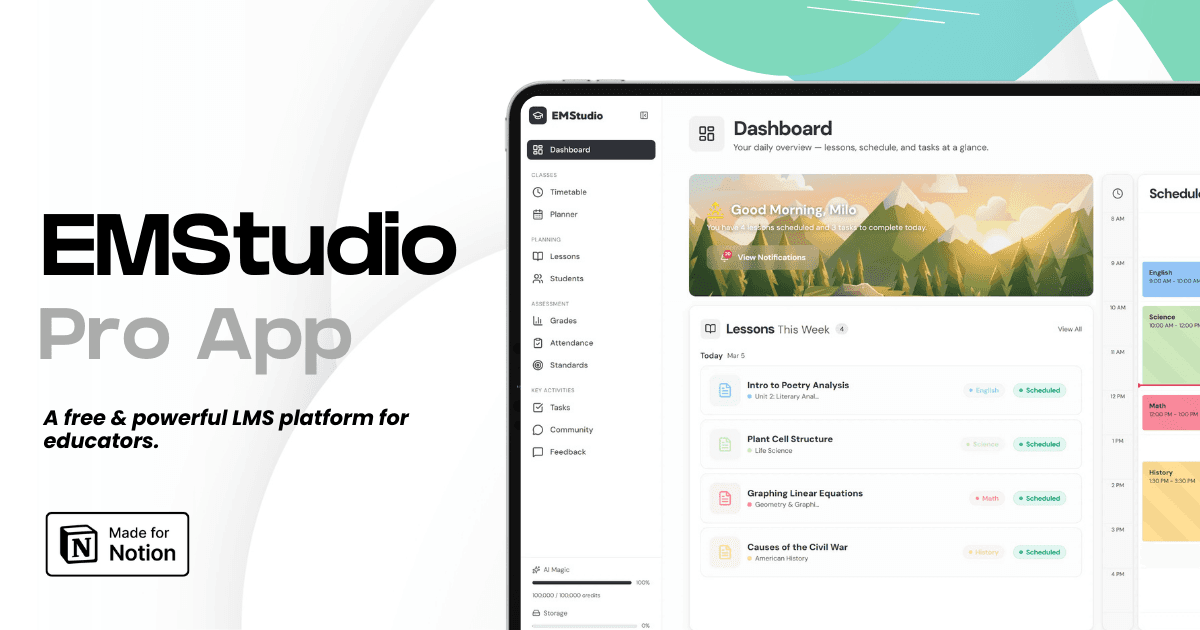
EMStudio is a free teaching management app — manage your classes, students, lessons, and more!
Learn More
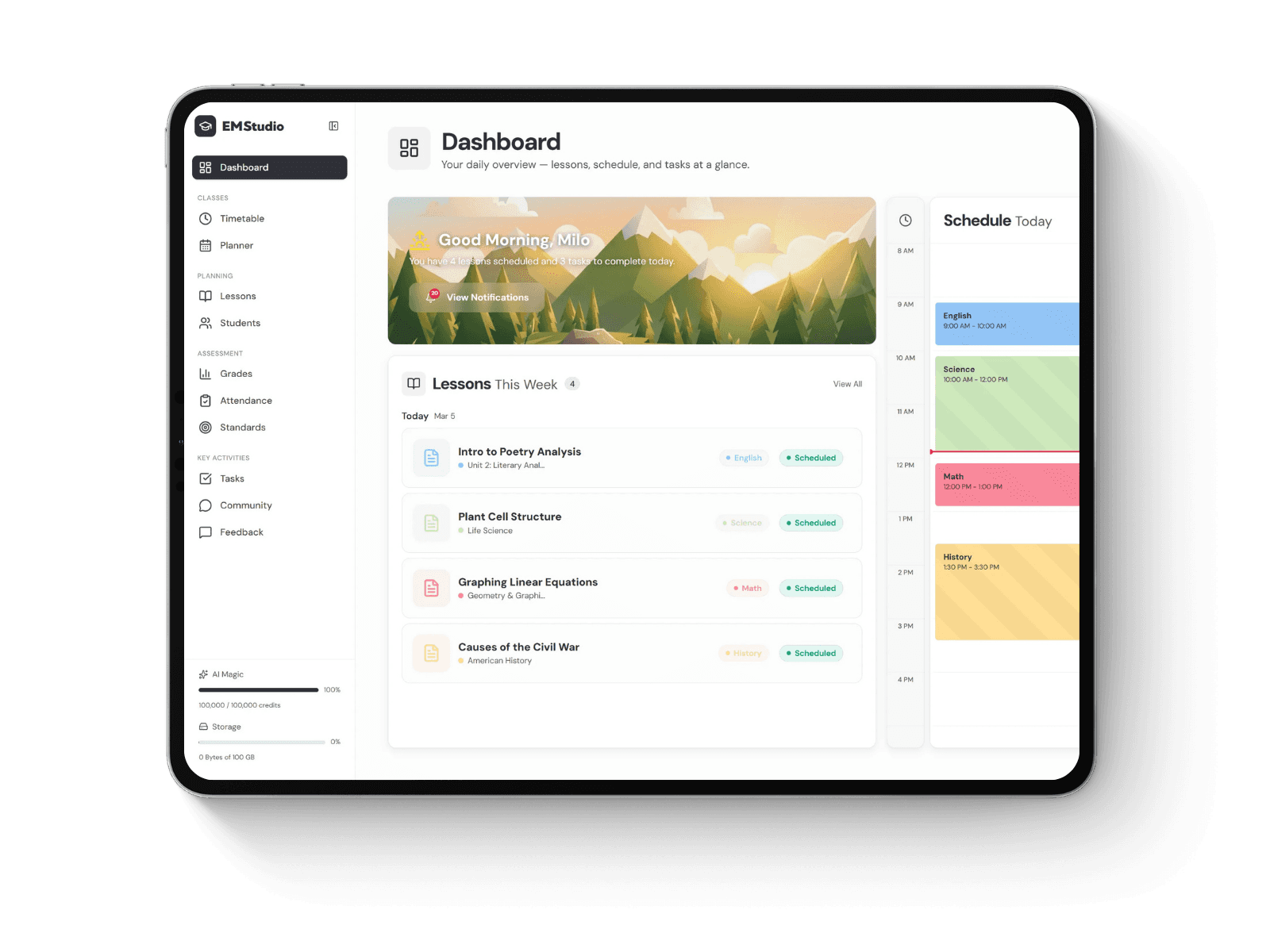
Still grading everything by hand?
EMStudio is a free teaching management app — manage your classes, students, lessons, and more!
Learn More
Table of Contents
What Are the Most Engaging US History Lessons for K-12?
The most engaging US history lessons combine hands-on simulations with primary source analysis. Colonial trade simulations, Civil Rights document workshops, and Industrial Revolution role-plays consistently show higher retention rates than lecture-based instruction by actively immersing students in historical decision-making scenarios.
Textbook chapters kill the past. Kids remember the history lesson where they starved in Jamestown or argued in a Birmingham jail. Engagement happens when students carry the cognitive load, not you.
Three approaches dominate my us history lesson plans. The Colonial America Simulation works for grades 5-8, needs 2 hours prep, and costs $0-30. Use it for resource scarcity. The Civil Rights Primary Source Workshop fits grades 7-12, requires 45 minutes prep, and is free with Library of Congress materials. Deploy it for document-based questions. The Industrial Revolution Role-Play suits grades 8-11, needs 3 hours prep, and runs $15-50. It excels for civic education and economic argumentation.
The Jamestown Survival Challenge puts four students in 1607. Each group receives resource cards representing food units, labor hours, and building materials. They face three winter rounds using decision trees. Probability cards determine who starves. The deck reflects the actual 60% first-year mortality rate. Students taste scarcity.
For teaching american history through the Civil Rights era, I use Letters to Birmingham. Eleventh graders read Martin Luther King Jr.'s actual letter paired with TimelineJS digital timelines built from the CRMvet.org archive. This targets Common Core RH.11-12.1 standards directly. The social studies tools that transform history classrooms include these free digital archives.
The Factory Town Council debate brings the Industrial Revolution alive. Students represent Lowell mill owners, child workers ages 10-12, and Dickens-inspired reformers. They argue using actual 1840s wage data from Massachusetts Bureau of Statistics records. This is inquiry-based learning rooted in evidence.
Colonial America Simulation Activities
Run the Jamestown Survival Challenge with 50 blank index cards, Colonial Williamsburg crop yield charts, and role sheets for John Smith, Powhatan representatives, and Virginia Company investors. Probability cards determine starvation outcomes based on historical records showing 60% died in the first year.
Warning: Do not use this simulation if less than 75% of students read at grade level 4.0 or above. The complex resource management rules require strong independent reading comprehension. I learned this the hard way with a 5th grade class in 2019.
Civil Rights Movement Primary Source Workshops
Set up four rotating Eyes on the Prize Document Stations: Birmingham jail logs, Children's March photos, Freedom Summer applications, and SNCC position papers. Students spend 12 minutes at each using structured academic controversy protocols from Stanford's Reading Like a Historian.
Assessment is straightforward. Students complete SOAPSTone graphic organizers for two documents. I differentiate with sentence stems for English Language Learners. This builds primary source analysis skills without lecture.
My us history lessons on Civil Rights improve when I follow the project-based learning implementation guide for document workshops. The C3 Framework emphasizes these inquiry arcs.
Industrial Revolution Role-Play Scenarios
Conduct the Triangle Shirtwaist Trial Reenactment using actual 1911 court transcripts from the Kheel Center at Cornell University. Assign randomized roles to prevent dominant students from monopolizing owner positions.
Common failure mode: Avoid allowing students to research their roles the night before. Provide primary source packets 48 hours in advance to ensure evidence-based arguments. Preparation time determines whether this becomes chaos or historical thinking skills practice.
Which Current Events Lesson Plans Connect to History?
Current events lesson plans that work use structured comparison protocols, linking modern headlines to archival sources. Effective history lesson units analyze contemporary voting legislation alongside 1965 documents, examine climate policy through Earth Day's 1970 origins, and teach digital citizenship and media literacy using historical propaganda techniques.
Stop treating today's news as isolated incidents. The best inquiry-based learning happens when students see patterns across decades. Eleventh graders treat CNN10 clips as primary sources requiring the same scrutiny as 1920s newspaper clippings.
The protocol is simple. First, source your modern article through Newsela or CNN10. Second, locate the historical parallel using the Library of Congress digital collections. Third, run a "Then vs. Now" Socratic seminar using Harvard Project Zero's Claim-Evidence-Reasoning routine. Students make a claim about the modern issue, support it with evidence from the historical document, and explain their reasoning. This document-based questions approach builds historical thinking skills faster than textbook summaries ever could.
You must explicitly teach the difference between historical contextualization and presentism. I learned this the hard way when students judged 19th-century labor organizers for not using social media. Create a False Equivalency Checklist: Does the student understand the economic constraints of the era? Do they recognize technological limitations? Can they identify prevailing social norms? If not, they're engaging in lazy anachronism that kills historical understanding.
Research from the Stanford History Education Group shows that students who analyze current events through historical frameworks demonstrate stronger media literacy outcomes than those studying contemporary issues in isolation. This aligns with the C3 Framework for civic education. The data confirms what veteran teachers know: context is the antidote to polarization.
Media Literacy Through Historical Newspaper Analysis
Run the Yellow Journalism vs. Clickbait parallel with your 8th graders. Pull Hearst's 1898 coverage of the Maine explosion from the Library of Congress archives. Compare those hysterical headlines with how modern social media algorithms serve outrage today.
Use the Stanford History Education Group's Civic Online Reasoning curriculum alongside MediaWise's "Is it Legit?" checklist. I adapt these tools for archival newspapers, asking students to spot sensationalism in both eras. Have them annotate a 1898 front page for loaded language, then repeat the exercise with a viral tweet. This primary source analysis reveals that emotional manipulation hasn't changed—only the delivery speed has.
Students discover that 1898 "yellow journalism" and 2024 clickbait use identical psychological triggers. The history lesson clicks when they recognize that Pulitzer and Hearst were the original engagement metrics hackers. This approach strengthens digital citizenship and media literacy by proving that verification skills mattered long before the internet existed.
Voting Rights Then and Now Comparison Units
Launch the Legislative Tracking Project for grades 10-12. Students compare Sections 4-5 of the 1965 Voting Rights Act with current state legislation using the Brennan Center's Voting Laws Roundup. This inquiry-based learning pushes them beyond mere comparison into structural analysis.
For five class periods, eleventh graders role-play as 1975 House Judiciary Committee members. They draft amendments to the 1965 Act using the same constraints, party dynamics, and political pressures that existed post-Shelby County. This document-based questions approach forces them to grapple with the actual mechanics of federalism rather than issuing simplistic judgments.
The simulation prevents presentism. When students must argue within 1975 political realities, they stop judging historical figures for not predicting 2024. Instead, they understand how preclearance worked and why its loss mattered. This C3 Framework aligned unit builds authentic civic education skills through immersive historical thinking.
Climate Change Lessons Linking to Earth Day History
Build the 1970 to 2024 Timeline using the jigsaw method. One group analyzes Nixon's EPA founding documents. Another examines Gaylord Nelson's original Earth Day speeches. A third tackles recent IPCC reports. This earth day lesson plan creates continuity between eras. Students see climate change as a decades-old crisis, not a sudden emergency.
Use the EPA's Documerica photo archive for primary visuals. These 1970s images of smog-choked cities and contaminated rivers hit harder than textbook descriptions. Students see that environmental degradation isn't new—they're inheriting a crisis that previous generations tried to solve.
The jigsaw comes together when groups present to each other. Ninth graders realize that 1970 activists faced similar pushback from industry groups. These sustainability and environmental history connections show that current events lesson plans work best when anchored in deep historical context. The past isn't past—it's the foundation for today's activism.

World History Lessons That Bring Global Cultures to Life
Stop dressing students in togas. The NCSS guidelines on cultural competence are clear: students must investigate cultures as historians analyzing evidence, never role-playing as cultural members. I structure expert group protocols where teams examine primary sources as investigative reporters rather than tourists.
Research consistently shows artifact-based inquiry outperforms textbook surveys on empathy metrics. When choosing your history lesson format from available social studies lesson plans, weigh the trade-offs: Artifact Centers cost $20-50 but deliver high engagement; Oral History Projects require 10+ hours but offer deep personalization; Spy Simulations hook reluctant learners yet risk superficial coverage without rigorous debriefing.
Ancient Civilization Artifact Investigation Centers
Artifact Centers run $20-50 in printing and material costs but deliver high engagement through tactile inquiry-based learning. I set up Mystery Artifact stations using the British Museum's free 3D scans—the Roman dodecahedron, Indus Valley seals, Mesoamerican ballgame yokes. Students rotate every 20 minutes, applying Stanford's Reading Like a Historian sourcing questions to deduce function and cultural significance.
This integrating global perspectives in your classroom approach works best with grades 6-9. They handle the object prints, argue over interpretations, and build historical thinking skills without ever stepping into costume. The primary source analysis sticks because they're acting as historians investigating real evidence, not tourists sampling exotic cultures.
The 20-minute rotations keep energy high. Students return to their expert group to compare findings across civilizations.
World War II Personal Narrative Projects
Oral History Projects demand 10+ hours of instructional time but create unmatched personalization. My Parallel Lives protocol pairs local veteran StoryCorps interviews with civilian diaries from the Yale Fortunoff Archive covering the same theater. Students build dual-timeline Google Sites exhibits that trace parallel experiences through rigorous document-based questions.
You must include opt-out alternatives when handling Holocaust content. Follow USHMM guidelines for trauma sensitivity. I offer students the choice to focus on Pacific Theater logistics or home-front rationing instead of concentration camp testimony. This respects emotional safety while maintaining inquiry-based learning rigor and honors diverse student backgrounds.
I archive the best Google Sites for future classes. The parallel structure makes comparing perspectives intuitive for 8th graders.
Cold War Spy Mission Simulations
Spy Simulations generate intense student interest but collapse into superficiality without proper debriefing. I design a Berlin Border Crossing escape room using declassified Wilson Center CWIHP documents. Students decode actual KGB and CIA ciphers—book codes, microdots, dead drops—to "cross" the checkpoint before time expires.
Differentiation happens through three reading levels of intelligence briefings. Struggling readers get the essential memo; advanced students analyze the full diplomatic cable. After the escape, we debrief using Socratic methods for historical inquiry to connect espionage tactics to containment policy and civic education themes. The C3 Framework dimensions anchor the closing discussion. Students justify their tradecraft decisions using primary source analysis standards.
The Wilson Center documents provide authentic Cold War paranoia. Students feel the urgency in the actual field reports.
Free Social Studies Lesson Plans for Every Grade Level
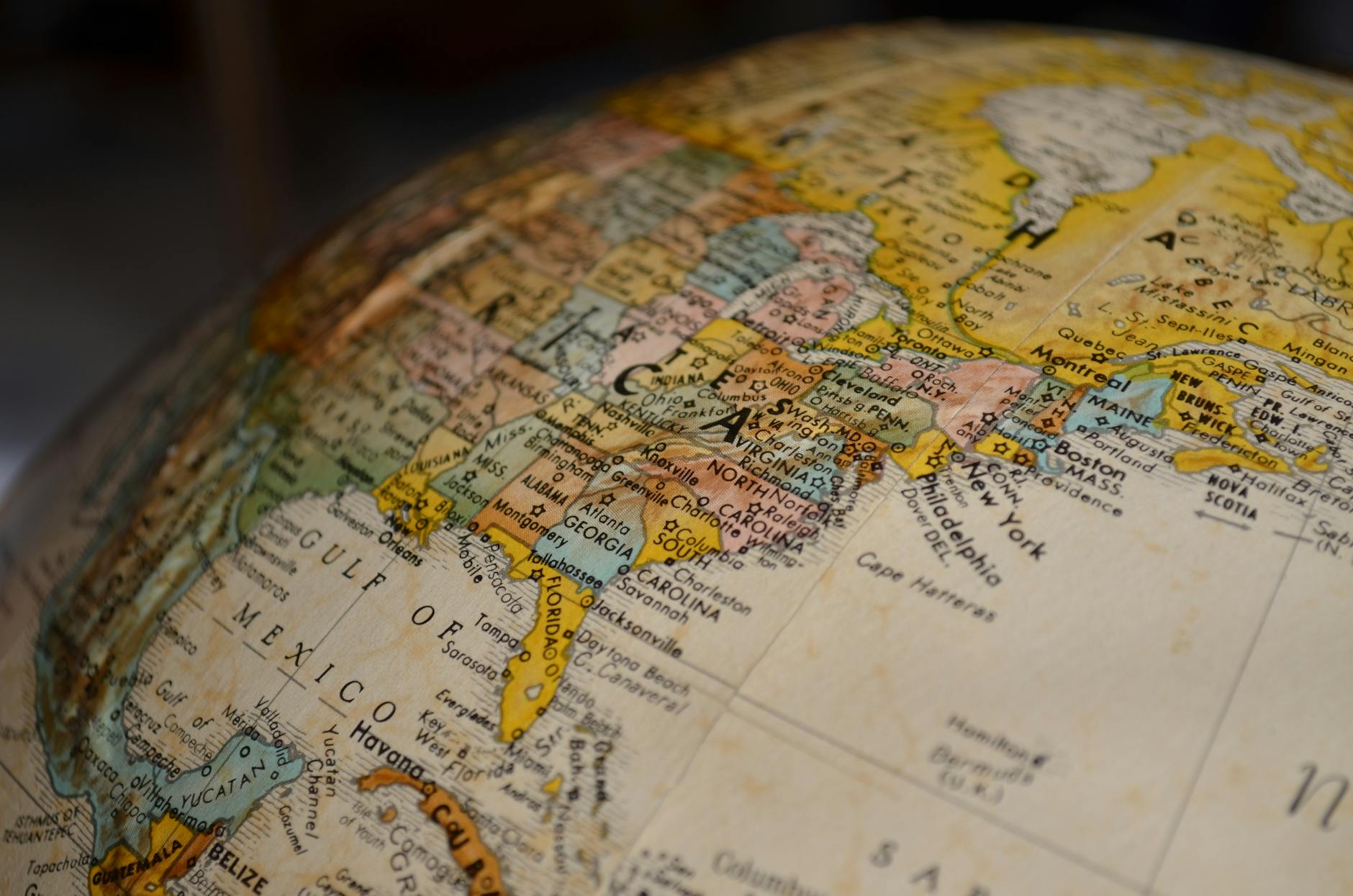
These free social studies lesson plans cover every grade without draining the department budget. Start with Stanford History Education Group (SHEG), C3 Teachers, Zinn Education Project, iCivics, and NewseumED. SHEG and C3 offer Creative Commons licenses; iCivics requires free registration; Zinn may need district approval. Before downloading, run a Free Resource Audit: verify alignment to C3 Framework indicators, calculate hidden costs like SHEG's high-volume printing or Zinn's potential admin clearance, and confirm modification rights.
Free tools excel at primary source analysis and inquiry-based learning, but when you need leveled readings or auto-graded document-based questions across multiple social studies lessons, paid alternatives like TCI or Active Classroom justify the cost. Browse these lesson plan examples for immediate classroom use and free resource collections for teachers.
Digital Citizenship Through Historical Ethics Cases
Run "The Telegram Dilemma" as your next history lesson on surveillance ethics. My 8th graders compare the 1917 Zimmermann Telegram interception with modern NSA debates using free National Archives documents. Split the class: half defends 1917 national security priorities, half argues 21st-century privacy rights. Use Padlet or Google Jamboard for hybrid synchronous discussion so remote students contribute simultaneously with in-person peers.
Economics Lessons Using Historical Market Crashes
Simulate "1929 vs. 2008 Market Crashes" to build historical thinking skills through hands-on data analysis. Give students hypothetical $1,000 portfolios and track daily losses using FRED's authentic ticker data for September-October of both years. They calculate percentage losses manually first, then compare Federal Reserve response strategies and bank bailout policies. This beats textbook charts because they handle raw economic data directly. The activity costs nothing but requires reliable internet for data verification.
Geography and Migration Story Mapping Activities
Build a "Great Migration StoryMap" using Knight Lab's free StoryMap JS tool. Plot Jacob Lawrence's Migration Series paintings alongside 1940-1970 census data for Chicago, Detroit, and New York. Students click through migration routes while analyzing demographic shifts and housing policy impacts. I assign this to pairs so they debate why Detroit's Black population tripled while rural Mississippi emptied. It delivers civic education through geography without expensive GIS software.
How to Choose the Right History Lesson for Your Objectives?
Select history lessons by auditing state standards for skill versus content emphasis, then matching activity complexity to student Lexile levels. Avoid simulation-based lessons for classes with chronic behavioral management issues, and ensure technology-integrated plans have analog backup activities for connectivity failures.
I start with the end in mind. Map the decision path on paper first.
Your flowchart moves from Start → Identify if your standard needs content recall or historical thinking skills → Check Lexile levels for readiness → Verify tech reliability and budget. Insert decision diamonds: "Behavior data >75% on-task?" leads to simulations only if yes. "Tech reliable?" branches to digital or analog paths. End with three lesson types: simulation, document analysis, or direct instruction.
Never hand unmodified primary sources to ELLs reading below fourth-grade level. Skip competitive simulations in high-conflict classrooms; they escalate fast. Always have paper backups when you teach history online.
Run this four-step protocol: First, identify the specific skill—sourcing, contextualization, or corroboration. Second, verify alignment with C3 Framework Dimension 2. Third, pick your assessment format: traditional document-based questions or performance tasks. Fourth, pilot with five students before rolling out to all thirty.
Aligning Activities with State Standards
California HSS 5.3 and Texas TEKS 5.1 both cover Indigenous history, but the emphasis differs. Cross-reference benchmarks before you align standards with a curriculum tool. Strong civic education starts with matching your history lesson to the specific verb in your state standard.
Differentiating Complexity for Diverse Learners
The 1776 Dunlap Broadside works for everyone if you tier it right. Level one pairs the document with a glossary and three guiding questions. Level two adds a SOAPSTone organizer. Level three requires intertextual analysis with a secondary academic text. This lets you support differentiated instruction strategies without watering down the primary source analysis.
Integrating Technology for Hybrid Learning
Bandwidth determines your platform choice, not fancy features. Google Classroom handles async discussions on low connectivity. Nearpod offers VR field trips but needs 10Mbps+ stability. Edpuzzle works on any device for video analysis. Always mandate paper-document backups for every digital inquiry-based learning activity.
The Bottom Line on History Lesson
The best history lesson gets kids arguing about the past, not memorizing dates. Whether you're using primary source analysis with 5th graders or document-based questions with seniors, the goal stays constant: make students do the thinking. I don't care if it's a free worksheet or pricey unit—if kids aren't wrestling with evidence, it's busywork. Content without context is trivia.
Match your plan to your actual objective. Inquiry-based learning works wonders for building historical thinking skills, but sometimes you just need a solid reading check. World history, US history, current events—they all click when students see why it matters today. The connection to now makes the past stick.
Stop hoarding resources. Pick one lesson from this list that fits your standards. Adapt it for your kids. Run it tomorrow. You'll know within ten minutes if it's working, and that's the only data that matters. Better to teach one great lesson than plan ten perfect ones.
What Are the Most Engaging US History Lessons for K-12?
The most engaging US history lessons combine hands-on simulations with primary source analysis. Colonial trade simulations, Civil Rights document workshops, and Industrial Revolution role-plays consistently show higher retention rates than lecture-based instruction by actively immersing students in historical decision-making scenarios.
Textbook chapters kill the past. Kids remember the history lesson where they starved in Jamestown or argued in a Birmingham jail. Engagement happens when students carry the cognitive load, not you.
Three approaches dominate my us history lesson plans. The Colonial America Simulation works for grades 5-8, needs 2 hours prep, and costs $0-30. Use it for resource scarcity. The Civil Rights Primary Source Workshop fits grades 7-12, requires 45 minutes prep, and is free with Library of Congress materials. Deploy it for document-based questions. The Industrial Revolution Role-Play suits grades 8-11, needs 3 hours prep, and runs $15-50. It excels for civic education and economic argumentation.
The Jamestown Survival Challenge puts four students in 1607. Each group receives resource cards representing food units, labor hours, and building materials. They face three winter rounds using decision trees. Probability cards determine who starves. The deck reflects the actual 60% first-year mortality rate. Students taste scarcity.
For teaching american history through the Civil Rights era, I use Letters to Birmingham. Eleventh graders read Martin Luther King Jr.'s actual letter paired with TimelineJS digital timelines built from the CRMvet.org archive. This targets Common Core RH.11-12.1 standards directly. The social studies tools that transform history classrooms include these free digital archives.
The Factory Town Council debate brings the Industrial Revolution alive. Students represent Lowell mill owners, child workers ages 10-12, and Dickens-inspired reformers. They argue using actual 1840s wage data from Massachusetts Bureau of Statistics records. This is inquiry-based learning rooted in evidence.
Colonial America Simulation Activities
Run the Jamestown Survival Challenge with 50 blank index cards, Colonial Williamsburg crop yield charts, and role sheets for John Smith, Powhatan representatives, and Virginia Company investors. Probability cards determine starvation outcomes based on historical records showing 60% died in the first year.
Warning: Do not use this simulation if less than 75% of students read at grade level 4.0 or above. The complex resource management rules require strong independent reading comprehension. I learned this the hard way with a 5th grade class in 2019.
Civil Rights Movement Primary Source Workshops
Set up four rotating Eyes on the Prize Document Stations: Birmingham jail logs, Children's March photos, Freedom Summer applications, and SNCC position papers. Students spend 12 minutes at each using structured academic controversy protocols from Stanford's Reading Like a Historian.
Assessment is straightforward. Students complete SOAPSTone graphic organizers for two documents. I differentiate with sentence stems for English Language Learners. This builds primary source analysis skills without lecture.
My us history lessons on Civil Rights improve when I follow the project-based learning implementation guide for document workshops. The C3 Framework emphasizes these inquiry arcs.
Industrial Revolution Role-Play Scenarios
Conduct the Triangle Shirtwaist Trial Reenactment using actual 1911 court transcripts from the Kheel Center at Cornell University. Assign randomized roles to prevent dominant students from monopolizing owner positions.
Common failure mode: Avoid allowing students to research their roles the night before. Provide primary source packets 48 hours in advance to ensure evidence-based arguments. Preparation time determines whether this becomes chaos or historical thinking skills practice.
Which Current Events Lesson Plans Connect to History?
Current events lesson plans that work use structured comparison protocols, linking modern headlines to archival sources. Effective history lesson units analyze contemporary voting legislation alongside 1965 documents, examine climate policy through Earth Day's 1970 origins, and teach digital citizenship and media literacy using historical propaganda techniques.
Stop treating today's news as isolated incidents. The best inquiry-based learning happens when students see patterns across decades. Eleventh graders treat CNN10 clips as primary sources requiring the same scrutiny as 1920s newspaper clippings.
The protocol is simple. First, source your modern article through Newsela or CNN10. Second, locate the historical parallel using the Library of Congress digital collections. Third, run a "Then vs. Now" Socratic seminar using Harvard Project Zero's Claim-Evidence-Reasoning routine. Students make a claim about the modern issue, support it with evidence from the historical document, and explain their reasoning. This document-based questions approach builds historical thinking skills faster than textbook summaries ever could.
You must explicitly teach the difference between historical contextualization and presentism. I learned this the hard way when students judged 19th-century labor organizers for not using social media. Create a False Equivalency Checklist: Does the student understand the economic constraints of the era? Do they recognize technological limitations? Can they identify prevailing social norms? If not, they're engaging in lazy anachronism that kills historical understanding.
Research from the Stanford History Education Group shows that students who analyze current events through historical frameworks demonstrate stronger media literacy outcomes than those studying contemporary issues in isolation. This aligns with the C3 Framework for civic education. The data confirms what veteran teachers know: context is the antidote to polarization.
Media Literacy Through Historical Newspaper Analysis
Run the Yellow Journalism vs. Clickbait parallel with your 8th graders. Pull Hearst's 1898 coverage of the Maine explosion from the Library of Congress archives. Compare those hysterical headlines with how modern social media algorithms serve outrage today.
Use the Stanford History Education Group's Civic Online Reasoning curriculum alongside MediaWise's "Is it Legit?" checklist. I adapt these tools for archival newspapers, asking students to spot sensationalism in both eras. Have them annotate a 1898 front page for loaded language, then repeat the exercise with a viral tweet. This primary source analysis reveals that emotional manipulation hasn't changed—only the delivery speed has.
Students discover that 1898 "yellow journalism" and 2024 clickbait use identical psychological triggers. The history lesson clicks when they recognize that Pulitzer and Hearst were the original engagement metrics hackers. This approach strengthens digital citizenship and media literacy by proving that verification skills mattered long before the internet existed.
Voting Rights Then and Now Comparison Units
Launch the Legislative Tracking Project for grades 10-12. Students compare Sections 4-5 of the 1965 Voting Rights Act with current state legislation using the Brennan Center's Voting Laws Roundup. This inquiry-based learning pushes them beyond mere comparison into structural analysis.
For five class periods, eleventh graders role-play as 1975 House Judiciary Committee members. They draft amendments to the 1965 Act using the same constraints, party dynamics, and political pressures that existed post-Shelby County. This document-based questions approach forces them to grapple with the actual mechanics of federalism rather than issuing simplistic judgments.
The simulation prevents presentism. When students must argue within 1975 political realities, they stop judging historical figures for not predicting 2024. Instead, they understand how preclearance worked and why its loss mattered. This C3 Framework aligned unit builds authentic civic education skills through immersive historical thinking.
Climate Change Lessons Linking to Earth Day History
Build the 1970 to 2024 Timeline using the jigsaw method. One group analyzes Nixon's EPA founding documents. Another examines Gaylord Nelson's original Earth Day speeches. A third tackles recent IPCC reports. This earth day lesson plan creates continuity between eras. Students see climate change as a decades-old crisis, not a sudden emergency.
Use the EPA's Documerica photo archive for primary visuals. These 1970s images of smog-choked cities and contaminated rivers hit harder than textbook descriptions. Students see that environmental degradation isn't new—they're inheriting a crisis that previous generations tried to solve.
The jigsaw comes together when groups present to each other. Ninth graders realize that 1970 activists faced similar pushback from industry groups. These sustainability and environmental history connections show that current events lesson plans work best when anchored in deep historical context. The past isn't past—it's the foundation for today's activism.
World History Lessons That Bring Global Cultures to Life
Stop dressing students in togas. The NCSS guidelines on cultural competence are clear: students must investigate cultures as historians analyzing evidence, never role-playing as cultural members. I structure expert group protocols where teams examine primary sources as investigative reporters rather than tourists.
Research consistently shows artifact-based inquiry outperforms textbook surveys on empathy metrics. When choosing your history lesson format from available social studies lesson plans, weigh the trade-offs: Artifact Centers cost $20-50 but deliver high engagement; Oral History Projects require 10+ hours but offer deep personalization; Spy Simulations hook reluctant learners yet risk superficial coverage without rigorous debriefing.
Ancient Civilization Artifact Investigation Centers
Artifact Centers run $20-50 in printing and material costs but deliver high engagement through tactile inquiry-based learning. I set up Mystery Artifact stations using the British Museum's free 3D scans—the Roman dodecahedron, Indus Valley seals, Mesoamerican ballgame yokes. Students rotate every 20 minutes, applying Stanford's Reading Like a Historian sourcing questions to deduce function and cultural significance.
This integrating global perspectives in your classroom approach works best with grades 6-9. They handle the object prints, argue over interpretations, and build historical thinking skills without ever stepping into costume. The primary source analysis sticks because they're acting as historians investigating real evidence, not tourists sampling exotic cultures.
The 20-minute rotations keep energy high. Students return to their expert group to compare findings across civilizations.
World War II Personal Narrative Projects
Oral History Projects demand 10+ hours of instructional time but create unmatched personalization. My Parallel Lives protocol pairs local veteran StoryCorps interviews with civilian diaries from the Yale Fortunoff Archive covering the same theater. Students build dual-timeline Google Sites exhibits that trace parallel experiences through rigorous document-based questions.
You must include opt-out alternatives when handling Holocaust content. Follow USHMM guidelines for trauma sensitivity. I offer students the choice to focus on Pacific Theater logistics or home-front rationing instead of concentration camp testimony. This respects emotional safety while maintaining inquiry-based learning rigor and honors diverse student backgrounds.
I archive the best Google Sites for future classes. The parallel structure makes comparing perspectives intuitive for 8th graders.
Cold War Spy Mission Simulations
Spy Simulations generate intense student interest but collapse into superficiality without proper debriefing. I design a Berlin Border Crossing escape room using declassified Wilson Center CWIHP documents. Students decode actual KGB and CIA ciphers—book codes, microdots, dead drops—to "cross" the checkpoint before time expires.
Differentiation happens through three reading levels of intelligence briefings. Struggling readers get the essential memo; advanced students analyze the full diplomatic cable. After the escape, we debrief using Socratic methods for historical inquiry to connect espionage tactics to containment policy and civic education themes. The C3 Framework dimensions anchor the closing discussion. Students justify their tradecraft decisions using primary source analysis standards.
The Wilson Center documents provide authentic Cold War paranoia. Students feel the urgency in the actual field reports.
Free Social Studies Lesson Plans for Every Grade Level
These free social studies lesson plans cover every grade without draining the department budget. Start with Stanford History Education Group (SHEG), C3 Teachers, Zinn Education Project, iCivics, and NewseumED. SHEG and C3 offer Creative Commons licenses; iCivics requires free registration; Zinn may need district approval. Before downloading, run a Free Resource Audit: verify alignment to C3 Framework indicators, calculate hidden costs like SHEG's high-volume printing or Zinn's potential admin clearance, and confirm modification rights.
Free tools excel at primary source analysis and inquiry-based learning, but when you need leveled readings or auto-graded document-based questions across multiple social studies lessons, paid alternatives like TCI or Active Classroom justify the cost. Browse these lesson plan examples for immediate classroom use and free resource collections for teachers.
Digital Citizenship Through Historical Ethics Cases
Run "The Telegram Dilemma" as your next history lesson on surveillance ethics. My 8th graders compare the 1917 Zimmermann Telegram interception with modern NSA debates using free National Archives documents. Split the class: half defends 1917 national security priorities, half argues 21st-century privacy rights. Use Padlet or Google Jamboard for hybrid synchronous discussion so remote students contribute simultaneously with in-person peers.
Economics Lessons Using Historical Market Crashes
Simulate "1929 vs. 2008 Market Crashes" to build historical thinking skills through hands-on data analysis. Give students hypothetical $1,000 portfolios and track daily losses using FRED's authentic ticker data for September-October of both years. They calculate percentage losses manually first, then compare Federal Reserve response strategies and bank bailout policies. This beats textbook charts because they handle raw economic data directly. The activity costs nothing but requires reliable internet for data verification.
Geography and Migration Story Mapping Activities
Build a "Great Migration StoryMap" using Knight Lab's free StoryMap JS tool. Plot Jacob Lawrence's Migration Series paintings alongside 1940-1970 census data for Chicago, Detroit, and New York. Students click through migration routes while analyzing demographic shifts and housing policy impacts. I assign this to pairs so they debate why Detroit's Black population tripled while rural Mississippi emptied. It delivers civic education through geography without expensive GIS software.
How to Choose the Right History Lesson for Your Objectives?
Select history lessons by auditing state standards for skill versus content emphasis, then matching activity complexity to student Lexile levels. Avoid simulation-based lessons for classes with chronic behavioral management issues, and ensure technology-integrated plans have analog backup activities for connectivity failures.
I start with the end in mind. Map the decision path on paper first.
Your flowchart moves from Start → Identify if your standard needs content recall or historical thinking skills → Check Lexile levels for readiness → Verify tech reliability and budget. Insert decision diamonds: "Behavior data >75% on-task?" leads to simulations only if yes. "Tech reliable?" branches to digital or analog paths. End with three lesson types: simulation, document analysis, or direct instruction.
Never hand unmodified primary sources to ELLs reading below fourth-grade level. Skip competitive simulations in high-conflict classrooms; they escalate fast. Always have paper backups when you teach history online.
Run this four-step protocol: First, identify the specific skill—sourcing, contextualization, or corroboration. Second, verify alignment with C3 Framework Dimension 2. Third, pick your assessment format: traditional document-based questions or performance tasks. Fourth, pilot with five students before rolling out to all thirty.
Aligning Activities with State Standards
California HSS 5.3 and Texas TEKS 5.1 both cover Indigenous history, but the emphasis differs. Cross-reference benchmarks before you align standards with a curriculum tool. Strong civic education starts with matching your history lesson to the specific verb in your state standard.
Differentiating Complexity for Diverse Learners
The 1776 Dunlap Broadside works for everyone if you tier it right. Level one pairs the document with a glossary and three guiding questions. Level two adds a SOAPSTone organizer. Level three requires intertextual analysis with a secondary academic text. This lets you support differentiated instruction strategies without watering down the primary source analysis.
Integrating Technology for Hybrid Learning
Bandwidth determines your platform choice, not fancy features. Google Classroom handles async discussions on low connectivity. Nearpod offers VR field trips but needs 10Mbps+ stability. Edpuzzle works on any device for video analysis. Always mandate paper-document backups for every digital inquiry-based learning activity.
The Bottom Line on History Lesson
The best history lesson gets kids arguing about the past, not memorizing dates. Whether you're using primary source analysis with 5th graders or document-based questions with seniors, the goal stays constant: make students do the thinking. I don't care if it's a free worksheet or pricey unit—if kids aren't wrestling with evidence, it's busywork. Content without context is trivia.
Match your plan to your actual objective. Inquiry-based learning works wonders for building historical thinking skills, but sometimes you just need a solid reading check. World history, US history, current events—they all click when students see why it matters today. The connection to now makes the past stick.
Stop hoarding resources. Pick one lesson from this list that fits your standards. Adapt it for your kids. Run it tomorrow. You'll know within ten minutes if it's working, and that's the only data that matters. Better to teach one great lesson than plan ten perfect ones.
Still grading everything by hand?
EMStudio is a free teaching management app — manage your classes, students, lessons, and more!
Learn More
Still grading everything by hand?
EMStudio is a free teaching management app — manage your classes, students, lessons, and more!
Learn More



Notion4Teachers
Notion templates to simplify administrative tasks and enhance your teaching experience.



2026 Notion4Teachers. All Rights Reserved.
Notion4Teachers
Notion templates to simplify administrative tasks and enhance your teaching experience.
2026 Notion4Teachers. All Rights Reserved.
Notion4Teachers
Notion templates to simplify administrative tasks and enhance your teaching experience.
2026 Notion4Teachers. All Rights Reserved.