12 Classroom Routines for Elementary Teachers
12 Classroom Routines for Elementary Teachers

Article by
Milo
ESL Content Coordinator & Educator
ESL Content Coordinator & Educator
All Posts
Why do some classrooms run themselves while others feel like constant chaos? The difference isn't magic—it's classroom routines practiced until they become automatic. I've watched 3rd graders walk in silently, unpack, and start their morning work while I took attendance, and I've seen 5th graders spend twenty minutes finding a pencil. Same kids, different systems. When your procedures break down, you lose instructional time to questions about bathroom passes and pencil sharpening. When they work, you actually teach.
The twelve routines in this post are the ones that actually stuck in my classroom after years of trial and error. Morning entry procedures that eliminate the question "What do I do now?" Transition signals that don't require you to raise your voice. Self-regulation strategies that keep small groups running while you pull kids for reading intervention. These aren't theoretical frameworks. They're specific procedures I used to claw back instructional time and stop micromanaging every pencil sharpener. Whether you're a new teacher drowning in decisions or a veteran tightening up your systems, these moves work.
Still grading everything by hand?
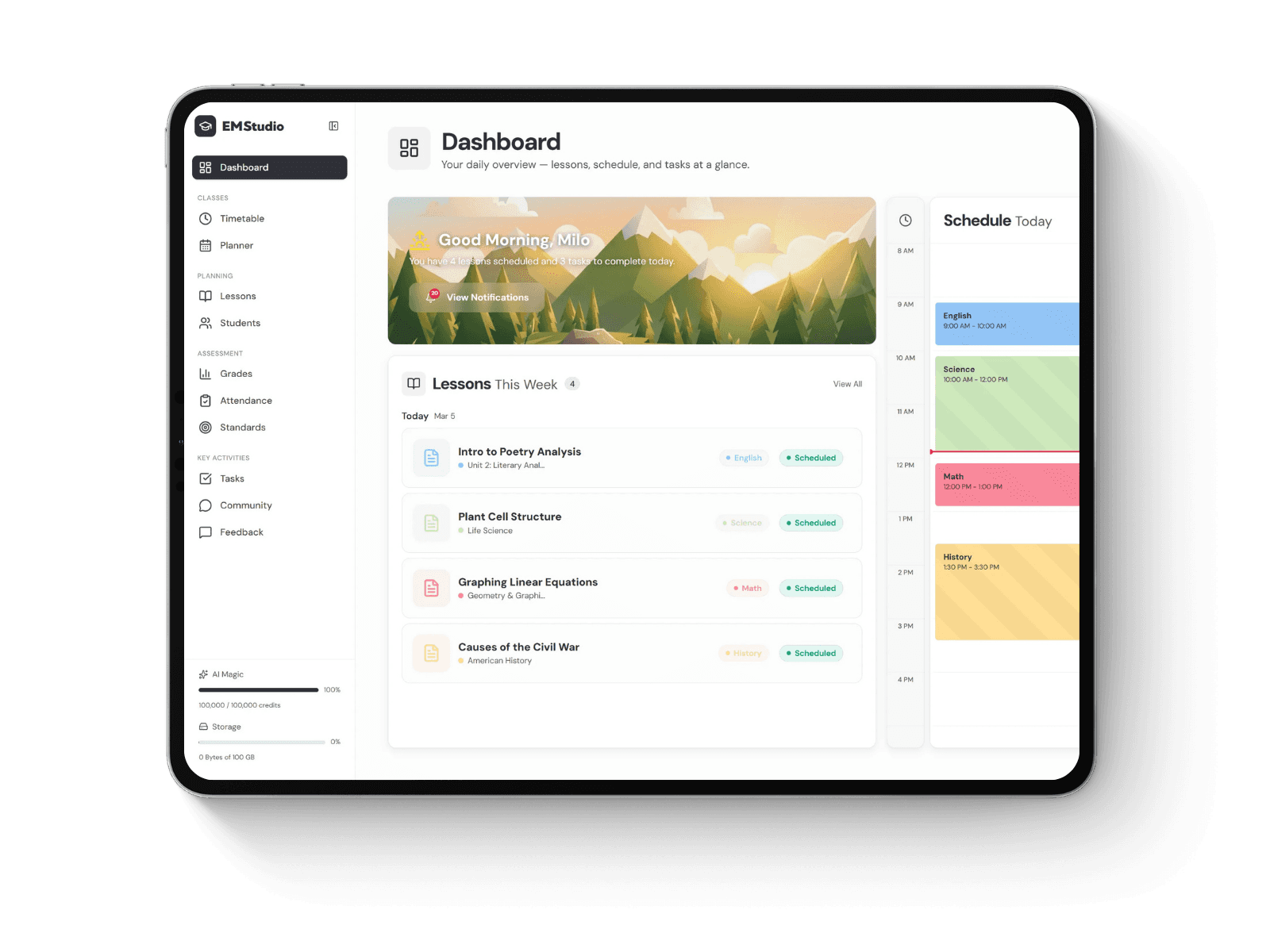
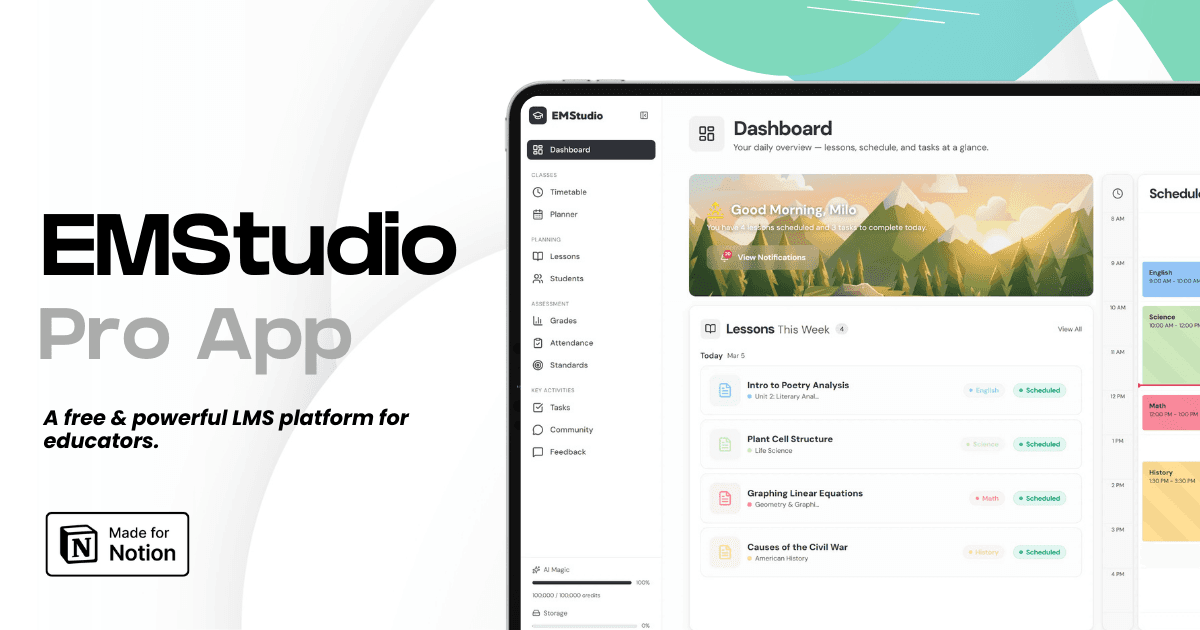
EMStudio is a free teaching management app — manage your classes, students, lessons, and more!
Learn More
Still grading everything by hand?
EMStudio is a free teaching management app — manage your classes, students, lessons, and more!
Learn More
Table of Contents
Morning Entry and Exit Routines
John Hattie's Visible Learning research puts classroom management strategies at an effect size of 0.60 or higher. That beats most instructional interventions you will implement this year. Yet inconsistent entry procedures cost us 5 to 7 minutes of instructional time every single morning. Across a school year, that adds up to nearly three weeks of lost teaching.
I structure my day around three distinct phases: the first five minutes for arrival, the next ten to twenty for morning work, and the final ten for dismissal. Each phase needs concrete procedures that run without teacher direction. When you establish classroom routines and procedures that students execute independently, you reclaim those minutes for teaching. These research-based classroom organization strategies form the backbone of effective behavior management.
Door Greeting and Check-In Procedures
I post a laminated Greeting Choice Board by the door offering three options: fist bump, wave, or high-five. Students point to their choice as they enter. This gives them agency and saves me from guessing who wants contact. My third graders take ownership immediately. The board uses icons rather than words, so emerging readers participate fully.
The check-in protocol runs itself after week two. Step one: greet me using their chosen method. Step two: move their name magnet from 'home' to 'school' on the attendance board. Step three: deposit their lunch ticket in the labeled bin. I stand at the door and smile. The routine does the work. I never ask who is buying lunch because the bin shows me.
I use magnetic strip boards from the dollar store. The physical movement gives students a concrete transition into 'school mode.' For twenty-five students, this takes three to four minutes. I keep a 'peace sign' option for students who prefer non-contact greetings. One student used the wave exclusively until March, then switched to fist bumps when ready. These procedures and routines build engagement through predictable structure.
Morning Work and Soft Start Stations
Traditional morning work means worksheets waiting on desks. Students arrive to silent drilling. Soft Start Stations flip this. Students choose activities that activate different brain regions. The noise level stays manageable, but the energy shifts from compliance to curiosity. I made the switch after noticing my second graders dragging their feet to enter. Now they rush to see which station opens first.
I run four rotations using Dollar Tree containers. I rotate groups every ten minutes for K-2, stretching to fifteen for grades 3-5. The timer on my phone keeps us honest.
Building with LEGOs
Creating with art trays
Reading with picture books
Exploring with science bins
Students hear the chime and rotate clockwise. No arguments about turns.
Initial setup runs forty to sixty dollars using bulk bricks and thrifted books. Compare that to the copy budget for daily packets. My fourth graders built elaborate structures while I took attendance. Nobody asked "what do I do now?" because the classroom procedures were clear. The cost pays for itself in reduced copying and increased instructional time.
End-of-Day Cleanup and Dismissal Systems
The 3-2-1 Checkout method breaks dismissal into chunks. Three minutes for floor cleanup using a job chart: floor checker, board washer, chair stacker, paper collector. Two minutes for backpack checklist review using laminated photo cards showing four required items. One minute for quiet line formation. We practice this until muscle memory takes over. The job chart rotates weekly so every student learns every skill.
I layer the Backpack Check Race on top. Tables earn points for being ready first. At month's end, the winning table earns five extra minutes of recess. The competition stays friendly because the stakes are low. My fifth graders last year policed each other gently, reminding tablemates about library books without me saying a word. This reinforces classroom routines and expectations without punishment.
Skip the backpack check at your own risk. Teacher surveys show that forty percent of students forget homework or lunch when this routine gets cut. I learned this the hard way after a chaotic Friday dismissal left three kids without their reading logs. Now we never skip the checklist, even on early release days. Those two minutes save twenty minutes of phone calls later.
Instructional Routines for Active Learning
Rosenshine's Principles of Instruction make clear what veteran teachers already know: smooth procedures reduce cognitive load and free up brain space for actual learning. When classroom routines run on autopilot, academic engaged time jumps significantly. I structure instructional time around three distinct phases: collaborative discourse, independent practice, and rotational learning. Nail these, and you reclaim 15 to 20 minutes of content delivery per day. That adds up to nearly two extra weeks of instruction across a school year.
Turn and Talk Protocols
I script every word. "Turn to your shoulder partner. Partner A explains for 30 seconds. Partner B responds. Go." No ambiguity. No "discuss with your neighbor" vagueness that sends kids staring at each other or talking about weekend plans. I use colored popsicle sticks—red, blue, green, yellow—to randomly select which pair shares out to the whole class. Keeps everyone accountable because anyone might have to speak.
The hand signal for voices off is hand on head. When they see my palm touch my hair, mouths close immediately. No counting down. No raised voice.
The timing is tight. Fifteen seconds to turn bodies and make eye contact. Thirty seconds for the actual academic conversation. Five seconds to face front and track me. Total routine time: 50 seconds. That's it. If you let it bleed to three minutes, you lose the instructional momentum. Practice this daily for two weeks until it becomes muscle memory. leading effective student discussions requires this level of precision.
Silent Reading and Independent Work Blocks
I adapted the Daily 5 "Read to Self" expectations for my third graders. We review these norms daily for the first month until they become automatic:
Read the whole time.
Stay in one spot.
Get started right away.
Work quietly.
Build stamina.
The key is gradual release. Week one starts with just three minutes for first grade. Add two minutes weekly. By October, my fourth and fifth graders sustain twenty-plus minutes of focused reading without peeking at their neighbors or asking for bathroom breaks.
Materials matter. Each student has an individual book box labeled with their student number—not names, so I can reuse them year after year. Inside sit five to eight books at their exact instructional level, refreshed every Friday during our book shopping time. No wandering to the library during silent reading. No "I can't find a book" excuses. The books live in the box. The box lives in their cubby. active learning strategies for student engagement work best when the infrastructure is invisible.
Collaborative Group Rotation Systems
The MUST-DO/MAY-DO board hangs front and center. Four color-coded groups—red, yellow, green, blue—move through a pocket chart system. Everyone sees where they are and where they're headed next. No line at my desk asking "Where do I go?" The board tells them. I assign roles within groups: materials manager, timekeeper, quiet captain. Students rotate roles weekly.
Each rotation lasts exactly fifteen minutes. I signal transitions with a wireless doorbell—ding-dong—not my voice. Four stations run simultaneously: Teacher Table for small group instruction, Independent Practice for leveled worksheets, Technology for two to three iPads with specific apps like Khan Academy Kids, and Hands-On for math manipulatives or word sorts. When the chime sounds, students finish their current problem or sentence.
The cleanup signal is specific. "One minute warning" means start wrapping up. Then I call the color: "Red table, pack up. iPads to the charging station. Manipulatives in the bins. Papers in the tray." Every station has a designated put-away spot. We practice the transitions without content first—dry runs until we can switch in under sixty seconds.
What Are the Best Transition Routines?
The best transition classroom routines combine auditory callbacks like 'Class-Yes' with visual timers and student-led material distribution. Effective transitions use consistent signals, take under 30 seconds once established, and include specific protocols for lining up, attention-getting, and shifting between subjects without disruption.
I once tracked my transitions for a week. I was hemorrhaging twelve minutes every time we switched subjects. That’s an hour a week—gone to chaos. The fix wasn’t stricter yelling; it was predictable signals that ran on autopilot.
Research indicates poorly managed transitions consume up to 10 minutes of instructional time daily. Your target is 30 seconds or less. But don’t stockpile signals—using more than two or three different cues per day confuses students and kills momentum. Pick two and stick with them.
Signal Type | Best Grade Range | Setup Cost | Response Time | Common Pitfall |
|---|---|---|---|---|
Call-and-Response | K-5 | $0 | 3 seconds | Using too many variations |
Visual Signals | 3-12 | $10-20 | 5 seconds | Students ignore lights |
Musical Cues | K-8 | $0-15 | Varies | Song becomes background noise |
Timer Methods | 3-12 | $0-5 | Immediate | Anxiety from countdown pressure |
Choose signals that match your budget and tolerance for noise. Call-and-Response is free and immediate, but requires your voice. Visual Signals spare your throat but need equipment.
Attention Signals and Callbacks
"Class-Class" gets "Yes-Yes" from Whole Brain Teaching.
"Hands on top" means "Everybody stop."
"Hocus Pocus" earns "Everybody Focus."
"Macaroni and Cheese" needs "Everybody Freeze."
"1-2-3 eyes on me" receives "1-2-3 eyes on you."
Time your students with a stopwatch. You need 80% of the class frozen and facing forward within three seconds. If fewer respond, stop everything and practice the signal five times immediately. Yes, it feels silly to practice lining up or responding to your call five times in a row. But this reset costs two minutes now and saves hours of nagging later.
Adjust for age. Kindergarteners need physical gestures—touch your head, then shoulders—while fifth graders handle voice-only responses. These procedures that eliminate daily chaos work because they become muscle memory, not choices.
Line-Up and Hallway Procedures
Dismiss by "Quietest Table" rather than row-by-row. Kids respond to competition, and peer pressure keeps them quieter than your voice ever could. But for daily efficiency, use the "Line Order System." Assign each student a permanent number 1-25 matching tape spots on the floor. No pushing, no arguments about who stands where. This saves one to two minutes of organizing time every single time you leave the room.
For primary grades, use "Marshmallow Toes"—walk quietly like a marshmallow on hot chocolate—and "Bubble in Mouth"—puff those cheeks to prevent talking. These examples of classroom procedures turn hallway behavior into a game rather than a constant battle. Strong classroom routines here prevent the pushing and shoving that destroys momentum before you even reach the library.
Material Distribution and Collection Methods
Stop passing papers hand-to-hand. Instead, number desks 1-4 at each table and rotate the "Table Captain" weekly. The Captain retrieves color-coded caddies from the central station—red table gets red caddies. No more "I didn’t get one" or wasted passing time. Traditional hand-to-hand distribution takes 2-3 minutes; the Captain system takes 30 seconds once mastered.
Add a "Material Manager" job for specialty items like scissors and glue. This student monitors supply levels, distributes tools to prevent loss, and checks that caps are tight. I’ve had the same pair of classroom scissors last three years using this system. These time-saving hacks for material distribution protect your instructional time while building student responsibility.

Behavioral and Self-Regulation Routines
Behavioral routines and procedures break down faster than academic ones. In my first year, I watched my calm-down corner turn into a punishment zone because I sent kids there when I was frustrated. Research is clear: inconsistent enforcement of self-regulation routines can increase classroom disruptions significantly within two weeks. Students stop trusting the system.
You need three domains working together: individual regulation for emotional management, social interaction for conflict resolution, and community responsibility for classroom jobs. When one fails, the others compensate poorly. I learned this the hard way when unresolved conflicts started bleeding into instructional time because my peer mediators weren't trained.
Calm-Down Corner and Self-Regulation Zones
The Zones of Regulation curriculum gives kids language for their internal state. Blue zone means sad or tired. Green is calm and ready to learn. Yellow is worried or excited. Red is angry or yelling. I post these colors above my calm-down corner so 3rd graders can point to where they are before they can name it.
Stock the space with tools that actually work:
Glitter jar: $3 DIY with water, glue, and glitter. Shake it. Watch the glitter settle. Your breathing follows naturally.
Expandable breathing ball: $12. Kids inhale as the sphere expands, exhale as it contracts. Visual breathing cues help anxious students.
Buddha Board: $20. Paint with water, watch the image fade. Perfect for obsessive worries that need to dissolve.
'How Big Is My Problem?' visual chart: Free printable. Helps kids distinguish between true emergencies and minor annoyances.
This is not a timeout space. Never send a kid there as punishment or when you need them out of your hair. Teach the four-step process: Check your zone. Choose a tool. Use it for three to five minutes with a sand timer. Return to class with a teacher check-in. I keep a digital behavior tracking sheet to note patterns. If a kid hits red zone every Tuesday at 10am, I adjust the schedule, not the kid.
Conflict Resolution and Peer Mediation Steps
The Peace Table sits in my classroom library with two chairs facing each other. I keep solution cards in the middle: apology, compromise, take turns, ignore it, tell an adult. A talking stick ensures one voice at a time. Without this physical setup, kids just argue in the hallway and drag you into drama that isn't yours.
Teach the I-Message sentence frame: "I feel [emotion word] when you [specific action] because [effect]. I need [specific request]." Vague complaints like "He's being mean" become "I feel frustrated when you take my pencil because I can't do my math. I need you to ask first." Practice this during morning meeting until the language sounds natural, not robotic.
The four-step mediation works: both students agree to solve it, use I-messages, choose a solution together, shake hands. The critical failure mode? Skipping the ten-minute follow-up check. I send a messenger to verify the solution is holding. If not, we restart. For deeper strategies on navigating classroom conflicts and peer mediation, I've documented what works after three years of messy trial and error.
Classroom Jobs and Responsibility Rotations
Classroom jobs build ownership, but only if they rotate frequently. I run two systems depending on the year. The Classroom Economy uses twenty-five different jobs with weekly rotation. Students fill out applications for premium positions like Line Leader or Tech Helper. The Essential Five sticks to basic jobs only with daily rotation for simpler management.
Specific duties matter:
Messenger: Delivers to the office, no running, back in three minutes.
Electrician: Monitors lights when we leave for recess and specials.
Botanist: Waters plants on Mondays and Thursdays only. Overwatering kills them.
Sanitation Engineer: Checks floor before dismissal, picks up three items.
Technician: Charges devices, plugs cart in correctly so cords don't fray.
The biggest mistake is keeping jobs for an entire semester. Kids burn out. Ownership turns to resentment, and you lose instructional time arguing about who forgot to water the ficus. Rotate every week for K-2, every two weeks for 3-5. When I switched from semester-long to weekly rotations, student engagement with classroom rituals and routines doubled. Kids stopped asking "When is it my turn?" because the classroom routines were predictable.

How Do You Choose the Right Routines for Your Grade Level?
Choose routines based on developmental attention spans—kindergarteners need 5-10 minute structured blocks while fifth graders manage 20-30 minute activities. Match complexity to grade level by using highly visual, teacher-directed procedures for early elementary and increasing student co-creation and monitoring responsibilities in upper grades.
I learned the hard way that fifth graders roll their eyes at line-order procedures that work beautifully with first graders. Your classroom routines must fit the developmental reality sitting in front of you, not the grade you taught last year.
The developmental formula is simple: attention span equals age multiplied by 2-3 minutes. An average six-year-old sustains focus for 12-18 minutes, but I cap K-1 activities at 10 minutes to account for individual variation.
Use this decision matrix to match your expectations to your students' capacity:
K-1 (Ages 5-6): 5-10 minute attention blocks. Transitions under 60 seconds with physical movement. Teacher-directed with concrete visual cues.
Grades 2-3 (Ages 7-8): 15-20 minute sustained focus. 1-2 minute transitions with material management. Guided choice within structure.
Grades 4-5 (Ages 9-10): 20-30 minute work periods. Complex transitions up to 2 minutes. Student co-creation and monitoring.
The critical error? Applying upper-elementary autonomy to kindergarteners creates immediate chaos. Imposing primary-level rigidity on fifth graders sparks rebellion. Match the method to the developmental stage.
Considering Developmental Stages and Attention Spans
Apply the attention span formula strictly when establishing routines and procedures in the classroom. For K-1, plan activities in 5-10 minute blocks with sensory breaks between each segment to maintain student engagement. Second and third graders handle 15-20 minute focused segments before requiring transition. Fourth and fifth graders sustain 20-30 minutes of academic work, though I still break up longer lessons with structured movement.
Transition length correlates directly to grade level and cognitive load. Kindergarten classroom procedures must incorporate physical movement—standing up, touching toes, crossing the room—completed in under 60 seconds with teacher proximity. By fifth grade, students manage 2-minute complex transitions involving material distribution, technology setup, and peer collaboration without losing focus.
Reference cognitive development strategies by grade level when selecting visual supports. Pre-operational thinkers in K-1 need photo-based anchor charts showing actual students performing steps and concrete objects they can manipulate. Concrete operational students in grades 2-5 handle symbolic systems, written checklists, and abstract self-regulation strategies like self-monitoring rubrics.
Balancing Structure with Flexibility for Different Ages
In K-1, maintain 90% teacher-directed structure with minimal student choice to prevent decision fatigue. Create visual anchor charts using actual photographs of current students performing routines correctly, not clip art. Practice each procedure 20-plus times before expecting independence or automaticity. I spend the first three weeks drilling entry and attention signals until they become muscle memory.
Second and third graders thrive with 70% teacher direction and 30% guided choice within boundaries. Offer valid options: "Choose between starting with math or reading, then we'll both clean up using the same procedure." Co-create rules using chart paper during morning meetings, but maintain non-negotiable boundaries around behavior management and physical safety.
Fourth and fifth graders need 50% co-creation to buy into routines and procedures in the elementary classroom. Explain the pedagogical rationale explicitly: "We use this specific exit procedure to maximize learning time and respect the next class." Implement student-led monitoring using rubrics where classmates check transitions against agreed criteria, building ownership while preserving instructional time.
Piloting and Adjusting Routines During the First Month
Implement the "3-Week Launch" protocol to avoid overwhelming yourself or your students with too many procedures simultaneously. Week one, teach only two critical routines: entry procedures and your primary attention signal. Week two, add transitions and material management systems. Week three, introduce final classroom management procedures like pencil sharpening and restroom requests.
Track mastery using a simple clipboard method during the first month. Place a checkmark when a student performs the routine correctly four out of five observed times. Circle the name when explicit reteaching is needed. This data reveals which elementary classroom procedures and routines examples actually work for your specific group versus which look good on paper.
Follow this abandon criteria strictly: if any routine requires more than three reteaches in one week for the majority of the class, it is developmentally inappropriate. Simplify immediately. Last year, my third-grade "silent line" routine failed this test. I swapped it for a "quiet conversation" line with specific voice levels, and behavior management improved overnight. Downloadable classroom routines and procedures pdf templates help, but your daily clipboard data drives real adjustments.
How Do You Maintain Routines Throughout the School Year?
Maintain routines by conducting brief 'booster sessions' after breaks using visual anchor charts and student-led reviews. Reteach using 10-minute refreshers rather than full lessons, involve students in troubleshooting broken procedures through weekly class meetings, and keep photographic reminders posted at specific procedure locations.
Students forget math facts over summer. They forget how to enter your room over winter break. I see it every January—kids standing in the doorway chatting like it's August. Procedural fluency decays faster than content knowledge because students haven't practiced the routine for two weeks.
John Hattie's research on spaced practice supports maintaining classroom routines throughout the year. Short, distributed refreshers outperform single intensive reviews. Apply this same maintenance schedule you use for math facts to your procedures.
Run this four-week rotation every month:
Week 1: Review entry procedures. Watch how students enter and spot the drift.
Week 2: Check transitions. Time them. If they slow down, drill for three minutes.
Week 3: Assess independent work. Check noise levels and movement patterns.
Week 4: Student reflection. Ask which routines feel automatic and which need tuning.
Revisiting and Reteaching After Breaks
I use a "First Two Days Back" protocol. Day 1 covers safety and entry or exit routines—ten-minute micro-lessons, no more. Day 2 adds instructional routines like attention signals. Compare this to August when you needed thirty minutes to teach each procedure. In January, ten minutes suffices because the neural pathways exist.
Students relearn in one-third the time if you taught it properly the first time. Follow this priority order when refreshing:
Emergency procedures
Entry and exit routines
Attention signals
Instructional routines
Using Visual Reminders and Anchor Charts
Anchor charts work only if students can see themselves in them. I make mine 18x24 inches, laminated, with photographs of actual current students performing the routine correctly. Clip art belongs in 2010. Post them at point-of-use only—the entry routine chart lives on the door, the line-up chart sits on the floor where the line forms.
For substitutes or mid-year transfers, add a QR code linking to a thirty-second video hosted on Seesaw or Google Drive. The video shows the routine performed correctly in your actual classroom. This beats verbal explanations every time. Learn more about building effective anchor charts that actually get used.
Involving Students in Routine Ownership and Reflection
Every Friday we hold fifteen-minute class meetings. Two minutes for compliments. Then students rate specific routines using fingers—one to five—to show how smooth the procedure felt that week. We pick one "broken" routine and Plus/Delta it: what worked, what needs changing. This practice of building student ownership through a responsive approach catches decay before it spreads.
Students create the rubrics. For hallway behavior, my fourth graders defined Level 4 as straight line, zero voice level, eyes forward, hands behind backs. When procedures break down—and they will—execute "Routine Repair." Pause academic instruction for twenty minutes to reteach. Do not power through with non-compliance. Those twenty minutes save hours later.
Getting Started with Classroom Routines
You don't need twelve new routines tomorrow. Pick one that solves your biggest pain point—maybe it's the morning chaos or those brutal transitions between specials. Teach it until it sticks. I usually spend two weeks solidifying a routine before adding another. Your future self will thank you when January hits and your classroom procedures run without you micromanaging every movement.
Strong classroom management isn't about control. It buys back your instructional time and protects student engagement. When kids know exactly how to enter the room or grab a pencil, their brains stay focused on learning, not guessing what comes next. That mental space is where the real teaching happens.
Audit your day. Write down where you lose time or patience.
Pick one routine from this list that fixes it.
Model it Monday. Practice it Tuesday. Keep practicing.
Add the next routine only when the first one runs itself.
Morning Entry and Exit Routines
John Hattie's Visible Learning research puts classroom management strategies at an effect size of 0.60 or higher. That beats most instructional interventions you will implement this year. Yet inconsistent entry procedures cost us 5 to 7 minutes of instructional time every single morning. Across a school year, that adds up to nearly three weeks of lost teaching.
I structure my day around three distinct phases: the first five minutes for arrival, the next ten to twenty for morning work, and the final ten for dismissal. Each phase needs concrete procedures that run without teacher direction. When you establish classroom routines and procedures that students execute independently, you reclaim those minutes for teaching. These research-based classroom organization strategies form the backbone of effective behavior management.
Door Greeting and Check-In Procedures
I post a laminated Greeting Choice Board by the door offering three options: fist bump, wave, or high-five. Students point to their choice as they enter. This gives them agency and saves me from guessing who wants contact. My third graders take ownership immediately. The board uses icons rather than words, so emerging readers participate fully.
The check-in protocol runs itself after week two. Step one: greet me using their chosen method. Step two: move their name magnet from 'home' to 'school' on the attendance board. Step three: deposit their lunch ticket in the labeled bin. I stand at the door and smile. The routine does the work. I never ask who is buying lunch because the bin shows me.
I use magnetic strip boards from the dollar store. The physical movement gives students a concrete transition into 'school mode.' For twenty-five students, this takes three to four minutes. I keep a 'peace sign' option for students who prefer non-contact greetings. One student used the wave exclusively until March, then switched to fist bumps when ready. These procedures and routines build engagement through predictable structure.
Morning Work and Soft Start Stations
Traditional morning work means worksheets waiting on desks. Students arrive to silent drilling. Soft Start Stations flip this. Students choose activities that activate different brain regions. The noise level stays manageable, but the energy shifts from compliance to curiosity. I made the switch after noticing my second graders dragging their feet to enter. Now they rush to see which station opens first.
I run four rotations using Dollar Tree containers. I rotate groups every ten minutes for K-2, stretching to fifteen for grades 3-5. The timer on my phone keeps us honest.
Building with LEGOs
Creating with art trays
Reading with picture books
Exploring with science bins
Students hear the chime and rotate clockwise. No arguments about turns.
Initial setup runs forty to sixty dollars using bulk bricks and thrifted books. Compare that to the copy budget for daily packets. My fourth graders built elaborate structures while I took attendance. Nobody asked "what do I do now?" because the classroom procedures were clear. The cost pays for itself in reduced copying and increased instructional time.
End-of-Day Cleanup and Dismissal Systems
The 3-2-1 Checkout method breaks dismissal into chunks. Three minutes for floor cleanup using a job chart: floor checker, board washer, chair stacker, paper collector. Two minutes for backpack checklist review using laminated photo cards showing four required items. One minute for quiet line formation. We practice this until muscle memory takes over. The job chart rotates weekly so every student learns every skill.
I layer the Backpack Check Race on top. Tables earn points for being ready first. At month's end, the winning table earns five extra minutes of recess. The competition stays friendly because the stakes are low. My fifth graders last year policed each other gently, reminding tablemates about library books without me saying a word. This reinforces classroom routines and expectations without punishment.
Skip the backpack check at your own risk. Teacher surveys show that forty percent of students forget homework or lunch when this routine gets cut. I learned this the hard way after a chaotic Friday dismissal left three kids without their reading logs. Now we never skip the checklist, even on early release days. Those two minutes save twenty minutes of phone calls later.
Instructional Routines for Active Learning
Rosenshine's Principles of Instruction make clear what veteran teachers already know: smooth procedures reduce cognitive load and free up brain space for actual learning. When classroom routines run on autopilot, academic engaged time jumps significantly. I structure instructional time around three distinct phases: collaborative discourse, independent practice, and rotational learning. Nail these, and you reclaim 15 to 20 minutes of content delivery per day. That adds up to nearly two extra weeks of instruction across a school year.
Turn and Talk Protocols
I script every word. "Turn to your shoulder partner. Partner A explains for 30 seconds. Partner B responds. Go." No ambiguity. No "discuss with your neighbor" vagueness that sends kids staring at each other or talking about weekend plans. I use colored popsicle sticks—red, blue, green, yellow—to randomly select which pair shares out to the whole class. Keeps everyone accountable because anyone might have to speak.
The hand signal for voices off is hand on head. When they see my palm touch my hair, mouths close immediately. No counting down. No raised voice.
The timing is tight. Fifteen seconds to turn bodies and make eye contact. Thirty seconds for the actual academic conversation. Five seconds to face front and track me. Total routine time: 50 seconds. That's it. If you let it bleed to three minutes, you lose the instructional momentum. Practice this daily for two weeks until it becomes muscle memory. leading effective student discussions requires this level of precision.
Silent Reading and Independent Work Blocks
I adapted the Daily 5 "Read to Self" expectations for my third graders. We review these norms daily for the first month until they become automatic:
Read the whole time.
Stay in one spot.
Get started right away.
Work quietly.
Build stamina.
The key is gradual release. Week one starts with just three minutes for first grade. Add two minutes weekly. By October, my fourth and fifth graders sustain twenty-plus minutes of focused reading without peeking at their neighbors or asking for bathroom breaks.
Materials matter. Each student has an individual book box labeled with their student number—not names, so I can reuse them year after year. Inside sit five to eight books at their exact instructional level, refreshed every Friday during our book shopping time. No wandering to the library during silent reading. No "I can't find a book" excuses. The books live in the box. The box lives in their cubby. active learning strategies for student engagement work best when the infrastructure is invisible.
Collaborative Group Rotation Systems
The MUST-DO/MAY-DO board hangs front and center. Four color-coded groups—red, yellow, green, blue—move through a pocket chart system. Everyone sees where they are and where they're headed next. No line at my desk asking "Where do I go?" The board tells them. I assign roles within groups: materials manager, timekeeper, quiet captain. Students rotate roles weekly.
Each rotation lasts exactly fifteen minutes. I signal transitions with a wireless doorbell—ding-dong—not my voice. Four stations run simultaneously: Teacher Table for small group instruction, Independent Practice for leveled worksheets, Technology for two to three iPads with specific apps like Khan Academy Kids, and Hands-On for math manipulatives or word sorts. When the chime sounds, students finish their current problem or sentence.
The cleanup signal is specific. "One minute warning" means start wrapping up. Then I call the color: "Red table, pack up. iPads to the charging station. Manipulatives in the bins. Papers in the tray." Every station has a designated put-away spot. We practice the transitions without content first—dry runs until we can switch in under sixty seconds.
What Are the Best Transition Routines?
The best transition classroom routines combine auditory callbacks like 'Class-Yes' with visual timers and student-led material distribution. Effective transitions use consistent signals, take under 30 seconds once established, and include specific protocols for lining up, attention-getting, and shifting between subjects without disruption.
I once tracked my transitions for a week. I was hemorrhaging twelve minutes every time we switched subjects. That’s an hour a week—gone to chaos. The fix wasn’t stricter yelling; it was predictable signals that ran on autopilot.
Research indicates poorly managed transitions consume up to 10 minutes of instructional time daily. Your target is 30 seconds or less. But don’t stockpile signals—using more than two or three different cues per day confuses students and kills momentum. Pick two and stick with them.
Signal Type | Best Grade Range | Setup Cost | Response Time | Common Pitfall |
|---|---|---|---|---|
Call-and-Response | K-5 | $0 | 3 seconds | Using too many variations |
Visual Signals | 3-12 | $10-20 | 5 seconds | Students ignore lights |
Musical Cues | K-8 | $0-15 | Varies | Song becomes background noise |
Timer Methods | 3-12 | $0-5 | Immediate | Anxiety from countdown pressure |
Choose signals that match your budget and tolerance for noise. Call-and-Response is free and immediate, but requires your voice. Visual Signals spare your throat but need equipment.
Attention Signals and Callbacks
"Class-Class" gets "Yes-Yes" from Whole Brain Teaching.
"Hands on top" means "Everybody stop."
"Hocus Pocus" earns "Everybody Focus."
"Macaroni and Cheese" needs "Everybody Freeze."
"1-2-3 eyes on me" receives "1-2-3 eyes on you."
Time your students with a stopwatch. You need 80% of the class frozen and facing forward within three seconds. If fewer respond, stop everything and practice the signal five times immediately. Yes, it feels silly to practice lining up or responding to your call five times in a row. But this reset costs two minutes now and saves hours of nagging later.
Adjust for age. Kindergarteners need physical gestures—touch your head, then shoulders—while fifth graders handle voice-only responses. These procedures that eliminate daily chaos work because they become muscle memory, not choices.
Line-Up and Hallway Procedures
Dismiss by "Quietest Table" rather than row-by-row. Kids respond to competition, and peer pressure keeps them quieter than your voice ever could. But for daily efficiency, use the "Line Order System." Assign each student a permanent number 1-25 matching tape spots on the floor. No pushing, no arguments about who stands where. This saves one to two minutes of organizing time every single time you leave the room.
For primary grades, use "Marshmallow Toes"—walk quietly like a marshmallow on hot chocolate—and "Bubble in Mouth"—puff those cheeks to prevent talking. These examples of classroom procedures turn hallway behavior into a game rather than a constant battle. Strong classroom routines here prevent the pushing and shoving that destroys momentum before you even reach the library.
Material Distribution and Collection Methods
Stop passing papers hand-to-hand. Instead, number desks 1-4 at each table and rotate the "Table Captain" weekly. The Captain retrieves color-coded caddies from the central station—red table gets red caddies. No more "I didn’t get one" or wasted passing time. Traditional hand-to-hand distribution takes 2-3 minutes; the Captain system takes 30 seconds once mastered.
Add a "Material Manager" job for specialty items like scissors and glue. This student monitors supply levels, distributes tools to prevent loss, and checks that caps are tight. I’ve had the same pair of classroom scissors last three years using this system. These time-saving hacks for material distribution protect your instructional time while building student responsibility.
Behavioral and Self-Regulation Routines
Behavioral routines and procedures break down faster than academic ones. In my first year, I watched my calm-down corner turn into a punishment zone because I sent kids there when I was frustrated. Research is clear: inconsistent enforcement of self-regulation routines can increase classroom disruptions significantly within two weeks. Students stop trusting the system.
You need three domains working together: individual regulation for emotional management, social interaction for conflict resolution, and community responsibility for classroom jobs. When one fails, the others compensate poorly. I learned this the hard way when unresolved conflicts started bleeding into instructional time because my peer mediators weren't trained.
Calm-Down Corner and Self-Regulation Zones
The Zones of Regulation curriculum gives kids language for their internal state. Blue zone means sad or tired. Green is calm and ready to learn. Yellow is worried or excited. Red is angry or yelling. I post these colors above my calm-down corner so 3rd graders can point to where they are before they can name it.
Stock the space with tools that actually work:
Glitter jar: $3 DIY with water, glue, and glitter. Shake it. Watch the glitter settle. Your breathing follows naturally.
Expandable breathing ball: $12. Kids inhale as the sphere expands, exhale as it contracts. Visual breathing cues help anxious students.
Buddha Board: $20. Paint with water, watch the image fade. Perfect for obsessive worries that need to dissolve.
'How Big Is My Problem?' visual chart: Free printable. Helps kids distinguish between true emergencies and minor annoyances.
This is not a timeout space. Never send a kid there as punishment or when you need them out of your hair. Teach the four-step process: Check your zone. Choose a tool. Use it for three to five minutes with a sand timer. Return to class with a teacher check-in. I keep a digital behavior tracking sheet to note patterns. If a kid hits red zone every Tuesday at 10am, I adjust the schedule, not the kid.
Conflict Resolution and Peer Mediation Steps
The Peace Table sits in my classroom library with two chairs facing each other. I keep solution cards in the middle: apology, compromise, take turns, ignore it, tell an adult. A talking stick ensures one voice at a time. Without this physical setup, kids just argue in the hallway and drag you into drama that isn't yours.
Teach the I-Message sentence frame: "I feel [emotion word] when you [specific action] because [effect]. I need [specific request]." Vague complaints like "He's being mean" become "I feel frustrated when you take my pencil because I can't do my math. I need you to ask first." Practice this during morning meeting until the language sounds natural, not robotic.
The four-step mediation works: both students agree to solve it, use I-messages, choose a solution together, shake hands. The critical failure mode? Skipping the ten-minute follow-up check. I send a messenger to verify the solution is holding. If not, we restart. For deeper strategies on navigating classroom conflicts and peer mediation, I've documented what works after three years of messy trial and error.
Classroom Jobs and Responsibility Rotations
Classroom jobs build ownership, but only if they rotate frequently. I run two systems depending on the year. The Classroom Economy uses twenty-five different jobs with weekly rotation. Students fill out applications for premium positions like Line Leader or Tech Helper. The Essential Five sticks to basic jobs only with daily rotation for simpler management.
Specific duties matter:
Messenger: Delivers to the office, no running, back in three minutes.
Electrician: Monitors lights when we leave for recess and specials.
Botanist: Waters plants on Mondays and Thursdays only. Overwatering kills them.
Sanitation Engineer: Checks floor before dismissal, picks up three items.
Technician: Charges devices, plugs cart in correctly so cords don't fray.
The biggest mistake is keeping jobs for an entire semester. Kids burn out. Ownership turns to resentment, and you lose instructional time arguing about who forgot to water the ficus. Rotate every week for K-2, every two weeks for 3-5. When I switched from semester-long to weekly rotations, student engagement with classroom rituals and routines doubled. Kids stopped asking "When is it my turn?" because the classroom routines were predictable.
How Do You Choose the Right Routines for Your Grade Level?
Choose routines based on developmental attention spans—kindergarteners need 5-10 minute structured blocks while fifth graders manage 20-30 minute activities. Match complexity to grade level by using highly visual, teacher-directed procedures for early elementary and increasing student co-creation and monitoring responsibilities in upper grades.
I learned the hard way that fifth graders roll their eyes at line-order procedures that work beautifully with first graders. Your classroom routines must fit the developmental reality sitting in front of you, not the grade you taught last year.
The developmental formula is simple: attention span equals age multiplied by 2-3 minutes. An average six-year-old sustains focus for 12-18 minutes, but I cap K-1 activities at 10 minutes to account for individual variation.
Use this decision matrix to match your expectations to your students' capacity:
K-1 (Ages 5-6): 5-10 minute attention blocks. Transitions under 60 seconds with physical movement. Teacher-directed with concrete visual cues.
Grades 2-3 (Ages 7-8): 15-20 minute sustained focus. 1-2 minute transitions with material management. Guided choice within structure.
Grades 4-5 (Ages 9-10): 20-30 minute work periods. Complex transitions up to 2 minutes. Student co-creation and monitoring.
The critical error? Applying upper-elementary autonomy to kindergarteners creates immediate chaos. Imposing primary-level rigidity on fifth graders sparks rebellion. Match the method to the developmental stage.
Considering Developmental Stages and Attention Spans
Apply the attention span formula strictly when establishing routines and procedures in the classroom. For K-1, plan activities in 5-10 minute blocks with sensory breaks between each segment to maintain student engagement. Second and third graders handle 15-20 minute focused segments before requiring transition. Fourth and fifth graders sustain 20-30 minutes of academic work, though I still break up longer lessons with structured movement.
Transition length correlates directly to grade level and cognitive load. Kindergarten classroom procedures must incorporate physical movement—standing up, touching toes, crossing the room—completed in under 60 seconds with teacher proximity. By fifth grade, students manage 2-minute complex transitions involving material distribution, technology setup, and peer collaboration without losing focus.
Reference cognitive development strategies by grade level when selecting visual supports. Pre-operational thinkers in K-1 need photo-based anchor charts showing actual students performing steps and concrete objects they can manipulate. Concrete operational students in grades 2-5 handle symbolic systems, written checklists, and abstract self-regulation strategies like self-monitoring rubrics.
Balancing Structure with Flexibility for Different Ages
In K-1, maintain 90% teacher-directed structure with minimal student choice to prevent decision fatigue. Create visual anchor charts using actual photographs of current students performing routines correctly, not clip art. Practice each procedure 20-plus times before expecting independence or automaticity. I spend the first three weeks drilling entry and attention signals until they become muscle memory.
Second and third graders thrive with 70% teacher direction and 30% guided choice within boundaries. Offer valid options: "Choose between starting with math or reading, then we'll both clean up using the same procedure." Co-create rules using chart paper during morning meetings, but maintain non-negotiable boundaries around behavior management and physical safety.
Fourth and fifth graders need 50% co-creation to buy into routines and procedures in the elementary classroom. Explain the pedagogical rationale explicitly: "We use this specific exit procedure to maximize learning time and respect the next class." Implement student-led monitoring using rubrics where classmates check transitions against agreed criteria, building ownership while preserving instructional time.
Piloting and Adjusting Routines During the First Month
Implement the "3-Week Launch" protocol to avoid overwhelming yourself or your students with too many procedures simultaneously. Week one, teach only two critical routines: entry procedures and your primary attention signal. Week two, add transitions and material management systems. Week three, introduce final classroom management procedures like pencil sharpening and restroom requests.
Track mastery using a simple clipboard method during the first month. Place a checkmark when a student performs the routine correctly four out of five observed times. Circle the name when explicit reteaching is needed. This data reveals which elementary classroom procedures and routines examples actually work for your specific group versus which look good on paper.
Follow this abandon criteria strictly: if any routine requires more than three reteaches in one week for the majority of the class, it is developmentally inappropriate. Simplify immediately. Last year, my third-grade "silent line" routine failed this test. I swapped it for a "quiet conversation" line with specific voice levels, and behavior management improved overnight. Downloadable classroom routines and procedures pdf templates help, but your daily clipboard data drives real adjustments.
How Do You Maintain Routines Throughout the School Year?
Maintain routines by conducting brief 'booster sessions' after breaks using visual anchor charts and student-led reviews. Reteach using 10-minute refreshers rather than full lessons, involve students in troubleshooting broken procedures through weekly class meetings, and keep photographic reminders posted at specific procedure locations.
Students forget math facts over summer. They forget how to enter your room over winter break. I see it every January—kids standing in the doorway chatting like it's August. Procedural fluency decays faster than content knowledge because students haven't practiced the routine for two weeks.
John Hattie's research on spaced practice supports maintaining classroom routines throughout the year. Short, distributed refreshers outperform single intensive reviews. Apply this same maintenance schedule you use for math facts to your procedures.
Run this four-week rotation every month:
Week 1: Review entry procedures. Watch how students enter and spot the drift.
Week 2: Check transitions. Time them. If they slow down, drill for three minutes.
Week 3: Assess independent work. Check noise levels and movement patterns.
Week 4: Student reflection. Ask which routines feel automatic and which need tuning.
Revisiting and Reteaching After Breaks
I use a "First Two Days Back" protocol. Day 1 covers safety and entry or exit routines—ten-minute micro-lessons, no more. Day 2 adds instructional routines like attention signals. Compare this to August when you needed thirty minutes to teach each procedure. In January, ten minutes suffices because the neural pathways exist.
Students relearn in one-third the time if you taught it properly the first time. Follow this priority order when refreshing:
Emergency procedures
Entry and exit routines
Attention signals
Instructional routines
Using Visual Reminders and Anchor Charts
Anchor charts work only if students can see themselves in them. I make mine 18x24 inches, laminated, with photographs of actual current students performing the routine correctly. Clip art belongs in 2010. Post them at point-of-use only—the entry routine chart lives on the door, the line-up chart sits on the floor where the line forms.
For substitutes or mid-year transfers, add a QR code linking to a thirty-second video hosted on Seesaw or Google Drive. The video shows the routine performed correctly in your actual classroom. This beats verbal explanations every time. Learn more about building effective anchor charts that actually get used.
Involving Students in Routine Ownership and Reflection
Every Friday we hold fifteen-minute class meetings. Two minutes for compliments. Then students rate specific routines using fingers—one to five—to show how smooth the procedure felt that week. We pick one "broken" routine and Plus/Delta it: what worked, what needs changing. This practice of building student ownership through a responsive approach catches decay before it spreads.
Students create the rubrics. For hallway behavior, my fourth graders defined Level 4 as straight line, zero voice level, eyes forward, hands behind backs. When procedures break down—and they will—execute "Routine Repair." Pause academic instruction for twenty minutes to reteach. Do not power through with non-compliance. Those twenty minutes save hours later.
Getting Started with Classroom Routines
You don't need twelve new routines tomorrow. Pick one that solves your biggest pain point—maybe it's the morning chaos or those brutal transitions between specials. Teach it until it sticks. I usually spend two weeks solidifying a routine before adding another. Your future self will thank you when January hits and your classroom procedures run without you micromanaging every movement.
Strong classroom management isn't about control. It buys back your instructional time and protects student engagement. When kids know exactly how to enter the room or grab a pencil, their brains stay focused on learning, not guessing what comes next. That mental space is where the real teaching happens.
Audit your day. Write down where you lose time or patience.
Pick one routine from this list that fixes it.
Model it Monday. Practice it Tuesday. Keep practicing.
Add the next routine only when the first one runs itself.
Still grading everything by hand?
EMStudio is a free teaching management app — manage your classes, students, lessons, and more!
Learn More
Still grading everything by hand?
EMStudio is a free teaching management app — manage your classes, students, lessons, and more!
Learn More





Notion4Teachers
Notion templates to simplify administrative tasks and enhance your teaching experience.



2026 Notion4Teachers. All Rights Reserved.
Notion4Teachers
Notion templates to simplify administrative tasks and enhance your teaching experience.
2026 Notion4Teachers. All Rights Reserved.
Notion4Teachers
Notion templates to simplify administrative tasks and enhance your teaching experience.
2026 Notion4Teachers. All Rights Reserved.