
12 Teaching Trainings to Advance Your Career
12 Teaching Trainings to Advance Your Career

Article by
Milo
ESL Content Coordinator & Educator
ESL Content Coordinator & Educator
All Posts
Most teaching trainings are a waste of your Sunday afternoon unless they change what you do in the classroom by Monday morning. I've sat through enough district-mandated sessions on theoretical frameworks that translated to nothing more than a sign-in sheet and a stale bagel. If the training doesn't hand you something concrete to try with your actual students—tomorrow—it's professional development theater, not real growth. Life's too short for icebreakers and trust falls.
But the right training? That changes your entire trajectory. I earned my instructional coaching certification through a part-time program that let me keep teaching full-time, and within six months I was mentoring new hires instead of just surviving my own classroom. Real professional development for teachers builds specific pedagogical content knowledge—the kind that helps you explain fractions to struggling 4th graders or manage a room of 35 high schoolers without raising your voice. It delivers continuing education units that actually bump you up the pay scale or qualify you for specialized roles like curriculum writing or lead teacher positions.
The problem is sorting the useful from the useless. Every program promises to transform your practice, but few deliver differentiated instruction strategies you can implement immediately or classroom management training that works in underfunded buildings with broken air conditioning. Some teachers need online flexibility. Others need local workshops with immediate certification for emergency credentials. Some want subject-specific depth; others need part-time options that respect their already impossible schedules.
This list cuts through the noise. I've sorted twelve programs into five categories that actually matter to working educators: online options, local certification tracks, subject-specific intensives, part-time pathways, and decision frameworks for choosing between them. Whether you're trying to max out your salary lane, transition into coaching, or just stop drowning in lesson planning, there's a training here that will move the needle without wasting your time. Let's find it.
Still grading everything by hand?
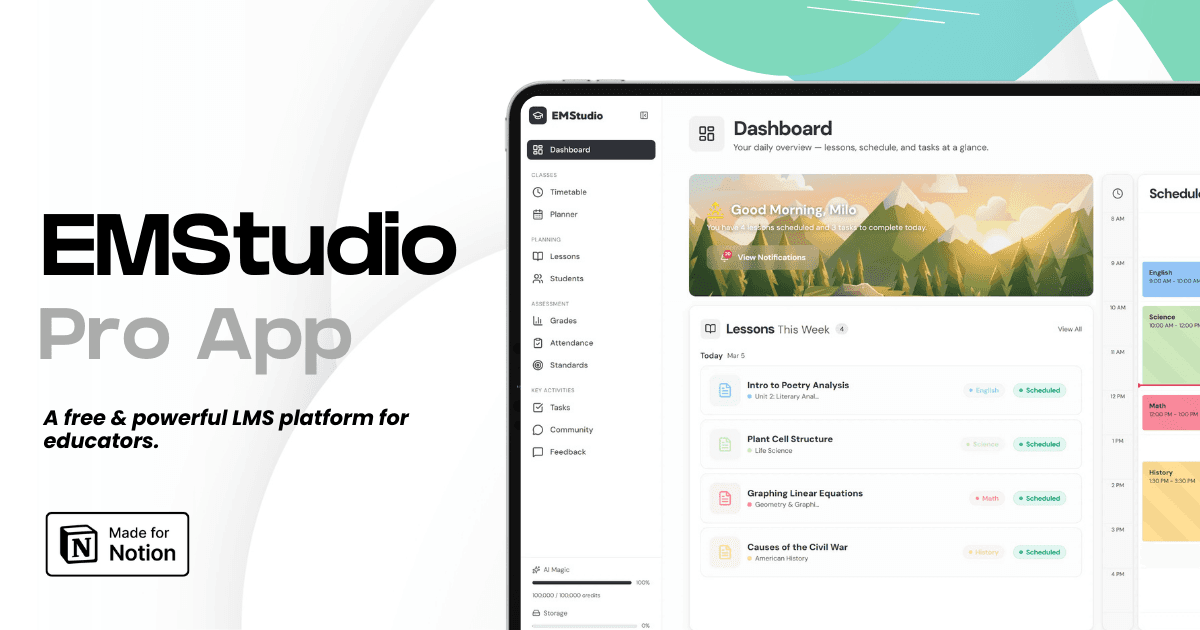
EMStudio is a free teaching management app — manage your classes, students, lessons, and more!
Learn More
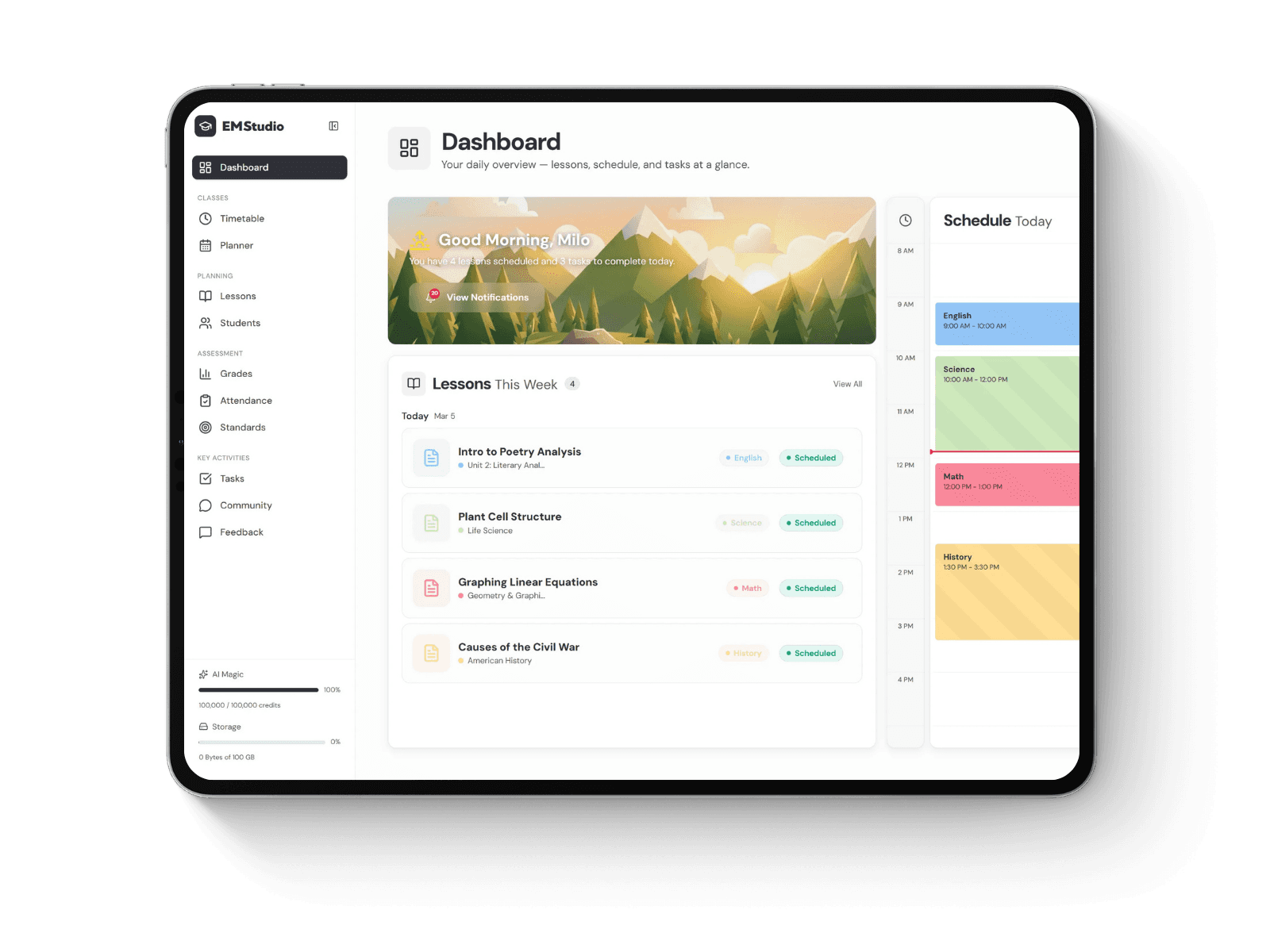
Still grading everything by hand?
EMStudio is a free teaching management app — manage your classes, students, lessons, and more!
Learn More
Table of Contents
What Are the Best Online Teaching Trainings?
The best online teaching trainings include asynchronous micro-credentials from BloomBoard. They include virtual graduate certificates from Harvard Extension or ASU. They include live webinar series from EdWeek or Responsive Classroom.
Top programs offer accredited credentials. They provide flexible scheduling for working educators. They cover specializations like STEM, literacy, or classroom management training.
Most online professional development for teachers wastes your prep period. The best teaching trainings respect your time and transfer directly to your classroom. Look for programs offering real credentials, not participation trophies, that fit between dismissal and dinner.
Coursera partners with Stanford GSE for certificates ranging from $49 to $2,000. Time commitments swing from 8 hours to 120 hours. Credit rarely transfers to graduate programs unless your district negotiated specific articulation agreements.
Teachstone CLASS certification runs $1,500 to $2,000. It demands 20 to 40 hours of observation training. This credential satisfies requirements for instructional coaching certification in most states.
National Geographic Education courses cost $200 to $500. They take 15 to 30 hours. You'll earn continuing education units rather than academic credit.
Platform | Cost Range | Duration | Certificate Type | Best For |
|---|---|---|---|---|
Coursera/Stanford GSE | $49–$2,000 | 8–120 hours | Specialization Certificate | New teachers building pedagogical content knowledge |
Teachstone CLASS | $1,500–$2,000 | 20–40 hours | Instructional Coaching Certification | Coaches and administrators |
NatGeo Education | $200–$500 | 15–30 hours | CEU Certificate | Content-specific educators |
Asynchronous fits 2 to 3 hours weekly into your schedule. You move at your own pace. You lose immediate feedback from instructors.
Synchronous options cost more and demand fixed Tuesday nights. You build networks of teachers who text you resources months later. The connection outlasts the course.
Watch out for non-accredited certificate mills. They charge $300 plus for credentials your state licensing board rejects. Always verify accreditation through CAEP or NCATE before paying. These outfits prey on busy teachers needing quick continuing education units.
John Hattie's research shows high-effect teacher training focuses on visible learning strategies. Look for effect sizes above 0.40. Choose courses teaching feedback delivery and classroom discussion techniques. Skip the sessions covering general theory without practical application.
Asynchronous Micro-Credential Platforms
These asynchronous micro-credential platforms and certificate programs work best for just-in-time skill building.
BloomBoard: Competency-based, $95/month, video portfolio assessment.
Teachable: Instructor-led, $199/course, capped at 30 educators.
Canvas Network: Free to audit, $50–$150 for certificates.
Most require 15 to 20 hours over 4 to 6 weeks. You submit artifacts via digital portfolio.
You'll need reliable 10+ Mbps internet. You need basic LMS navigation skills. Rural educators with spotty broadband struggle with video uploads.
Virtual Graduate Certificate Programs
Harvard Extension School's Certificate in Advanced Education Leadership costs $11,200 for four courses. ASU's Virtual Teacher Training runs $537 per credit for 12 hours. Johns Hopkins Graduate Certificate in Mind, Brain, and Teaching charges $4,175 per course for five courses.
Virtual graduate certificate programs in educational technology demand serious time commitments.
Pros: Transferable graduate credit, cohort networking, satisfies educator training requirements.
Cons: Requires 10–15 hours weekly, strict deadlines, 3.0 GPA admission requirement.
Applications require official transcripts. You need two recommendation letters. You need current teaching license verification. Start gathering materials six weeks early. These programs serve teachers seeking teacher training courses with academic rigor.
Live Interactive Webinar Series
EdWeek Market Brief offers free 60-minute sessions. Learners Edge charges $150 to $300 for 15-hour series awarding clock hours. Responsive Classroom runs four-day virtual intensives for $795.
Last October, I watched a colleague teaching 3rd grade juggle Tuesday 7pm EST literacy webinars. She finished report cards while muting her mic for interruptions. She built a lesson plan template during the session that she used at 8am the next morning.
Participants leave with completed lesson plan templates. You get implementation checklists for immediate classroom use. You apply the differentiated instruction strategies the next day, not next semester.

Which Local Teaching Trainings Offer Immediate Certification?
Local teaching trainings offering immediate certification include district-led summer institutes, university extension programs at UCLA or UW-Madison, and regional educational service center workshops. These programs provide CEUs or clock hours within 24–72 hours of completion, satisfying state license renewal requirements for teachers needing fast credential verification.
Immediate certification means programs granting continuing education units within 48–72 hours for state license renewal. You finish Friday, upload Saturday, renew Monday.
Legitimate programs show five markers:
State-approved provider number on the certificate.
Transparent CEU calculation (10 contact hours = 1 CEU).
Immediate transcript or credential availability.
Instructor credentials (MA+ and 5+ years classroom experience).
Alignment with district Professional Development Plan requirements.
Costs vary: district-led ($0–$150), university extension ($200–$500), regional centers ($75–$250).
Red flags include no physical address, guaranteed credit without assessment, or prices at $19.99. I once watched a colleague panic in October with a December expiration. She found immediate certification through teacher preparation programs at our local BOCES and cleared her deficit in one weekend.
District-Led Professional Development Institutes
These intensive institutes specialize in training new teachers during 2–5 day summer sessions. Expect six hours of daily seat time yielding thirty clock hours toward state recertification. Districts design these for immediate classroom impact.
Hillsborough County Public Schools offers a STEM institute for secondary educators. Forty teachers spend four days in hands-on labs, earn a $125 stipend, and receive digital credentials through the district's PD Platform before leaving the building.
Prerequisites are strict. You need a current employee ID and active district email. External candidates pay non-resident fees ranging from $300 to $450, which still beats university tuition for equivalent hours.
University Extension Programs
University extensions provide flexible classroom management training and pedagogical content knowledge courses for working educators. UCLA Extension charges $385 per unit with open enrollment. Most certificates require four units. UW-Madison offers non-credit certificates costing $1,200–$2,400. UC Berkeley Extension runs a six-month Classroom and Behavior Management certificate for $3,600.
These credits often transfer toward graduate degrees. Twelve extension units typically move into MA programs if you maintain a 3.0 grade point average or higher. This creates a pathway from quick certification to advanced credentials.
Schedules accommodate full-time teaching loads. Evening sections run 6pm–9pm twice weekly. Compressed Saturday formats meet 8am–5pm for four consecutive weekends, letting you complete thirty hours in one month.
Regional Educational Service Center Workshops
Regional centers deliver localized instructional coaching certification and differentiated instruction strategies. ESC Region 13 in Texas, Northwest Regional ESD in Oregon, and BOCES in New York each serve 20–50 school districts with specialized teacher training programs near me. They understand local standards and immediate certification needs.
Pricing is tiered. Member districts pay $125–$275 per workshop day. Non-members pay $175–$375. Registration typically includes materials, lunch, and parking validation.
The certification timeline is immediate. Participants receive printed certificates same-day or PDFs via email within 24 hours. State licensing boards accept these contact hours in standard six-hour increments.

Subject-Specific Teaching Trainings for Specialized Instruction
Specialized certifications move you up the salary schedule. Most U.S. districts add $1,200–$3,500 annually for endorsed specializations. That ROI pays for the training in year one.
But choose wisely. Pedagogical content knowledge beats generic strategies. Hattie's meta-analysis puts subject-specific teaching trainings at a 0.75 effect size. That's nearly two years of growth.
Here's your decision tree:
STEM endorsement → Path A: Computer science or integrated science certifications (time: 3 days to 3 months; cost: $1,200–$2,000)
Literacy specialist → Path B: Wilson, LETRS, or Reading Recovery (time: 60 hours to 1 year; cost: $1,895–$2,500 unless district-funded)
SPED certification → Path C: Autism specialist, behavior micro-credentials, or UDL implementation (time: 12–21 hours to 3 days; cost: $299–$1,100)
One warning before you enroll. Verify your state DOE's approved program list. Some professional development for teachers offers continuing education units without adding licensure endorsements. Those hours pad your resume but won't bump your pay grade. Many teachers pursue instructional coaching certification alongside subject endorsements to maximize both salary lane changes and leadership opportunities.
STEM and Computer Science Certification Tracks
STEM and computer science certification tracks vary wildly by grade band.
Elementary pathways focus on computational thinking without constant screen time. Code.org CS Principles runs a 5-day summer workshop plus 20 hours online. They pay you a $1,500 stipend to attend. Project Lead The Way Launch for K-5 compresses training into three days for $1,200. Both emphasize unplugged activities—logic puzzles and physical coding games that work even when the wifi fails.
Secondary teacher training demands deeper content knowledge. NSTA's NextGen Science certificate requires three courses at $450 each. You need AP-level preparation, not just familiarity. The NSTA sequence builds true pedagogical content knowledge. You learn why students confuse chemical equilibrium with physical mixtures, not just how to run the lab.
I learned this the hard way with 4th graders last fall. I finished the Code.org training in July, then discovered our Chromebook cart wouldn't arrive until November. We did three months of unplugged algorithms using grid paper and plastic cups. The kids loved it, but I had to rewrite every lesson plan.
The hidden cost? Hardware. CS tracks need access to devices and software licenses. Budget $2,000–$5,000 from your school before signing up. Without the equipment, your continuing education units gather dust while you wait for funding.
Literacy Intervention and Reading Specialist Prep
Literacy intervention and reading specialist prep programs differ in intensity and sponsorship.
Wilson Reading System Level 1 certification demands 60 hours of coursework plus 60 hours of supervised practicum. Cost runs $2,500. LETRS through Lexia licenses you for two years at $1,895. Reading Recovery spans a full year and carries a $15,000 value, though districts typically cover the bill.
Check your state requirements before enrolling. Twenty-three states require the Praxis 5302 exam after training. Programs must align with IDA-accredited standards to count toward licensure. Many reading specialists later pursue instructional coaching certification to support peers across buildings.
The payoff is measurable. Trained specialists typically see 1.5–2 grade levels of reading growth in 12–20 weeks with Tier 3 students. The Wilson practicum requires you to video yourself teaching actual students and submit the tapes for critique. You catch habits you'd never notice in the moment—like interrupting a child's decoding process too early.
These teacher training primary and secondary pathways share a focus on diagnostic precision. Whether you're working with 1st graders or 8th graders reading at 1st grade level, the assessment protocols remain similar. The intervention intensity changes, but the underlying science of reading doesn't.
Special Education and Inclusion Strategy Intensives
Special education and inclusion strategy intensives focus on legal compliance and practical behavior systems.
IBCCES Autism Specialist certification takes 21 hours and costs $495. Council for Exceptional Children offers Behavior Specialist micro-credentials in just 12 hours for $299. For broader inclusion strategies, CAST's UDL Implementation training runs three days at $1,100.
Verify the legal coverage. Quality training must address IDEA 2004, Section 504, and current IEP documentation standards. Your district's liability insurance depends on teachers following these protocols.
The data supports the investment. Secondary teacher training in inclusion strategies reduces referral rates by 15–20% in pilot studies when implemented with fidelity. These programs double as classroom management training. The CEC micro-credentials teach functional behavior assessment—figuring out why a kid throws chairs rather than just reacting when they fly.
These teacher training points apply across subject areas. The UDL framework helps you design science labs that work for dyslexic readers and math units that accommodate ADHD attention spans. It's differentiated instruction strategies at the architectural level.

Part-Time Teaching Trainings for Working Educators
Part-time teaching trainings cap your commitment at 8–10 hours weekly, usually spread across evenings or weekends, with completion timelines between 6–18 months. Most districts offer tuition reimbursement covering 70–100% of costs if you maintain a 3.0 GPA—45 states run these programs. But watch the hidden trap: practicum requirements often demand 30–60 hours of classroom observation during school hours. Without substitute coverage, that sinks the whole plan for full-time teachers.
Think of this as your teacher training guide for fitting coursework around contract hours. Your format options break down into three buckets:
Evening Workshops run 6pm–9pm locally.
Hybrid splits 50% online, 50% Saturdays.
Self-Paced offers full flexibility but demands discipline.
Evening and Weekend Intensive Workshops
These run in 6-week cycles, typically Thursdays 6:00pm–8:30pm or Saturdays 8:00am–4:00pm with a 30-minute dinner break. You drive to a local site, park, and sit with other educators working toward the same endorsement. Teacher training part time through Relay Graduate School of Education follows this model: one evening weekly from 5:30pm–8:30pm plus two Saturdays monthly, stretching into a 2-year MAT program focused on pedagogical content knowledge.
Childcare determines whether these work for parents. Quality programs provide on-site childcare for $25–$40 per session or partner with local YMCAs. Some even offer the service in the building next door. Verify availability before you register, not after you have paid the deposit.
I watched a 2nd-grade colleague miss three sessions because her babysitter canceled last-minute. The program offered no make-ups for the missed classroom management training hours. She had to restart the entire sequence the following semester, delaying her license upgrade by six months.
Hybrid Model Courses with Flexible Practicums
Hybrid formats blend 60% asynchronous content—videos, readings, discussion boards—with 40% synchronous sessions held virtually or in-person. You log in Sunday night to prep for the week. The practicum happens at your own school site, letting you implement differentiated instruction strategies directly with your current roster instead of traveling to a placement.
Complete those 40-hour observation requirements during your prep periods or by submitting recorded lessons via platforms like GoReact or Edthena. Administrators review your footage during planning time. This solves the sub-coverage problem that kills most part-time progress toward instructional coaching certification.
Costs run $350–$650 per credit hour depending on the institution. A 12-credit certificate totals $4,200–$7,800 over four semesters, though many flexible courses for working professionals offer district partnership discounts. Check if your district pre-approves these expenses before the semester starts.
Self-Paced Modular Learning Collections
Platforms like PBS TeacherLine offer 15-hour modules for $199–$499, while Advancement Courses provides graduate credit at $140–$400 per course. Capella University FlexPath charges a flat $2,500–$3,000 per 12-week term for unlimited courses, making it a budget option for professional development for teachers who need to accelerate their timeline.
Completion requires sustaining 3–5 hours weekly over 12–16 weeks per module. You choose when to log in. The dropout rate hits 60% if you let gaps exceed three weeks between logins. Life happens, and self-paced becomes no-paced fast.
Check credit transfer rules carefully before enrolling. These modules often lack the instructor interaction hours required for continuing education units in some states. Verify contact hour definitions with your state DOE before committing to any teachers training program that promises a quick certificate.

How Do You Choose the Right Teaching Training Program?
Choose the right teaching training program by first conducting a skill gap analysis using the Danielson Framework, verifying regional accreditation through CHEA, and calculating ROI against your district's salary schedule. Balance program cost against potential lane changes, ensure credit transferability to future degree programs, and confirm logistics fit your teaching schedule.
I wasted $800 on a non-credit classroom management training that didn't move me up the salary ladder. Check the boxes before you write the check.
Follow this five-step decision matrix:
Step 1: Run a Danielson Framework self-assessment to map your gaps
Step 2: Verify regional accreditation through the CHEA database
Step 3: Calculate ROI: (Salary increase × Years remaining) - (Program cost + Lost wages)
Step 4: Confirm logistics fit your actual teaching schedule
Step 5: Enroll only after verifying credit transferability
Do you need graduate credit? If yes, choose a university route. If no, grab a micro-credential. Simple.
Most teachers break even within 2–4 years. Check logistics last. If the program requires Tuesday afternoons and you teach until 4:00 PM, it won't work.
Assessing Your Current Skill Gaps and Career Goals
I once used the Danielson Framework to discover I was weak in questioning techniques. The self-assessment covers 4 domains and 22 components. Download your state’s teacher training pdf or teacher training topics pdf and cross-reference competencies against program syllabi.
Map your career before choosing. If you want instructional coaching certification within 3–5 years, prioritize leadership tracks. If curriculum specialist is the goal, choose content-area deep dives that build pedagogical content knowledge.
If you're aiming for leadership, administration, or a career transition beyond the classroom, combining professional development with career coaching can help you identify the right certifications, build a long-term progression plan, and prepare for new opportunities in education.
Run a SWOT analysis against your district evaluation rubric. This prevents paying for classroom management training when you need differentiated instruction strategies. assessing your current skill gaps and career goals saves you from wasting continuing education units on the wrong topics.
Evaluating Accreditation and Credit Transferability
Verify accreditation before spending money. Search the CHEA database for regional status. Confirm state reciprocity through NASDTEC. Call your target university’s admissions office with course descriptions before enrolling.
Regional accreditation through CHEA-recognized agencies
State DOE approval for certification pathways
CAEP accreditation for teacher preparation programs
Industry recognition from ISTE or NBPTS
Credit transfer reality hits hard. Community college credits transfer to state universities at 70–80% rates. Non-credit certificates transfer at only 10–15%. Prioritize graduate-level professional development for teachers if you plan future degrees.
Watch for red flags. No .edu domain, missing physical address, or vague "nationally recognized" promises without naming the accrediting body spell trouble. Legitimate programs display these credentials clearly.
Balancing Program Cost with Long-Term Career ROI
Pull your district’s salary matrix first. Calculate the exact lane change value—usually $2,000 to $8,000 annually—versus step increases. balancing program cost with long-term career ROI starts with hard numbers.
Check funding sources. Teacher Loan Forgiveness offers up to $17,500 for high-need fields. District tuition reimbursement caps at $2,000–$5,000 yearly. NEA Foundation grants run $2,000–$5,000 for specific teaching trainings.
Run the break-even formula. A $5,000 program cost divided by $3,000 annual increase equals 1.67 years to recover investment. Factor in 3% annual salary growth. Most teacher training course pdf pathways and graduate credits pay for themselves within 2–4 years.

What to Remember About Teaching Trainings
Pick training that solves a problem you're actually facing next week. I've seen teachers collect certificates that gather dust because the format didn't match their reality. Whether you need continuing education units to maintain your license or want to deepen your pedagogical content knowledge in math or literacy, the best program is the one you'll actually finish. Online flexibility means nothing if you never log in; local immersion fails if the schedule breaks your family routine.
Match the format to your real life, not your fantasy life. We all start September with big goals. Working educators need professional development for teachers that respects their time—part-time options beat full-time burnout every time. If you're eyeing leadership, an instructional coaching certification builds different muscles than a content-area deep dive. Both advance your career, but only if you actually apply what you learn in your classroom on Monday morning.
Certificates look nice on walls. Changed practice changes lives. Choose the training that lets you walk in tomorrow and teach differently.

What Are the Best Online Teaching Trainings?
The best online teaching trainings include asynchronous micro-credentials from BloomBoard. They include virtual graduate certificates from Harvard Extension or ASU. They include live webinar series from EdWeek or Responsive Classroom.
Top programs offer accredited credentials. They provide flexible scheduling for working educators. They cover specializations like STEM, literacy, or classroom management training.
Most online professional development for teachers wastes your prep period. The best teaching trainings respect your time and transfer directly to your classroom. Look for programs offering real credentials, not participation trophies, that fit between dismissal and dinner.
Coursera partners with Stanford GSE for certificates ranging from $49 to $2,000. Time commitments swing from 8 hours to 120 hours. Credit rarely transfers to graduate programs unless your district negotiated specific articulation agreements.
Teachstone CLASS certification runs $1,500 to $2,000. It demands 20 to 40 hours of observation training. This credential satisfies requirements for instructional coaching certification in most states.
National Geographic Education courses cost $200 to $500. They take 15 to 30 hours. You'll earn continuing education units rather than academic credit.
Platform | Cost Range | Duration | Certificate Type | Best For |
|---|---|---|---|---|
Coursera/Stanford GSE | $49–$2,000 | 8–120 hours | Specialization Certificate | New teachers building pedagogical content knowledge |
Teachstone CLASS | $1,500–$2,000 | 20–40 hours | Instructional Coaching Certification | Coaches and administrators |
NatGeo Education | $200–$500 | 15–30 hours | CEU Certificate | Content-specific educators |
Asynchronous fits 2 to 3 hours weekly into your schedule. You move at your own pace. You lose immediate feedback from instructors.
Synchronous options cost more and demand fixed Tuesday nights. You build networks of teachers who text you resources months later. The connection outlasts the course.
Watch out for non-accredited certificate mills. They charge $300 plus for credentials your state licensing board rejects. Always verify accreditation through CAEP or NCATE before paying. These outfits prey on busy teachers needing quick continuing education units.
John Hattie's research shows high-effect teacher training focuses on visible learning strategies. Look for effect sizes above 0.40. Choose courses teaching feedback delivery and classroom discussion techniques. Skip the sessions covering general theory without practical application.
Asynchronous Micro-Credential Platforms
These asynchronous micro-credential platforms and certificate programs work best for just-in-time skill building.
BloomBoard: Competency-based, $95/month, video portfolio assessment.
Teachable: Instructor-led, $199/course, capped at 30 educators.
Canvas Network: Free to audit, $50–$150 for certificates.
Most require 15 to 20 hours over 4 to 6 weeks. You submit artifacts via digital portfolio.
You'll need reliable 10+ Mbps internet. You need basic LMS navigation skills. Rural educators with spotty broadband struggle with video uploads.
Virtual Graduate Certificate Programs
Harvard Extension School's Certificate in Advanced Education Leadership costs $11,200 for four courses. ASU's Virtual Teacher Training runs $537 per credit for 12 hours. Johns Hopkins Graduate Certificate in Mind, Brain, and Teaching charges $4,175 per course for five courses.
Virtual graduate certificate programs in educational technology demand serious time commitments.
Pros: Transferable graduate credit, cohort networking, satisfies educator training requirements.
Cons: Requires 10–15 hours weekly, strict deadlines, 3.0 GPA admission requirement.
Applications require official transcripts. You need two recommendation letters. You need current teaching license verification. Start gathering materials six weeks early. These programs serve teachers seeking teacher training courses with academic rigor.
Live Interactive Webinar Series
EdWeek Market Brief offers free 60-minute sessions. Learners Edge charges $150 to $300 for 15-hour series awarding clock hours. Responsive Classroom runs four-day virtual intensives for $795.
Last October, I watched a colleague teaching 3rd grade juggle Tuesday 7pm EST literacy webinars. She finished report cards while muting her mic for interruptions. She built a lesson plan template during the session that she used at 8am the next morning.
Participants leave with completed lesson plan templates. You get implementation checklists for immediate classroom use. You apply the differentiated instruction strategies the next day, not next semester.
Which Local Teaching Trainings Offer Immediate Certification?
Local teaching trainings offering immediate certification include district-led summer institutes, university extension programs at UCLA or UW-Madison, and regional educational service center workshops. These programs provide CEUs or clock hours within 24–72 hours of completion, satisfying state license renewal requirements for teachers needing fast credential verification.
Immediate certification means programs granting continuing education units within 48–72 hours for state license renewal. You finish Friday, upload Saturday, renew Monday.
Legitimate programs show five markers:
State-approved provider number on the certificate.
Transparent CEU calculation (10 contact hours = 1 CEU).
Immediate transcript or credential availability.
Instructor credentials (MA+ and 5+ years classroom experience).
Alignment with district Professional Development Plan requirements.
Costs vary: district-led ($0–$150), university extension ($200–$500), regional centers ($75–$250).
Red flags include no physical address, guaranteed credit without assessment, or prices at $19.99. I once watched a colleague panic in October with a December expiration. She found immediate certification through teacher preparation programs at our local BOCES and cleared her deficit in one weekend.
District-Led Professional Development Institutes
These intensive institutes specialize in training new teachers during 2–5 day summer sessions. Expect six hours of daily seat time yielding thirty clock hours toward state recertification. Districts design these for immediate classroom impact.
Hillsborough County Public Schools offers a STEM institute for secondary educators. Forty teachers spend four days in hands-on labs, earn a $125 stipend, and receive digital credentials through the district's PD Platform before leaving the building.
Prerequisites are strict. You need a current employee ID and active district email. External candidates pay non-resident fees ranging from $300 to $450, which still beats university tuition for equivalent hours.
University Extension Programs
University extensions provide flexible classroom management training and pedagogical content knowledge courses for working educators. UCLA Extension charges $385 per unit with open enrollment. Most certificates require four units. UW-Madison offers non-credit certificates costing $1,200–$2,400. UC Berkeley Extension runs a six-month Classroom and Behavior Management certificate for $3,600.
These credits often transfer toward graduate degrees. Twelve extension units typically move into MA programs if you maintain a 3.0 grade point average or higher. This creates a pathway from quick certification to advanced credentials.
Schedules accommodate full-time teaching loads. Evening sections run 6pm–9pm twice weekly. Compressed Saturday formats meet 8am–5pm for four consecutive weekends, letting you complete thirty hours in one month.
Regional Educational Service Center Workshops
Regional centers deliver localized instructional coaching certification and differentiated instruction strategies. ESC Region 13 in Texas, Northwest Regional ESD in Oregon, and BOCES in New York each serve 20–50 school districts with specialized teacher training programs near me. They understand local standards and immediate certification needs.
Pricing is tiered. Member districts pay $125–$275 per workshop day. Non-members pay $175–$375. Registration typically includes materials, lunch, and parking validation.
The certification timeline is immediate. Participants receive printed certificates same-day or PDFs via email within 24 hours. State licensing boards accept these contact hours in standard six-hour increments.
Subject-Specific Teaching Trainings for Specialized Instruction
Specialized certifications move you up the salary schedule. Most U.S. districts add $1,200–$3,500 annually for endorsed specializations. That ROI pays for the training in year one.
But choose wisely. Pedagogical content knowledge beats generic strategies. Hattie's meta-analysis puts subject-specific teaching trainings at a 0.75 effect size. That's nearly two years of growth.
Here's your decision tree:
STEM endorsement → Path A: Computer science or integrated science certifications (time: 3 days to 3 months; cost: $1,200–$2,000)
Literacy specialist → Path B: Wilson, LETRS, or Reading Recovery (time: 60 hours to 1 year; cost: $1,895–$2,500 unless district-funded)
SPED certification → Path C: Autism specialist, behavior micro-credentials, or UDL implementation (time: 12–21 hours to 3 days; cost: $299–$1,100)
One warning before you enroll. Verify your state DOE's approved program list. Some professional development for teachers offers continuing education units without adding licensure endorsements. Those hours pad your resume but won't bump your pay grade. Many teachers pursue instructional coaching certification alongside subject endorsements to maximize both salary lane changes and leadership opportunities.
STEM and Computer Science Certification Tracks
STEM and computer science certification tracks vary wildly by grade band.
Elementary pathways focus on computational thinking without constant screen time. Code.org CS Principles runs a 5-day summer workshop plus 20 hours online. They pay you a $1,500 stipend to attend. Project Lead The Way Launch for K-5 compresses training into three days for $1,200. Both emphasize unplugged activities—logic puzzles and physical coding games that work even when the wifi fails.
Secondary teacher training demands deeper content knowledge. NSTA's NextGen Science certificate requires three courses at $450 each. You need AP-level preparation, not just familiarity. The NSTA sequence builds true pedagogical content knowledge. You learn why students confuse chemical equilibrium with physical mixtures, not just how to run the lab.
I learned this the hard way with 4th graders last fall. I finished the Code.org training in July, then discovered our Chromebook cart wouldn't arrive until November. We did three months of unplugged algorithms using grid paper and plastic cups. The kids loved it, but I had to rewrite every lesson plan.
The hidden cost? Hardware. CS tracks need access to devices and software licenses. Budget $2,000–$5,000 from your school before signing up. Without the equipment, your continuing education units gather dust while you wait for funding.
Literacy Intervention and Reading Specialist Prep
Literacy intervention and reading specialist prep programs differ in intensity and sponsorship.
Wilson Reading System Level 1 certification demands 60 hours of coursework plus 60 hours of supervised practicum. Cost runs $2,500. LETRS through Lexia licenses you for two years at $1,895. Reading Recovery spans a full year and carries a $15,000 value, though districts typically cover the bill.
Check your state requirements before enrolling. Twenty-three states require the Praxis 5302 exam after training. Programs must align with IDA-accredited standards to count toward licensure. Many reading specialists later pursue instructional coaching certification to support peers across buildings.
The payoff is measurable. Trained specialists typically see 1.5–2 grade levels of reading growth in 12–20 weeks with Tier 3 students. The Wilson practicum requires you to video yourself teaching actual students and submit the tapes for critique. You catch habits you'd never notice in the moment—like interrupting a child's decoding process too early.
These teacher training primary and secondary pathways share a focus on diagnostic precision. Whether you're working with 1st graders or 8th graders reading at 1st grade level, the assessment protocols remain similar. The intervention intensity changes, but the underlying science of reading doesn't.
Special Education and Inclusion Strategy Intensives
Special education and inclusion strategy intensives focus on legal compliance and practical behavior systems.
IBCCES Autism Specialist certification takes 21 hours and costs $495. Council for Exceptional Children offers Behavior Specialist micro-credentials in just 12 hours for $299. For broader inclusion strategies, CAST's UDL Implementation training runs three days at $1,100.
Verify the legal coverage. Quality training must address IDEA 2004, Section 504, and current IEP documentation standards. Your district's liability insurance depends on teachers following these protocols.
The data supports the investment. Secondary teacher training in inclusion strategies reduces referral rates by 15–20% in pilot studies when implemented with fidelity. These programs double as classroom management training. The CEC micro-credentials teach functional behavior assessment—figuring out why a kid throws chairs rather than just reacting when they fly.
These teacher training points apply across subject areas. The UDL framework helps you design science labs that work for dyslexic readers and math units that accommodate ADHD attention spans. It's differentiated instruction strategies at the architectural level.
Part-Time Teaching Trainings for Working Educators
Part-time teaching trainings cap your commitment at 8–10 hours weekly, usually spread across evenings or weekends, with completion timelines between 6–18 months. Most districts offer tuition reimbursement covering 70–100% of costs if you maintain a 3.0 GPA—45 states run these programs. But watch the hidden trap: practicum requirements often demand 30–60 hours of classroom observation during school hours. Without substitute coverage, that sinks the whole plan for full-time teachers.
Think of this as your teacher training guide for fitting coursework around contract hours. Your format options break down into three buckets:
Evening Workshops run 6pm–9pm locally.
Hybrid splits 50% online, 50% Saturdays.
Self-Paced offers full flexibility but demands discipline.
Evening and Weekend Intensive Workshops
These run in 6-week cycles, typically Thursdays 6:00pm–8:30pm or Saturdays 8:00am–4:00pm with a 30-minute dinner break. You drive to a local site, park, and sit with other educators working toward the same endorsement. Teacher training part time through Relay Graduate School of Education follows this model: one evening weekly from 5:30pm–8:30pm plus two Saturdays monthly, stretching into a 2-year MAT program focused on pedagogical content knowledge.
Childcare determines whether these work for parents. Quality programs provide on-site childcare for $25–$40 per session or partner with local YMCAs. Some even offer the service in the building next door. Verify availability before you register, not after you have paid the deposit.
I watched a 2nd-grade colleague miss three sessions because her babysitter canceled last-minute. The program offered no make-ups for the missed classroom management training hours. She had to restart the entire sequence the following semester, delaying her license upgrade by six months.
Hybrid Model Courses with Flexible Practicums
Hybrid formats blend 60% asynchronous content—videos, readings, discussion boards—with 40% synchronous sessions held virtually or in-person. You log in Sunday night to prep for the week. The practicum happens at your own school site, letting you implement differentiated instruction strategies directly with your current roster instead of traveling to a placement.
Complete those 40-hour observation requirements during your prep periods or by submitting recorded lessons via platforms like GoReact or Edthena. Administrators review your footage during planning time. This solves the sub-coverage problem that kills most part-time progress toward instructional coaching certification.
Costs run $350–$650 per credit hour depending on the institution. A 12-credit certificate totals $4,200–$7,800 over four semesters, though many flexible courses for working professionals offer district partnership discounts. Check if your district pre-approves these expenses before the semester starts.
Self-Paced Modular Learning Collections
Platforms like PBS TeacherLine offer 15-hour modules for $199–$499, while Advancement Courses provides graduate credit at $140–$400 per course. Capella University FlexPath charges a flat $2,500–$3,000 per 12-week term for unlimited courses, making it a budget option for professional development for teachers who need to accelerate their timeline.
Completion requires sustaining 3–5 hours weekly over 12–16 weeks per module. You choose when to log in. The dropout rate hits 60% if you let gaps exceed three weeks between logins. Life happens, and self-paced becomes no-paced fast.
Check credit transfer rules carefully before enrolling. These modules often lack the instructor interaction hours required for continuing education units in some states. Verify contact hour definitions with your state DOE before committing to any teachers training program that promises a quick certificate.
How Do You Choose the Right Teaching Training Program?
Choose the right teaching training program by first conducting a skill gap analysis using the Danielson Framework, verifying regional accreditation through CHEA, and calculating ROI against your district's salary schedule. Balance program cost against potential lane changes, ensure credit transferability to future degree programs, and confirm logistics fit your teaching schedule.
I wasted $800 on a non-credit classroom management training that didn't move me up the salary ladder. Check the boxes before you write the check.
Follow this five-step decision matrix:
Step 1: Run a Danielson Framework self-assessment to map your gaps
Step 2: Verify regional accreditation through the CHEA database
Step 3: Calculate ROI: (Salary increase × Years remaining) - (Program cost + Lost wages)
Step 4: Confirm logistics fit your actual teaching schedule
Step 5: Enroll only after verifying credit transferability
Do you need graduate credit? If yes, choose a university route. If no, grab a micro-credential. Simple.
Most teachers break even within 2–4 years. Check logistics last. If the program requires Tuesday afternoons and you teach until 4:00 PM, it won't work.
Assessing Your Current Skill Gaps and Career Goals
I once used the Danielson Framework to discover I was weak in questioning techniques. The self-assessment covers 4 domains and 22 components. Download your state’s teacher training pdf or teacher training topics pdf and cross-reference competencies against program syllabi.
Map your career before choosing. If you want instructional coaching certification within 3–5 years, prioritize leadership tracks. If curriculum specialist is the goal, choose content-area deep dives that build pedagogical content knowledge.
If you're aiming for leadership, administration, or a career transition beyond the classroom, combining professional development with career coaching can help you identify the right certifications, build a long-term progression plan, and prepare for new opportunities in education.
Run a SWOT analysis against your district evaluation rubric. This prevents paying for classroom management training when you need differentiated instruction strategies. assessing your current skill gaps and career goals saves you from wasting continuing education units on the wrong topics.
Evaluating Accreditation and Credit Transferability
Verify accreditation before spending money. Search the CHEA database for regional status. Confirm state reciprocity through NASDTEC. Call your target university’s admissions office with course descriptions before enrolling.
Regional accreditation through CHEA-recognized agencies
State DOE approval for certification pathways
CAEP accreditation for teacher preparation programs
Industry recognition from ISTE or NBPTS
Credit transfer reality hits hard. Community college credits transfer to state universities at 70–80% rates. Non-credit certificates transfer at only 10–15%. Prioritize graduate-level professional development for teachers if you plan future degrees.
Watch for red flags. No .edu domain, missing physical address, or vague "nationally recognized" promises without naming the accrediting body spell trouble. Legitimate programs display these credentials clearly.
Balancing Program Cost with Long-Term Career ROI
Pull your district’s salary matrix first. Calculate the exact lane change value—usually $2,000 to $8,000 annually—versus step increases. balancing program cost with long-term career ROI starts with hard numbers.
Check funding sources. Teacher Loan Forgiveness offers up to $17,500 for high-need fields. District tuition reimbursement caps at $2,000–$5,000 yearly. NEA Foundation grants run $2,000–$5,000 for specific teaching trainings.
Run the break-even formula. A $5,000 program cost divided by $3,000 annual increase equals 1.67 years to recover investment. Factor in 3% annual salary growth. Most teacher training course pdf pathways and graduate credits pay for themselves within 2–4 years.
What to Remember About Teaching Trainings
Pick training that solves a problem you're actually facing next week. I've seen teachers collect certificates that gather dust because the format didn't match their reality. Whether you need continuing education units to maintain your license or want to deepen your pedagogical content knowledge in math or literacy, the best program is the one you'll actually finish. Online flexibility means nothing if you never log in; local immersion fails if the schedule breaks your family routine.
Match the format to your real life, not your fantasy life. We all start September with big goals. Working educators need professional development for teachers that respects their time—part-time options beat full-time burnout every time. If you're eyeing leadership, an instructional coaching certification builds different muscles than a content-area deep dive. Both advance your career, but only if you actually apply what you learn in your classroom on Monday morning.
Certificates look nice on walls. Changed practice changes lives. Choose the training that lets you walk in tomorrow and teach differently.
Still grading everything by hand?
EMStudio is a free teaching management app — manage your classes, students, lessons, and more!
Learn More
Still grading everything by hand?
EMStudio is a free teaching management app — manage your classes, students, lessons, and more!
Learn More




Notion4Teachers
Notion templates to simplify administrative tasks and enhance your teaching experience.



2026 Notion4Teachers. All Rights Reserved.
Notion4Teachers
Notion templates to simplify administrative tasks and enhance your teaching experience.
2026 Notion4Teachers. All Rights Reserved.
Notion4Teachers
Notion templates to simplify administrative tasks and enhance your teaching experience.
2026 Notion4Teachers. All Rights Reserved.