
Teaching Lab: 7 Steps to Launch Co-Teaching Training
Teaching Lab: 7 Steps to Launch Co-Teaching Training

Article by
Milo
ESL Content Coordinator & Educator
ESL Content Coordinator & Educator
All Posts
It's October. Your 7th grade inclusion classroom has 28 students, seven IEPs, and one co-teacher who just got moved from PE three days ago. You're both standing at the front board wondering who takes attendance while a kid in the back starts dismantling his calculator.
Most co-teaching failures start here — with good people thrown together without a shared map. A teaching lab fixes that. It's not a room with microscopes; it's a structured space where teams practice collaborative instruction before stepping in front of kids. You rehearse station teaching, iron out shared classroom management, and figure out who handles the heavy lifting when behaviors spike. I've watched parallel teaching click for the first time inside these labs, with teachers stopping mid-lesson to ask, "What if we switched groups now?" That question doesn't get asked during a 25-minute lunch period.
This post walks through seven concrete steps to launch your own teaching lab. You'll establish your teaching alliance, design infrastructure modeled on Pathways Strategic Teaching Centers, and build co-teaching professional development that actually changes practice. We cover how to structure workshops where teachers try out inclusive education strategies with real feedback. No theory dumps. Just the moves that get teams ready to share a classroom without stepping on each other's feet. No more kids watching adults figure it out in real time.
Still grading everything by hand?
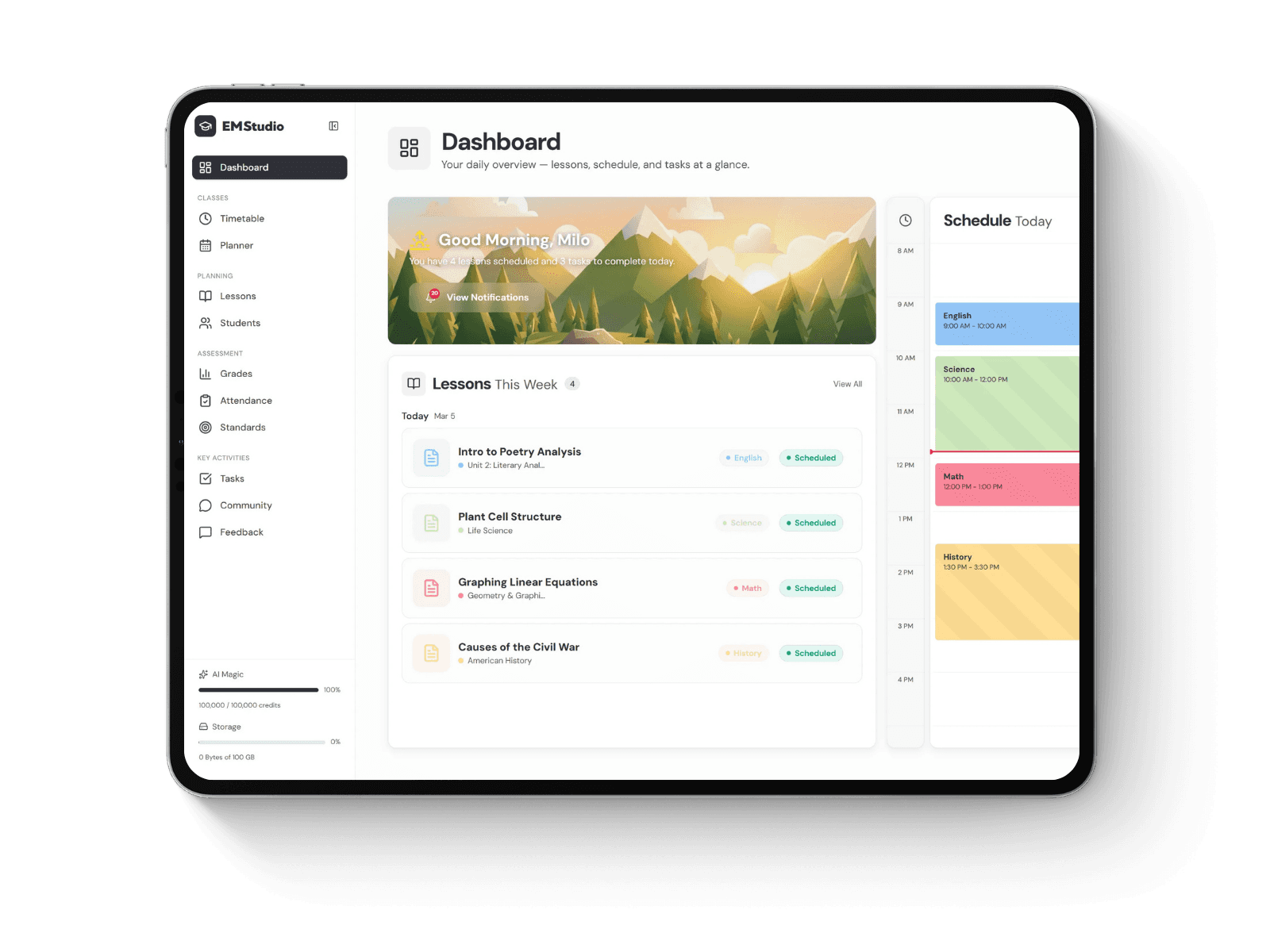
EMStudio is a free teaching management app — manage your classes, students, lessons, and more!
Learn More
Still grading everything by hand?
EMStudio is a free teaching management app — manage your classes, students, lessons, and more!
Learn More
Table of Contents
Prerequisites for Launching a Teaching Lab
You don't build a teaching lab on good intentions alone. I've watched districts burn through $20,000 on shiny cameras while forgetting to budget for substitute teachers. The result? A beautiful room that sits empty because nobody can get release time to use it. Check these four prerequisites first, or you'll waste everyone's energy on a program that can't survive the first quarter.
Before you schedule the first co teaching training session, confirm these four non-negotiables. Teachers need specific infrastructure to take real instructional risks, not just a conference room with a window.
A dedicated 400+ square foot observation room with one-way glass or a quality video recording capability. Teachers won't take instructional risks without proper equipment or privacy protections.
$15,000-$25,000 annual budget covering substitute teachers and facilitator stipends. This money pays for coverage when two teachers are both in the lab.
Signed administrative MOU guaranteeing 90 minutes weekly common planning time for participants. Without protected time for collaborative instruction, your teaching alliance collapses by November.
Baseline TIC rubric scores showing current implementation below 2.5/4.0 proficiency. You need measurable room to grow from 2.0 to 3.5, not polish teachers already at 3.8.
Run a hard Go/No-Go check once you review the list. If you meet fewer than three of these prerequisites, delay launch by one semester. Seriously. Half-built teacher collaboration models die when general educators feel pulled between their own classrooms and the lab commitments. I've seen it happen twice in my own district. The parallel teaching and station teaching strategies you're planning require infrastructure that actually functions without daily crisis management or last-minute sub cancellations. Teachers deserve better than a rushed launch.
Map these five critical roles before you send the first email. Each one holds veto power over shared classroom management protocols or scheduling decisions. Skip one, and you'll stall out by October when the first calendar conflict hits.
District PD coordinator: controls calendar access and district-wide scheduling priorities for all participants.
Site administrator: approves the budget and building-level resource allocation for the program.
Special education director: ensures inclusive education compliance and proper IEP alignment during lab work.
General education lead teacher: brings classroom reality and peer credibility to the planning group.
Union representative: protects the 90-minute planning block and teacher working conditions throughout the year.
For more on structuring these critical partnerships, review collaborative teaching models for K-12 teams. Your teaching lab depends on these relationships more than any piece of furniture or technology you might buy this year. Skip the stakeholder map, and you'll stall out by October.
Step 1 — Establish Your Teaching Alliance and Strategic Vision
Before you shuffle desks or split a roster, you need a teaching alliance that lives on paper, not just in hallway handshakes. I've watched promising partnerships implode by mid-October because we treated the first meeting like a coffee chat instead of a contract negotiation. A teaching lab requires adult alignment before student grouping. Start with the boring legal work. It saves your sanity when the October IEP meetings stack up and someone needs to cover the room.
Draft the Teaching Alliance Compact using three columns on a single sheet. The first column captures your Shared Vision in fifty words or fewer—something concrete like "We build an inclusive education environment where parallel teaching and fluid grouping provide targeted daily support without stigma or pull-out isolation." Write it together. If you can't agree on fifty words, you won't survive a full lesson.
The second column lists Individual Role Responsibilities with zero ambiguity about who owns the invisible labor:
Who drafts IEP goals and contacts parents within 24 hours of an incident
Who manages physical space rotation and preps manipulatives before Monday
Who leads data collection and updates the progress monitoring binders
Who handles gradebook entry and writes report card narratives
The third column spells your Conflict Resolution Protocol with no ambiguity: Step 1 is a private conversation within 24 hours; Step 2 is written reflection exchanged via email; Step 3 brings in your instructional coach as neutral observer; Step 4 is a mediated meeting with administration present. No guessing who drafts the parent email. No silent resentments brewing while you fake smile across the reading carpet during collaborative instruction.
Run the 4-Point Match Matrix before sharing rosters or co-writing a single lesson. Score content expertise, pedagogical style, schedule alignment, and communication preference from 1 to 4. You need 12 out of 16 minimum to proceed. The matrix exposes fatal mismatches in teacher collaboration models while you're still on speaking terms. Print the scores. Tape them inside your plan book as a reminder.
I once scored a 9 with a partner who loved station teaching but viewed planning as "winging it with heart." We split in August rather than battling through October IEP season when stress peaks. Be honest: if you need 48 hours to process critical feedback and they demand immediate hallway resolution, that's a communication preference score of 1. Walk away clean before the kids arrive and the stakes rise.
Schedule your inaugural three-hour retreat using the Vision-Values-Logistics template. Hour one establishes norms through the "Alligator River" ethics scenario—watching your partner justify moral choices reveals how they'll handle shared classroom management when a student melts down during your mini-lesson. Hour two maps curriculum alignment: identify which standards suit parallel teaching versus station teaching across your 18-week cycle, noting assessment weeks. Hour three integrates calendars concretely, blocking common planning time and scheduling peer observations. Bring actual food. This isn't a meeting; it's the foundation of your professional marriage.
These structures unlock the real benefits of co teaching for teachers: distributed cognitive load, built-in observational data, and survival partners during report card season. Your teaching lab collapses without adult alignment. Nail this foundation, and effective co-teaching techniques become possible, not theoretical. Skip the compact and the matrix, and you're just two adults sharing WiFi and awkward silences.
Step 2 — Design Infrastructure Modeled on Pathways Strategic Teaching Centers
You cannot run a teaching lab from a conference room with a laptop. I learned this after watching a coaching cycle fail because we had no mirrors—physical or metaphorical—to examine our collaborative instruction. Pathways Strategic Teaching Center specifications demand specific architecture that supports inclusive education at scale. You need walls that can talk back.
Current State | Pathways Standard |
|---|---|
One observation classroom with mixed seating | Mirrored classrooms: dedicated general ed and special ed spaces for modeling parallel teaching and station teaching |
Teachers huddle in hallway post-lesson | Debrief rooms with video review stations for immediate analysis of shared classroom management moves |
Shared drive with scattered PDFs | Physical resource library with 50+ co-teaching materials: cue cards, role-definition anchors, and assessment tools |
Video capture makes or breaks your feedback loop. I use a SWIVL robot ($429) when budget is tight; it swivels to follow the lanyard mic and captures audio clean enough to dissect teacher talk moves. The device sits on a tripod in the back corner and rotates automatically. If your district can swing $2,100, install a static three-camera setup covering both teacher zones, student groups, and board instruction simultaneously. Static cameras remove the "who's holding the iPad" variable that kills natural teacher collaboration models. You see everything. You miss nothing.
Storage requires HIPAA-compliant platforms. Upload footage to TeachFX or Edthena, never to Google Drive or personal servers. These platforms blur student faces automatically and restrict access to your cohort. I schedule upload deadlines using project management tools for educators so video is ready before the debrief. The timestamped comments let coaches pinpoint the exact moment when parallel teaching broke down or station teaching transitions stalled. You cannot coach what you cannot see.
The scheduling matrix runs on six-week cycles. Four co-teaching pairs rotate through your lab, two days per week. Each pair completes three full observation cycles: pre-conference Monday, live lesson Wednesday, post-conference Friday. This rhythm gives you 24 coached lessons per semester without burning out your host teachers. Block these sessions in your master calendar before school starts. Teachers protect what gets scheduled early. The predictable cadence builds trust.

Step 3 — Build Your Co-Teaching Professional Development Curriculum
Your co teaching professional development needs a backbone. I use a 12-hour core curriculum split across four modules. Each module runs three hours total: two hours face-to-face and one hour of asynchronous video analysis. Teachers watch footage from a teaching lab or their own classrooms, then come ready to discuss what worked and what crashed. This rhythm keeps the training grounded in real practice, not theory.
The four modules follow a logical arc. Module 1 covers the Six Co-Teaching Models from the Friend & Cook framework. Teachers practice moving between parallel teaching, where you split the class in half to deliver the same content, and station teaching, where students rotate through different activities. Module 2 tackles differentiation strategies for inclusive education settings. Module 3 addresses shared classroom management—who responds when a student melts down during the other teacher's lesson? Module 4 focuses on assessment design, making sure both teachers grade and plan interventions using the same data.
You need a Co-Teaching Implementation Rubric to measure growth. Build it around five domains: collaborative planning, instructional delivery, classroom management, assessment, and professional interaction. Use a 4-point scale with specific behavioral anchors. Level 1 might show one teacher leading while the other passes papers. Level 3 reads: "Teachers alternate lead role every 15 minutes." Level 4 adds spontaneous adjustments based on real-time student feedback. The rubric removes guesswork. Teachers know exactly what "good" looks like.
Assessment protocols track the messy middle between workshop and mastery. Start with a pre/post TIC survey to measure shifts in teacher collaboration models. Add monthly reflective journals via Google Forms—three questions, five minutes, due the last Friday. The capstone is a summative edTPA-style portfolio requiring 20 minutes of annotated video evidence. Teachers clip segments showing collaborative instruction in action and write commentary explaining their decisions. It is rigorous, but it proves they can actually do this work.
This structure mirrors what you find in effective professional growth programs for teachers. Co teaching training fails when it is just a one-day sit-and-get. Build these four modules, use the rubric for coaching conversations, and collect evidence that shows growth over time.

Step 4 — How Do You Structure Effective Co-Teaching Workshops?
Structure effective co-teaching workshops using a 3-part arc: 20% theory input, 60% micro-teaching practice with video analysis, and 20% collaborative planning. Limit sessions to 6-8 co-teaching pairs per facilitator, schedule 90-minute biweekly cycles, and require pre-work using classroom video clips to maximize hands-on application time.
Stop talking about co-teaching and start doing it. The best co teaching workshops function like a teaching lab where pairs experiment with strategies in real-time, not theory.
I use a strict 20-60-20 split. Twenty percent covers new teacher collaboration models using visual cards showing the six co-teaching approaches. Sixty percent happens in the lab: pairs deliver 15-minute mini-lessons while peers film specific moments like wait time or physical positioning. The final twenty percent is sacred planning time where pairs map next week's parallel teaching or station teaching rotation.
The Workshop Architecture Template keeps us honest. Open with a 10-minute "Pulse Check" using sticky notes to surface anxieties about shared classroom management. Input lasts 20 minutes using laminated "6 Models" reference cards. Application runs 50 minutes through micro-teaching rotations. Close with an "Exit Ticket Plus" requiring one concrete implementation commitment for tomorrow's inclusive education block.
The Fishbowl Protocol makes observation concrete. One pair models a 10-minute lesson while others watch using the Co-Teaching Observation Checklist tracking specific behaviors like paraphrasing student responses. We debrief using "I Notice/I Wonder" for exactly 15 minutes. This builds the observational skills teachers need to coach each other using coaching techniques for educators back in their buildings.
Cap groups at 6-8 pairs per facilitator. Schedule 90-minute biweekly cycles, not full-day marathons. Require pre-work: submit a 3-minute classroom video clip before arriving. This frontloads the theory so we spend precious face-to-face time practicing collaborative instruction instead of watching PowerPoints.

Step 5 — Train Participants in Being a Cooperative Teacher
Stop practicing being a cooperative teacher through trial-and-error collaborative instruction on actual students. Build a teaching lab where partners rehearse the hard parts first. I use the 5C Framework to drill the mechanics: Communication (scripts for active listening like "What I heard you say is..."), Collaboration (protocols for shared decisions), Coordination (planning templates for parallel teaching or station teaching), Coaching (non-evaluative stems such as "I noticed the group responded when you..."), and Conflict (training in crucial conversations). These five dispositions separate effective inclusive education teams from those merely sharing a room.
Role-play the conversations that break partnerships using Marilyn Friend's Interactions framework. Speak the actual words, pause to feel the tension, then swap roles to see it from both sides:
Address the workload imbalance when one partner grades papers while the other runs the entire lesson.
Navigate clashing shared classroom management styles without undermining authority in front of students.
Resolve disagreements on specific student accommodations for IEP or 504 plans.
The muscle memory you build here prevents the resentment that kills teacher collaboration models before they start.
Master the 30-Second Intervention. When observing your partner, wait thirty seconds before stepping in unless safety is at risk. Then use the whisper-in, step-out technique: approach quietly, murmur the cue, move away. Practice physical positioning until it feels automatic. Zone 1 puts the lead teacher at the front. Zone 2 positions the support teacher at the back or side for behavioral cues. Zone 3 is roaming for proximity during small groups. Map these zones on the floor with tape. Walk them until you stop bumping into each other. Grab the toolkit for cooperative learning to print the zone diagrams and conversation scripts.

Essential Co-Teaching Books and Mistakes That Limit Benefits
You cannot build collaborative instruction from instinct alone. You need frameworks tested in real classrooms, not theory from academics who haven't wiped a whiteboard in years. These three co teaching book options belong in your teaching lab or planning cart.
Start with Anne Beninghof's "Co-Teaching That Works". Skip the introduction and jump straight to Chapter 4 on station teaching logistics. She maps out how to rotate 3rd graders through math centers without chaos. Her 6th grade ELA examples show exactly how to split a lesson when one teacher handles grammar mini-lessons while the other facilitates reading conferences.
For the mechanics of teacher collaboration models, read Richard Villa's "A Guide to Co-Teaching". Chapter 7 breaks down parallel teaching with diagrams showing how to split a classroom in half physically. He includes the teaching books that transform practice by detailing shared classroom management signals that prevent students from playing teachers against each other.
Keep Katherine Perez's "The Co-Teaching Book of Lists" on your desk, not your shelf. Chapter 3 contains checklists for inclusive education setups before the year starts. Her 5-minute reading assessment rubrics let both teachers grade authentically instead of dumping paperwork on the general educator.
Now the warnings. These five errors kill the benefits of co teaching for teachers faster than a broken copier.
Letting "One Teach, One Assist" become your default model. Cap this at 20 percent of instructional time or you create a paraeducator dynamic.
Ignoring shared physical space planning. If both teachers cannot reach the whiteboard without squeezing past students, you have failed.
Grading only by the general ed teacher. This destroys credibility and violates IDEA mandates for shared responsibility.
Failing to protect common planning time. Without it, you are two adults sharing a room, not a team.
Never alternating lead roles. The special educator cannot remain the "helper" for eighteen weeks.
The Parity Problem surfaces when one voice dominates. I have watched gifted interventionists sit silent for forty minutes while their partners lecture. This signals to students that one adult holds real authority.
Fix this with the Timer Method. Set a phone timer for twenty minutes. When it buzzes, switch who leads the mini-lesson. The transition takes thirty seconds. Use equity tracking to balance airtime. Keep a clipboard with tally marks. Both teachers must speak within two minutes of each other. If one teacher hits three marks before the other speaks, stop the lesson and redirect.
Avoid the common mistakes when managing teacher records by documenting who leads each segment. Shared documentation prevents the drift toward inequity that undermines inclusive education. Get these logistics right, and you will see why veteran teachers fight to keep their partners.

Prerequisites for Launching a Teaching Lab
You don't build a teaching lab on good intentions alone. I've watched districts burn through $20,000 on shiny cameras while forgetting to budget for substitute teachers. The result? A beautiful room that sits empty because nobody can get release time to use it. Check these four prerequisites first, or you'll waste everyone's energy on a program that can't survive the first quarter.
Before you schedule the first co teaching training session, confirm these four non-negotiables. Teachers need specific infrastructure to take real instructional risks, not just a conference room with a window.
A dedicated 400+ square foot observation room with one-way glass or a quality video recording capability. Teachers won't take instructional risks without proper equipment or privacy protections.
$15,000-$25,000 annual budget covering substitute teachers and facilitator stipends. This money pays for coverage when two teachers are both in the lab.
Signed administrative MOU guaranteeing 90 minutes weekly common planning time for participants. Without protected time for collaborative instruction, your teaching alliance collapses by November.
Baseline TIC rubric scores showing current implementation below 2.5/4.0 proficiency. You need measurable room to grow from 2.0 to 3.5, not polish teachers already at 3.8.
Run a hard Go/No-Go check once you review the list. If you meet fewer than three of these prerequisites, delay launch by one semester. Seriously. Half-built teacher collaboration models die when general educators feel pulled between their own classrooms and the lab commitments. I've seen it happen twice in my own district. The parallel teaching and station teaching strategies you're planning require infrastructure that actually functions without daily crisis management or last-minute sub cancellations. Teachers deserve better than a rushed launch.
Map these five critical roles before you send the first email. Each one holds veto power over shared classroom management protocols or scheduling decisions. Skip one, and you'll stall out by October when the first calendar conflict hits.
District PD coordinator: controls calendar access and district-wide scheduling priorities for all participants.
Site administrator: approves the budget and building-level resource allocation for the program.
Special education director: ensures inclusive education compliance and proper IEP alignment during lab work.
General education lead teacher: brings classroom reality and peer credibility to the planning group.
Union representative: protects the 90-minute planning block and teacher working conditions throughout the year.
For more on structuring these critical partnerships, review collaborative teaching models for K-12 teams. Your teaching lab depends on these relationships more than any piece of furniture or technology you might buy this year. Skip the stakeholder map, and you'll stall out by October.
Step 1 — Establish Your Teaching Alliance and Strategic Vision
Before you shuffle desks or split a roster, you need a teaching alliance that lives on paper, not just in hallway handshakes. I've watched promising partnerships implode by mid-October because we treated the first meeting like a coffee chat instead of a contract negotiation. A teaching lab requires adult alignment before student grouping. Start with the boring legal work. It saves your sanity when the October IEP meetings stack up and someone needs to cover the room.
Draft the Teaching Alliance Compact using three columns on a single sheet. The first column captures your Shared Vision in fifty words or fewer—something concrete like "We build an inclusive education environment where parallel teaching and fluid grouping provide targeted daily support without stigma or pull-out isolation." Write it together. If you can't agree on fifty words, you won't survive a full lesson.
The second column lists Individual Role Responsibilities with zero ambiguity about who owns the invisible labor:
Who drafts IEP goals and contacts parents within 24 hours of an incident
Who manages physical space rotation and preps manipulatives before Monday
Who leads data collection and updates the progress monitoring binders
Who handles gradebook entry and writes report card narratives
The third column spells your Conflict Resolution Protocol with no ambiguity: Step 1 is a private conversation within 24 hours; Step 2 is written reflection exchanged via email; Step 3 brings in your instructional coach as neutral observer; Step 4 is a mediated meeting with administration present. No guessing who drafts the parent email. No silent resentments brewing while you fake smile across the reading carpet during collaborative instruction.
Run the 4-Point Match Matrix before sharing rosters or co-writing a single lesson. Score content expertise, pedagogical style, schedule alignment, and communication preference from 1 to 4. You need 12 out of 16 minimum to proceed. The matrix exposes fatal mismatches in teacher collaboration models while you're still on speaking terms. Print the scores. Tape them inside your plan book as a reminder.
I once scored a 9 with a partner who loved station teaching but viewed planning as "winging it with heart." We split in August rather than battling through October IEP season when stress peaks. Be honest: if you need 48 hours to process critical feedback and they demand immediate hallway resolution, that's a communication preference score of 1. Walk away clean before the kids arrive and the stakes rise.
Schedule your inaugural three-hour retreat using the Vision-Values-Logistics template. Hour one establishes norms through the "Alligator River" ethics scenario—watching your partner justify moral choices reveals how they'll handle shared classroom management when a student melts down during your mini-lesson. Hour two maps curriculum alignment: identify which standards suit parallel teaching versus station teaching across your 18-week cycle, noting assessment weeks. Hour three integrates calendars concretely, blocking common planning time and scheduling peer observations. Bring actual food. This isn't a meeting; it's the foundation of your professional marriage.
These structures unlock the real benefits of co teaching for teachers: distributed cognitive load, built-in observational data, and survival partners during report card season. Your teaching lab collapses without adult alignment. Nail this foundation, and effective co-teaching techniques become possible, not theoretical. Skip the compact and the matrix, and you're just two adults sharing WiFi and awkward silences.
Step 2 — Design Infrastructure Modeled on Pathways Strategic Teaching Centers
You cannot run a teaching lab from a conference room with a laptop. I learned this after watching a coaching cycle fail because we had no mirrors—physical or metaphorical—to examine our collaborative instruction. Pathways Strategic Teaching Center specifications demand specific architecture that supports inclusive education at scale. You need walls that can talk back.
Current State | Pathways Standard |
|---|---|
One observation classroom with mixed seating | Mirrored classrooms: dedicated general ed and special ed spaces for modeling parallel teaching and station teaching |
Teachers huddle in hallway post-lesson | Debrief rooms with video review stations for immediate analysis of shared classroom management moves |
Shared drive with scattered PDFs | Physical resource library with 50+ co-teaching materials: cue cards, role-definition anchors, and assessment tools |
Video capture makes or breaks your feedback loop. I use a SWIVL robot ($429) when budget is tight; it swivels to follow the lanyard mic and captures audio clean enough to dissect teacher talk moves. The device sits on a tripod in the back corner and rotates automatically. If your district can swing $2,100, install a static three-camera setup covering both teacher zones, student groups, and board instruction simultaneously. Static cameras remove the "who's holding the iPad" variable that kills natural teacher collaboration models. You see everything. You miss nothing.
Storage requires HIPAA-compliant platforms. Upload footage to TeachFX or Edthena, never to Google Drive or personal servers. These platforms blur student faces automatically and restrict access to your cohort. I schedule upload deadlines using project management tools for educators so video is ready before the debrief. The timestamped comments let coaches pinpoint the exact moment when parallel teaching broke down or station teaching transitions stalled. You cannot coach what you cannot see.
The scheduling matrix runs on six-week cycles. Four co-teaching pairs rotate through your lab, two days per week. Each pair completes three full observation cycles: pre-conference Monday, live lesson Wednesday, post-conference Friday. This rhythm gives you 24 coached lessons per semester without burning out your host teachers. Block these sessions in your master calendar before school starts. Teachers protect what gets scheduled early. The predictable cadence builds trust.
Step 3 — Build Your Co-Teaching Professional Development Curriculum
Your co teaching professional development needs a backbone. I use a 12-hour core curriculum split across four modules. Each module runs three hours total: two hours face-to-face and one hour of asynchronous video analysis. Teachers watch footage from a teaching lab or their own classrooms, then come ready to discuss what worked and what crashed. This rhythm keeps the training grounded in real practice, not theory.
The four modules follow a logical arc. Module 1 covers the Six Co-Teaching Models from the Friend & Cook framework. Teachers practice moving between parallel teaching, where you split the class in half to deliver the same content, and station teaching, where students rotate through different activities. Module 2 tackles differentiation strategies for inclusive education settings. Module 3 addresses shared classroom management—who responds when a student melts down during the other teacher's lesson? Module 4 focuses on assessment design, making sure both teachers grade and plan interventions using the same data.
You need a Co-Teaching Implementation Rubric to measure growth. Build it around five domains: collaborative planning, instructional delivery, classroom management, assessment, and professional interaction. Use a 4-point scale with specific behavioral anchors. Level 1 might show one teacher leading while the other passes papers. Level 3 reads: "Teachers alternate lead role every 15 minutes." Level 4 adds spontaneous adjustments based on real-time student feedback. The rubric removes guesswork. Teachers know exactly what "good" looks like.
Assessment protocols track the messy middle between workshop and mastery. Start with a pre/post TIC survey to measure shifts in teacher collaboration models. Add monthly reflective journals via Google Forms—three questions, five minutes, due the last Friday. The capstone is a summative edTPA-style portfolio requiring 20 minutes of annotated video evidence. Teachers clip segments showing collaborative instruction in action and write commentary explaining their decisions. It is rigorous, but it proves they can actually do this work.
This structure mirrors what you find in effective professional growth programs for teachers. Co teaching training fails when it is just a one-day sit-and-get. Build these four modules, use the rubric for coaching conversations, and collect evidence that shows growth over time.
Step 4 — How Do You Structure Effective Co-Teaching Workshops?
Structure effective co-teaching workshops using a 3-part arc: 20% theory input, 60% micro-teaching practice with video analysis, and 20% collaborative planning. Limit sessions to 6-8 co-teaching pairs per facilitator, schedule 90-minute biweekly cycles, and require pre-work using classroom video clips to maximize hands-on application time.
Stop talking about co-teaching and start doing it. The best co teaching workshops function like a teaching lab where pairs experiment with strategies in real-time, not theory.
I use a strict 20-60-20 split. Twenty percent covers new teacher collaboration models using visual cards showing the six co-teaching approaches. Sixty percent happens in the lab: pairs deliver 15-minute mini-lessons while peers film specific moments like wait time or physical positioning. The final twenty percent is sacred planning time where pairs map next week's parallel teaching or station teaching rotation.
The Workshop Architecture Template keeps us honest. Open with a 10-minute "Pulse Check" using sticky notes to surface anxieties about shared classroom management. Input lasts 20 minutes using laminated "6 Models" reference cards. Application runs 50 minutes through micro-teaching rotations. Close with an "Exit Ticket Plus" requiring one concrete implementation commitment for tomorrow's inclusive education block.
The Fishbowl Protocol makes observation concrete. One pair models a 10-minute lesson while others watch using the Co-Teaching Observation Checklist tracking specific behaviors like paraphrasing student responses. We debrief using "I Notice/I Wonder" for exactly 15 minutes. This builds the observational skills teachers need to coach each other using coaching techniques for educators back in their buildings.
Cap groups at 6-8 pairs per facilitator. Schedule 90-minute biweekly cycles, not full-day marathons. Require pre-work: submit a 3-minute classroom video clip before arriving. This frontloads the theory so we spend precious face-to-face time practicing collaborative instruction instead of watching PowerPoints.
Step 5 — Train Participants in Being a Cooperative Teacher
Stop practicing being a cooperative teacher through trial-and-error collaborative instruction on actual students. Build a teaching lab where partners rehearse the hard parts first. I use the 5C Framework to drill the mechanics: Communication (scripts for active listening like "What I heard you say is..."), Collaboration (protocols for shared decisions), Coordination (planning templates for parallel teaching or station teaching), Coaching (non-evaluative stems such as "I noticed the group responded when you..."), and Conflict (training in crucial conversations). These five dispositions separate effective inclusive education teams from those merely sharing a room.
Role-play the conversations that break partnerships using Marilyn Friend's Interactions framework. Speak the actual words, pause to feel the tension, then swap roles to see it from both sides:
Address the workload imbalance when one partner grades papers while the other runs the entire lesson.
Navigate clashing shared classroom management styles without undermining authority in front of students.
Resolve disagreements on specific student accommodations for IEP or 504 plans.
The muscle memory you build here prevents the resentment that kills teacher collaboration models before they start.
Master the 30-Second Intervention. When observing your partner, wait thirty seconds before stepping in unless safety is at risk. Then use the whisper-in, step-out technique: approach quietly, murmur the cue, move away. Practice physical positioning until it feels automatic. Zone 1 puts the lead teacher at the front. Zone 2 positions the support teacher at the back or side for behavioral cues. Zone 3 is roaming for proximity during small groups. Map these zones on the floor with tape. Walk them until you stop bumping into each other. Grab the toolkit for cooperative learning to print the zone diagrams and conversation scripts.
Essential Co-Teaching Books and Mistakes That Limit Benefits
You cannot build collaborative instruction from instinct alone. You need frameworks tested in real classrooms, not theory from academics who haven't wiped a whiteboard in years. These three co teaching book options belong in your teaching lab or planning cart.
Start with Anne Beninghof's "Co-Teaching That Works". Skip the introduction and jump straight to Chapter 4 on station teaching logistics. She maps out how to rotate 3rd graders through math centers without chaos. Her 6th grade ELA examples show exactly how to split a lesson when one teacher handles grammar mini-lessons while the other facilitates reading conferences.
For the mechanics of teacher collaboration models, read Richard Villa's "A Guide to Co-Teaching". Chapter 7 breaks down parallel teaching with diagrams showing how to split a classroom in half physically. He includes the teaching books that transform practice by detailing shared classroom management signals that prevent students from playing teachers against each other.
Keep Katherine Perez's "The Co-Teaching Book of Lists" on your desk, not your shelf. Chapter 3 contains checklists for inclusive education setups before the year starts. Her 5-minute reading assessment rubrics let both teachers grade authentically instead of dumping paperwork on the general educator.
Now the warnings. These five errors kill the benefits of co teaching for teachers faster than a broken copier.
Letting "One Teach, One Assist" become your default model. Cap this at 20 percent of instructional time or you create a paraeducator dynamic.
Ignoring shared physical space planning. If both teachers cannot reach the whiteboard without squeezing past students, you have failed.
Grading only by the general ed teacher. This destroys credibility and violates IDEA mandates for shared responsibility.
Failing to protect common planning time. Without it, you are two adults sharing a room, not a team.
Never alternating lead roles. The special educator cannot remain the "helper" for eighteen weeks.
The Parity Problem surfaces when one voice dominates. I have watched gifted interventionists sit silent for forty minutes while their partners lecture. This signals to students that one adult holds real authority.
Fix this with the Timer Method. Set a phone timer for twenty minutes. When it buzzes, switch who leads the mini-lesson. The transition takes thirty seconds. Use equity tracking to balance airtime. Keep a clipboard with tally marks. Both teachers must speak within two minutes of each other. If one teacher hits three marks before the other speaks, stop the lesson and redirect.
Avoid the common mistakes when managing teacher records by documenting who leads each segment. Shared documentation prevents the drift toward inequity that undermines inclusive education. Get these logistics right, and you will see why veteran teachers fight to keep their partners.
Still grading everything by hand?
EMStudio is a free teaching management app — manage your classes, students, lessons, and more!
Learn More
Still grading everything by hand?
EMStudio is a free teaching management app — manage your classes, students, lessons, and more!
Learn More



Notion4Teachers
Notion templates to simplify administrative tasks and enhance your teaching experience.



2026 Notion4Teachers. All Rights Reserved.
Notion4Teachers
Notion templates to simplify administrative tasks and enhance your teaching experience.
2026 Notion4Teachers. All Rights Reserved.
Notion4Teachers
Notion templates to simplify administrative tasks and enhance your teaching experience.
2026 Notion4Teachers. All Rights Reserved.