
Teaching Cloud Computing Through Practical, Scenario-Based Learning
Teaching Cloud Computing Through Practical, Scenario-Based Learning

Article by
Milo
ESL Content Coordinator & Educator
ESL Content Coordinator & Educator
All Posts
Meta Description: How educators approach teaching cloud computing through practical, scenario-based lessons, virtual labs, real projects, and certification-aligned skills.

Most cloud units begin with definitions of IaaS, PaaS, and SaaS, only to lose students before those terms become useful. Students may pass a quiz on scalability yet still hesitate when a deployment fails, a permission blocks access, or an unexpected charge appears. That gap can make cloud computing seem more abstract than it is in practice.
Virtual labs can make cloud concepts more concrete, but simply placing students inside a console does not guarantee meaningful practice. Without a realistic purpose, clicking through AWS or Microsoft Azure can become another exercise in following instructions. The challenge is to connect each technical action to a recognizable need while leaving students enough room to make decisions, test outcomes, and understand why cloud terminology matters. How can an instructor build cloud lessons around practical problems rather than isolated vocabulary?
Still grading everything by hand?
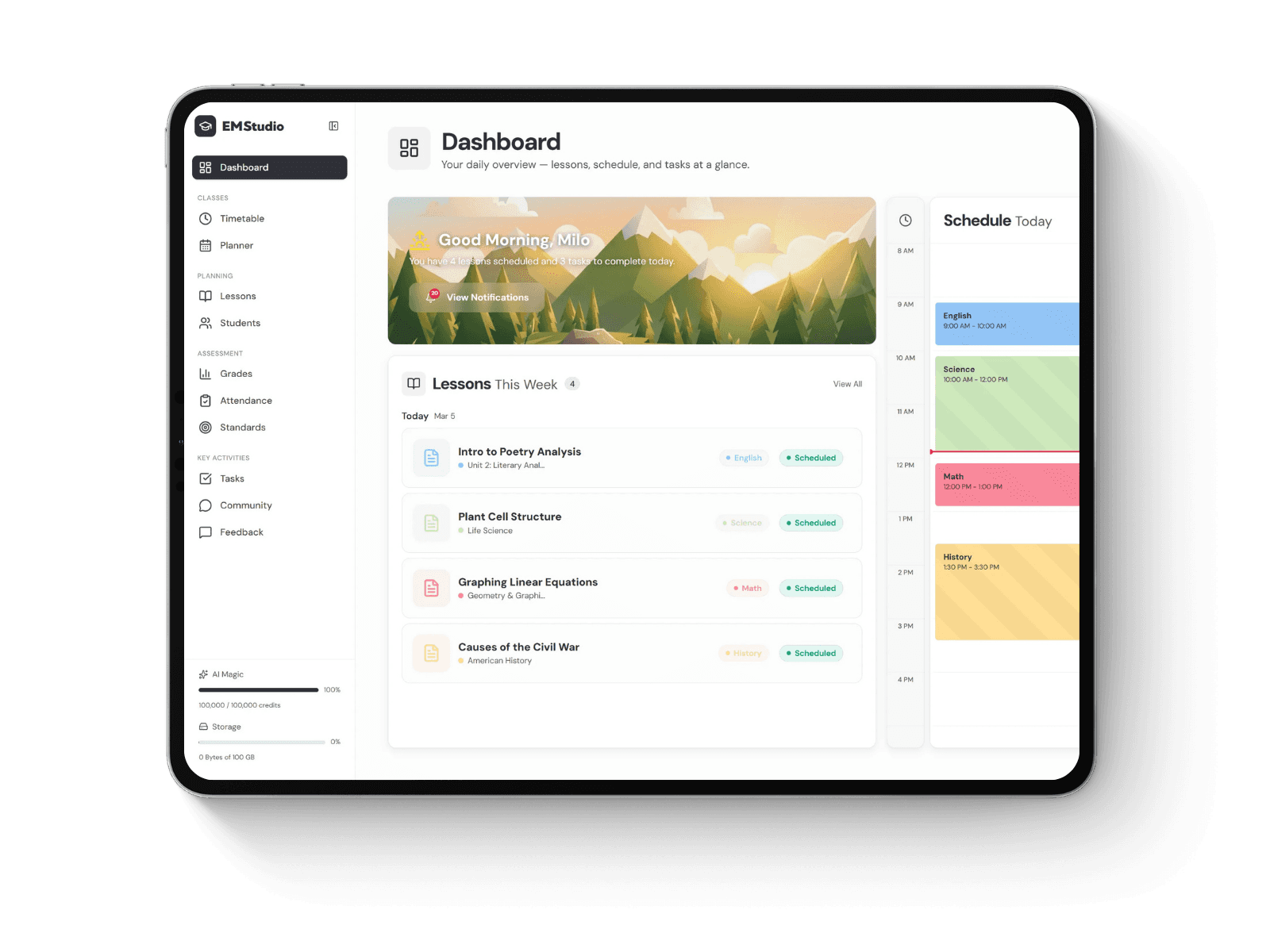
EMStudio is a free teaching management app — manage your classes, students, lessons, and more!
Learn More
Still grading everything by hand?
EMStudio is a free teaching management app — manage your classes, students, lessons, and more!
Learn More
Table of Contents
The Short Answer: Teach the Problem, Not the Platform
Open each lesson with something broken or missing, then introduce cloud concepts as tools for resolving it. In AWS (Amazon Web Services), Microsoft Azure, or virtual labs, the console becomes the classroom, allowing students to encounter navigation, permissions, and cost through the work.
A teachable scenario needs a specific request or failure, a bounded environment, and a success condition students can verify independently. Definitions still matter, but they appear after students understand why the terms are useful, not before they encounter the problem.
Explaining the Cloud to Students With No IT Background
The cloud is not new to most students. Google Classroom, a Learning Management System (LMS), and shared drives already store information and deliver services through remote infrastructure. An instructor can begin with: “The school uses computers somewhere else to run a service that appears on this screen.”
The rented-versus-owned comparison is clearer than the familiar weather metaphor. Someone else owns and maintains the machine, the customer pays for the capacity used, and that capacity can be released when it is no longer needed.
That same example explains IaaS, PaaS, and SaaS. With IaaS, the customer rents computing resources and manages much of the system. With PaaS, the customer brings an application while the provider handles more of the underlying environment. With SaaS, the customer uses the finished software.
Virtualization deserves a short, direct lesson because it explains how one physical machine can host separate virtual systems. Containers can follow later as a lighter way to package applications and their dependencies. Vendor architecture diagrams should wait until students have provisioned something themselves. Before then, the icons usually register as visual noise.
How to Build a Cloud Scenario That Actually Teaches
A useful scenario is not a procedure with the numbered steps removed. It gives students a request, limits their choices, and lets them prove that their solution works. AWS Educate provides self-paced learning paths and hands-on practice, but instructors still need to frame those activities around decisions.
Frame the Request the Way a Client Would
Instead of writing, “Create a storage bucket and enable website hosting,” present a fictional stakeholder: “A small charity needs a public information page online by Friday, and monthly spending must stay below five dollars.”
The request creates a reason to compare services, estimate cost, and consider scalability. It also resembles the incomplete briefs students will encounter in real work. One deliberate obstacle, perhaps a cloud security rule blocking public traffic, turns deployment into diagnosis rather than button-following.
Bound the Environment Before Students Log In
Students do not need to build every component. The instructor can provide the account, network, naming convention, and resources that do not support the lesson’s objective. In virtual labs, those boundaries prevent a storage exercise from becoming an hour of account configuration.
For the charity scenario, students might receive an existing AWS network and a fixed region. Their decisions would concern hosting, storage, permissions, and cost. Each later scenario can inherit this environment, gradually turning separate hands-on projects or labs into one evolving system.
Define What Finished Looks Like
“Get the site working” is too vague. Completion might require a public URL that returns the correct page, an uploaded file that remains available after a restart, and an estimated bill below the stated limit.
Students should be able to test those conditions without waiting for the instructor. The blocked traffic rule provides another observable test: the site fails before the configuration is corrected and loads afterward. That finish line separates a genuine scenario from an open-ended cloud lab.
Mapping Scenarios to Certification Objectives
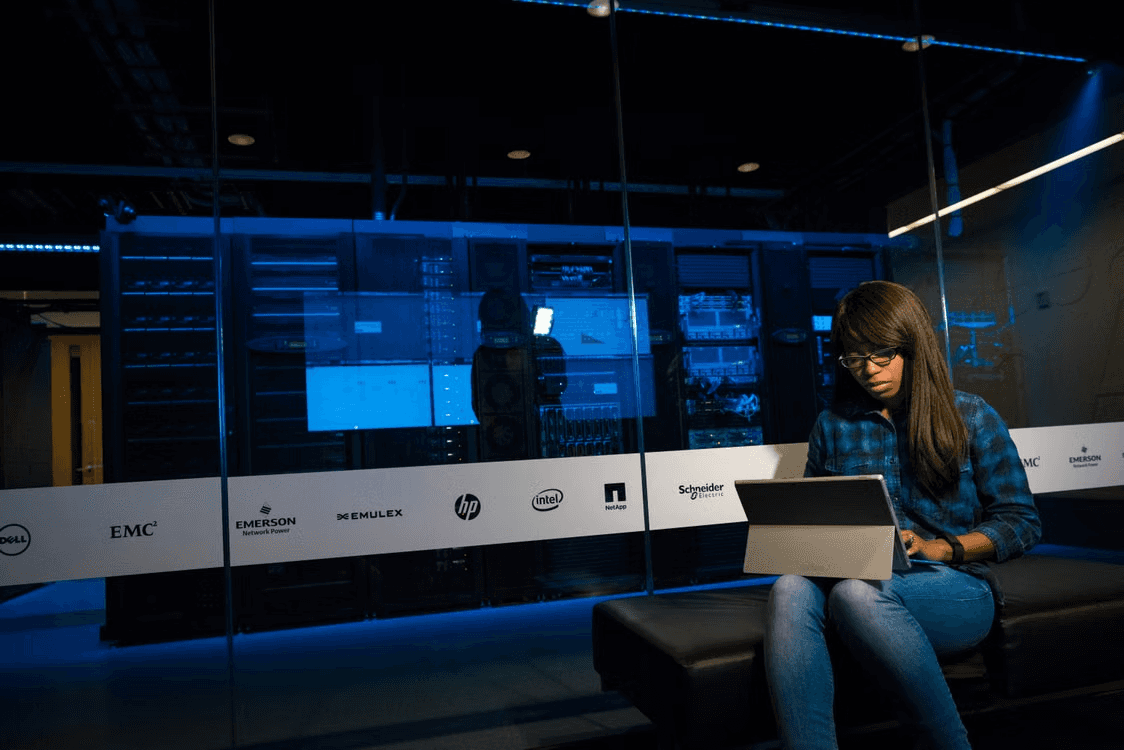
Certification blueprints work as free curriculum maps. An instructor can take the objective list for CompTIA Cloud+ certification or Microsoft Azure Fundamentals, then tag each classroom scenario with the knowledge and skills it exercises. The same method applies to AWS Certified Solutions Architect – Associate and Google Cloud Associate Cloud Engineer tracks.
The resulting map exposes objectives that practical deployments often miss, particularly identity management and cost governance. Those gaps can become constraints in later scenarios rather than separate lecture topics. This connection also helps place hands-on units within broader cloud certification pathways.
A midterm diagnostic leaves time to respond. Fundamentals items check vocabulary, architecture items check design trade-offs, and scenario-driven challenges for cloud developers check whether a student can reason about deployment and runtime decisions under a constraint. An Azure 204 practice test can reveal whether developer-track students understand the language used to describe work they already perform.
When a student can deploy a resource but misses a narrowly framed exam question, the gap is often terminology rather than execution. A short vocabulary correction is more appropriate than repeating the entire lab, preserving the focus on cloud skills and workforce readiness.
Judging Whether a Student Can Actually Do the Work
A completed lab proves that a student reached the last instruction. It does not show why that student selected an instance size, storage class, scaling approach, or permission scope. Assessment should record those decisions and the reasoning behind them.
Artifacts expose thinking that a screenshot hides. An architecture sketch shows service relationships, a short handover note explains operational choices, and console command history reveals how the student investigated a failure. These materials can also support student cloud credentials by documenting work rather than relying entirely on quiz results.
The strongest practical check is to break a working environment deliberately. An instructor might remove a permission, block traffic, or change a configuration, then grade the student’s diagnosis and repair. Real-world projects depend on that troubleshooting ability.
Cost belongs in the rubric alongside reliability, scalability, and cloud security. A deployment that works at far more than the necessary pay-as-you-go spend is not a complete solution. Quiz scores still provide a useful vocabulary check, but they cannot substitute for evidence of practical competence.
Keeping Accounts, Spend and Instructor Skills Under Control
Poor account controls can turn a useful cloud unit into an administrative problem. Free credits reduce the payment barrier, but they do not prevent waste, and a resource left running can consume the budget intended for later lessons. Connectivity failures and changing console interfaces create additional risks.
Sandbox Access and Spend Guardrails
Student environments need budget alerts, restricted service access, approved regions, and a scheduled teardown after every scenario. Limits should prevent expensive resources from being created unless the lesson specifically requires them.
Teaching one platform during the first term also reduces confusion. AWS, Microsoft Azure, and Google Cloud Platform (GCP) express comparable ideas through different interfaces and labels. Multi-cloud comparison becomes useful only after students can navigate one console without assistance.
Scenario instructions should name the required outcome and service rather than the location of a button. Interfaces change, while the underlying task usually remains recognizable.
What the Instructor Needs to Know First
The instructor should complete each scenario before assigning it, including the deliberate failure and recovery. General preparation through Coursera or similar structured coursework can build background knowledge, but it does not replace rehearsing the exact student environment.
A no-connectivity fallback is equally important. A local container exercise can preserve the technical objective, while an architecture task can test service selection, security, cost, performance, and reliability without console access. The fallback should assess the same decision as the original activity, not become unrelated busywork.
Where to Start With Your Next Cloud Unit
Moving from definition-led instruction to scenarios does not require a replacement curriculum. It requires rewriting the first prompt so students receive a realistic request instead of a sequence of clicks.
One carefully bounded scenario needs a genuine constraint, a finish line students can verify, and one deliberate obstacle that makes them investigate rather than imitate. Terminology can then explain the work students performed, certification objectives can show where that work fits, and assessment can capture the decisions behind it.
That is the practical route to cloud skills and workforce readiness: teach the problem first, then introduce the platform knowledge needed to solve it.
The Short Answer: Teach the Problem, Not the Platform
Open each lesson with something broken or missing, then introduce cloud concepts as tools for resolving it. In AWS (Amazon Web Services), Microsoft Azure, or virtual labs, the console becomes the classroom, allowing students to encounter navigation, permissions, and cost through the work.
A teachable scenario needs a specific request or failure, a bounded environment, and a success condition students can verify independently. Definitions still matter, but they appear after students understand why the terms are useful, not before they encounter the problem.
Explaining the Cloud to Students With No IT Background
The cloud is not new to most students. Google Classroom, a Learning Management System (LMS), and shared drives already store information and deliver services through remote infrastructure. An instructor can begin with: “The school uses computers somewhere else to run a service that appears on this screen.”
The rented-versus-owned comparison is clearer than the familiar weather metaphor. Someone else owns and maintains the machine, the customer pays for the capacity used, and that capacity can be released when it is no longer needed.
That same example explains IaaS, PaaS, and SaaS. With IaaS, the customer rents computing resources and manages much of the system. With PaaS, the customer brings an application while the provider handles more of the underlying environment. With SaaS, the customer uses the finished software.
Virtualization deserves a short, direct lesson because it explains how one physical machine can host separate virtual systems. Containers can follow later as a lighter way to package applications and their dependencies. Vendor architecture diagrams should wait until students have provisioned something themselves. Before then, the icons usually register as visual noise.
How to Build a Cloud Scenario That Actually Teaches
A useful scenario is not a procedure with the numbered steps removed. It gives students a request, limits their choices, and lets them prove that their solution works. AWS Educate provides self-paced learning paths and hands-on practice, but instructors still need to frame those activities around decisions.
Frame the Request the Way a Client Would
Instead of writing, “Create a storage bucket and enable website hosting,” present a fictional stakeholder: “A small charity needs a public information page online by Friday, and monthly spending must stay below five dollars.”
The request creates a reason to compare services, estimate cost, and consider scalability. It also resembles the incomplete briefs students will encounter in real work. One deliberate obstacle, perhaps a cloud security rule blocking public traffic, turns deployment into diagnosis rather than button-following.
Bound the Environment Before Students Log In
Students do not need to build every component. The instructor can provide the account, network, naming convention, and resources that do not support the lesson’s objective. In virtual labs, those boundaries prevent a storage exercise from becoming an hour of account configuration.
For the charity scenario, students might receive an existing AWS network and a fixed region. Their decisions would concern hosting, storage, permissions, and cost. Each later scenario can inherit this environment, gradually turning separate hands-on projects or labs into one evolving system.
Define What Finished Looks Like
“Get the site working” is too vague. Completion might require a public URL that returns the correct page, an uploaded file that remains available after a restart, and an estimated bill below the stated limit.
Students should be able to test those conditions without waiting for the instructor. The blocked traffic rule provides another observable test: the site fails before the configuration is corrected and loads afterward. That finish line separates a genuine scenario from an open-ended cloud lab.
Mapping Scenarios to Certification Objectives
Certification blueprints work as free curriculum maps. An instructor can take the objective list for CompTIA Cloud+ certification or Microsoft Azure Fundamentals, then tag each classroom scenario with the knowledge and skills it exercises. The same method applies to AWS Certified Solutions Architect – Associate and Google Cloud Associate Cloud Engineer tracks.
The resulting map exposes objectives that practical deployments often miss, particularly identity management and cost governance. Those gaps can become constraints in later scenarios rather than separate lecture topics. This connection also helps place hands-on units within broader cloud certification pathways.
A midterm diagnostic leaves time to respond. Fundamentals items check vocabulary, architecture items check design trade-offs, and scenario-driven challenges for cloud developers check whether a student can reason about deployment and runtime decisions under a constraint. An Azure 204 practice test can reveal whether developer-track students understand the language used to describe work they already perform.
When a student can deploy a resource but misses a narrowly framed exam question, the gap is often terminology rather than execution. A short vocabulary correction is more appropriate than repeating the entire lab, preserving the focus on cloud skills and workforce readiness.
Judging Whether a Student Can Actually Do the Work
A completed lab proves that a student reached the last instruction. It does not show why that student selected an instance size, storage class, scaling approach, or permission scope. Assessment should record those decisions and the reasoning behind them.
Artifacts expose thinking that a screenshot hides. An architecture sketch shows service relationships, a short handover note explains operational choices, and console command history reveals how the student investigated a failure. These materials can also support student cloud credentials by documenting work rather than relying entirely on quiz results.
The strongest practical check is to break a working environment deliberately. An instructor might remove a permission, block traffic, or change a configuration, then grade the student’s diagnosis and repair. Real-world projects depend on that troubleshooting ability.
Cost belongs in the rubric alongside reliability, scalability, and cloud security. A deployment that works at far more than the necessary pay-as-you-go spend is not a complete solution. Quiz scores still provide a useful vocabulary check, but they cannot substitute for evidence of practical competence.
Keeping Accounts, Spend and Instructor Skills Under Control
Poor account controls can turn a useful cloud unit into an administrative problem. Free credits reduce the payment barrier, but they do not prevent waste, and a resource left running can consume the budget intended for later lessons. Connectivity failures and changing console interfaces create additional risks.
Sandbox Access and Spend Guardrails
Student environments need budget alerts, restricted service access, approved regions, and a scheduled teardown after every scenario. Limits should prevent expensive resources from being created unless the lesson specifically requires them.
Teaching one platform during the first term also reduces confusion. AWS, Microsoft Azure, and Google Cloud Platform (GCP) express comparable ideas through different interfaces and labels. Multi-cloud comparison becomes useful only after students can navigate one console without assistance.
Scenario instructions should name the required outcome and service rather than the location of a button. Interfaces change, while the underlying task usually remains recognizable.
What the Instructor Needs to Know First
The instructor should complete each scenario before assigning it, including the deliberate failure and recovery. General preparation through Coursera or similar structured coursework can build background knowledge, but it does not replace rehearsing the exact student environment.
A no-connectivity fallback is equally important. A local container exercise can preserve the technical objective, while an architecture task can test service selection, security, cost, performance, and reliability without console access. The fallback should assess the same decision as the original activity, not become unrelated busywork.
Where to Start With Your Next Cloud Unit
Moving from definition-led instruction to scenarios does not require a replacement curriculum. It requires rewriting the first prompt so students receive a realistic request instead of a sequence of clicks.
One carefully bounded scenario needs a genuine constraint, a finish line students can verify, and one deliberate obstacle that makes them investigate rather than imitate. Terminology can then explain the work students performed, certification objectives can show where that work fits, and assessment can capture the decisions behind it.
That is the practical route to cloud skills and workforce readiness: teach the problem first, then introduce the platform knowledge needed to solve it.
Still grading everything by hand?
EMStudio is a free teaching management app — manage your classes, students, lessons, and more!
Learn More
Still grading everything by hand?
EMStudio is a free teaching management app — manage your classes, students, lessons, and more!
Learn More


Notion4Teachers
Notion templates to simplify administrative tasks and enhance your teaching experience.



2026 Notion4Teachers. All Rights Reserved.
Notion4Teachers
Notion templates to simplify administrative tasks and enhance your teaching experience.
2026 Notion4Teachers. All Rights Reserved.
Notion4Teachers
Notion templates to simplify administrative tasks and enhance your teaching experience.
2026 Notion4Teachers. All Rights Reserved.